Chapter 2 - Makoko: The City on the Water
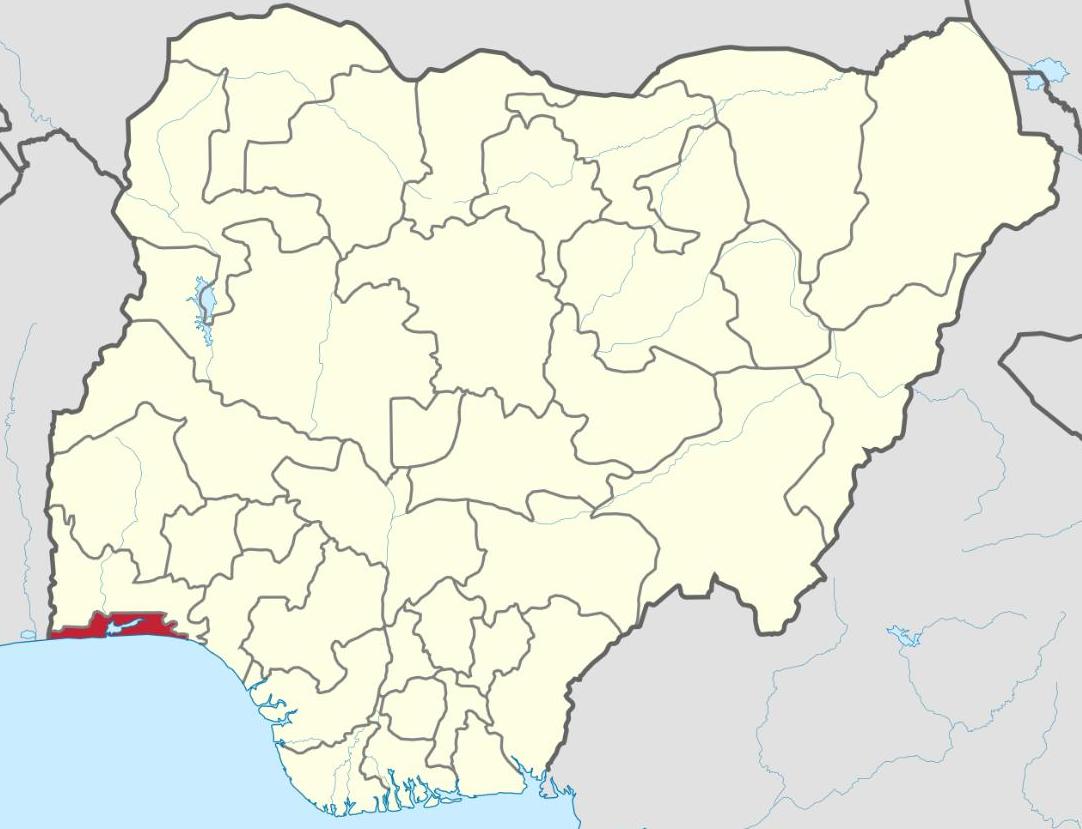
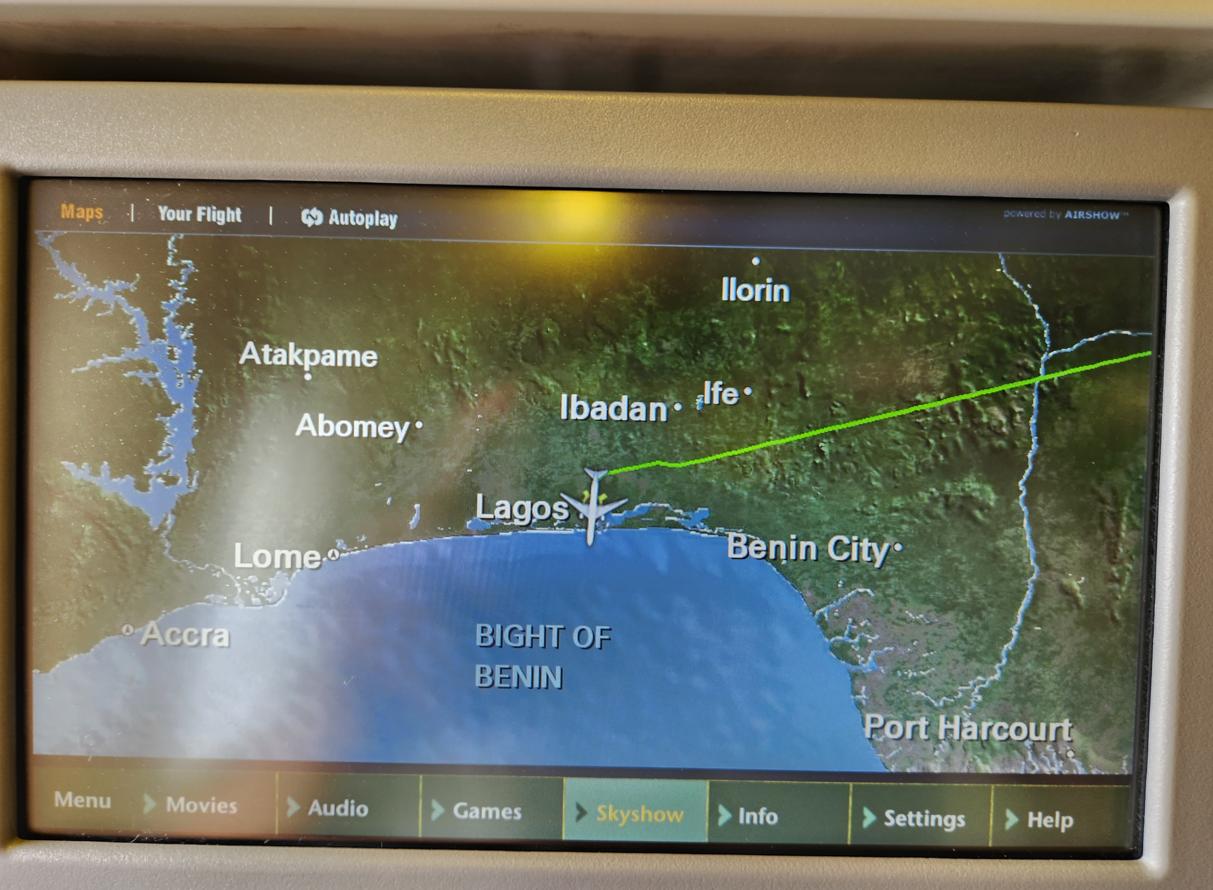
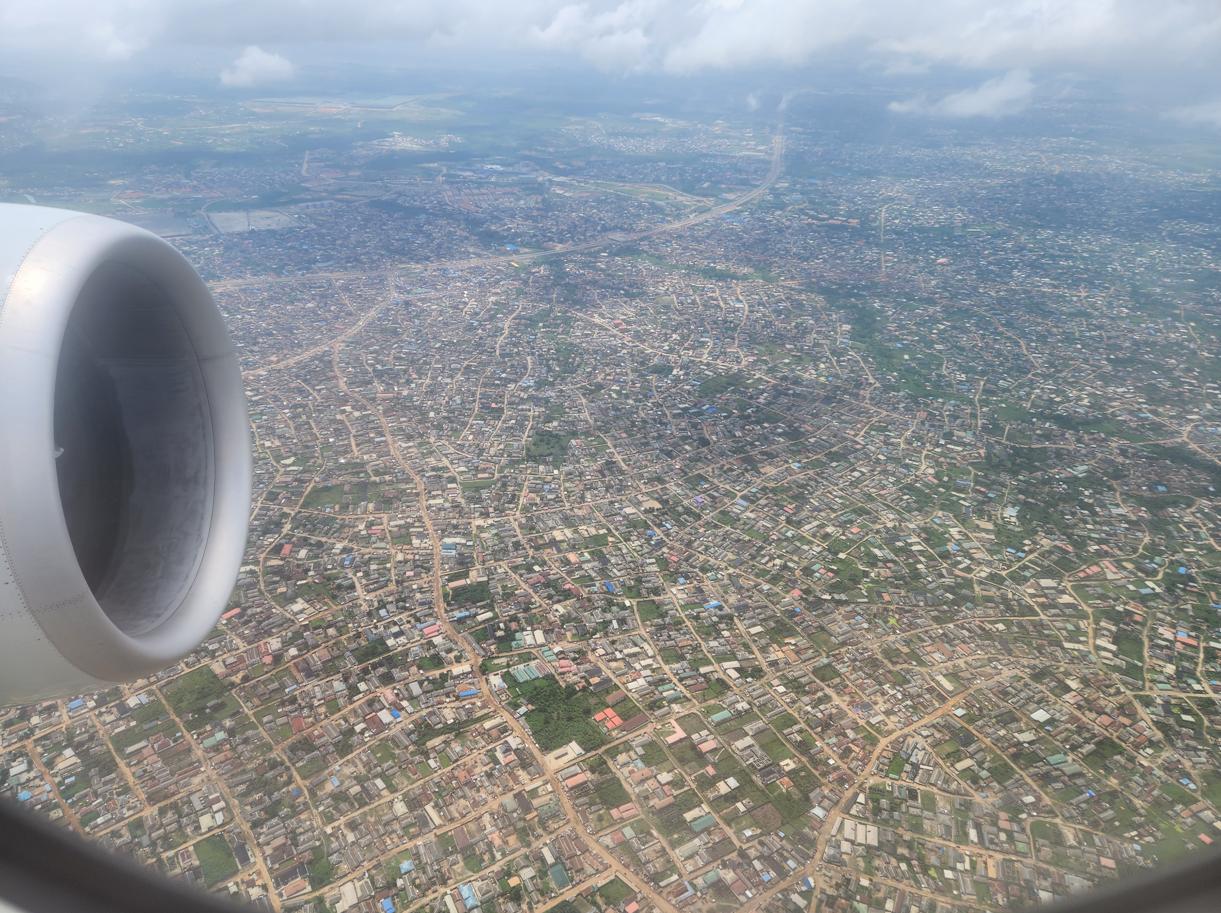
Lagos announces itself before you see it. From the descent into Murtala Muhammed International Airport, the city spreads in every direction — a vast, low, relentless agglomeration that has been growing faster than any government has ever managed to plan for. With an estimated population of 21 million, it is the largest urban area in Africa, a distinction that carries with it all the beauty and dysfunction the superlative implies.
The name comes from the Portuguese word for lakes. The original settlement was a collection of islands separated by creeks and connected by bridges, and parts of the city retain this amphibious character. Lagos was the national capital until 1991, when the federal government relocated to the more geographically central Abuja. It remains, without question, the cultural, financial, and commercial capital of the country — and, by many measures, of West Africa. Nollywood, Nigeria's film industry, ranks among the world's most prolific. Afrobeats was born here. The city hums with a particular frequency: high-energy, high-drama, and, as our tour operator had candidly warned us, subject to traffic congestion of a kind that makes normal urban movement impossible.
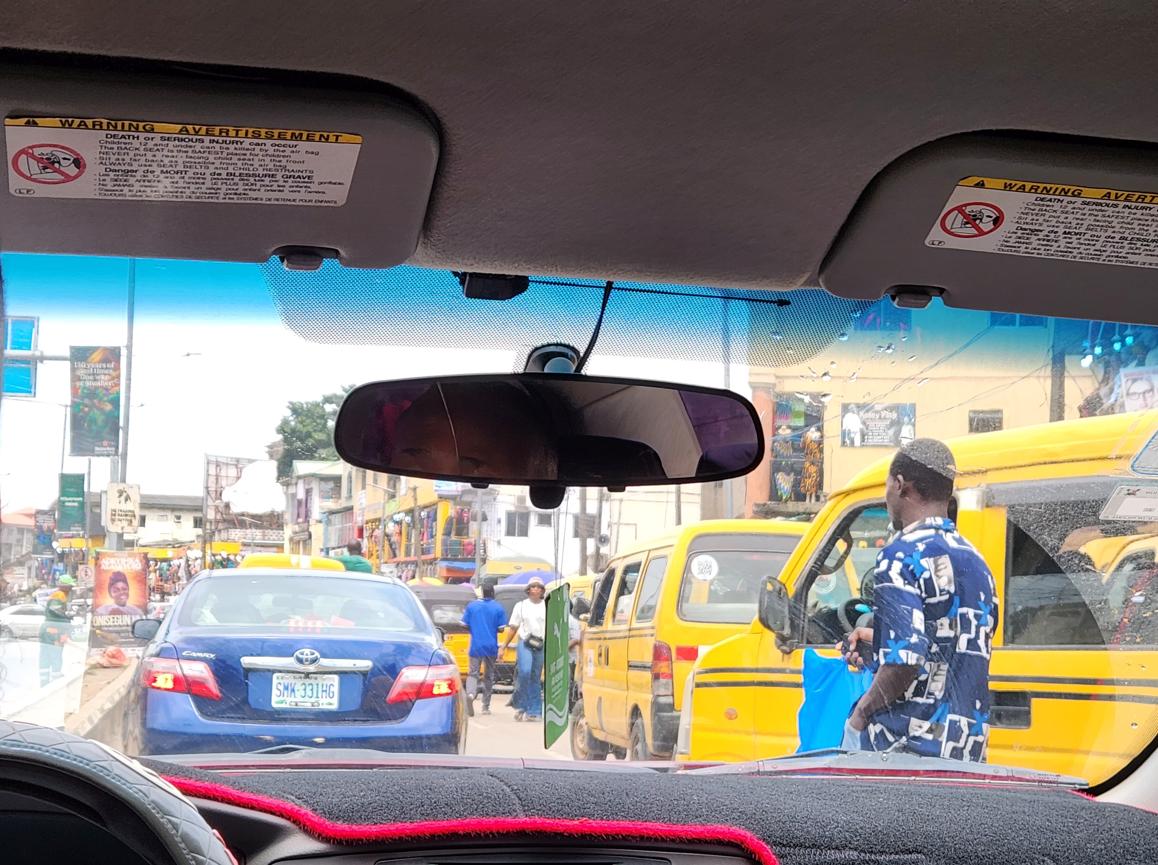
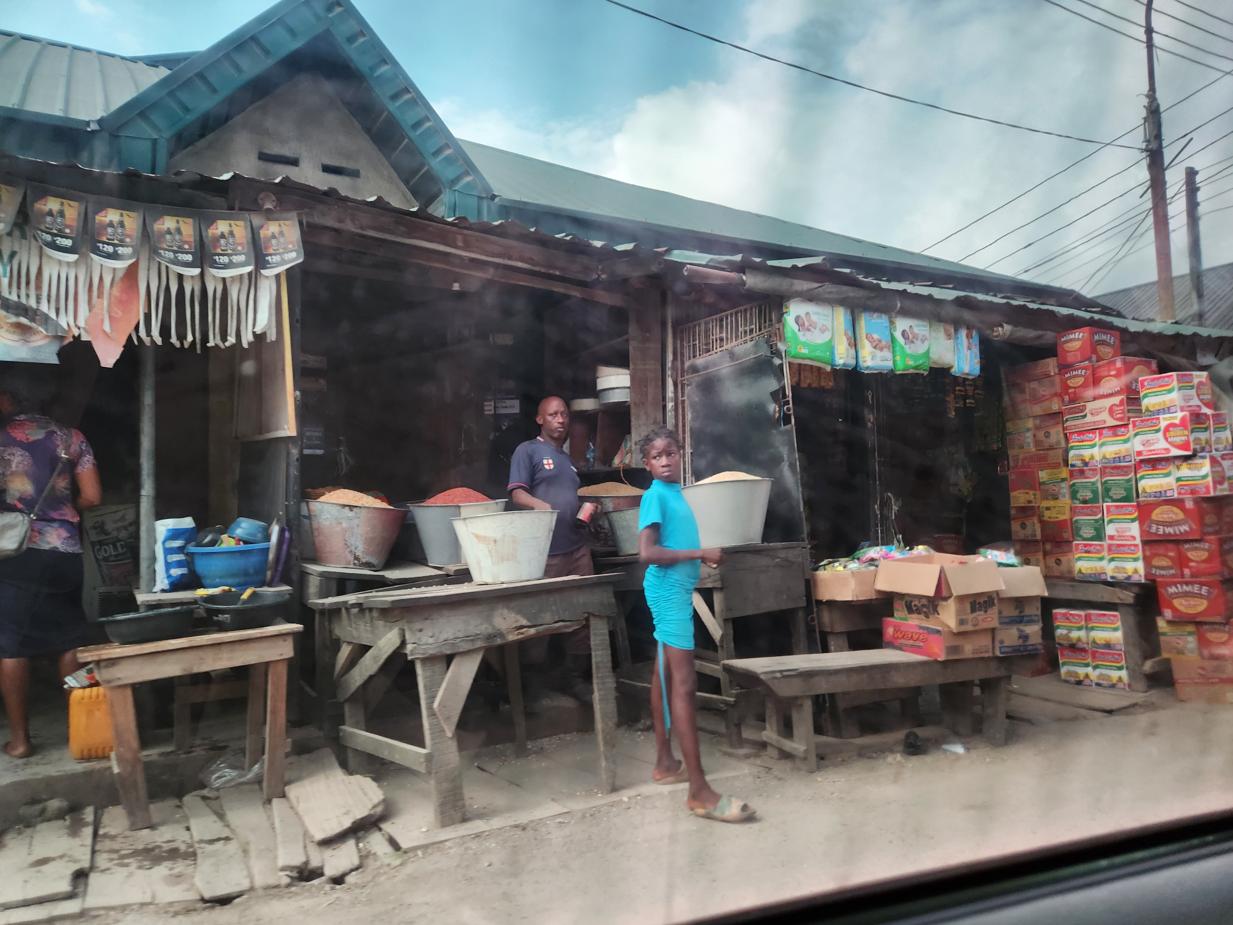
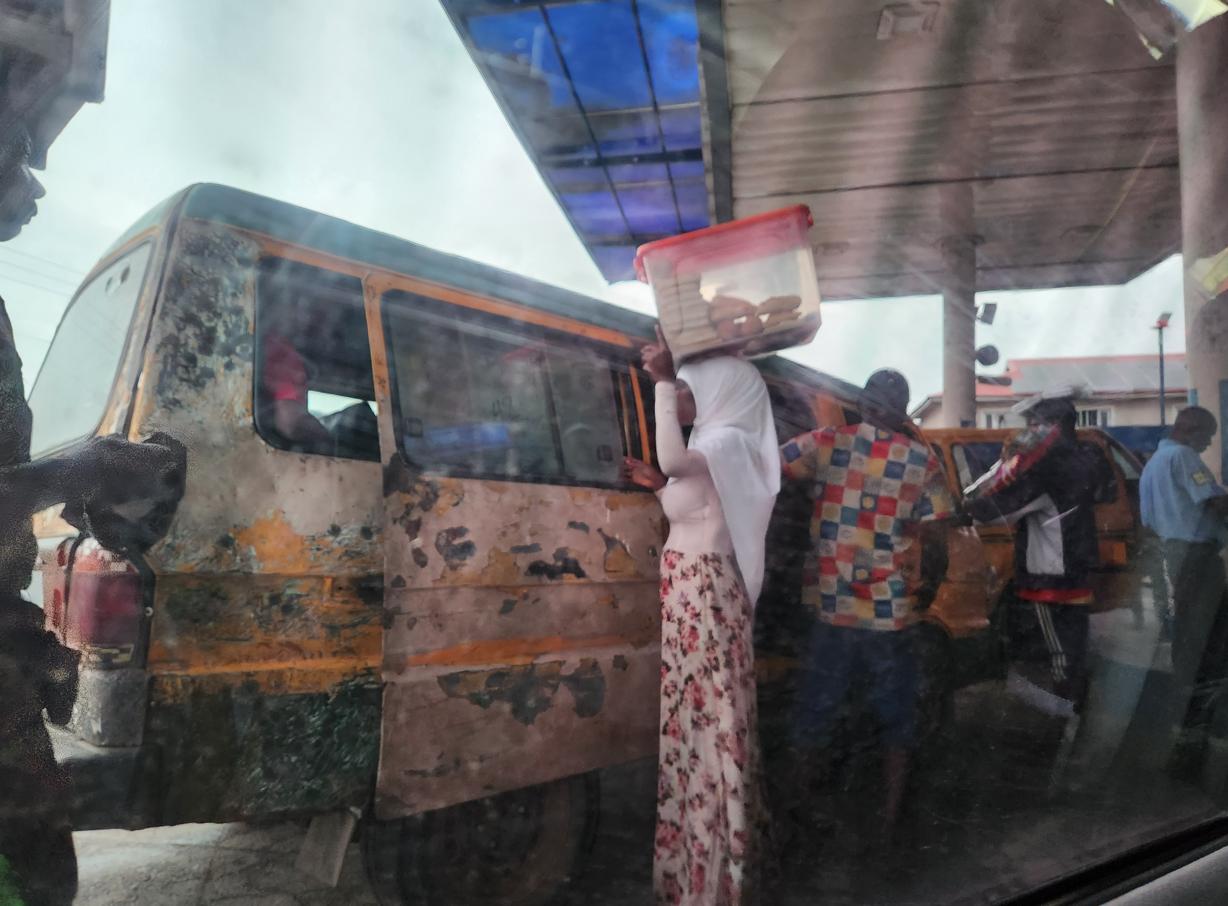
It was this last consideration that shaped our first itinerary decision. Rather than attempt Lagos Island — the downtown commercial core, accessible only by bridges that become parking lots at almost any hour — we would begin instead at Makoko, a waterfront community built over the Lagos Lagoon, reachable by boat from the Yaba shore.
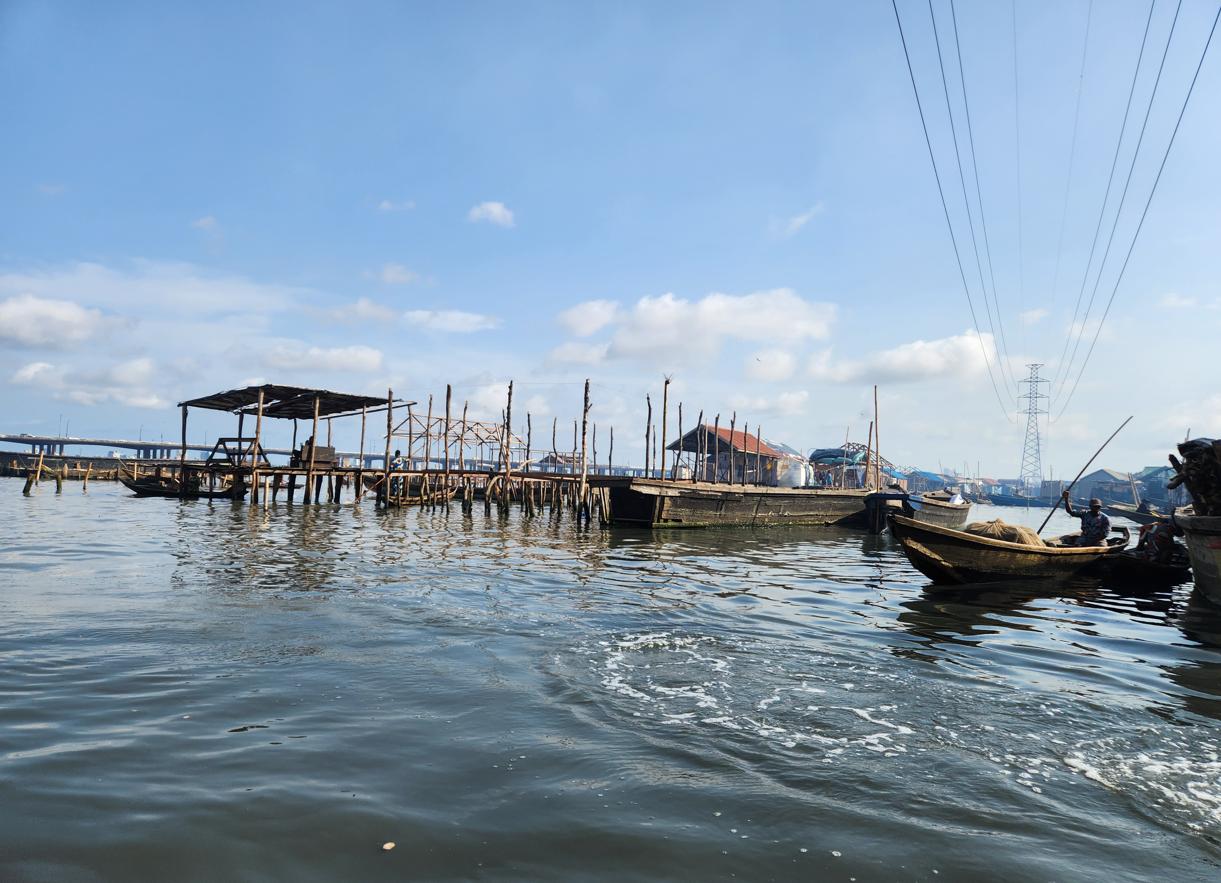
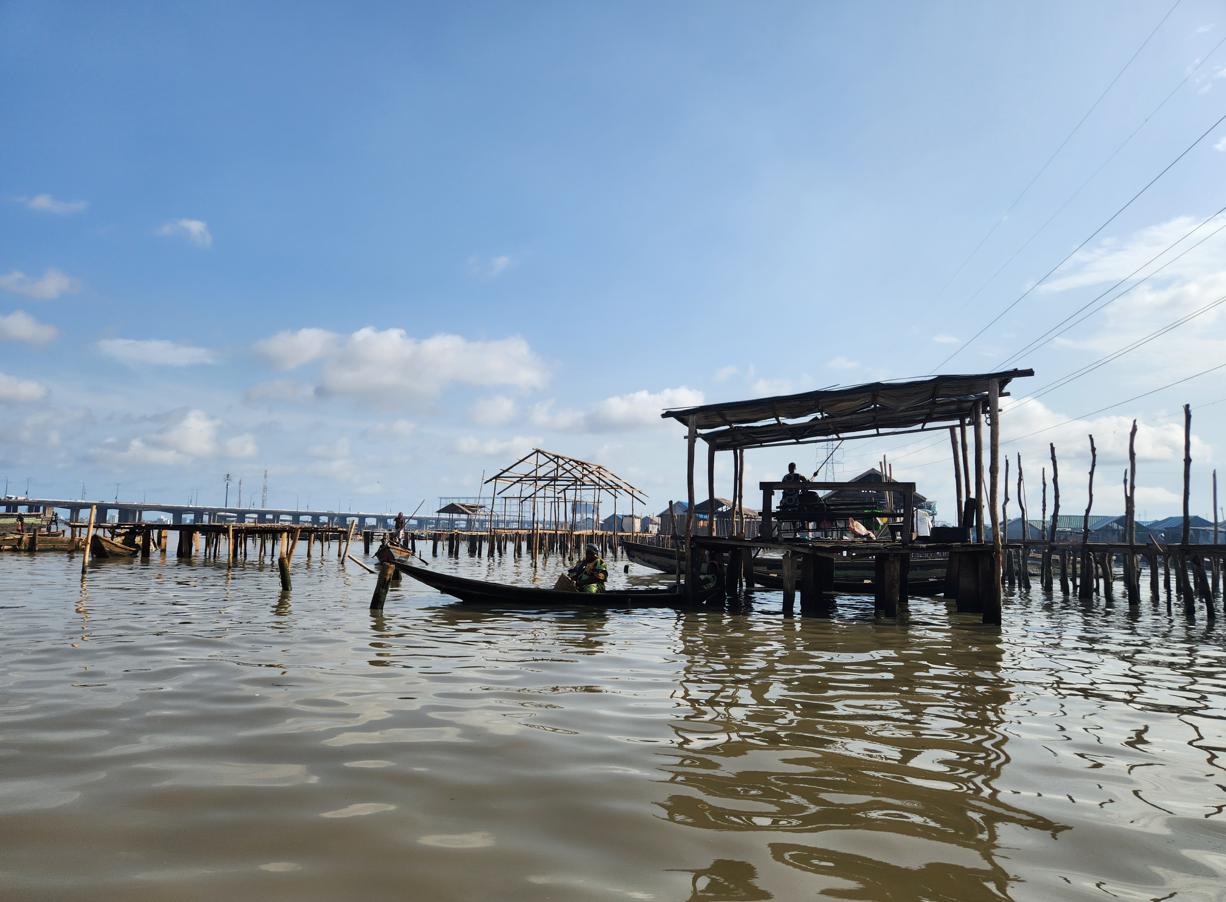
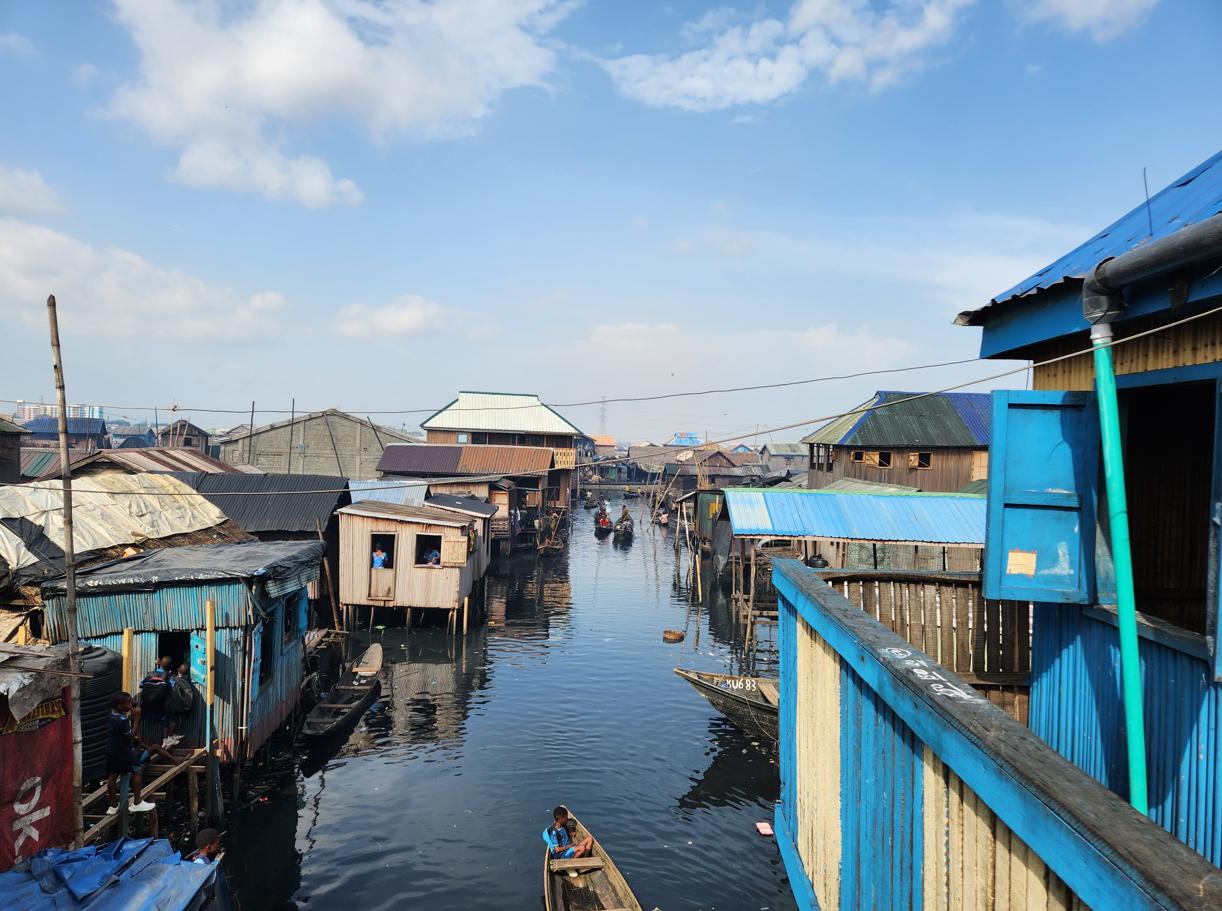
The word 'slum' is technically accurate for Makoko, and our tour operator had used it without apology. What it fails to convey is the sheer density and ingenuity of life arranged vertically on stilts above dark water. A third of Makoko extends over the lagoon on wooden poles driven into the mud below; the rest spreads onto the adjacent shore. The population is estimated at over 100,000, though the figure is necessarily approximate in a community that has no formal address system and whose boundaries shift with the water.
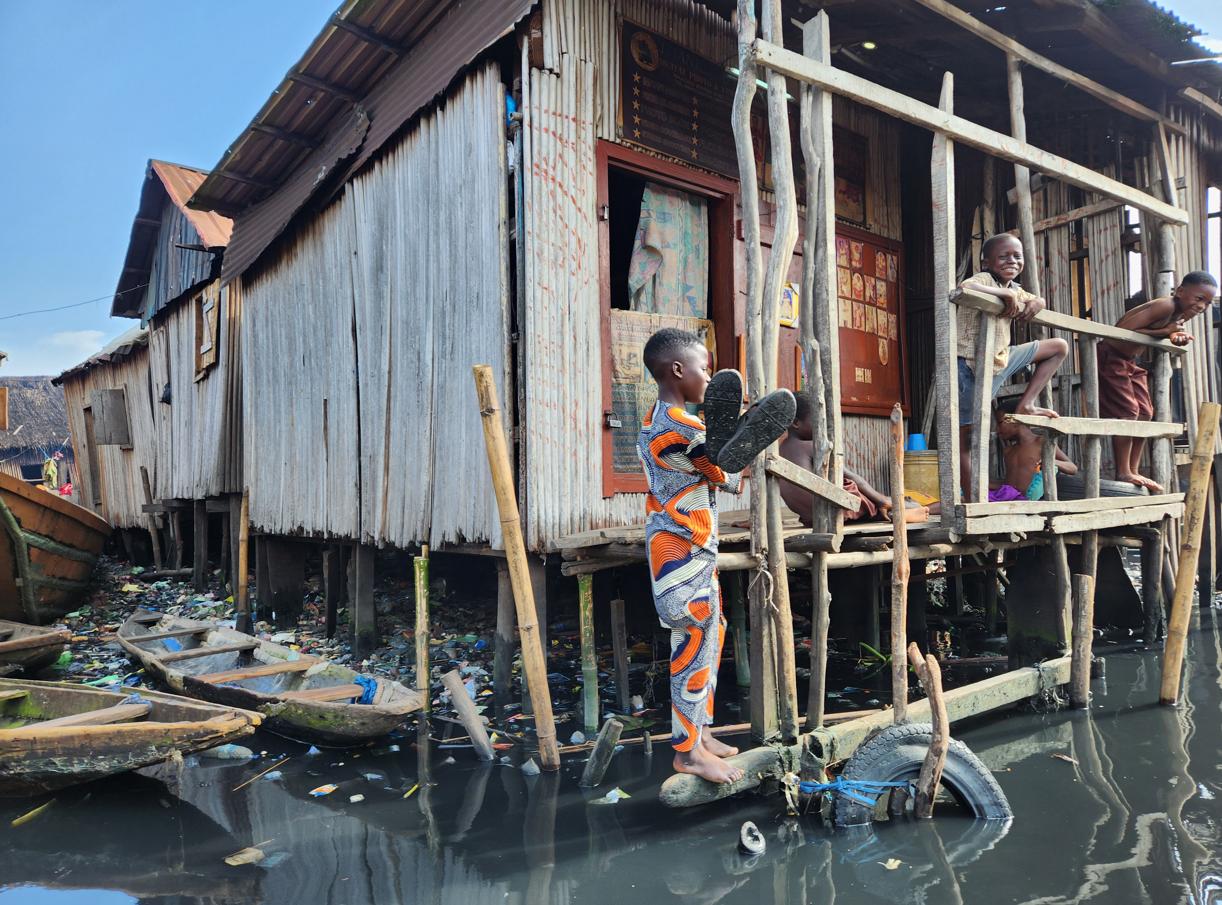
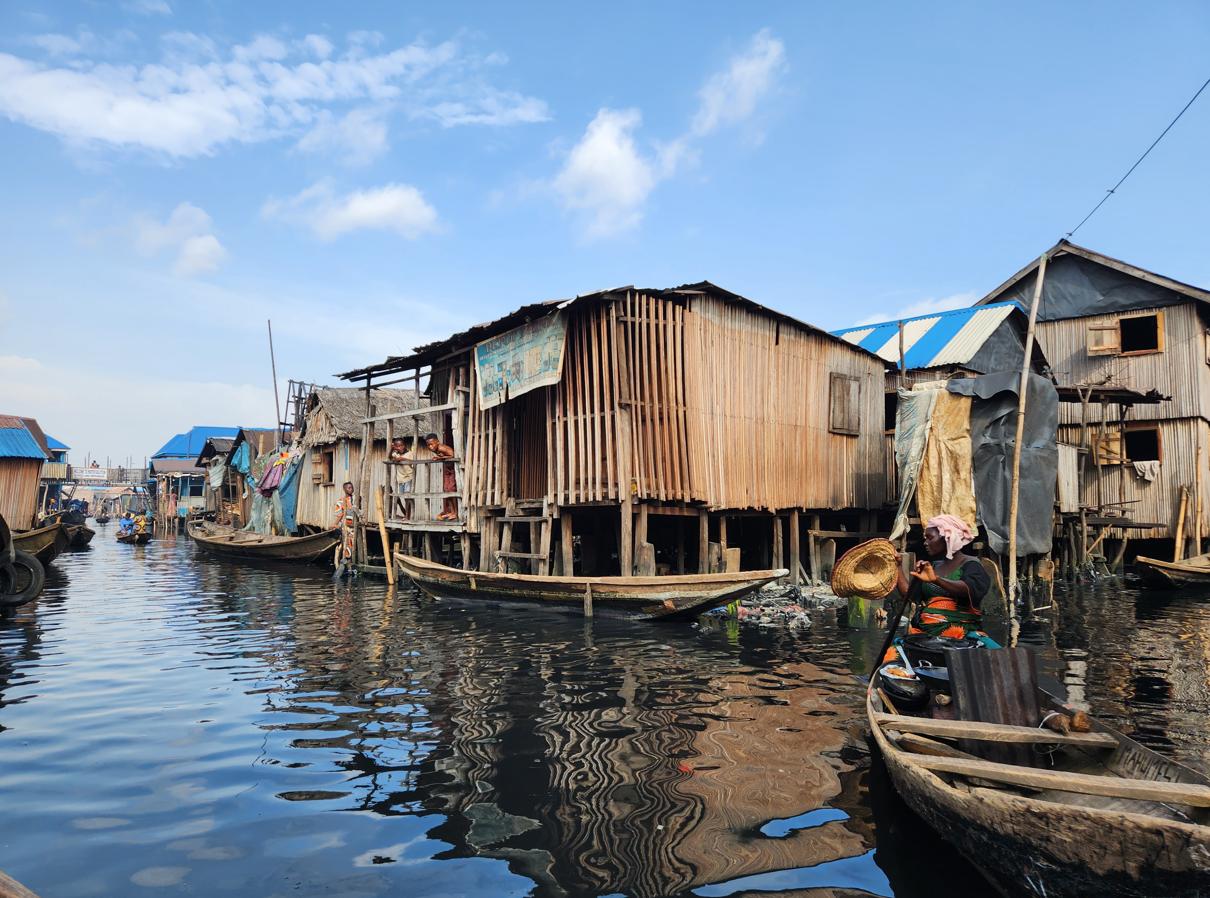
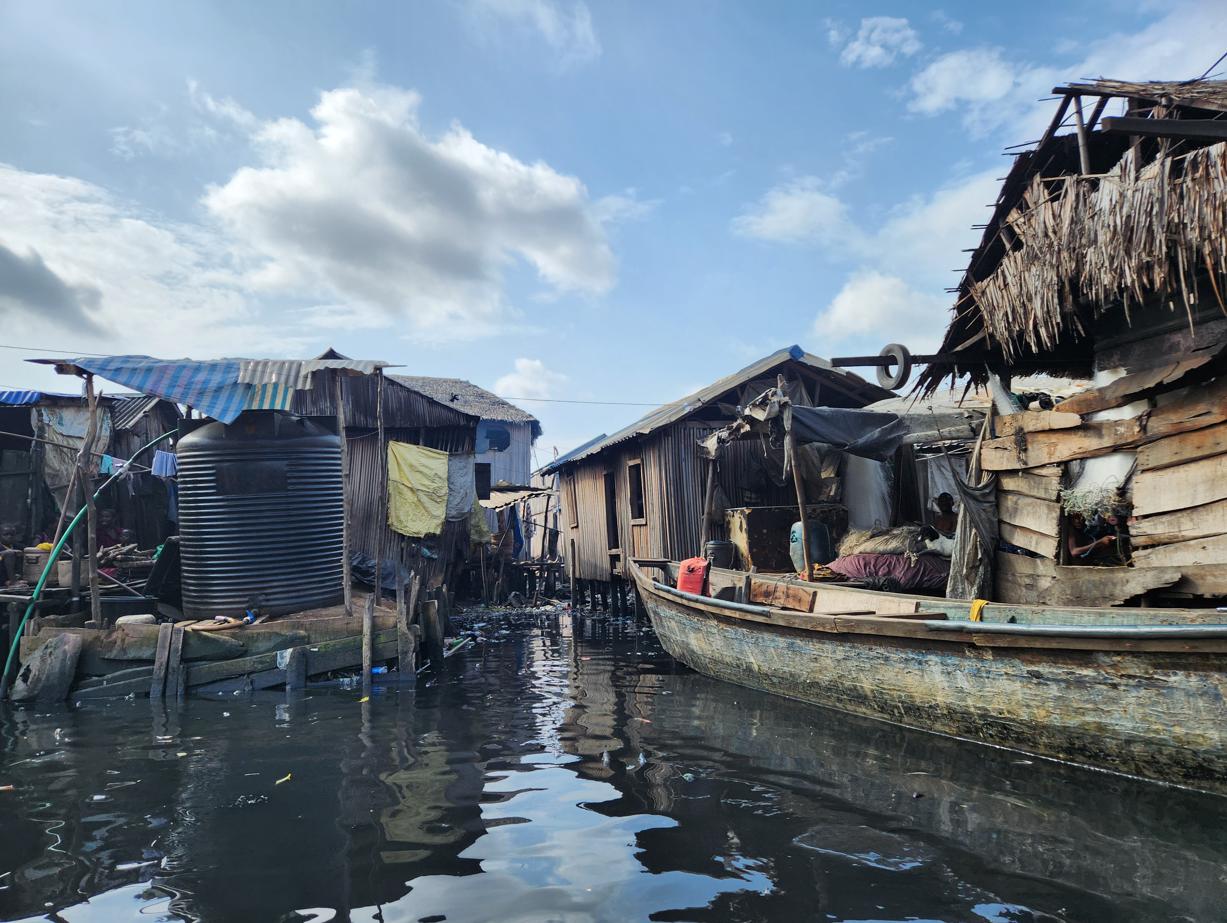
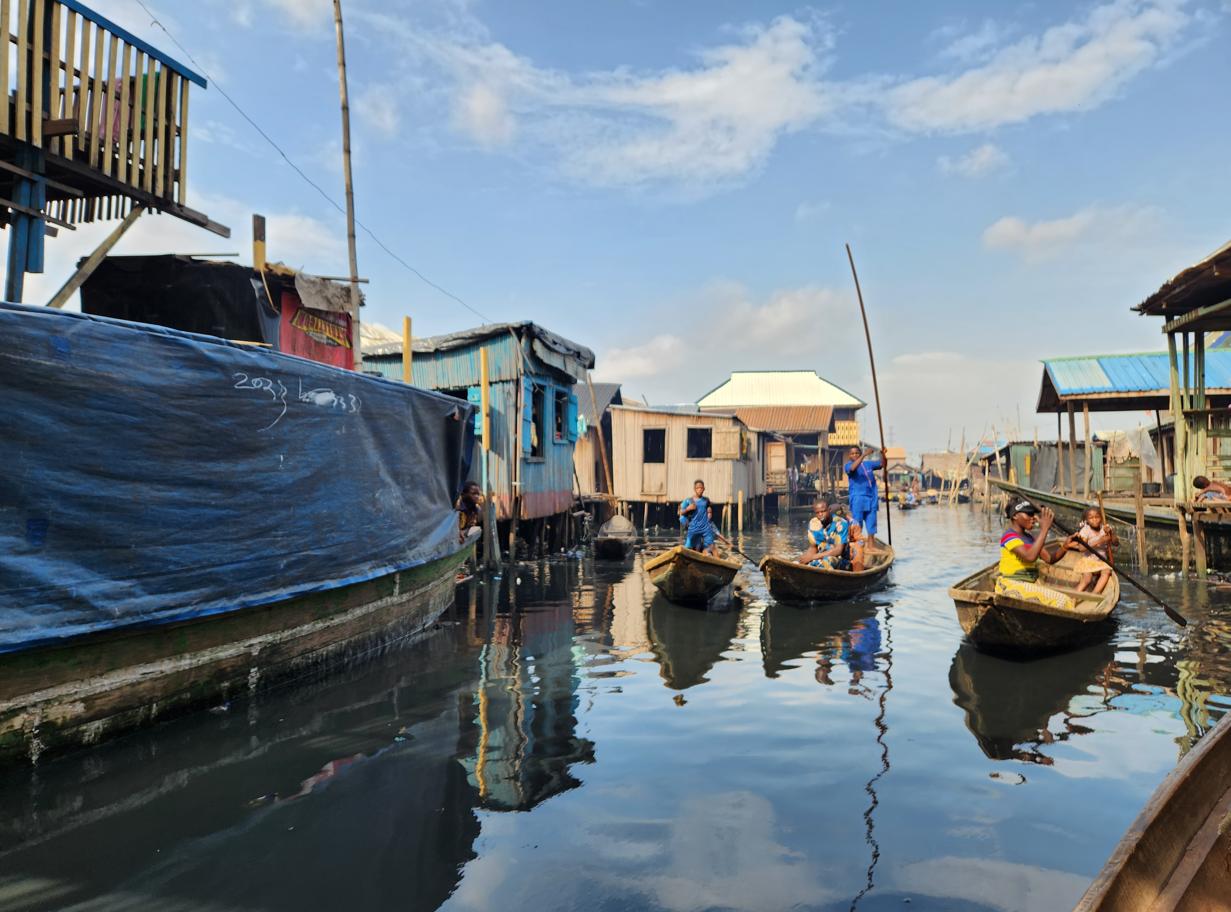
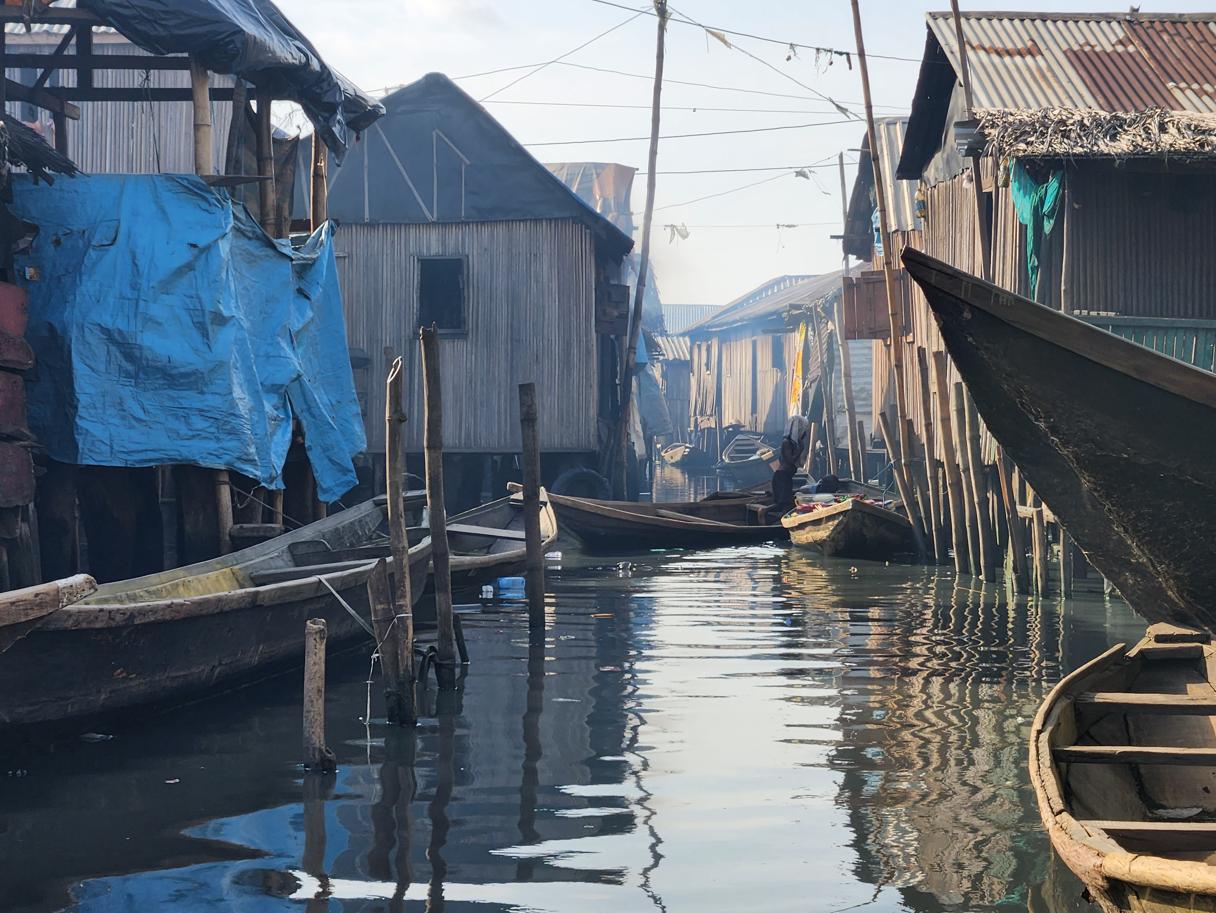
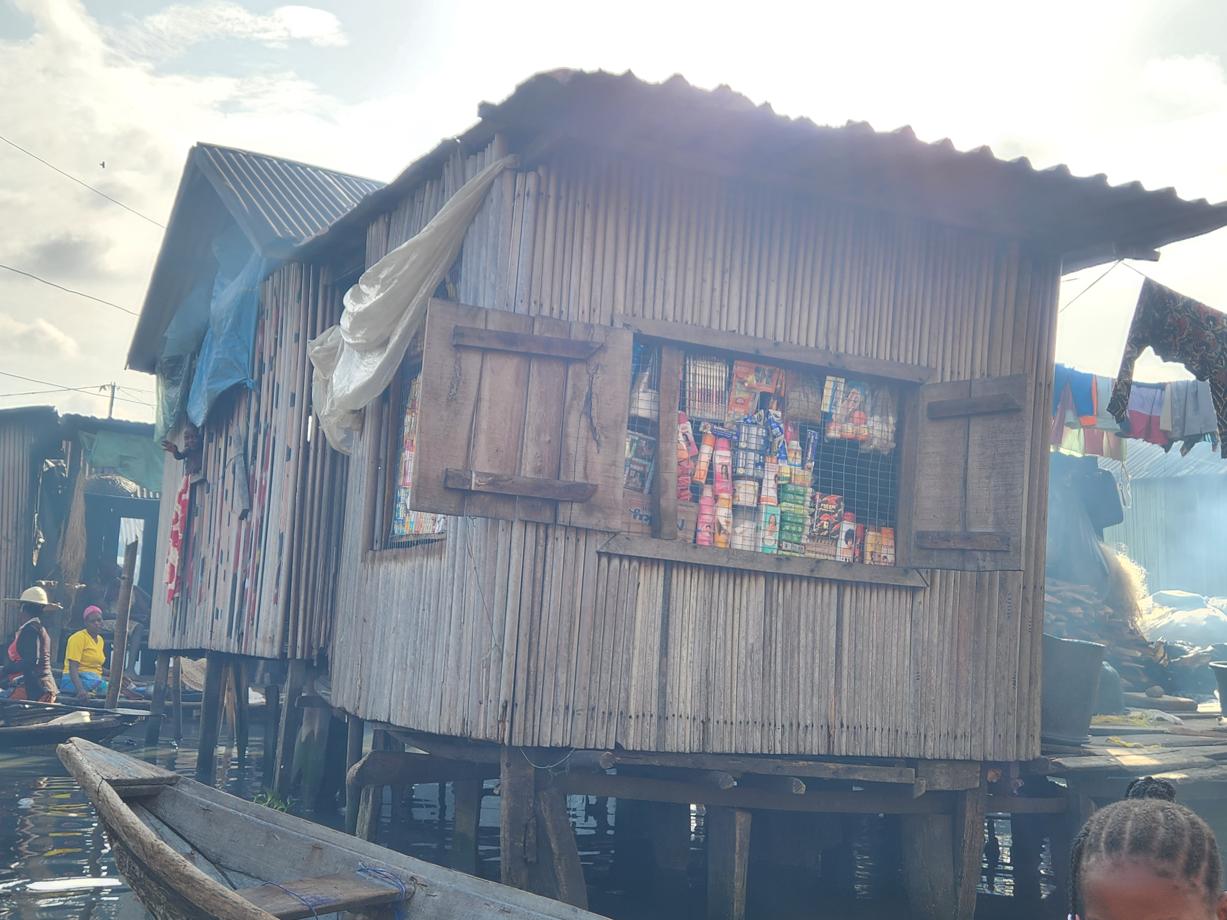
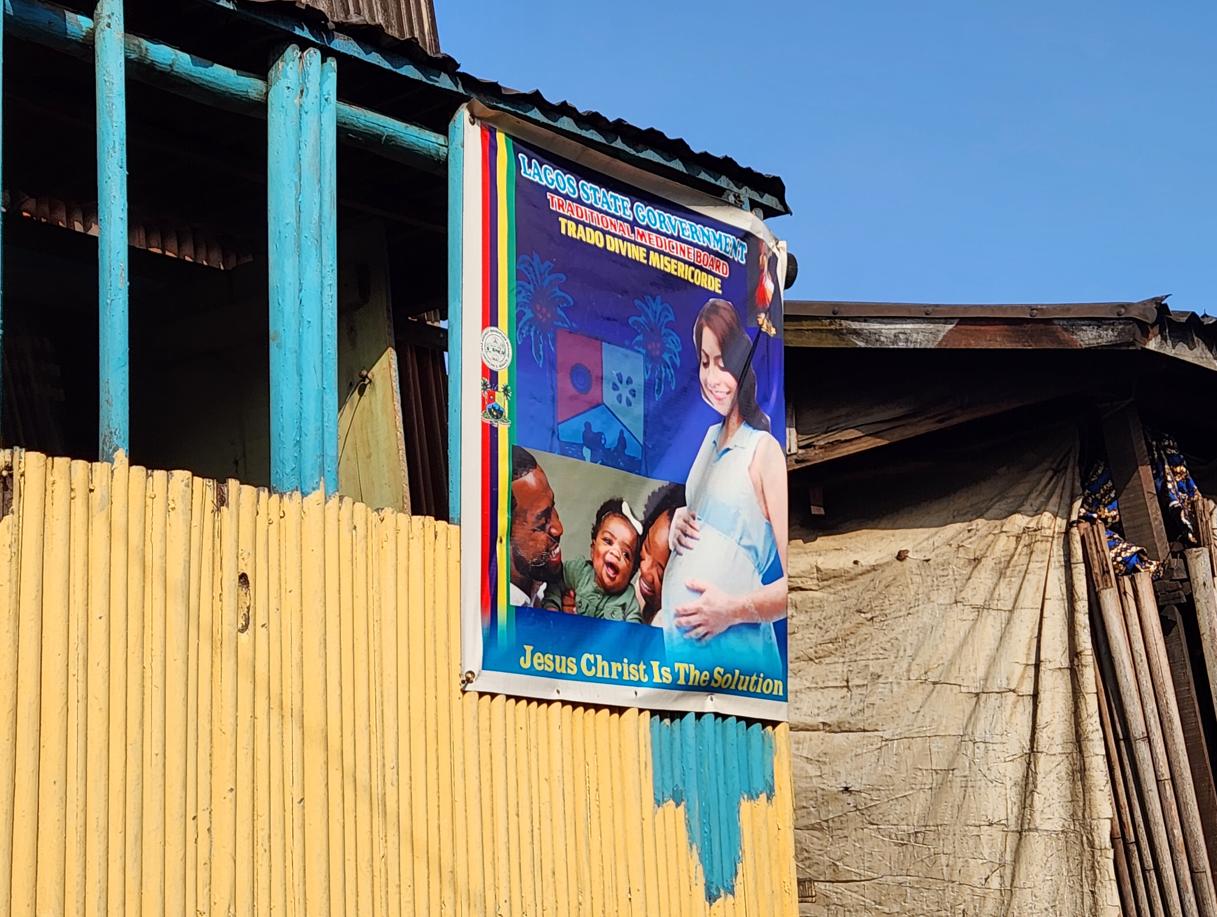
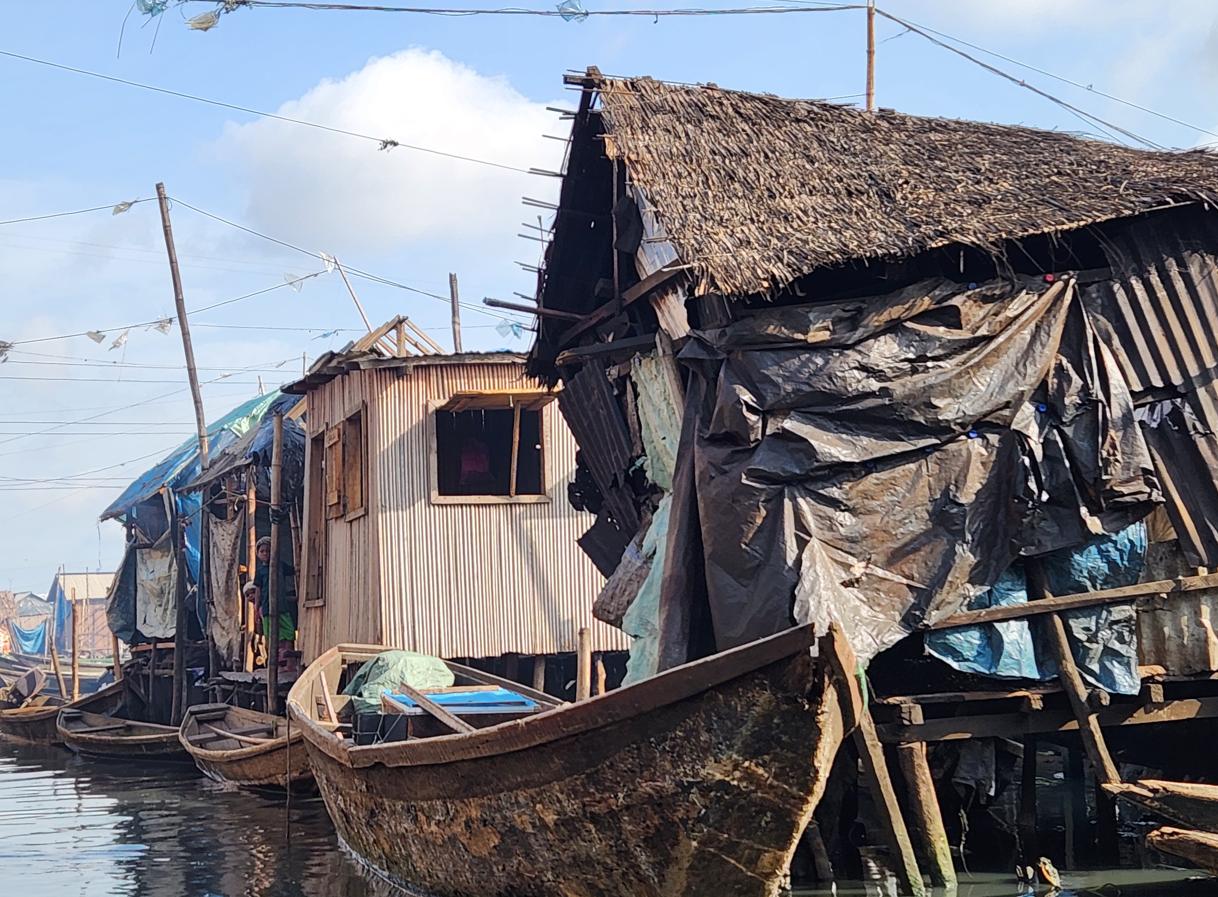
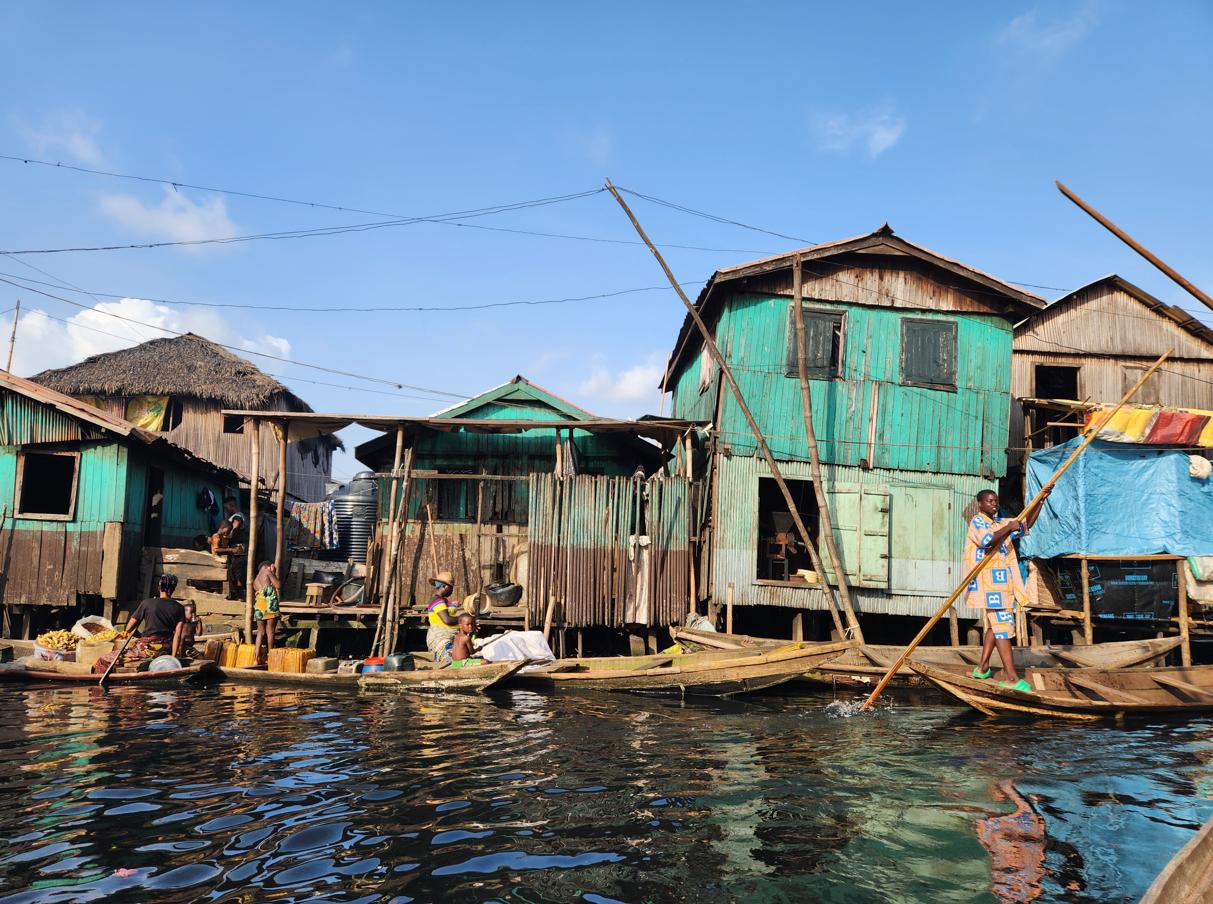
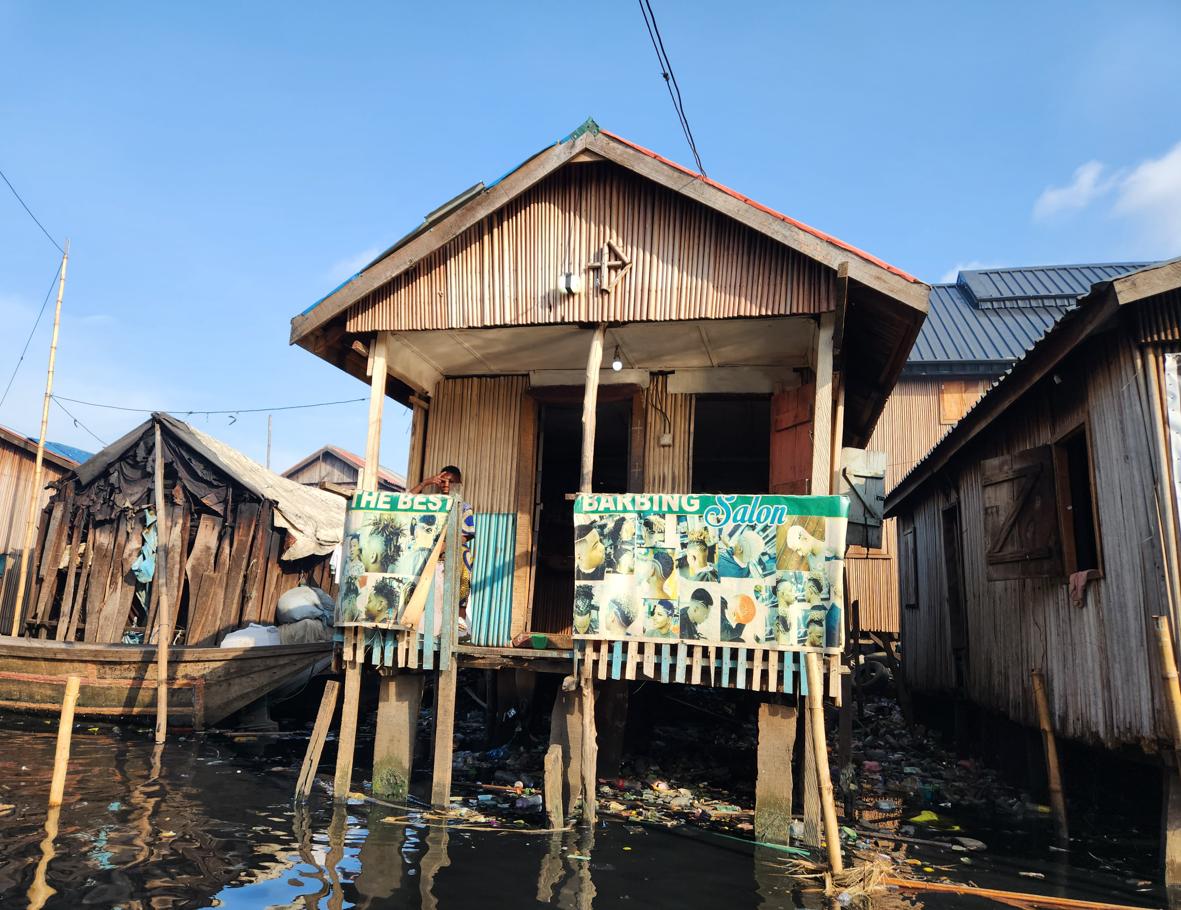
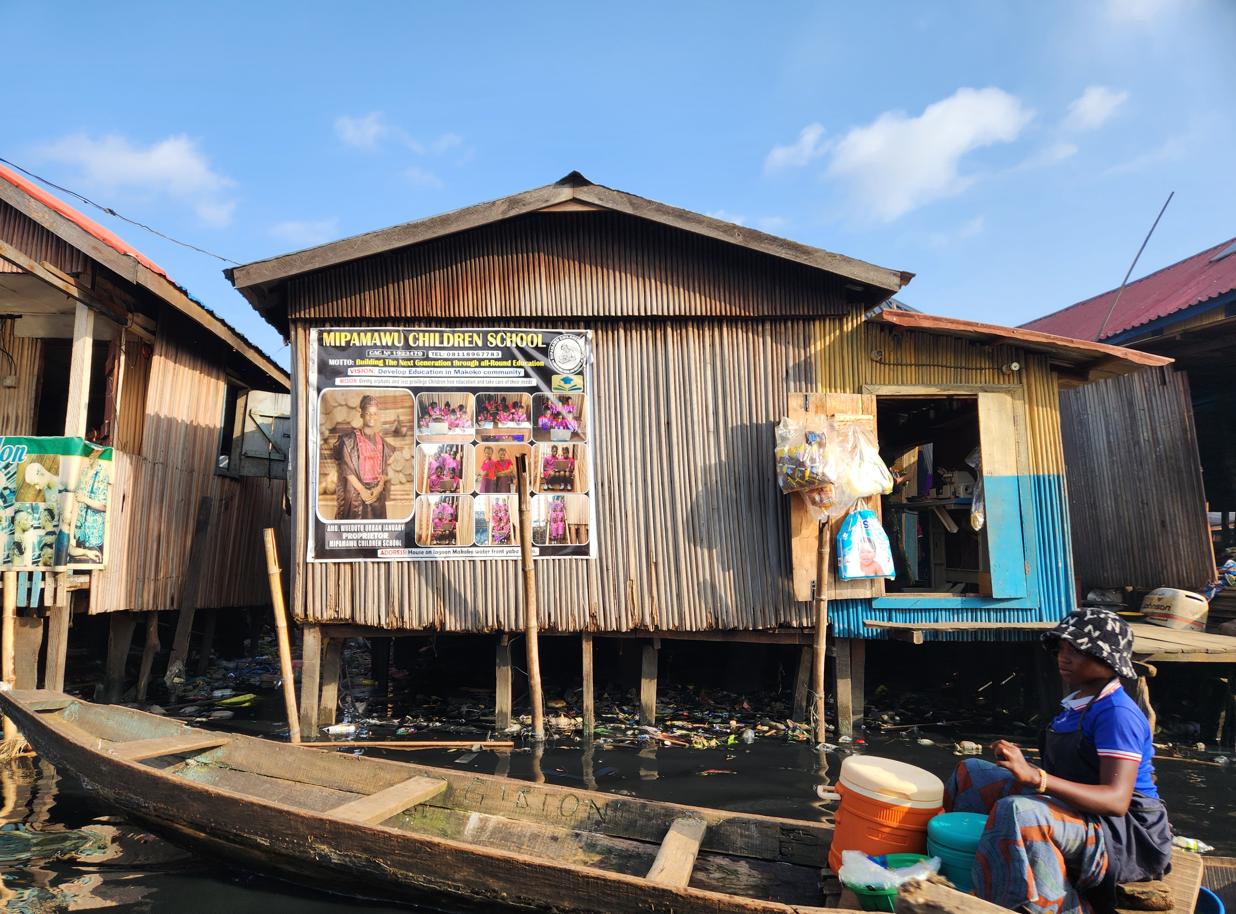
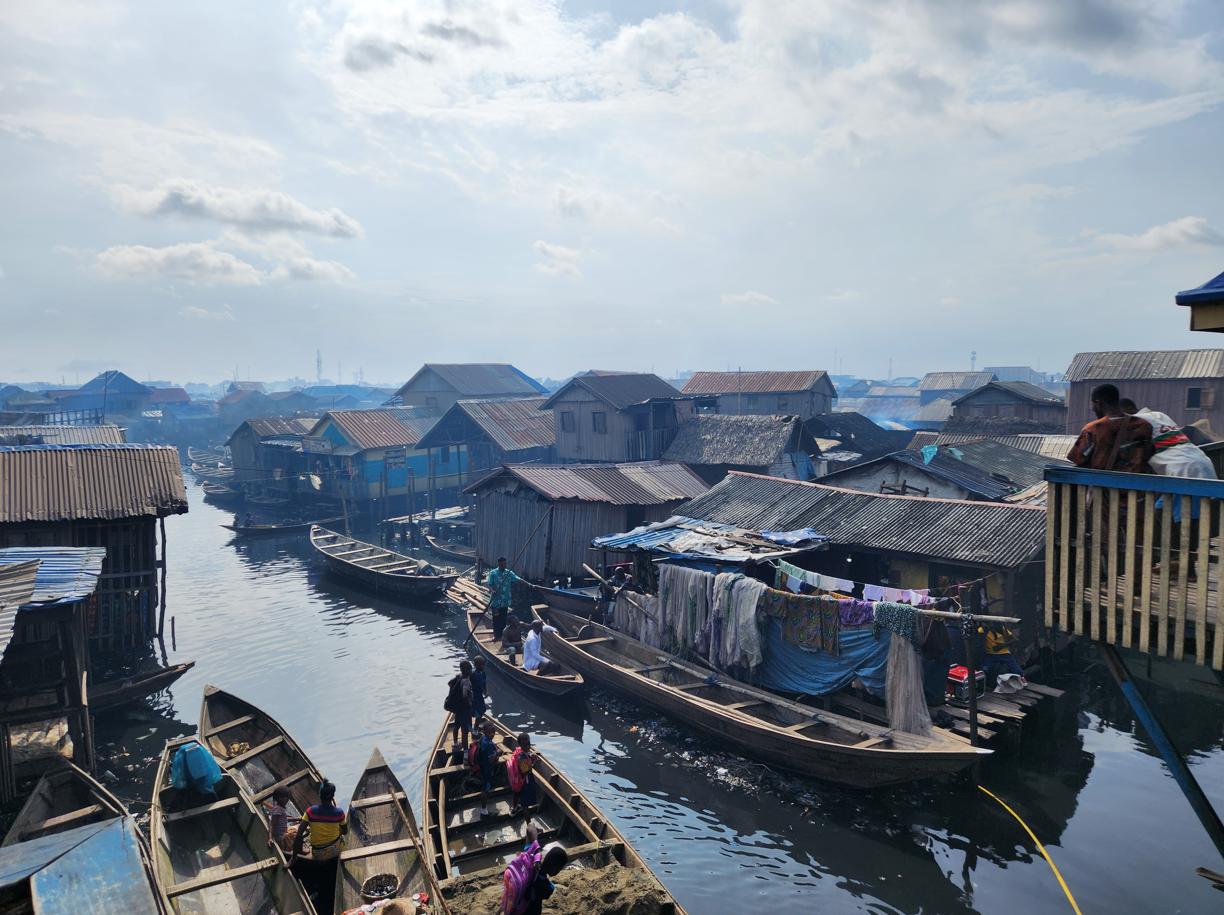
The lagoon in this part of Lagos is black — the colour of a surface that receives all the waste of a hundred thousand people with no sewerage system. We came in by narrow canoe, threading between the stilted structures. Above us, washing hung from lines strung between poles. Piles of rough-sawn timber — planks two or three inches thick, stacked in unsteady towers — sat on platforms barely above the waterline. A woman and a small child sat among the lumber as if it were furniture, unhurried, watching our boat pass. A child in a blue t-shirt paddled a dugout alone along the edge of the channel. The water's surface, oil-dark, caught the reflections of the structures above and returned them in wavering, distorted form — a second Makoko, shimmering and inverted beneath the first.
The community is largely Egun, a people who migrated from Badagry and the Benin Republic, whose traditional occupation is fishing. In practice, Makoko has diversified considerably: there are traders, craftsmen, a school built on stilts, small food-sellers who paddle between the dwellings with canoes loaded with produce. Along the narrow water-lanes, women propelled themselves from structure to structure, their boats laden with vegetables, dried fish, jerry cans. One woman in a wide straw hat, her back to us, drove her paddle with practiced ease through a stretch of smoky haze that had settled between the structures in the afternoon stillness. The smoke, we were told, came from cooking fires maintained on platforms just above the water.
The buildings themselves are a record of accumulated improvisation. Corrugated iron walls, patched with whatever was at hand — blue tarpaulins, black plastic sheeting layered and re-layered until the original surface had long since disappeared, thatched overhangs held up by bamboo poles lashed with rope. Repair is a permanent condition rather than an occasional event. The water is always rising or shifting; nothing here is built to last, but everything is built to be fixed.
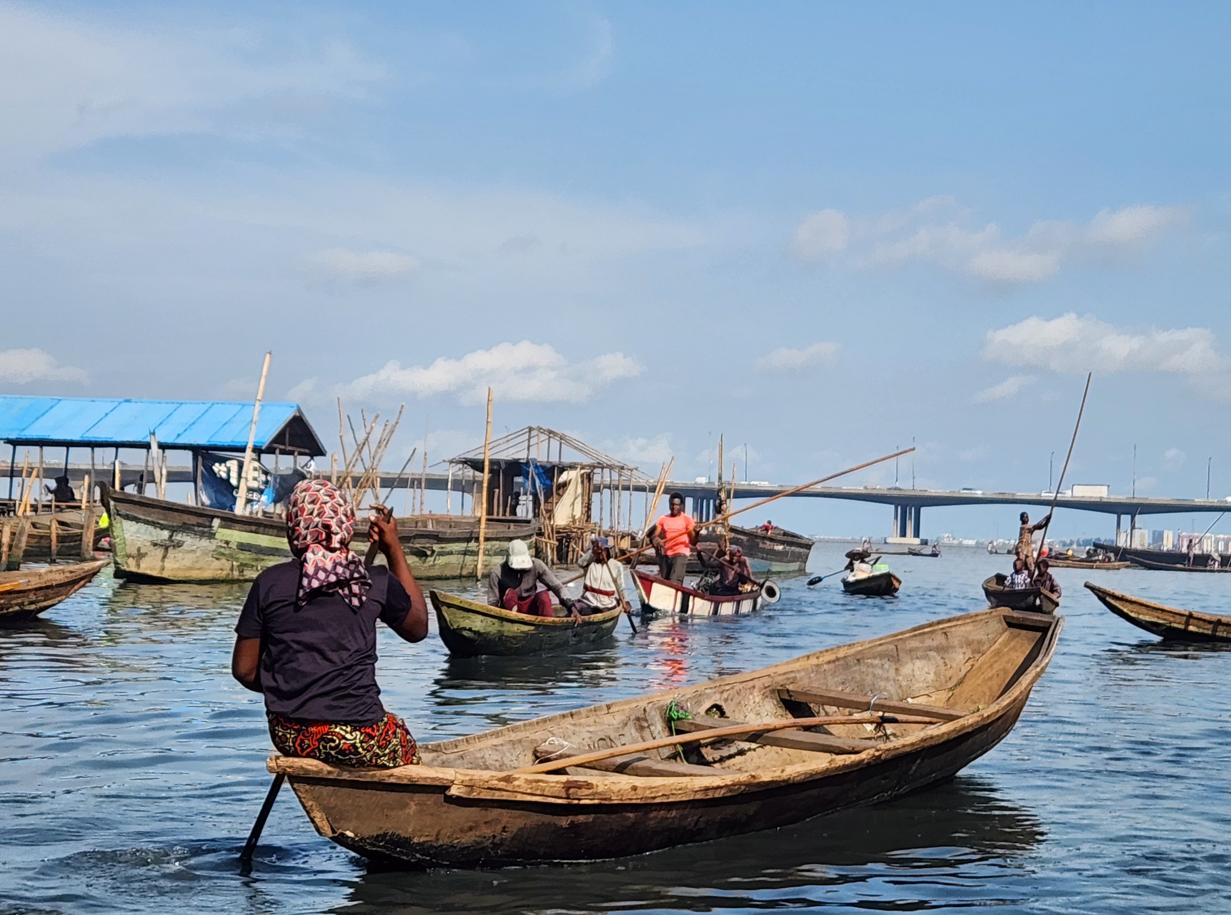
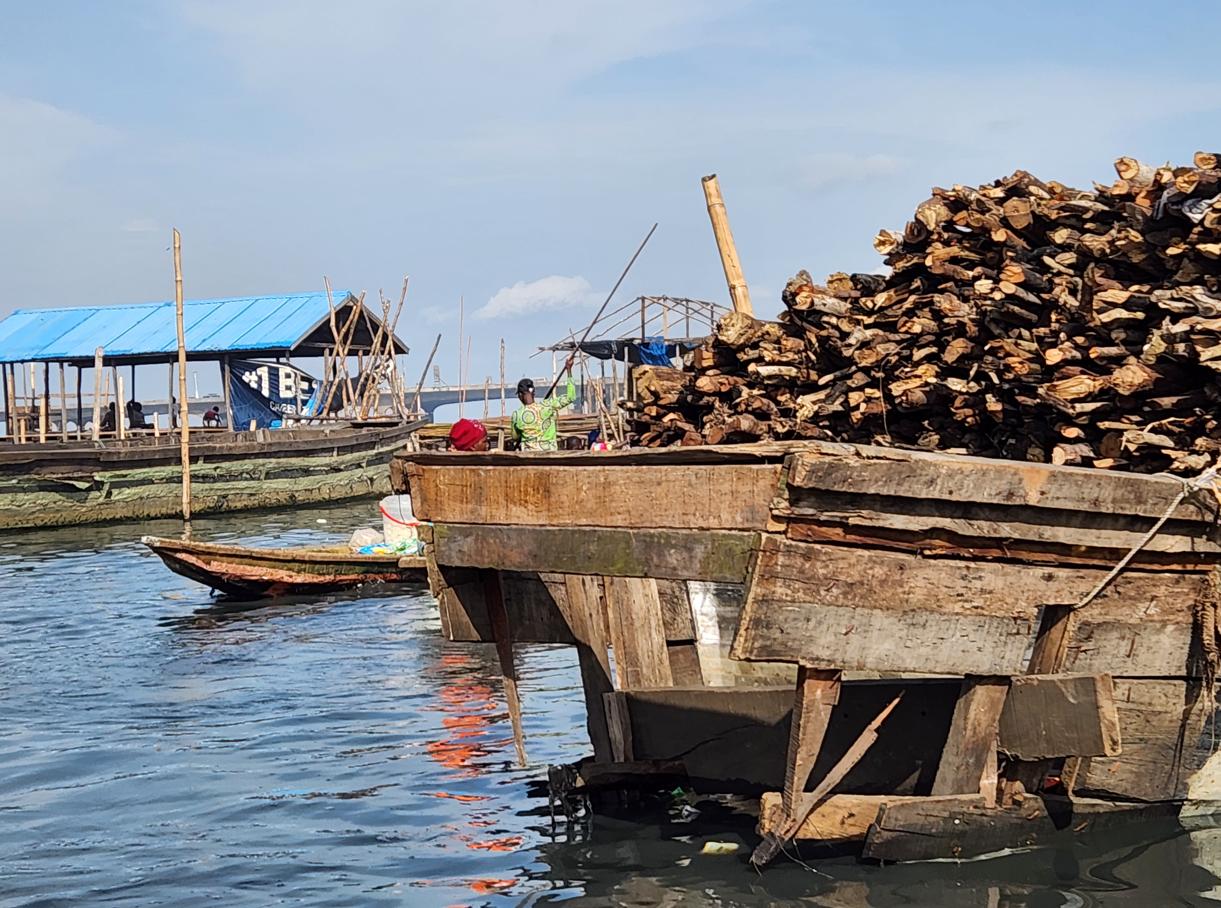
Shortly after our arrival, we were approached by a group of area boys — the Nigerian term for the organised unofficial enforcers who manage access to territory in communities like this one. They were not pleased that our guide's local contact had brought us in without consulting them. There was a brief negotiation, the details of which we were not privy to, and we were allowed to continue. The son of the local chief, who joined us shortly afterward, remained with our group until we left, a presence that made clear we were under a form of protection. This too is part of the economy.
In July 2012, the Lagos State government sent in bulldozers with 72 hours’ notice and demolished a section of the waterfront structures, rendering dozens of families homeless overnight. The demolition was eventually halted, reportedly after a High Court judge who visited the settlement ordered proceedings stopped upon seeing the density and vitality of what was there. The local chief’s interest in foreign visitors is not difficult to understand: international attention is a form of insurance, a stay against the next demolition order. It was not sufficient. In late December 2025, a far larger wave of demolitions began — bulldozers and fire moving through the community over the course of weeks, destroying an estimated three thousand homes, schools, and clinics and displacing between ten and thirty thousand people. The Lagos State Government cited urban renewal and a safety setback beneath high-tension power lines; residents and human rights organisations argued the clearances went well beyond any safety rationale, and pointed to plans for a waterfront real estate development on the cleared ground. Several deaths were reported. By February 2026, protests and international pressure had produced a suspension order from the Lagos State House of Assembly, pending investigation. When this account was completed, much of the stilt community still stood, but a large section of what had been Makoko was floating debris, and the people who had lived there were waiting on their canoes to learn whether the state intended to relocate them or simply to wait them out. The insurance, it turned out, had an expiry date.
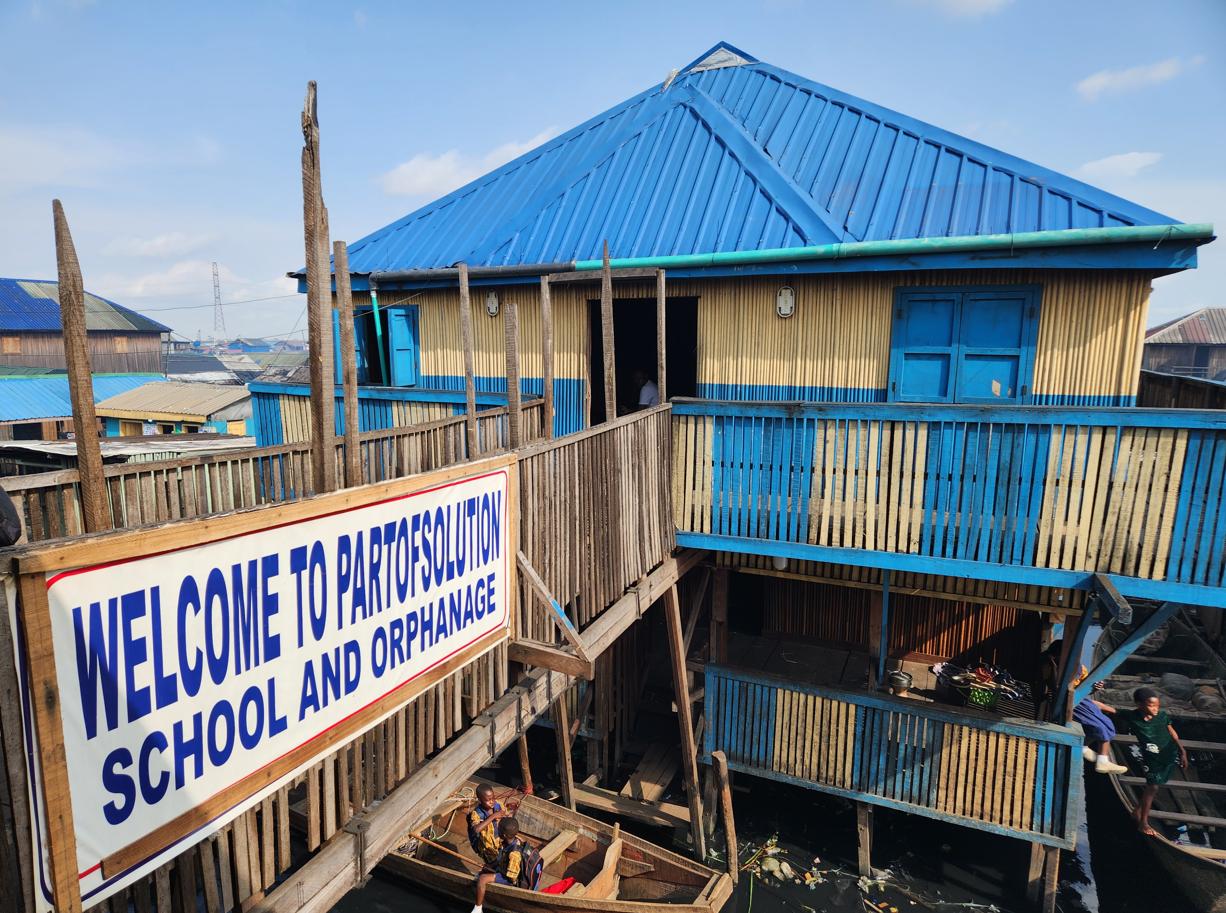
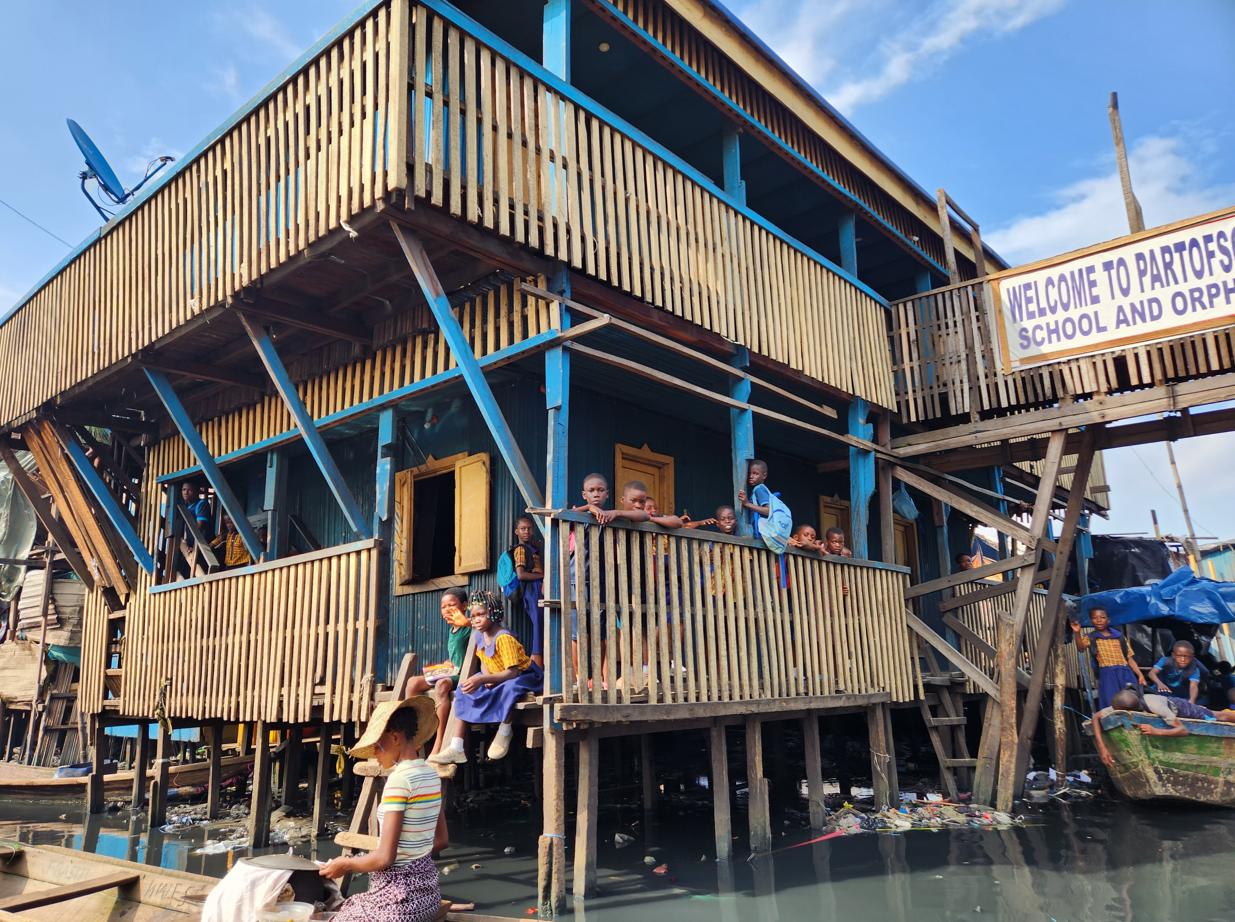
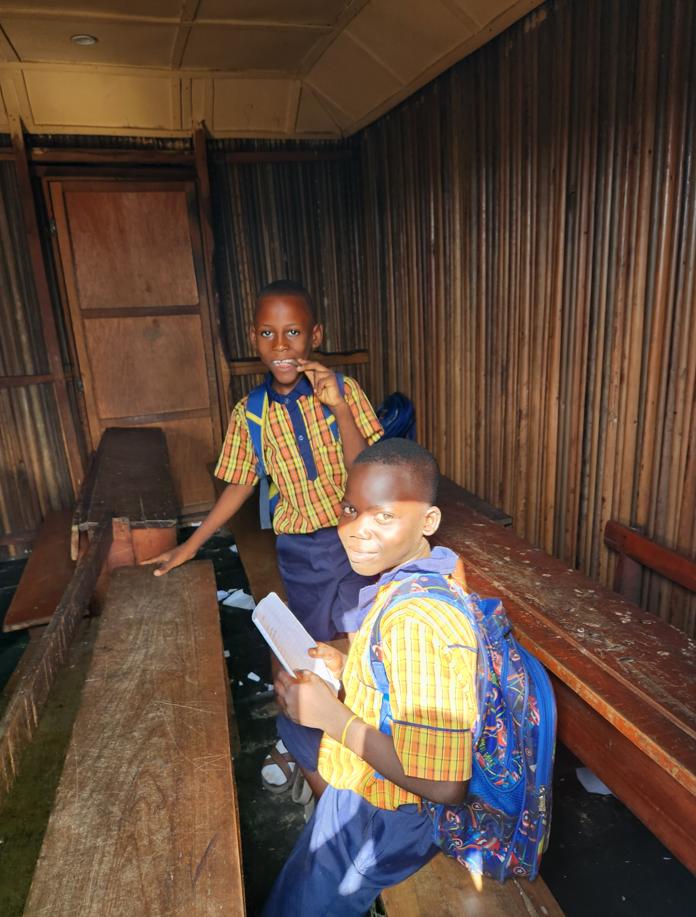
We visited the Part of Solutions School & Orphanage: a single room on stilts, its floor above the water, its walls decorated with hand-painted educational charts. The children who attend it have grown up with no other world than this one — the lagoon, the canoes, the narrow walkways between the houses. They swim in the same water that receives the community's waste. The juxtaposition of childhood ordinariness — the playing, the noise, the complete indifference to the tourists — and the conditions in which that childhood was being lived was not something one could photograph out of.
Makoko is sometimes called the Venice of Africa, a comparison that is both flattering and absurd. Venice was built on wealth extracted from maritime trade across the known world; its canals are monuments to ambition. Makoko was built on necessity by people who could not afford land. What the comparison captures, imperfectly, is the sheer improbability of human habitation organised around water — the way a community can root itself in conditions that seem to offer no footing at all.