Kano Royal Wedding Durbar Gallery
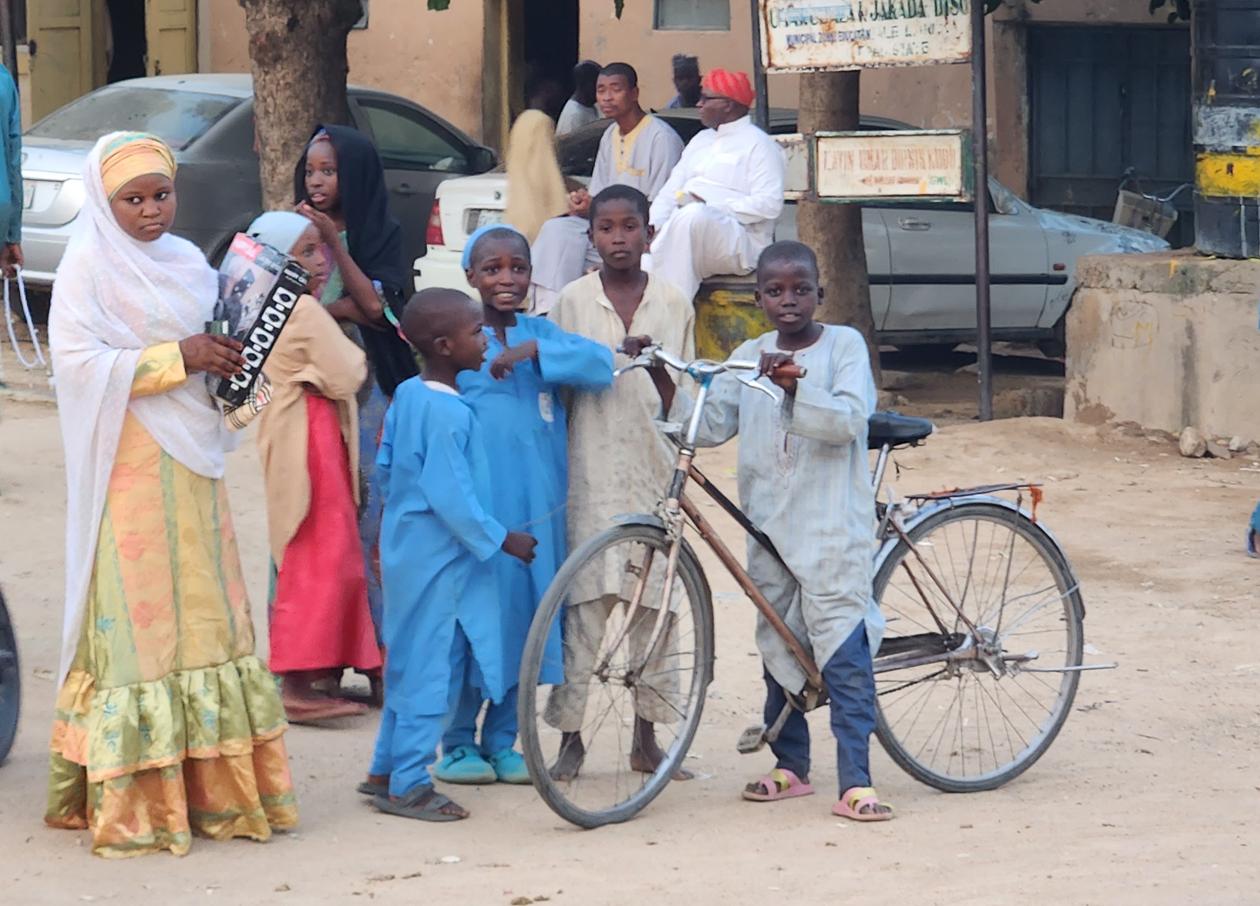
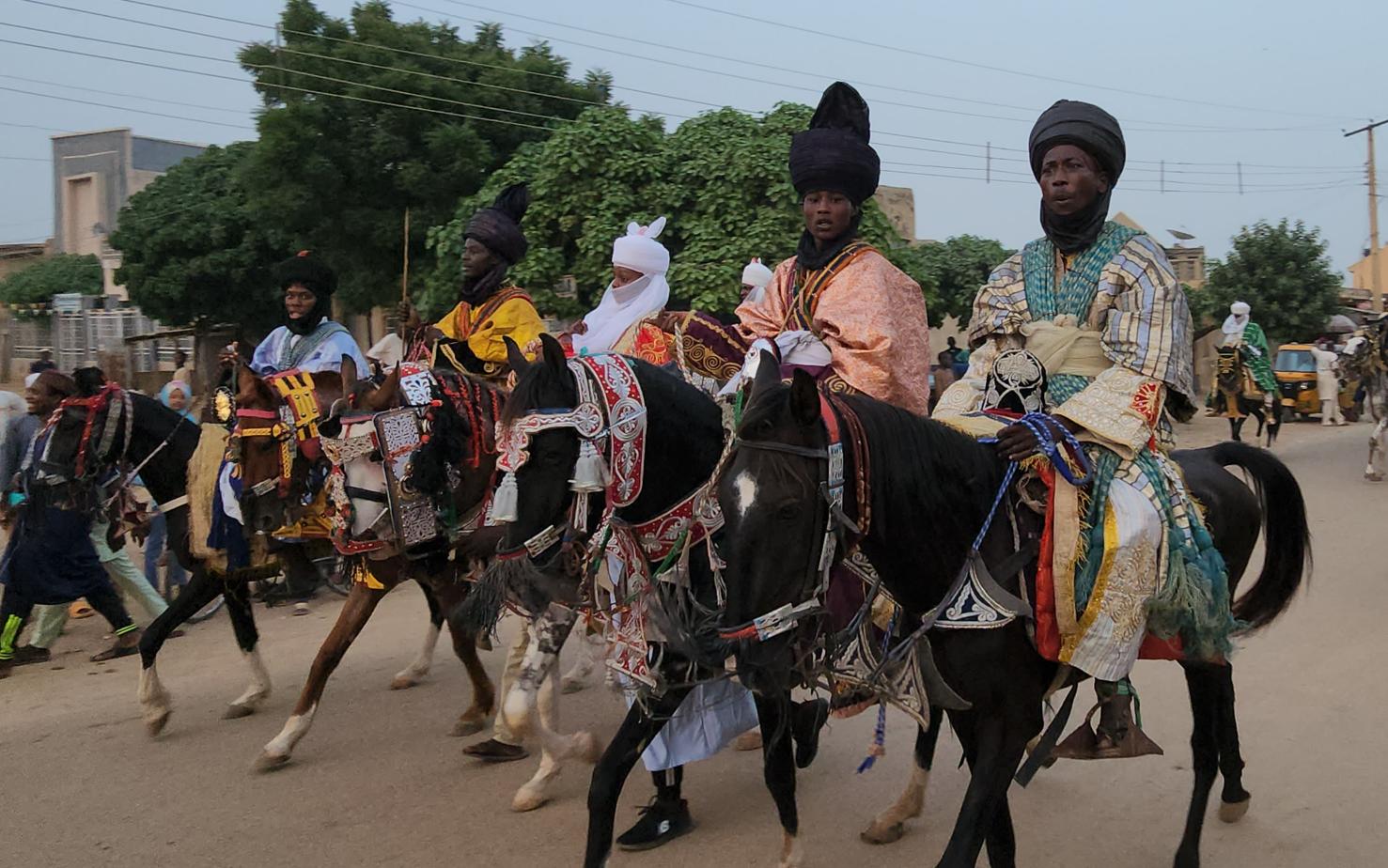
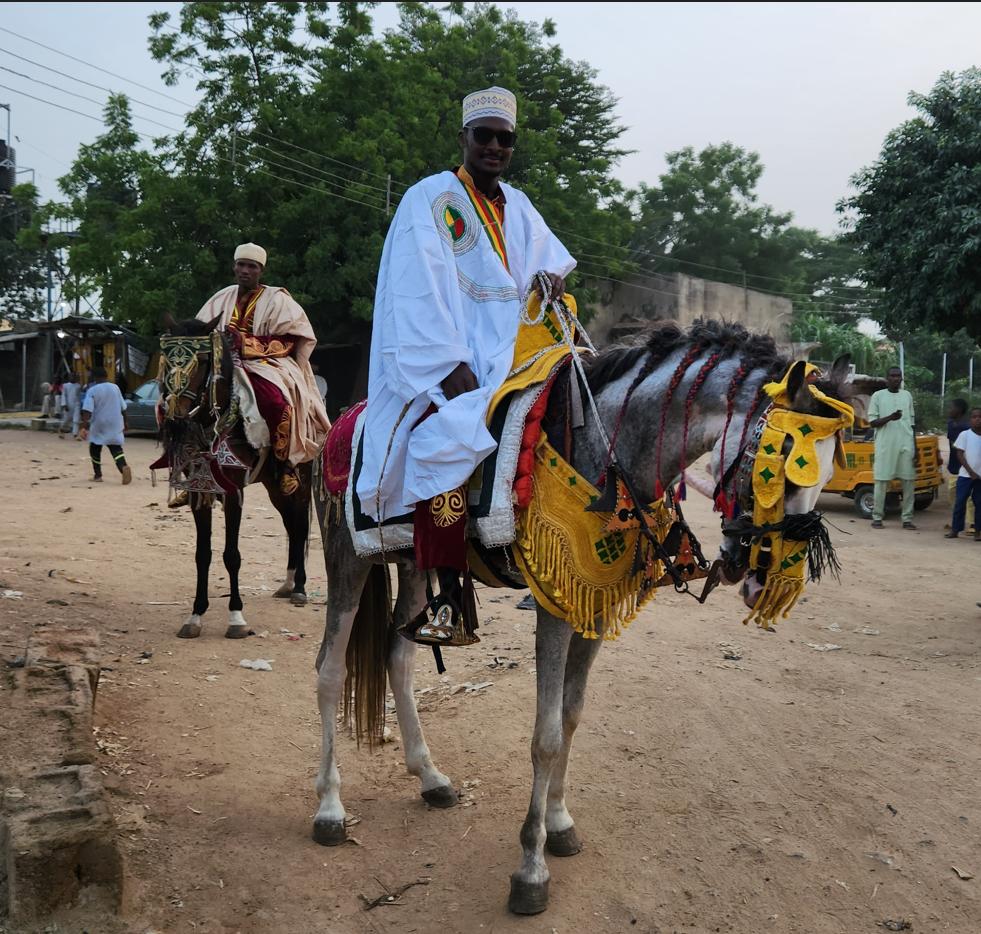
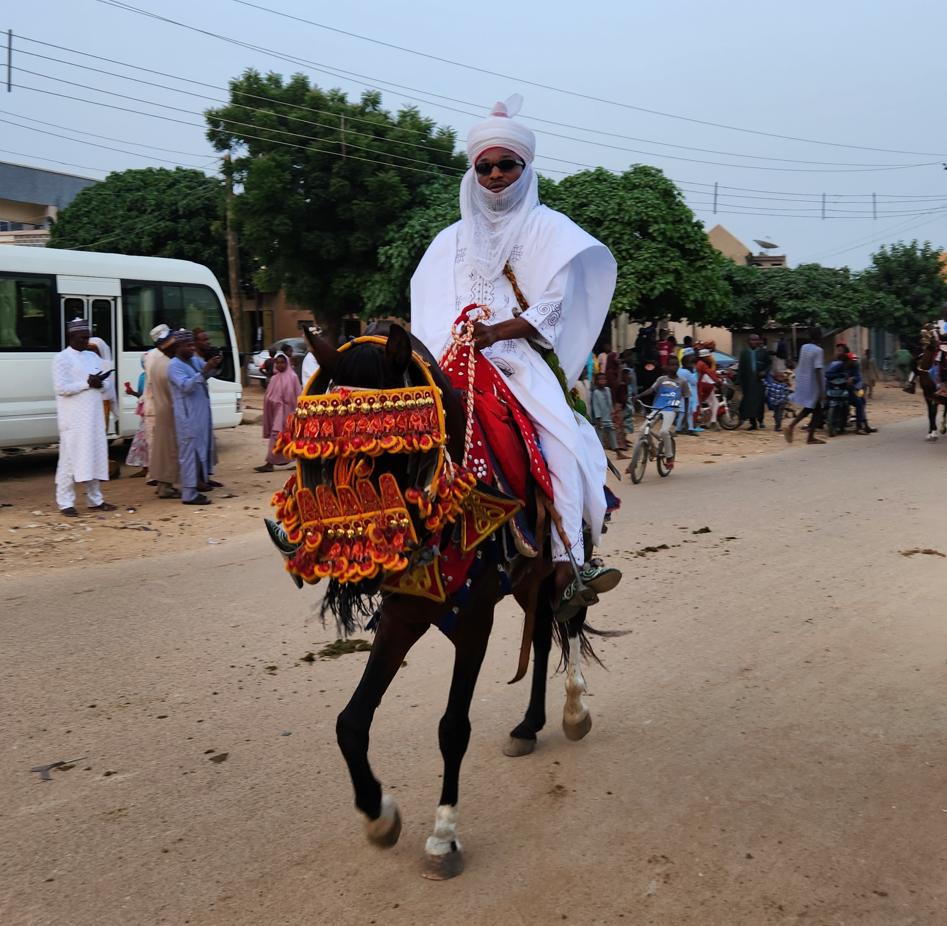
We had arrived at exactly the right moment. The rest of our tour group had reached Kano an hour earlier and been taken directly to a Durbar held in celebration of a royal wedding — a close relative of the Emir of Kano, who is also connected to the family of the Grand Councillor of Dutse. We drove to join them. The Durbar is the great equestrian ceremony of the northern emirates, held on the occasion of major celebrations — royal events, the two great Islamic festivals — when the Emir’s titleholders ride in procession through the city to pay homage at the palace. In Kano, it is the largest such event in Nigeria, a spectacle that has been performed in some form for several centuries and that draws tens of thousands of spectators to the streets of the old city.
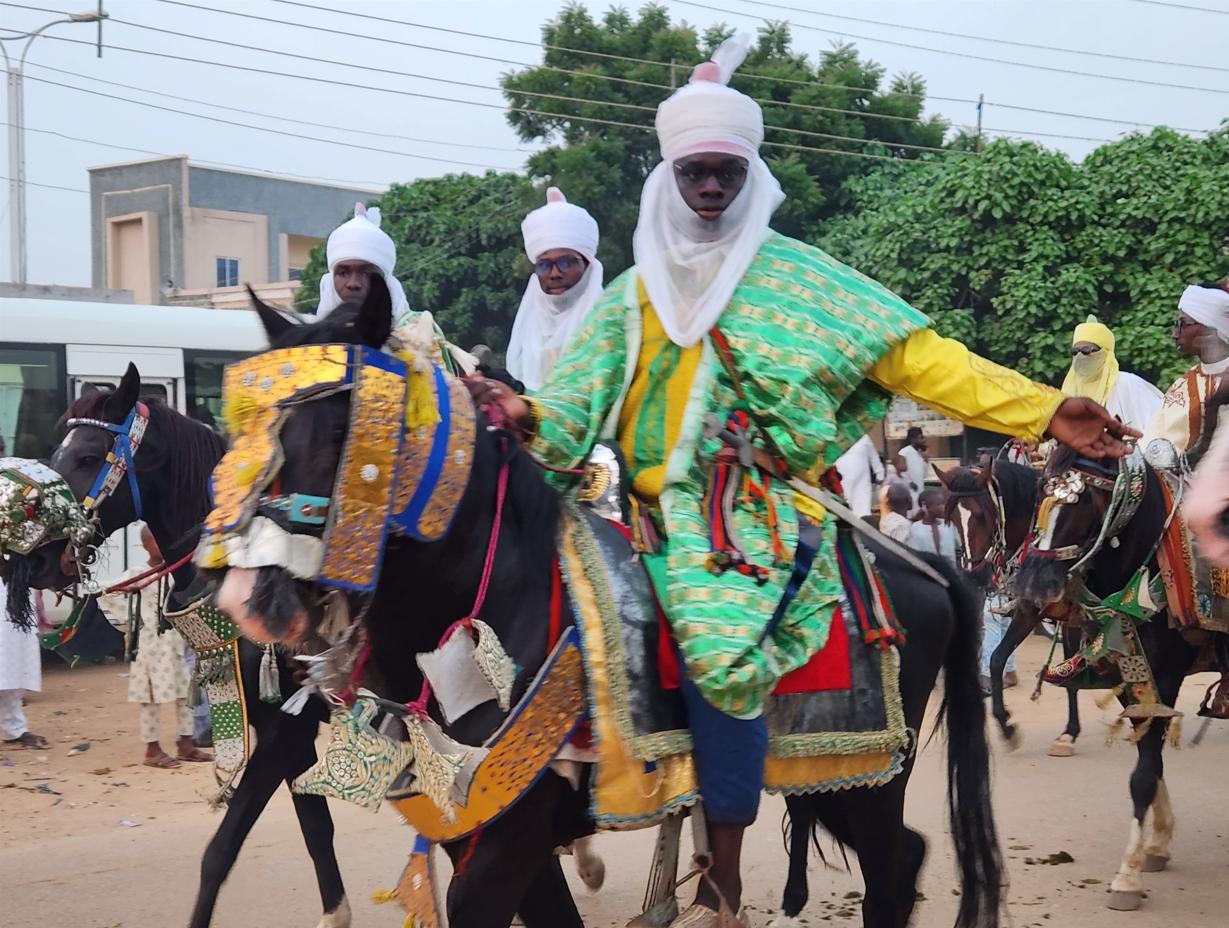
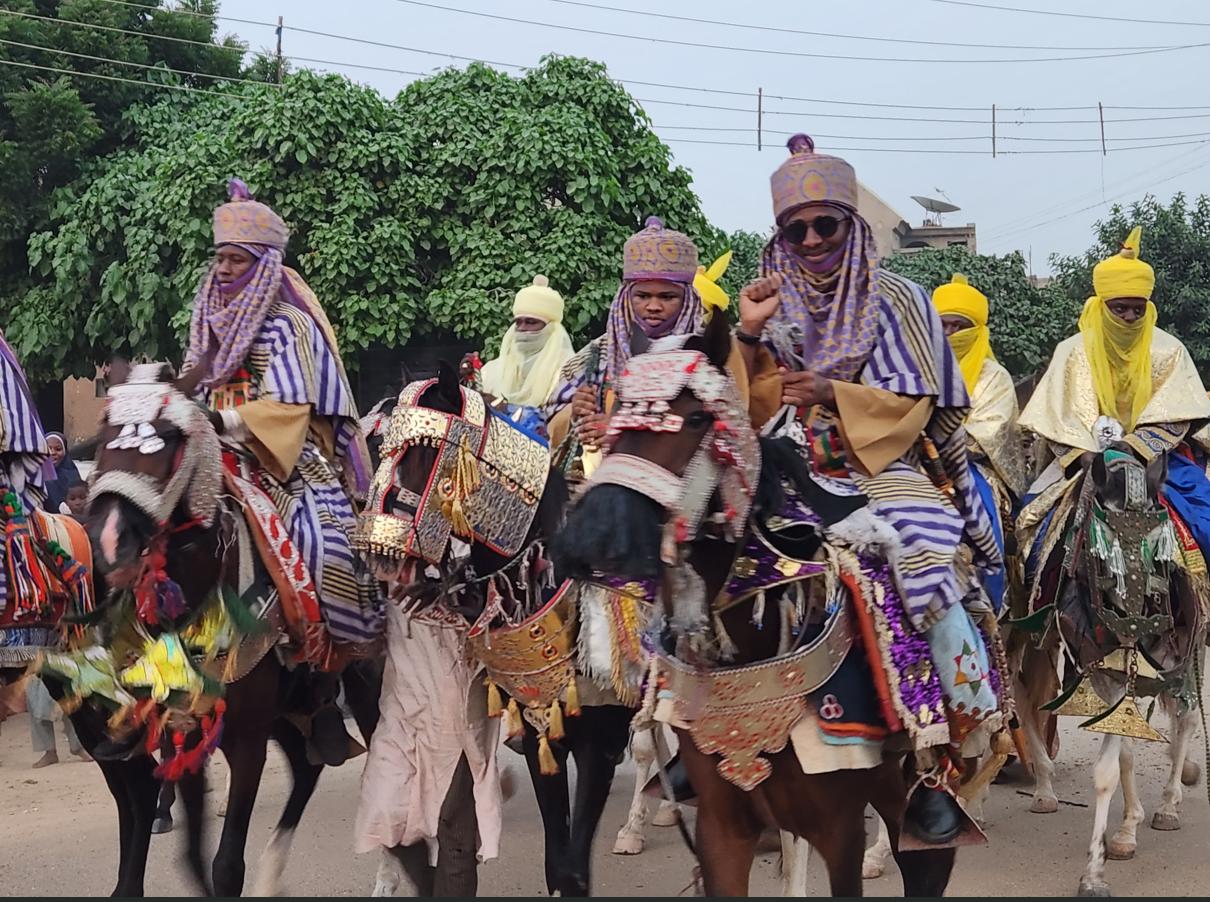
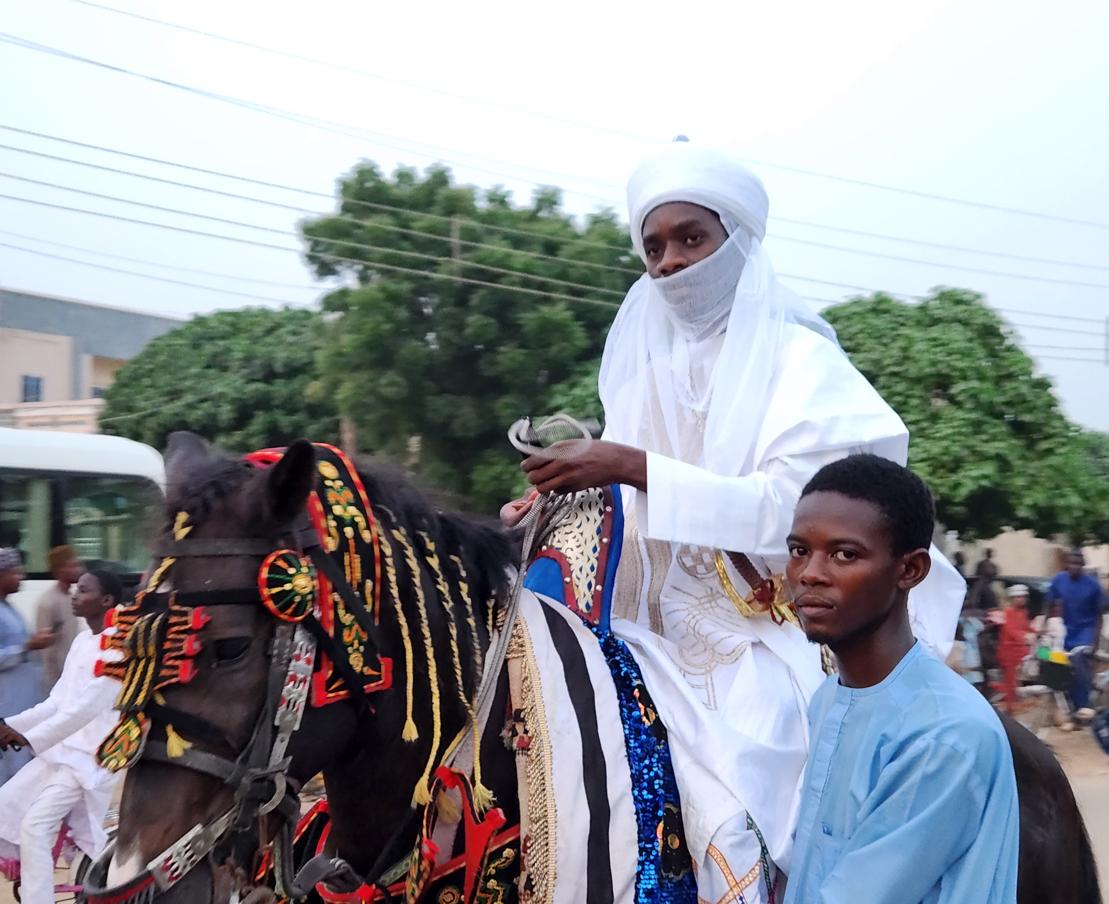
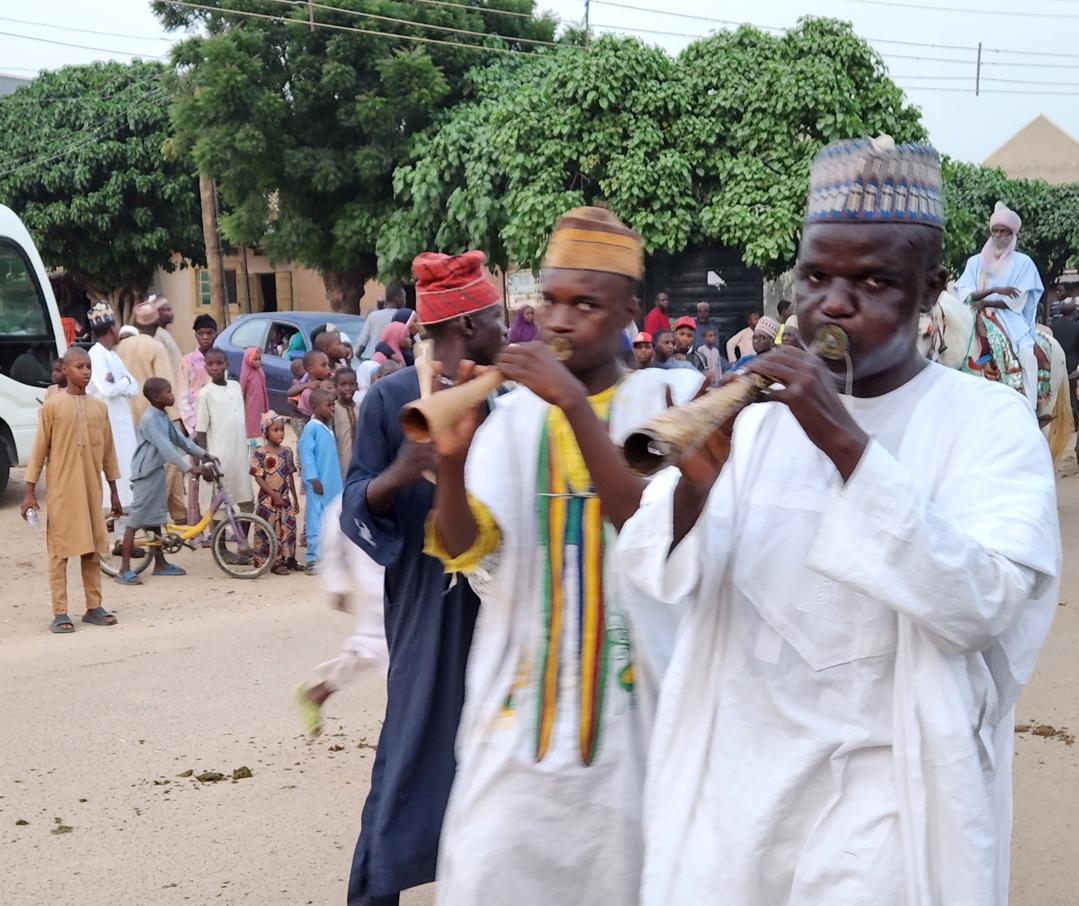
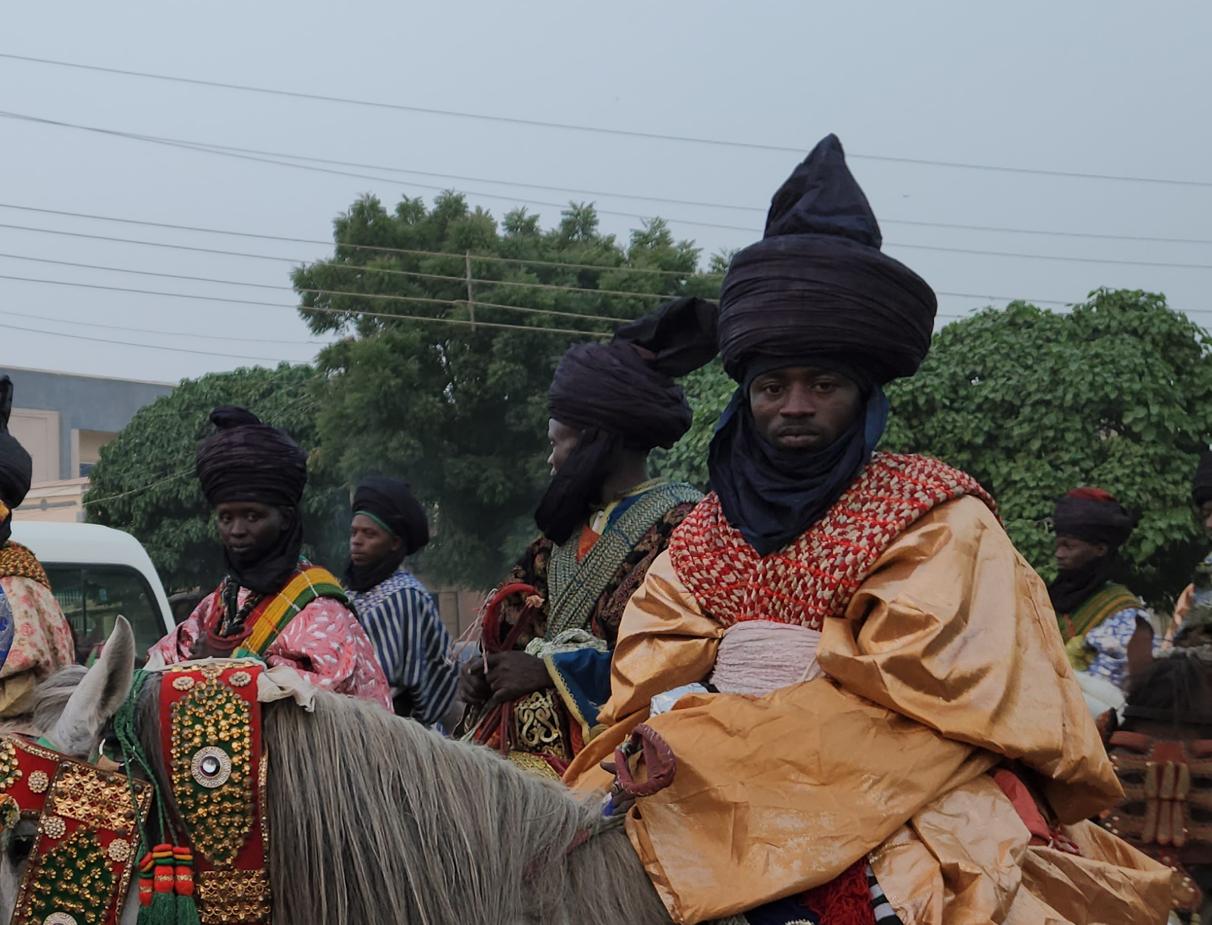
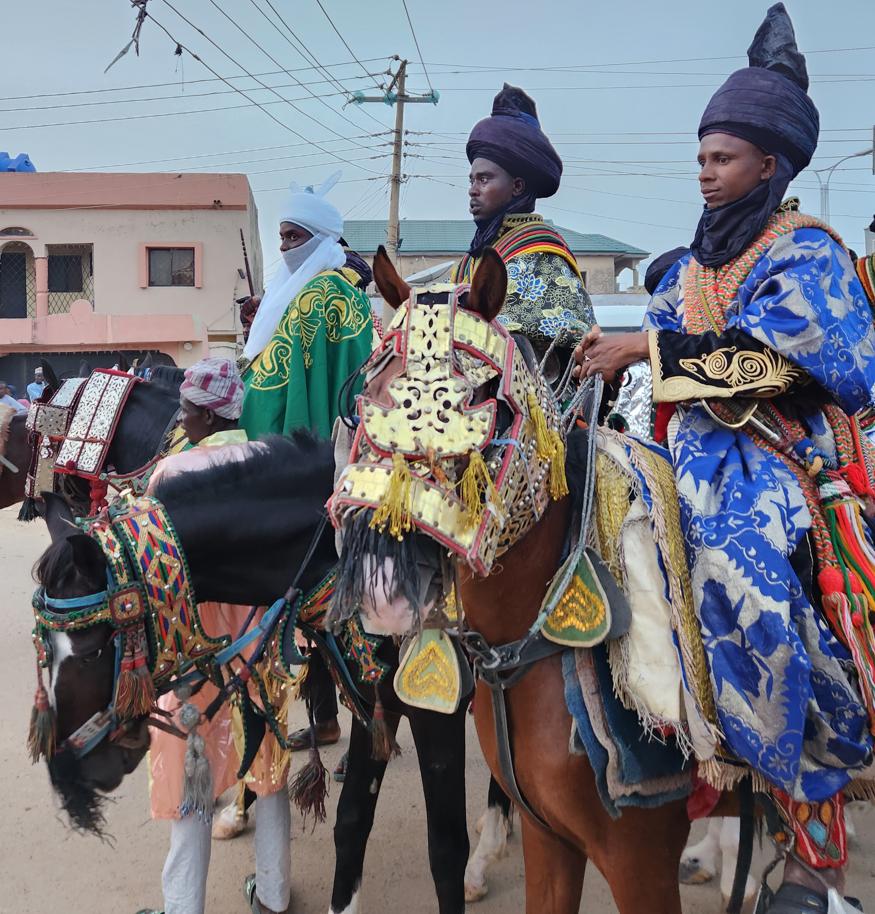
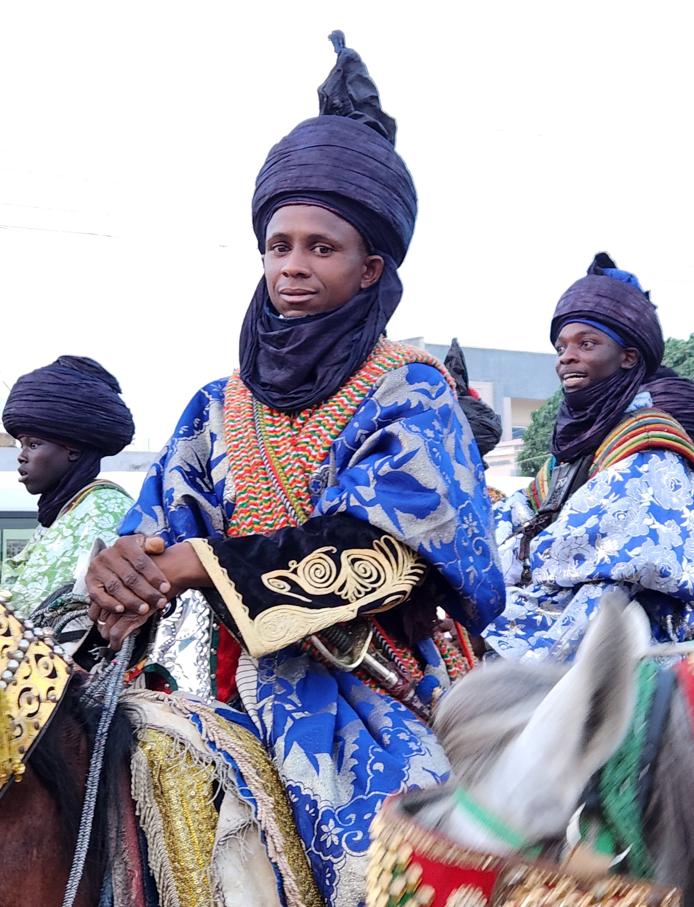
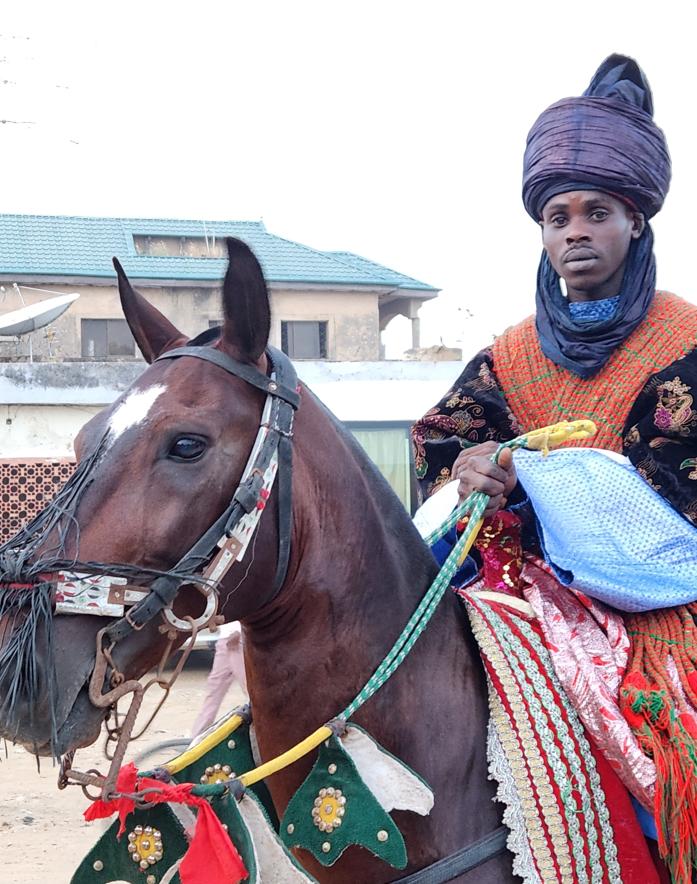
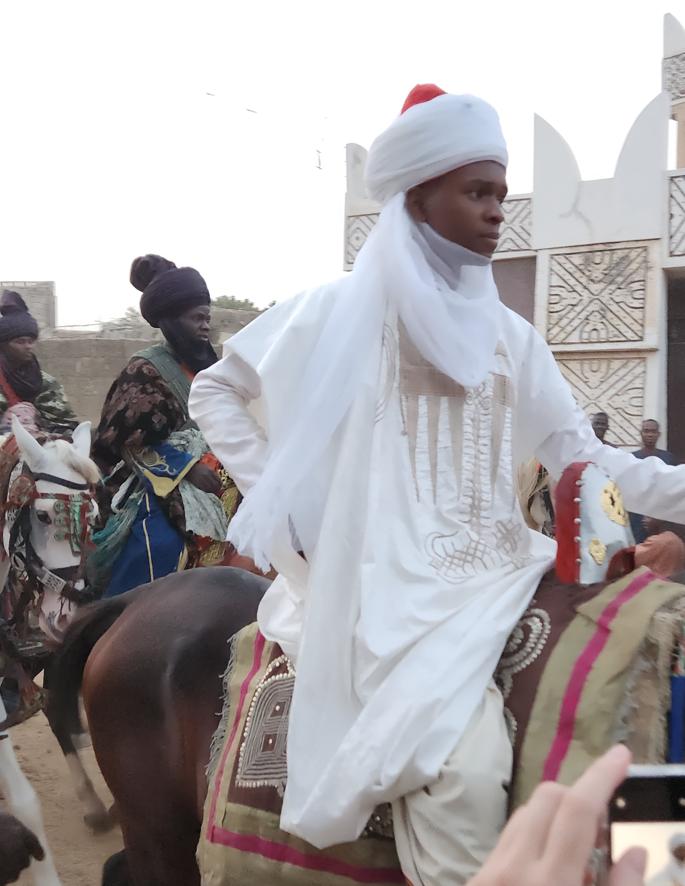
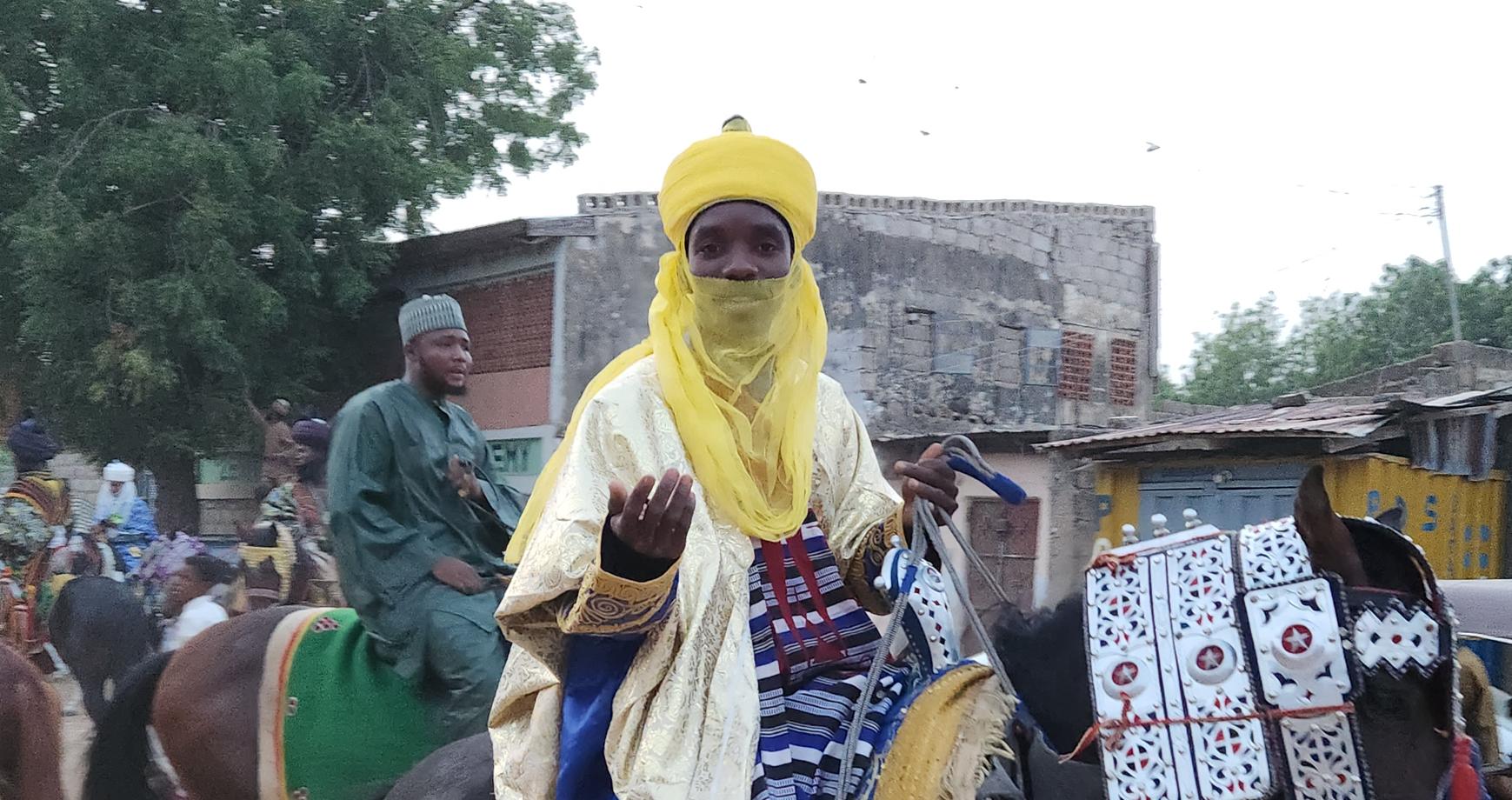
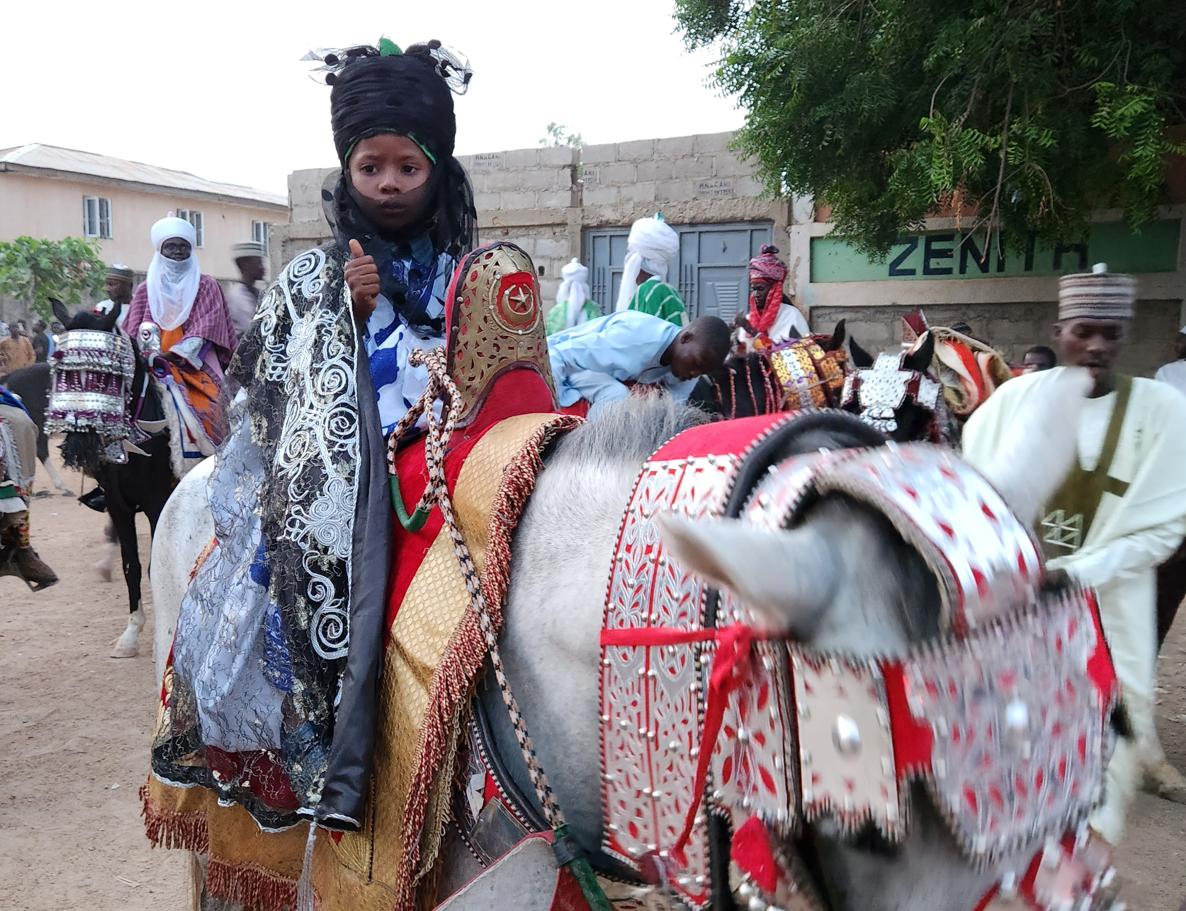
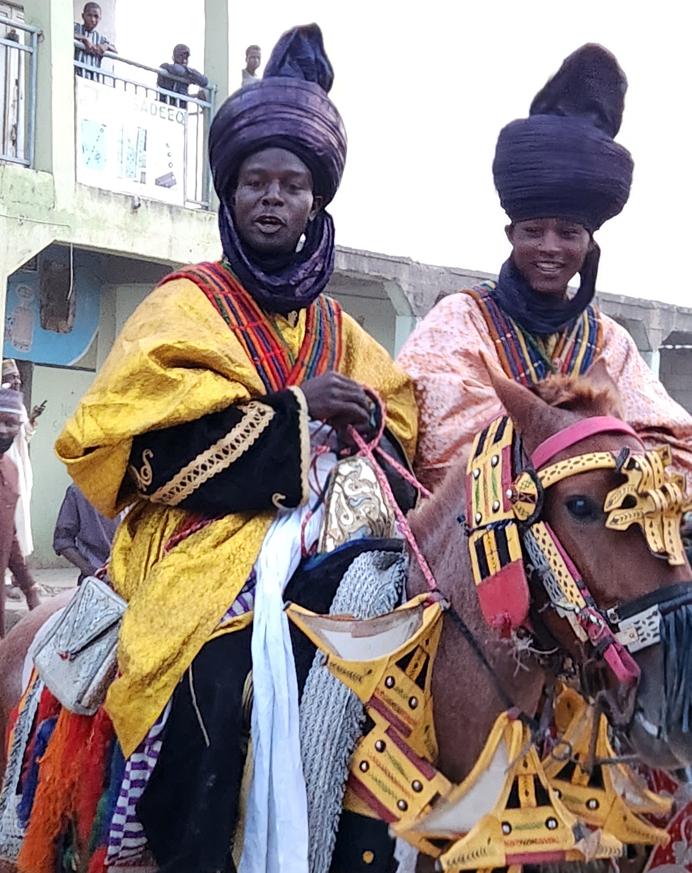
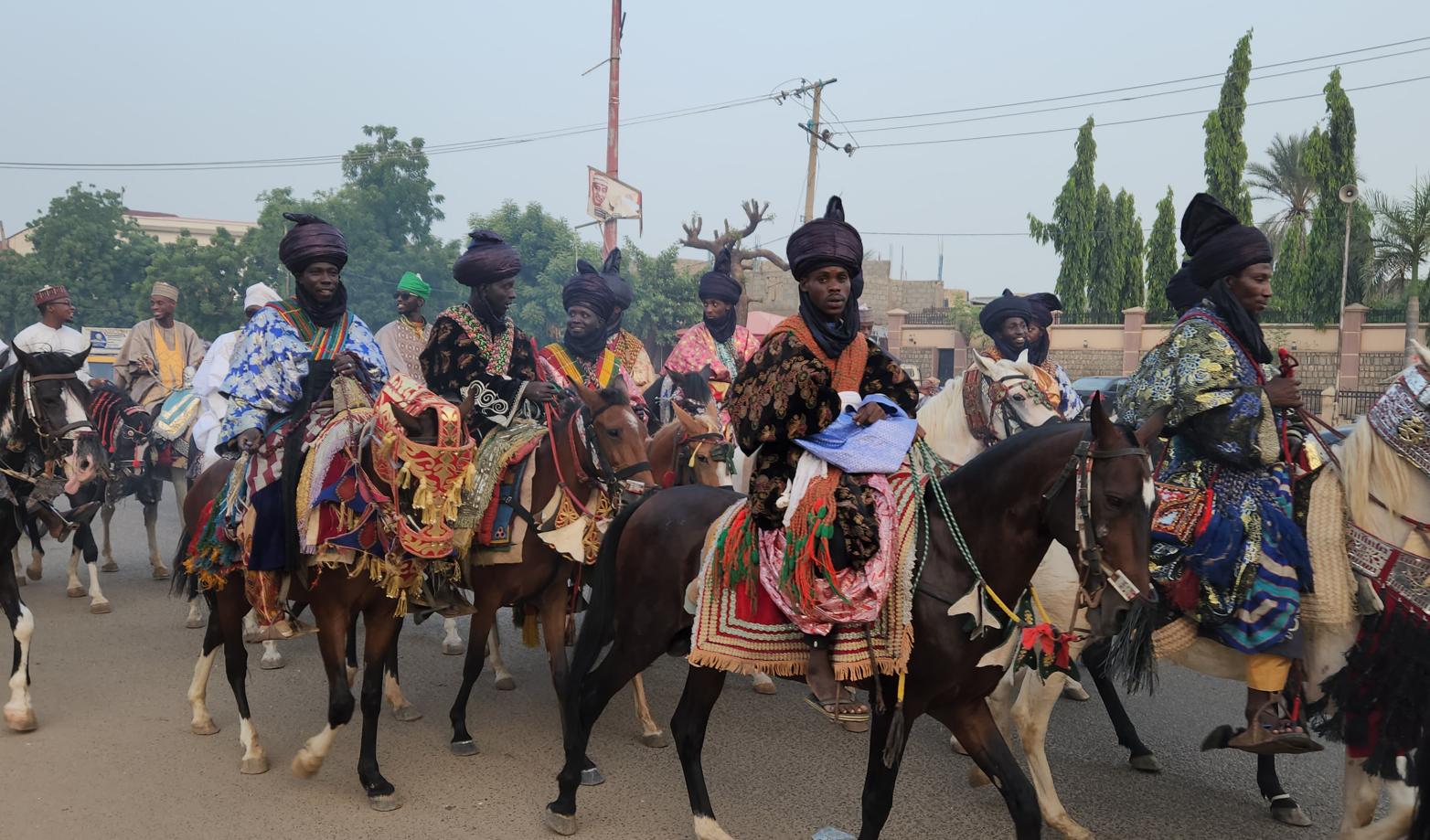
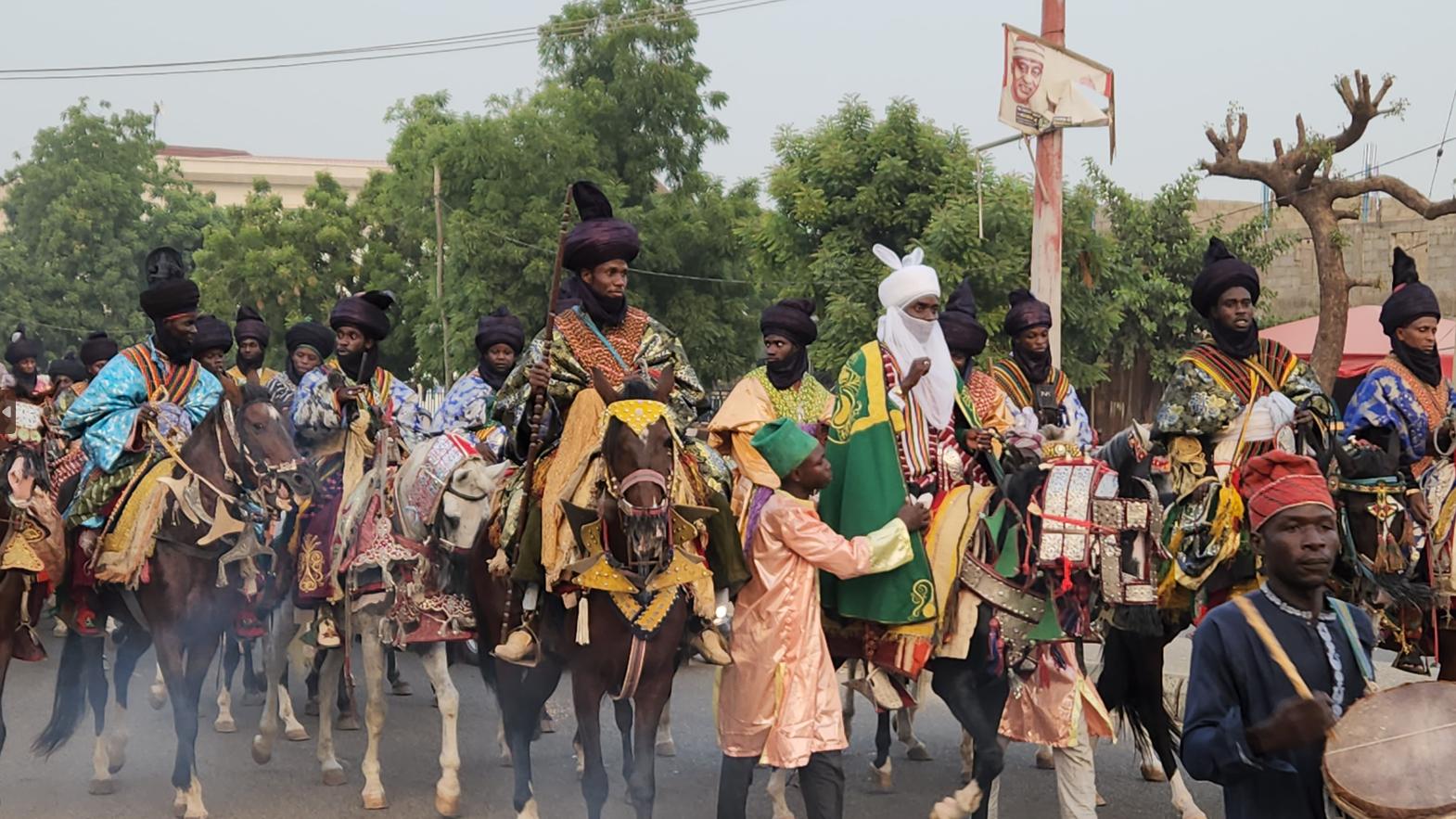
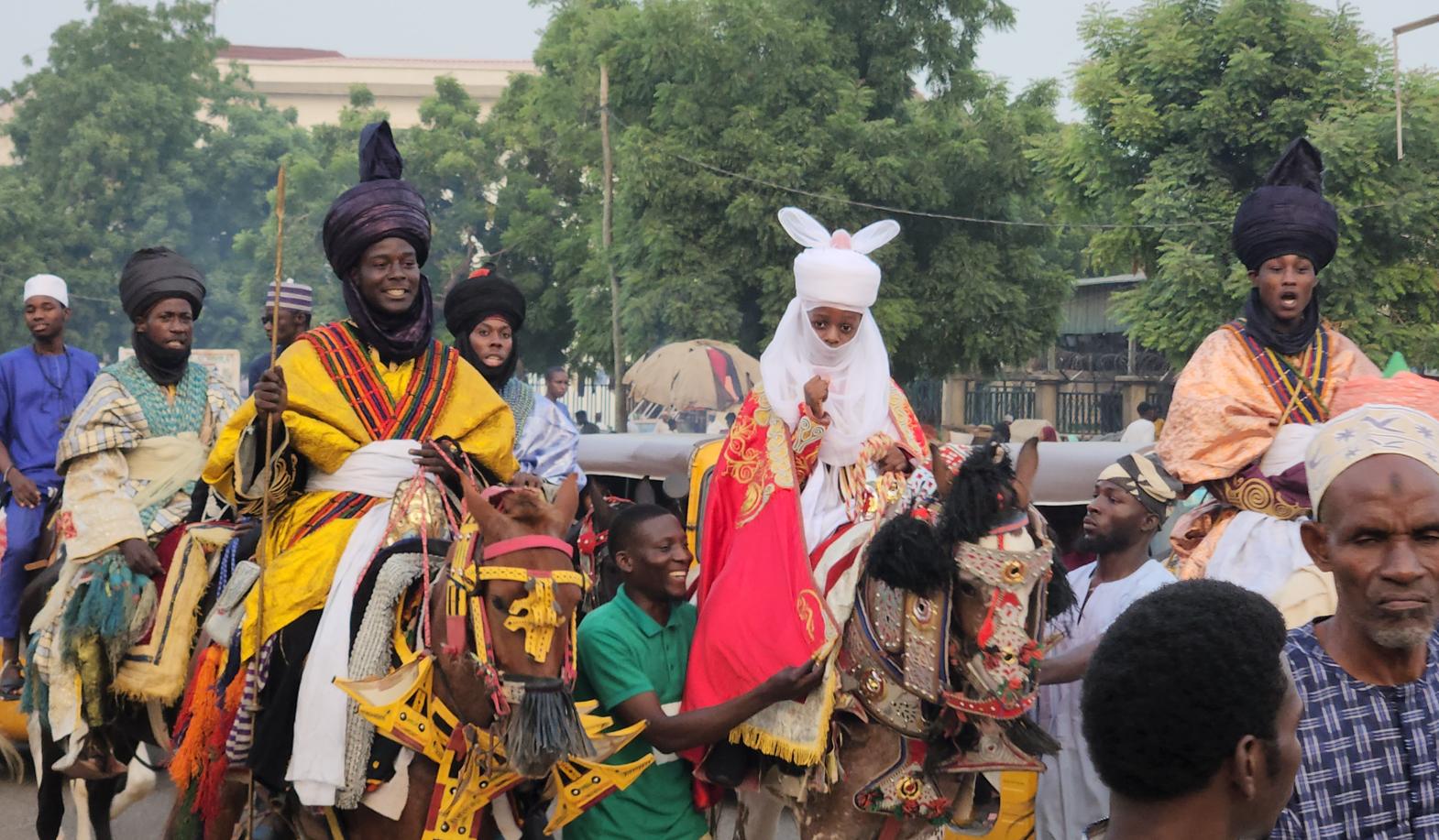
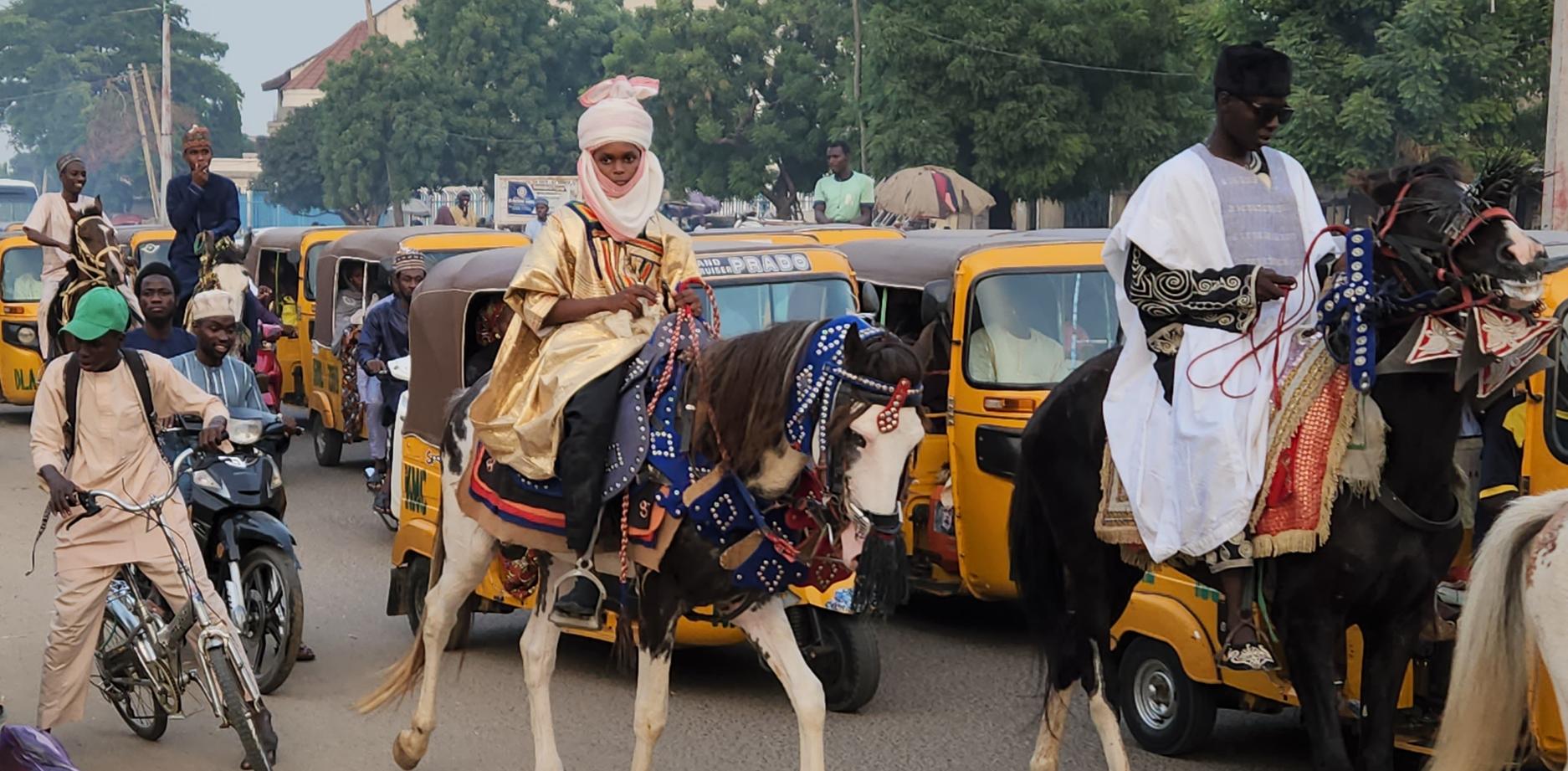
The riders came down the main road in successive waves, each contingent representing a different district chief or titleholder, each with its own colour scheme and livery. The horses were dressed as elaborately as their riders: embroidered caparisons in jewel colours — scarlet, cobalt, emerald, gold — hung to the fetlock, bridles encrusted with beadwork and tassels, chamfrons of tooled leather framing the animals’ faces in panels of geometric pattern. The riders wore robes of silk and damask, turbans of white cotton wound to architectural dimensions, some trailing a length of fabric across one shoulder in the manner of a toga. Among the formations rode attendants on foot — men in salmon-pink or gold robes keeping pace beside their lords — and ahead of each group, a drummer beat a rhythm on a small slung drum that set the pace of the horses’ walk. The whole thing moved at a deliberate, unhurried speed, as if time in this context operated by different rules.
The men riding are not actors in a pageant assembled for the occasion. They are the district heads — the Hakimai, the emir’s appointed territorial administrators, each responsible for a defined area of the emirate — and the holders of named court titles: Madaki, Waziri, Galadima, Makama, Sarkin Bai, and a hierarchy of lesser equivalents whose obligations to appear have never been formally rescinded. Participation is by summons expressed as invitation; no one rides who has not been called, and no one called can easily refuse. Each contingent in the procession represents a different titled household, its colour scheme and livery a visual declaration of which house this is and what it can still afford to put into the field. The attendants on foot keeping pace beside the mounted titleholders — one on the left, one on the right — have their own names and functions. The man on the nobleman’s left is his Sarkin Fada, his closest palace guard. The man on his right is the Shamaki: the one in charge of the horses, a position that exists year-round, not just on durbar days.
The durbar’s origins are military rather than ceremonial. From the fifteenth century onward, when horses were the decisive arm in warfare across the Sahel and the Hausa city-states, the emir’s nobility were obliged to maintain cavalry regiments at their own expense and to present them annually for review. The review was the point: the emir needed to know that his titleholders could actually field fighting men on trained horses when called upon. What has survived is the form of that review — the massed appearance before the sovereign, the display of readiness, the public affirmation of loyalty — long after the military function it served has passed. The jahi charge in which riders thunder toward the emir and pull up at the last instant carries the clearest memory of this: a demonstration, simultaneously, of the horse’s training and the rider’s nerve, and of the relationship between the nobility and the authority they are saluting. We could ride you down. We choose not to. We choose, instead, to stop. The fact that no one any longer expects the titleholders to ride to war makes the gesture not less charged but more so — it is pure statement, the military stripped to its meaning.
The cost of maintaining all of this falls entirely on the participating families, and it is not small. The horse itself — a quality animal of the Sudanese or Arabian strain, with the temperament and training for the charge — runs to several million naira, the equivalent of a few thousand dollars in a country where the median wage makes that a considerable sum. The decoration of a single horse for the Kano durbar can run to the equivalent of ten thousand dollars, with the finest embroidered caparisons and chamfrons sourced from Morocco or Egypt. The Babban Riga of the rider — the great flowing robe of silk or brocade whose excess of fabric signals rank — is another substantial expense, as are the robes of the retinue, the musicians, the praise singers who must be paid for their performance. A complete set of equestrian regalia is a family heirloom maintained across generations; its repair and eventual replacement is a cost that does not go away between durbars. A district head who fields fifteen riders presents himself as a man whose house can sustain this. A district head who appears on a poorly equipped horse with a thin retinue makes a different statement, one his community and his rivals will note. The competitive pressure to appear well-equipped is real and acknowledged, and it has not diminished as the occasions for such display have grown fewer. It has intensified.
Around this obligation, an entire artisan economy has grown and persists. The leatherworkers who tool the chamfrons, the embroiderers who work the caparisons, the tailors who cut the Babban Riga, the blacksmiths who produce the brass stirrups in the high-backed northern style — all of them depend on the continued willingness of noble families to meet the cost. The durbar is also, from this angle, a patronage system: the display of wealth that looks like expenditure is simultaneously the mechanism by which that wealth circulates into specialist crafts that have no other significant market. A Hausa proverb captures the expectation neatly: Doki mai kyau, shi ke nuna girman maigida — a fine horse reveals the greatness of its owner. The proverb predates the durbar in its current form, but the durbar is where it is most publicly tested, twice a year, before an audience that knows exactly what it is looking at.
I had not expected twelfth-century cavalry knights in twenty-first-century Nigeria. I was not complaining.
One contingent was arresting above the others: a company of riders in matching dark turbans wound tight and high, their robes in shifting combinations of blue and gold brocade, moving in a formation that had the quality of a military review. At the centre, a rider in white sat his horse with a stillness that distinguished him from the others — the stillness of someone accustomed to being watched without meeting every gaze. Ahead of him, a young boy in full ceremonial dress — crimson embroidered robe, white turban — walked with a staff, a serious expression entirely out of proportion to his age and entirely appropriate to the occasion. The Durbar is not, in the end, a performance for tourists. It is a constitutional act performed in public: the Emir’s titleholders publicly affirming their loyalty, the hierarchy of the emirate made visible and ambulatory.
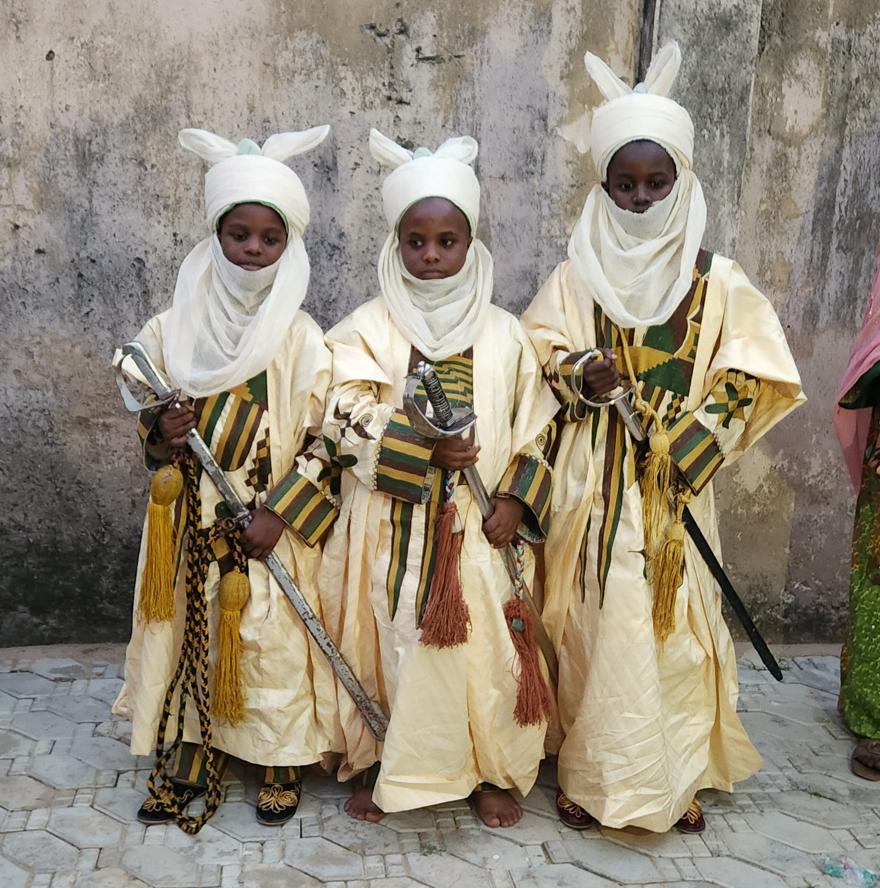
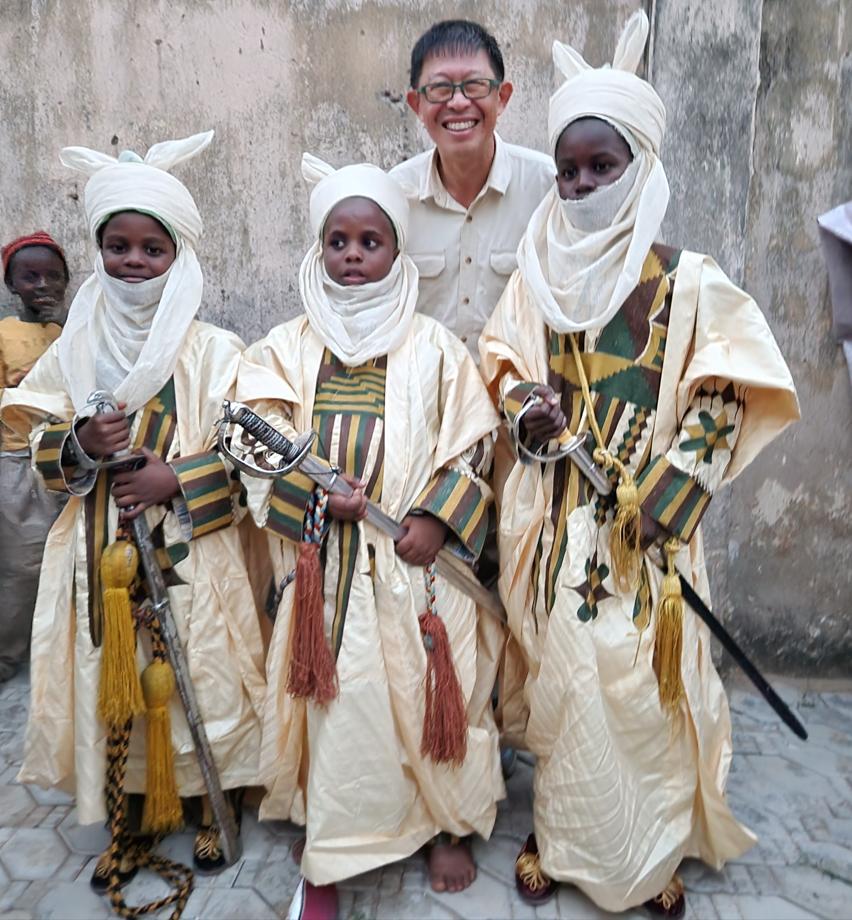
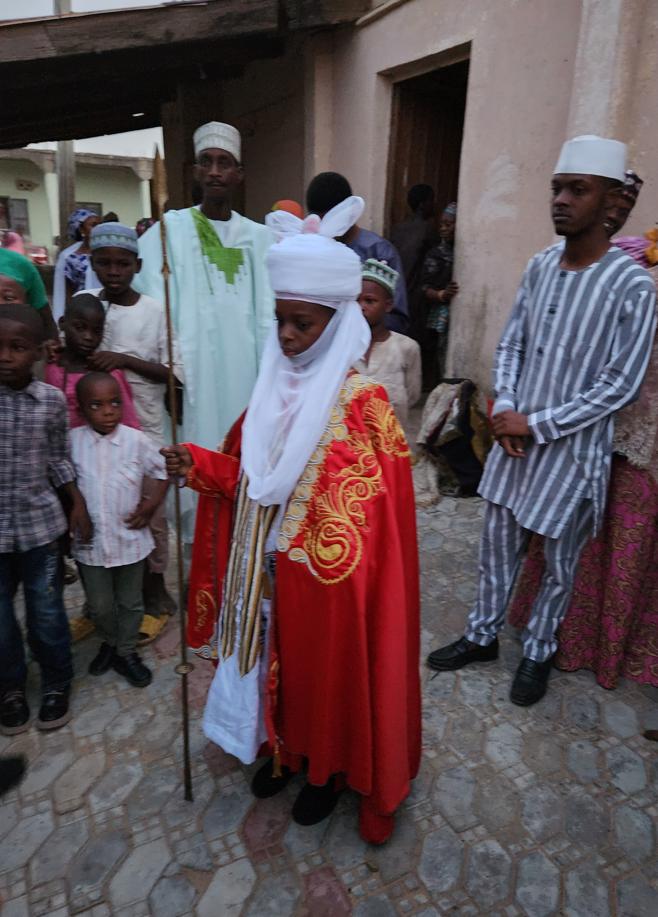
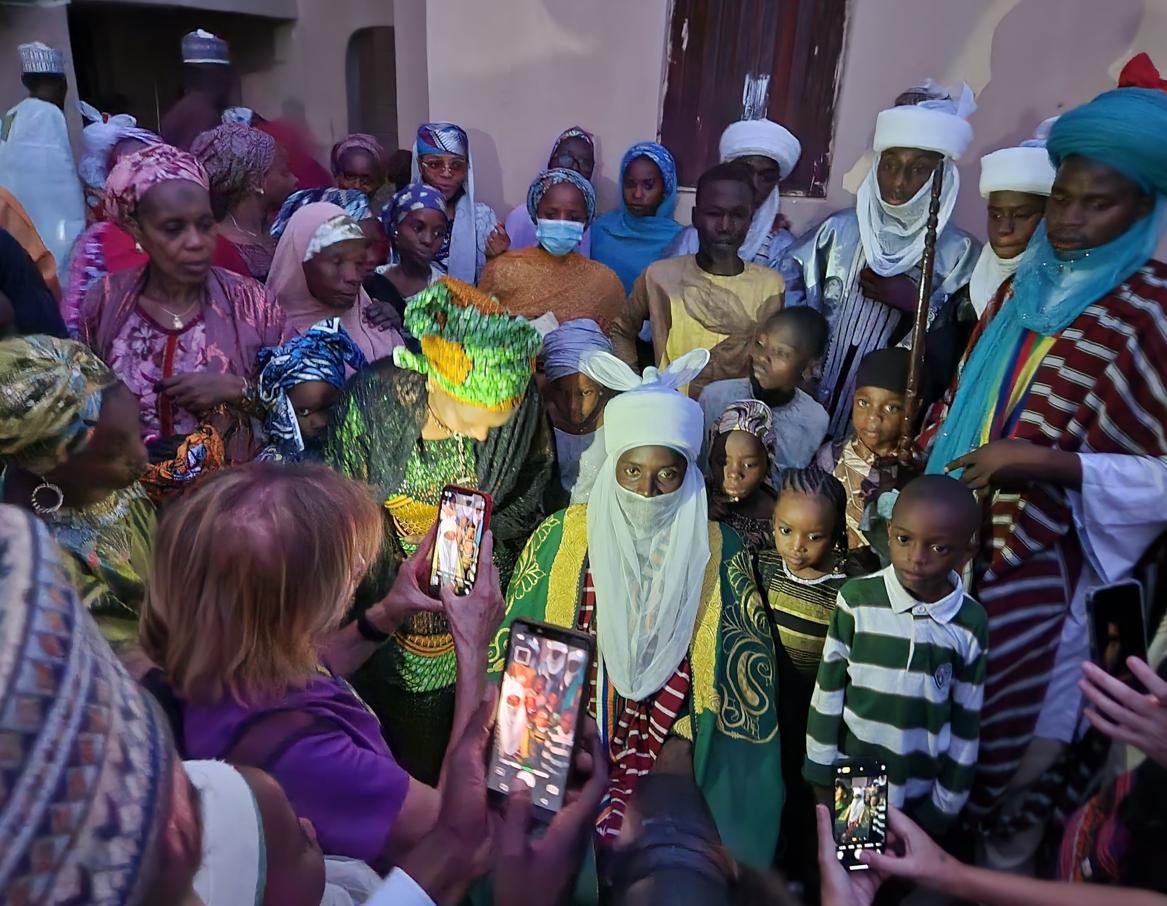
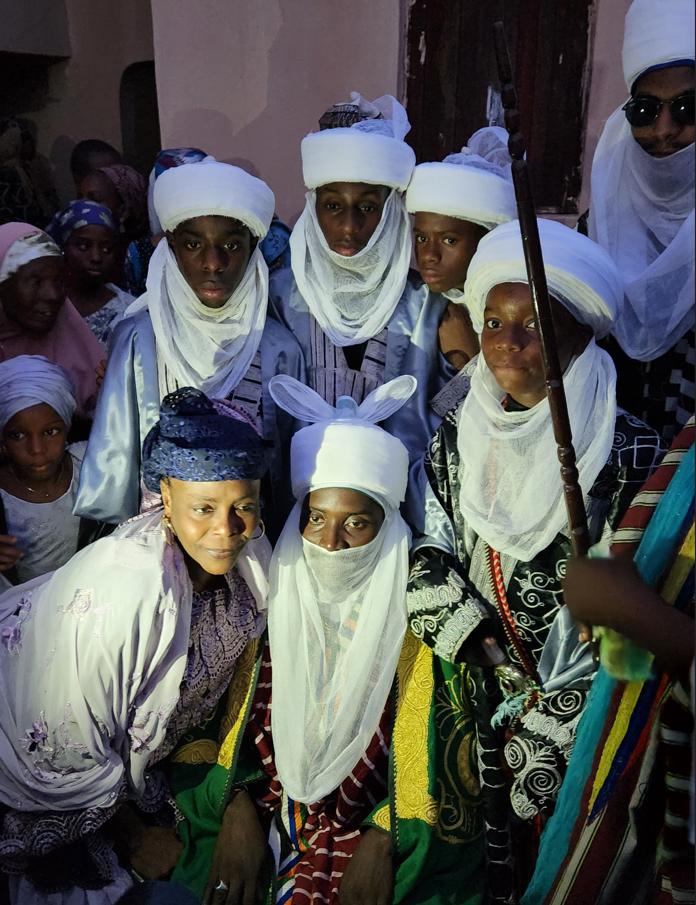
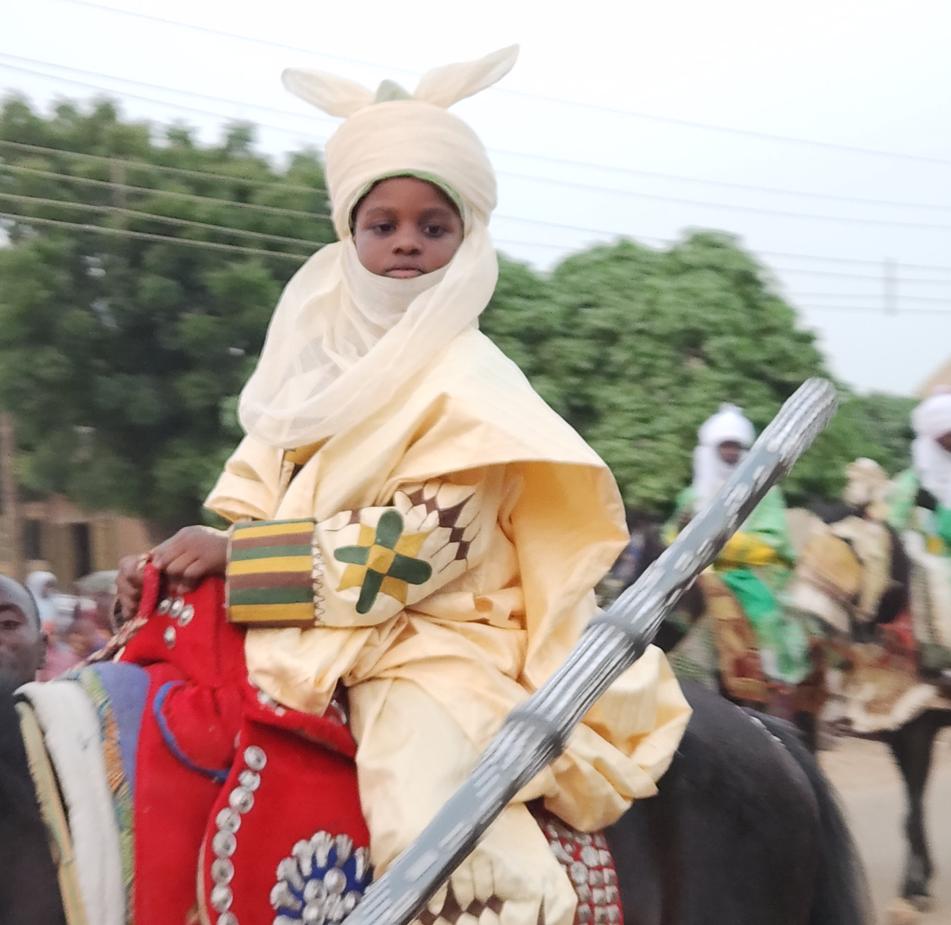
Three small boys stood against a wall near the palace compound, dressed in miniature versions of full emirate regalia: cream silk robes with green and gold trim, white turbans with the characteristic upswept point, and — incongruously, magnificently — small dress swords held at their sides, the hilts barely fitting their hands. They posed with complete seriousness for the photograph. The Durbar produces this: a situation in which the children of the court become, for a day, indistinguishable in gravity from their parents.