Chapter 6: Zaria: The Queen’s City

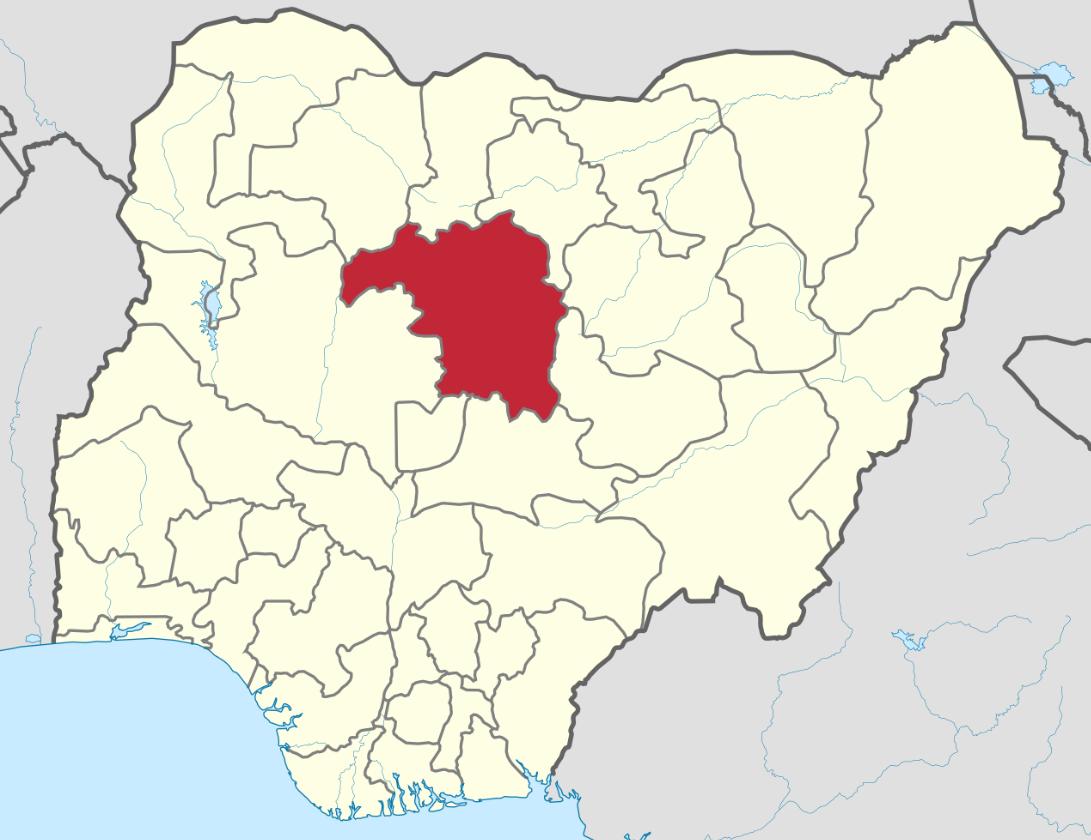

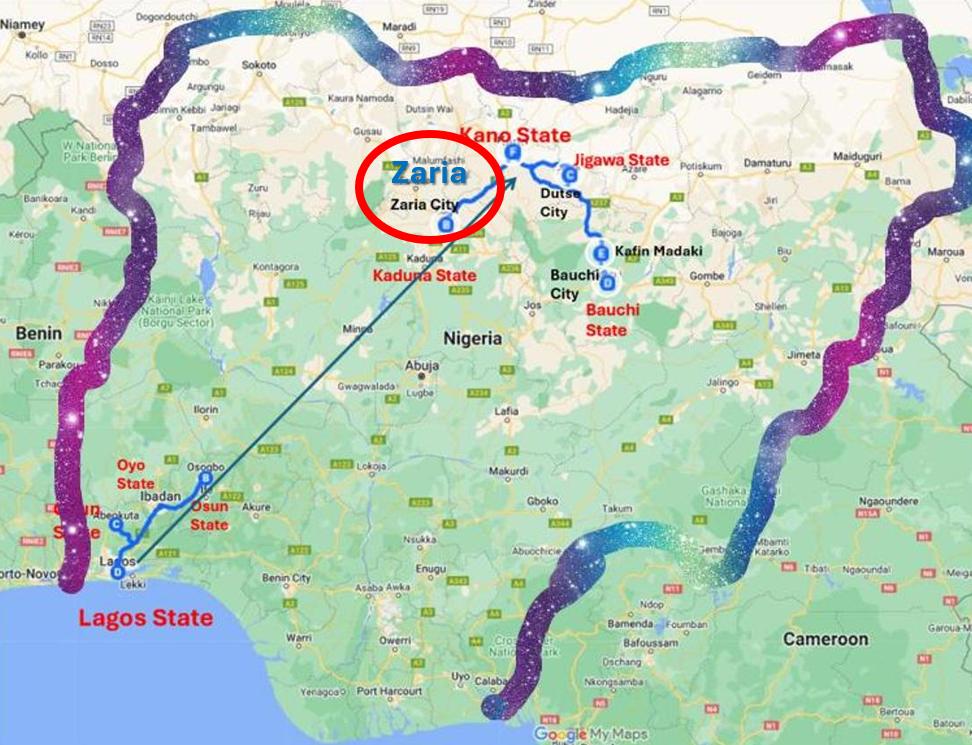
Zaria is an hour south of Kano, a city of some 900,000 that sits among dry-season farmland and the remnants of an older, denser urban fabric. It was known, in its earlier existence as Zazzau, as one of the original Hausa Bakwai states — a city of commerce and, in the sixteenth century, of military ambition.
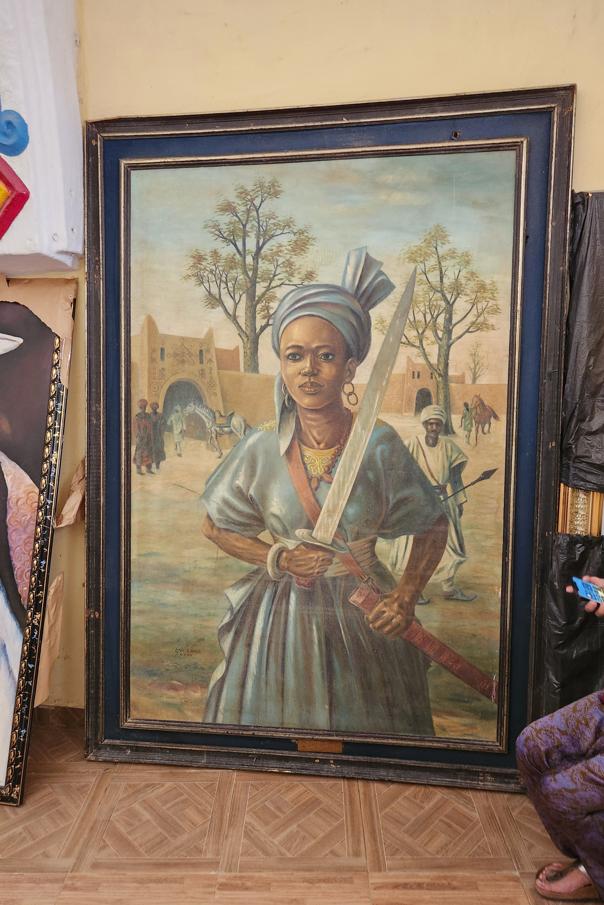
It is the city of Queen Amina, the warrior ruler of Zazzau whose campaigns are said to have extended the emirate’s reach across much of what is now northern Nigeria. Amina was born in the middle of the sixteenth century CE to King Nikatau, the 22nd ruler of Zazzau, and Queen Bakwa Turunku (r. 1536–c. 1566). According to oral legends, Amina grew up in her grandfather's court and was favored by him. He carried her around court and instructed her carefully in political and military matters. At age sixteen, Amina was named Magajiya (heir apparent), and was given forty female slaves (kuyanga). From an early age, Amina had a number of suitors attempt to marry her. Attempts to gain her hand included "a daily offer of ten slaves" from Makama and "fifty male slaves and fifty female slaves as well as fifty bags of white and blue cloth" from the ruler of Kano.
After the death of her parents in or around 1566, Amina's brother became king of Zazzau. At this point, Amina had distinguished herself as a "leading warrior in her brother's cavalry" and gained notoriety for her military skills. She is still celebrated today in traditional Hausa praise songs as "Amina daughter of Nikatau, a woman as capable as a man that was able to lead men to war."
After the death of her brother Karami in 1576, Amina ascended to the position of queen. Zazzau was one of the original seven Hausa States (Hausa Bakwai), the others being Daura, Kano, Gobir, Katsina, Rano, and Garun Gabas. Only three months after being crowned queen, Amina waged a 34-year campaign against her neighbors, to expand Zazzau territory. Her army, consisting of 20,000 foot soldiers and 1,000 cavalry troops, was well trained and fearsome. In fact, one of her first announcements to her people was a call for them to "resharpen their weapons." She conquered large tracts of land as far as Kwararafa and Nupe.
Legends cited by Sidney John Hogben say that she took a new lover in every town she went through, each of whom was said to meet the same unfortunate fate in the morning: "her brief bridegroom was beheaded so that none should live to tell the tale." Under Amina, Zazzau controlled more territory than ever before. To mark and protect her new lands, Amina had her cities surrounded by earthen walls. These walls became commonplace across her empire until the British conquest of Zazzau in 1904, and many of them survive today, known as ganuwar Amina (Amina's walls).
Whether the historical Amina matches the legendary one is a question historians debate; that the legend persists with such force, in a region where female leadership is not the obvious cultural norm, says something about the nature of her achievement, real or embellished.
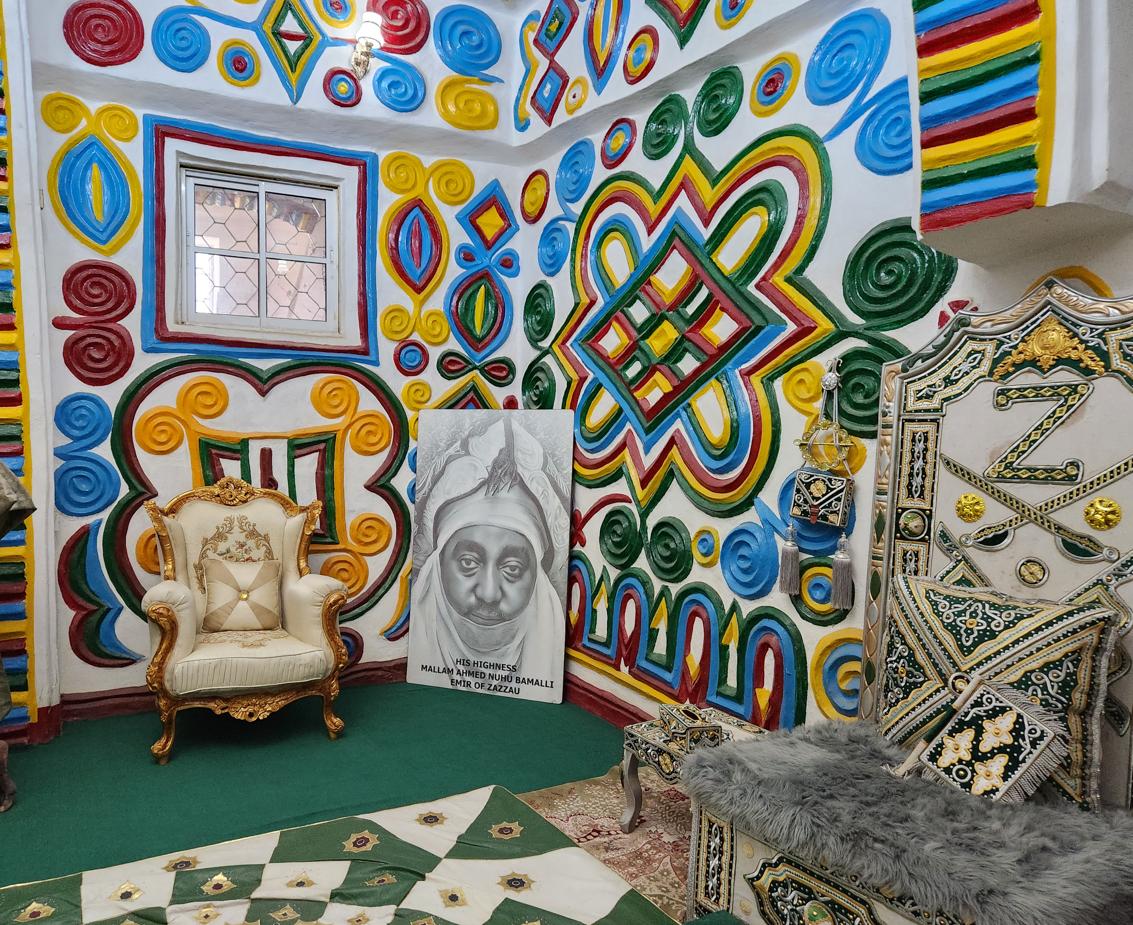
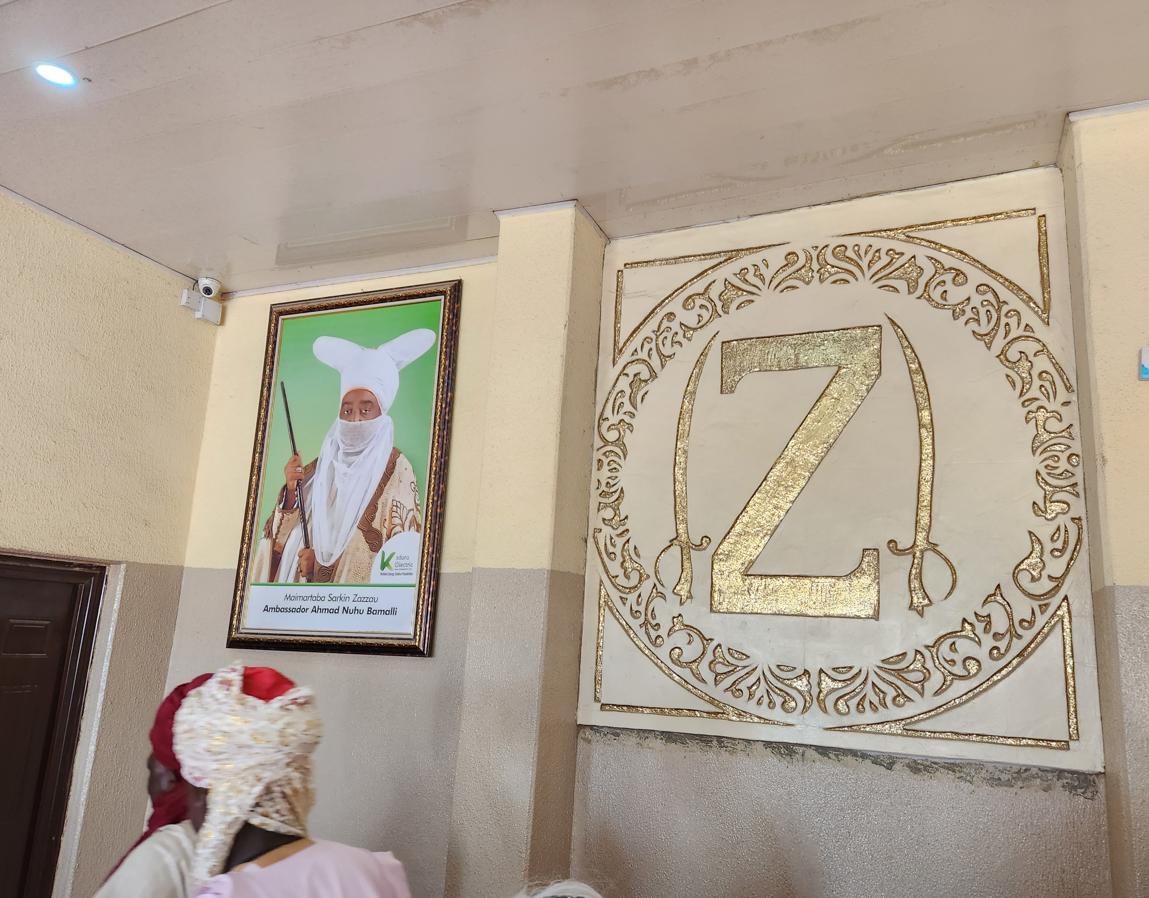
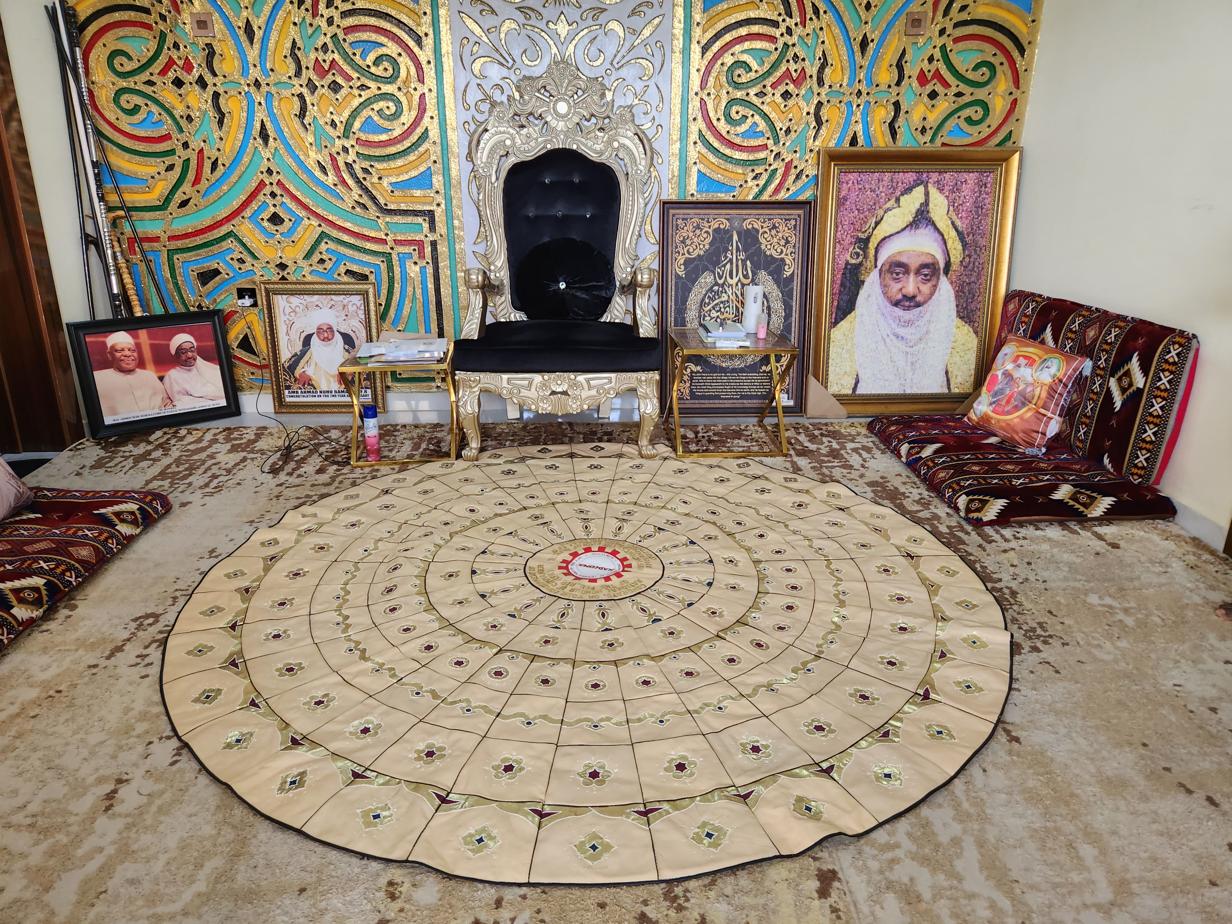
Her portrait hangs in the Emir’s palace: a painted figure in a walled-city background, sword in hand, looking out with the composure of someone who expects to be taken seriously. Beside it, a second painting — a white-turbaned figure, full-length, face fully veiled — the Emir himself, rendered almost as an abstraction.
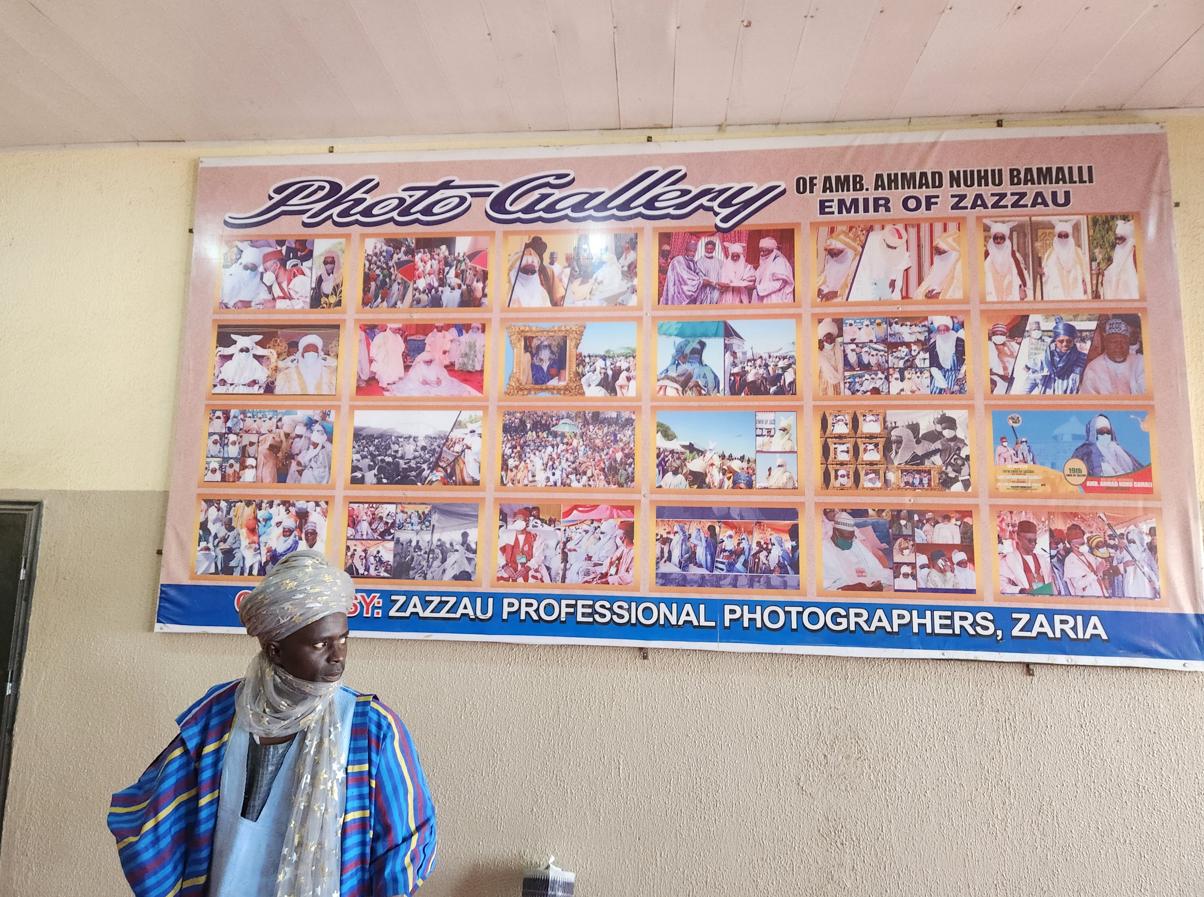
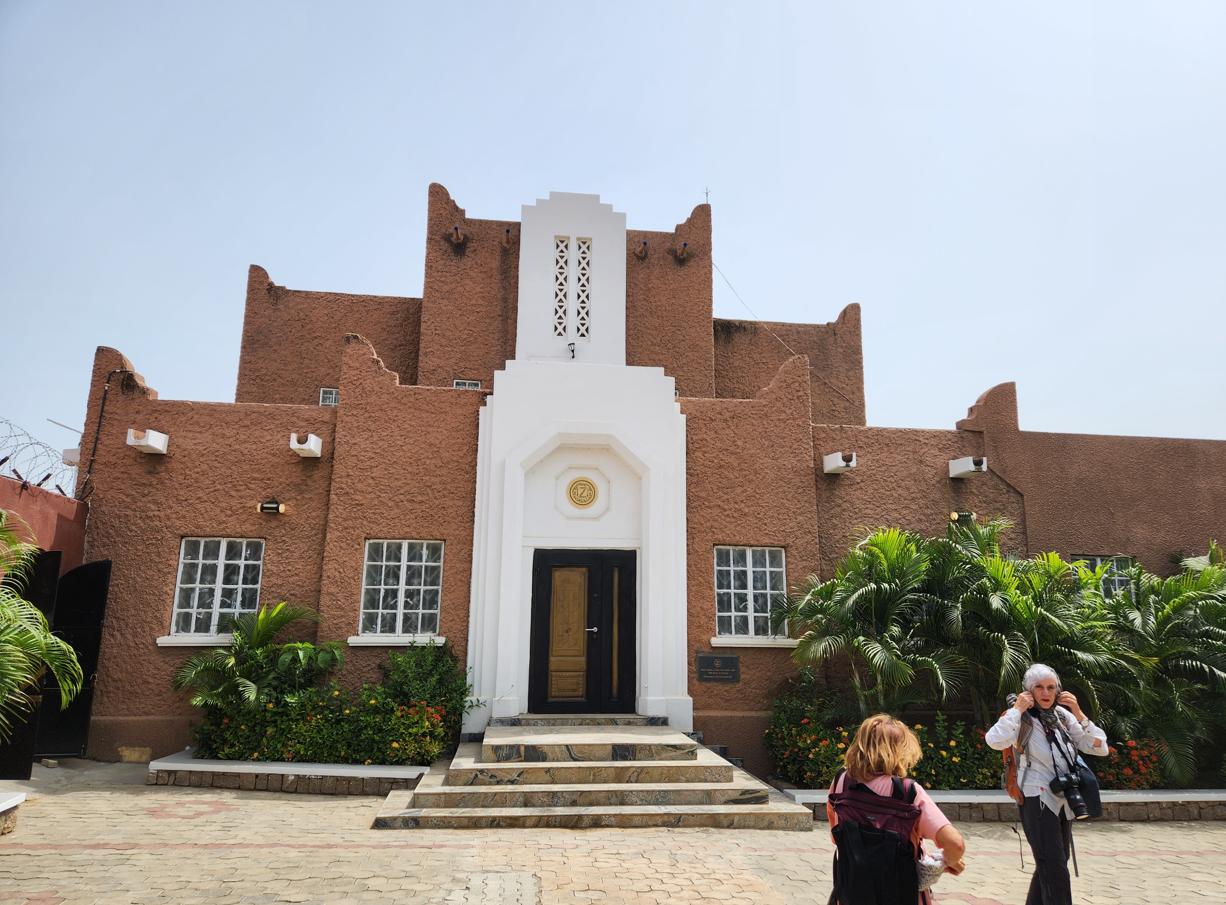
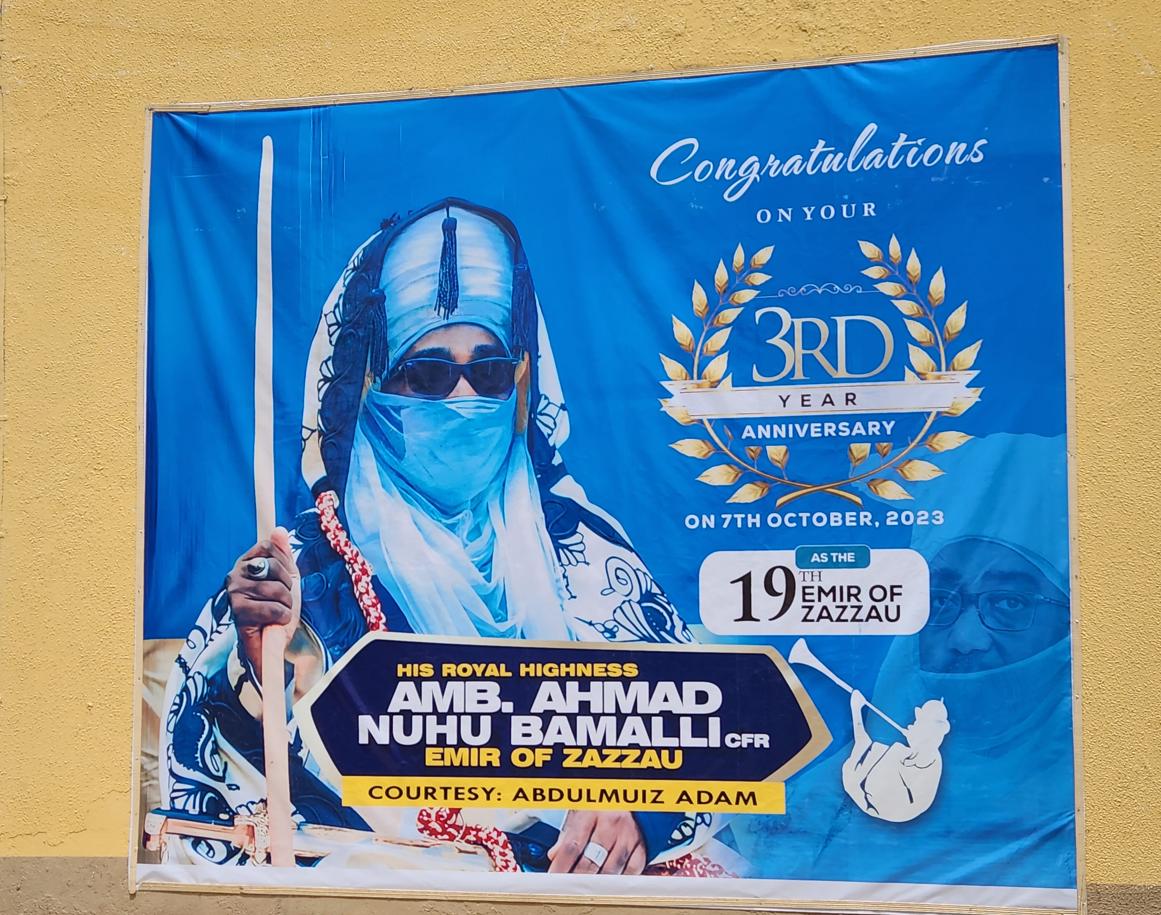
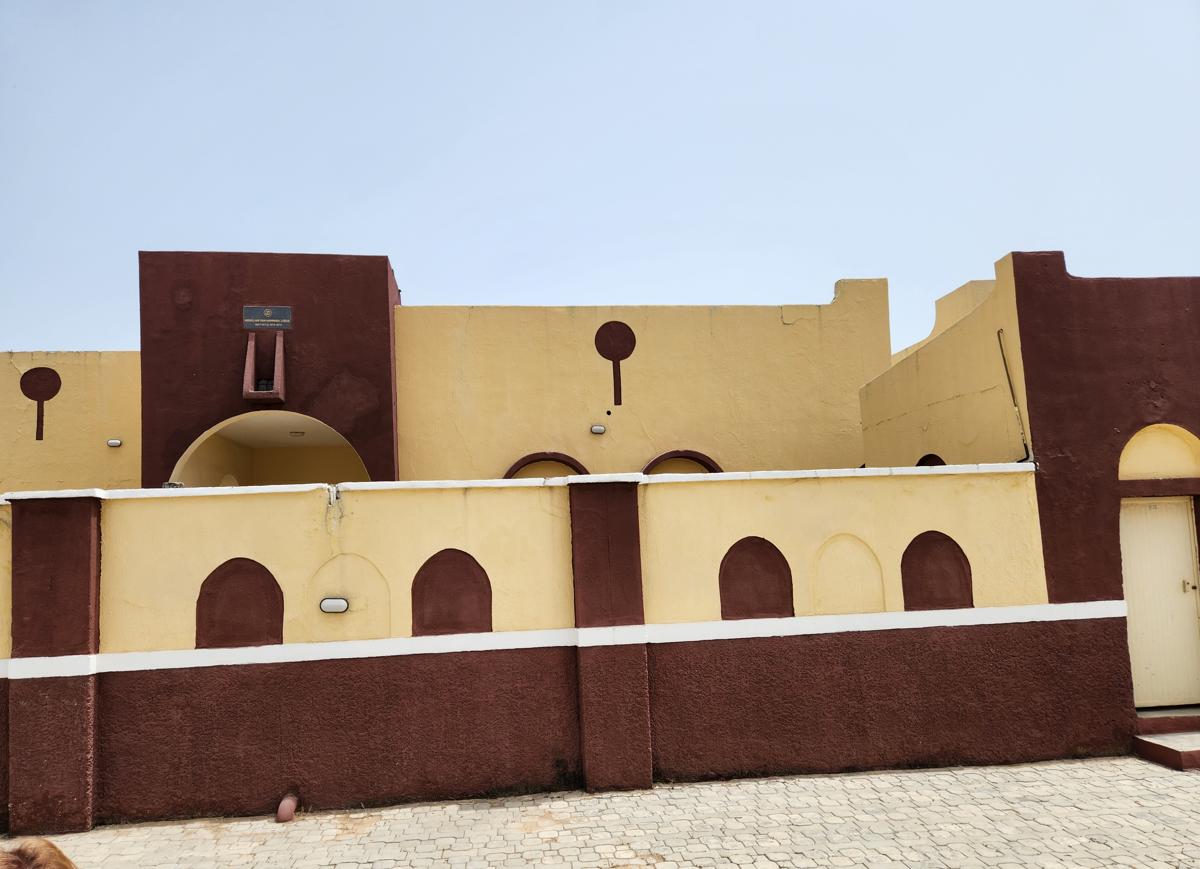
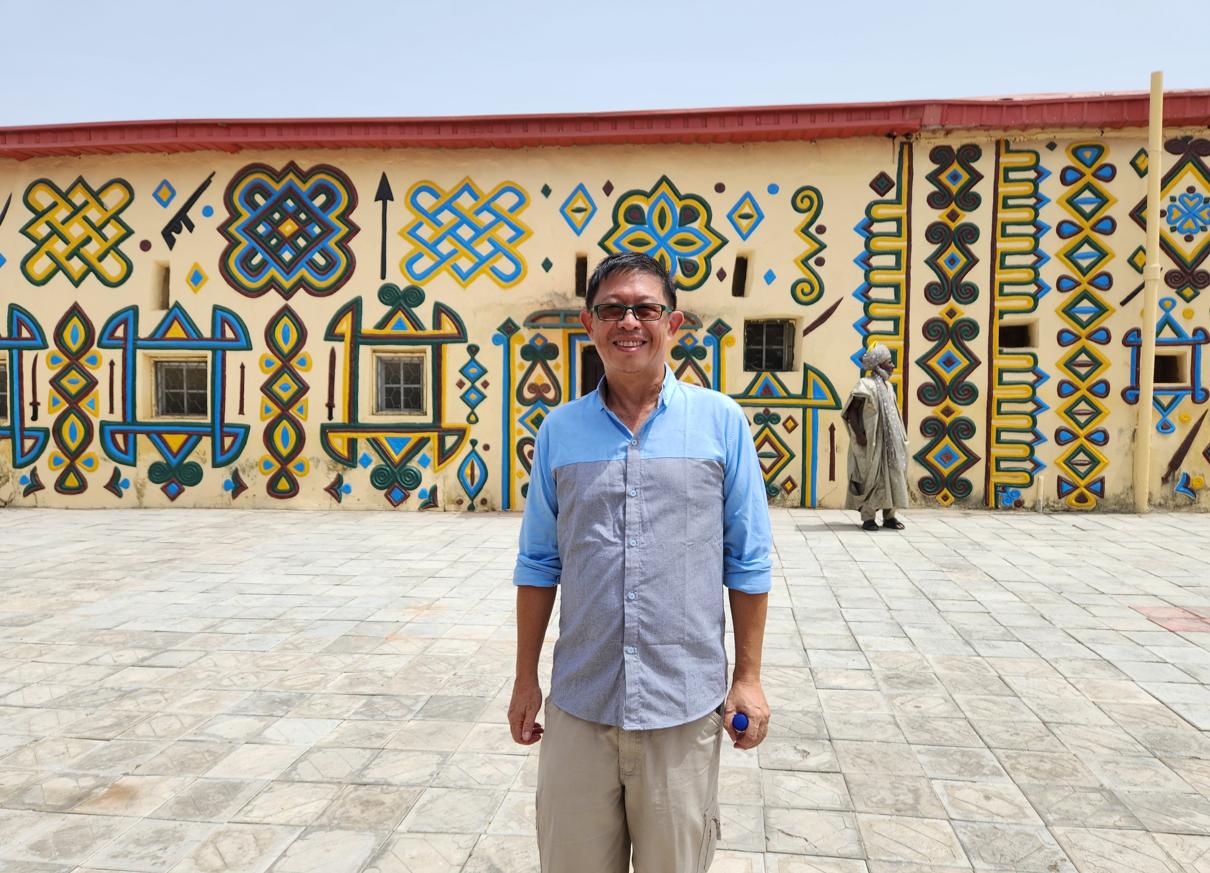
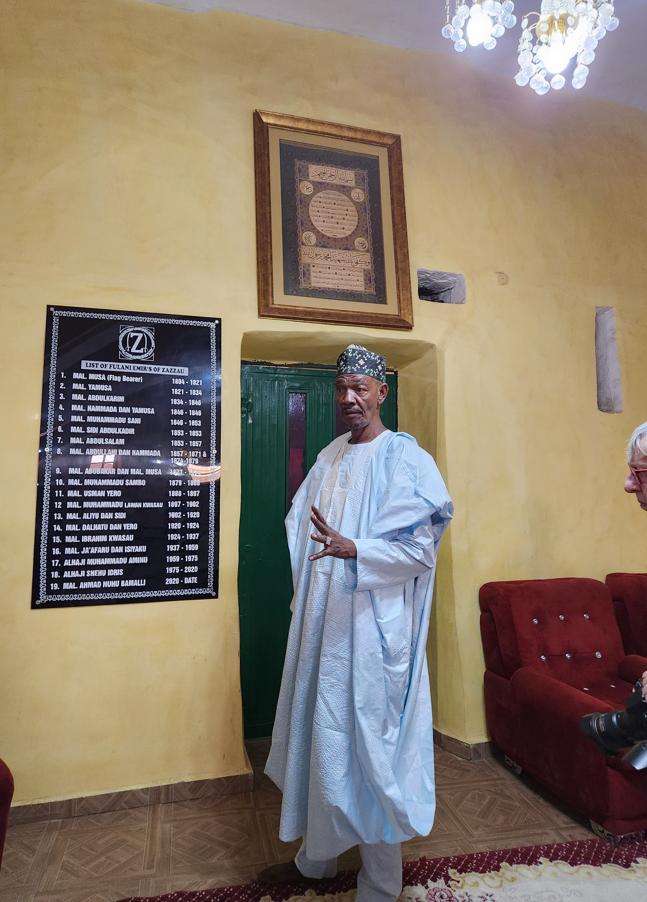
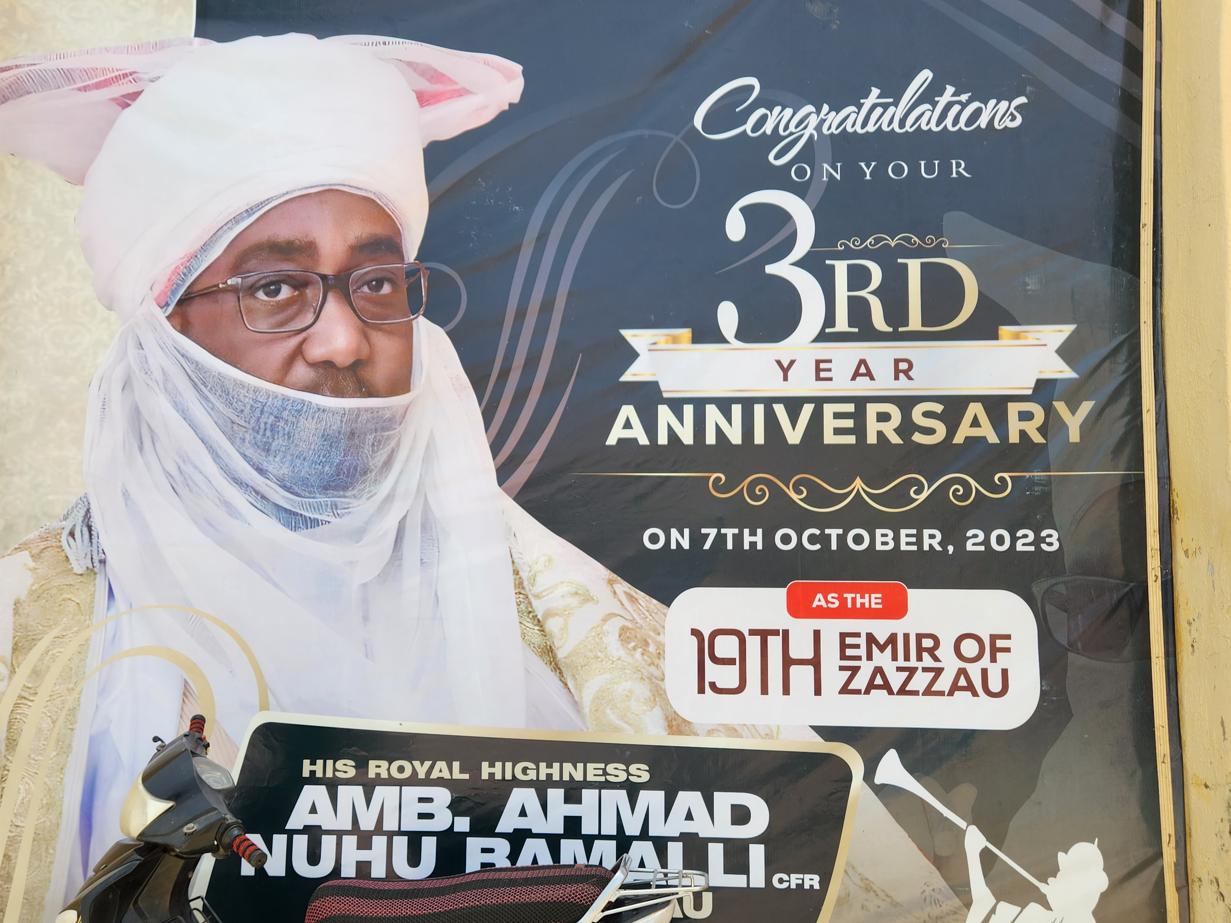
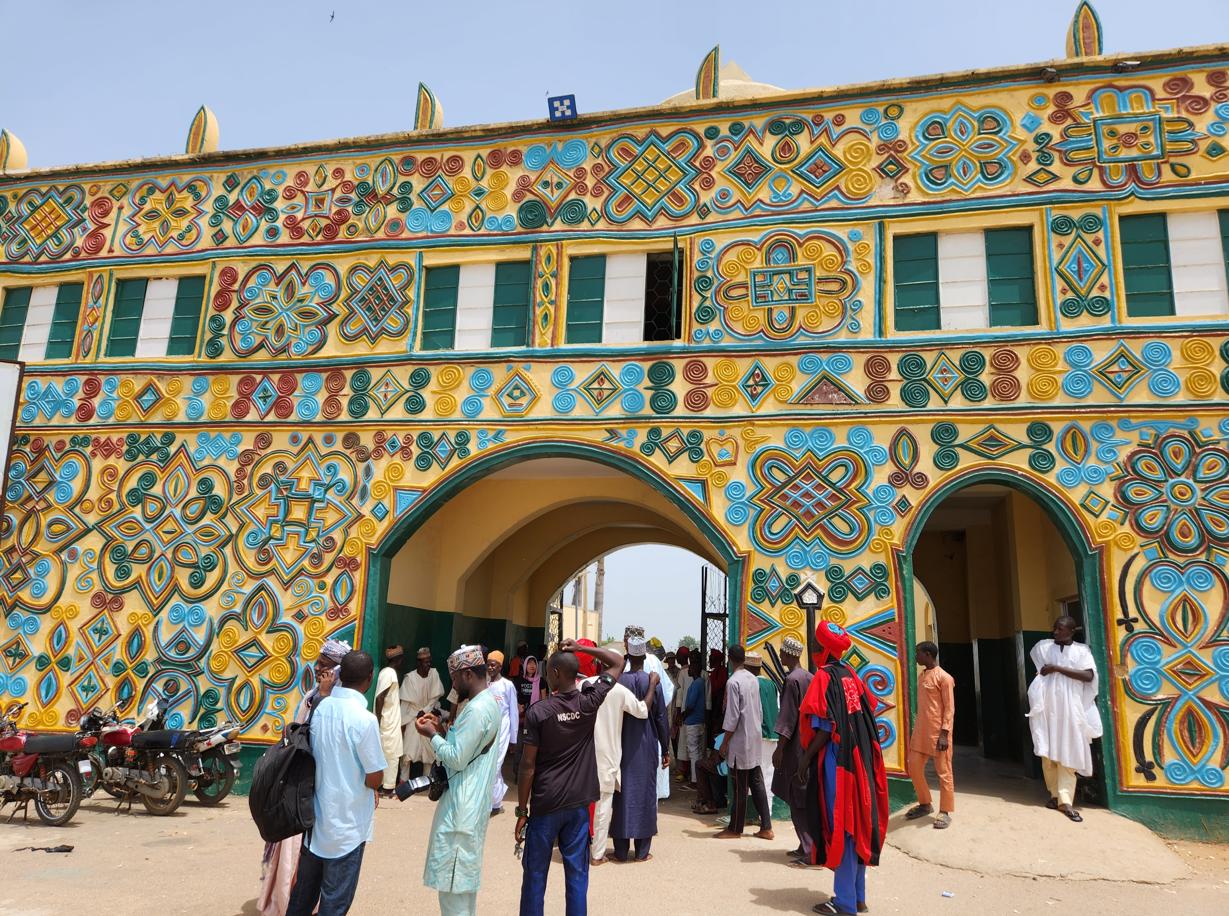
The day we visited Zaria had not begun as planned. At seven in the morning, a WhatsApp message from the guide announced that the Emir had moved the audience forward to ten o’clock — he and several other northern rulers had been summoned to Abuja for a meeting with the federal president, and he intended to see us before he left. The original appointment had been for two in the afternoon; we were still in Kano; the drive was two hours. Breakfast was eaten at speed, bags packed while still chewing, the hotel checked out of with the particular efficiency that only a genuine deadline produces. We arrived at the monumental bright yellow facade of the Zaria palace with, one gathered, very little time to spare. A banner on the gate marked the occasion independently of our arrival: “Congratulations on your 3rd Year Anniversary, 7th October 2023, as the 19th Emir of Zazzau.”
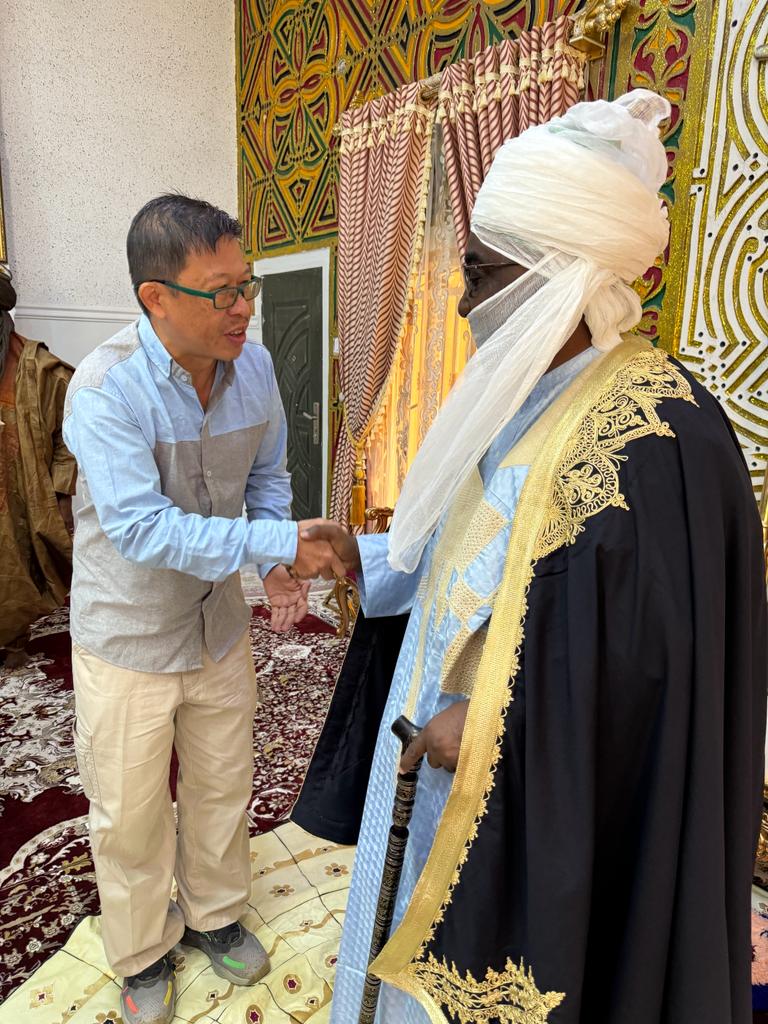
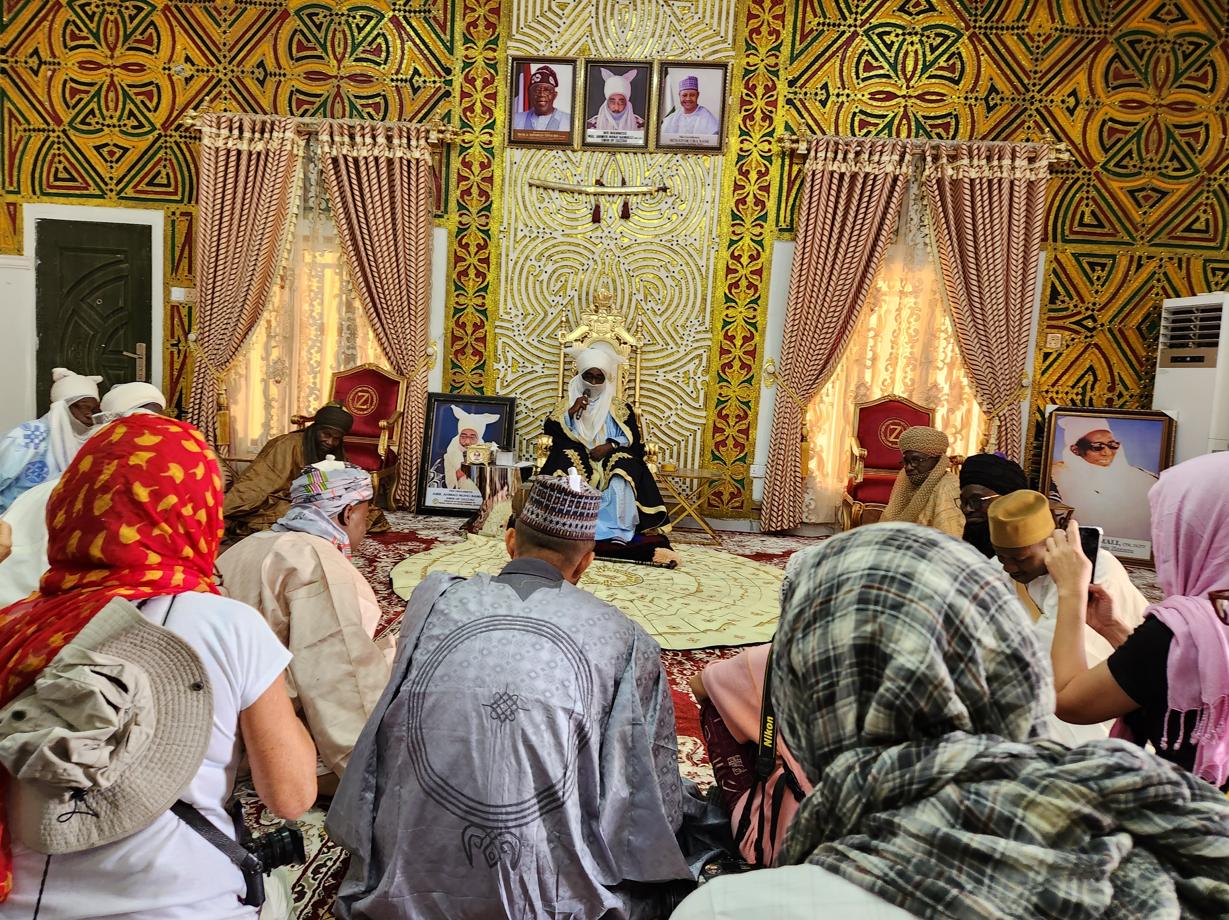
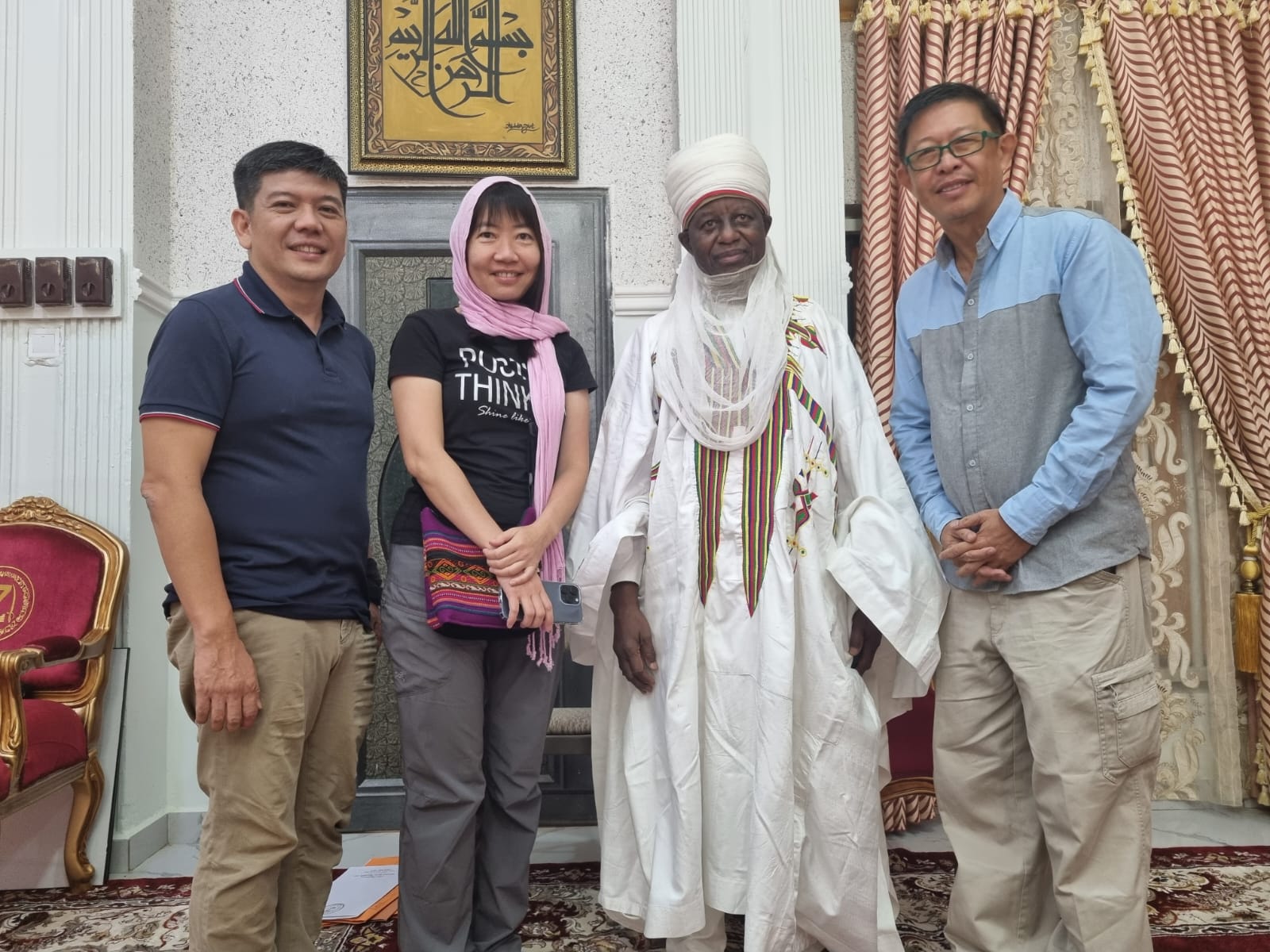
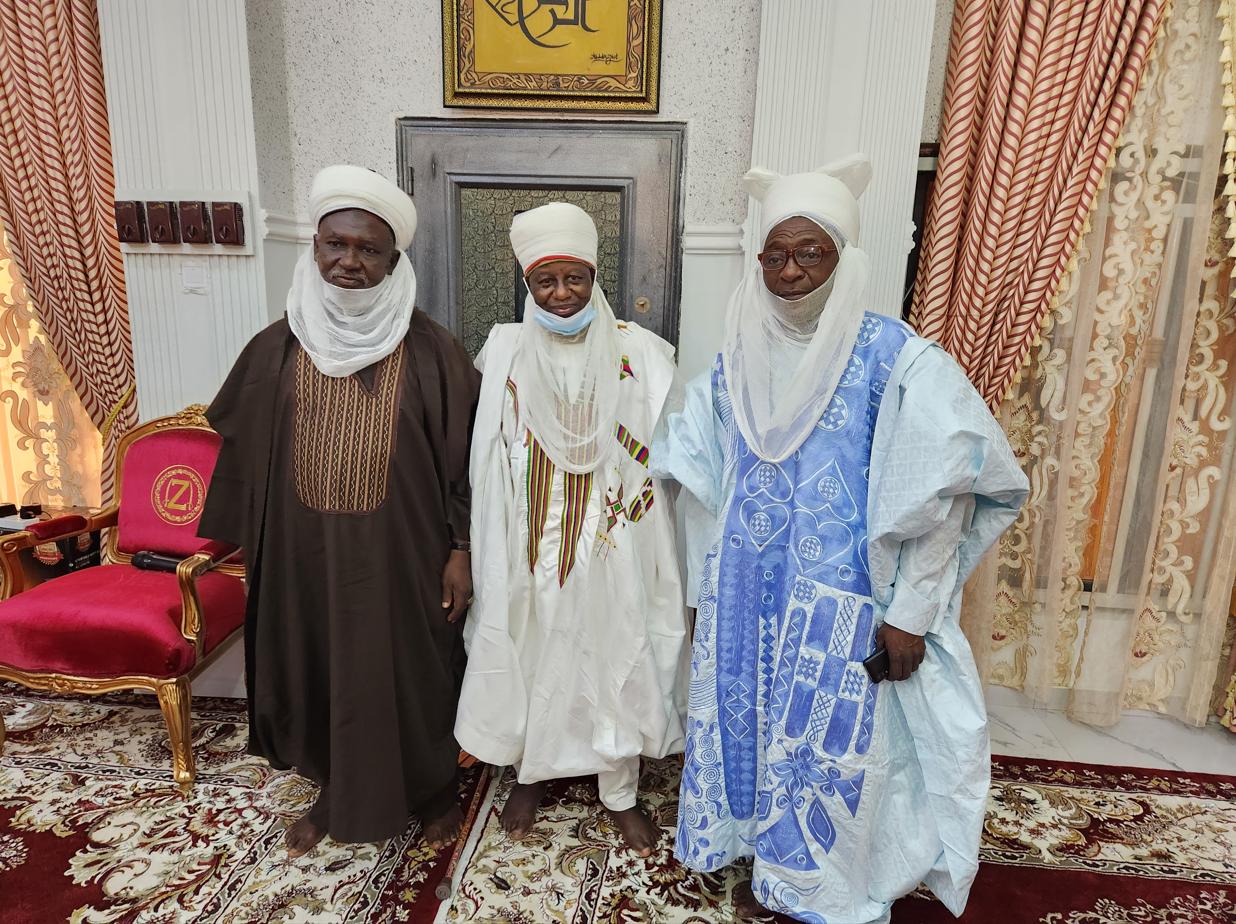
The Emir received us in his audience chamber, a room whose walls were covered entirely in dense gold-and-polychrome Hausa geometric relief — every surface activated, every panel a different pattern, the overall effect somewhere between a tapestry and a jewellery box scaled to architectural dimensions. He sat on a gold throne in black robes with heavy gold embroidery at collar and cuffs, a white turban, a microphone in one hand. The audience followed the formal conventions of emirate protocol: our group seated on the carpet before him, the Nigerians in the party at near full prostration — not unlike the way Thais present themselves before their king — eyes averted, royal protocol prohibiting any direct gaze at the monarch. The Emir asked each of us to state our name and nationality, welcomed the group, and made a brief speech asking us to carry word of Nigeria and Zaria to tourists elsewhere. The prince of Dutse then brought me forward and introduced me as Professor Tan from Singapore. The Emir received this with particular interest: he had served three years as Nigeria’s ambassador to Thailand before his father’s sudden death in 2020 called him home to assume the emirship, and knew Singapore well. He made appreciative remarks about the city-state’s orderliness and greenery. Several of his senior councillors and ministers, introduced to us afterward, had also visited Singapore — diplomatic passports, no visa required. It was a reminder of how the world connects beneath the level of tourist itineraries.
The framed photographs of the Nigerian President and the Kaduna State Governor on the wall above him established, without requiring explanation, exactly where the emirate sits within the constitutional order of the Nigerian state: below the elected government in law, but in this room, clearly at the centre of everything.
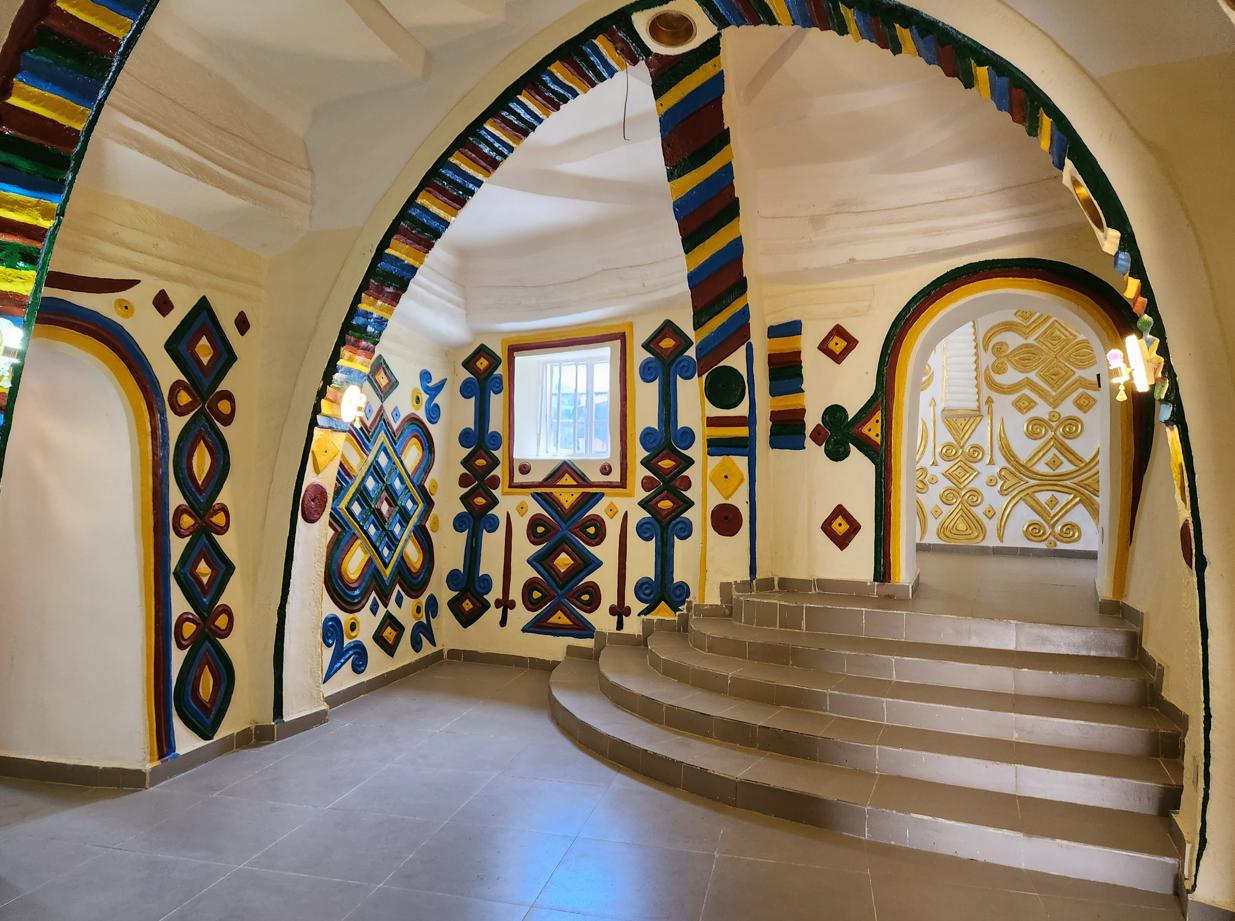
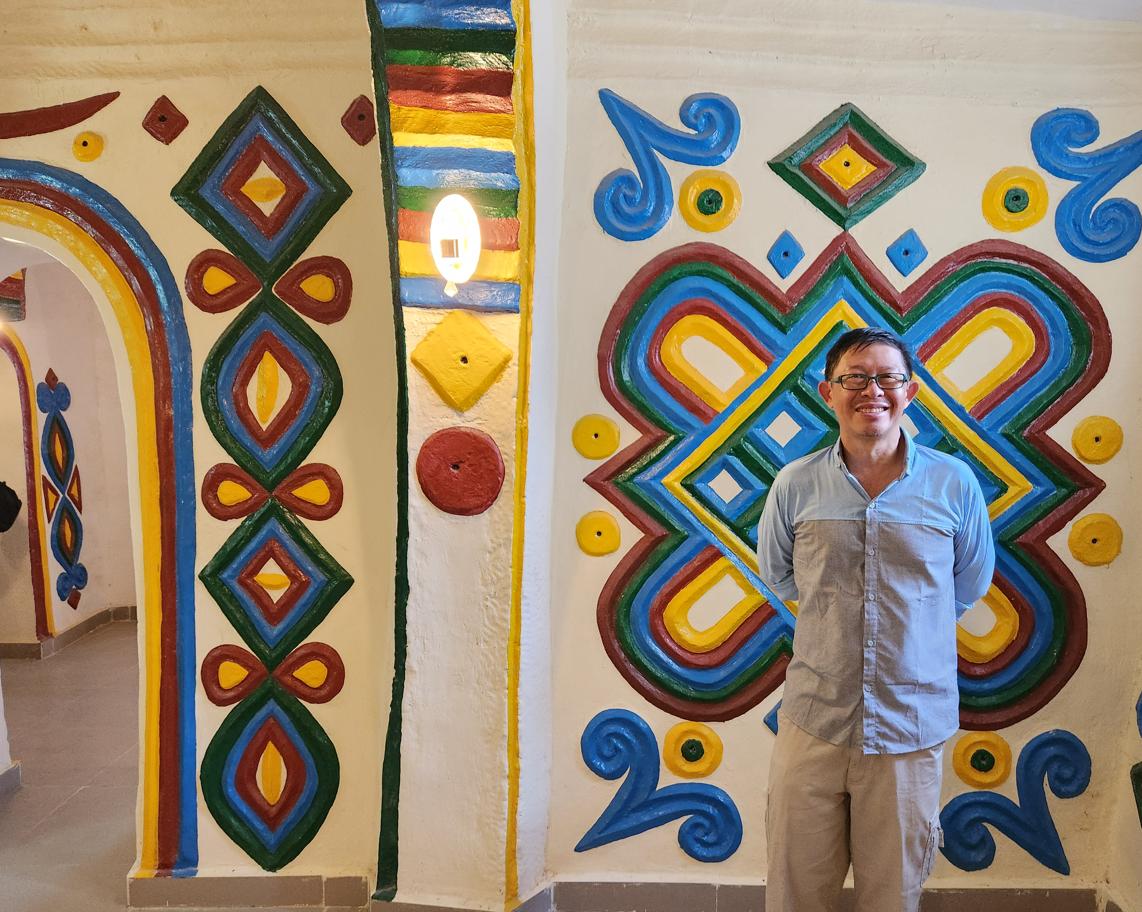
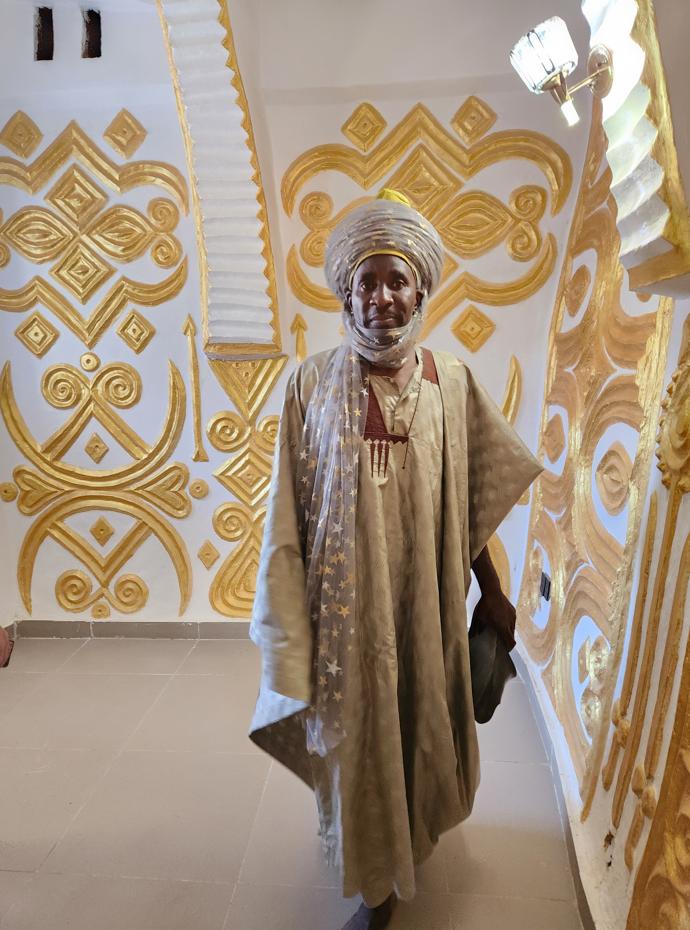
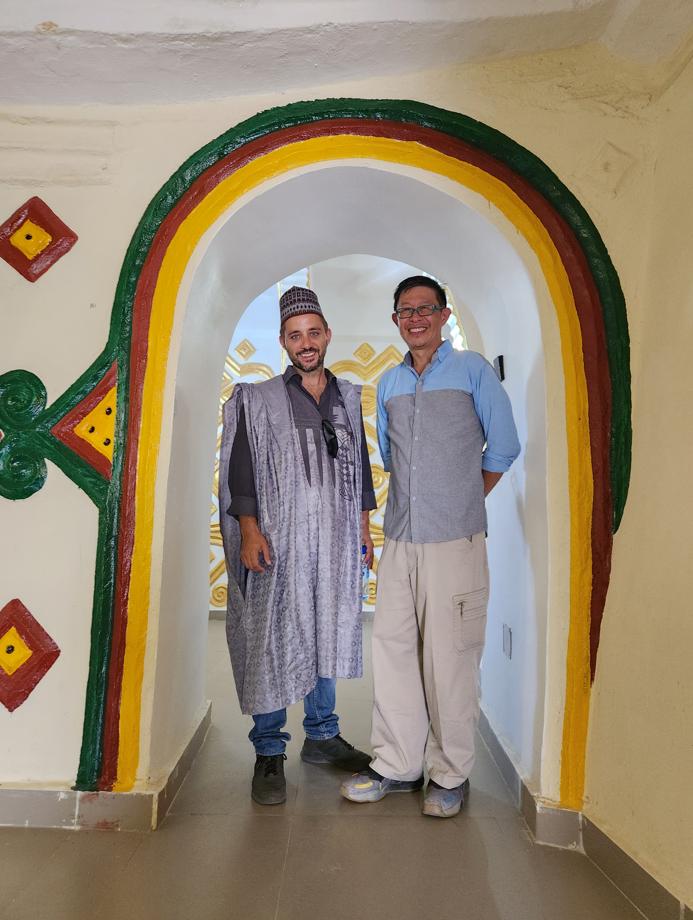
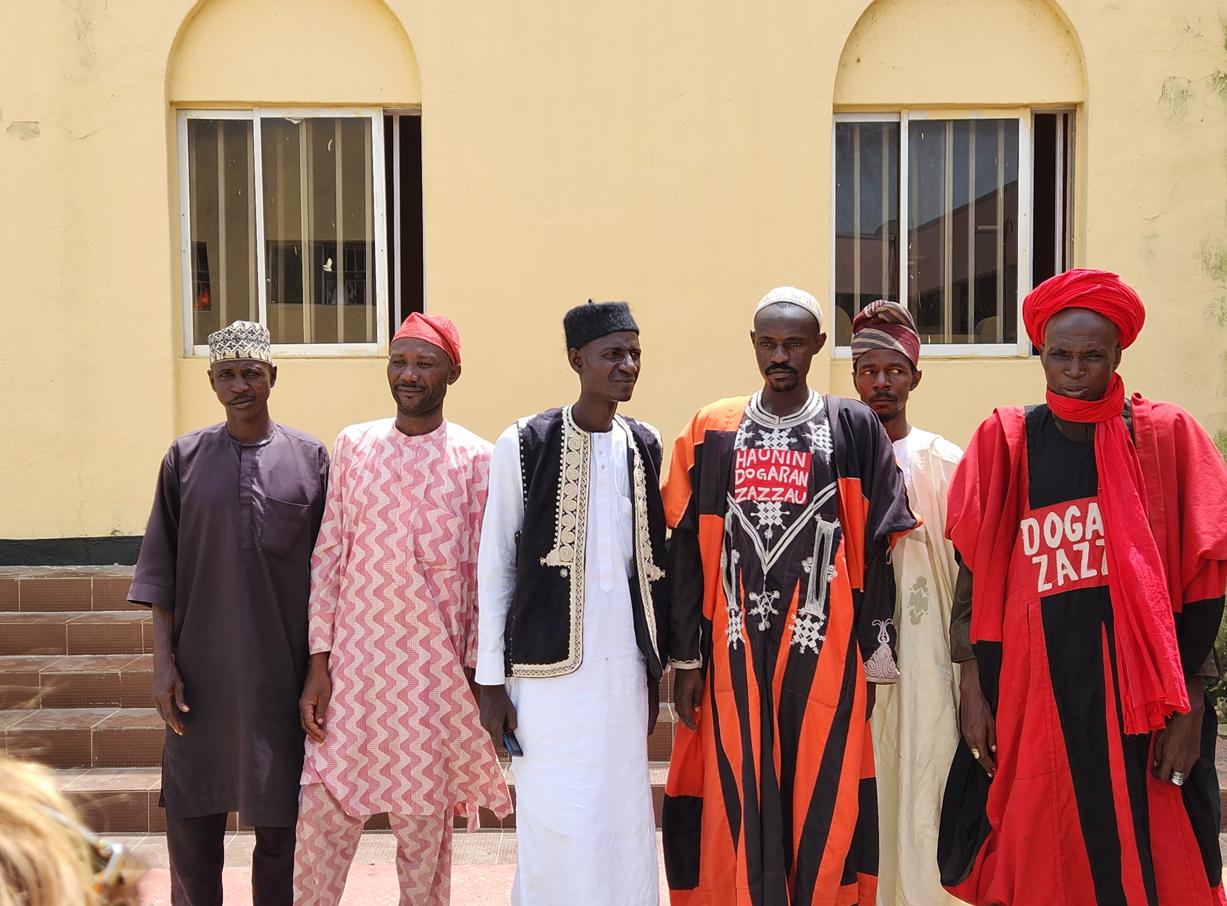
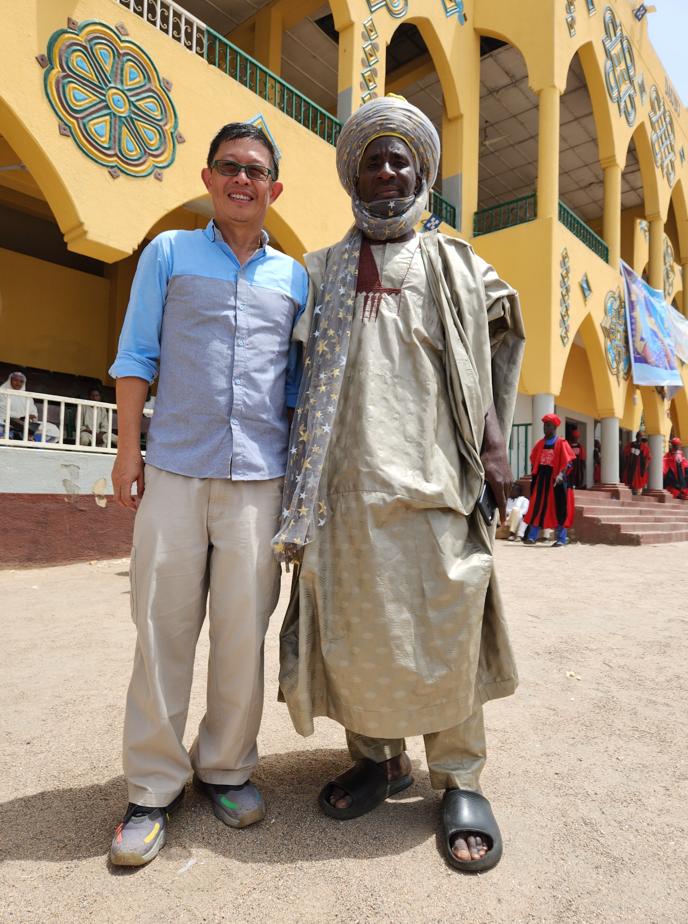
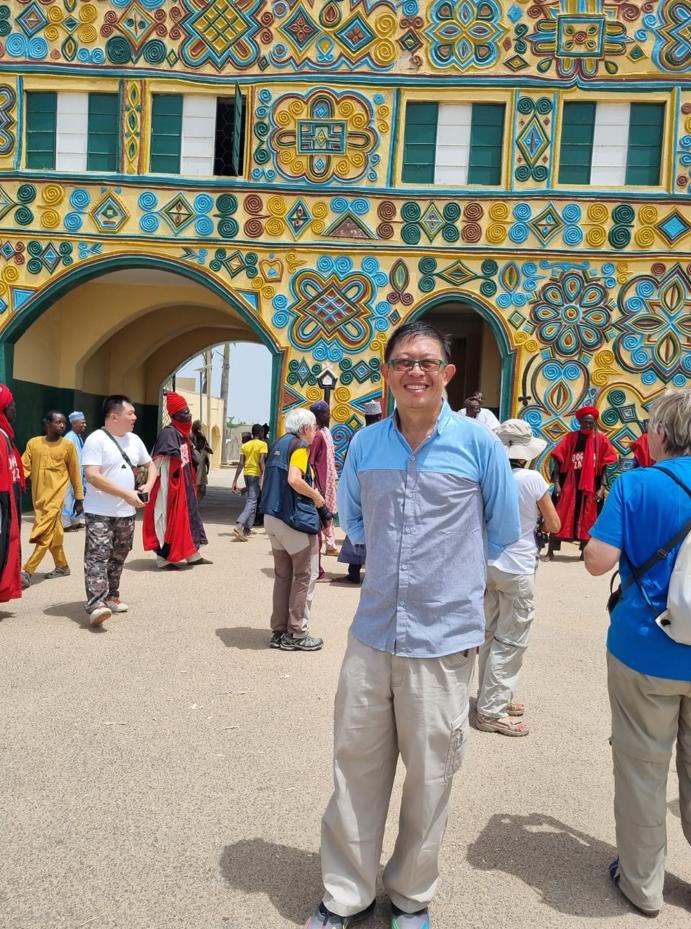
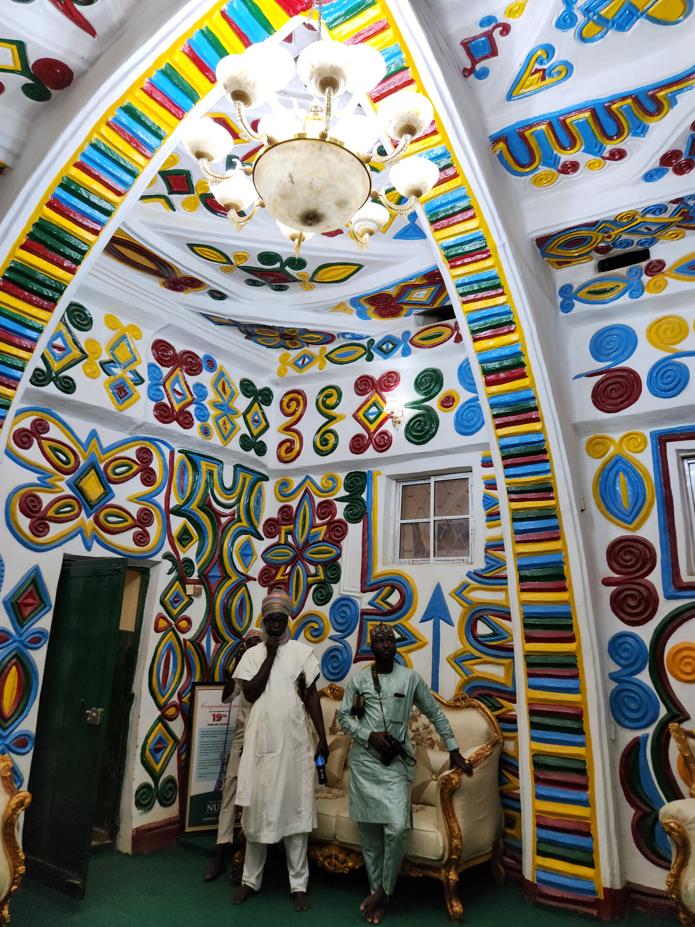
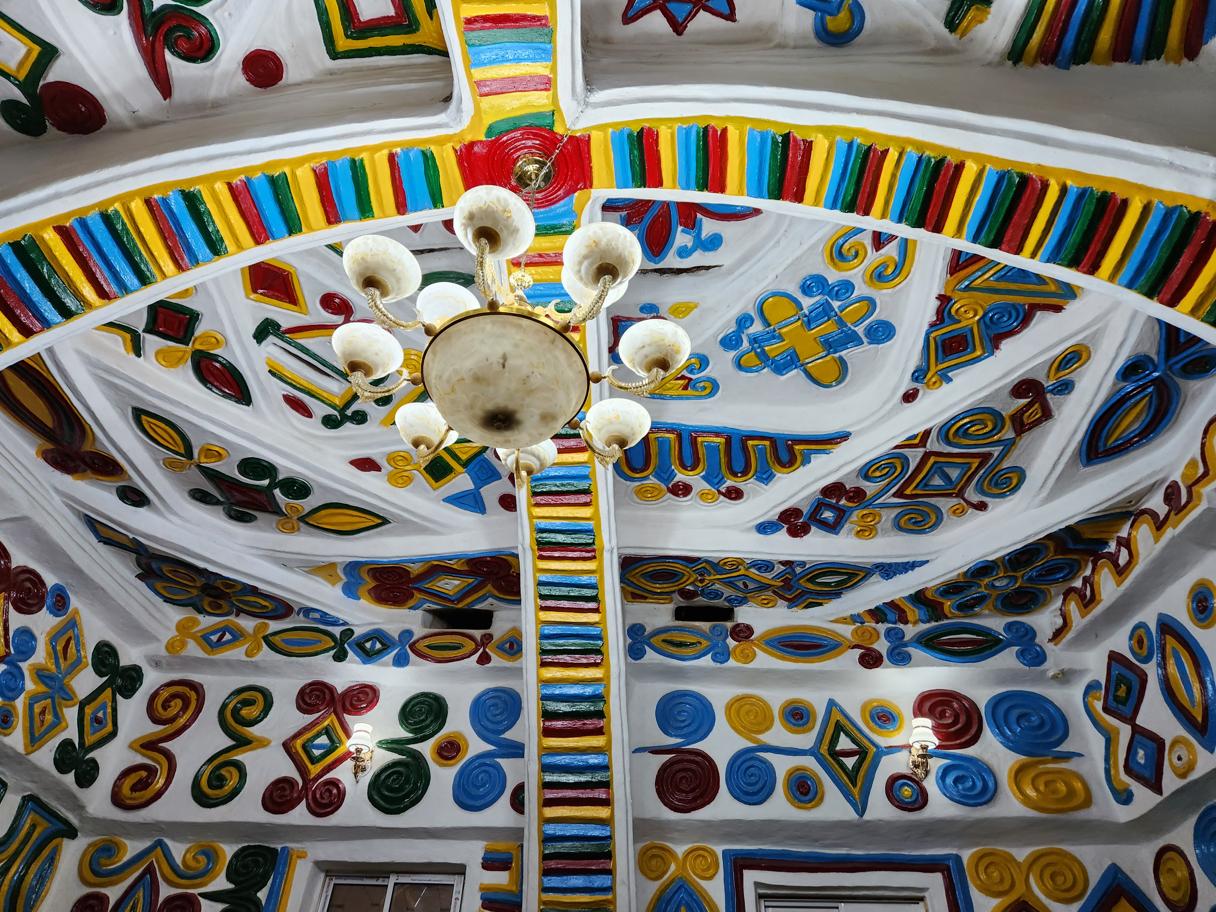
After the audience, we were taken through the palace. The interior was a sequence of decorated chambers, each room expressing a different register of the same visual language. One room had a barrel vault painted entirely in dense polychrome spirals, arrows, and interlocking forms; another, a circular carpet of extraordinary size covering almost the entire floor, with a radiating geometric pattern worked outward from a central medallion. A third room contained the Emir’s personal furniture — a throne-bed inlaid in black, white, silver, and gold, a grey fur draped across it — beside which stood a large pencil-sketch portrait of the Emir himself, formal and watchful. One wing of the complex, we were told, had a particular function: an older residence that had served three previous emirs had been remodelled as the local quarters of the Sultan of Sokoto, for use whenever he visits Zaria. The Sultan — a direct descendant of Usman dan Fodio, the eighteenth-century jihadist whose campaigns reshaped the entire north — is regarded as first among equals among the northern Nigerian emirs. That the Zaria palace maintains a suite for him is not merely a courtesy. It is a statement of the hierarchy that still governs this world.
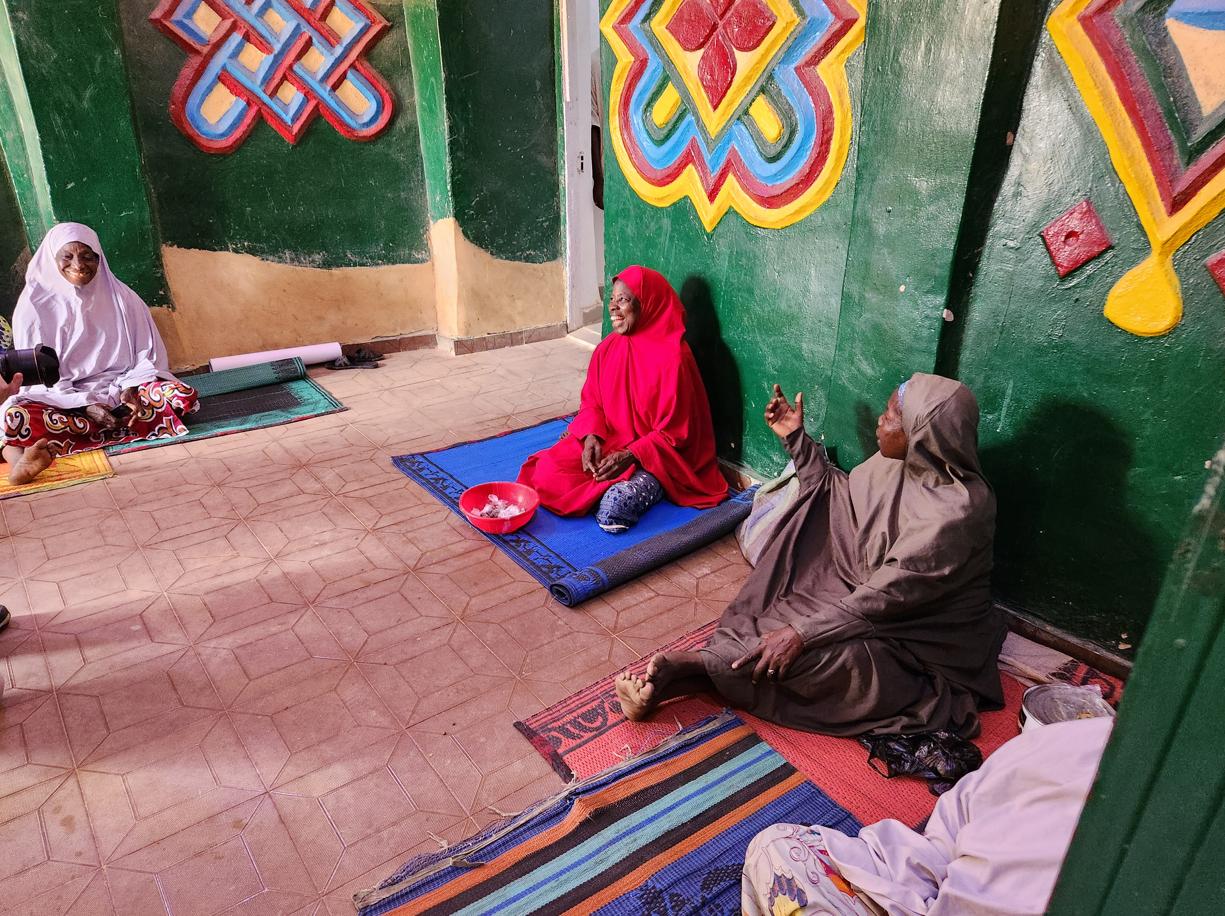
In a room elsewhere in the compound, two women sat on mats on a tiled floor, their conversation audible through the decorated doorway. The palace is a residence as well as a monument; people live in it, as they have for centuries.
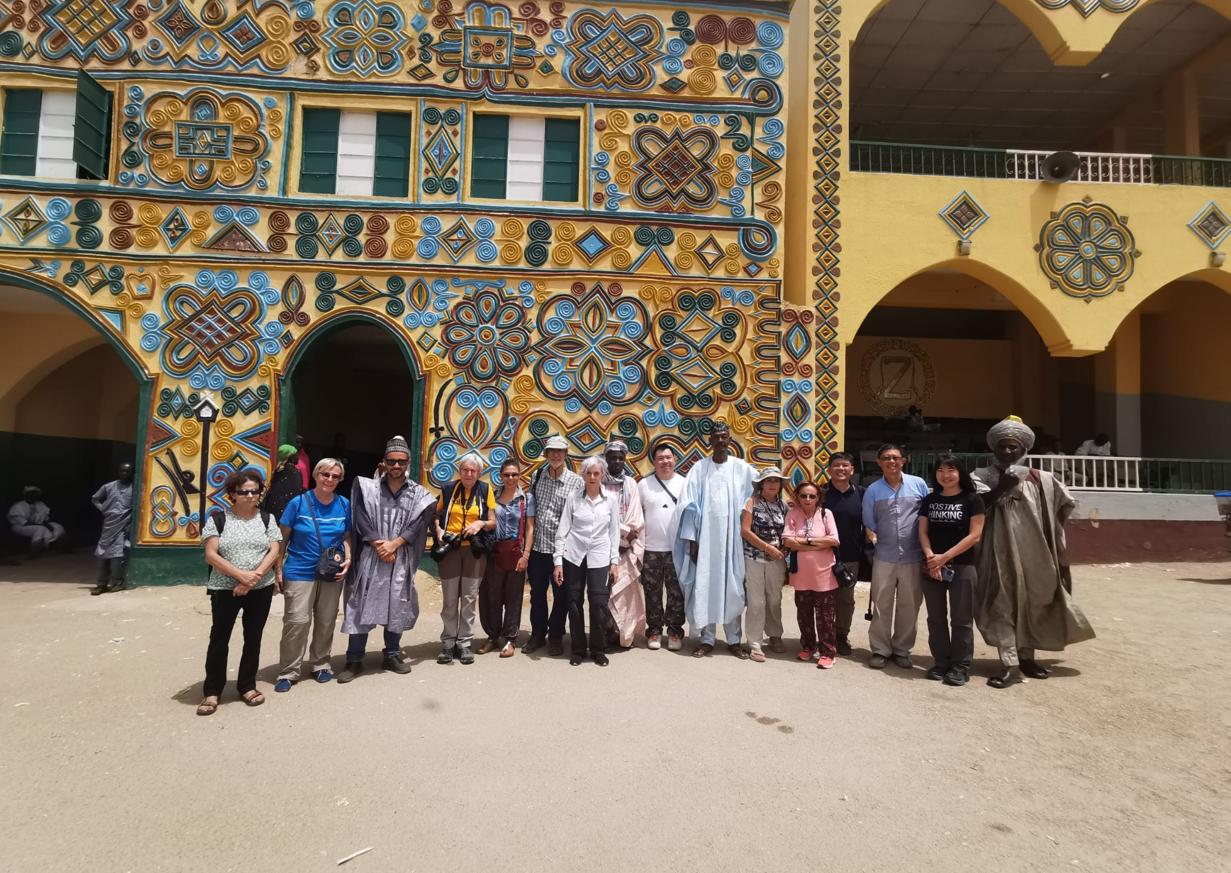
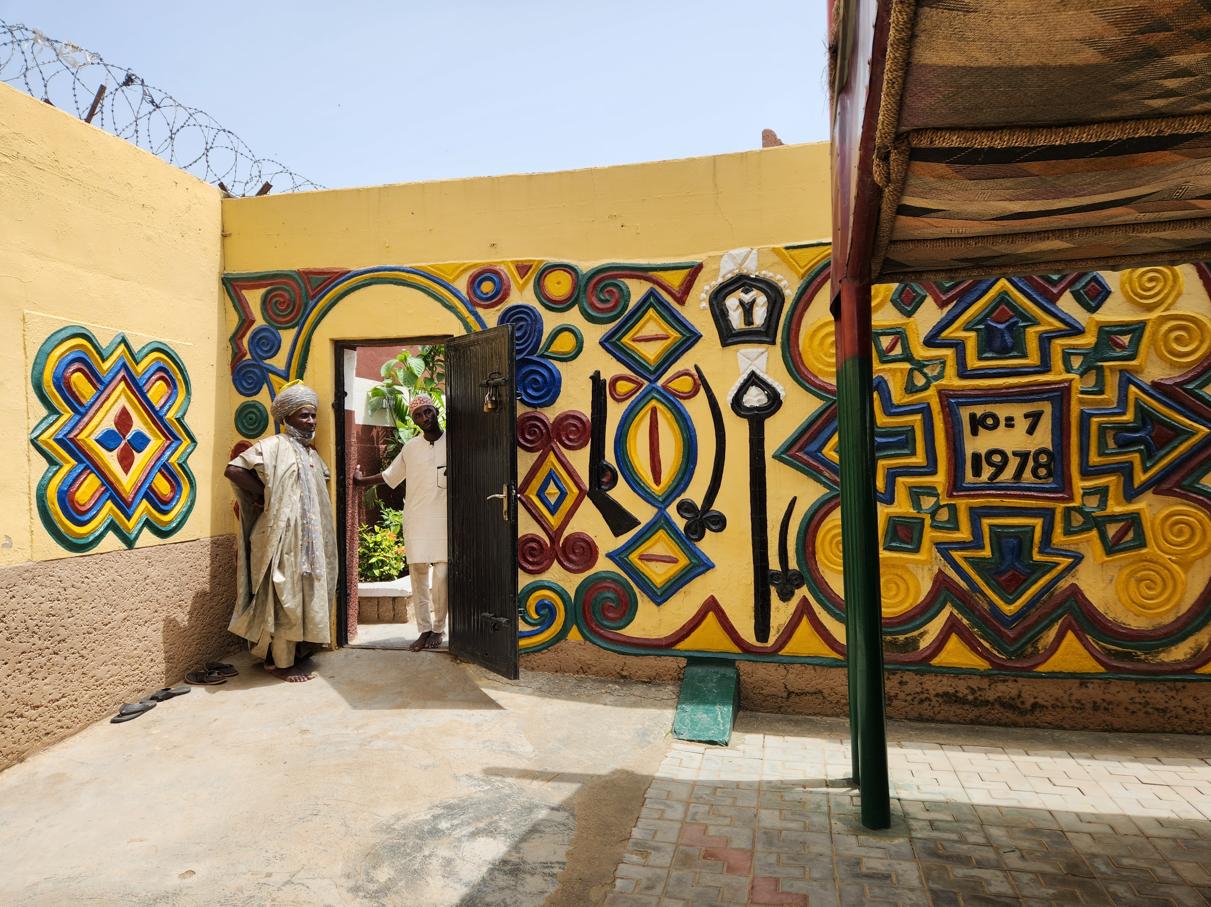
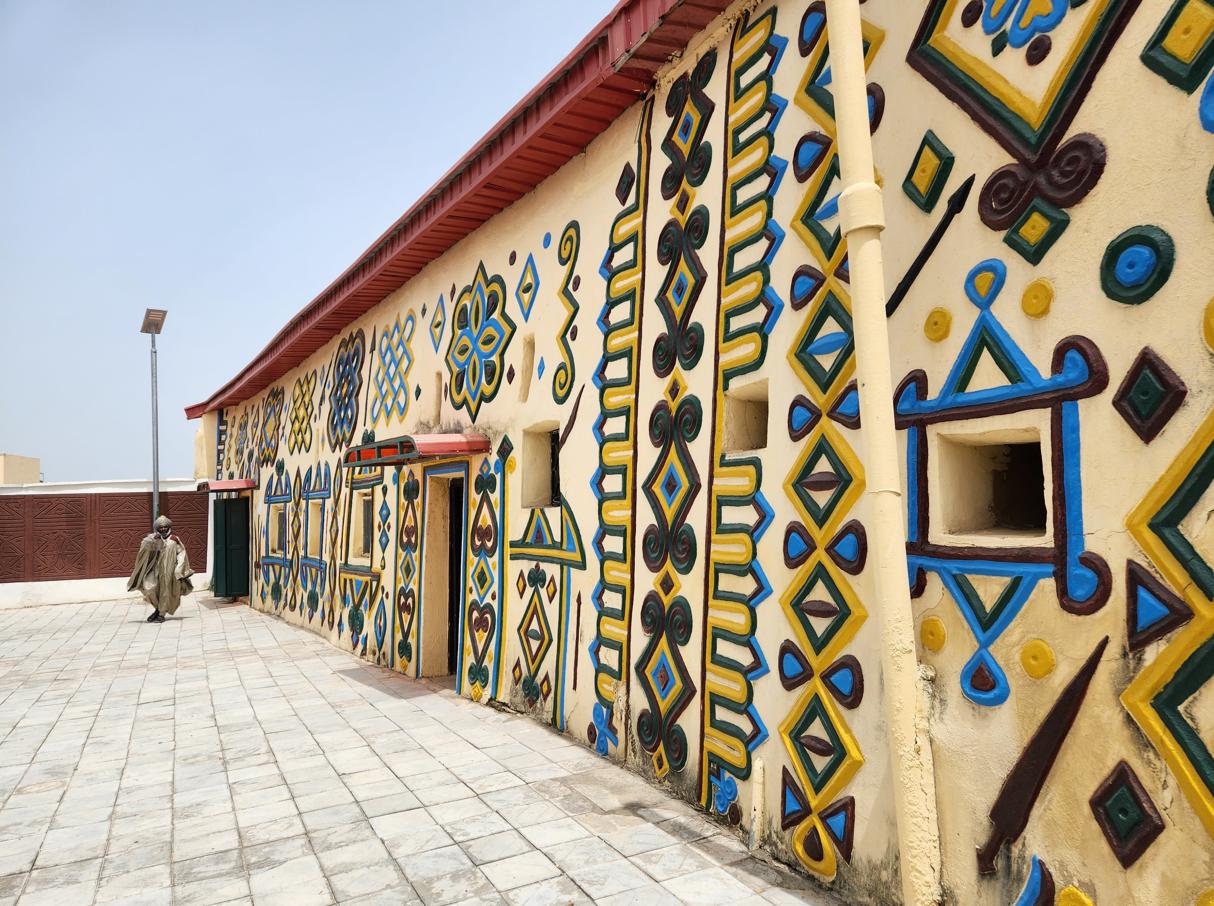
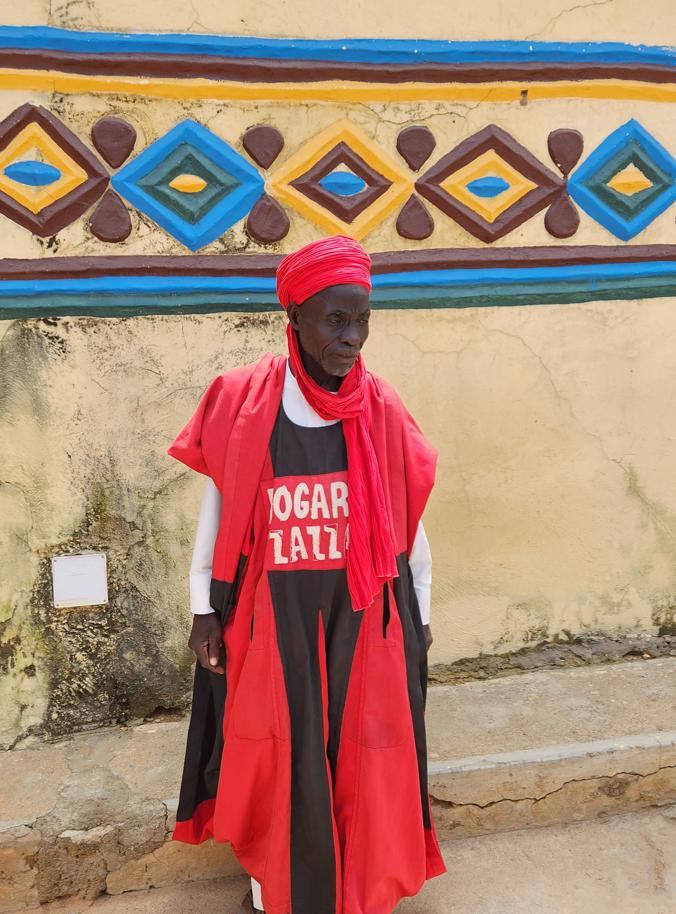
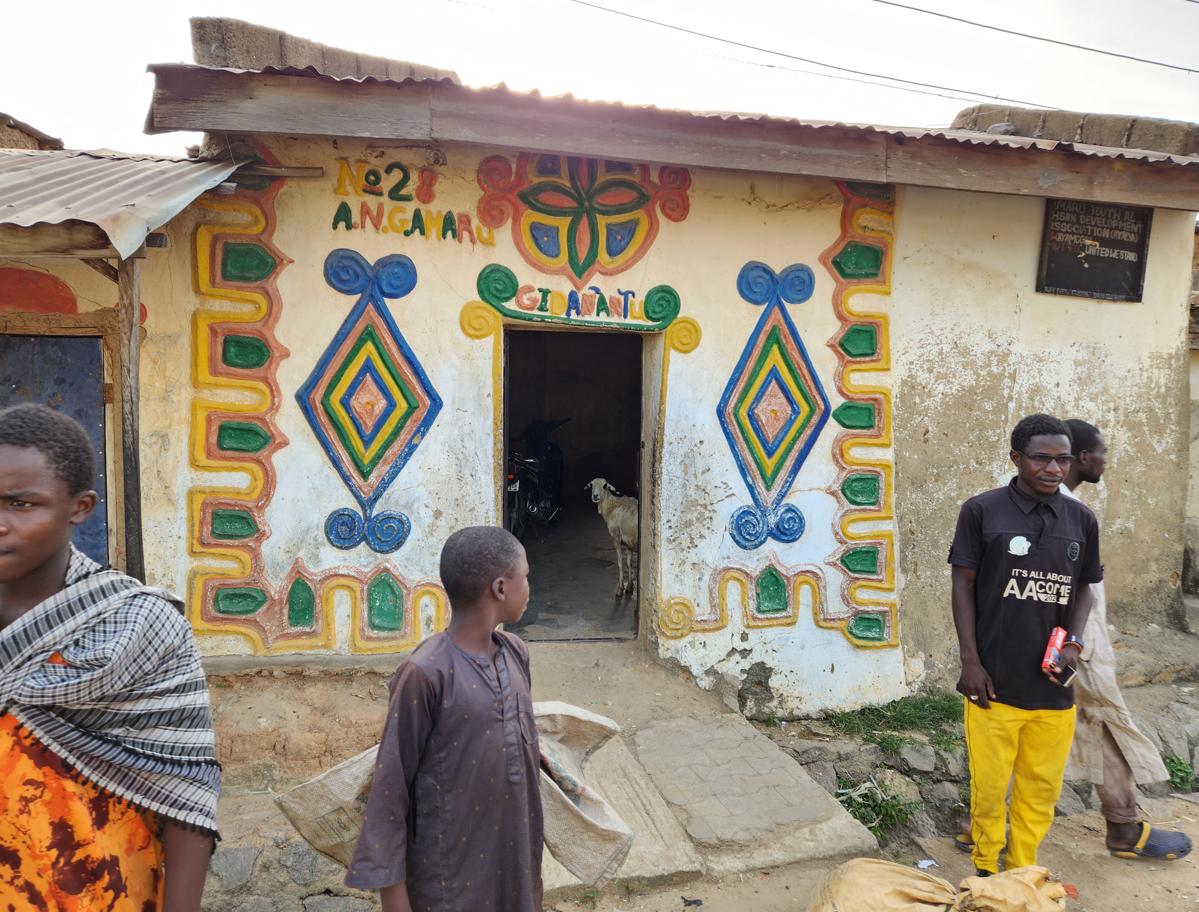
The outer walls of the compound were painted with dense multicolour murals in the Hausa tradition — interlocking knots, arrows, spirals, ceremonial sword forms, in blue, green, gold, and red on yellow — among which the date “10.7.1978” appeared, painted without comment. A man in red robes and a red turban stood in a decorated doorway; his sash read “Dogari, Zazzau” — a palace guard, standing in the frame of the painted entrance as if placed there deliberately, which perhaps he had been.
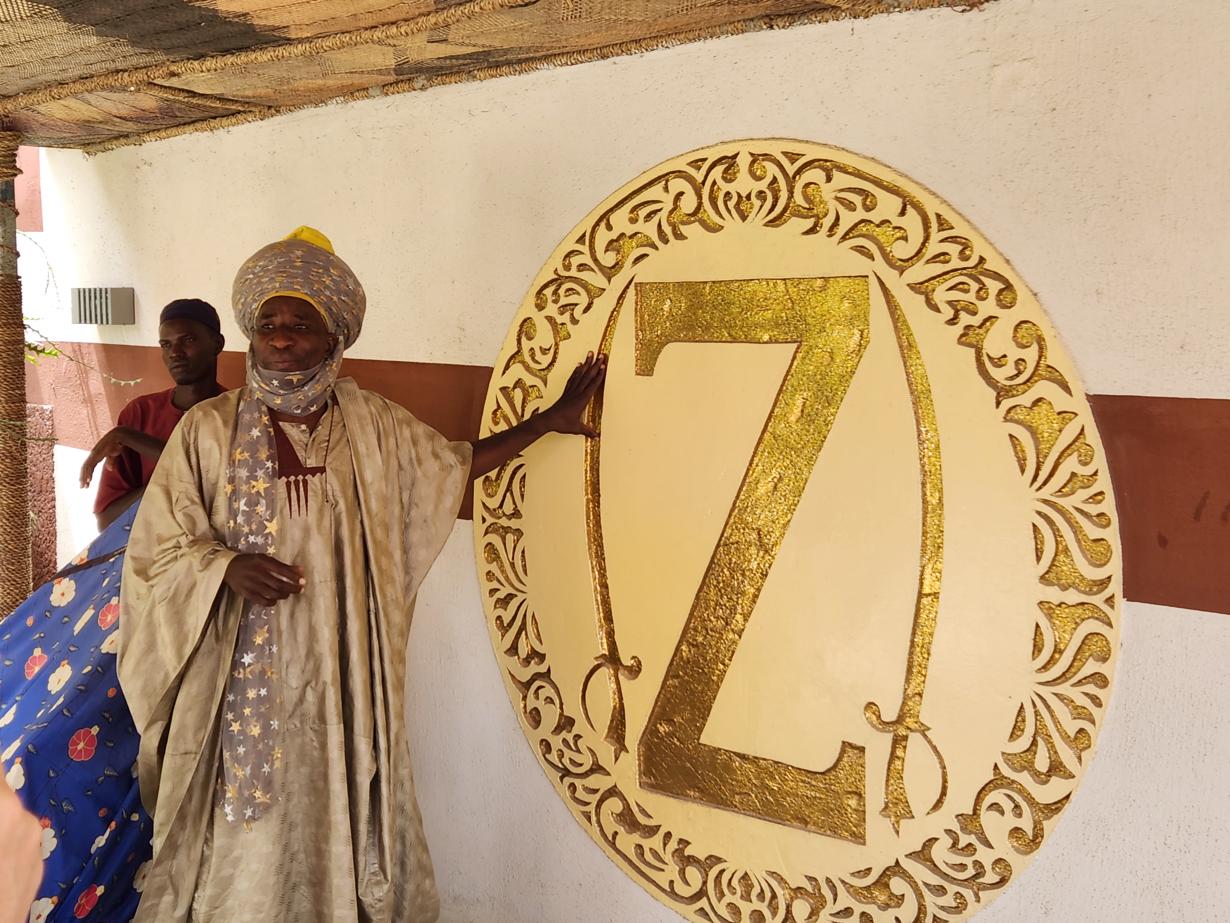
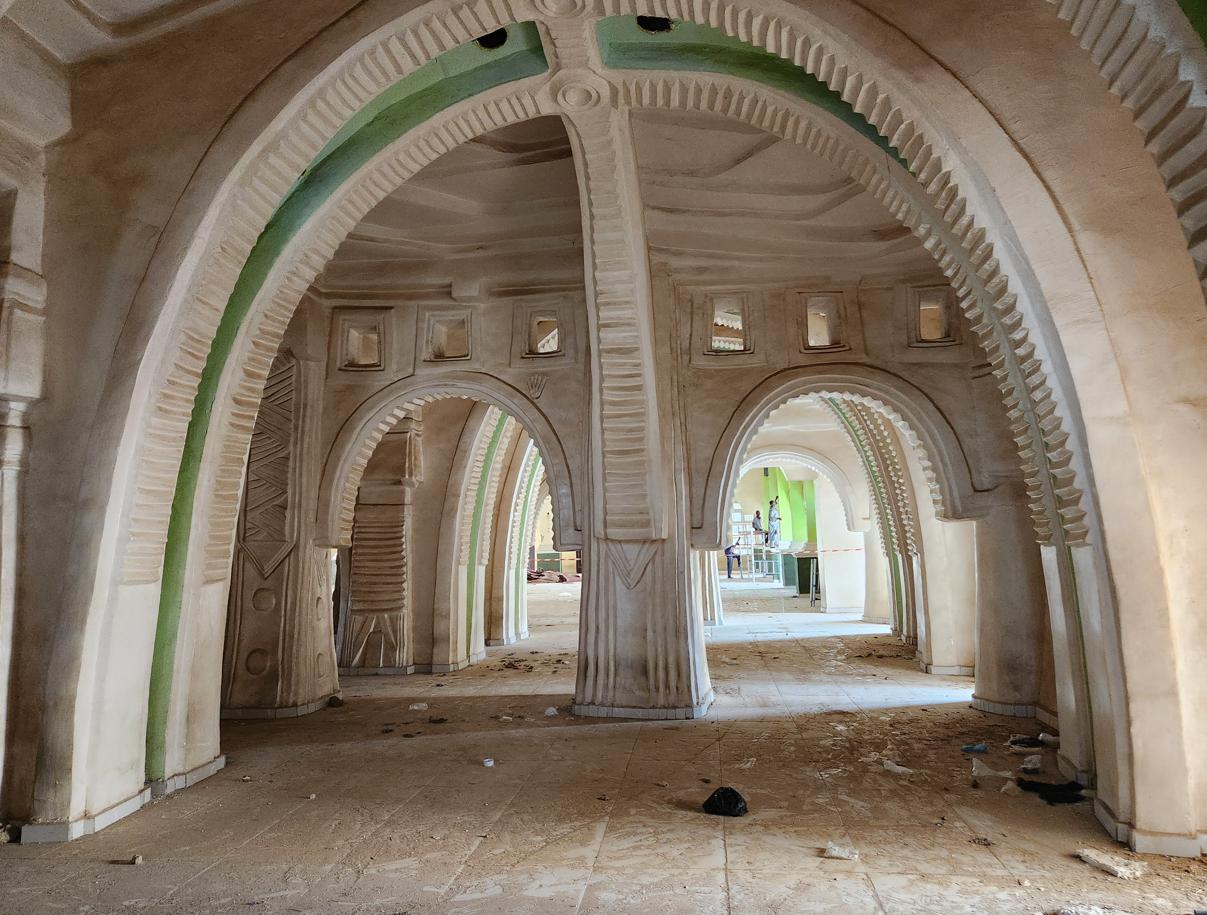
The Zaria palace’s main gate, seen from outside, presented a different architectural face: not the vernacular Hausa mud-relief tradition but a building that appeared to owe something to the colonial period — a low sand-coloured structure with a stepped white porch in a vaguely Art Deco idiom, the Zazzau monogram in gold above a black double door. The arcade inside the gate, by contrast, was covered in the full polychrome geometric relief of Hausa court architecture, the arches themselves treated as surfaces to be activated rather than merely structural. The monogram — a stylised “Z” in a circular cartouche — appeared repeatedly throughout the complex, on walls, doors, and embroidered furnishings, with the insistence of a brand that has been in continuous use since the fifteenth century and sees no reason to change.
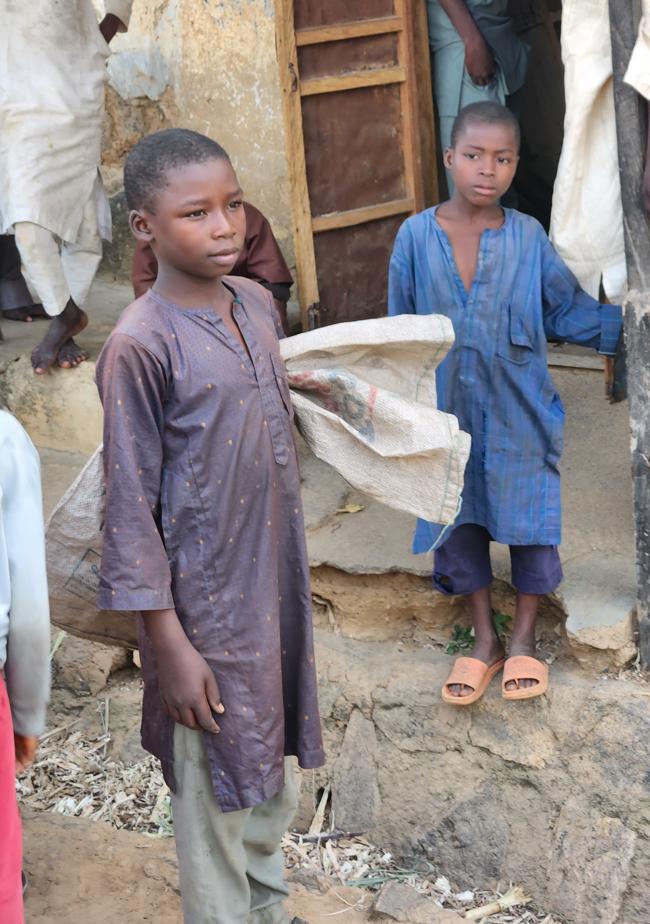
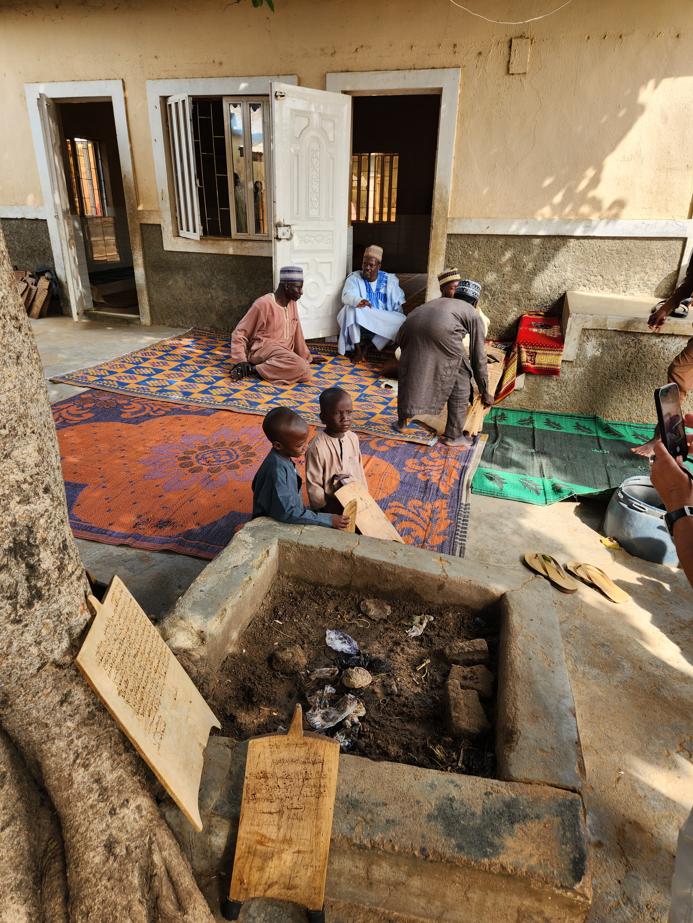
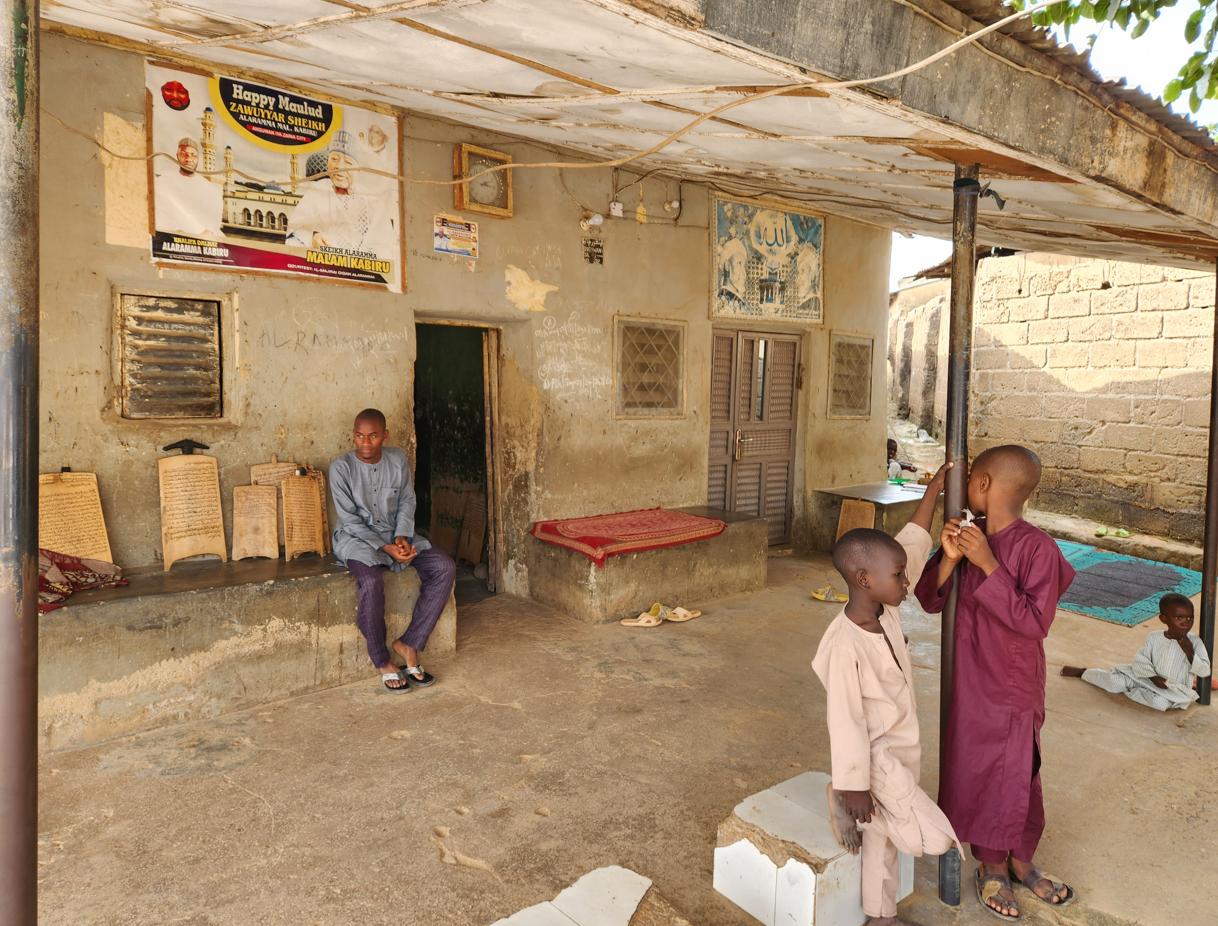
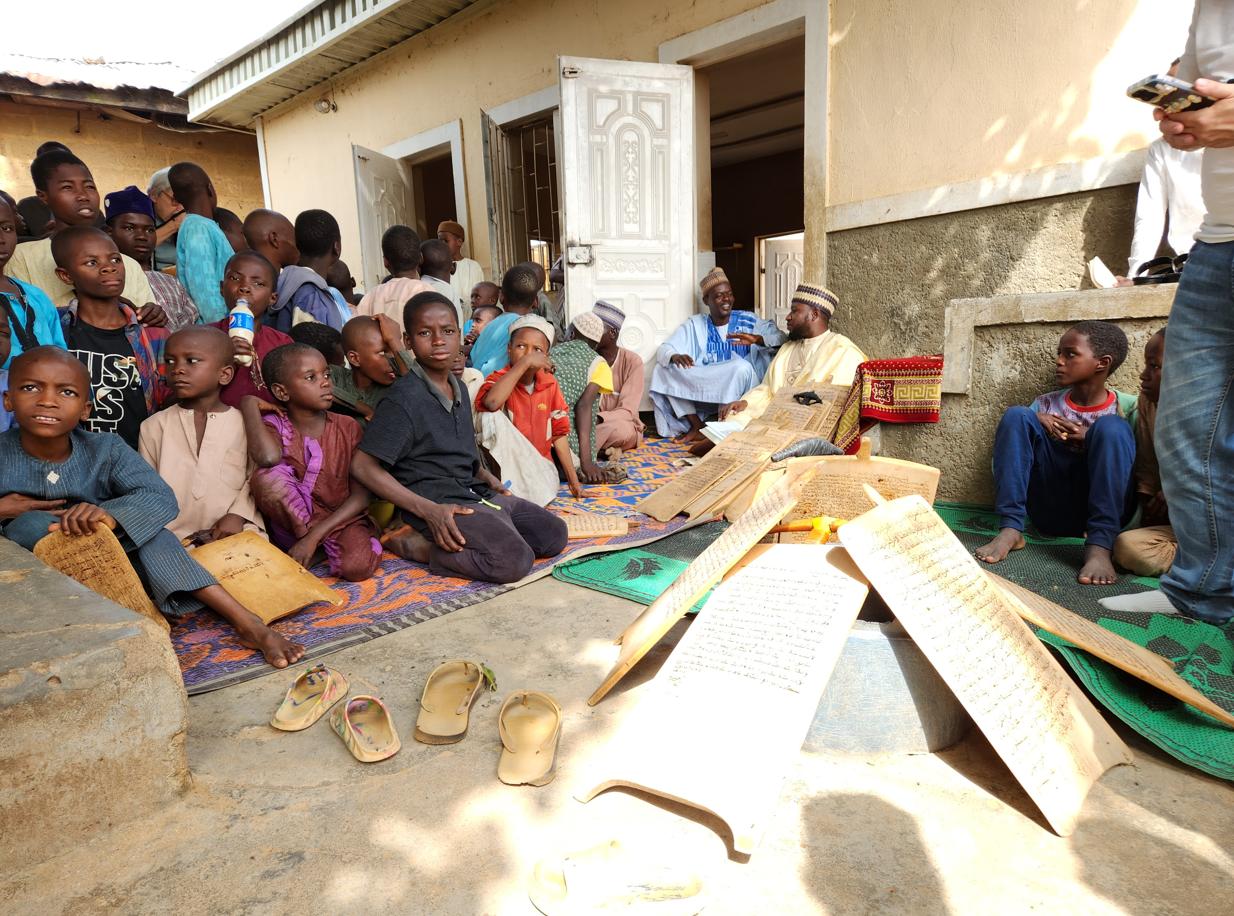
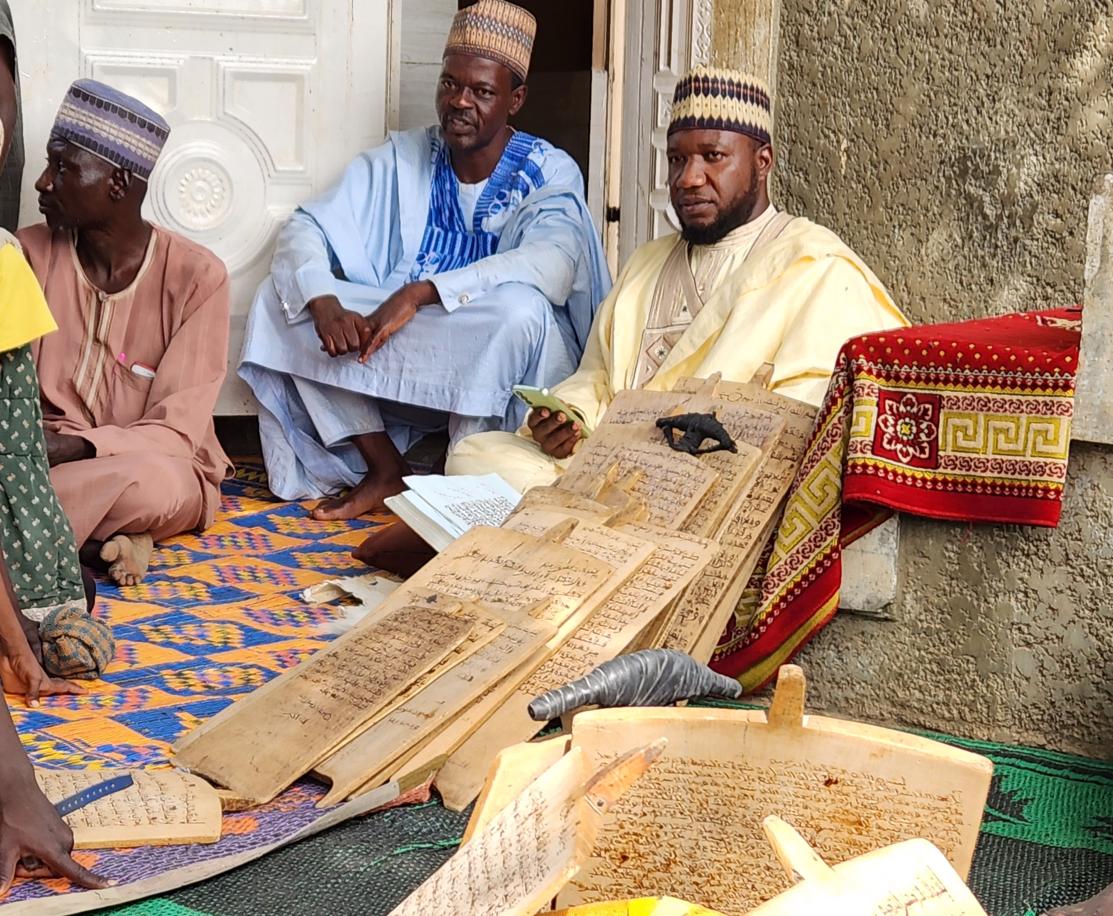
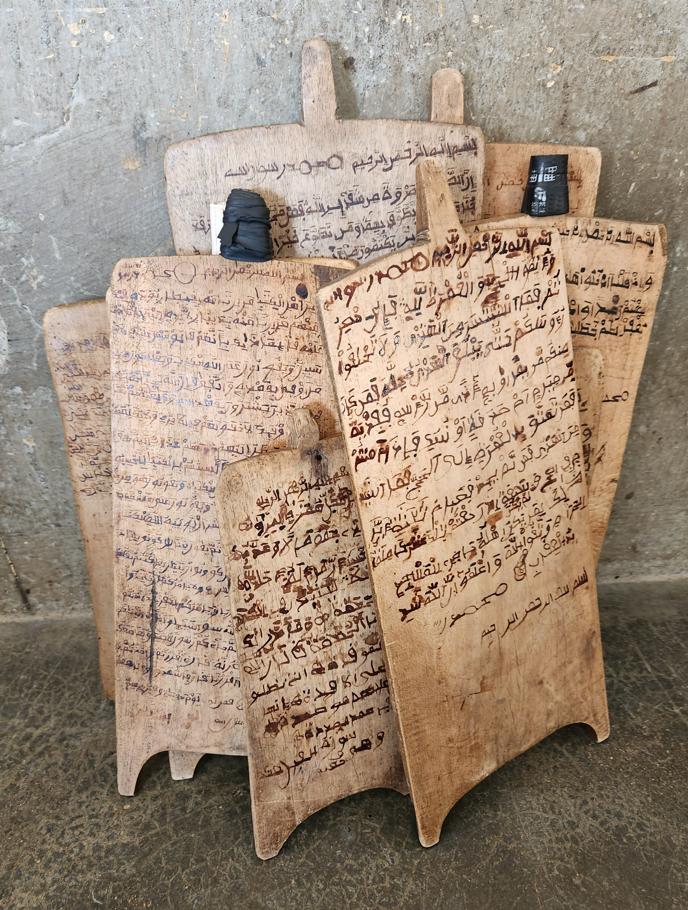
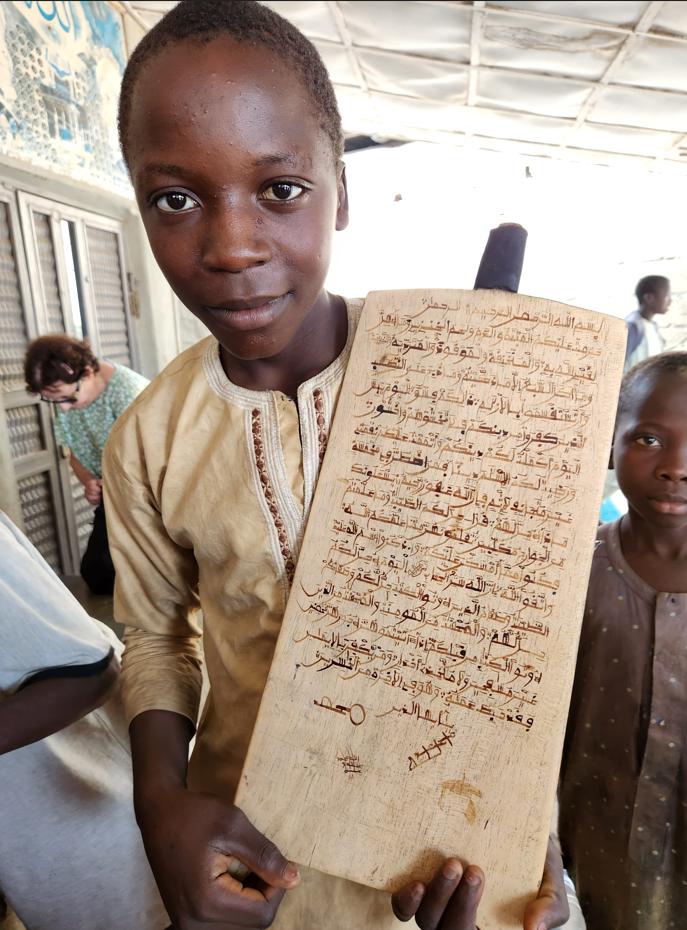
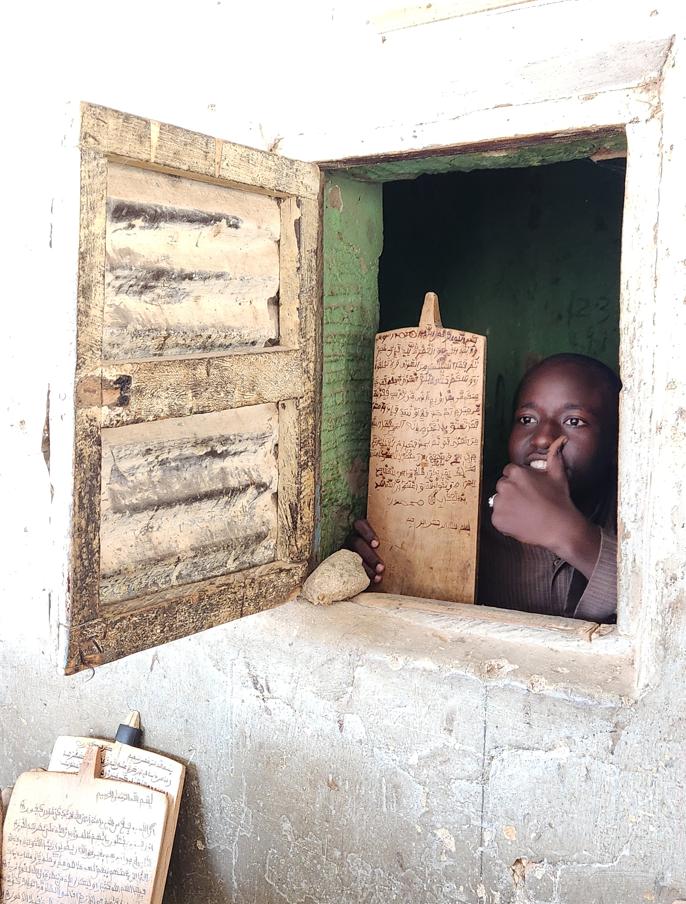
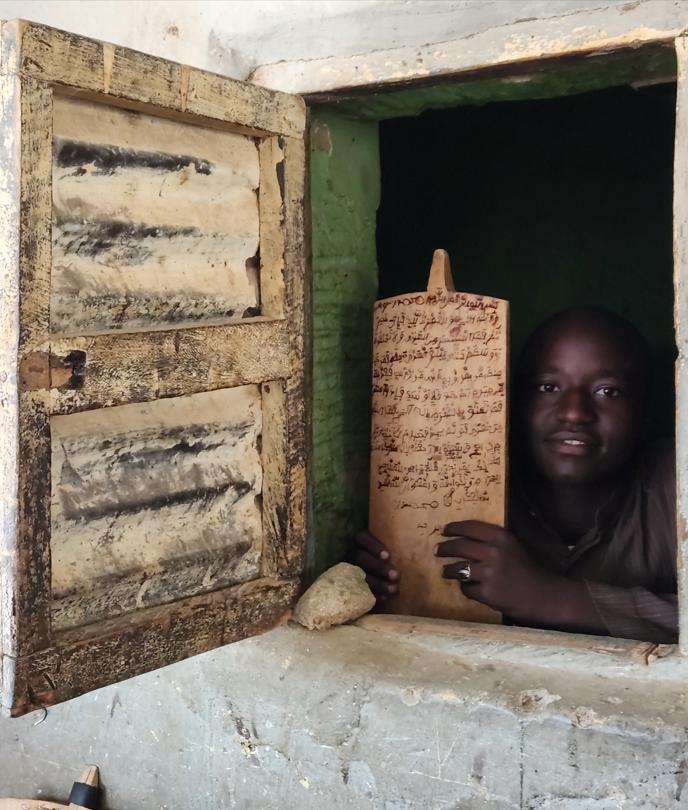
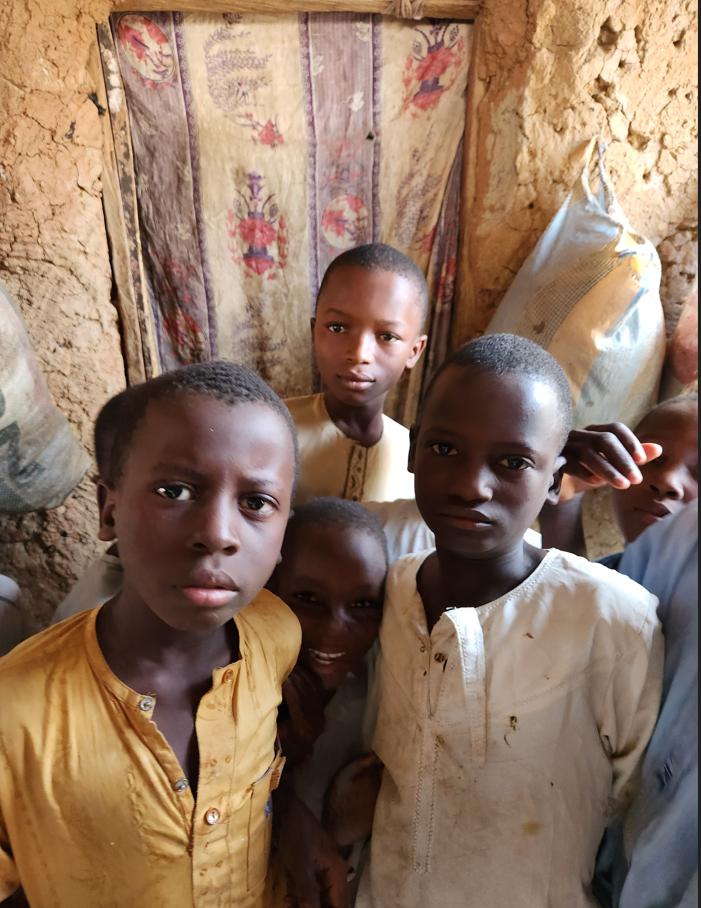
After the palace, we stopped at a Quranic school — a madrasa of the traditional type, its classroom an open courtyard, its curriculum the memorisation and recitation of the Quran. The boys ranged from four years old to their mid-teens, each holding a wooden lawh — a writing board inscribed with Quranic verses in red and black ink, the surface darkened with use and reuse across many previous students’ years. A boy of perhaps five sat upright with his board, looking at the camera with an expression that contained no performance: this was simply what he was doing this morning. Five older boys held their boards up together, the Arabic script dense and practised. A teacher showed his own board through a small window in the wall — the frame unpainted wood, the plaster bare — a page of the Quran inscribed in a hand that had been doing this for decades. The school had no signage, no administrative apparatus, no government connection visible. It was simply a place where men and boys had been gathering to learn the Quran by the oldest available method, and were doing so this morning as on every other morning.