Chapter 7: Back to Kano: The Hill and the Ring
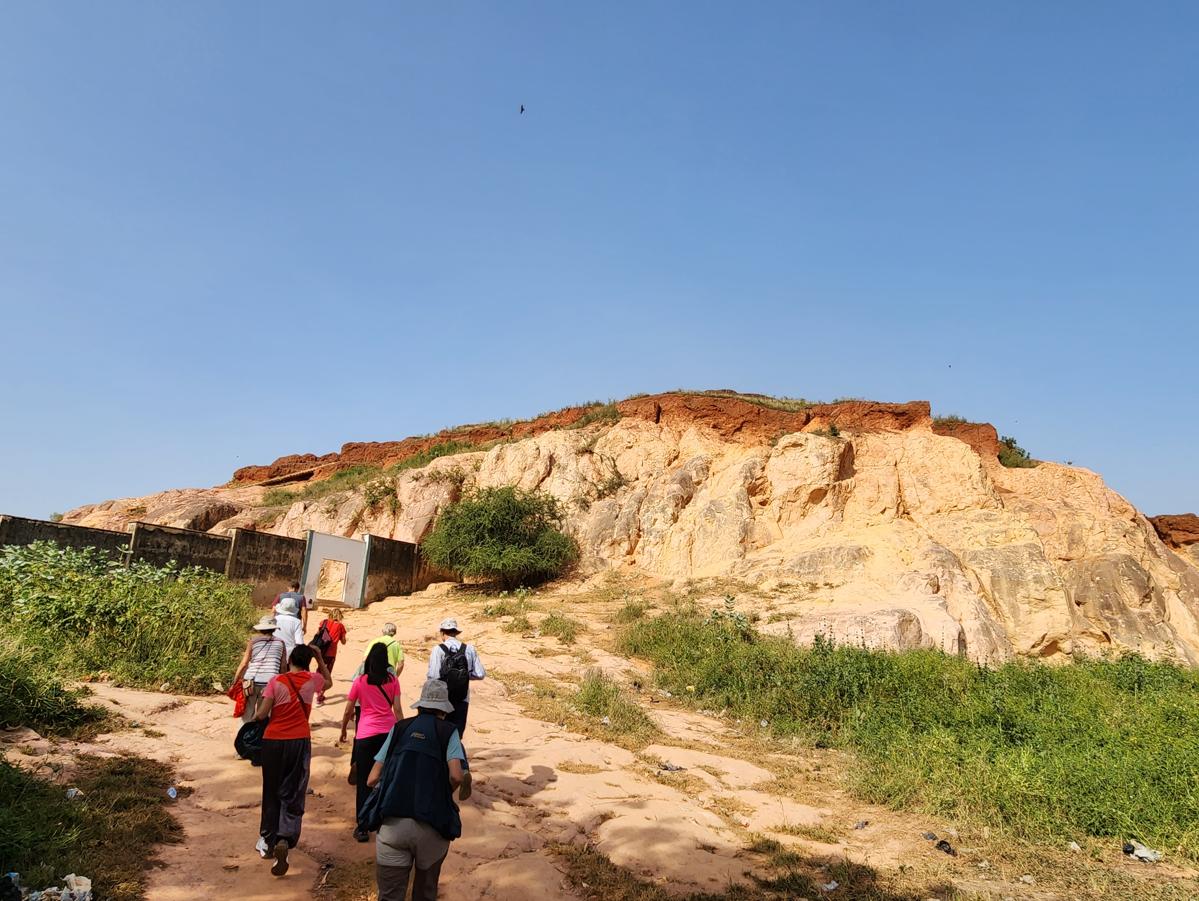
Before moving east to Dutse, we returned briefly to Kano for two visits that had nothing to do with courts or ceremonies. The first was Dala Hill.
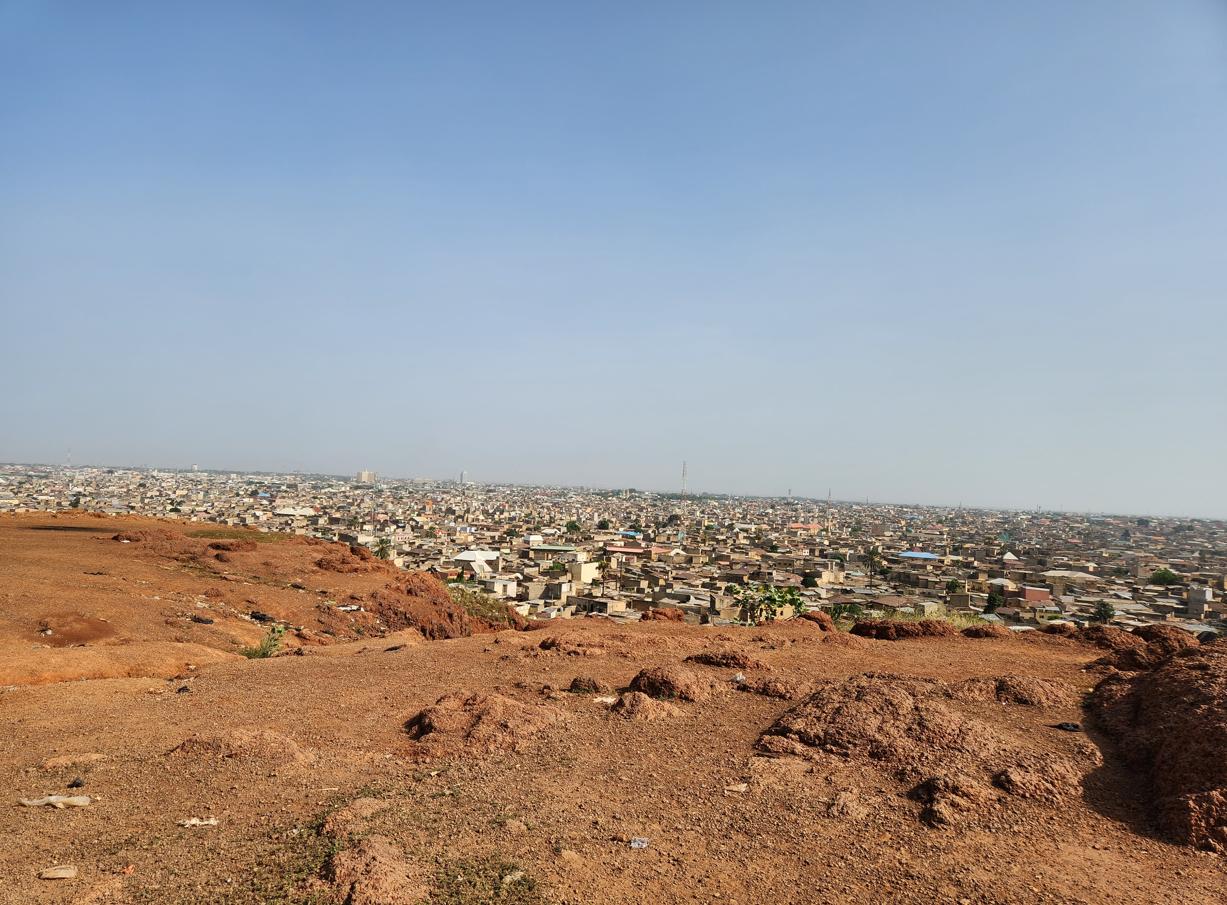
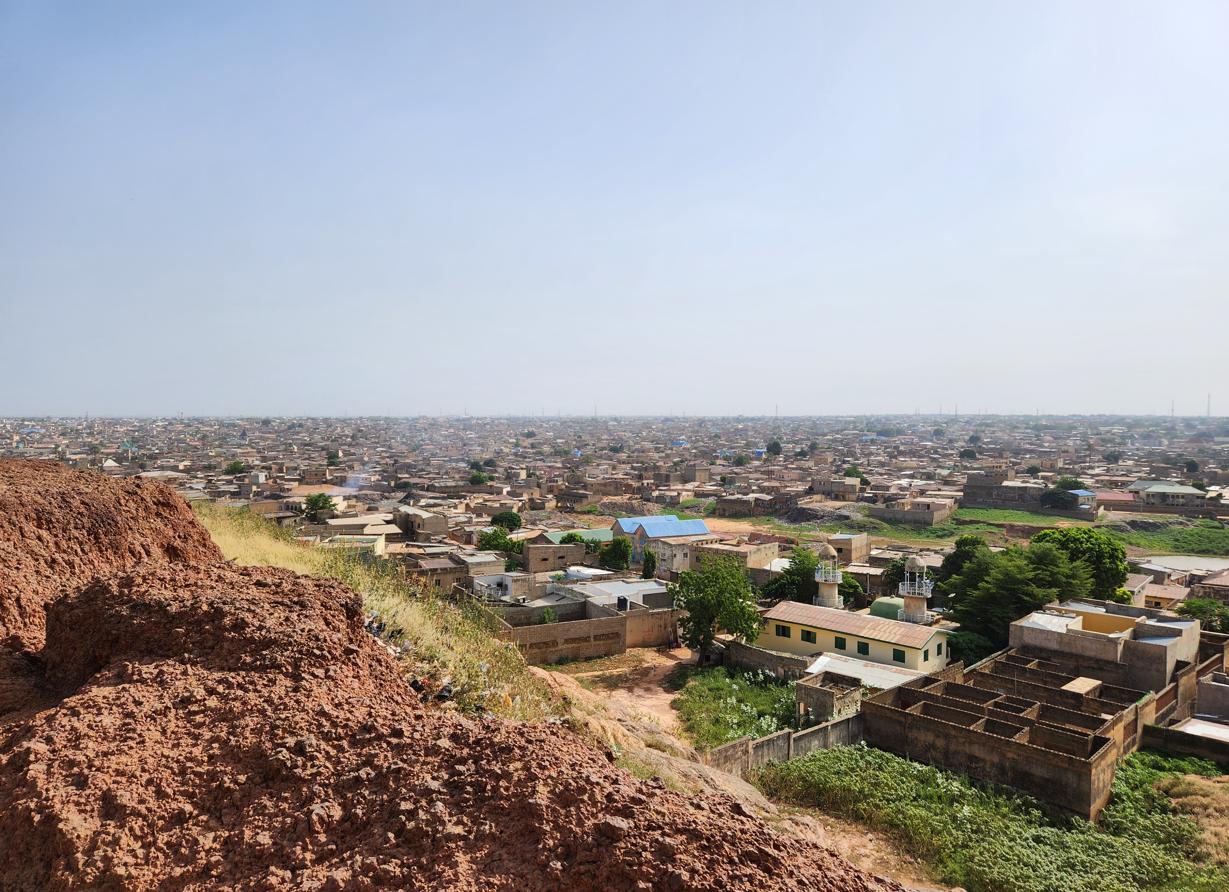
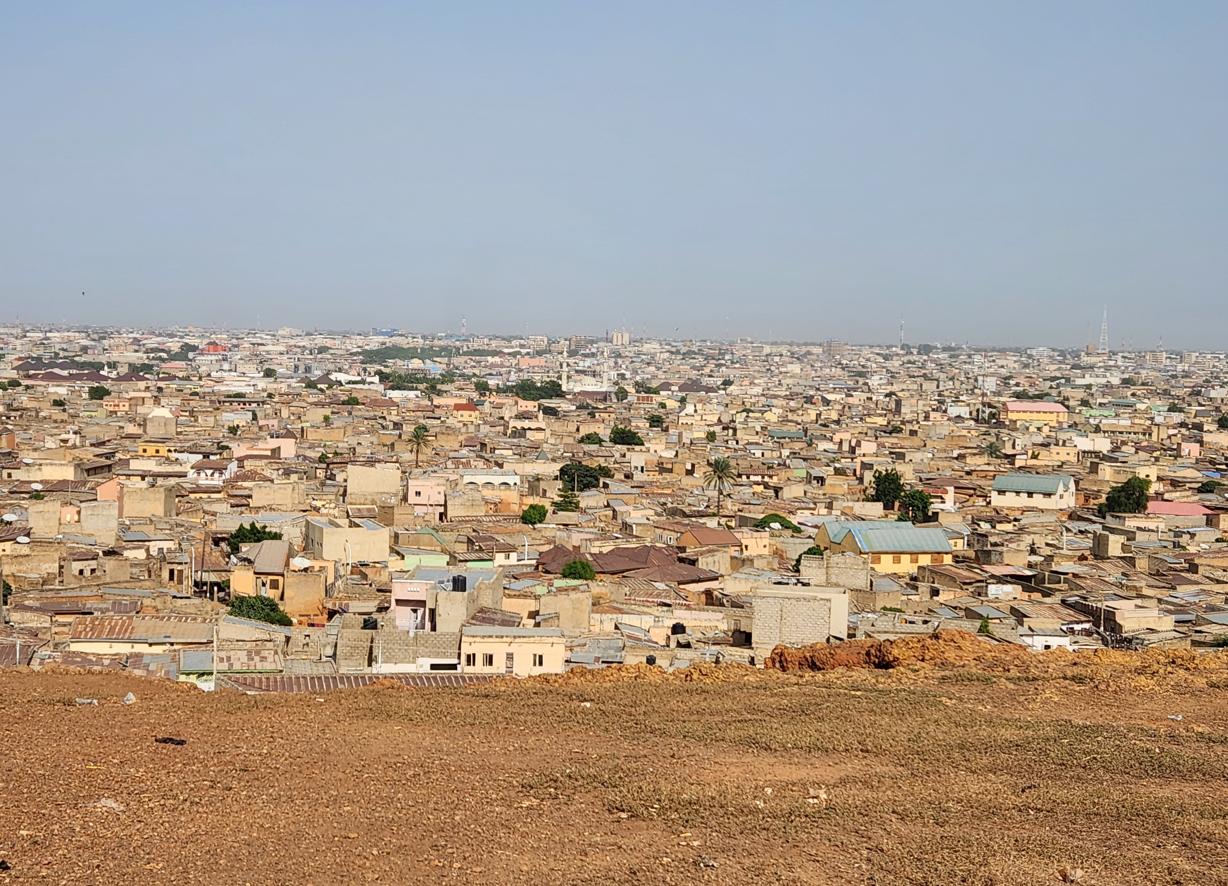
Dala is a laterite outcrop of perhaps sixty metres that rises sharply from the flat plain near the old city, its red surface bare and crumbling, its summit offering a panoramic view of the entire city spread below. It is one of the oldest continuously occupied sites in Kano, associated in oral tradition with the founding of the pre-Islamic city; the hill is said to have been inhabited since well before the tenth century. To climb it is to stand on the point from which everything around you grew.
Dala Hill stands at the centre of Kano's founding mythology. Long before the muezzin's call echoed across these plains, before the great walls rose and the leather-workers set up their dye pits, there was Barbushe — a figure of almost supernatural dimensions, said to hunt elephants with nothing but a wooden staff and carry their carcasses up the hill upon his back. Atop Dala, he maintained a shrine to Tsumburbura, the deity the Hausa venerated in the age before Islam reshaped the spiritual landscape of the savannah.
The shrine was Barbushe's alone. No one entered without his leave, and those who tried did not survive the transgression — or so the stories insist, in that matter-of-fact way legends have of discouraging doubt. Barbushe himself never descended from the hill except on the two festival days of Idi, when the surrounding communities would converge on Dala bearing animals for sacrifice, each hoping to secure Tsumburbura's favour for another year.
Standing at the top, Kano resolves into what it actually is: a vast, low, flat city extending to every horizon, its roofline broken only by the occasional minaret and the faint shimmer of taller buildings from the newer quarters to the north. The harmattan haze, even in October, gave the distance a softened quality, as if the city were slowly dissolving at its edges into the sky. The hill itself is almost entirely unimproved — no lift towers here, no cable cars, no visitors’ centre. A path of crumbling laterite and dry grass, a view that has not changed in any essential respect for a thousand years, and the city below getting on with its business entirely indifferent to being looked at.

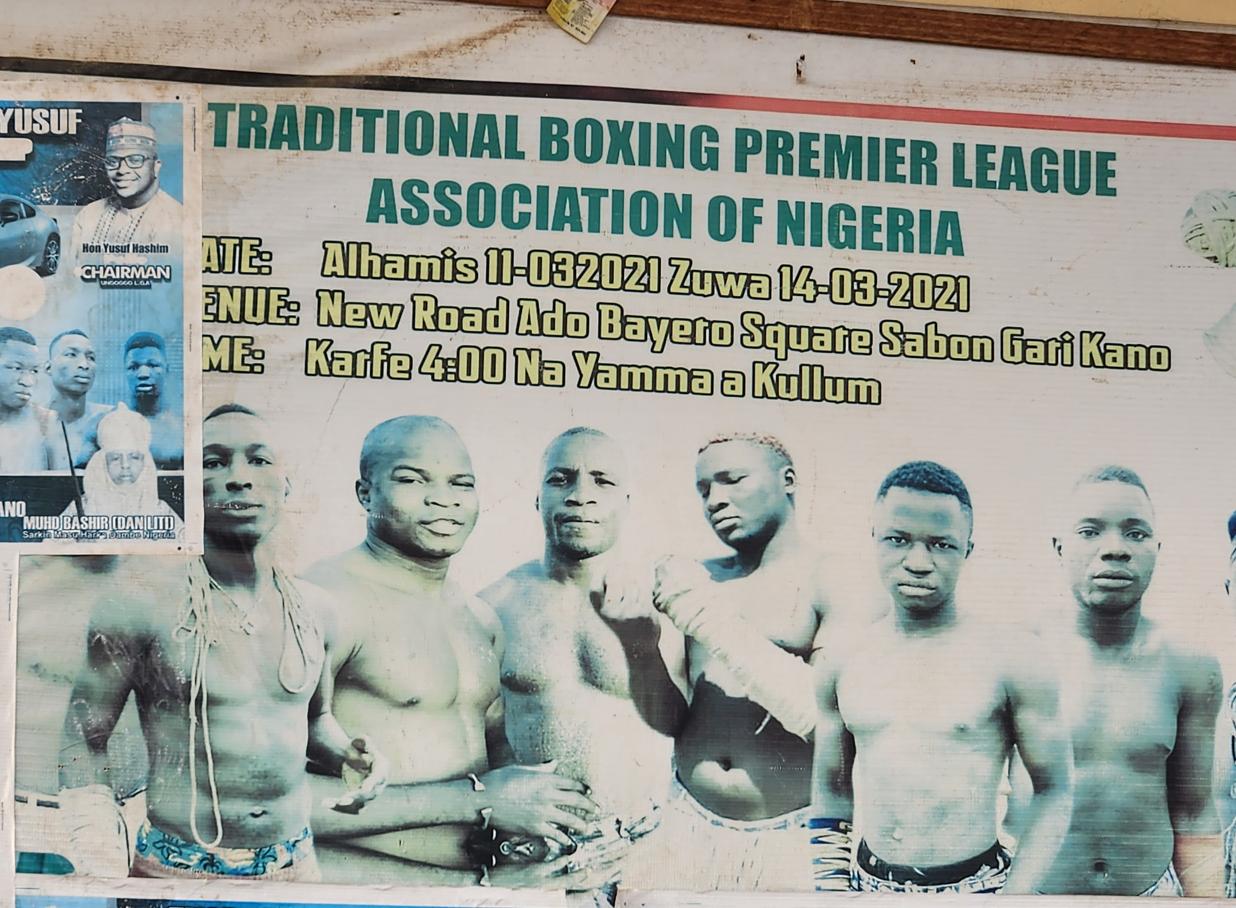
The evening’s second engagement was a Dambe match — traditional Hausa boxing, one of the oldest combat sports in West Africa, historically associated with the Hausa butcher caste. The Yan Dambe, as the fighters are known, once competed primarily at harvest festivals as a demonstration of bravery and physical power; today they travel in professional troupes, compete for prize purses, and are streamed to global audiences. The arc from village ritual to branded sports entertainment has taken perhaps two generations.
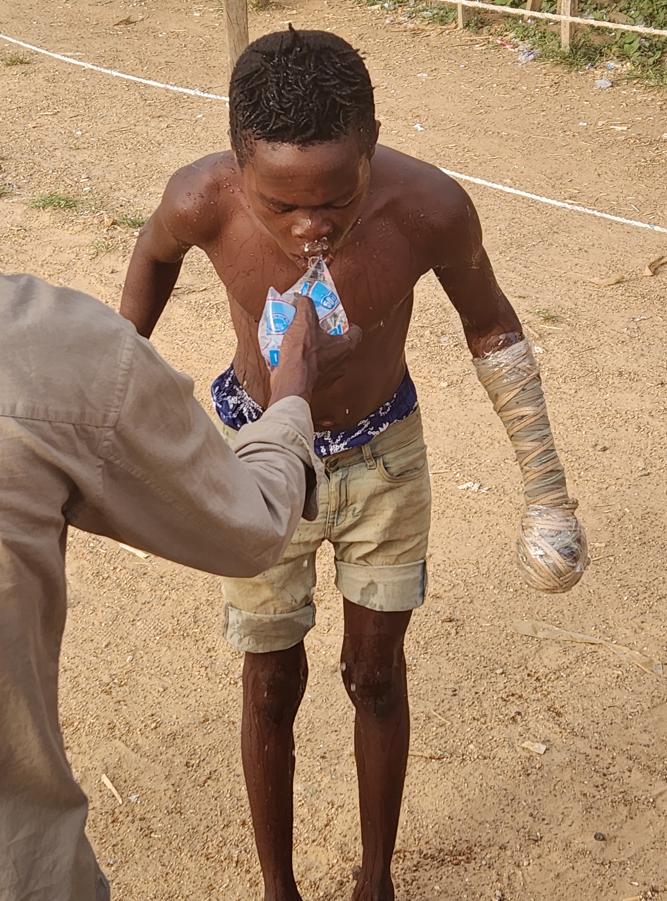
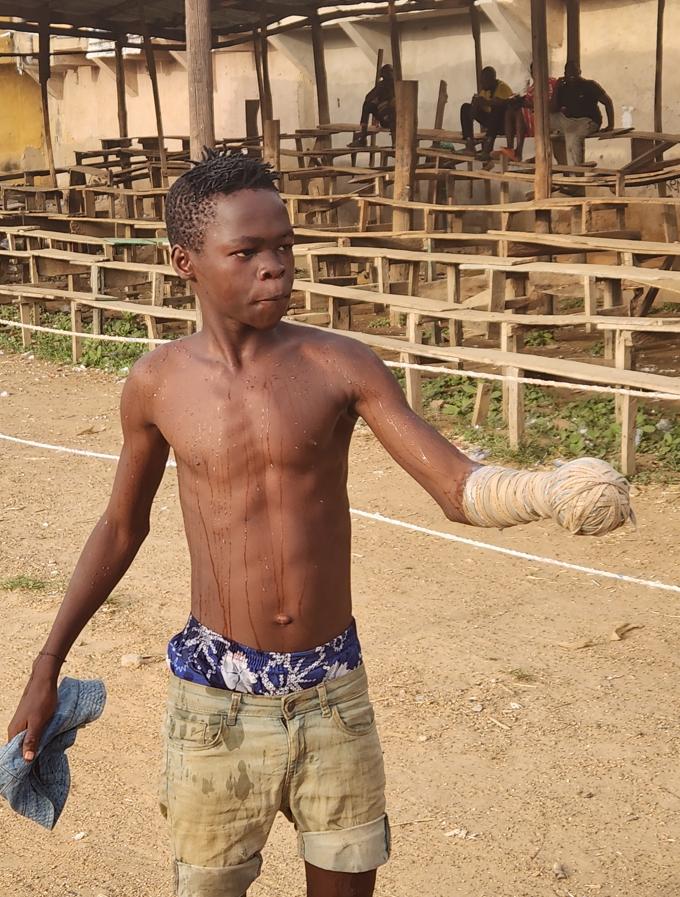
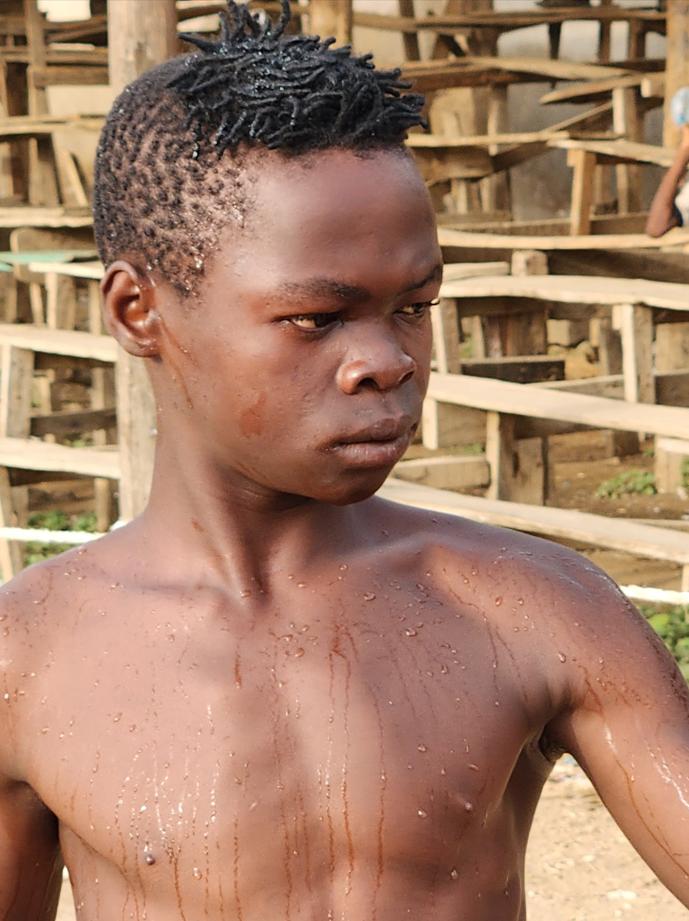
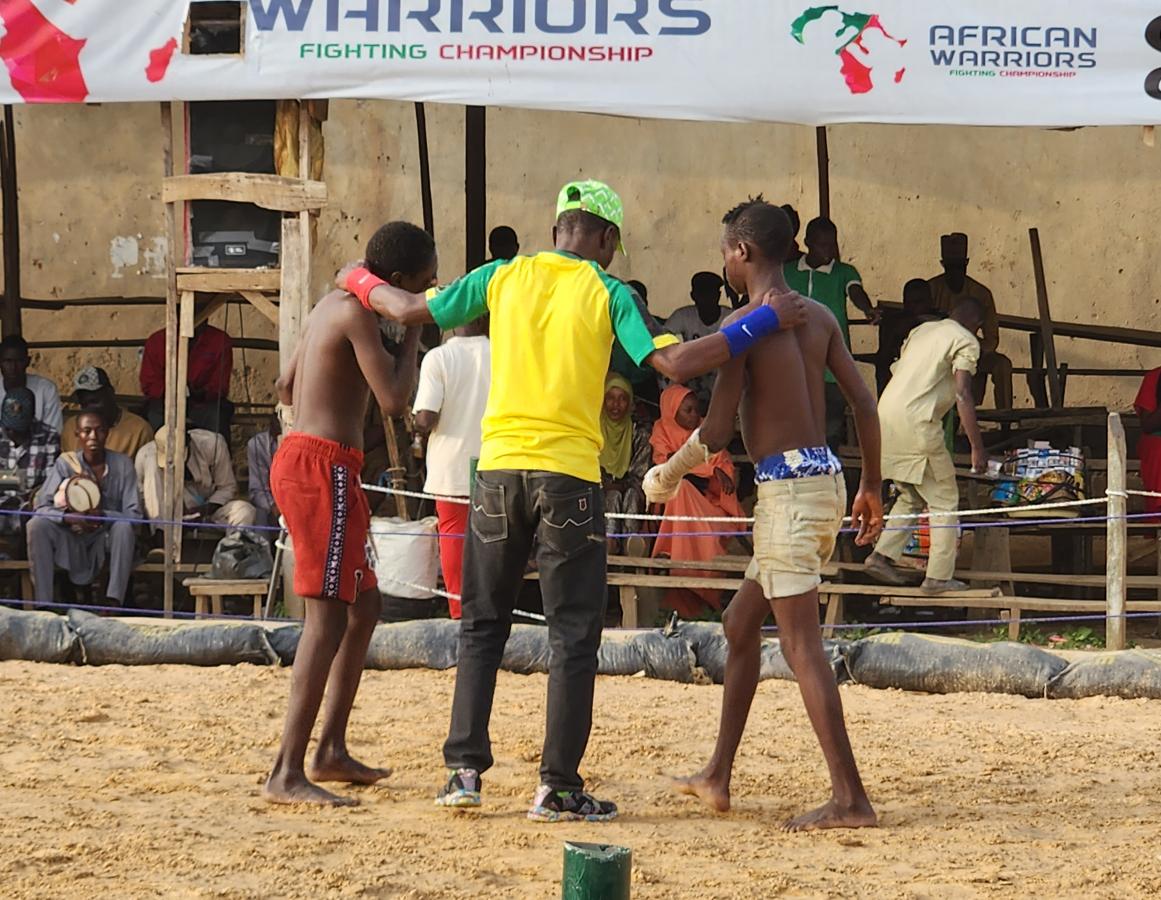
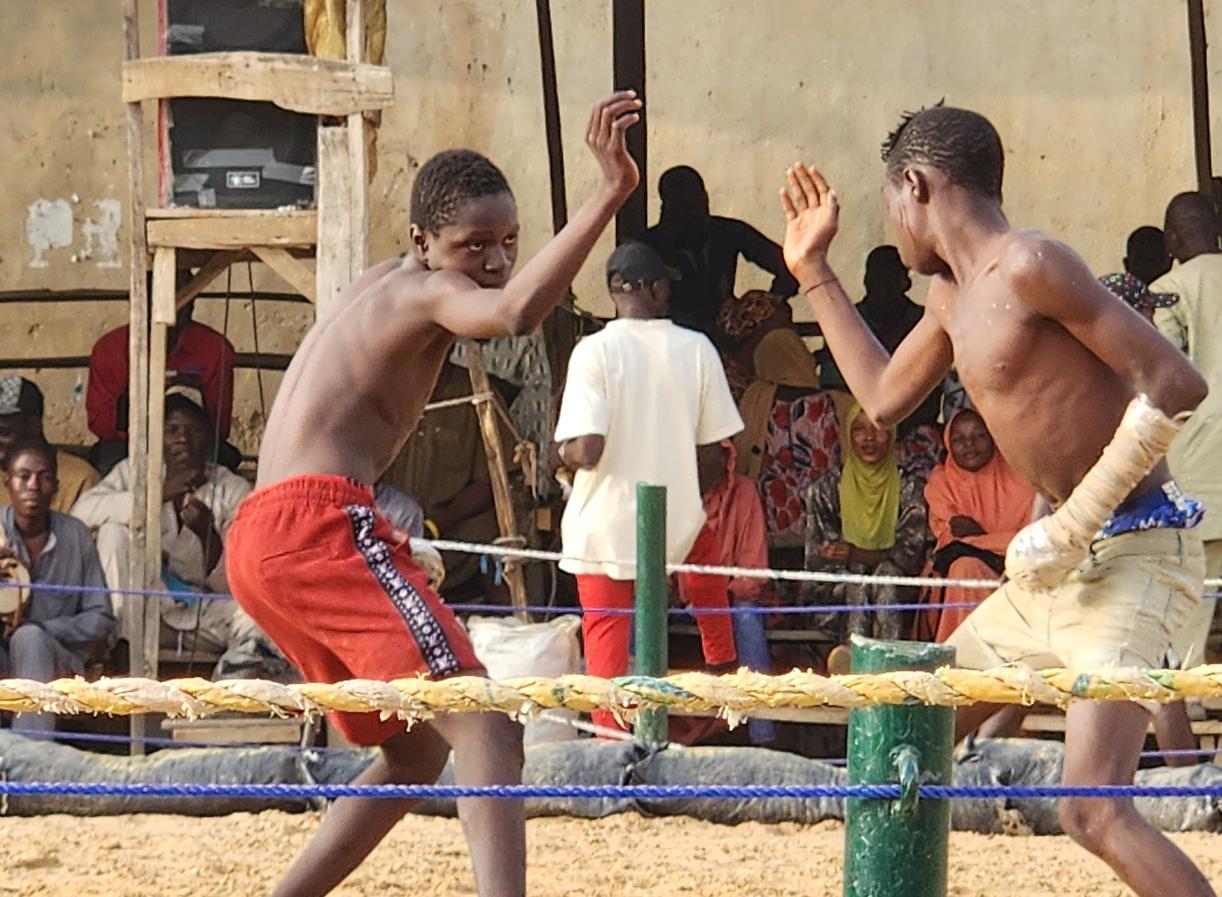
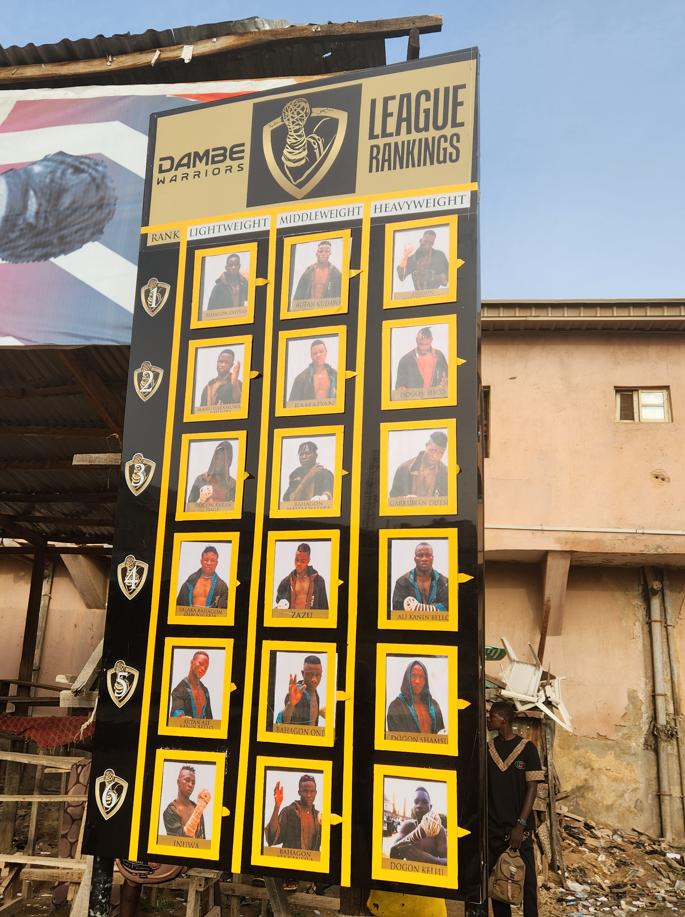
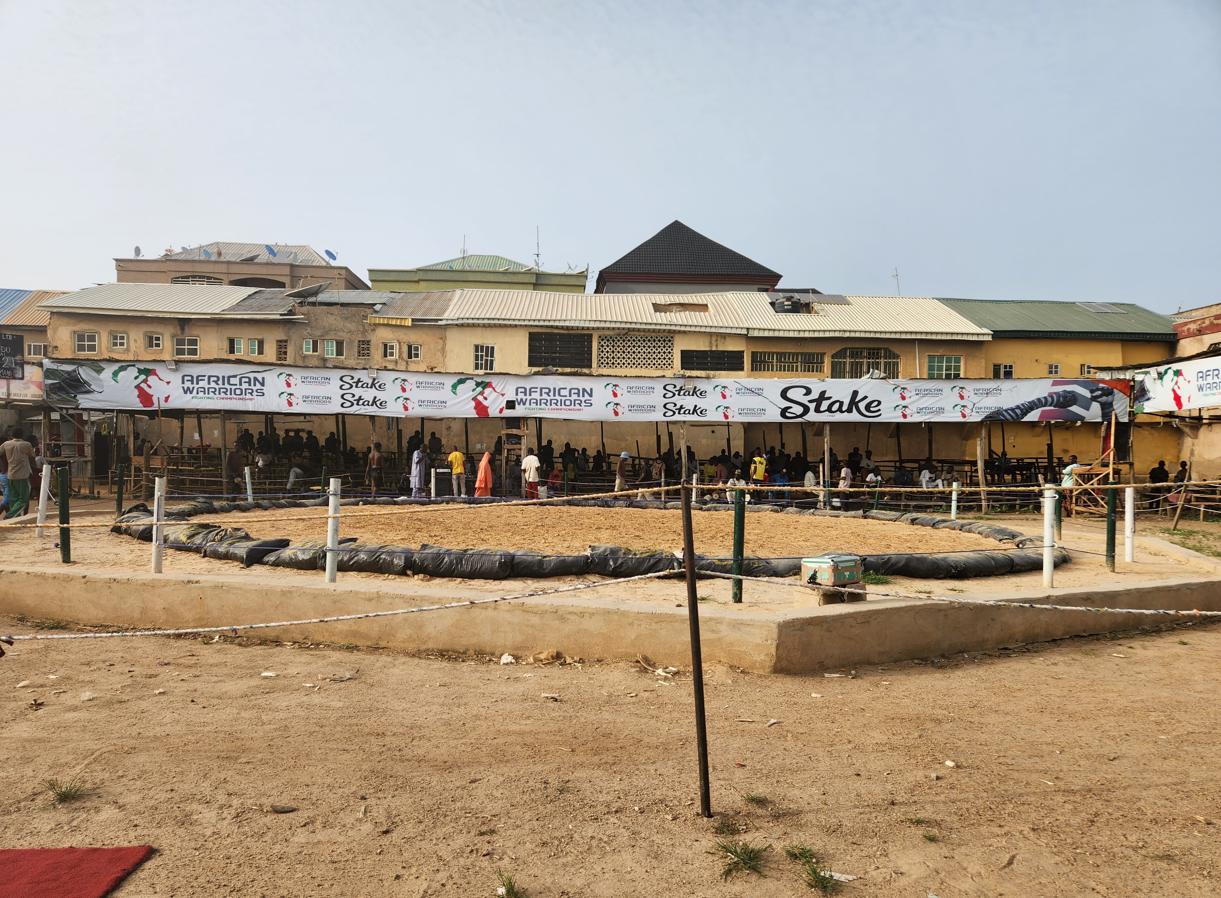
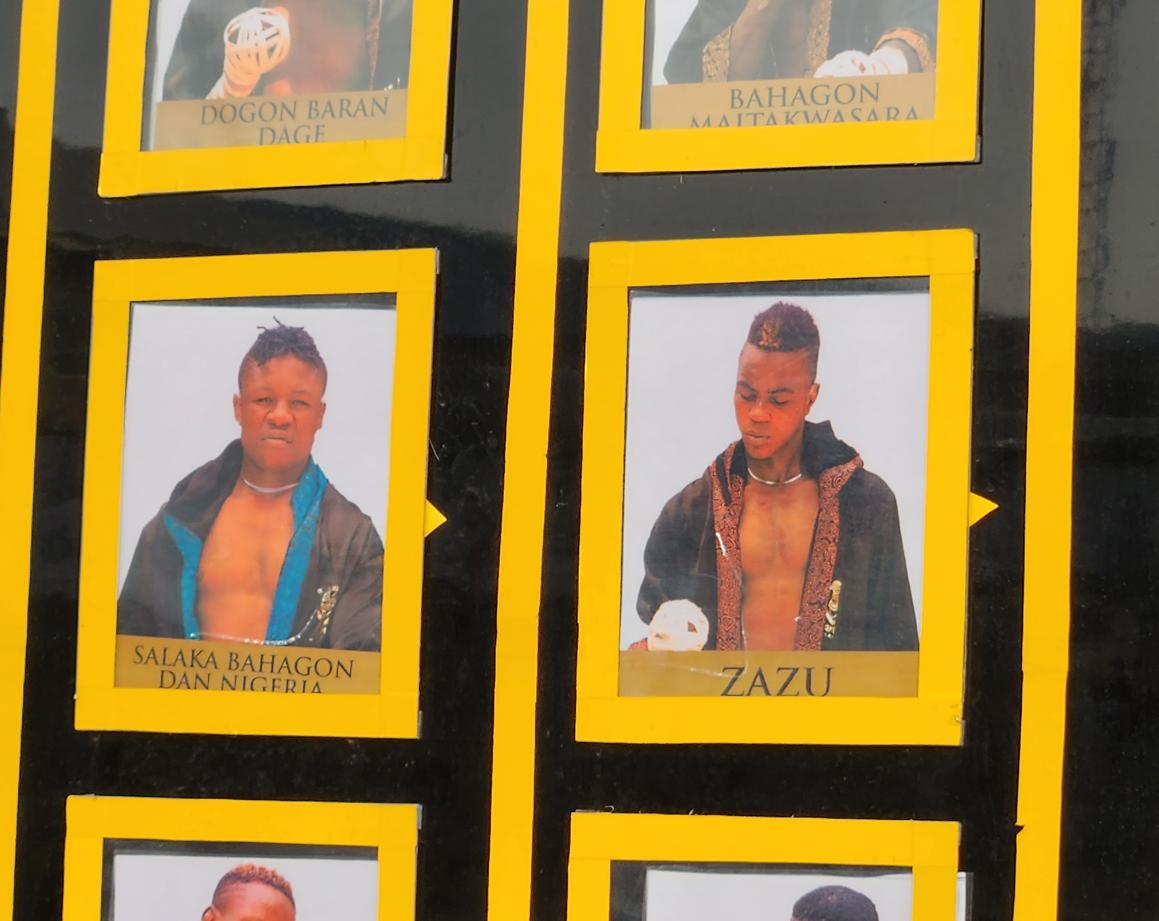
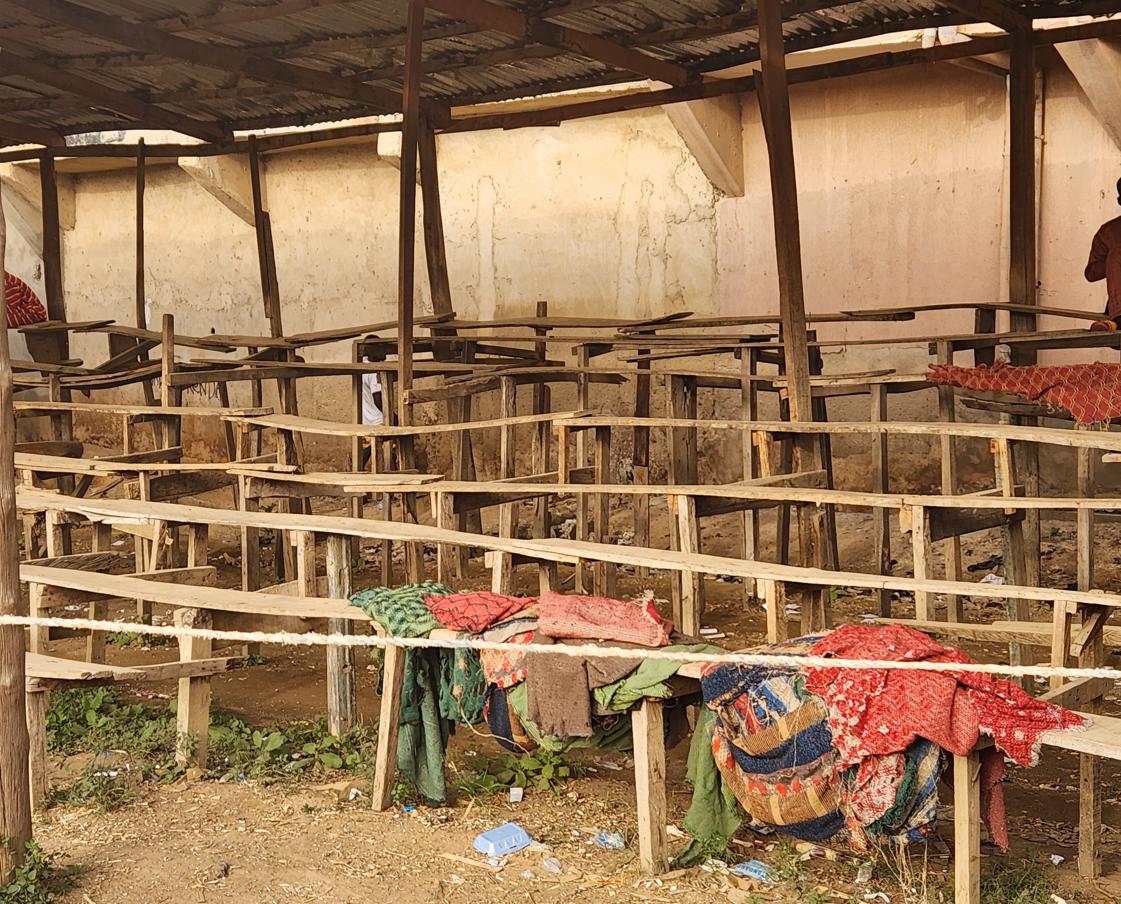
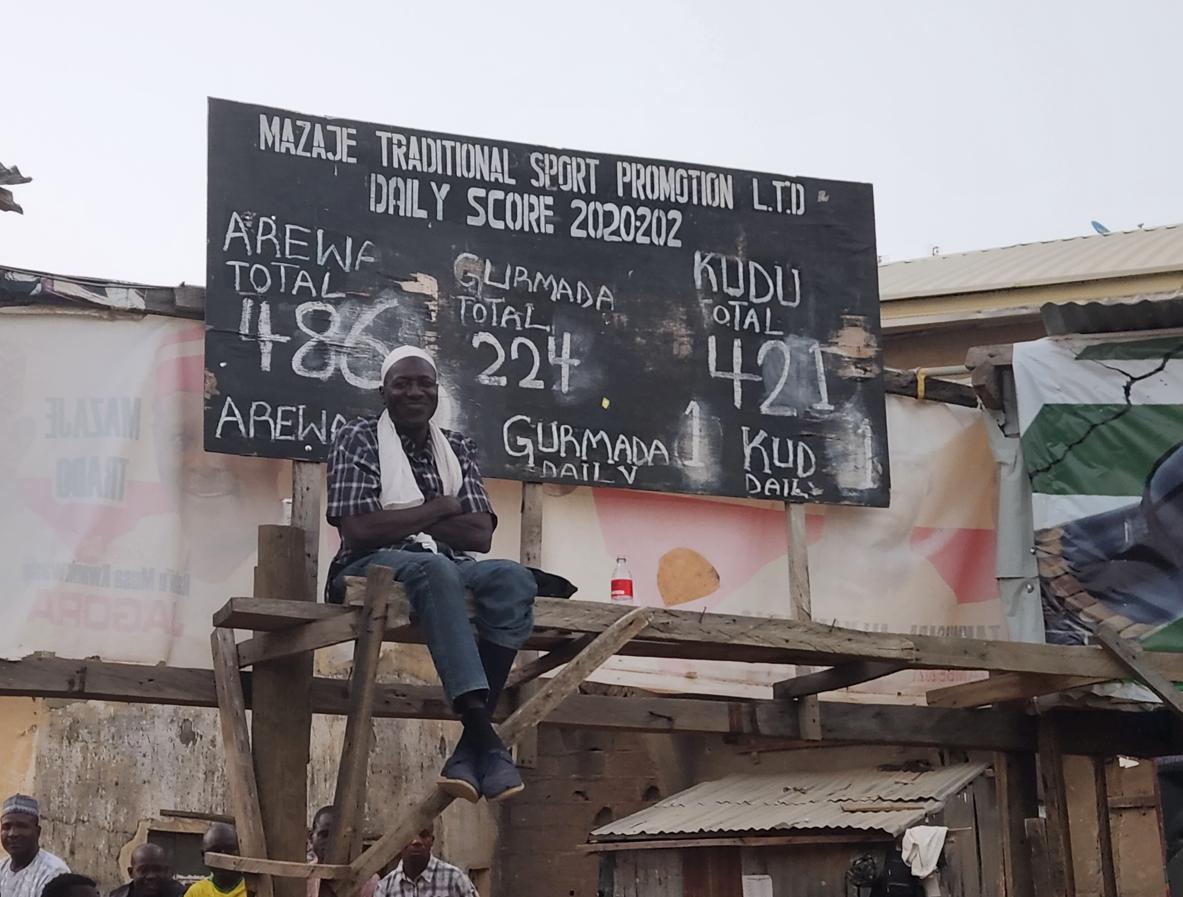
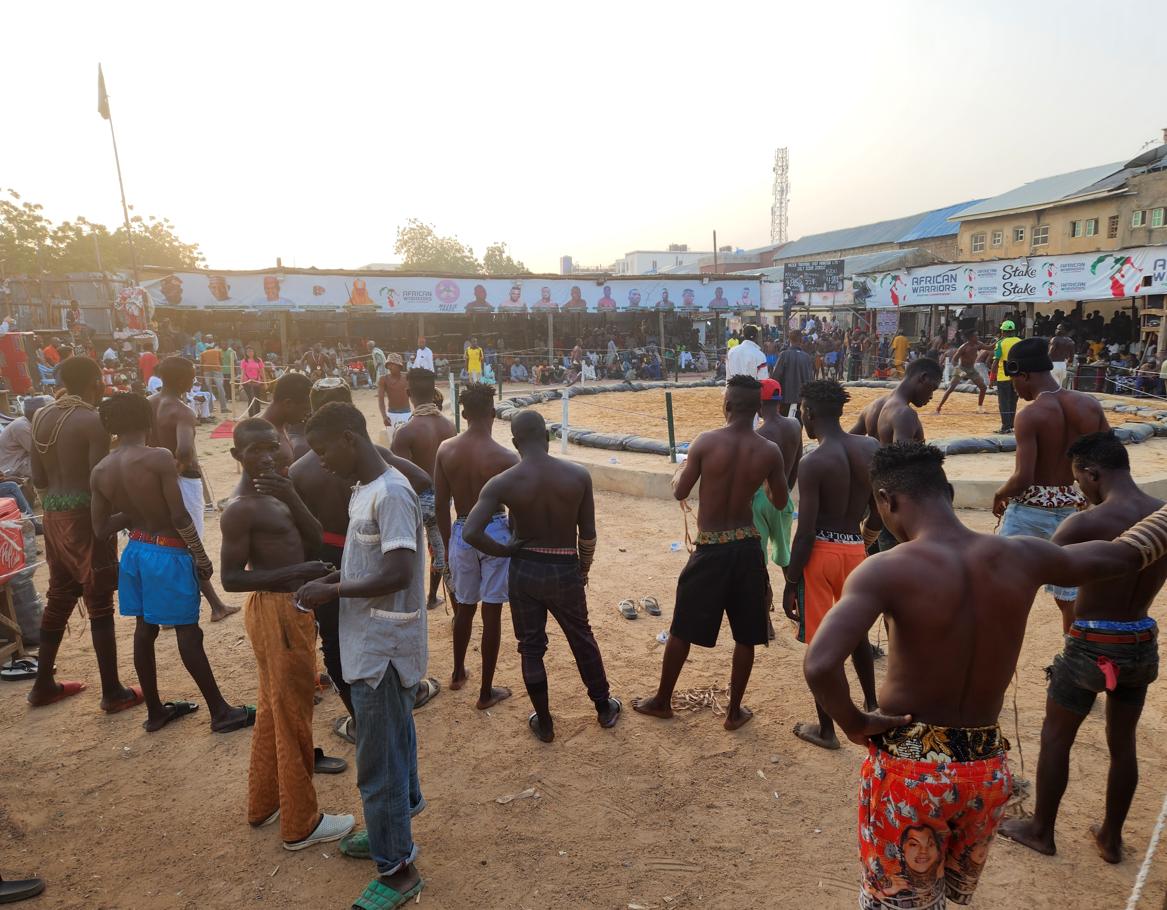
The arena was a circular enclosure of corrugated iron sheets in a quarter of the old city, with wooden bench seating rising in tiers around a sand-floored ring — the sand chosen deliberately, both for footing and to cushion the falls that determine the outcome of each bout. The benches filled steadily: men in robes, women in hijabs occupying the front row, children distributing themselves wherever there was space. Outside, a “Dambe Warriors League Rankings” board listed fighters by weight category — Lightweight, Middleweight, Heavyweight, ranks one through six — each with a photograph, with the production values of a professional combat sports promotion. The banner above the ring read “African Warriors Fighting Championship” and was sponsored by Stake.com. Old sport, new money, unchanged sand.
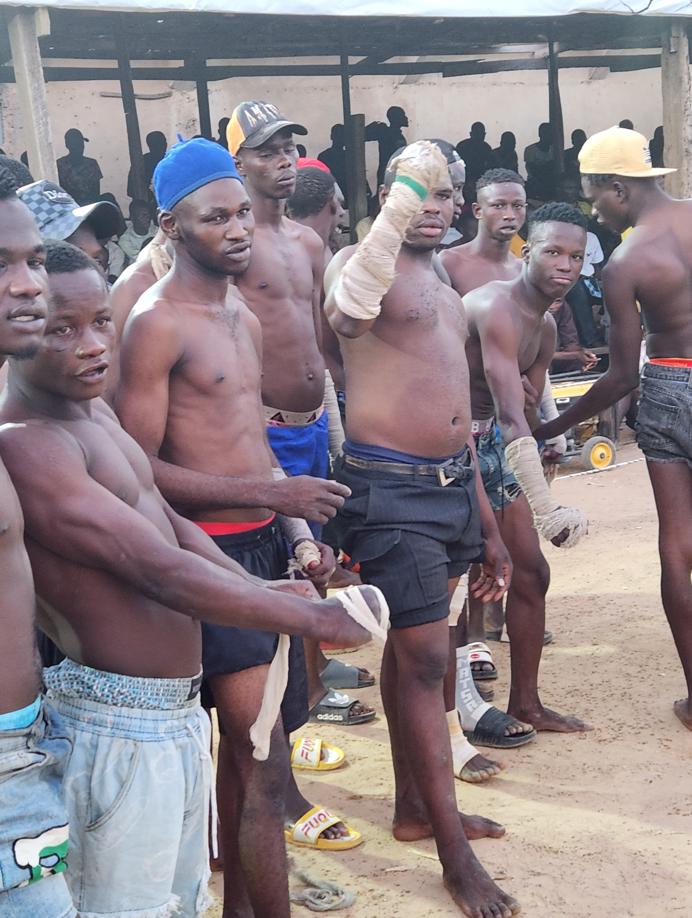
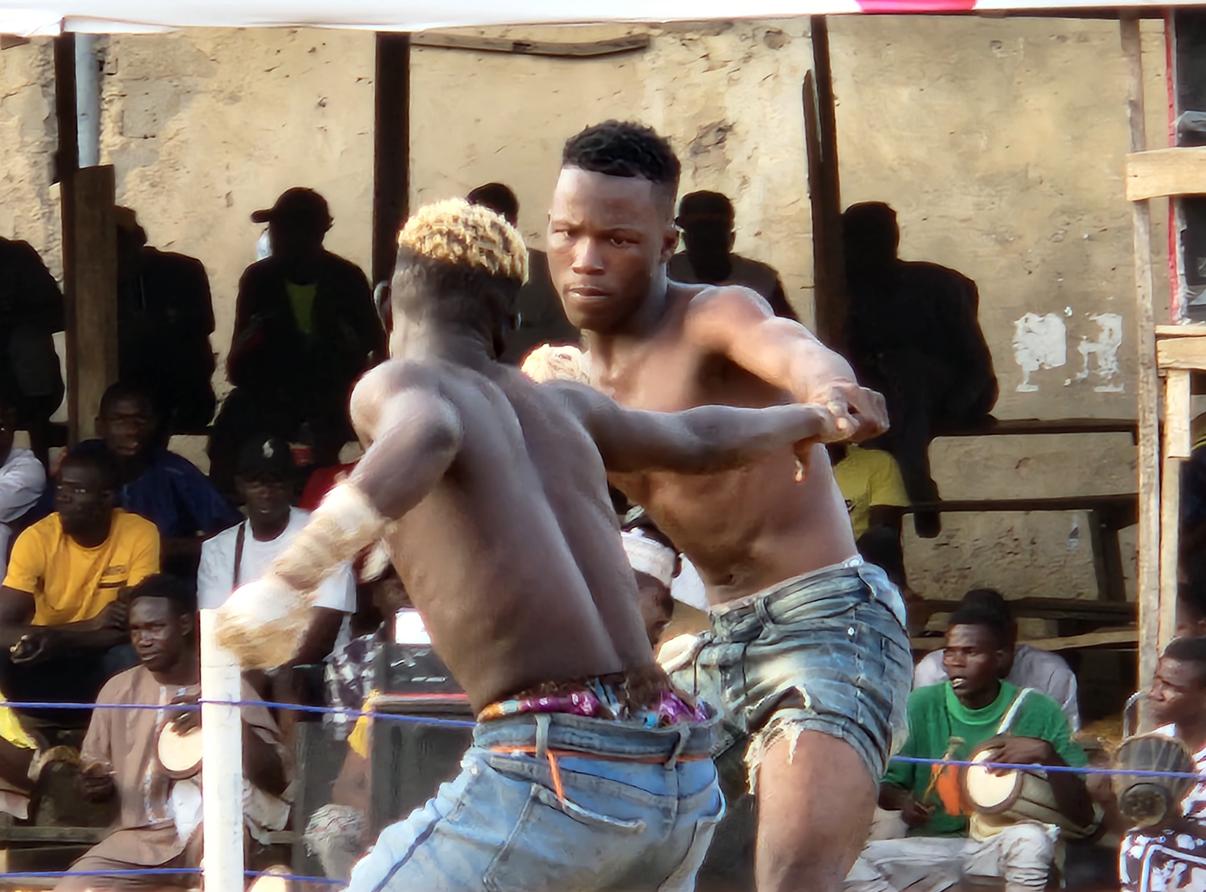
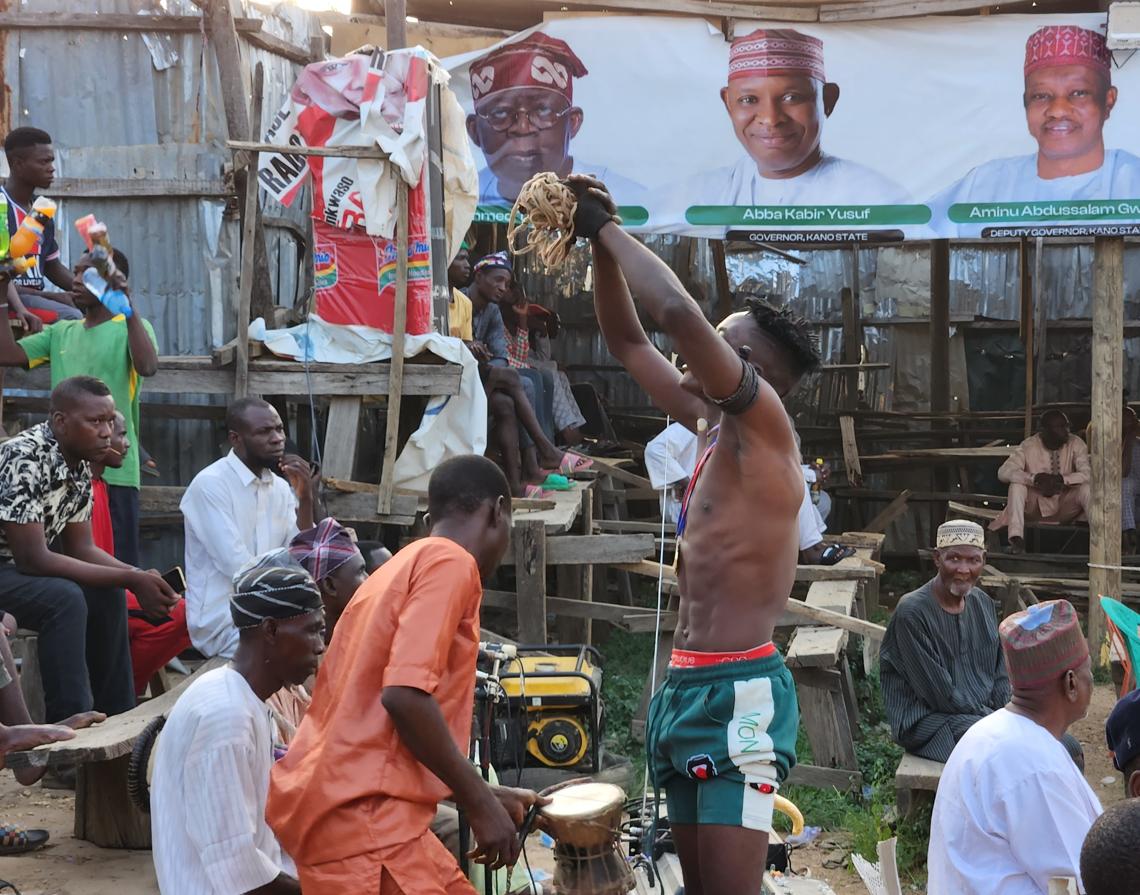
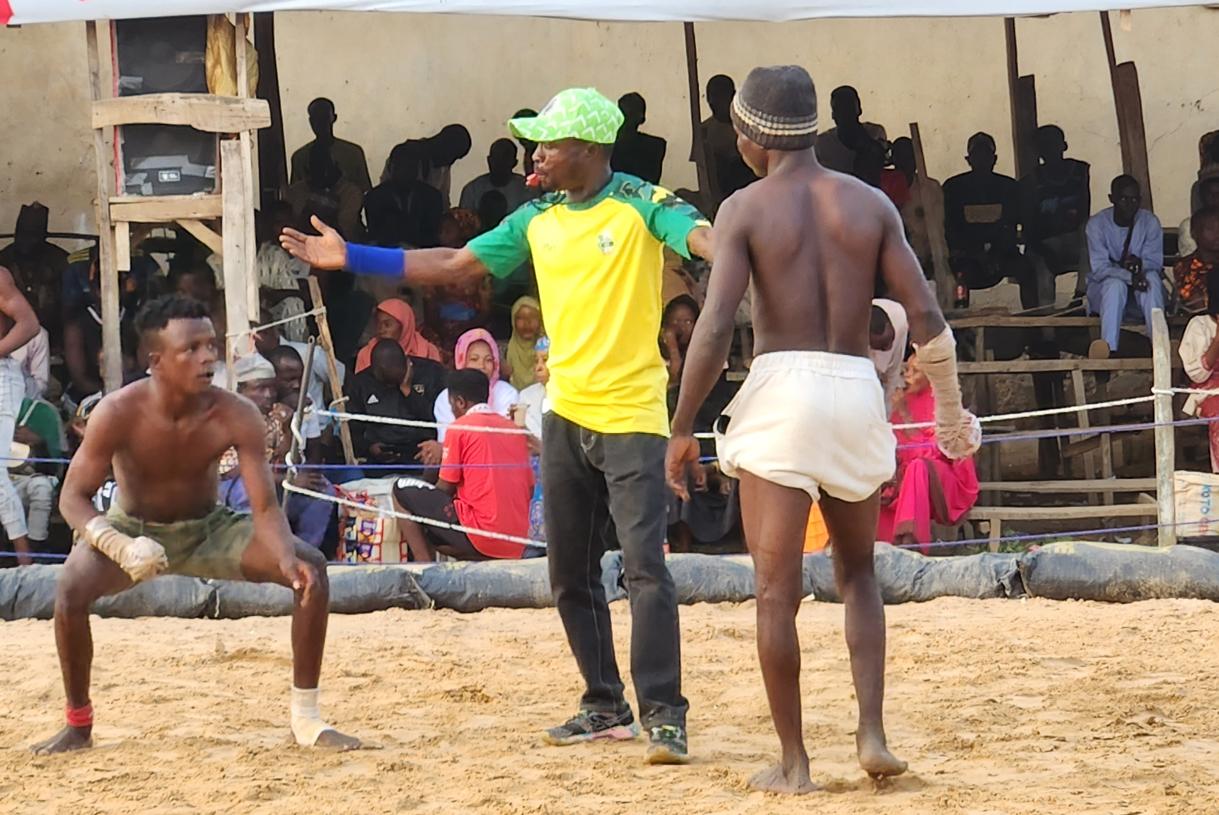
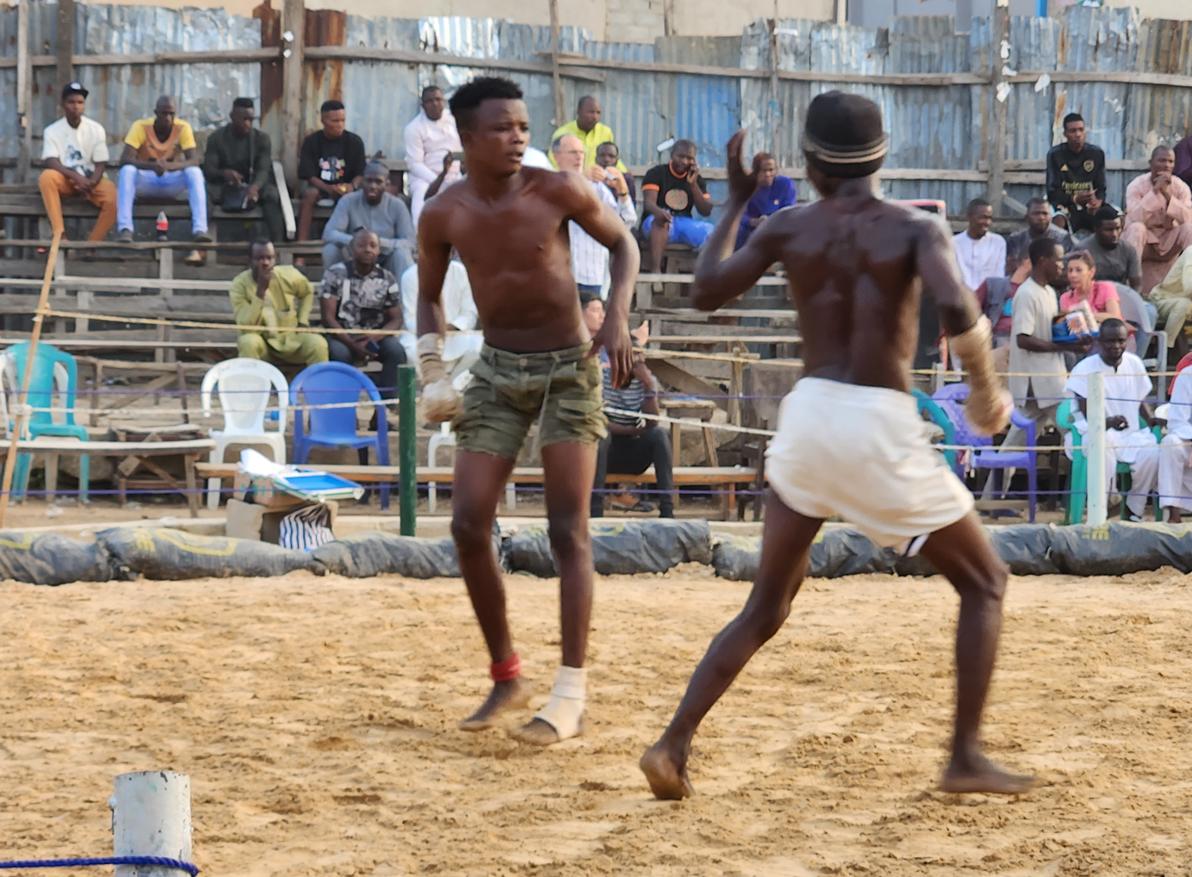
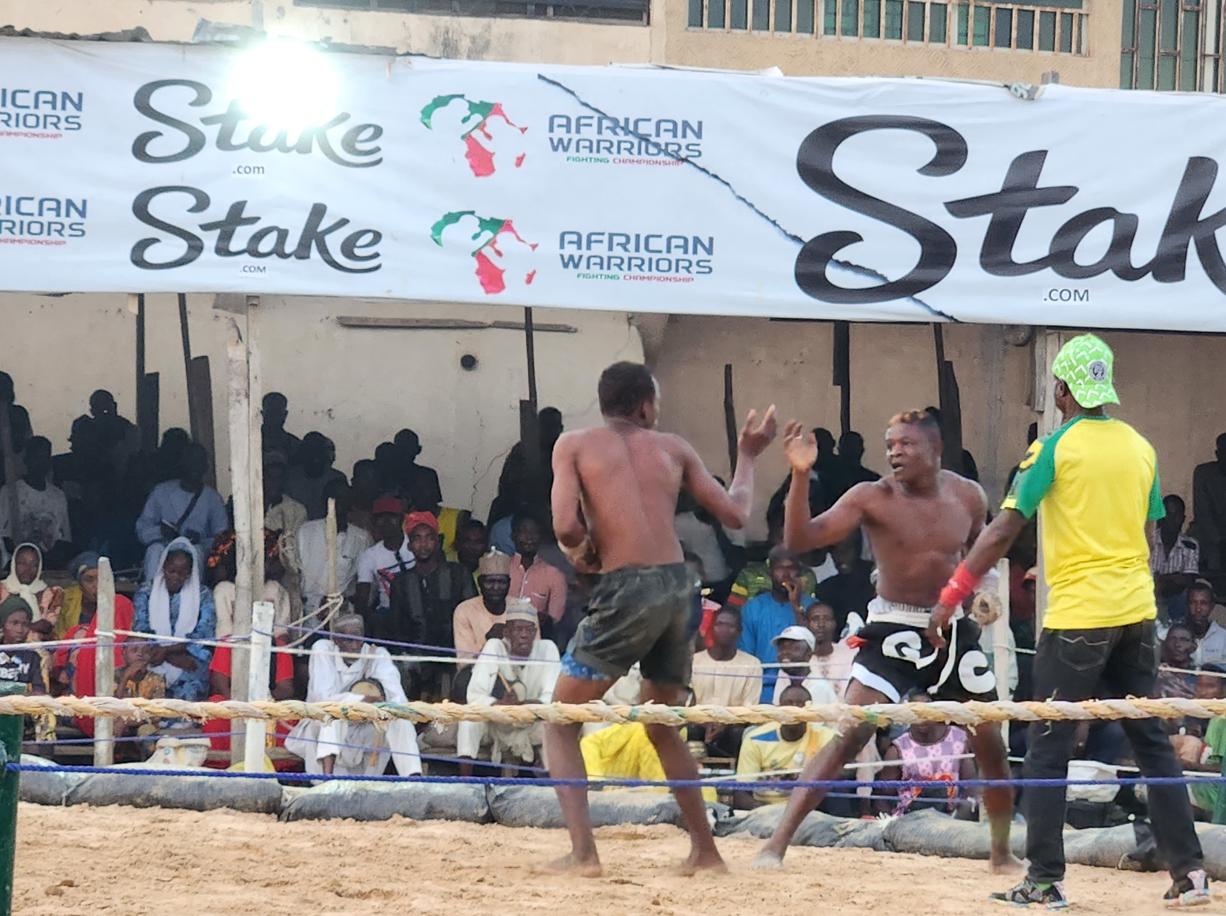
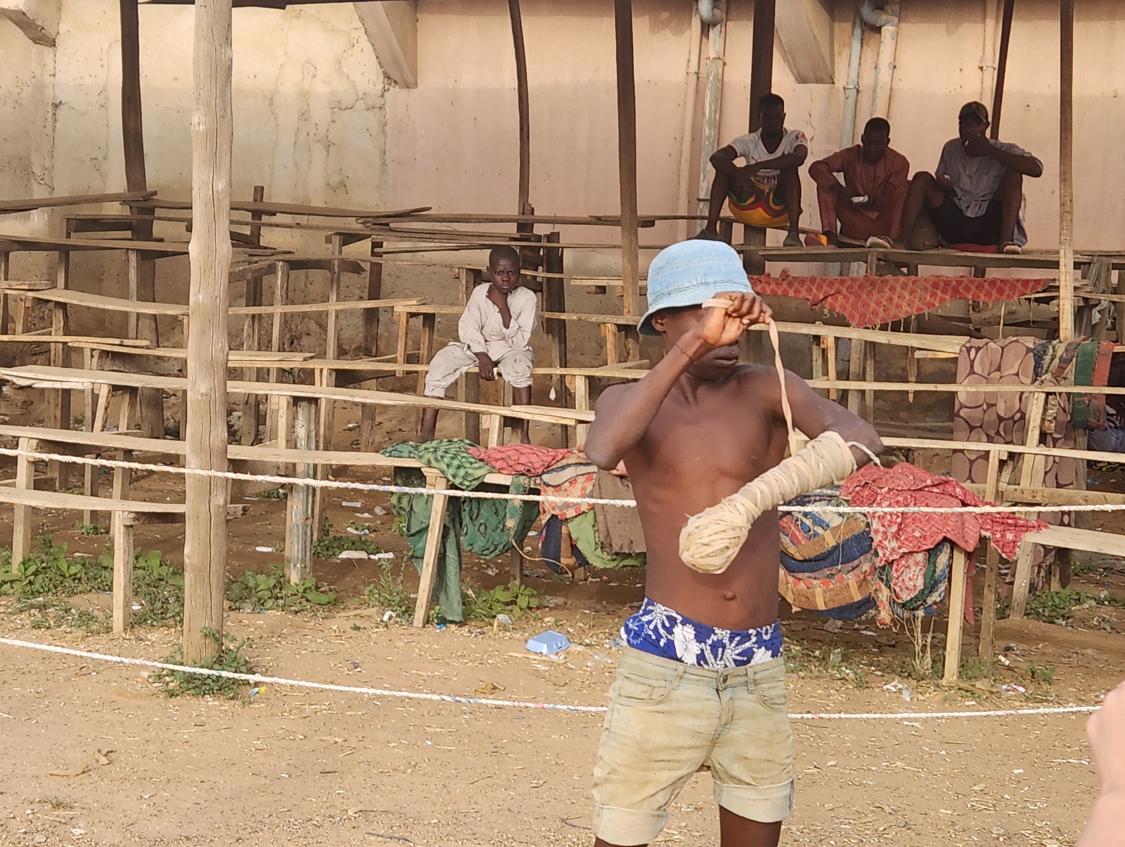
The rules of Dambe are straightforward and absolute. The dominant hand — the “spear” — is wrapped from wrist to elbow in kara, a thick cord wound in tight knots that transforms the fist into something approaching a club, capable of delivering a single blow that ends a fight. The other hand, the “shield,” is left bare and used not merely for defence but actively: to parry, to grab the opponent, to create the opening through which the spear hand will travel. A bout ends when a fighter’s hand, knee, or body touches the sand — a moment referred to as a “kill.” The language is accurate. When the kara connects, it connects with finality.
The fights we watched were between young men moving in the sand with a lateral, probing style not immediately legible to eyes trained on Western boxing. The spear hand was carried low and used infrequently; much of each bout was a matter of circling, feinting, reading the opponent, waiting. The shield hand worked constantly — deflecting, clinching, steering — the unwrapped arm doing the tactical thinking while the wrapped one waited to execute. When the kill came, it was sudden: a weight shift, a grab, the kara arm swinging in a short arc, and one fighter on the sand. The crowd’s response was not a roar but a collective exhalation, as if everyone had been holding their breath at the same moment.
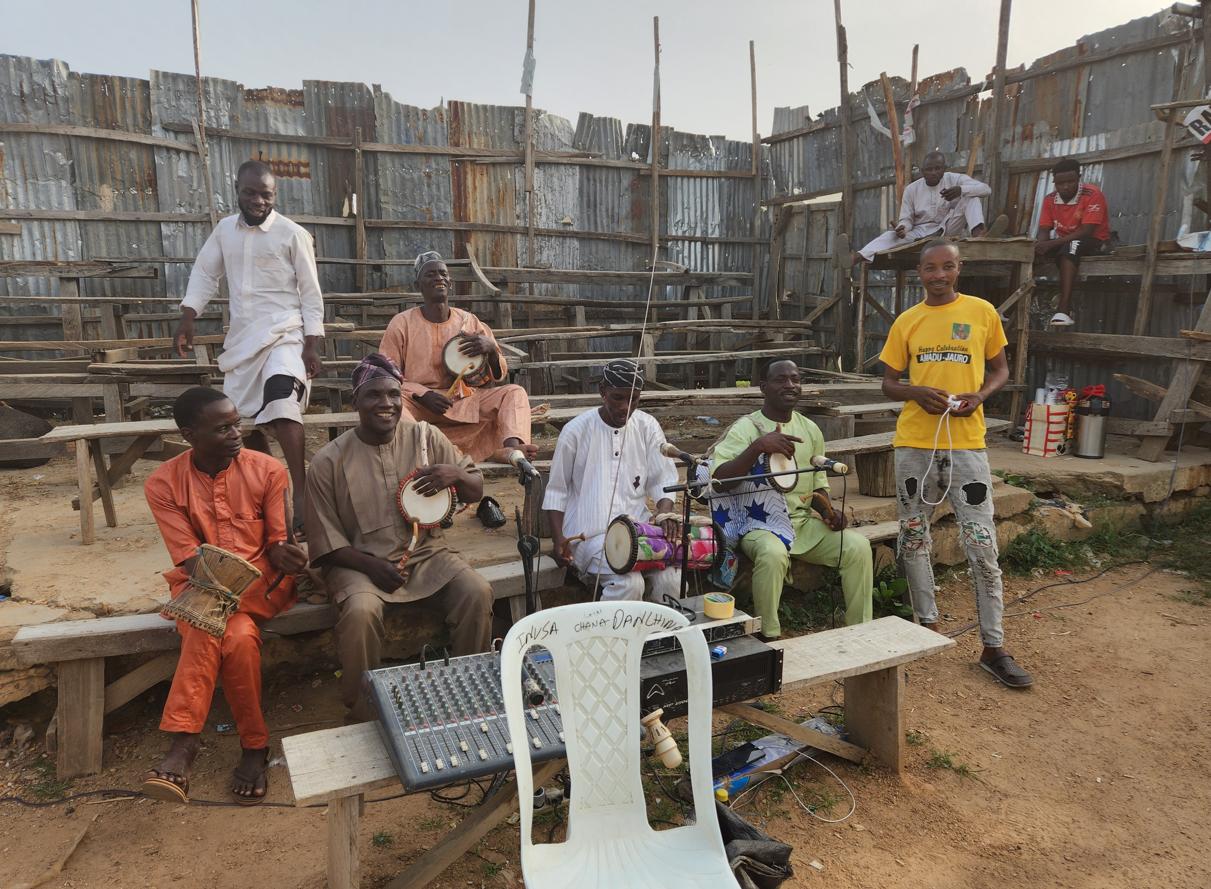
The MC in gold robes worked the microphone between bouts with the energy of a man simultaneously announcing, cheerleading, and conducting an auction. The drummers set the rhythm from their benches, the mixing board amplifying what would otherwise have been purely acoustic into something that echoed off the corrugated walls. Traditionally these matches are accompanied by praise singing as well — the griot function applied to martial arts, the fighter’s lineage and victories called out to psych up the warrior and inform the crowd. Whether that element was present I could not determine above the noise. An energy drink poster outside offered prize money of ₦300,000 for first place. The sport has been professionalised without being sanitised. The sand remains sand.