Chapter 9: The Dutse Emirate: Palace, Praise Singer, and Durbar
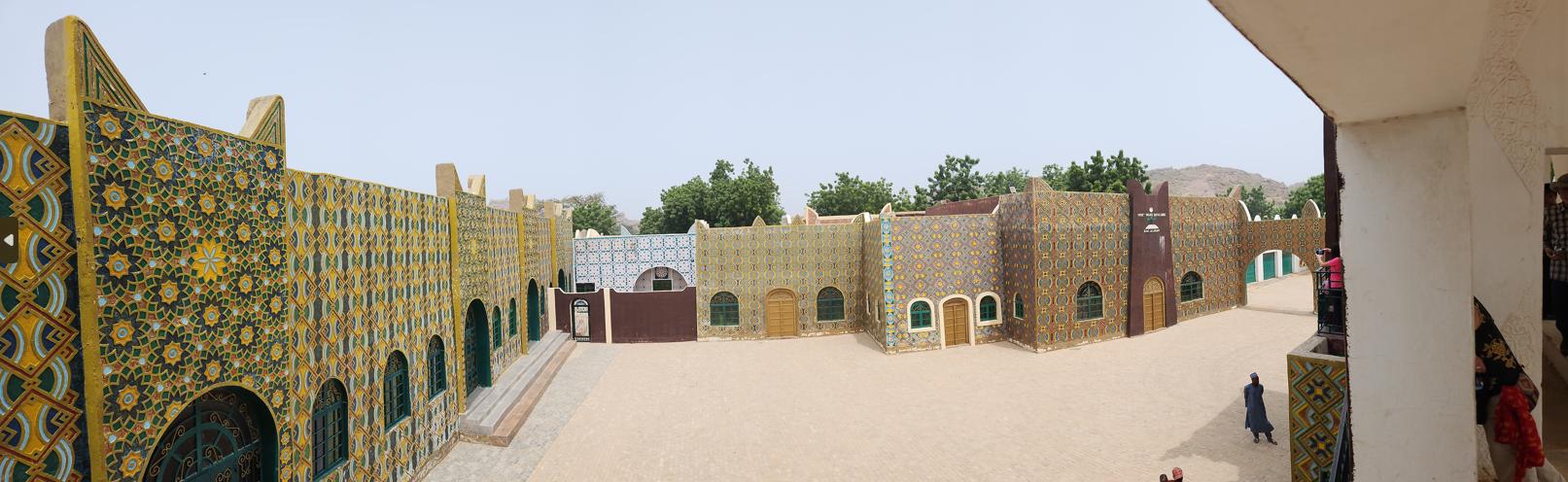
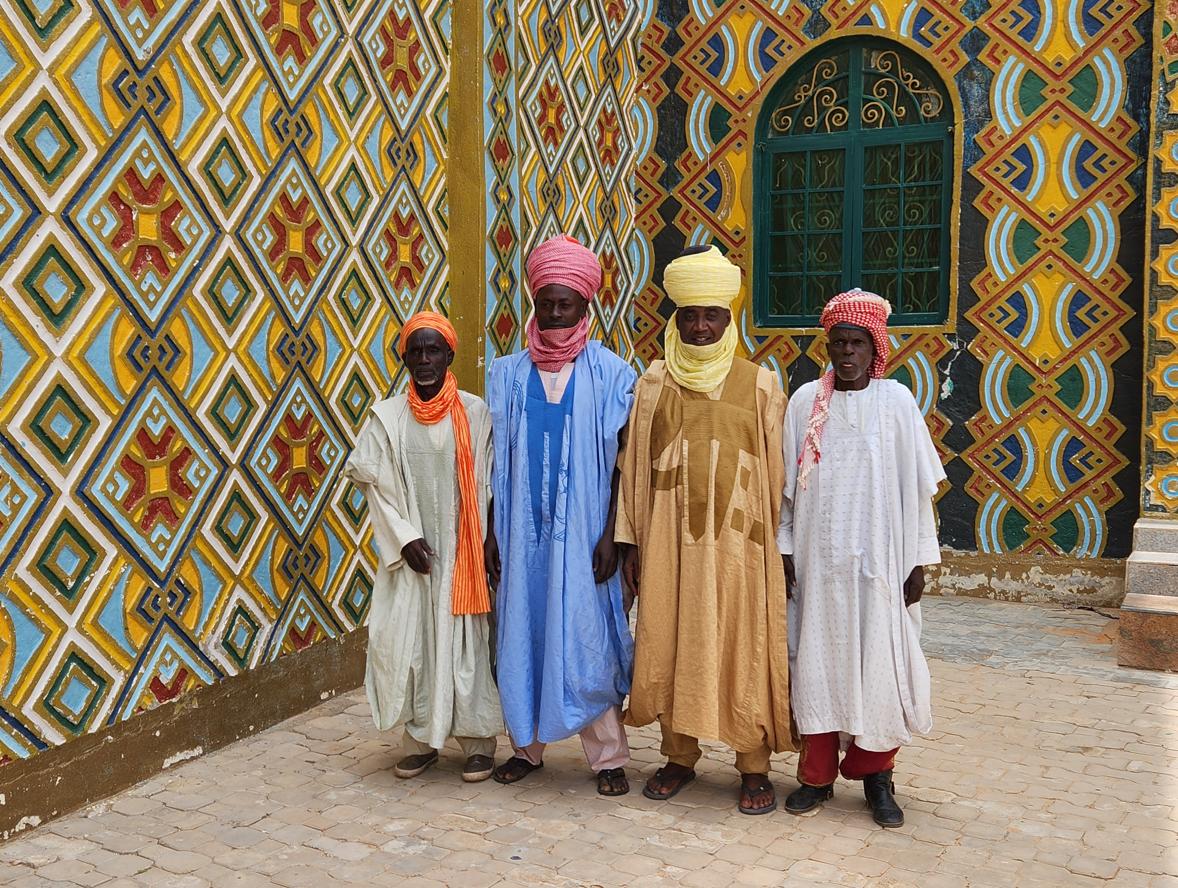
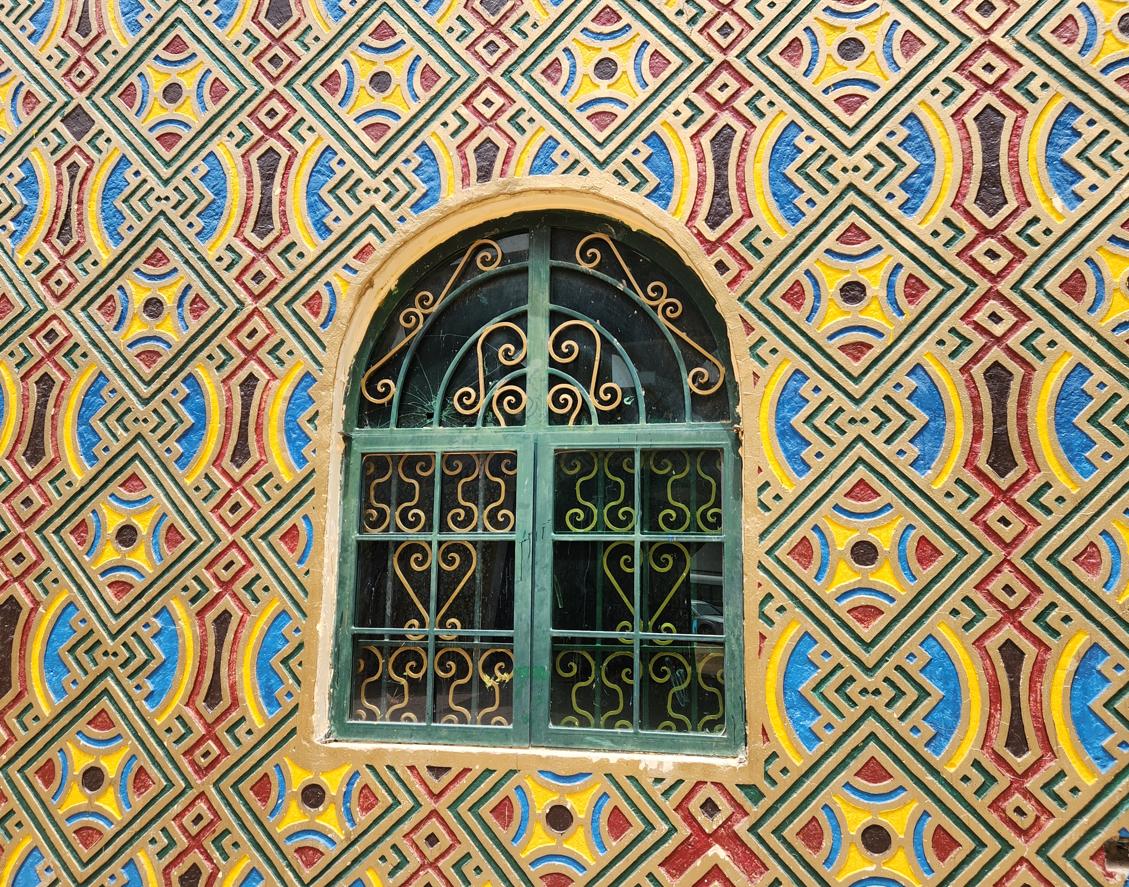
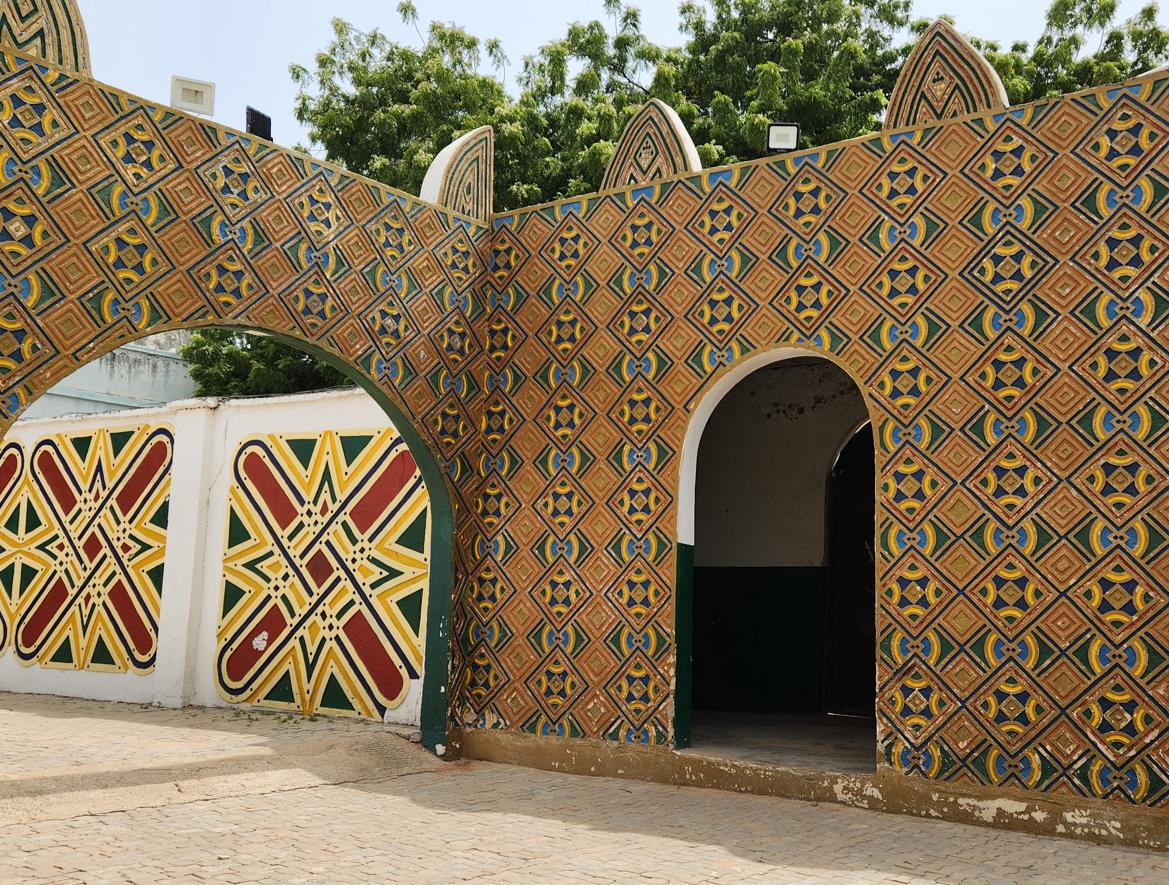
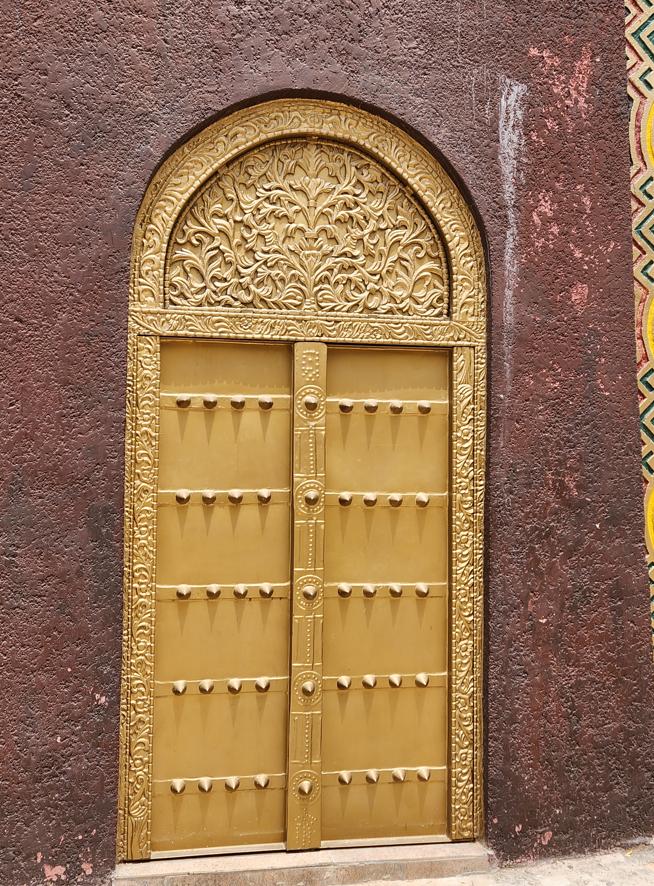
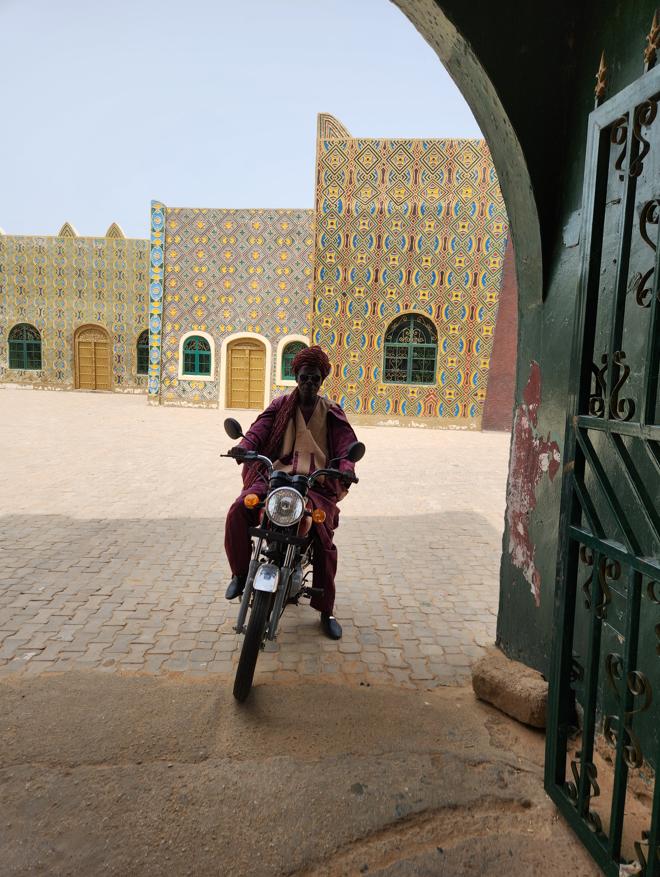
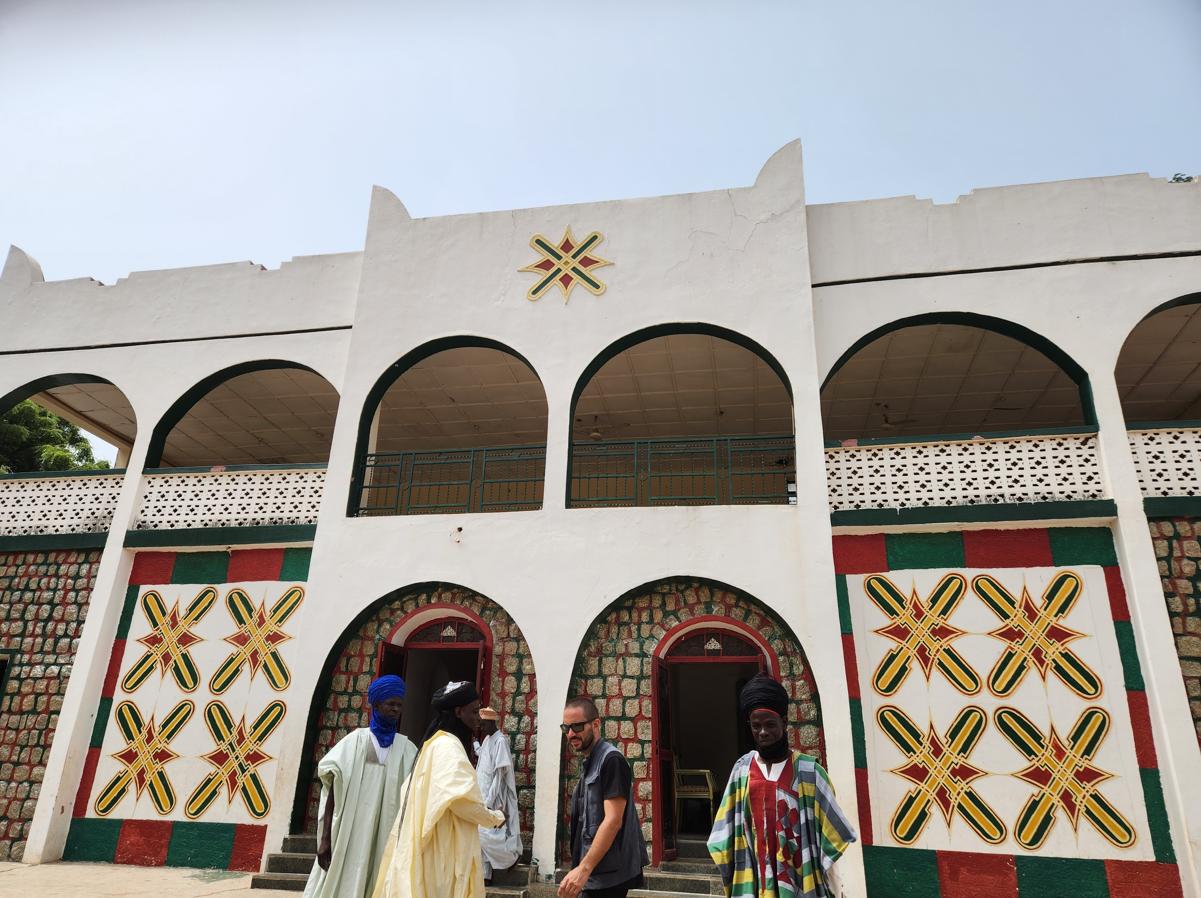
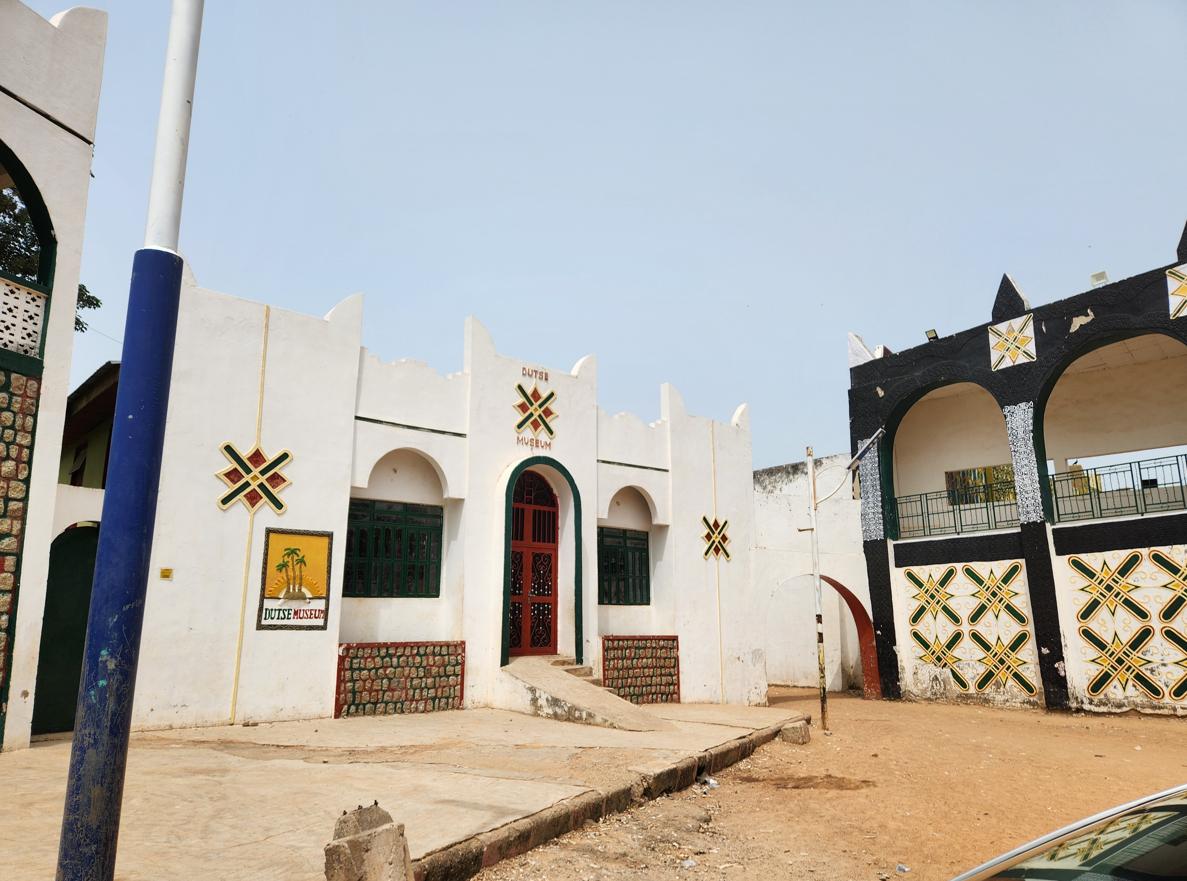
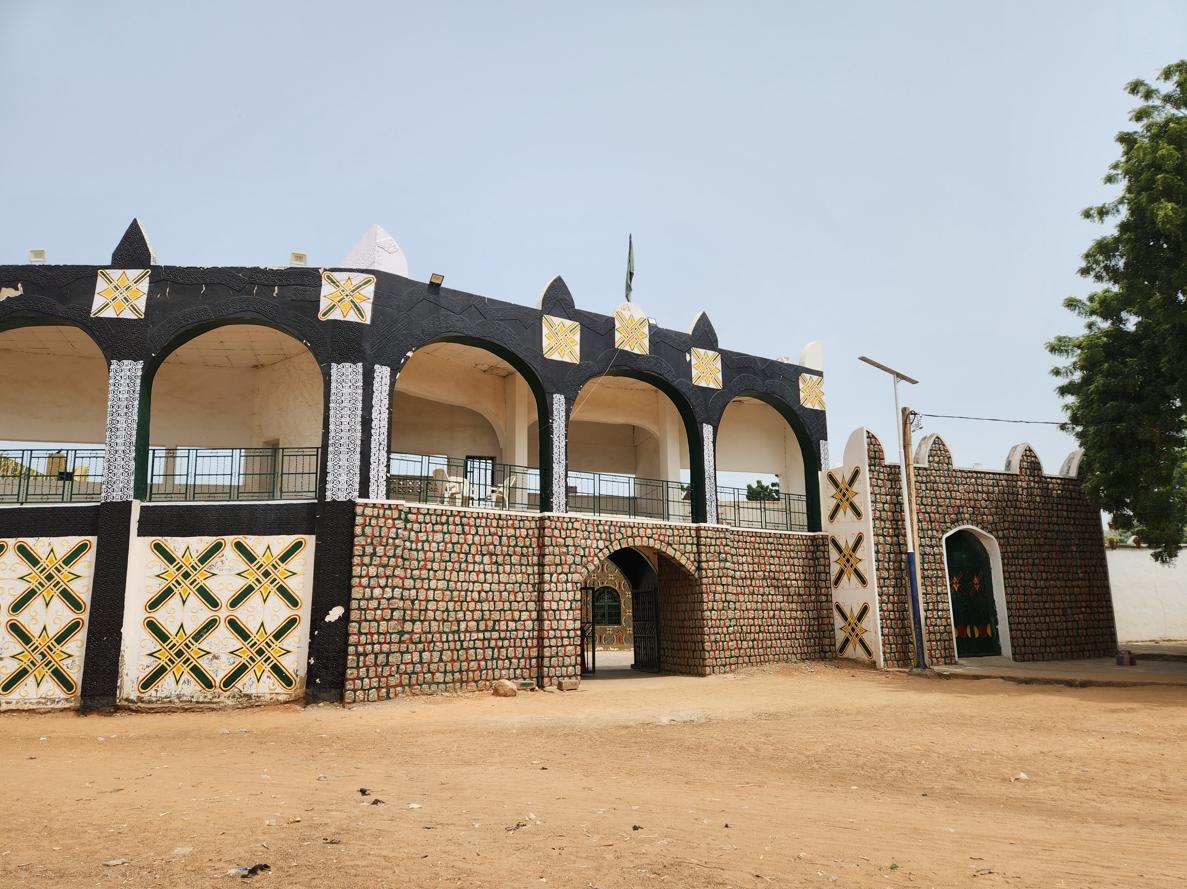
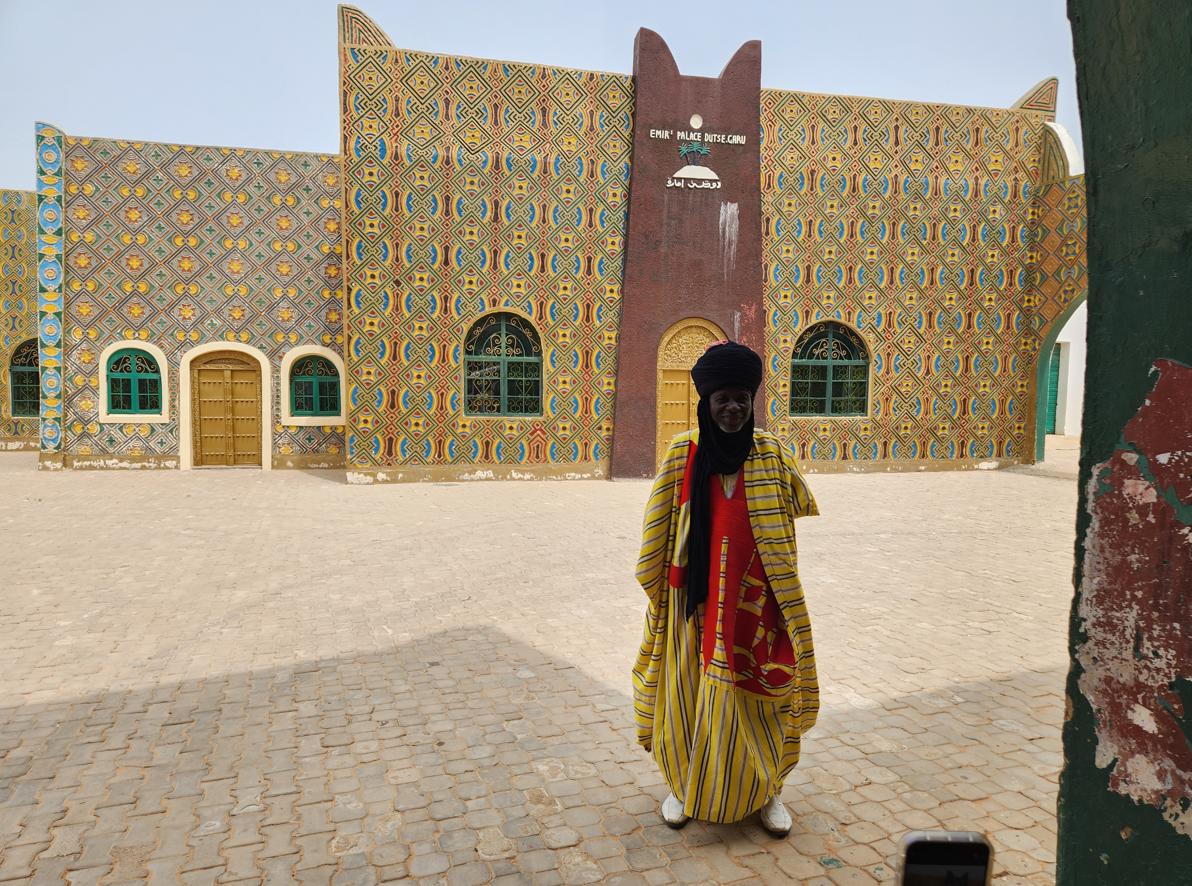
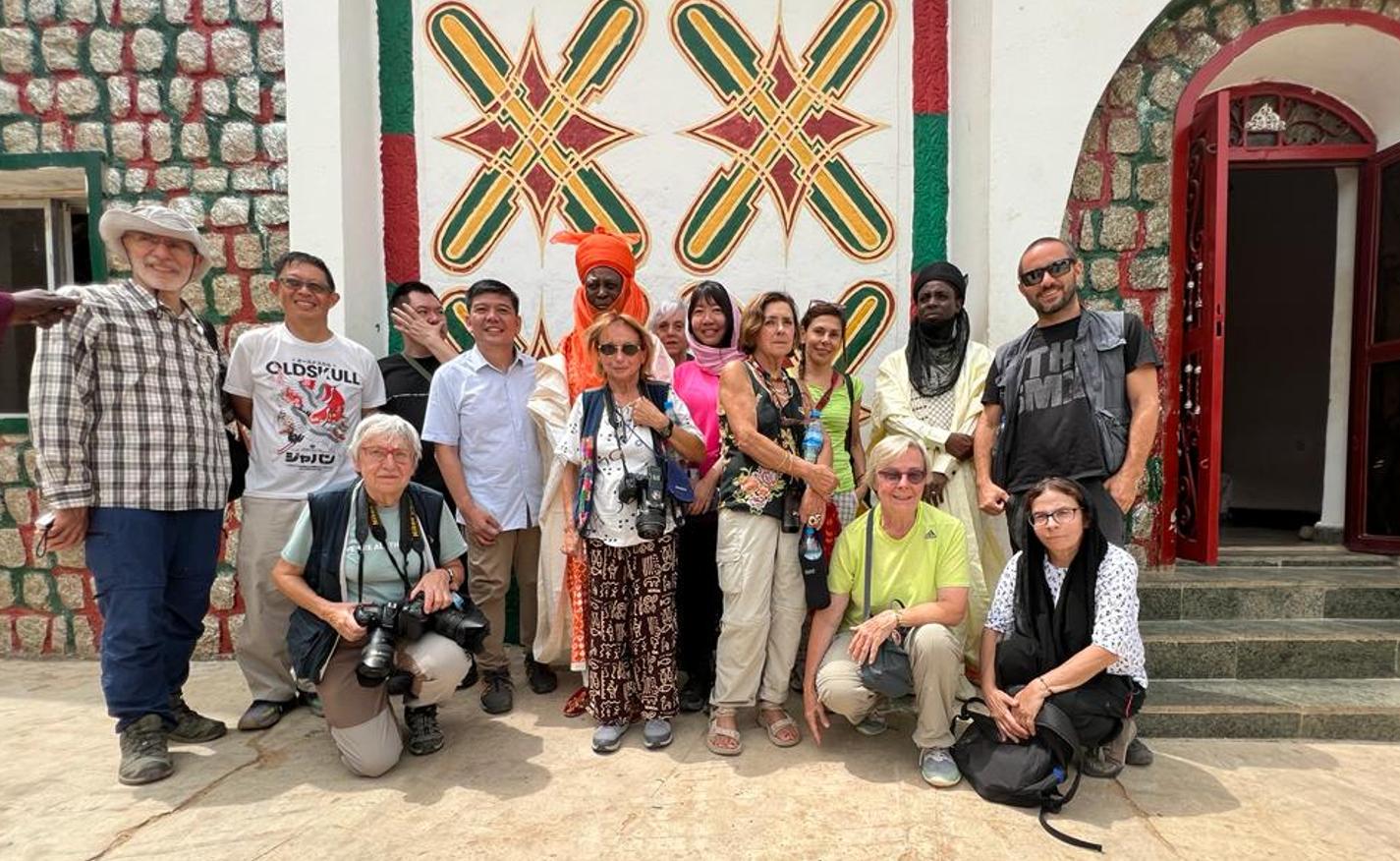
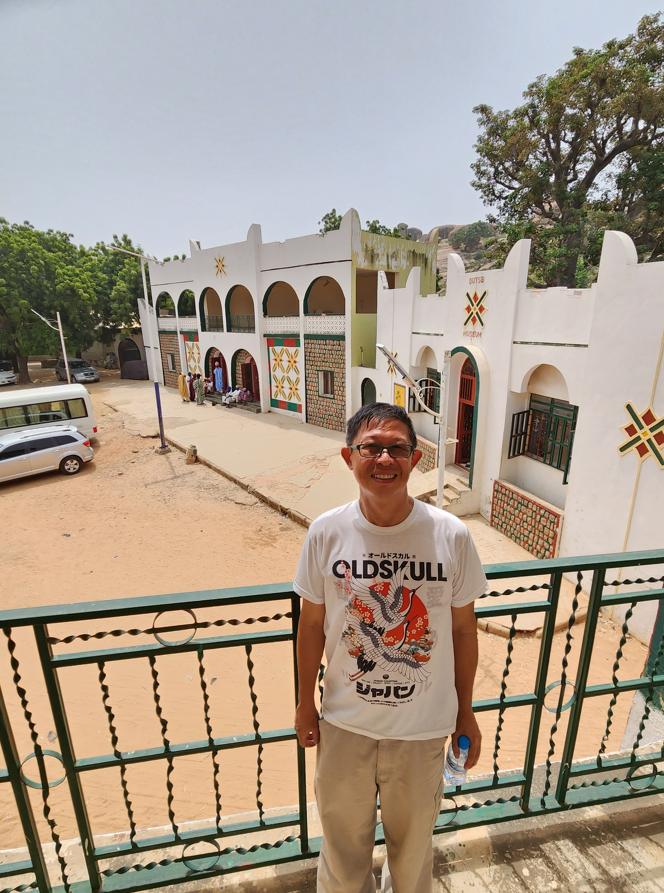
Nothing about the exterior of the Dutse Emirate palace prepares you for what it turns out to be. Where the great courts of Kano and Zaria expressed their authority in the vernacular Hausa tradition — mud brick, geometric relief pressed into clay, the whole surface treated as a skin to be activated — the palace at Dutse had been sheathed in ceramic tile mosaic of a density and exuberance that seemed, at first glance, closer to a Moroccan riad than to anything else I had seen in northern Nigeria. Interlocking diamonds and starbursts in yellow, teal, green, and white covered every surface of the main façade from base to the raised battlement, broken at intervals by deep arched windows framed in wrought iron. The effect was simultaneously opulent and slightly overwhelming — a court that had decided, at some point, that restraint was for other people.

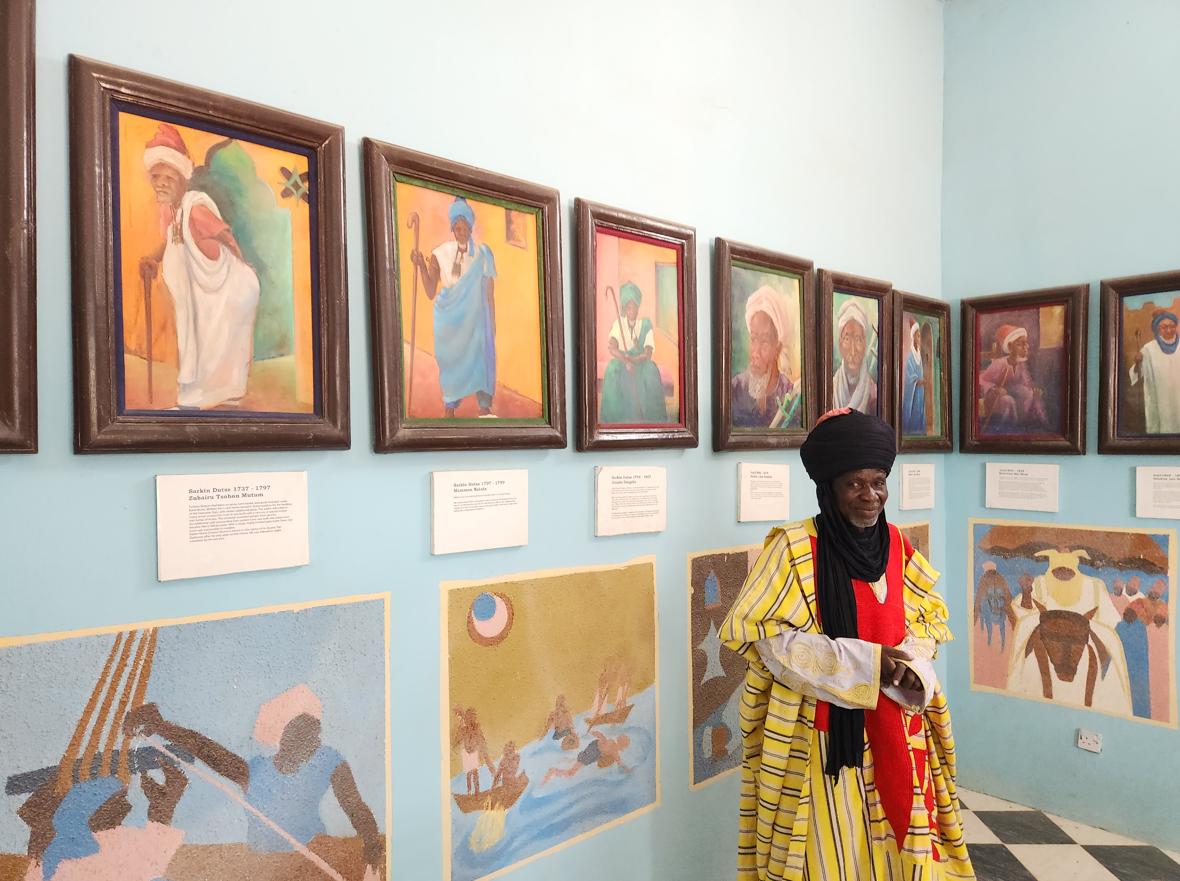
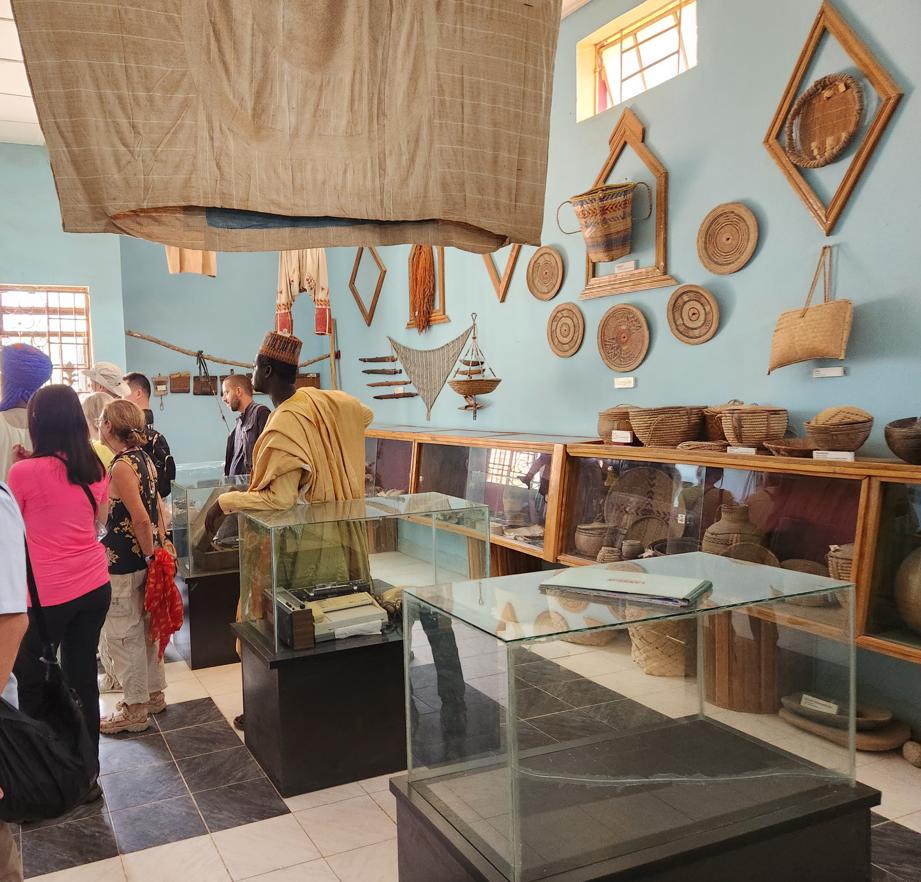
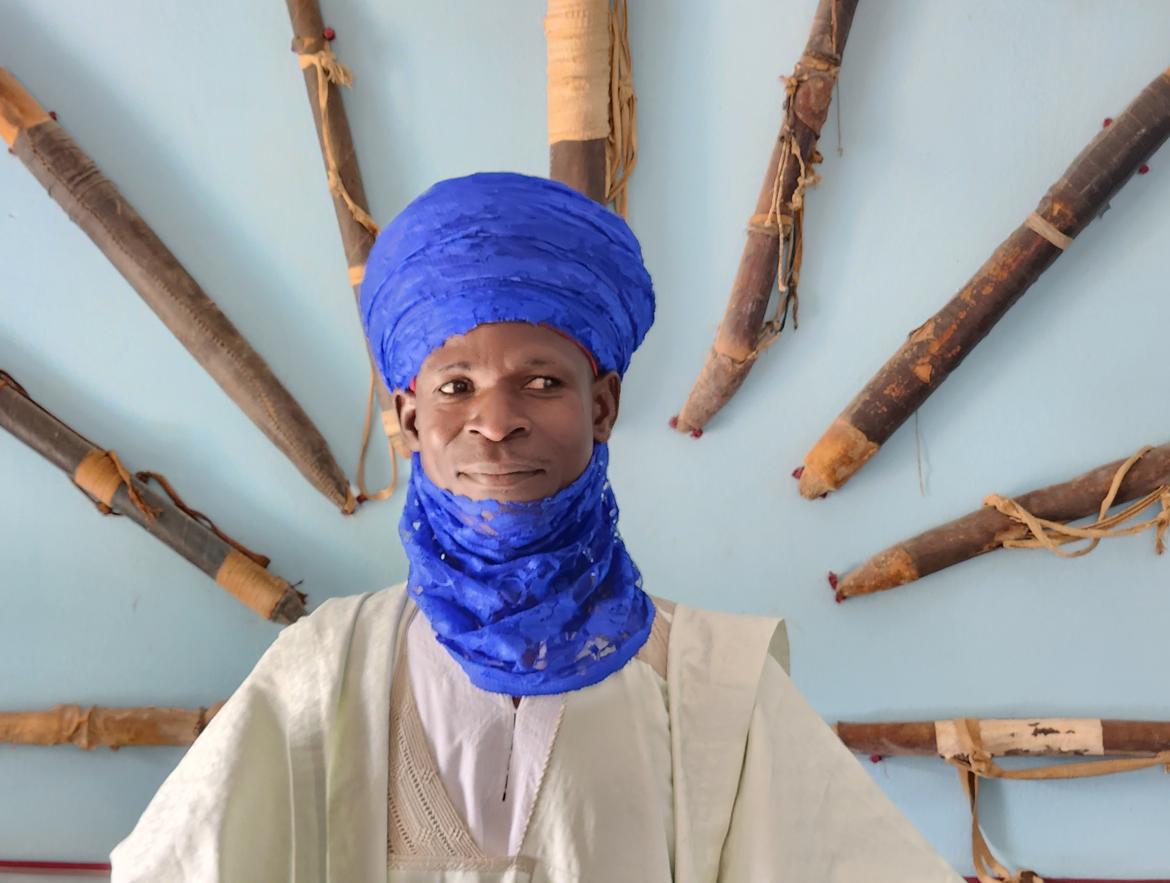
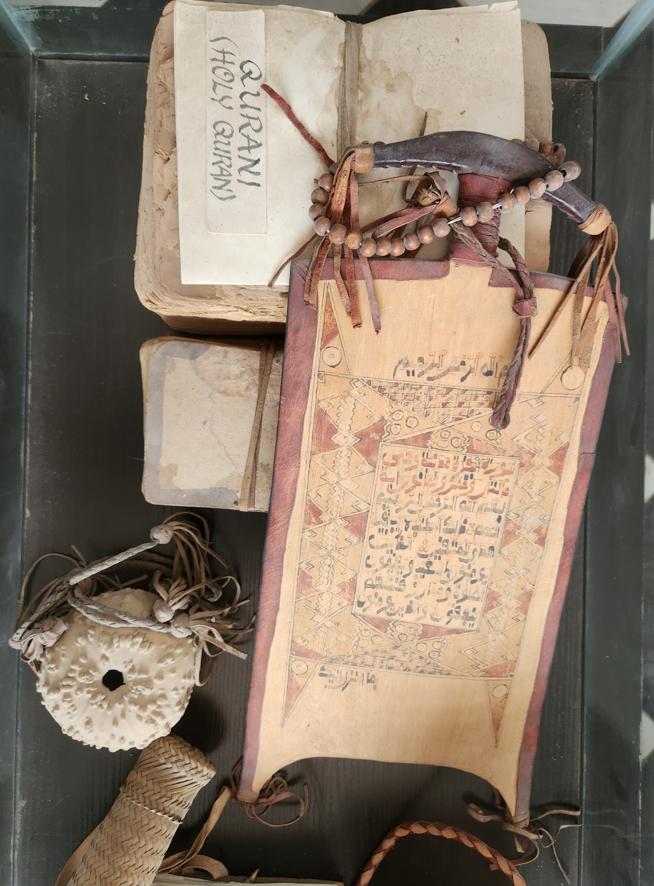
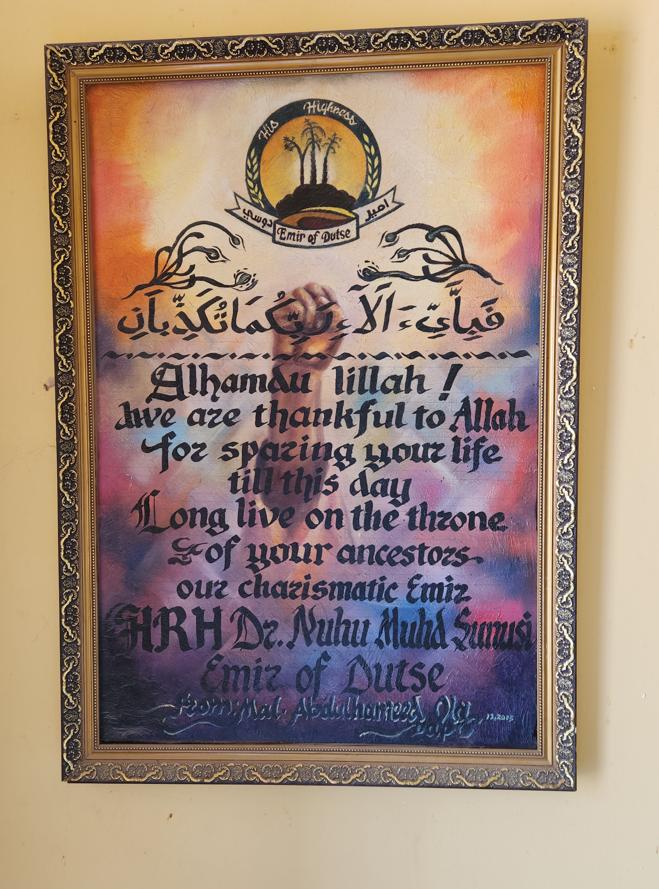
The museum occupied a gallery room in a separate wing of the complex, its walls painted pale blue, its floor a checkerboard of black and white tiles. Along the upper register ran a sequence of painted portraits — the emirs and district heads of the Dutse Emirate in chronological order, rendered in warm ochres and blues in a style that owed something to the academic tradition without being constrained by it. Below each portrait, a label gave dates and a brief biography. The first entry stopped me: Abdullahi Maikano dan Suleiman, First Dutse Emir 1960–1983. Dutse, in other words, had only held emirate status since 1960 — the year of Nigerian independence, and of the formal elevation of what had previously been a district head’s office into a full emirate seat. The portraits below the paintings were a different register: larger canvases depicting scenes of Hausa-Fulani life, fishermen and herdsmen and market traders, painted with the documentary interest of an artist trying to hold a world in place. On the floor of the gallery, glass display cases contained what appeared to be administrative correspondence and ledgers — the paper record of a court that had been generating documents since before it had a formal name for what it was.
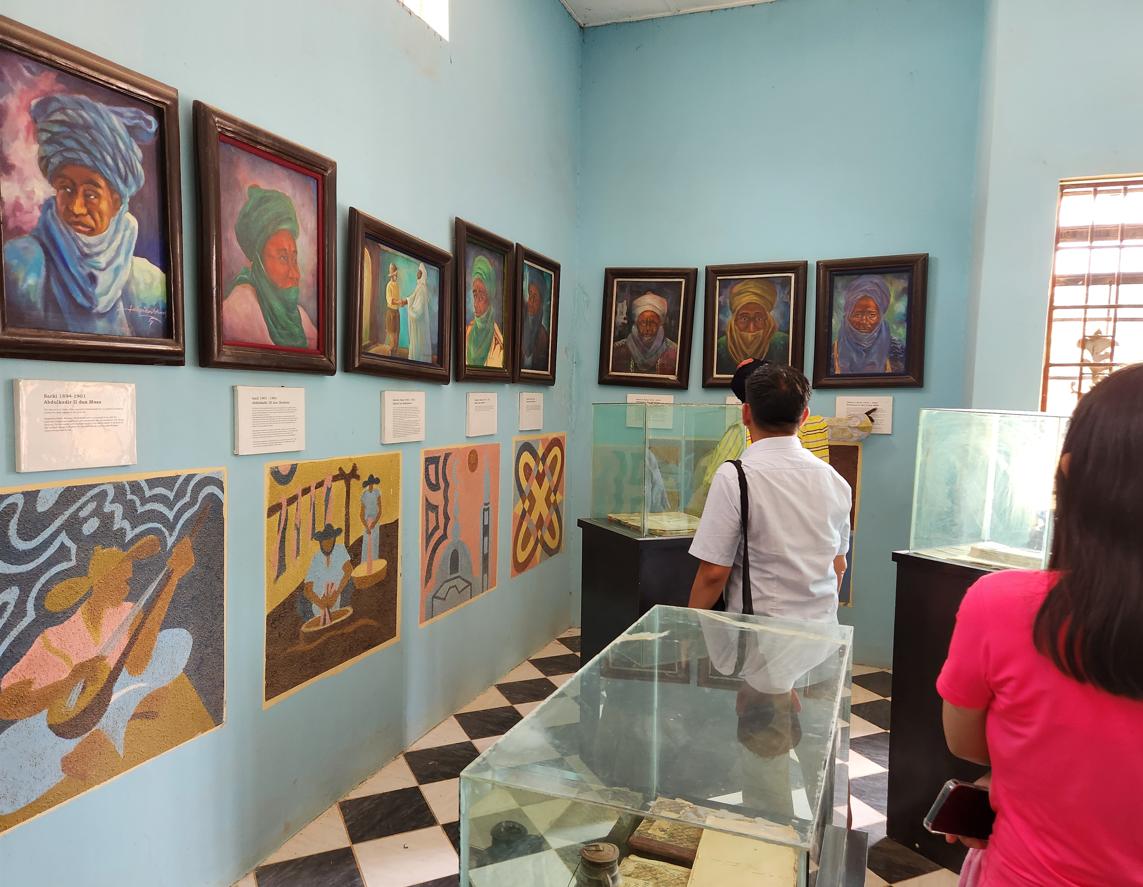
The portrait labels, read in sequence, told a compressed version of a story that reaches well beyond Dutse. Dutse’s elevation to emirate status in 1960 was not a straightforward consequence of independence; it was, in part, a consequence of Dutse’s long subordination to Kano. Since the early nineteenth century, after Fulani clans from the Jalligawa and Yalligawa lineages led the jihad in the area, Dutse had recognized Kano as its spiritual superior while retaining a degree of local administrative autonomy. British indirect rule formalized that subordination further, placing Dutse under the district head system and eroding whatever independent weight it had once carried. Independence and the regional restructuring of 1960 provided the moment for Dutse to claim a title of its own. But the portrait of Abdullahi Maikano dan Suleiman, the first emir, told a more complicated story than mere elevation at independence could explain. According to the caption, he had been formally raised to First Class Emir status only in April 1981 — twenty-one years after the emirate’s creation — by Kano State Governor Muhammadu Abubakar Rimi. And then, barely twenty-eight months later, demoted back to district head by Rimi’s successor, and effectively driven into self-imposed exile in Kano.
The reason was purely political. Governor Rimi, a radical of the People’s Redemption Party whose platform was explicitly the emancipation of the poor from the “overbearing influence of the emirate,” was locked in an escalating conflict with the Emir of Kano, the powerful Alhaji Ado Bayero. In April 1981, Rimi created four new emirate councils — Dutse, Gaya, Rano, and Auyo — and declared their new emirs co-equal in rank with the Emir of Kano. The move was understood by everyone, including its intended target, as a deliberate act of political dismemberment: not a genuine recognition of local heritage, but a governor’s gambit to reduce one of the most powerful traditional rulers in Nigeria to one voice among five. The Emir of Kano’s supporters rioted in July 1981; Rimi’s political adviser was assassinated; the government offices of the state newspaper and radio station were burnt. In 1983, when Rimi’s successor took office, his first act was to reverse the creation entirely — the four new emirs demoted, their councils dissolved, the Kano emirate restored. Abdullahi Maikano dan Suleiman, who had been emir for barely two years at First Class status, went to Kano and did not come back.
The official praise singer of the Dutse Emirate delivering his oration as the Grand Councillor stepped out of his office complex.
Dutse’s second emir, Muhammad Sanusi dan Bello, had a quieter story — until history intervened again. When the Federal Military Government created Jigawa State in August 1991, carving it from the old Kano State, Dutse became the new capital. In November of that year, the surrounding local government areas were amalgamated under a reconstituted Dutse Emirate, and Sanusi was upgraded to First Class Emir for the second time in the emirate’s short history — this time as a consequence of statehood rather than of political warfare. He died in office in November 1995. The museum presented both men with the same quiet dignity, their portraits in the same warm ochres and blues, the turbulence of their respective tenures subsumed into the calm of official commemoration. Portraits in museum galleries have a way of making contingent things look inevitable.
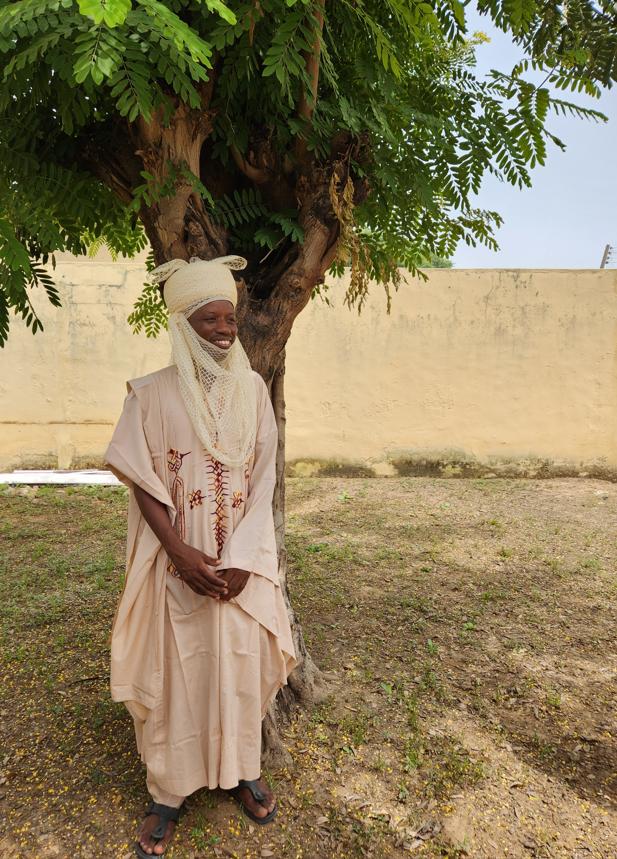
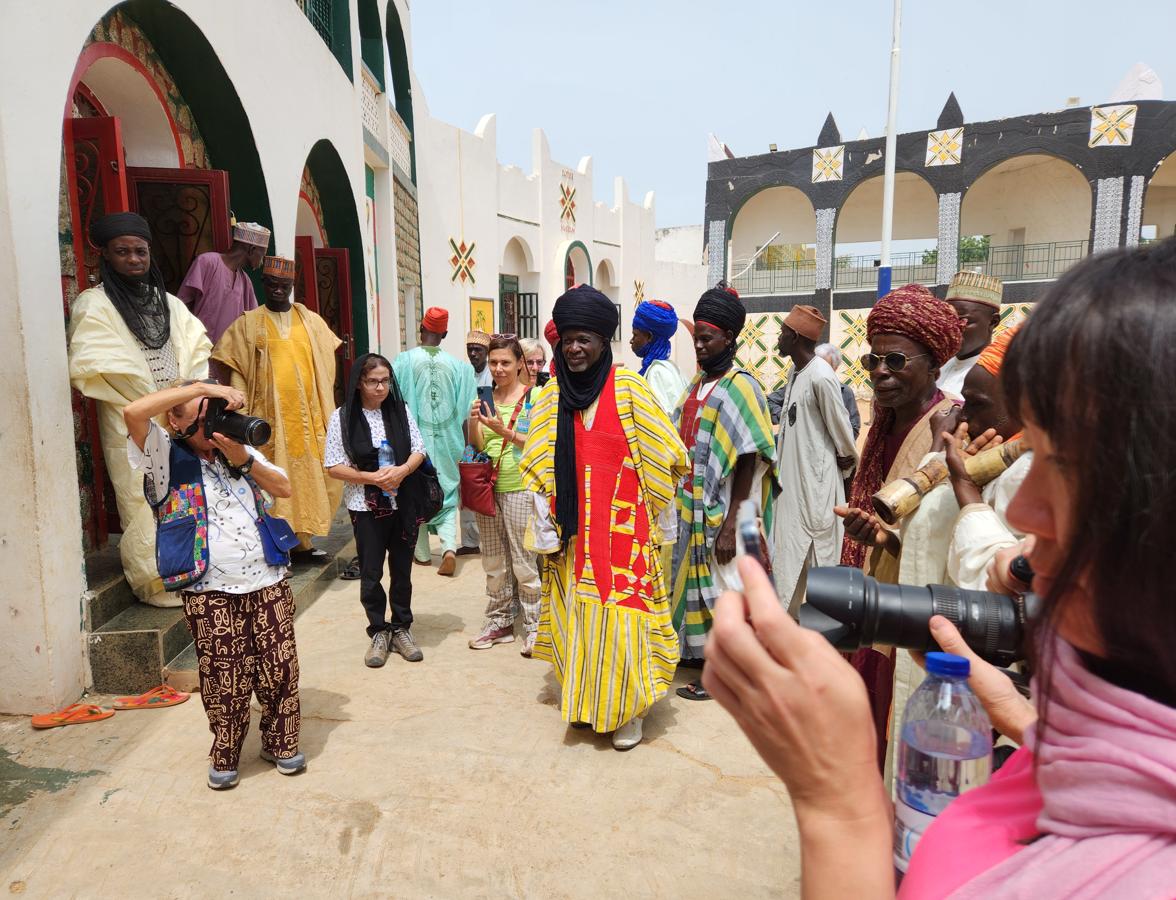
In the courtyard, a man in a yellow-striped Babban Riga and black turban served as our escort through the complex, at ease in his robes in the manner of someone for whom formal dress is simply dress. Later, crossing the tiled forecourt toward the administrative offices, we passed a palace official in full burgundy court robes seated on a motorcycle, sunglasses on, engine off, making no concessions to the incongruity of the image. Nigeria produces these juxtapositions without effort or apology.
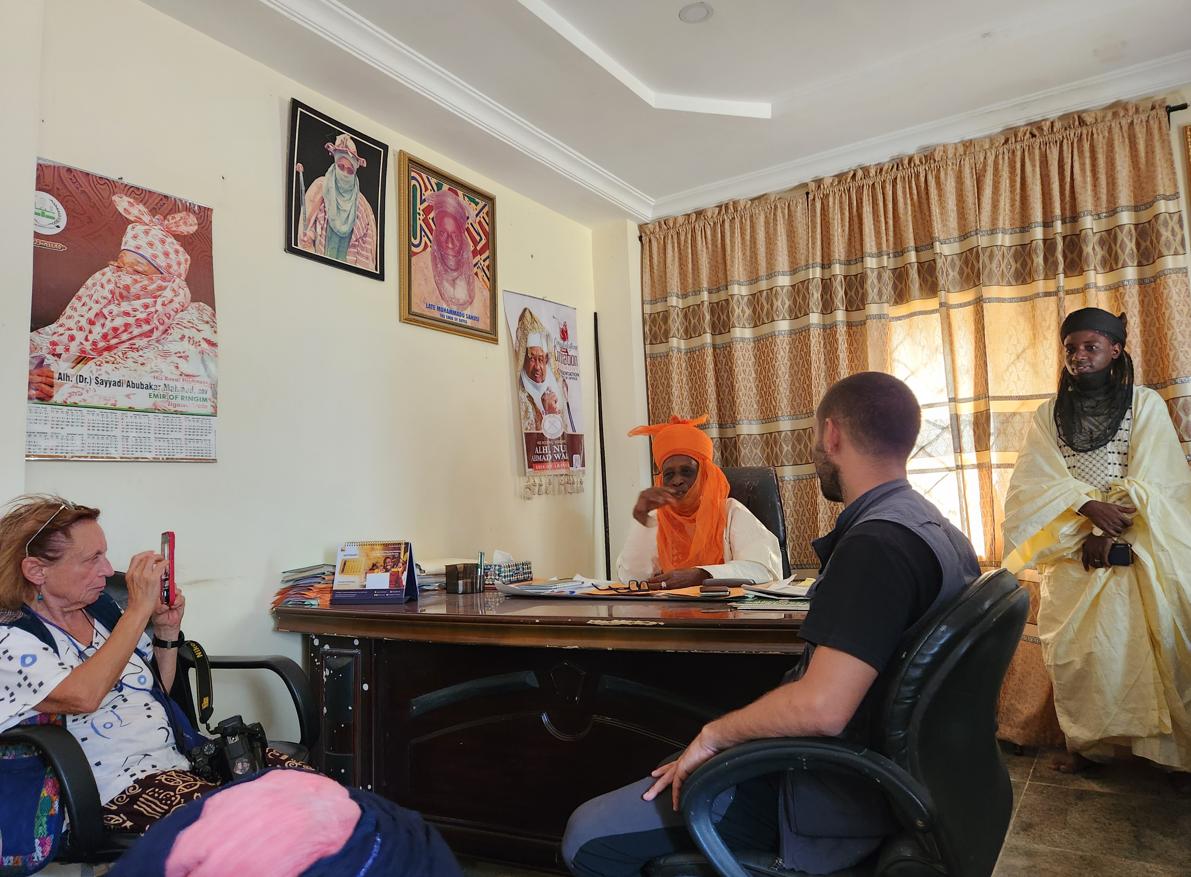
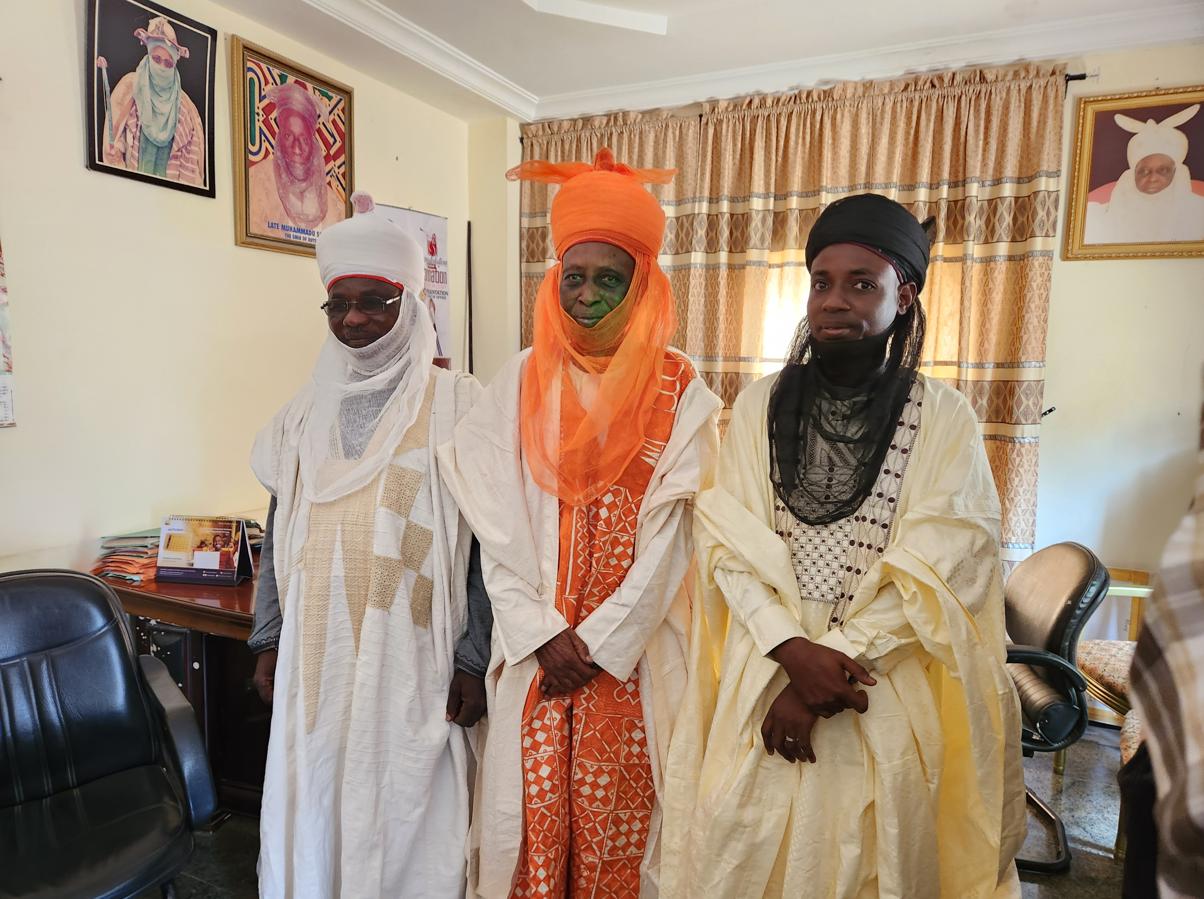
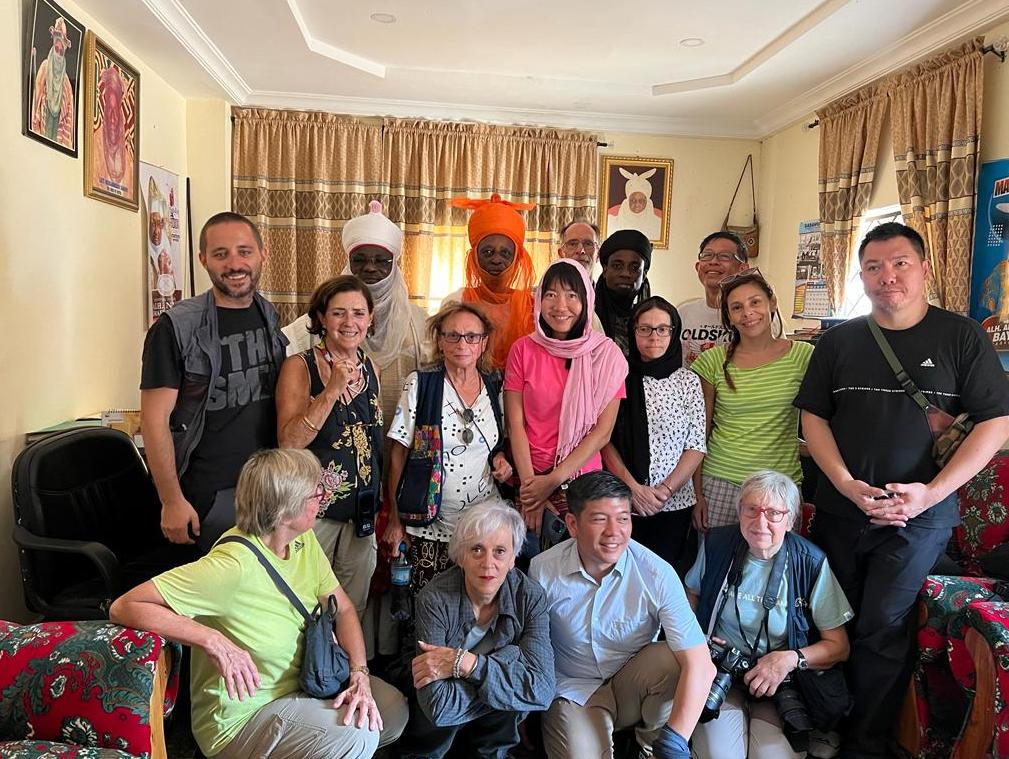
It was outside the Grand Councillor’s offices that the day produced its first surprise. Inside, we had been received briefly by the Grand Councillor himself — a senior figure in the emirate’s administrative hierarchy, the Emir’s brother and effectively his prime minister — flanked in the office by his two sons: his elder son to his left, and to his right his younger son, the man whose connections and generosity had made the entire northern leg of our journey possible. Three men, one family, the full span of the court’s present authority arranged in a single room. When the Grand Councillor emerged into the courtyard to meet us formally, before he had taken three steps a figure in robes was already in motion: the official storyteller or praise singer of the Dutse Emirate, known in Hausa as the Maroki.
What followed was a performance of a kind that has no obvious equivalent in most of the world I have moved through. The Maroki delivered his oration in Hausa, his voice rising and falling in a rapid, rhythmic cadence — the form known as kirari, a genre of praise poetry that functions simultaneously as genealogy, proclamation, and public relations. The Grand Councillor’s lineage was recited, his ancestors named and their deeds enumerated, his own qualities rendered in extended metaphor: the lion, the elephant, the rock from which Dutse takes its name. At intervals, the long kakaki trumpets — the great brass instruments of the Hausa courts, their bells sweeping down to the ground — sent up a sound somewhere between a fanfare and a lament. The effect was not theatrical in any pejorative sense. It was theatrical in the original sense: a formal public statement of order and legitimacy, performed in the open air before witnesses, constitutive rather than merely decorative. The Grand Councillor listened with the composure of a man who has heard his lineage recited many times, and for whom the recitation remains, each time, a serious matter.
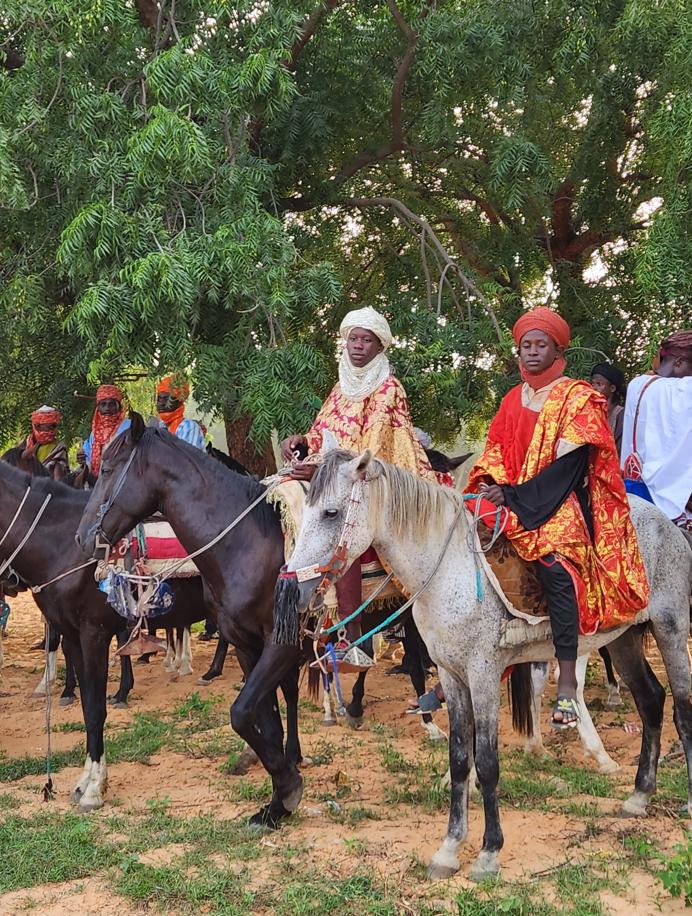
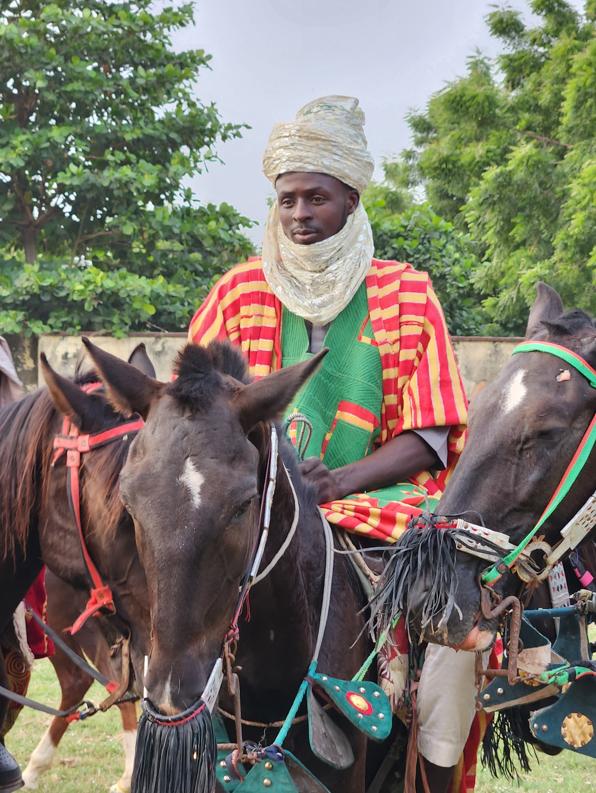
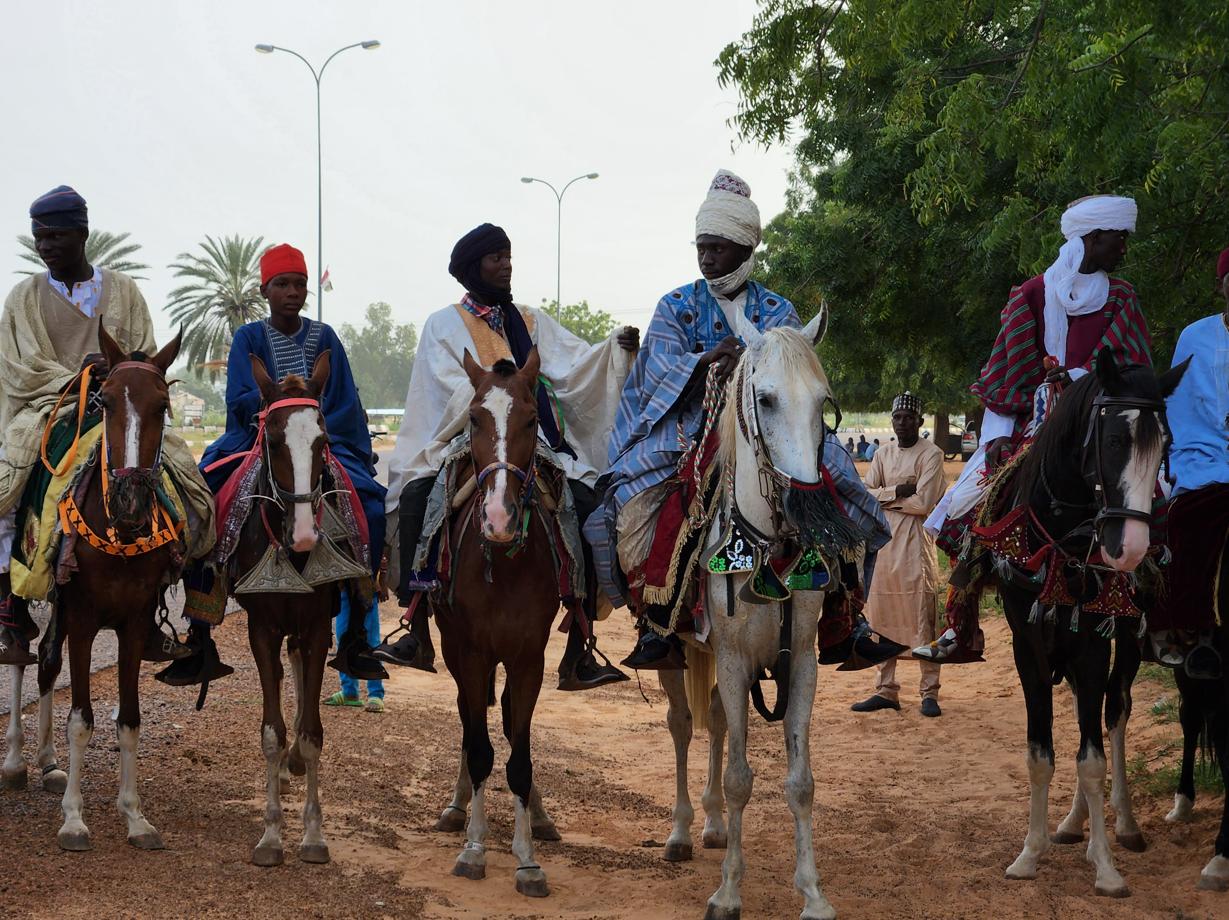
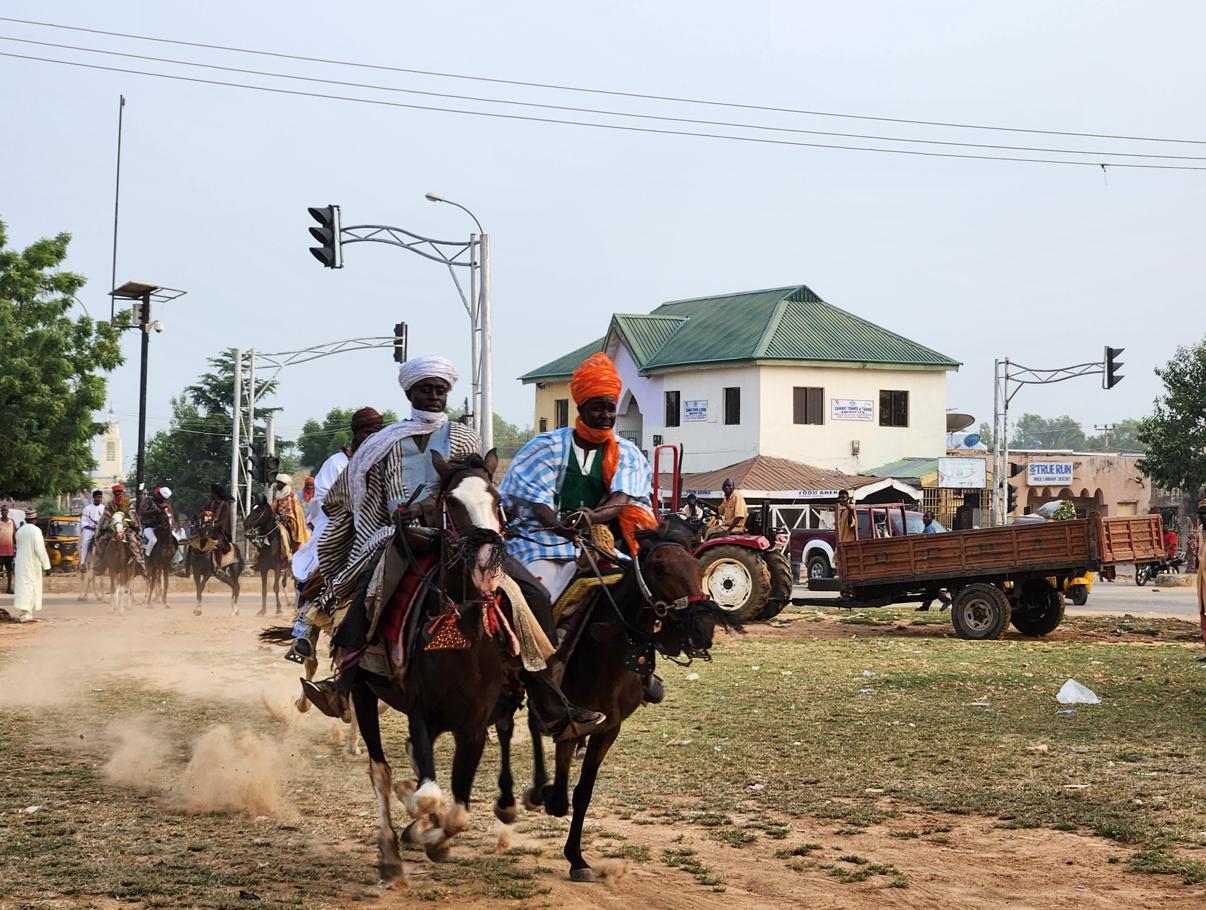
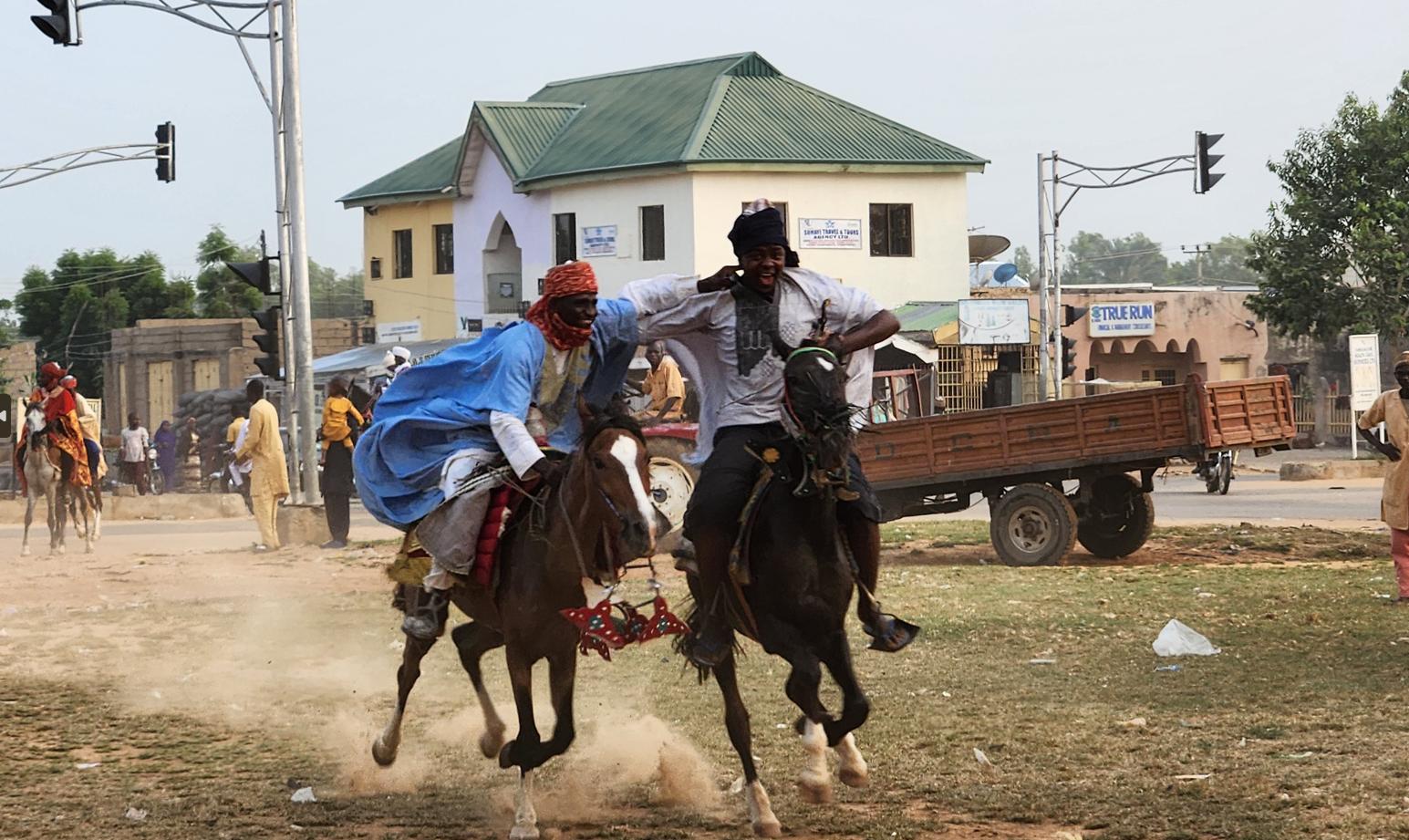
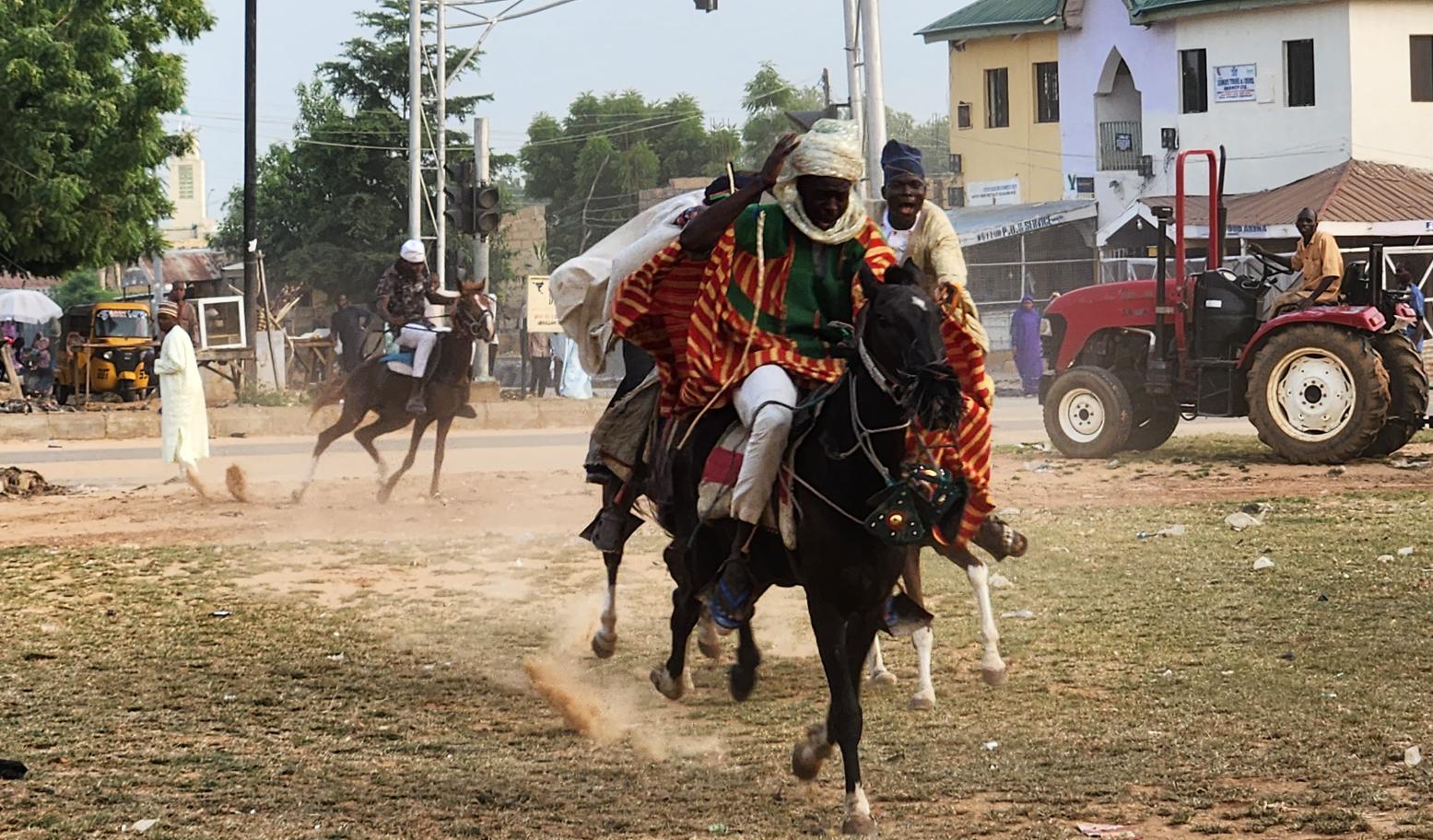
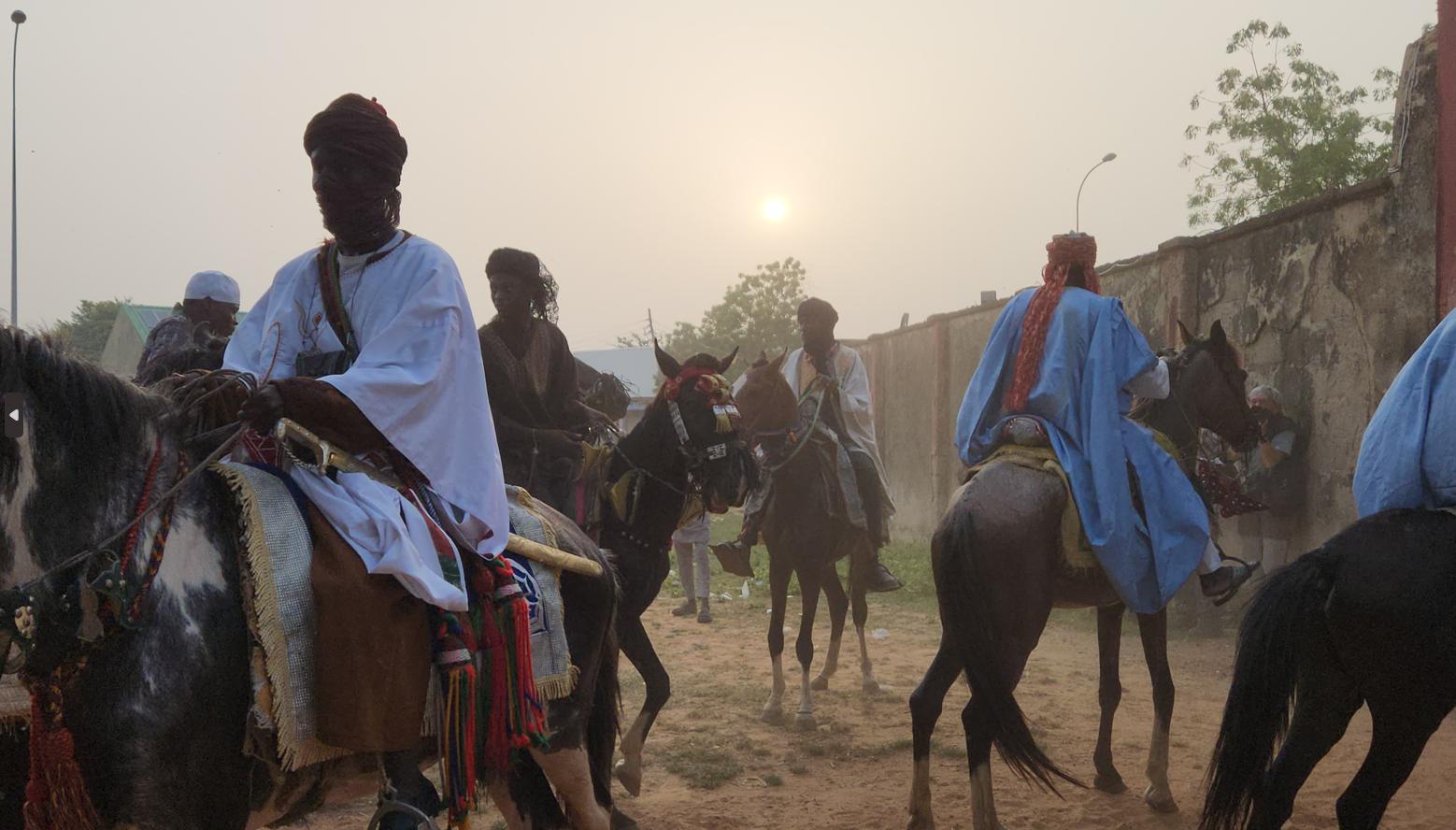
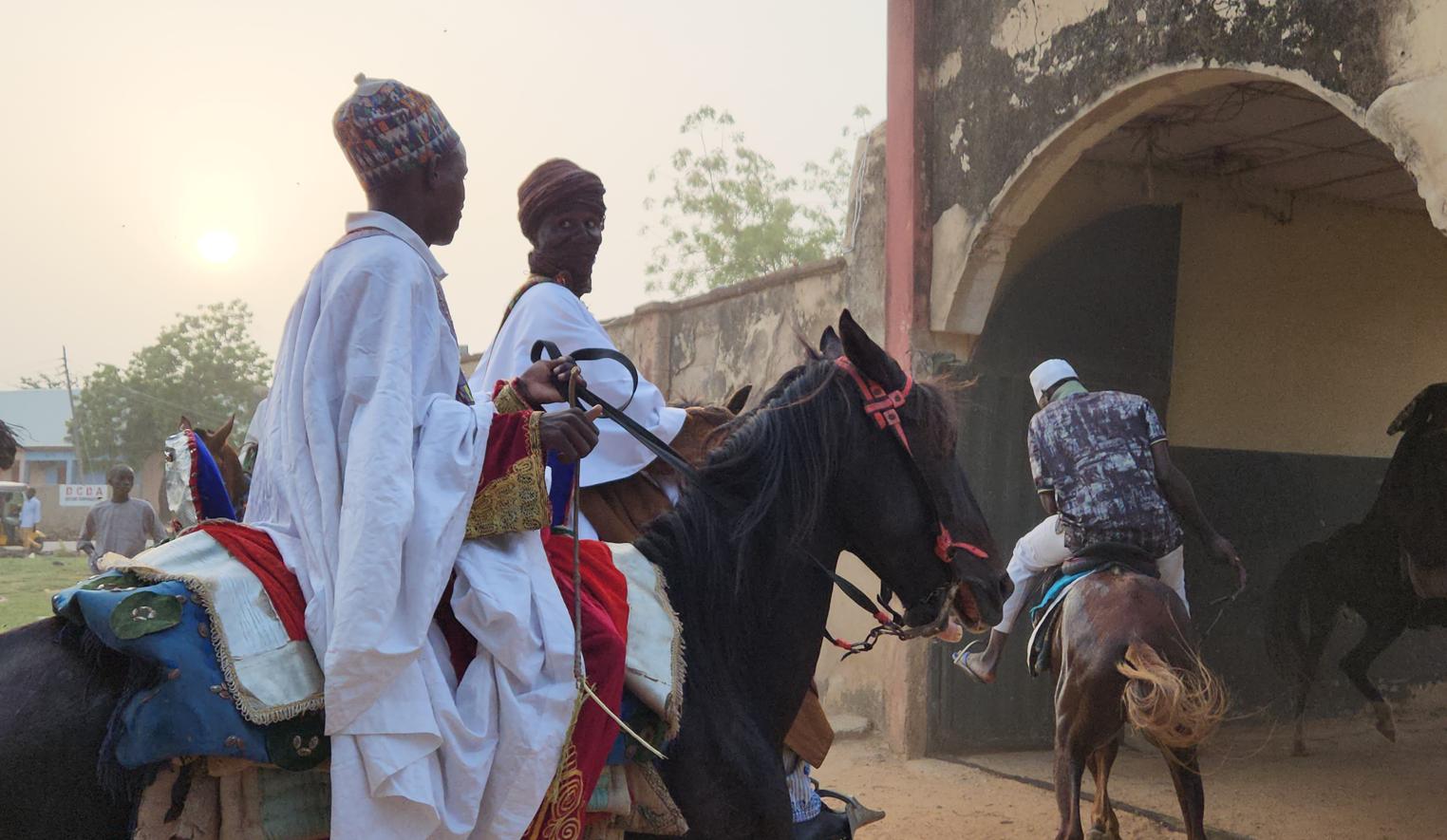
That afternoon, a durbar was held in our honour. The Emir of Dutse was in Abuja — summoned, as emirs occasionally are, for a meeting with the federal president — and so the ceremony was conducted by the Prince in his father’s stead. The venue was an open field on the edge of the city, the spectators ranged along its margins in the late afternoon light, the dust already rising from the approaches. Around twenty horses took part, each ridden by a member of the local nobility in the full regalia of the occasion: the Babban Riga, the great flowing robe whose excess of fabric signals rank; turbans wound to architectural dimensions, the two trailing ends standing upright — a mark of noble status — rather than hanging loose. The horses wore quilted caparisons in the colours of their riders’ houses, silver-plated bridles, heavy brass stirrups of the traditional high-backed northern style. Assembling under the trees at the far end of the field before the charge, riders and horses together had the quality of a painting that had not yet decided to be still.
The central act of the durbar is the jahi charge: riders gather at one end of the field, build to a gallop, and bear down at full speed toward the viewing area where the guests of honour are seated. The horses come fast enough that anyone directly in their path has a single option: move. At the last moment, the riders haul back on the reins and the horses brake in a controlled skid, dust erupting around them, and the riders raise their right fists in salute. It is a demonstration, simultaneously, of the horse’s training and the rider’s nerve, and of the social contract between the nobility and the authority they are saluting: we could ride you down, the gesture says. We choose not to. We choose, instead, to stop.
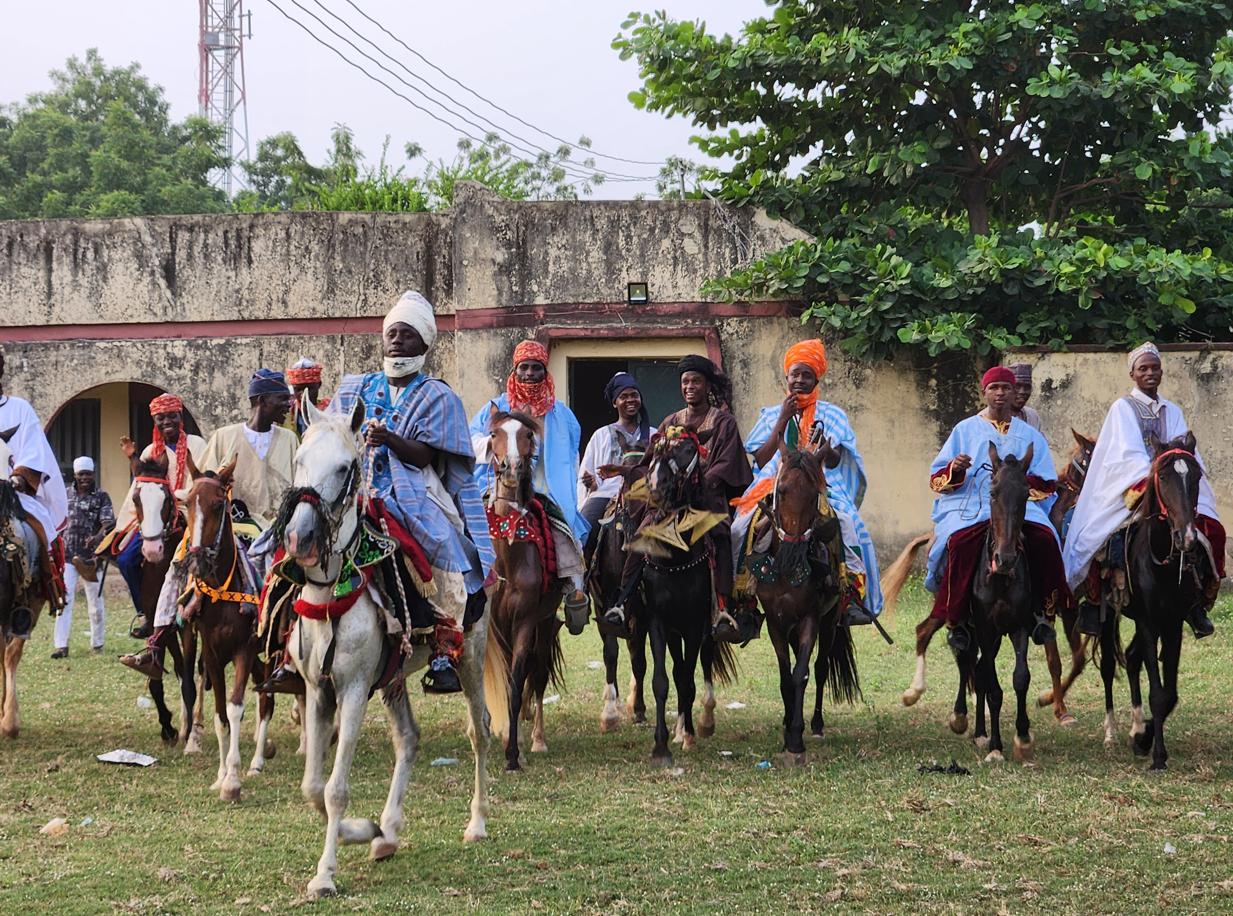
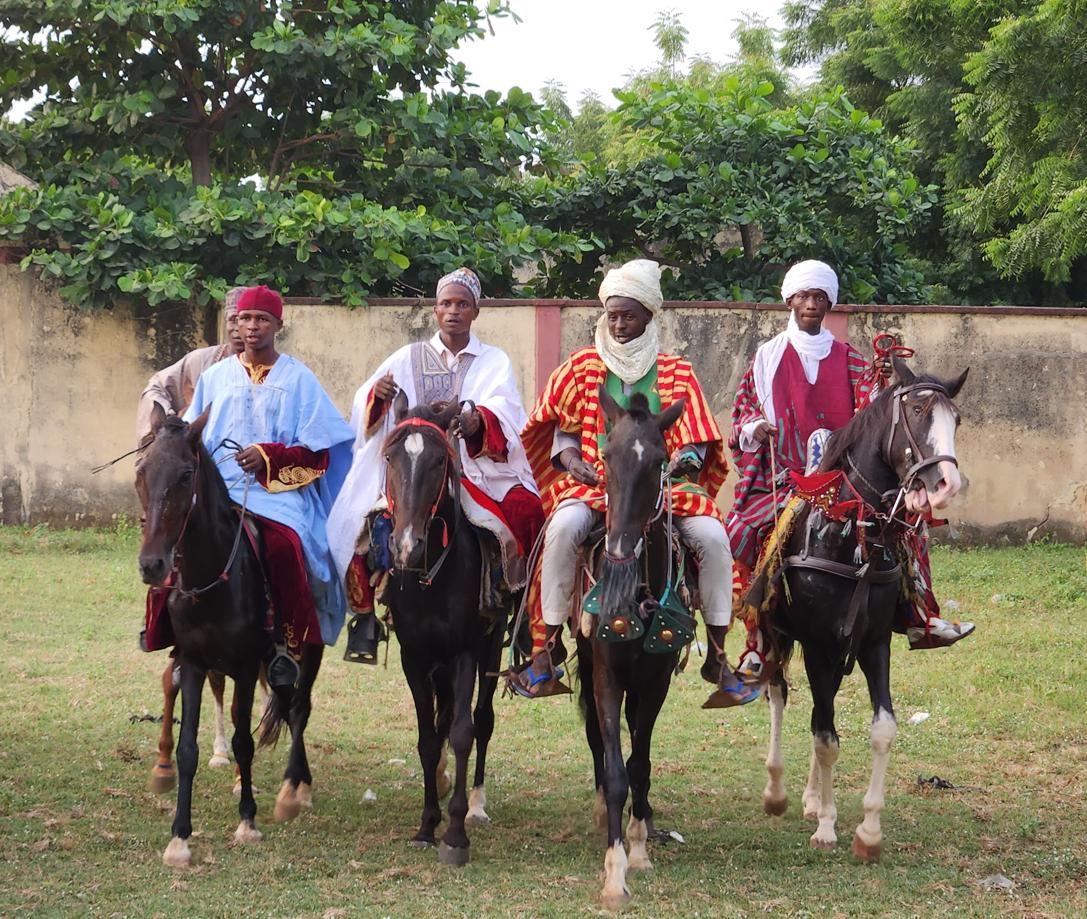
The Dutse durbar was smaller than Kano’s — twenty riders against hundreds, an open field against the packed ceremonial avenues of the old city. What it lost in scale it recovered in proximity. We were close enough to the charge to feel the vibration of the hooves before we saw the horses clearly, close enough to read the expressions on the riders’ faces as they pulled up. In Kano, the Durbar is a spectacle watched from the margins. In Dutse, it arrived close enough to be an event you were part of, whether you had intended to be or not.
One element was absent. In the full ceremony, convened by the Emir for dignitaries of the highest rank — a visiting head of state, the federal president — the jahi charge ends with a gun salute: the riders discharging their muskets into the air as they halt, a gesture that converts military display into formal tribute. The Prince could confer many things upon us, but not that particular honour. It was the Emir’s prerogative alone, and the Emir was in Abuja. We accepted the charge without the guns. It was, under the circumstances, more than sufficient.