Karachi: Arrival
in the City of Lights
(Part I) - Mausoleum & City
An immersive entry into South Asia's sprawling coast, where pilgrims returning from Mecca merge with truck art galleries and monumental marble domes.
Bangkok to Karachi, After Midnight
We landed at Karachi's Jinnah International Airport at 10:40 in the evening. The aircraft, a Royal Thai Airlines wide-body that had carried us in via Bangkok and smelt of institutional carpet and cumin, descended over a city that glittered with the peculiar density of the genuinely enormous. Karachi has over twenty million people. At night, from the air, it looked like someone had tipped a bucket of stars across the flat coastal plain and forgotten to clean them up.
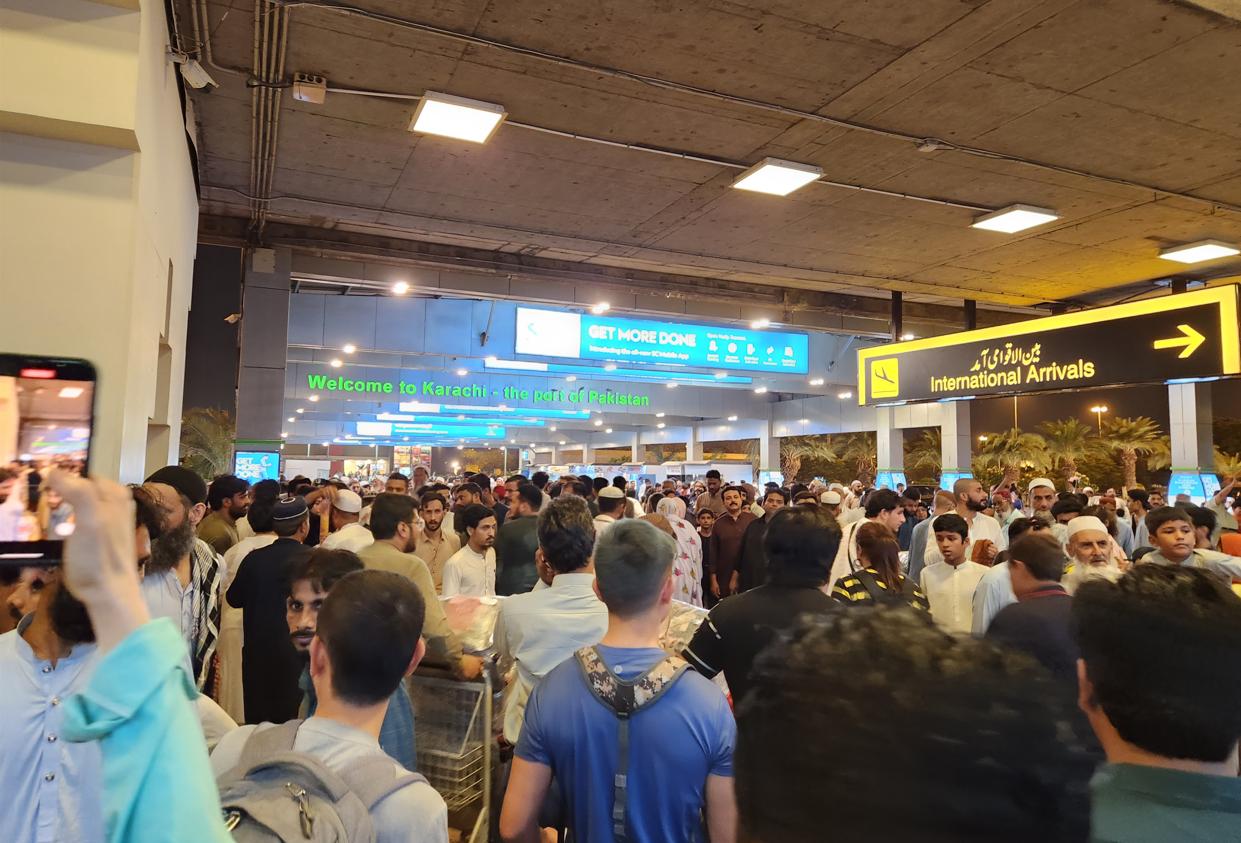
The terminal was awash in white. Not the white of the paintwork, which was frankly overdue for attention, but the white of ihram — the two pieces of unsewn cloth worn by pilgrims returning from Haj in Mecca. Hundreds of them. The entire arrivals hall was filled with families wreathed in garlands of orange marigolds, holding up hand-painted signs, weeping openly, embracing grandfathers who had been to the house of God and returned with the light still in their eyes. Children were lifted onto shoulders. An old man in a wheelchair was surrounded by perhaps thirty relatives, all trying to touch him at once. The noise was extraordinary: ululations, the Allahu Akbar called out by a man with a voice that could have filled a mosque, babies screaming for reasons entirely unconnected to religion.
'Welcome to Pakistan,' said Jamal, our guide, who had driven to the airport to collect us. He was a compact man in his forties, with a dark moustache and the easy authority of someone accustomed to shepherding the bewildered. 'Every day this, during Haj season. Every flight is like Eid.'
We drove into the city in the dark, the air close and warm as a bath towel left in the sun, carrying the smell of salt from the nearby Arabian Sea and something else — something faintly spiced and organic that is the specific olfactory signature of the Indian subcontinent, impossible to name and absolutely unmistakeable. I had smelt it before, in Mumbai, in Delhi, in Dhaka. It was the smell, I had come to believe, of a particular density of human habitation: millions of people cooking, washing, sleeping, arguing, praying, within a radius of a few kilometres.
The roads were the other revelation. We had arrived expecting the chaos familiar from subcontinental cities, and chaos there was — but it was the productive chaos of a city that has never stopped moving. Painted trucks everywhere, each one a rolling gallery of folk art: flowers, mountains, portraits of saints, truculent eagles, symmetrical arabesques in orange and blue and gold. Their rear bumpers carried messages in Urdu and English — 'Horn OK Please,' 'God is Great,' 'For Sale Contact Driver' — and their diesel engines rumbled with a satisfaction bordering on smugness.
'The truck painters of Pakistan,' Jamal said, as though reading my thoughts. 'There is no other country in the world where the truck is also a canvas. These men, the painters, they are artists. But nobody calls them artists.'
First Morning, First Food
The Hotel Excelsior was an old establishment of faded colonial grandeur, situated in one of the older commercial districts of the city. The rooms were high-ceilinged, the air conditioning enthusiastic, and the breakfast — which appeared at seven in the morning as a series of silver chafing dishes on a long table — was revelatory.
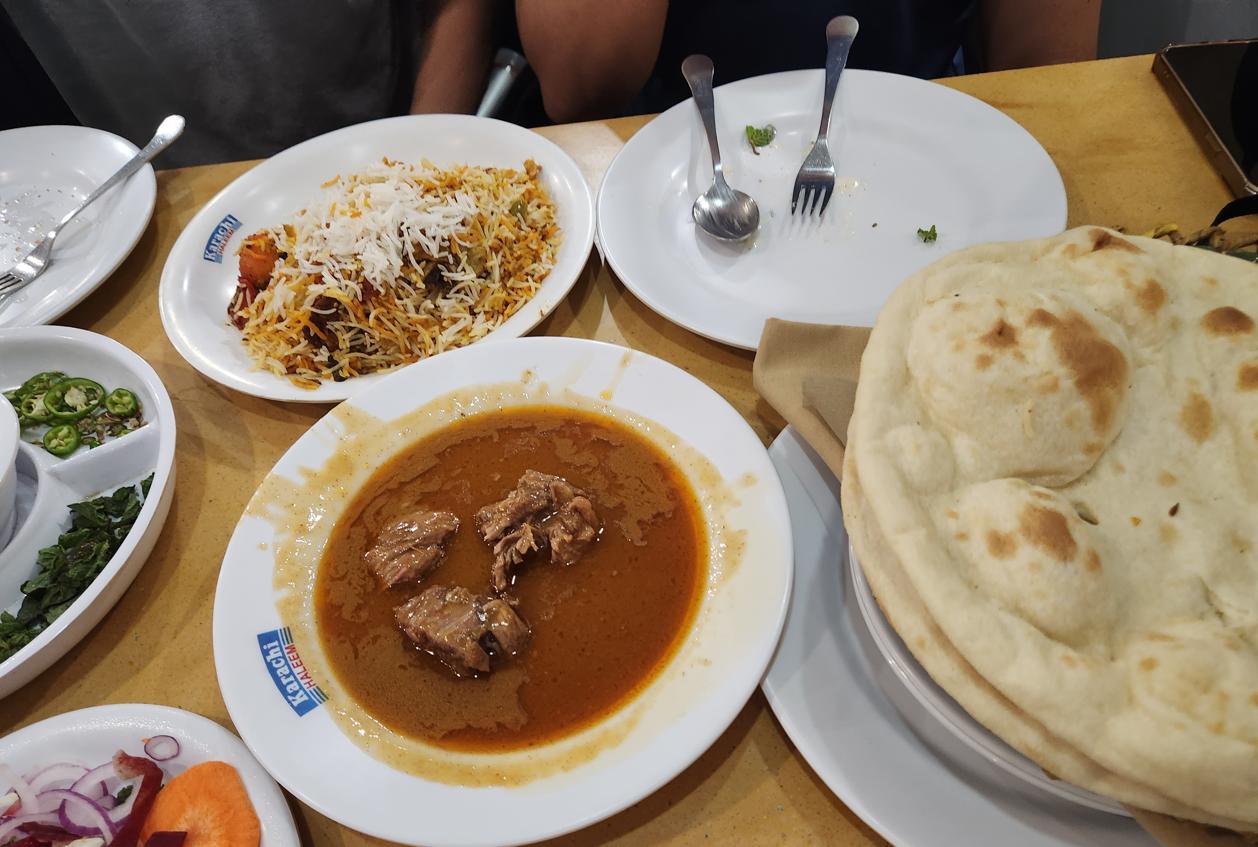
I had not yet understood what Pakistani food was. I had thought I understood it, as a Southeast Asian who has eaten his share of biryani and naan. I was wrong. What appeared on that table was a different order of cooking entirely: a plate of haleem, which is a slow-cooked stew of meat and lentils pounded until they become a single substance of extraordinary density and warmth, flavoured with ginger and ghee; a nihari, which is the morning stew of Karachi — braised mutton shank in a broth as dark and serious as a legal document, brightened with coriander and fried onion; and a biryani whose rice was the colour of saffron and smelt of cardamom and clove and the particular sweetness of long-cooked meat.
Anthony Bourdain, who visited Pakistan and reported back to a disbelieving America, described the hospitality here as legendary. He was not wrong. But he perhaps underestimated how thoroughgoing it is. A man at the next table, upon overhearing that we were from Singapore, immediately ordered more paratha for our table. He would hear no objection. When Shaun tried to thank him, he waved his hand as though thanking him were the impolite act.
'You are guests in Pakistan,' he said. 'Guests are from God.'
This would not be the last time we heard some version of this sentence.
Karachi: The City That Built Itself
The city of Karachi is, by most measures, one of the stranger cities on earth. It was, at the time of partition in 1947, a port town of four hundred thousand souls — Hindus and Muslims and Parsis and a cosmopolitan merchant class that had managed to conduct business under five different colonial and imperial masters without ever becoming quite domesticated by any of them. Then, over the course of a few months, the Hindus left — or rather, fled — and in their place came hundreds of thousands of Urdu-speaking Muslim refugees from Delhi, Lucknow, Hyderabad, and the Gangetic plain, people whose roots were in cities of Mughal refinement and who brought with them a particular combination of intellectual sophistication and dispossession.
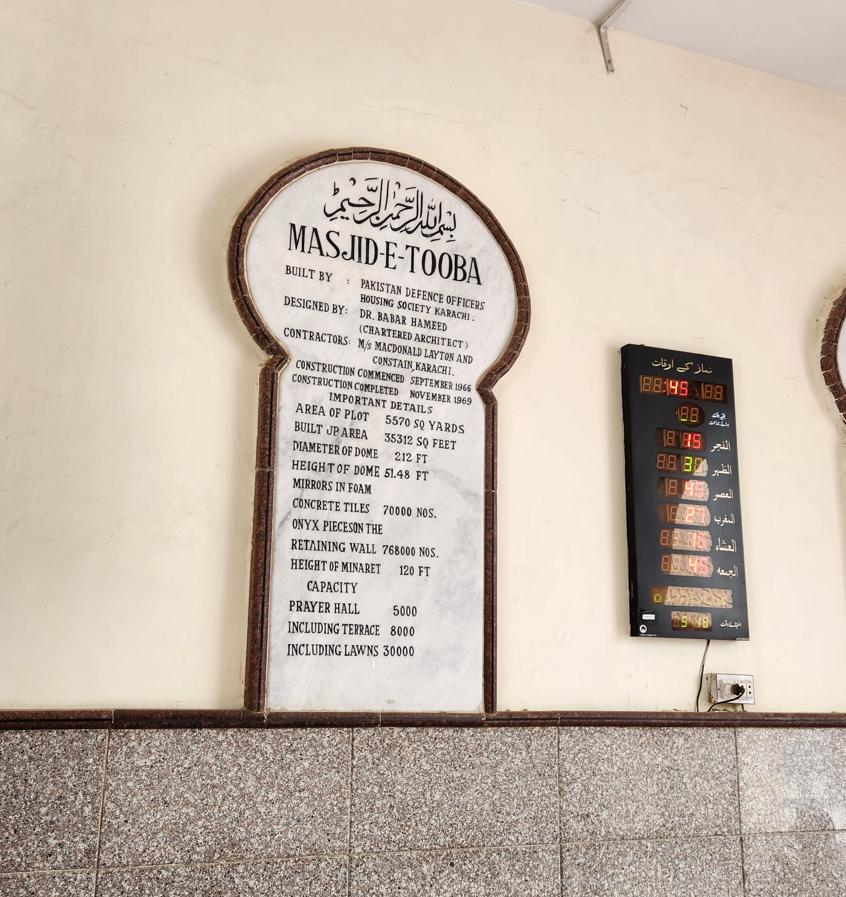
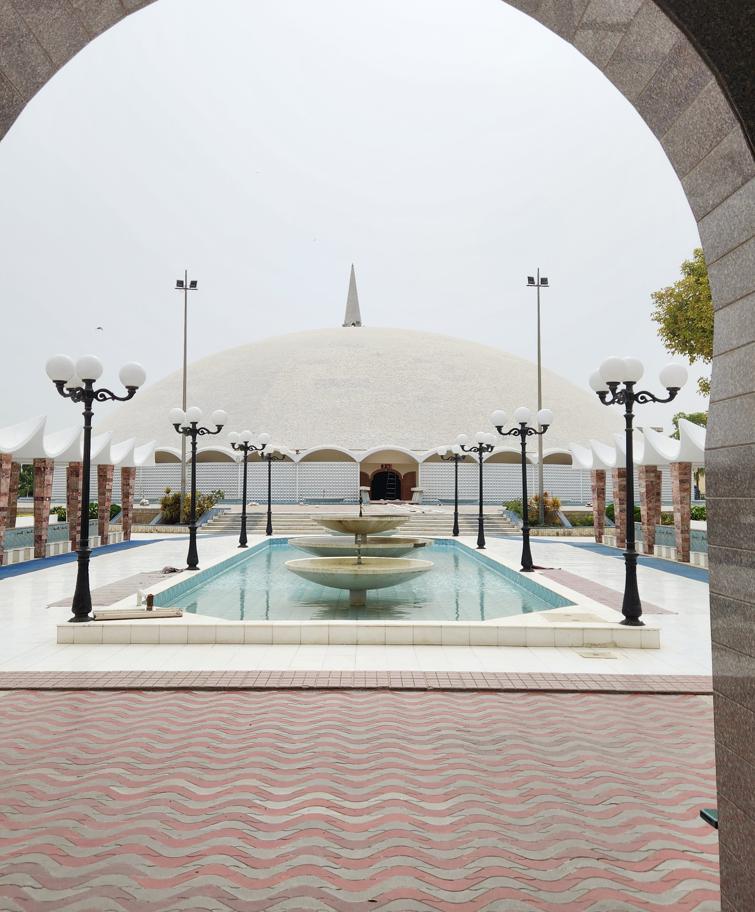
The city that resulted is, architecturally and socially, a palimpsest of impossible complexity. Victorian municipal buildings stand behind glass-fronted mobile phone shops. A modernist mosque designed in the 1960s — Masjid-e-Tooba, its single dome of 67 metres the largest unsupported dome in Asia — rises from a Defence Housing Authority suburb like a spacecraft that has chosen not to leave. The Karachi of the 1960s was, astonishingly, held up as an economic model for Seoul, South Korea; Pakistani development planners were invited to advise Korean technocrats on urbanisation. That Karachi is now merely a memory. In its place is the fourteenth-largest city on earth, a democratic chaos of ambition, congestion, and extraordinary human resilience.
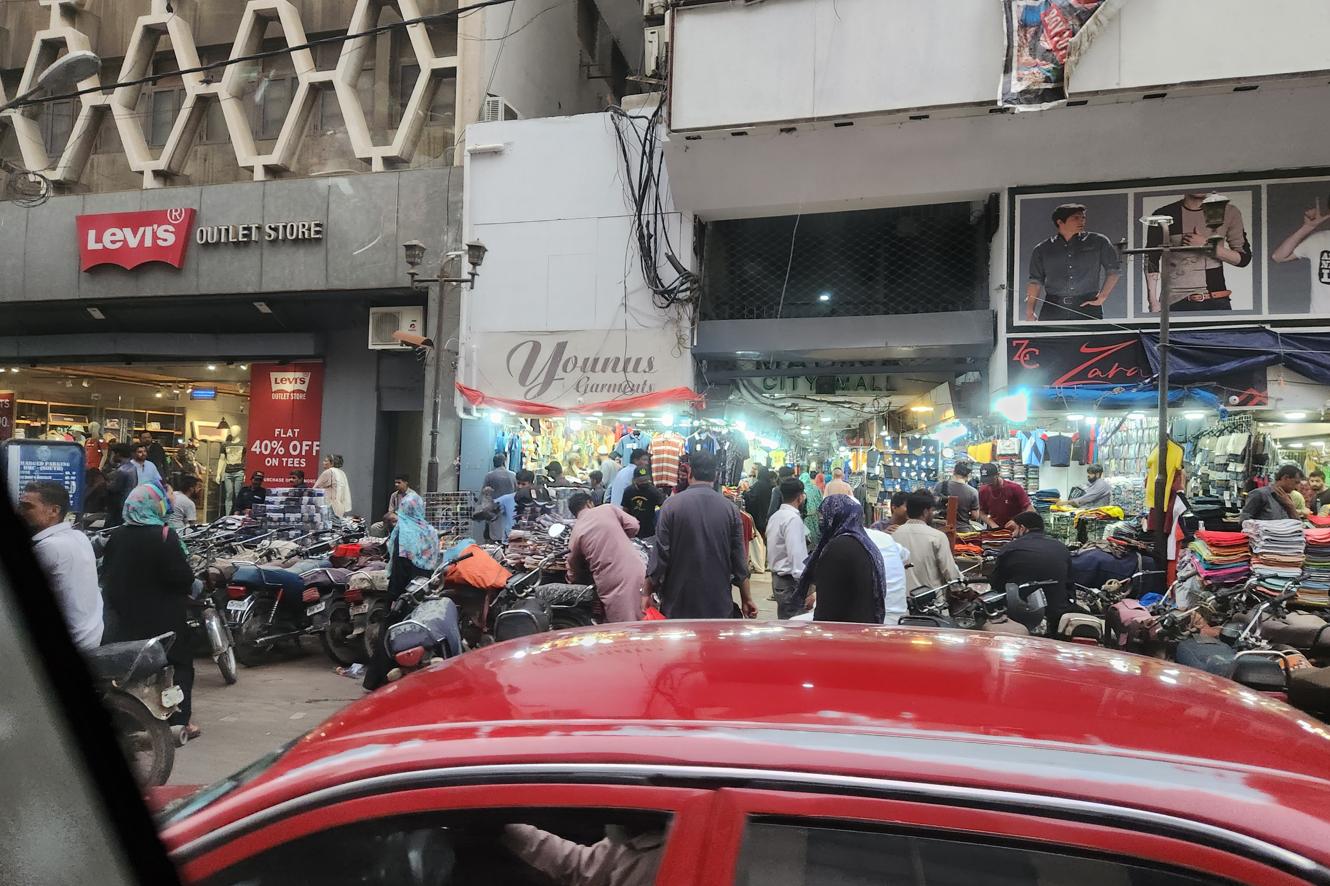
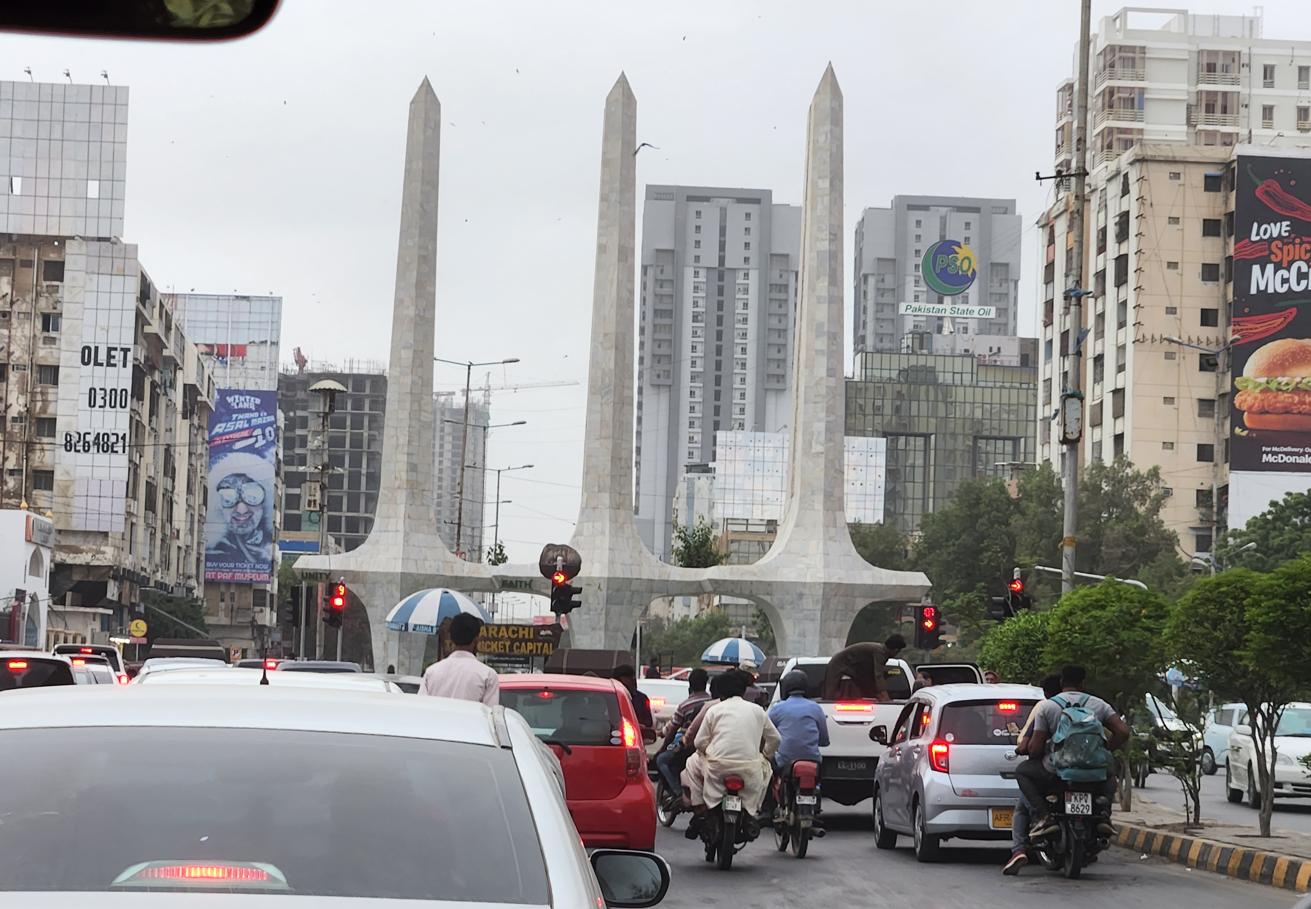
We hired a car and drove. The traffic was orchestral in its complexity — autorickshaws weaving between buses from which passengers hung at forty-five-degree angles; donkey carts with fluorescent LED strips fitted incongruously to their frames; motorcycle families of four, the smallest child perched on the handlebars, all moving through the intersections with a fluency that seemed to defy physics. A policeman on a raised platform directed traffic with his arms in motions that were either semaphore or a particularly expressive form of contemporary dance.
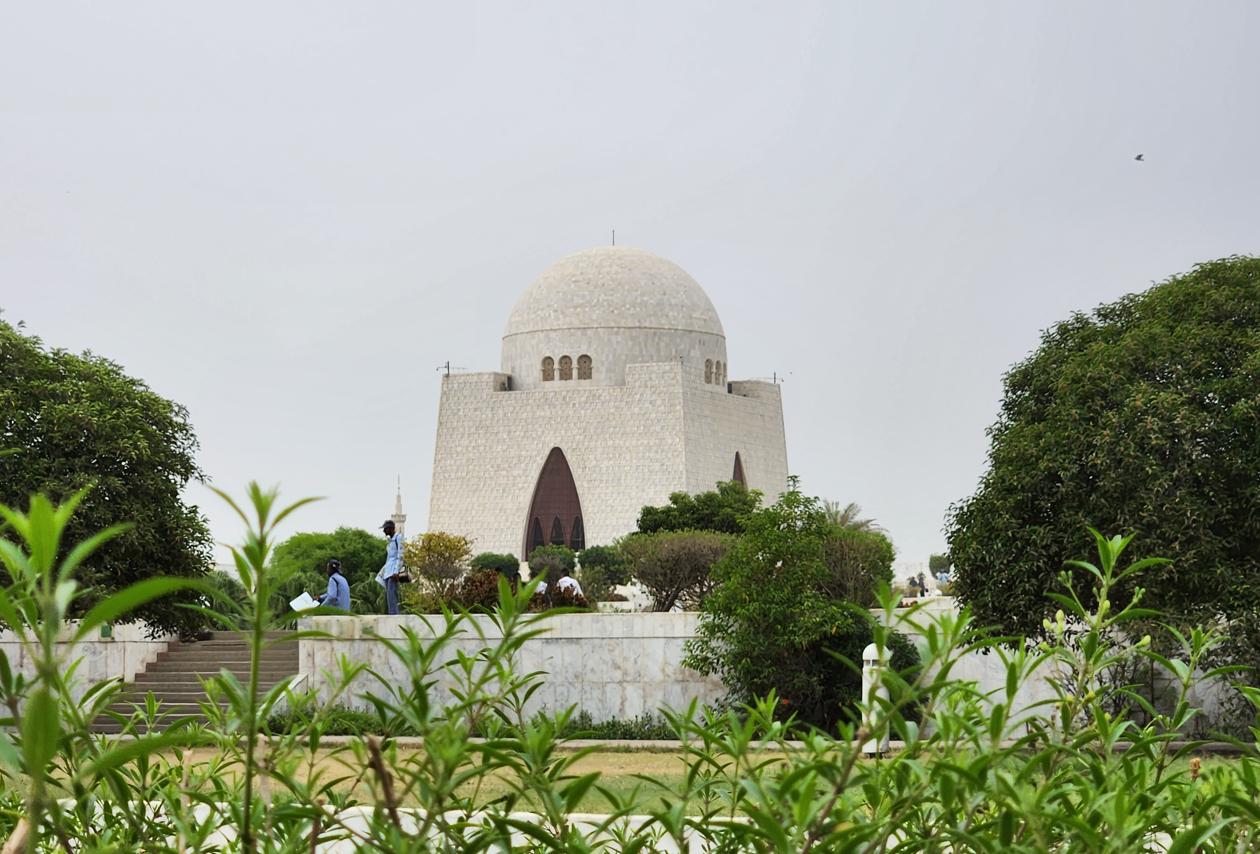
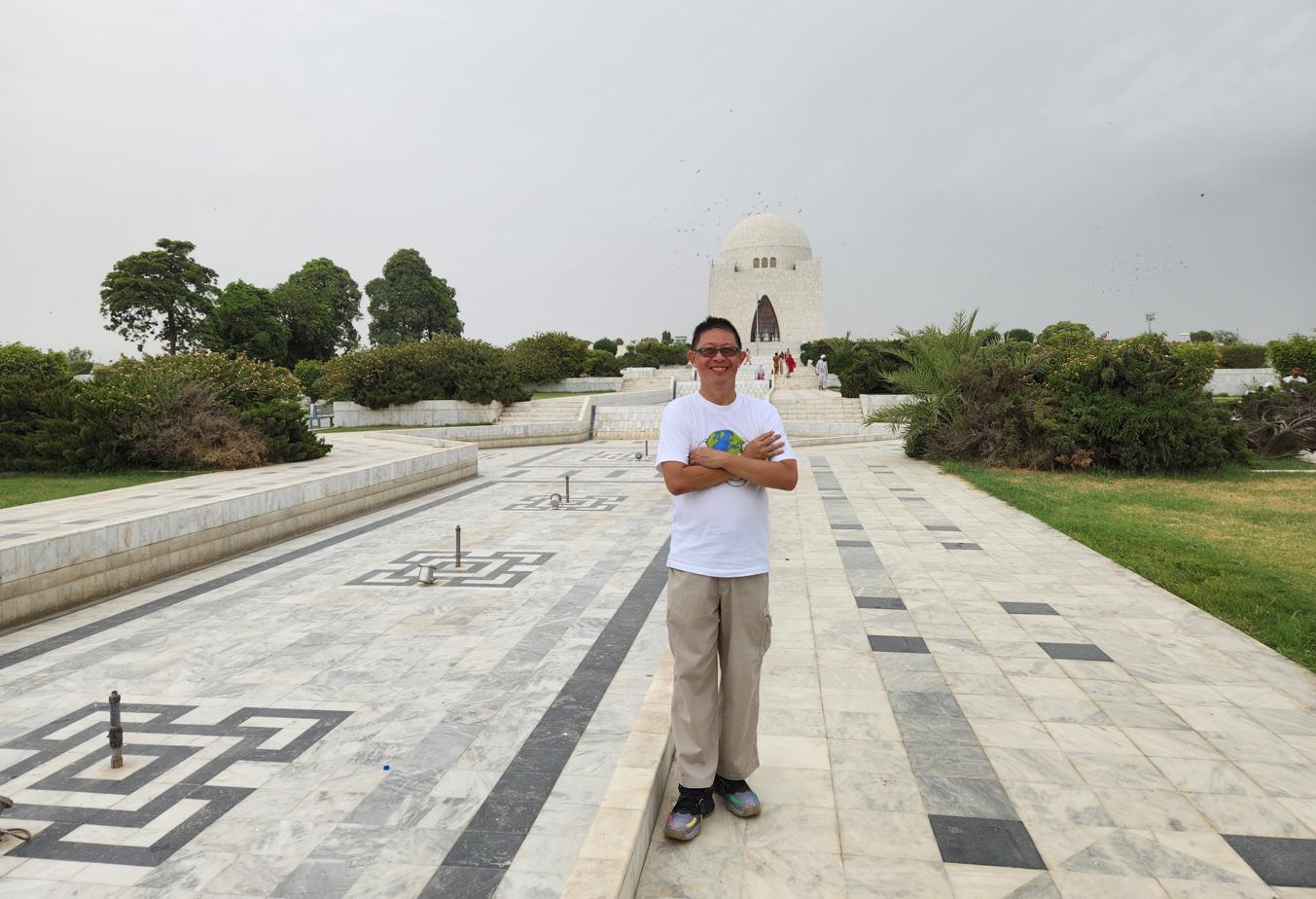
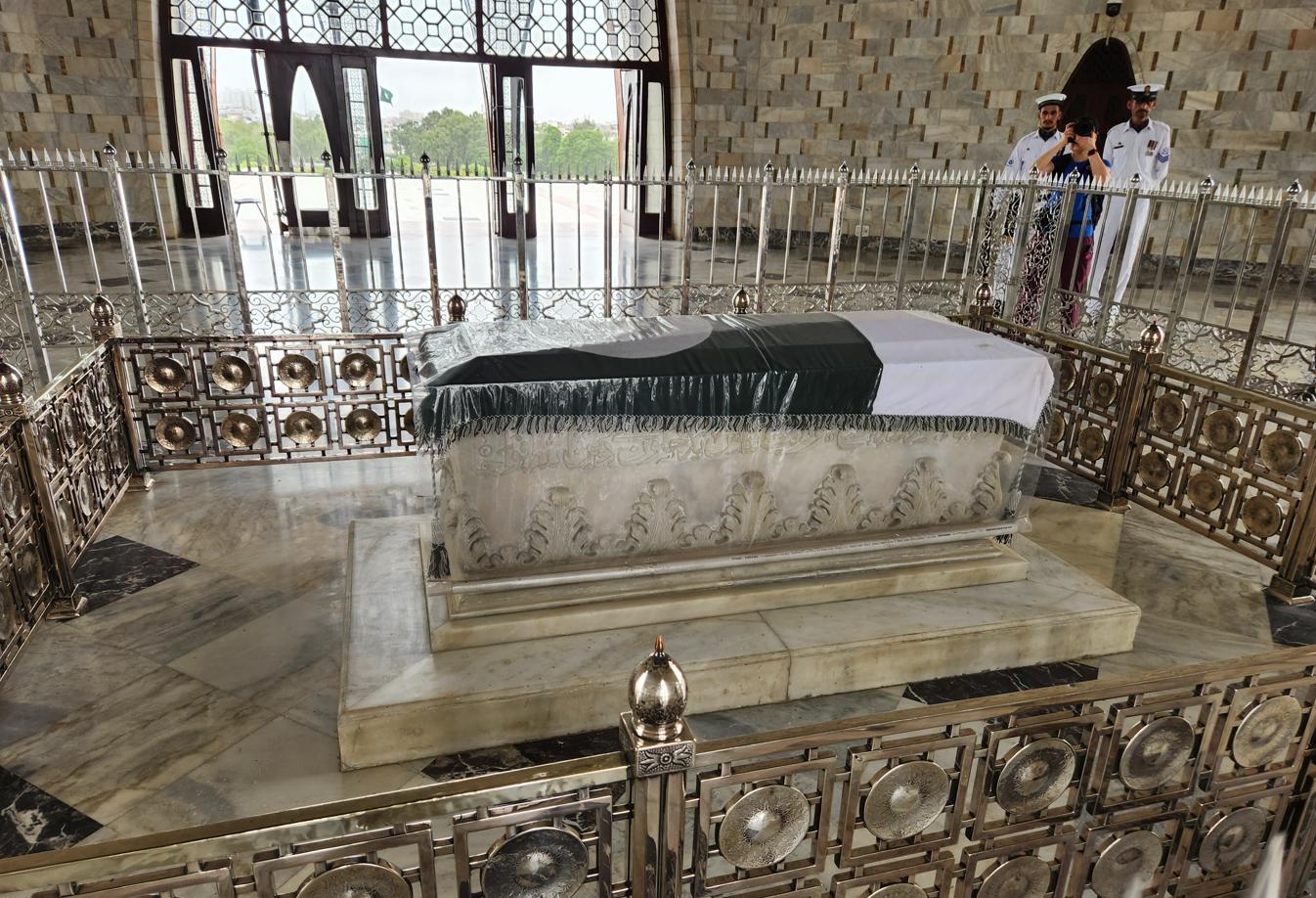
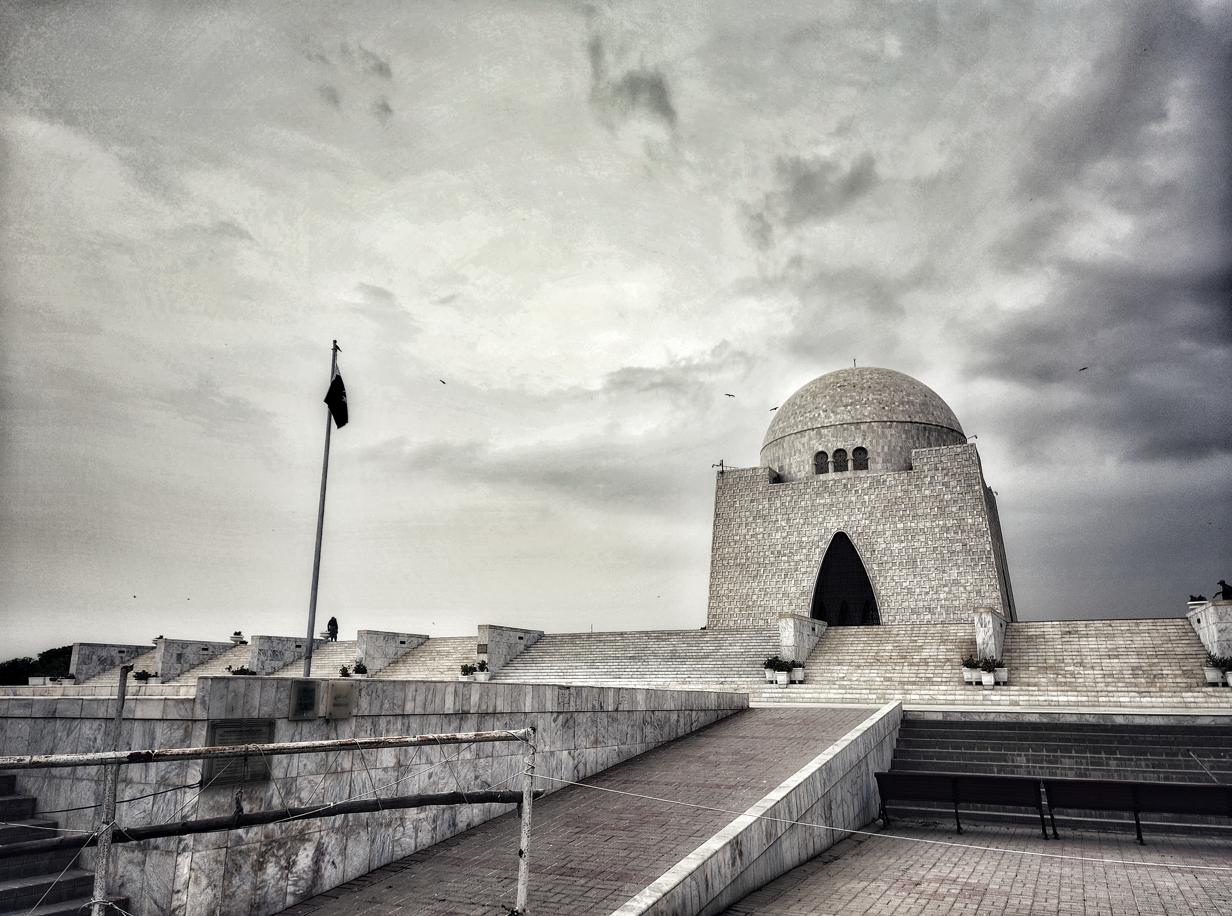
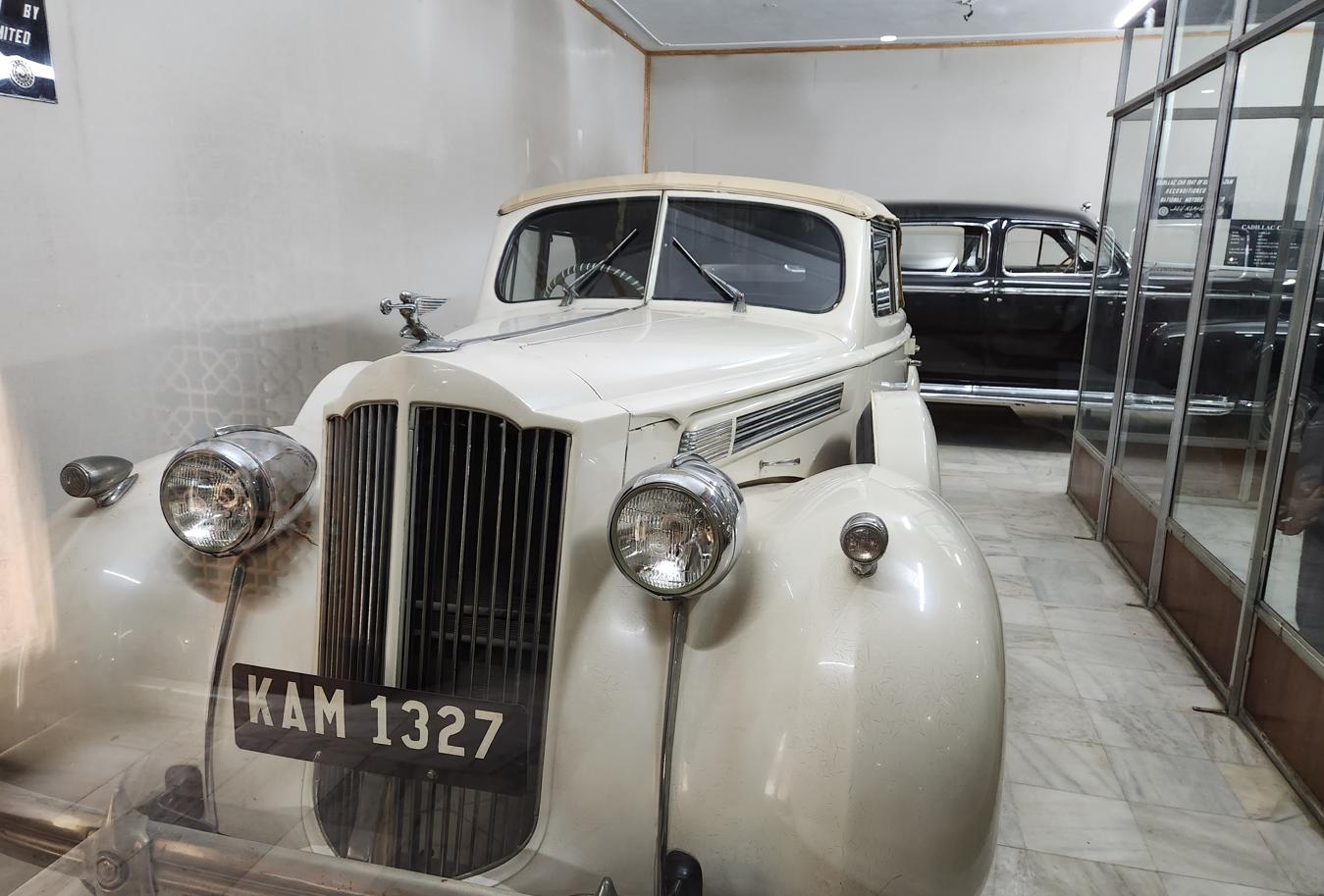
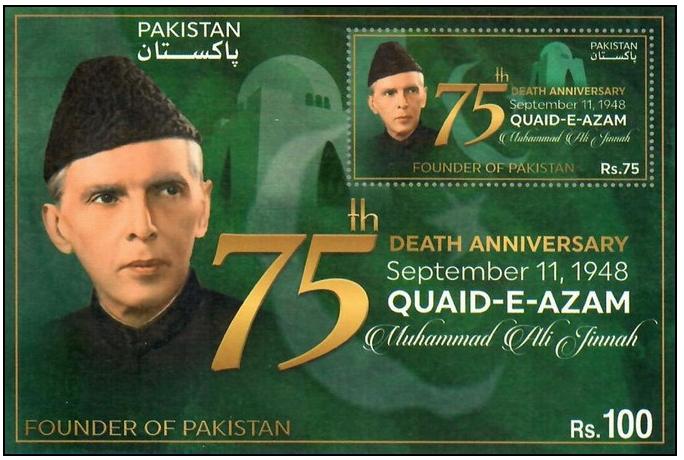
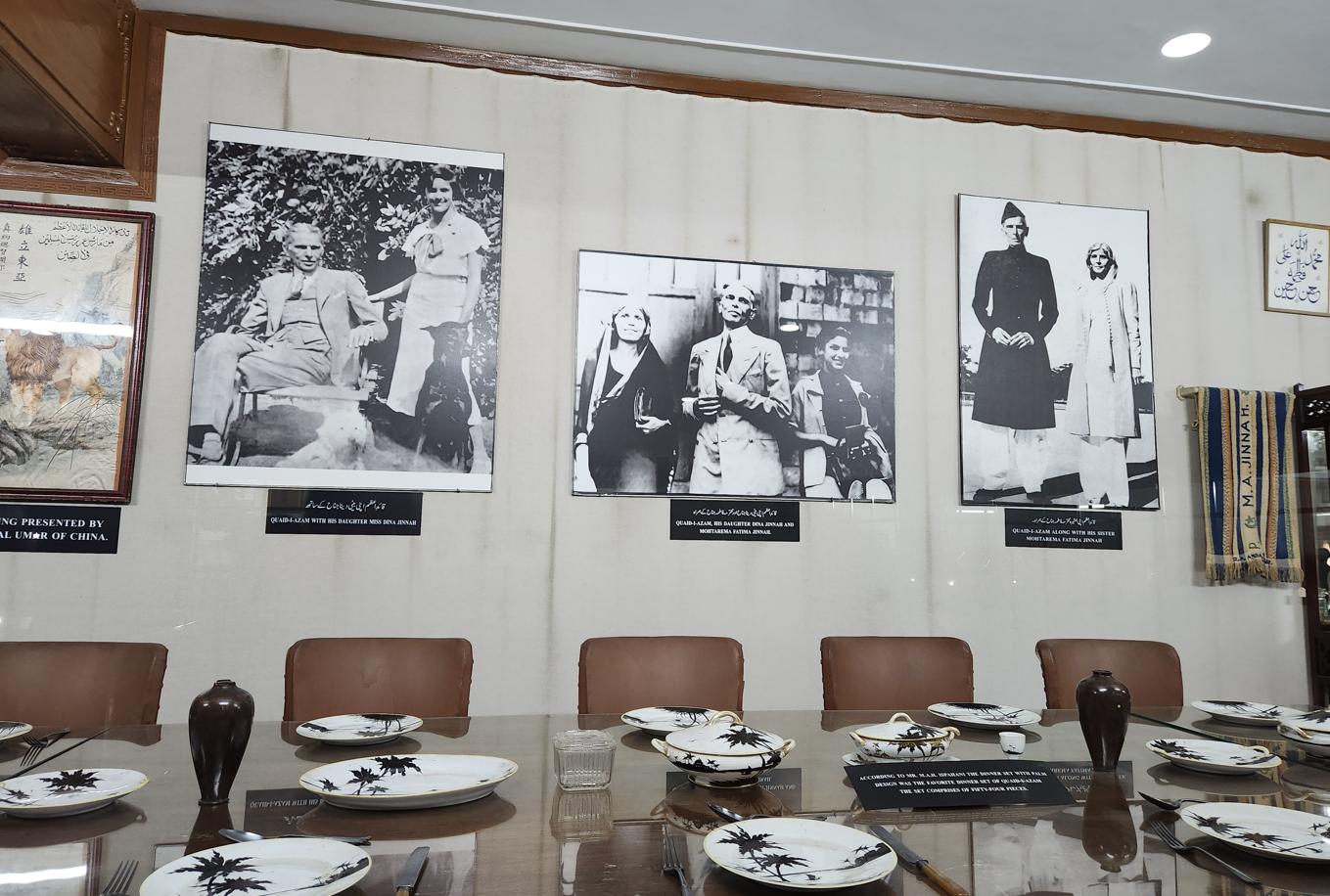
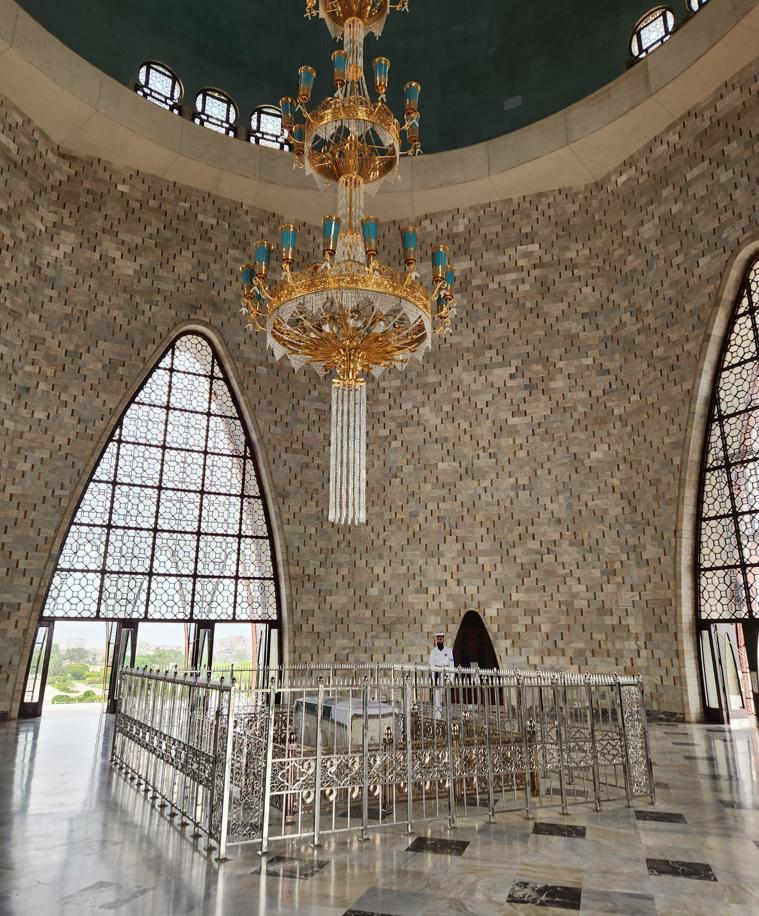
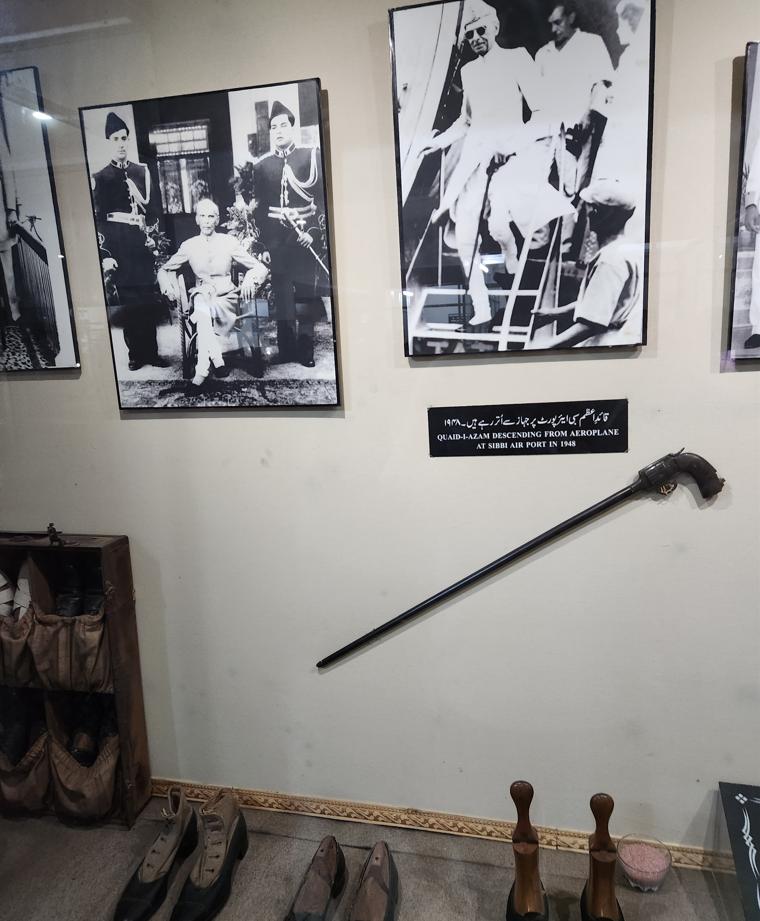
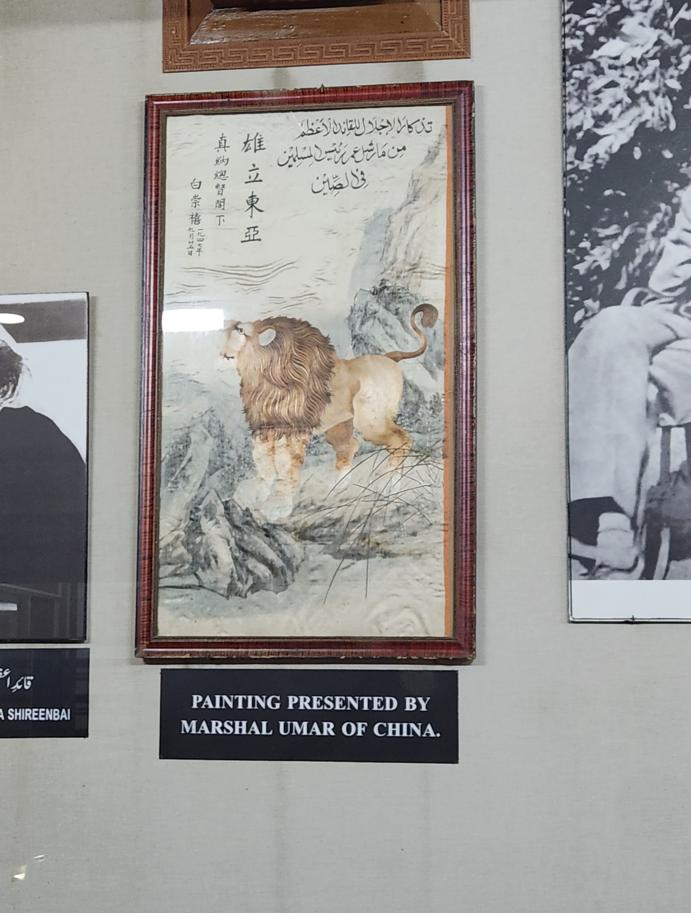
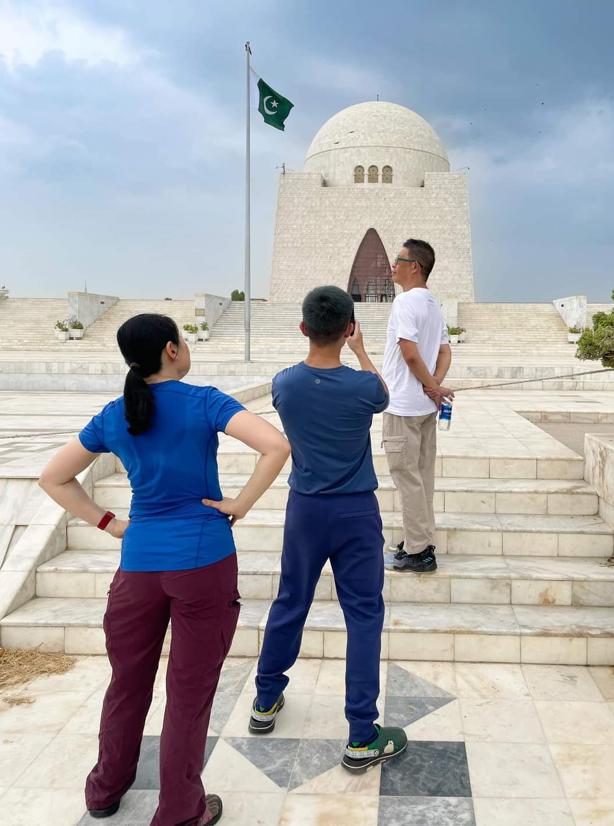
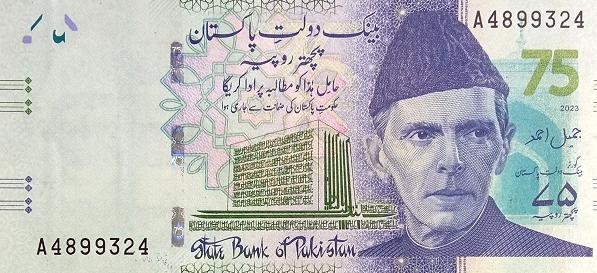
At the Mazar-e-Quaid — the mausoleum of Muhammad Ali Jinnah — we stepped into a space of complete composure. The marble is white, the dome austere, the surrounding garden laid out in the neo-Mughal style. Jinnah lies here, the man of whom the historian Stanley Wolpert wrote:
"Few individuals significantly alter the course of history. Fewer still modify the map of the world. Hardly anyone can be credited with creating a nation-state. Mohammad Ali Jinnah did all three." — Stanley Wolpert, Jinnah of Pakistan (1984)
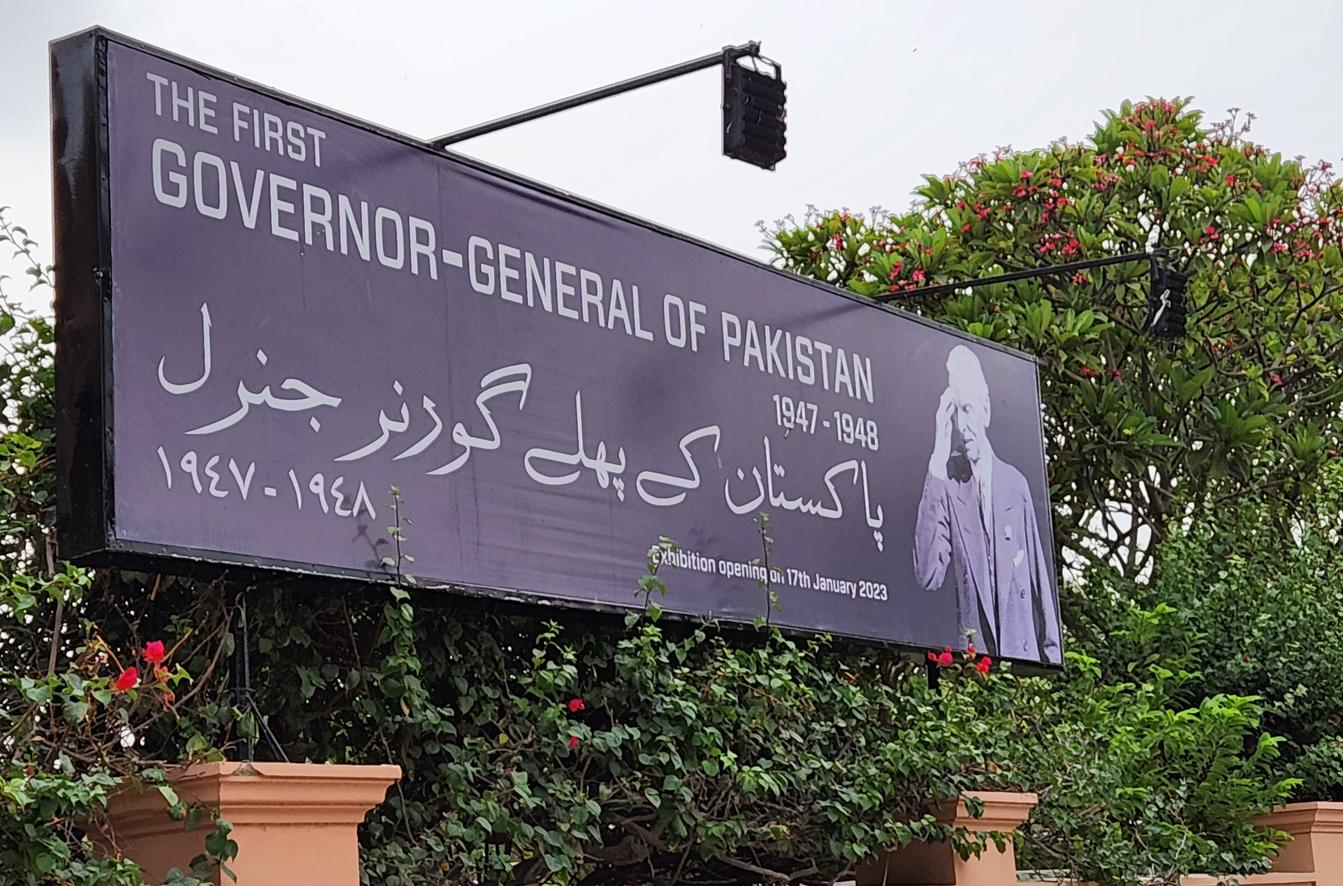
He was born in Karachi but trained and practised as a lawyer in Bombay, becoming the unlikeliest of revolutionaries: thin as a whip, cold in manner, speaking Urdu with an accent acquired rather than inherited. He dreamed of a liberal, secular Muslim state. He did not live to see it take the shape he imagined — he died fourteen months after independence, in September 1948 — and the distance between his founding vision and the Pakistan of today is a subject that occupies scholars, politicians, and taxi drivers in roughly equal measure.
In the Jinnah compound, a guard in starched white uniform stood at rigid attention. Jamal pointed out the tomb of Fatima Jinnah, the founder's sister, alongside those of Liaquat Ali Khan, the first Prime Minister, shot at a public meeting in Rawalpindi in 1951. Pakistan has had few politicians die of old age.
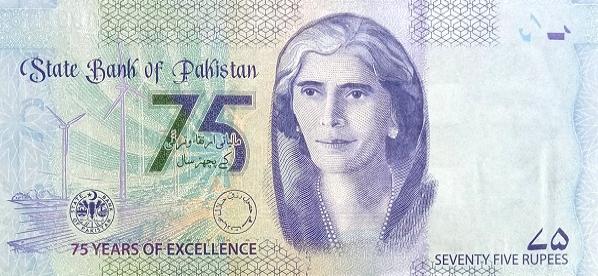
The General Post Office
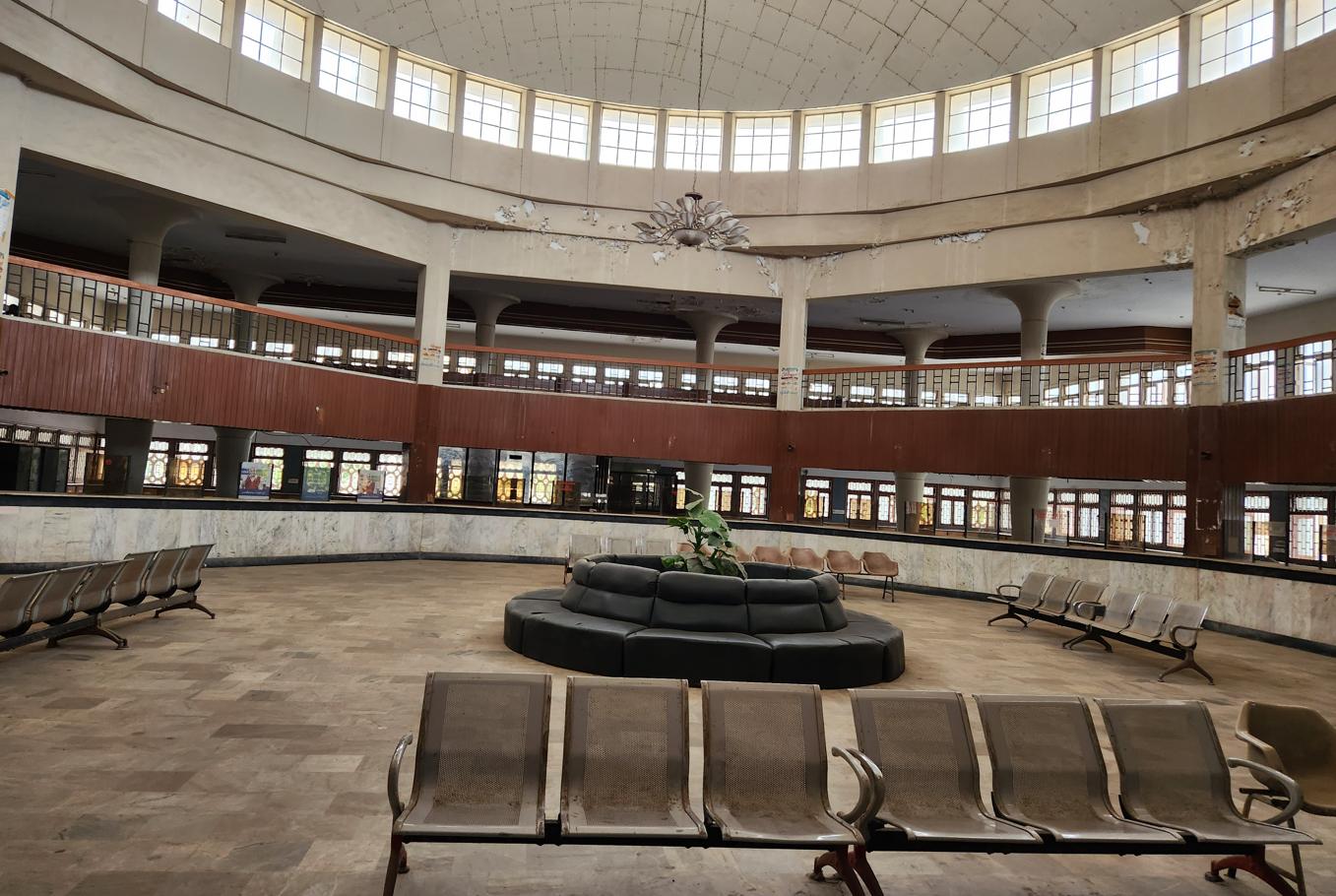
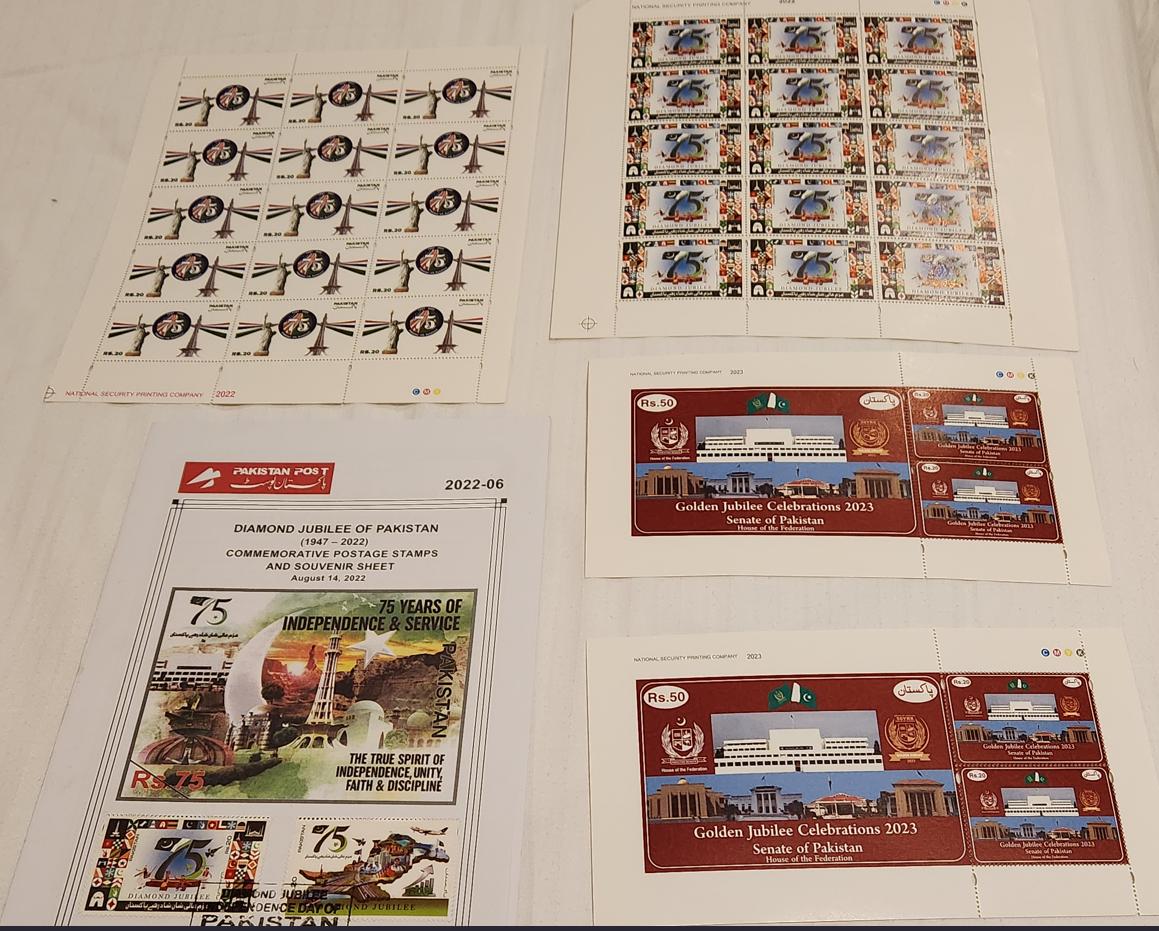
We drove to the General Post Office, a grand colonial pile of Corinthian columns and sculpted pediments — the kind of showcase building that, in the era before telephones and long before email, was the single most important structure in every Pakistani city, the place where news of births, deaths, exam results, and marriage proposals all arrived by the same uniformed hand. It is almost entirely empty now. The counters stand unused, the halls echo, and the civic ambition written into the architecture has nowhere left to go. Tucked away on the second floor, behind an unmarked door, the philatelic office still exists — dusty, the furniture broken, a few drawers of stamps still being sold to the handful of people who remember that stamps are a thing one might collect. Two German tourists were inside when we arrived, flicking patiently through stock books, the only customers the room was likely to see that day.
Mohatta Palace
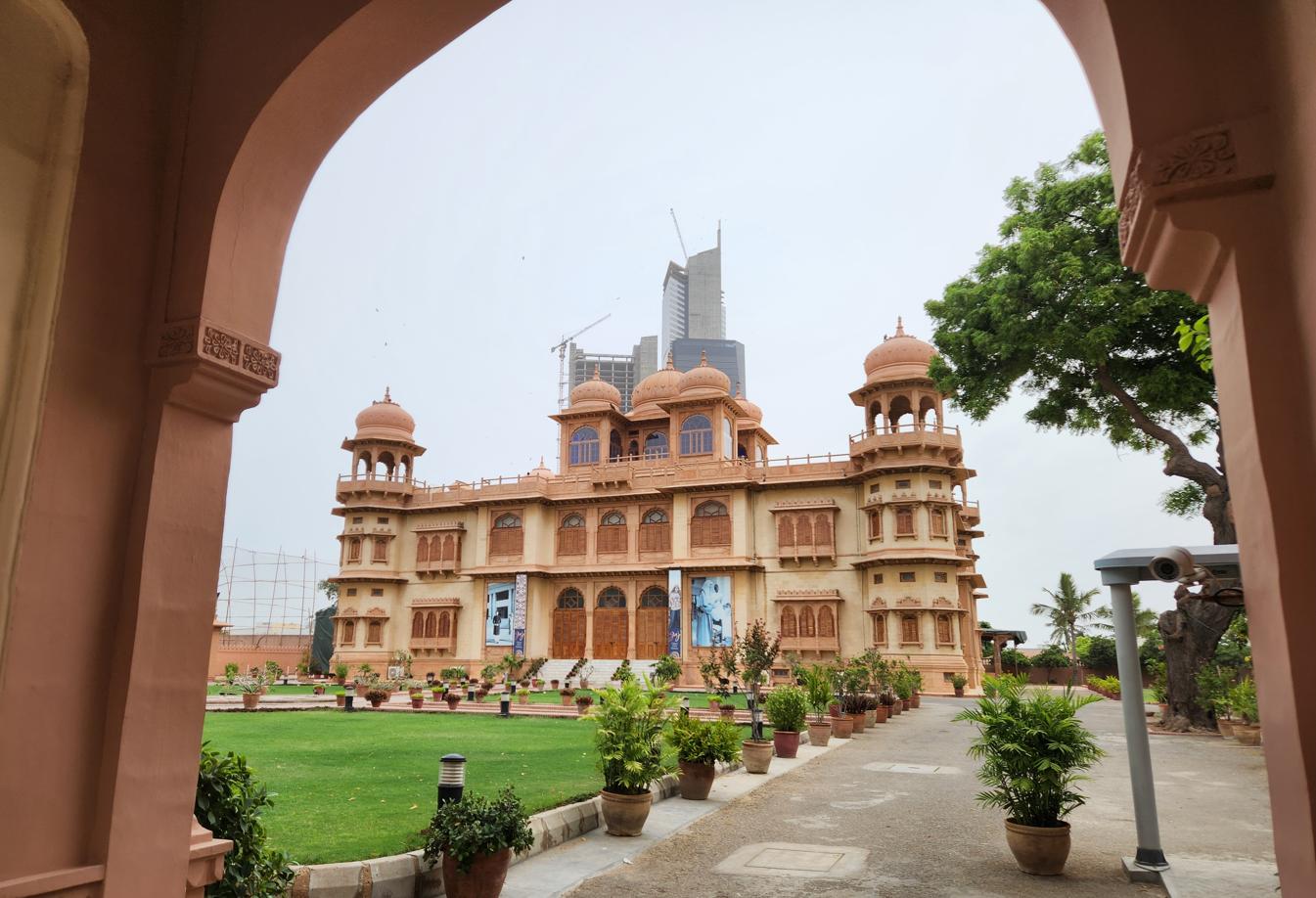
Mohatta Palace — a confection of pink Jodhpur stone and Mughal-Rajput flourishes, built in the 1920s as a seaside residence for a Hindu merchant who fled at Partition and never returned — was closed on the day we visited, no explanation offered, the great carved doors simply shut. From the outside it remains magnificent: domes, jharokha balconies, jali screens, a building that looks designed to be photographed rather than lived in, which in a sense is exactly what has happened to it since 1947, passing eventually into the care of the Sindh government and becoming a museum. Locals told us, with the straight-faced relish that this kind of story always receives, that it is haunted — by the merchant who built it and never came home, by the decades it stood empty after independence, by the general accumulated weight of a house built for one world and inherited by another.
Masjid-e-Tooba: The Round Mosque
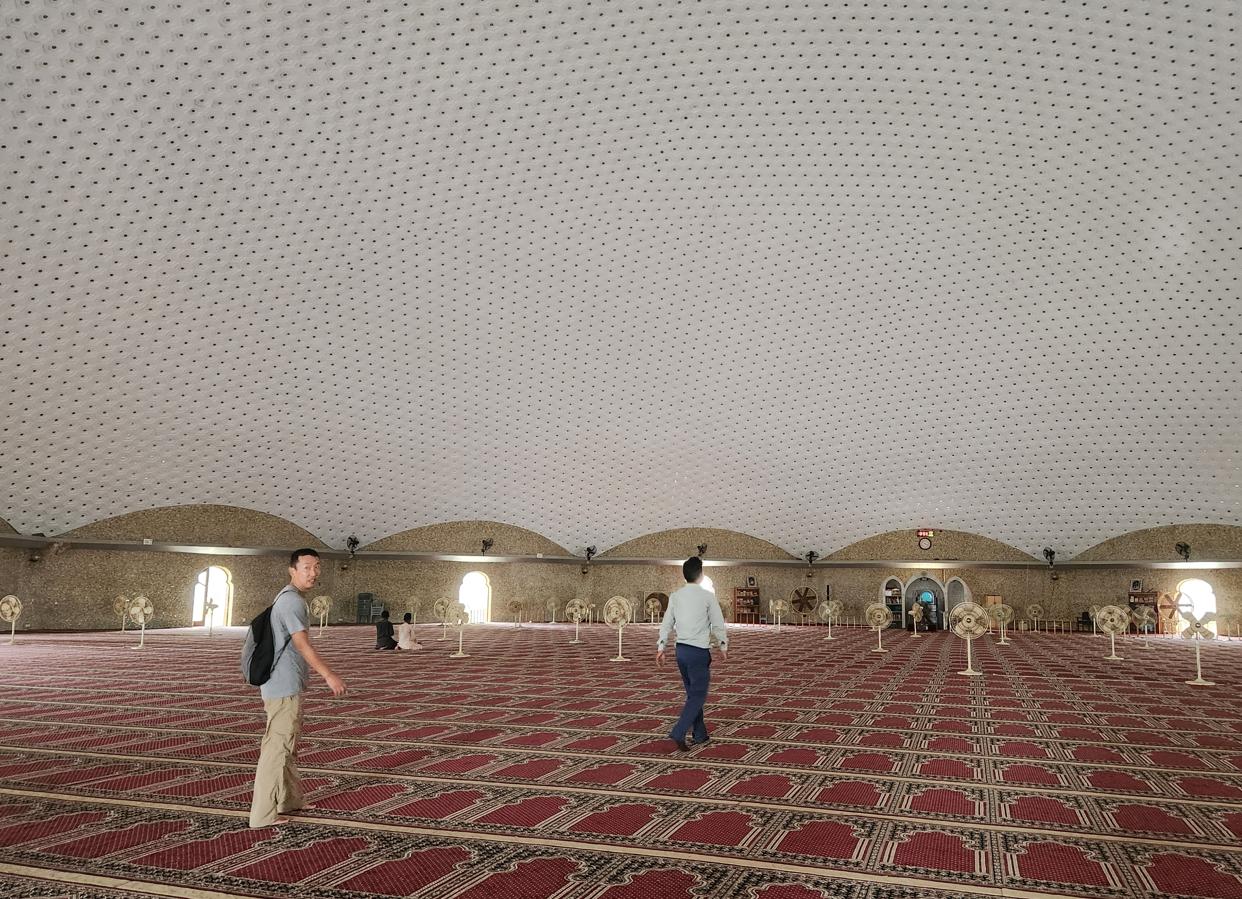
They call it Gol Masjid — the Round Mosque — though its official name, Masjid-e-Tooba, honours the tree of paradise described in the Quran, whose branches shelter the faithful. It rises in Phase II of Karachi's Defence Housing Authority, a district of walled villas and generals' bungalows, as incongruous there as a spaceship parked among suburban hedges. Construction began in 1966 and finished three years later, the work of the Pakistani architect Babar Hamid Chauhan and his structural engineer, Zaheer Haider Naqvi. Between them they built something almost defiant in its simplicity: a single white marble dome, 65 metres across, resting on nothing but a low encircling wall — no pillars, no columns, no interruption to the eye. Five thousand worshippers can kneel beneath it at once, and by 2018 it was reckoned the eighth largest mosque on earth, though locals will tell you, with the quiet certainty of people repeating a favourite fact, that it is the largest pillarless single-dome mosque in the world.
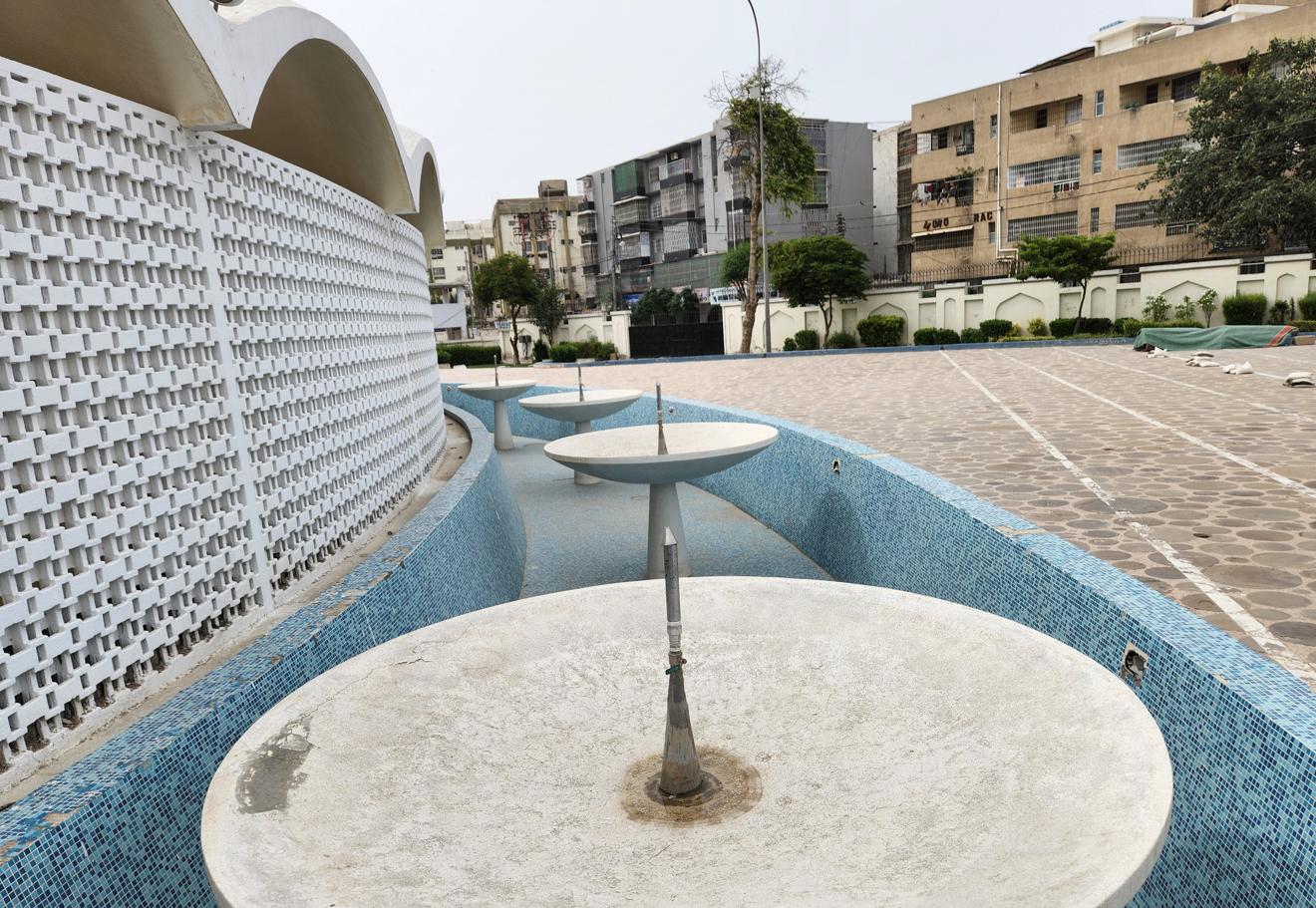
I sat on the marble floor and listened to the Asr prayer drift up into that vast curved ceiling, the acoustics folding the sound back on itself until it seemed to come from everywhere and nowhere. It was hypnotic in the way certain sounds are — the mind loosens, drifts. I found myself imagining a flight on some threadbare carpet, over the minarets of Baghdad, then Istanbul, cities the shape of this one's ambitions if not its history. Outside, in the mosque's forecourt, a row of 1960s fountains sat dry and strange, their concrete lines somewhere between Brutalism and Islamic geometry — a fitting coda to a building that never quite decided whether it belonged to the ancient world or the modern one, and perhaps never needed to.

Continue the Journey
Chapter One (Part II): Beach & BuddhasA Note on Process
The travelogue on this site are based on my own journeys, photographs, Facebook posts, and field notes. I work with Claude (Anthropic's AI assistant) as a drafting and editorial partner — giving it my raw material and working iteratively to shape it into finished prose. The AI helps me draft quickly, maintain a consistent voice across long narratives, and edit at the document level. The website's HTML and coding are built with the assistance of Gemini (Google). Audio versions of the essays are produced using NotebookLM (Google). Every observation, opinion, and conclusion in the written work is mine. The AI tools are the instruments; I am the author.