Karachi: Arrival in
the City of Lights (Part II)
Beaches & Buddha
Clifton Beach and the Camels of the Arabian Sea
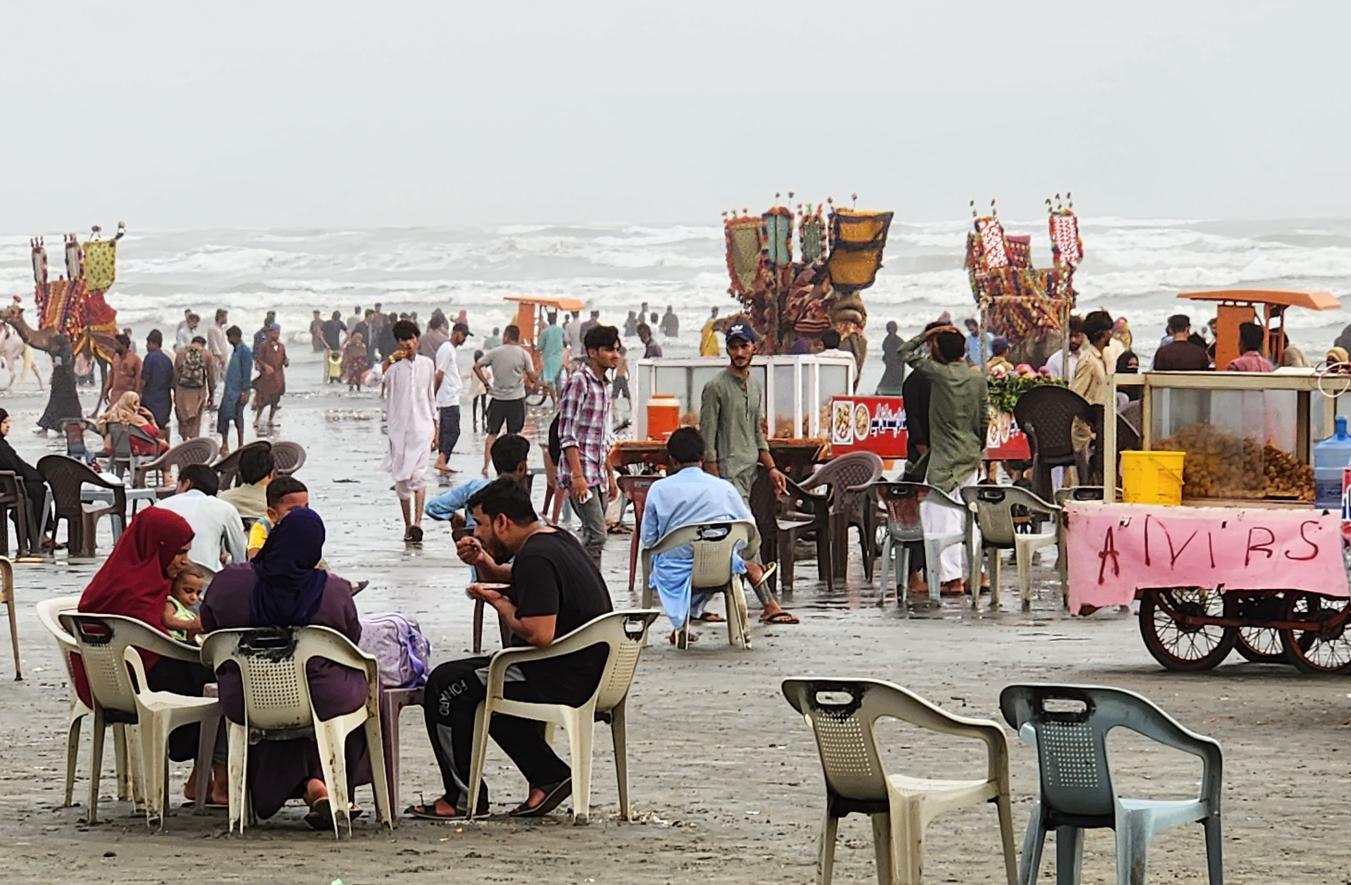
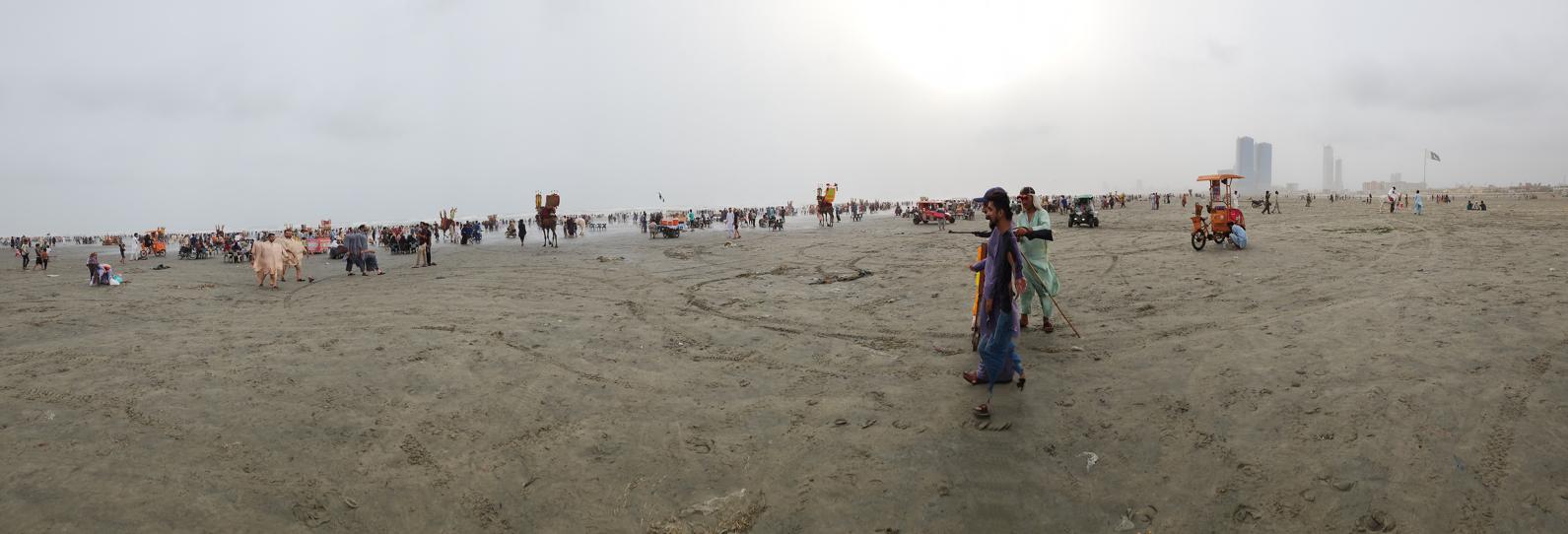
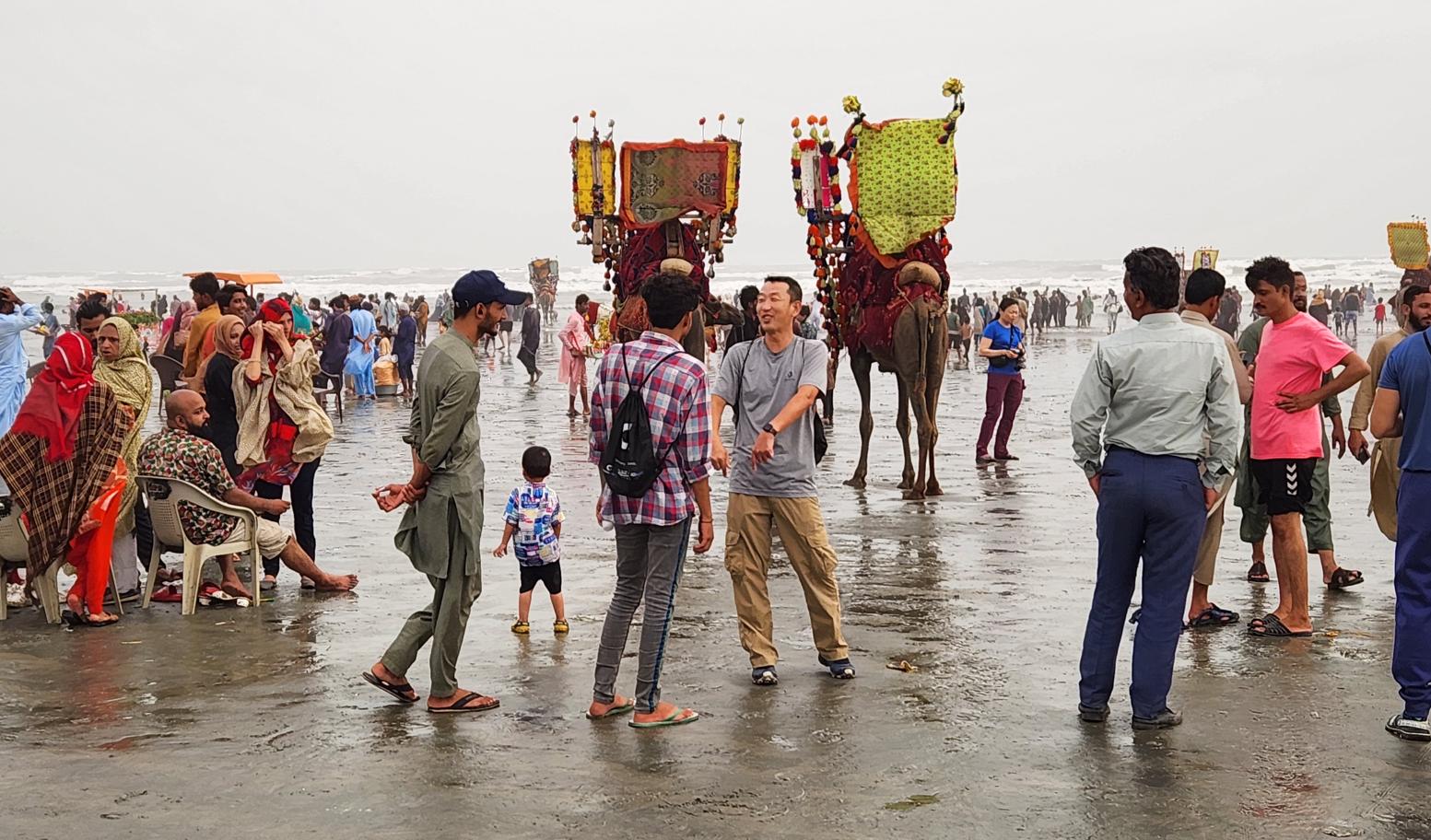
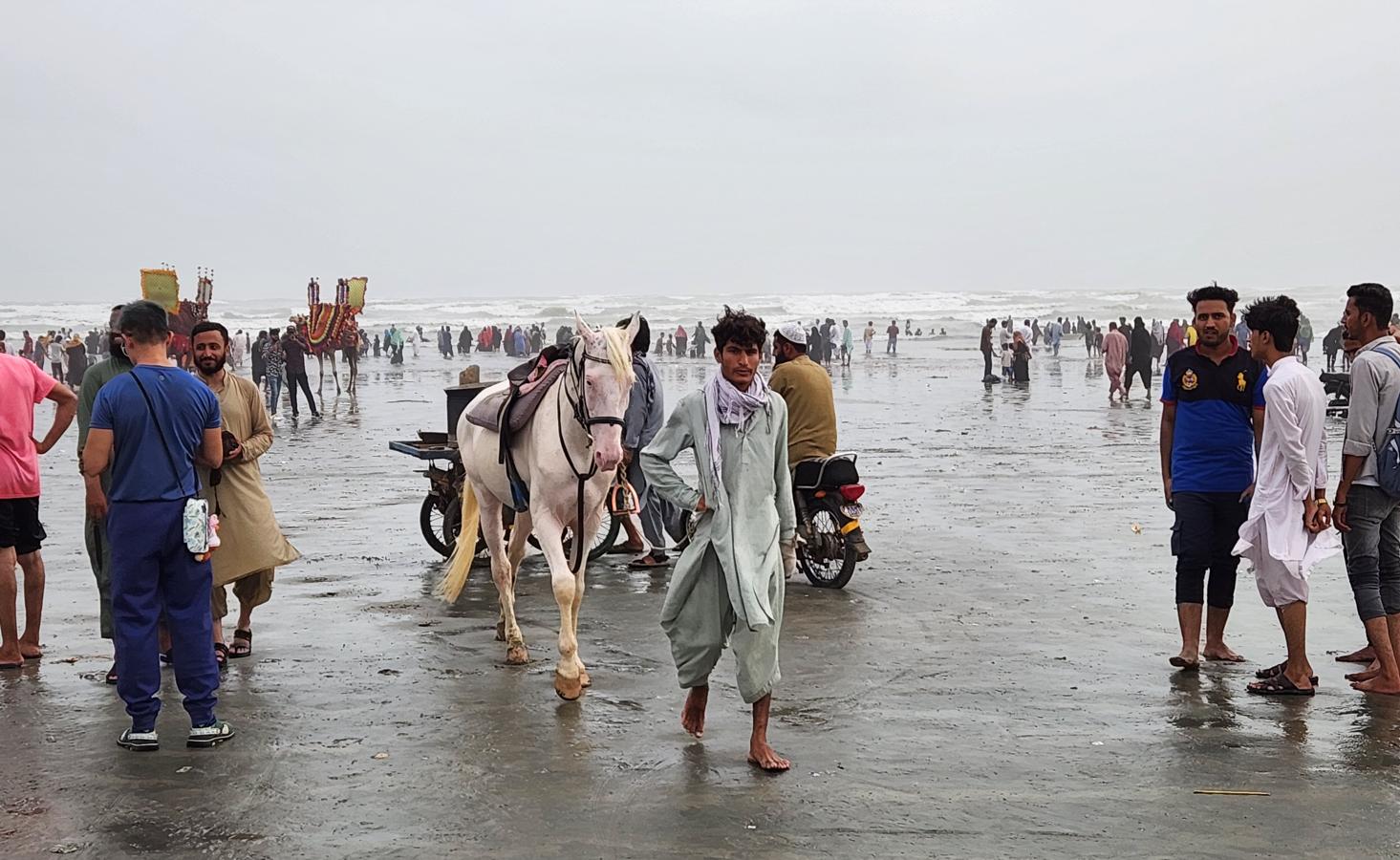
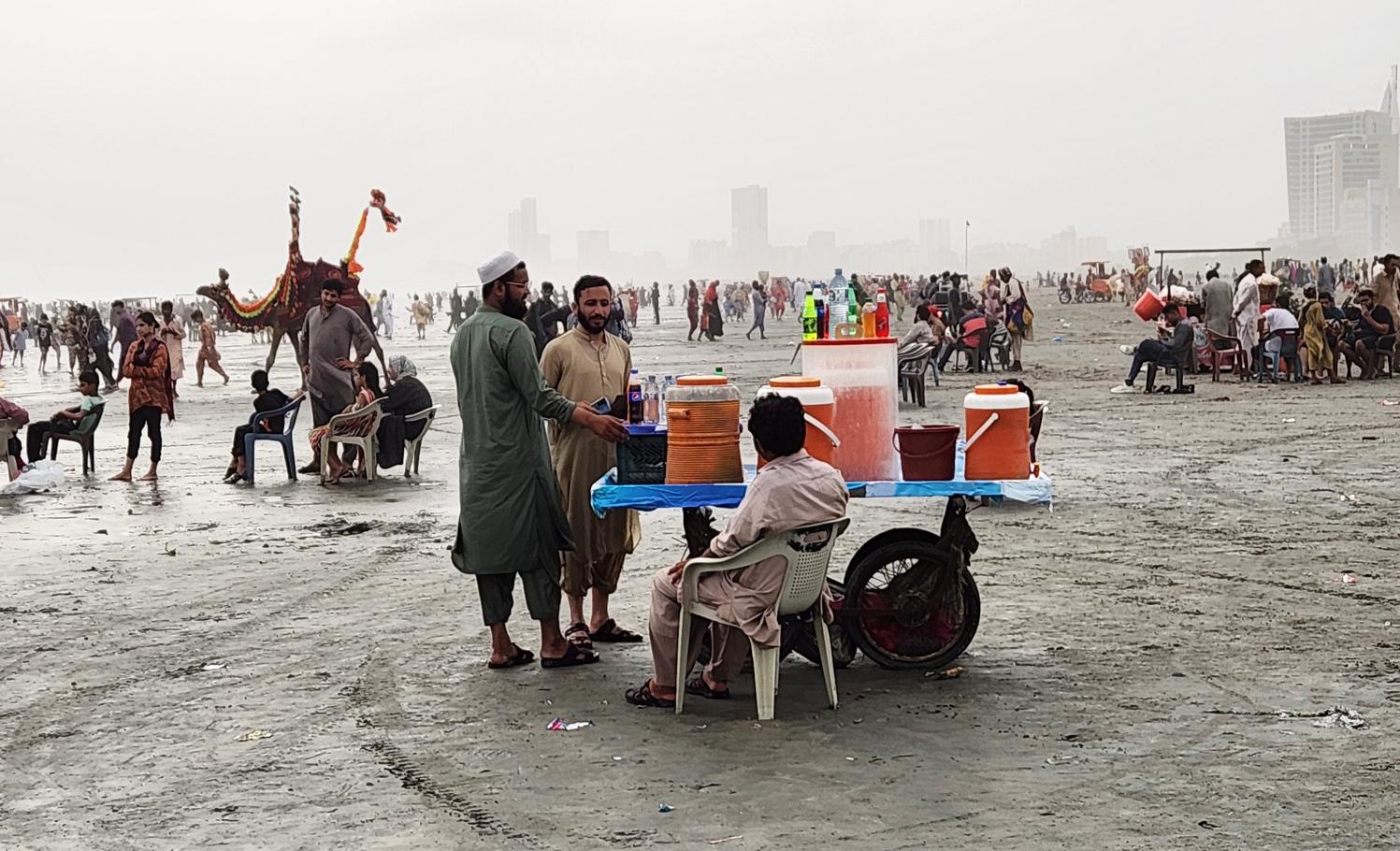
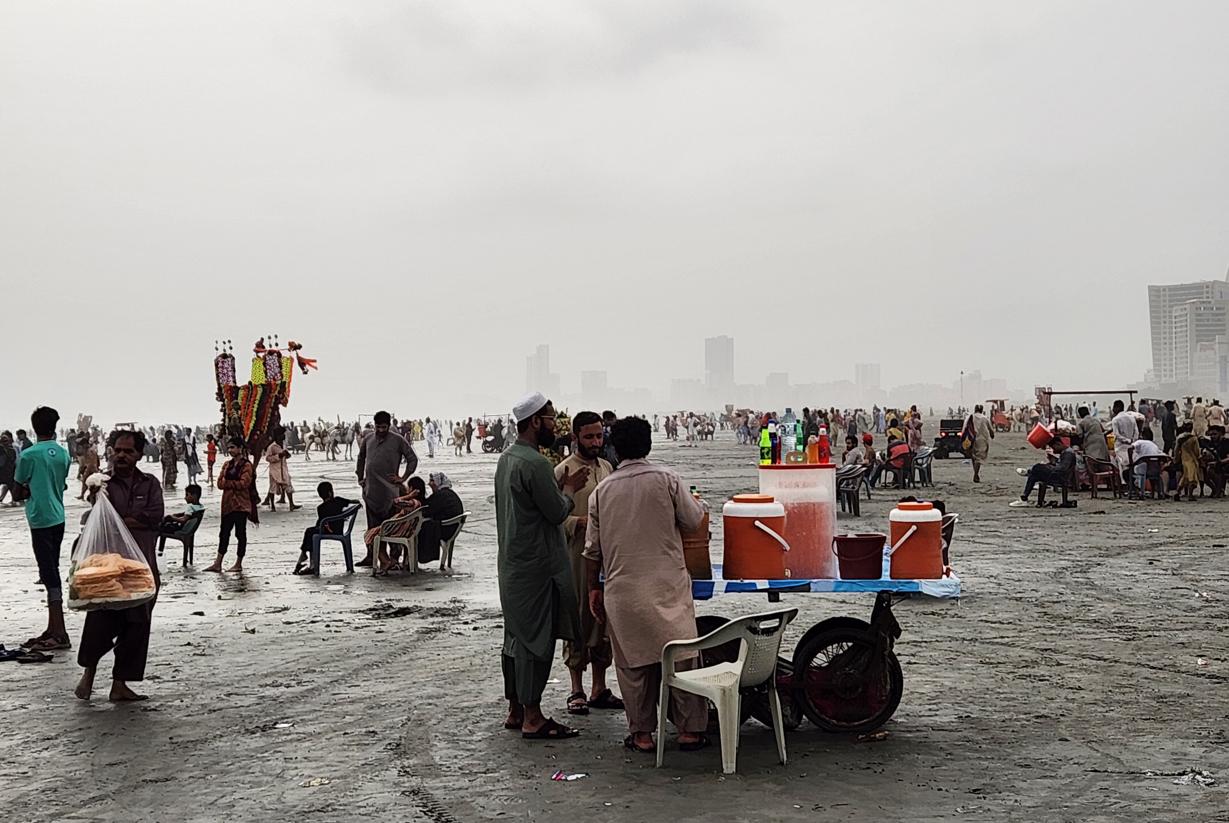
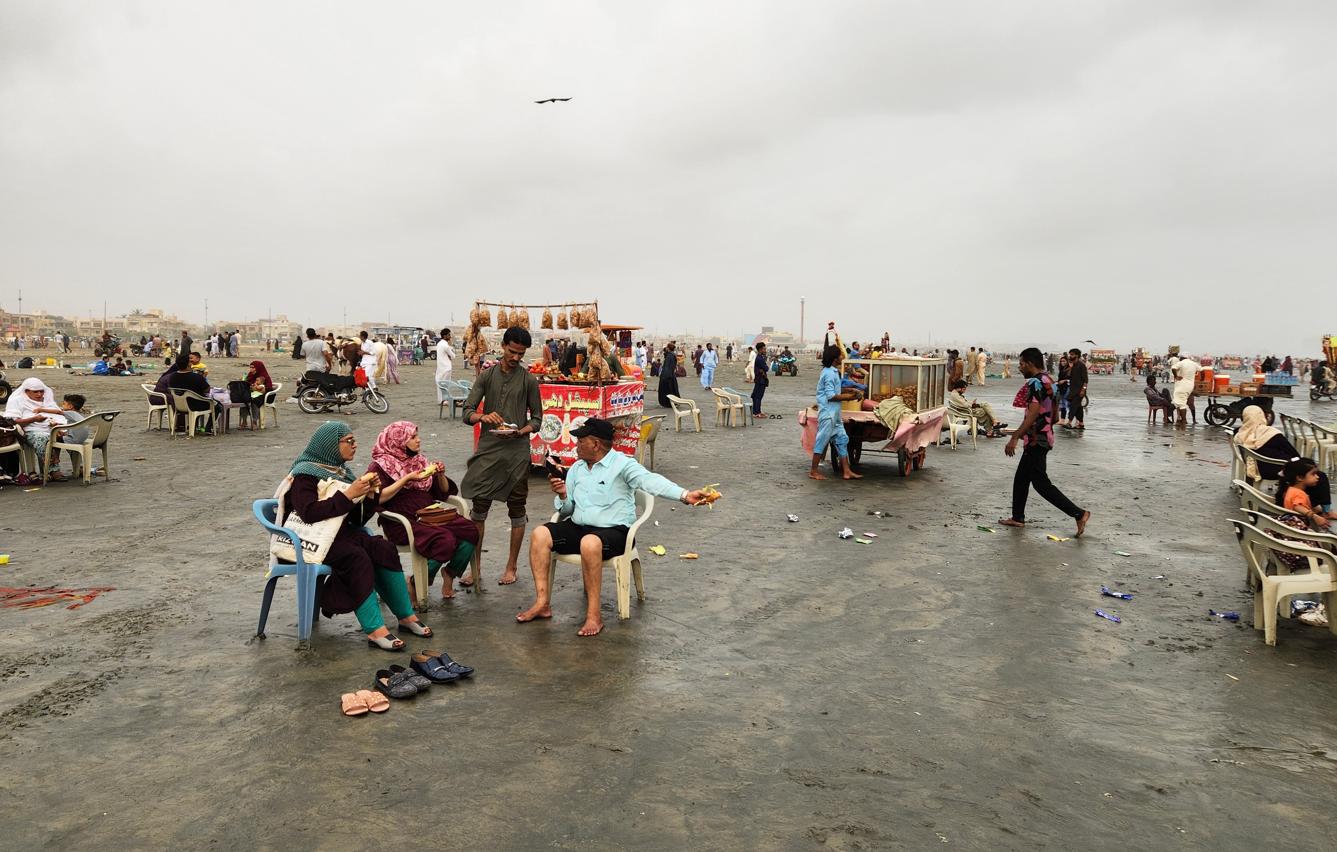
Clifton Beach in July is a festival of the implausible. The Arabian Sea is choppy, the sky a white haze of humidity, the temperature thirty-six degrees by mid-afternoon and feeling like forty-four. Nobody is swimming. Nobody appears to have the slightest intention of swimming. The sea is here not as a body of water for bathing but as a backdrop for carnival.
Camels. That is the first thing. Camels dressed in tassels and mirror-work, their owners offering rides at rates negotiated with operatic intensity. Buggies with horses whose hooves have been painted different colours. A man with a dancing monkey. Three men with a bear on a chain, the bear regarding the general proceedings with the philosophical detachment of the genuinely old. Families encamped on the sand with their entire domestic arrangements — rugs, pots, a gas burner — as though they had arrived for the season.
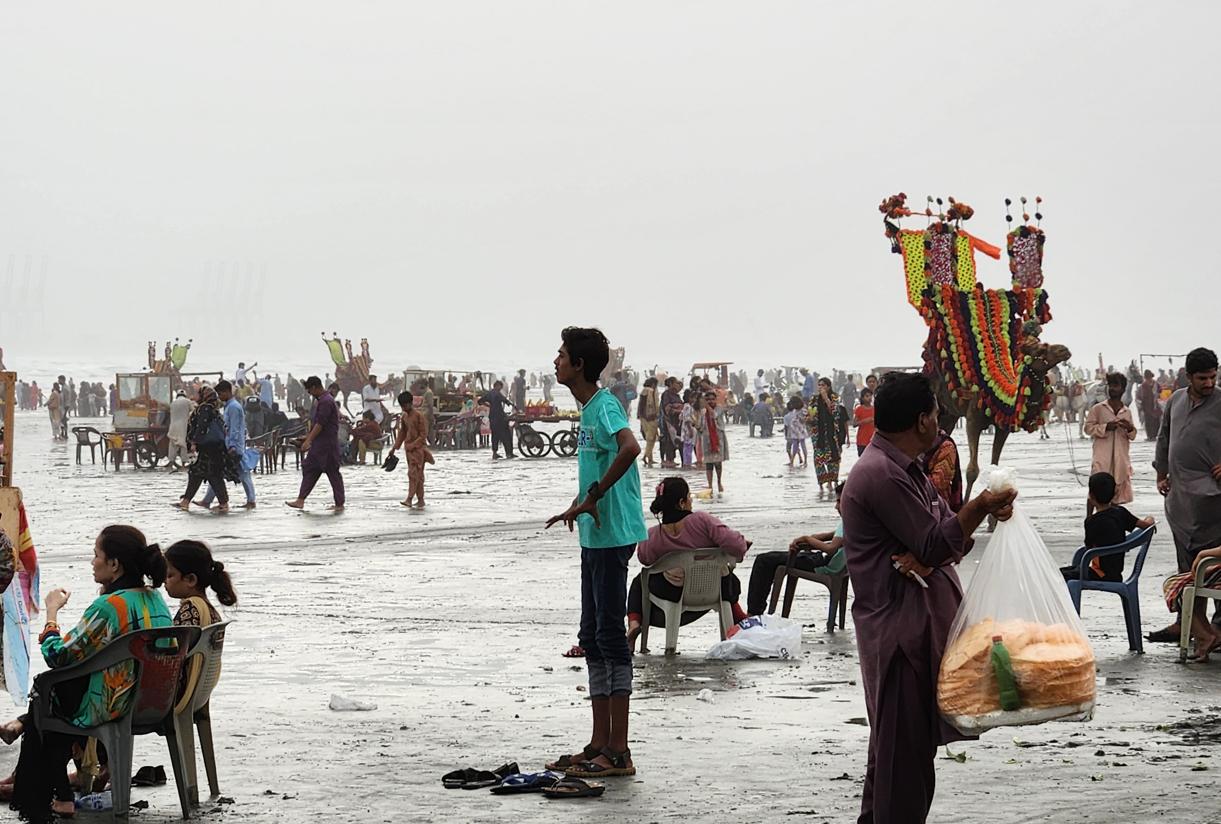
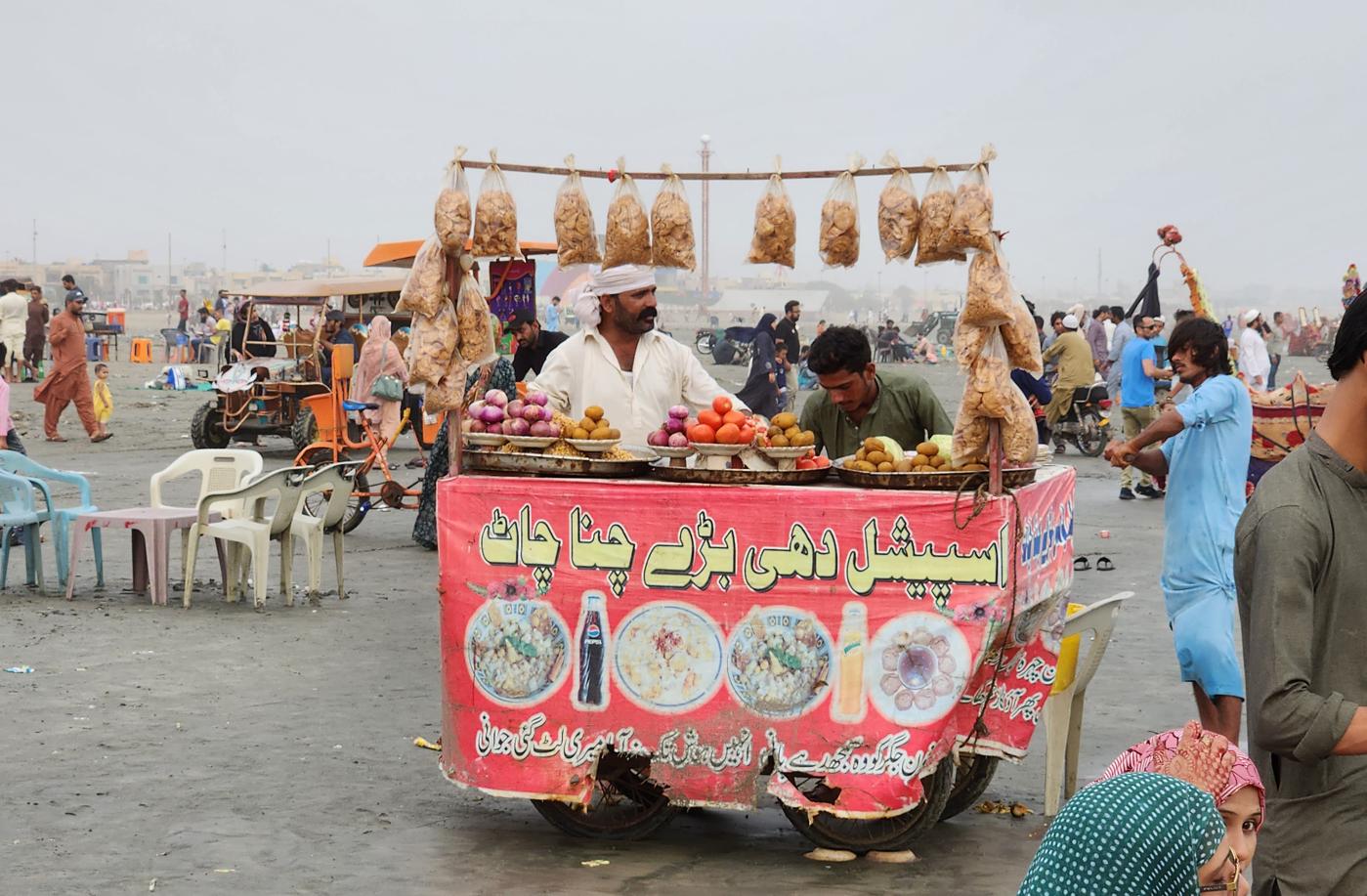
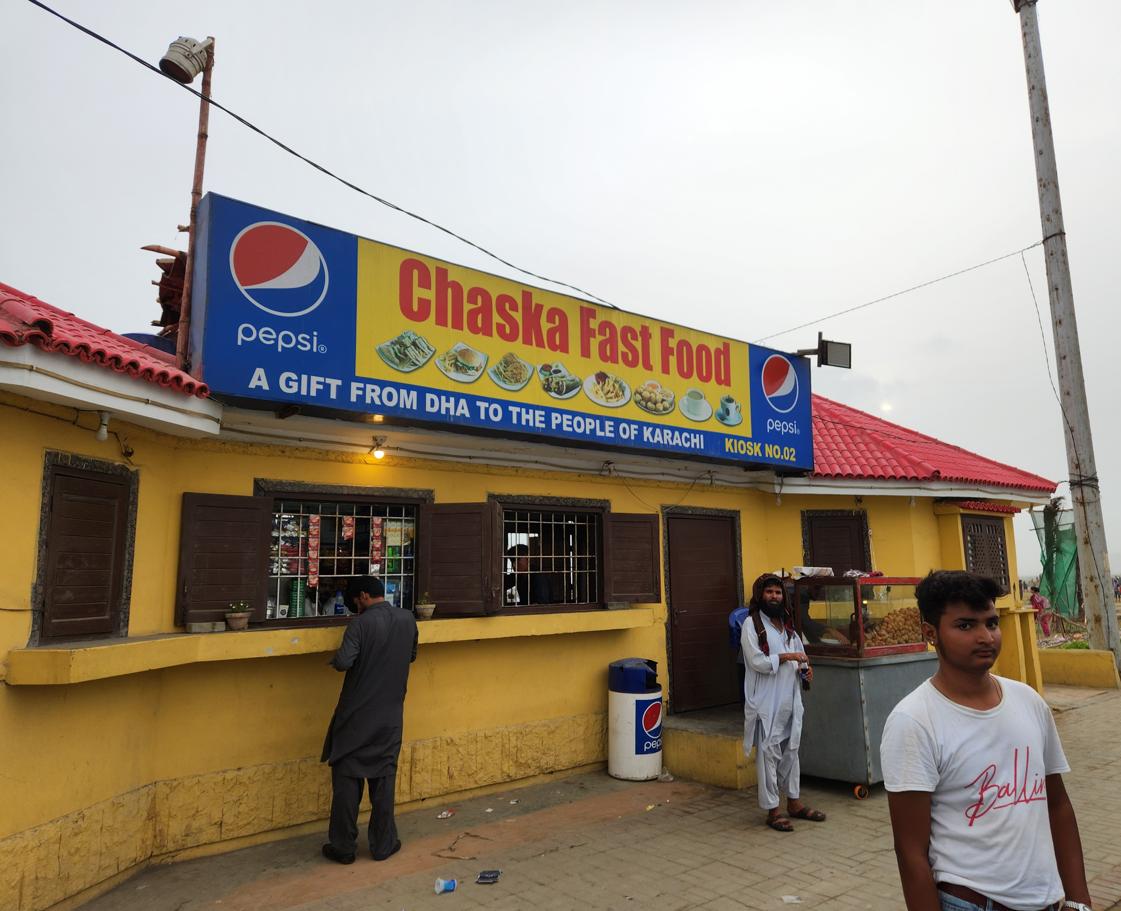
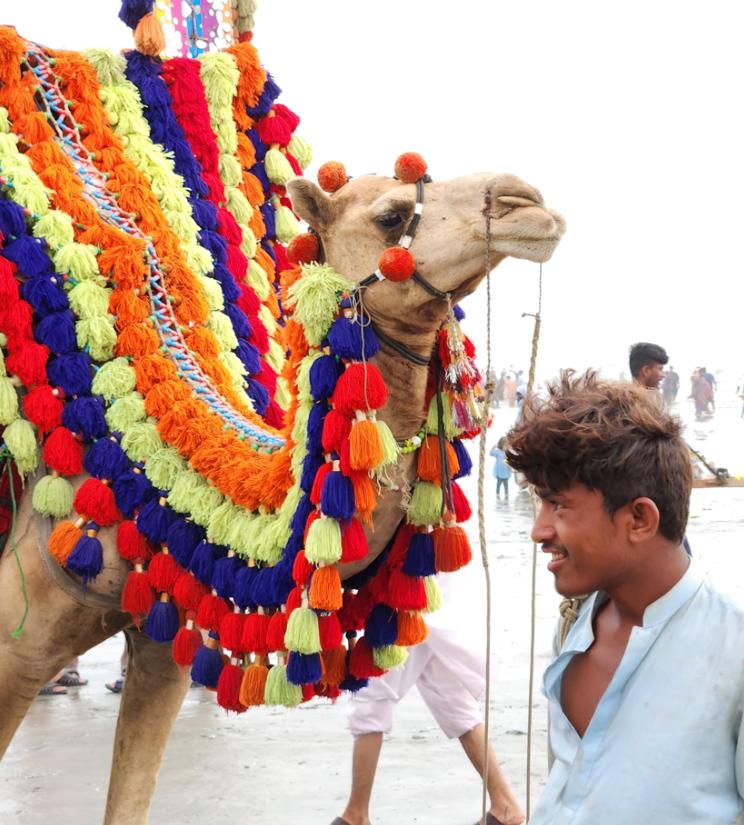
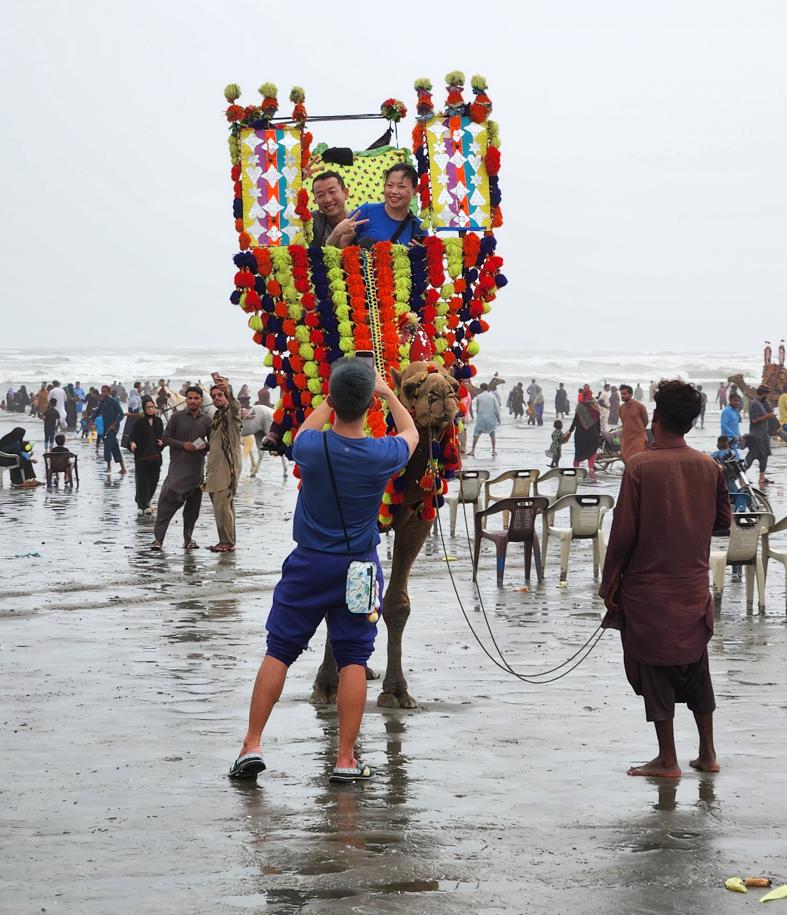
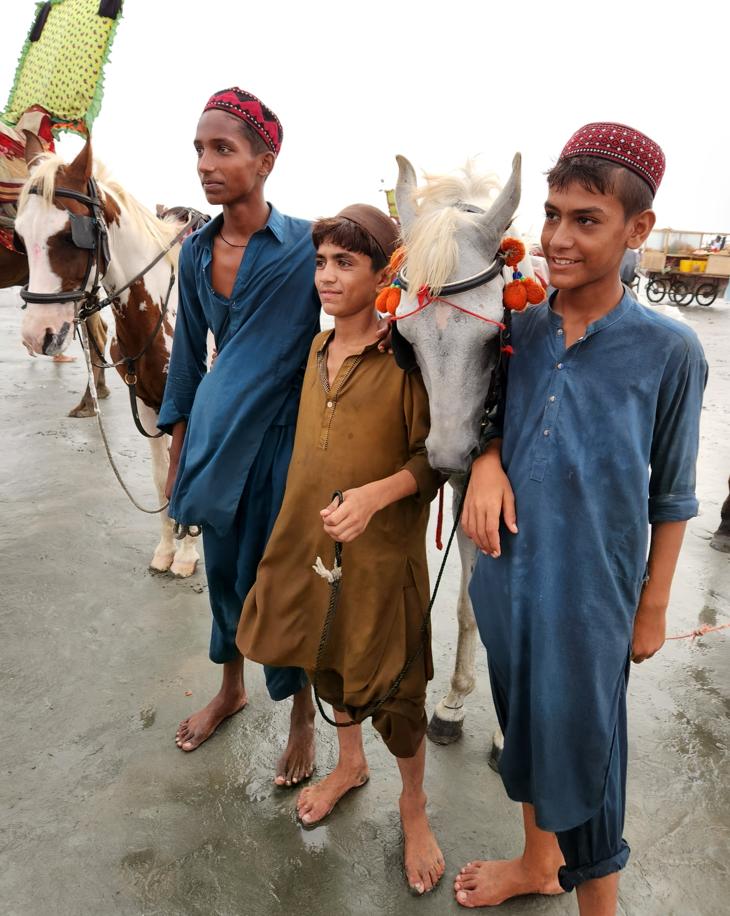
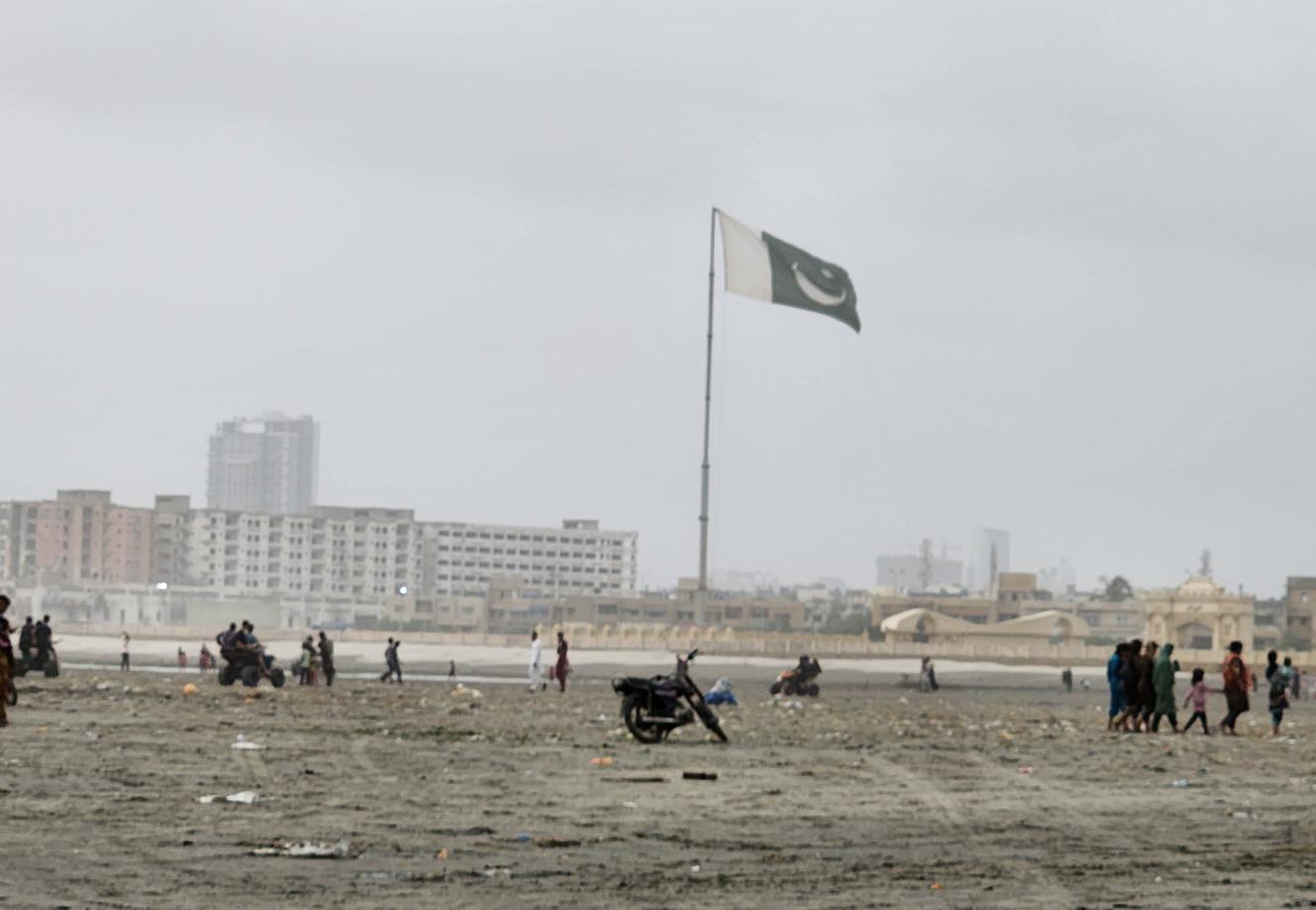
Kelly and Shaun climbed onto a camel. The camel, with the elaborate dignity of its kind, rose first onto its front knees and then levered itself upright, and the two of them disappeared skyward, clutching each other and shrieking. A man in the crowd — a stranger, uninvited — paid the camel owner for their ride and vanished before anyone could thank him. A little later, another stranger materialised beside a snack vendor's cart, said something brief to the man behind it, and turned to us. 'Order whatever you want,' he said. 'I will pay for it.' Then he too was gone, back into the crowd, before we could so much as learn his name.
This too was not the last time this happened.
National Museum: Indus Kings & Greek Buddhas
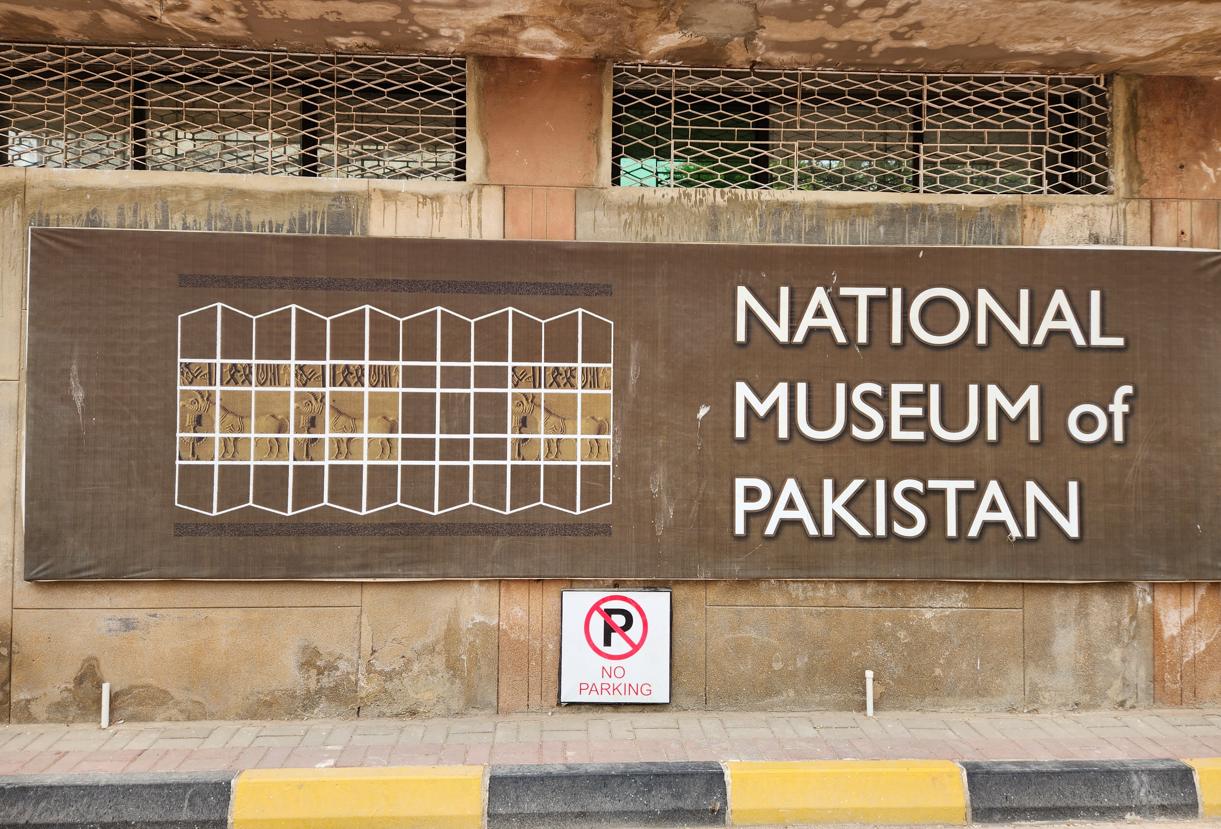
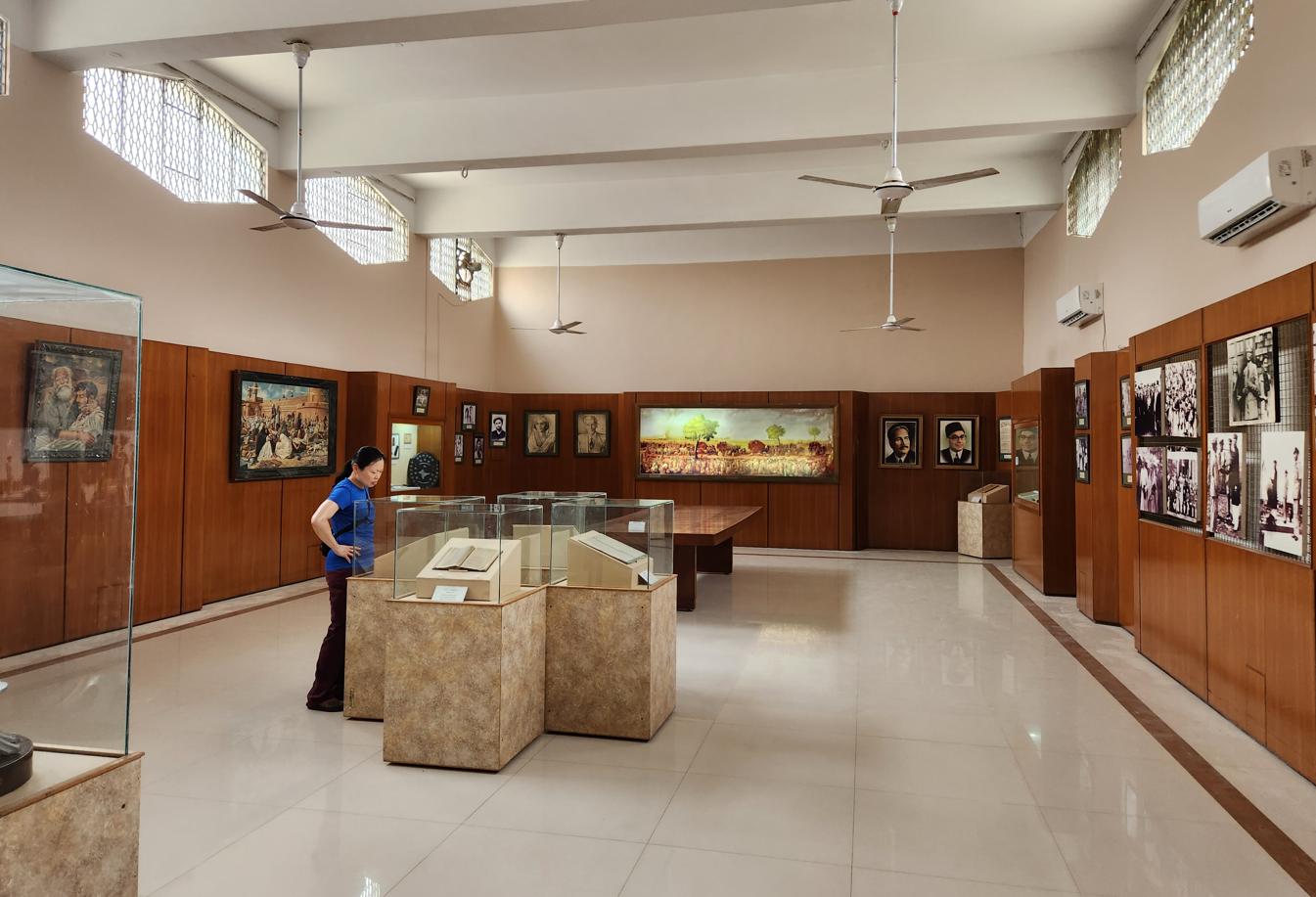
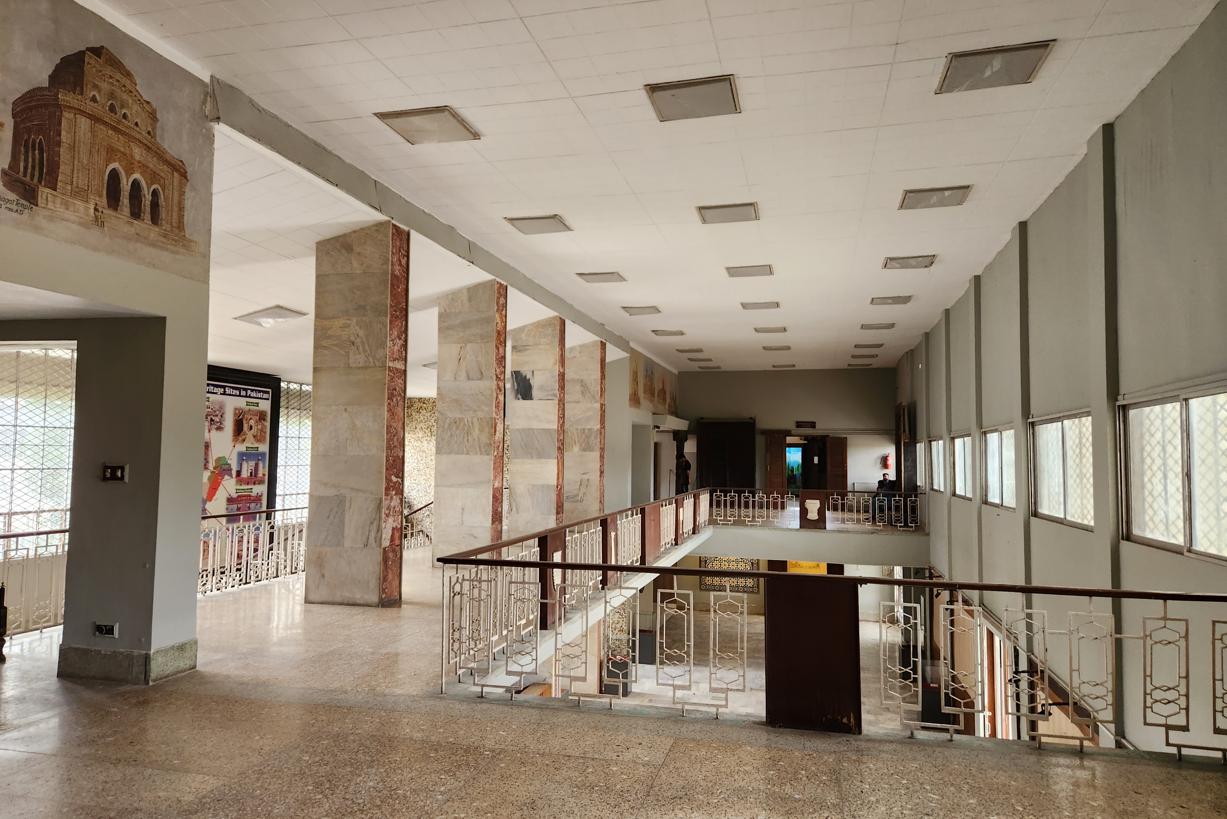
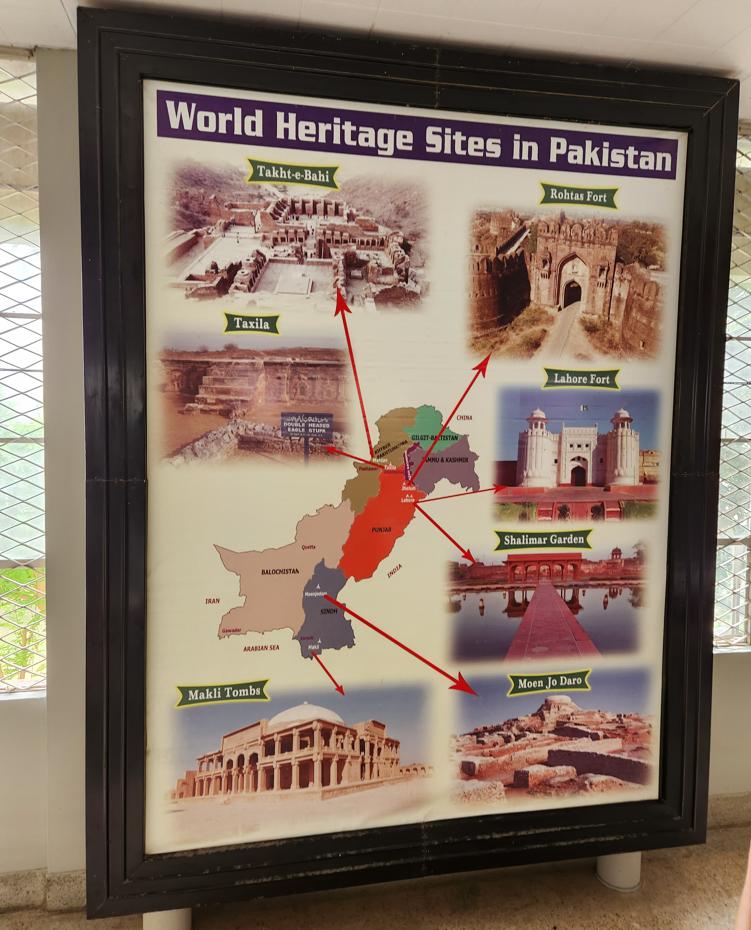
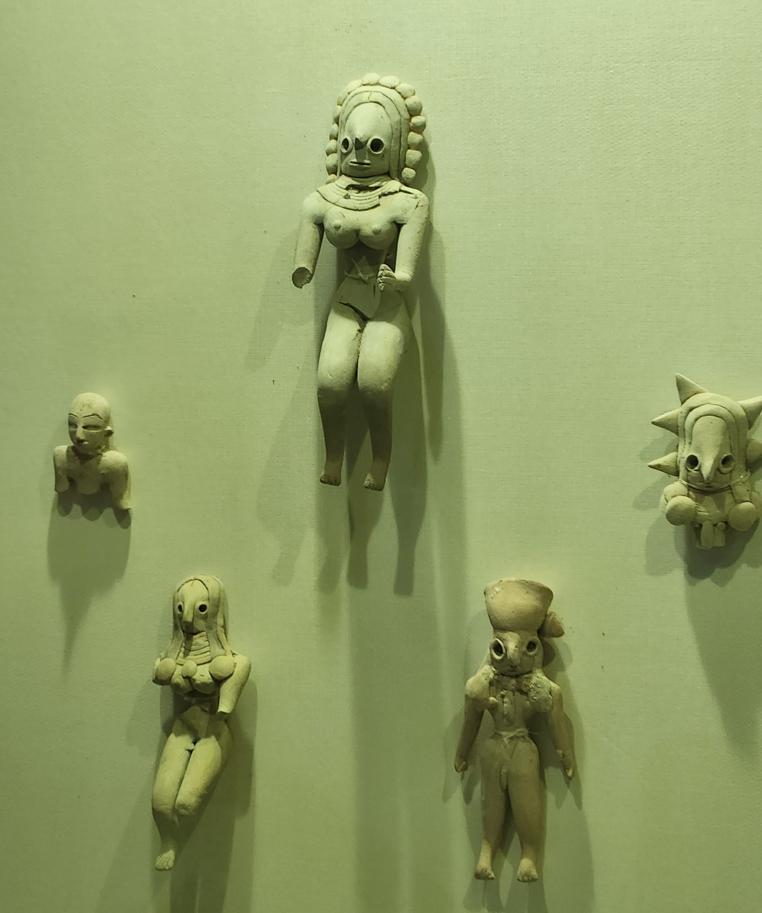
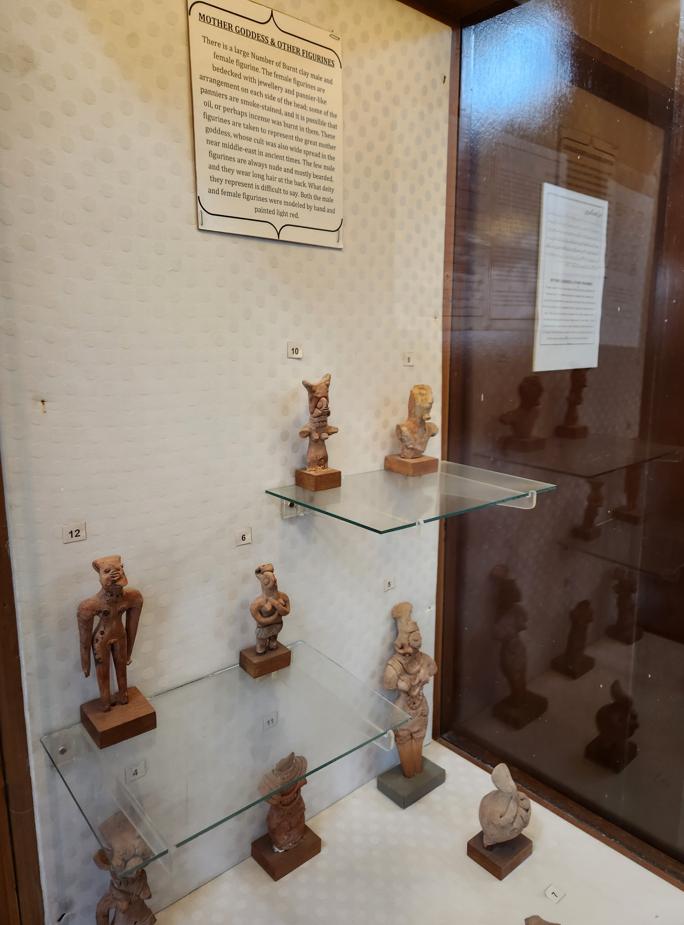
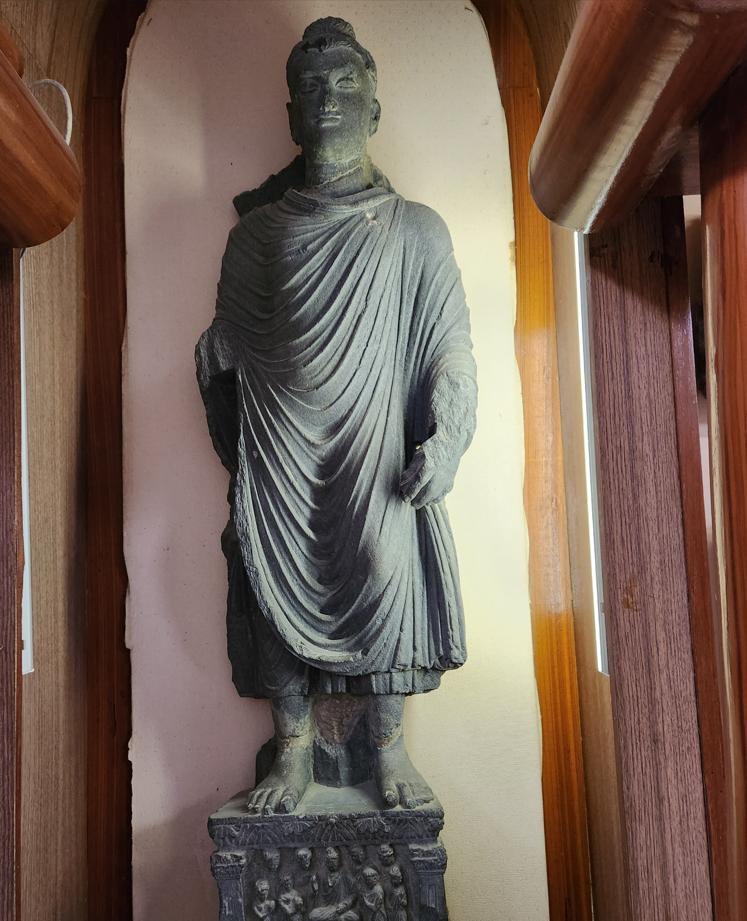
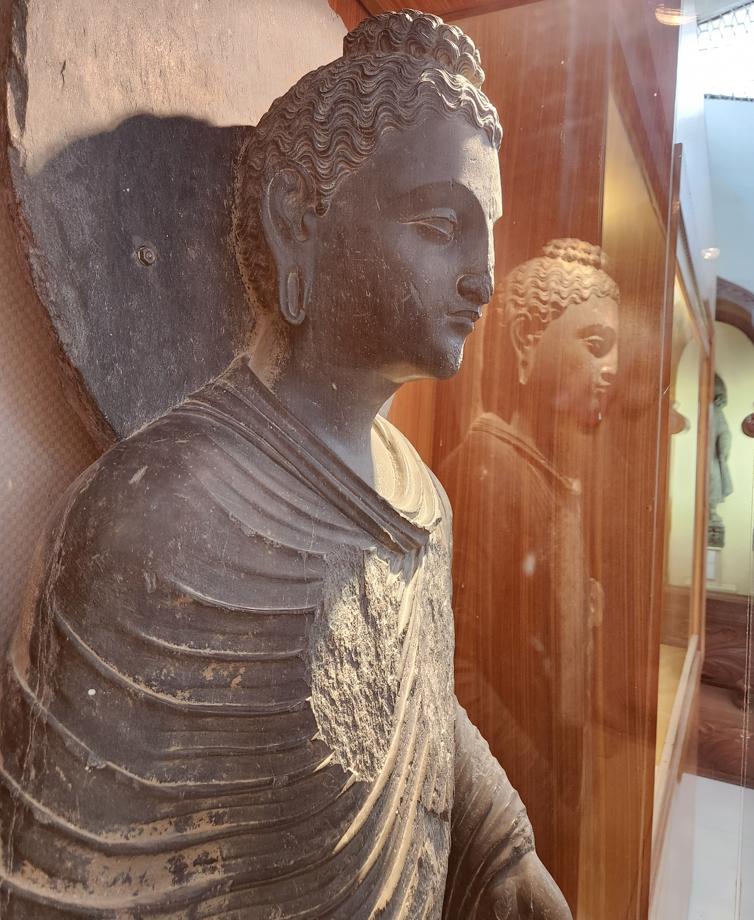
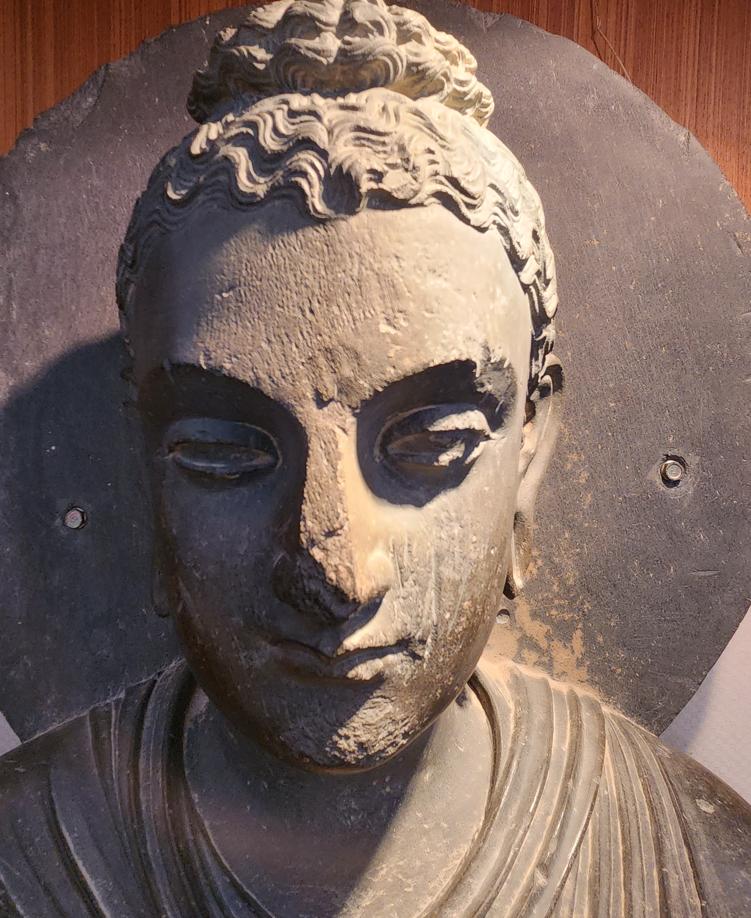
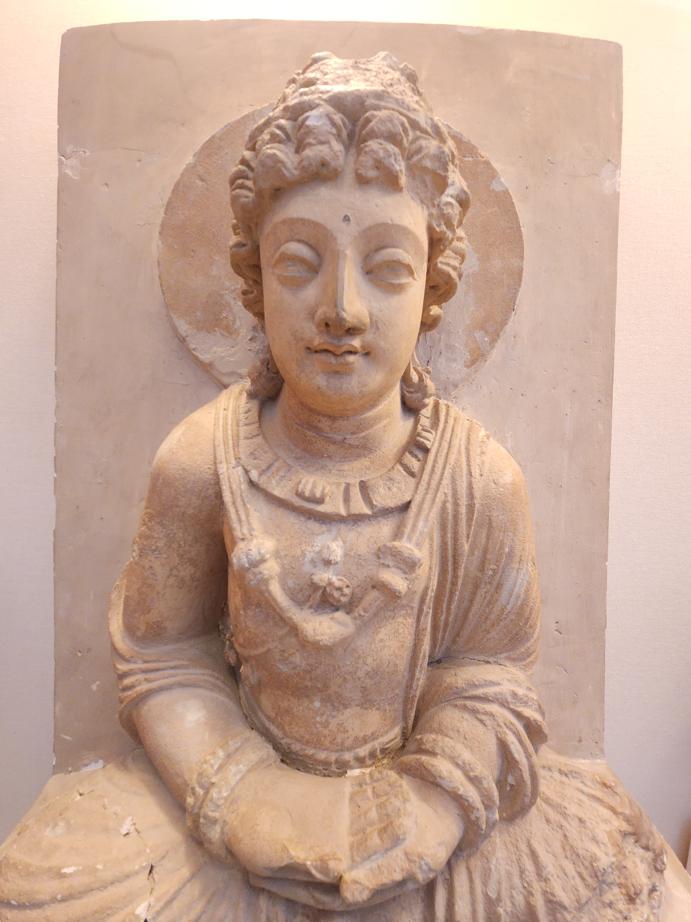
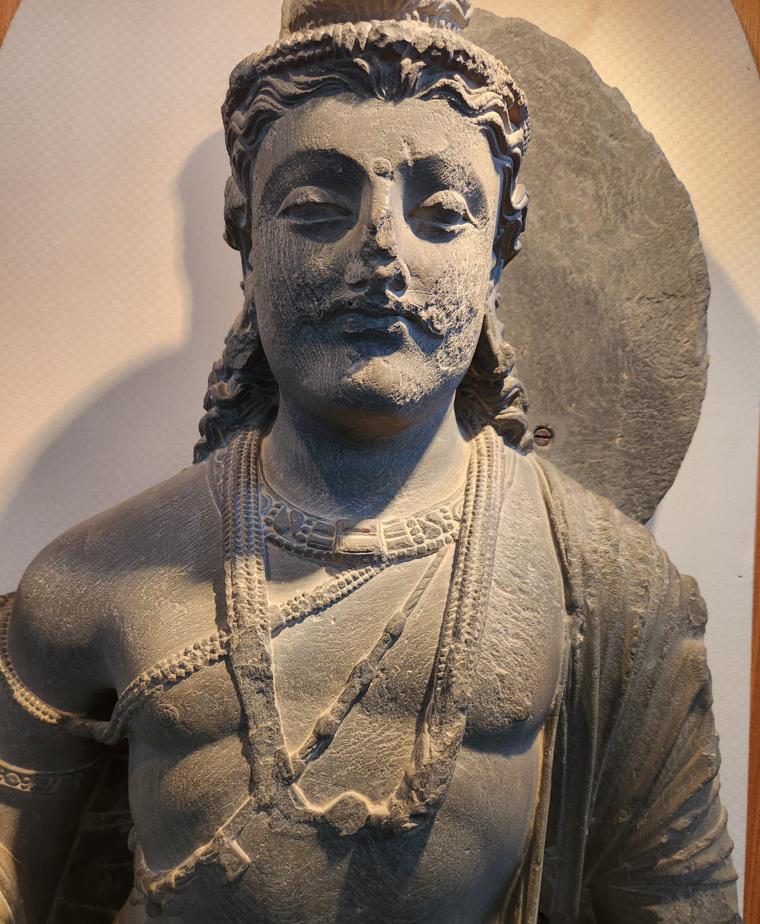
The National Museum of Pakistan, to which we drove afterwards, was the city's real revelation: nine thousand years of human history warehoused in a building that has clearly never had sufficient budget and never quite lost faith in its own importance. The galleries were dim, the labels hand-typed and occasionally misattributed, the display cases of the 1970s vintage. And yet within them were objects that stopped the breath. Stone tools from the Neolithic village of Mehrgarh, dated to 7000 BCE — older than the pyramids, older than Sumer, one of the earliest agricultural settlements on earth. The famous bronze Dancing Girl of Mohenjo-daro, in replica here (the original is in New Delhi's national museum, a diplomatic sore point), her hip cocked with an attitude that seems almost insolent across four and a half millennia. And the Gandharan Buddhas — grey schist figures of the first and second centuries CE, their faces unmistakably Greek in their proportions, their postures Indian, their meaning somewhere between the two: the visual record of a moment when Alexander's cultural legacy collided with the teachings of Siddhartha Gautama and produced something entirely without precedent.
Priest King & Unicorns
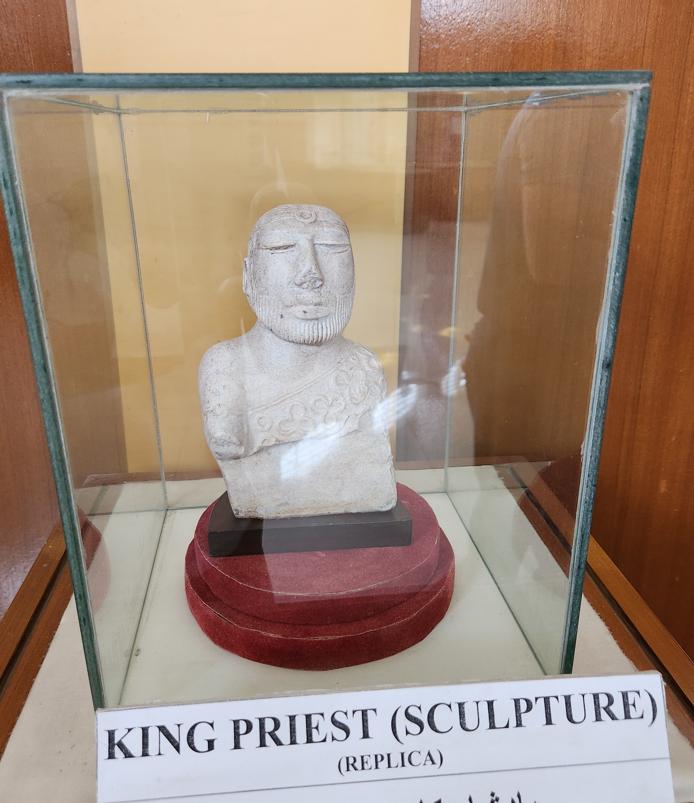
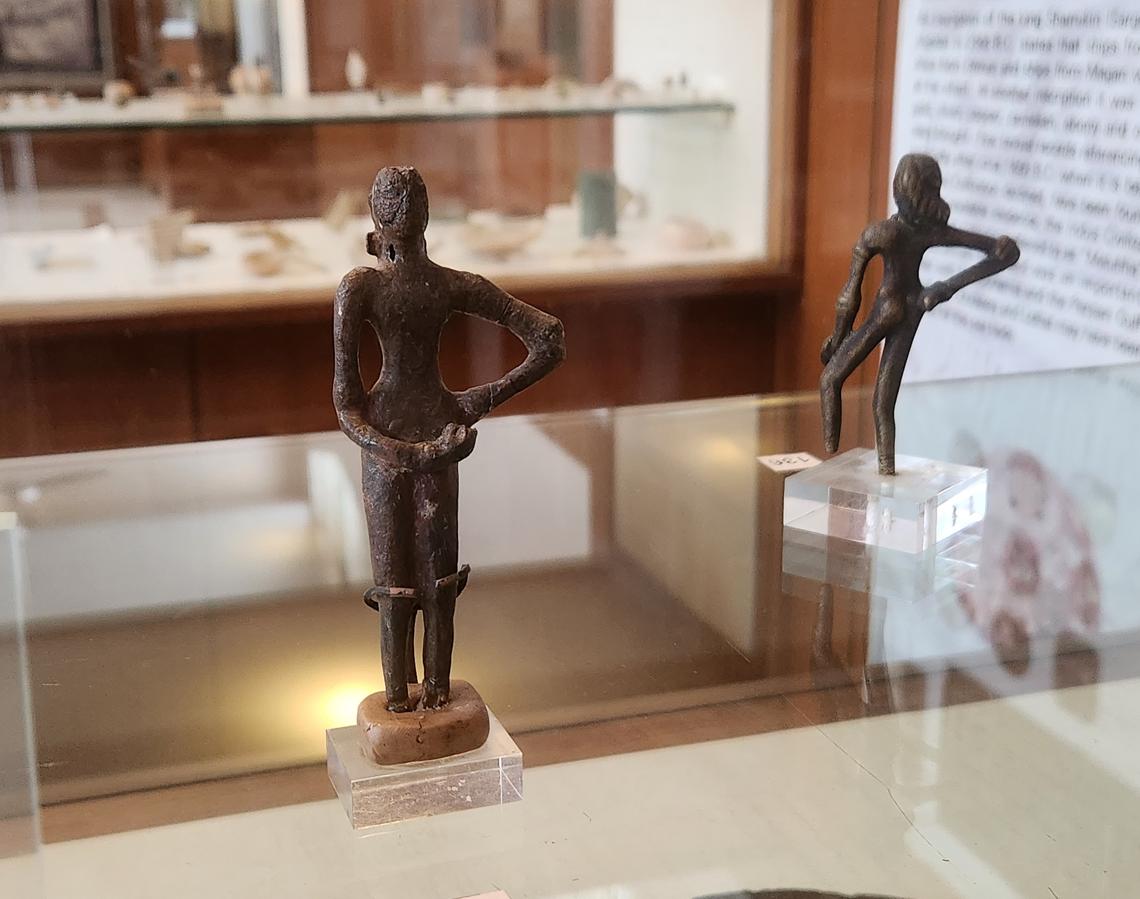
Nearby, in a case of armoured glass, stood the Priest-King — the small steatite bust with the trefoil-patterned robe and the heavy-lidded, inward-looking eyes that I had first met as a photograph in a primary-school textbook decades earlier. What is on display, the museum acknowledges, is a replica; the original — soft, irreplaceable, four thousand years old — is kept in this same building, in secure storage, the curators unwilling to risk Pakistan's single most recognisable possession to the vagaries of public display, intermittent air conditioning, and the occasional power cut. Even some of the museum's own guards, asked directly, will insist that what stands in the case is the real thing. Nobody, in the end, seems entirely certain — which felt, somehow, appropriate for a civilisation that has kept its secrets this well for four and a half millennia.
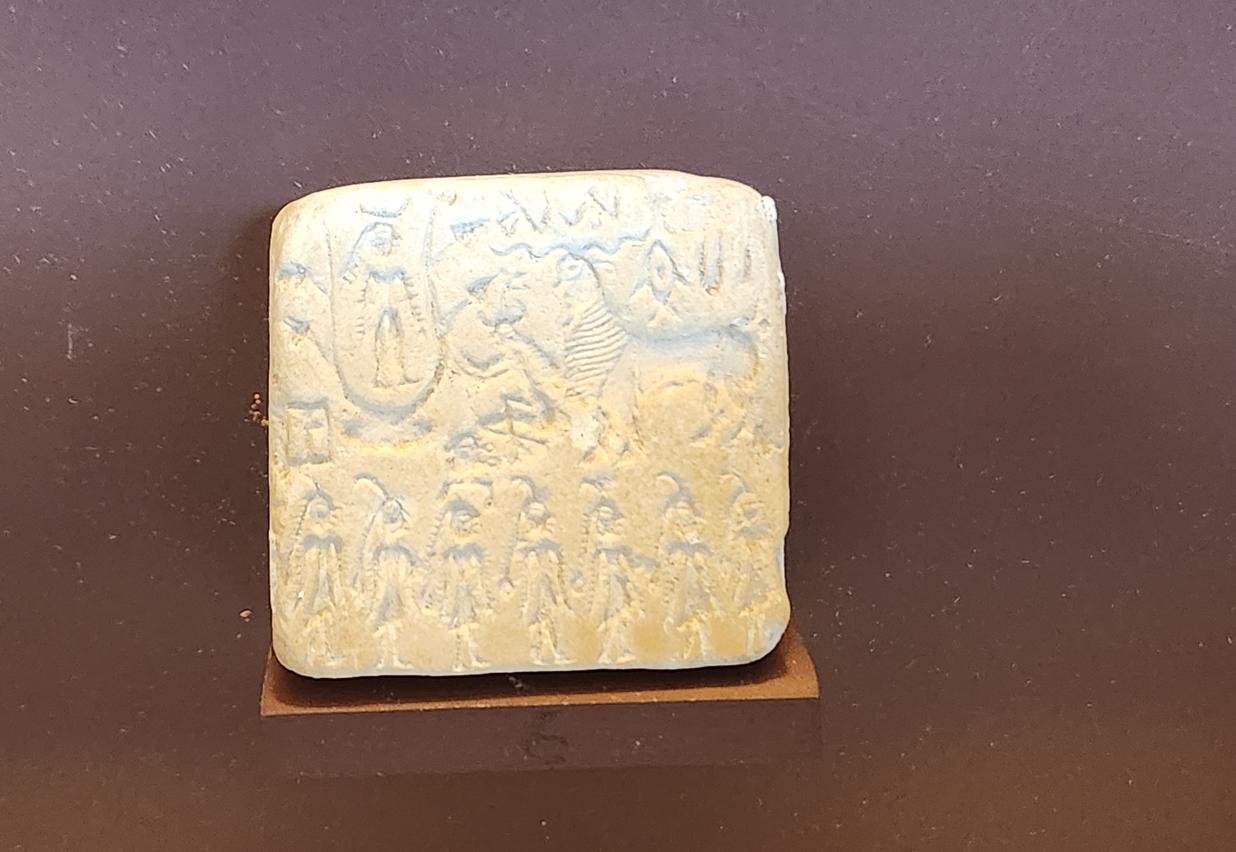
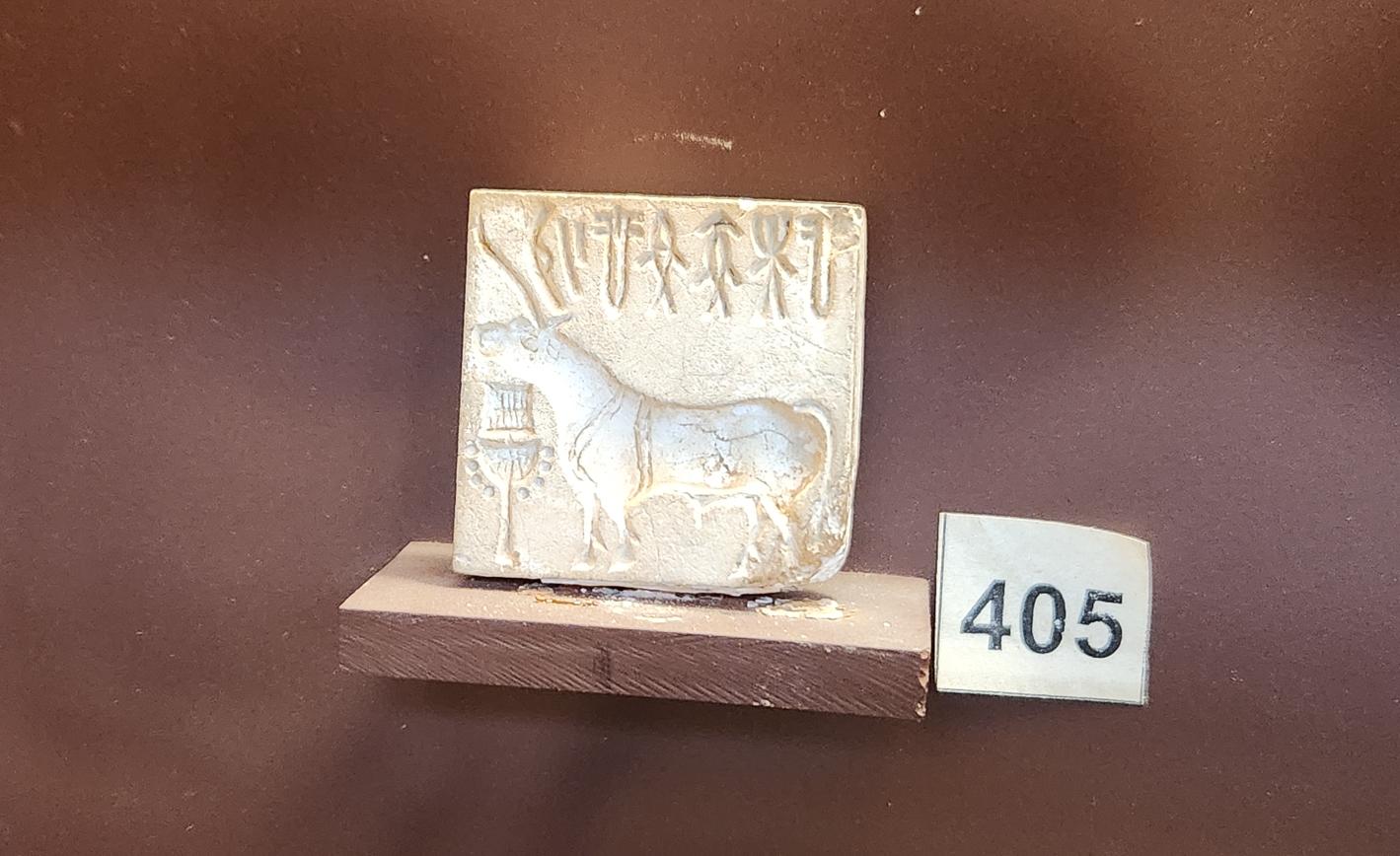
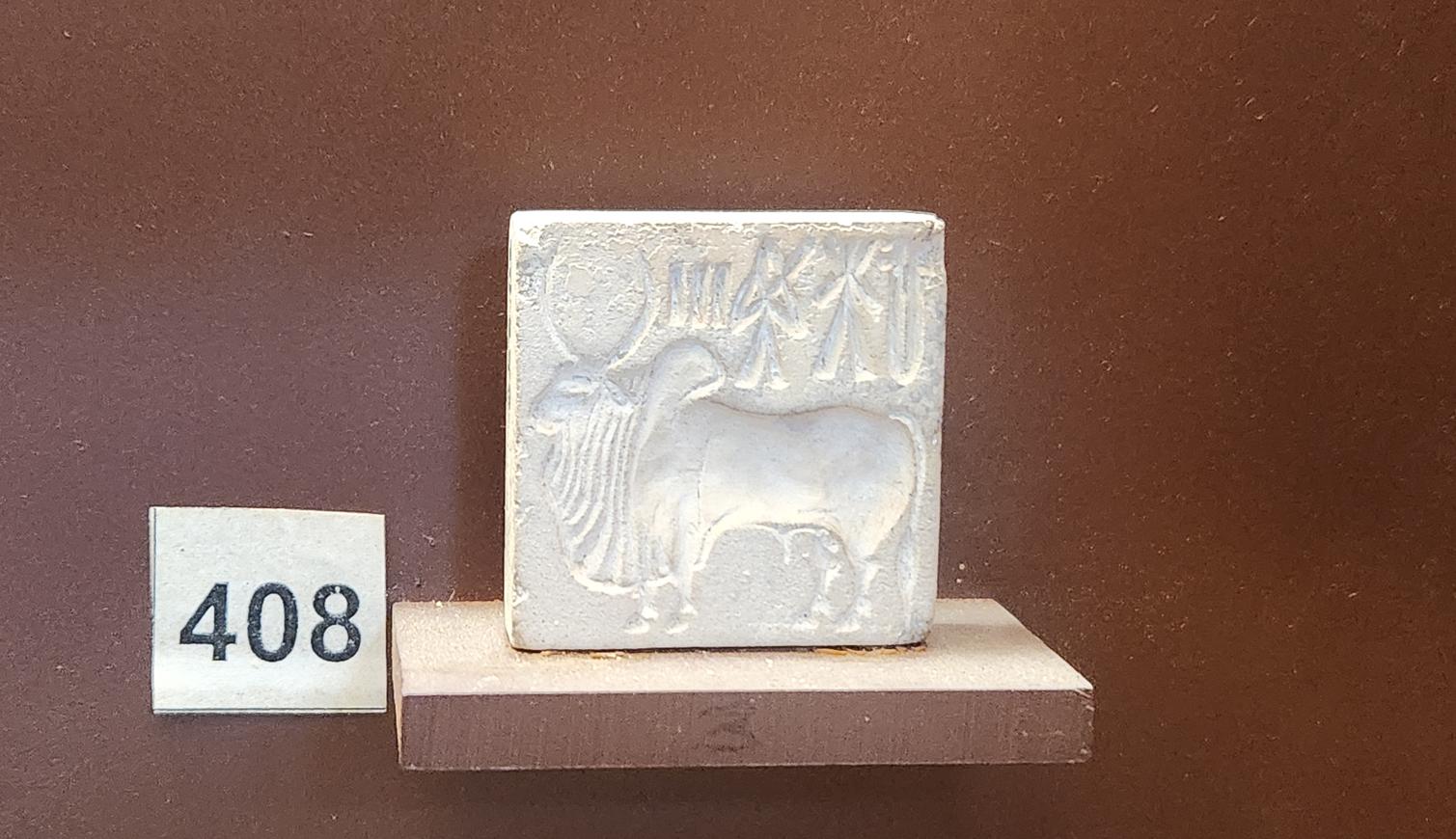
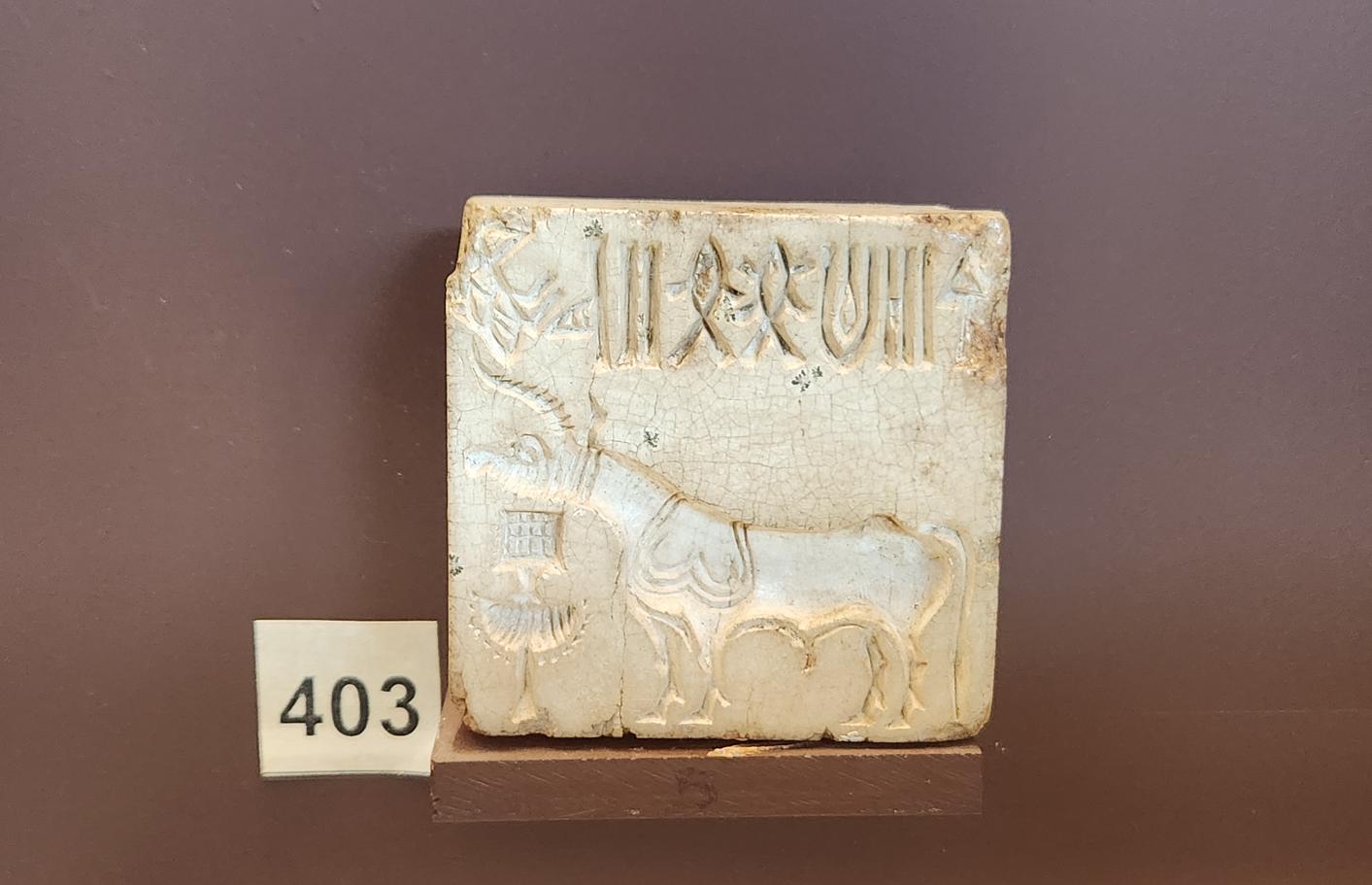
Beside the Priest-King were trays of small steatite seals, incised with the still-undeciphered Indus script — rows of pictographic signs that have resisted a century of scholarly assault, no Rosetta Stone ever found to crack them open. Many of these seals carried the same recurring figure: a great horned bull with a pronounced hump at the shoulder — the zebu — rendered with a consistency that suggests it carried real weight in the Indus imagination, sacred or totemic or simply the most valuable thing its owners possessed. I had seen the same humped silhouette grazing the roadsides of East Africa, and the resemblance is not coincidence: the zebu was domesticated here, in the Indus basin, some seven thousand years ago, and was carried outward over the following millennia by trade and pastoralist migration until it became, eventually, the dominant cattle breed of the African continent as well — one more thread tying this dim, underfunded gallery to a world far beyond Sindh. I would see seals just like these again, in their original context, within a few days, at Mohenjo-daro itself.
Islam & Partition
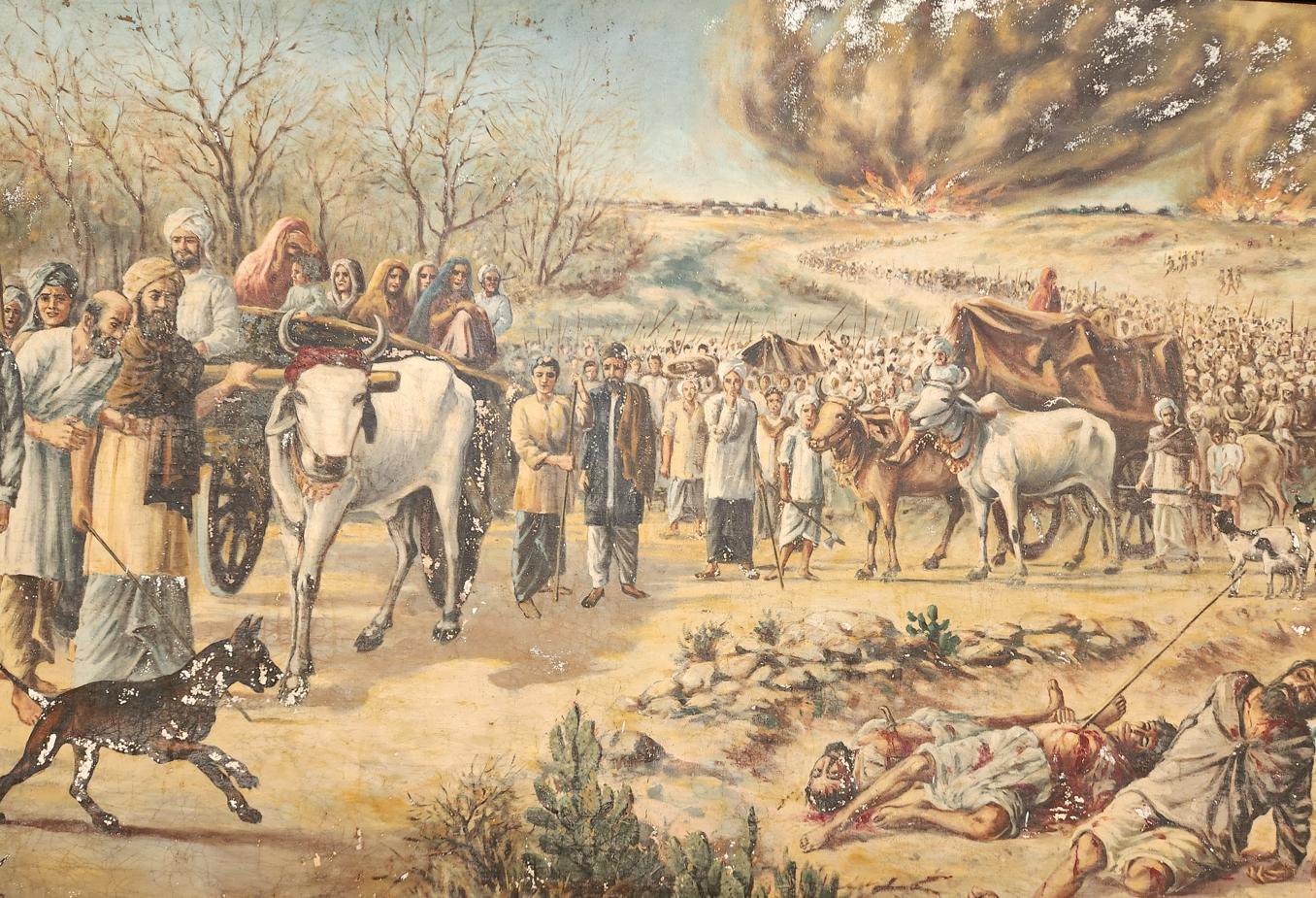
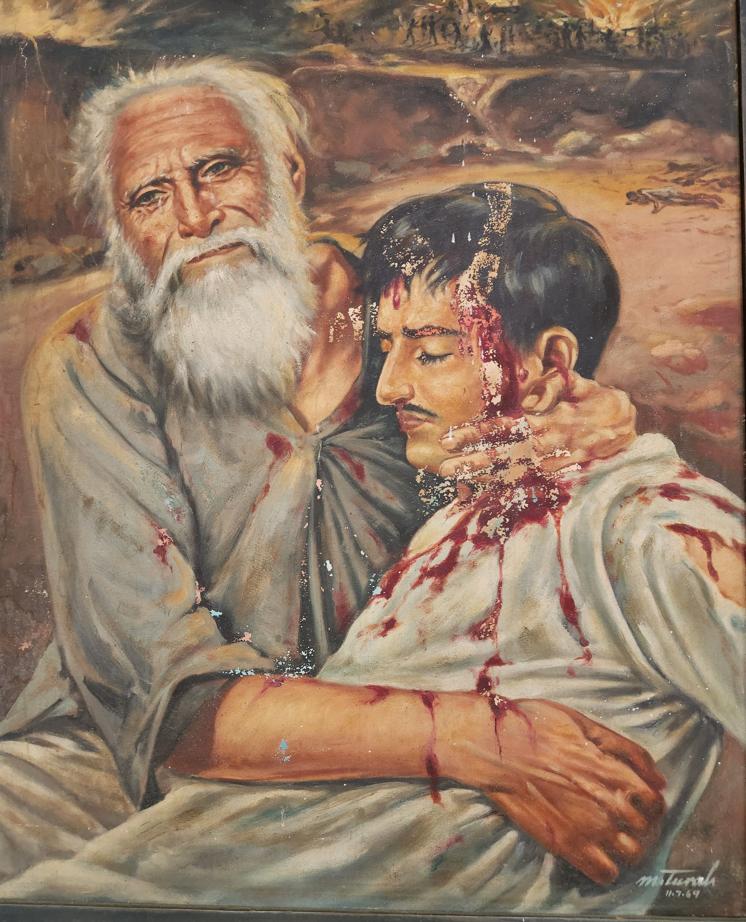
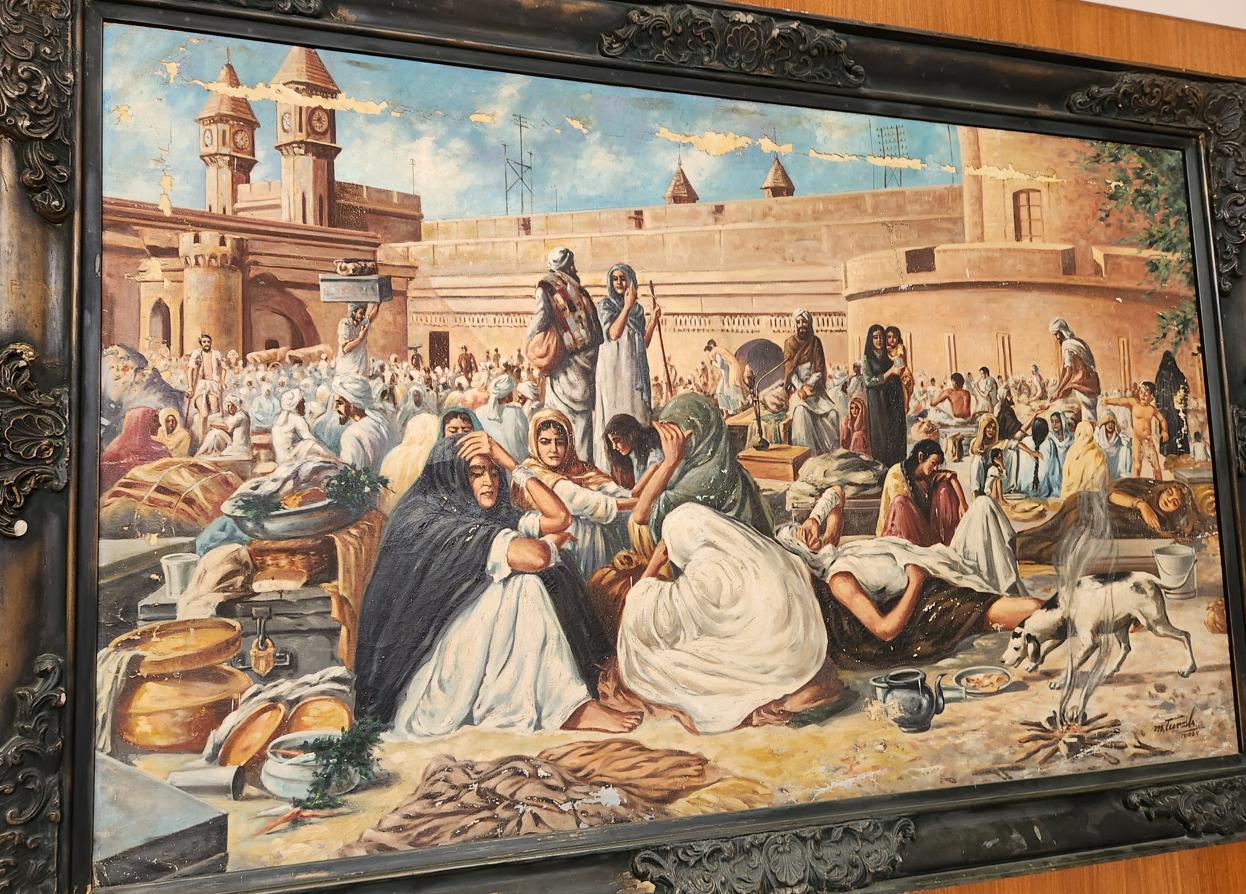
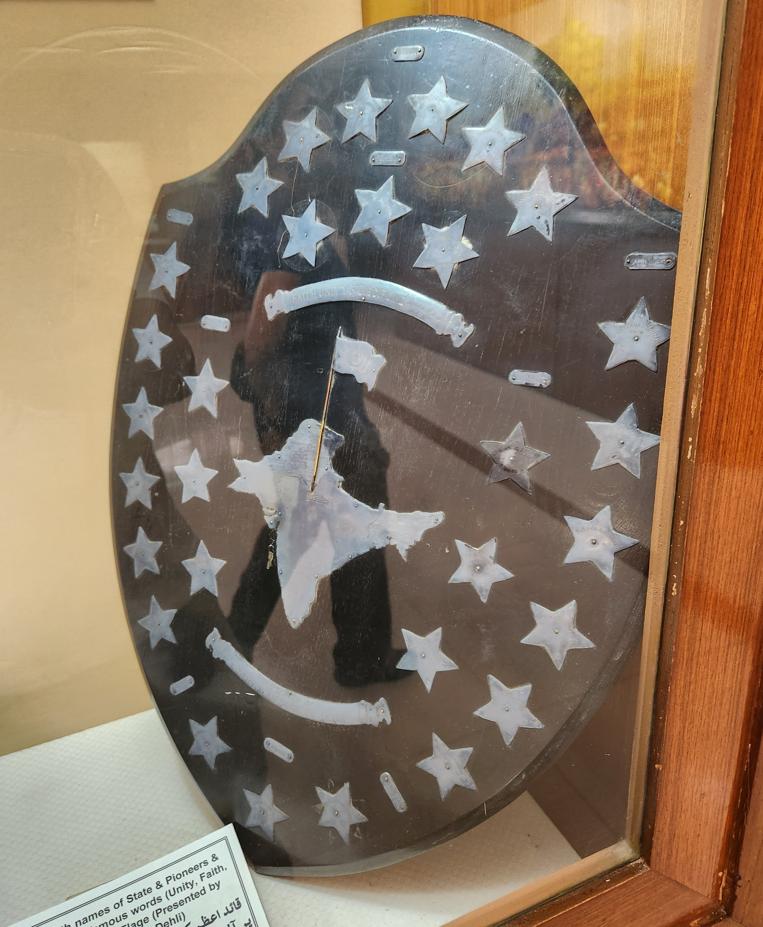
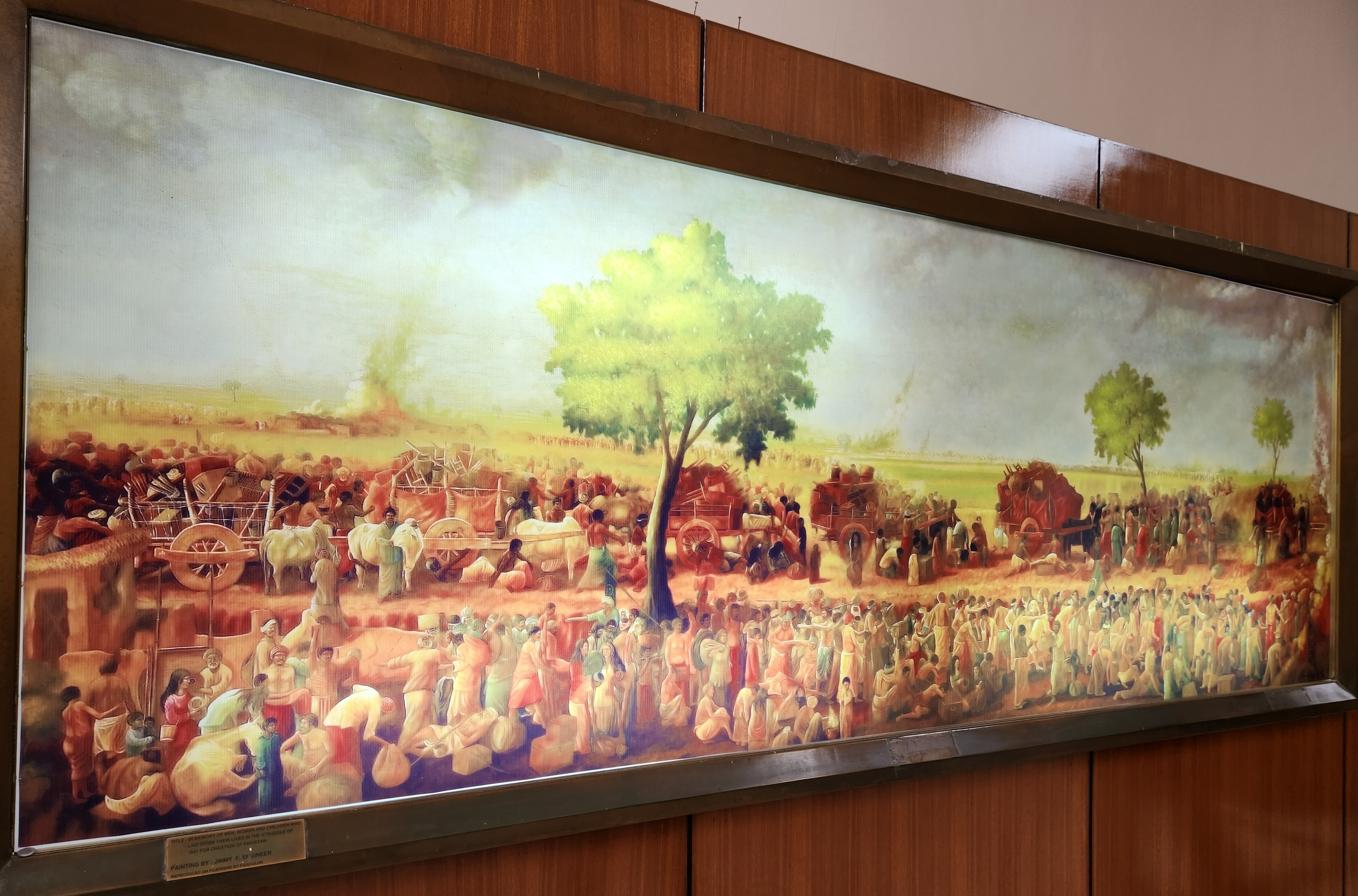
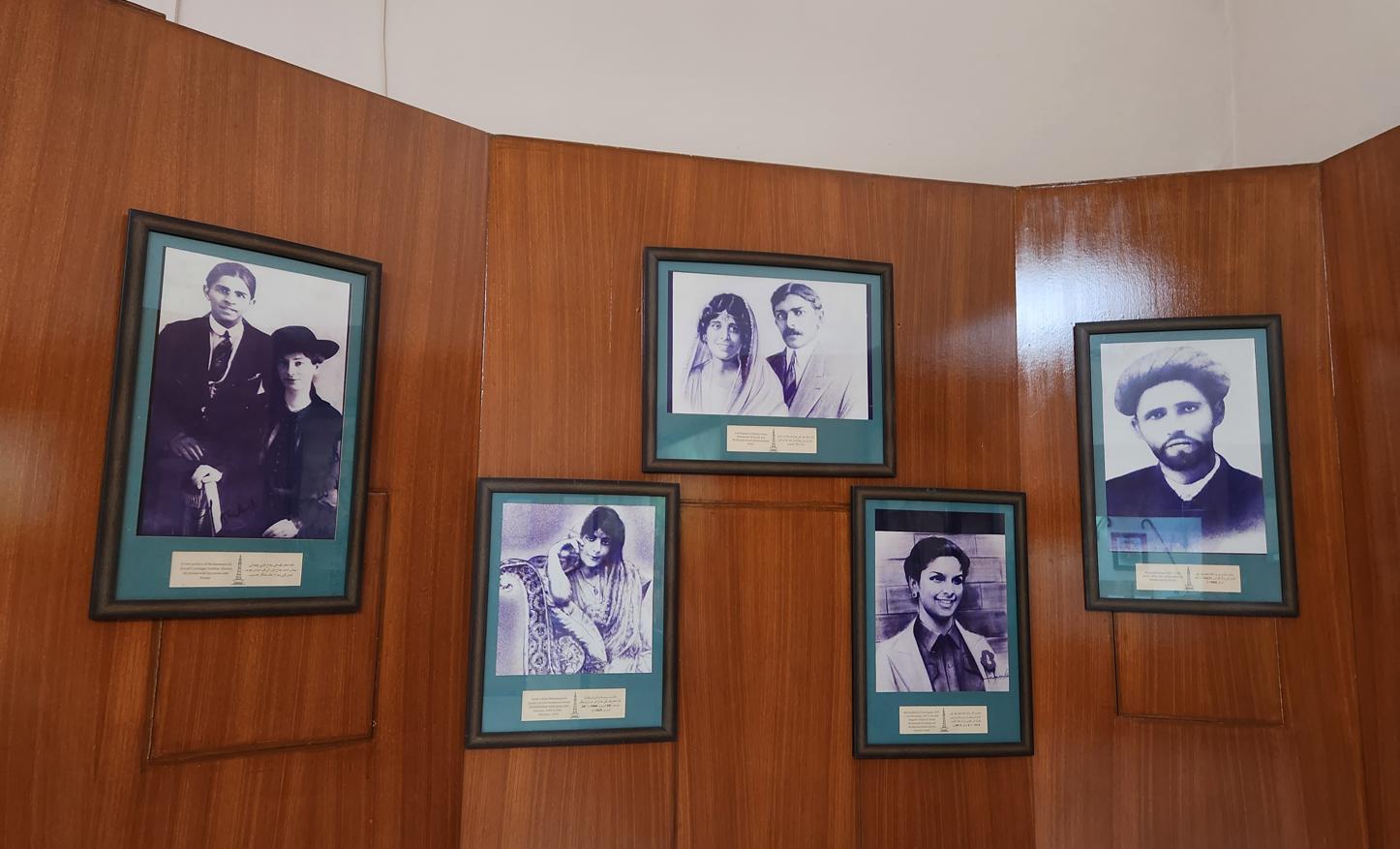
On one wall hung a long, crowded canvas by Jimmy Engineer, the Karachi-born painter who has made the trauma of 1947 something close to a personal vocation: bullock carts piled with the entire worldly possessions of fleeing families, smoke rising on the horizon, a crowd stretching from one edge of the frame to the other, painted in honour of the men, women, and children who did not survive the journey to the country being created in their name. Engineer was not alive in 1947 — he was born a decade later, in Balochistan — but the painting carries the authority of something witnessed rather than imagined.
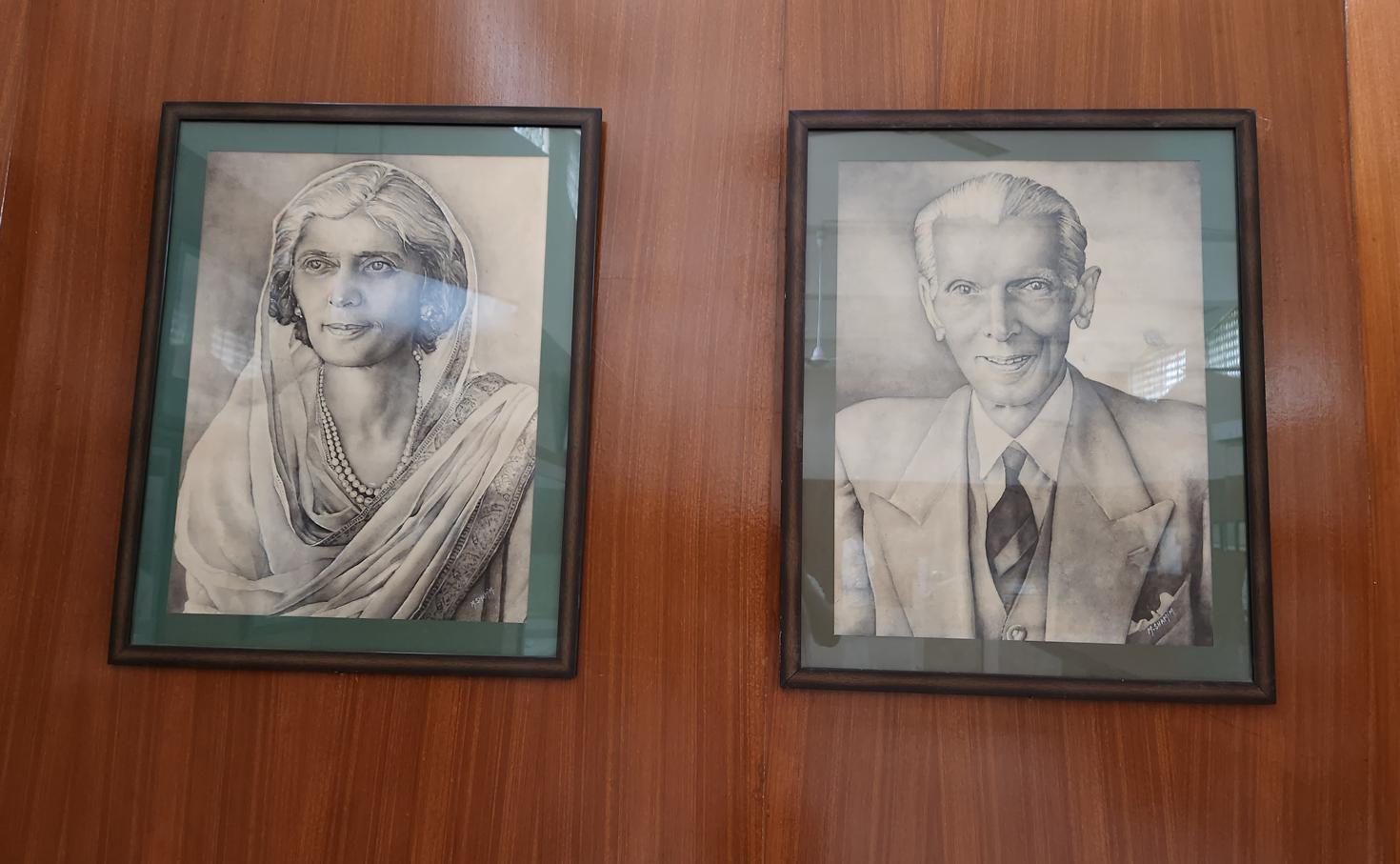
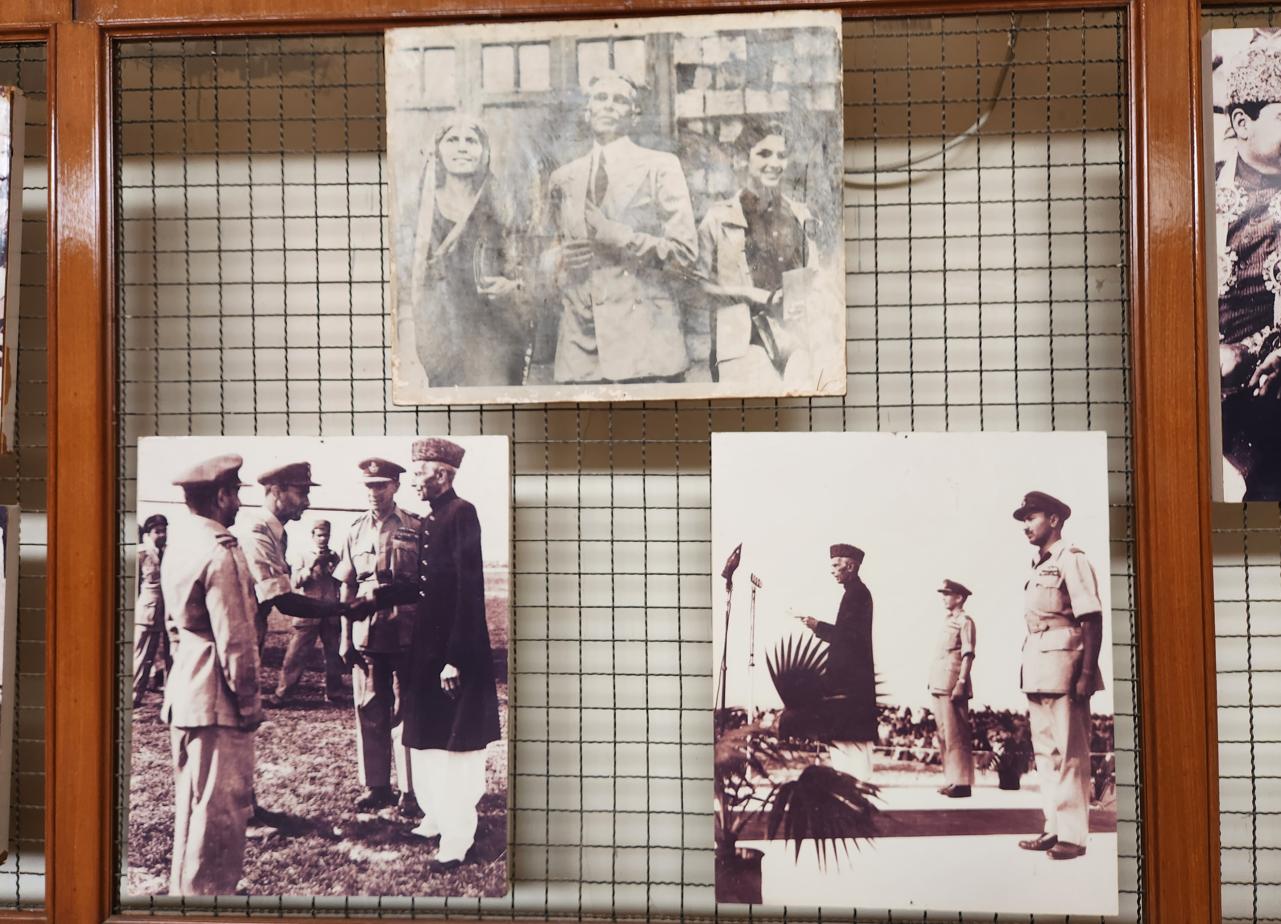
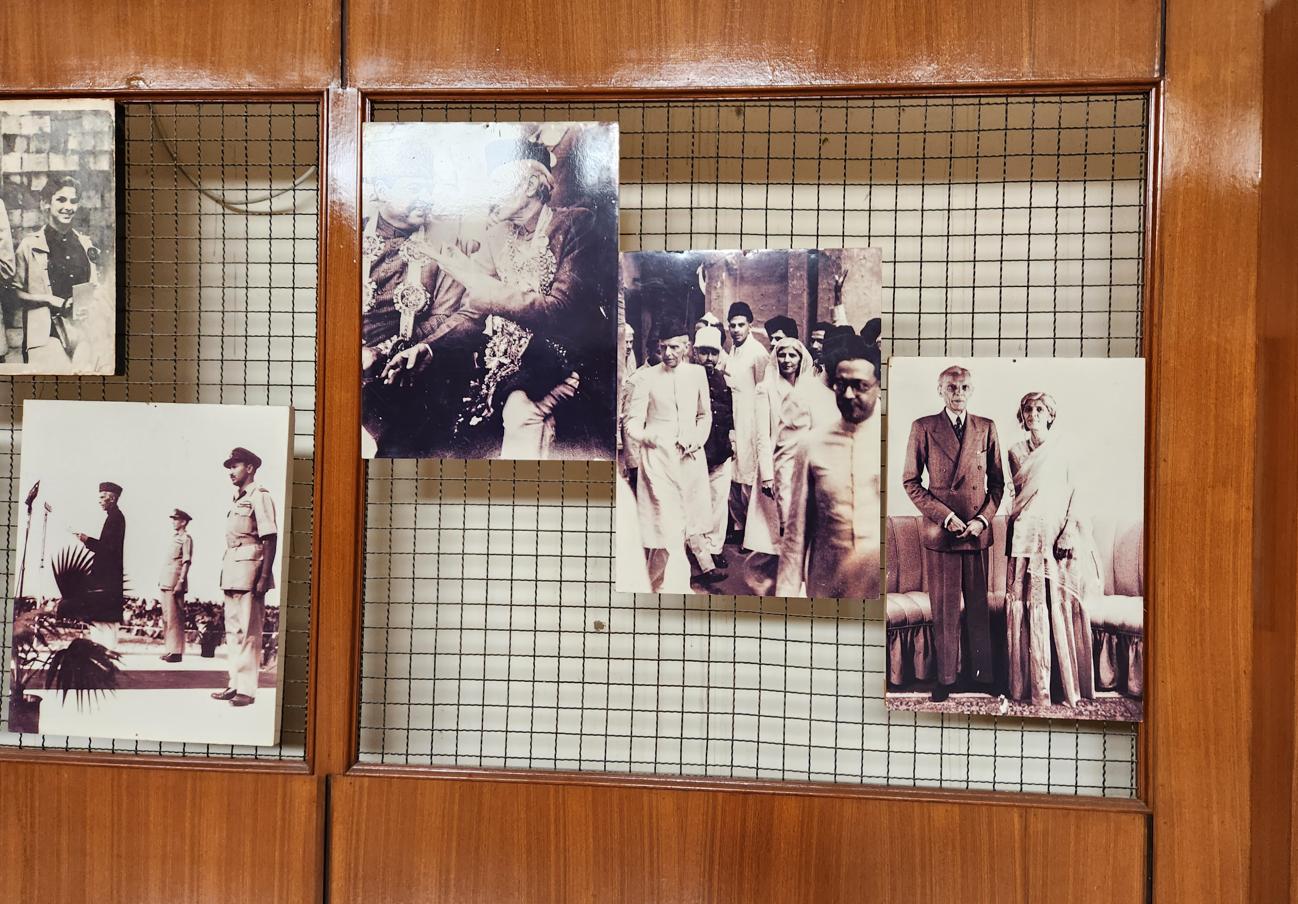
Further along were the inevitable portraits: Jinnah in profile, Jinnah in his karakul cap, Jinnah beside his sister Fatima, who outlived him by decades and became, in her own right, a formidable political figure. There was nothing of his wife, Ruttie — Rattanbai Petit, a Parsi heiress from one of Bombay's grandest mercantile families, who converted to Islam to marry him and was disowned by her own community for it — and nothing of his daughter Dina, who married outside the faith just as her mother had and was estranged from her father as a result. The museum's silence on this part of Jinnah's life is its own kind of portrait.
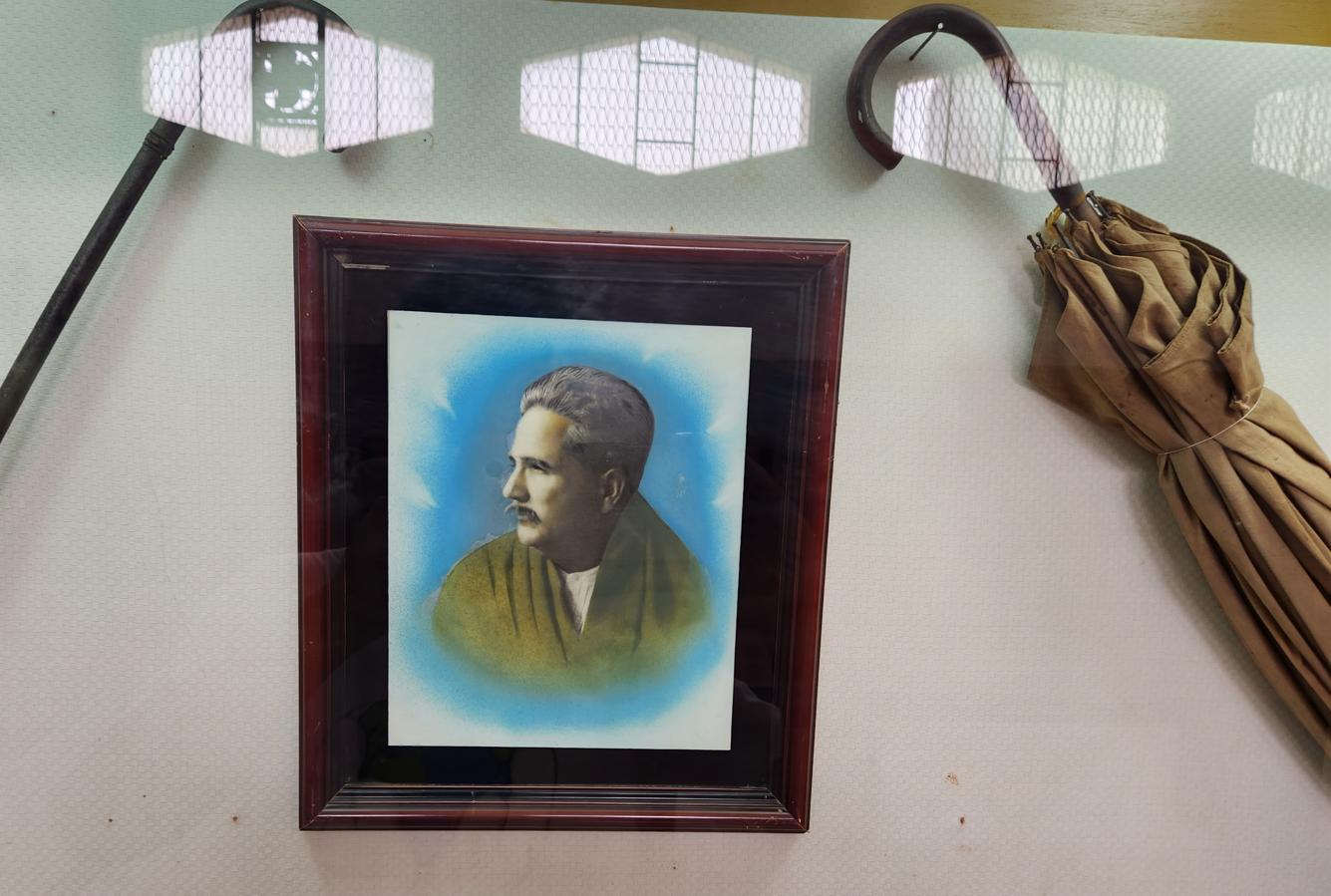
A separate case held the personal effects of Muhammad Iqbal — spectacles, a walking stick, a few well-thumbed volumes — the poet-philosopher whose vision of a separate Muslim homeland in South Asia preceded, and arguably shaped, Jinnah's own. Pakistan reveres him as something between a prophet and a national grandfather, and the modesty of his belongings, set against the scale of what is credited to his imagination, made its own quiet argument about the gap between ideas and the men who carry them.
Ethno
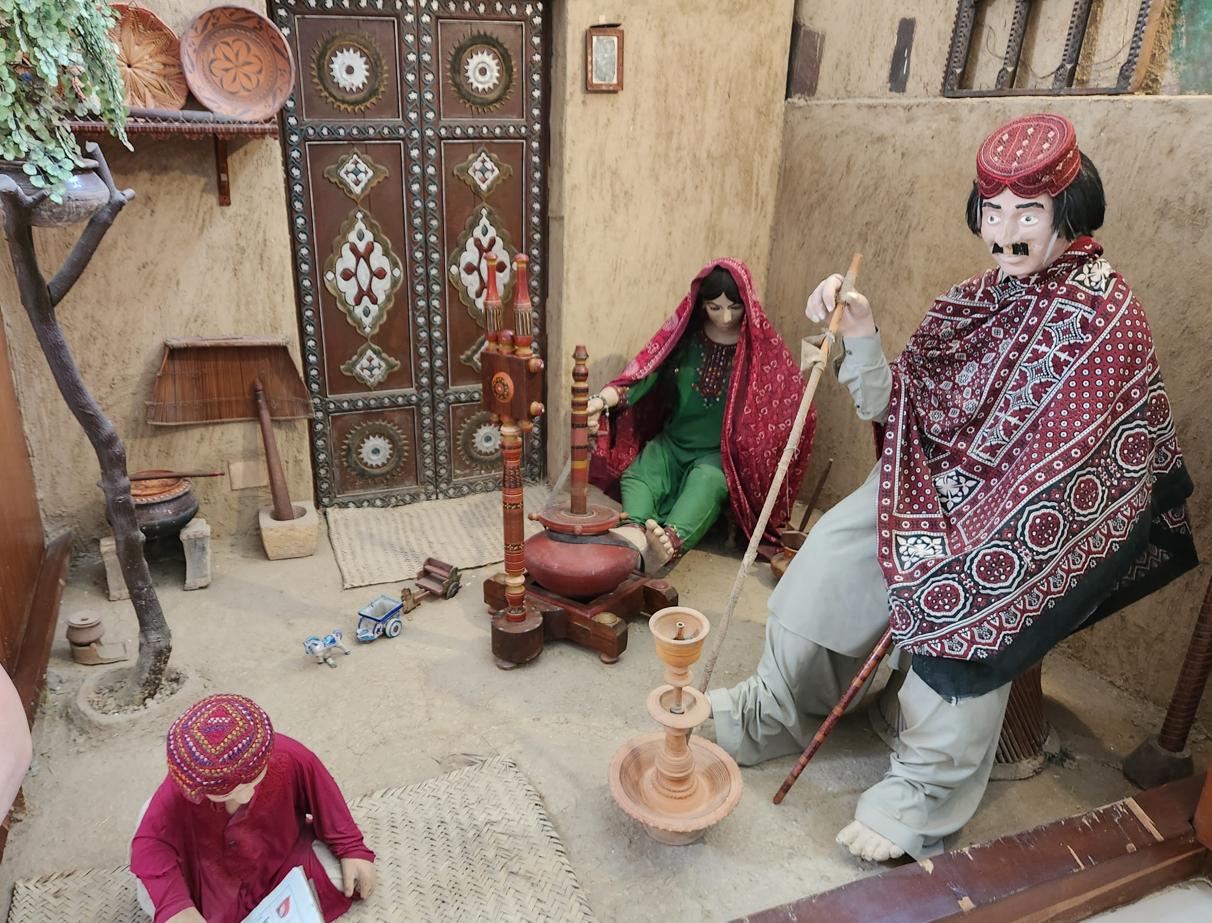
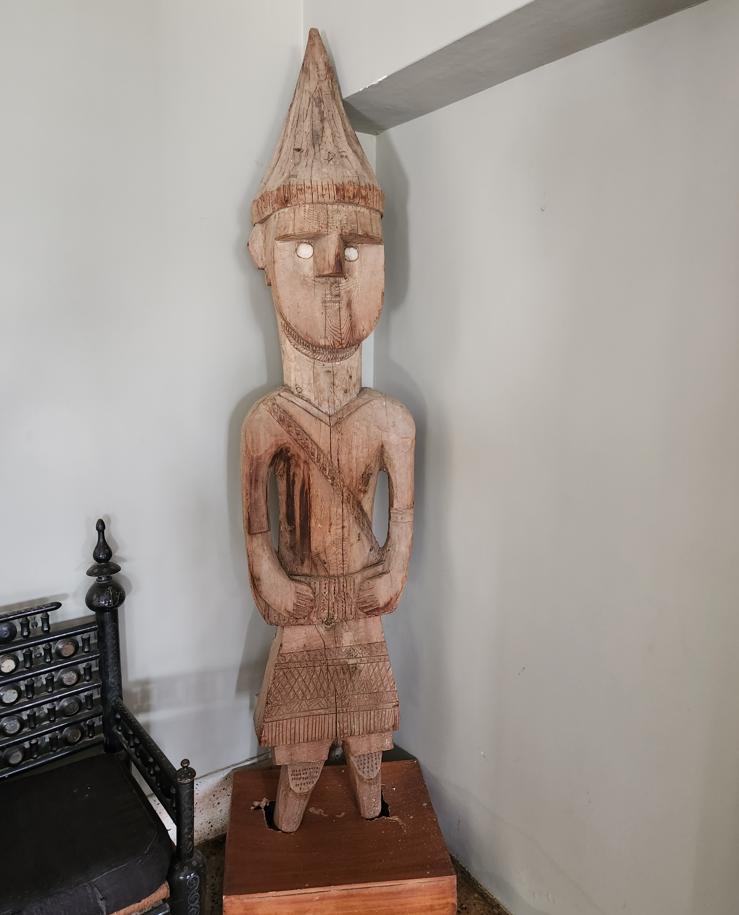
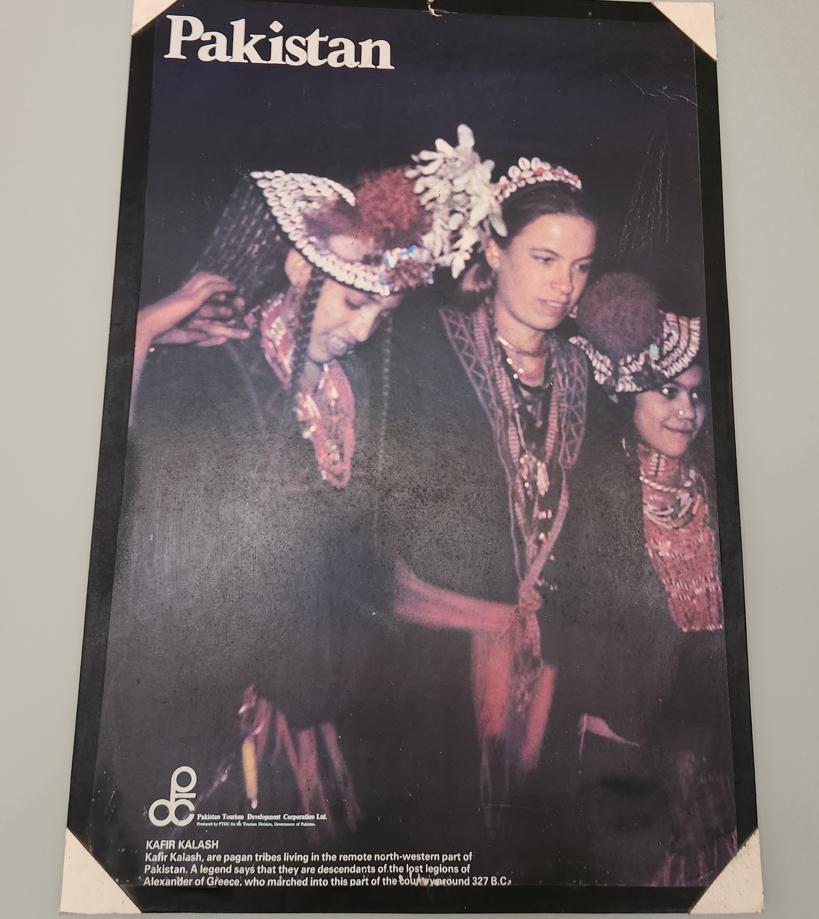
And in a corner, easy to miss, stood a tall wooden effigy from the Kalash people of Chitral, in the far north — a gandau, carved to mark a grave, its conical cap and stiff, symmetrical posture giving it the look of a guardian rather than a likeness. The Kalash, animist and unconverted in a country that is otherwise almost entirely Muslim, carve these figures for their dead and plant them directly over the burial ground; this one, removed from that context into a museum case under fluorescent light, had the slightly stranded look of an object that knows it is a very long way from home.
Next Chapter
Chapter Two: Sindh — The Land of Saints and the DeadA Note on Process
The travelogue on this site are based on my own journeys, photographs, Facebook posts, and field notes. I work with Claude (Anthropic's AI assistant) as a drafting and editorial partner — giving it my raw material and working iteratively to shape it into finished prose. The AI helps me draft quickly, maintain a consistent voice across long narratives, and edit at the document level. The website's HTML and coding are built with the assistance of Gemini (Google). Audio versions of the essays are produced using NotebookLM (Google). Every observation, opinion, and conclusion in the written work is mine. The AI tools are the instruments; I am the author.