Attabad, Hussaini,
and the Last Monastery
The Night the Lake Rose
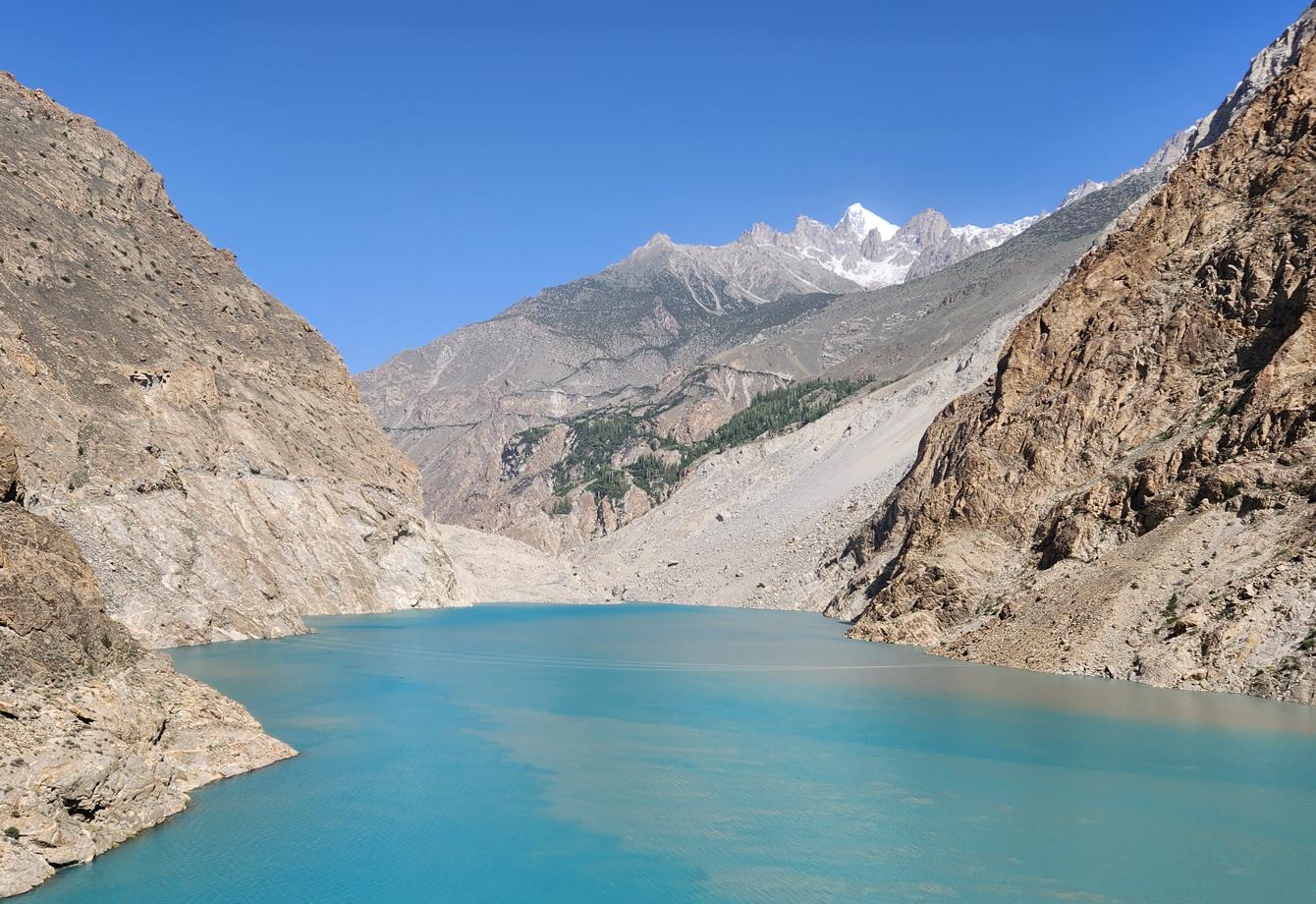
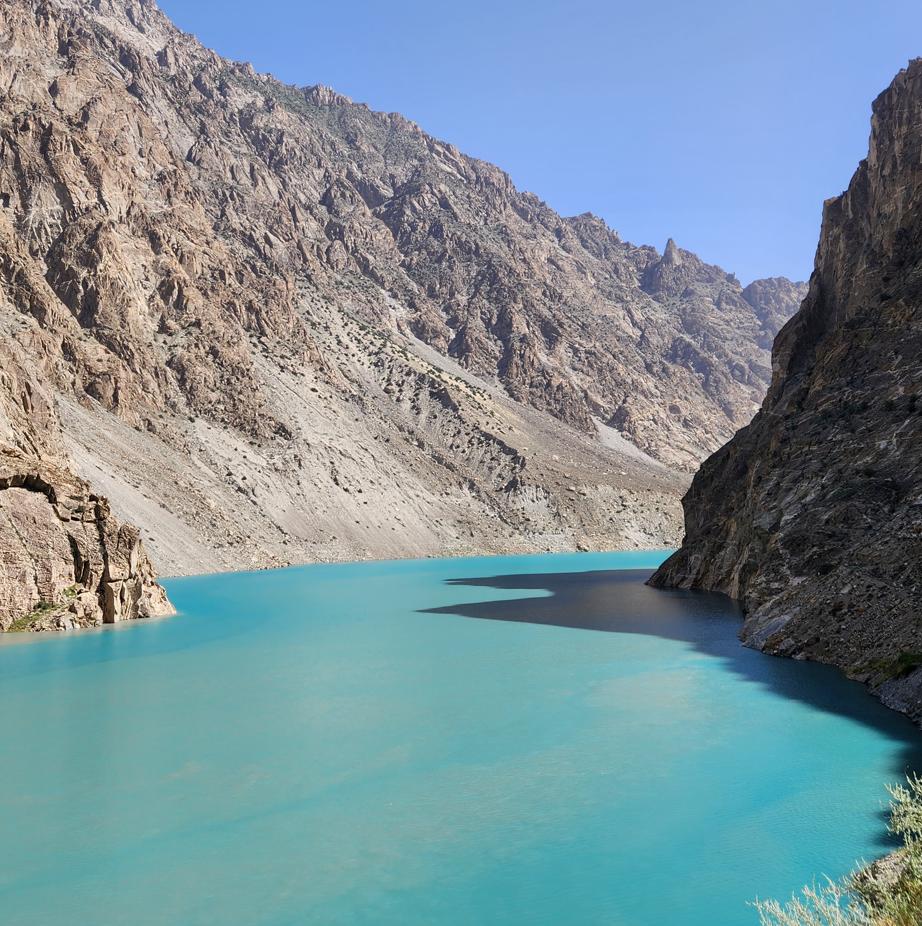
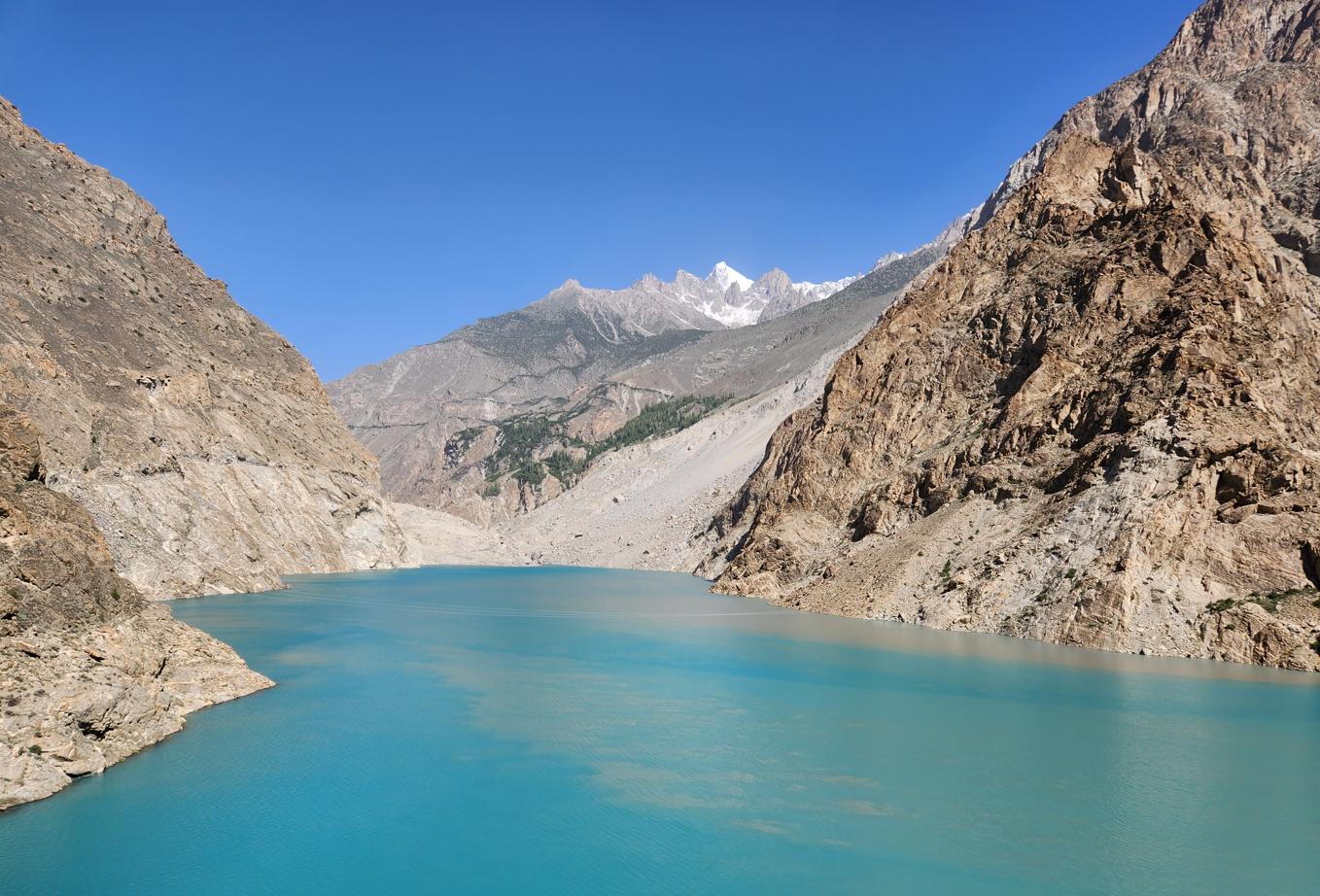
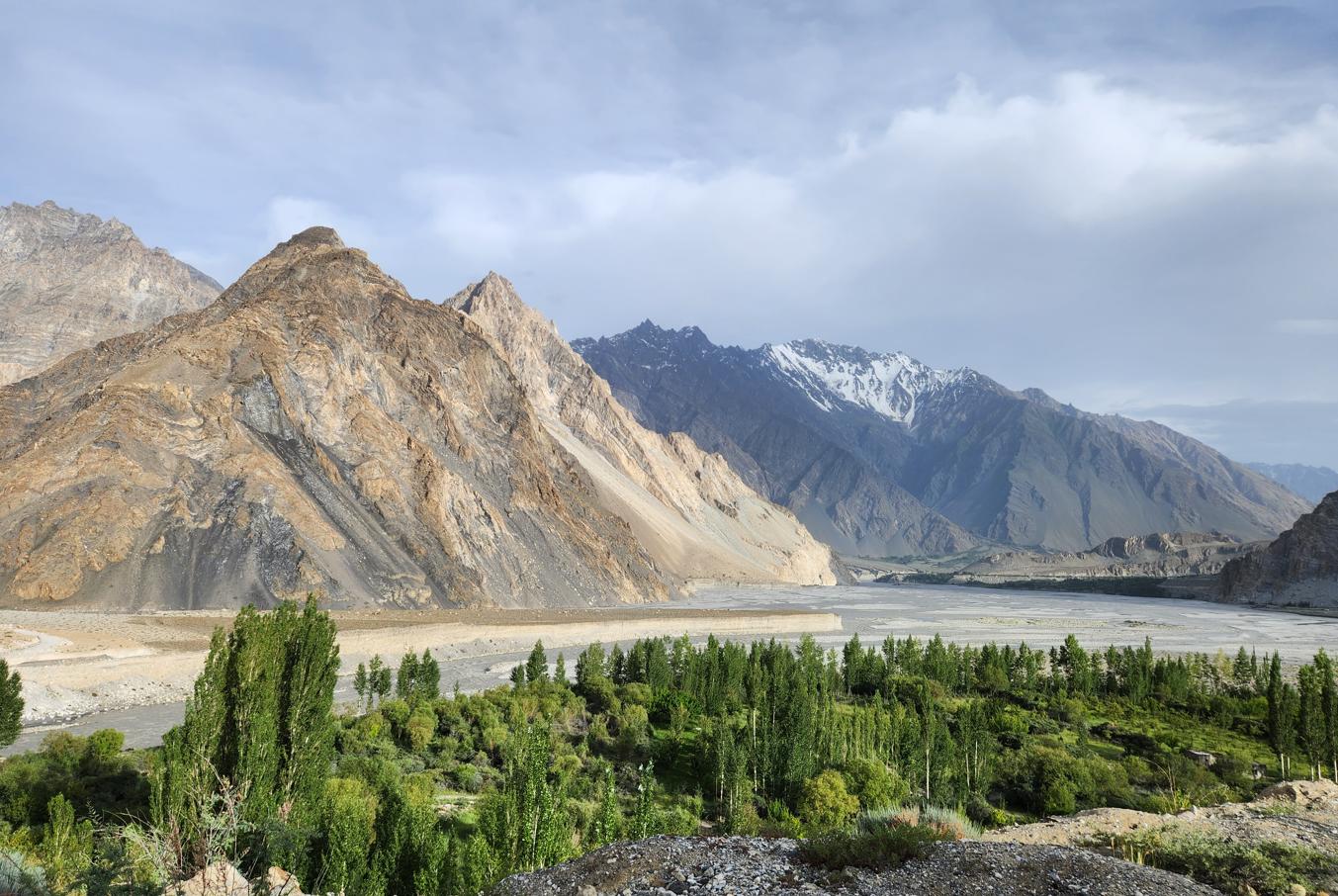
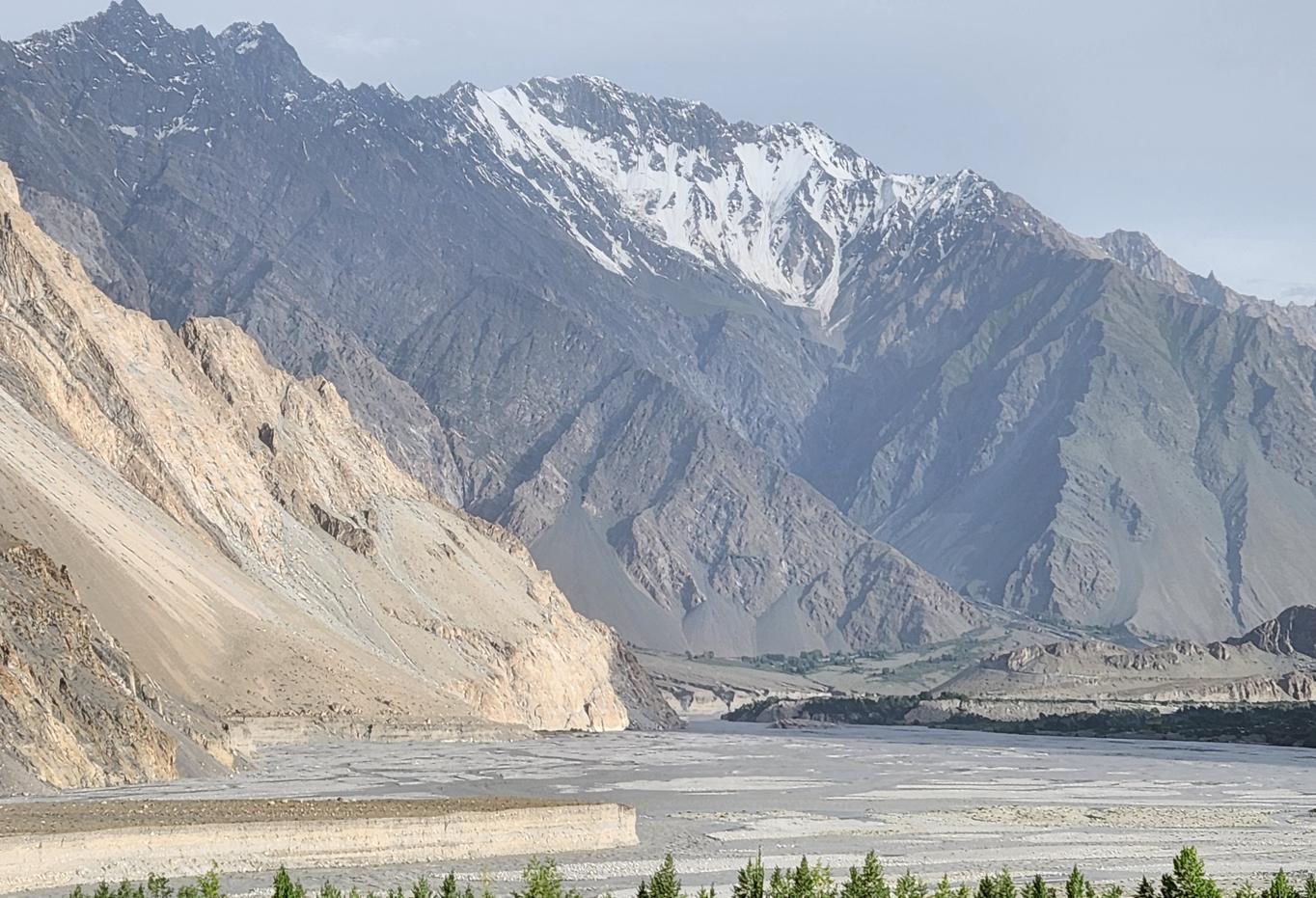
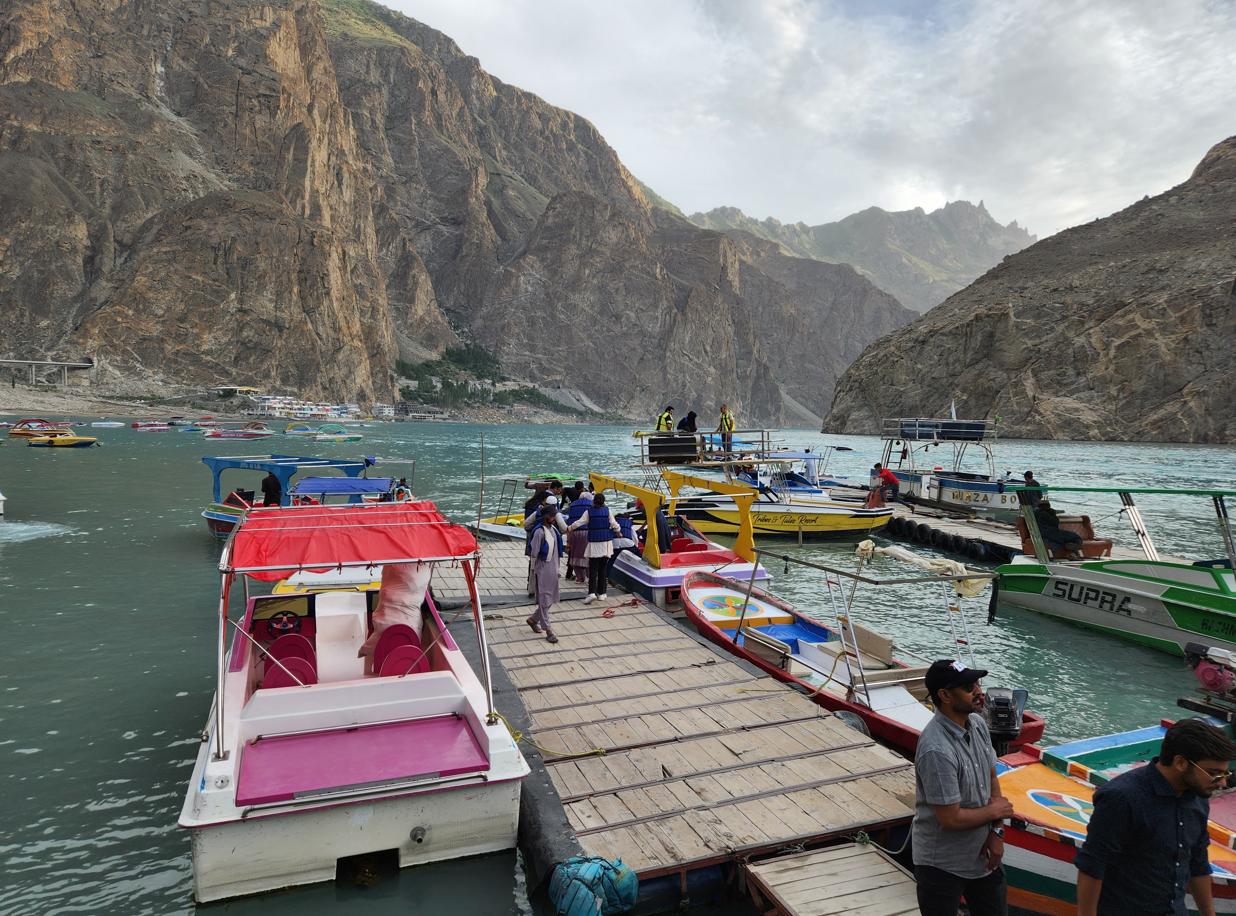
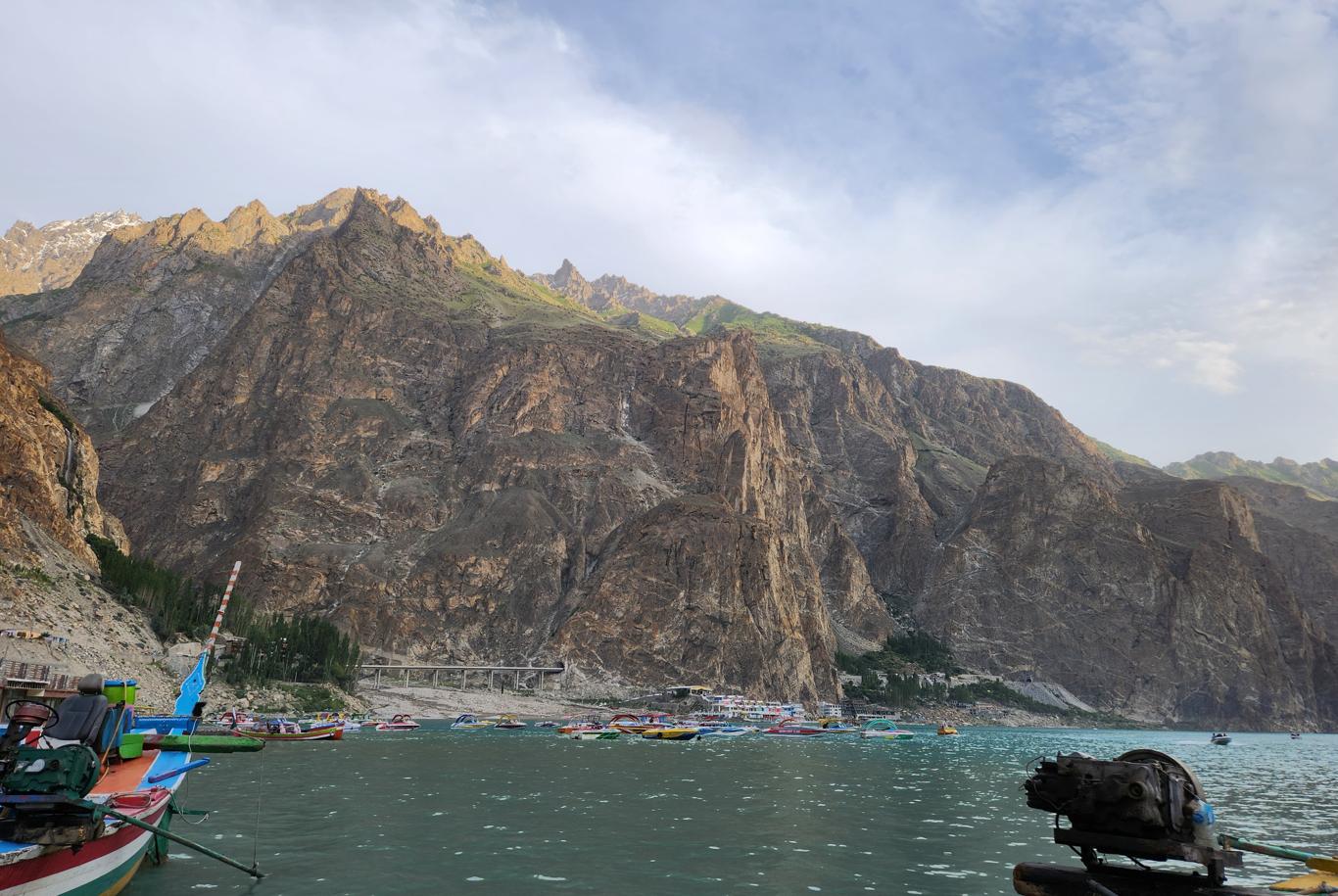
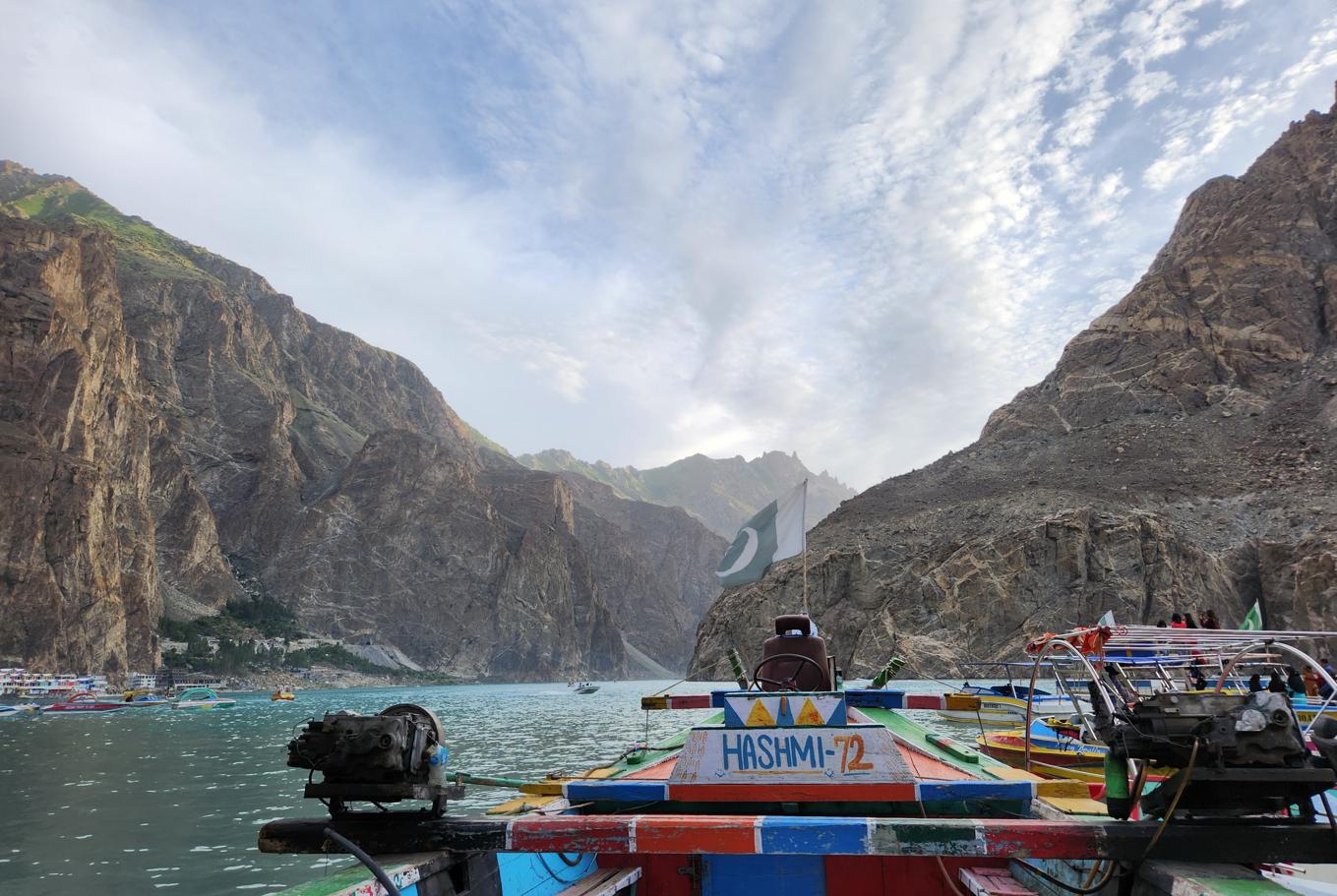
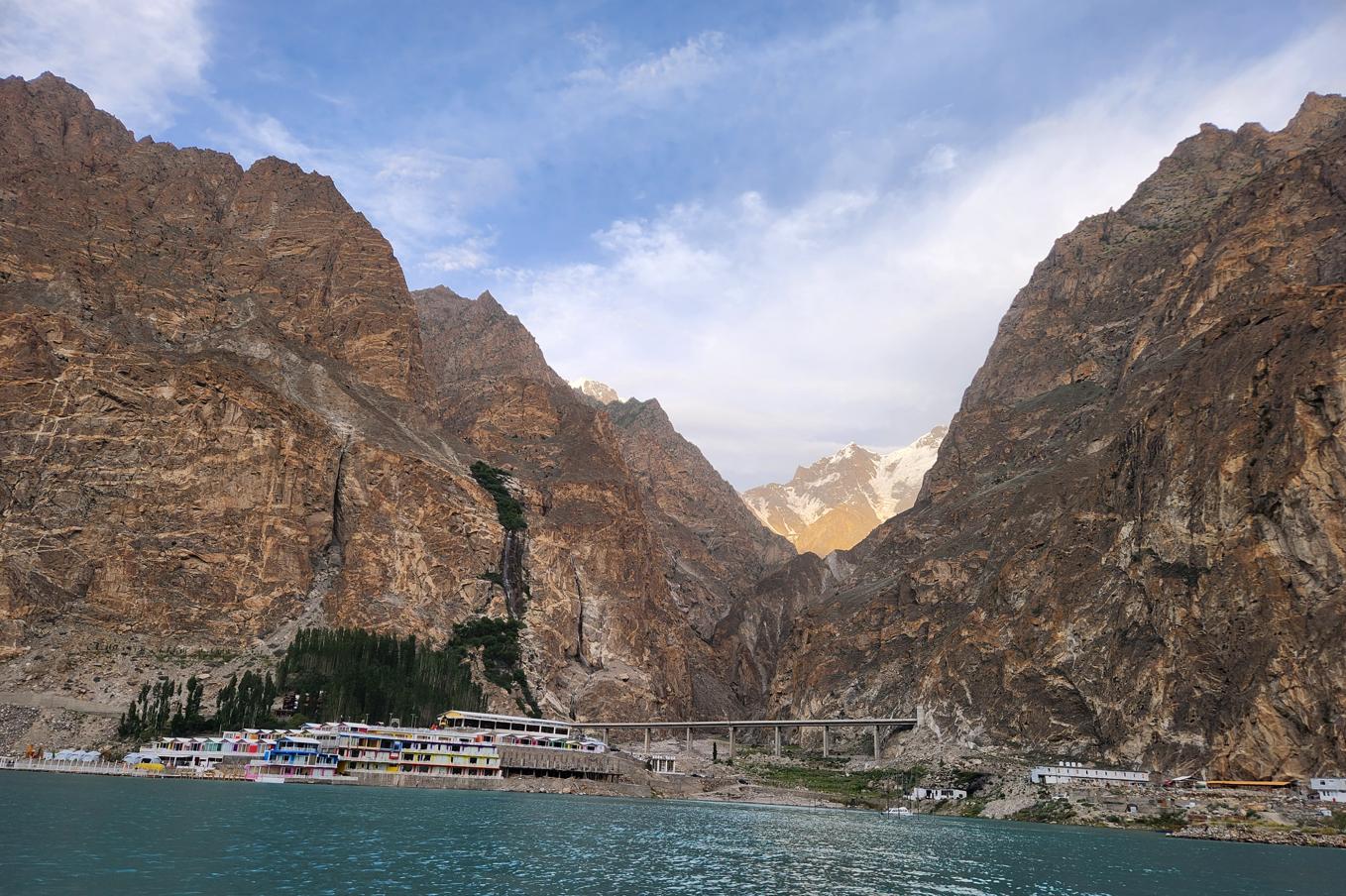
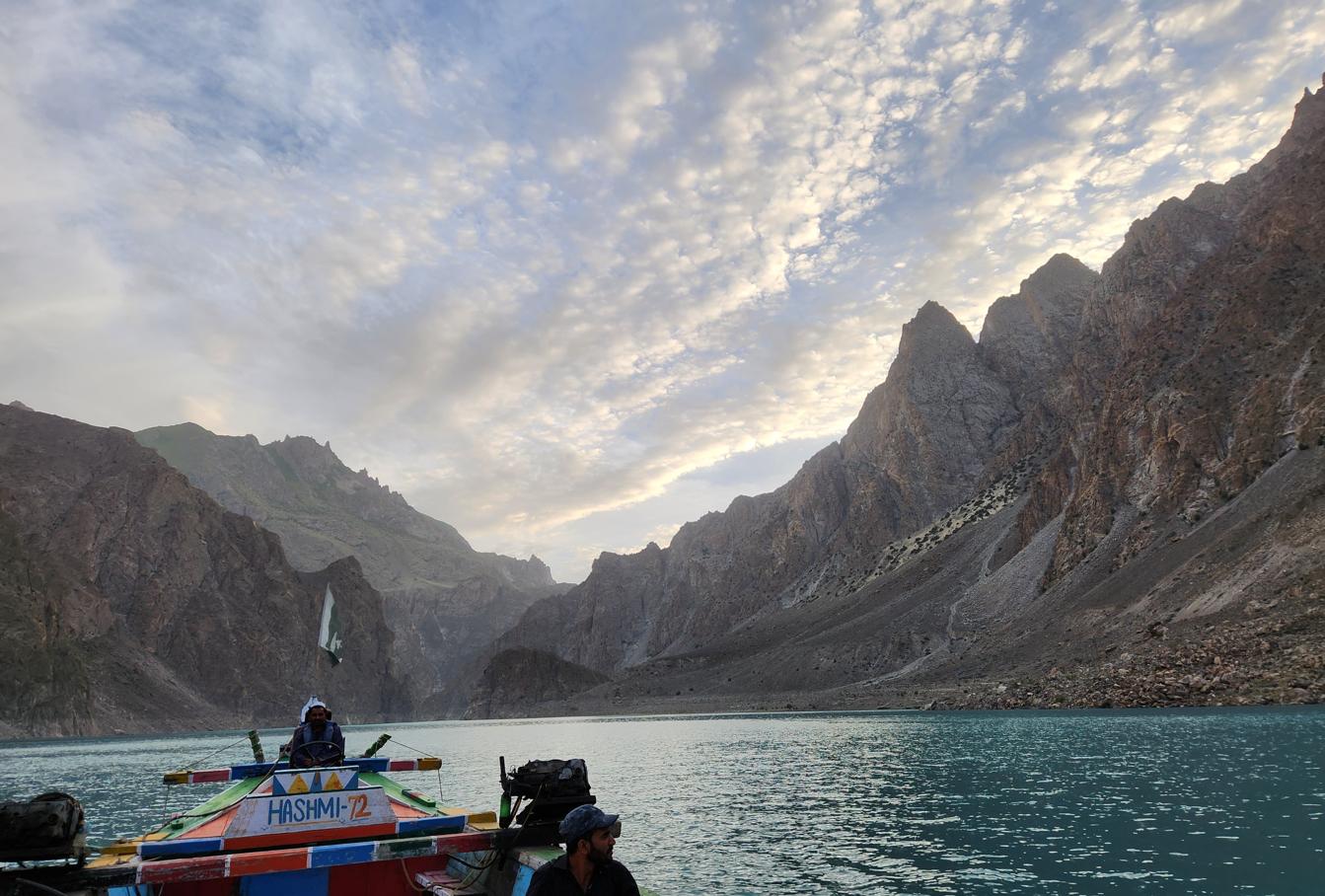
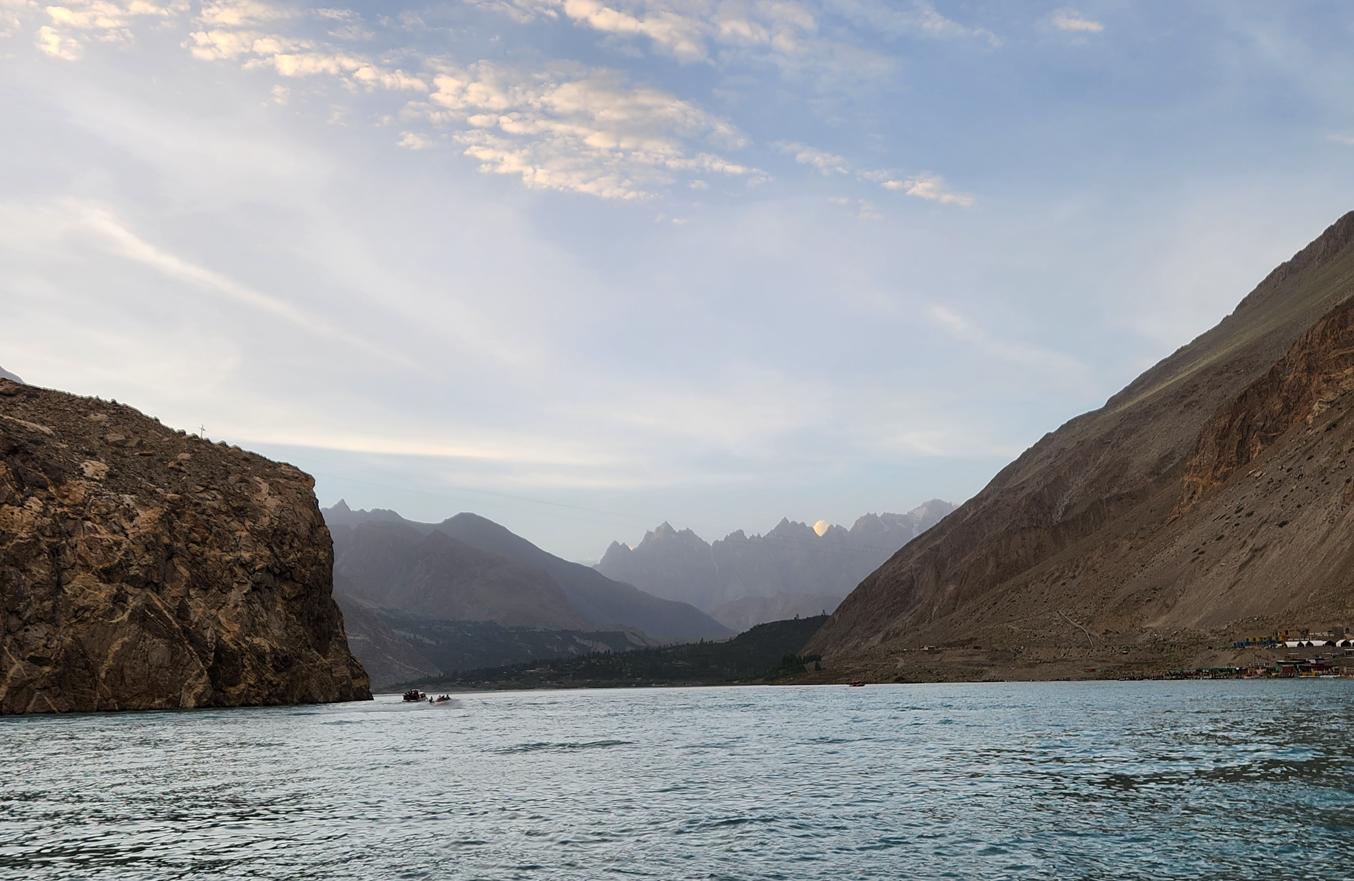
Attabad Lake does not appear on maps made before 2010. In January of that year, a landslide at the village of Attabad blocked the flow of the Hunza River, creating a lake of brilliant turquoise that submerged 24 kilometres of the Karakoram Highway and drowned three villages. Five people were killed immediately; twenty thousand were displaced; the communities above the landslide were cut off for five years.
The Pakistani government and the Chinese, working together under what would become the CPEC, eventually built five tunnels — the Pakistan-China Friendship Tunnels, seven kilometres in total — to bypass the submerged section of highway. The lake itself became a tourist attraction: turquoise water of an improbable, almost artificial brightness, set against grey rock and white glacier. Hotels and resorts appeared along its shores with the speed of markets responding to Instagram.
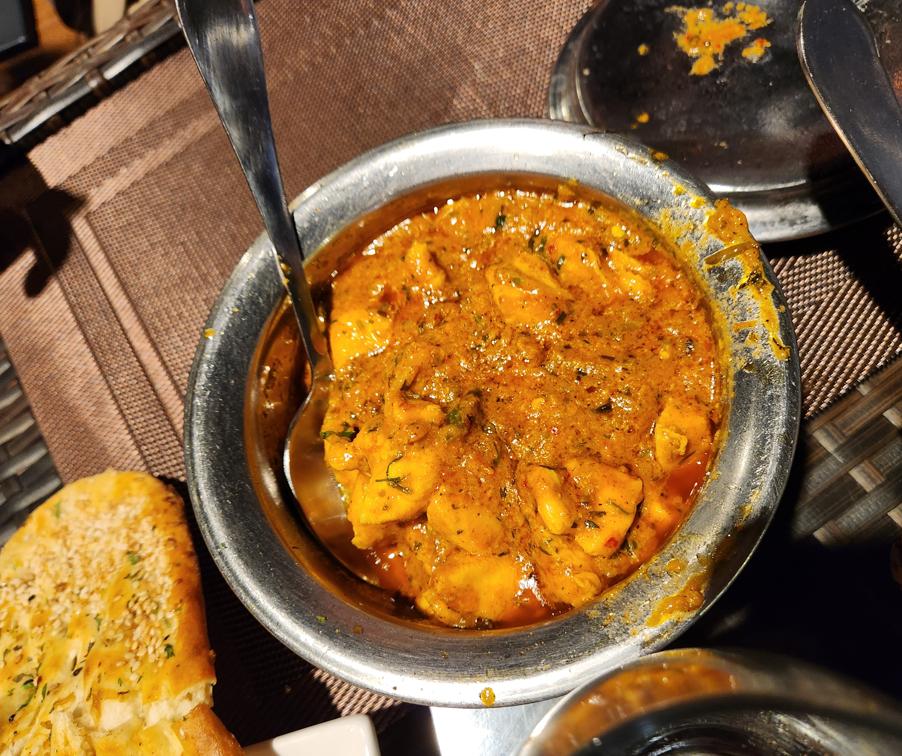
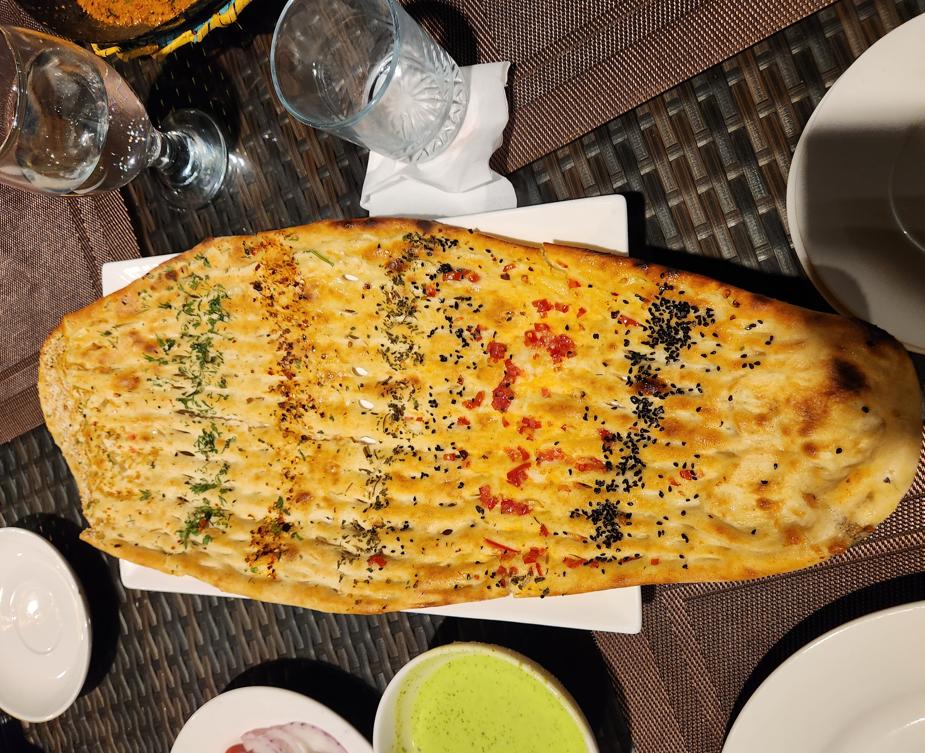
We arrived at the Luxus Hunza Attabad Lake Resort for dinner: a five-star establishment, polished wood and dramatic views, the kind of place that offers jet-skiing and SUP boards alongside its menu of Hunza cuisine. We ate outside, lakeside, the mountains dark above us, the water lit by the resort's lights. The food was excellent: Hunza chicken karahi, daal made with lentils grown at altitude that have a different density from the plains varieties, apricot juice made from the small firm apricots of the region that are nothing like the supermarket version.
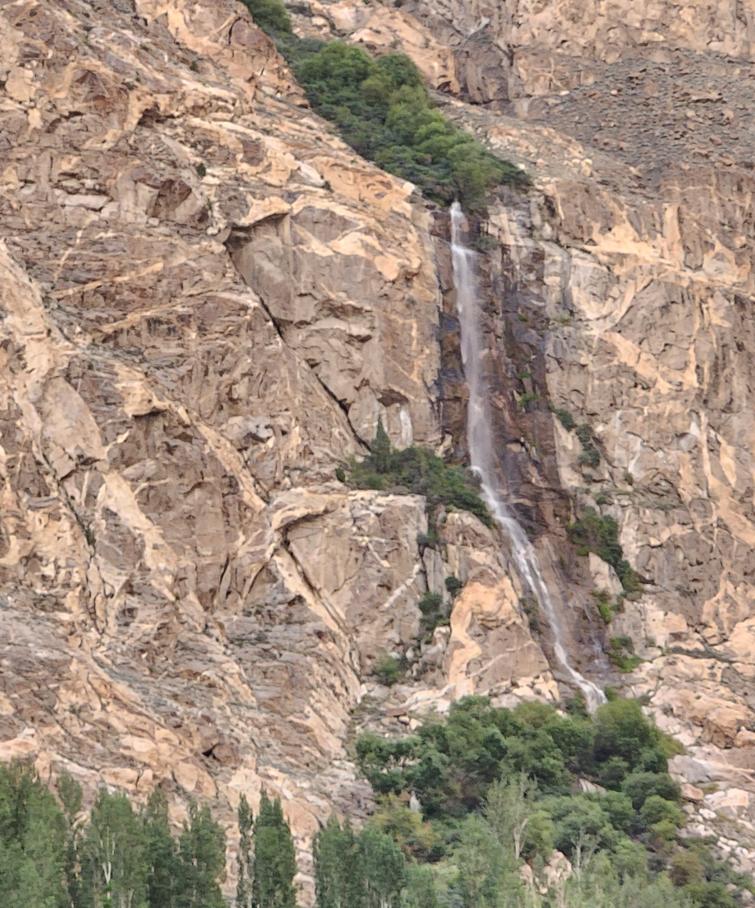
We were finishing dessert when the noise started: a mechanical roar from somewhere near the waterfall that feeds the stream flowing into the lake at the edge of the restaurant property. Someone went to look. The stream was overflowing — the water rising, spreading across the restaurant's terrace, beginning to enter the building.
What followed was, in its way, a perfect study in the varieties of human response to imminent disaster. Some staff continued serving food. Others shouted 'Run! Run! Go! Go!' and sprinted toward higher ground. Reception continued to check in new guests. Panicking kitchen staff collided with their calm colleagues in the corridors. Our driver Wassim had the SUV running before we were out of our chairs.
In the car park, water was already reaching the vehicles. We drove to high ground through a small traffic jam of other people doing the same thing, and then sat on the road above the lake while other cars arrived around us, their passengers peering back toward the resort in the darkness. Later, Jamal reported that some hotel rooms had been flooded but no one had been hurt.
'This is Attabad,' Jamal said. 'The lake was made by disaster. It will always remember that.'
The geological argument for this view is actually not unreasonable. The landslide dam that created the lake is made of unstable material. Hydrologists have noted that if the dam were to fail, the resulting flood would be catastrophic downstream. The resorts built on its shores are, from a certain perspective, an act of collective denial — or, more generously, of the Pakistani capacity to locate beauty in the precarious and find pleasure in the shadow of catastrophe. This, too, seemed to me characteristically Pakistani.
Hussaini: The Most Dangerous Bridge in the World
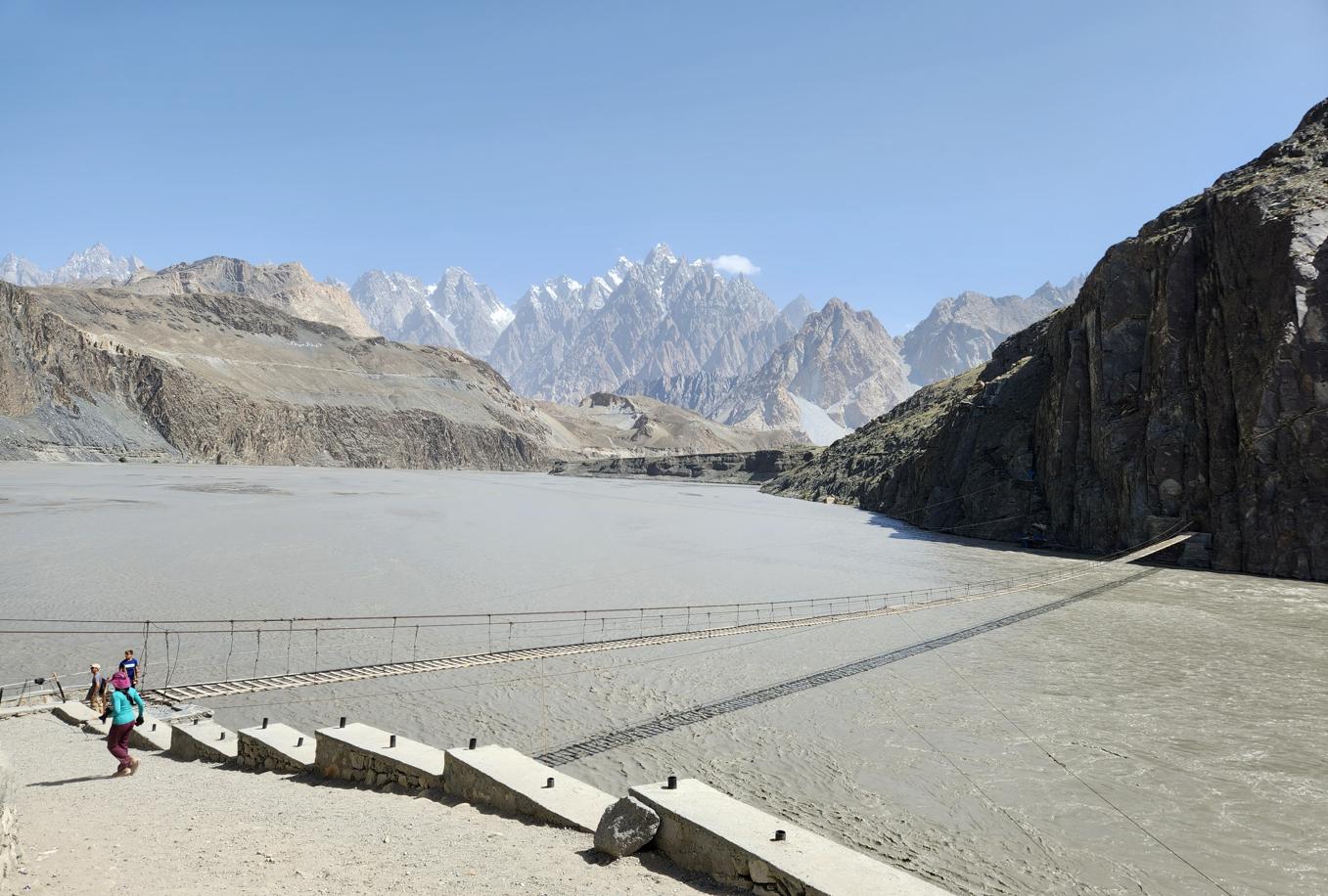
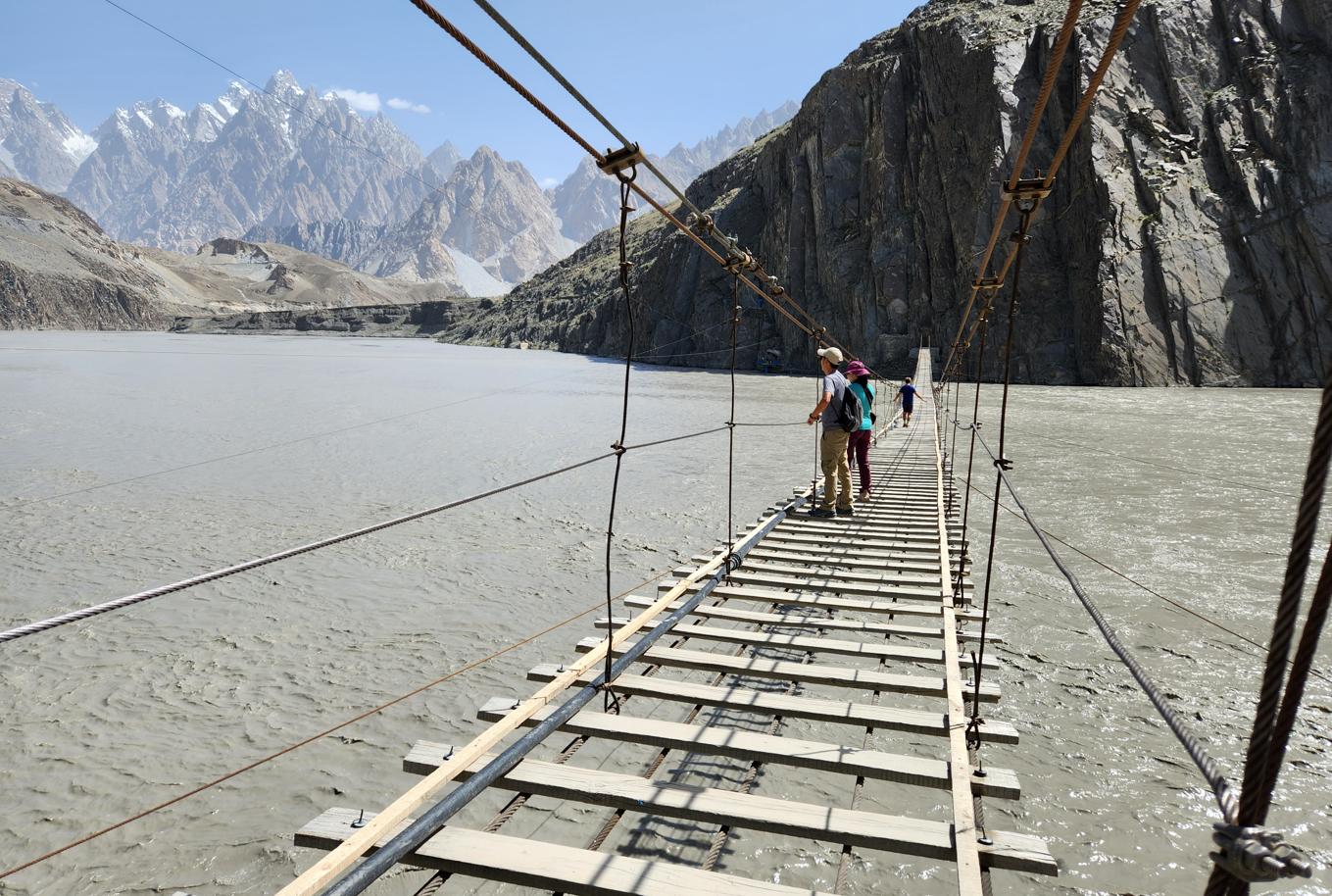
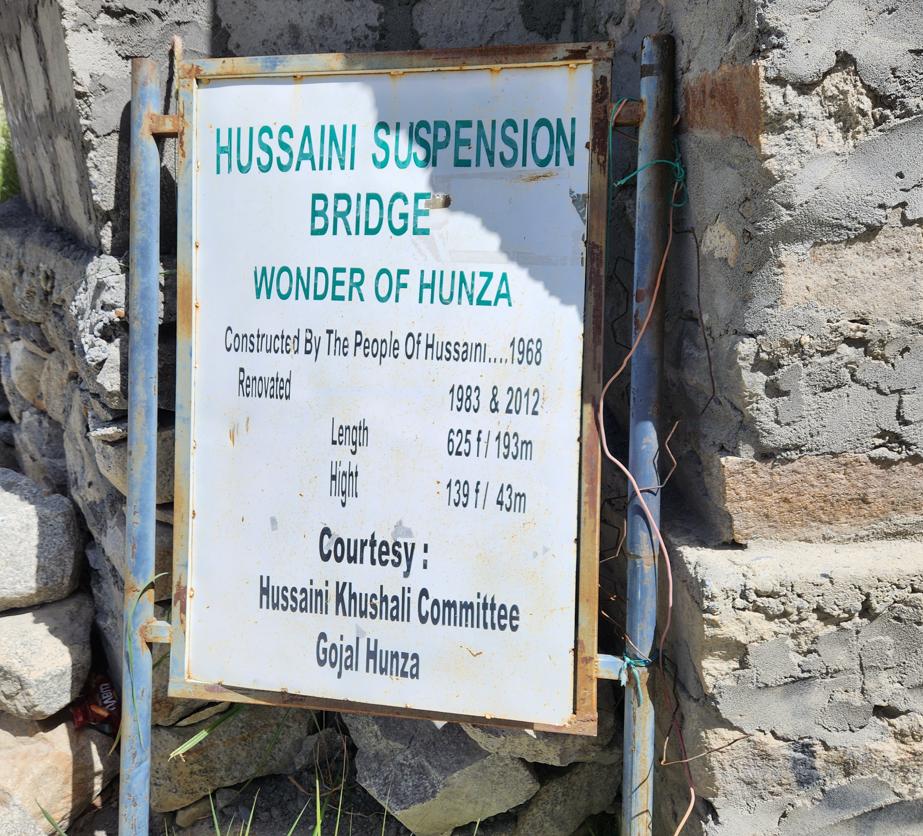
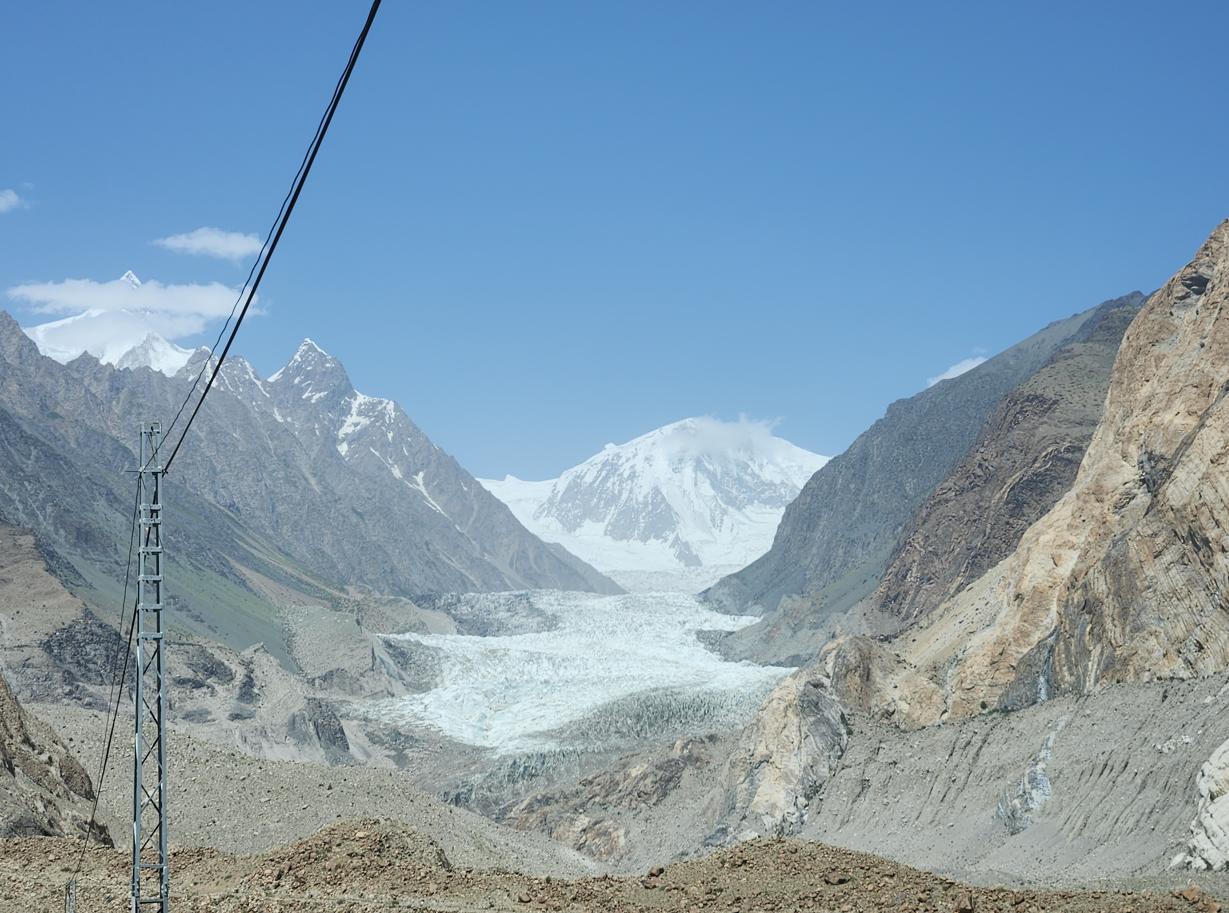
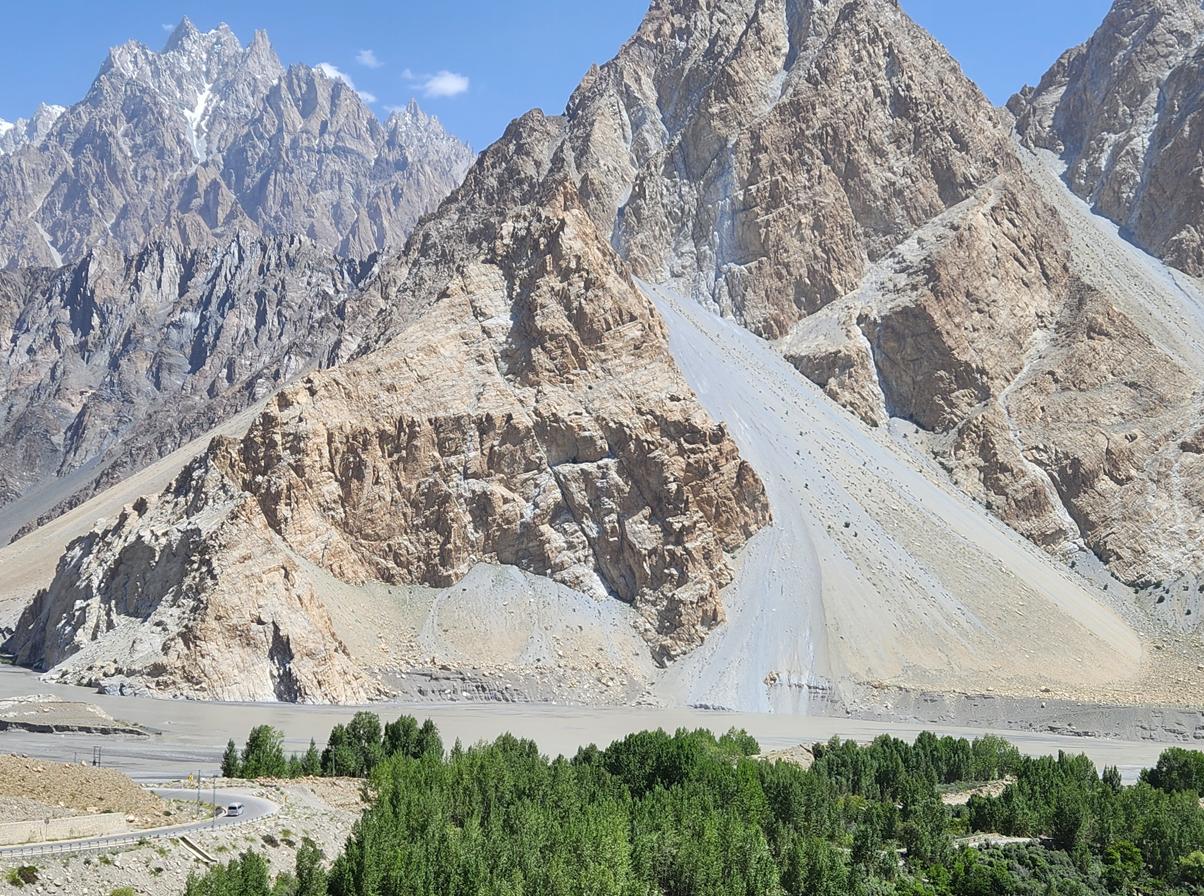
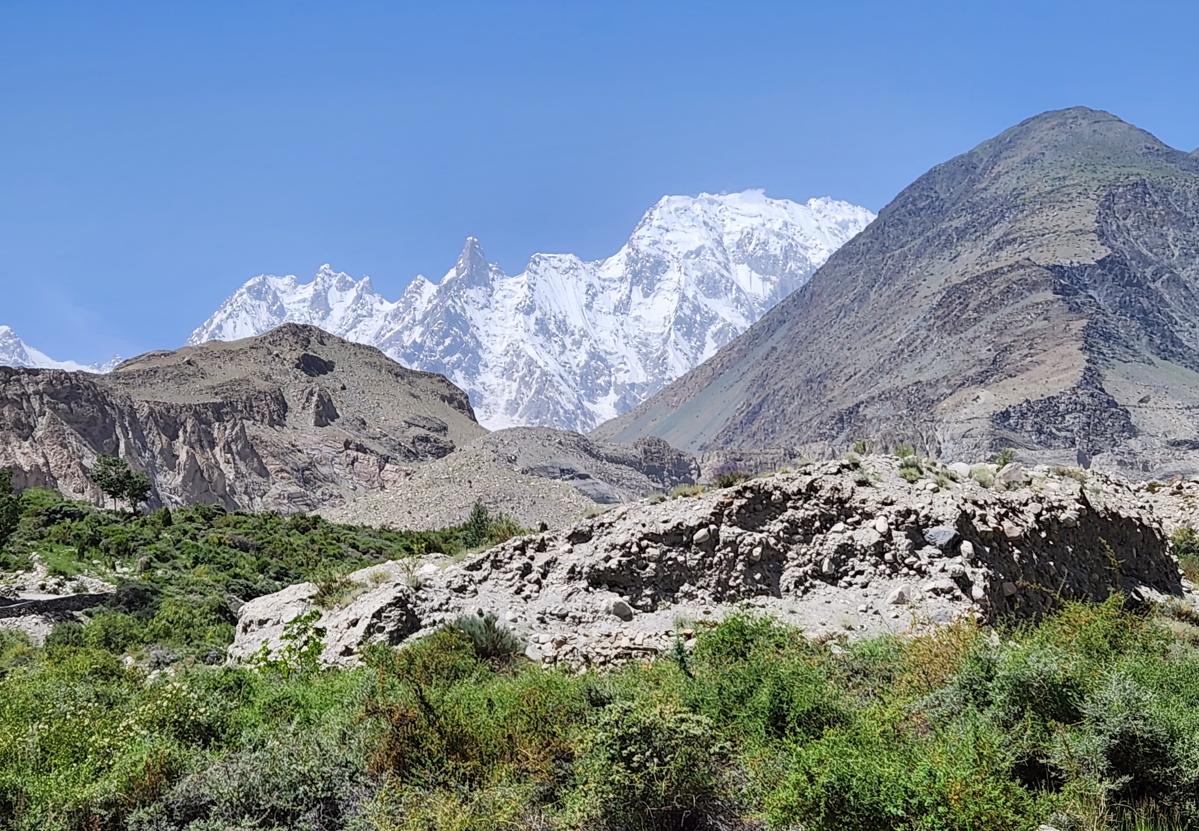
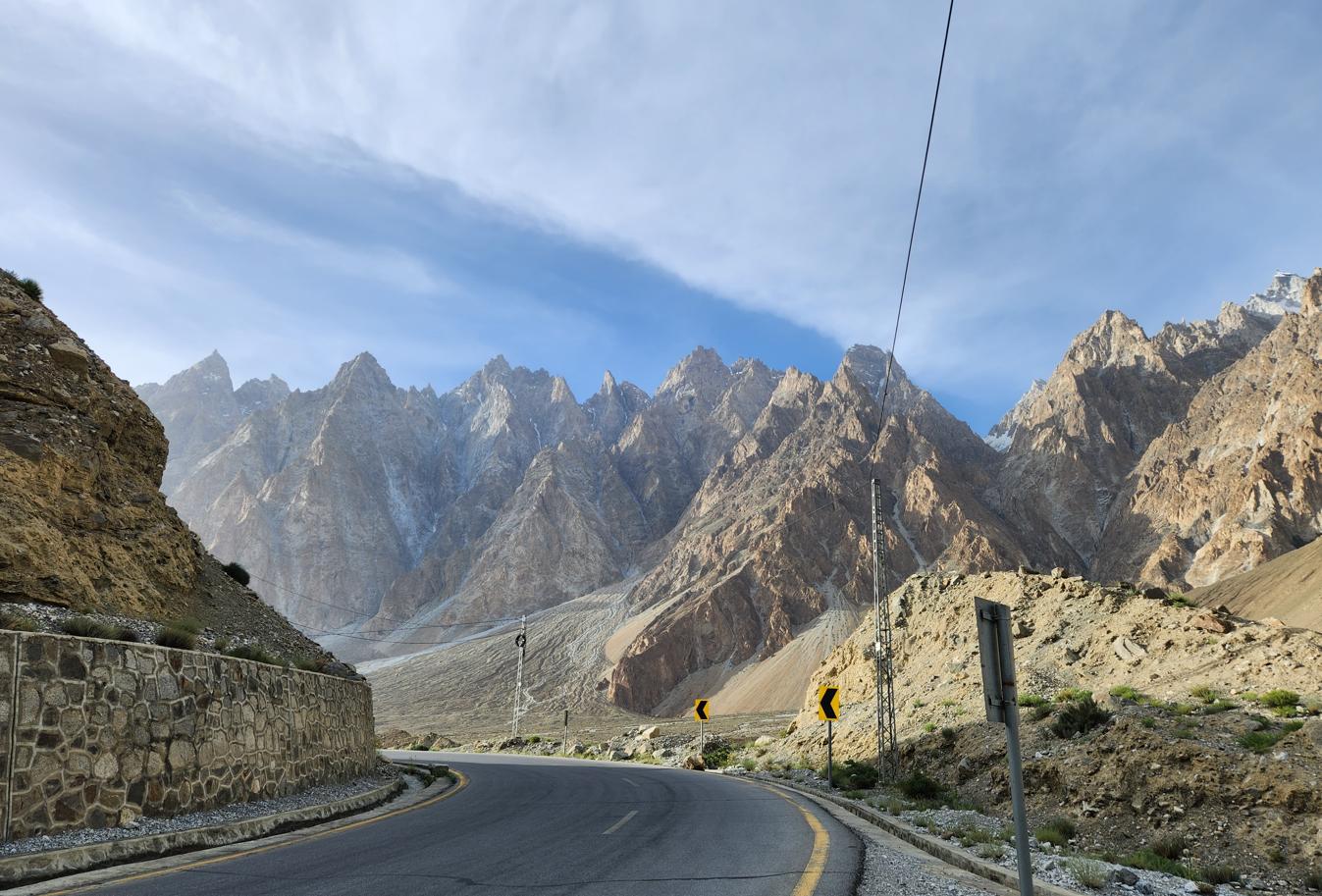
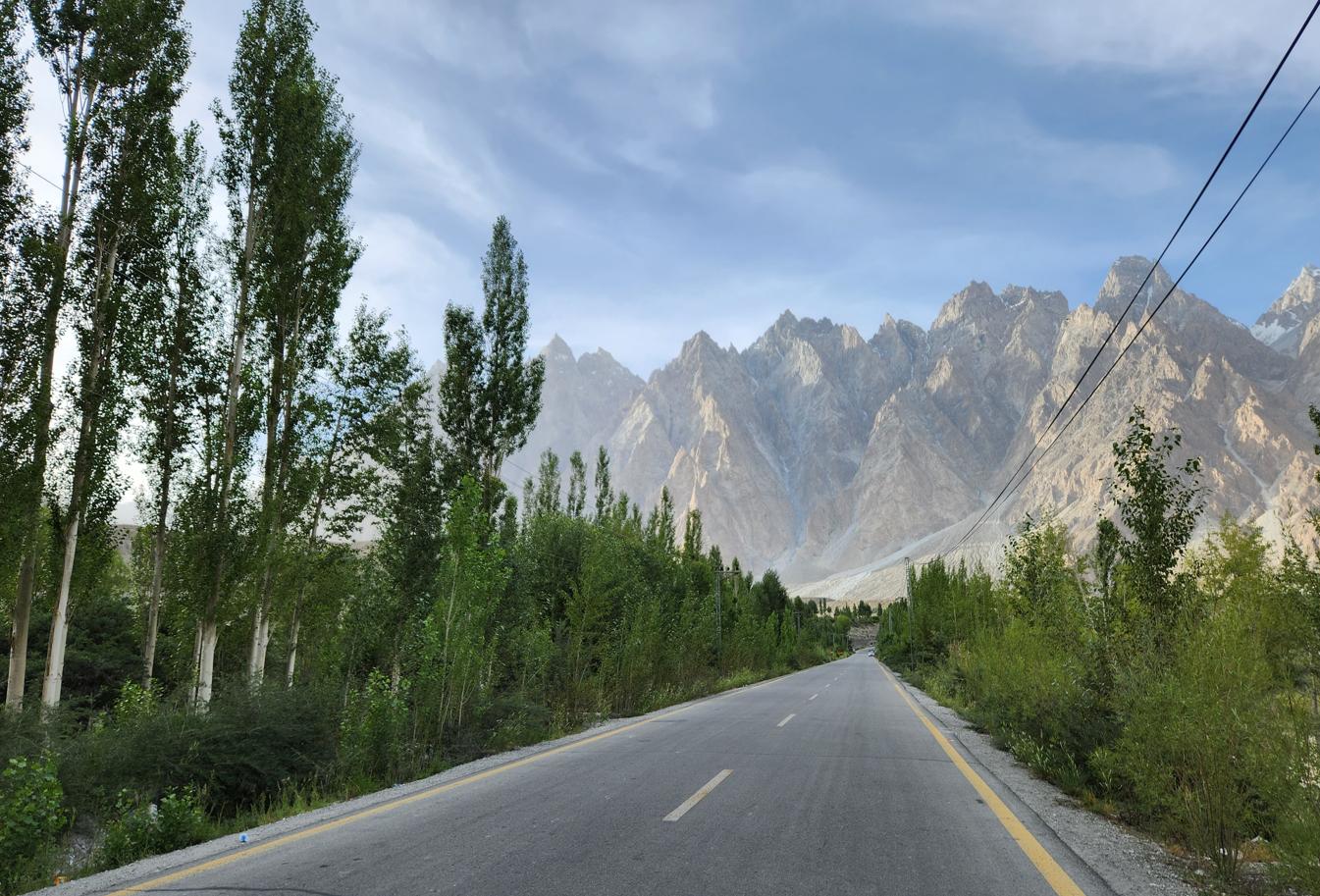
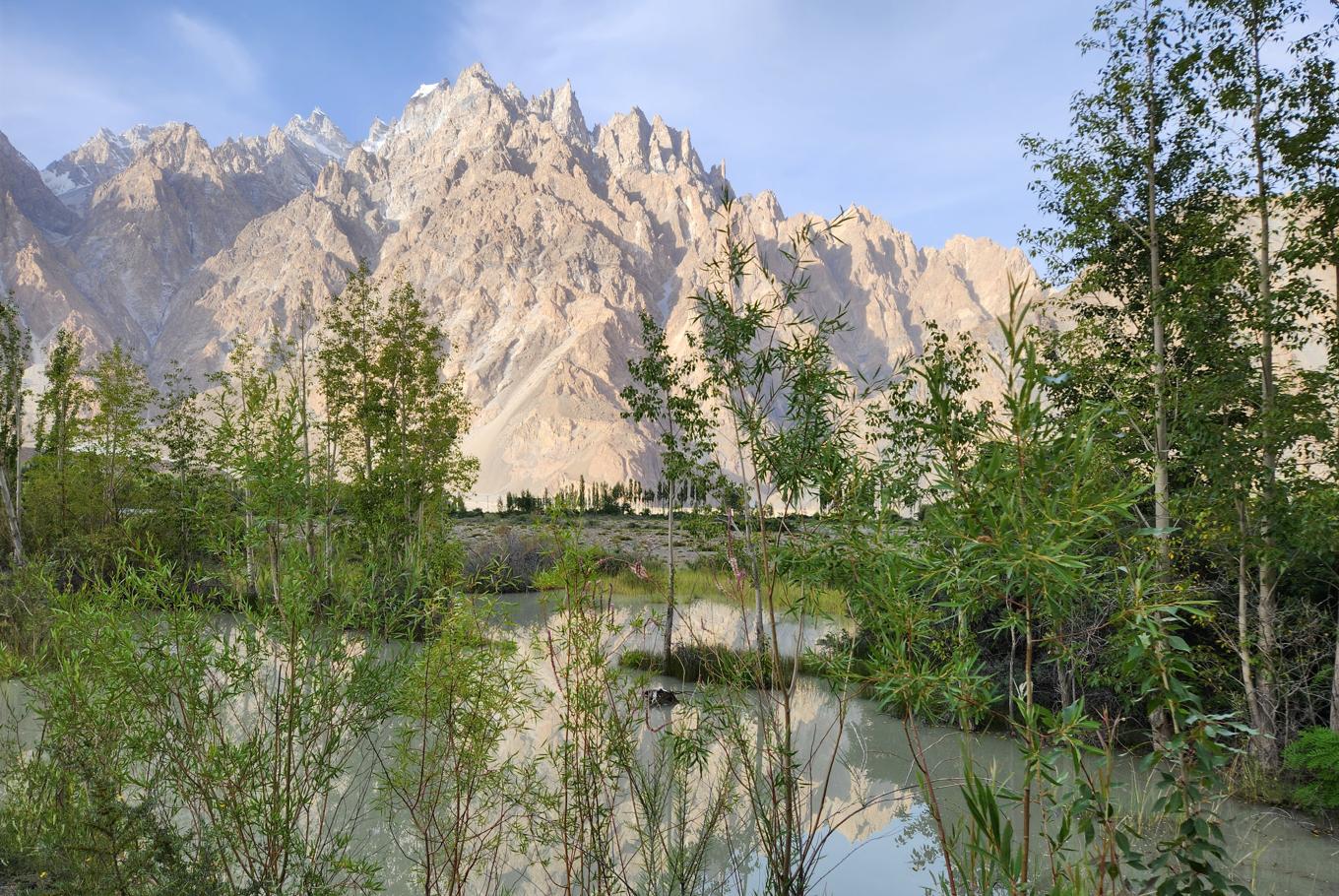
North of Attabad, past the lake and the Chinese-built tunnels that now bypass it, we stopped at the Hussaini Suspension Bridge — a 193-metre span of rusting cable and wooden slat strung 43 metres above the milky, fast-running Hunza River, connecting Hussaini village to Zarabad on the far bank. It was originally built somewhere else entirely during British rule and moved to this crossing only in 1968, on the orders of the last Mir of Hunza, Muhammad Jamal Khan, at the request of villagers who had grown tired of whatever alternative had preceded it. Bridges like this remain, notwithstanding the highway a few hundred metres below, the only way in or out for some communities cut off by the region's unforded rivers and near-vertical terrain — a reminder that the Eighth Wonder of the World has never quite reached everyone it passes. The bridge's setting alone would have justified the stop: the Passu Cones rise directly behind it, a jagged wall of bare rock spires cut so sharply against the sky that they look less like a mountain range than something torn rather than eroded into shape, with the pale scar of the Passu Glacier draining down between them into a valley of poplar and glacial silt. Even the drive in was a kind of theatre, the road running for long stretches directly beneath the Cones with nothing to do but watch them change angle through the windscreen.
Online, the Hussaini Bridge has a reputation as the most dangerous in the world, its planks shown missing or rotted through in videos calculated to induce vertigo in anyone watching from a sofa. The bridge we found was in considerably better repair, though the swaying in a moderate wind, combined with the glare of sunlight on the fast water below, produced its own reliable optical illusion — the sense, several planks in, that the bridge itself was drifting rather than merely moving underfoot. Kelly and Alan walked its full length without apparent difficulty. Shaun made it halfway before turning back. I managed six planks, had my photograph taken as evidence of the attempt, and retreated to solid ground with what I chose to regard as strategic rather than cowardly restraint.
Jaulian — The Last Monastery and a Buddhist's Prayer
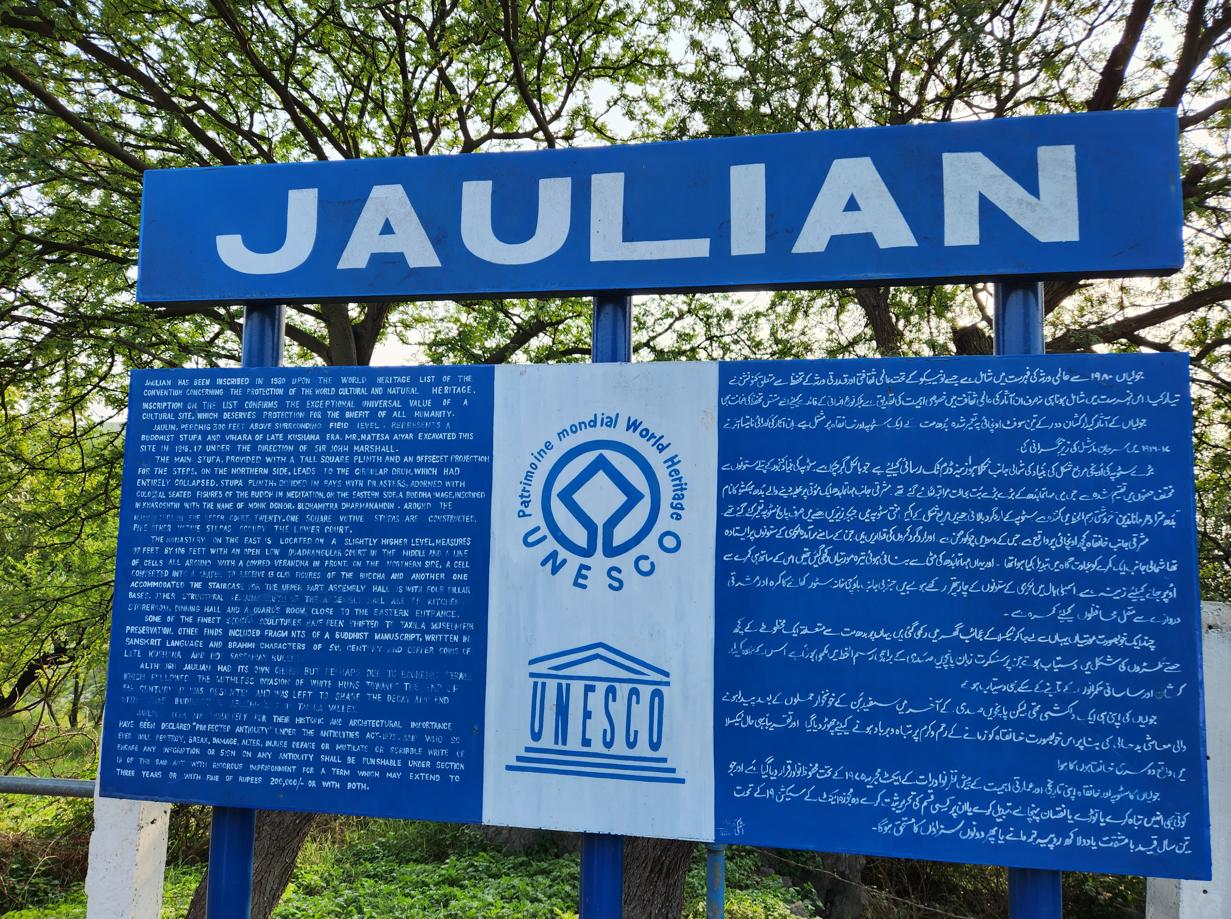
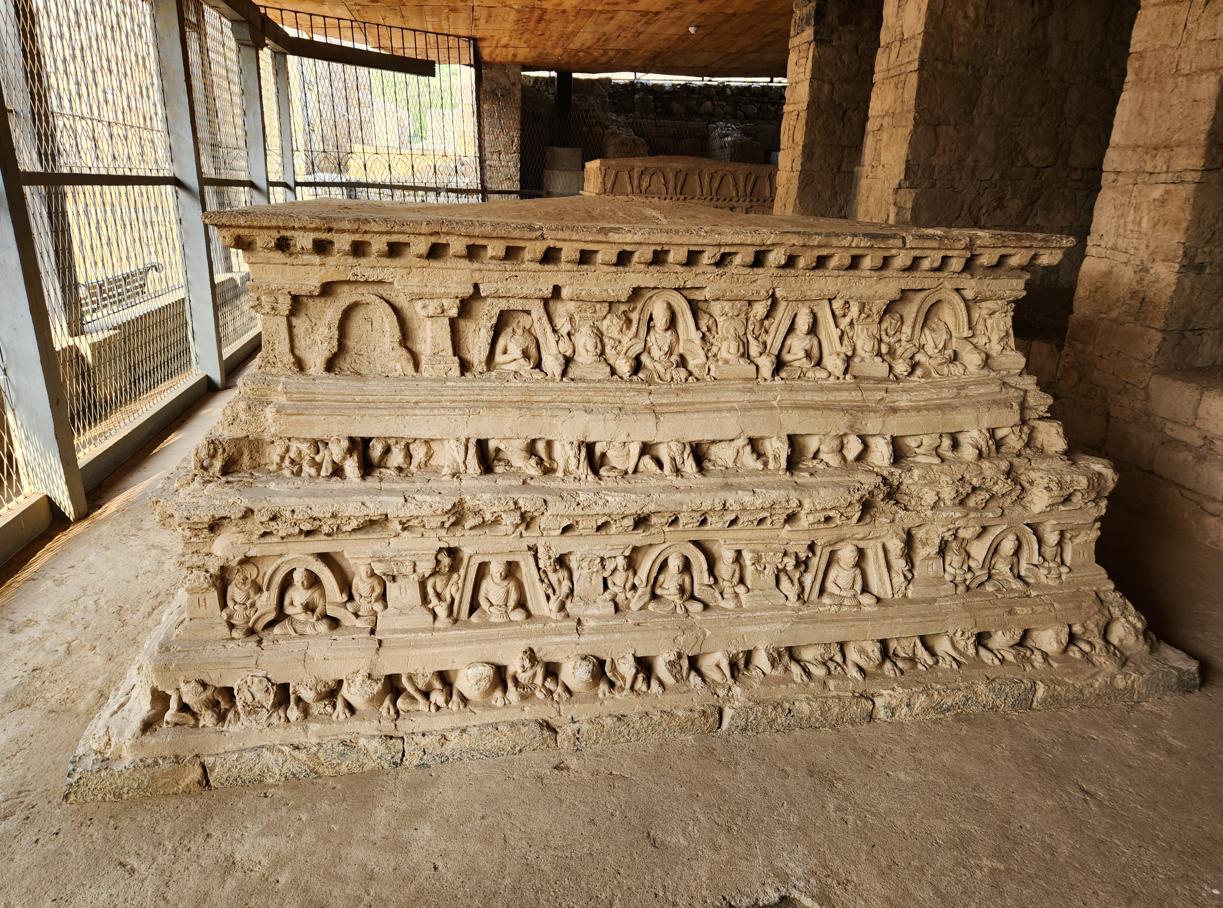
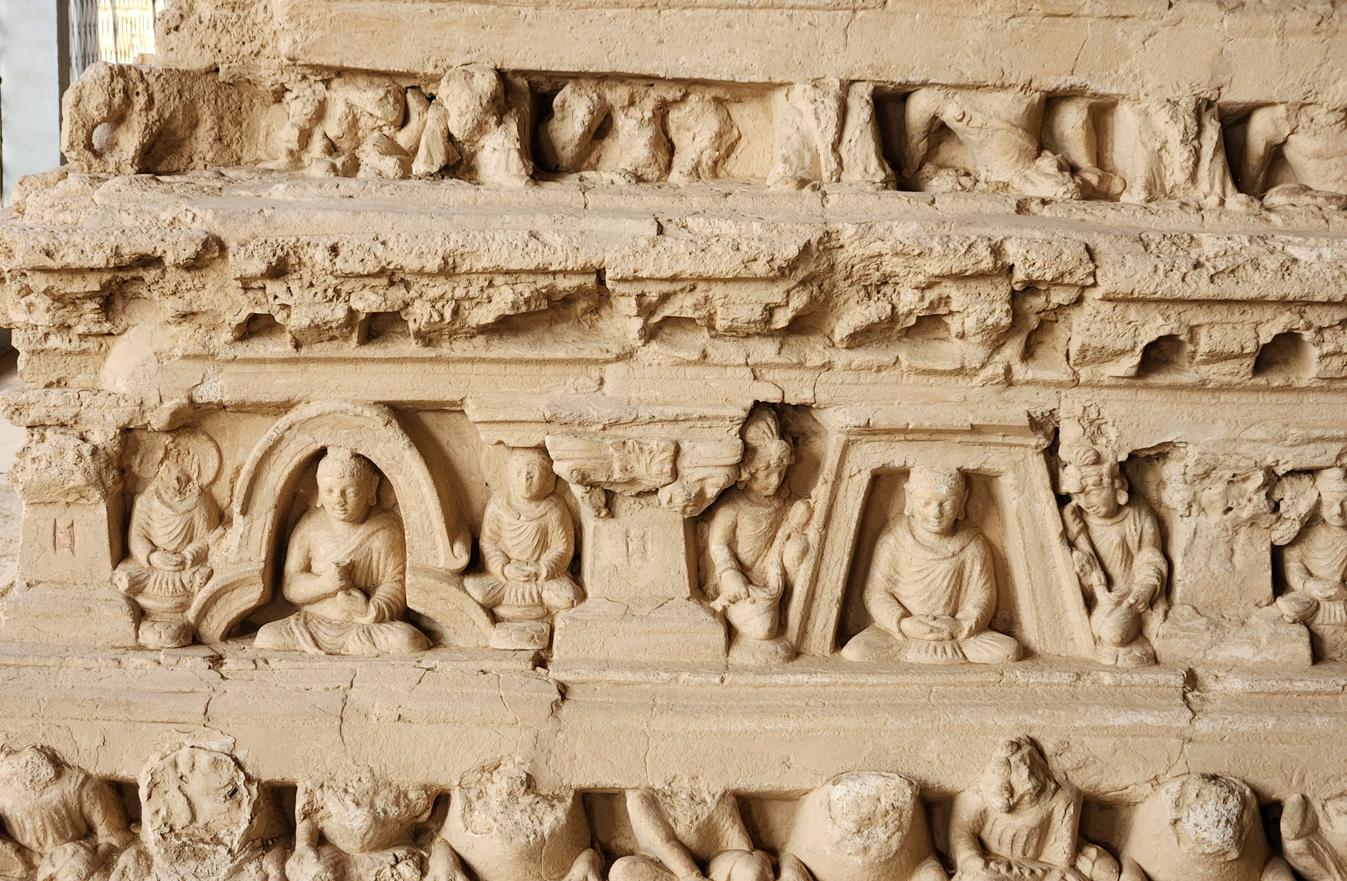
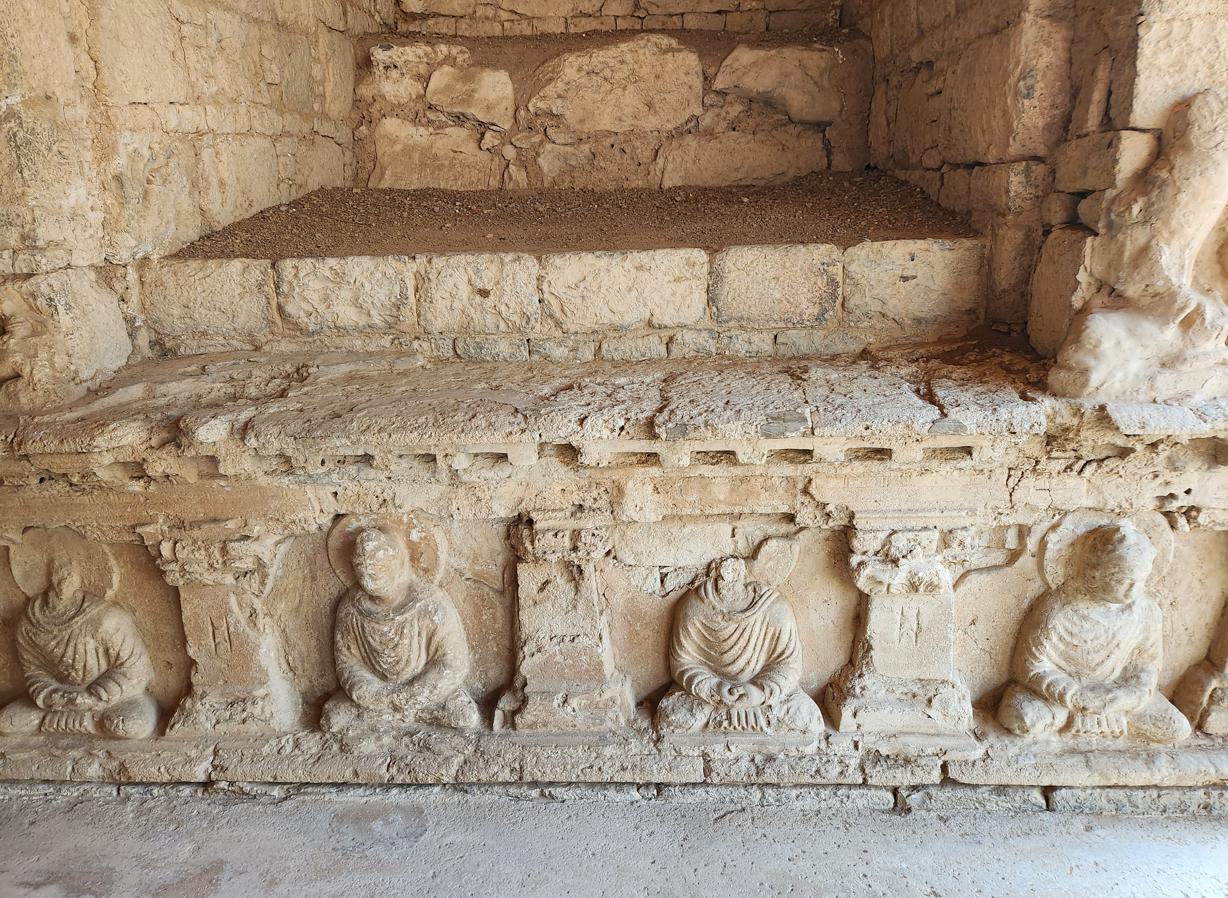
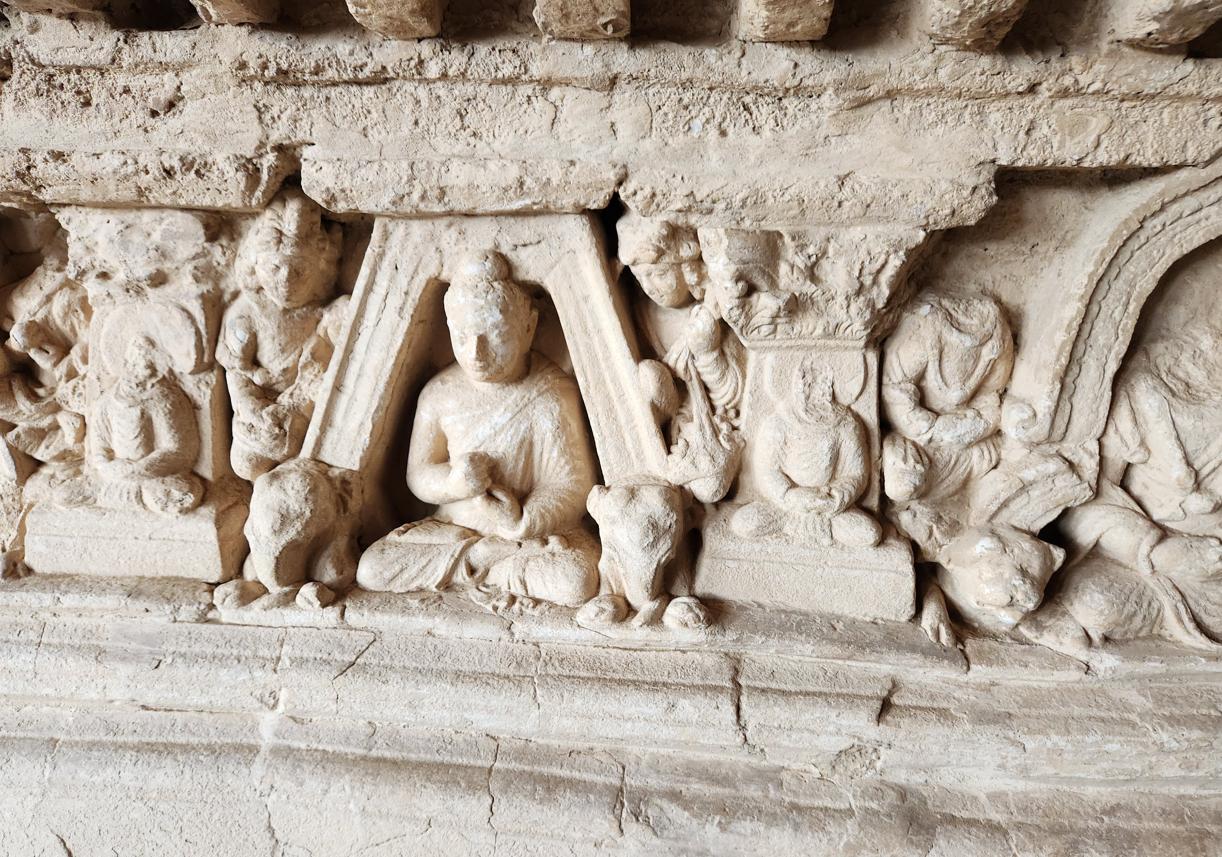
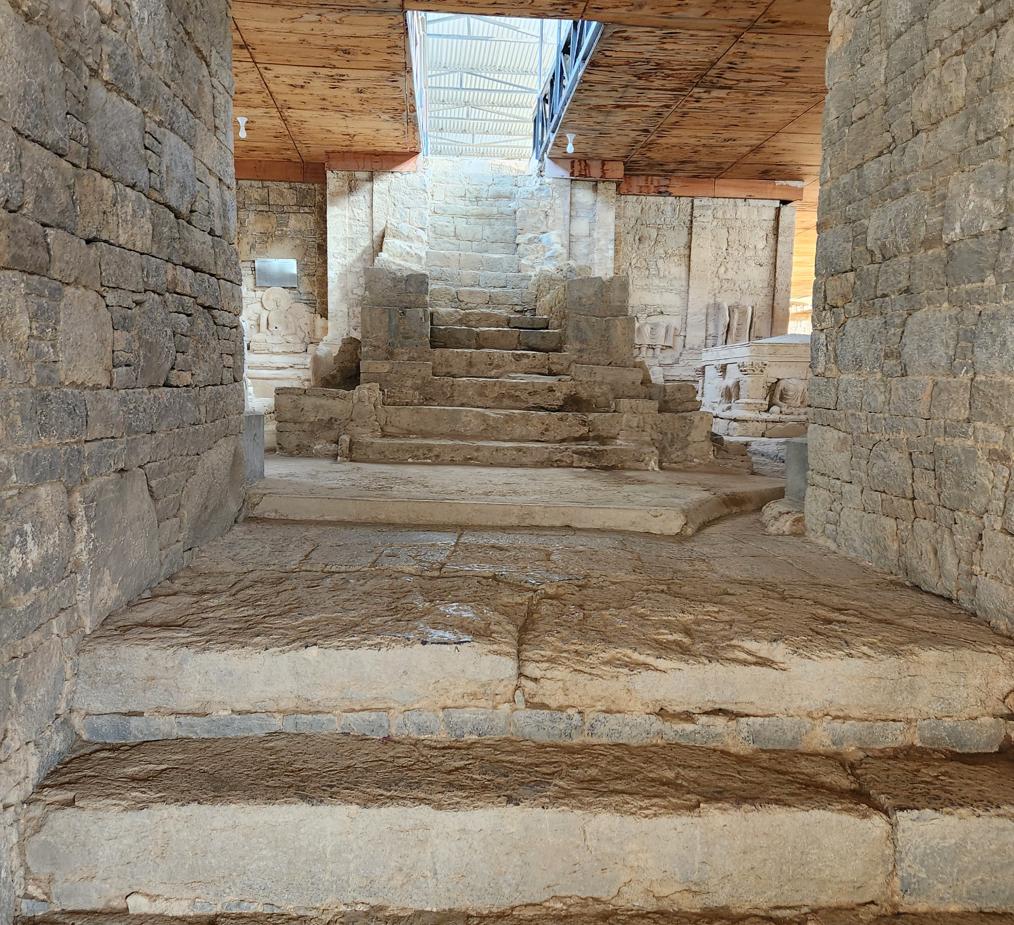
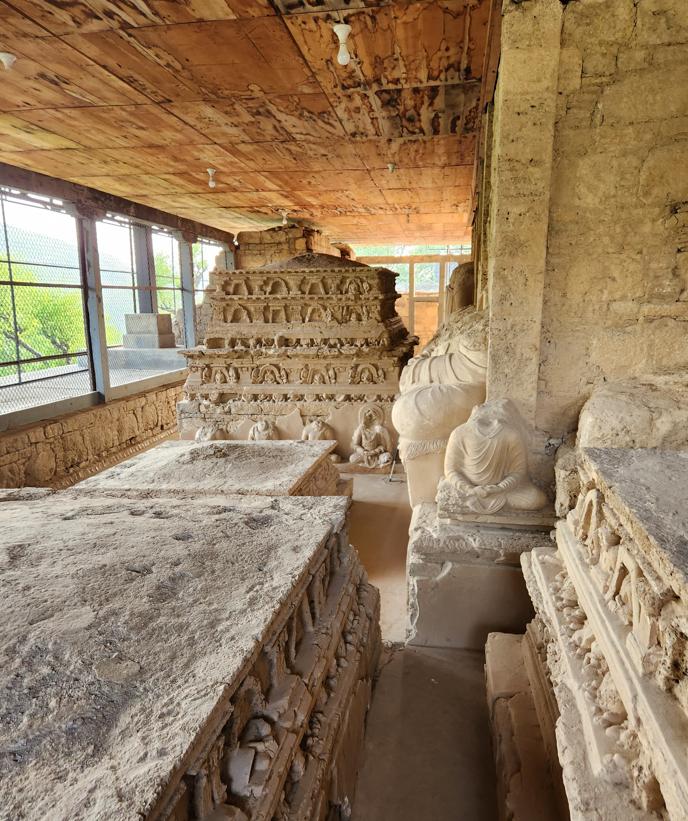
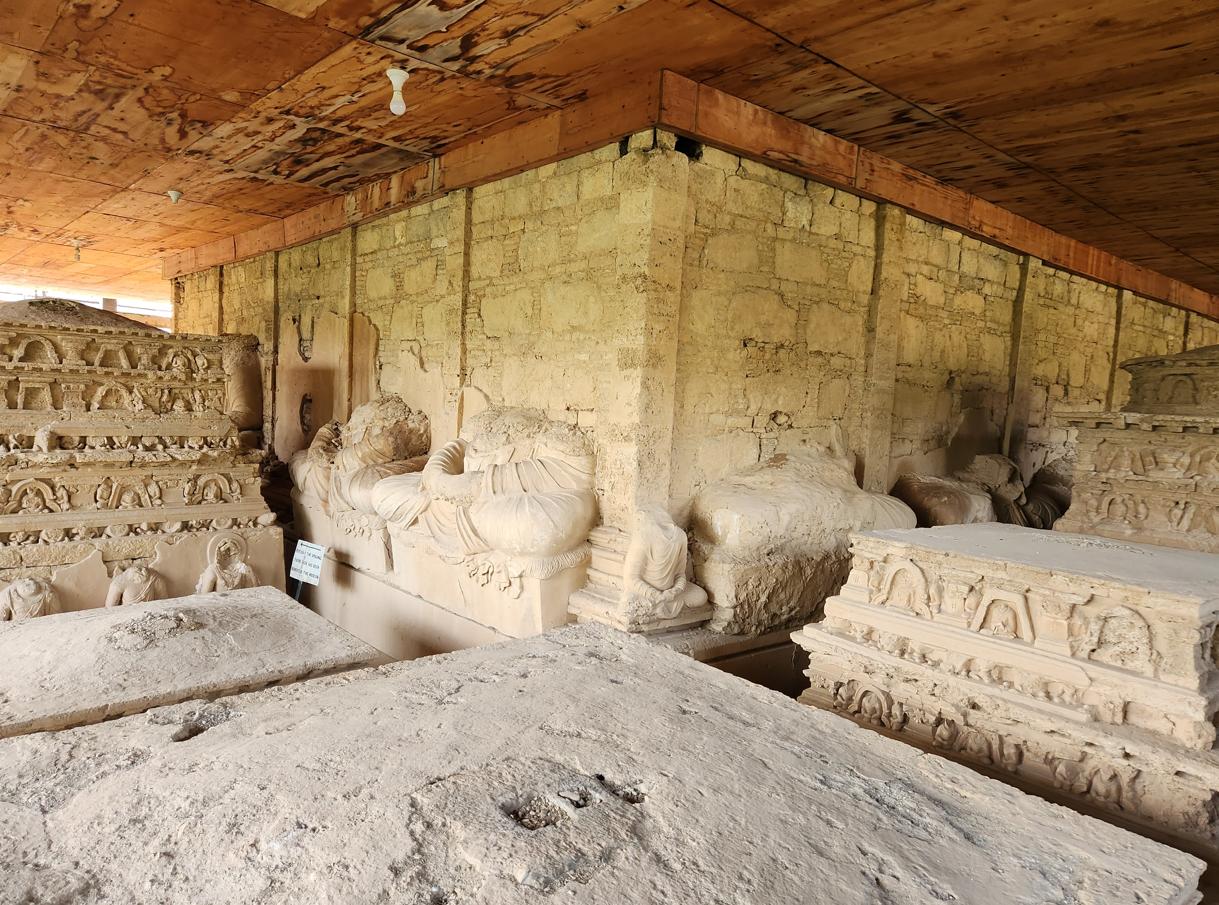
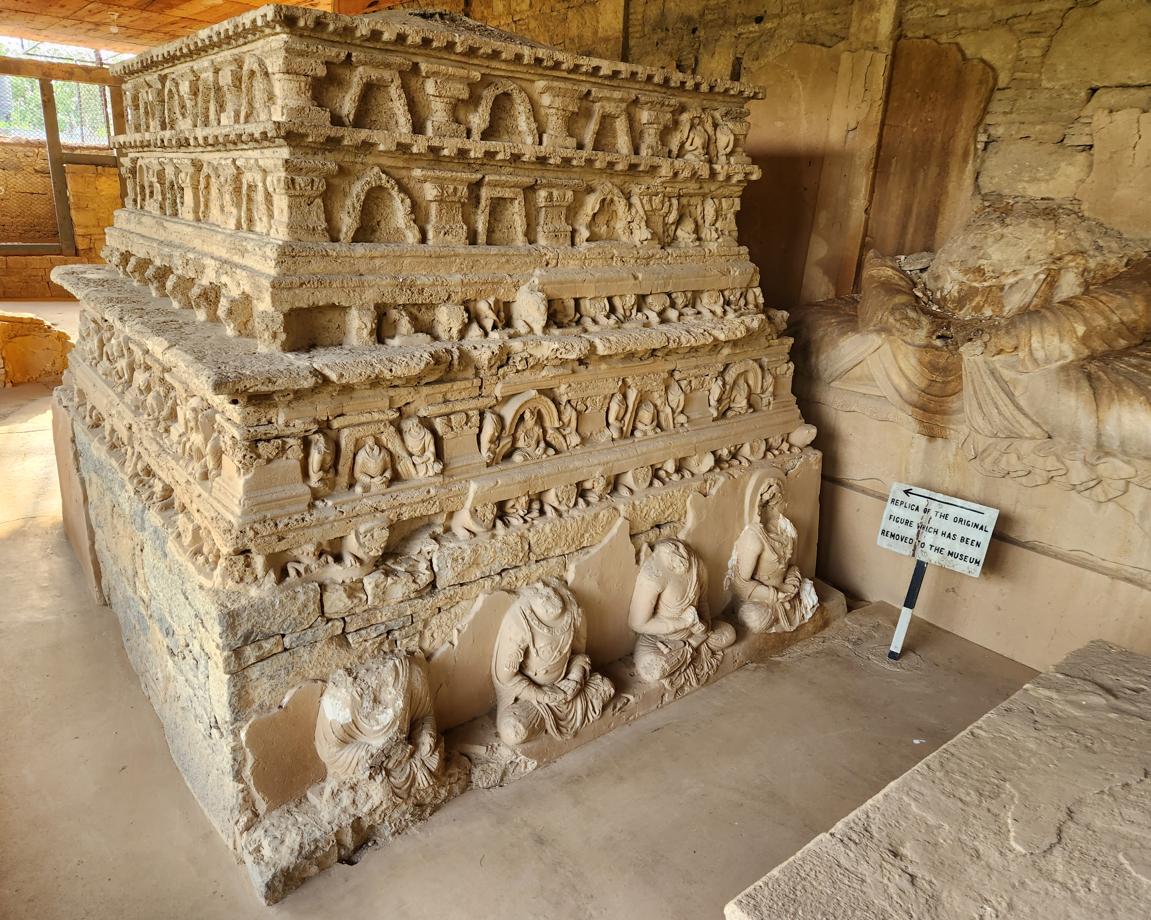
Our last archaeological stop in Pakistan was Jaulian, a ruined Buddhist monastery of the second century CE, part of the Taxila UNESCO World Heritage complex. We had seen it first as photographs in the Taxila Museum — the heads of Buddha and Bodhisattva figures arranged in museum cases with a directness that suggested they had been waiting to be found, not lost. Jamal had agreed to bring us here after our return from Gilgit-Baltistan.
Jaulian means, in old Pali, Seat of Saints. The monks who lived here in the second and third centuries CE were not remote from the world: they were part of a network of monastic institutions that stretched from Taxila to Ceylon, from Gandhara to China, connected by the movement of pilgrims and texts and the slow accumulation of doctrinal argument. Faxian was here in the early fifth century and wrote about studying Sanskrit manuscripts in a library that no longer exists. Xuanzang came three centuries later and found ruins, the libraries destroyed, the monks gone.
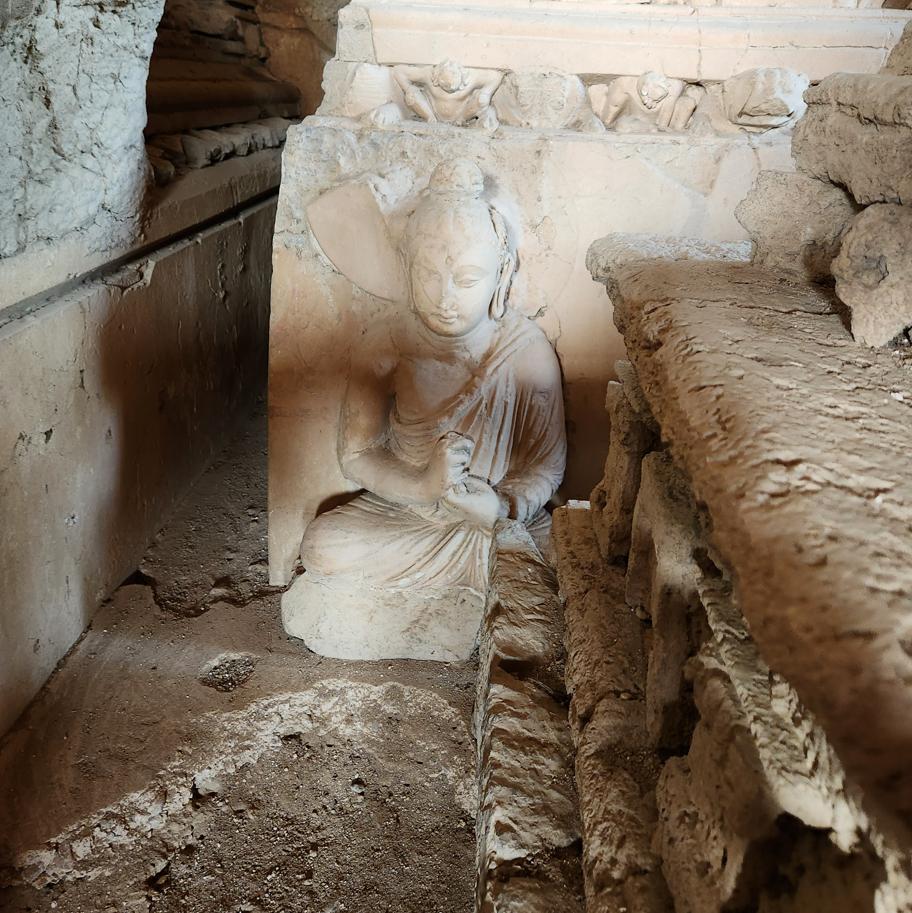
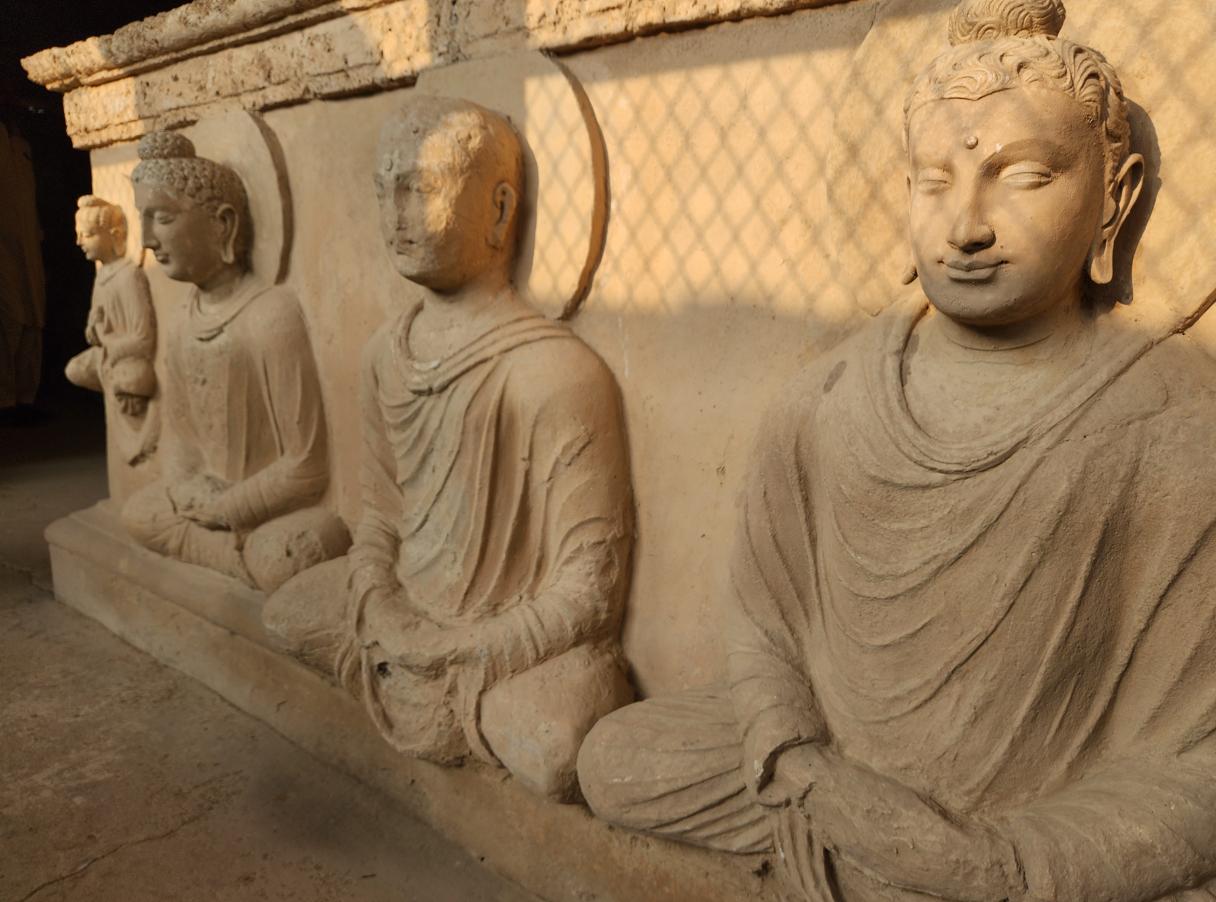
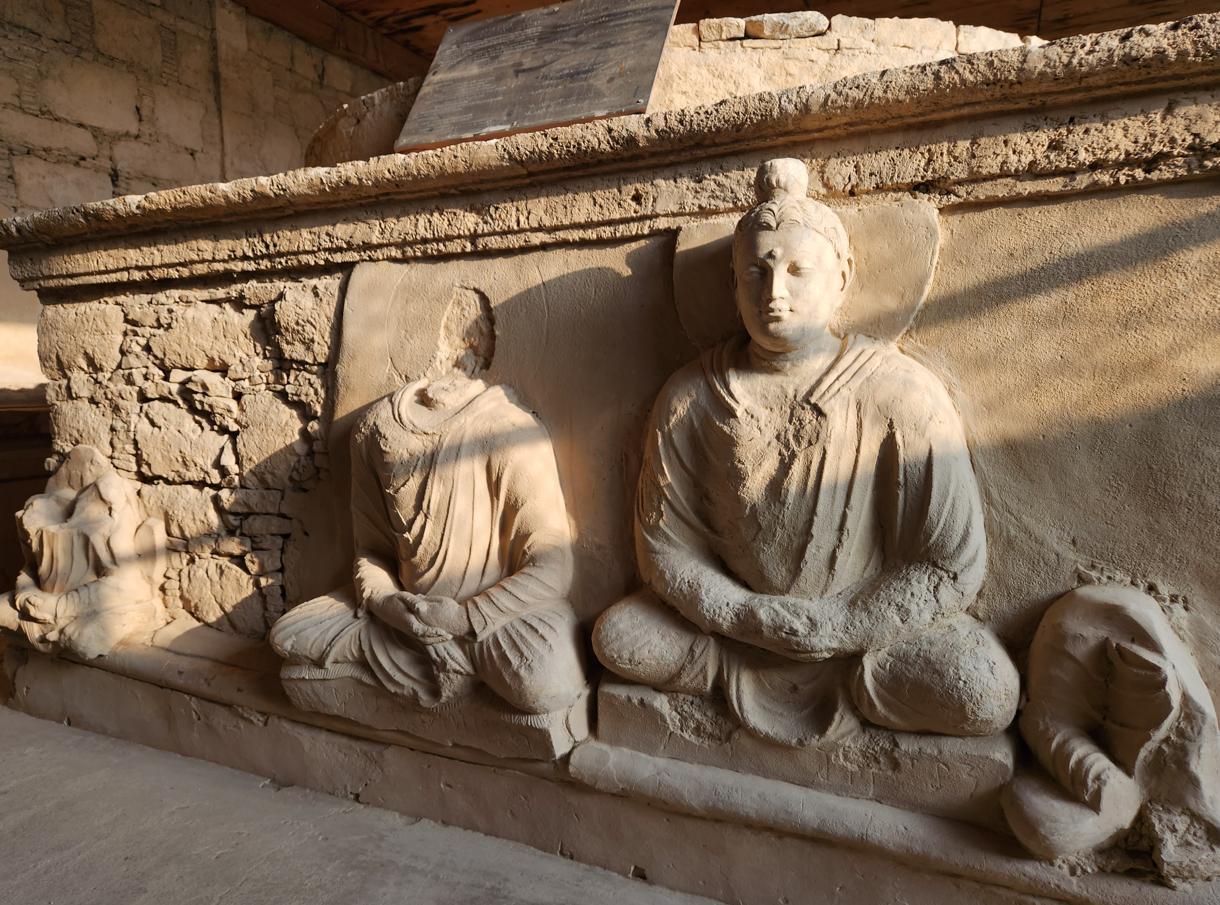
At the centre of the monastery is a large stupa, its circular base still intact, the Buddha images in the niches around it worn to near-featurelessness by sixteen centuries of weather and, in many cases, deliberate mutilation — the White Huns, who destroyed Taxila in the fifth century, and the early iconoclastic phase of Islamic rule both removed faces from Buddha images wherever they could reach them. What remains are bodies: the suggestion of gesture, the fold of fabric, the indication of hand position.
And then there is the Healing Buddha. At the base of one of the niches, a small Buddha is depicted with a particular anatomical specificity: his navel is shown as a small hollow in the stone. Pilgrims, for sixteen centuries, have inserted a finger into this hollow and prayed for healing. The stone around it is worn perfectly smooth — polished by the accumulated touch of two millennia of sick and hopeful people, its surface carrying the specific quality of stone that has been touched many times: a warmth, an intimacy, something that resists the word 'mere'.
I inserted my finger into the Healing Buddha's navel. I prayed, in the private formless way that is the only kind of prayer I know how to make, for the health and safety of the people I love.
Then I prayed something additional — something I had not planned but that felt, in the moment, necessary. I prayed in honour of Faxian and Xuanzang: the first great Asian travel writers, the men who had stood where I was standing, who had been moved by what was moving me, and who had gone home and written it down. They had made, between them, a tradition of Asian travel writing that is older than Marco Polo, older than Ibn Battuta, a tradition of the curious Asian mind in motion through a world larger and stranger than it had imagined. I am a small and distant part of that tradition.
Xuanzang, in his Record of the Western Regions, describes arriving at the ruins of Taxila and finding: 'The monasteries are many, but mostly in ruins and desolate; the priests are few. There are some Deva temples.' He was writing of a world that had already ended — the living Buddhist civilisation of Gandhara was, by his time, a memory. But he wrote it down, and the writing survived, and here I was, fourteen centuries later, reading his words and trying to understand what I was seeing through the lens of what he had seen. This is what travel writing is for.
A Note on Process
The travelogue on this site are based on my own journeys, photographs, Facebook posts, and field notes. I work with Claude (Anthropic's AI assistant) as a drafting and editorial partner — giving it my raw material and working iteratively to shape it into finished prose. The AI helps me draft quickly, maintain a consistent voice across long narratives, and edit at the document level. The website's HTML and coding are built with the assistance of Gemini (Google). Audio versions of the essays are produced using NotebookLM (Google). Every observation, opinion, and conclusion in the written work is mine. The AI tools are the instruments; I am the author.