Islamabad
The Planned Capital and the Departure
"Islamabad: a beautifully planned city, a symbol of the aspirations of a young nation."
— Queen Elizabeth II, 1997The City Doxiadis Built
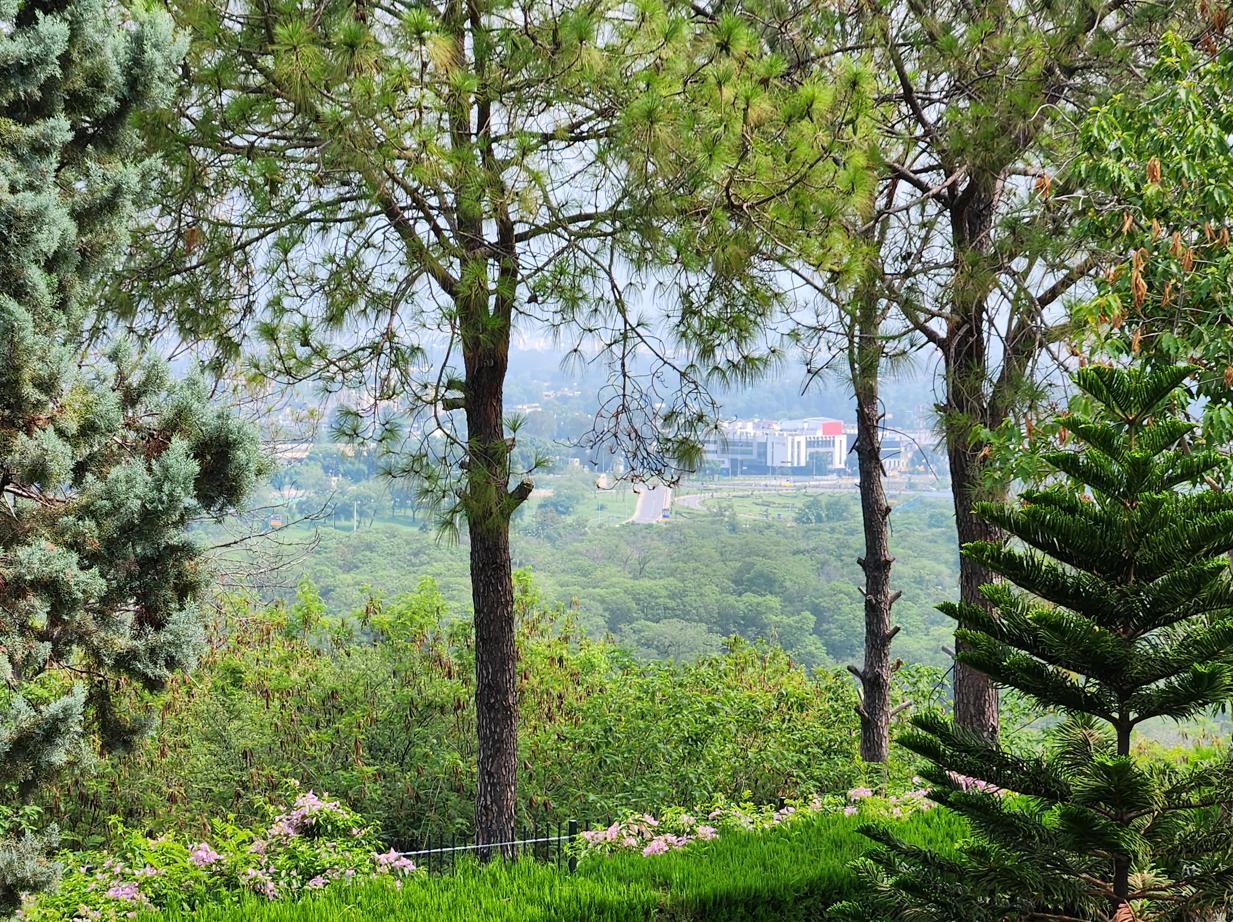
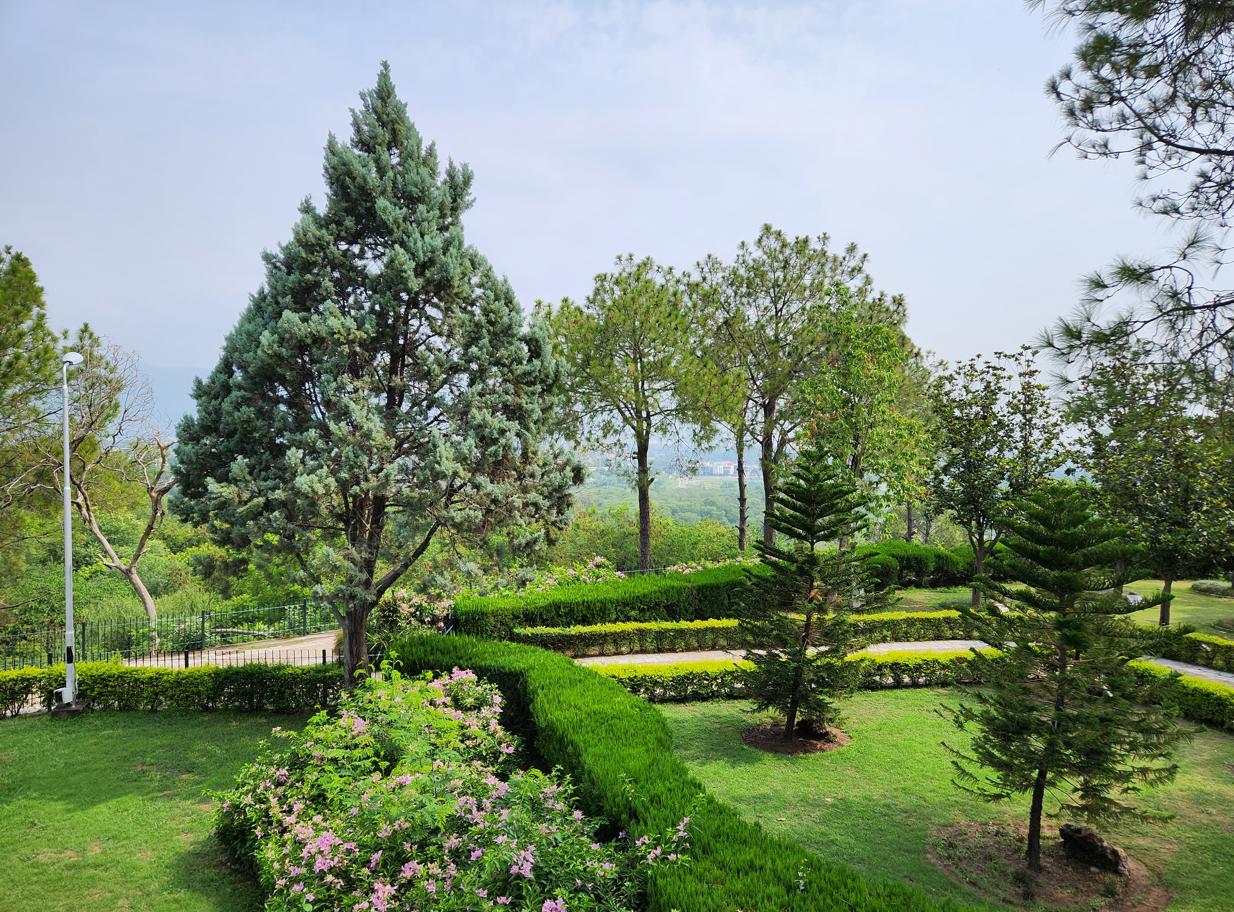
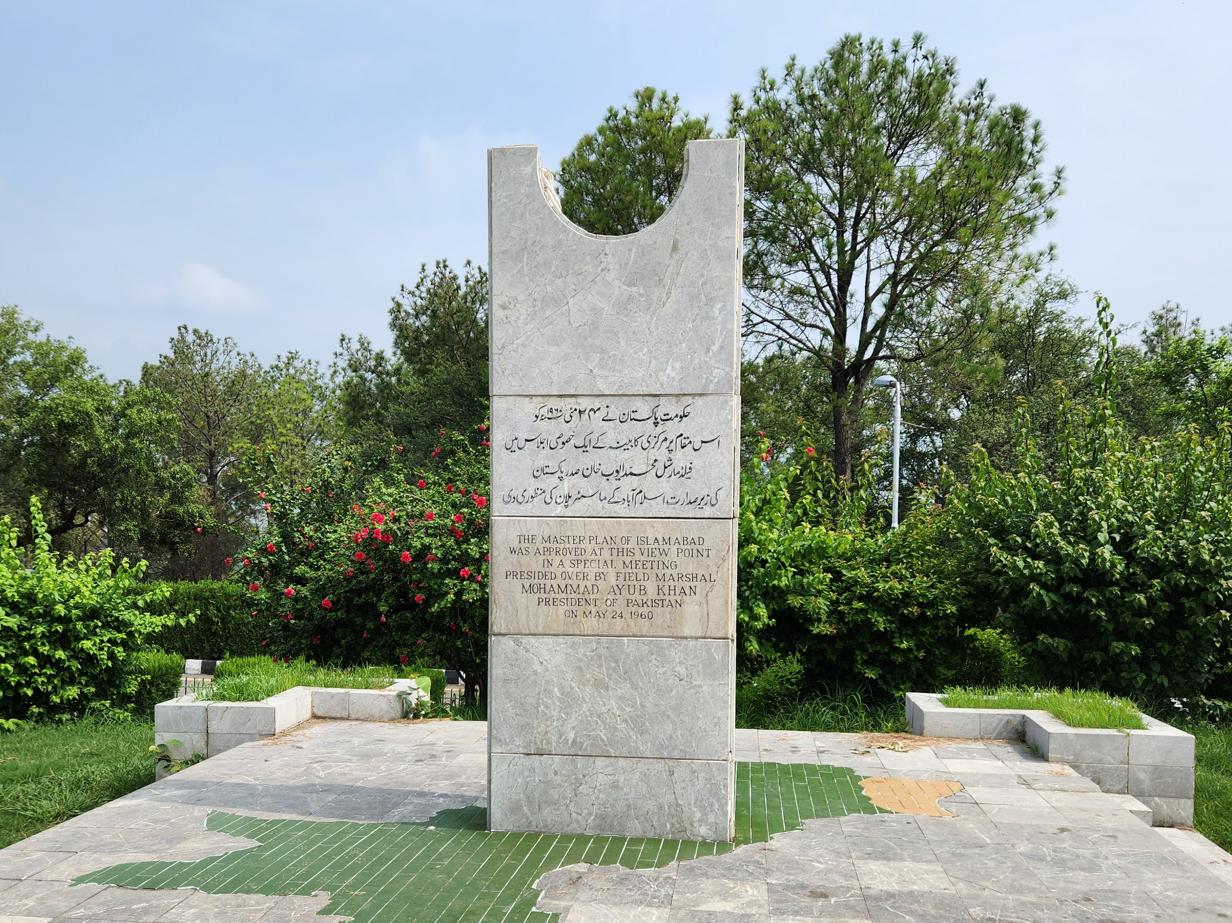
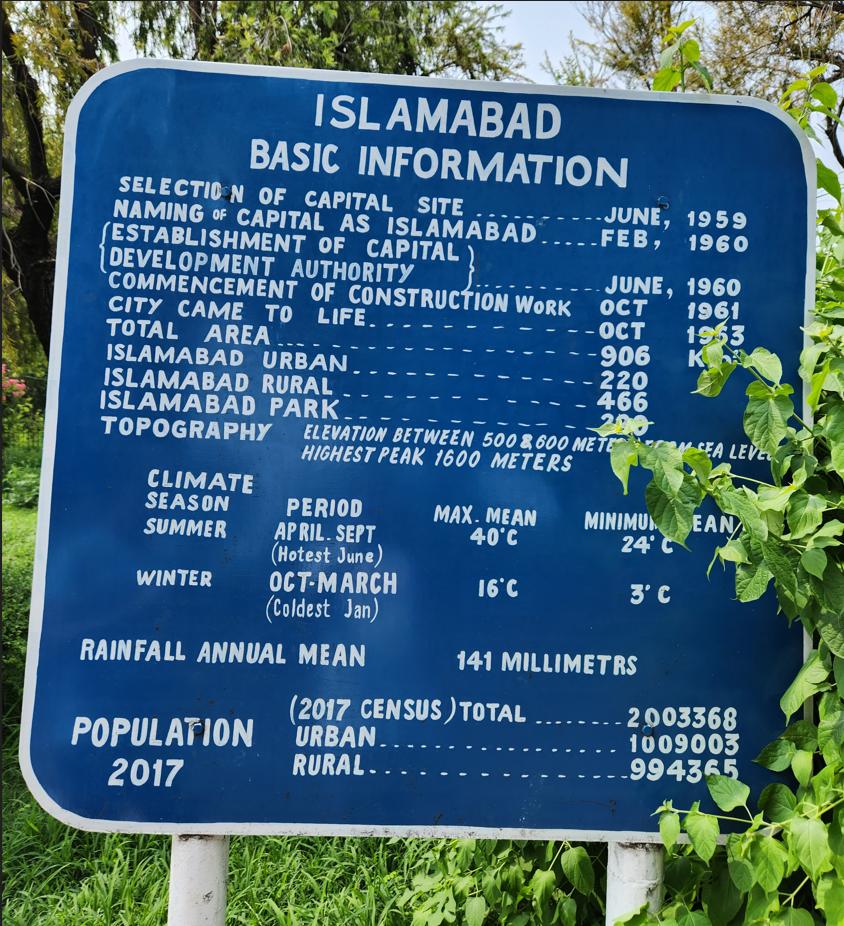
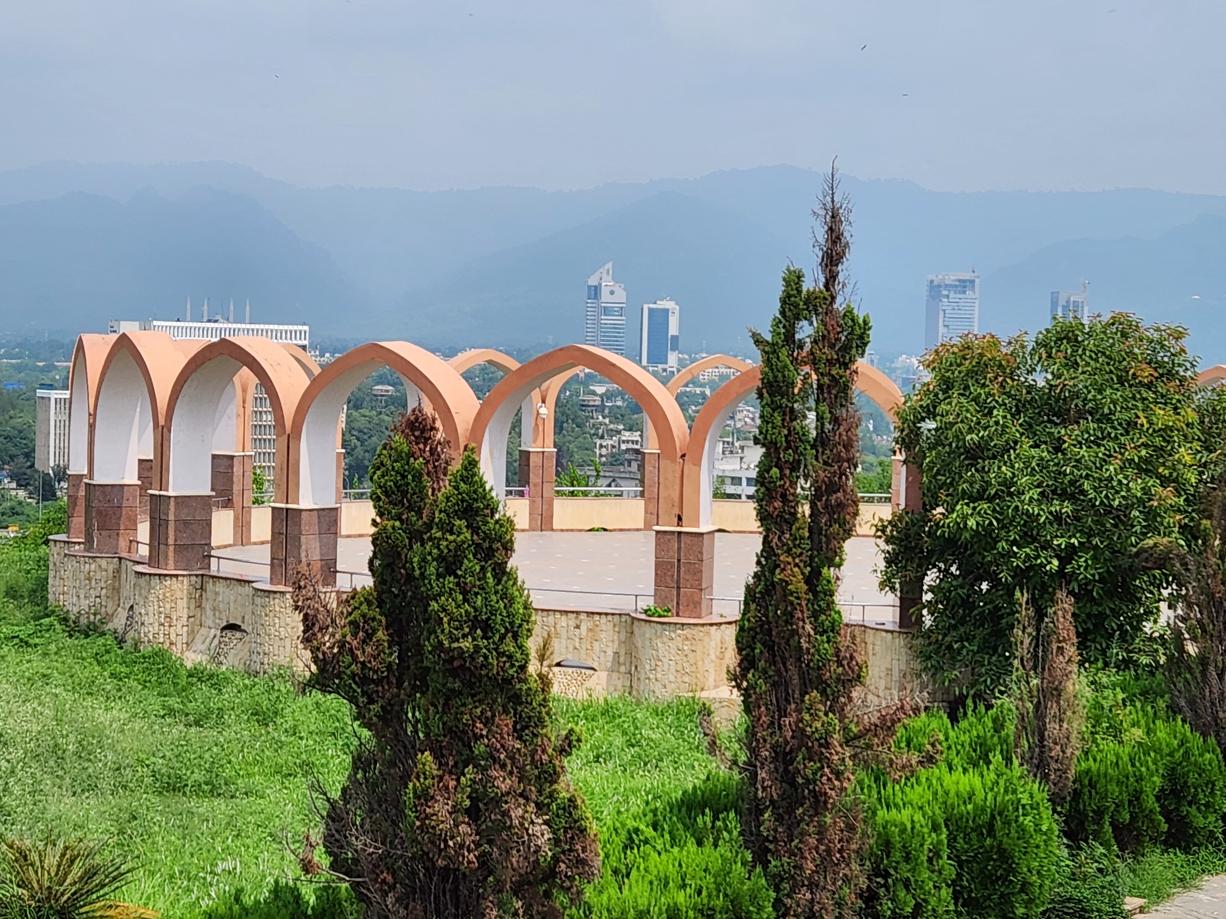
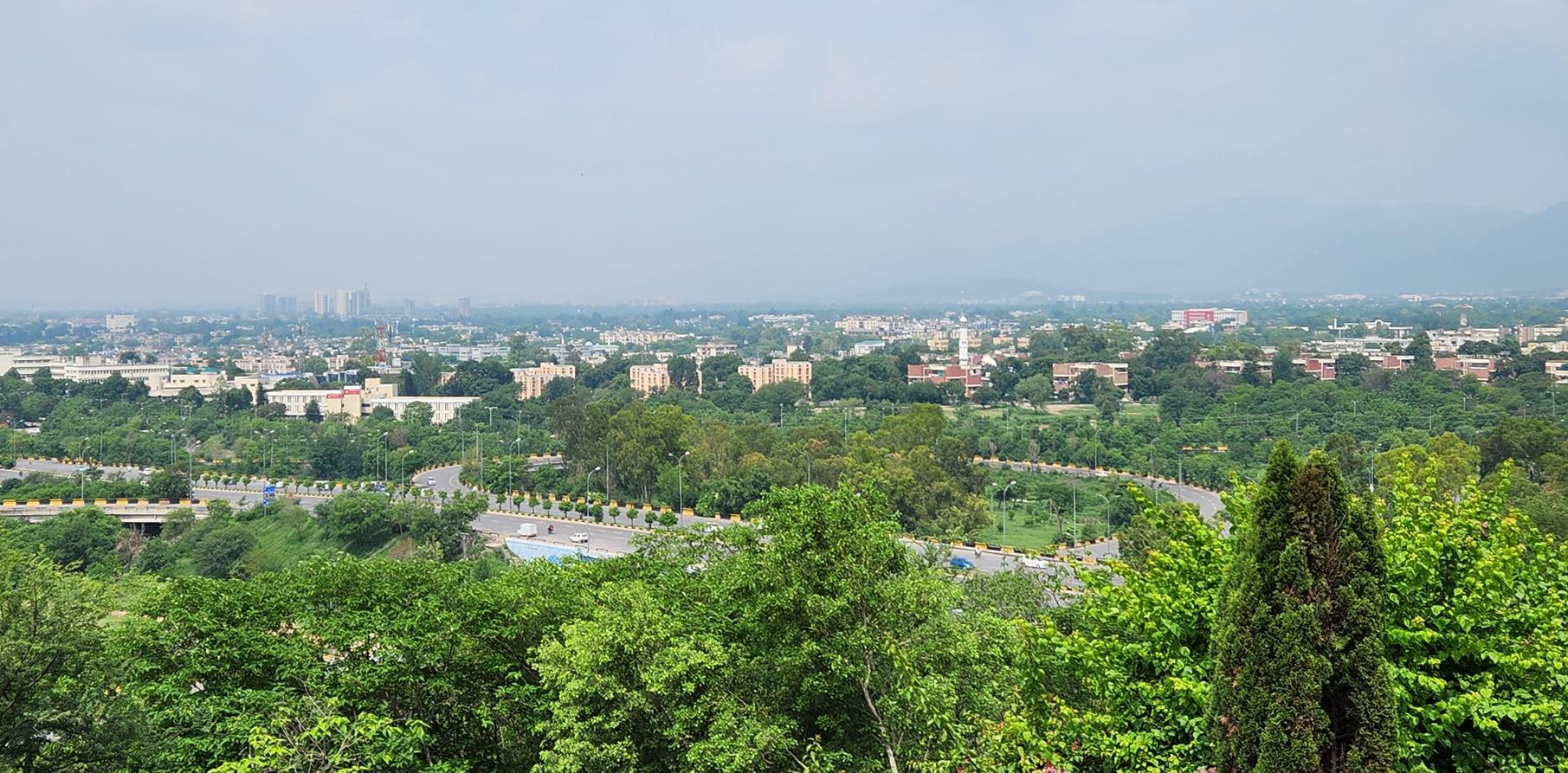
Islamabad was built in the 1960s to replace Karachi as the national capital, on the principle — not without logic — that a new country with new ambitions should have a capital that had not accumulated the historical grievances of the old one. It was laid out on a grid designed by the Greek planner Konstantinos Apostolos Doxiadis, divided into sectors identified by letters and numbers, with broad tree-lined boulevards, a diplomatic enclave of unusually well-maintained lawns, and a population drawn largely from the military and civil service bureaucracies.
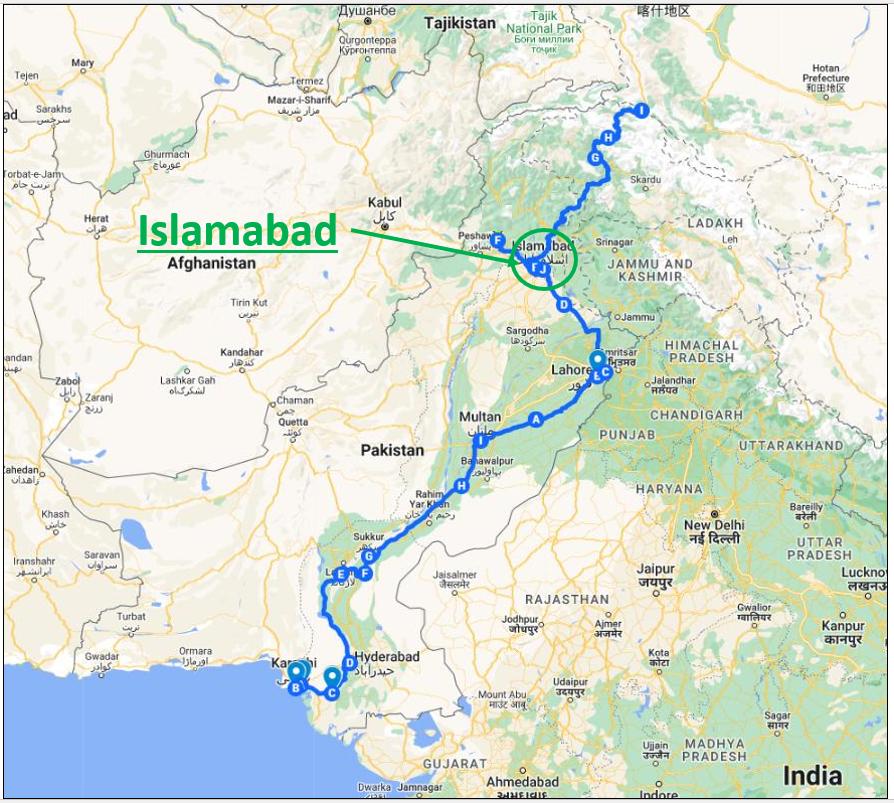
After the heat and density of Karachi, Sindh, Punjab, and the mountains of the north, Islamabad felt like a long exhalation: orderly, green, and at an altitude high enough that July was merely warm rather than punishing.
Pakistan Monument: A Flower of Granite
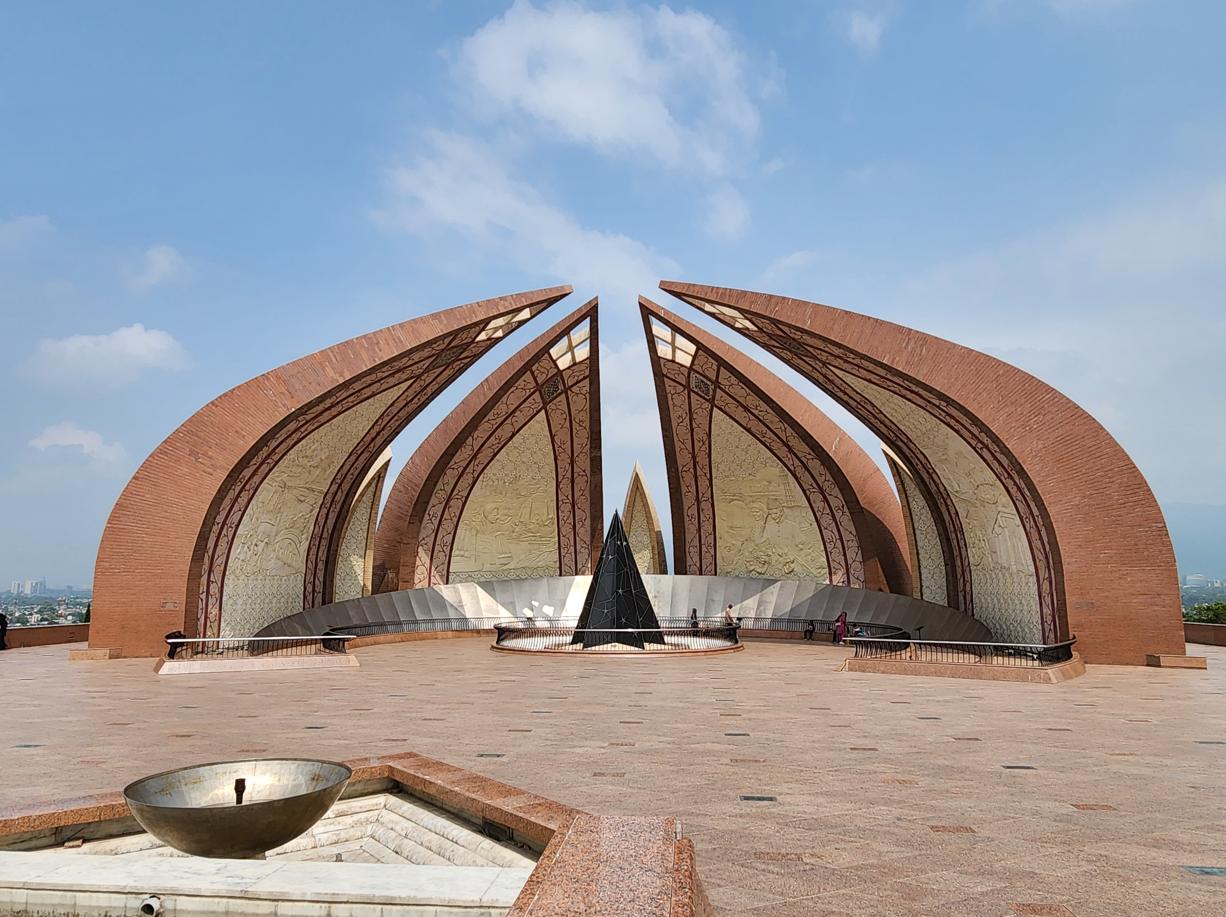
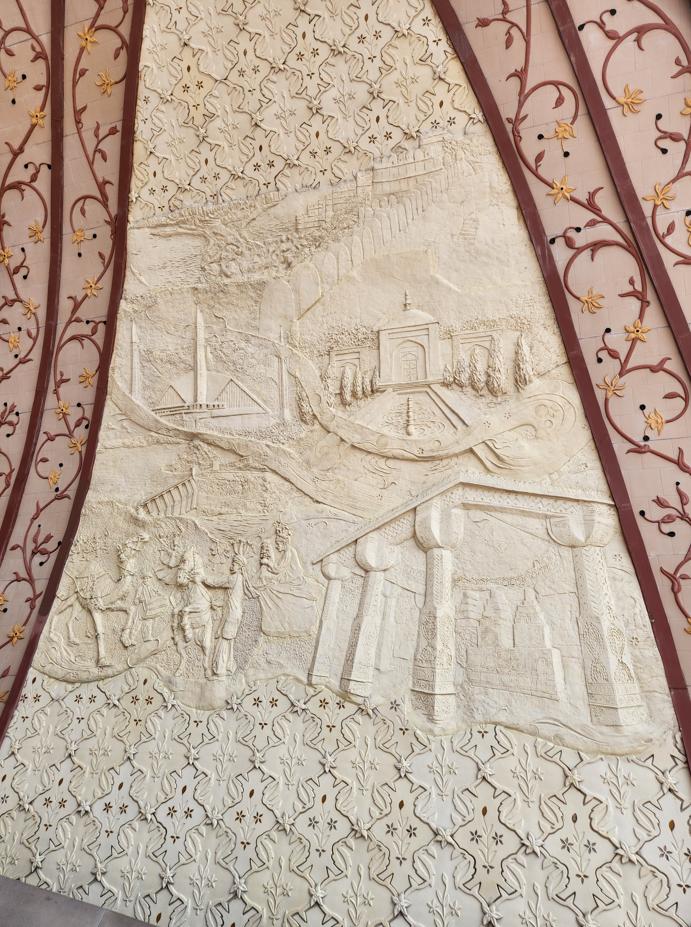
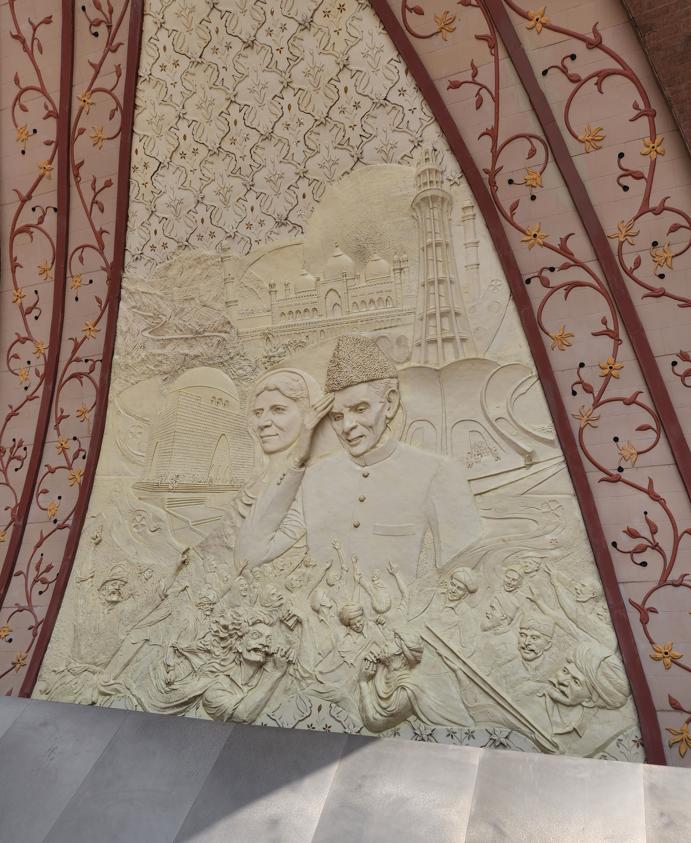
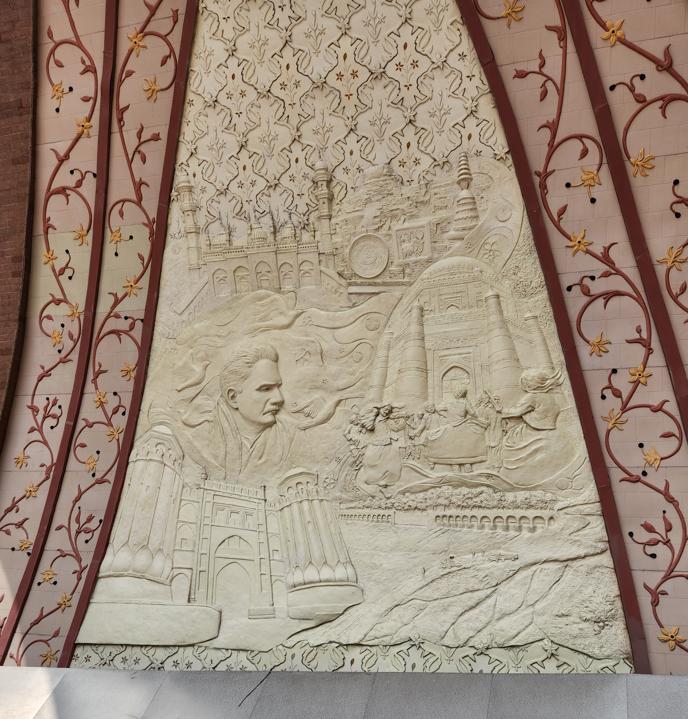
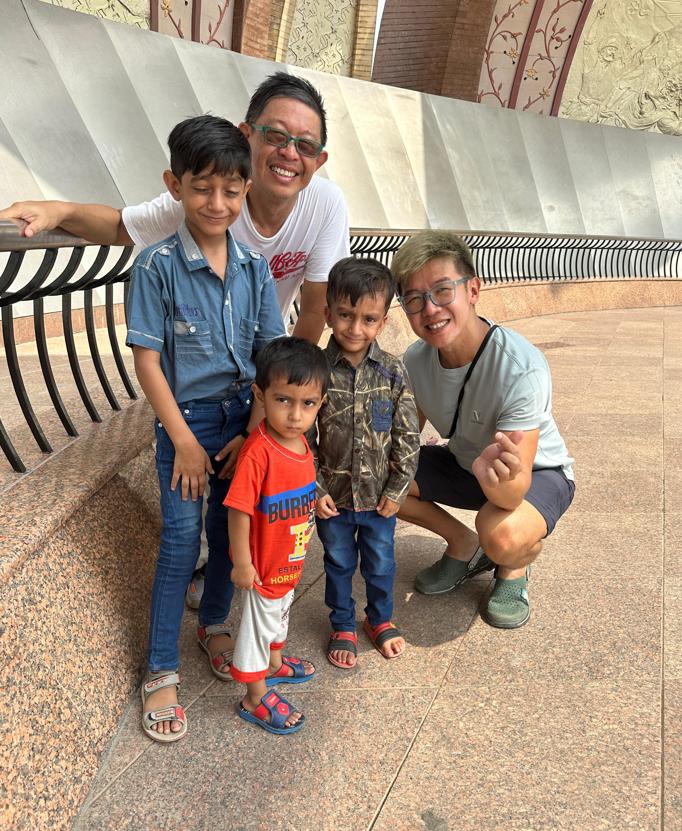
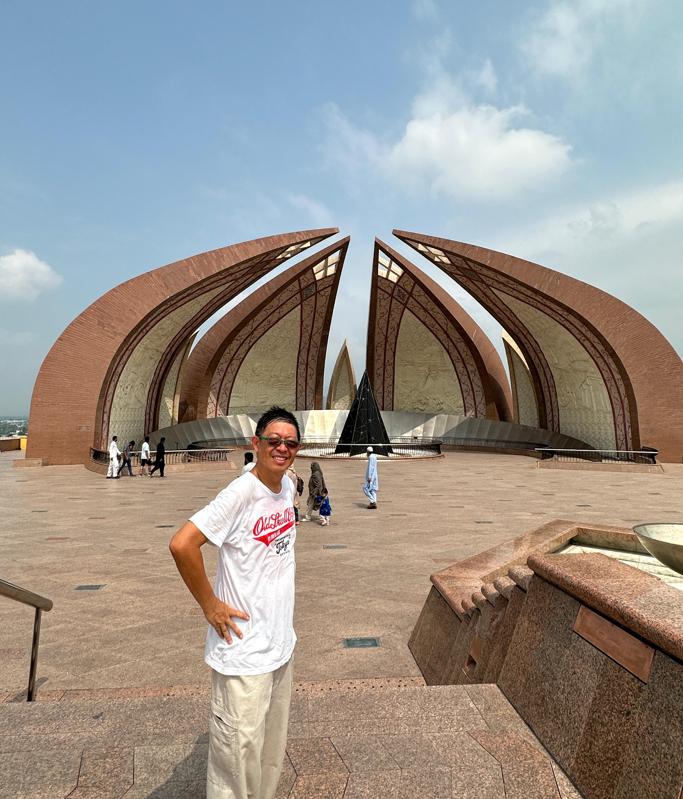
On our first morning in the city, before the heat had properly arrived, Jamal took us to the Shakarparian Hills to see the Pakistan Monument, which from the ground looks like an enormous stone flower and from the air — as the postcards and drone photography are eager to point out — resolves into the star and crescent of the national flag. Four large granite petals, representing the country's four major cultures (Punjabi, Sindhi, Pashtun, and Baloch), rise around three smaller petals representing Azad Kashmir, Gilgit-Baltistan, and the country's minorities, all cantilevered outward from a central platform in a form its architect, Arif Masoud, based on the muqarnas — the stalactite-like vaulting of Mughal and Islamic architecture — rendered here in modern granite and steel rather than carved stone. It was completed in 2006 and opened the following year; from its viewing platform the whole grid of Islamabad is visible below, and beyond it the darker smudge of Rawalpindi.
The petals' inner walls are covered in murals — bas-reliefs in cream-coloured stone that a team of artists led by Zarar Haider Babri and Kausar Jahan reportedly spent some 119,000 hours carving and casting. One petal is a compressed geography lesson: the Shah Faisal Mosque, the tombs of Makli, Rohtas Fort, the Shah Jahan Mosque of Thatta, and the port of Gwadar, all folded into a single continuous landscape of domes and camel caravans and fortress walls, travellers on foot and horseback moving through a terrain that has no respect for actual distance. Another carries the country's founding: Muhammad Ali Jinnah and his sister Fatima Jinnah, their two faces rising out of a crowd of upturned arms and open mouths, Lahore's Badshahi Mosque and the tapering column of Minar-e-Pakistan behind them — the moment, rendered in stone, when a movement became a state. A third petal, its centre dominated by the profile of a bearded man with the unmistakable look of a poet mid-thought, seemed to carry the country's intellectual genealogy alongside its political one — Allama Iqbal, presumably, whose verses supplied the idea of Pakistan before Jinnah supplied the country, watching over a gathering of listeners beneath the arches of a fort. A fourth showed horsemen riding out from a walled citadel above a river gorge, the frontier version of the same story: forts built and taken and rebuilt on the edges of empires.
What struck me, walking the length of the piazza between the flower and the adjoining museum, was how much of the monument's iconography was borrowed rather than invented — mosques and forts raised by Mughals and the British and the Sindhis and Punjabis and Baloch and Pashtun of the pre-partition centuries, repurposed here as the visual vocabulary of a seventy-year-old idea. A country assembled from provinces that had never previously been asked to share a single government had to manufacture, in granite, an ancestry it could hold in common. The monument does this with more sincerity than cynicism; it is trying, quite hard, to make one thing out of several, which is not so different from what Jamal had been doing for us, in words, for two weeks.
Lok Virsa: The Museum That Contains a Country
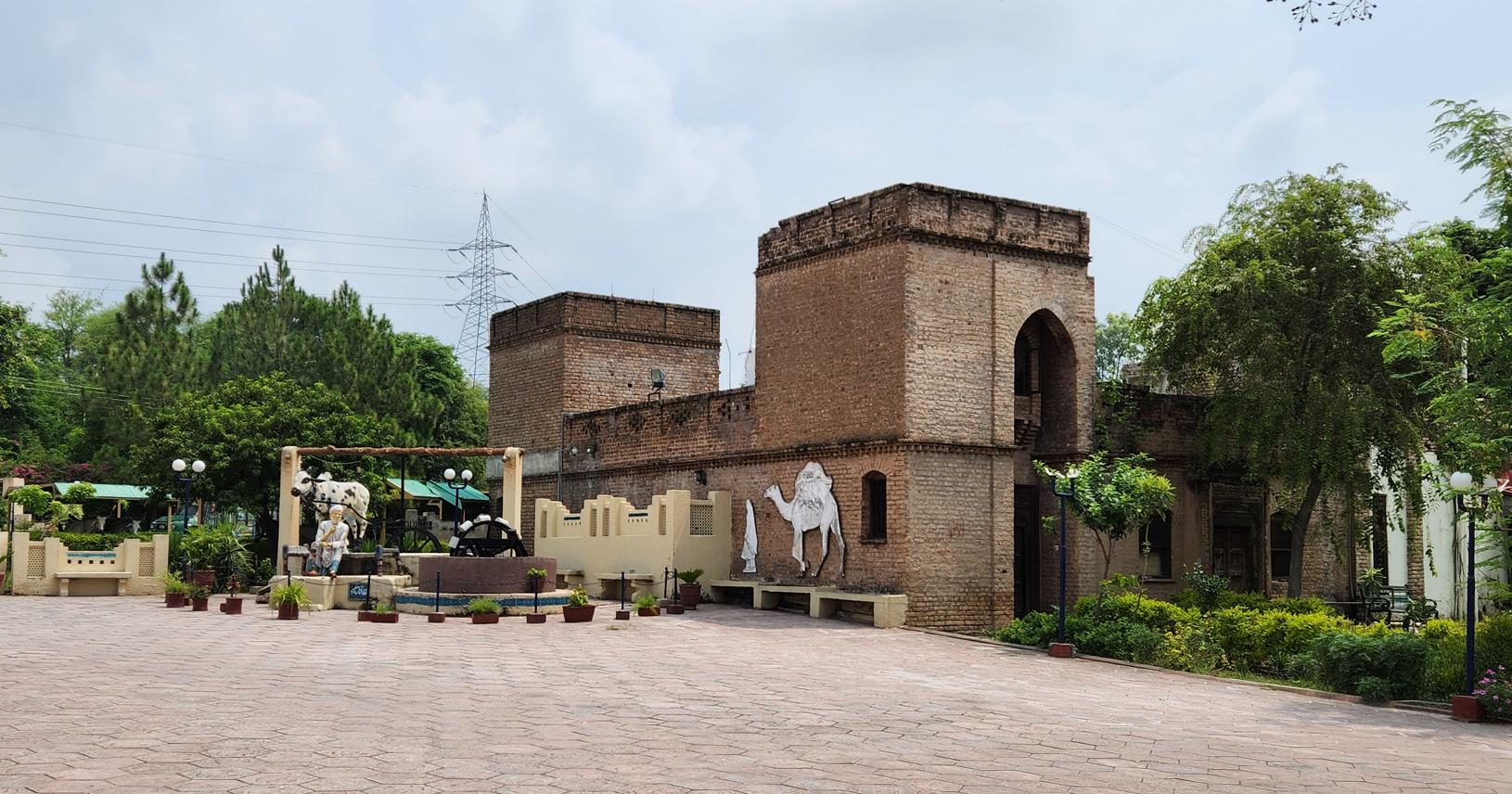
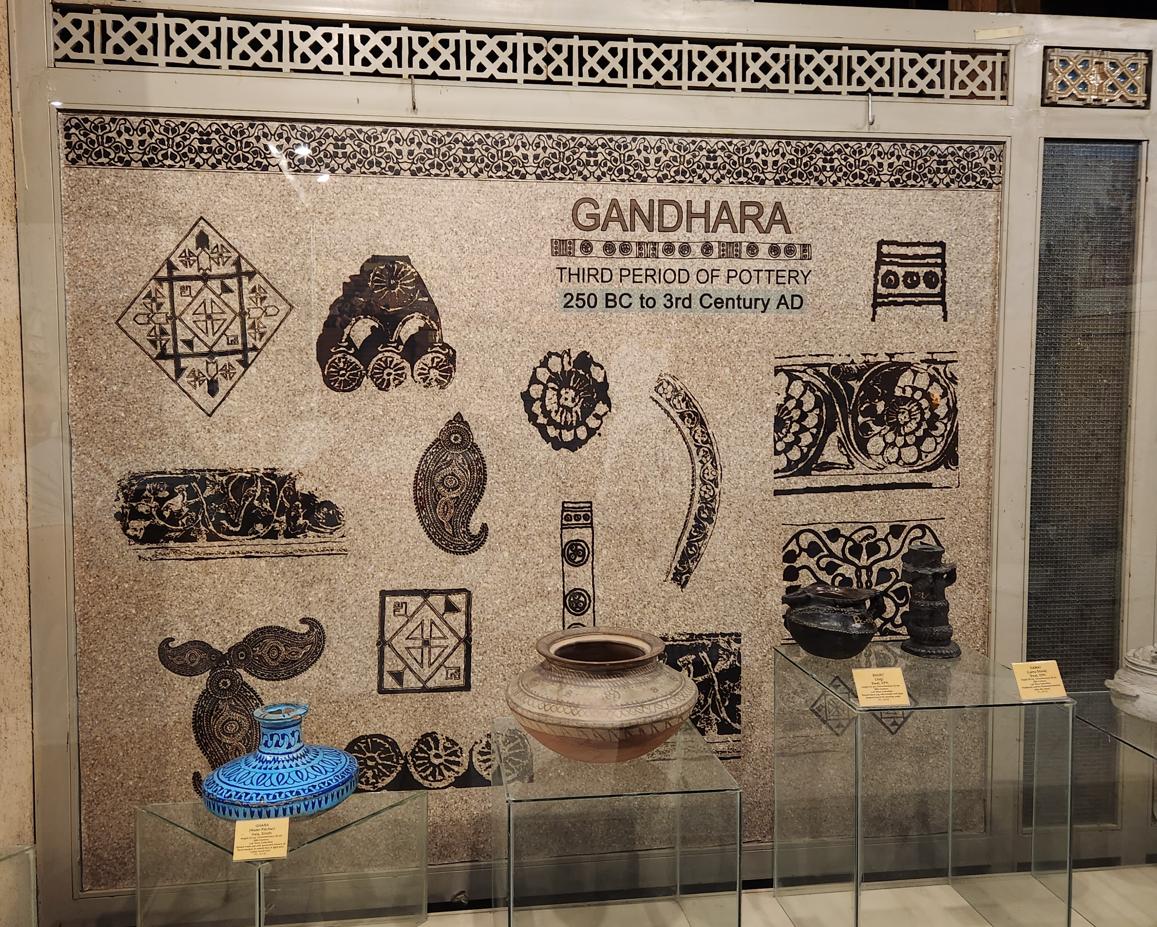
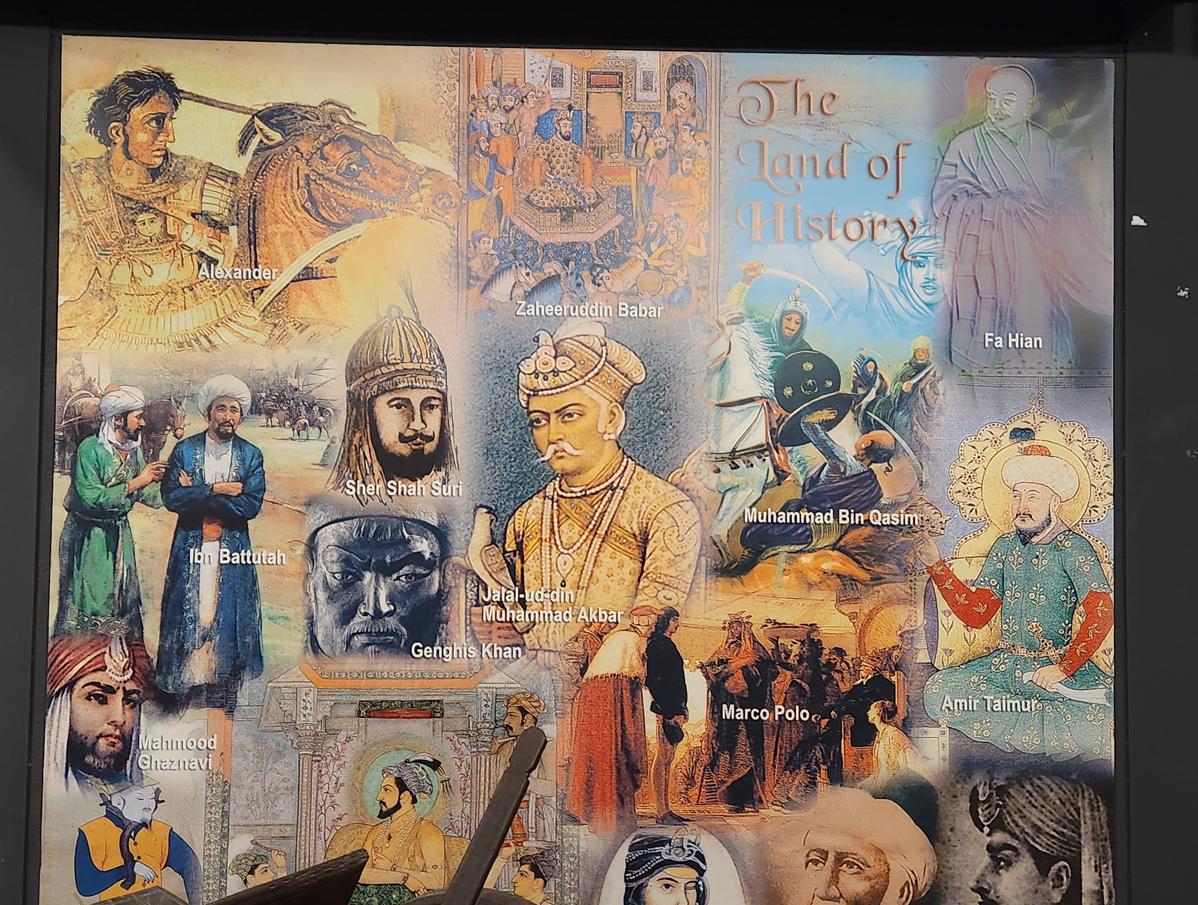
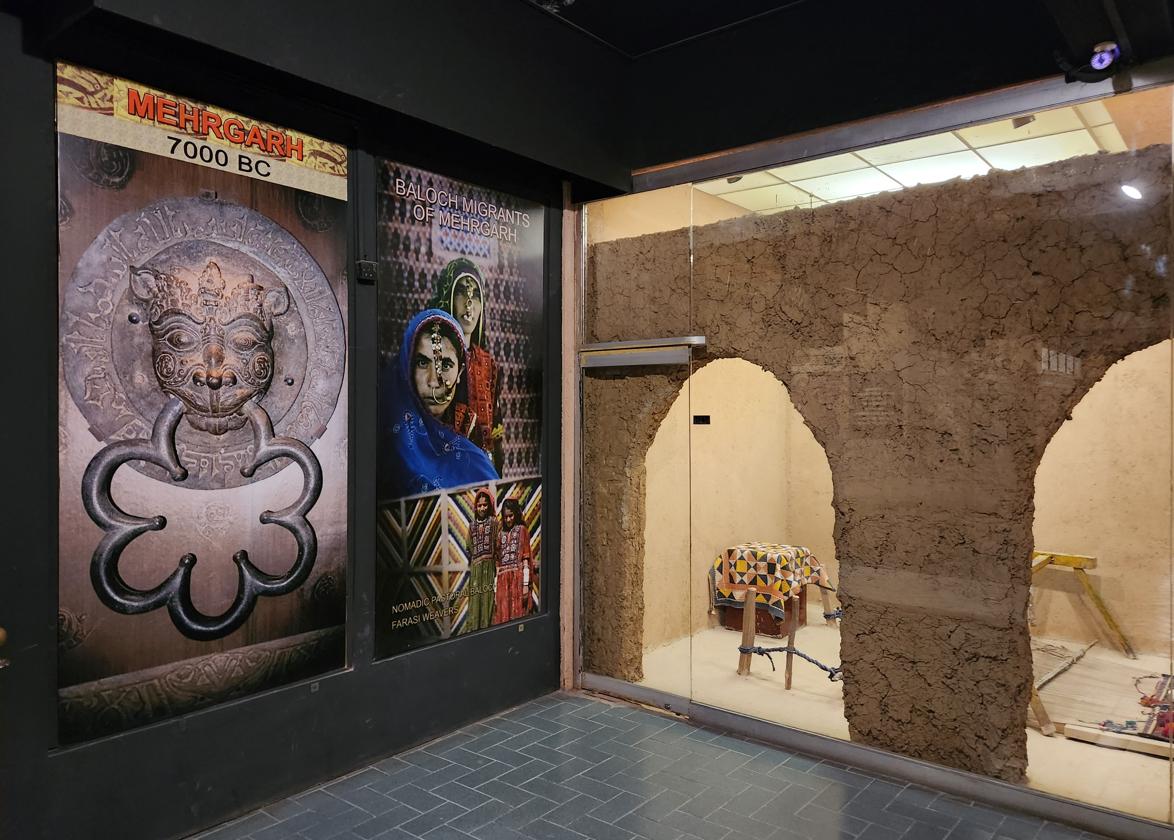
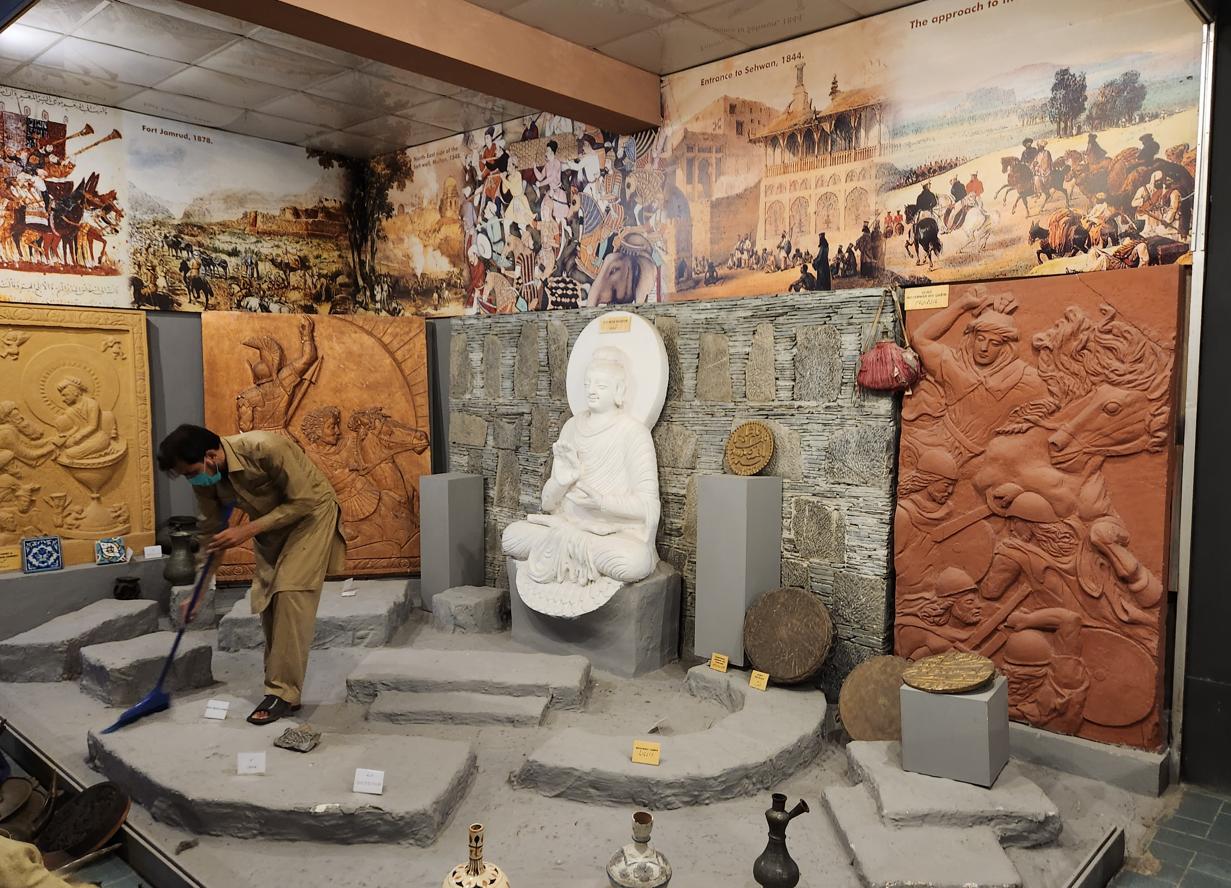
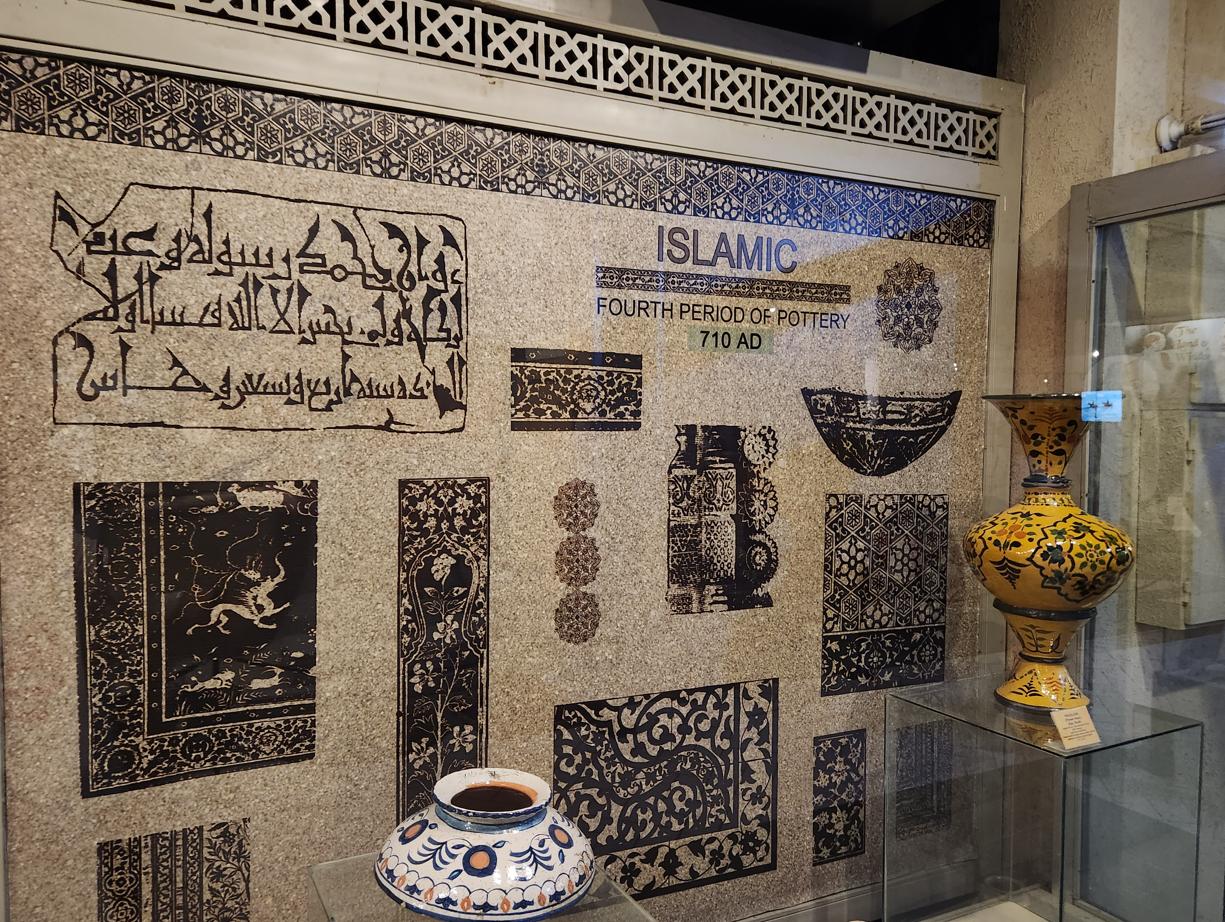
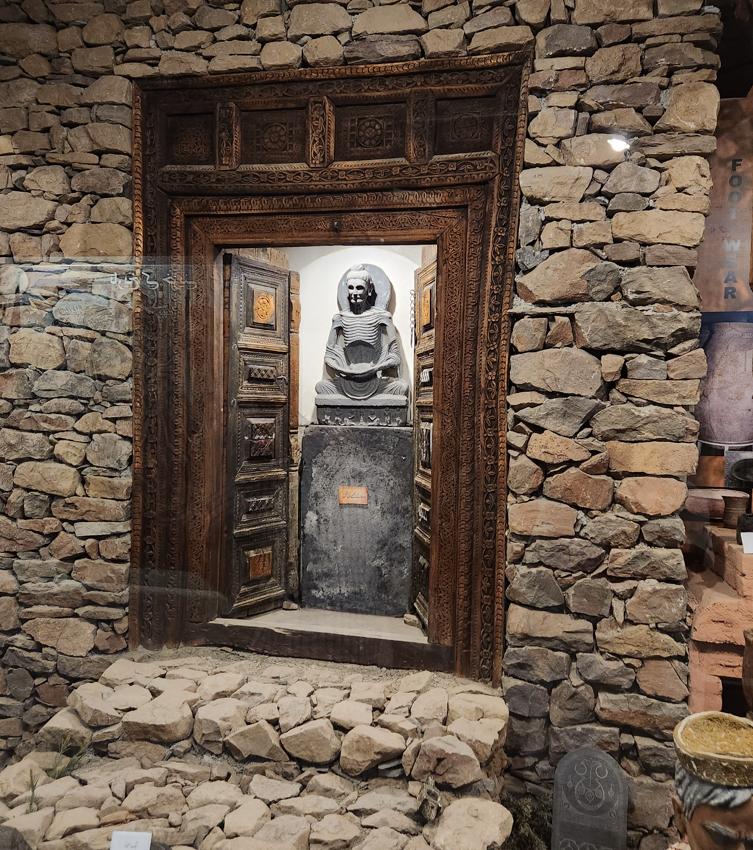
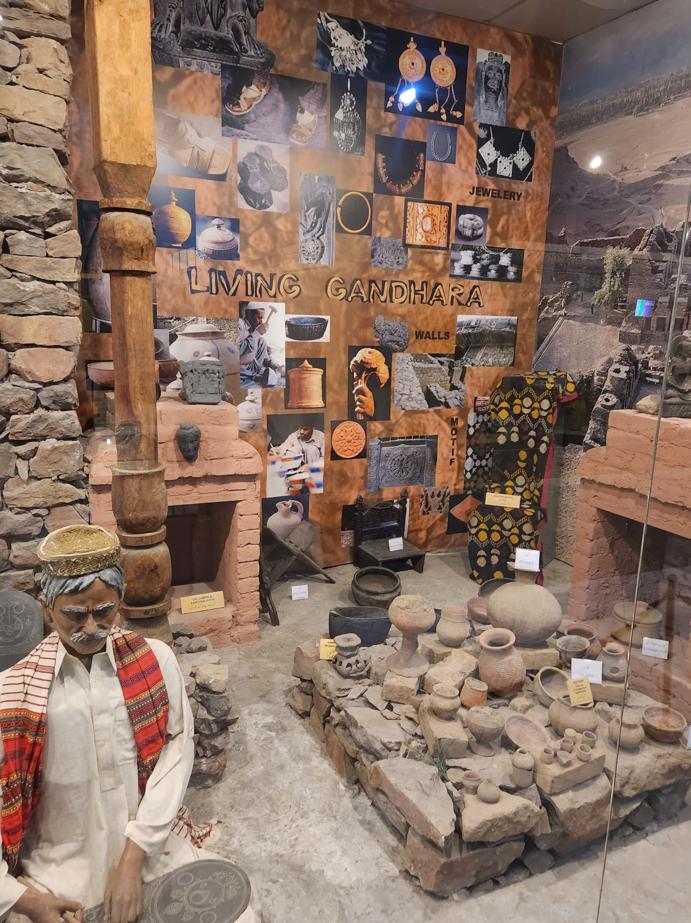
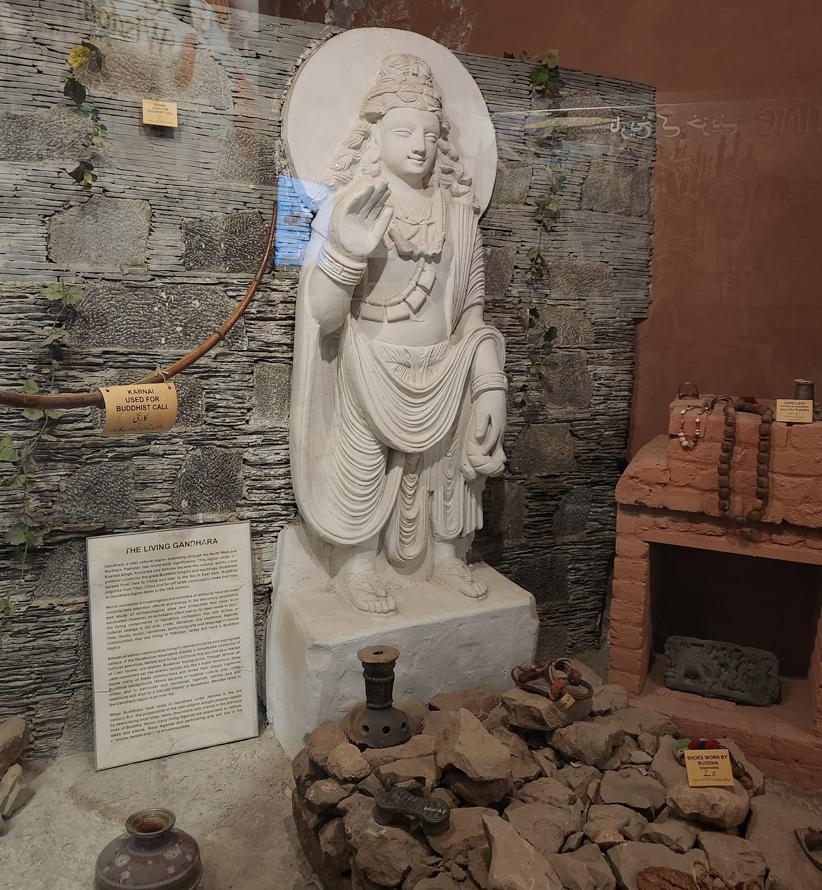
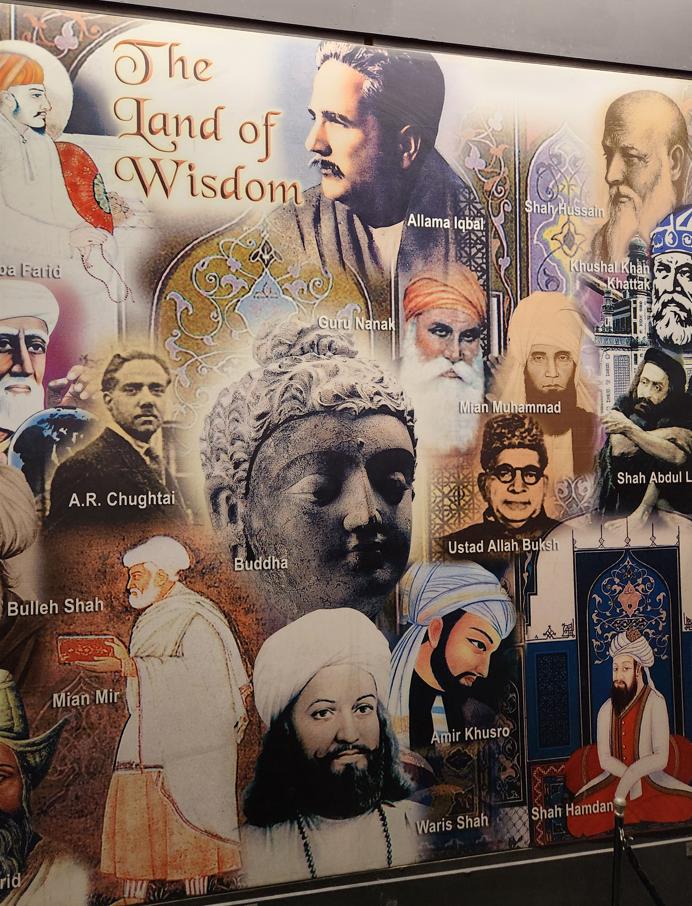
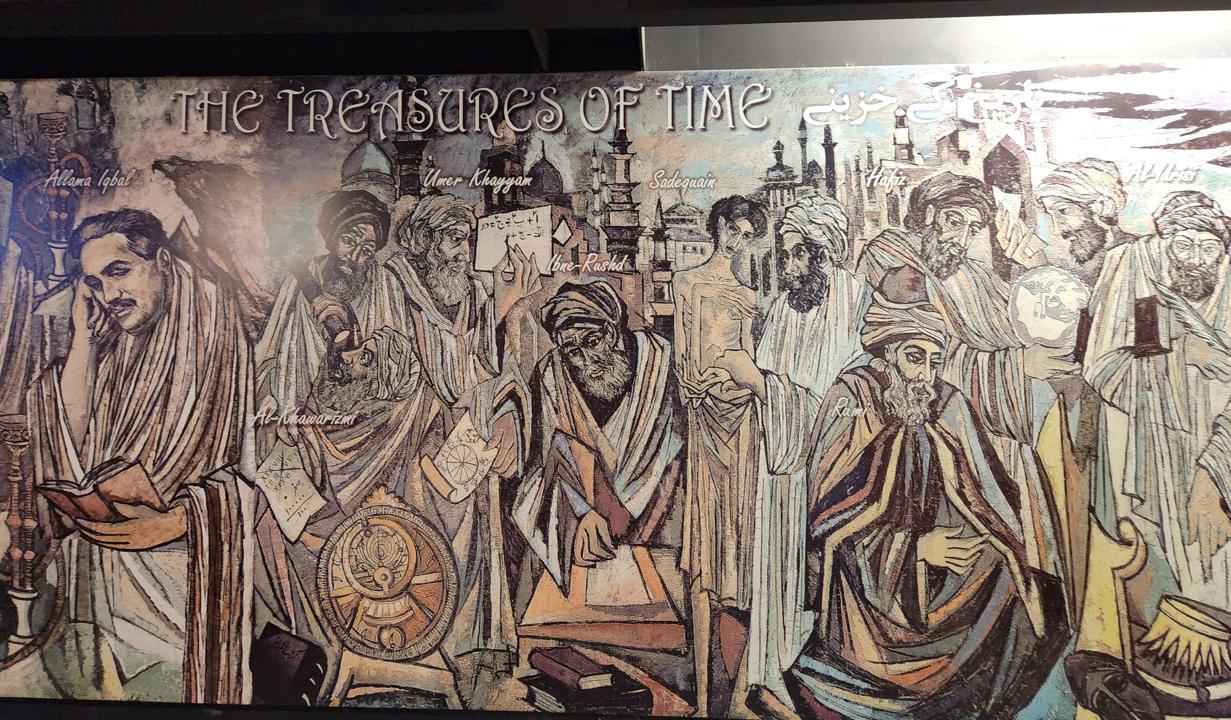
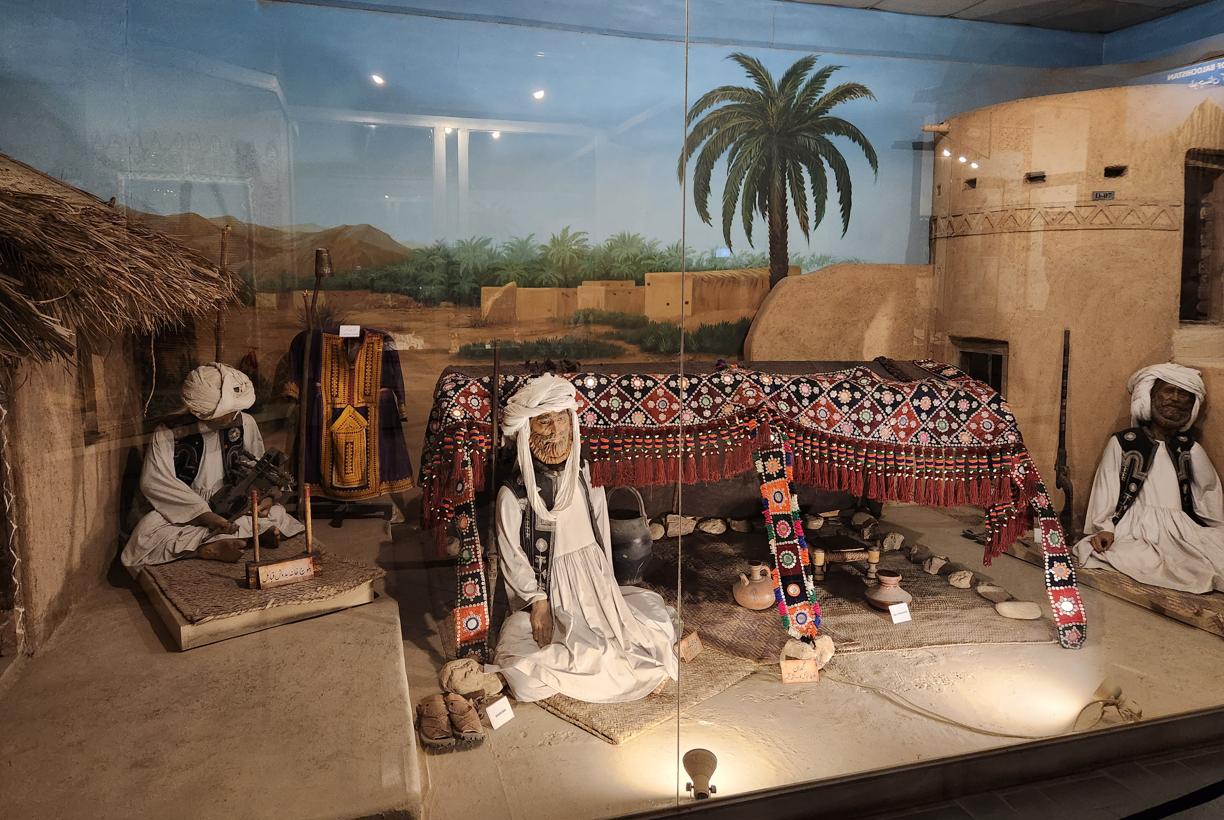
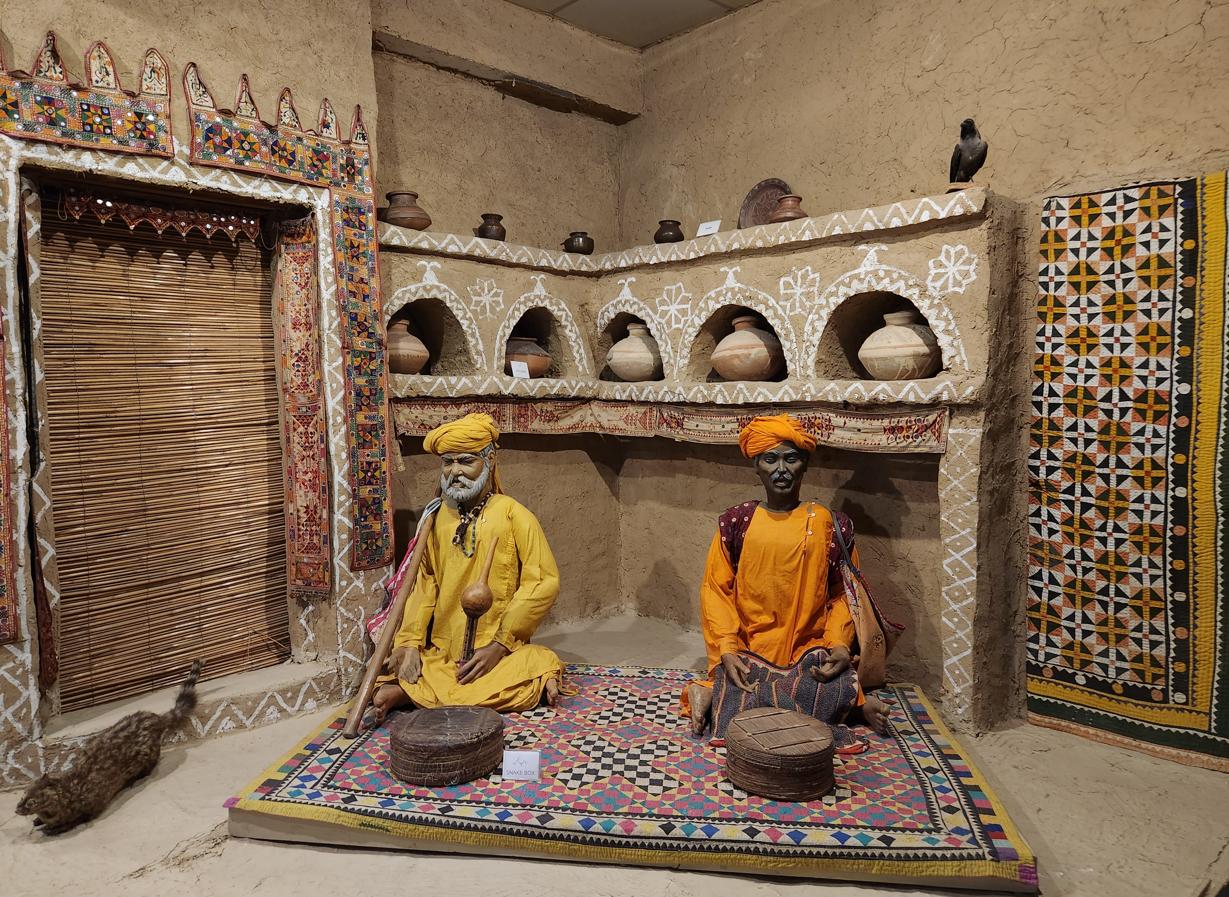
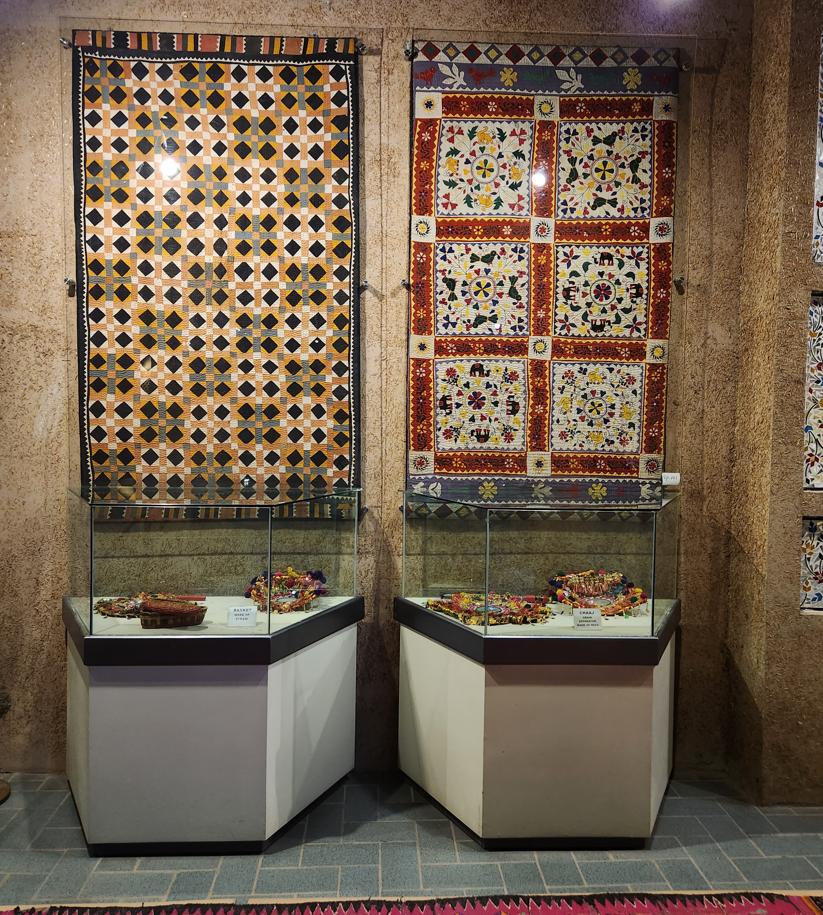
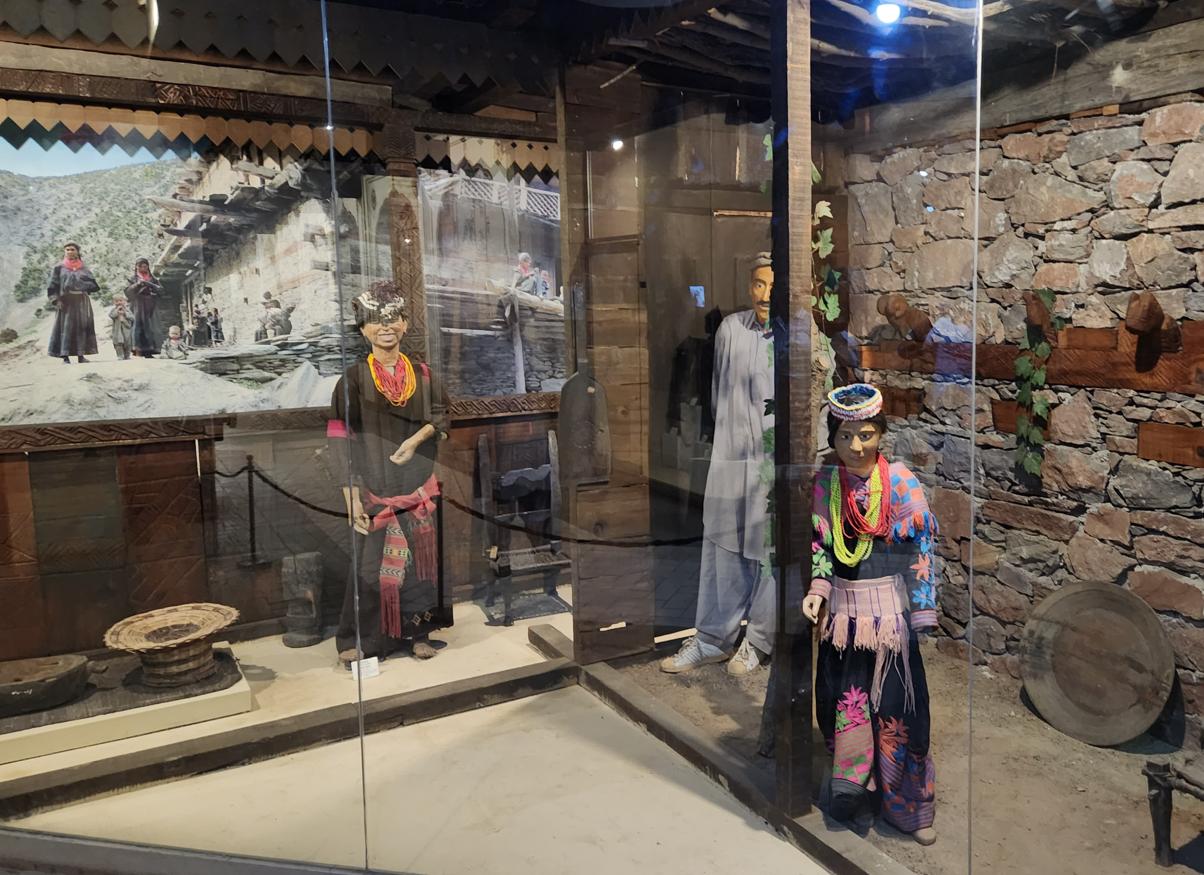
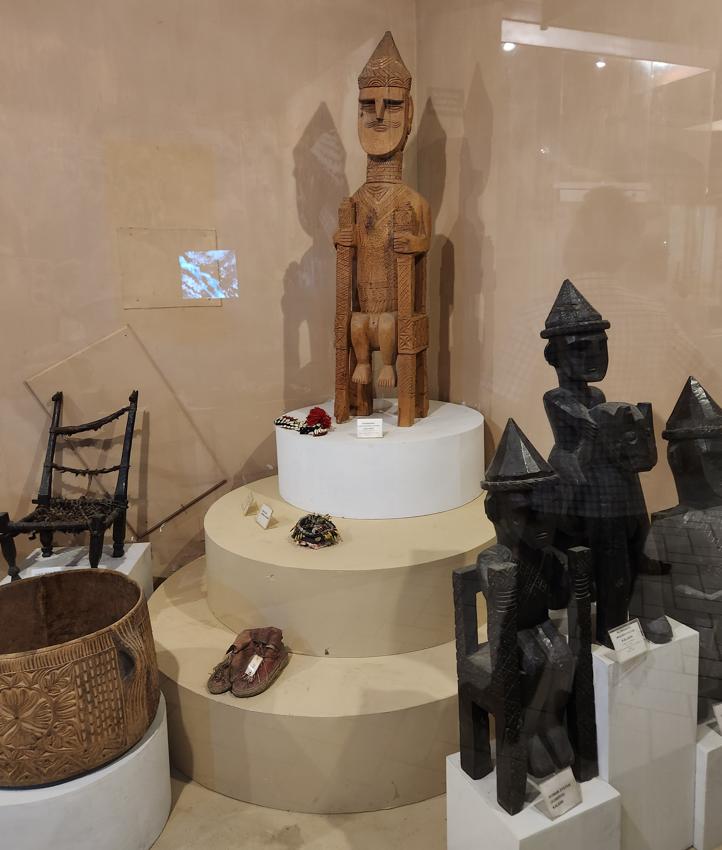
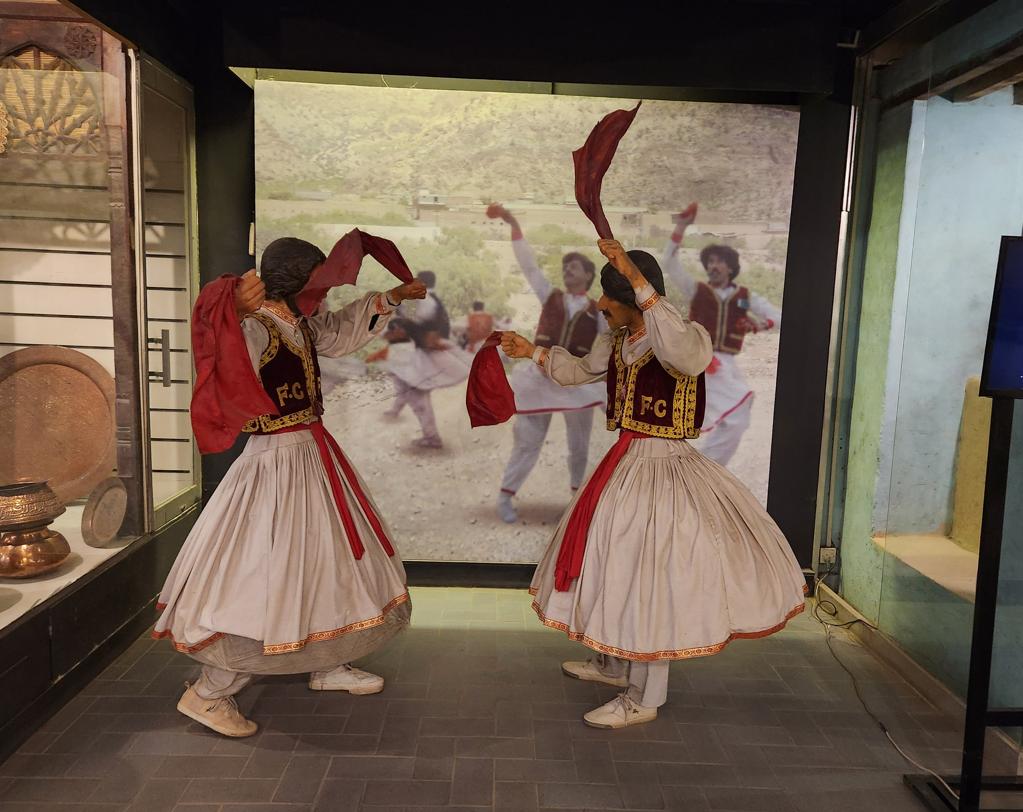
A short walk down the hill from the flower is Lok Virsa — formally the National Institute of Folk and Traditional Heritage — Pakistan's largest museum and, in its way, a more intimate rebuttal to the monument's abstractions. Where the Pakistan Monument tells the story of the state, Lok Virsa tells the story of the people who existed before it and went on existing after, in dioramas and reconstructed rooms so exhaustive that a single visit can feel like touring the entire country's living rooms.
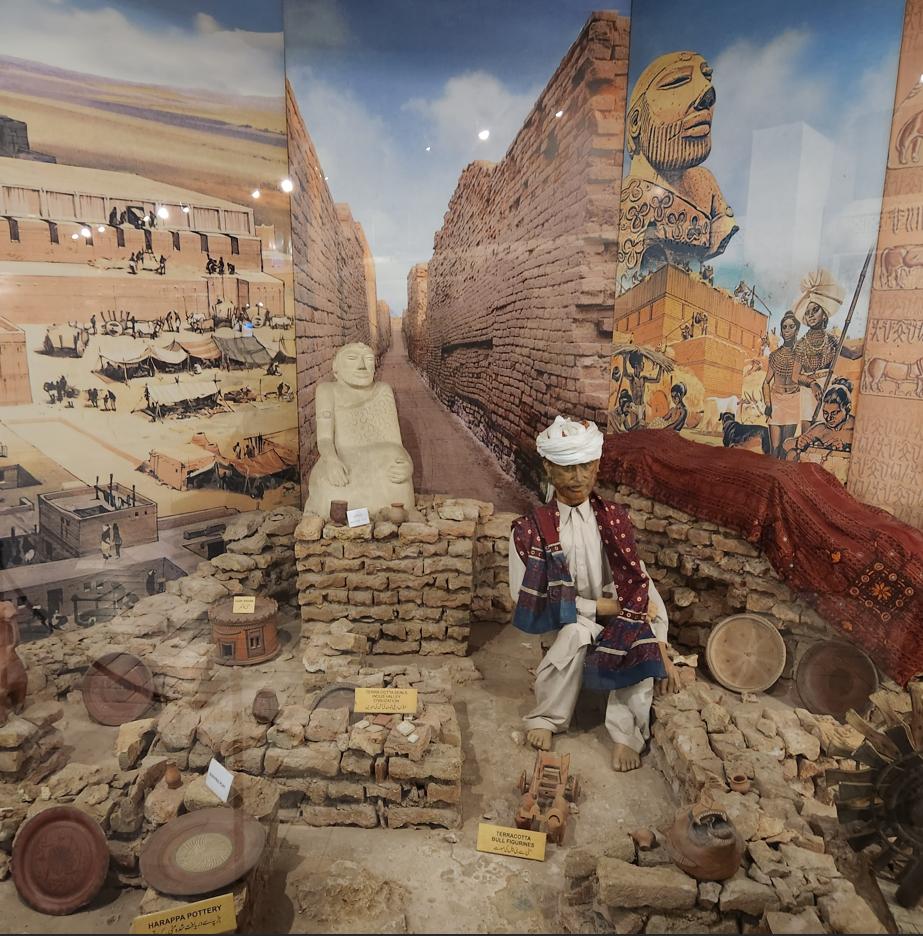
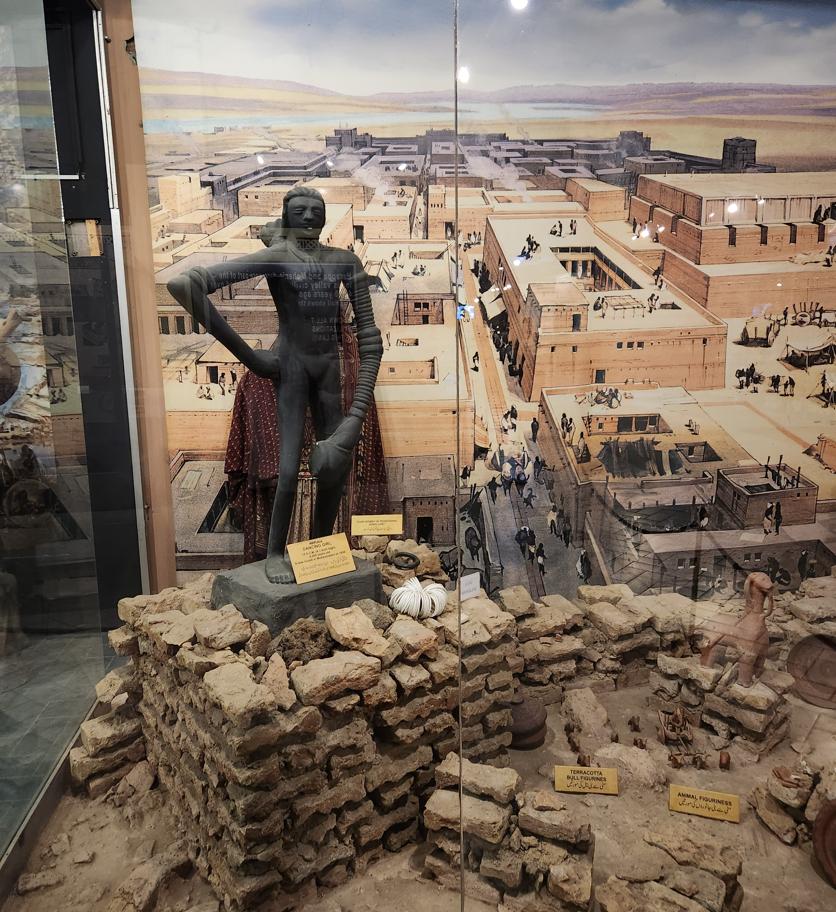
The museum begins, fittingly for a journey that had itself begun at Mohenjo-daro two weeks earlier, with the Indus civilisation: a life-sized reconstruction of a Harappan street backed by a mural of the excavated city, terracotta bulls and toy carts arranged among the rubble, and a seated stone figure that everyone recognises without quite knowing why — a cast of the so-called Priest-King, the original in the National Museum of Pakistan in Karachi, a claimed copy in New Delhi, the two countries maintaining a quiet, permanent argument over a five-thousand-year-old sculpture that neither entirely owns.
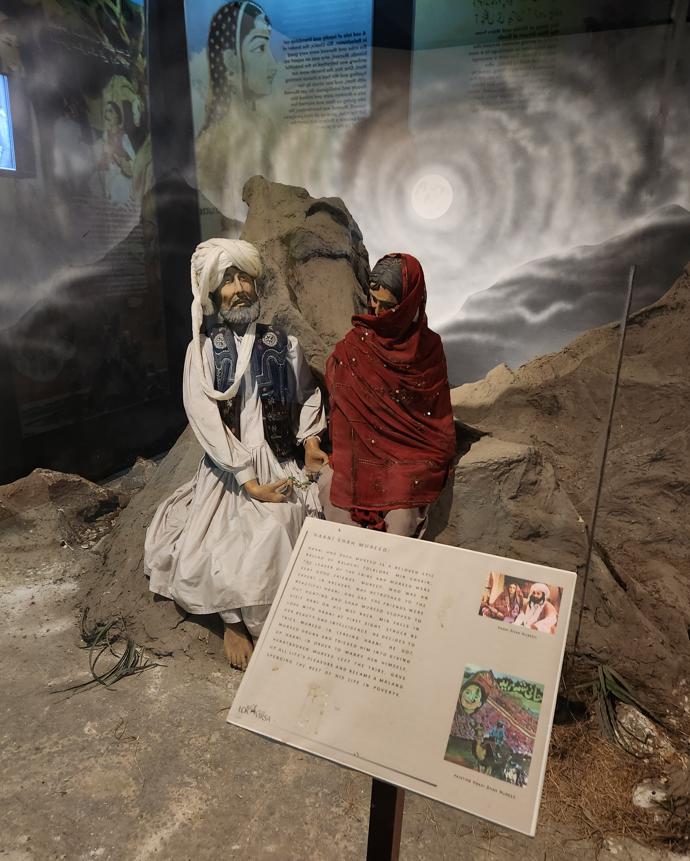
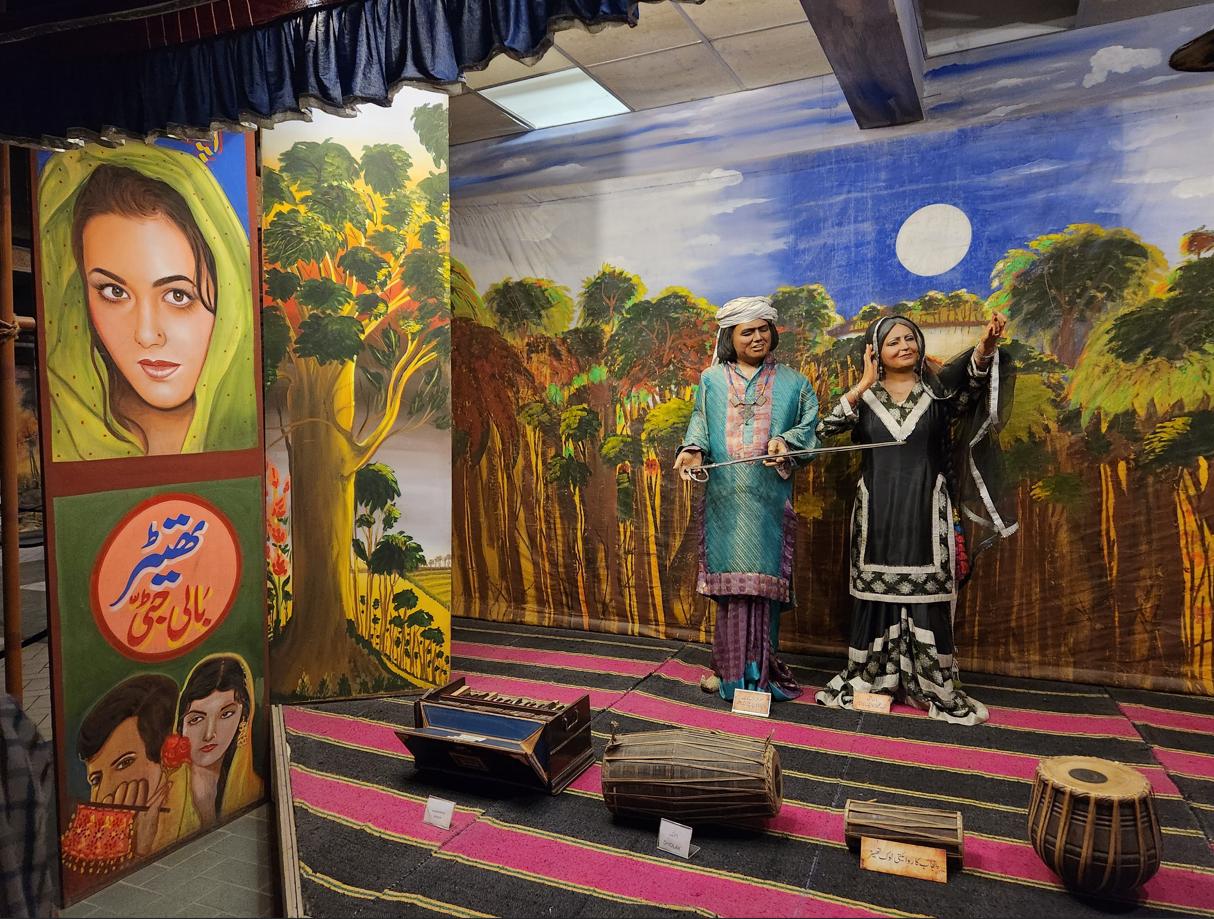
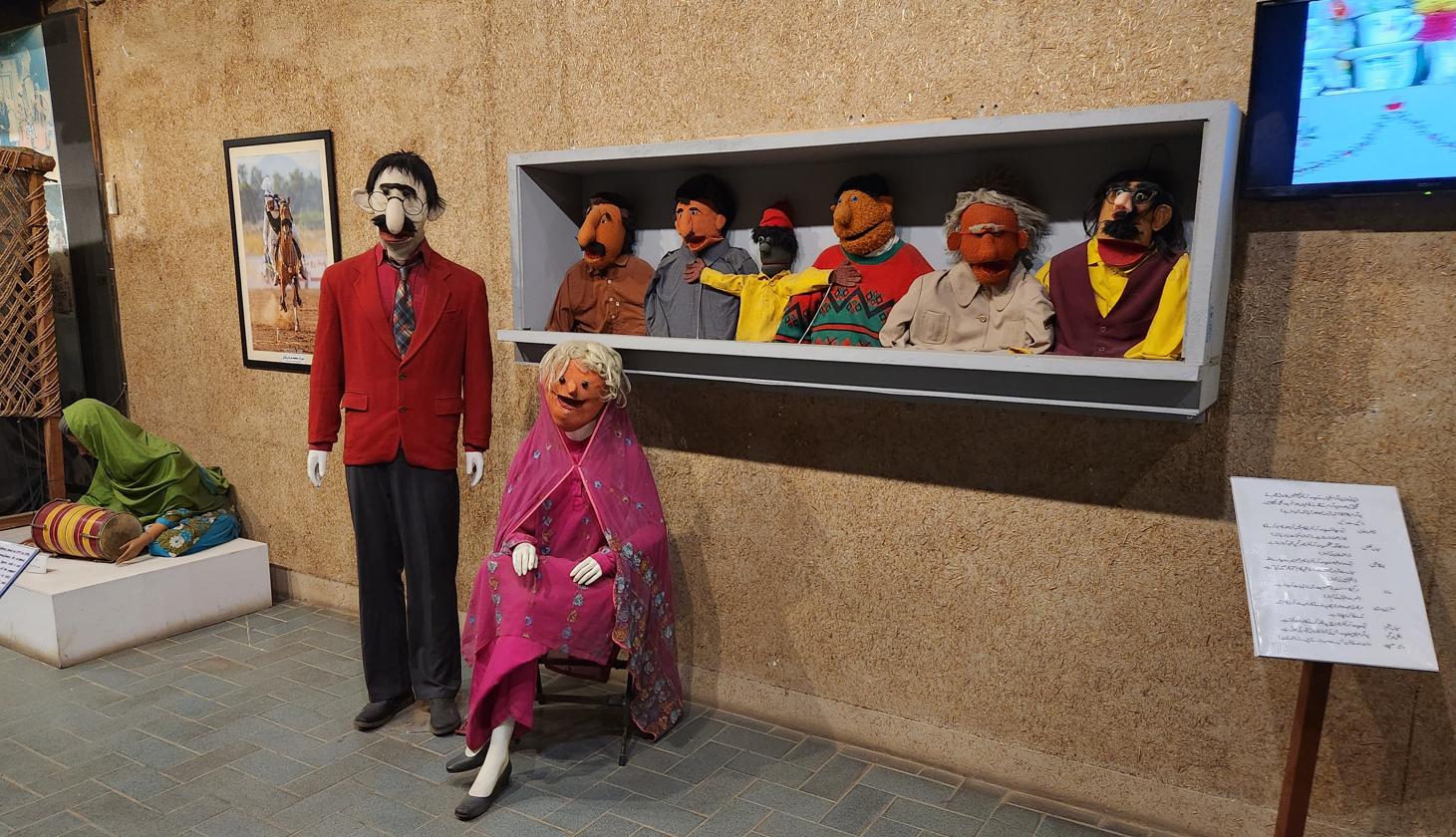
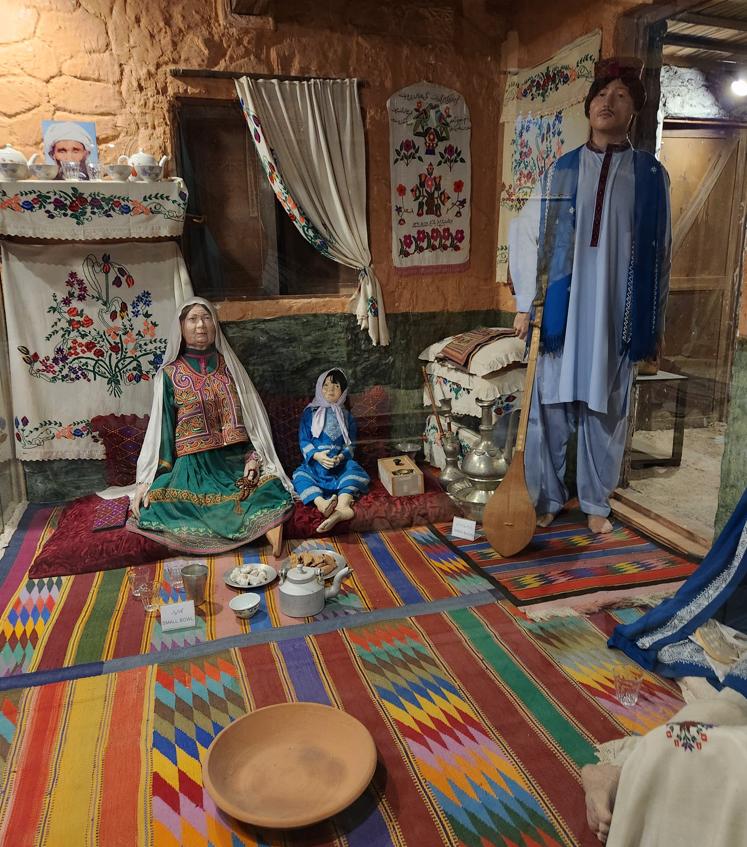
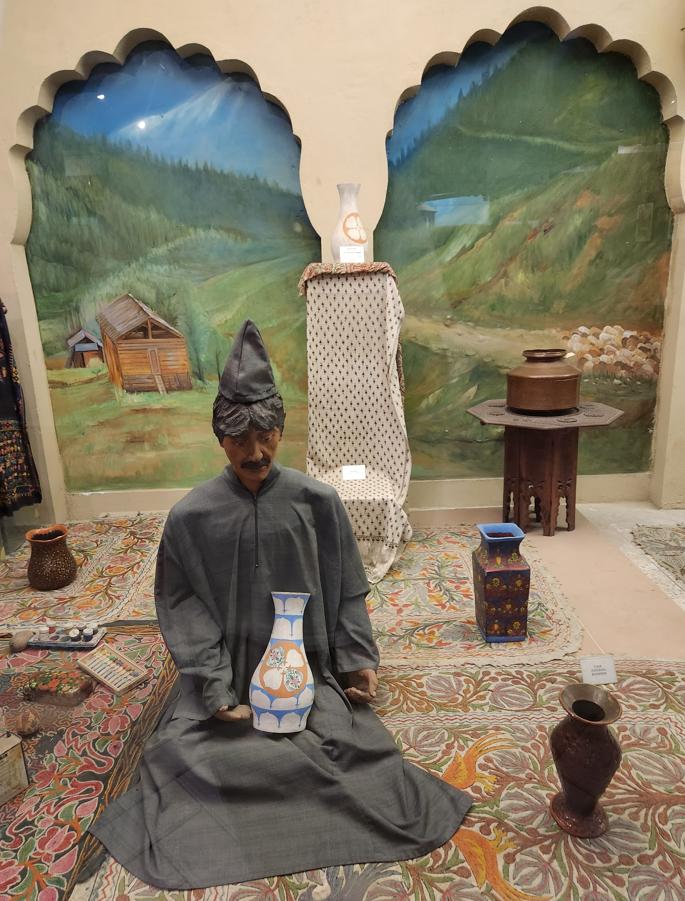
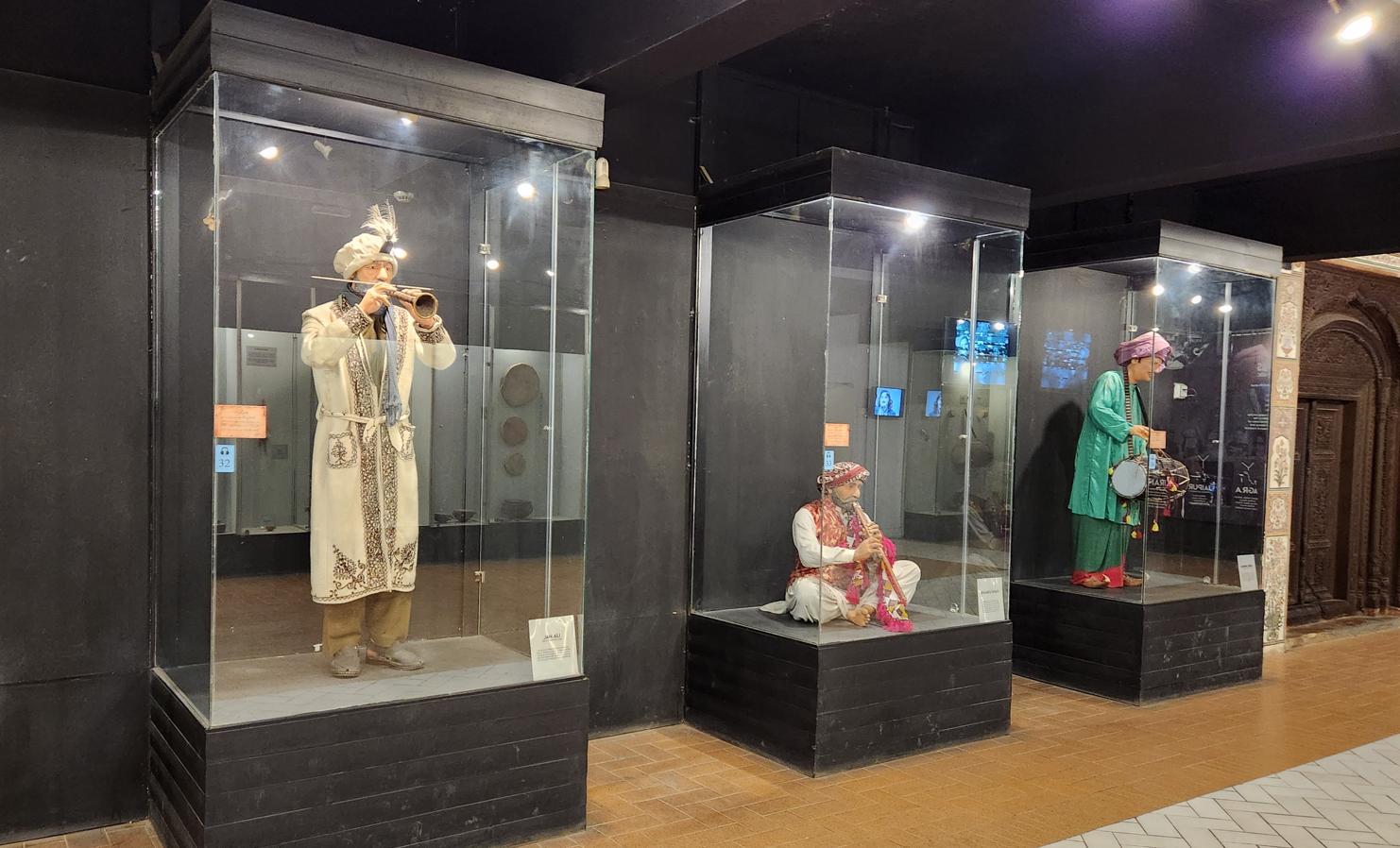
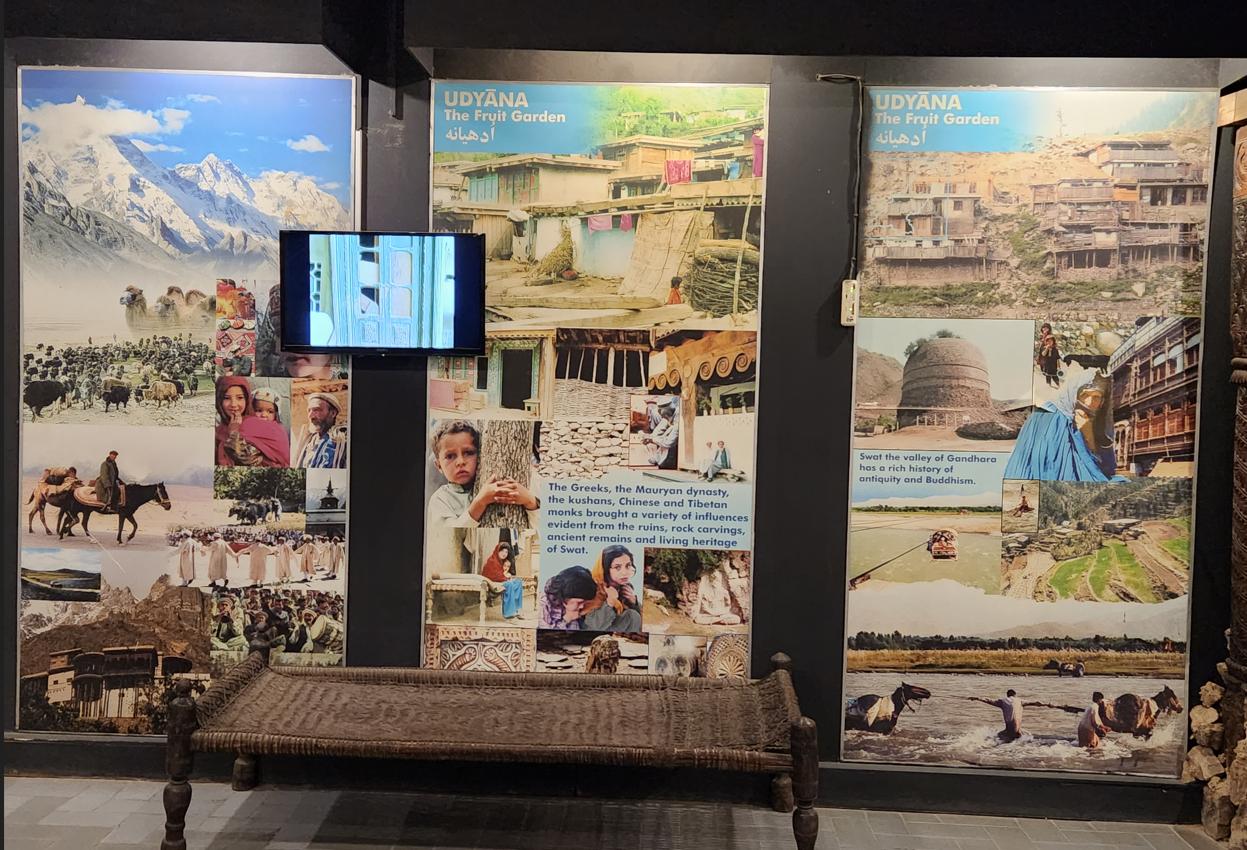
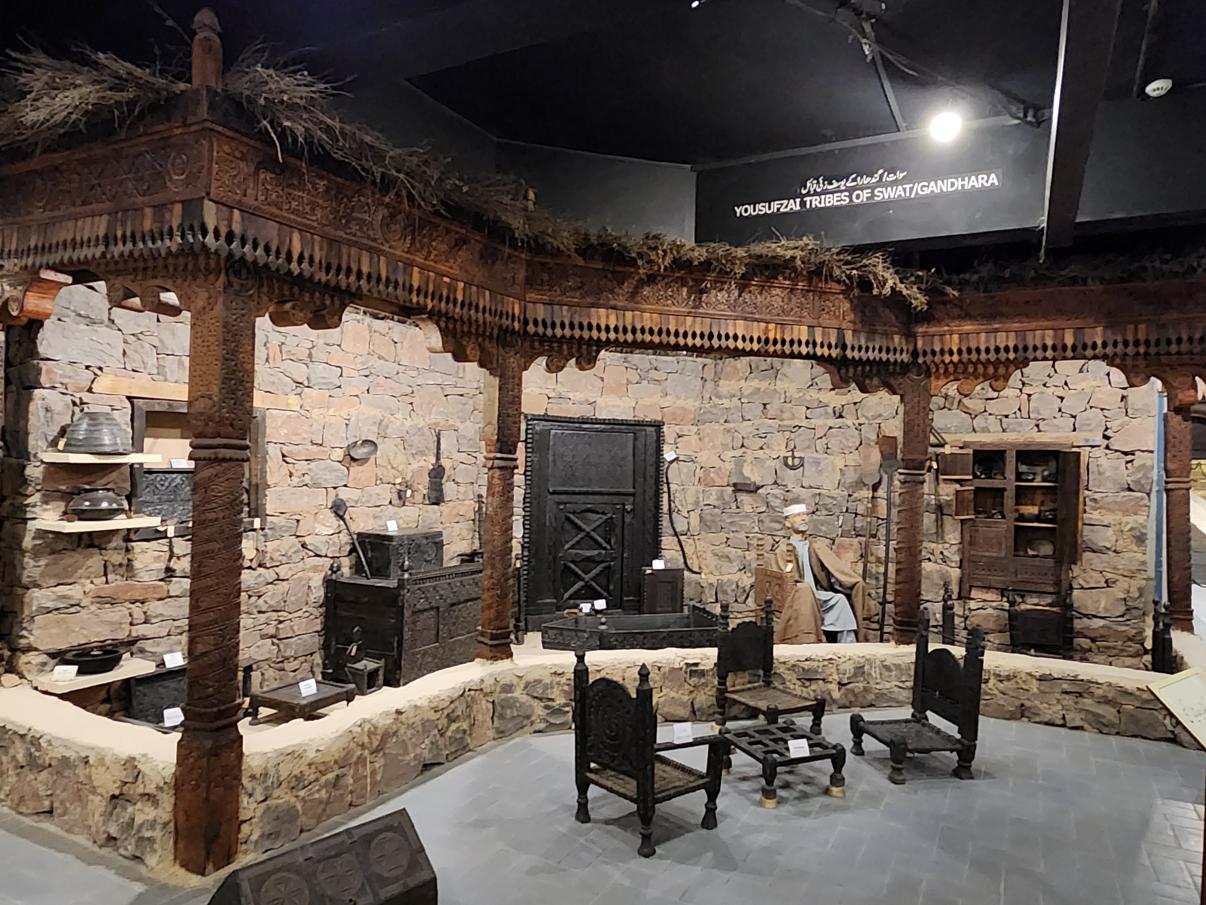
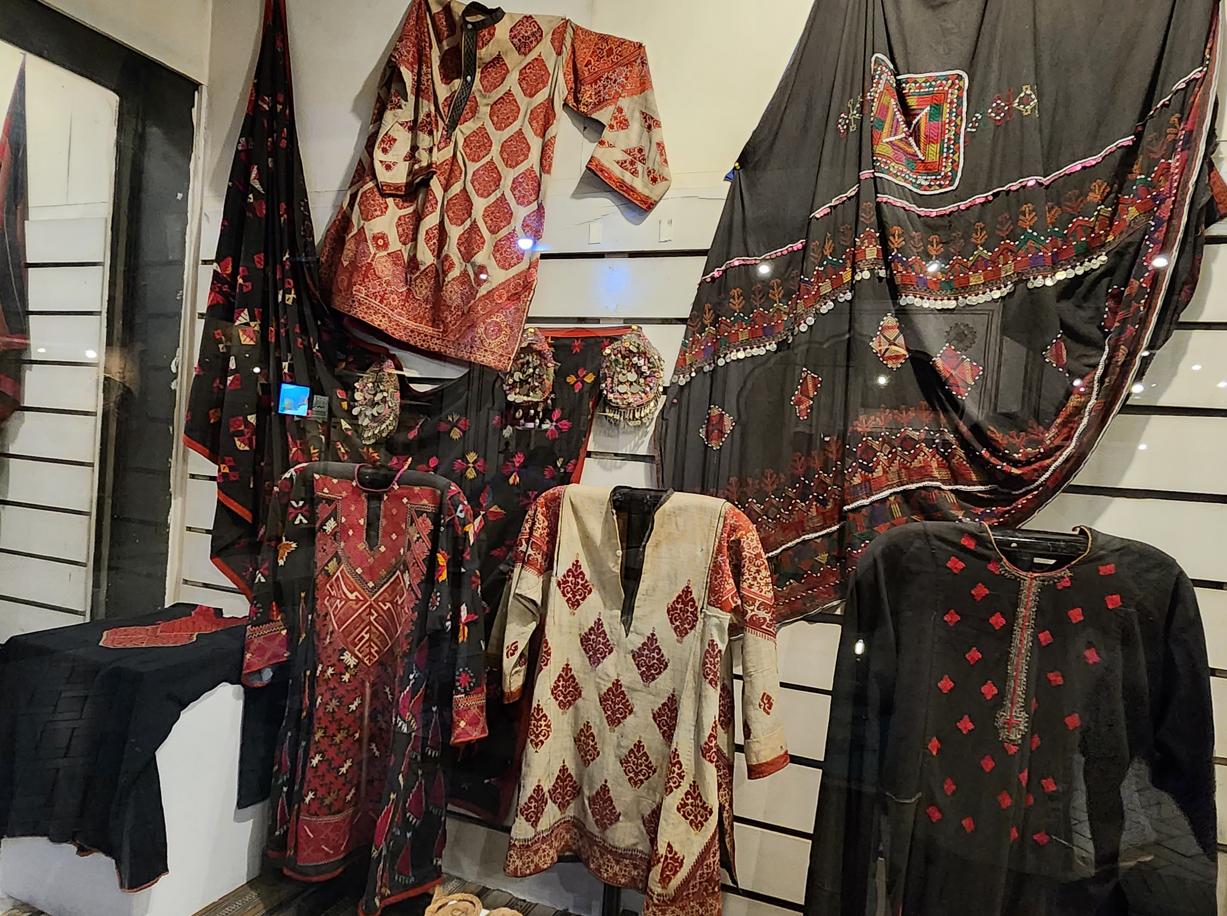
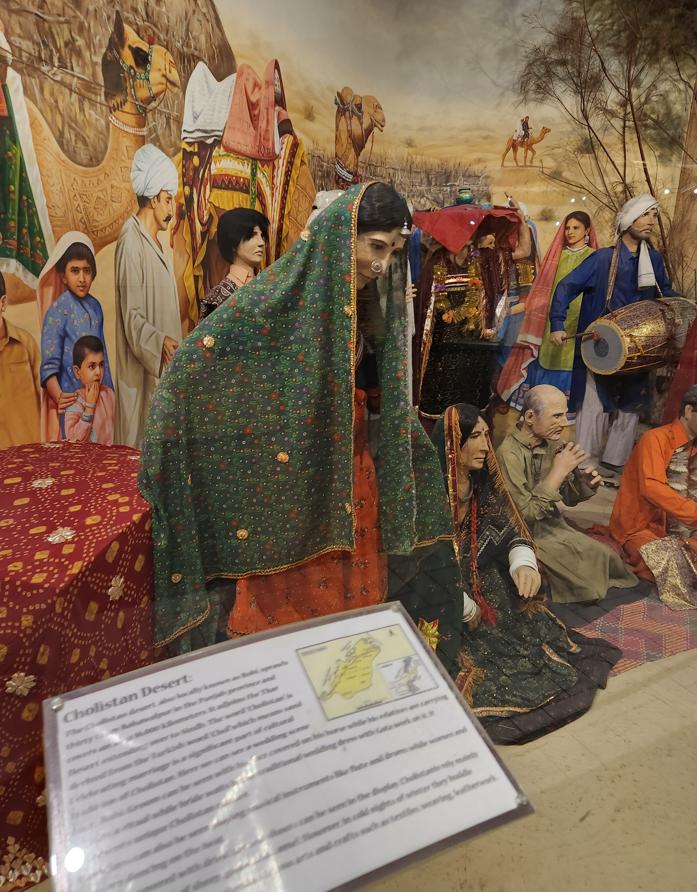
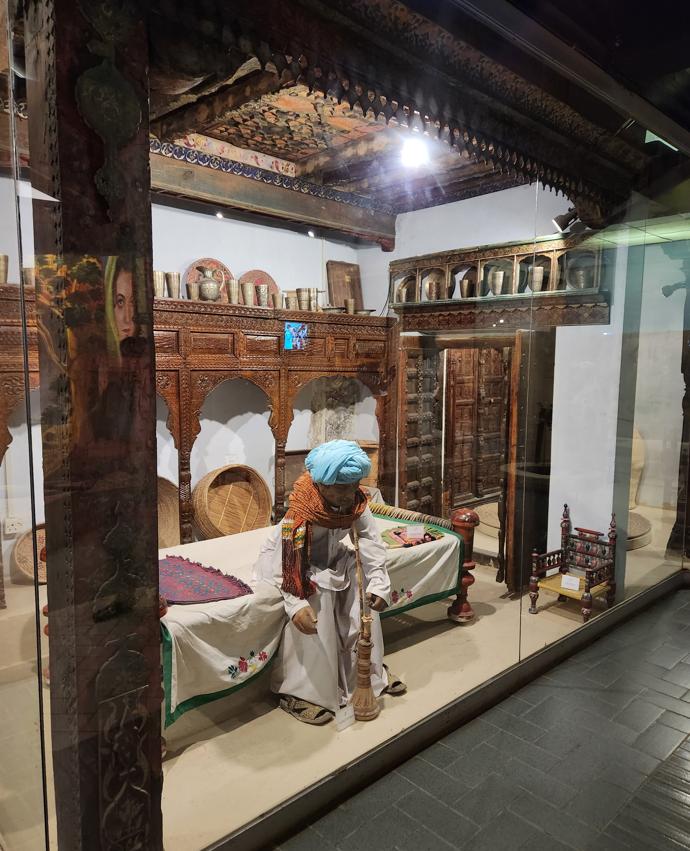
Beyond it, the museum turns into a sequence of reconstructed rooms, each one furnished and peopled with mannequins in regional dress: a Baloch household with its mud-brick niches stacked with pots, two men in saffron and ochre robes seated on a carpet with hand-drums at their sides; a room from the northern valleys with embroidered wall-hangings, a woman and child seated by a low table and a samovar; a Yousufzai Pashtun hujra of dark carved wood, its chairs and cabinets more heavily worked than furniture generally needs to be. The effect sits somewhere between a museum and an unusually elaborate diorama built for a country that does not otherwise get to introduce itself in the first person.
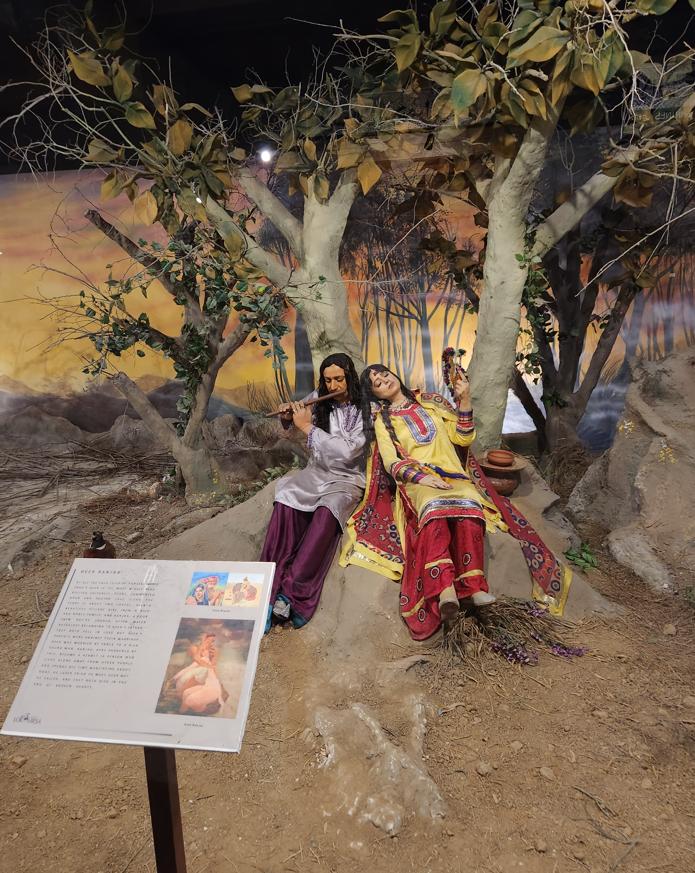
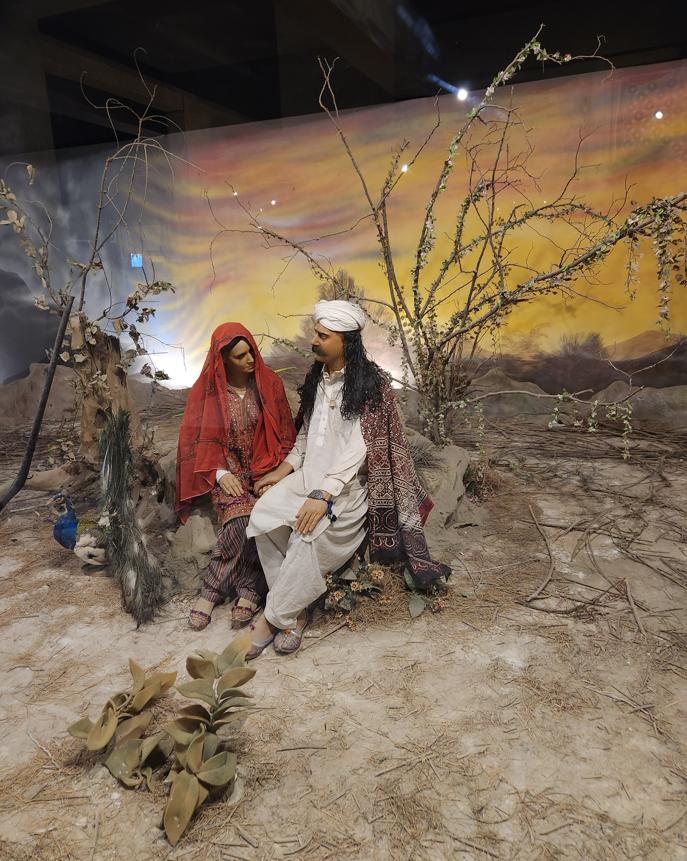
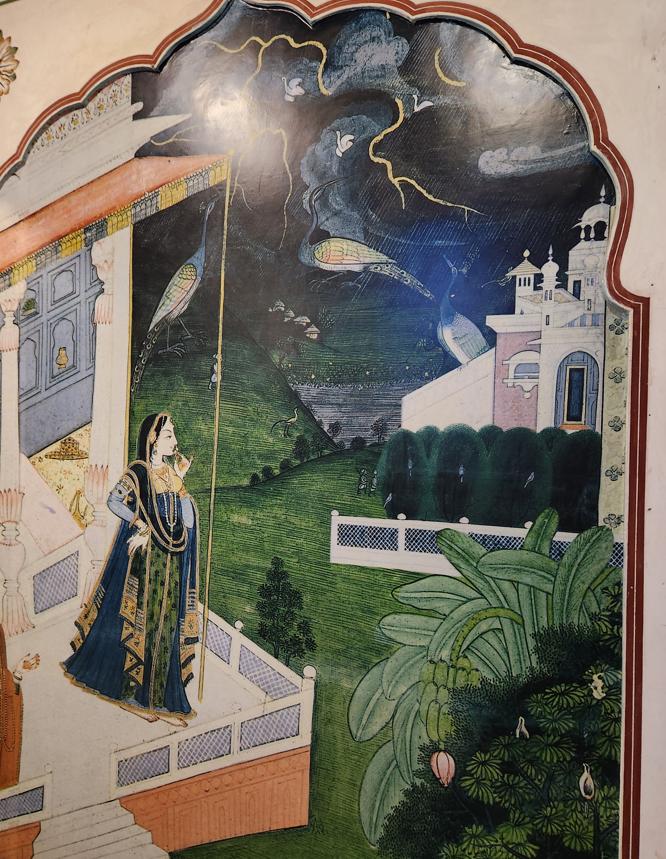
The museum's real find, though, is its gallery of folk romances, staged as small theatrical tableaux under painted skies. Heer and Ranjha — the Punjabi Romeo and Juliet, older than Shakespeare's pair and, in Pakistan, considerably more beloved — are shown at the moment of doomed idyll, Ranjha playing his flute, Heer reclining against him in a fall of red and yellow cloth, a sunset painted into the backdrop as if the museum already knew what was coming. A few rooms further on stand Hani and Sheh Murid, the Baloch equivalent, an old man in a turban and a woman in a red shawl posed against painted rock. Sindh had given us Shah Abdul Latif Bhittai's sung versions of these same doomed unions weeks earlier, at his shrine in Bhit Shah; here they were again, retold in fibreglass and paint, the same national instinct for turning thwarted love into scripture.
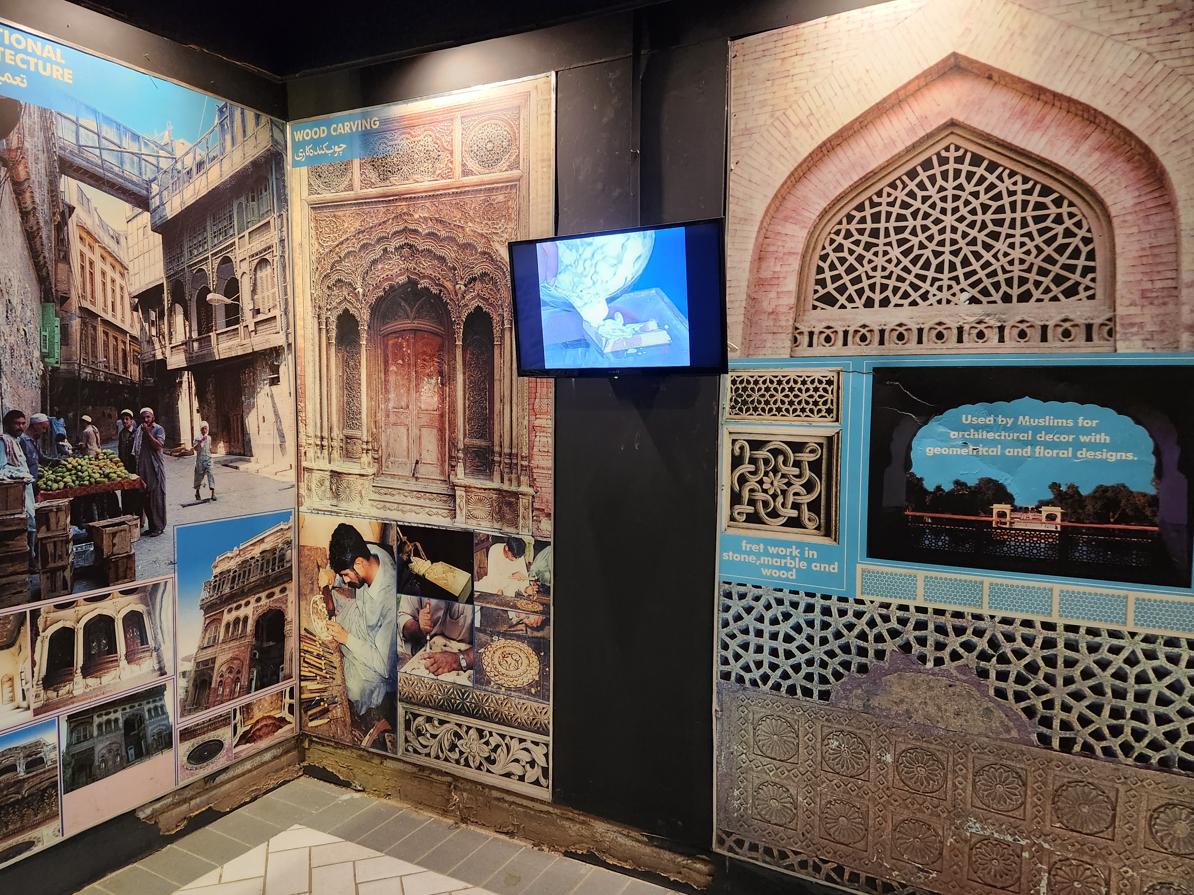
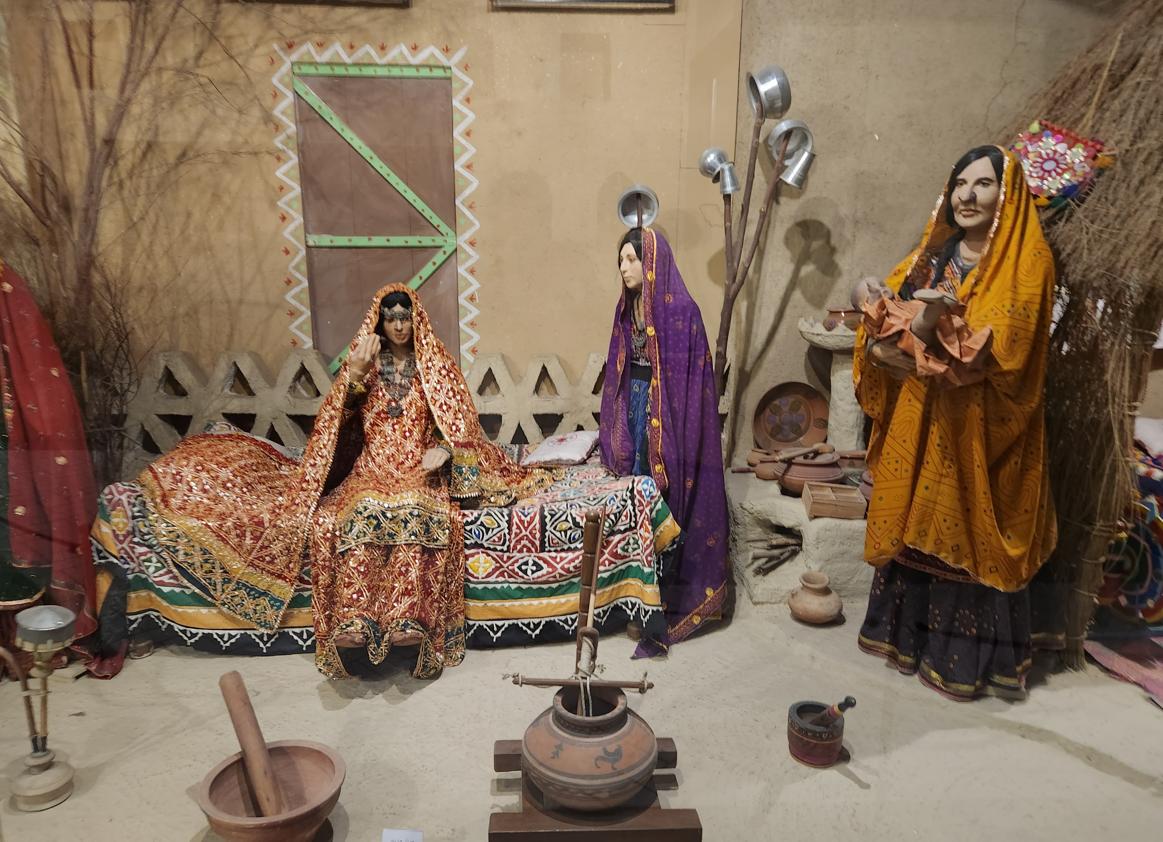
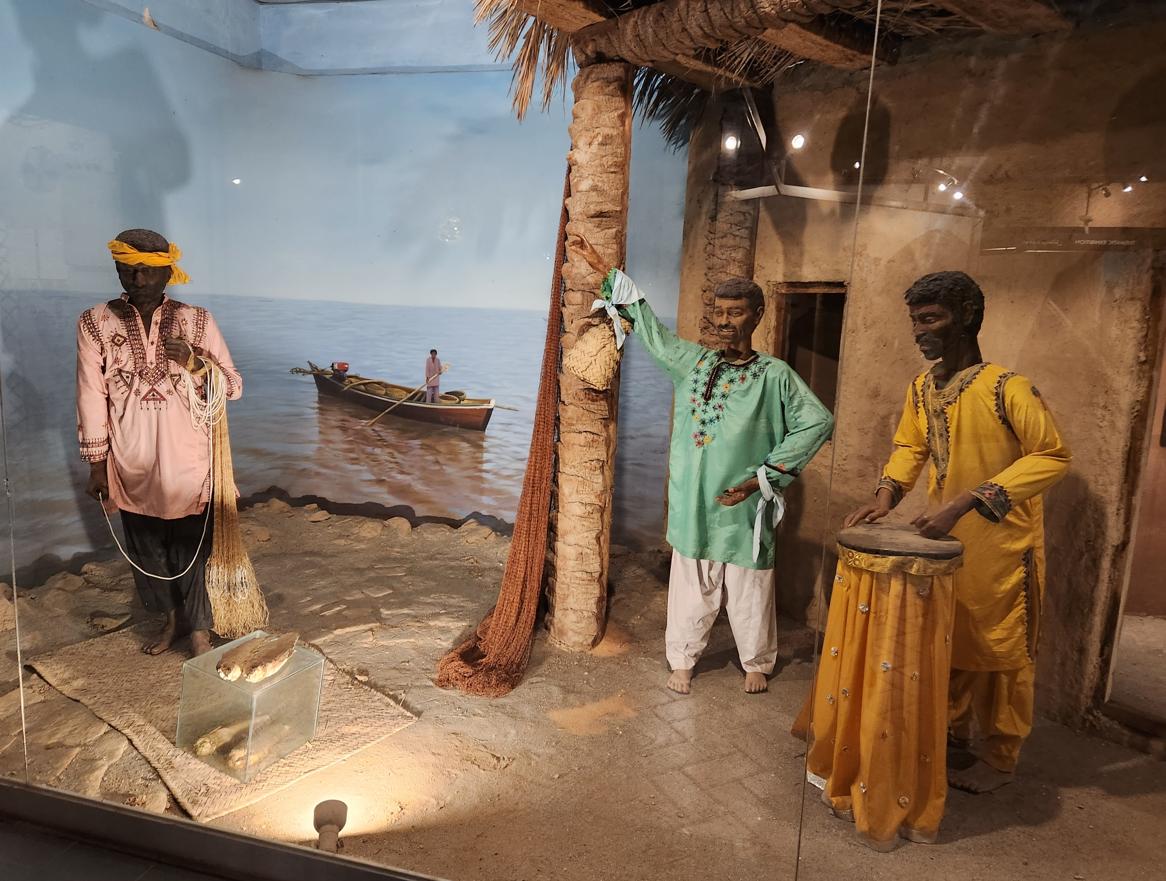
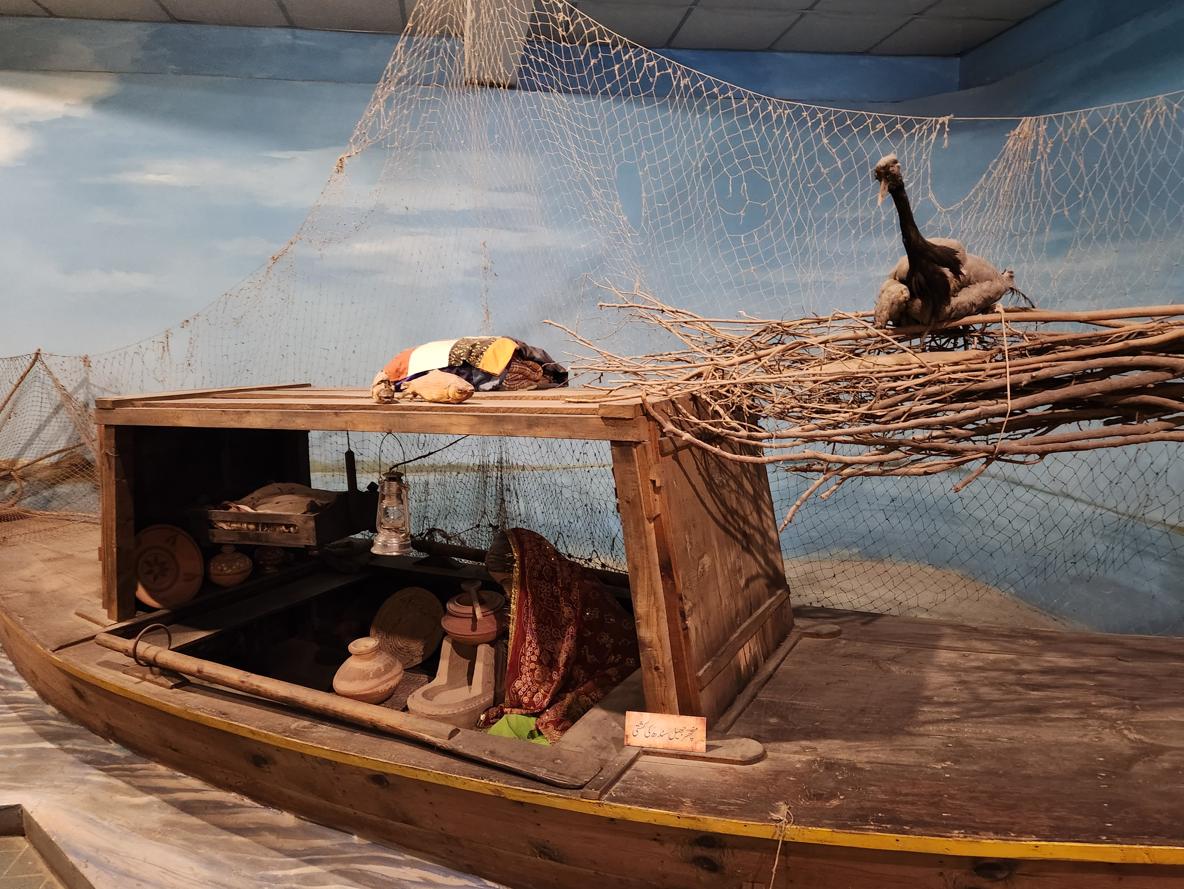
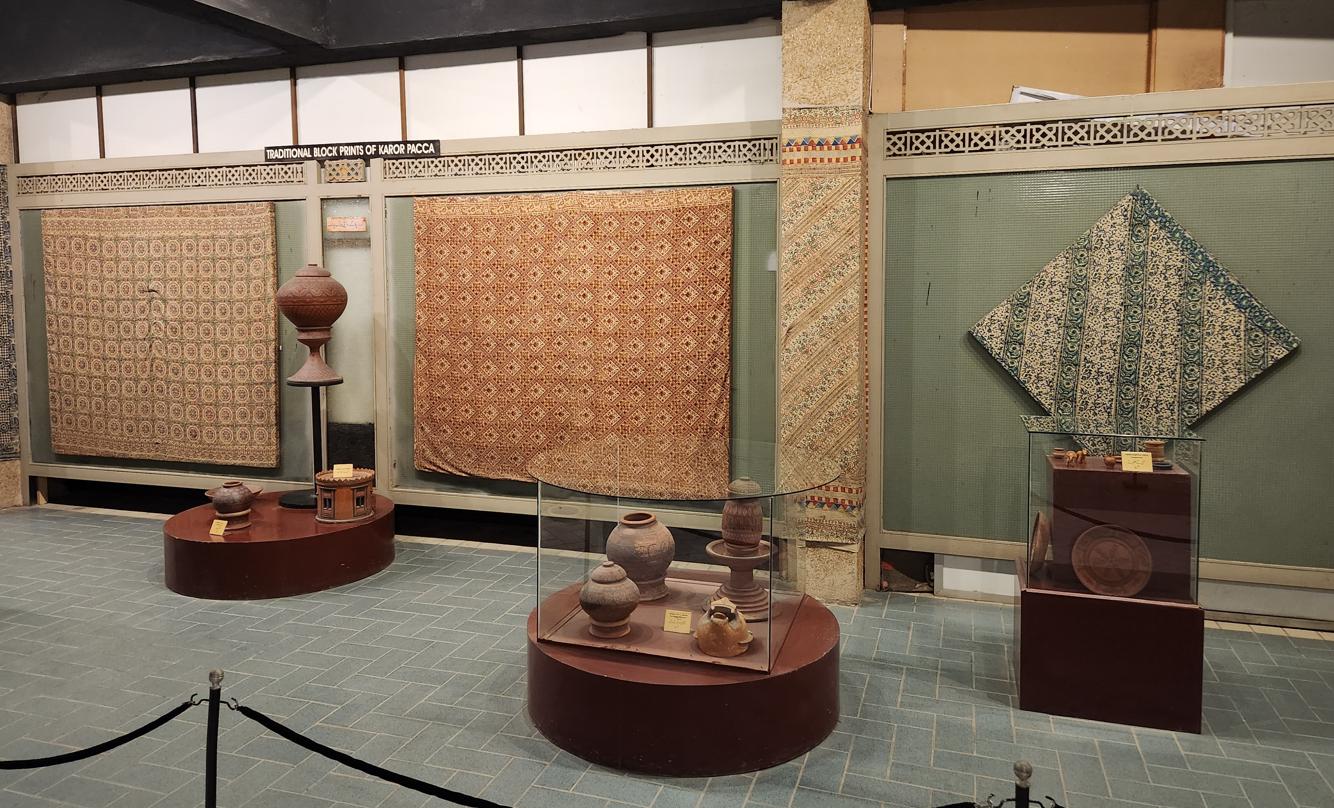
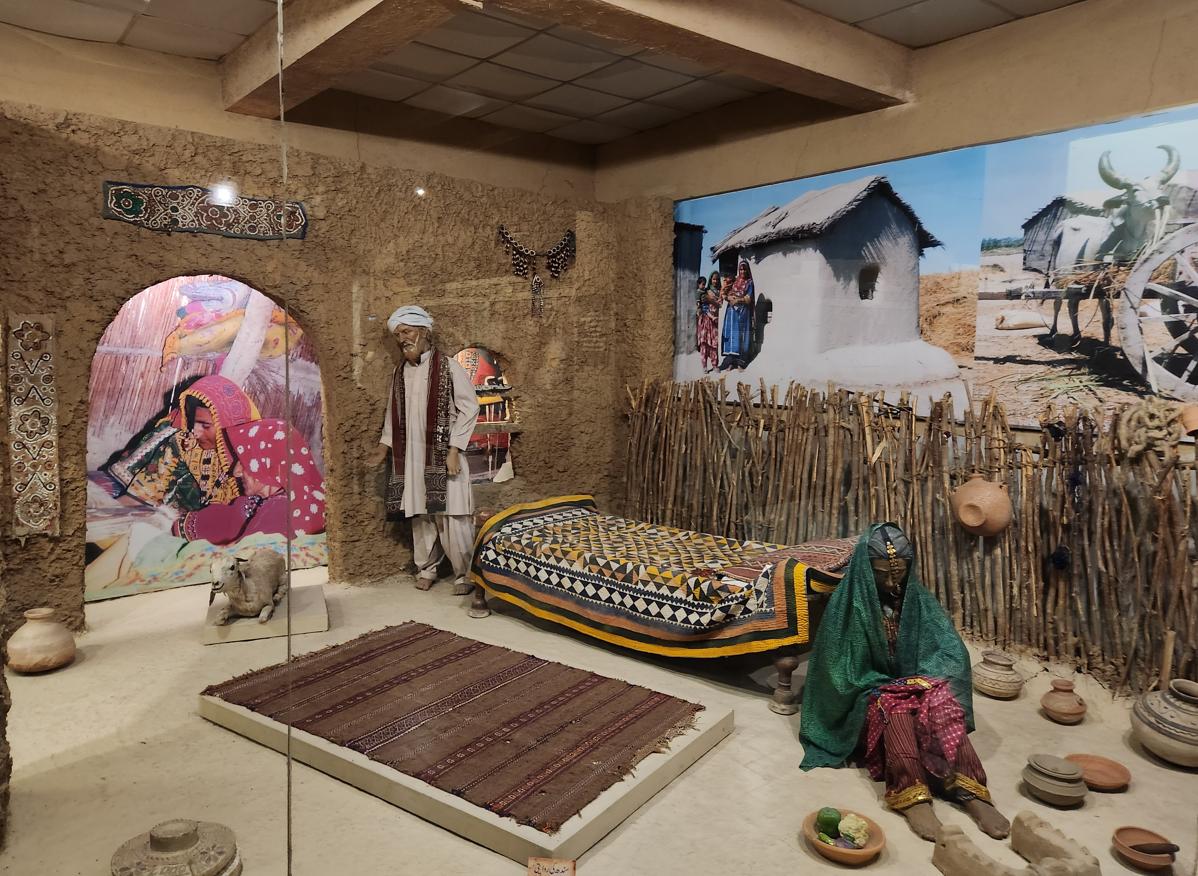
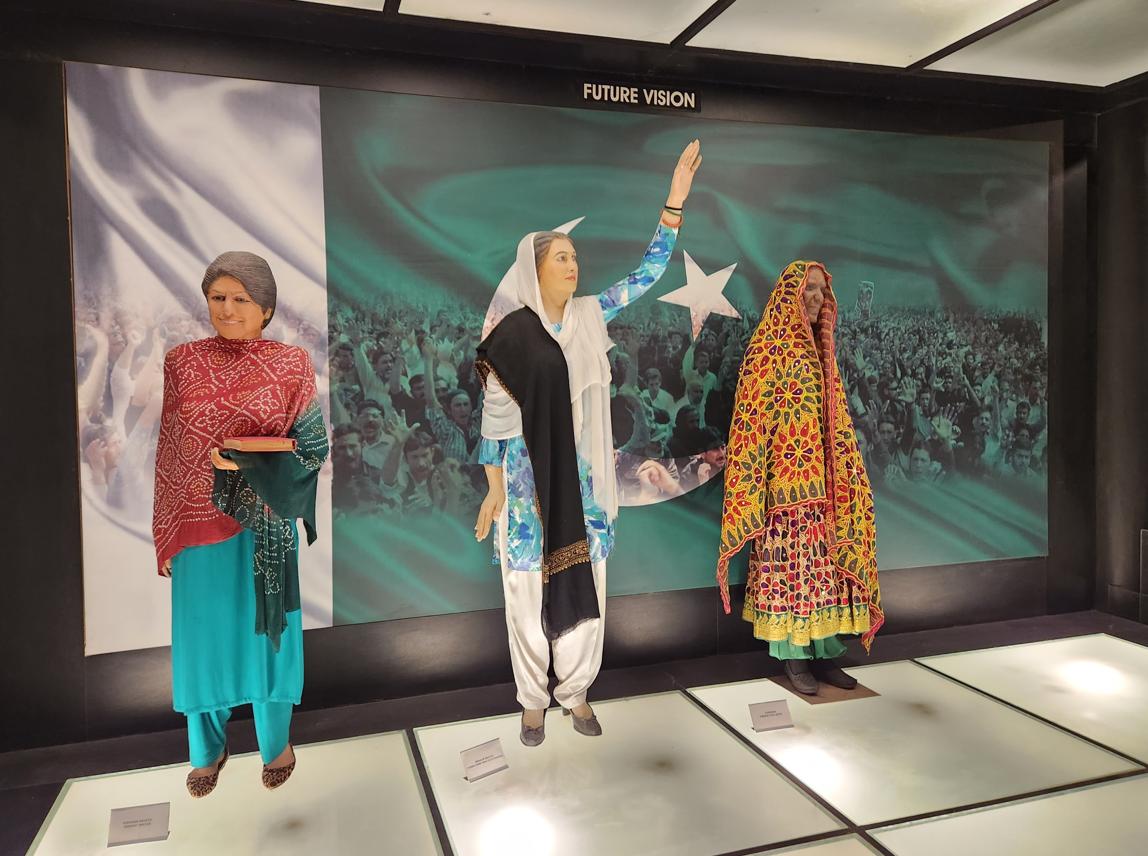
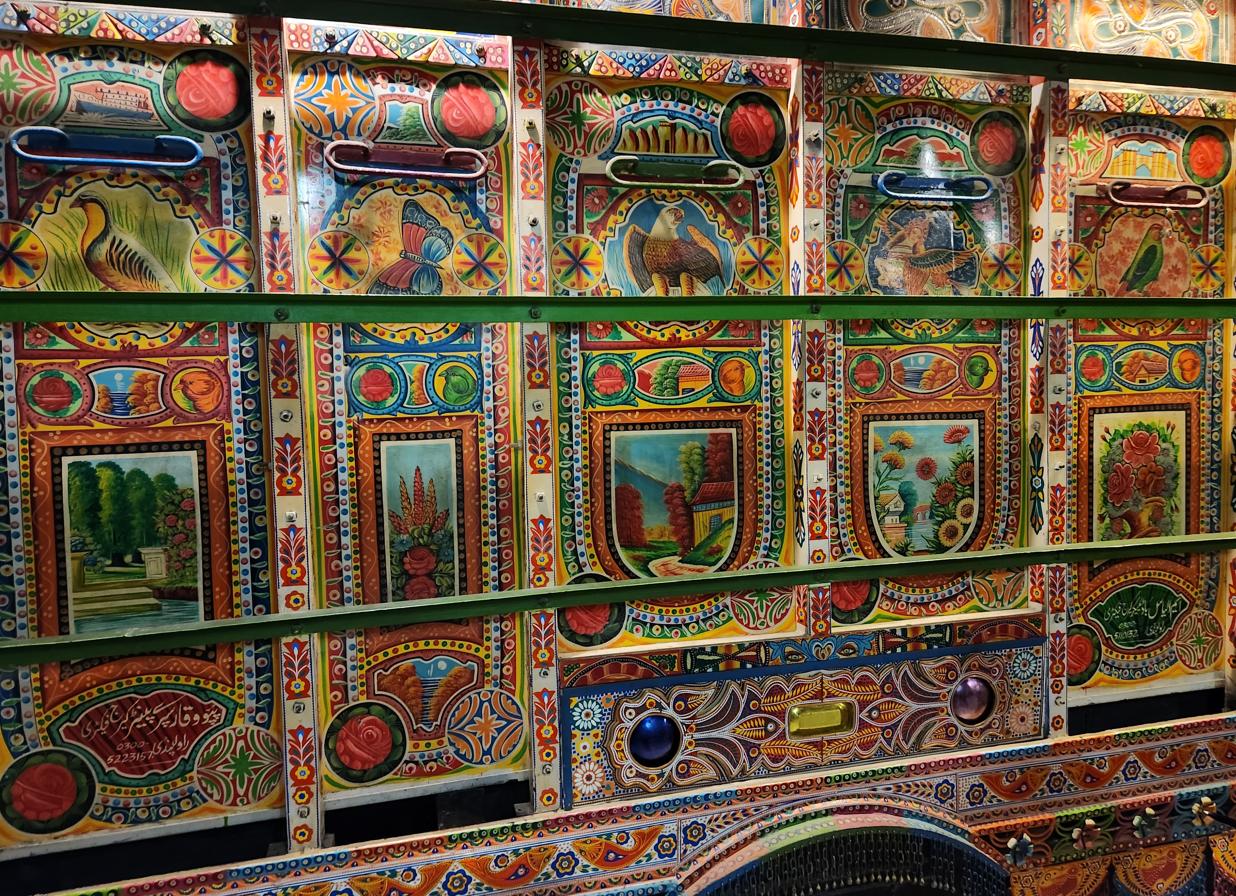
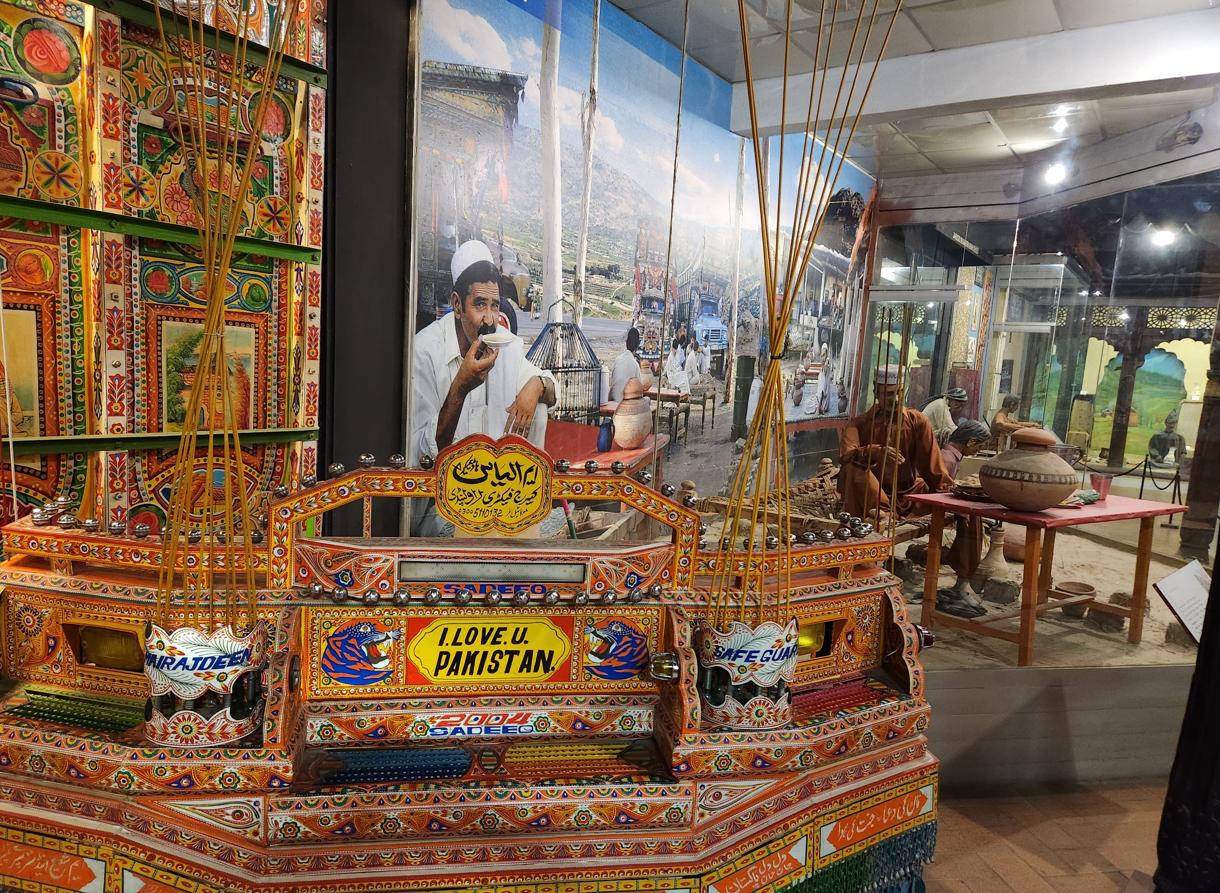
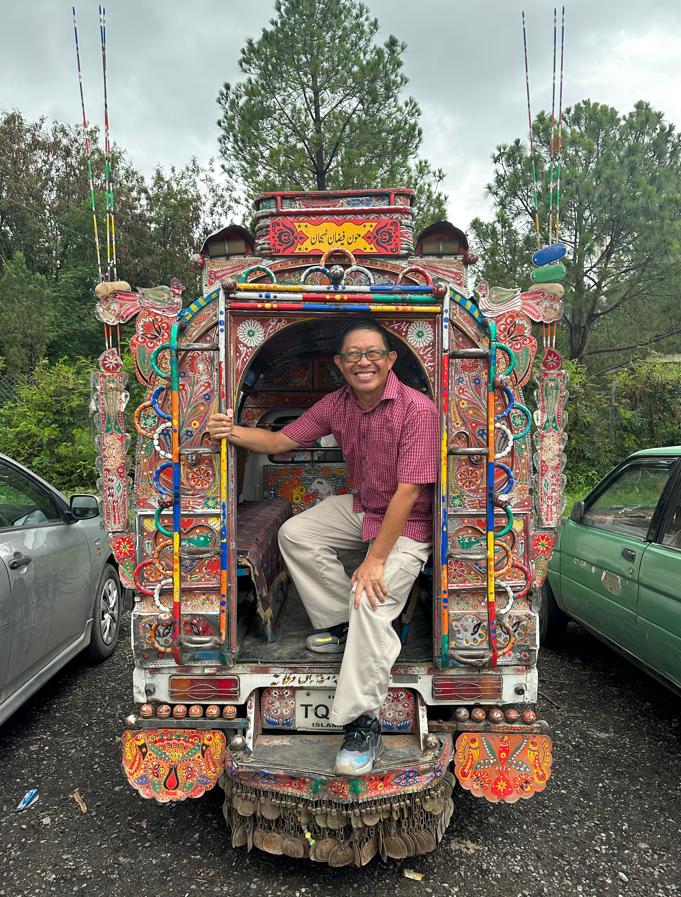
One long gallery is given over to truck art — the maximalist, jewel-toned decoration that Pakistani drivers apply to their vehicles with a devotion bordering on the liturgical, painted panels of roses, eagles, and mountain scenes bolted in ranks along the wall like stained glass taken down from its cathedral. Around the corner, a full-scale diorama recreates a highway 'truck hotel': a roadside dhaba with plastic chairs and clay water pots, a man drinking tea at a red table while a decorated truck idles in a painted landscape behind him — the ordinary infrastructure of the Grand Trunk Road and the Karakoram Highway we had spent two weeks driving, rendered here as folk art in its own right.
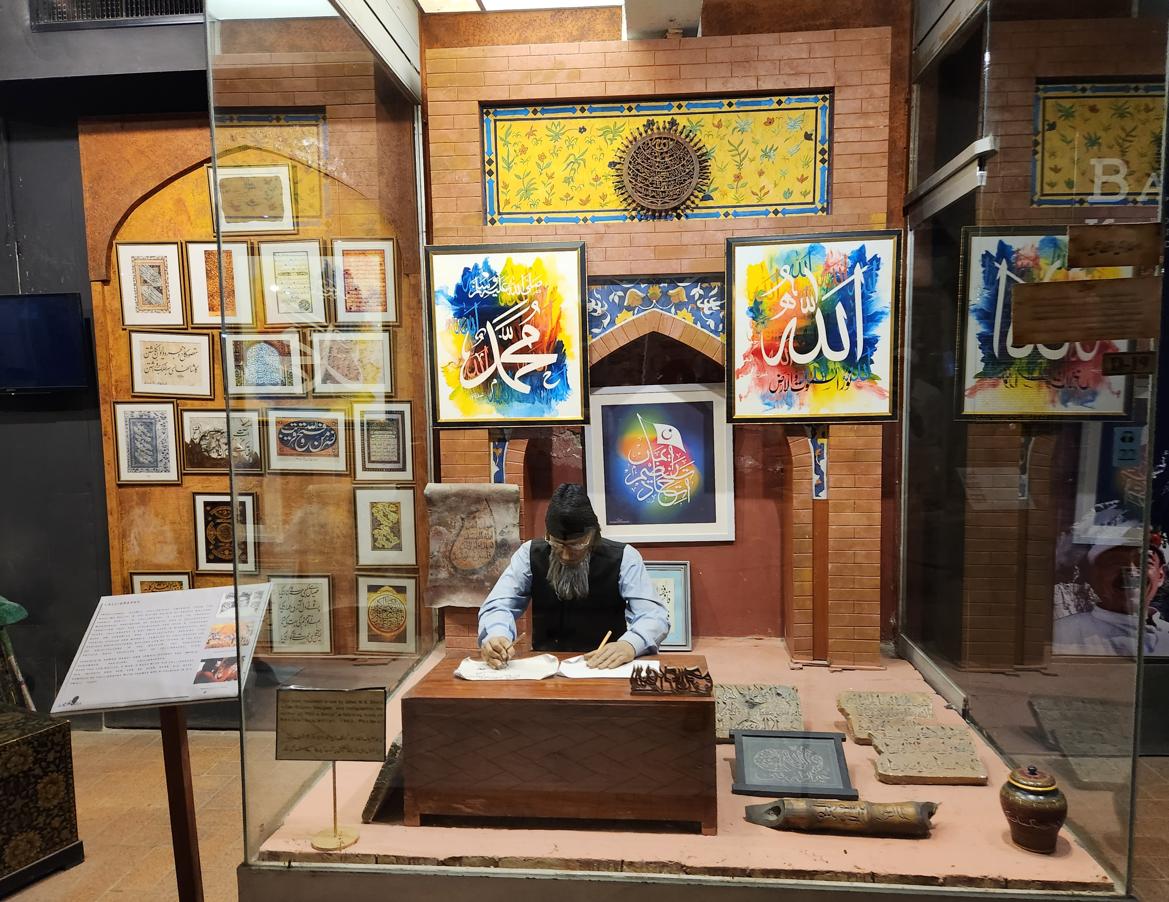
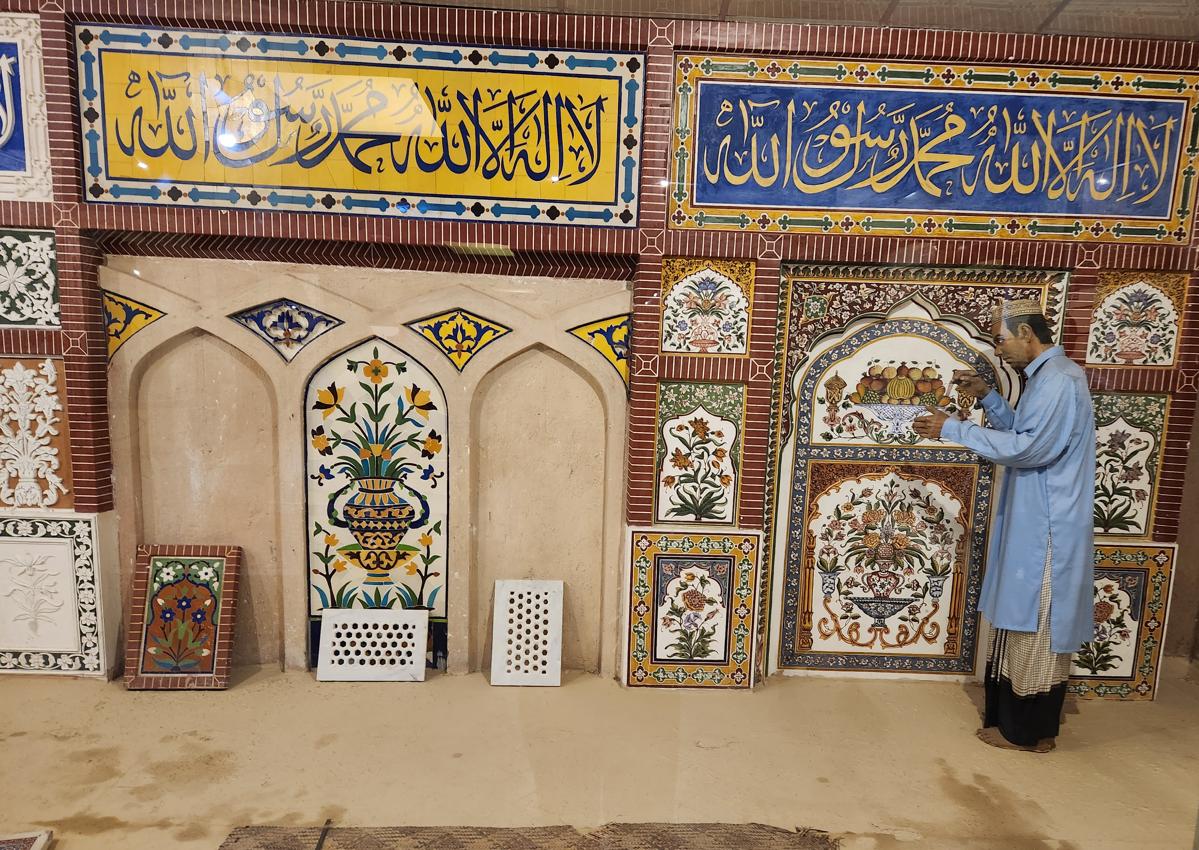
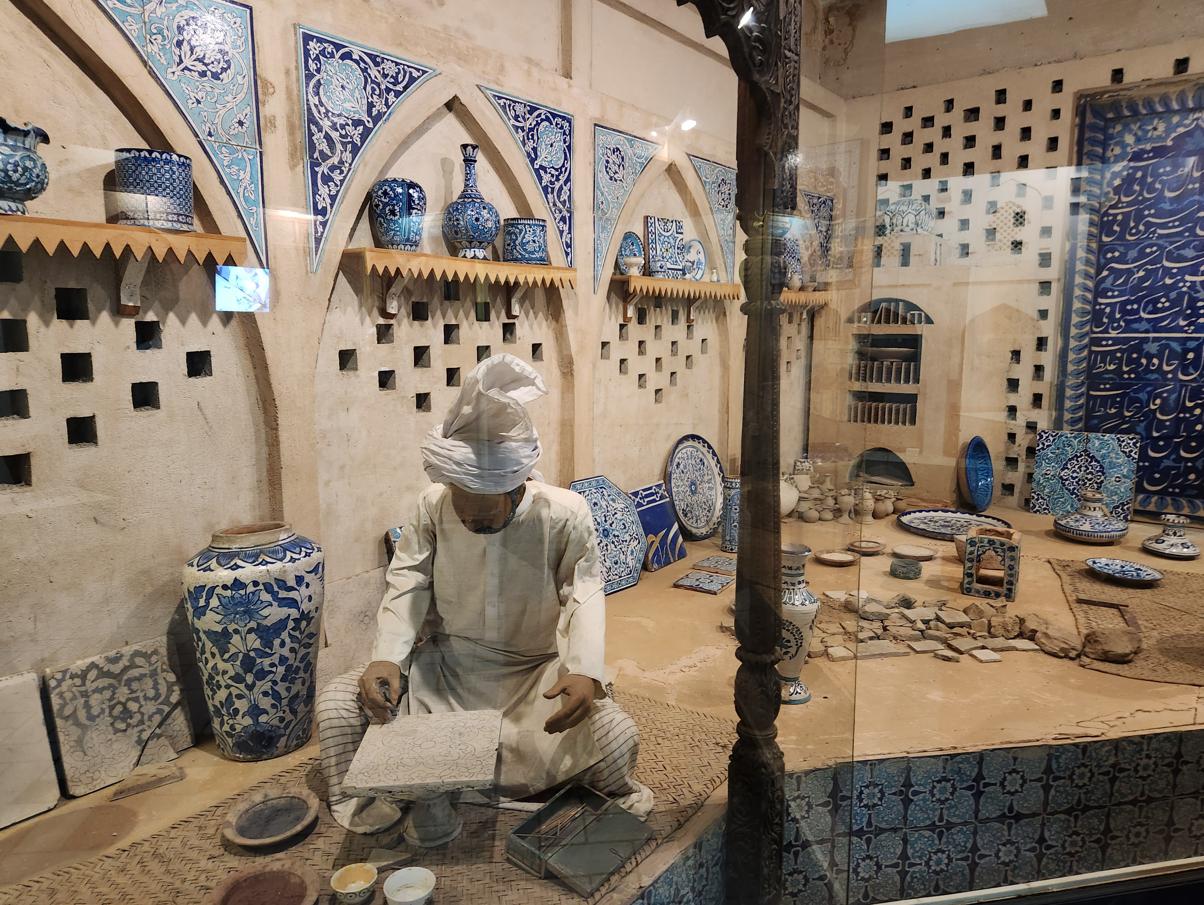
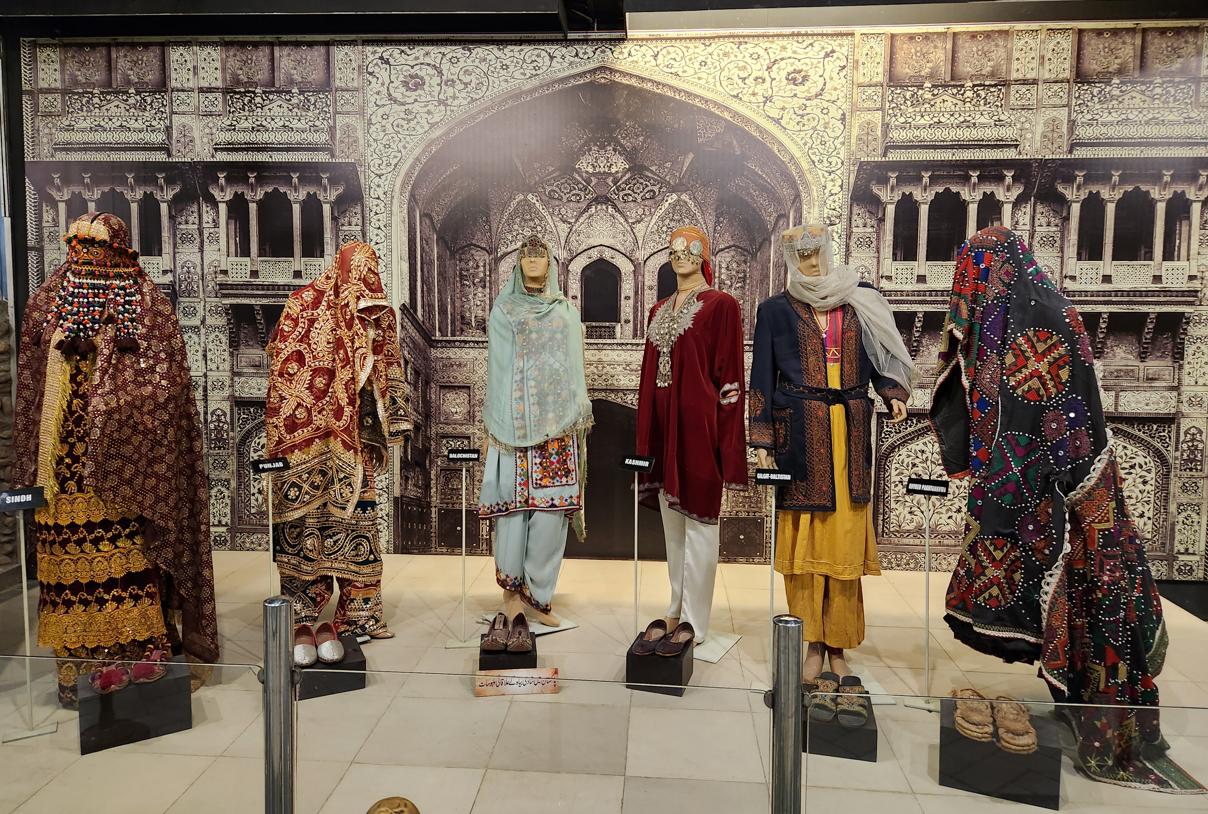
Further along, a mannequin calligrapher bends over his desk beneath a wall of framed Quranic calligraphy in reds, blues, and gold, tile work behind him standing in for the mosques that calligraphy usually decorates. The museum's final rooms lay out, side by side, the formal costume of Sindh, Punjab, Kashmir, Balochistan, Azad Kashmir, and Khyber Pakhtunkhwa — six mannequins in six entirely different visual languages of embroidery, shawl, and jewellery, a reminder, if the previous two weeks had not already supplied enough of them, that 'Pakistani' is a passport rather than a costume.
Faisal Mosque and the Tomb in the Grass
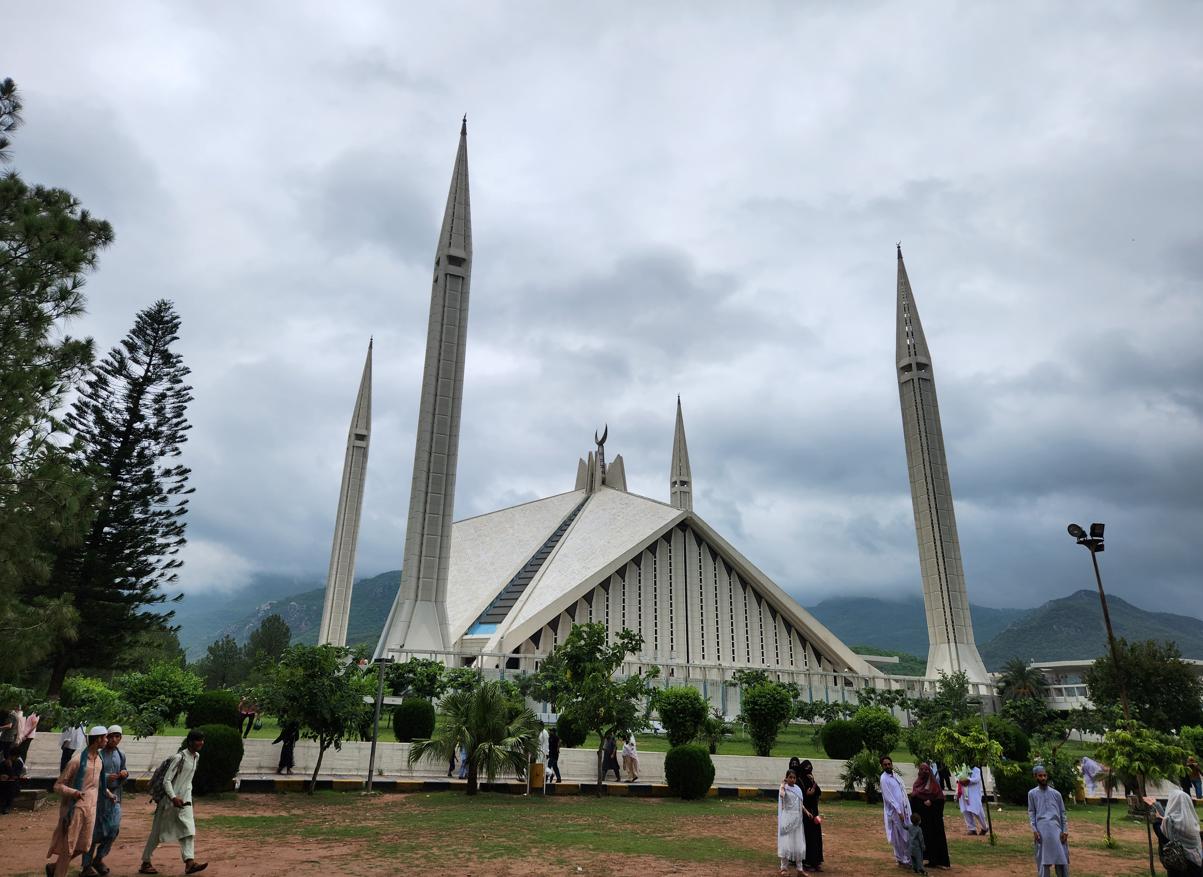
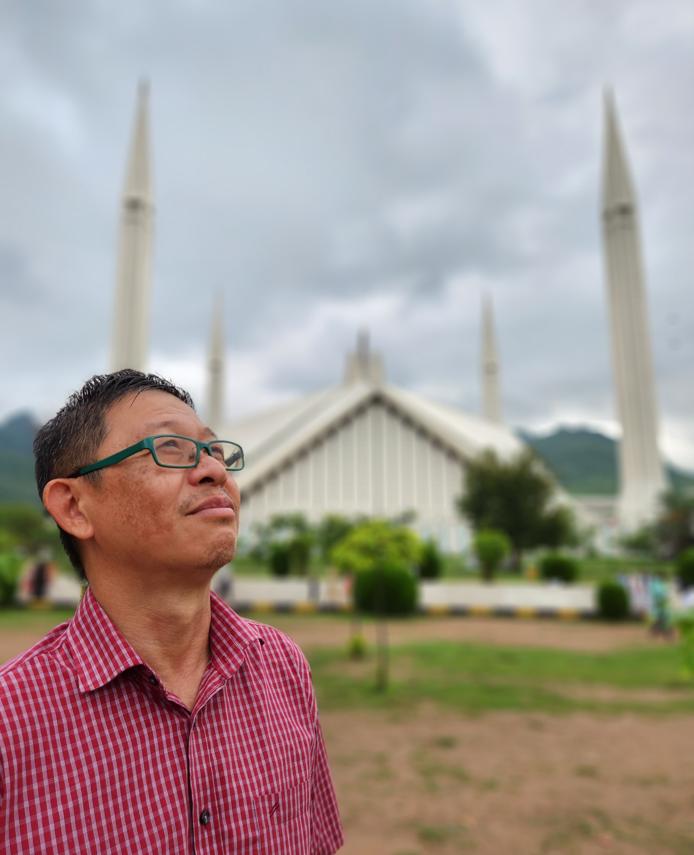
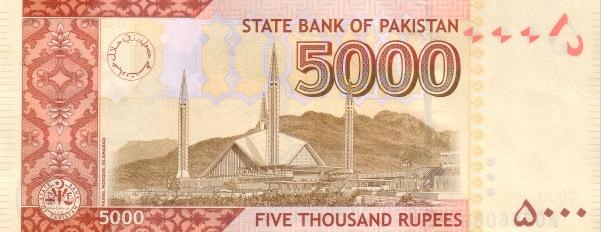
The Faisal Mosque, built between 1976 and 1986 with Saudi funding, is the most distinctive building in the city: a tent-shaped structure that dispenses with the dome of Islamic architectural tradition and reaches instead for the triangulated geometry of mid-century modernism. It is beautiful, in an assertive sort of way — the kind of beauty that is confident it is being beautiful and wants you to acknowledge it.
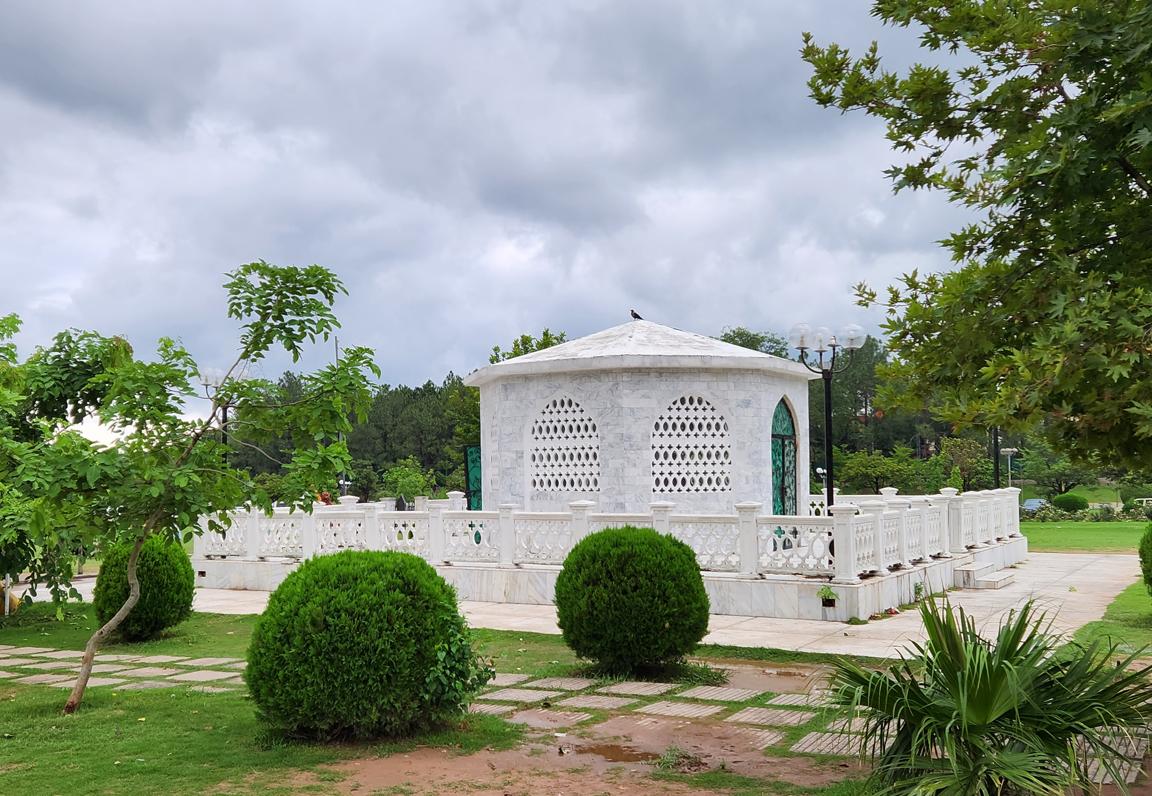
On the mosque's northern lawn, easy to miss unless someone points it out, is a small white marble structure with latticed screens, raised on a low platform: the grave of General Muhammad Zia-ul-Haq, Pakistan's sixth president and, for eleven years, its most consequential dictator. There is no signboard. Jamal had to tell us it was there.
Zia took power in a 1977 coup against the elected prime minister Zulfikar Ali Bhutto, promised elections within ninety days, and then did not hold them for eight years. Bhutto was tried on a disputed murder charge and hanged in 1979, a verdict most historians now regard as a judicial killing rather than justice. Under Zia, Pakistan underwent an official program of Islamisation — Hudood Ordinances, Shariat courts, public floggings — that reshaped the country's legal and religious culture in ways still argued over today. He was also, not coincidentally, the general who turned Pakistan into the frontline state of the anti-Soviet war in Afghanistan, channelling American and Saudi money to the mujahideen through the ISI and setting in motion a set of alliances and consequences — the refugee camps, the madrasas, the weapons — that would outlive him by decades. He lifted martial law in 1985, permitted a tightly controlled, party-less election, and then, in May 1988, dismissed the civilian government he had installed and announced fresh elections of his own design. He did not live to hold them.
On 17 August 1988, the C-130 Hercules carrying Zia back from a tank demonstration in Bahawalpur climbed to altitude, flew briefly and erratically, and crashed into the desert, killing all thirty people aboard — Zia, the American ambassador Arnold Raphel, the U.S. defence attaché Brigadier General Herbert Wassom, and a cluster of the Pakistan Army's most senior generals, including the ISI chief who had run the Afghan operation. A joint Pakistani-American investigation concluded the crash was 'most probably' the result of sabotage, but could not identify who was responsible or how it had been done; no flight recorder was ever recovered, and the official file, insofar as it still exists, remains classified. In the years since, blame has been apportioned, without resolution, to a Soviet or Afghan intelligence operation, to India, to a domestic conspiracy involving Murtaza Bhutto's al-Zulfiqar organisation, to Israel's Mossad, and to simple mechanical failure in an aircraft with a documented history of hydraulic trouble. Zia was given a state funeral attended by dignitaries from thirty countries and buried where the mosque he had helped build now shades his grave — a small, quiet, largely unvisited corner for a man whose eleven years in power are still being argued about on the other side of the wall.
It seemed, standing there, a fitting enough resting place for a ruler who spent his career insisting that Pakistan's future be legible, ordained, and controlled from above: a grave that no one has ever been able to fully explain, in a city built to a plan, beside a mosque built to a foreign patron's design, in a country that has spent the decades since arguing about how much of what he built should be kept.
Last Dinner at Monal
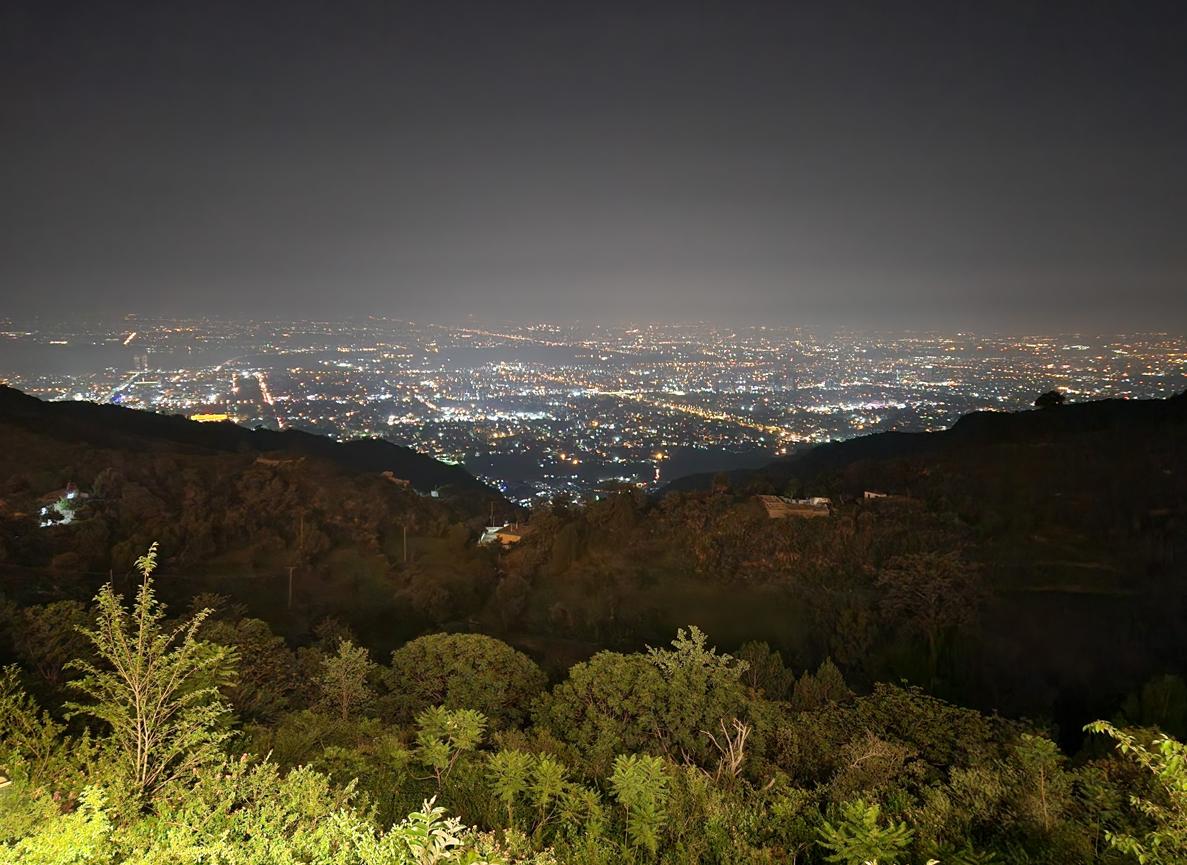
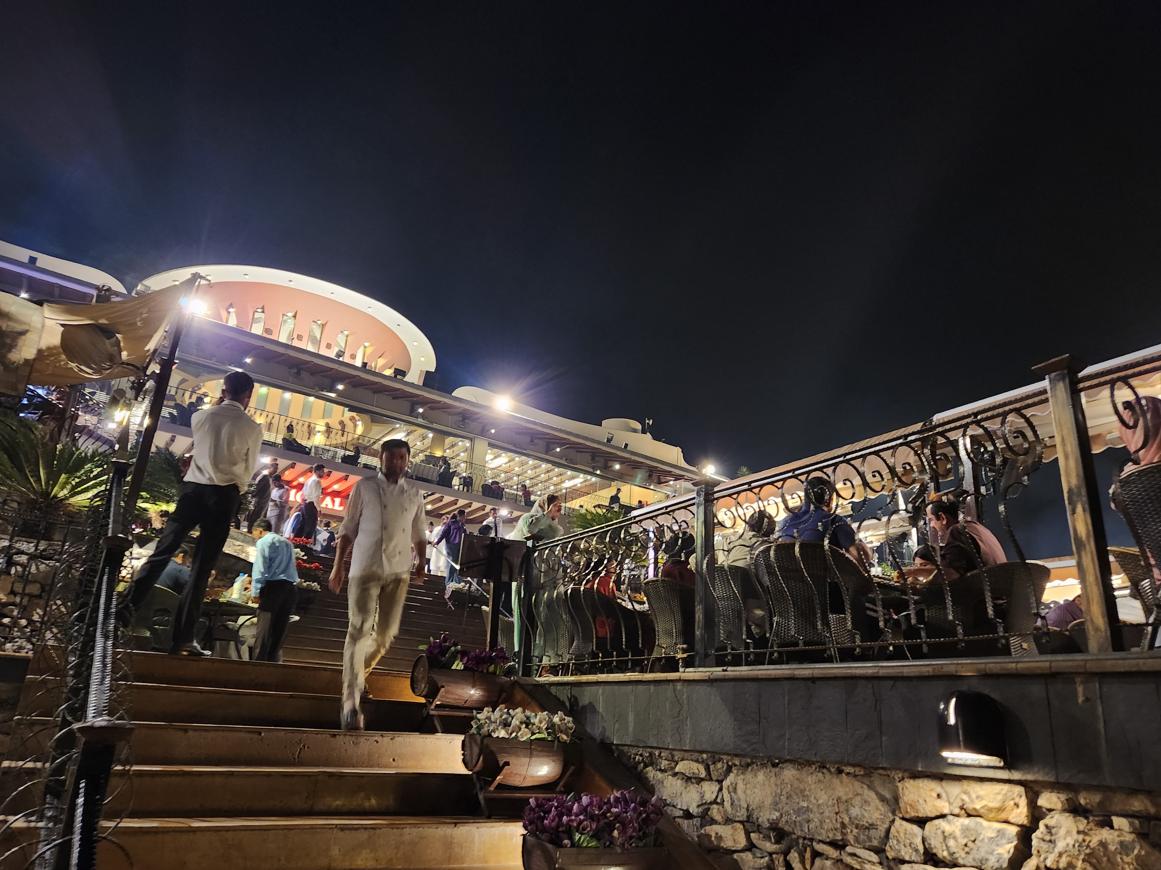
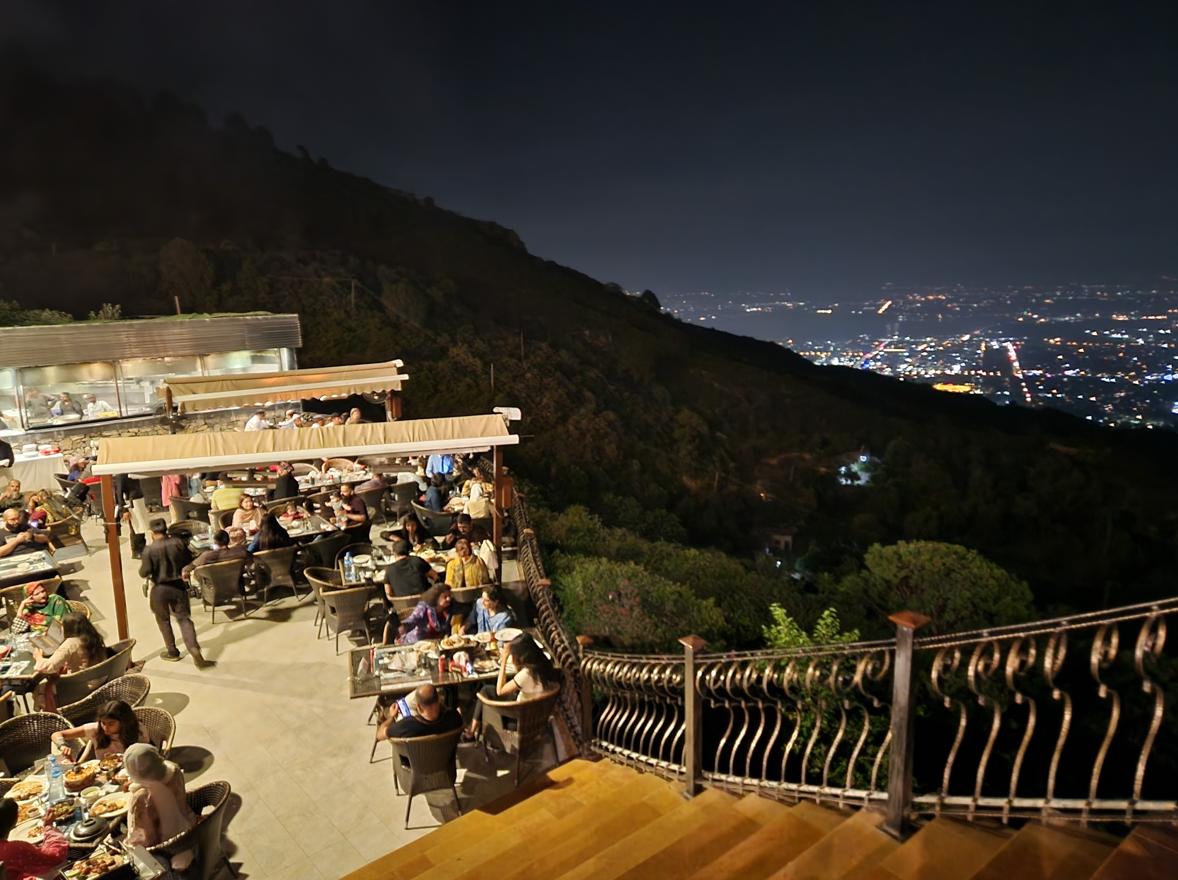
We ate our last dinner in Pakistan at Monal, a restaurant in the Margalla Hills above the city, on a terrace that looked out over the capital's grid of lights below. The air was cool enough for a jacket. The food was the food we had been eating for two weeks: karahi, biryani, naan, daal — dishes that had become, over the course of the journey, as familiar and as comforting as the landscape had become legible, as the face of a country begins to be readable when you have spent enough time looking at it.
'What will you write about us?' Jamal asked, over chai.
'Everything,' I said.
He considered this. 'Be fair,' he said. 'We have many problems. But we are not only our problems.'
'I know,' I said. And I did know. I had spent sixteen days in a country that carries, in the world's imagination, a weight of negative association so great that it crushes the reality: a country of extraordinary civilisational depth, of food that could make a sceptic believe in the goodness of the world, of a hospitality so genuine that it cannot be explained by cultural convention alone, of a landscape that shifts, in the course of a single journey, from the delta mangroves of the Arabian Sea to the highest border crossing on earth. A country that is simultaneously ancient and unfinished, that contains multitudes it has not yet learned to accommodate, that is entangled in geopolitical rivalries not of its own making and that navigates them, as it has navigated everything, with a combination of calculation and fatalism and surprising good humour.
Next Chapter
Coda: The Pure LandA Note on Process
The travelogue on this site are based on my own journeys, photographs, Facebook posts, and field notes. I work with Claude (Anthropic's AI assistant) as a drafting and editorial partner — giving it my raw material and working iteratively to shape it into finished prose. The AI helps me draft quickly, maintain a consistent voice across long narratives, and edit at the document level. The website's HTML and coding are built with the assistance of Gemini (Google). Audio versions of the essays are produced using NotebookLM (Google). Every observation, opinion, and conclusion in the written work is mine. The AI tools are the instruments; I am the author.