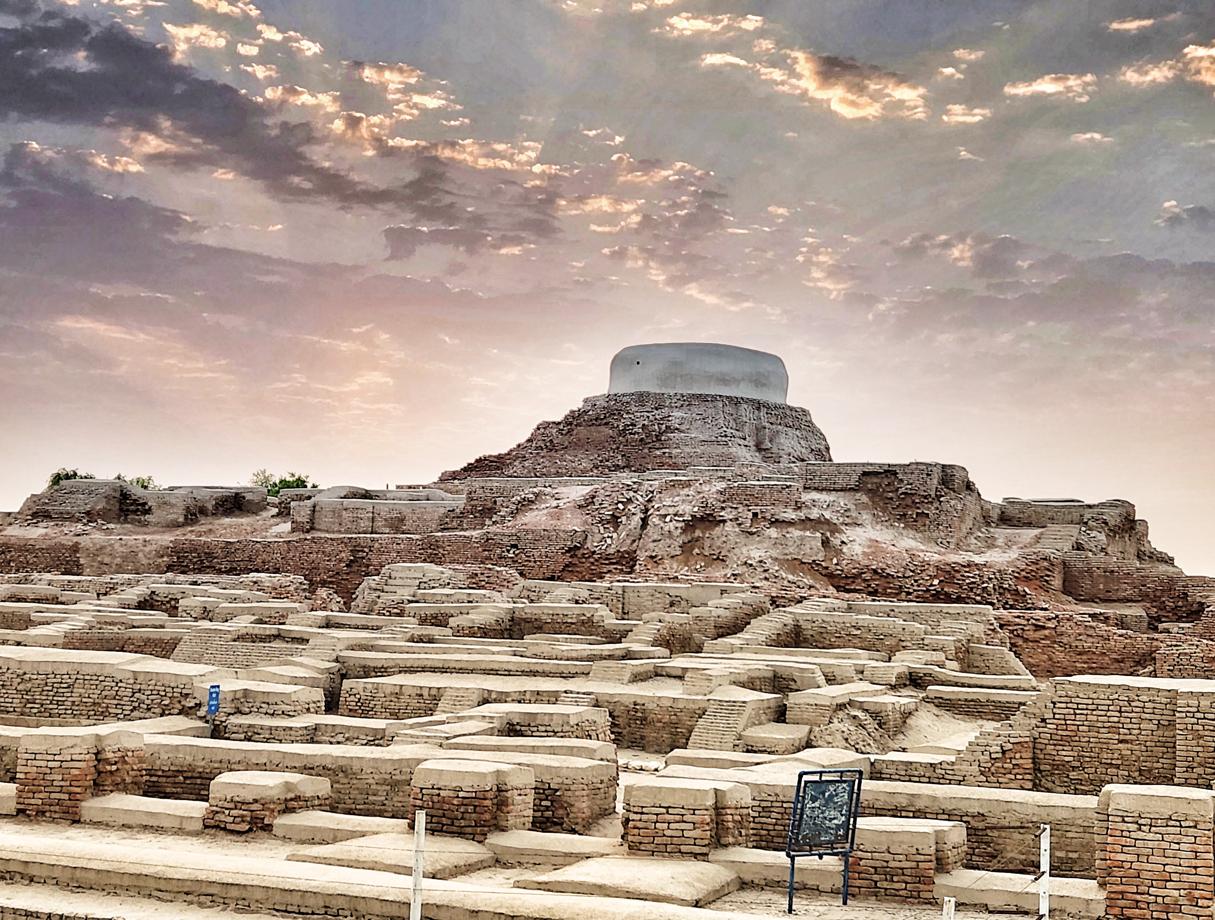
Mohenjo-Daro
Mound of the Dead Men
"One thing that stands out clear and unmistakable both at Mohenjo-Daro and Harappa is that the civilization hitherto revealed at these two places is not an incipient civilization, but one already age-old and stereotyped on Indian soil."
— Sir John Marshall, Archaeologist, 1931The Heat at the Heart of History
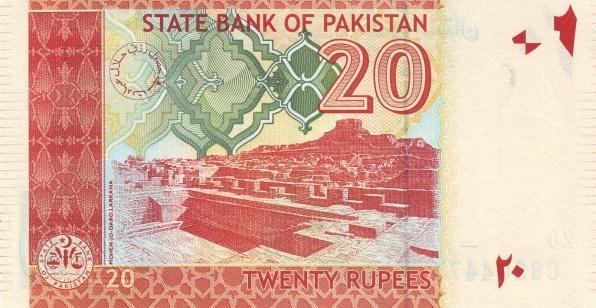
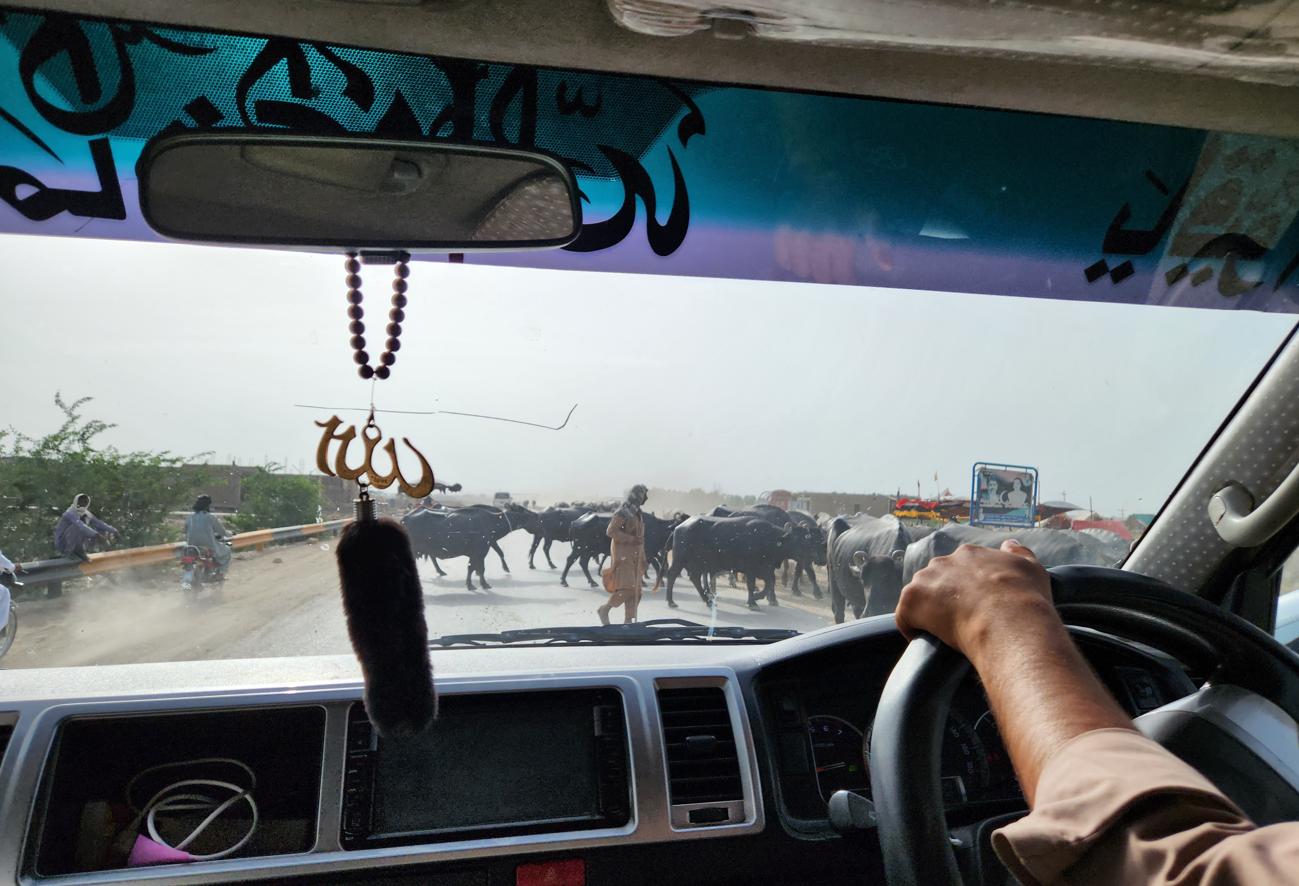
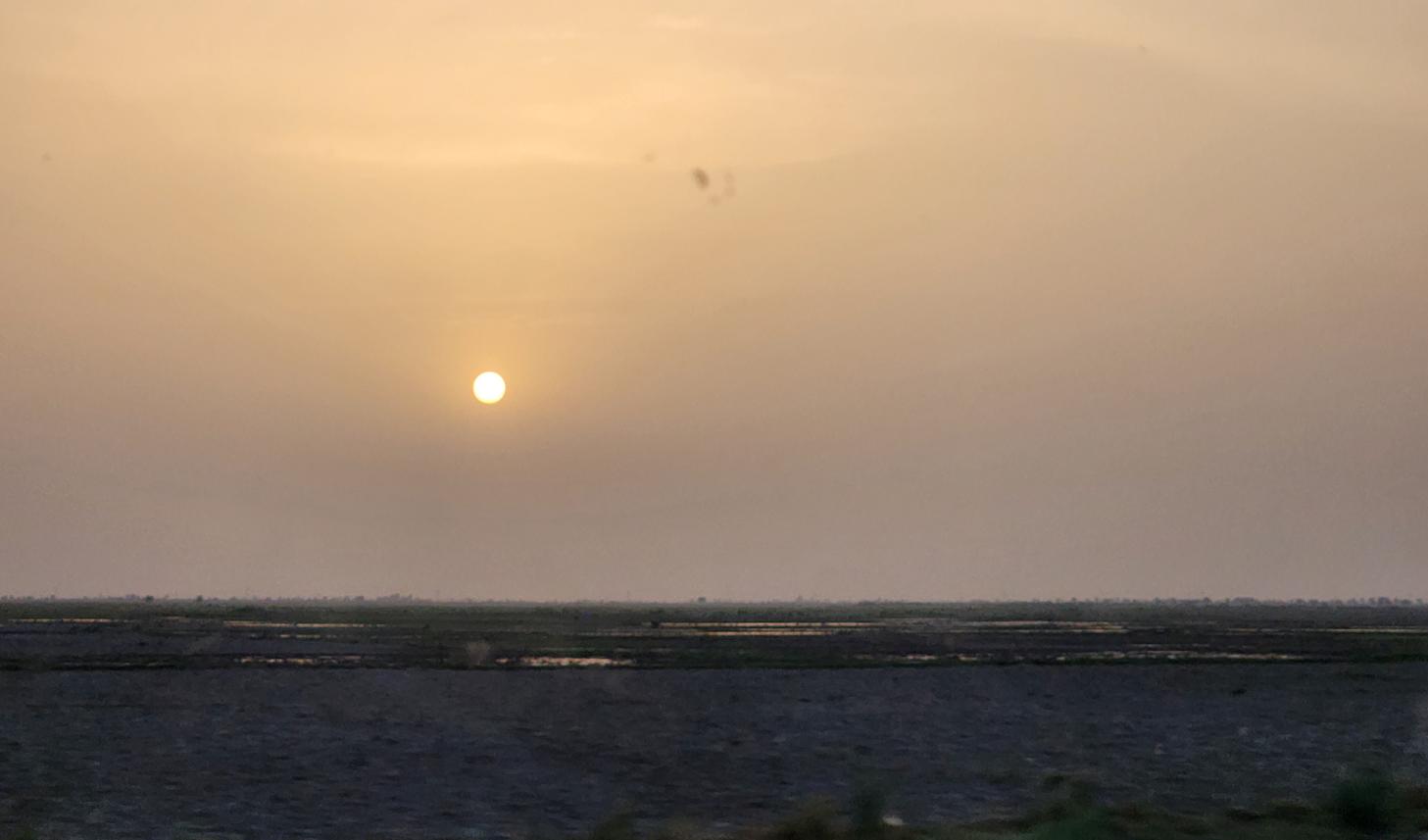
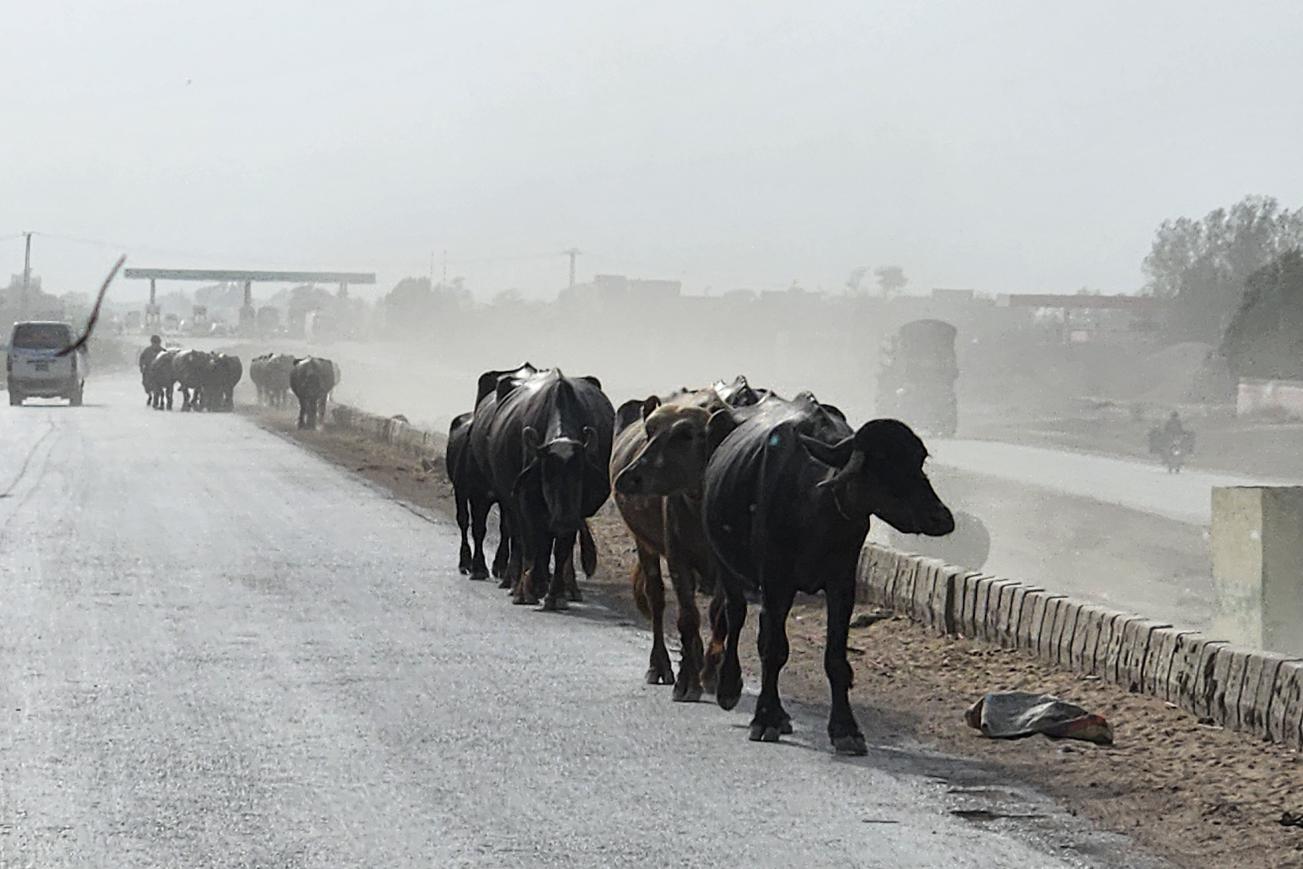
The temperature at Mohenjo-daro in July 2023 was forty degrees Celsius, with a humidity that made it feel like forty-eight. The Archaeological Department guesthouse — the only accommodation at the site — had air conditioning that functioned intermittently, power that cut out at two-hour intervals, and a water supply of uncertain provenance. It was, as I posted to my social media at the time with somewhat desperate wit, a journey back to 2500 BCE Mohenjo-daro times.
I had wanted to come here since I was thirteen, when the name first lodged itself in my imagination — along with two images: the Dancing Girl, and the Priest-King's still, steatite face, trefoil-robed, his shell-and-bitumen eyes fixed in an expression of uncanny authority. The latter was found here, in the ruins of one of the world's first cities, and we do not know his name, and we cannot read the script of his civilisation, and we know almost nothing of what he believed or how he died.
Silence at the Heart of the Record
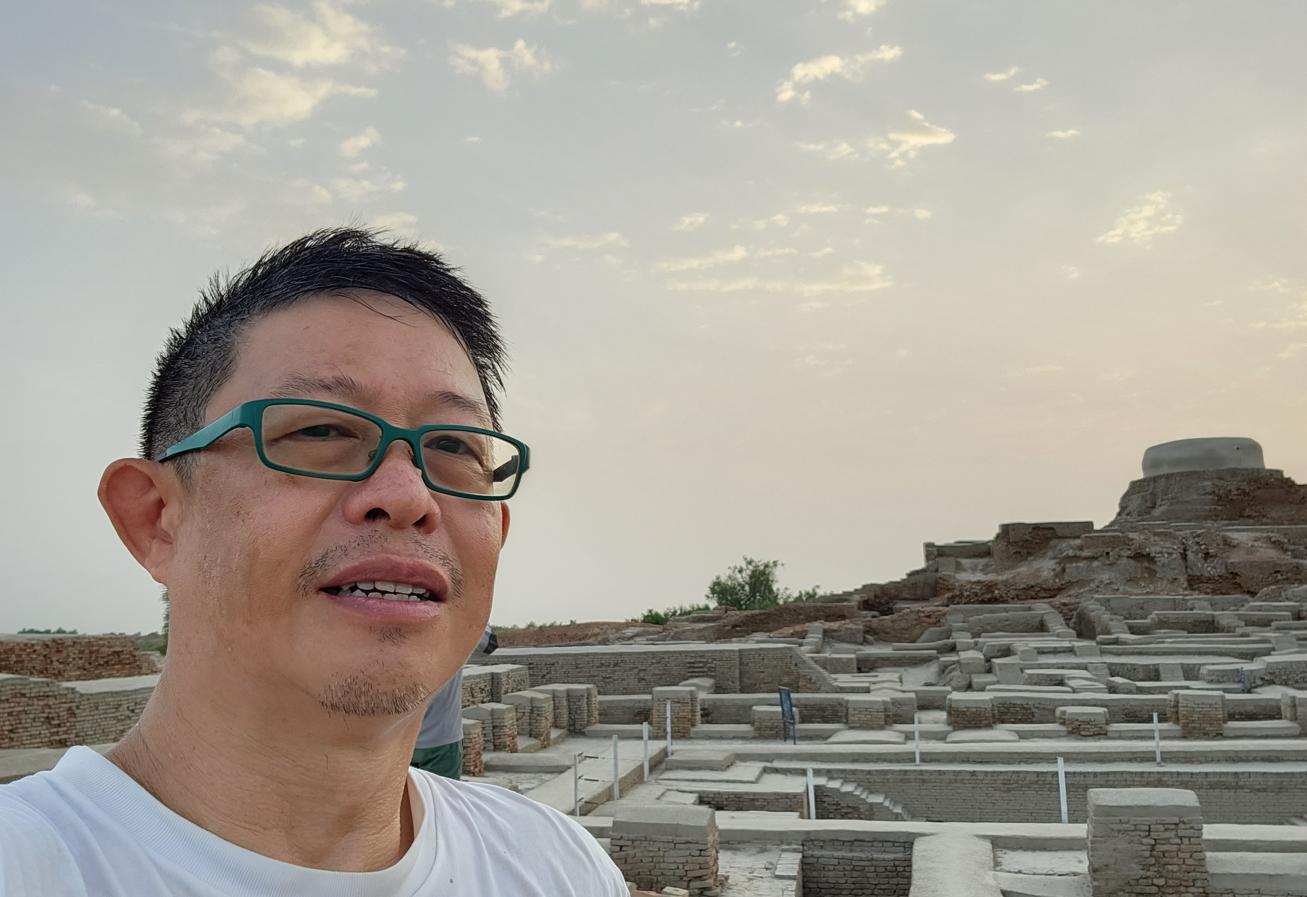
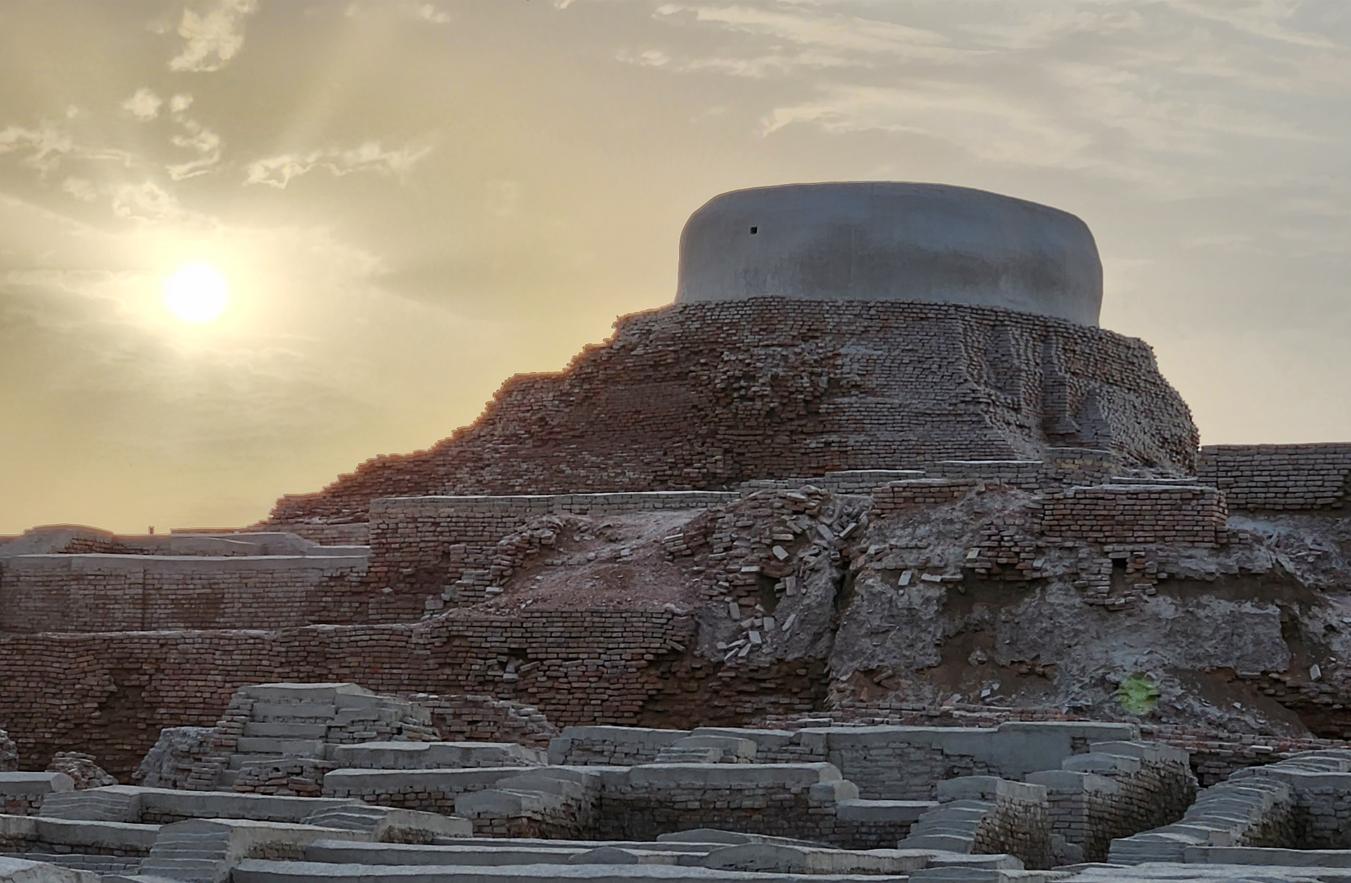
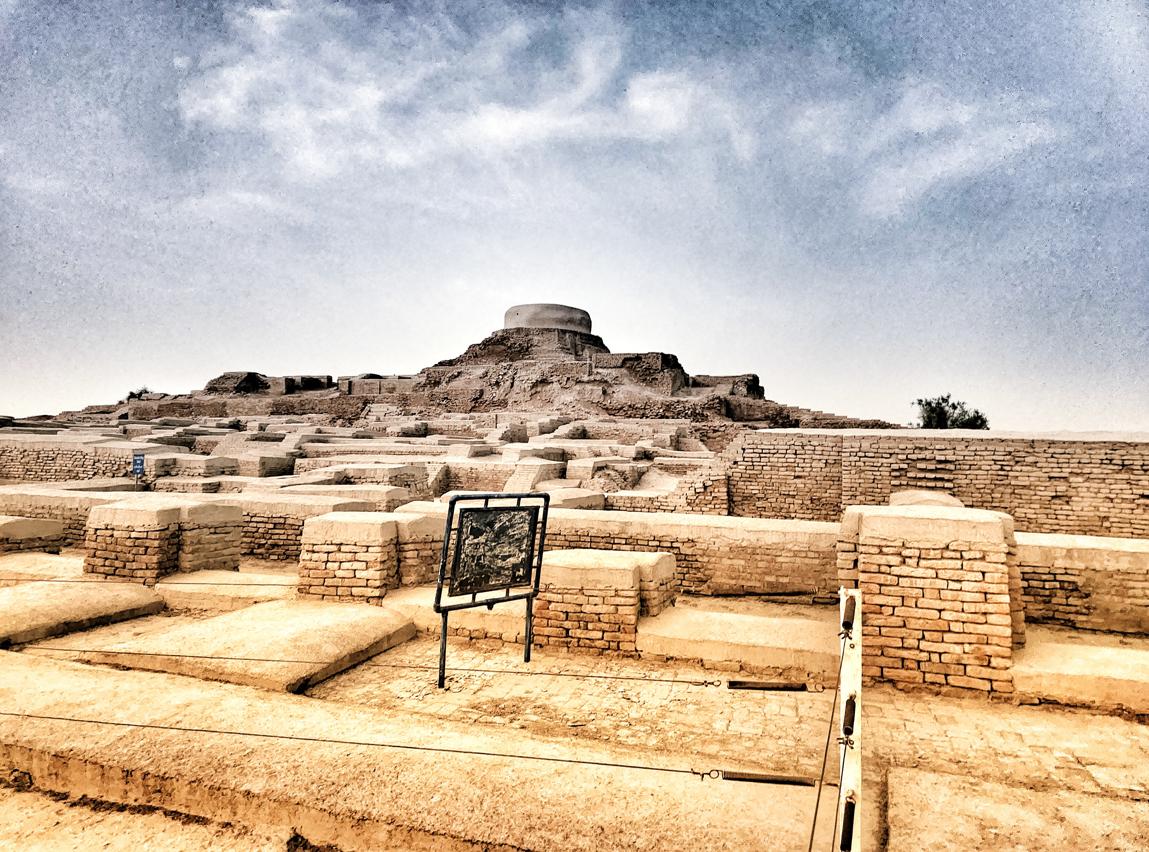
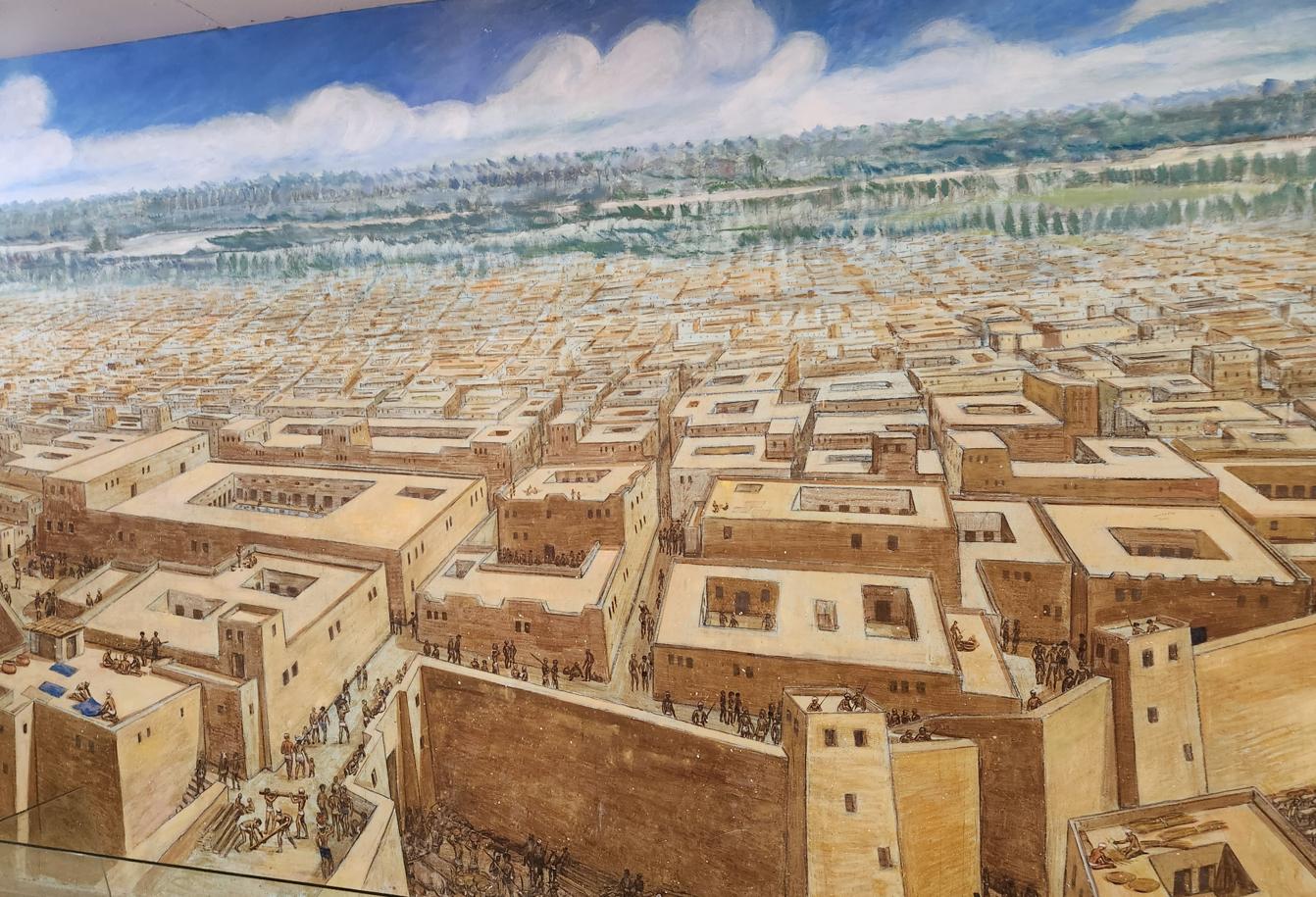
This, more than anything else, is what I had come to see: not just the bricks (though the bricks are extraordinary — fired in wood-burning kilns to a standardised size, 4:2:1 in ratio, a measurement system so precise that it would not be reinvented for two thousand years) but the silence at the heart of the record. Mohenjo-daro was the largest city in the world around 2500 BCE, with perhaps forty thousand inhabitants, grid-planned streets, covered drains, and a Great Bath that preceded the Roman baths by two millennia. A friend who works as an architecture professor told me that Mohenjo-daro was mentioned in his 101 class as the first example of urban planning in world history. And then, around 1700 BCE, it was abandoned. Nobody knows exactly why. The Indus Valley civilisation simply — ended. The script remains undeciphered. The language is unknown. The religion, if it was a religion, has left no text.
Sir John Marshall, who directed the first major excavations in the 1920s, described what he found as 'a civilisation already age-old and stereotyped on Indian soil' — not the beginning of something but the middle, arrived at from a beginning we cannot see. Which is, in some sense, the condition of all human civilisation: we are always arriving in the middle of something that has been going on longer than we can trace.
Walking the Grid Streets
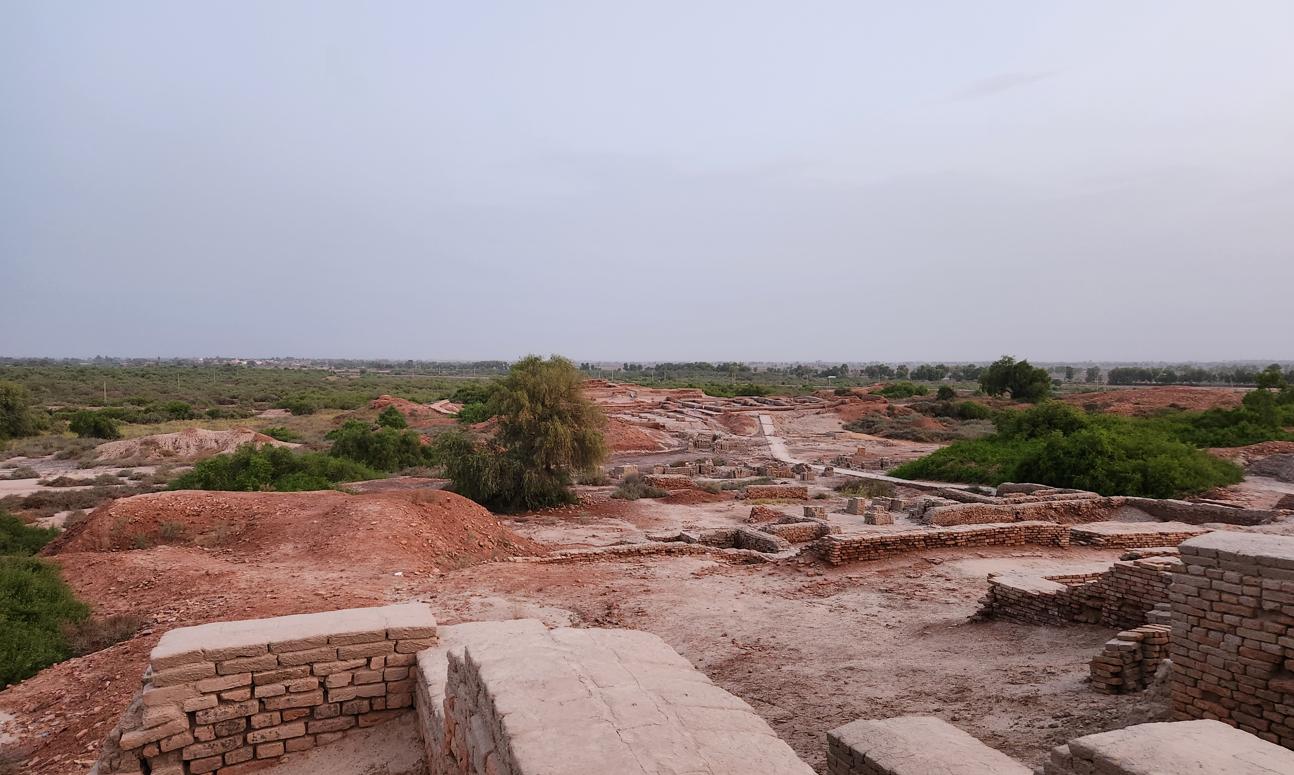
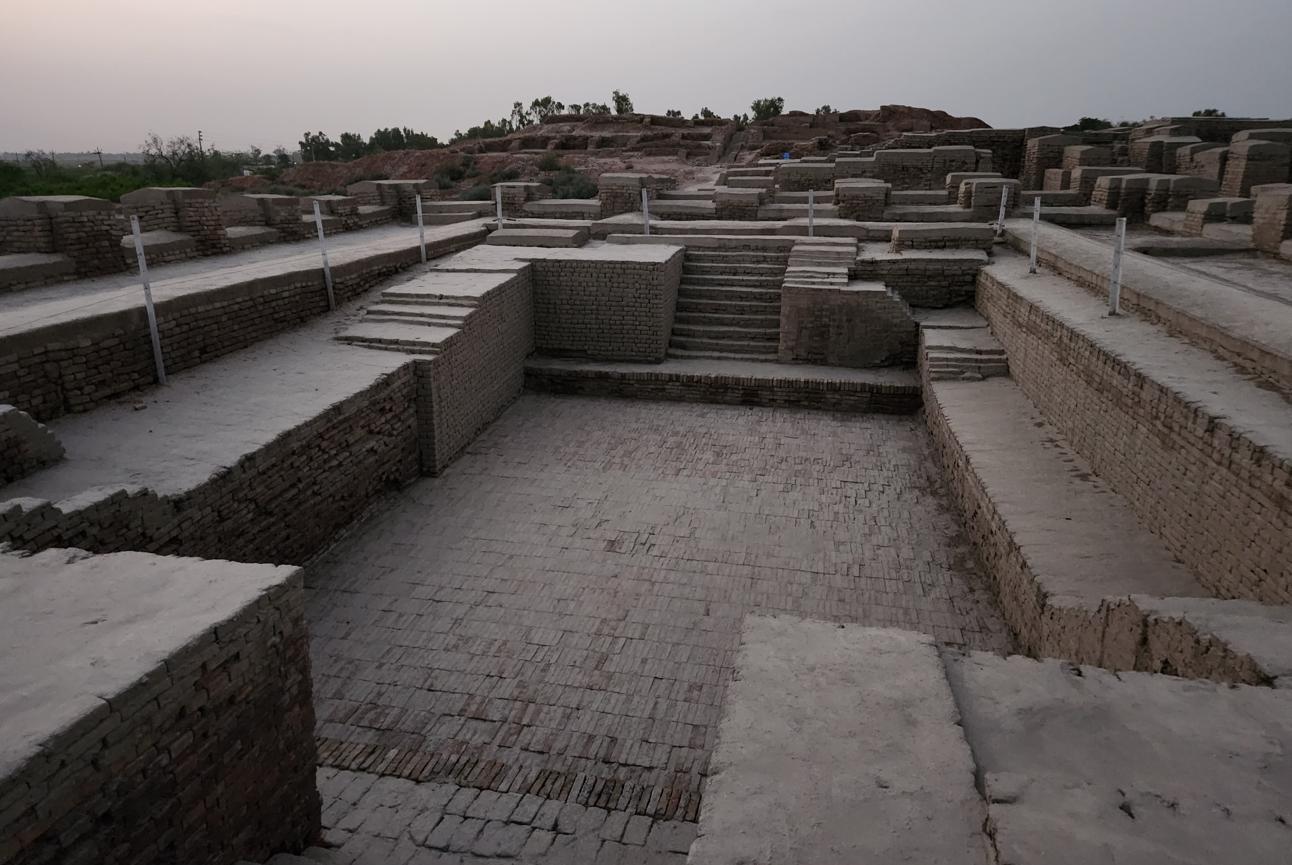
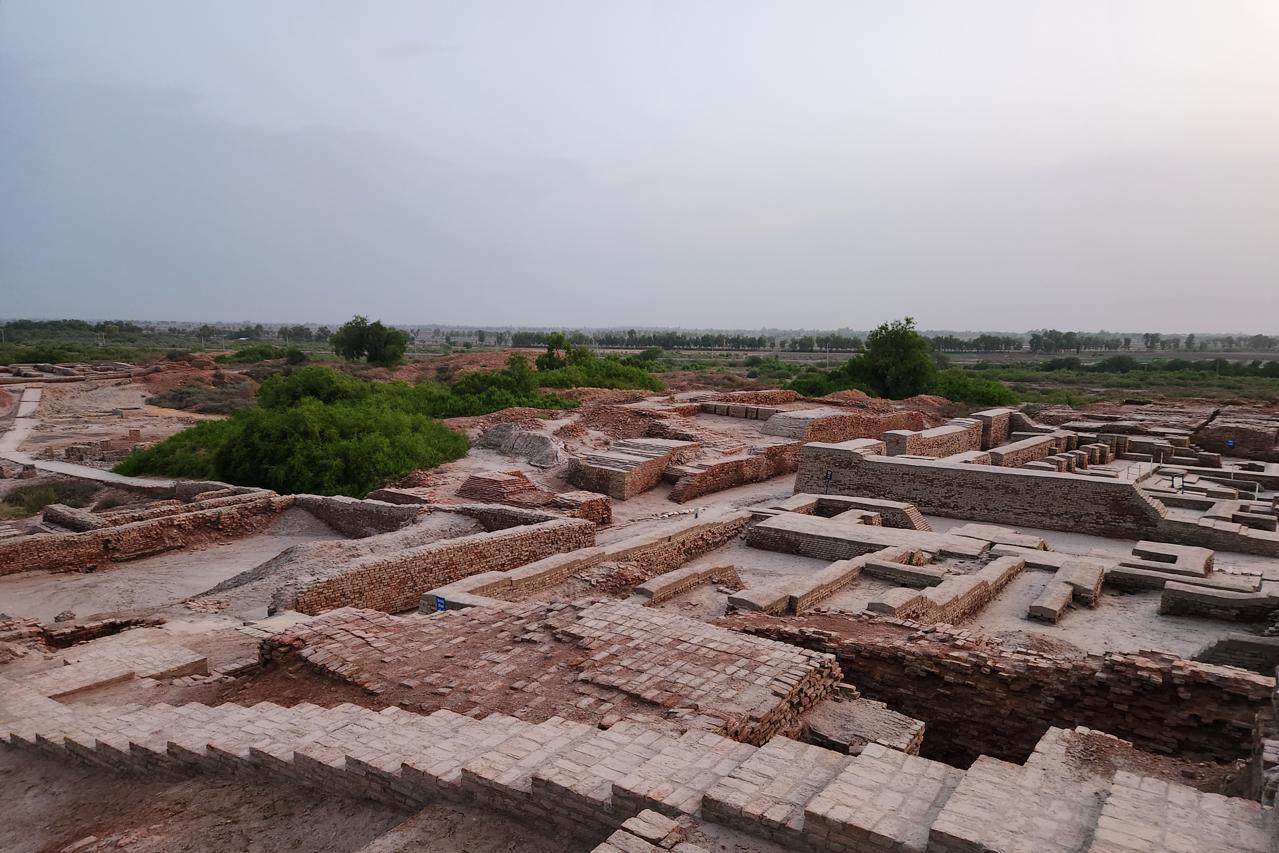
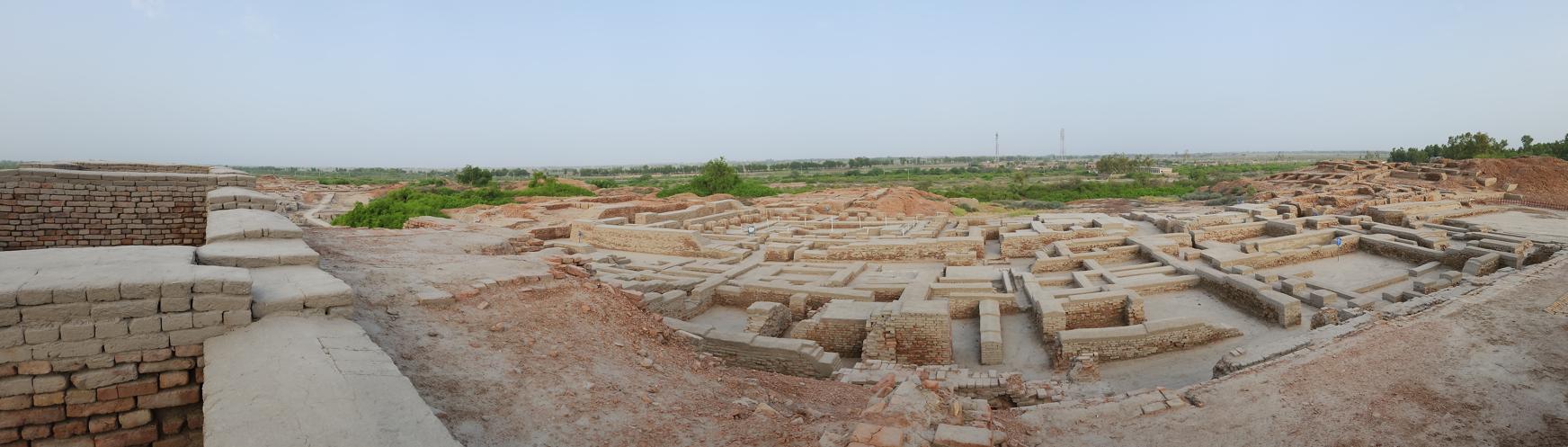
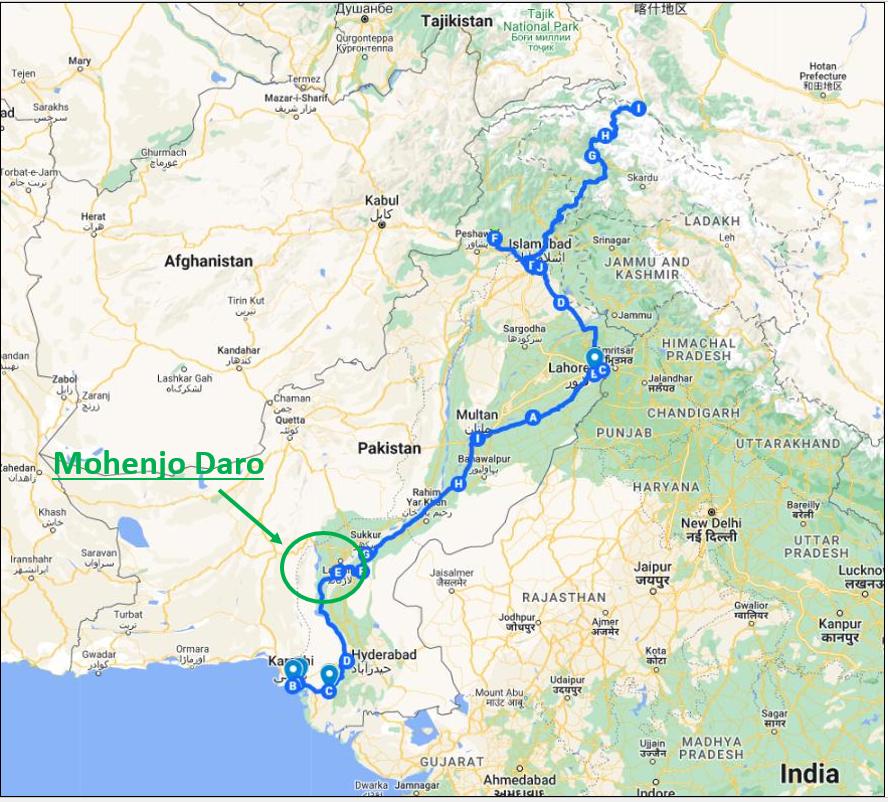
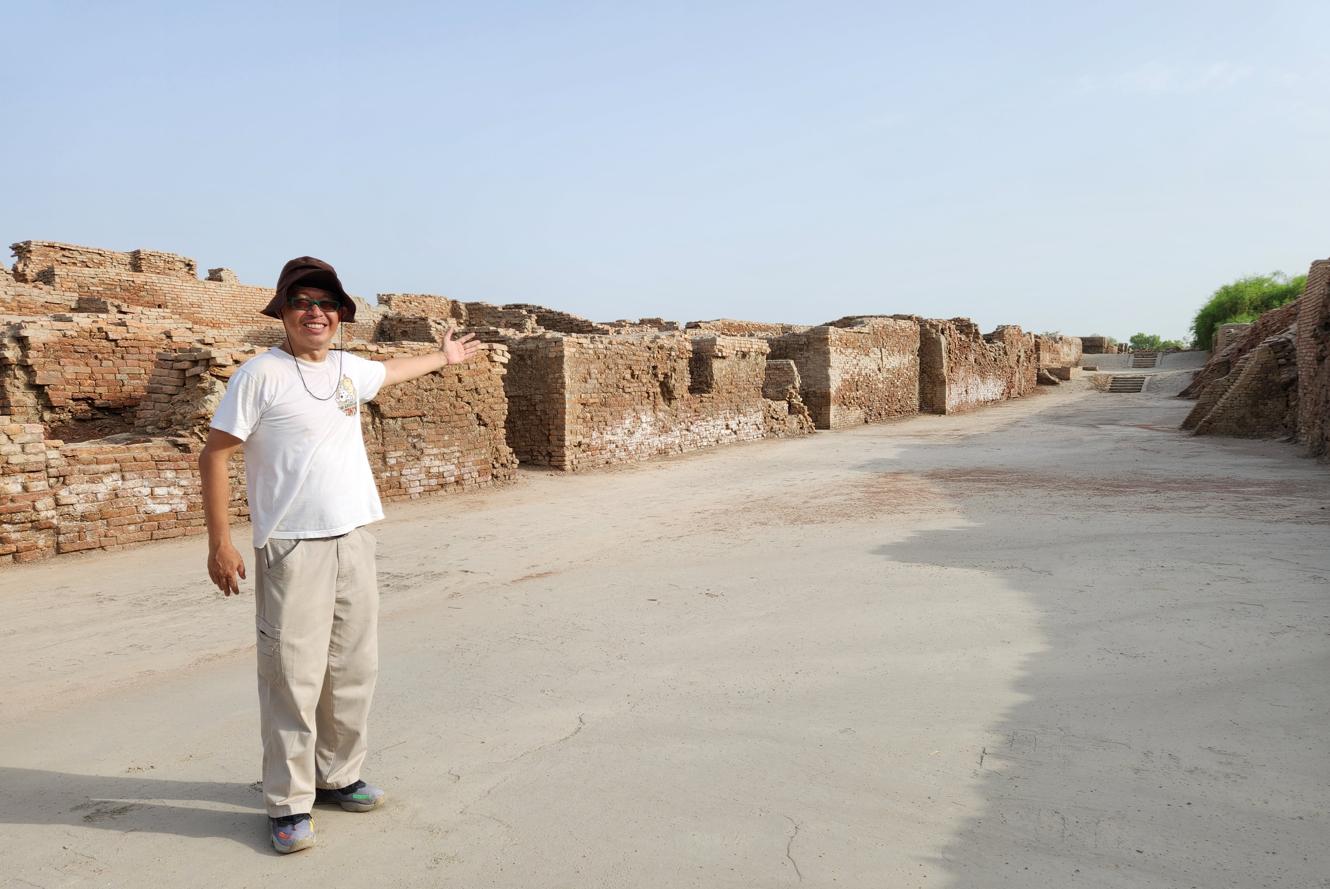
The ruins stretch across three hundred hectares. The main excavated areas — the Citadel to the west, with its Great Bath and granary, and the Lower Town to the east, with its streets and residential quarters — are connected by a path that crosses, at certain points, the original streets of the city. The streets are wide enough for two carts to pass each other; they run north-south and east-west with a geometric precision that suggests not just planning but a particular philosophy of public space, one in which the orderly movement of people and goods was understood to be a civic good.
I walked down one of these streets in the heat of the morning — the sun already brutal at nine o'clock, the light so intense that the fired-brick walls glowed as if internally lit — and tried to imagine it populated: the sounds of a city of forty thousand, the smell of cooking and animals and the river nearby, the voices of a people whose language we cannot reconstruct, speaking words whose meanings have dissolved into the four thousand years between us.
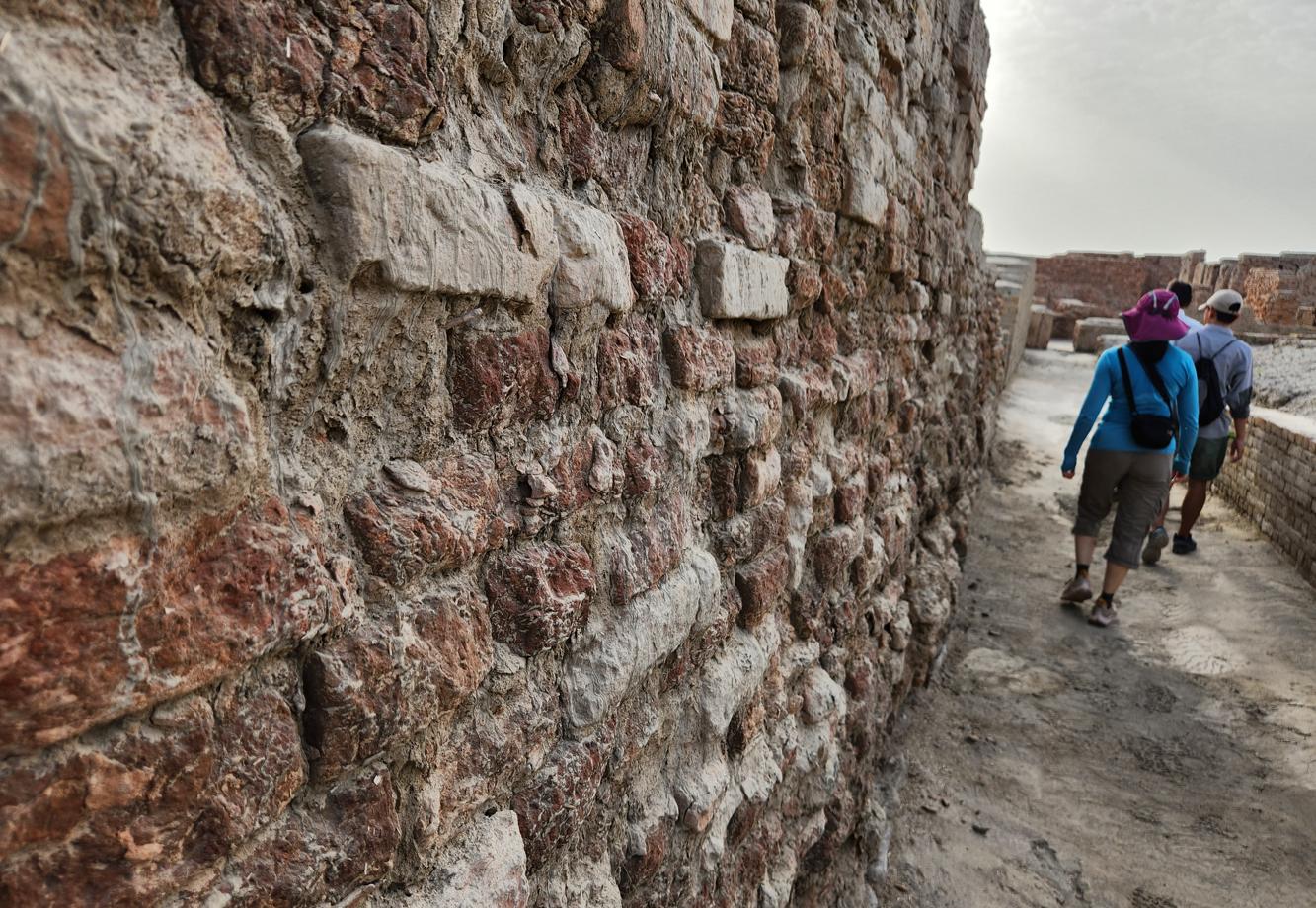
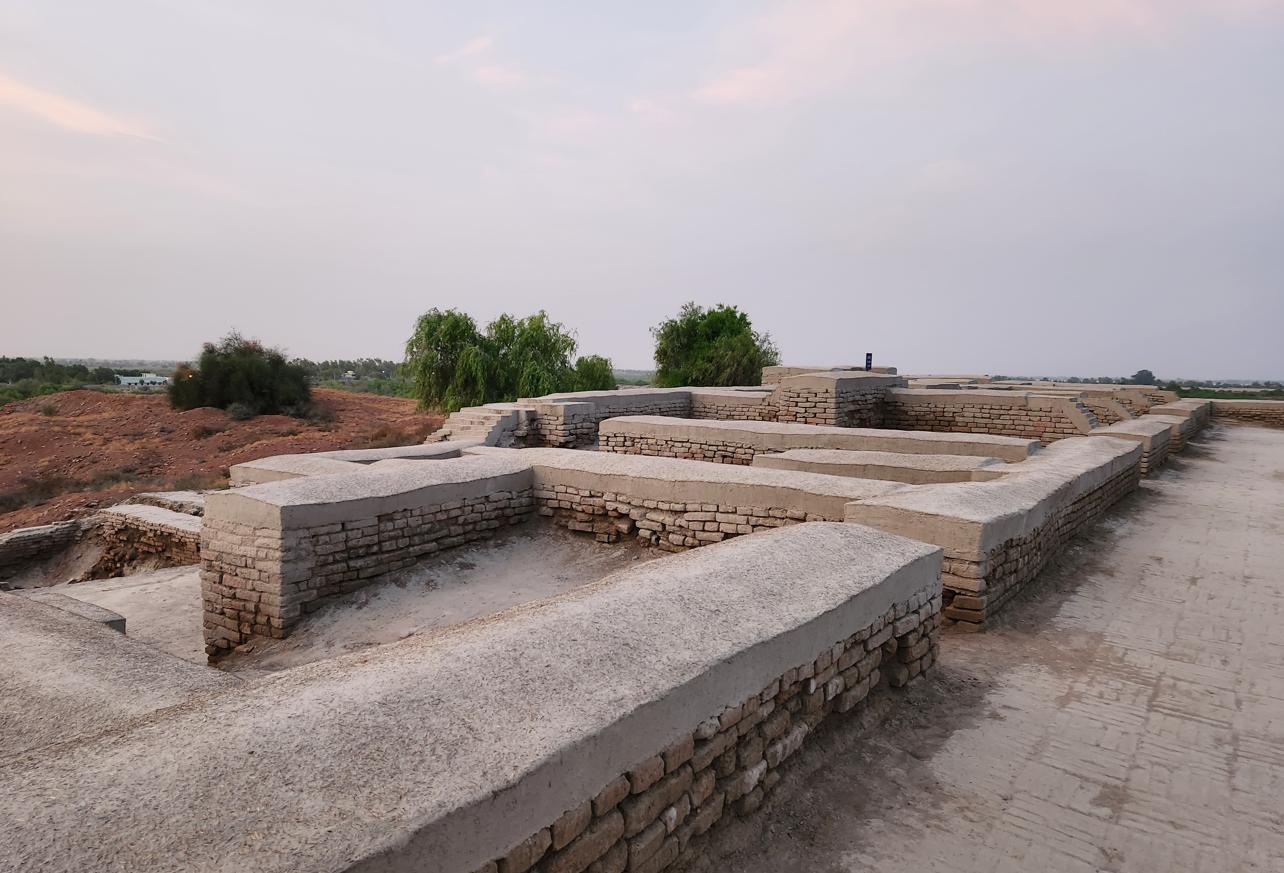
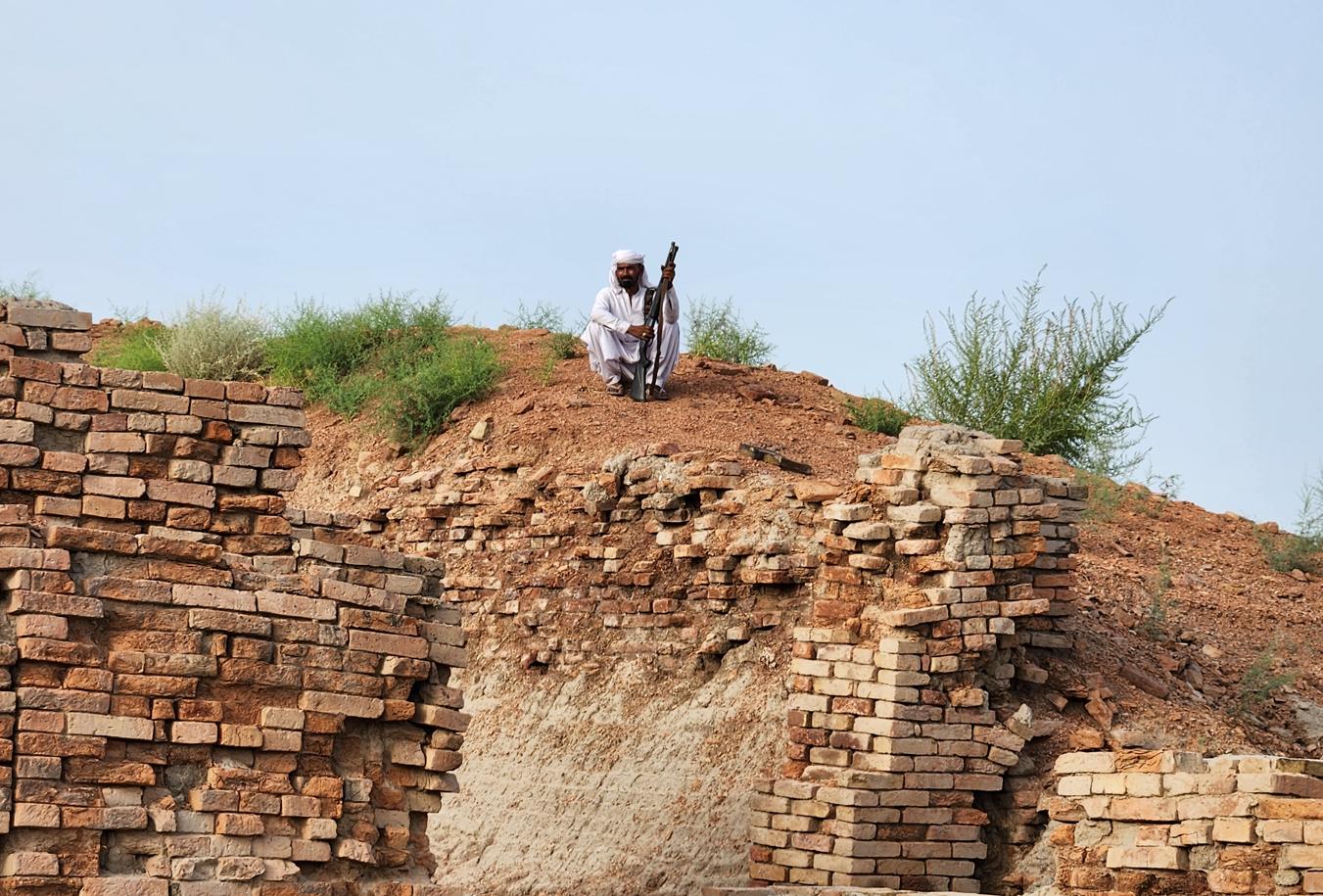
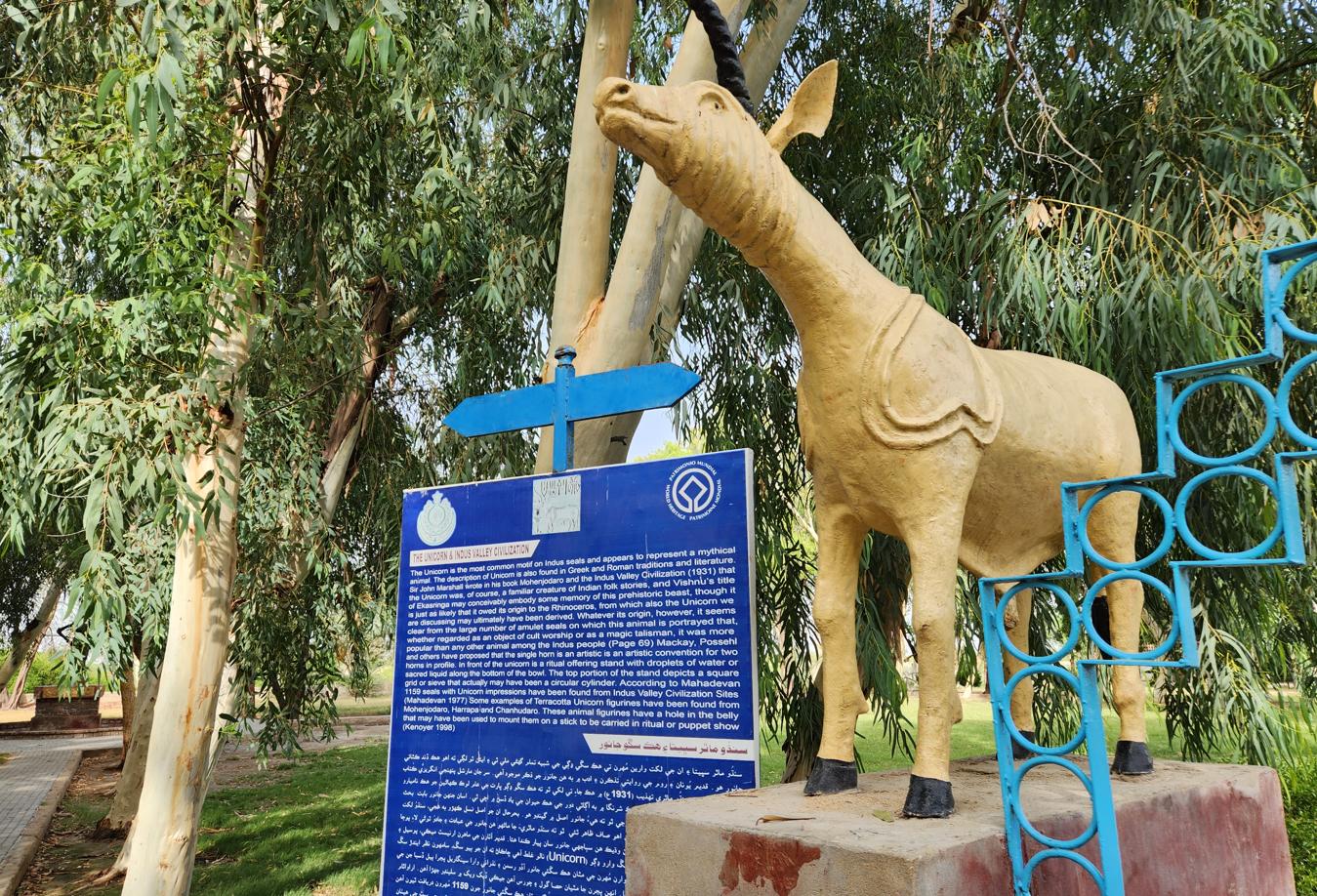
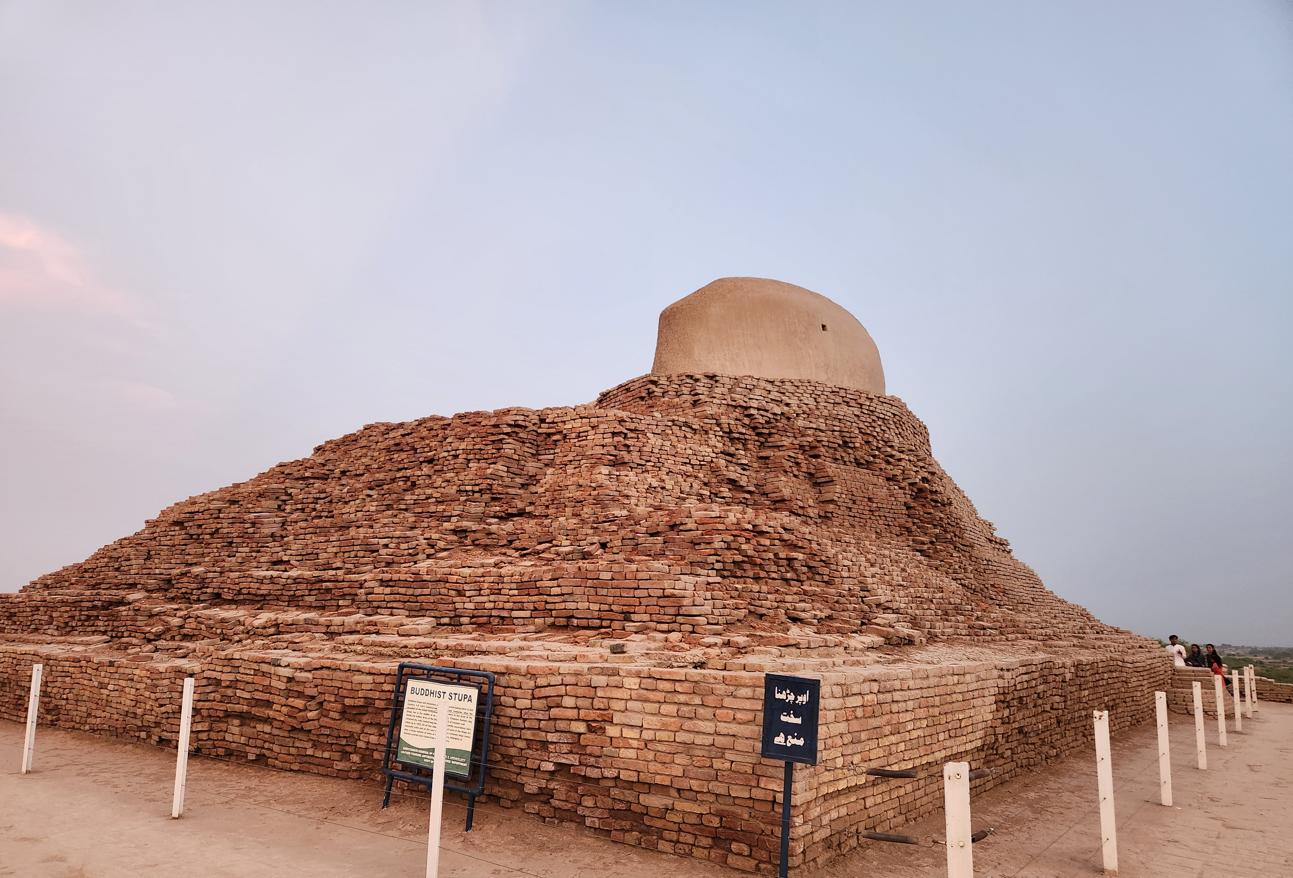
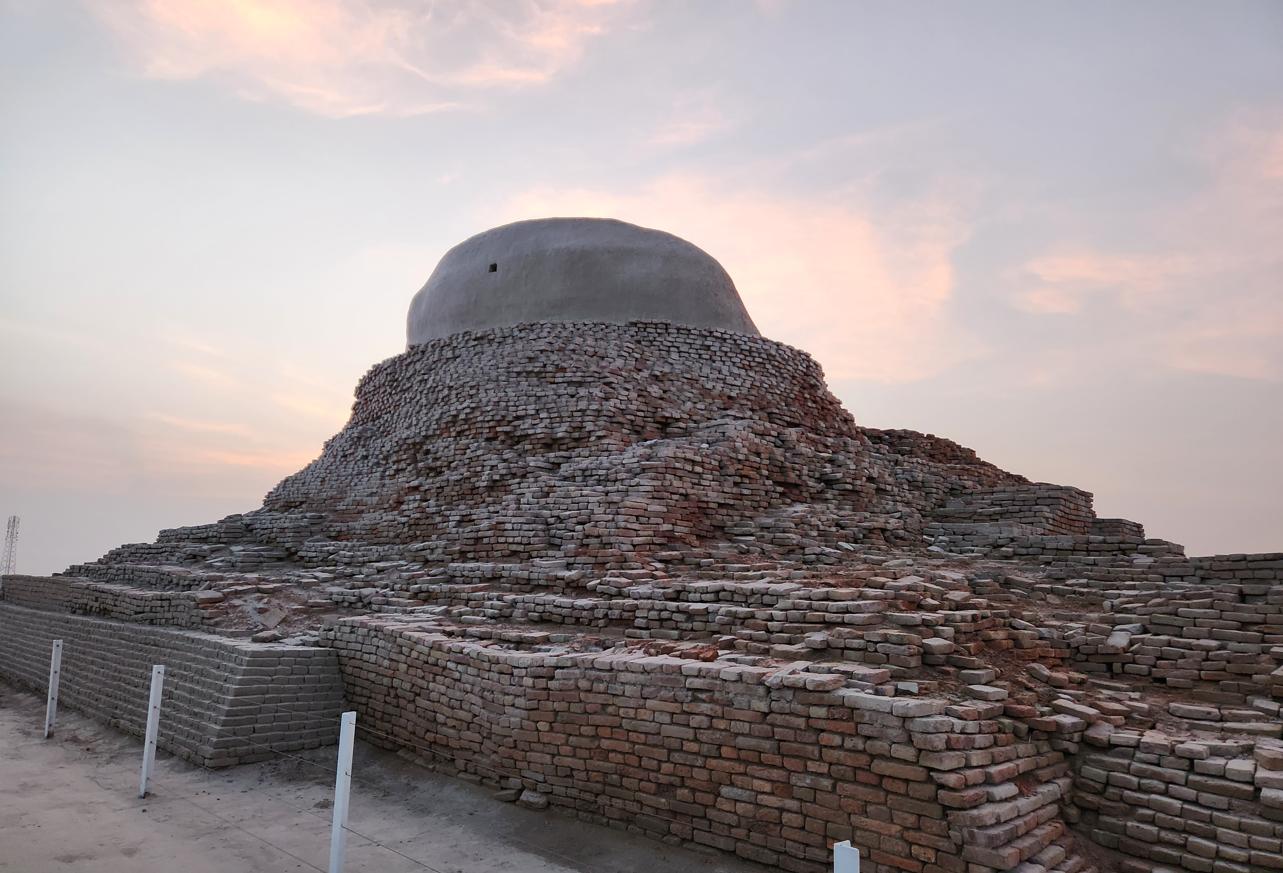
On a low mound at the city's northern end stands a Buddhist stupa, built around 200 BCE — some two thousand years after the Indus Valley city below it was abandoned — by people who may not have known what lay beneath their foundations. It has become, by historical accident, the most prominent feature of the site: a monument built upon a mystery, a later faith planted in the soil of a forgotten one. There is something characteristically Pakistani about this layering — the Buddhist upon the pre-Buddhist upon the prehistoric, all of it now in a country whose official religion is Islam and whose national motto is Faith, Unity, Discipline.
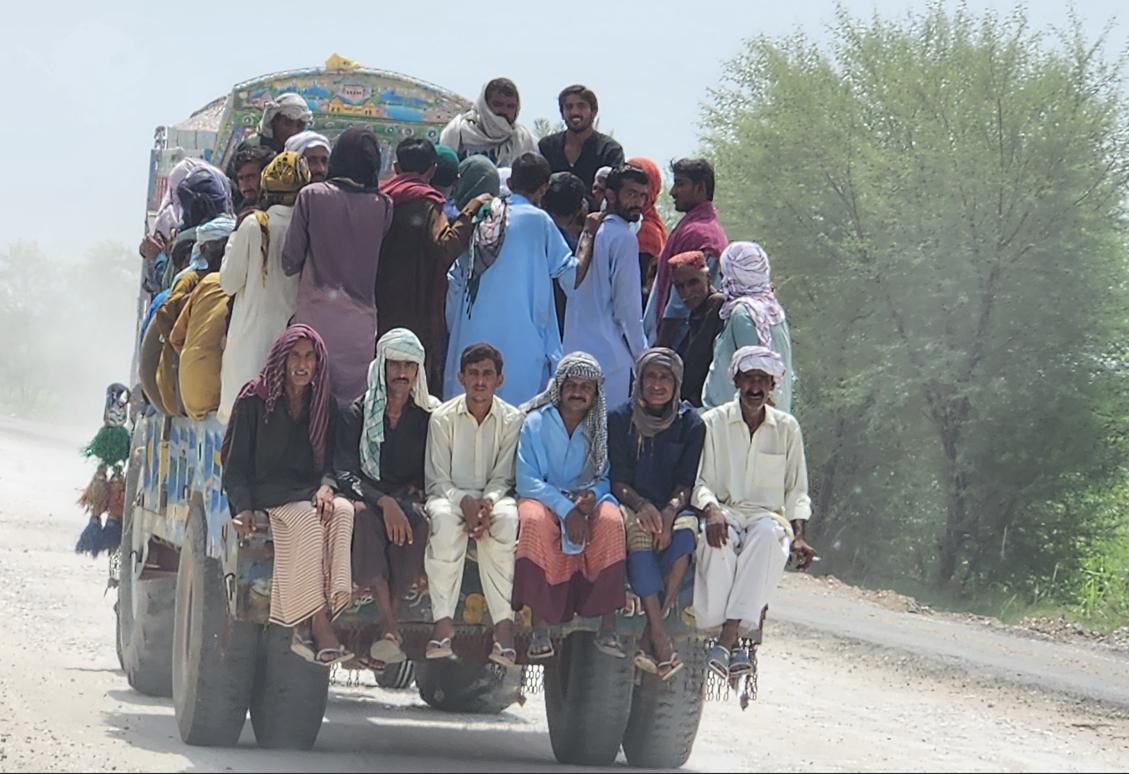
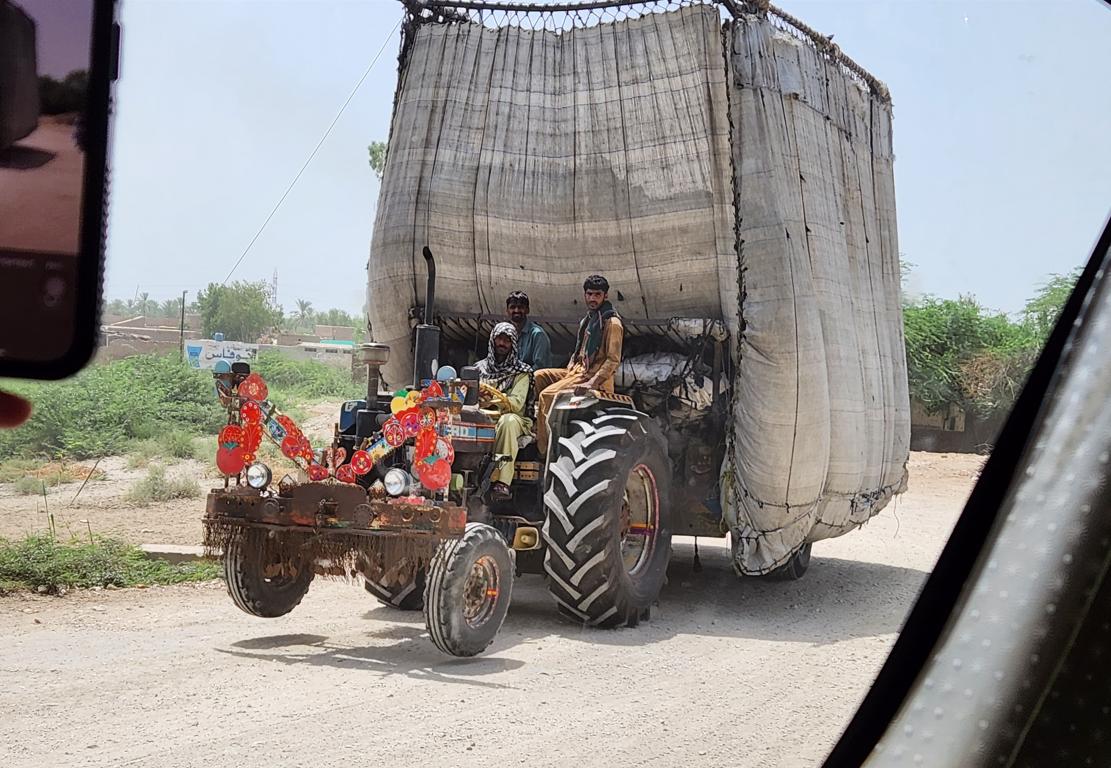
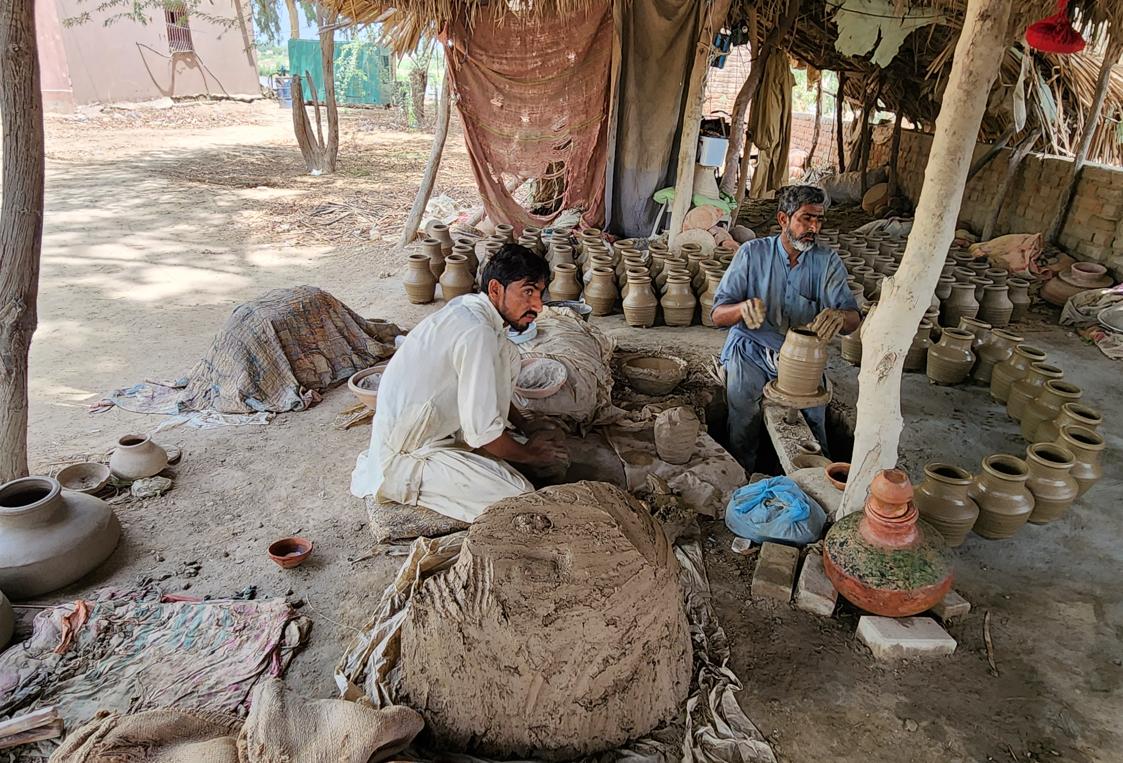
A potter's workshop near the site was still producing vessels in forms that had not substantially changed since the Harappan period: red-slipped cooking pots, water jars with geometric decoration, small oil lamps. The potter, a man of perhaps sixty with hands the colour and texture of the local clay, watched without apparent interest as we photographed his wheel. When I asked, through Jamal, whether he was aware that his craft was four thousand years old, he shrugged with the magnificent indifference of the genuinely unimpressed.
'My father made pots,' the potter said. 'And his father. And his father's father.'
The continuity of the ordinary: this too is history.
A Note on Process
The travelogue on this site are based on my own journeys, photographs, Facebook posts, and field notes. I work with Claude (Anthropic's AI assistant) as a drafting and editorial partner — giving it my raw material and working iteratively to shape it into finished prose. The AI helps me draft quickly, maintain a consistent voice across long narratives, and edit at the document level. The website's HTML and coding are built with the assistance of Gemini (Google). Audio versions of the essays are produced using NotebookLM (Google). Every observation, opinion, and conclusion in the written work is mine. The AI tools are the instruments; I am the author.