
Sindh's Sufi Soul
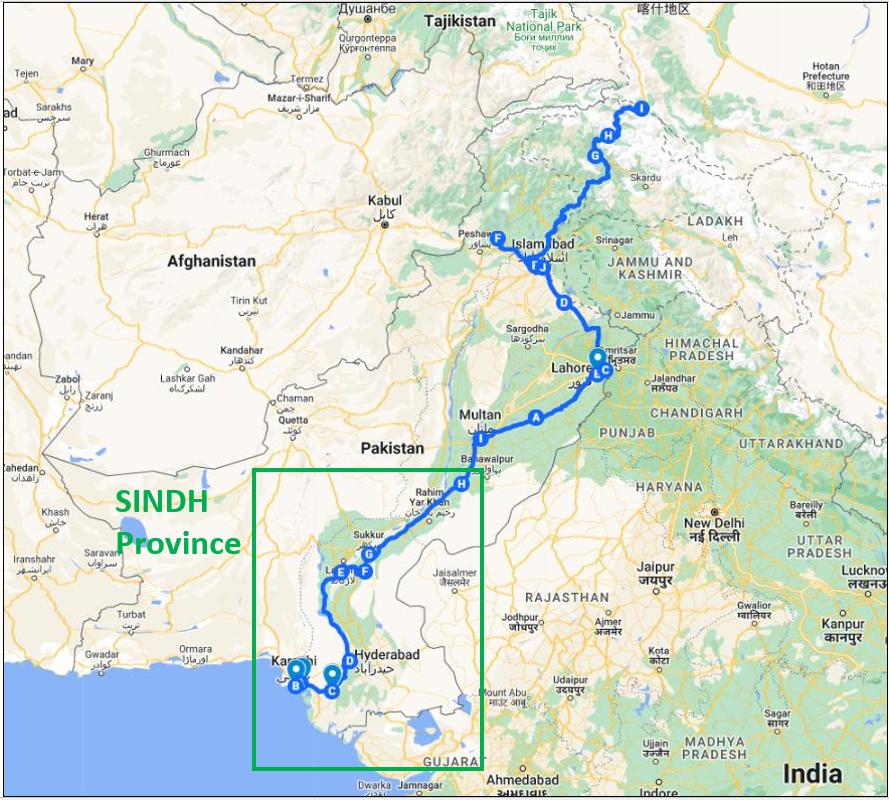
The Saints Along the River
"They read and read, but what they read their hearts refuse to store— The more they pages turn, the more are deeply steeped in sin. O friend, why are you still inclined to waste paper and ink— Go rather forth and try to find the source where words were formed."
— Shah Abdul Latif Bhittai, Risalo (18th century)The Shakespeare of Sindh
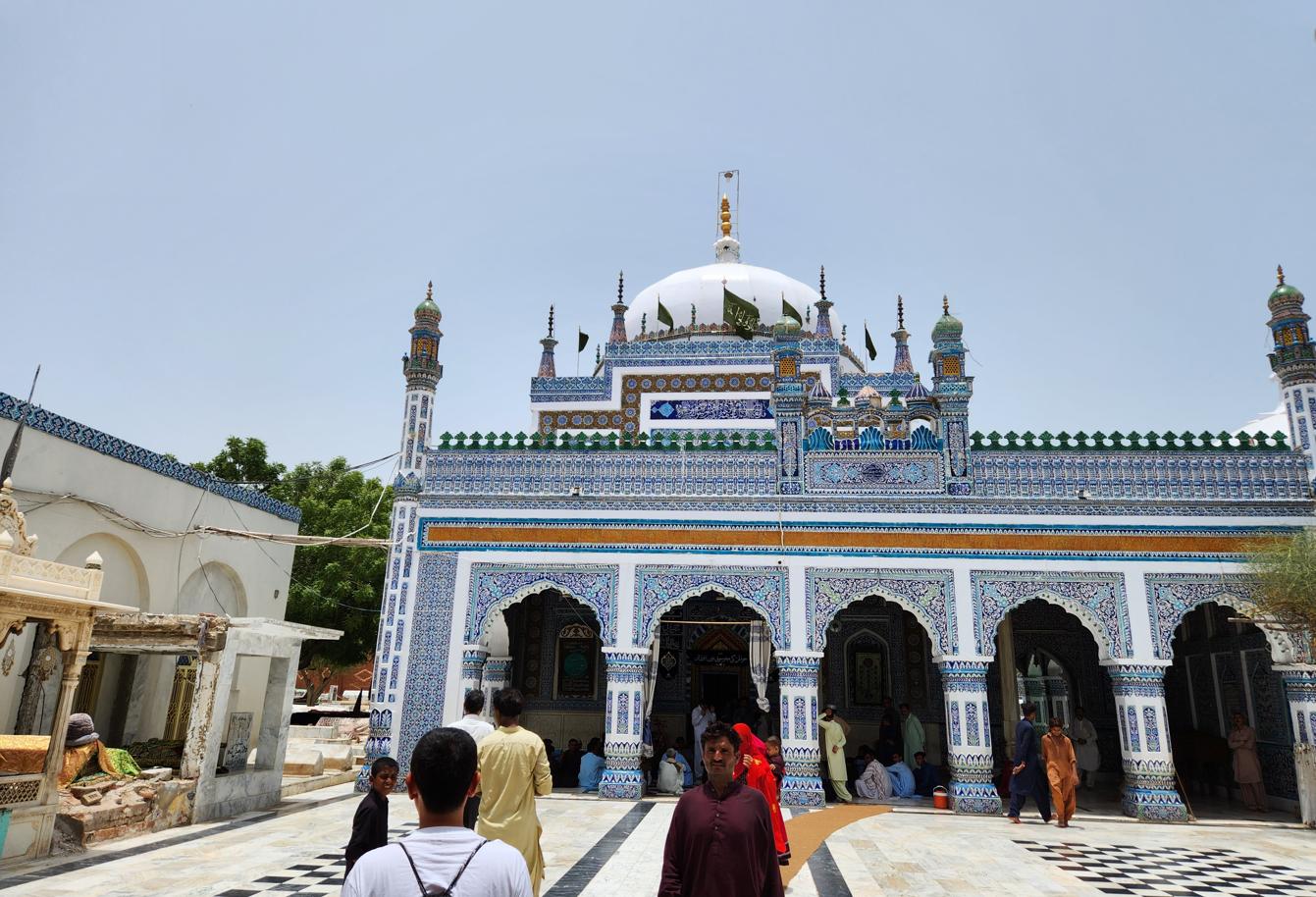
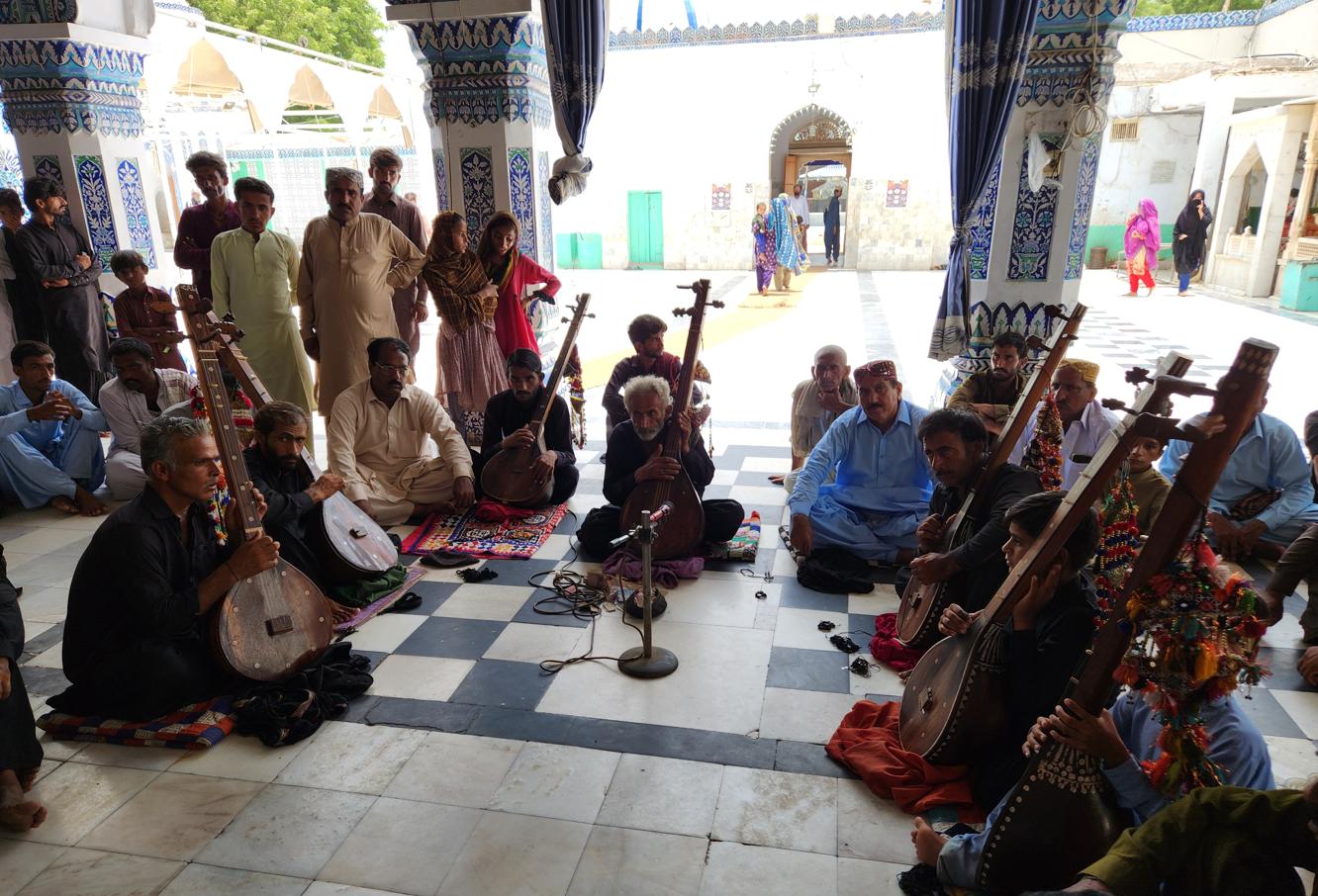
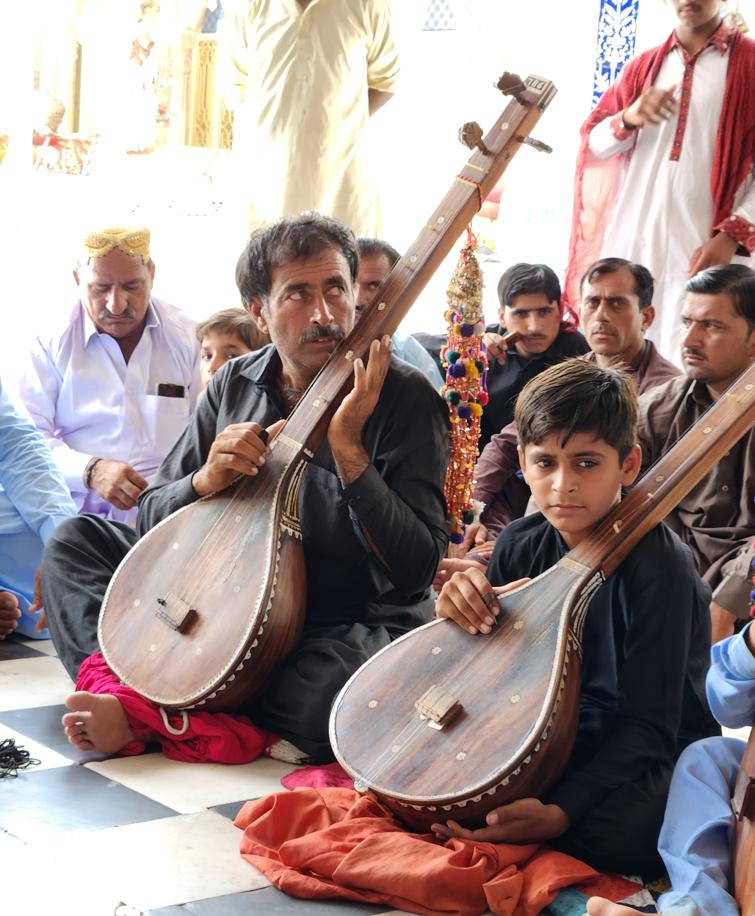
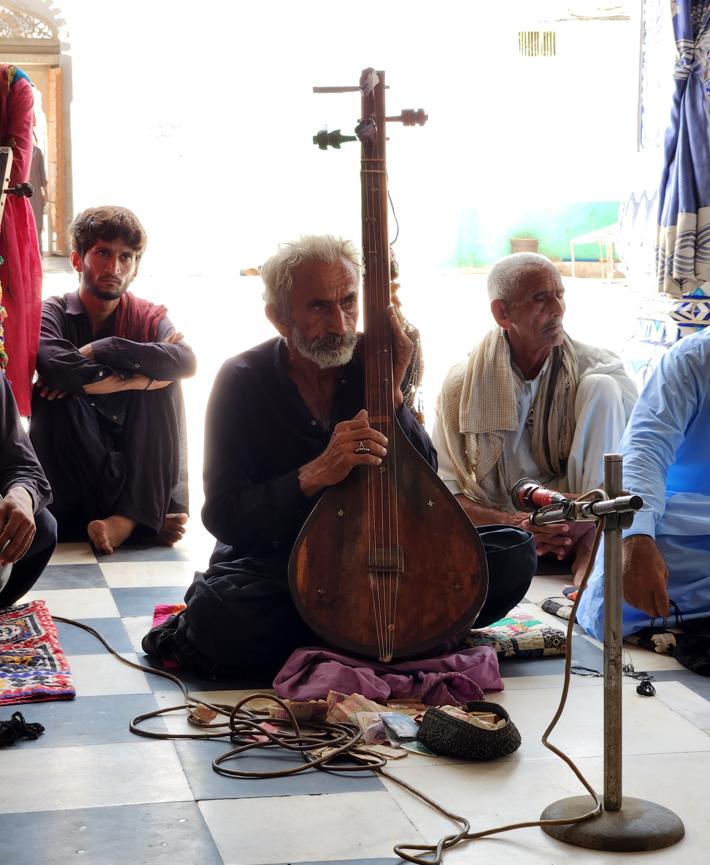
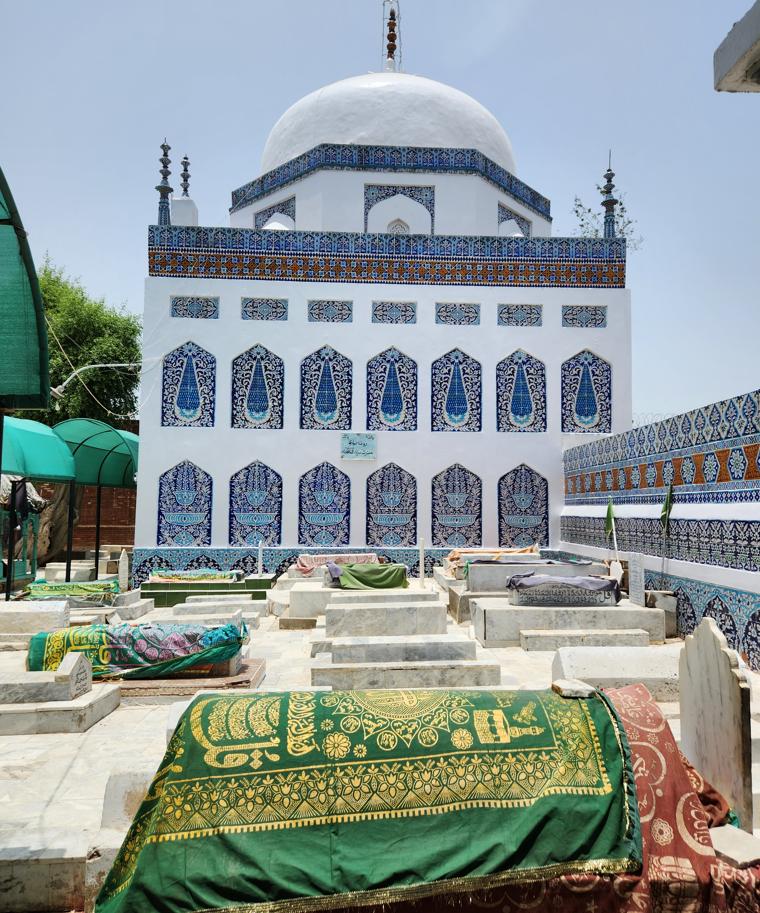
The shrine of Shah Abdul Latif Bhittai at Bhit Shah is a structure of polished Sindhi kashi tiles — blue and turquoise and white — set in the middle of a provincial town that has clearly never quite recovered from the honour of containing it. The saint died in 1752 and has been drawing pilgrims ever since. On Thursday evenings, which are sacred in the Sufi calendar as the eve of Jumu'ah, musicians gather in the shrine's courtyard and play the music associated with Bhittai's poetry — the dhamaal, a devotional style of extraordinary intensity, the melody rising and falling with the inescapability of breathing.
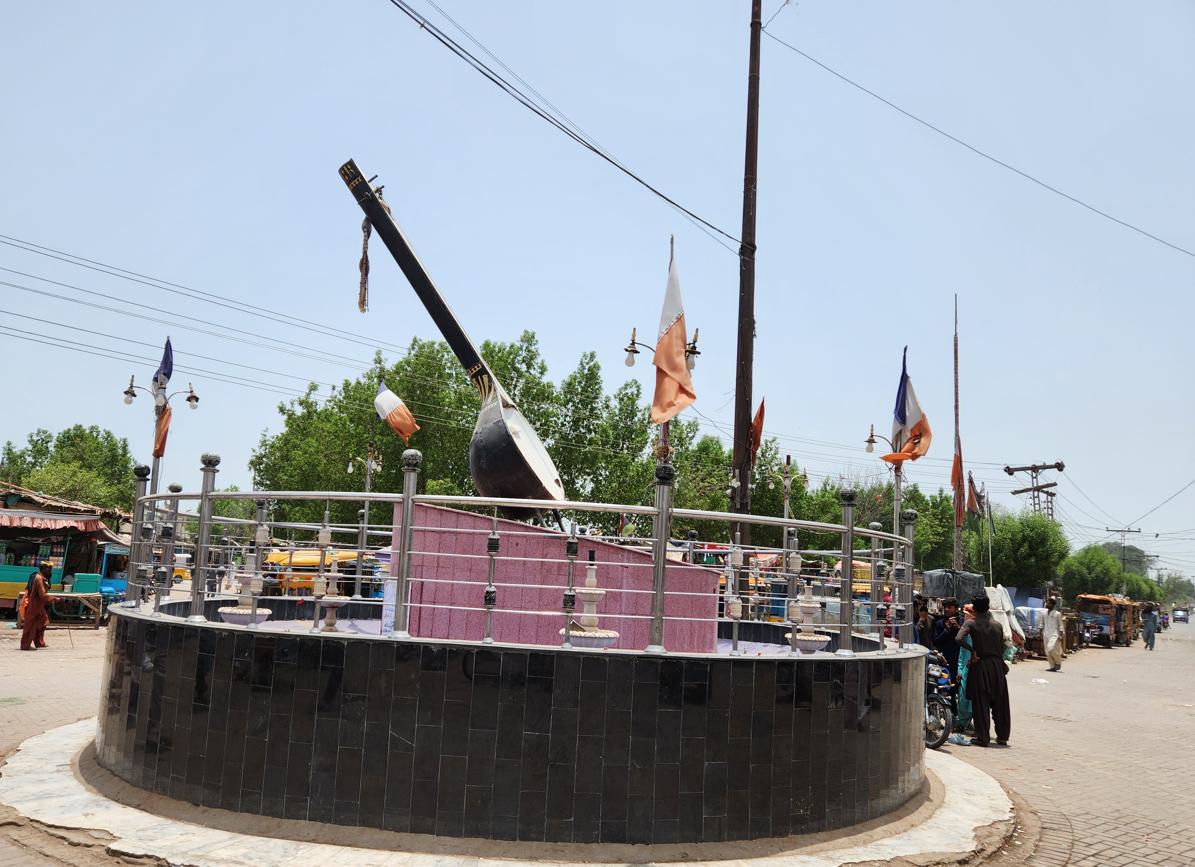
Inside, the atmosphere held none of the hush a visitor might expect of a shrine. In an alcove off the main courtyard, a circle of faqirs sat cross-legged on threadbare rugs, each cradling a tamboora — the five-stringed, long-necked instrument that local tradition credits to Bhittai himself, said to have been invented so that even the illiterate could feel his verses as vibration rather than read them as text. Families stood and sat loosely around them: men in shalwar kameez leaning against the tiled pillars, a woman in a red dupatta with two children weaving between the listeners, teenagers filming on their phones without any apparent sense that this diminished the moment. Nobody seemed to be performing solemnity for anyone else's benefit; where solemnity existed, it was simply there, unremarked, the way weather is there.
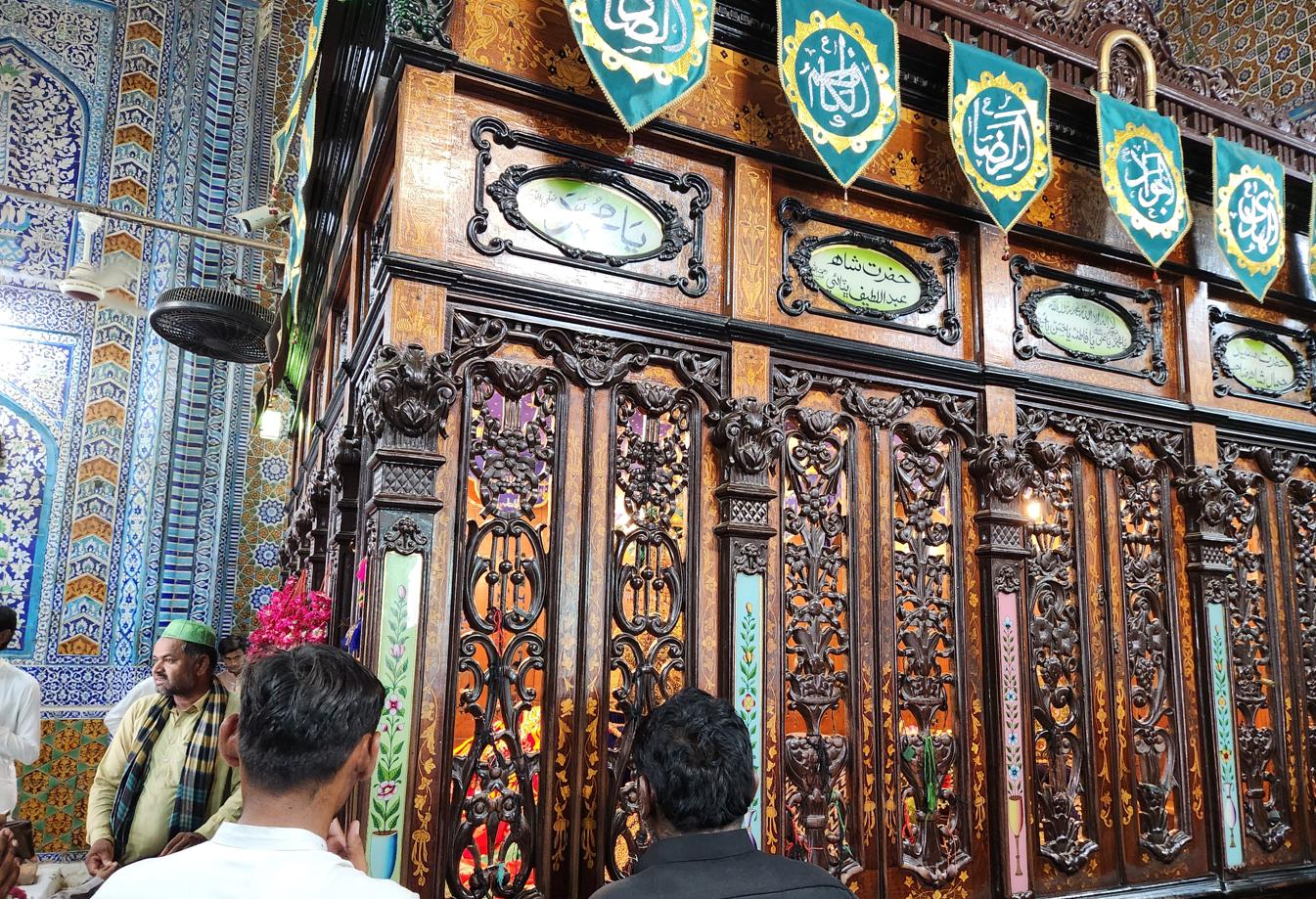
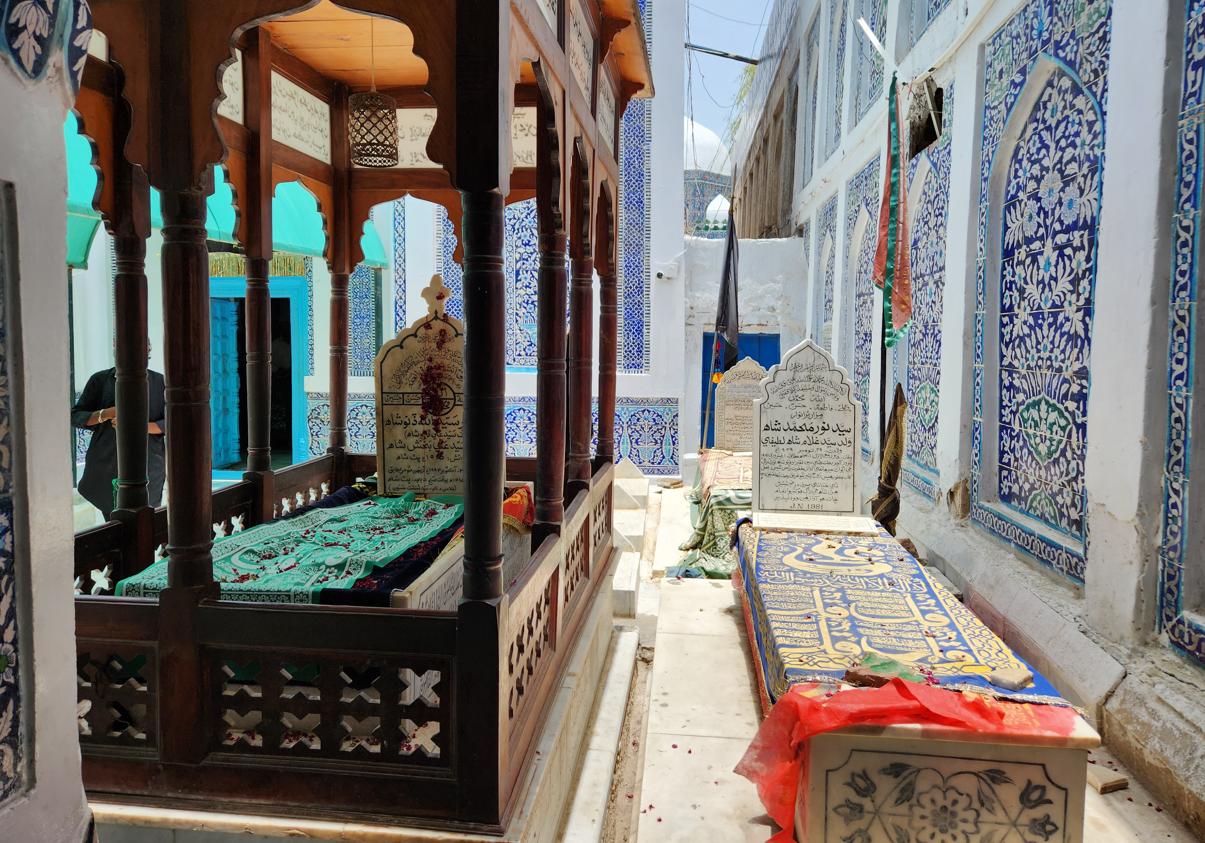
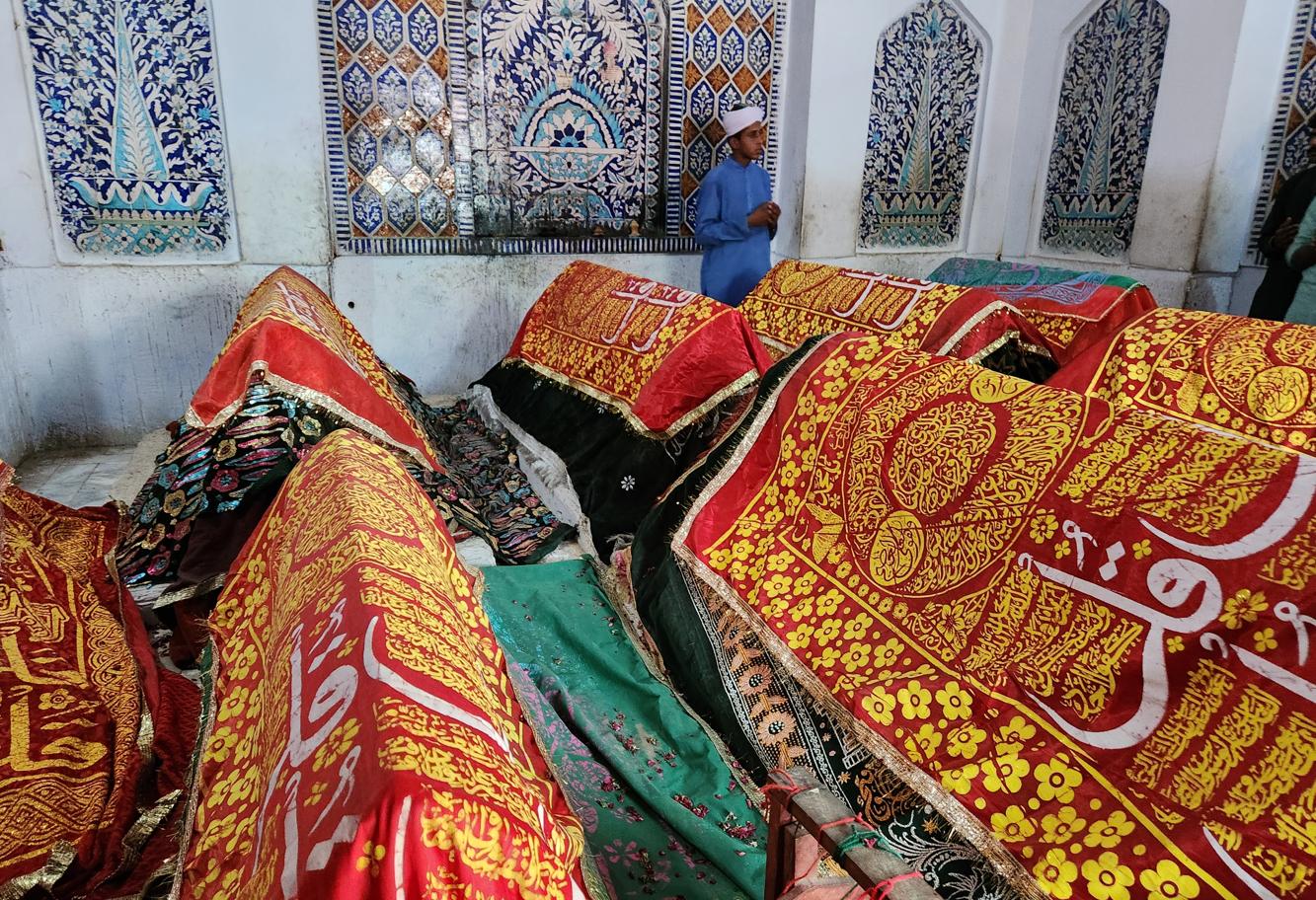
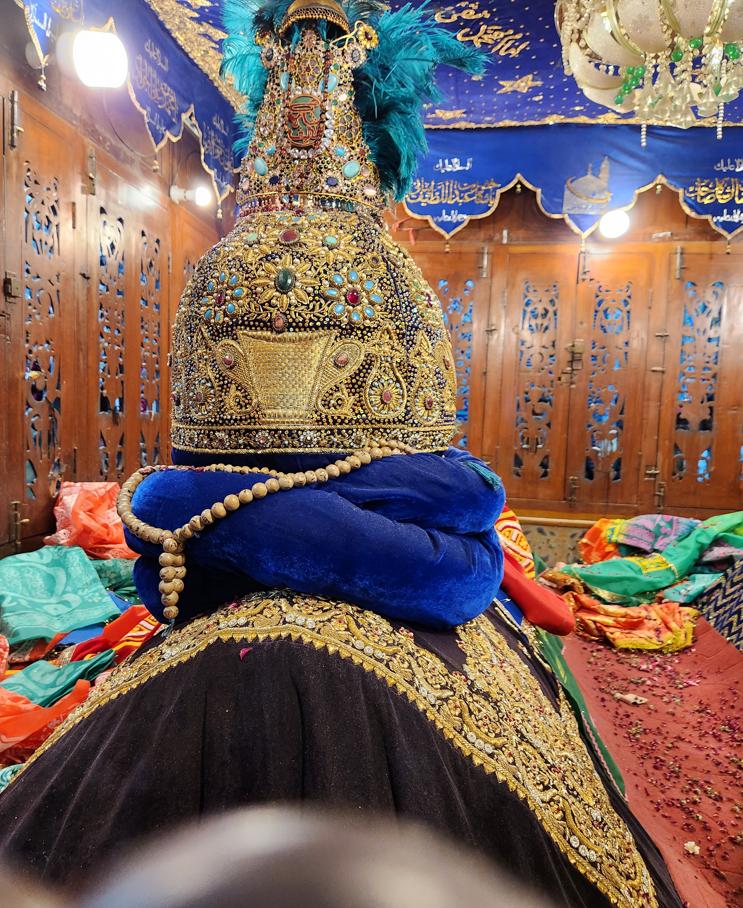
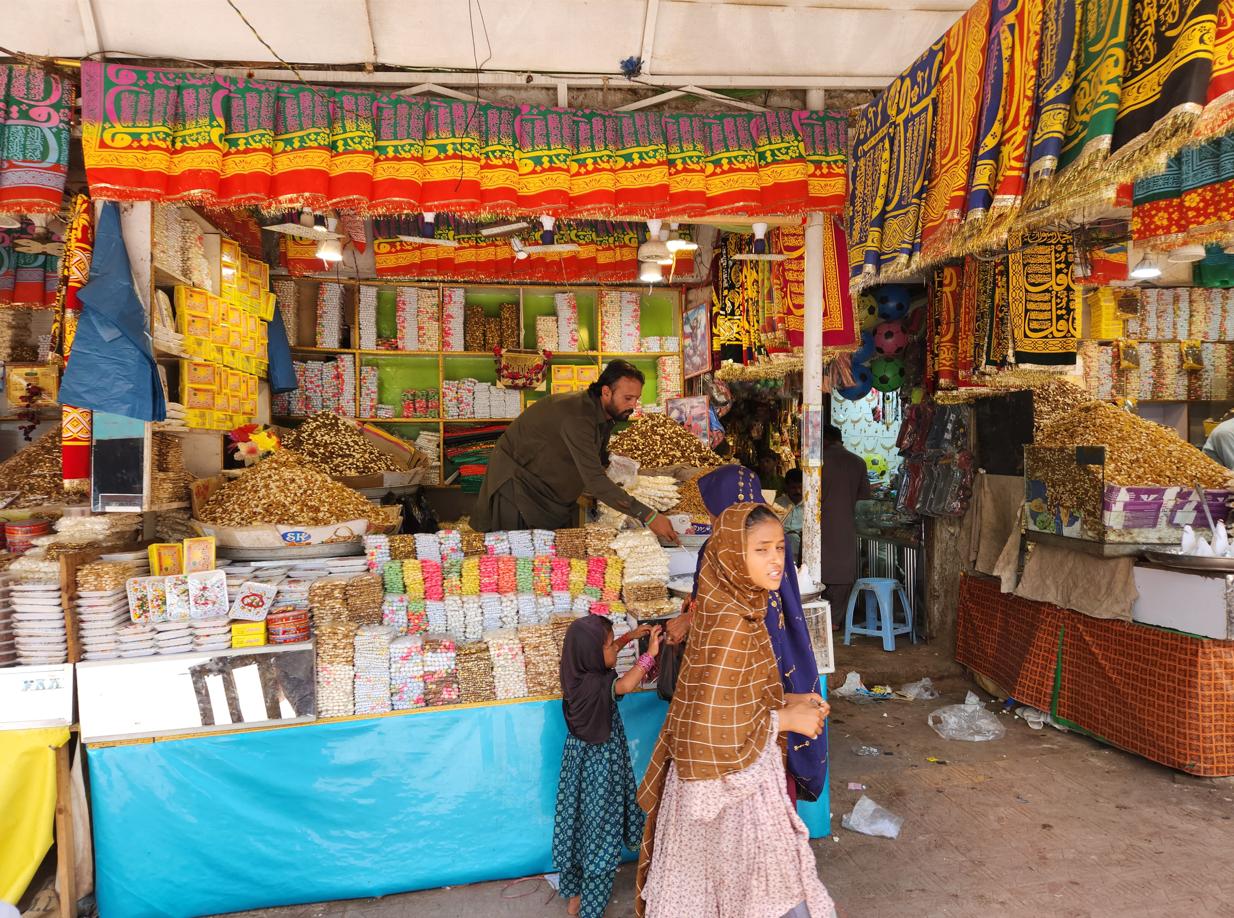
Deeper inside, past a screen of dark, intricately carved wood strung with sprays of pink bougainvillea left by pilgrims, the graves themselves lay under a riot of colour: chadors of red and green and gold, calligraphed with verses from the Risalo, layered one over another by generations of visitors who had each added a covering of their own and never quite removed the last one. At the head of the principal grave, glimpsed through a lattice screen, sat a green velvet cap studded with what might have been semi-precious stones and crowned with a small gold finial — an object that managed to look devotional and slightly absurd at once, the way relics often do to eyes not raised to revere them. The mood was not one of grief. It was closer to a kind of unhurried, faintly rowdy affection — the atmosphere of a family shrine as much as a saint's.
Bhittai is to Sindhi literature what Shakespeare is to English, or Rumi to Persian: the figure in whom the language found its fullest expression, whose lines are so embedded in the culture that they are quoted by people who have never read them, who absorbed them from parents who absorbed them from grandparents going back beyond memory. He wrote in the risalo — his collected poetry — of moths burning in flames as an image of the soul's annihilation in the divine, of the Indus as a metaphor for the river of God's mercy, of love as the only valid way of knowing.
Jamal read some of these verses to me in a quiet corner of the shrine, reciting in Sindhi — a language that I cannot understand but that, in his low musical voice, sounded like water over stones.
'He says,' Jamal translated, finding the words slowly, as one finds the right word in the dark, 'that the man who only reads books is further from God than the man who cannot read at all, because the man who reads believes that reading is enough. But the man who cannot read — he must feel God directly. With his hands. With his body. That is closer.'
I thought of this again a few days later, at the shrine of Lal Shahbaz Qalandar in Sehwan, where devotion took two forms at once: mourning made audible in one corner of the courtyard, and, in another, bodies given over so completely to drum and motion that feeling-with-the-body looked less like a metaphor than a literal description.
The Red Falcon of Sehwan
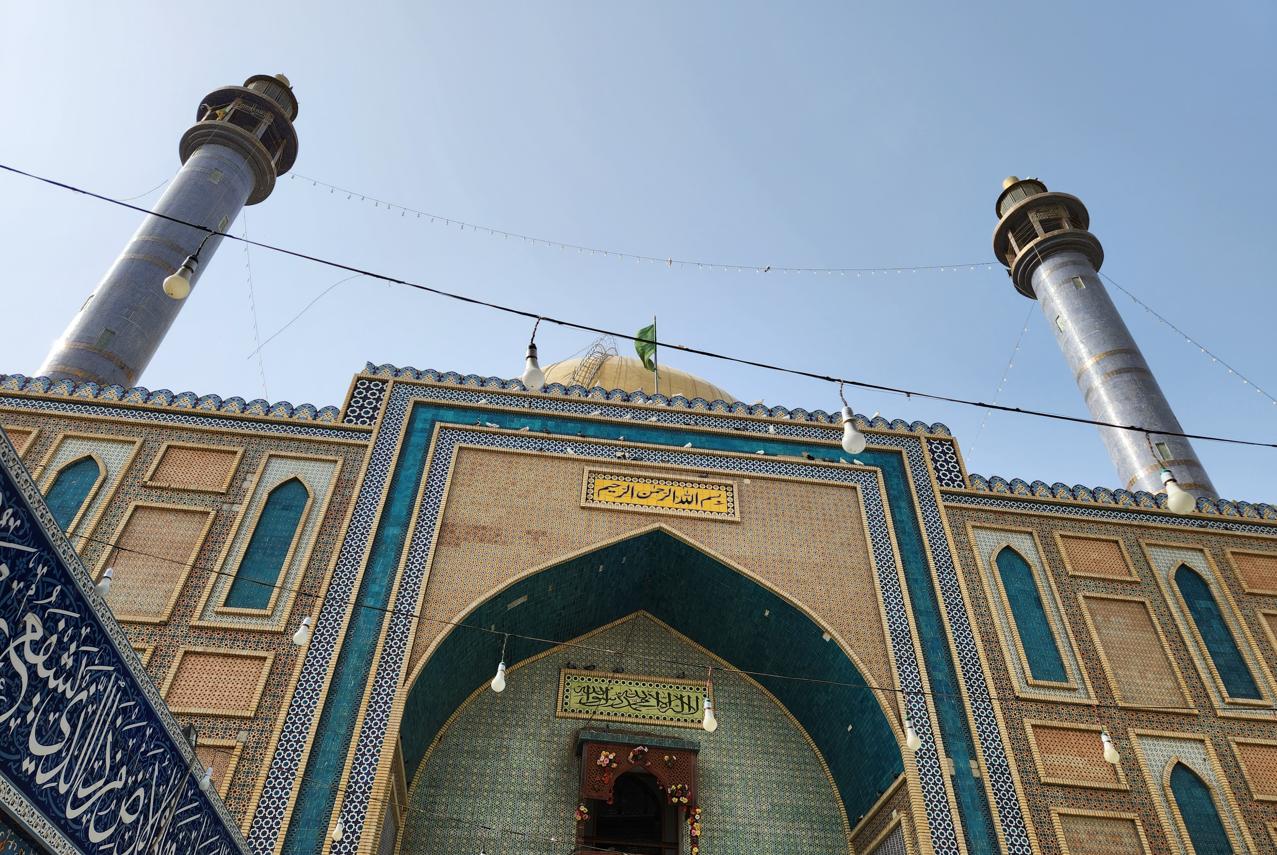
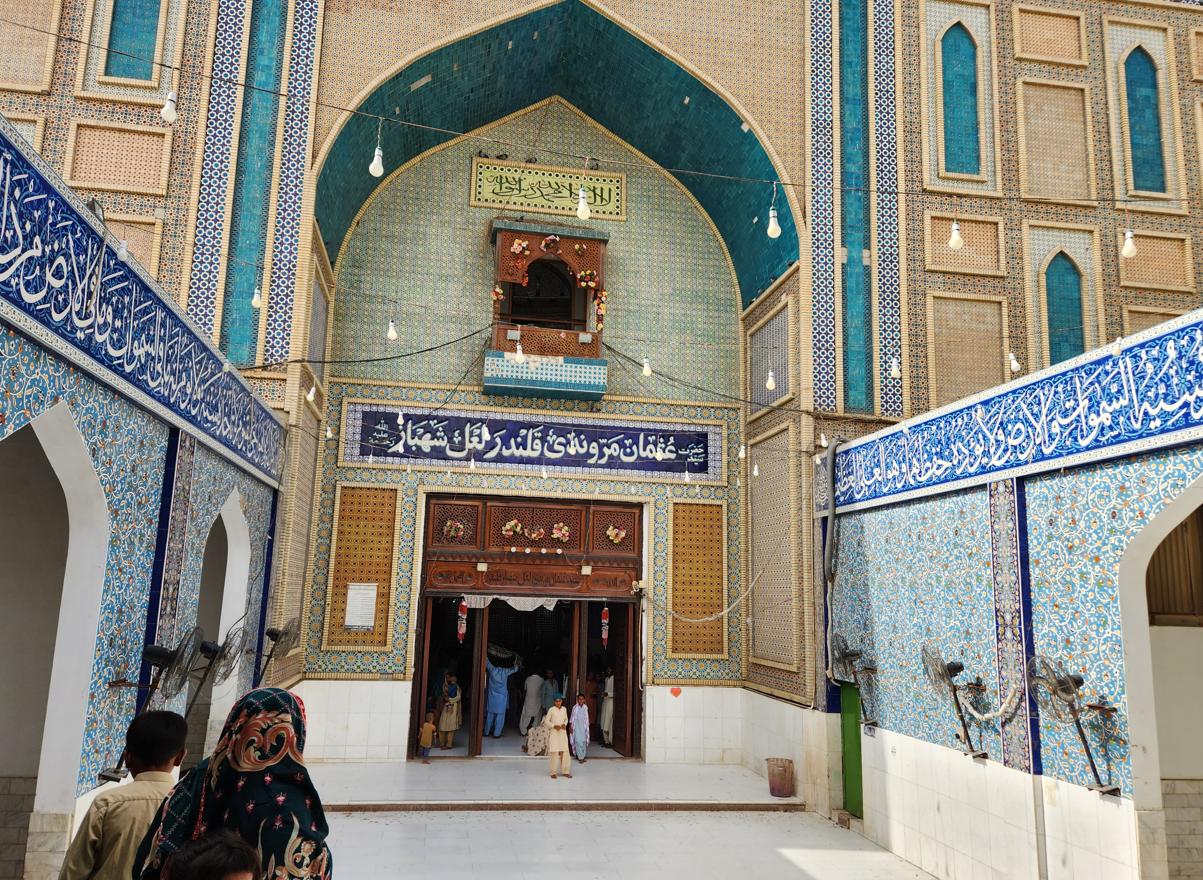
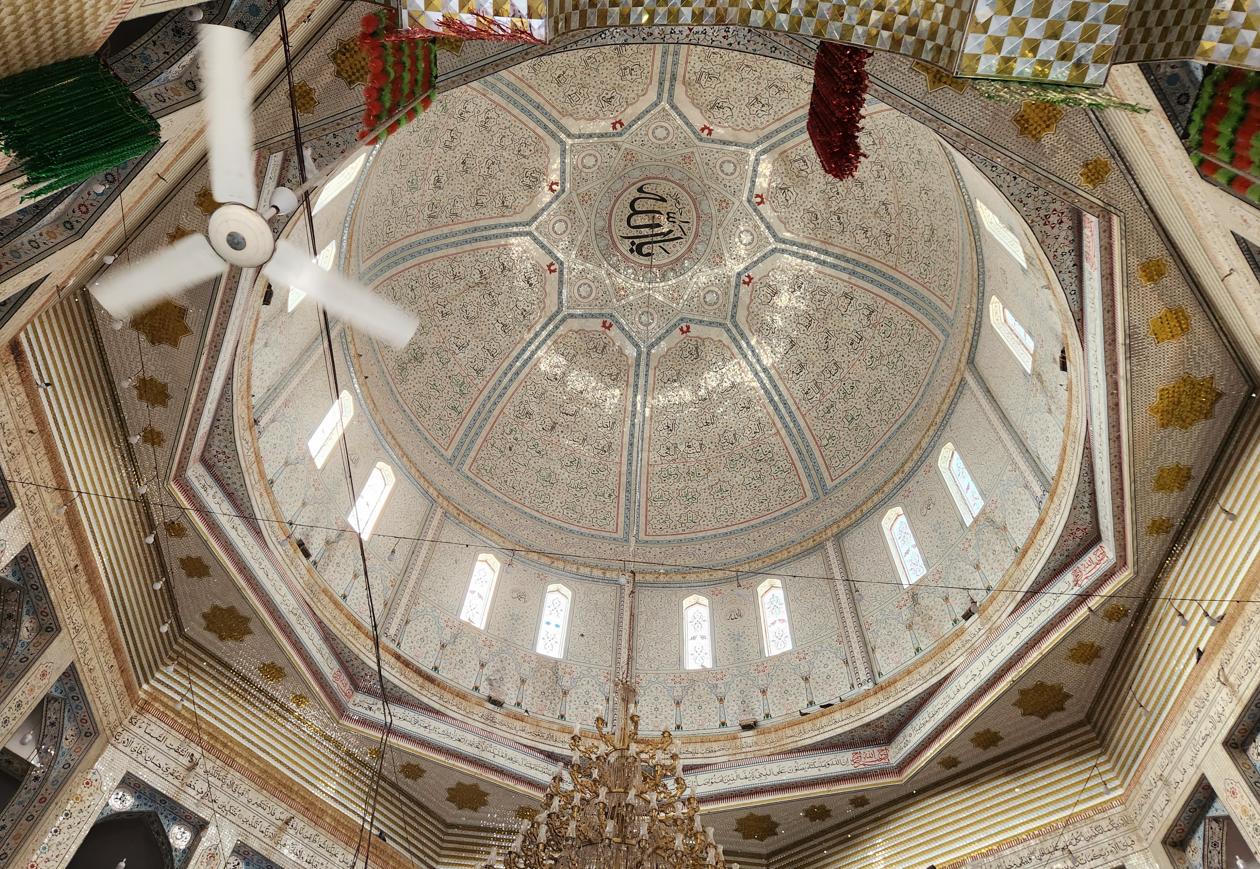
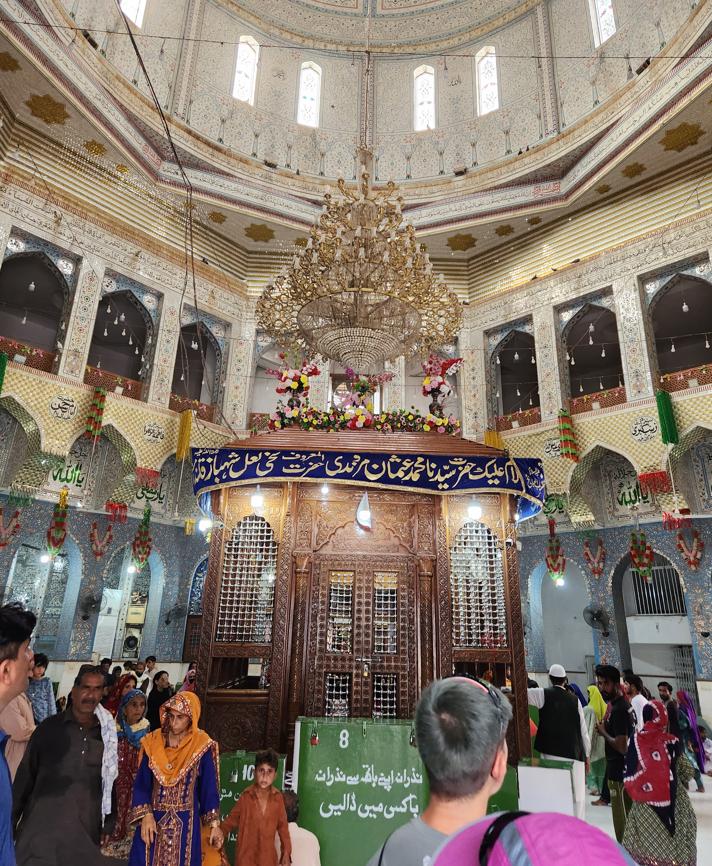
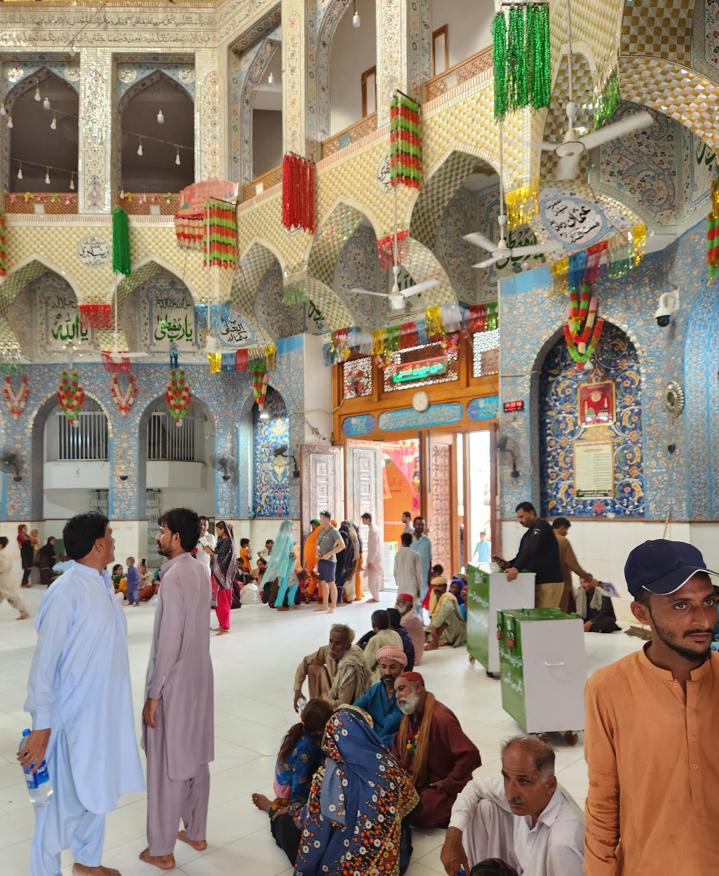
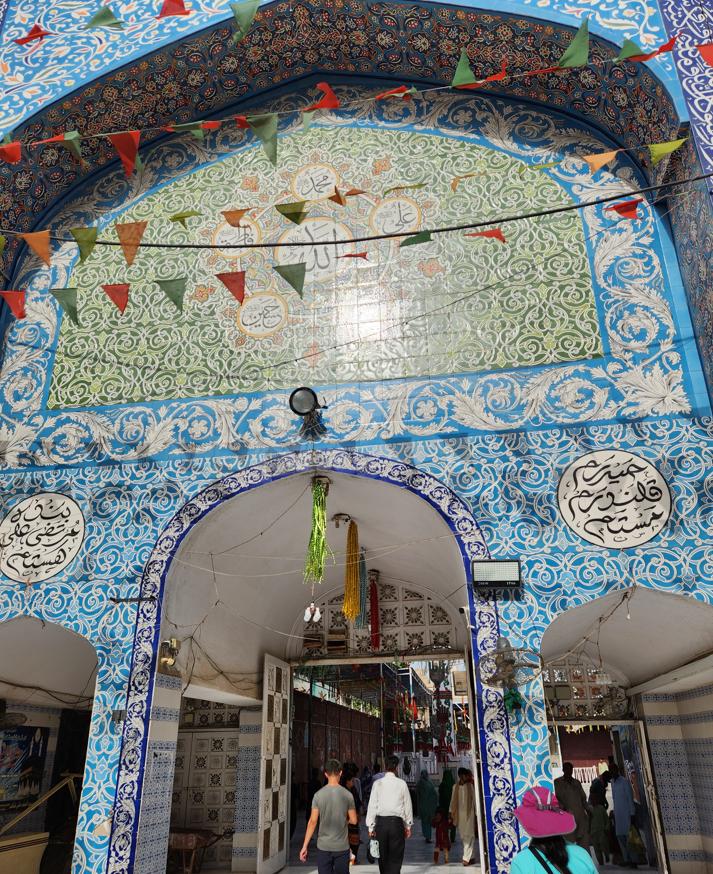
Lal Shahbaz Qalandar's annual urs — the commemoration of his death, held on the eighteenth of Sha'aban, the eighth month of the Islamic lunar calendar — draws more than two million pilgrims to Sehwan from across Pakistan and beyond. We were not there for the urs itself, but even on an ordinary day the shrine carried some of that gravitational weight: a sense of a place built to absorb crowds far larger than the one we saw.
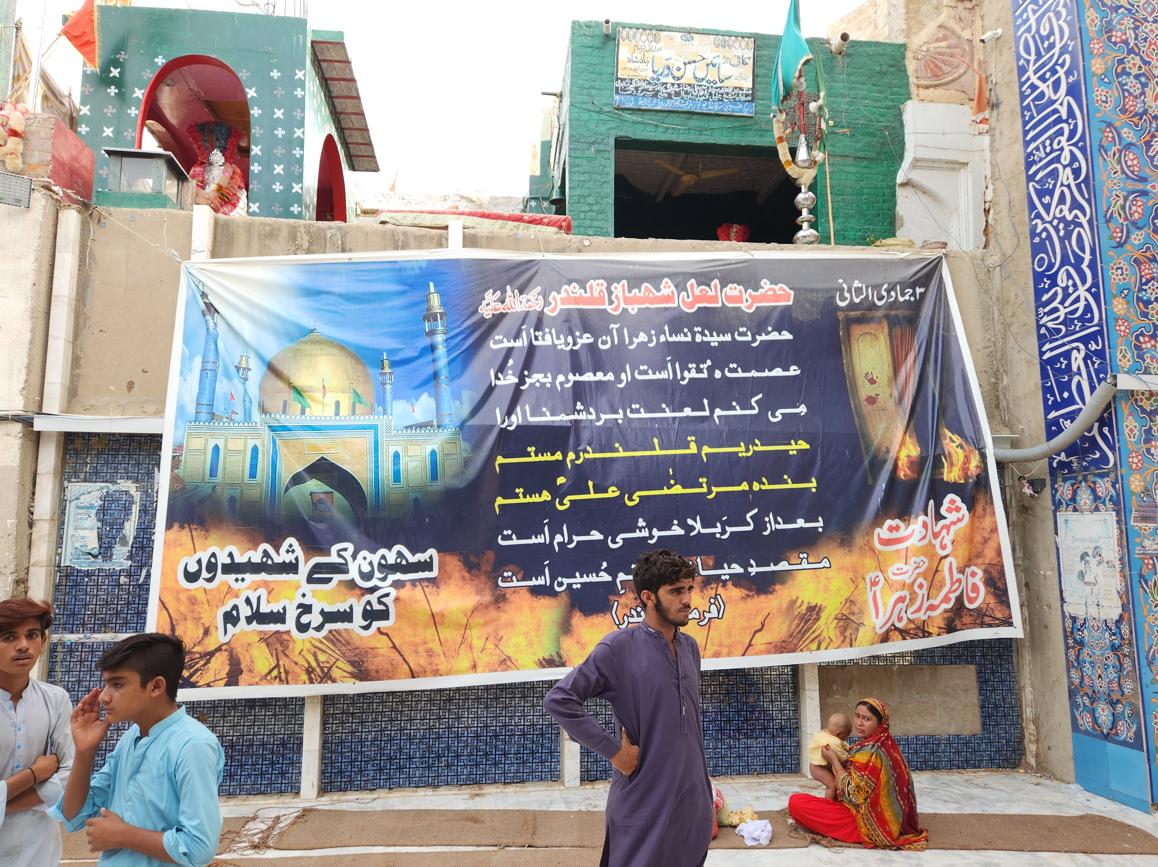
Security at the Lal Shahbaz Qalandar shrine was severe. Before entering the courtyard, our details were recorded by paramilitary officers, and an escort was assigned to accompany us. The reason was not mysterious: in February 2017, a suicide bomber had detonated his vest in this courtyard, killing eighty-eight people. The attack had been claimed by the Pakistani Taliban, and its target was chosen precisely because Sufi shrines represent, to the Salafi-Wahhabi theology of the jihadist groups, everything that is wrong with South Asian Islam — the veneration of saints, the mixing of men and women, the music and the dancing and the emotional abandon that Sufism cultivates and orthodox Sunnism views with deep suspicion.
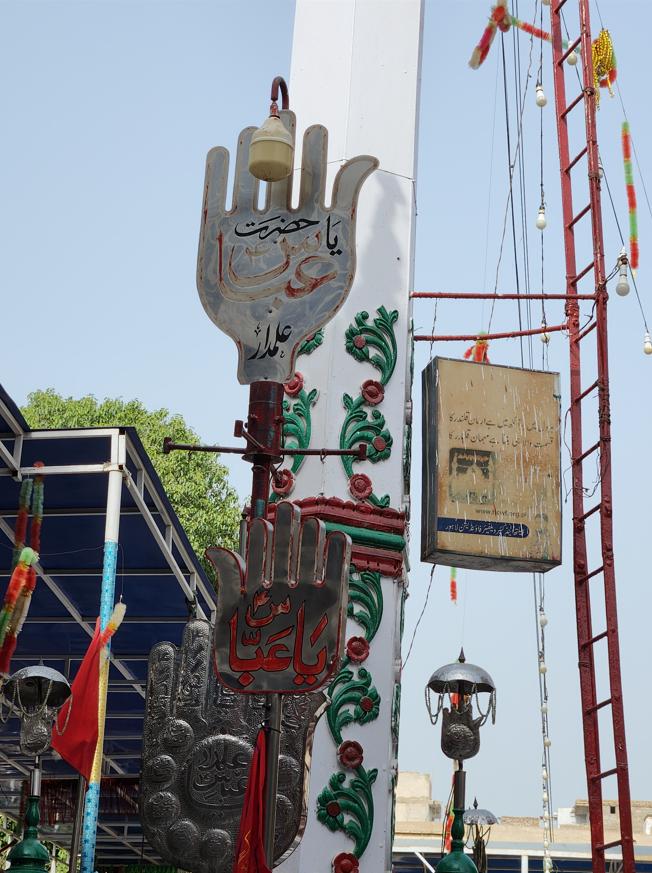
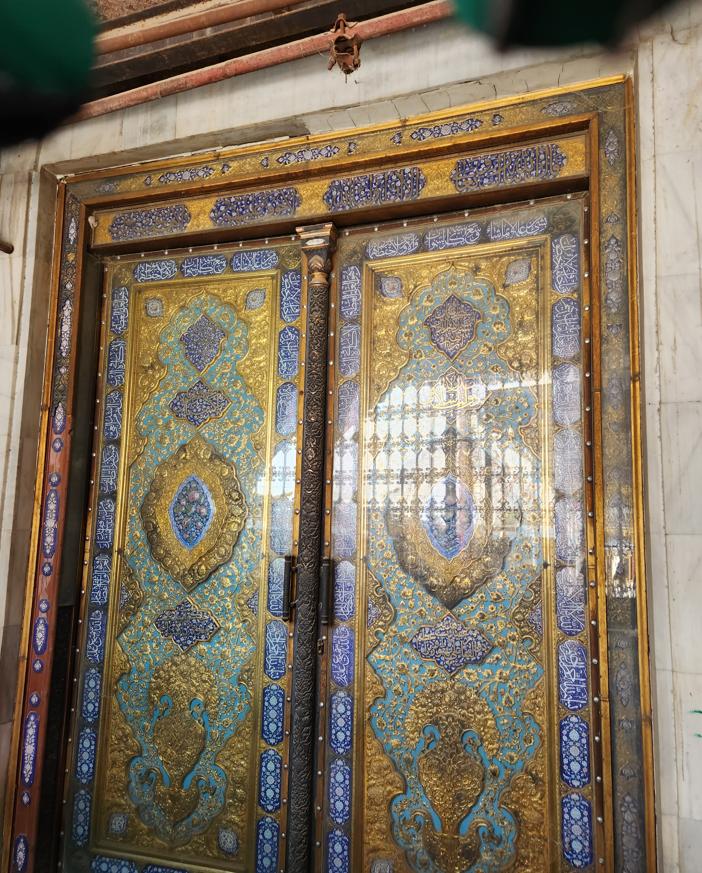
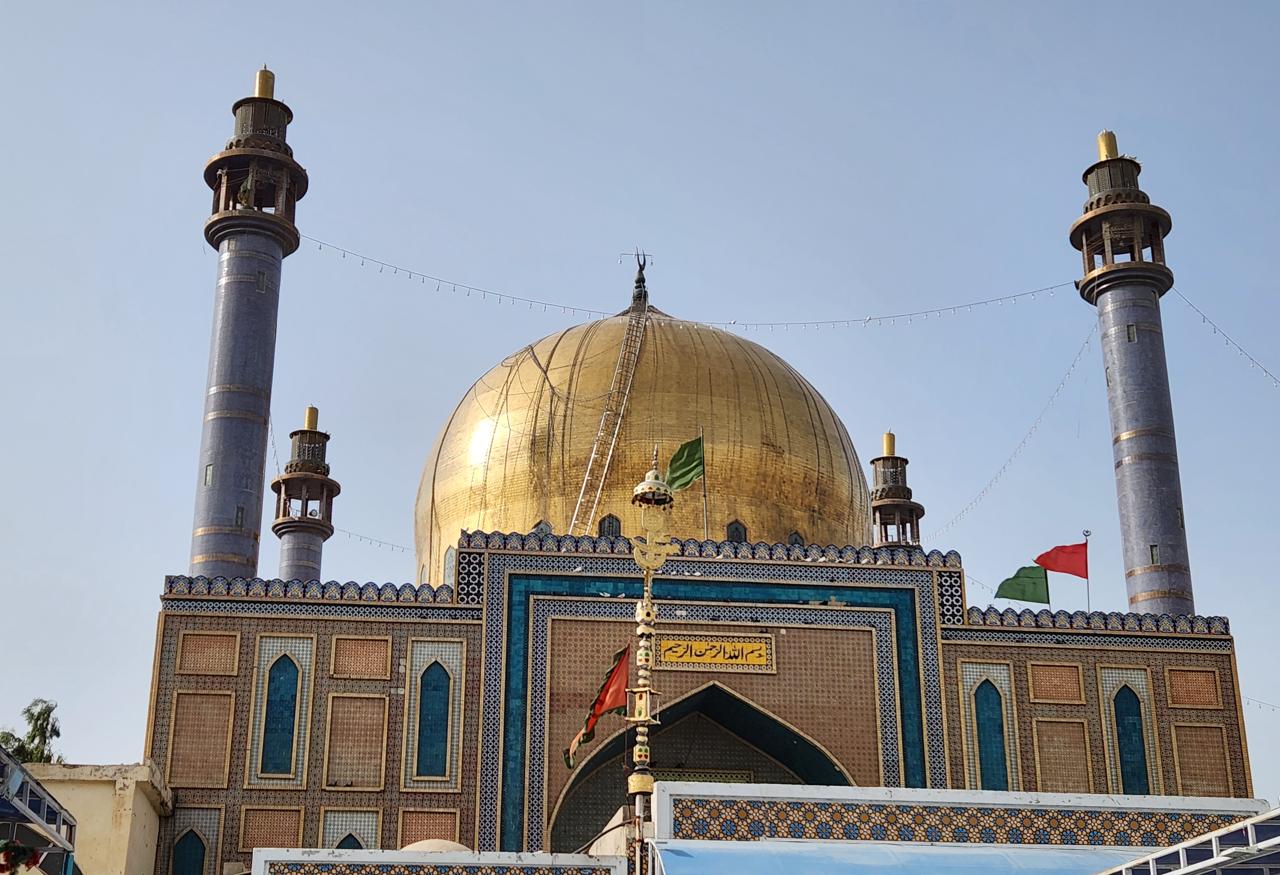
The shrine's golden dome caught the afternoon sun with an intensity that Jamal, whose point of reference was impeccable, likened to the Imam Ali shrine in Najaf. The gold-plated door had been gifted by the Shah of Iran and installed by Zulfikar Ali Bhutto, a gesture that tells you almost everything you need to know about the cross-cutting allegiances of Pakistani political culture: a Shia monarchy, a Sunni populist prime minister, a Sufi shrine beloved by both. In the courtyard, three girls were singing loudly, their voices rising by degrees into something closer to wailing. We were told they were mourning the martyrdom of Imam Ali in 661 CE and the Battle of Karbala in 680 CE, in which most of the surviving members of his family were massacred — a grief still being performed, live and unresolved, thirteen centuries later. Elsewhere in the courtyard, men were beating drums, the sound rolling under the girls' voices without quite synchronising with them, two separate expressions of the same feeling refusing to resolve into one.
Off to one side, away from the mourning, the dhamaal was already gathering its own separate momentum. A knot of young men had formed near the drummers, and a handful of them were dancing in the specific, headlong way that gives the dance its reputation: hair whipping in wide circles as their heads snapped back and forward in time with the beat, bodies spinning until spinning seemed to become the only available response to the noise and the heat and the incense smoke curling up in thick grey ropes from braziers set around the courtyard. One young man in particular seemed to have crossed some threshold entirely — eyes closed, mouth slack, turning on his own axis with a loose-limbed abandon that looked less like dancing than like something dancing had temporarily replaced. Whether what I was watching was ecstasy, a rehearsed performance of ecstasy, or something closer to a seizure was not a distinction I felt equipped to make, and I suspect the dancers themselves would not have thought the question worth asking. The drums did not pause to let anyone decide.
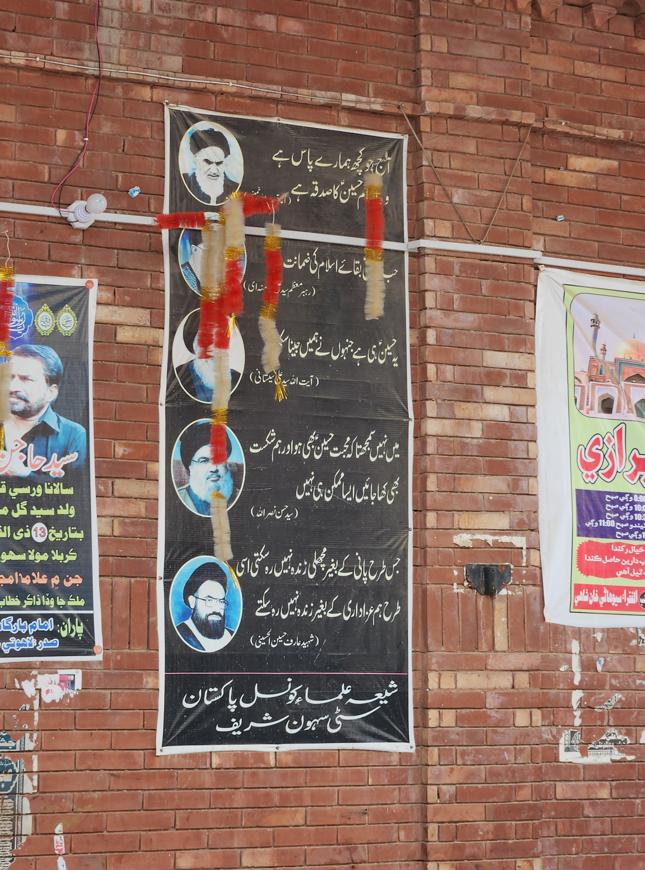
A shop outside the shrine displayed a portrait of Imam Ali. Nearby, posters had appeared on a wall bearing the faces of Iran's Ayatollah Khomeini, Hezbollah's Hassan Nasrallah, and other Shia leaders. This was not, as it might seem to a Western eye, a contradiction: Sindh is, in its religious culture, a province where the boundaries between Shia and Sunni observance have historically been permeable, where Sufi practice incorporates both, and where the vense_ration of Ali the fourth caliph and cousin of the Prophet is not the exclusive property of the Shia confession. Pakistan, for all its reputation as a country of dangerous theological rigidity, contains within its borders a religious life of enormous complexity.
I did not take any video of devotees in trance at Lal Shahbaz Qalandar, but here is one from youtube.
A Note on Process
The travelogue on this site are based on my own journeys, photographs, Facebook posts, and field notes. I work with Claude (Anthropic's AI assistant) as a drafting and editorial partner — giving it my raw material and working iteratively to shape it into finished prose. The AI helps me draft quickly, maintain a consistent voice across long narratives, and edit at the document level. The website's HTML and coding are built with the assistance of Gemini (Google). Audio versions of the essays are produced using NotebookLM (Google). Every observation, opinion, and conclusion in the written work is mine. The AI tools are the instruments; I am the author.