Lahore
The City That History Chose
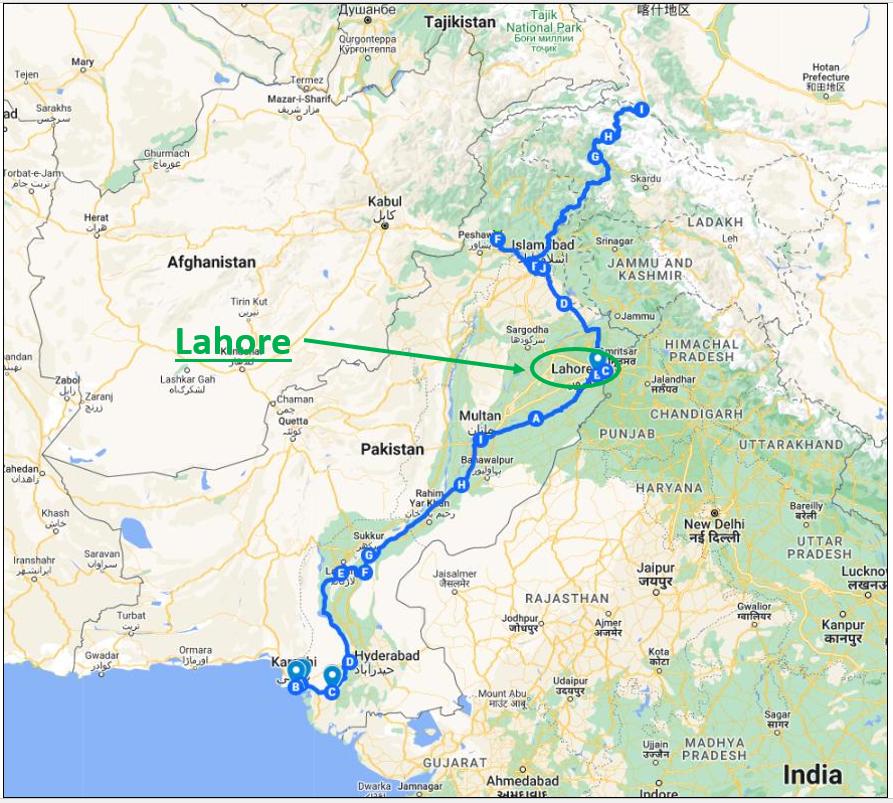
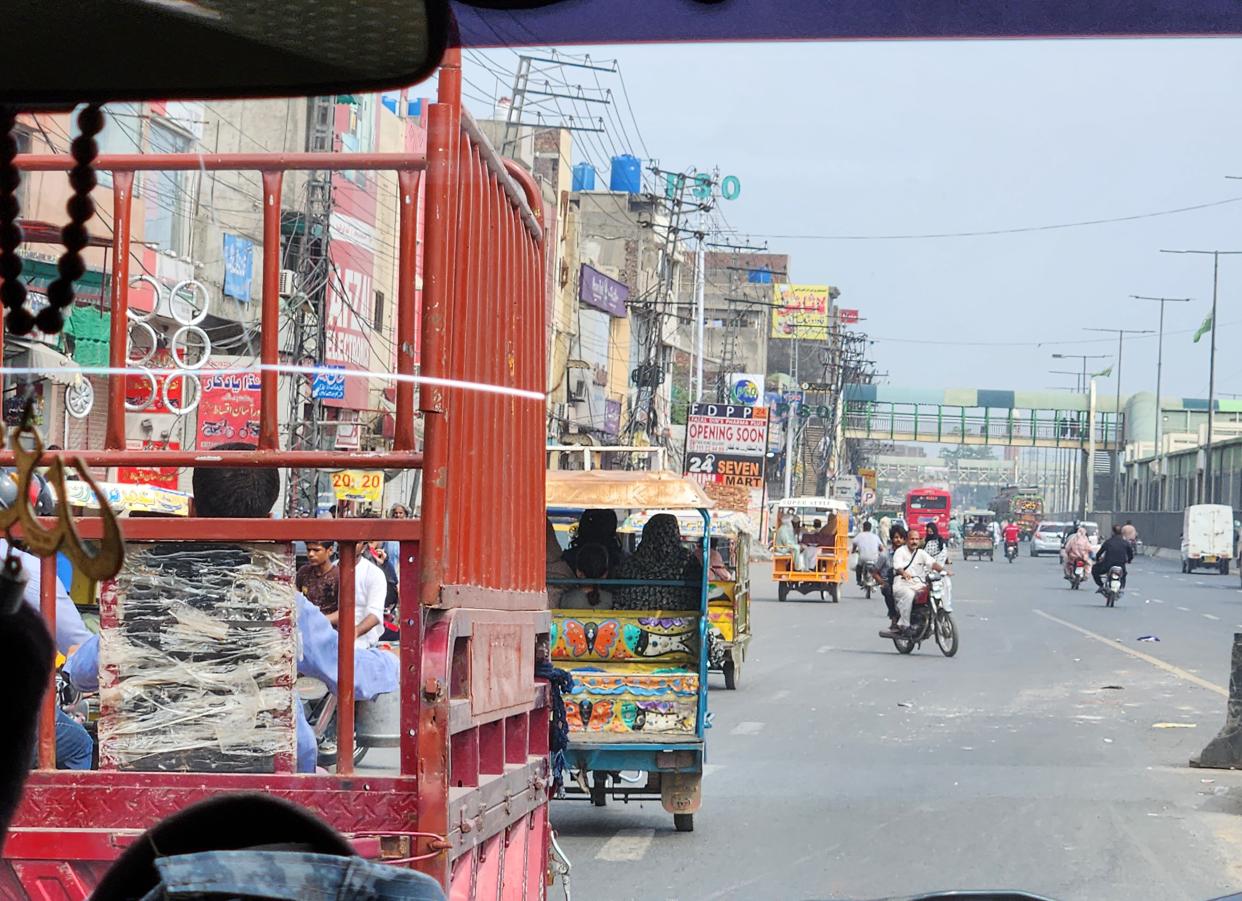
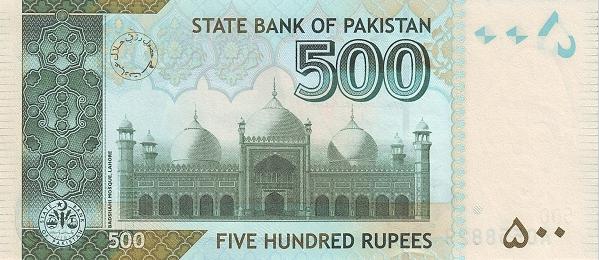
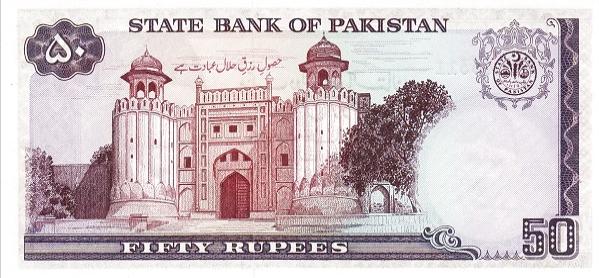
"He who has not seen Lahore has not been born."
— Punjabi proverbThe Walled City
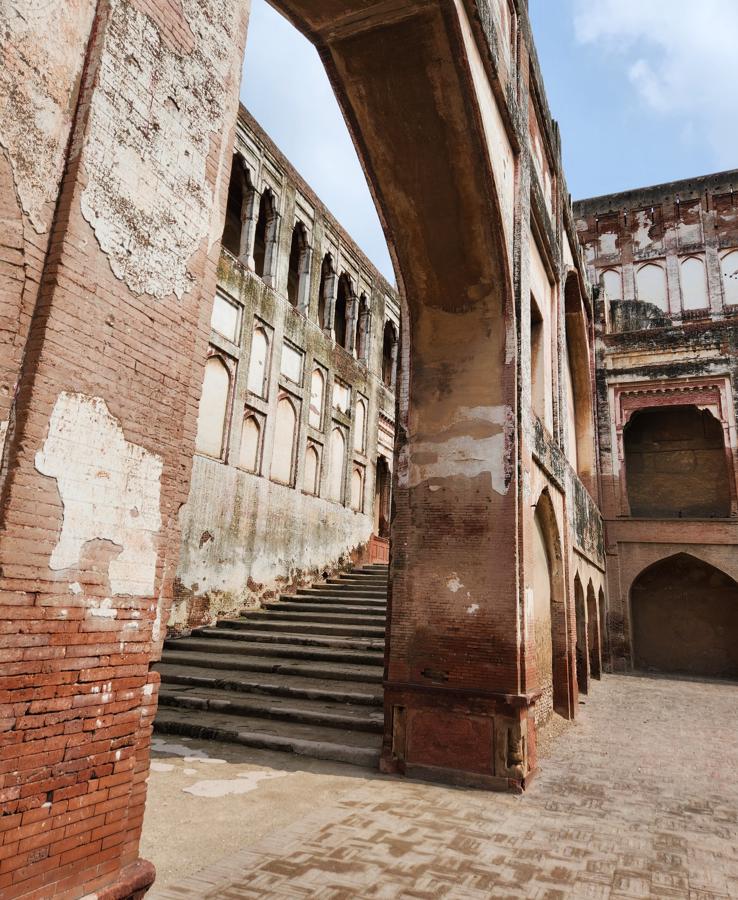
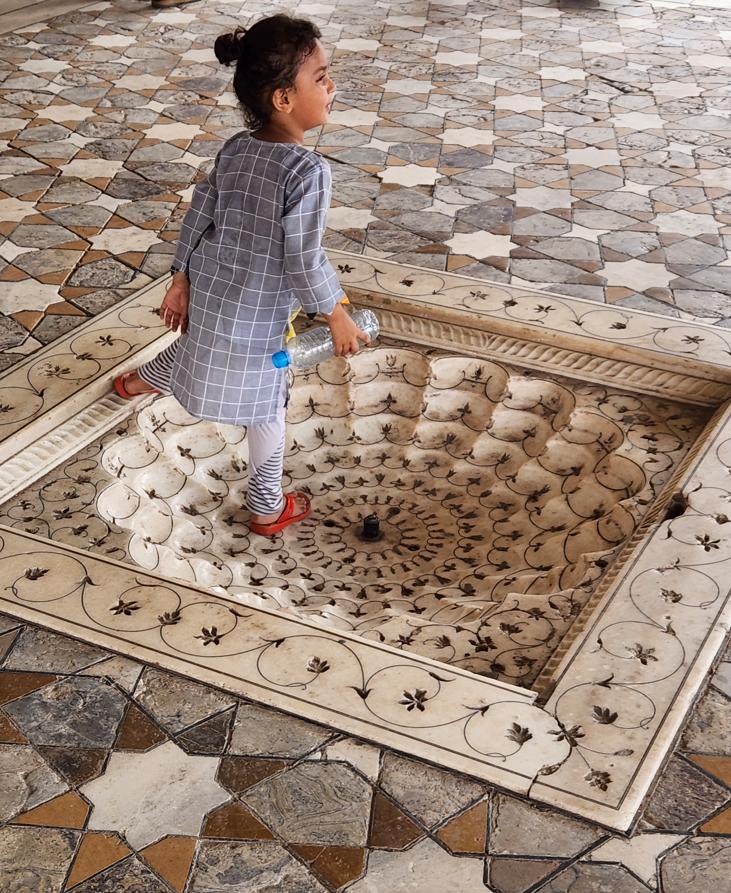
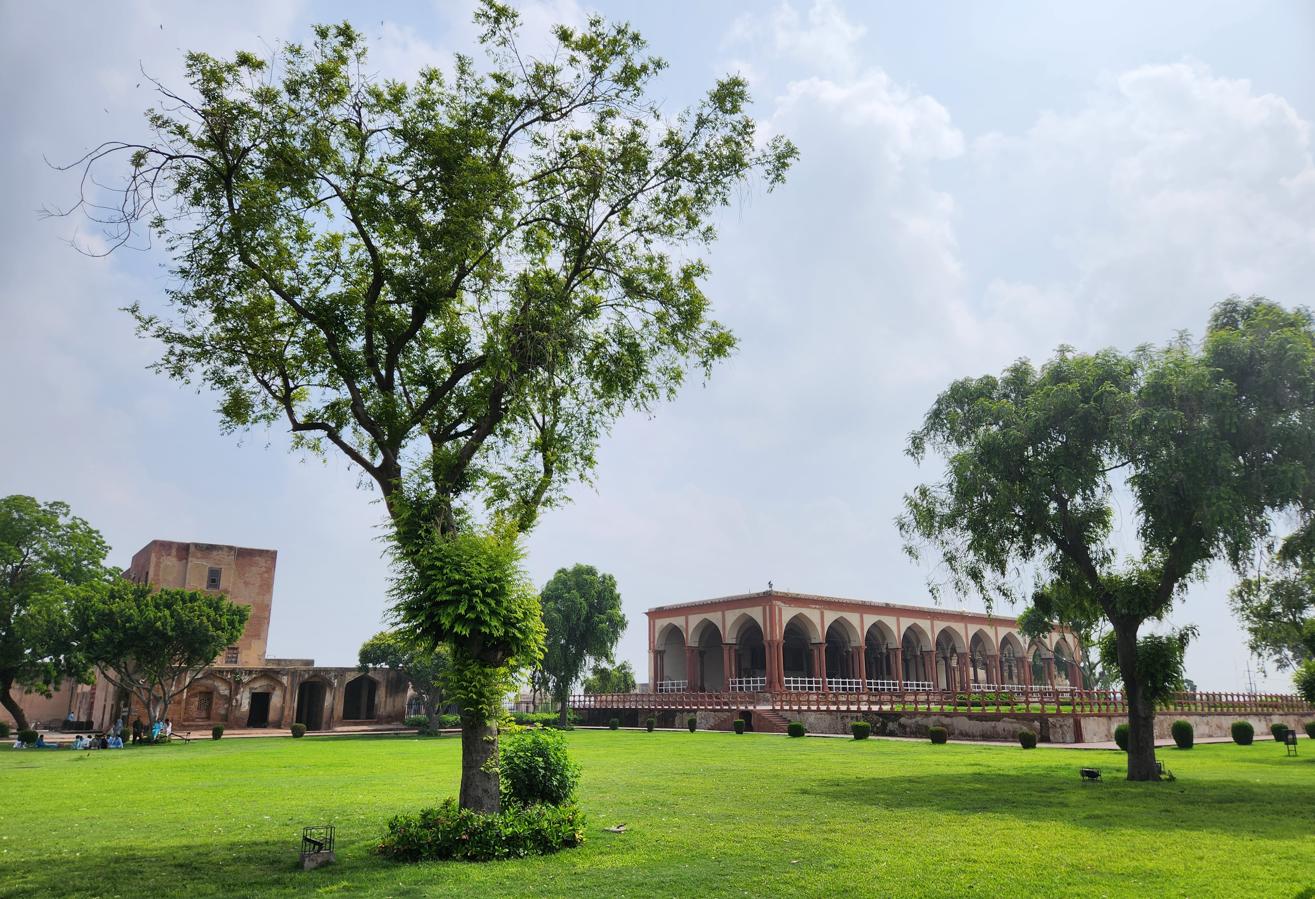
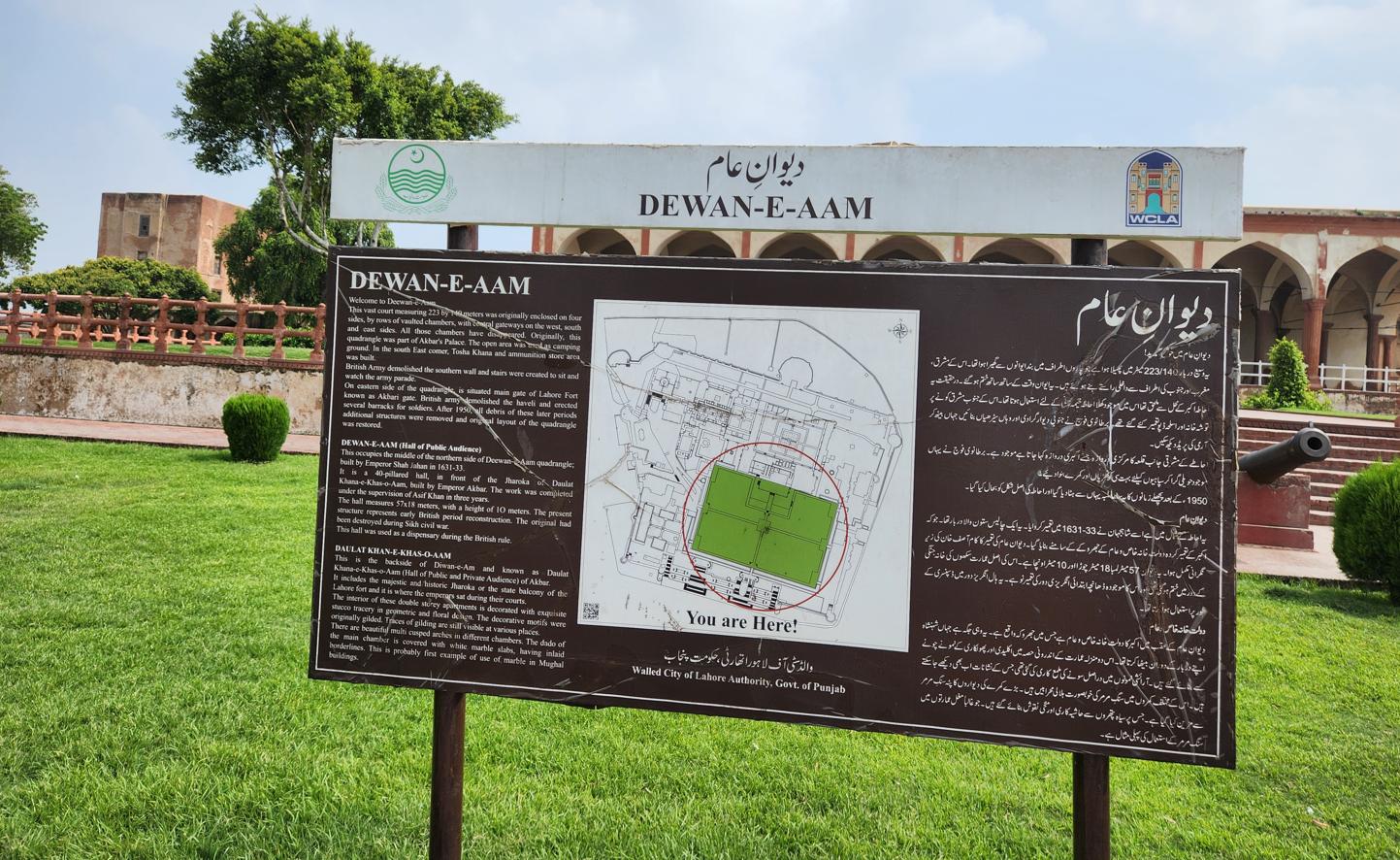
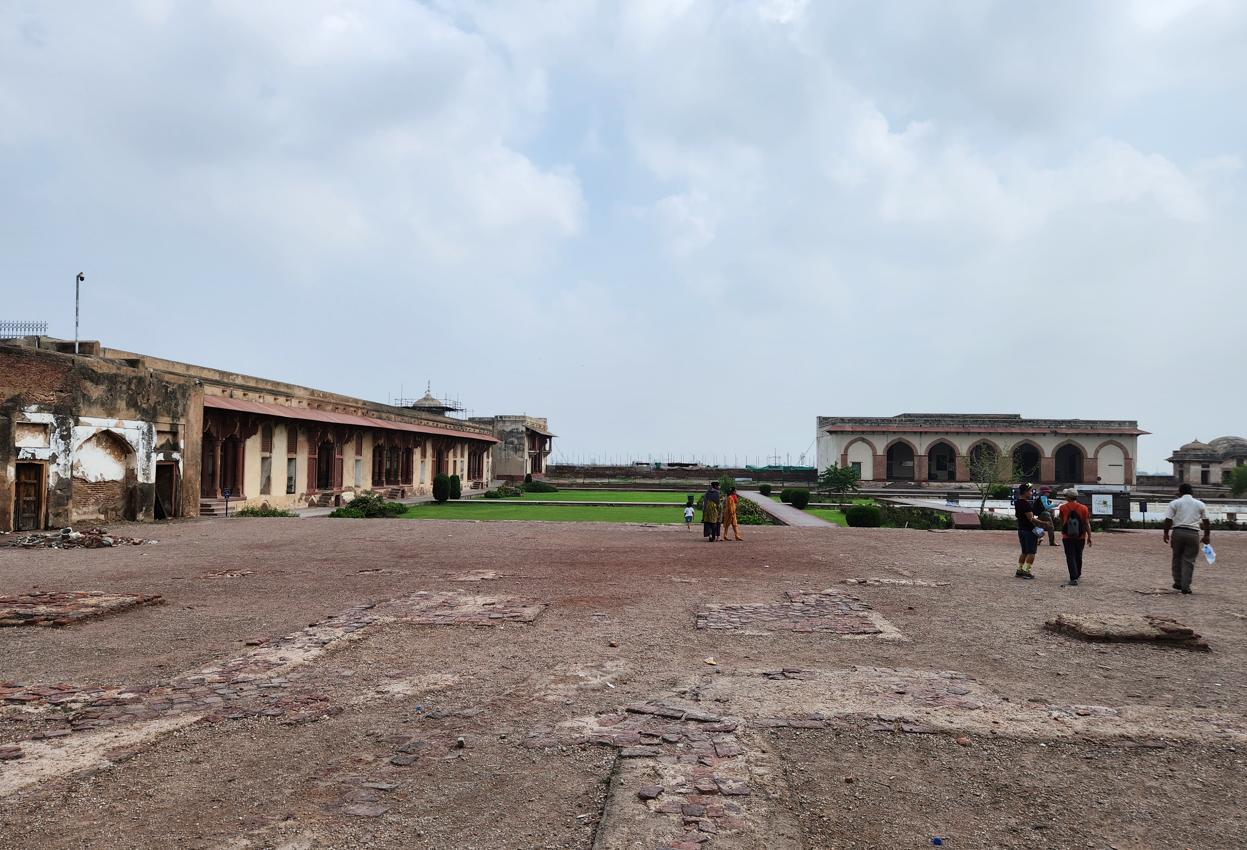
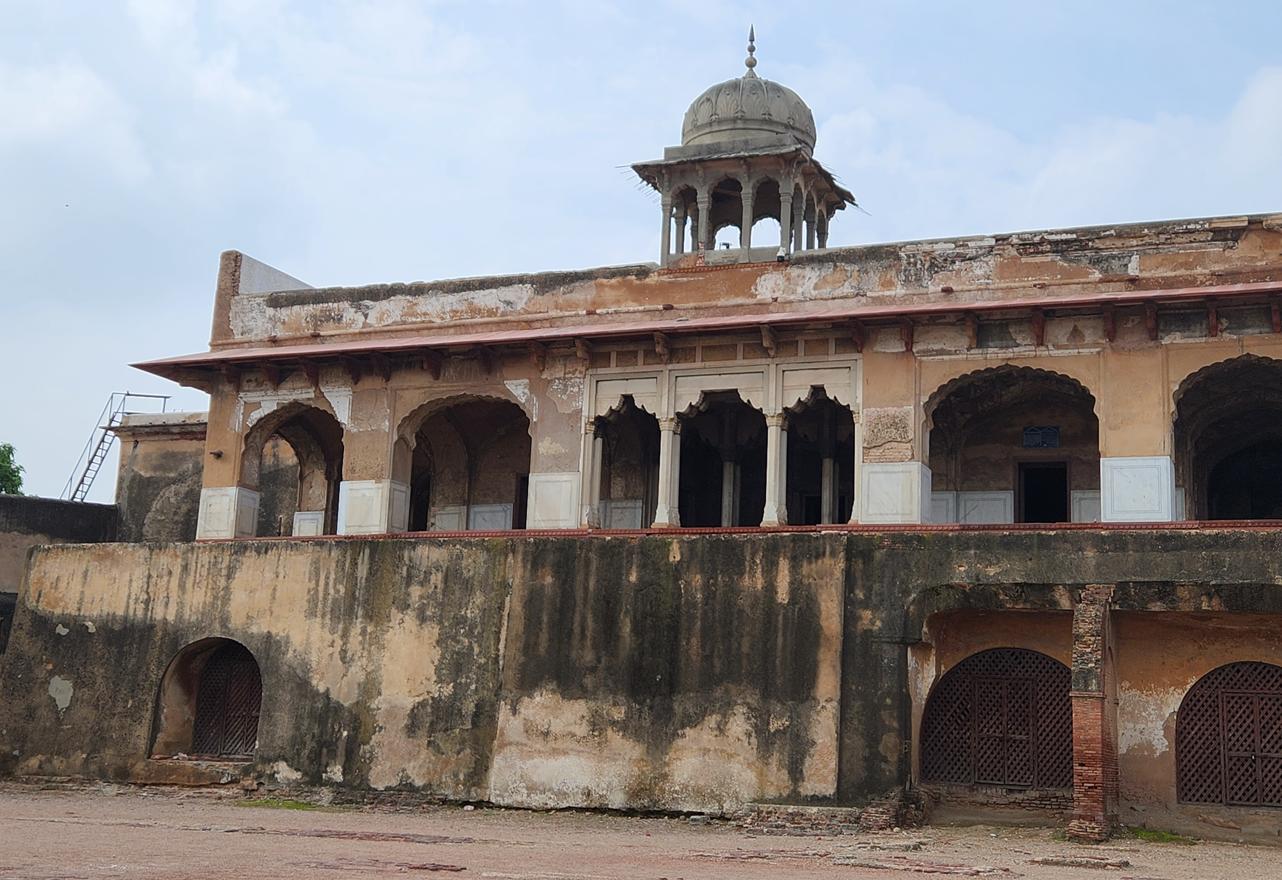
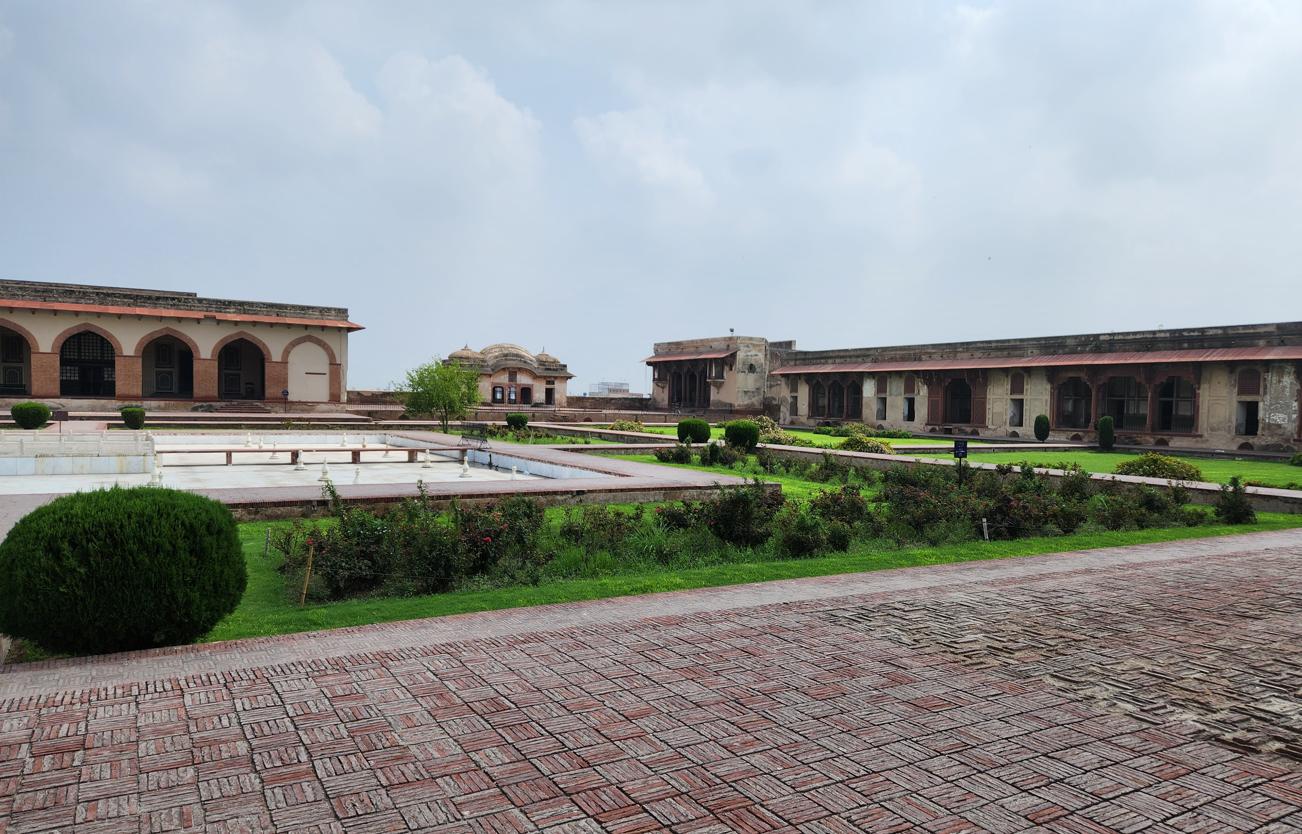
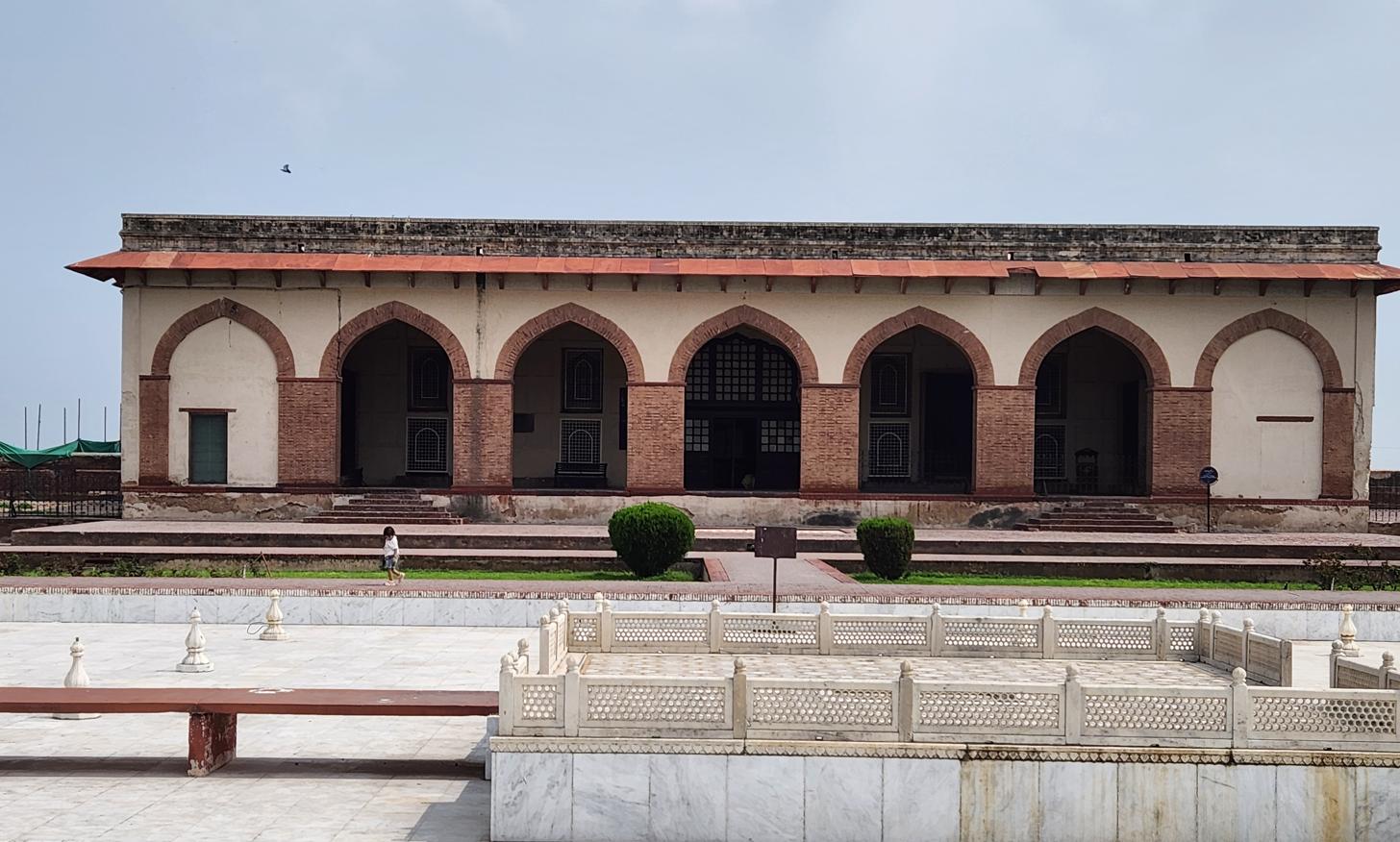
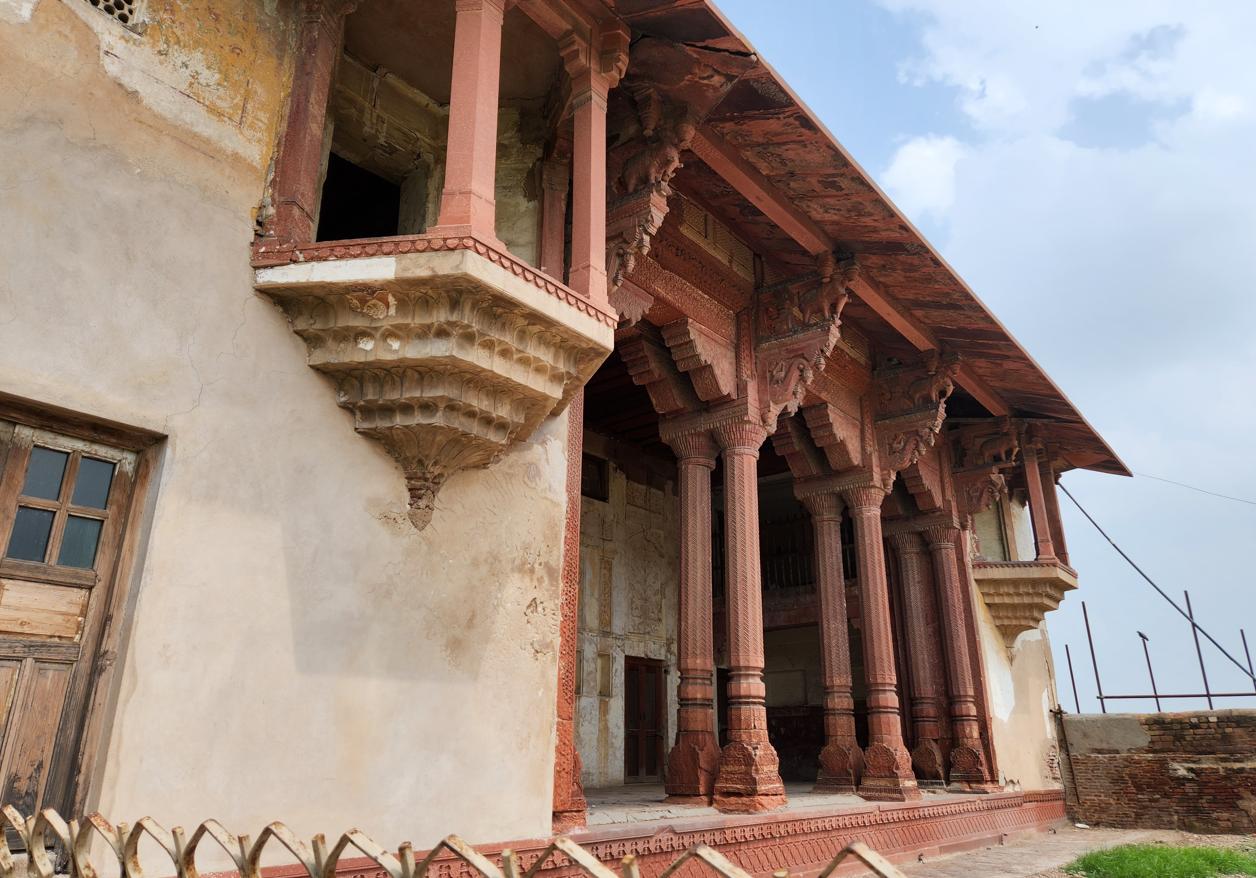

Lahore is the kind of city that novelists invent and then, upon visiting the original, find they had underestimated. It has been, at various moments, the capital of the Ghaznavid empire, the Mughal empire, the Sikh empire, and British Punjab. Each successive ruler built here with the urgency of the newly arrived and the ambition of the permanently installed. The result is a city that has more great monuments per square kilometre than anywhere else in Pakistan, and more unfinished restoration projects per great monument than anywhere else in the world.
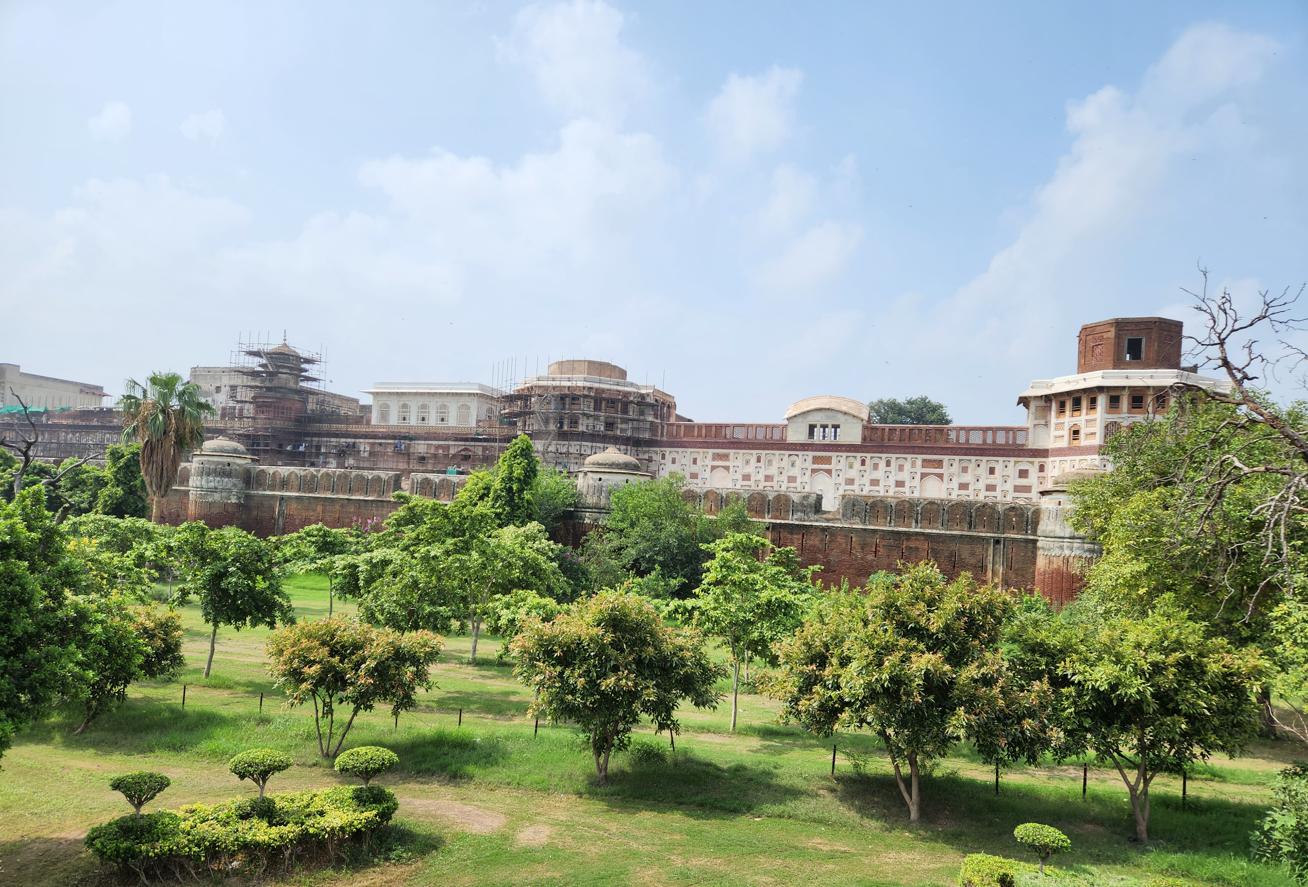
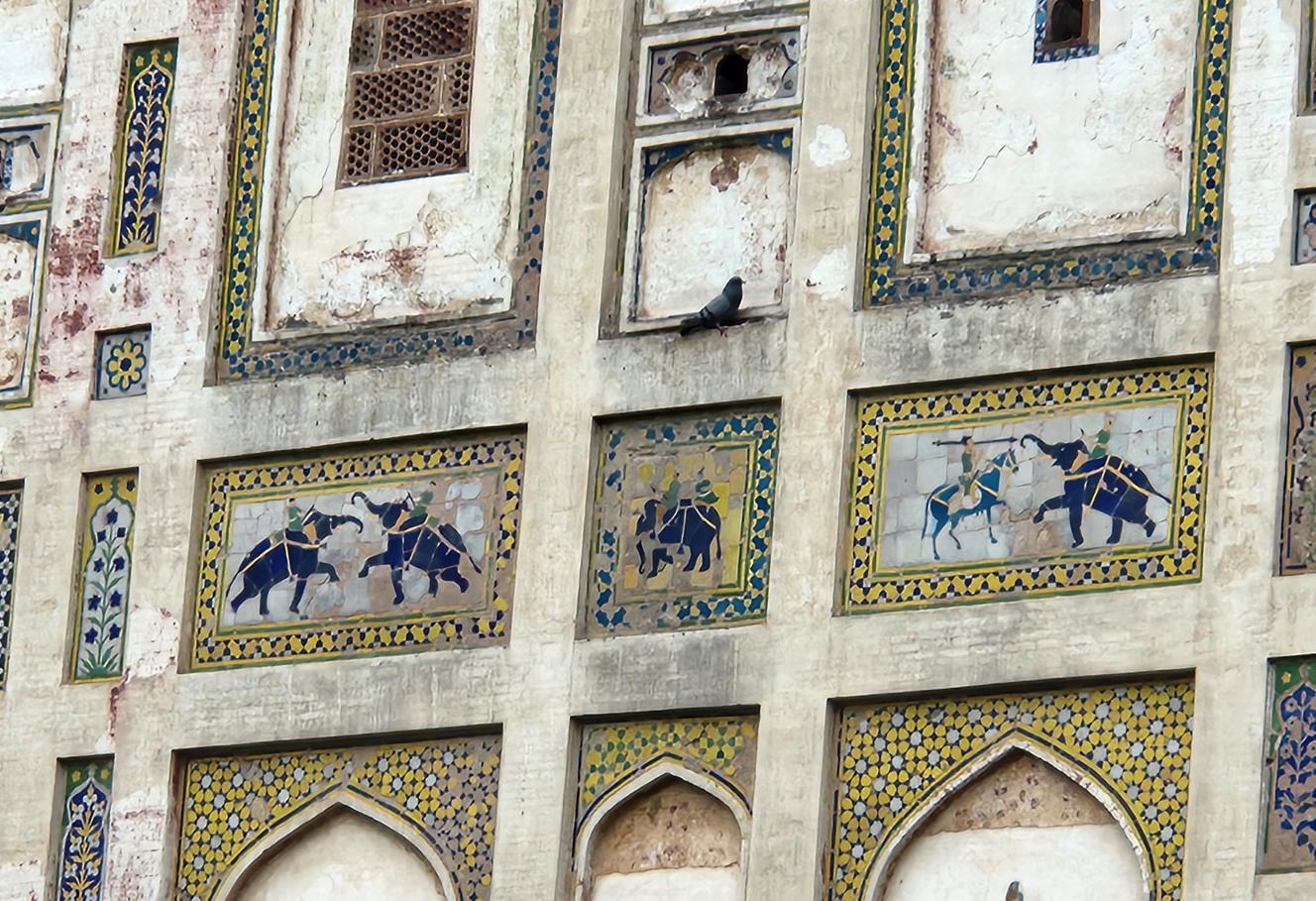
The Lahore Fort occupied our first morning. Its walls are visible from a considerable distance — thirty feet of dark brick rising from a slight eminence above the older quarters, the external surfaces covered in frescoes that have recently been partially restored with Norwegian financial assistance, their geometric patterns and figural scenes emerging from centuries of grime with the tentative quality of someone recovering from long illness.

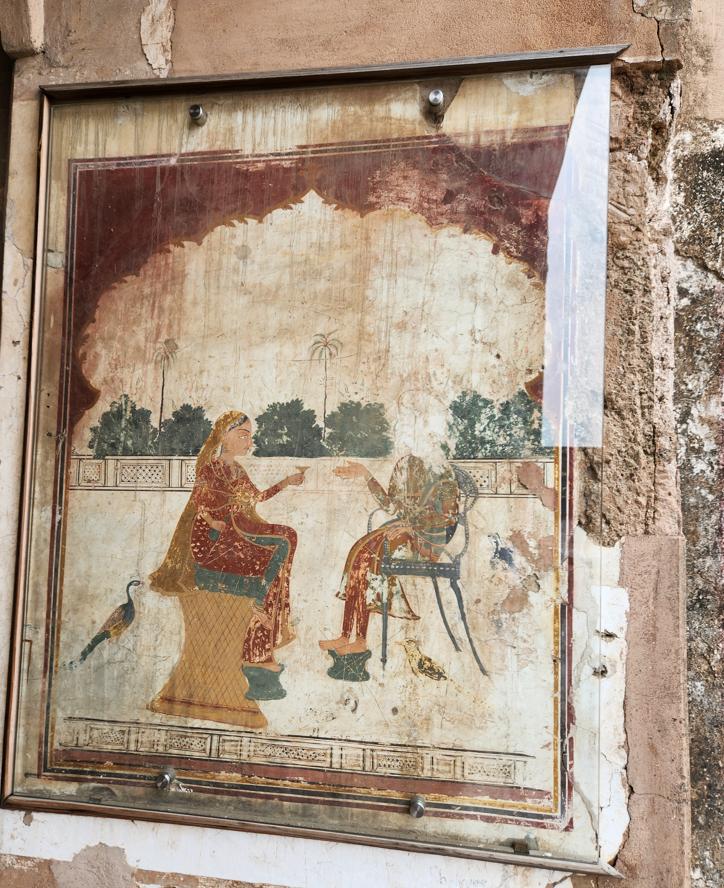
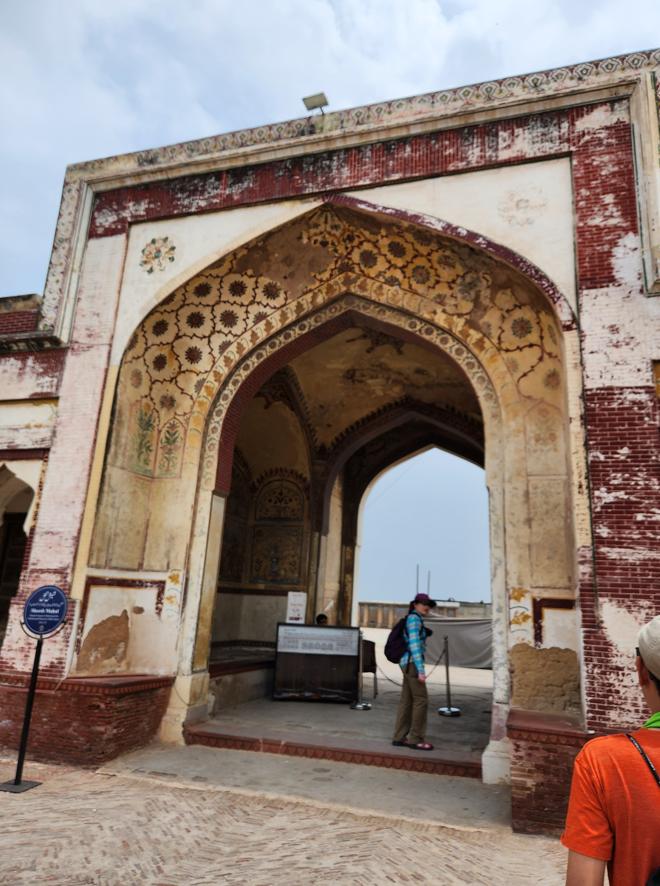
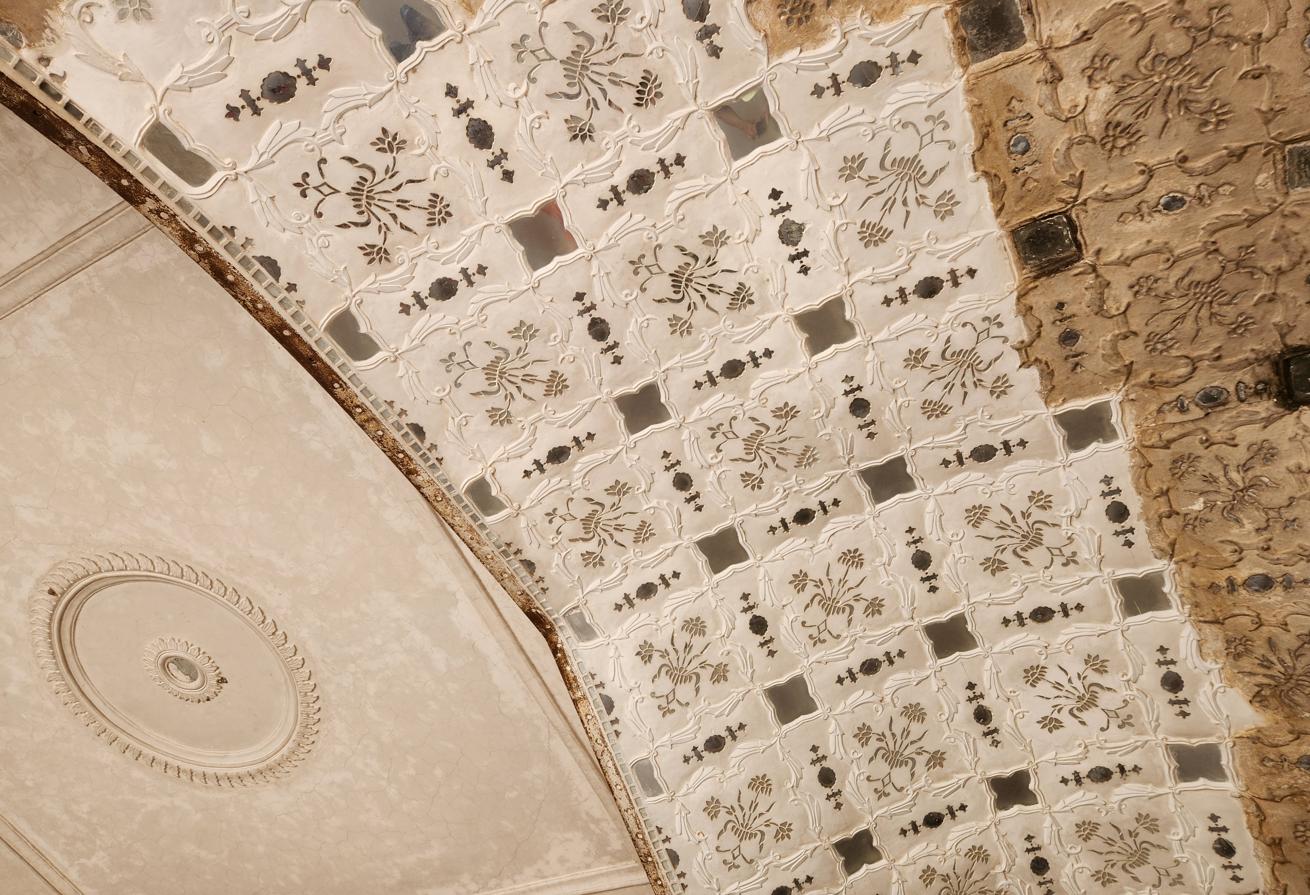
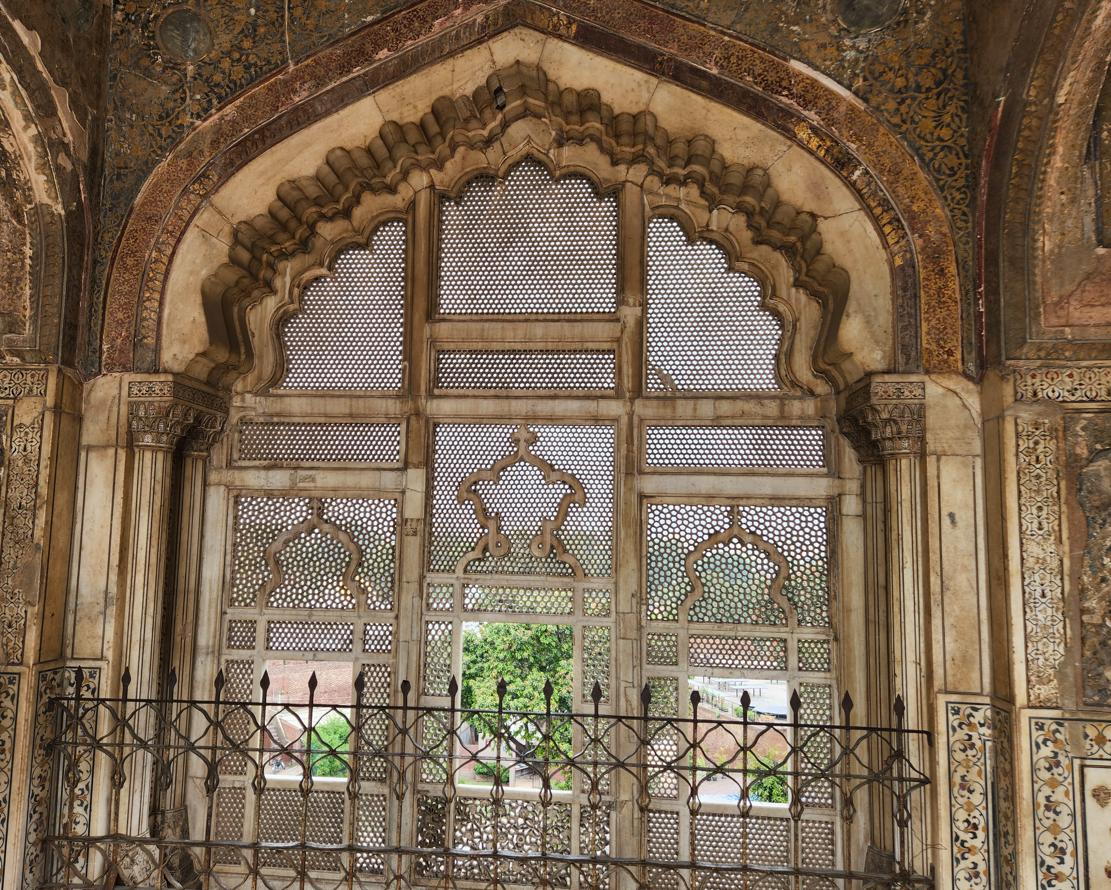
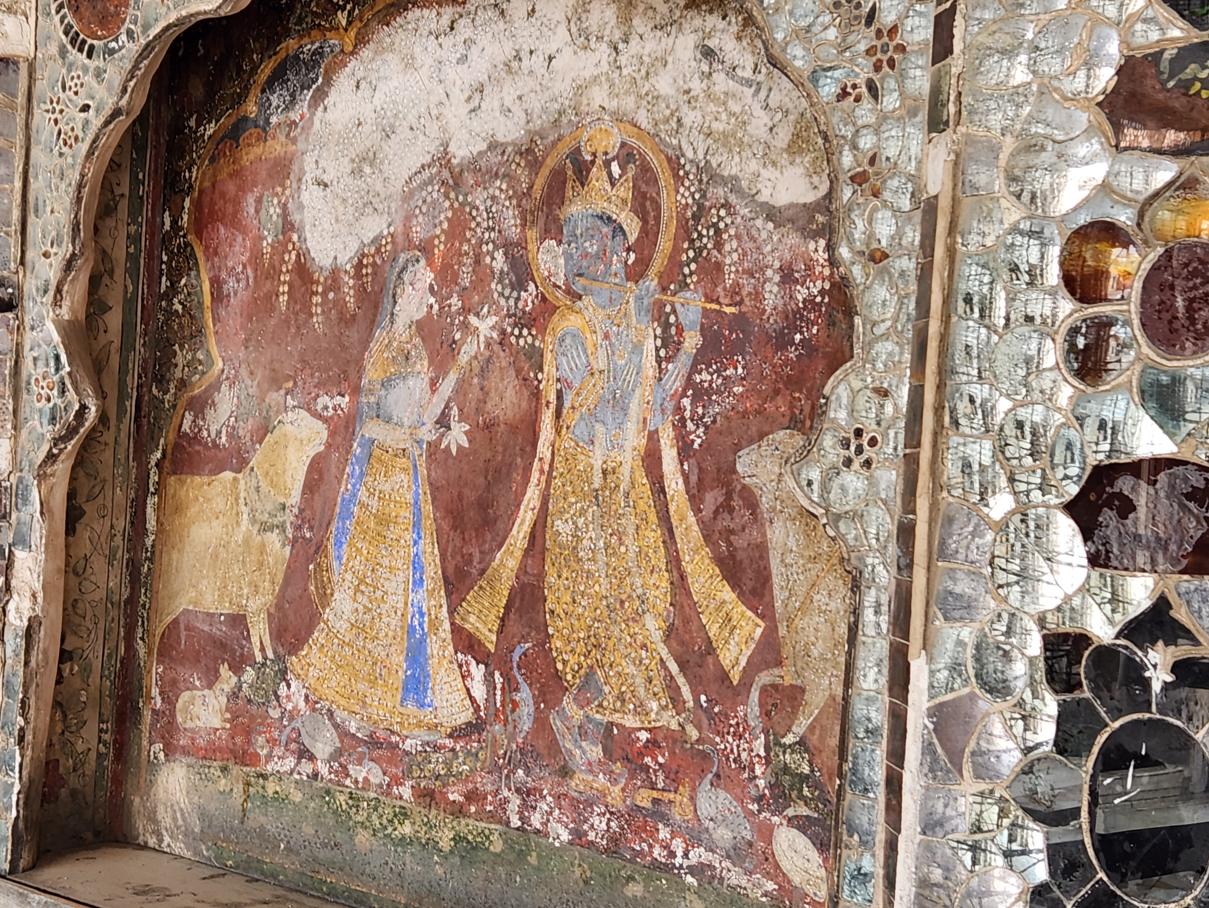
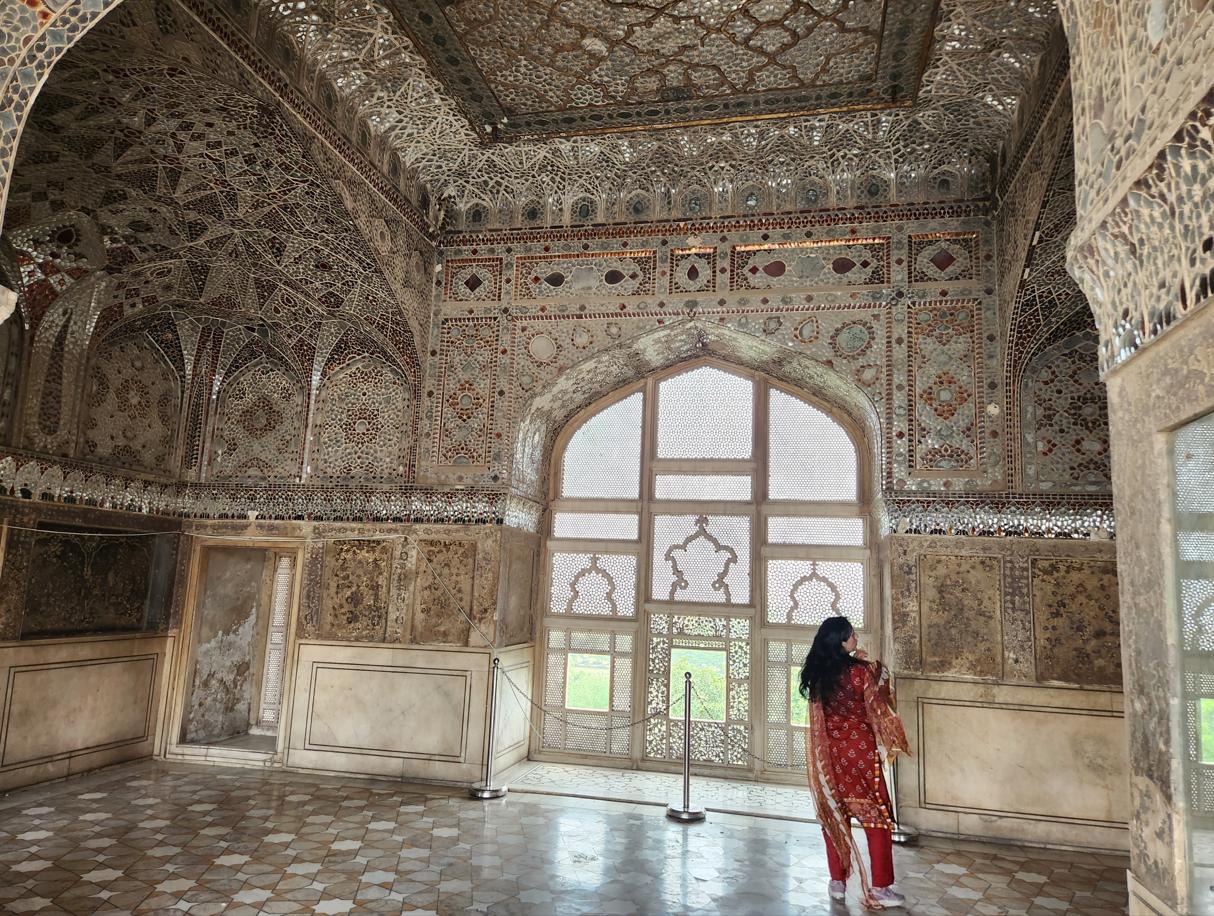
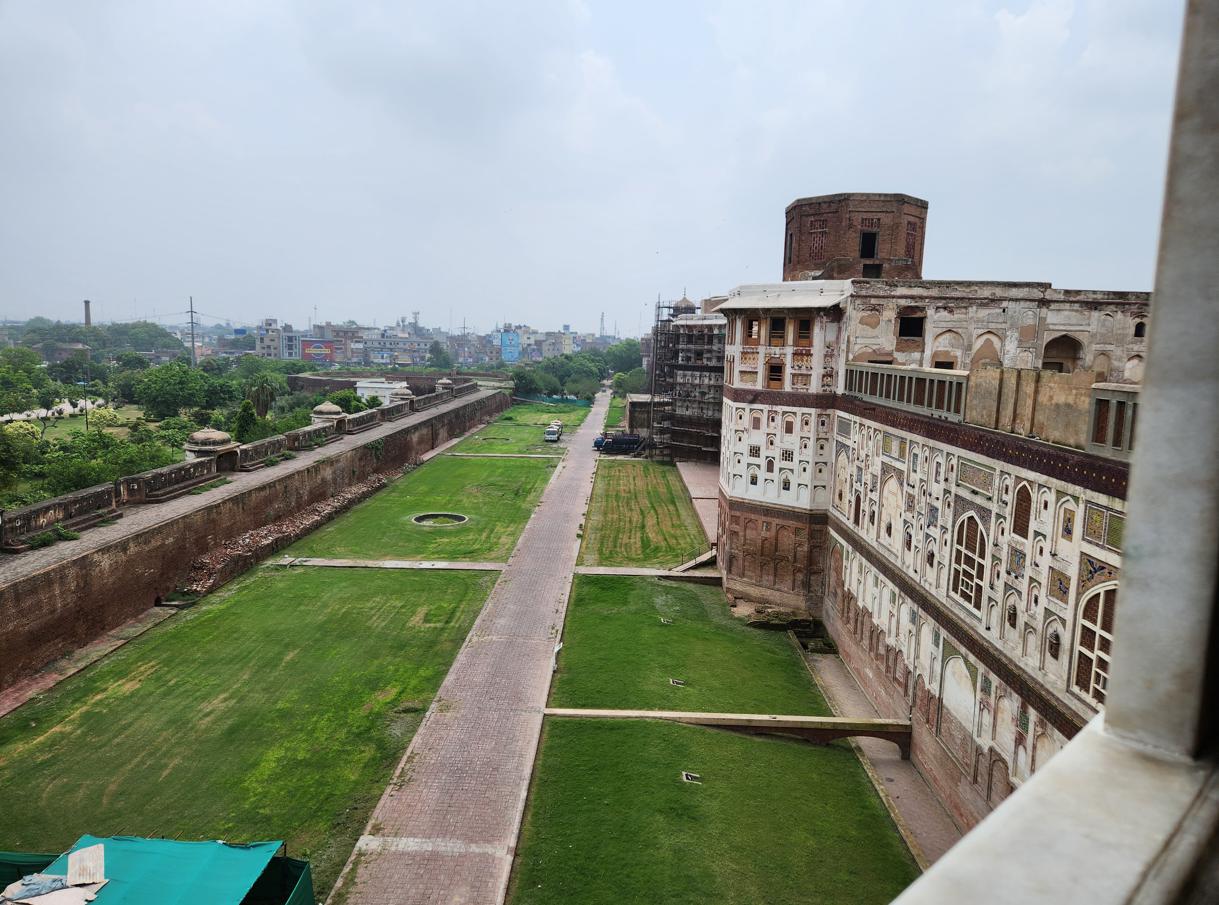
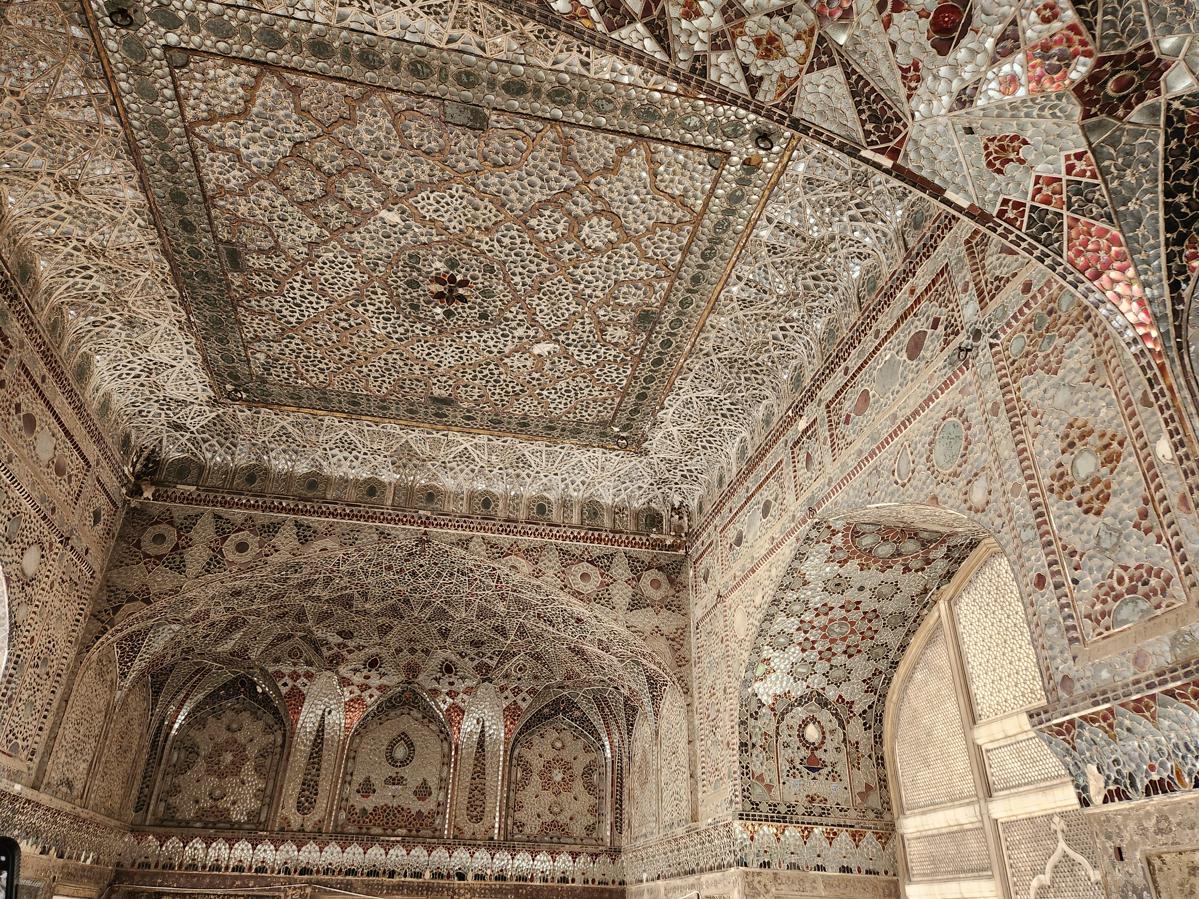
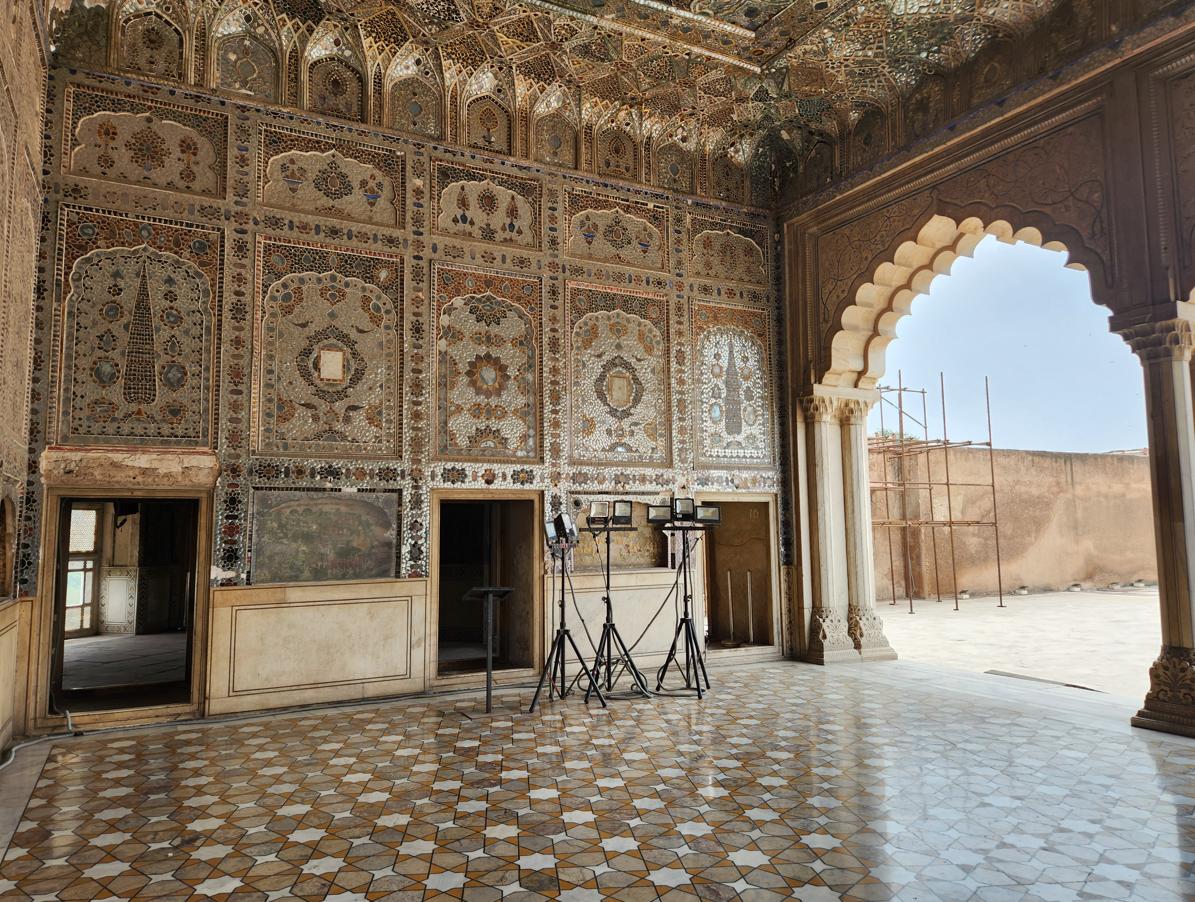
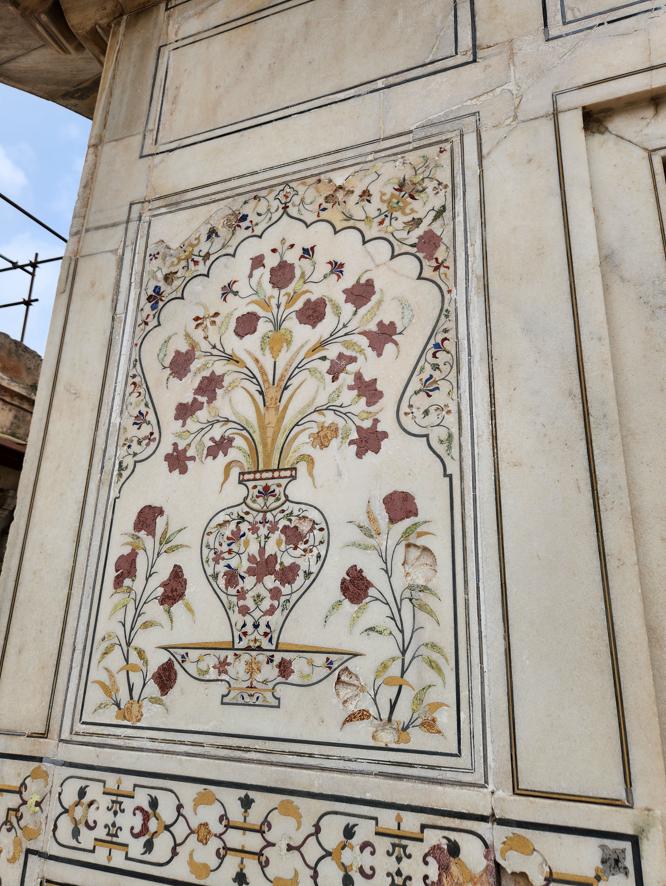
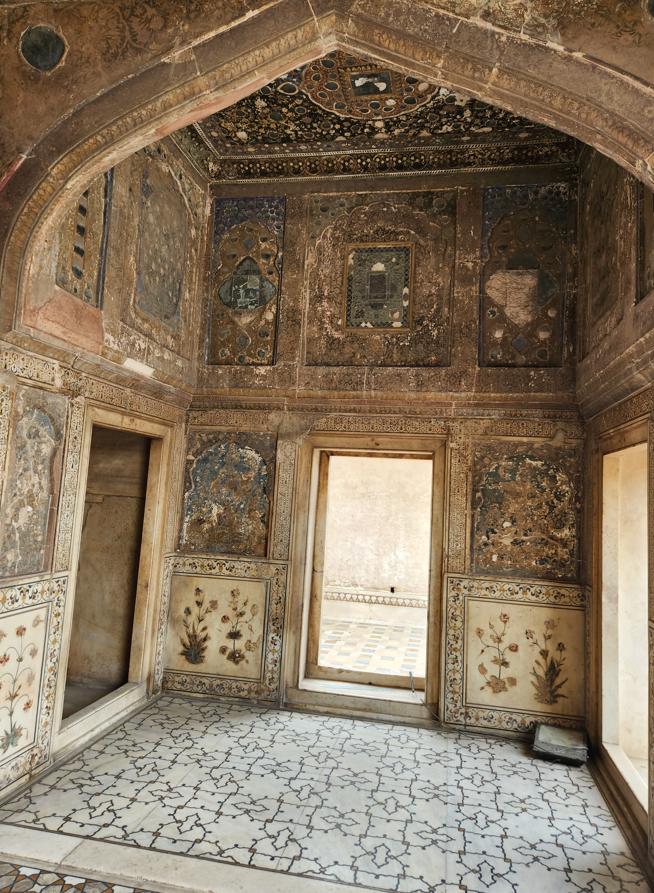
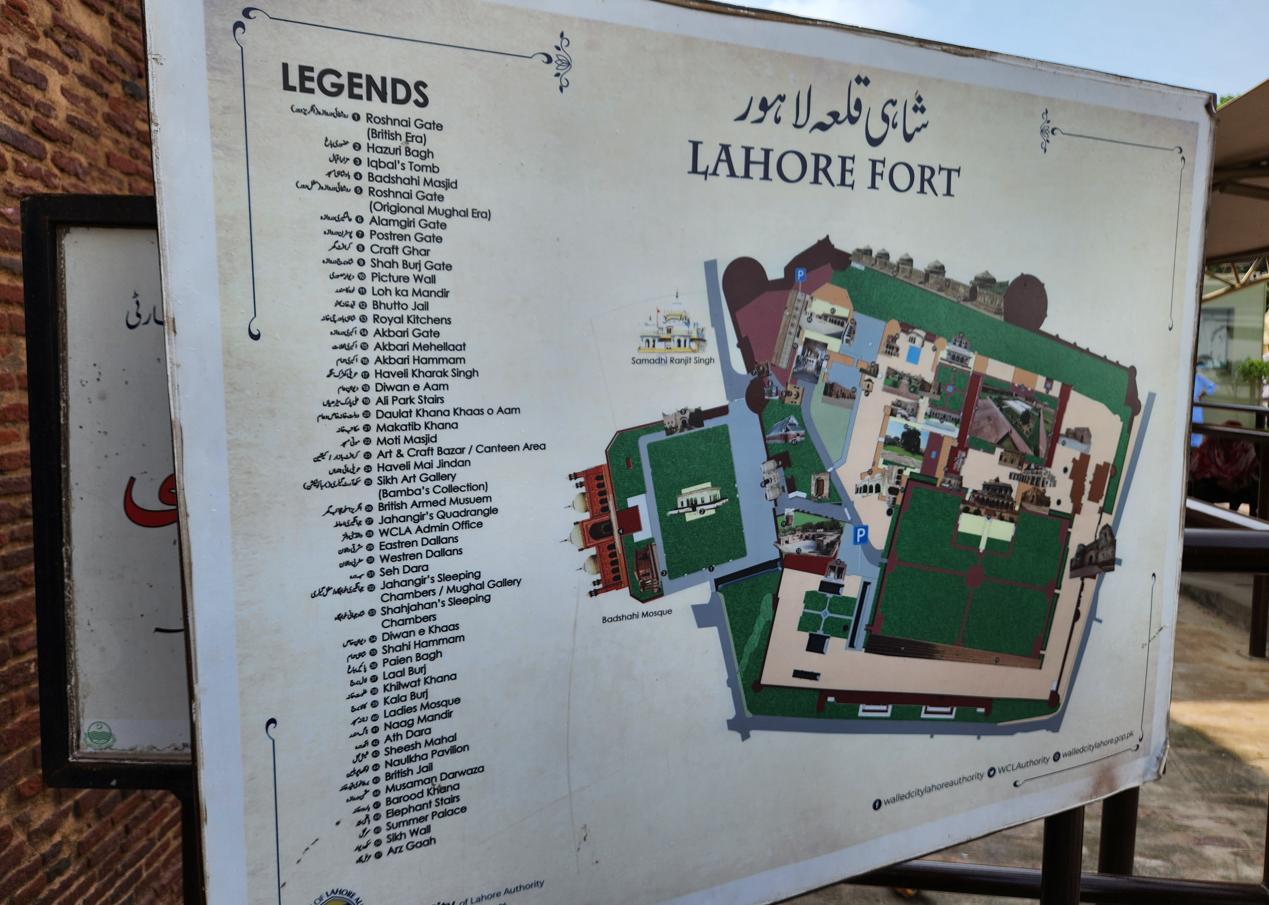
Inside, the story becomes more complicated. The fort contains twenty-one notable monuments, dating from the reign of Akbar in the sixteenth century through to the Sikh additions of the nineteenth. Many of them are magnificent in concept and ruinous in condition. Scaffolding that has clearly stood for decades. Doors padlocked against access to spaces that might or might not require protection. Kelly, who had visited the fort eighteen years earlier, was visibly disturbed by the degree to which the deterioration had continued. 'Someone told me,' she said, 'that the money comes and then it disappears. You know, like water in sand.'
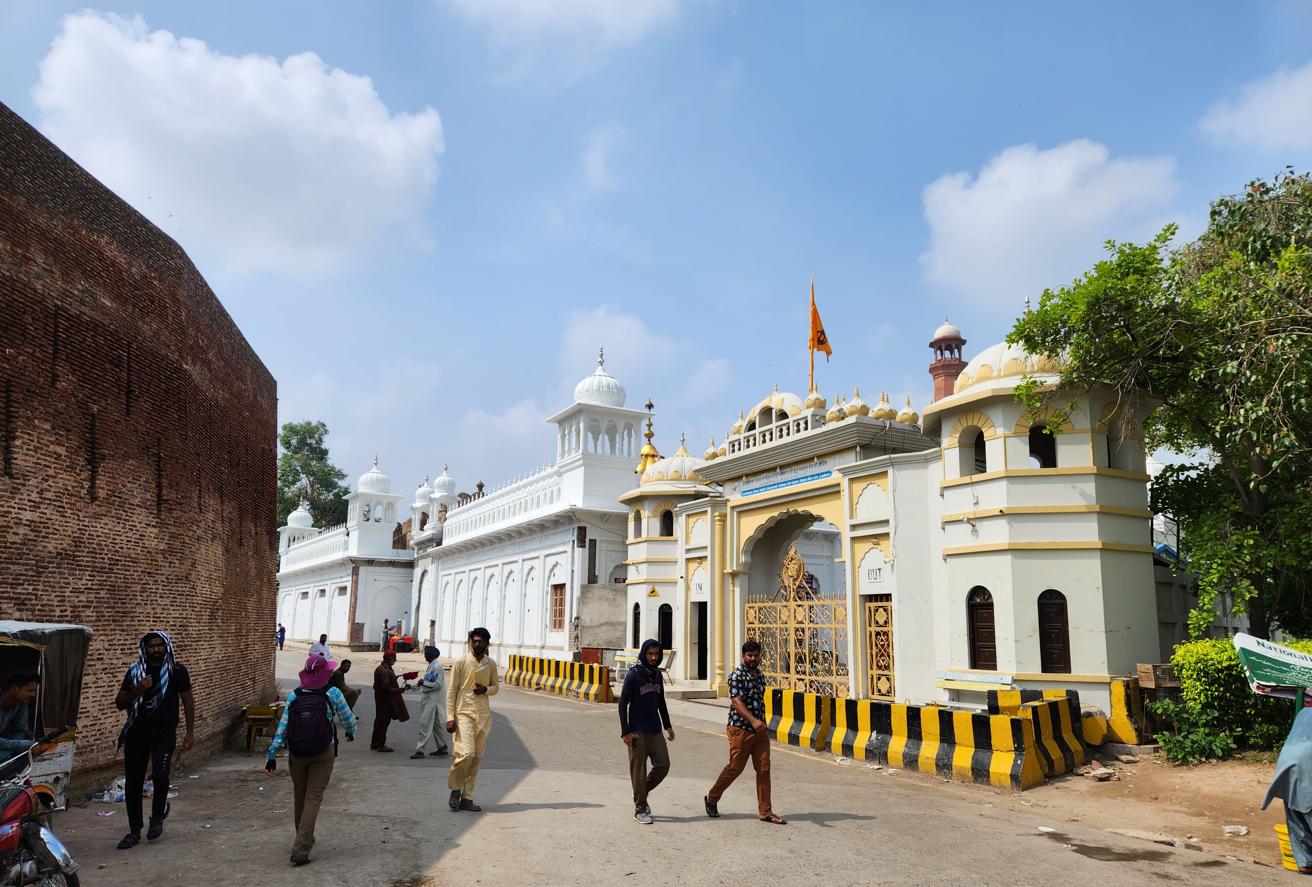
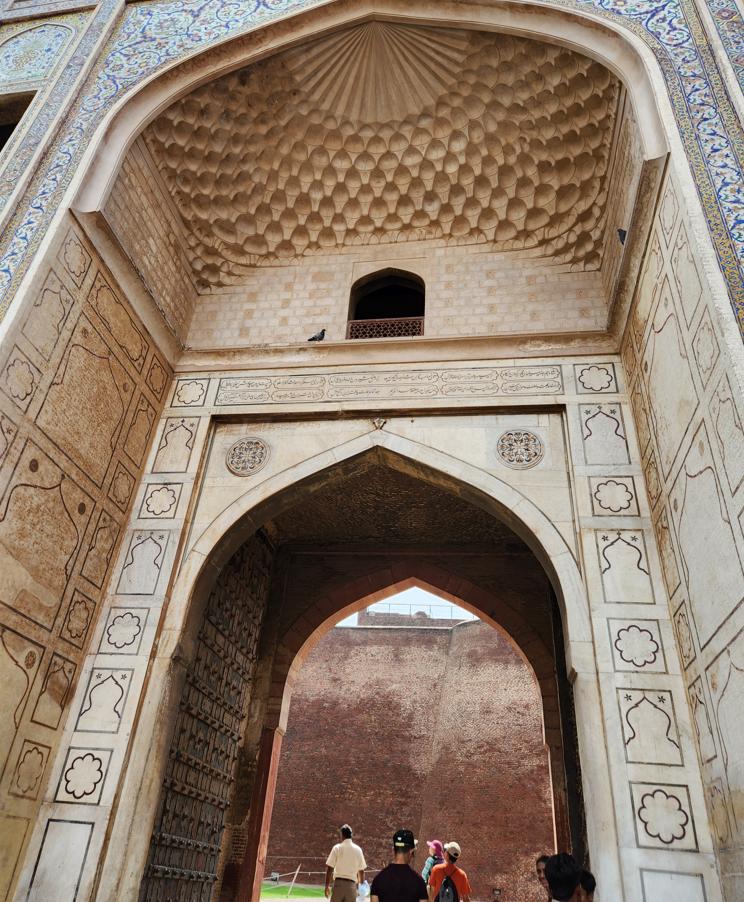
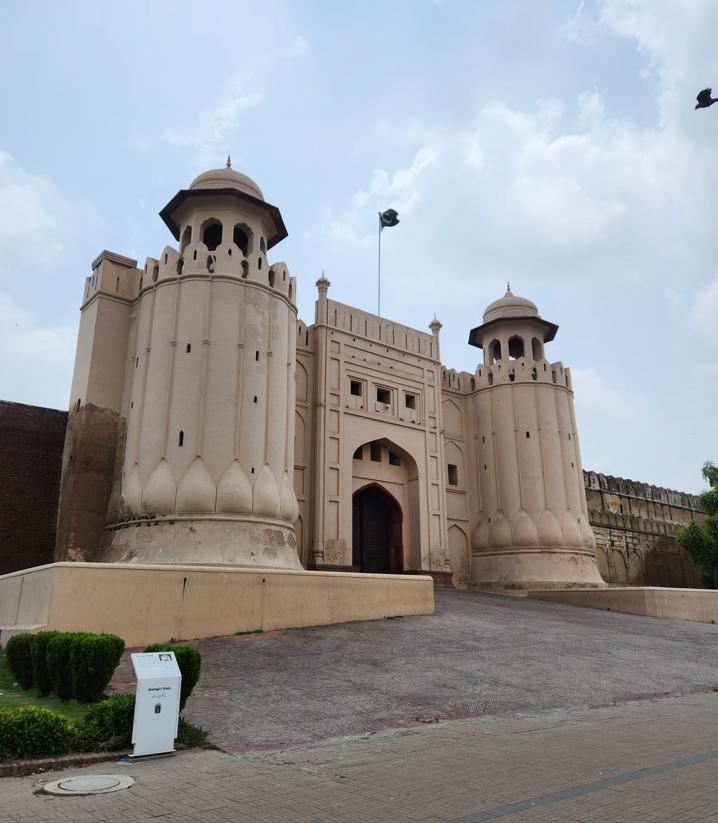
The Alamgiri Gate — the great entrance built by Aurangzeb, the last of the grand Mughal emperors, in deliberate visual dialogue with the Badshahi Mosque opposite — was magnificent. You pass through it from the bustle of the old city into the fort's precincts with the sensation of crossing a threshold not just in space but in time: the noise drops away, the light changes, and the mathematics of Mughal architecture imposes itself on the senses.
The Badshahi Mosque and the Imperial Dream
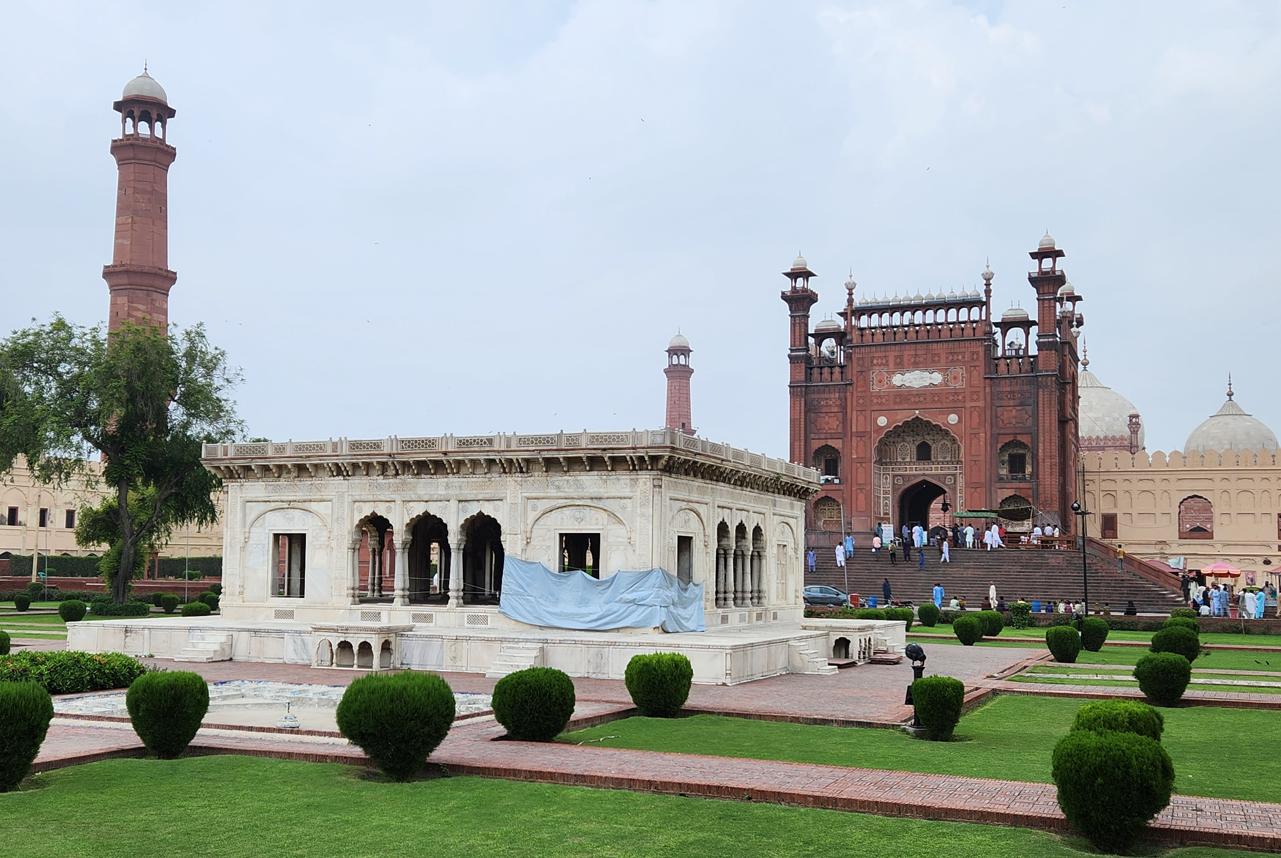
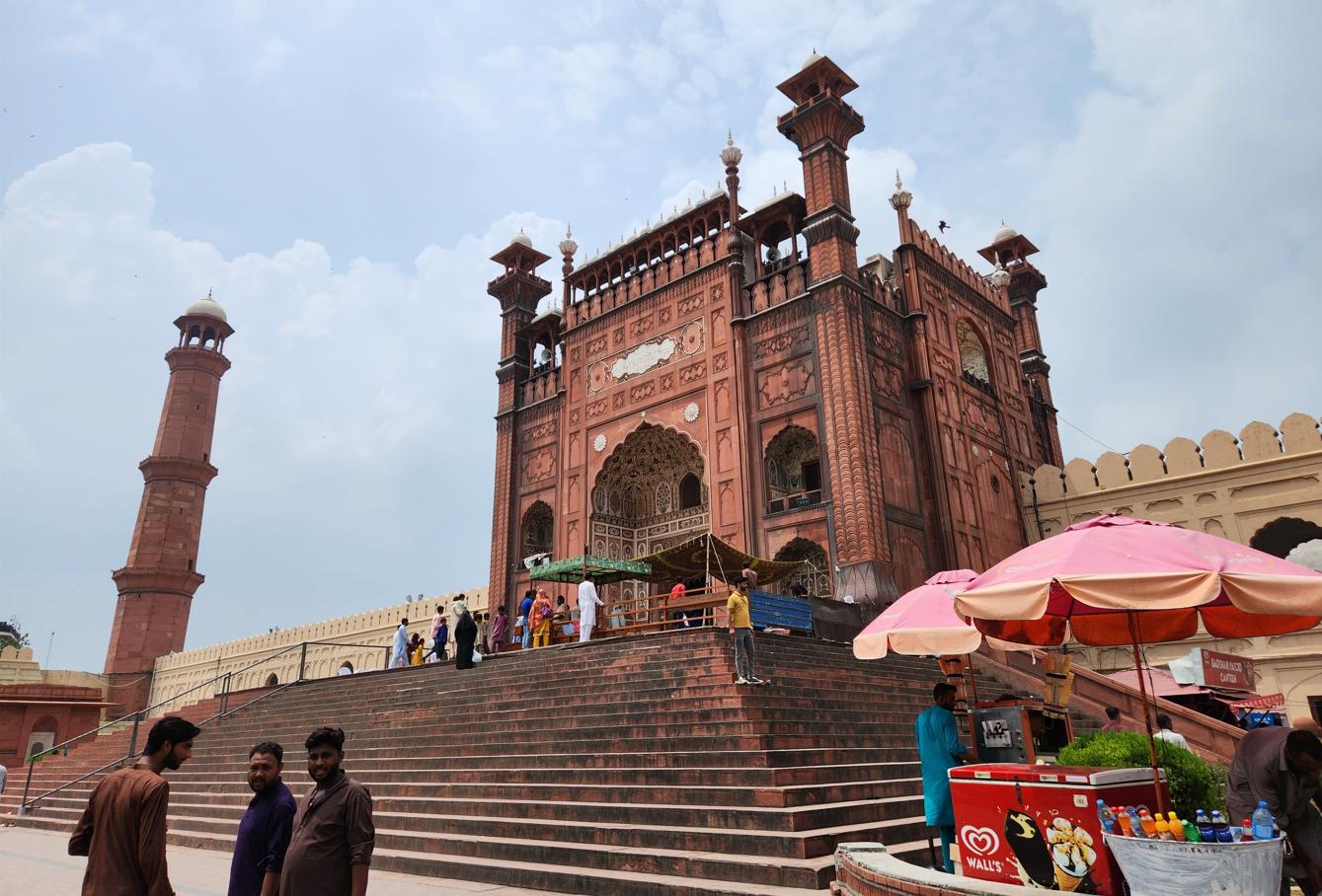
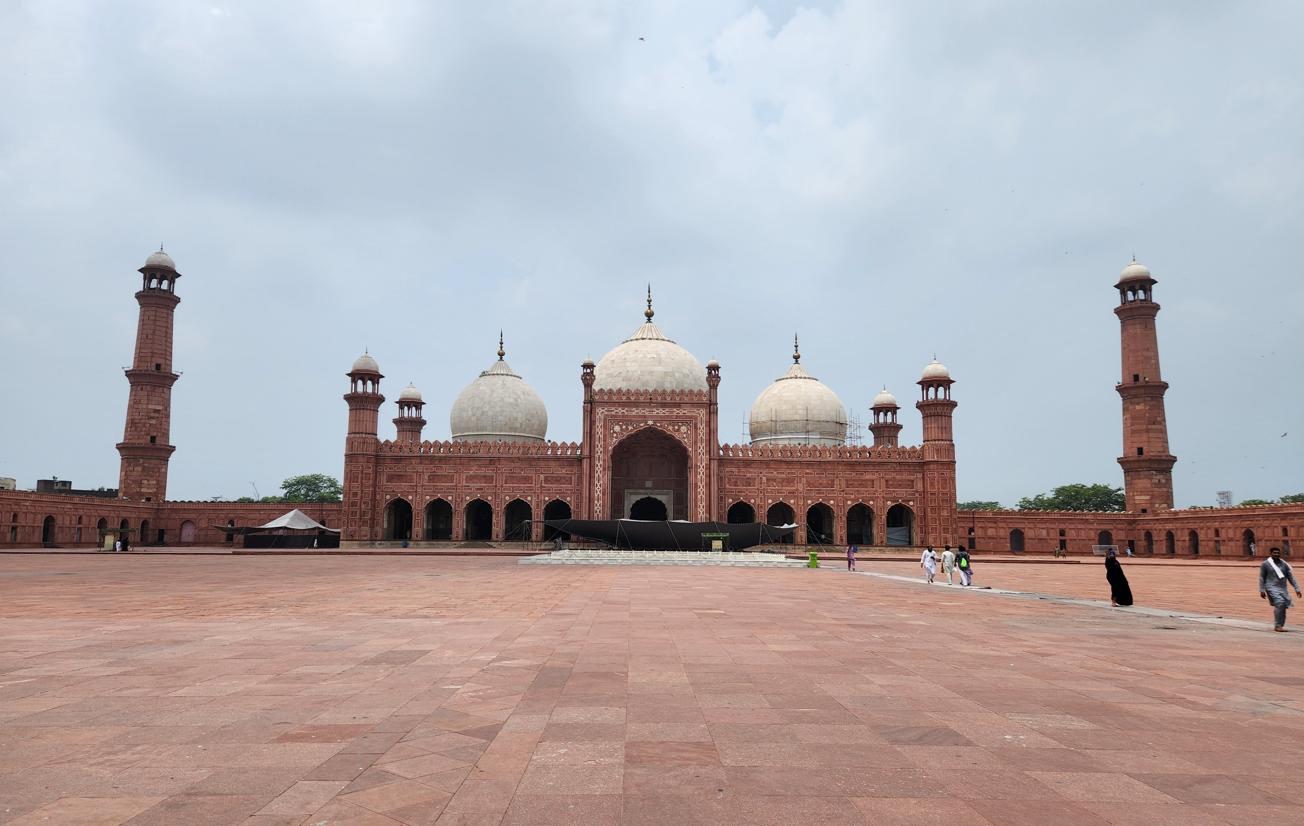
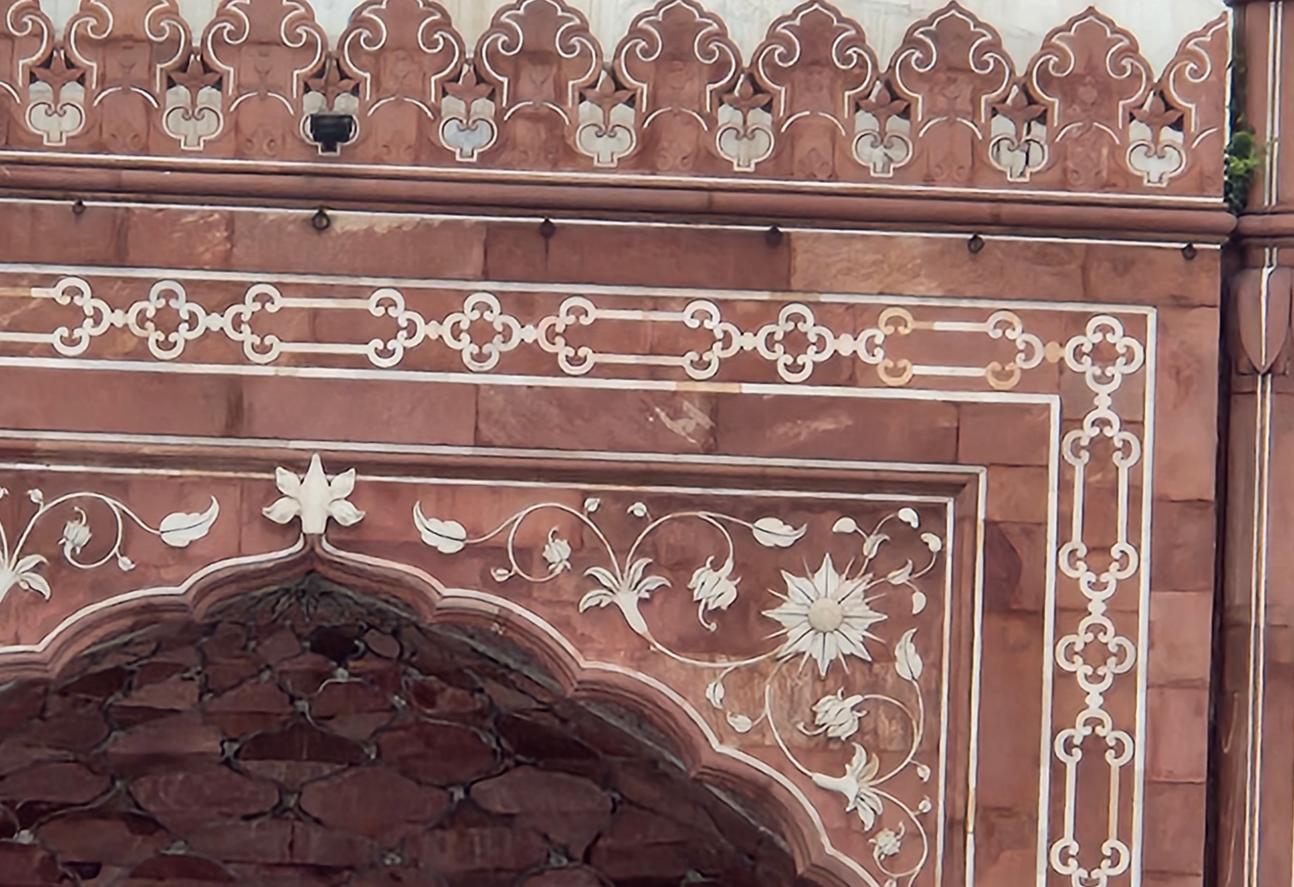
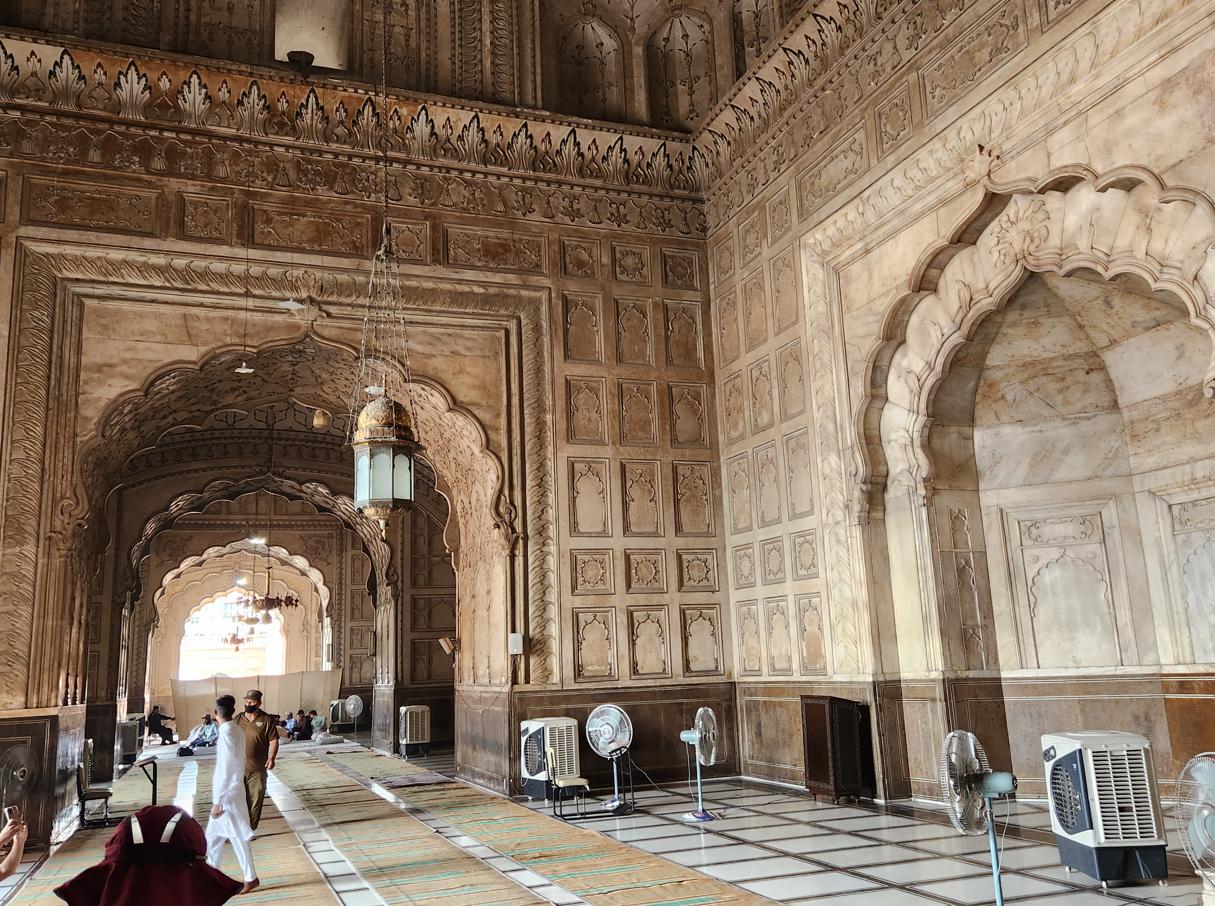
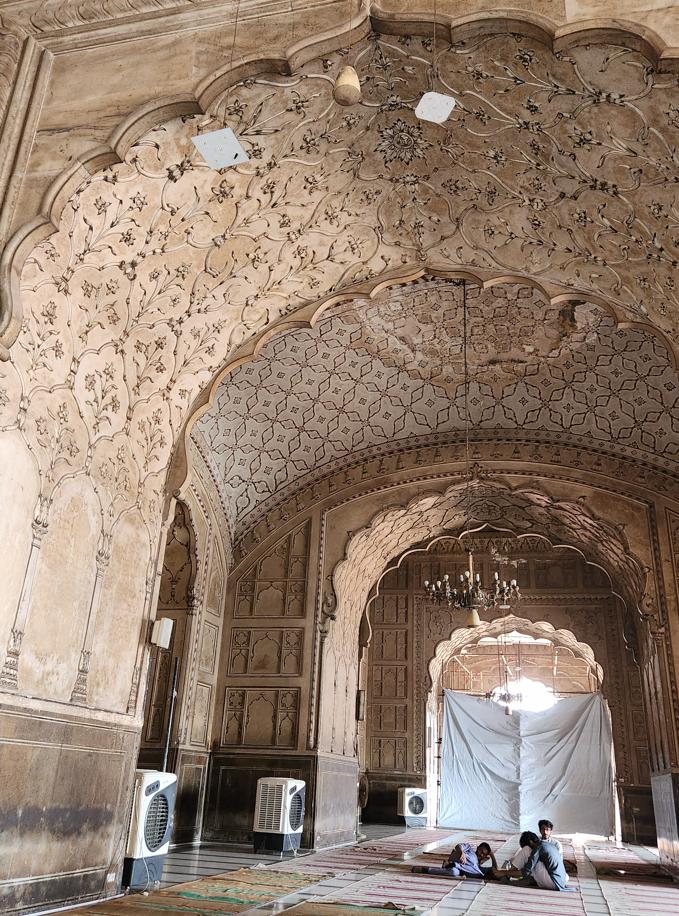
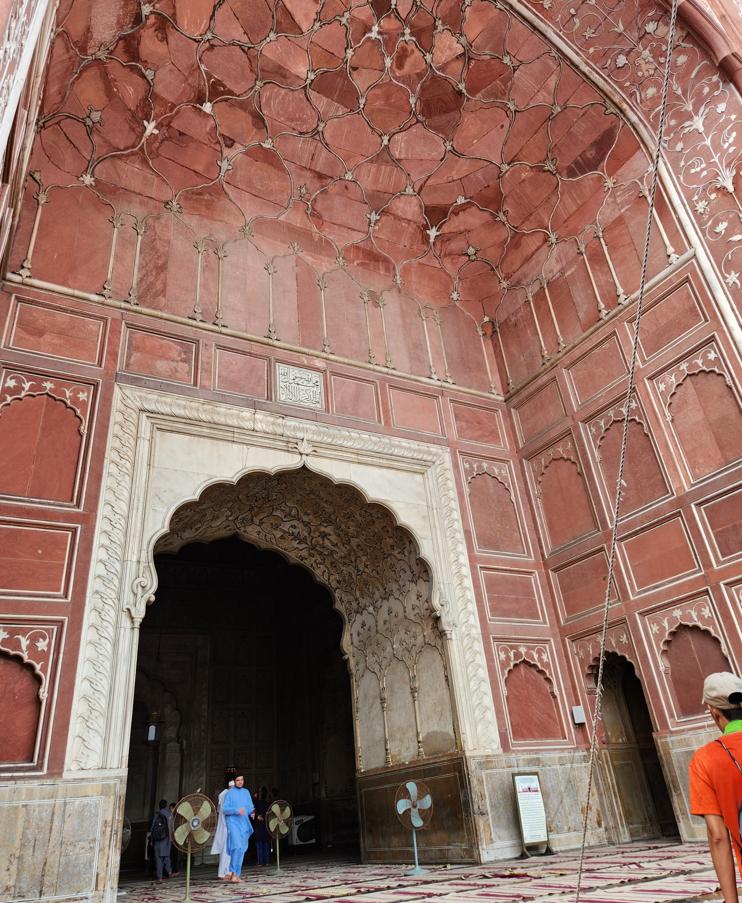
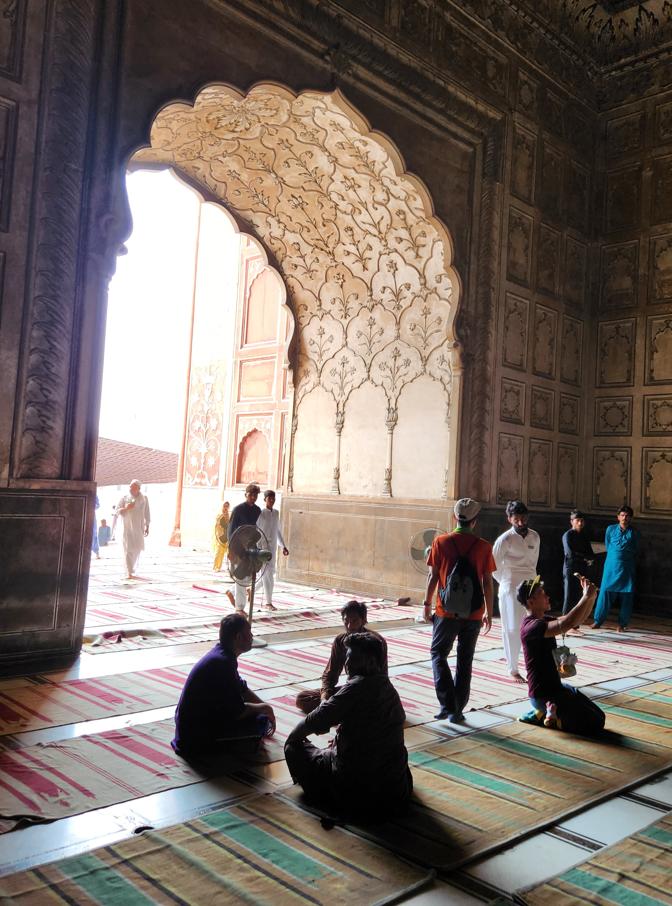
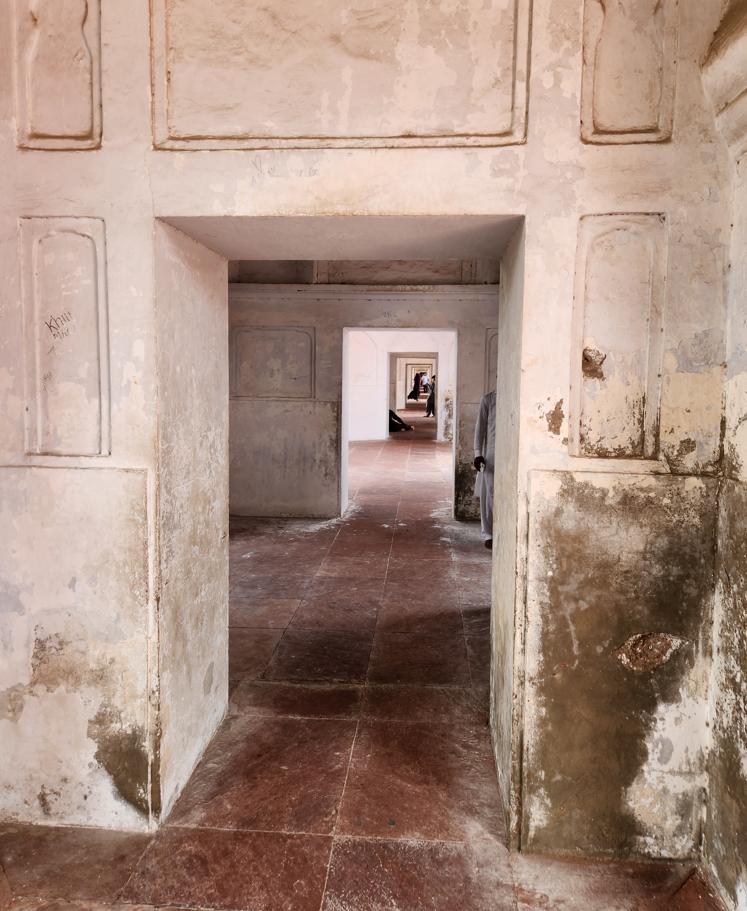
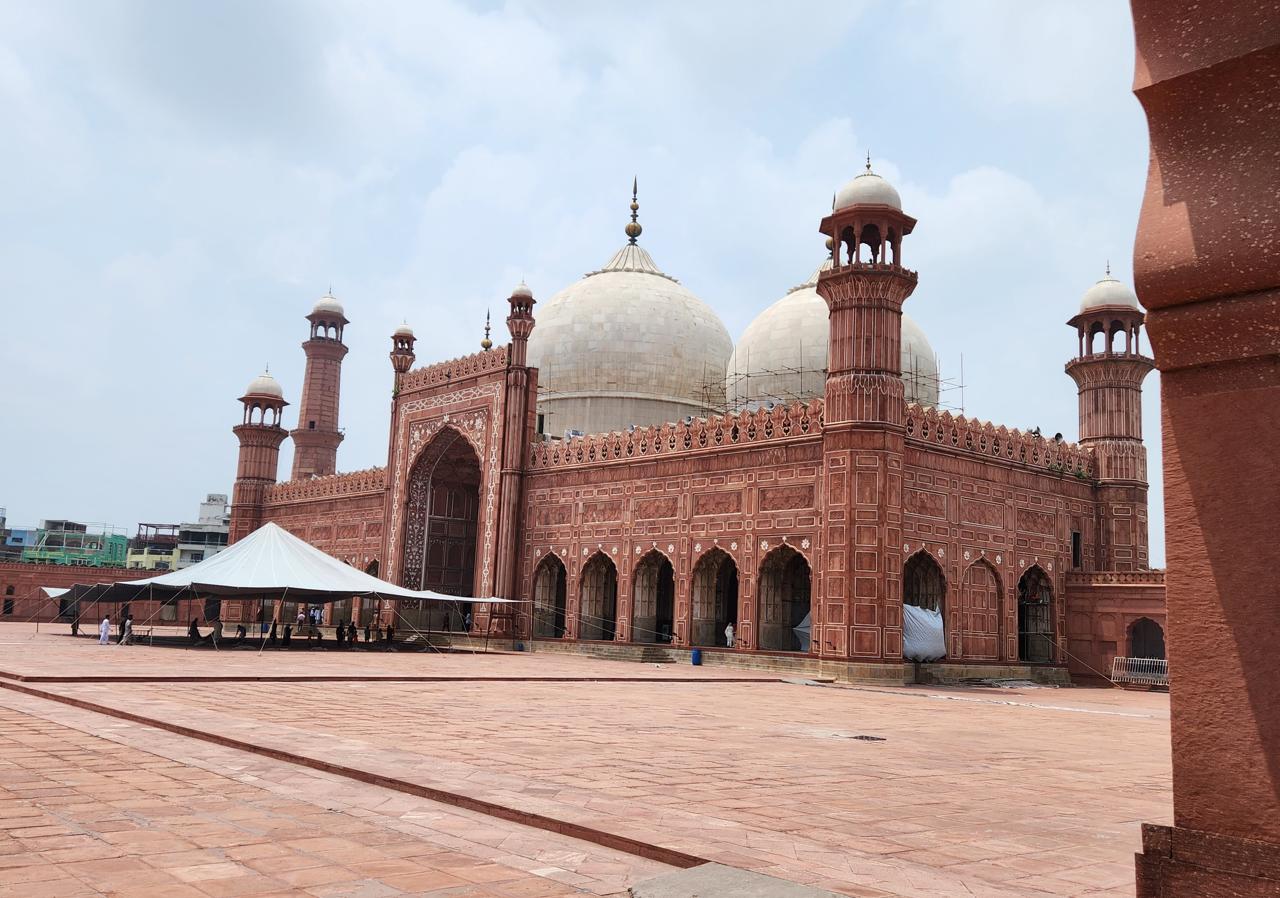
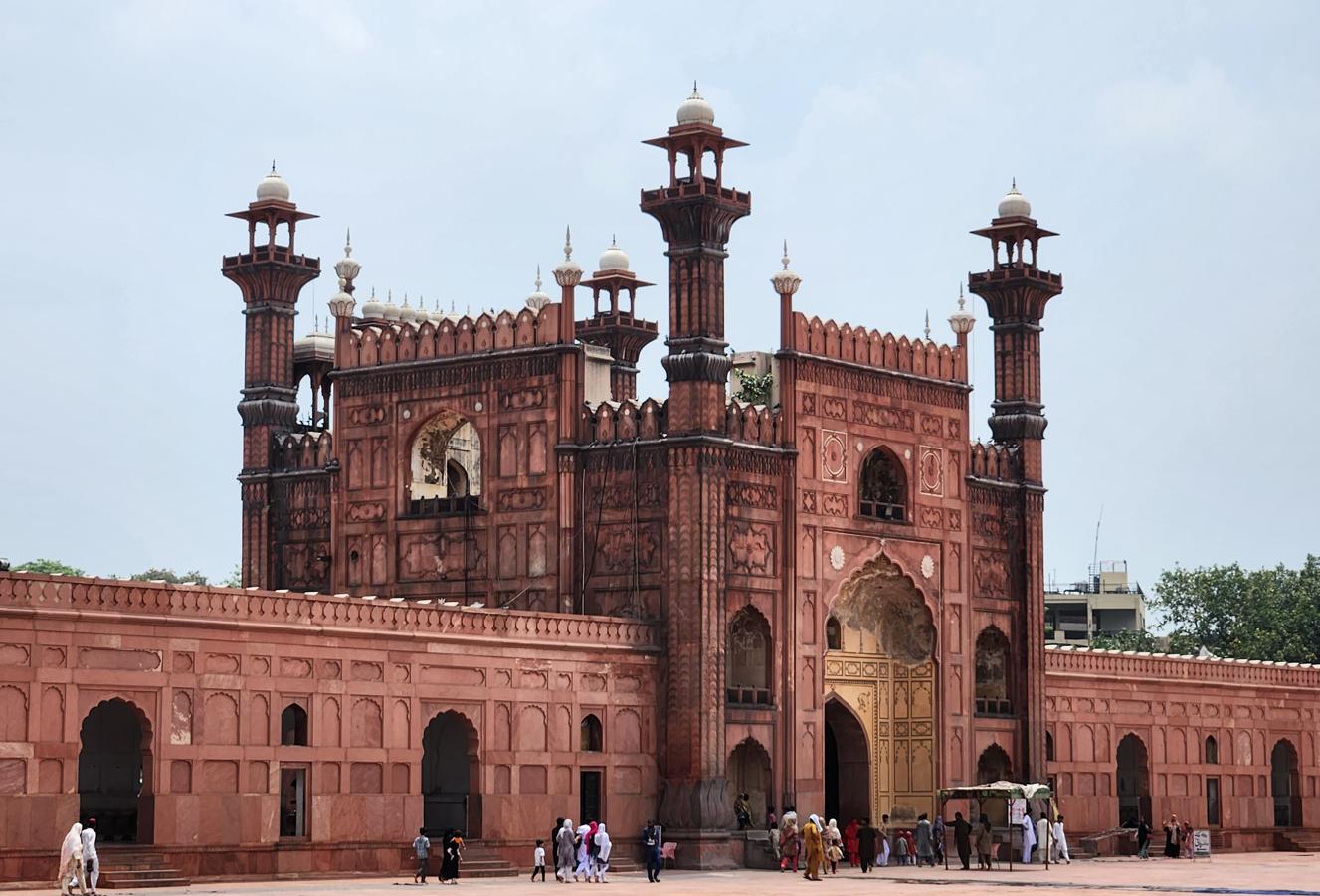
The Badshahi Mosque is, after Faisal Mosque in Islamabad and the Masjid-e-Tooba in Karachi, the third largest mosque in Pakistan. But it is the most magnificent. Built by Aurangzeb between 1671 and 1673, its red sandstone with marble inlay has the specific quality of Mughal red that is unlike any other shade of that colour in the world: warm but not orange, deep but not brown, catching the setting sun in a way that suggests the building is lit from within.
The courtyard can hold one hundred thousand worshippers. On the afternoon we visited, it held perhaps three thousand, and the space created by their absence was itself impressive: a vast plain of white marble that shimmered with the heat, the four minarets rising at its corners like exclamations in brick.
We removed our shoes and walked across the courtyard in bare feet on the marble, which was hot enough to require a purposeful stride, and entered the main prayer hall through a gateway whose arched ceiling was covered in alternating panels of plaster relief and calligraphy.
Aurangzeb was the least sympathetic of the great Mughals — iconoclastic, fanatical by the standards of his more ecumenical predecessors, personally responsible for the destruction of Hindu temples and the execution of the Sikh Guru Tegh Bahadur. And yet the mosque he built is the most generous of buildings: it does not demand anything of you except that you enter and be present. Architecture, at its best, transcends its patron's character.
The Wazir Khan Mosque: Seven Years in the Making
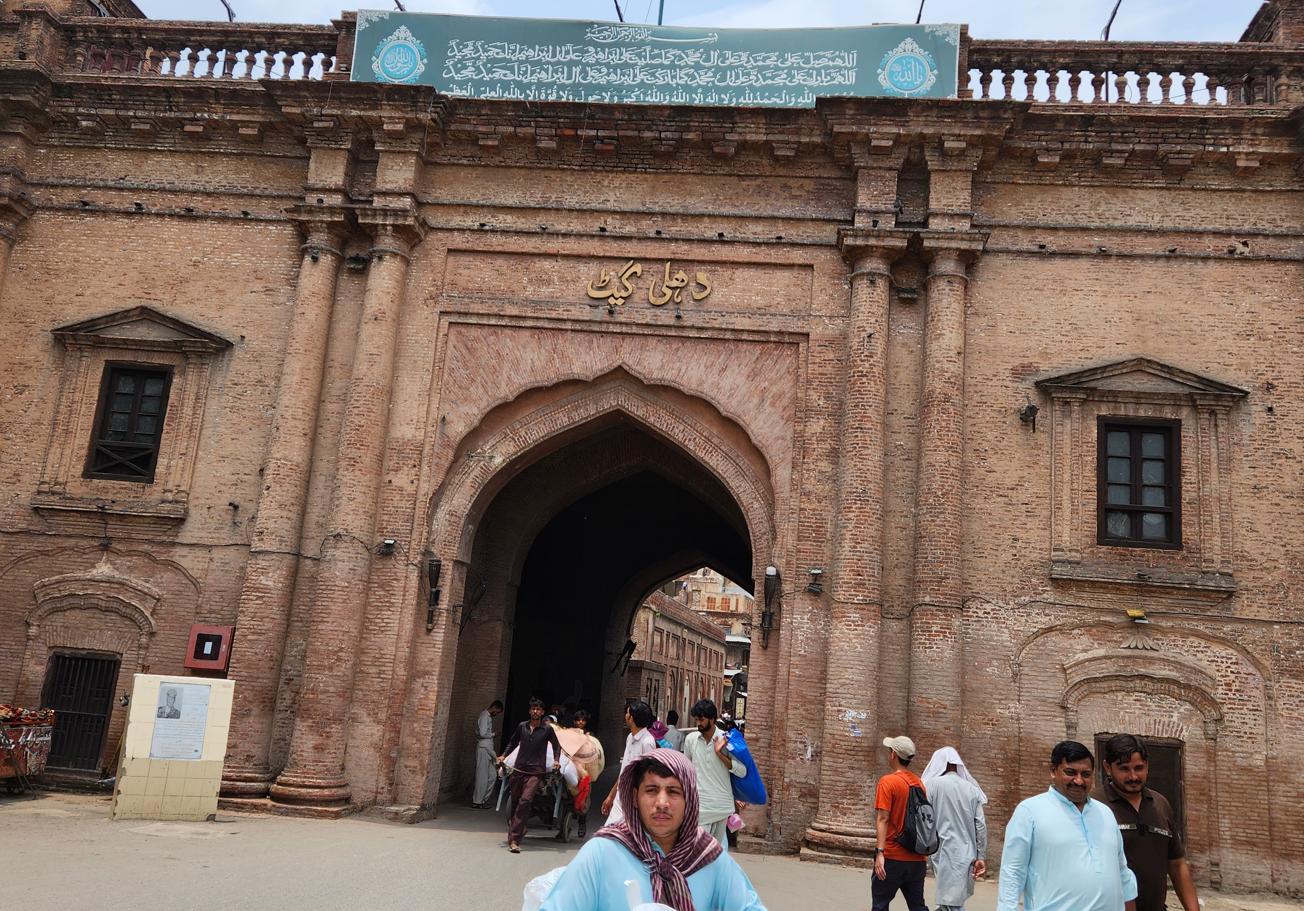
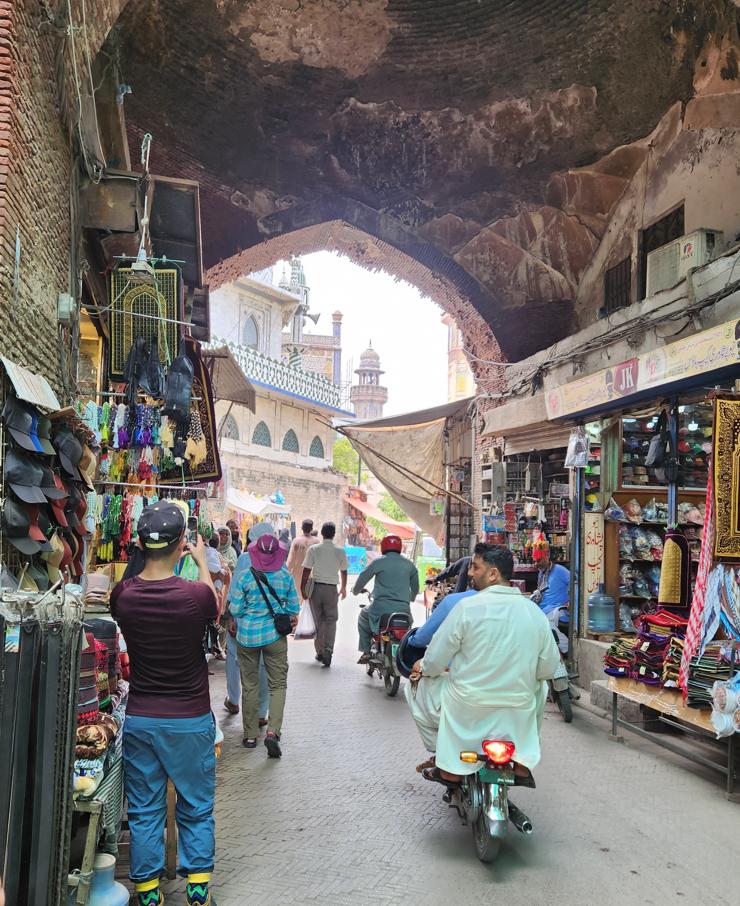
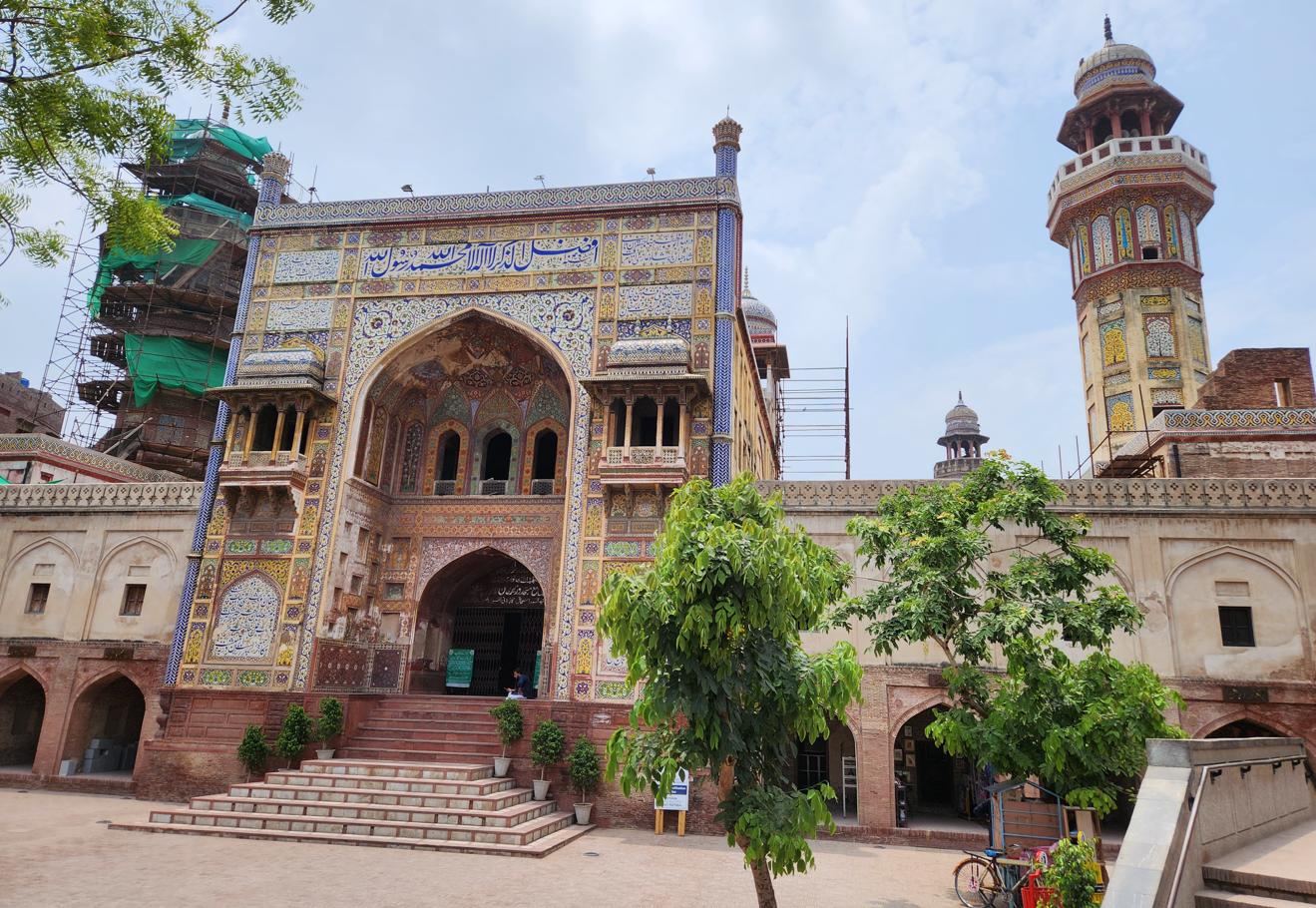
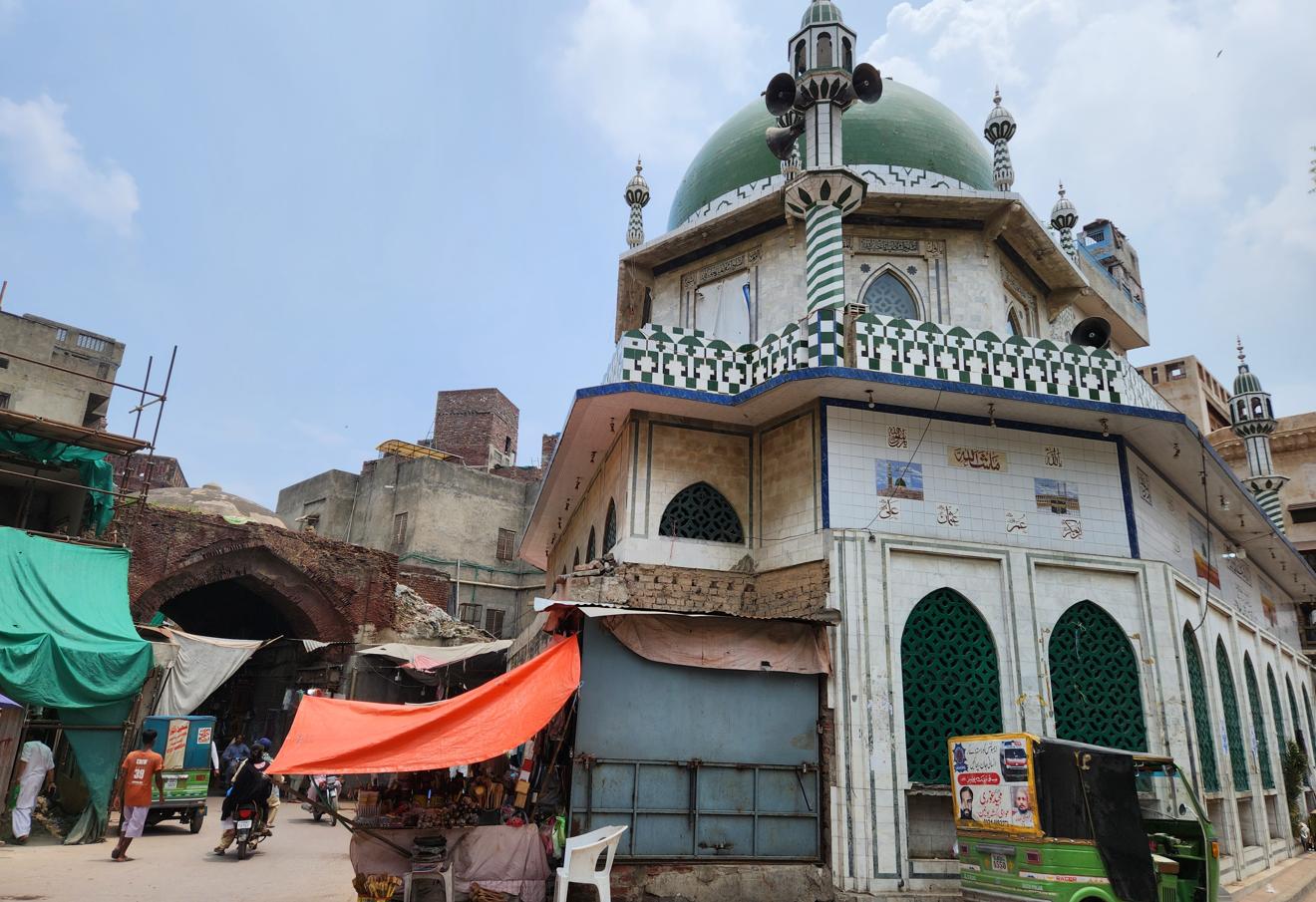
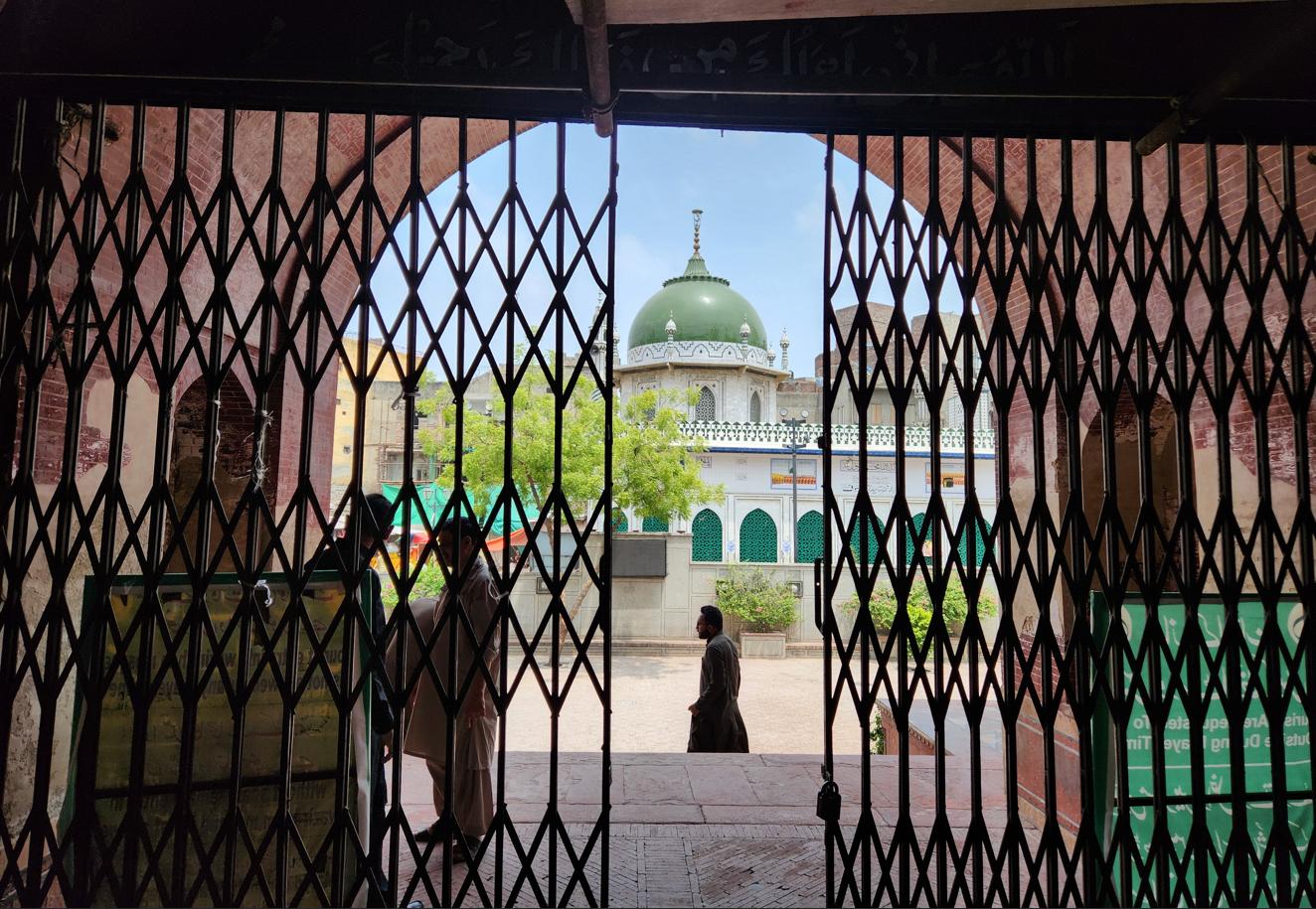
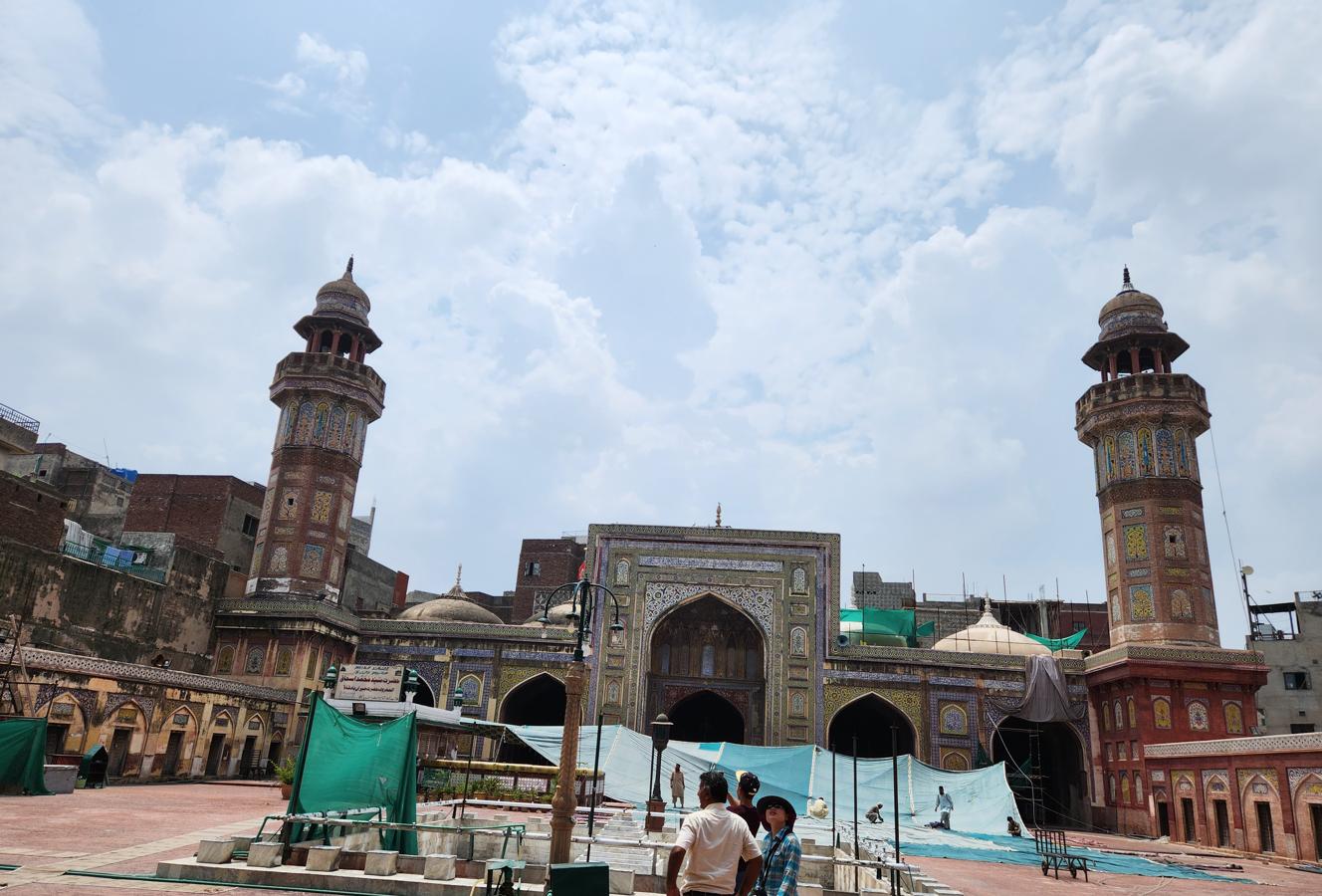
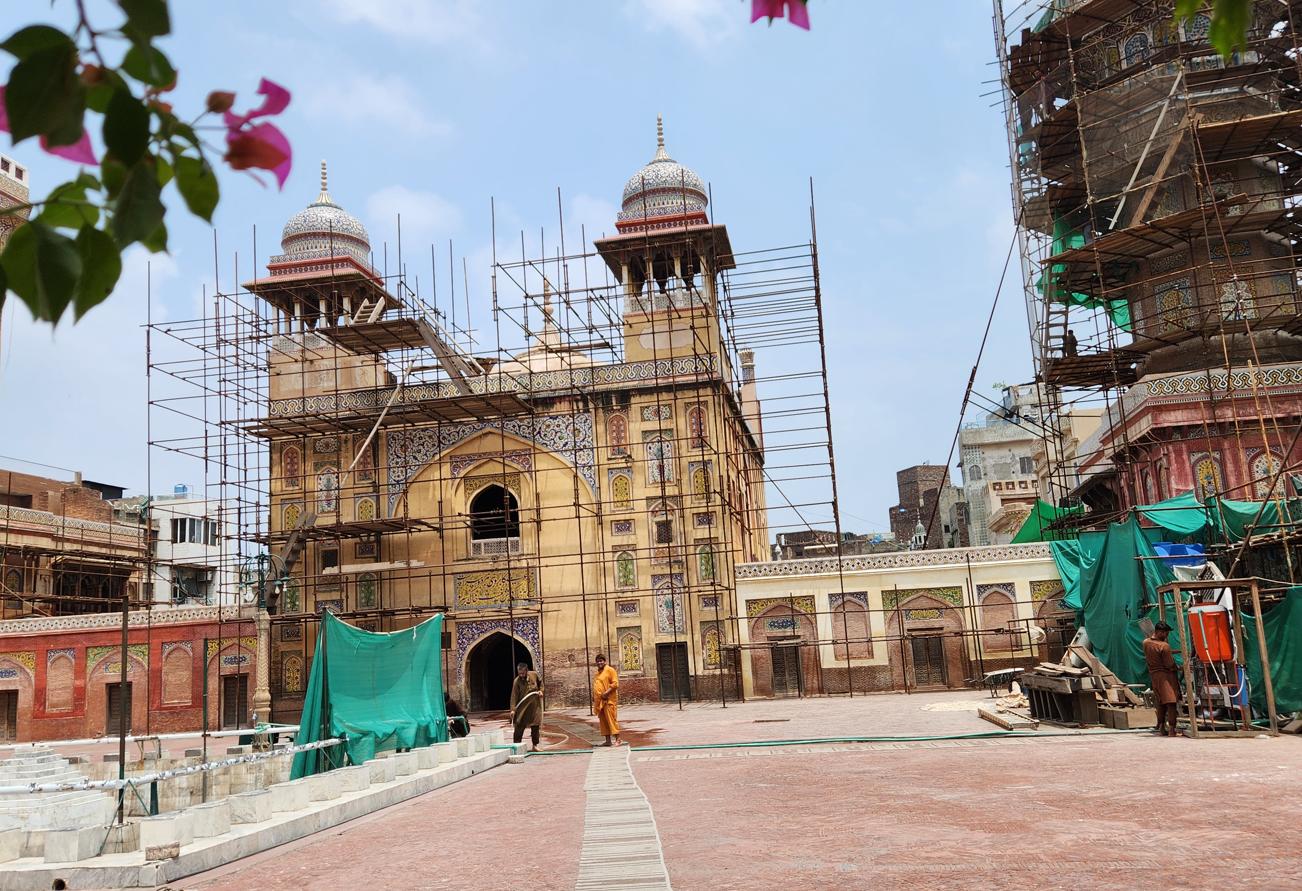
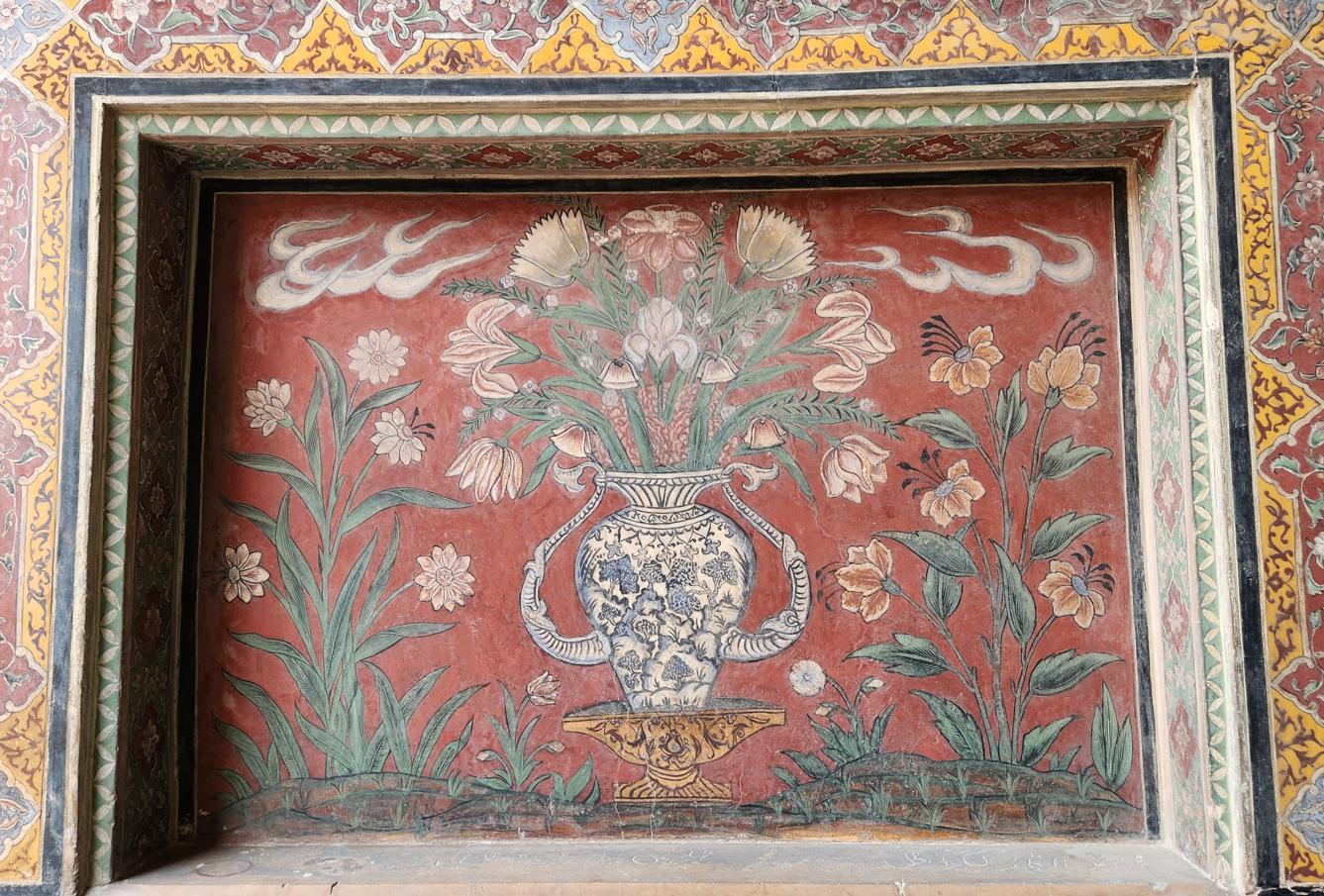
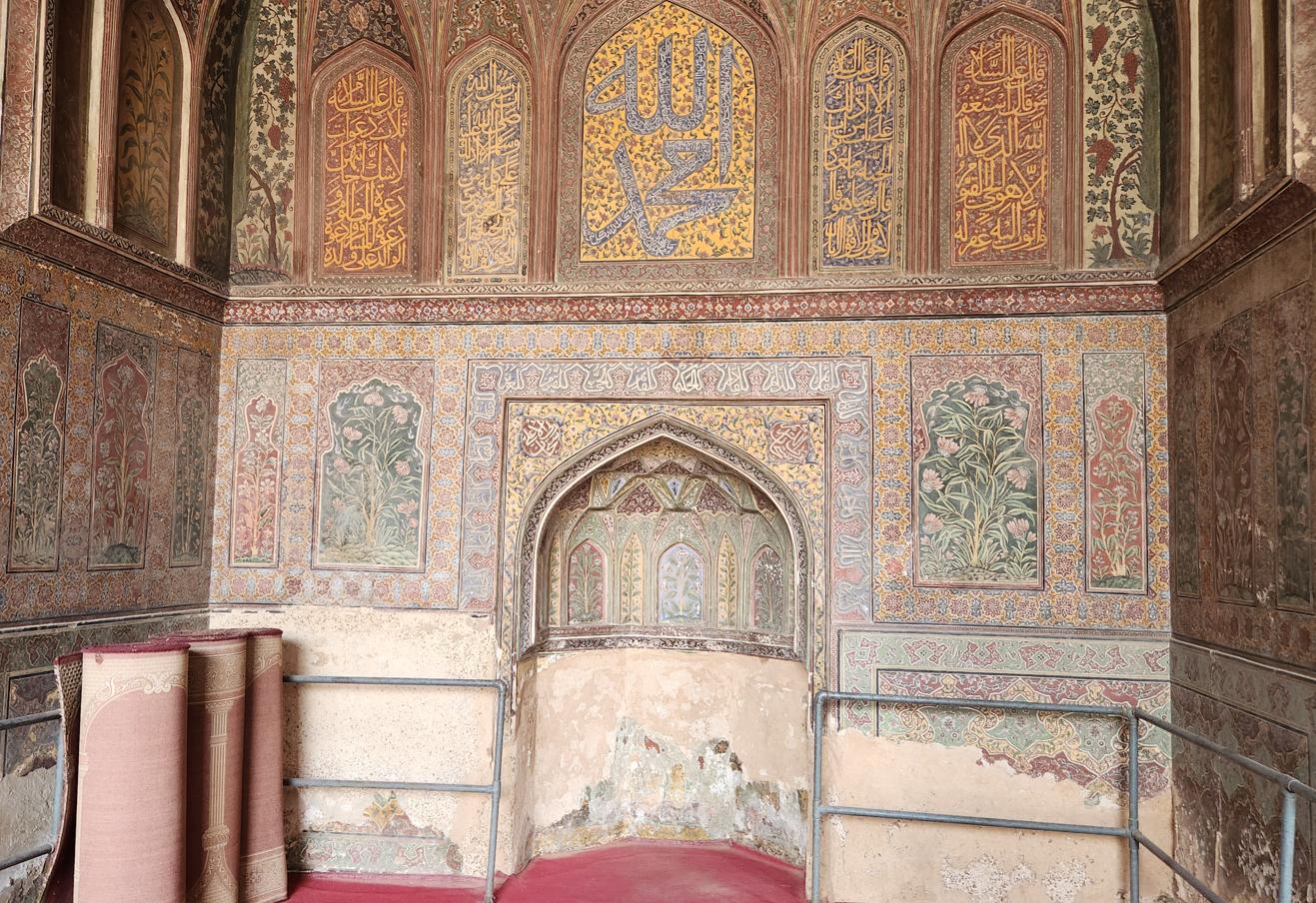
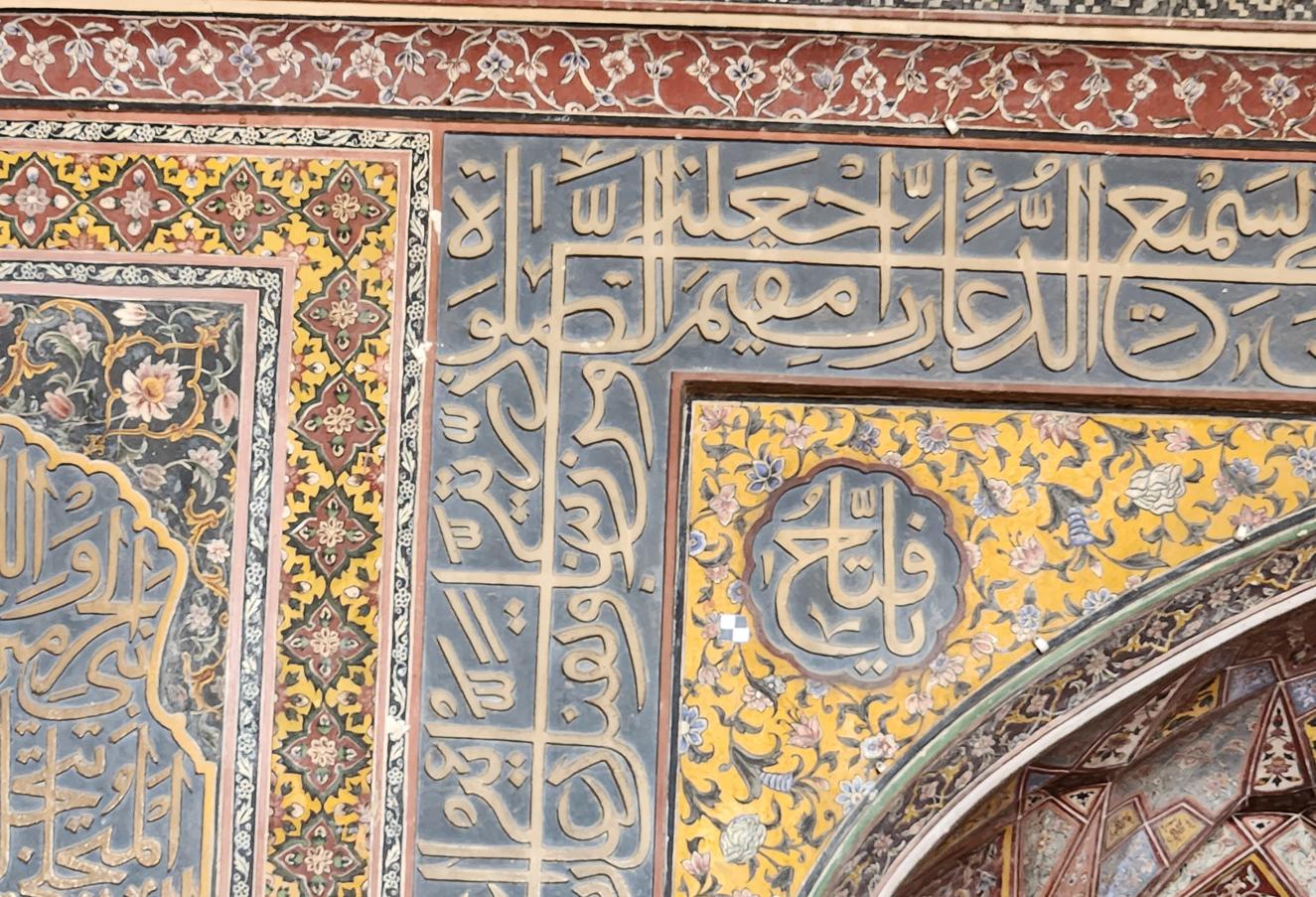
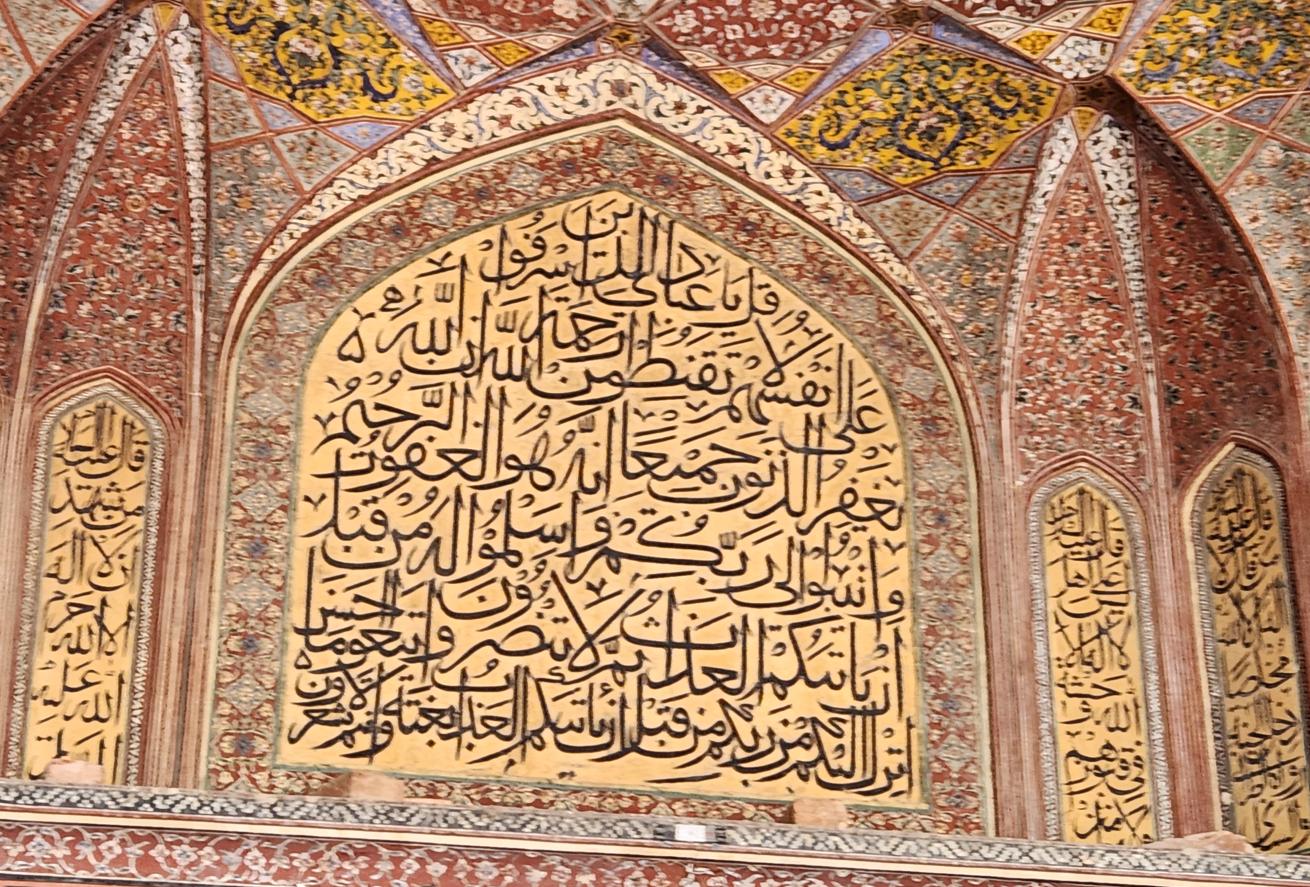
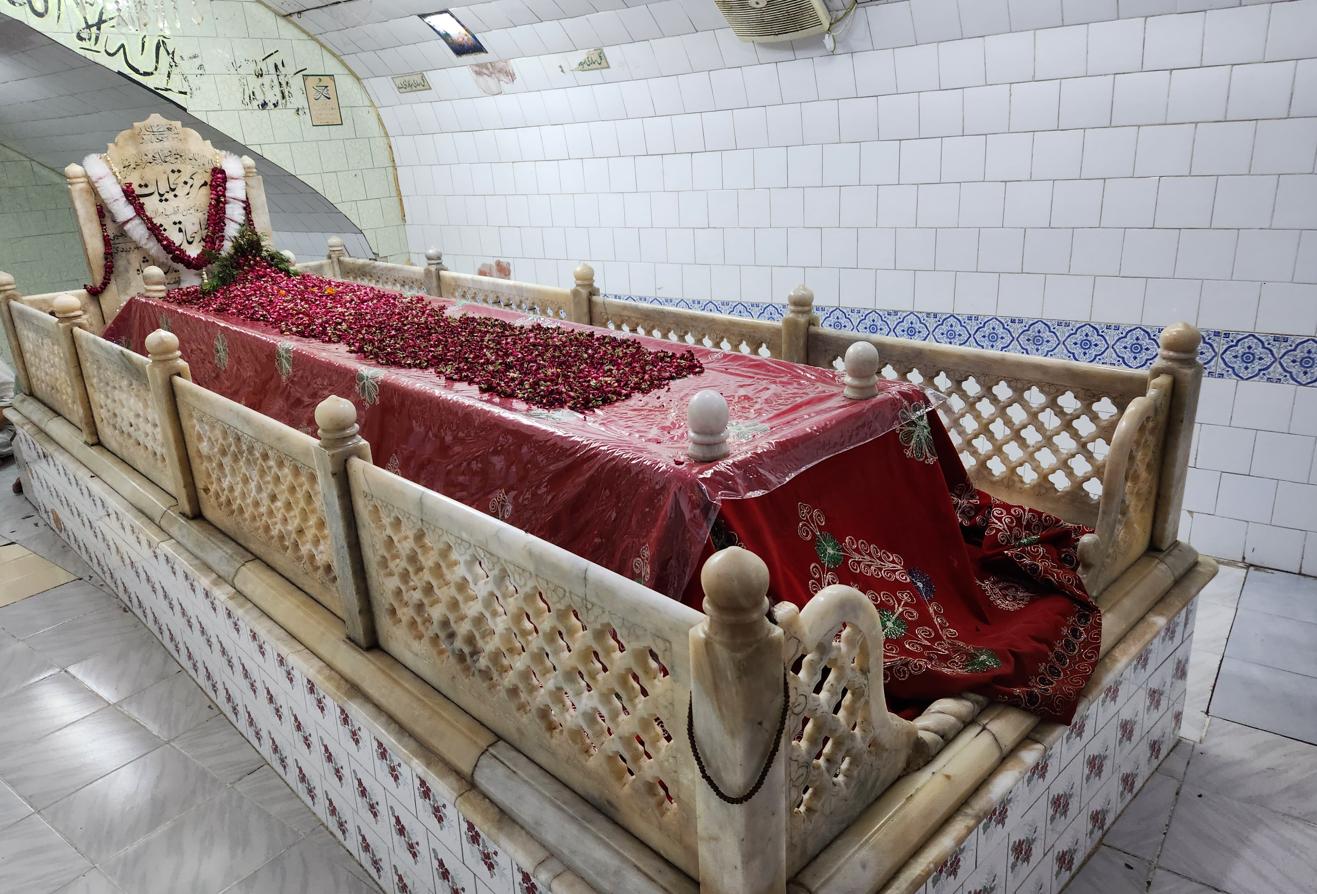
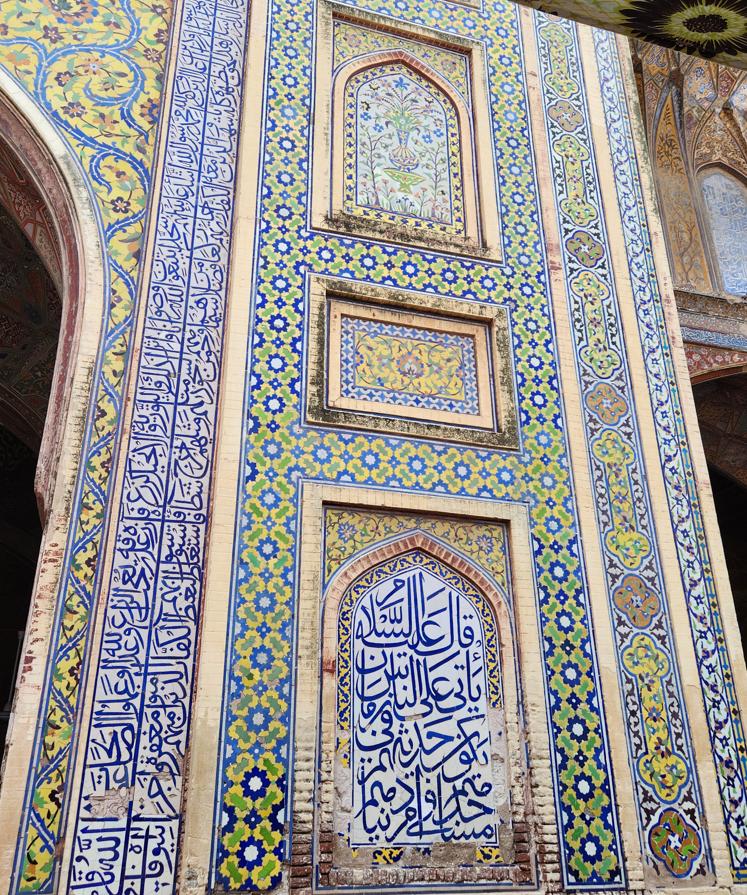
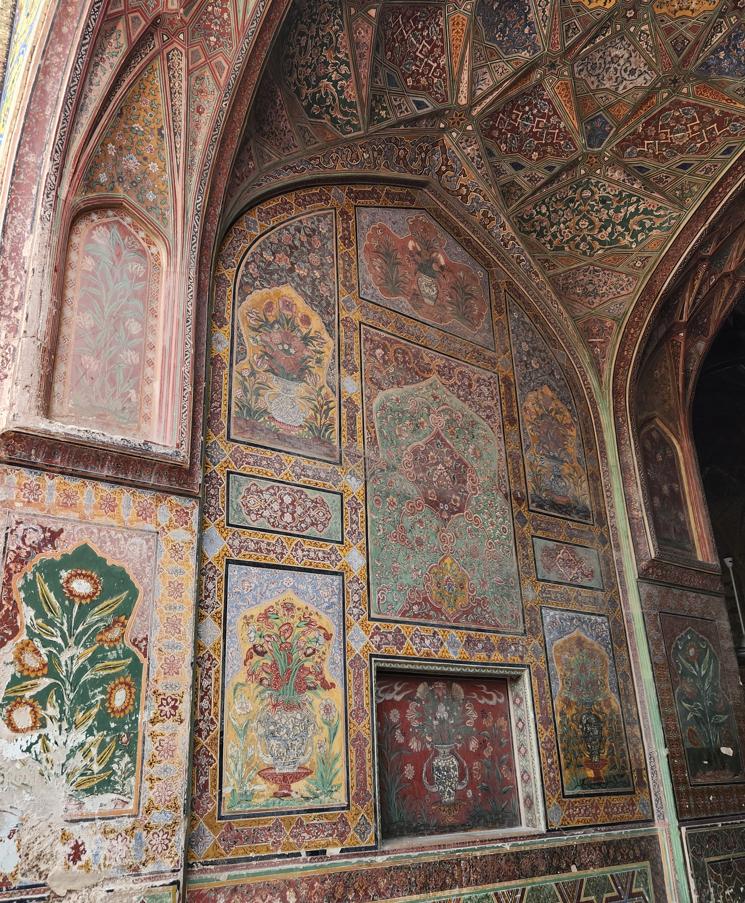
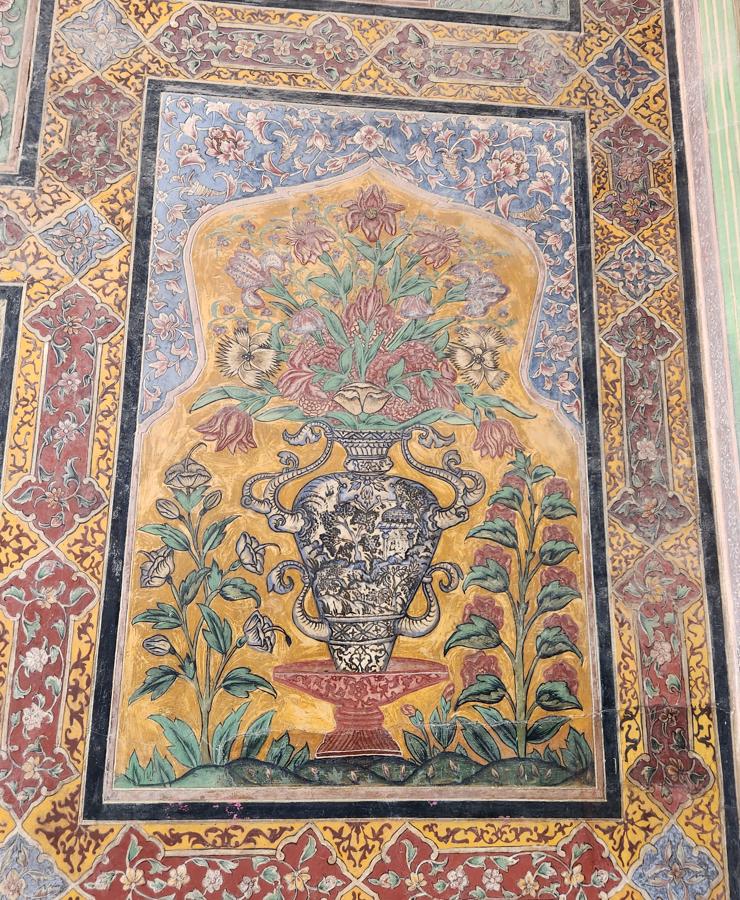
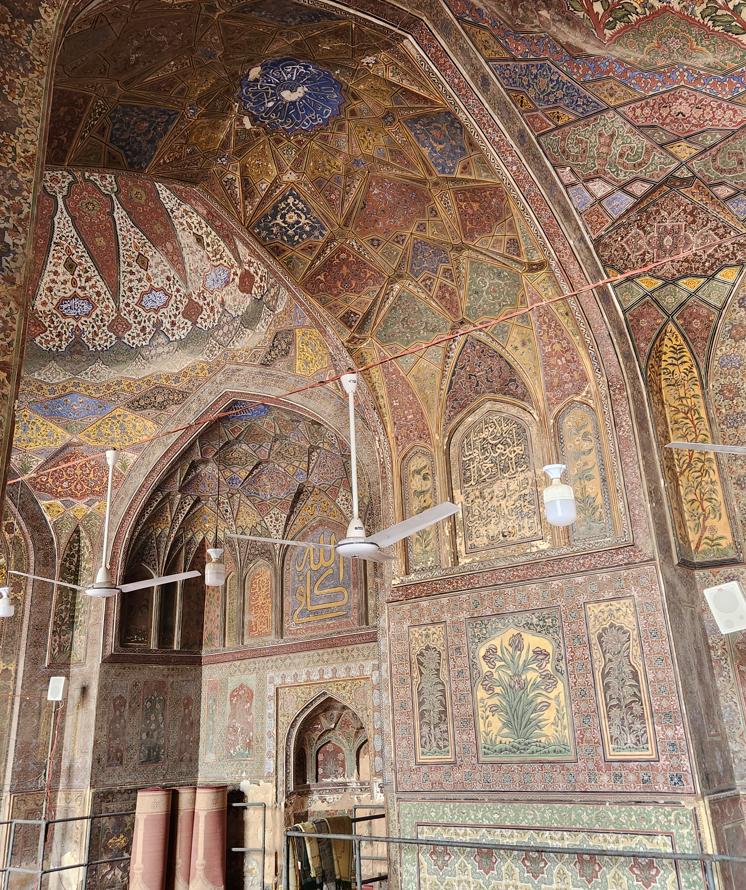
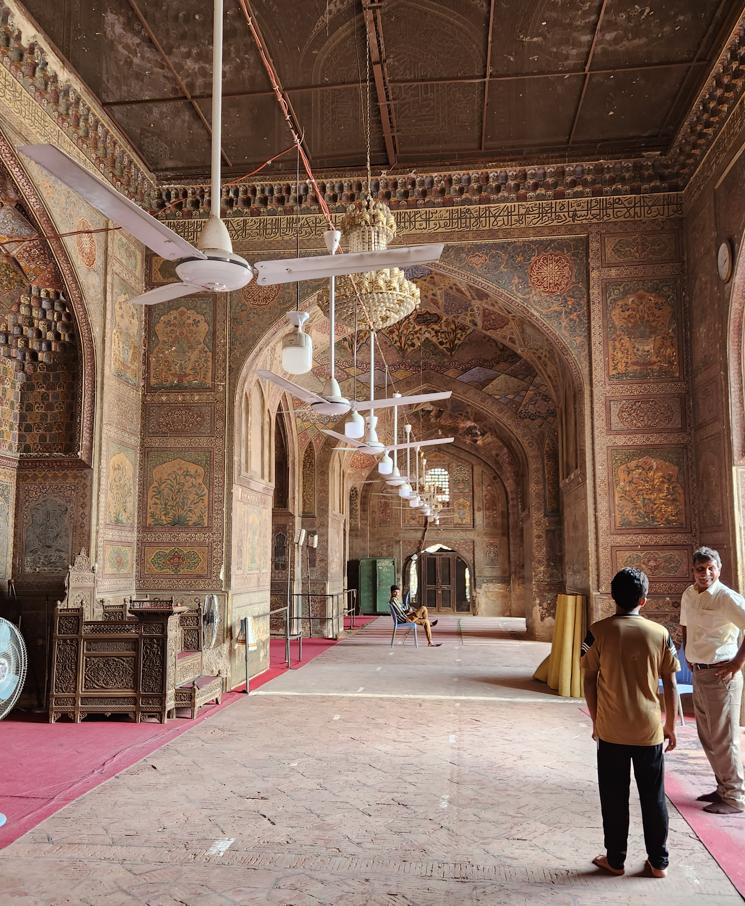
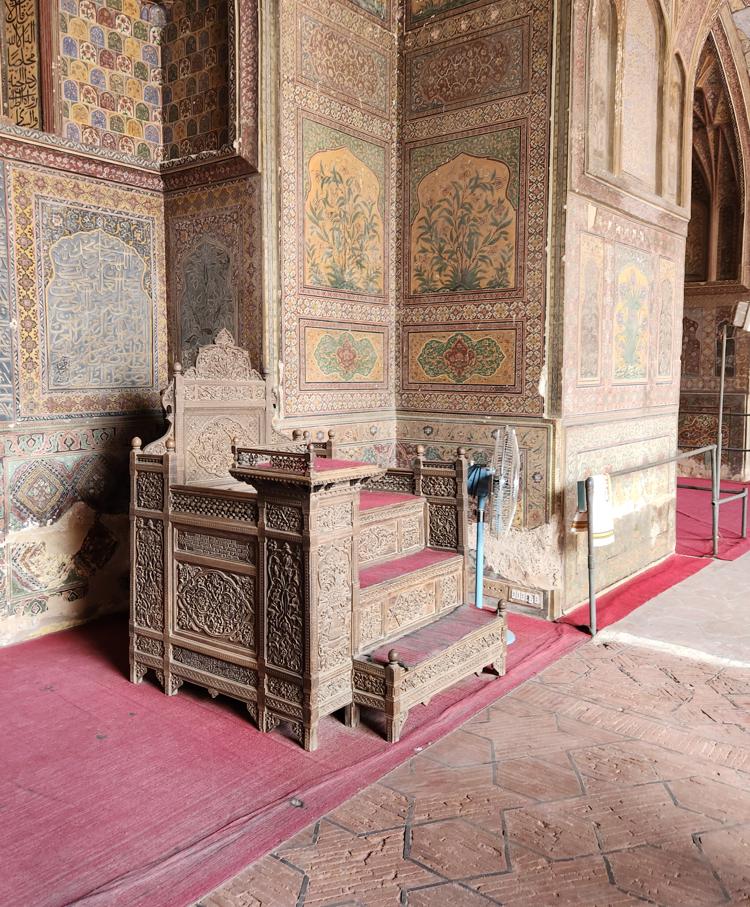
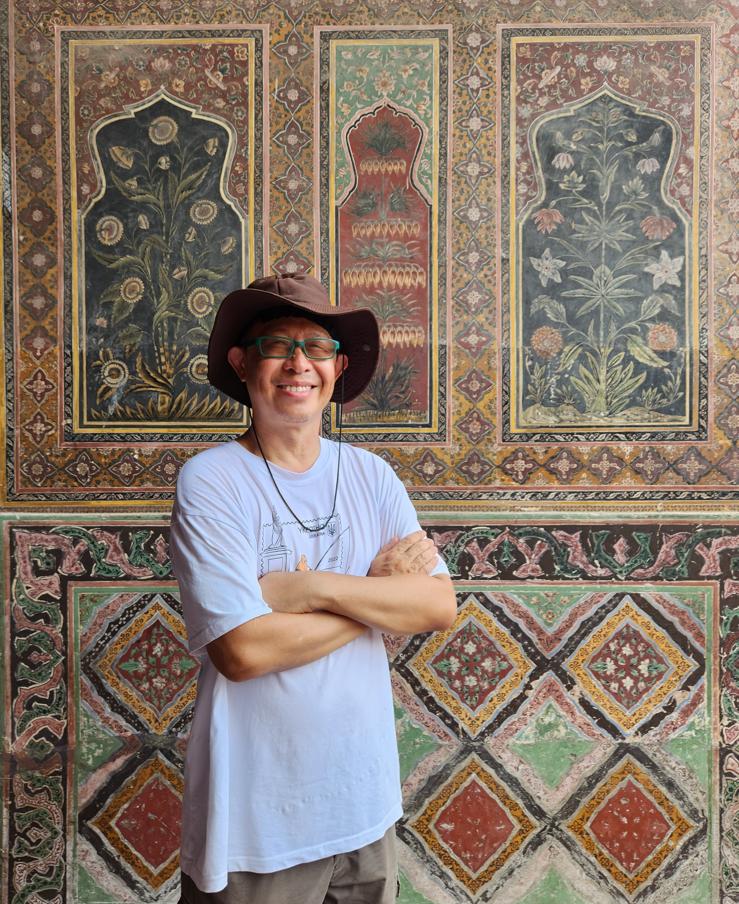
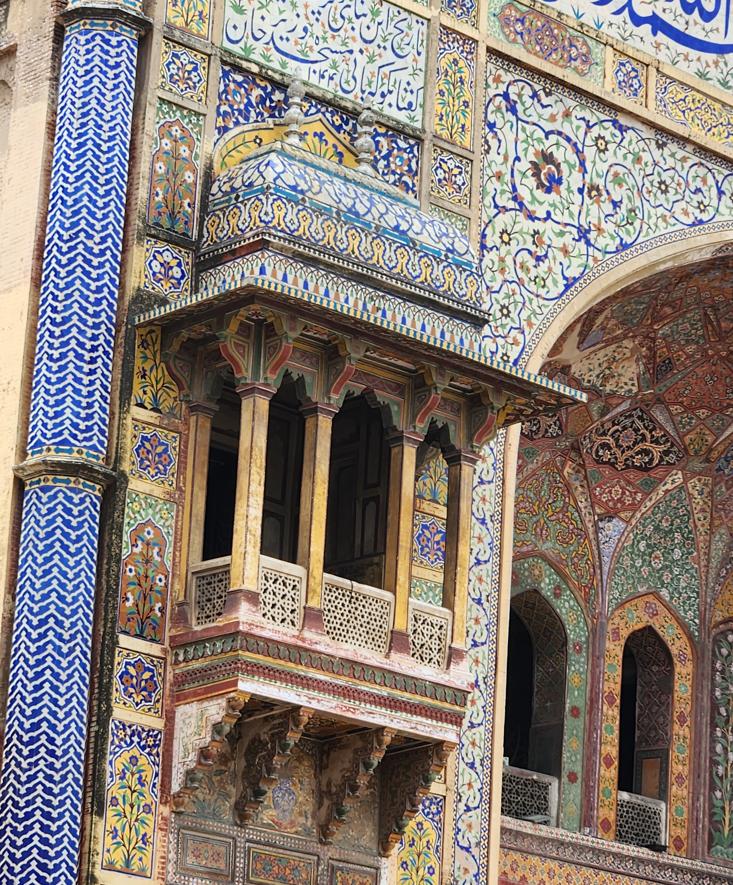
If the Badshahi Mosque is power made architectural, the Wazir Khan Mosque, built between 1634 and 1641, is devotion made decorative. It is smaller, tucked into the Walled City behind the Delhi Gate, accessible through lanes that smell of frying food and sandalwood oil and the particular must of old buildings in humid climates. Its interior surfaces — every inch of them — are covered in kashi-kari, the faience tile-mosaic technique that originated in Central Asia and reached its highest expression in this building.
The colours are extraordinary: a cobalt so deep it is almost black, a turquoise that recalls the domes of Samarkand, a terracotta that picks up the warm tone of the Lahore light. Every panel is different, every medallion unique. Seven years, they say, it took to complete the tiling. Seven years of craftsmen on scaffolding in all weathers, cutting and fitting tiles by hand.
The tiles are largely intact. This is almost miraculous given the mosque's age and the turbulence of the centuries through which it has passed. Some restoration has been done, with funding from the Aga Khan Cultural Services, and the new tiles are detectable by their slight difference in colour — fractionally too even, too consistent, lacking the variation that four centuries of differential weathering gives to the originals. But the overall effect remains what it was when Shah Jahan came to pray here: a building that makes theological argument by aesthetic means, proposing that beauty and devotion are, at their deepest, the same thing.
Shalimar Gardens: Paradise, and the TikTokers
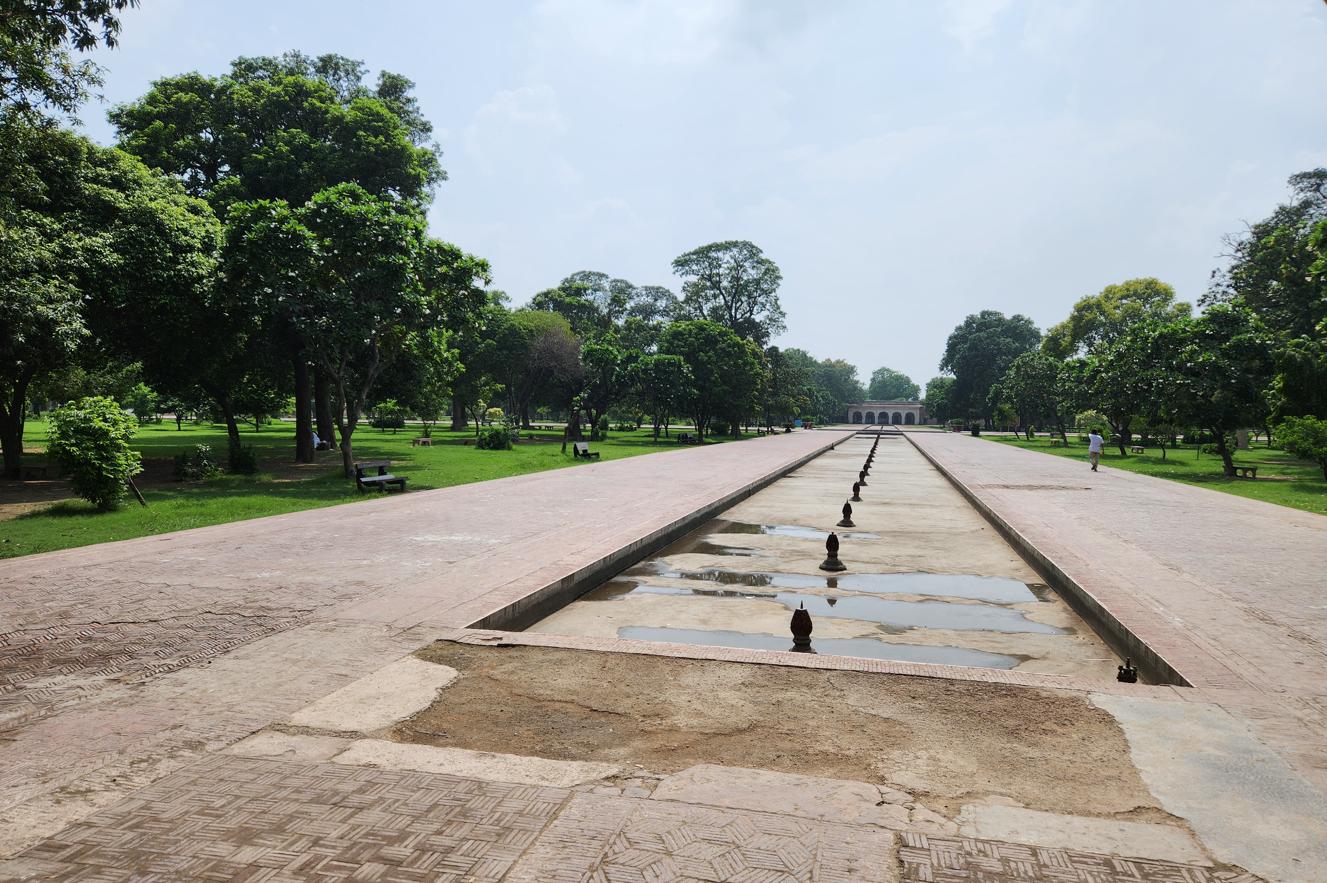
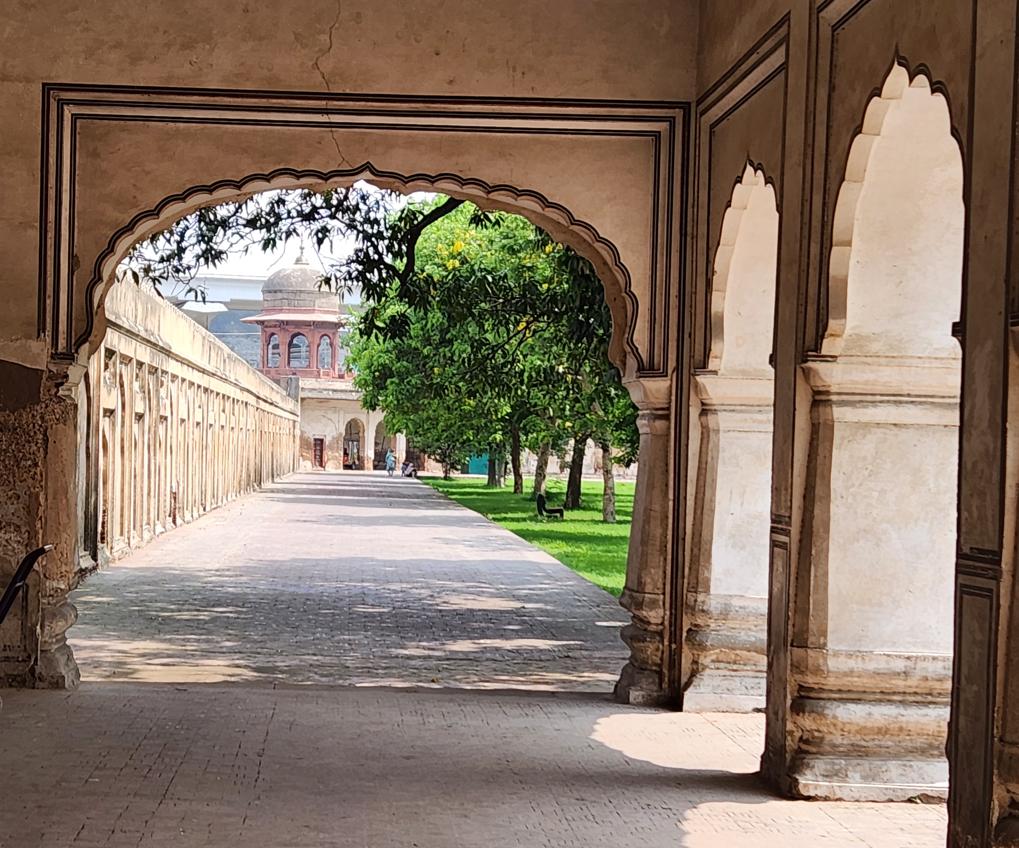
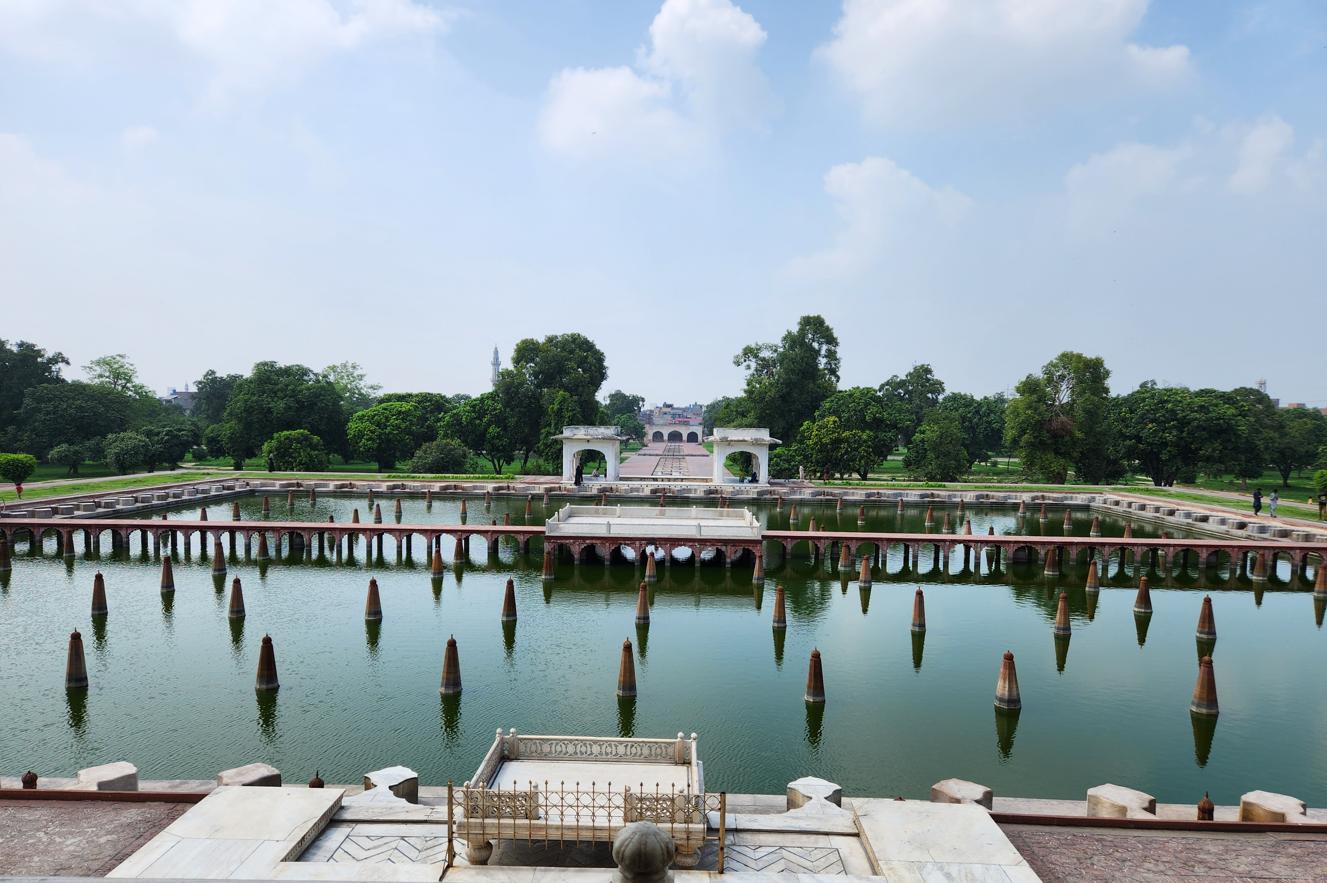
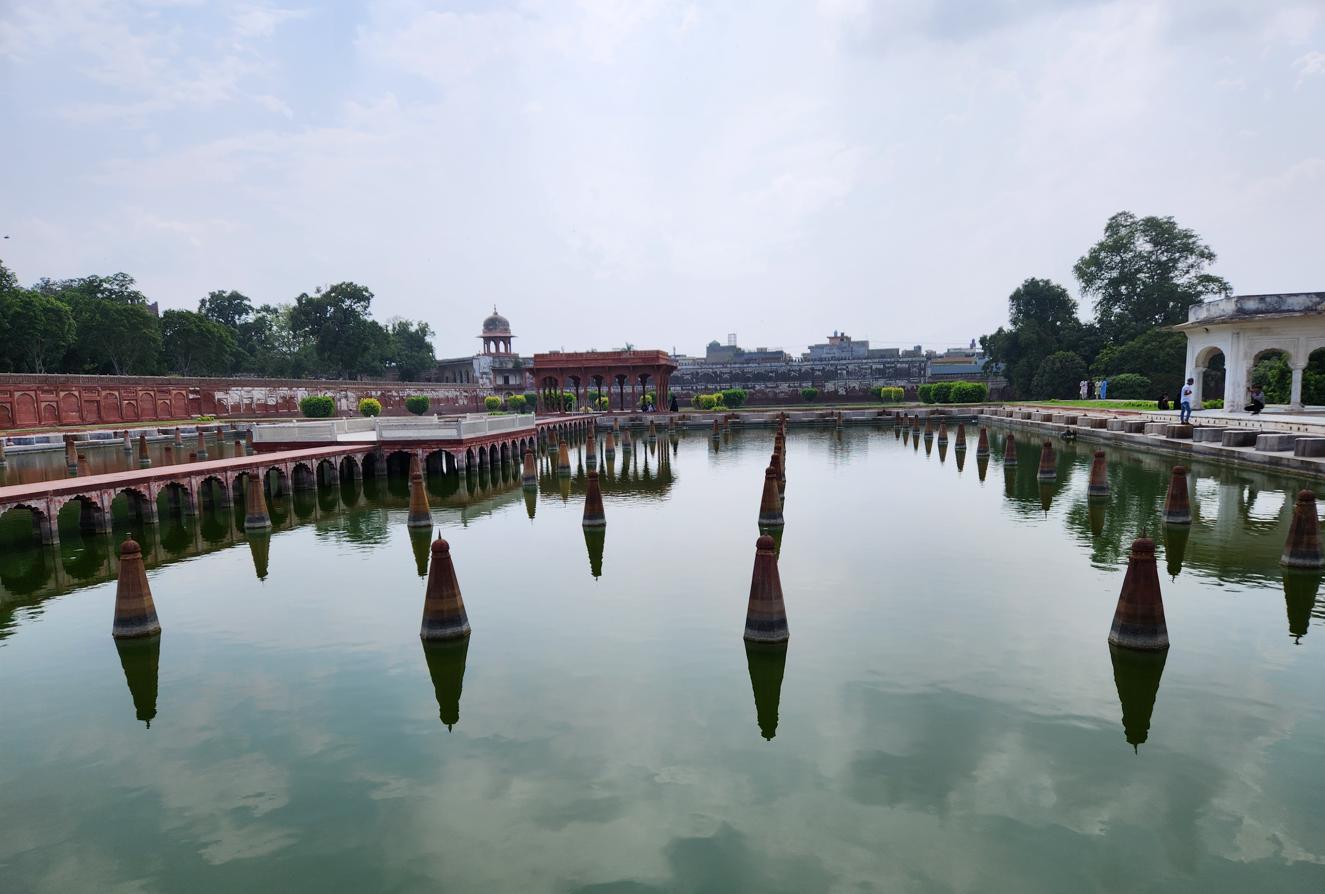
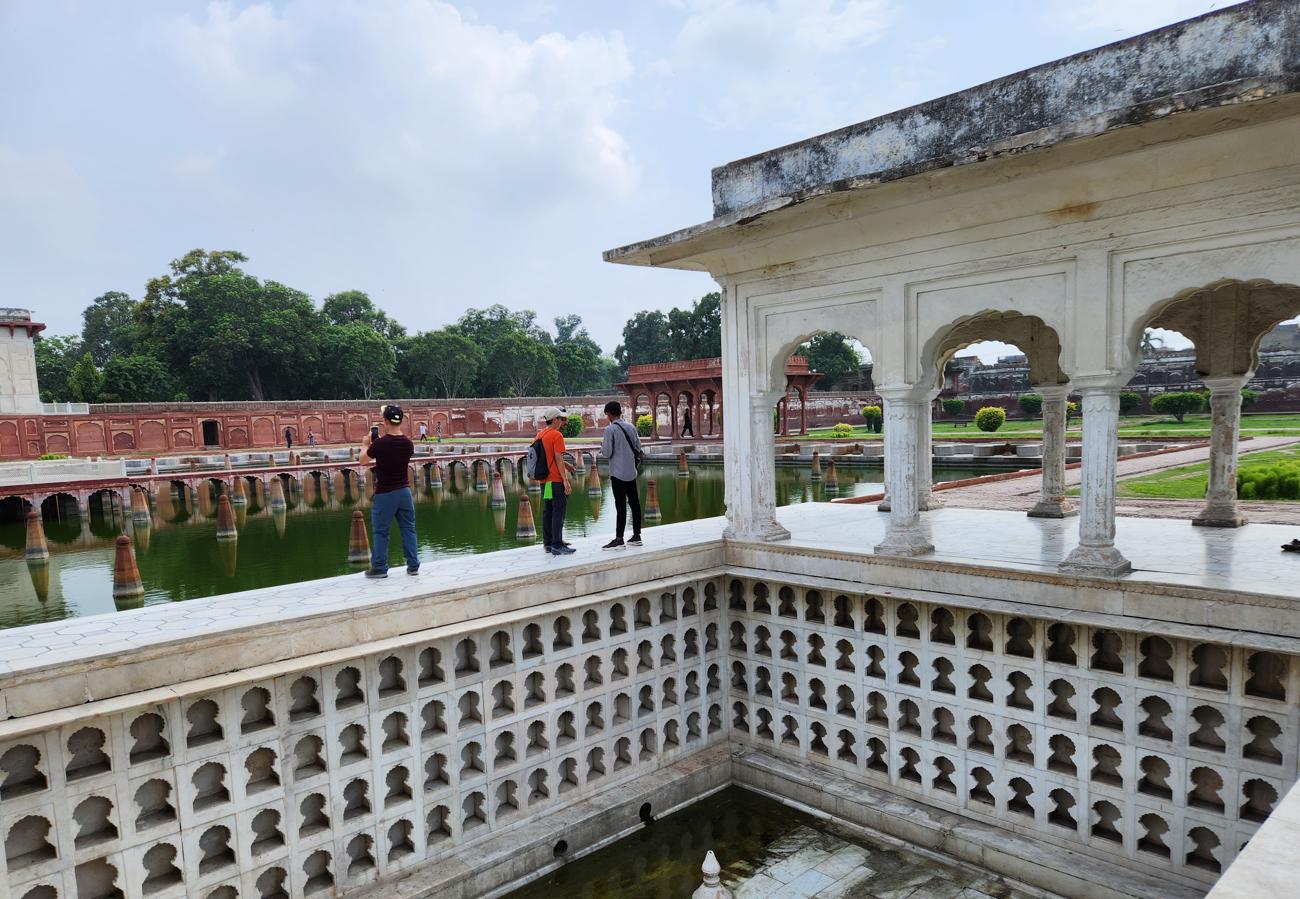
The Shalimar Gardens were laid out as a Persian paradise garden — an attempt, in brick, water, and terraced planting, to build a working model of the world as its designers imagined it should be: order and abundance made physical. Construction began under Shah Jahan in 1641 and was finished within the year, the same emperor who was simultaneously raising the Taj Mahal in Agra and had, a few years earlier, commissioned the tilework at Wazir Khan. Three descending terraces step down toward the old city, fed by a canal purpose-built to supply several hundred fountains and a central water axis that, in the right light, turns into a long mirror for the sky. UNESCO inscribed the gardens as a World Heritage Site in 1981, in recognition of what the listing calls the artistic and aesthetic zenith of Mughal garden design — a phrase that rather undersells what it is actually like to stand on the top terrace at golden hour and watch the light run down three staircases of moving water at once.
We were not, however, alone with the Mughal idea of paradise. Several groups of young Pakistanis had claimed the garden's central walkway for what could only be described as content production: filming themselves running the length of the reflecting pools in slow motion, over and over, adjusting phone angles and outfits between takes with the unhurried seriousness of professionals. It was, I had to admit, a genuinely good runway — the perspective lines of Mughal formal gardens were built for exactly this kind of visual drama three centuries before anyone had a name for it.
At Wazir Khan Mosque the day before, I had noticed a small hand-lettered sign near the entrance: TikTokers Not Welcome. I understood the impulse — a working mosque has different needs from a heritage garden, and there is something faintly disrespectful about turning a place of prayer into a film set. But watching the runway shots multiply at Shalimar, I found myself less certain the impulse was entirely right. If a four-hundred-year-old Mughal garden can put a smile on the face of Pakistan's TikTok generation, and send even a fraction of them down the rabbit hole of who built it and why, that seems, on balance, a reasonable trade for a few slow-motion running videos.
Wagah Border: Theatre of the Rivals
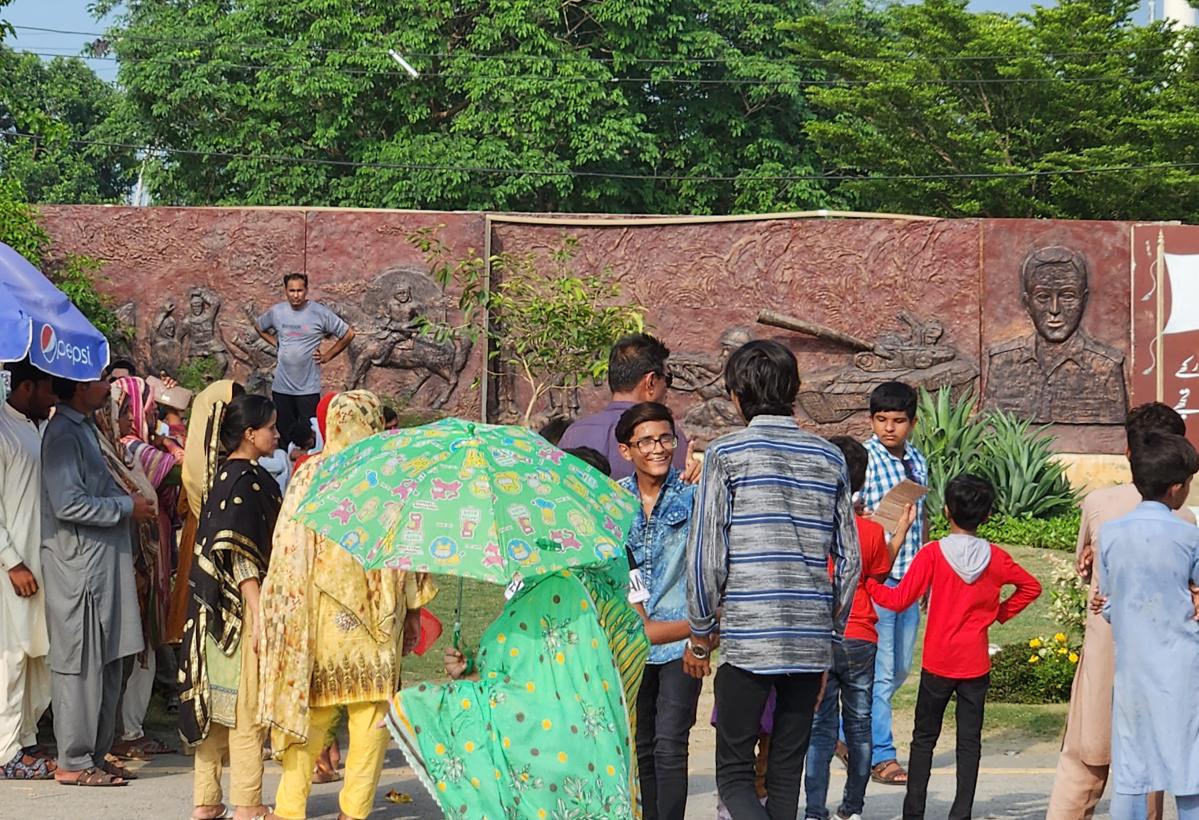
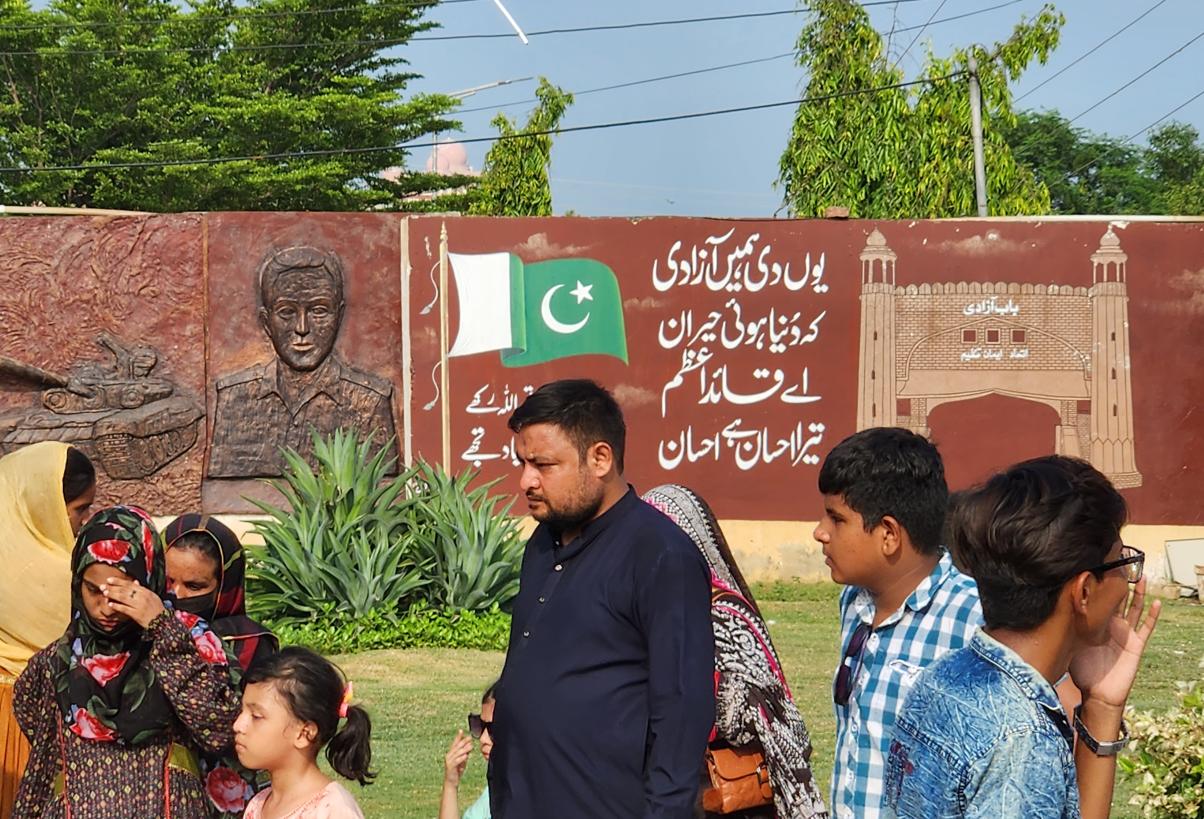
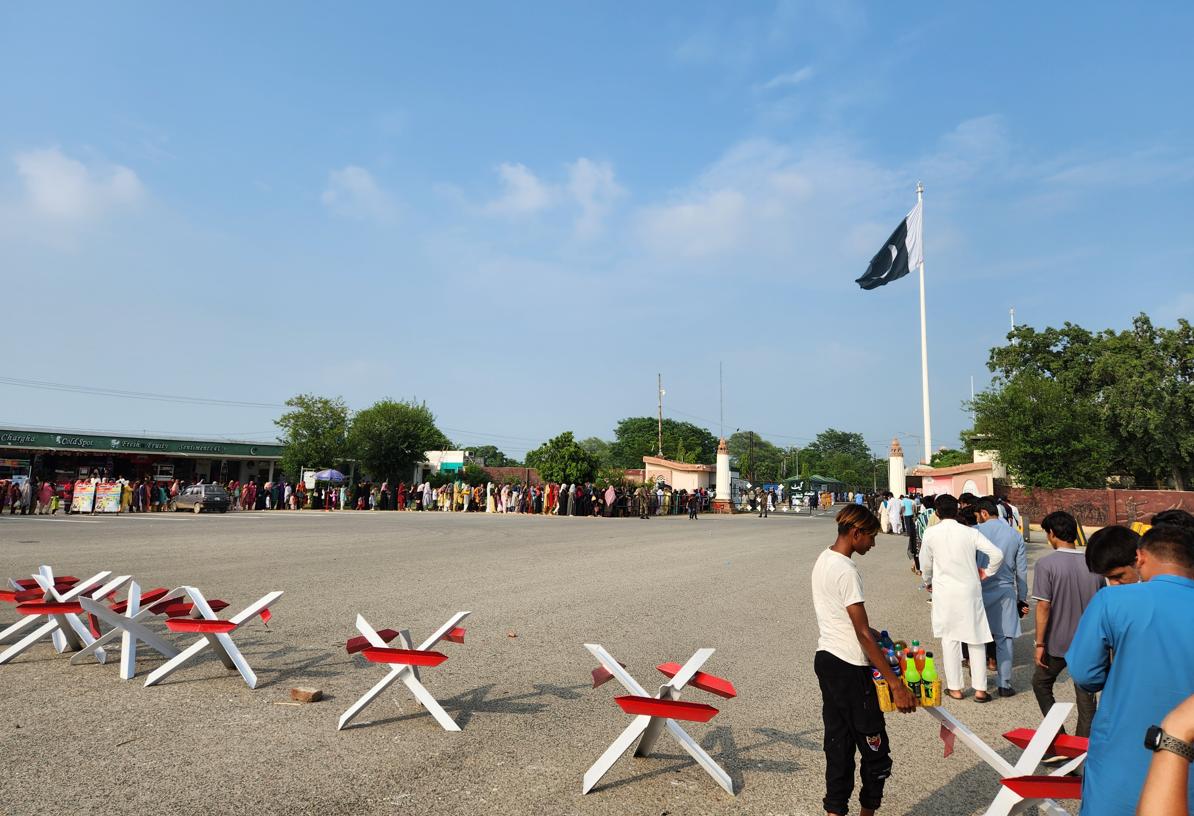
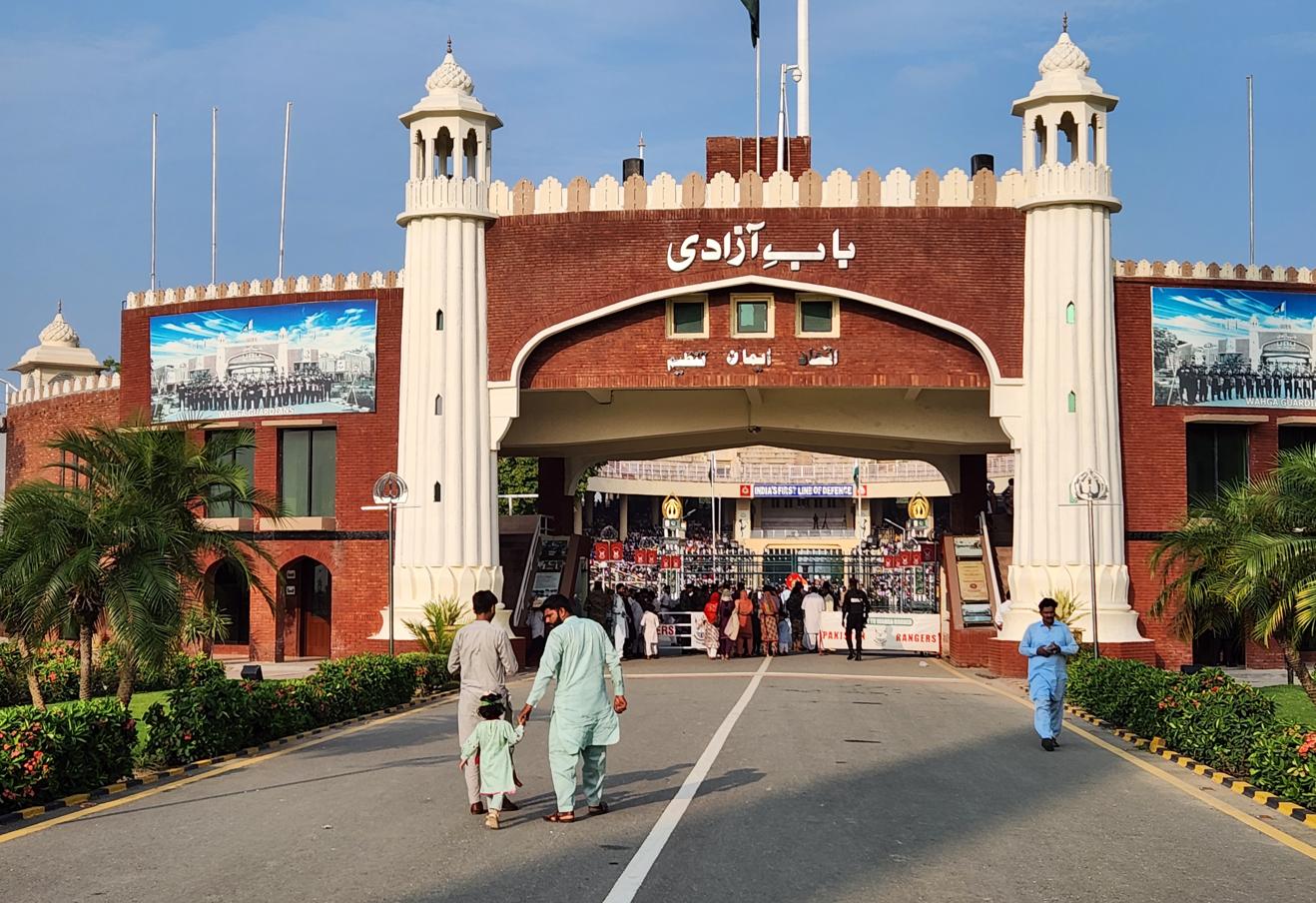
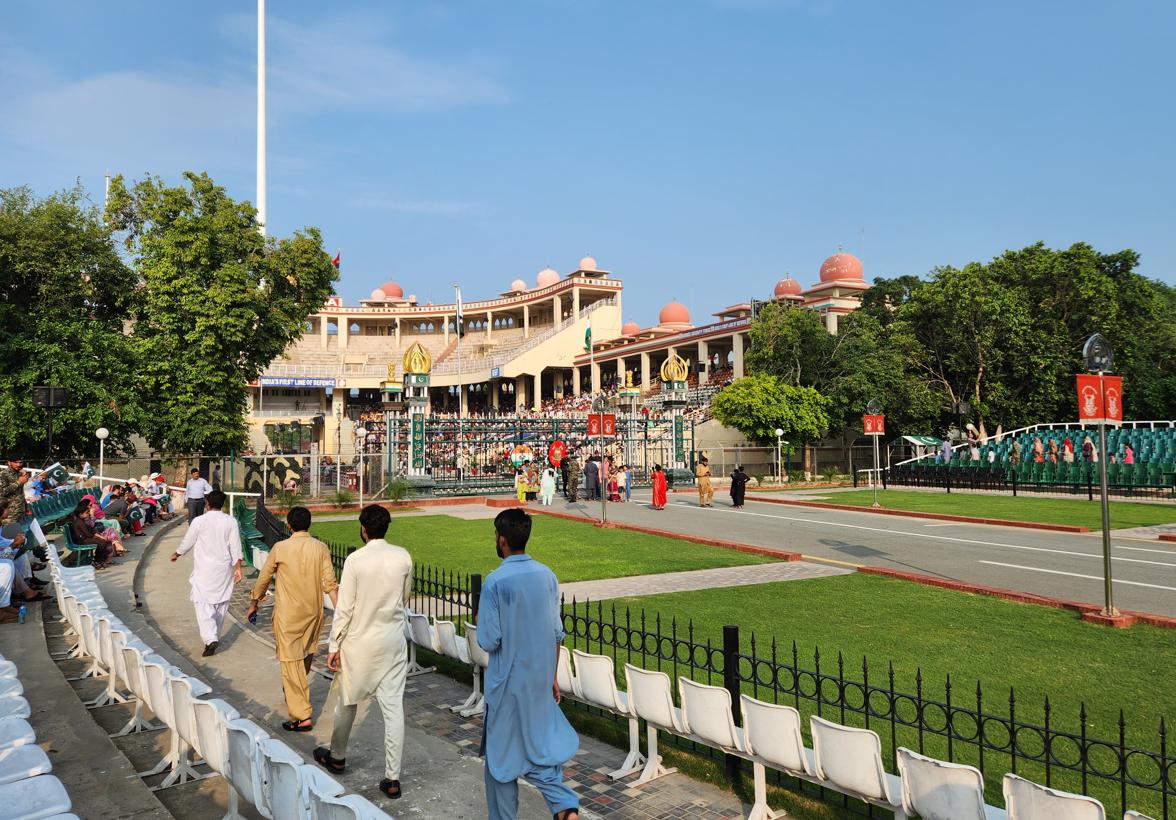
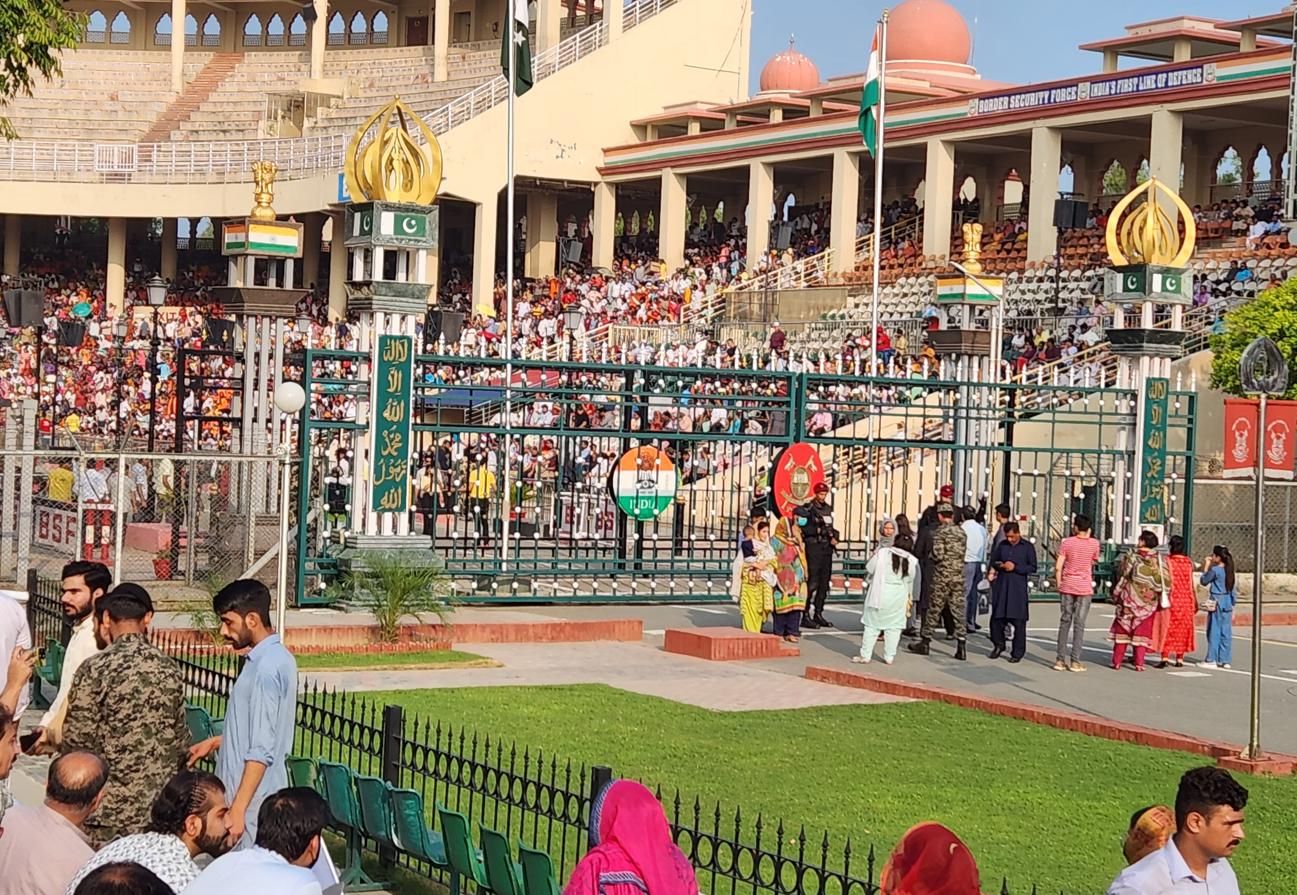
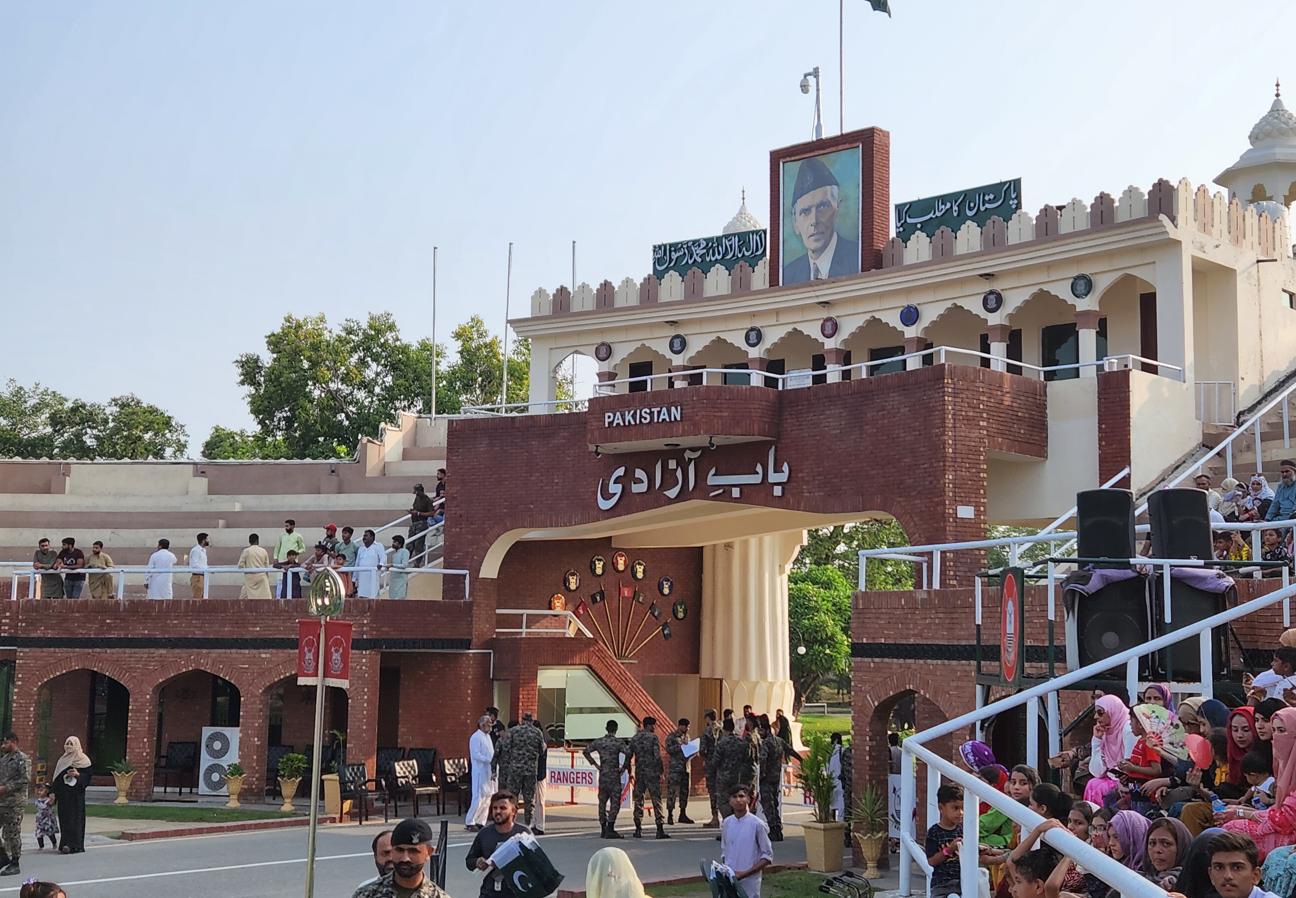
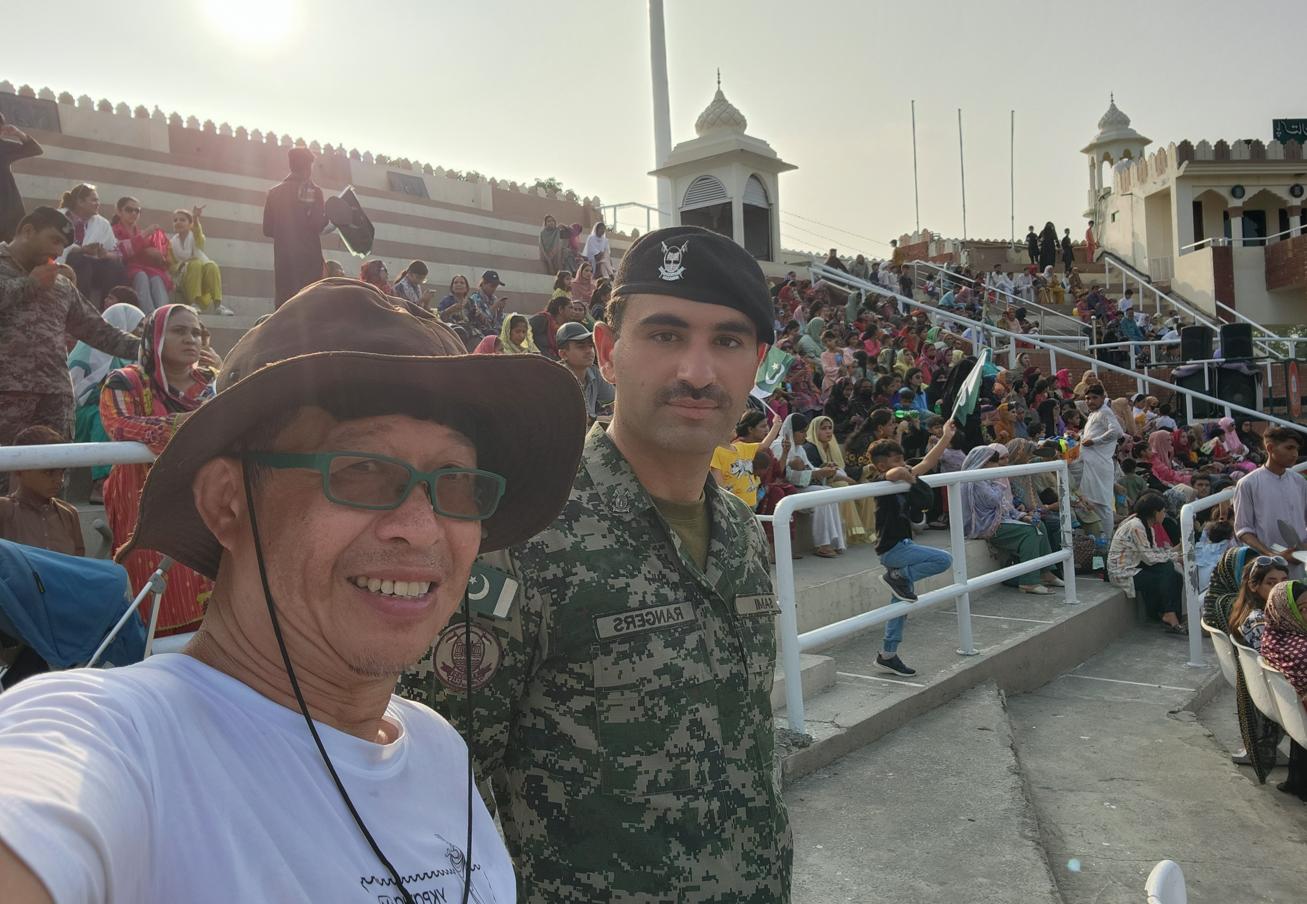
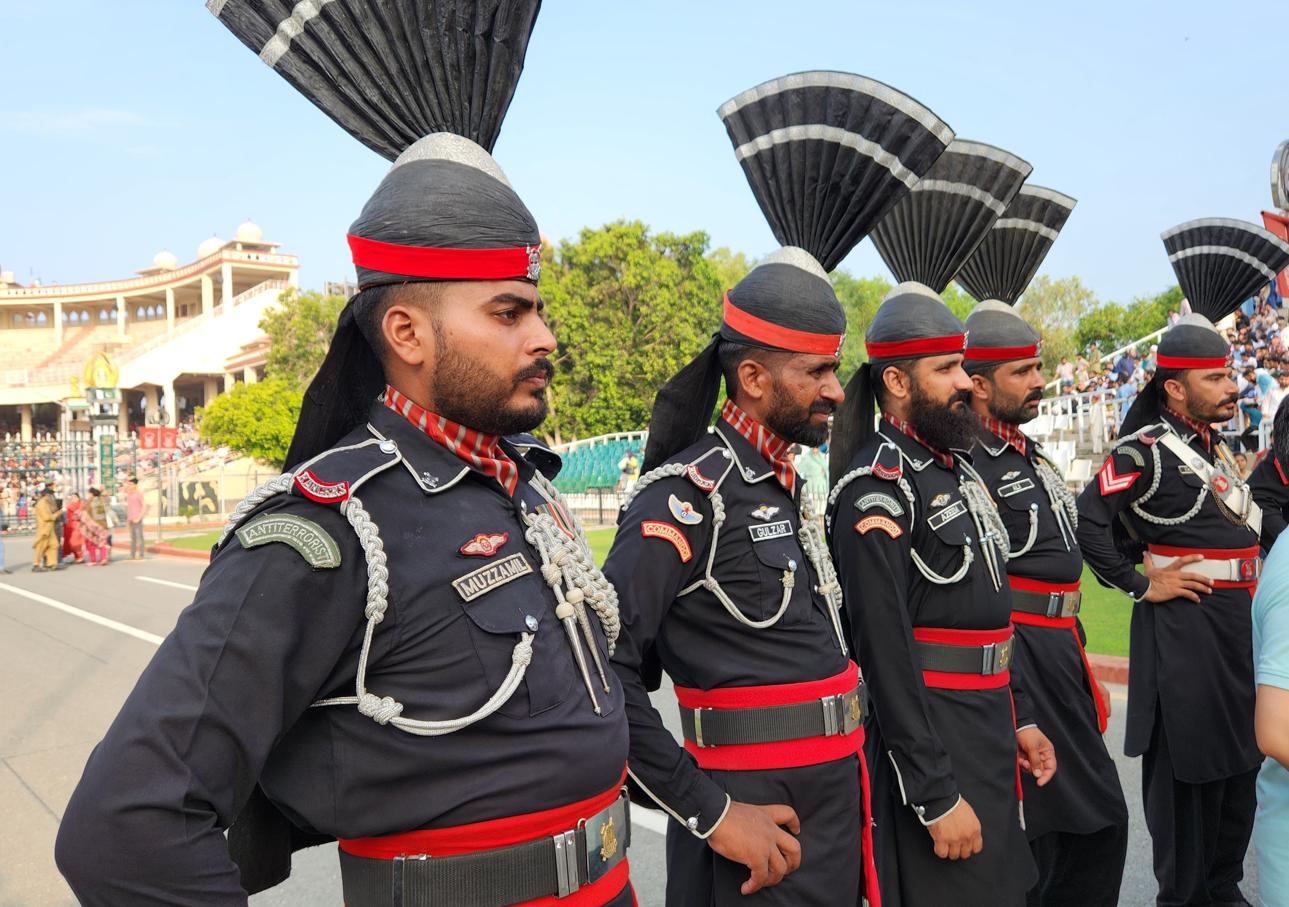
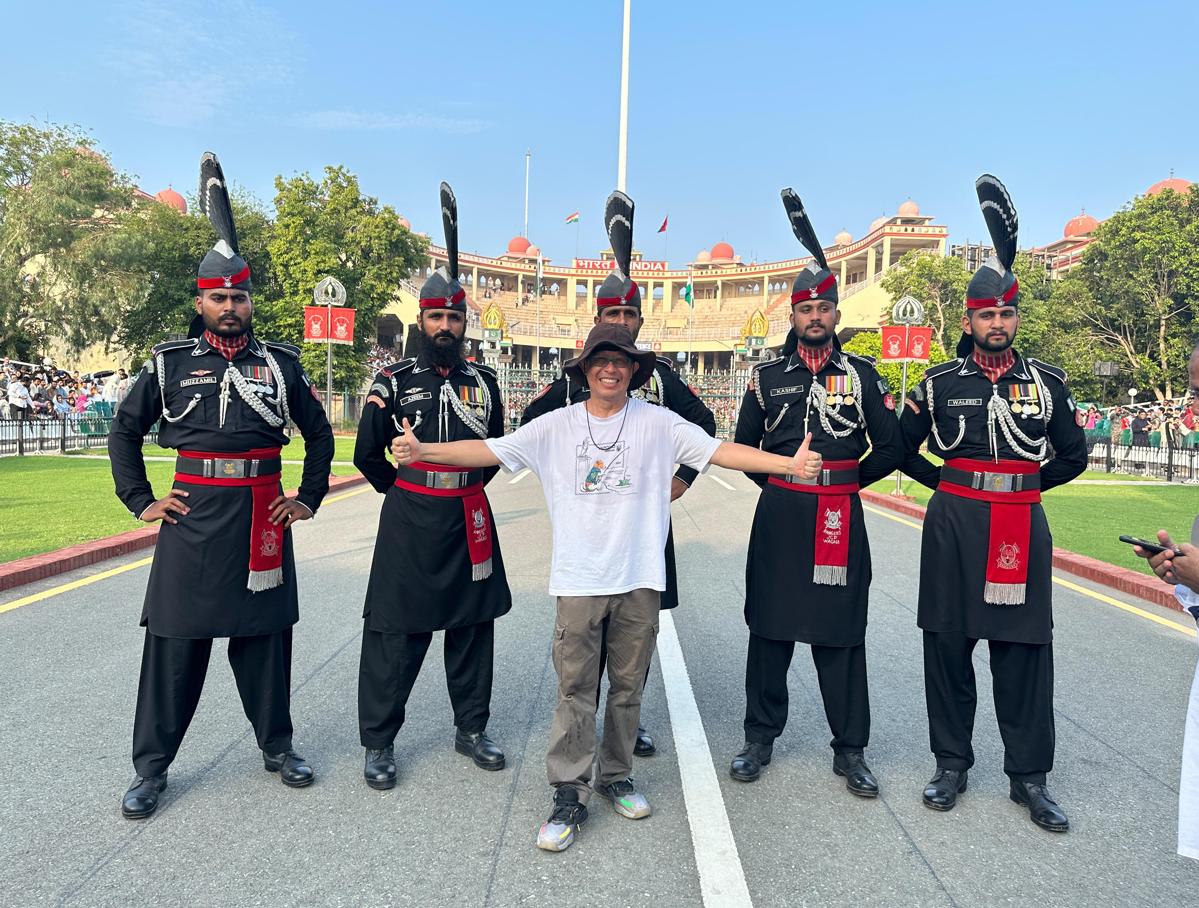
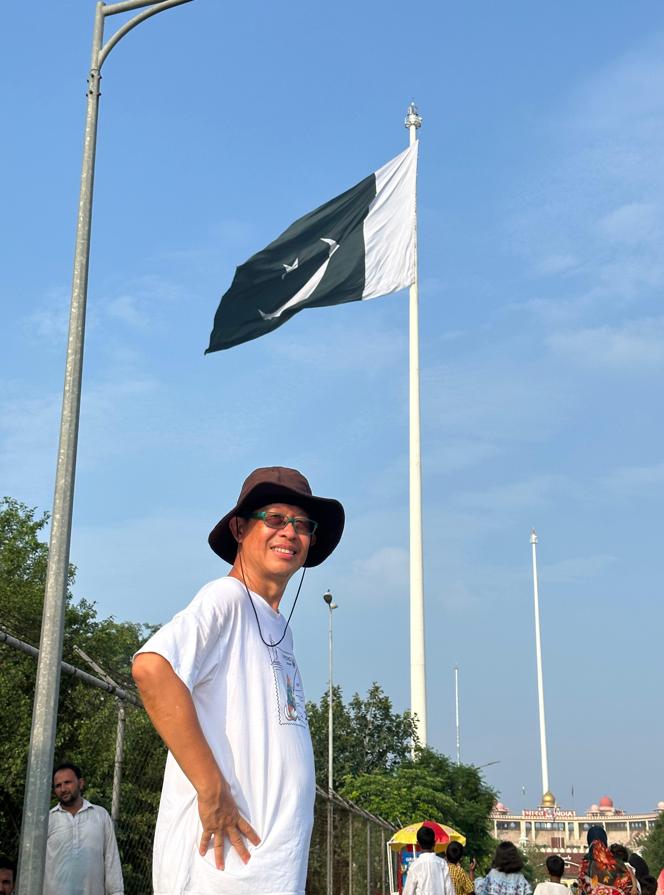
The lowering of the flags ceremony at the Wagah-Attari border — the only land crossing between Pakistan and India on the Grand Trunk Road — begins every evening at sunset and is the most theatrical act of geopolitical hostility performed on any border in the world. I had watched it from the Indian side in 2014. Now, nine years later, I watched it from the Pakistani side, and the perspective reversed everything.
The stands on the Pakistani side hold ten thousand people, and they were full. Pakistani flags everywhere. A man with a microphone was working the crowd like a wedding DJ, leading chants of Pakistan Zindabad — Long Live Pakistan — to which the crowd responded with volcanic enthusiasm. Behind us, an enormous Ferris wheel provided an incongruous backdrop of fairground normalcy. A food stall sold cardamom tea and sugarcane juice.
On the other side of the iron gate, exactly the same ceremony was occurring in mirror image: Indian crowds, Indian flags, Indian chants, Indian soldiers performing identical movements. The two nations, which share a cultural, linguistic, and culinary heritage so deep as to be practically indistinguishable from the outside, here perform, every evening at sunset, a ritual of mutual antagonism that has continued since 1959. It is at once absurd, deeply human, and genuinely moving.
The soldiers — long-legged men chosen for their height, their boots reaching the knee — matched each other's high-kicks with a precision that implied either enormous practice or the possibility that the whole thing is choreographed by some higher authority that wishes to ensure both sides look equally impressive. When the flags came down simultaneously, the crowd exhaled.
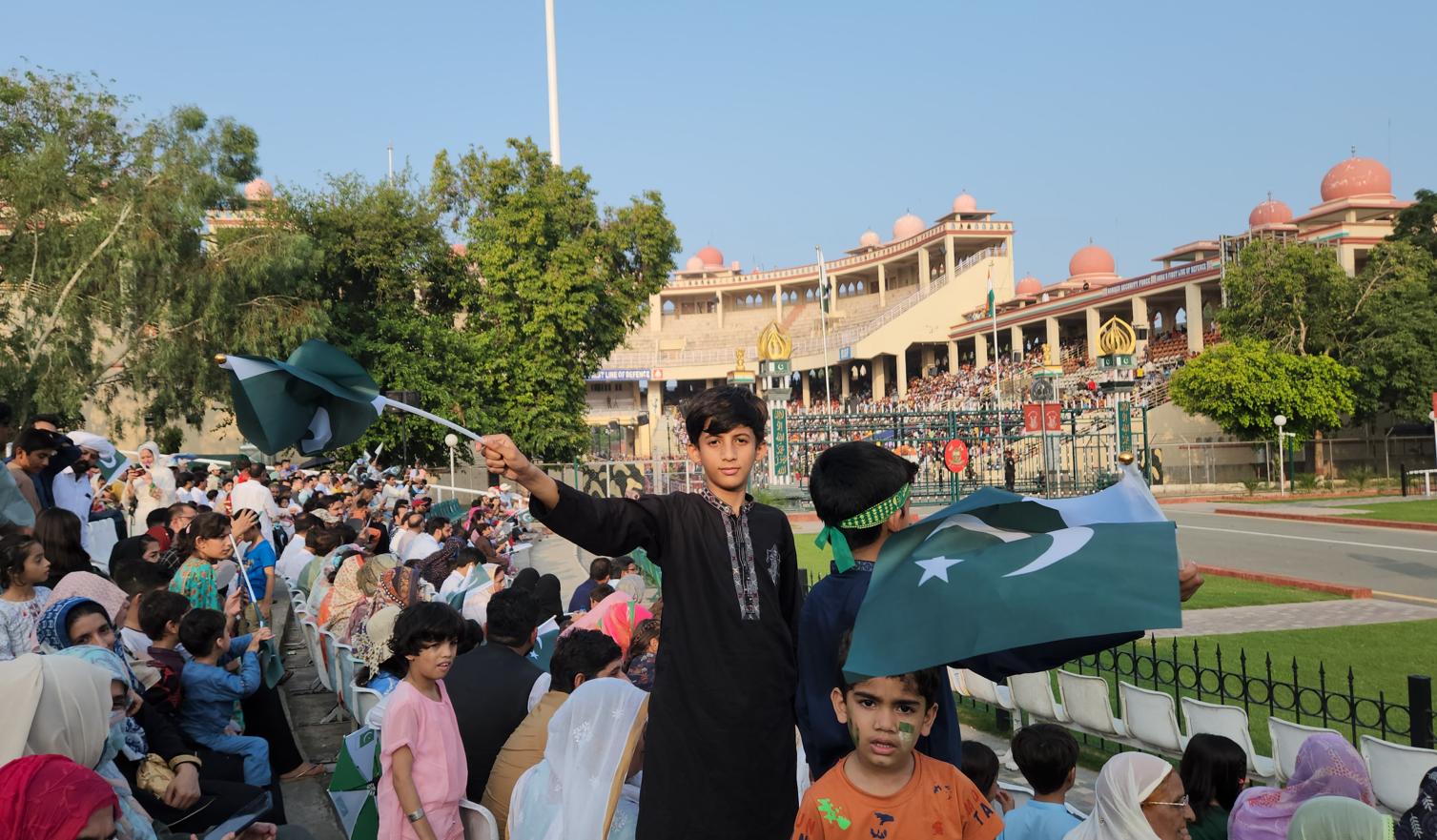
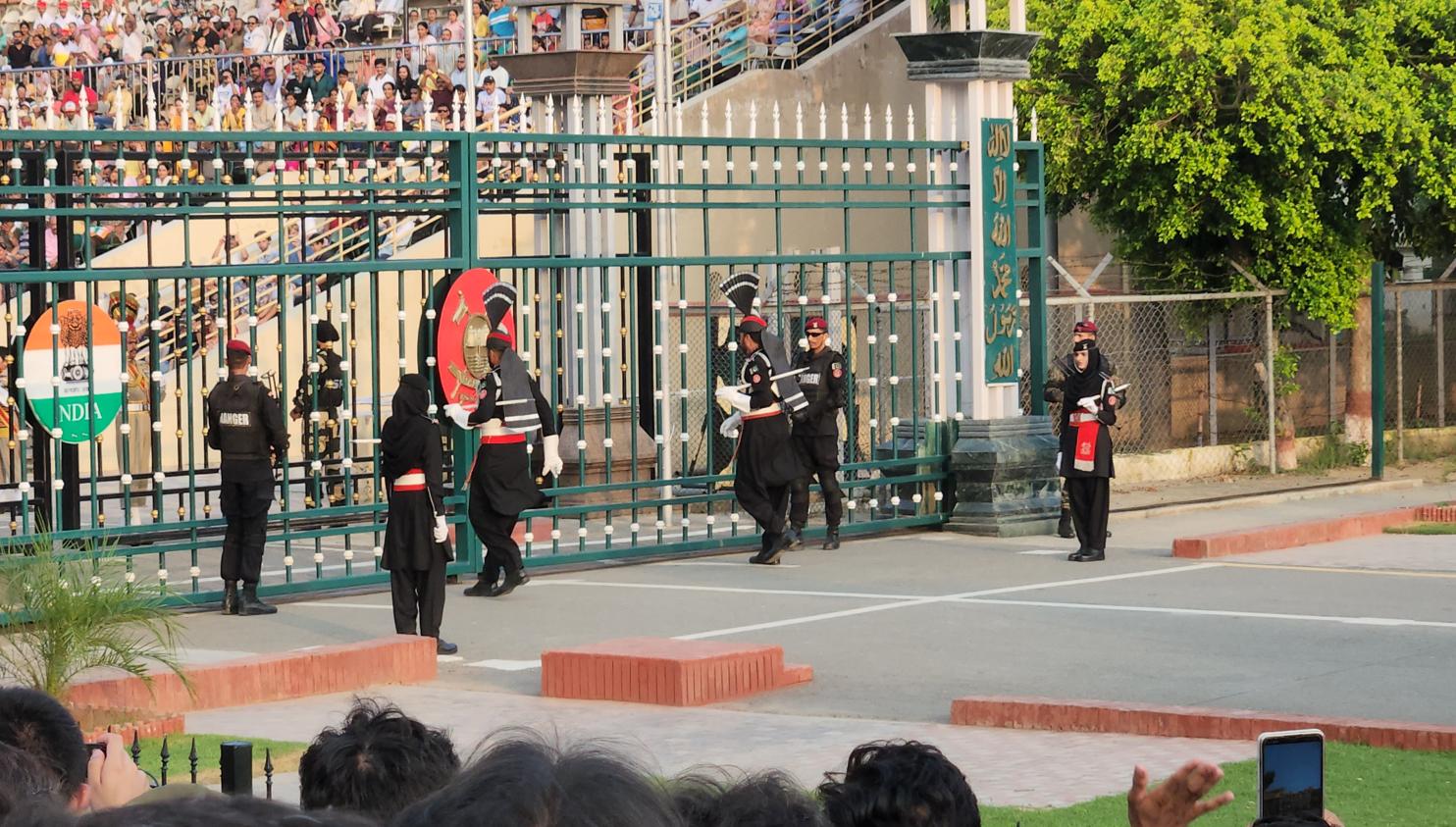
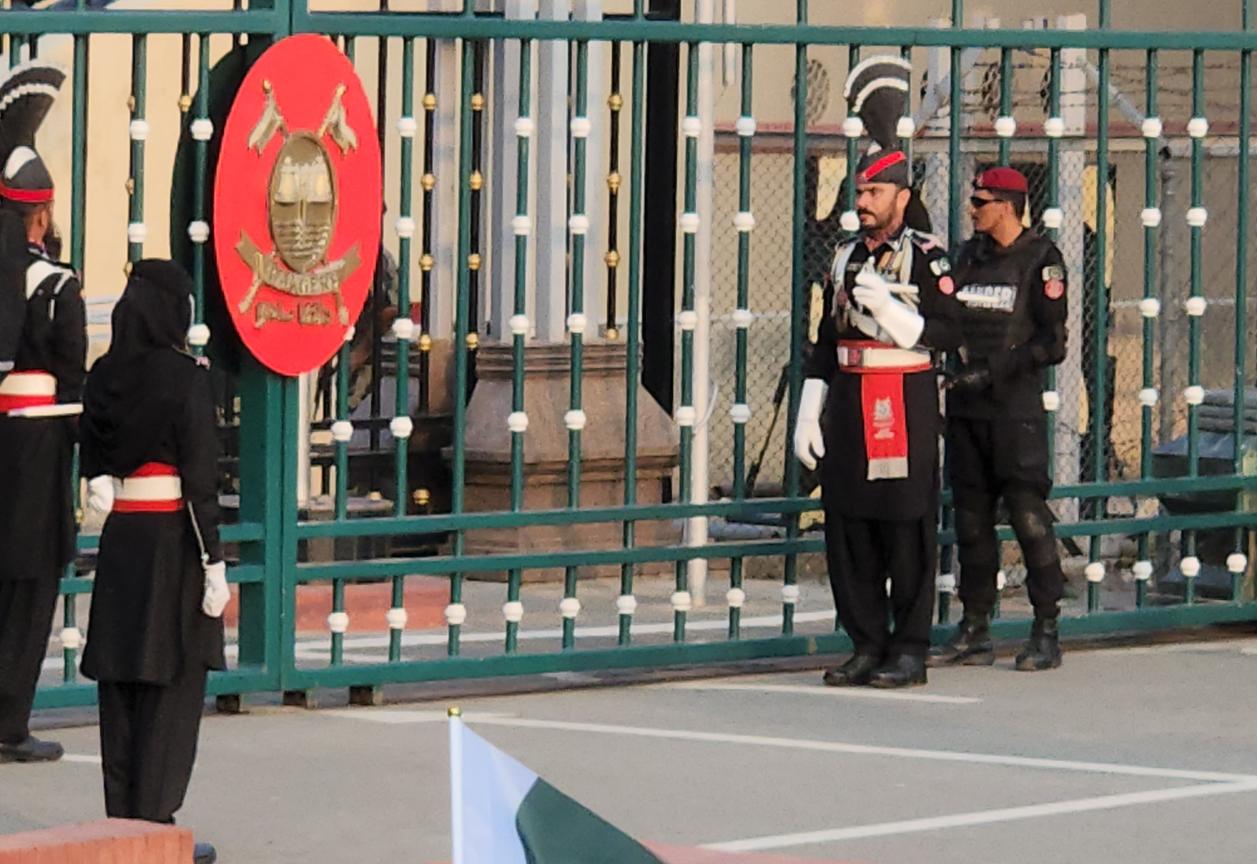
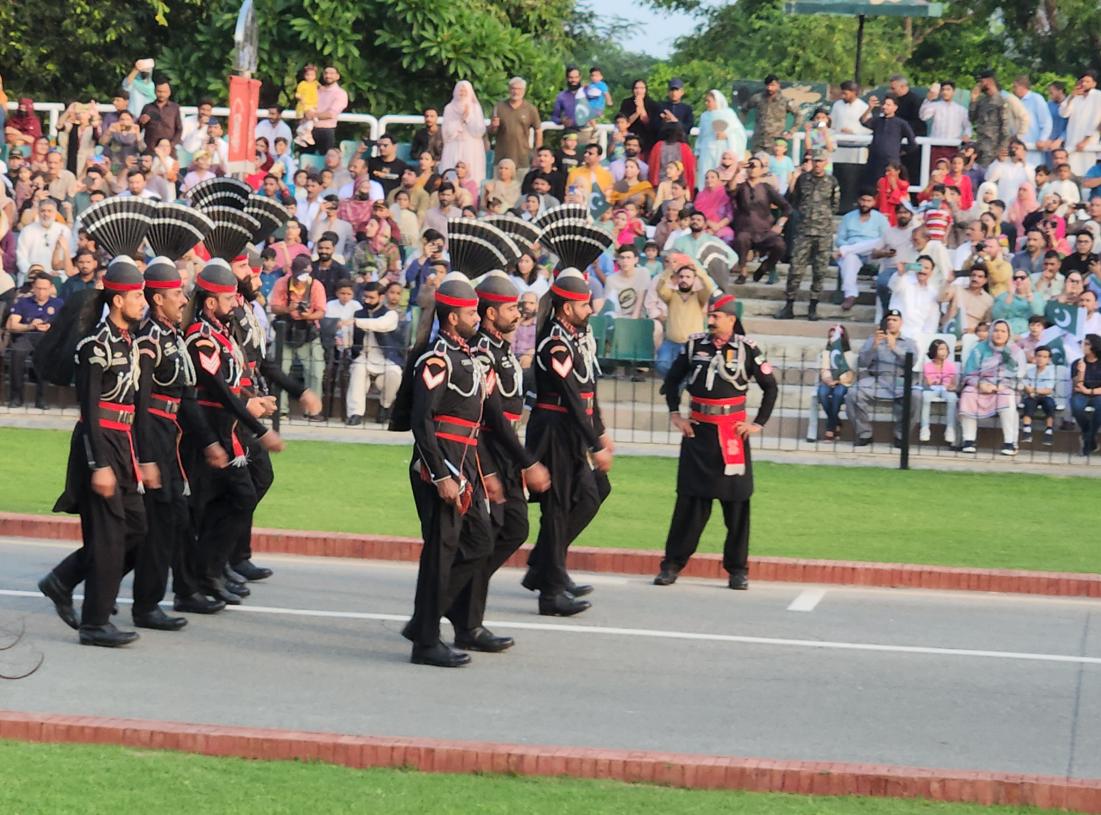
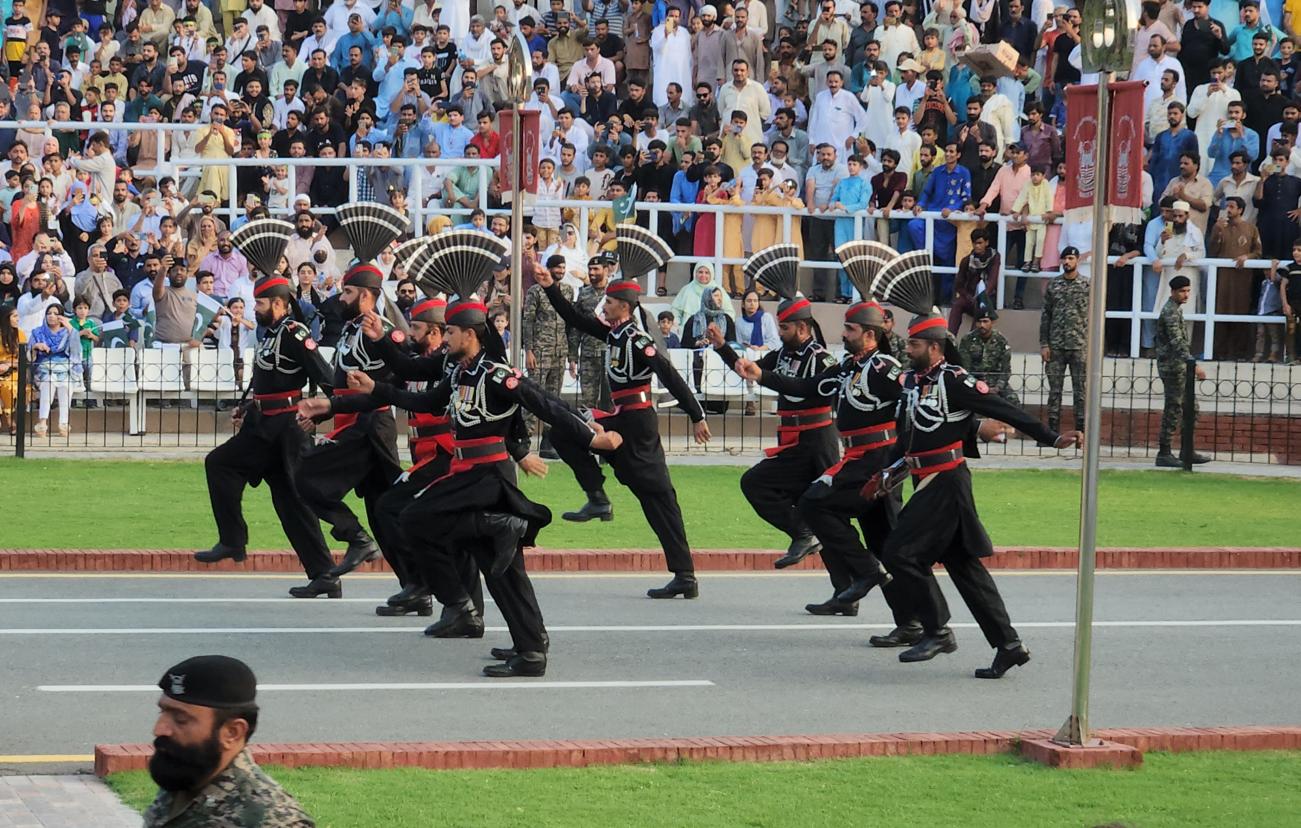
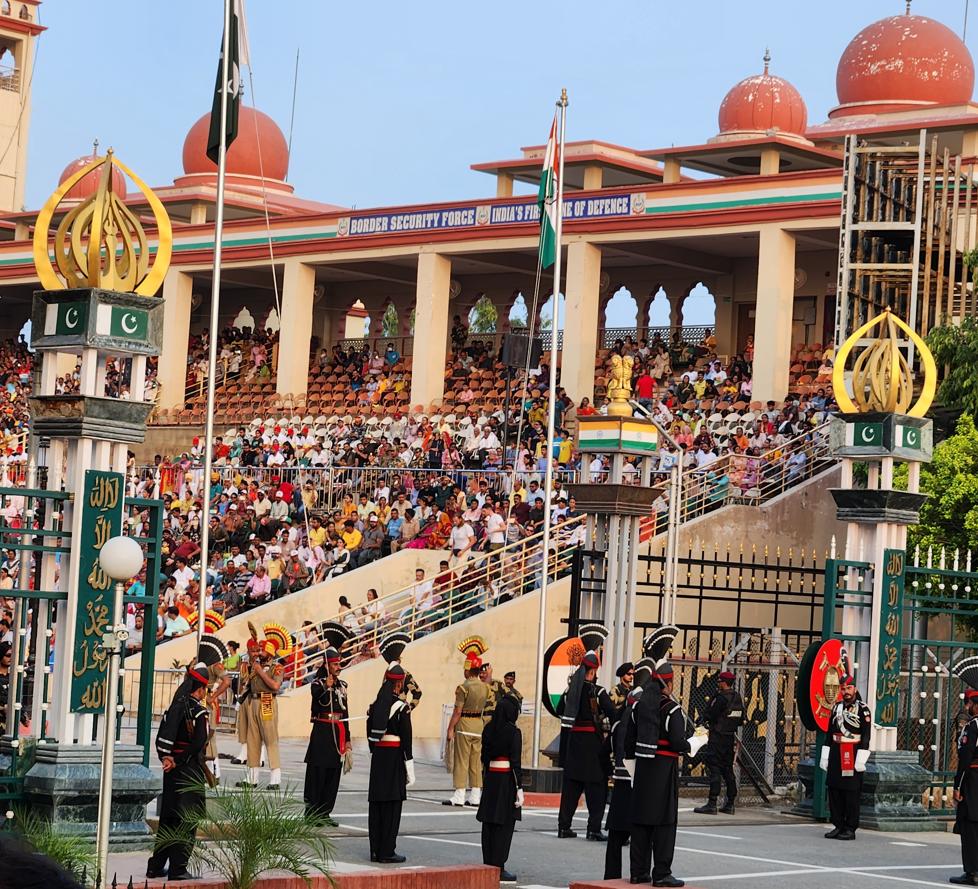
This Youtube video showing the flag lowering scene at the final part of the daily display is much clearer than mine
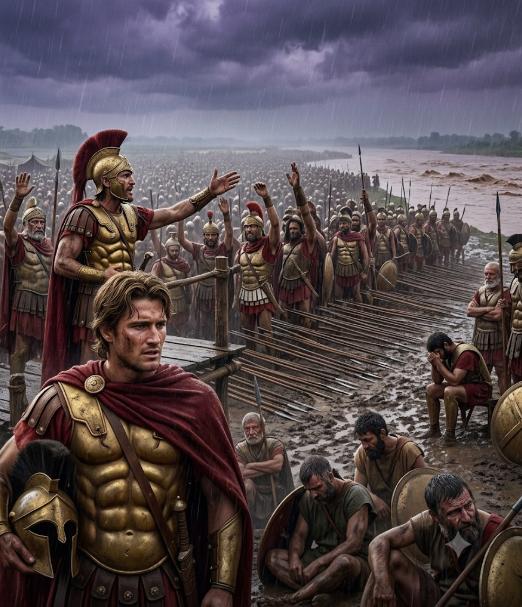
AI-generated image of Alexander the Great facing his soldiers at the Mutiny of Hyphasis.
'In 2014,' I told Jamal, 'the Indian side was louder.'
He considered this for a moment. 'This year,' he said, 'there was more to shout about.' He smiled but did not explain, and I did not press him. The India-Pakistan relationship in July 2023 was being conducted, as it had been for decades, through the medium of cricket matches, nuclear threats, and the daily ritual theatre of Wagah, each country insisting on its own primacy in the face of a shared civilisation that predates both of them by several thousand years.
It struck me, watching the two armies perform their nightly pantomime of mutual refusal, that this same stretch of Punjab had staged an older and stranger refusal, a little further on. Some sixty kilometres east of where I stood, past Amritsar and on the banks of a river the Greeks called the Hyphasis — the Beas, in modern India, close enough that a Pakistani border guard could point roughly in its direction — Alexander the Great's own army did, in the summer of 326 BCE, what neither side has ever managed at this crossing: it simply stopped. He had beaten Porus's elephants at the Hydaspes only weeks before and wanted to press on toward the Ganges and the fabled wealth of the Nanda Empire beyond it. His men, eight years and one continent from Macedonia, soaked through by two months of unbroken monsoon and fed rumours of even larger Indian armies waiting further east, would not follow him. An officer named Coenus spoke for them, reciting the rivers and the battles and the years behind them and asking, in substance, to be allowed to stop being conquerors. Alexander raged, then withdrew to his tent and refused to see anyone for three days, in the manner of his self-styled ancestor Achilles, waiting for his army's resolve to break before his own did. It was his that broke first. He announced that the omens were unfavourable, ordered twelve altars raised on the riverbank as thank-offerings to the Olympian gods and markers of how far his men had carried him, and turned the entire invasion around.
Alexandria Hyphasis, the small veterans' settlement he founded on the spot, was the easternmost of the roughly twenty cities that carried his name across three continents — and, of all his conquests, very possibly the only one a visitor to today's Pakistan cannot reach without a visa to the country on the other side of this same fence. It is a curious thing to stand at Wagah, watching two modern nations perform their nightly refusal to yield an inch to one another, and remember that the ground a little further on once marked the single place on earth where the man who had conquered everything else finally agreed that he had gone far enough.
A Note on Process
The travelogue on this site are based on my own journeys, photographs, Facebook posts, and field notes. I work with Claude (Anthropic's AI assistant) as a drafting and editorial partner — giving it my raw material and working iteratively to shape it into finished prose. The AI helps me draft quickly, maintain a consistent voice across long narratives, and edit at the document level. The website's HTML and coding are built with the assistance of Gemini (Google). Audio versions of the essays are produced using NotebookLM (Google). Every observation, opinion, and conclusion in the written work is mine. The AI tools are the instruments; I am the author.