The Grand Trunk Road —
Alexander's Ghosts and a Prime Minister's Roots
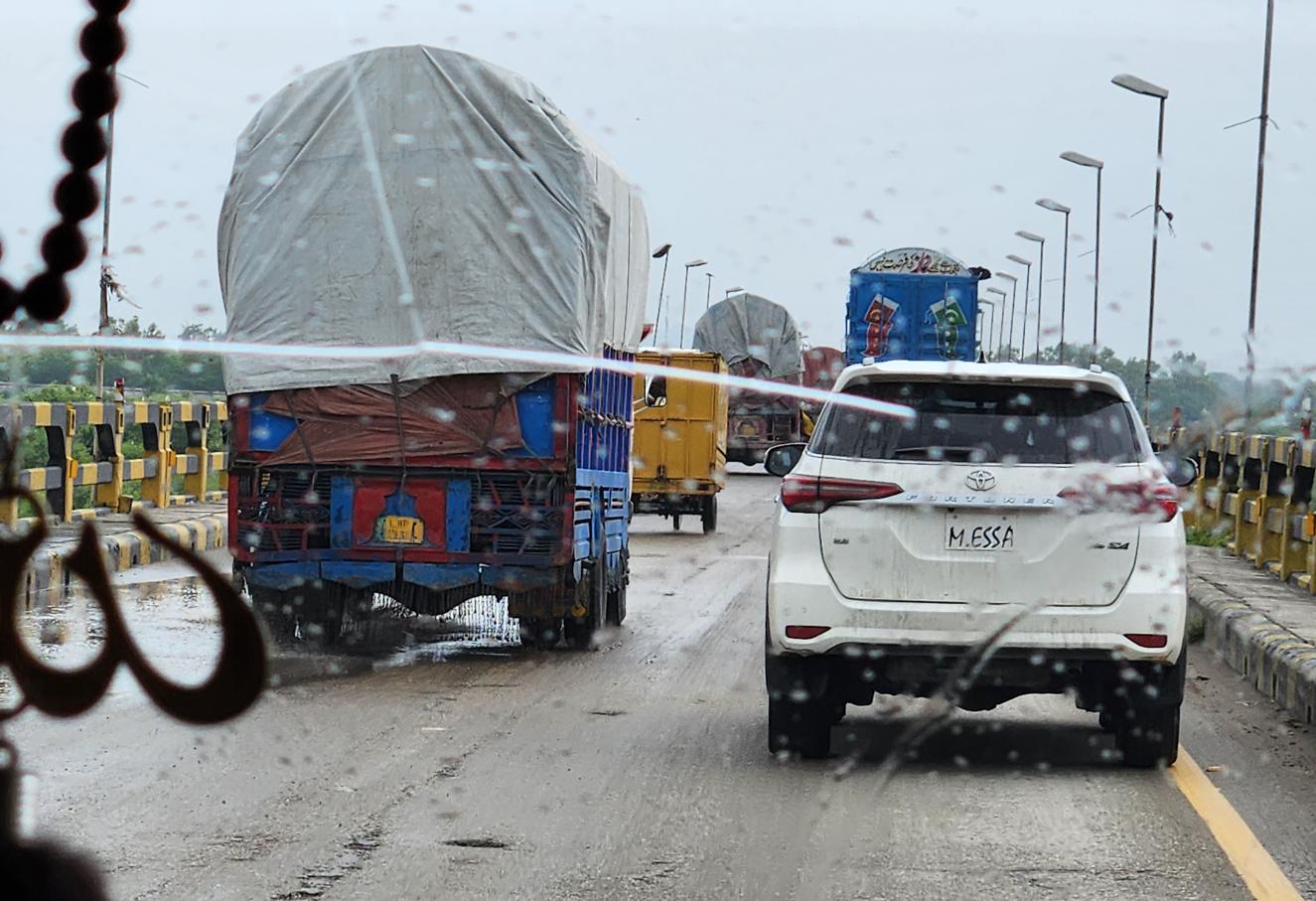
Such a river of life as nowhere else exists in the world.
— Rudyard Kipling, on the Grand Trunk Road, in KimGujranwala: Wrestlers, Fans, and a Prime Minister's Grandparents
We left Lahore on the Grand Trunk Road, the artery Sher Shah Suri laid out in the sixteenth century and the British paved and named, running two and a half thousand kilometres from Kabul to Kolkata through the heart of everything this stretch of the subcontinent has ever fought over. An hour or so out of the city it passes through Gujranwala, the "City of Wrestlers" and, by the standards of everywhere else in this book, practically an infant: founded only in the eighteenth century, a relative newcomer among the millennia-old settlements of northern Punjab. Two million people now live there, making it the fifth largest city in the country, and its economy — sanitary ware, auto parts, electric fans, iron and steel, a hosiery industry seeded by refugees from Ludhiana in 1947 — is a monument, if an unglamorous one, to what migration builds when it is given fifty years and a decent industrial base to work with.
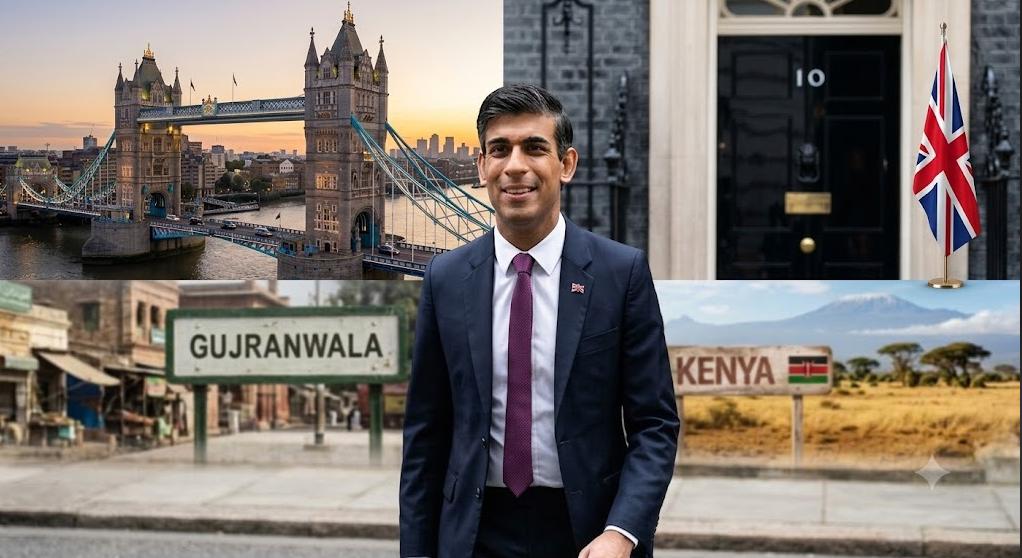
Gujranwala has, in recent years, acquired an unexpected footnote to world history: it is where the grandparents of Rishi Sunak, Britain's prime minister of Indian origin, lived before leaving for Kenya in the 1930s. Sunak's parents later left Kenya for the United Kingdom, where their son was born, educated, and eventually installed in Downing Street — a single family's journey that took in the last years of colonial Punjab, the East African Indian diaspora, and the political establishment of post-imperial Britain, in roughly three generations. It is difficult to stand in Gujranwala, watching auto-parts trucks queue at a level crossing, and not run the counterfactuals: a family that had stayed, or had gone directly to Britain instead of by way of Nairobi, or had left a decade earlier or later, would have produced an entirely different life, and Downing Street would have a different resident, or none from this particular corner of Punjab at all. History's great migrations are made of exactly this kind of unremarkable, individually reasonable decision, multiplied by millions, each one closing off a thousand other futures.
Sialkot: Where Alexander Sacked a City, and Footballs Are Born
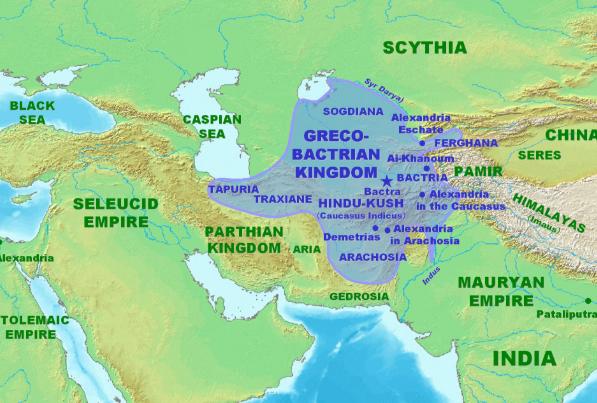
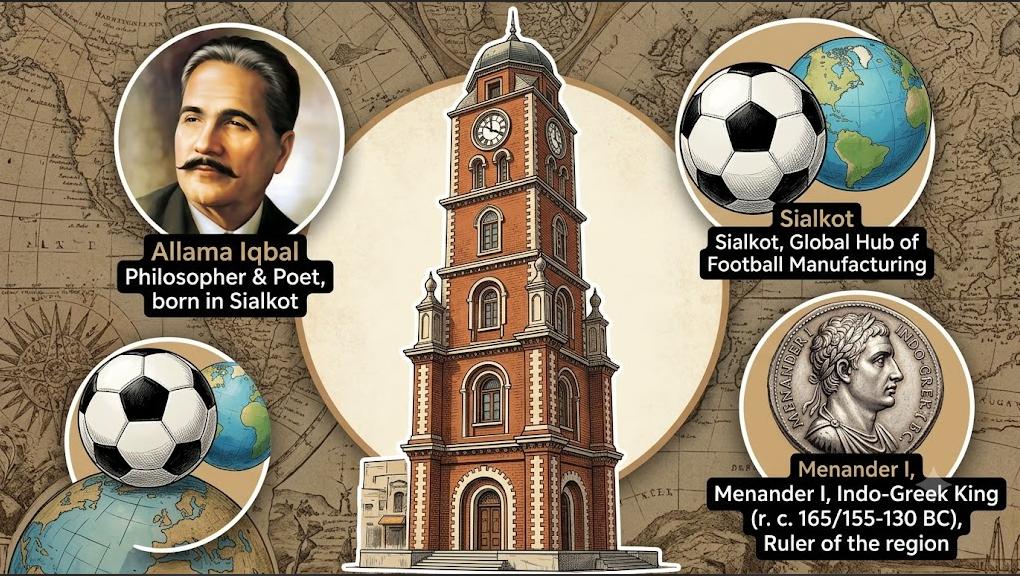
Sialkot is believed to be the successor of Sagala, capital of the Madra kingdom, which Alexander the Great destroyed in 326 BCE on his push into the Punjab — the same campaign whose Central Asian preamble I have written about at length elsewhere. Two centuries later Sagala prospered again as the capital of an Indo-Greek kingdom under Menander I, a Hellenistic ruler whose conversations on Buddhist philosophy were preserved as the Milindapanha and who remains, alongside Ashoka and Kanishka, one of the more improbable royal patrons in the Buddha's long afterlife on this soil. Today's Sialkot is Iqbal's birthplace and, more prosaically, the football manufacturing capital of the world: a city of seven hundred thousand people producing over seventy per cent of the footballs made on earth, its stitched leather panels finding their way to five continents' worth of children's feet, my own son's very possibly among them, without either of us ever having reason to know it.
Jhelum: The Battle That Turned Alexander Back
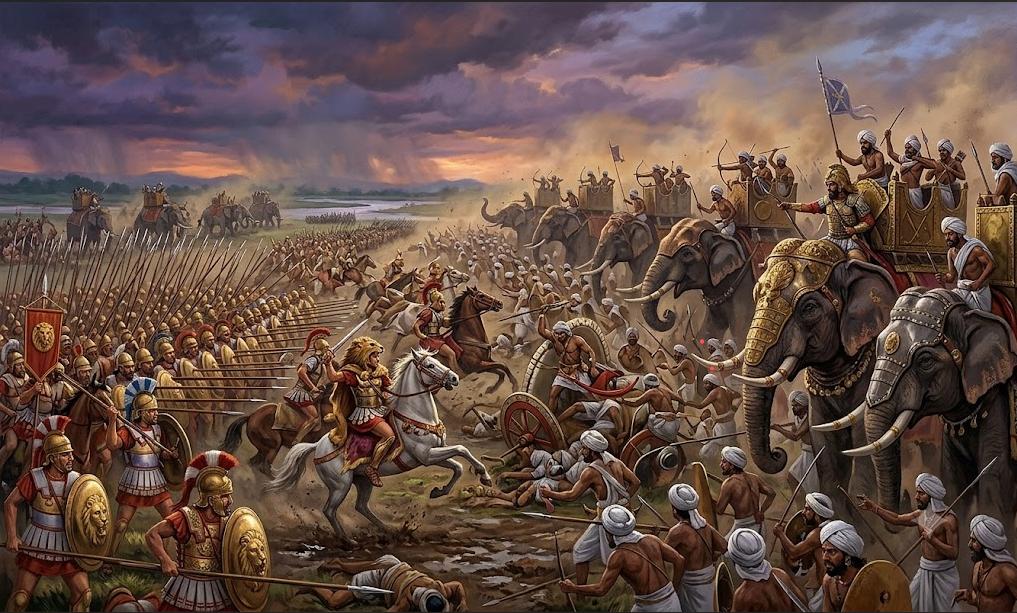
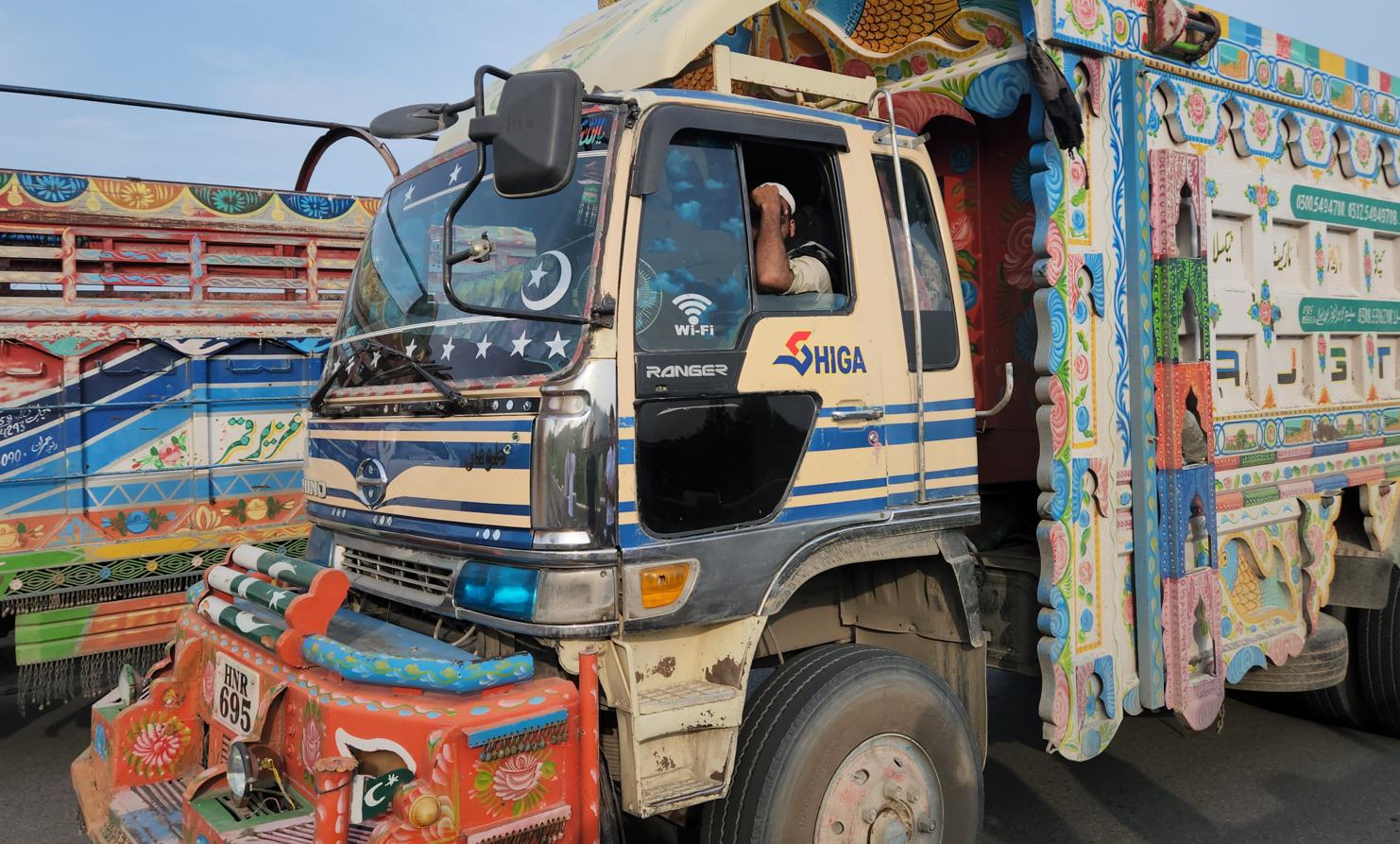
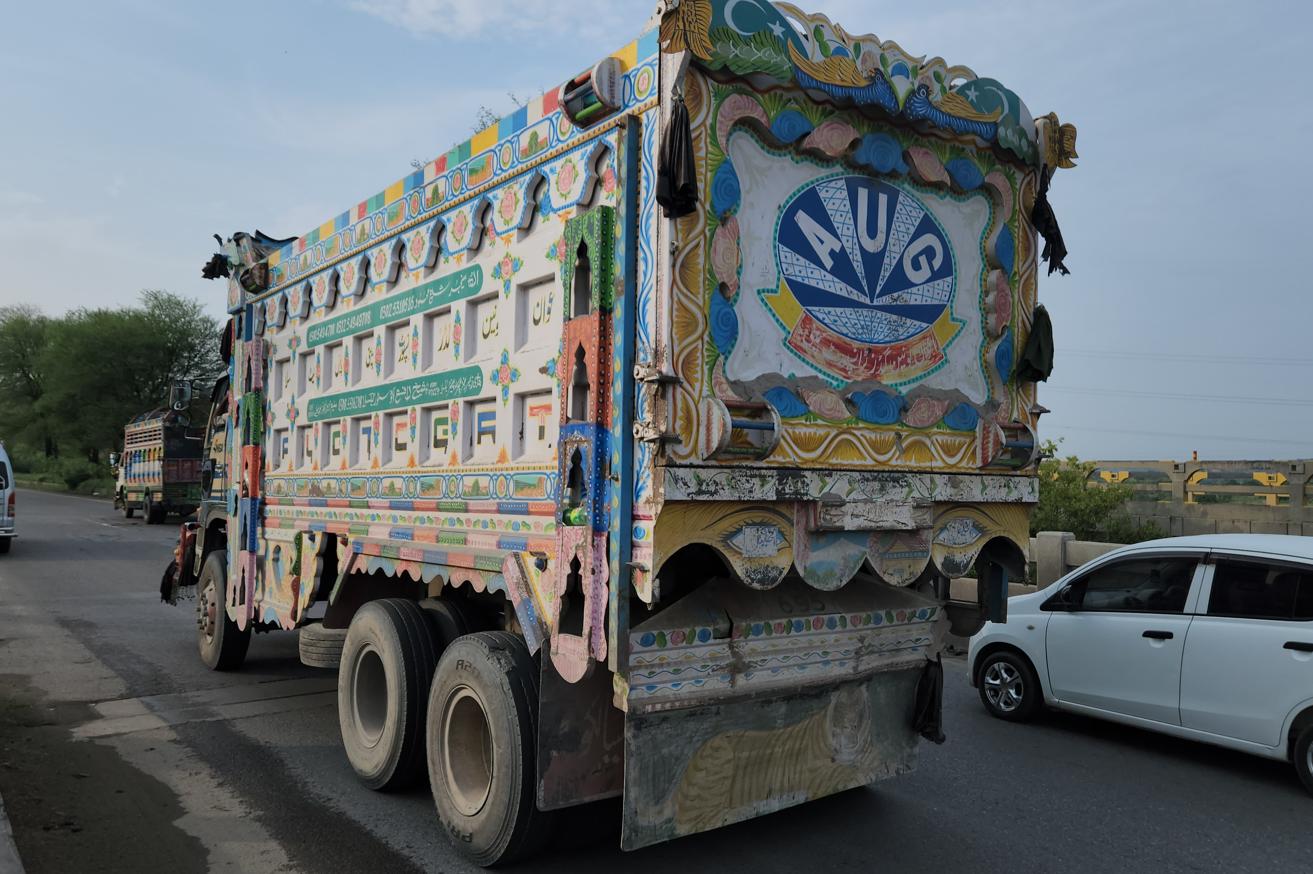
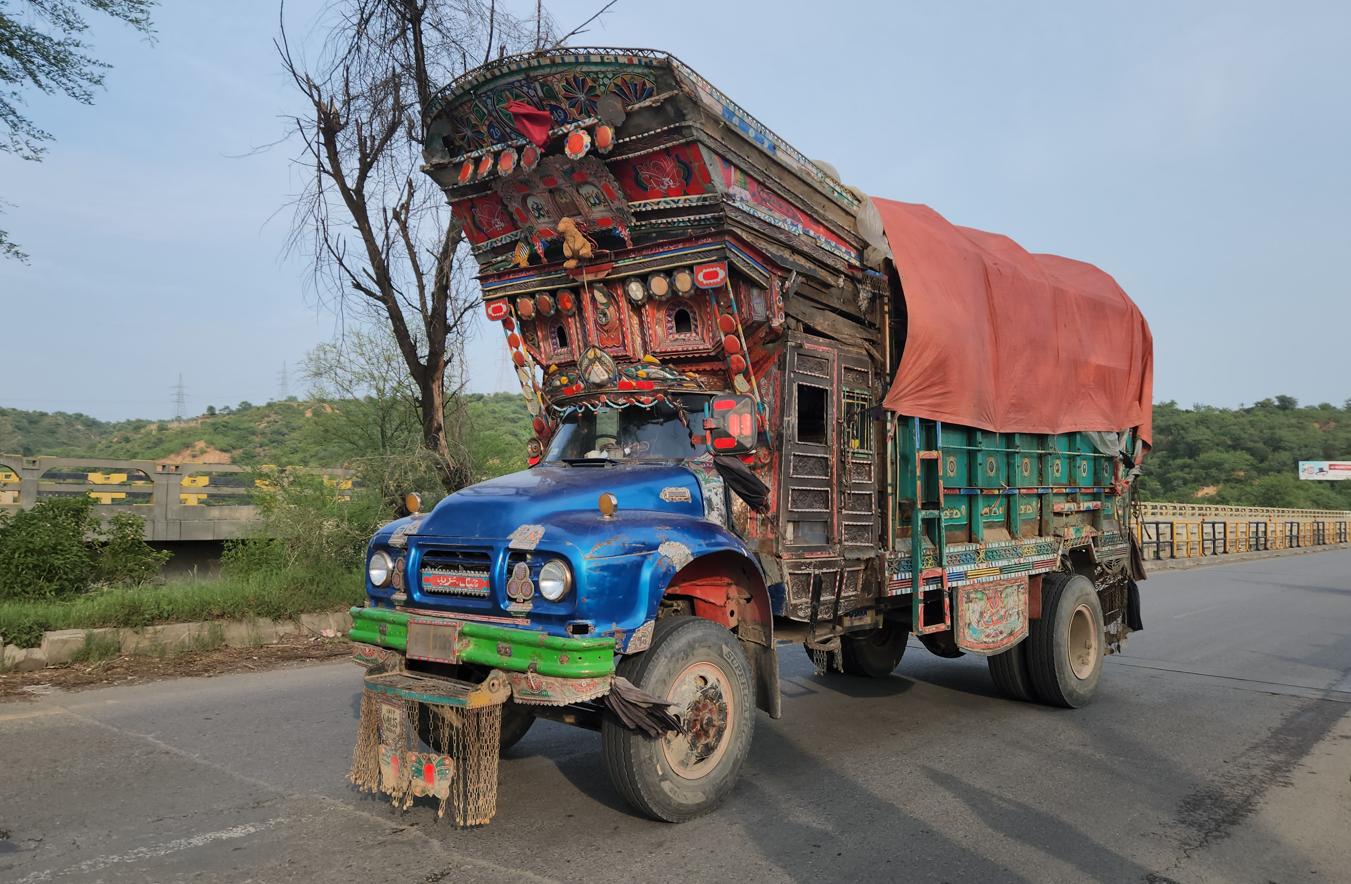
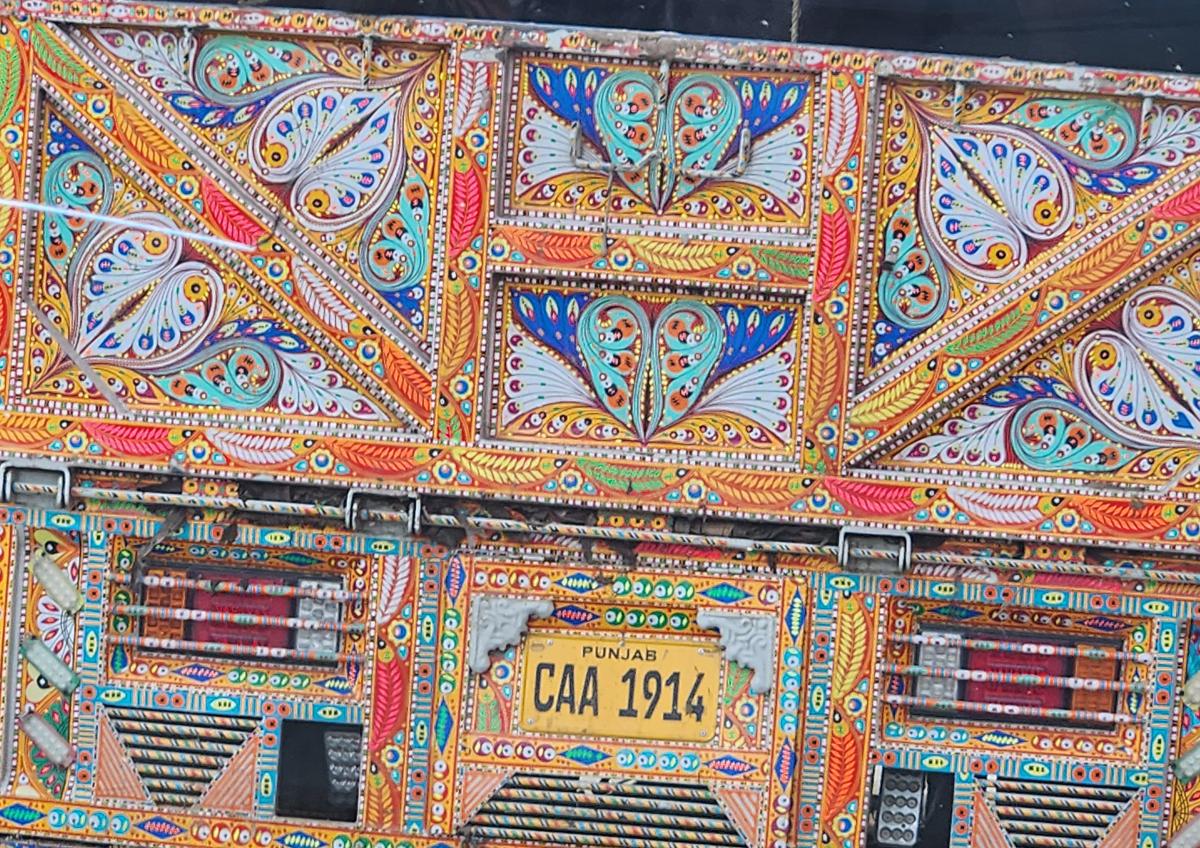
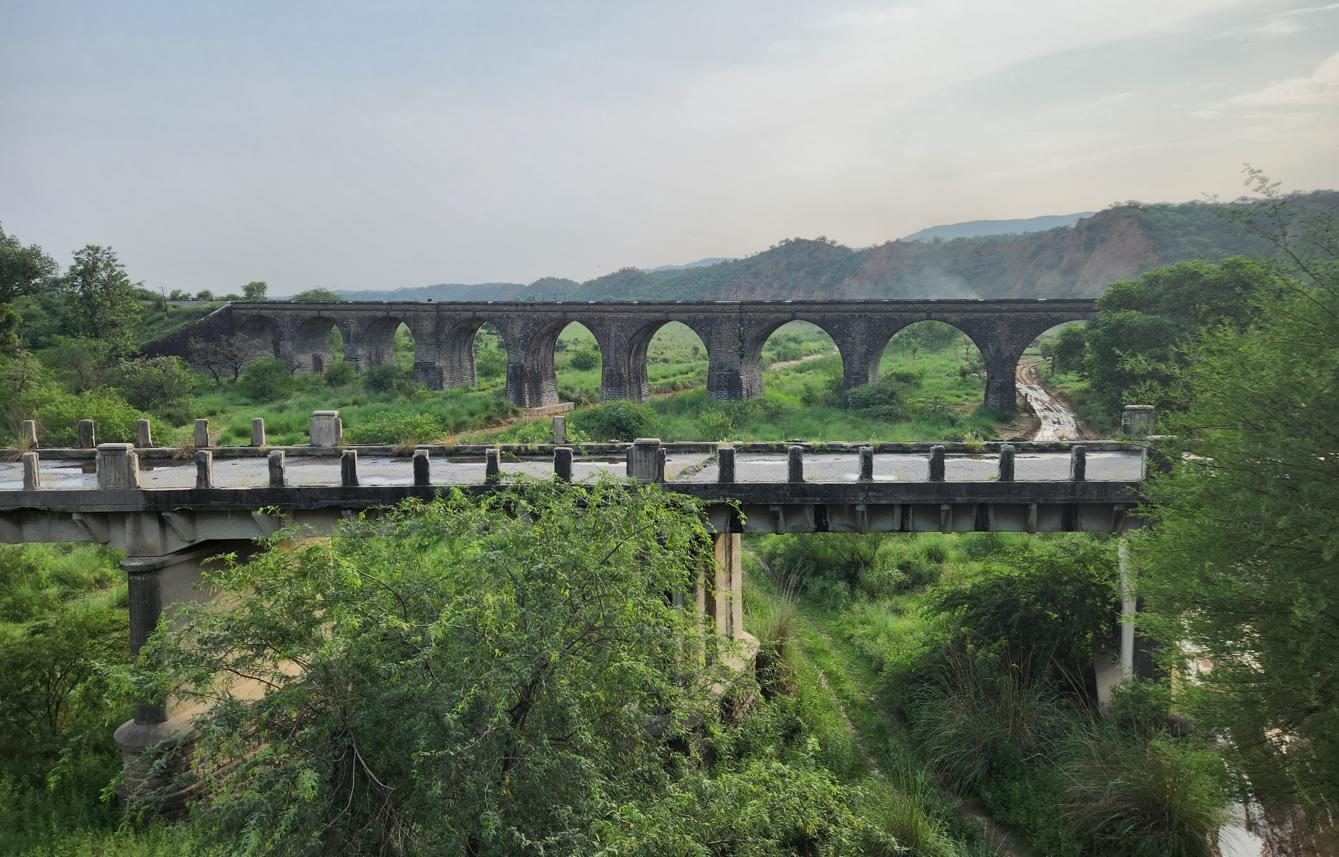
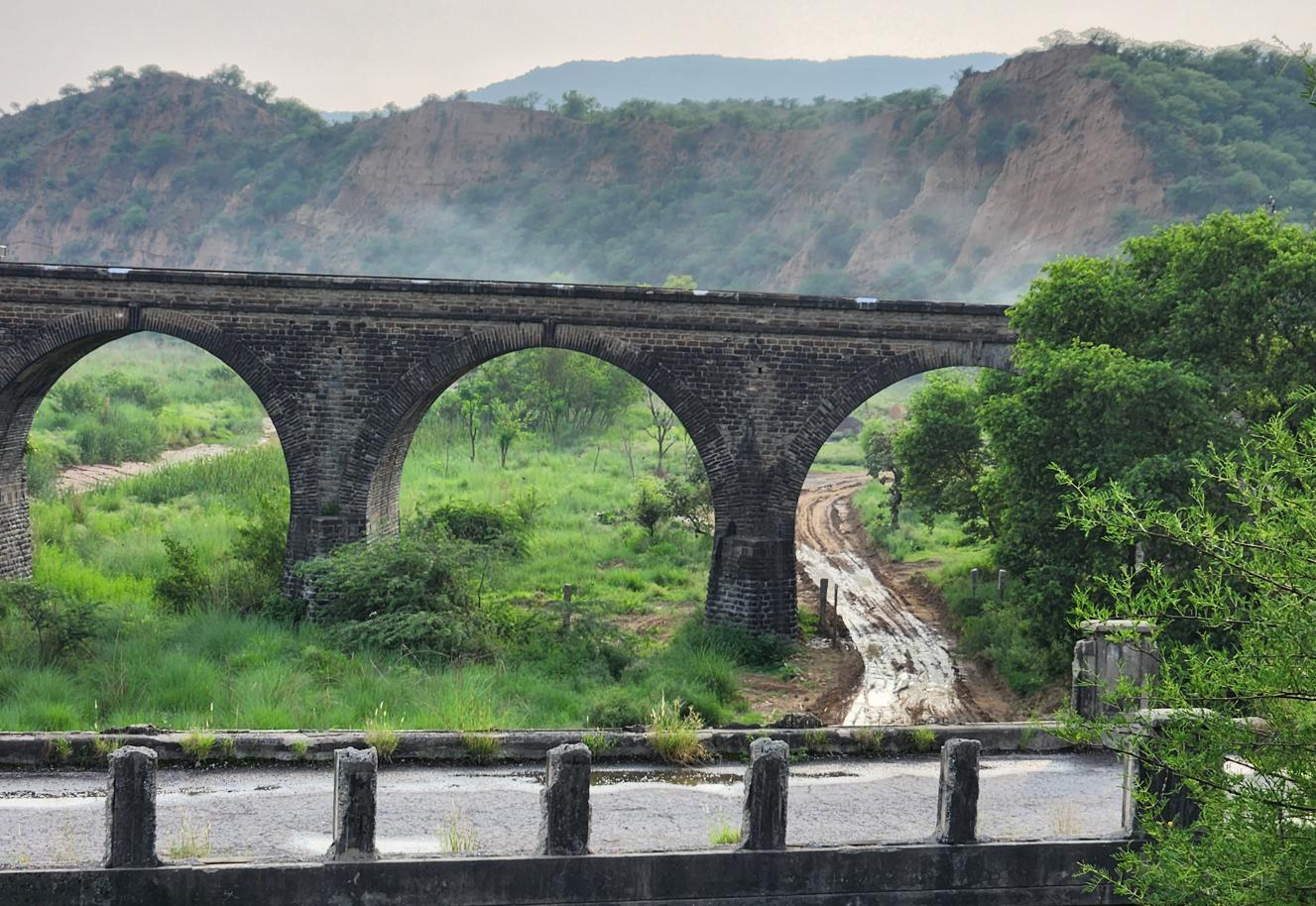
At Jhelum we crossed the river the Greeks called the Hydaspes, on whose banks in May 326 BCE Alexander fought Porus, king of the Pauravas, in what the ancient sources agree was the costliest engagement of his entire campaign. Porus had drawn up his army on the river's far bank during the monsoon, gambling that the swollen Hydaspes was itself an impassable wall; Alexander spent weeks marching his cavalry noisily up and down the near bank each night until Porus tired of shadowing him and settled into ignoring the racket. On the night that mattered, under cover of a genuine thunderstorm that drowned out the sound of his crossing, Alexander slipped a picked force upstream to a wooded island splitting the river and ferried them over on inflated hides and boats carried overland in pieces from the Indus. Porus's own son led a hasty detachment to meet the landing and was killed along with most of his men; by the time Porus realised the greater part of his enemy had already crossed, the position he had spent weeks preparing was effectively behind him rather than in front of him.
The set battle that followed introduced the Macedonians to a weapon they had never faced: a line of some two hundred war elephants, armoured and carrying archers in howdahs, stationed at intervals in front of Porus's infantry specifically to terrify Alexander's cavalry horses. It very nearly worked — the elephants mauled the Macedonian line badly in the opening exchanges — until Alexander's javelin-throwers and archers turned their fire on the mahouts rather than the animals, and the wounded, driverless elephants turned and stampeded back through their own ranks, trampling as many Pauravan soldiers as Macedonian ones. Into that self-inflicted chaos the Macedonian phalanx locked shields and advanced, while Alexander's cavalry, having already broken the Indian horse on the flanks, wheeled in from the rear in the hammer-and-anvil manoeuvre that had served him so well against the Persians. Porus, wounded and dismounted but still upright on his one surviving elephant, kept fighting after his own army had effectively ceased to exist around him, and it was this, as much as the defeat itself, that seems to have moved his opponent. When the captured king was asked how he wished to be treated, he is said to have answered that he wished to be treated as one king treats another, and Alexander, impressed rather than offended by the audacity of the reply, reinstated him as satrap of his own kingdom rather than deposing him.
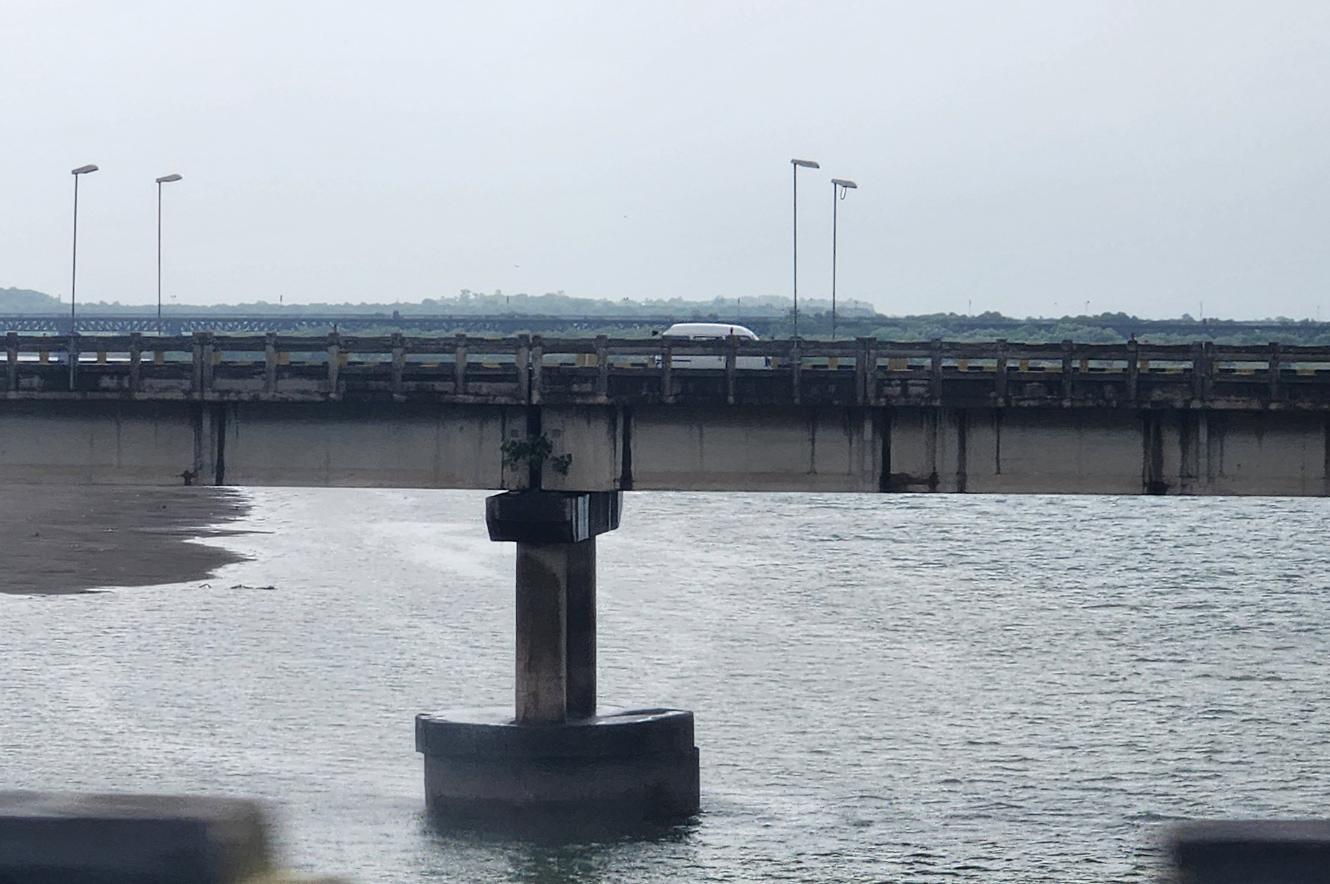
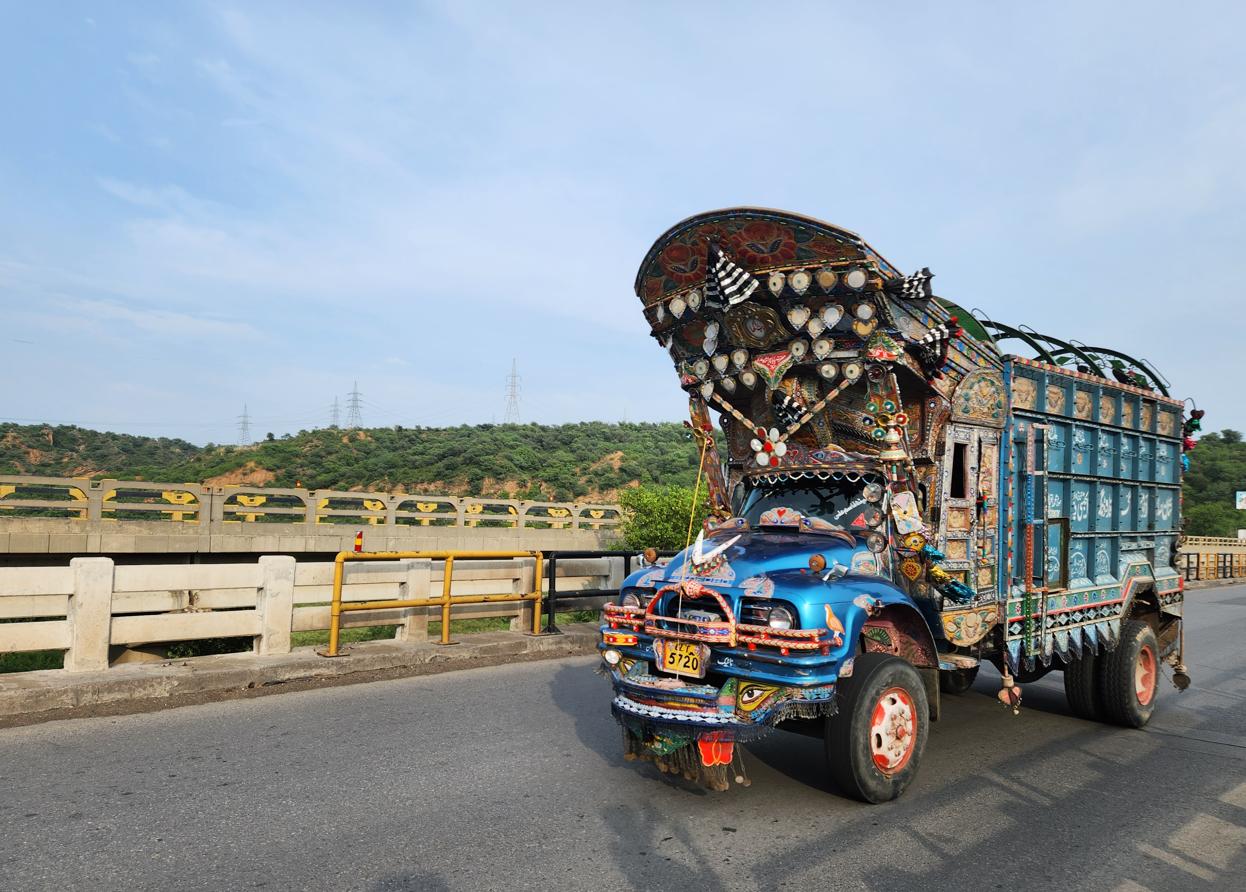
Hydaspes was also, in its way, the beginning of the end. It was the last major battle Alexander's army fought before it stopped fighting altogether; a short march further east, at a river the Greeks called the Hyphasis — a story that belongs properly to India rather than Pakistan, and which I have already told at the Wagah border a few pages back — the same soldiers who had followed him from Macedonia through the length of Central Asia finally refused to go any further, and Alexander turned back. Standing on the modern bridge over the Jhelum, with trucks and motorbikes streaming past in both directions, it was hard not to feel the scale of that decision: an empire's eastward momentum, arguably the single most consequential military campaign in the ancient world, arrested a few days' march from here by nothing more dramatic than exhausted men declining to go any further into the unknown.
Rohtas Fort: Building Against an Emperor's Return
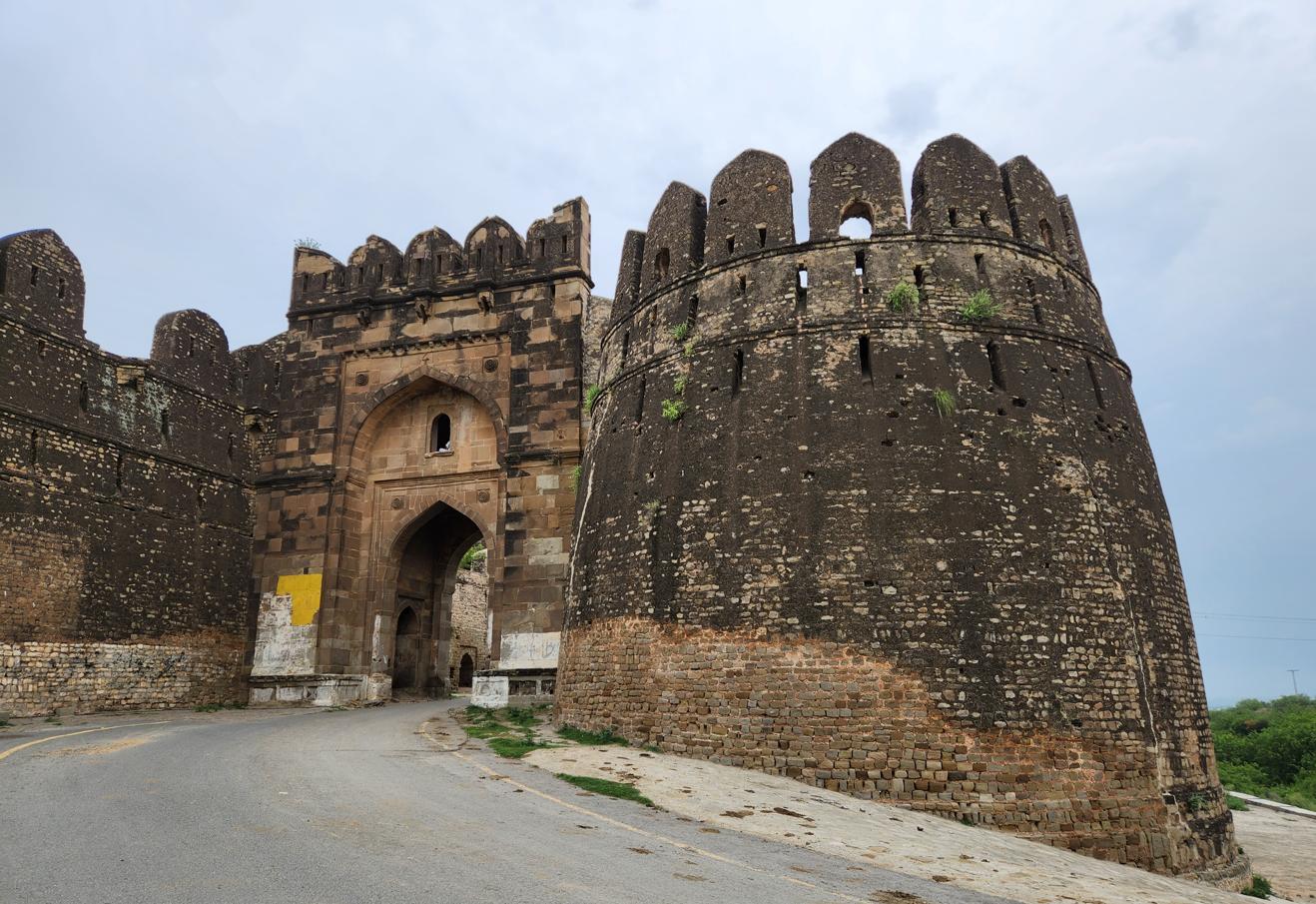
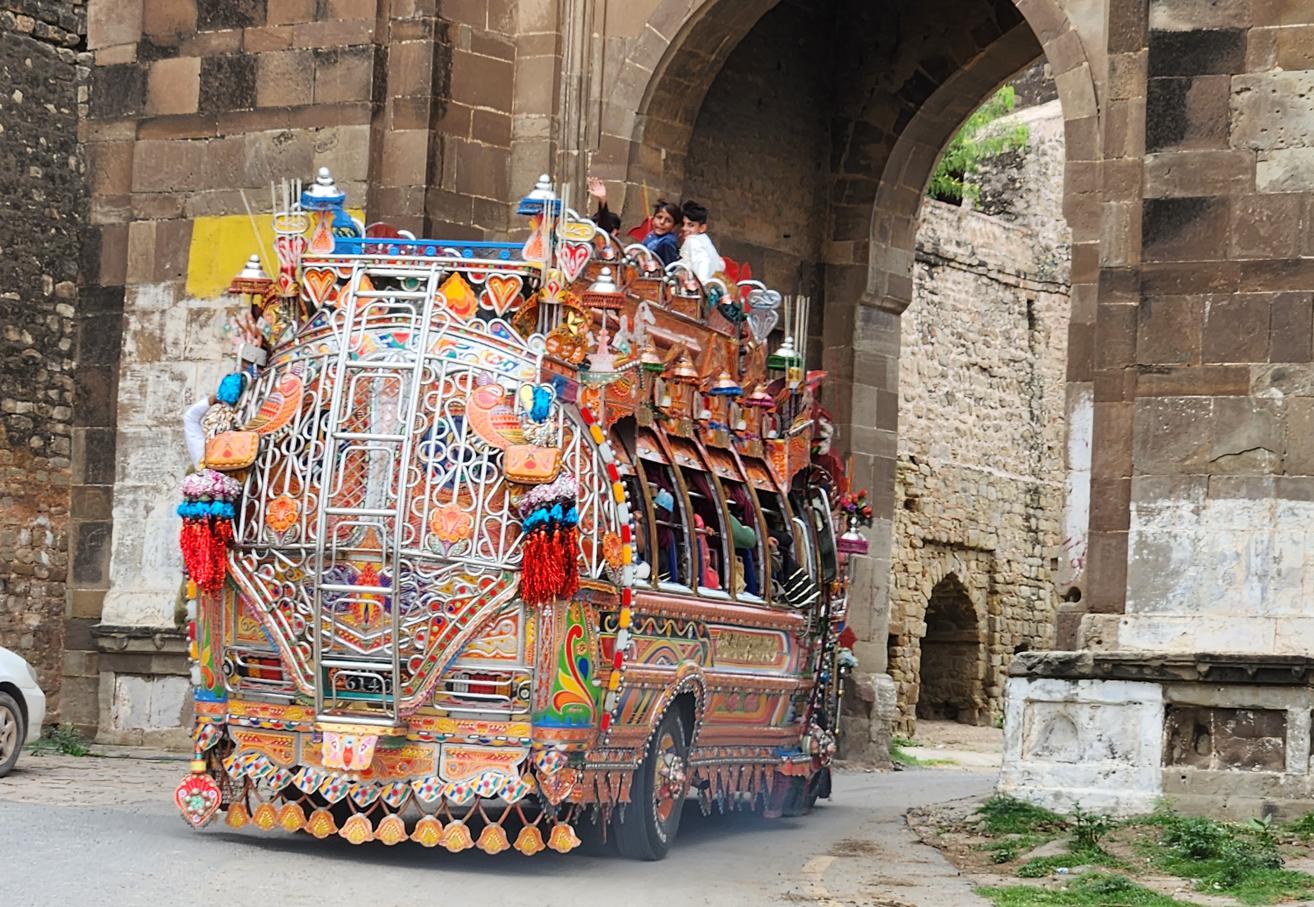
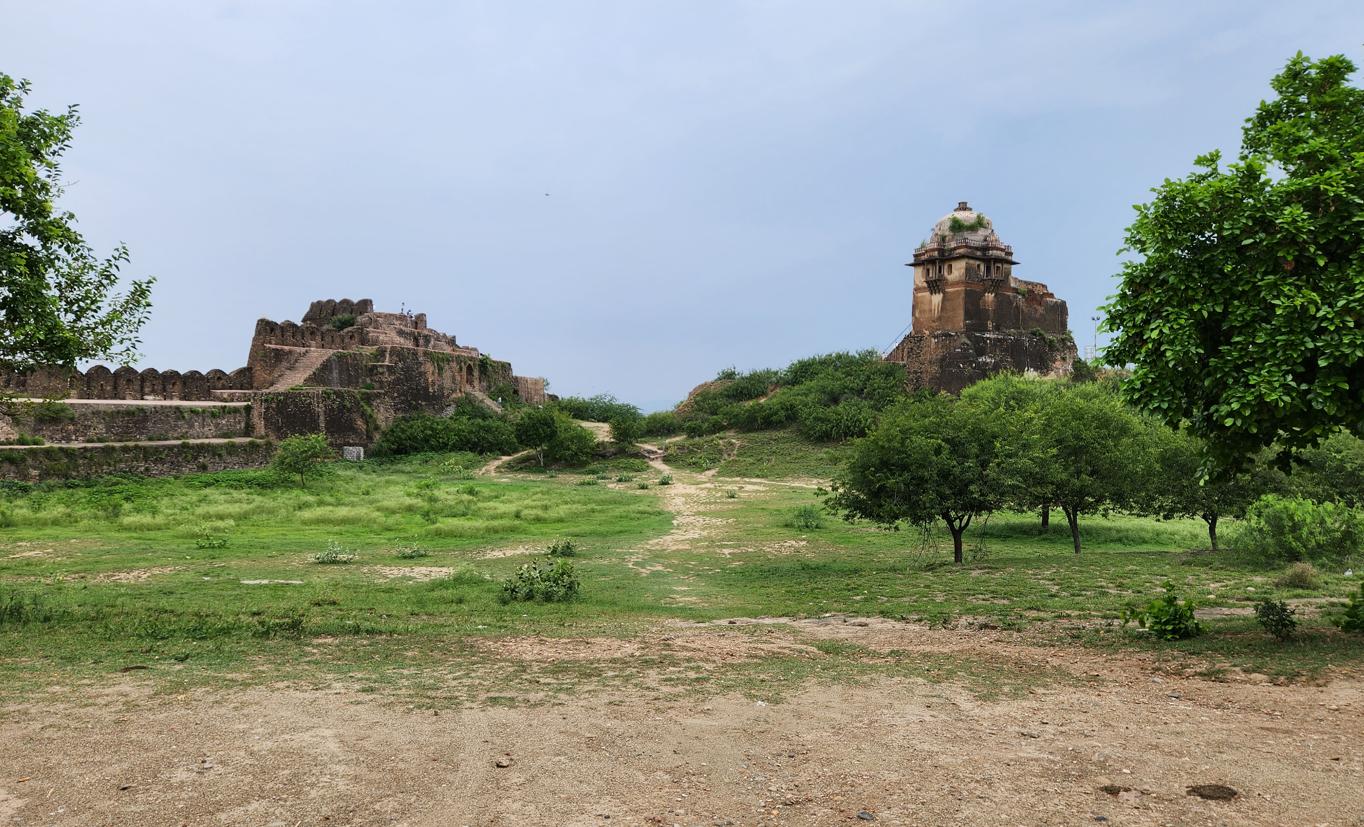
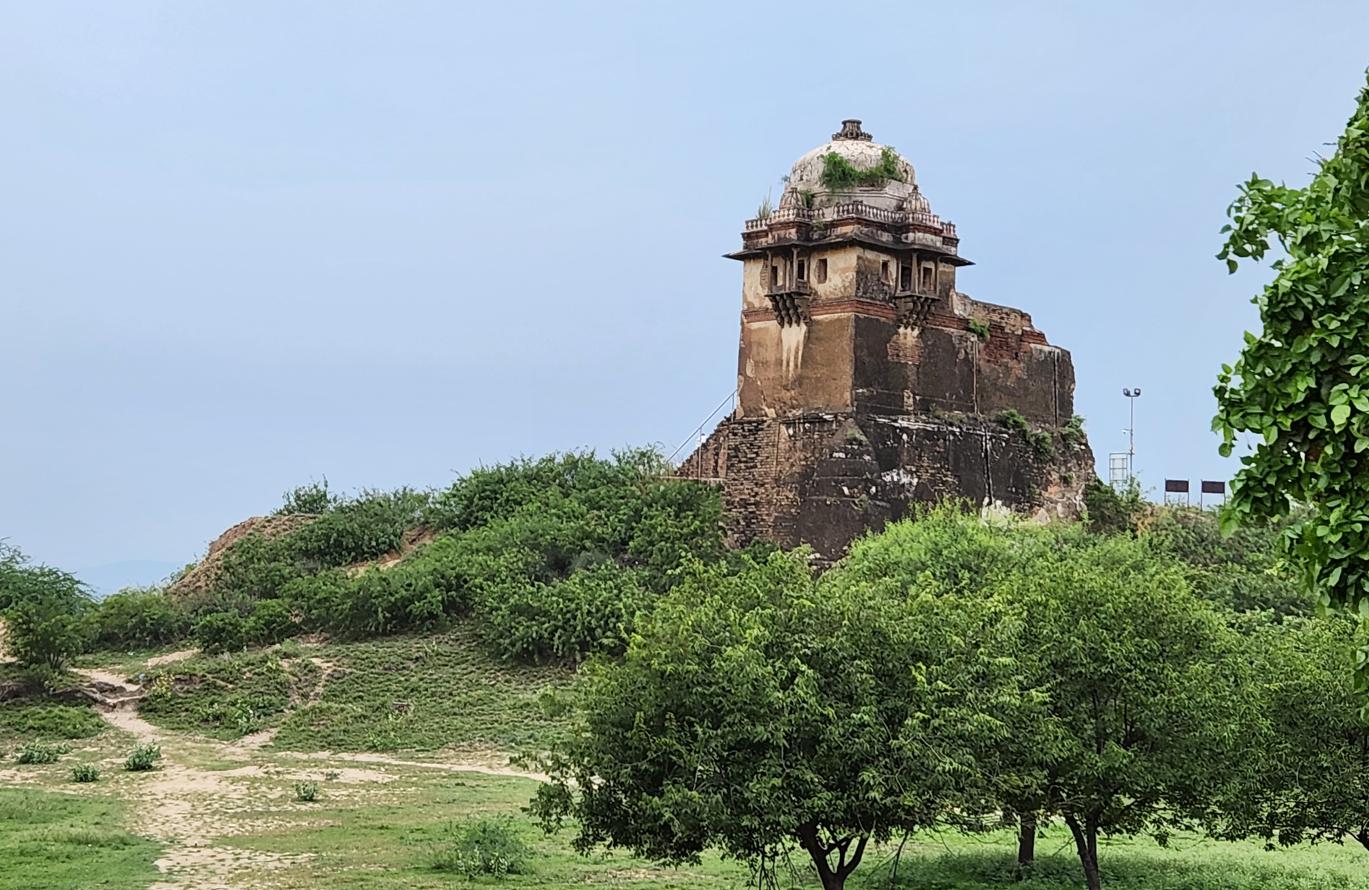
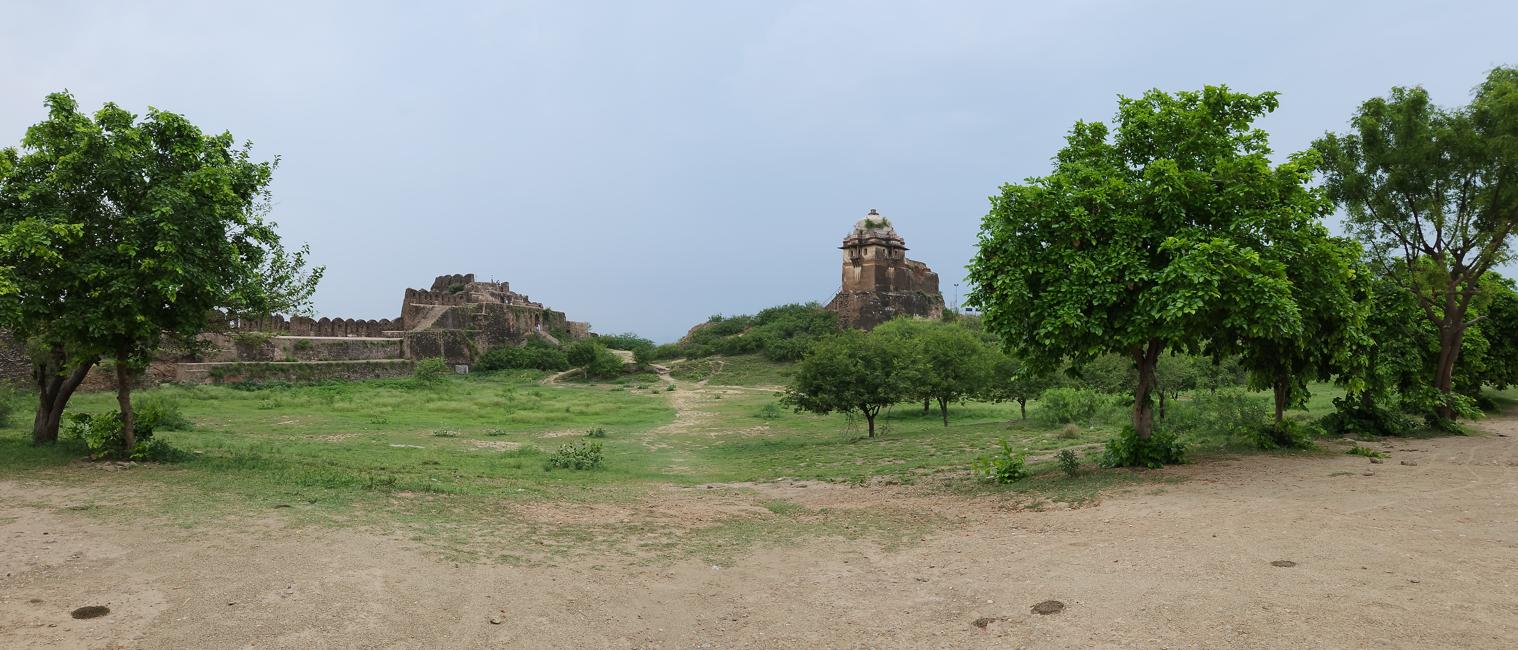
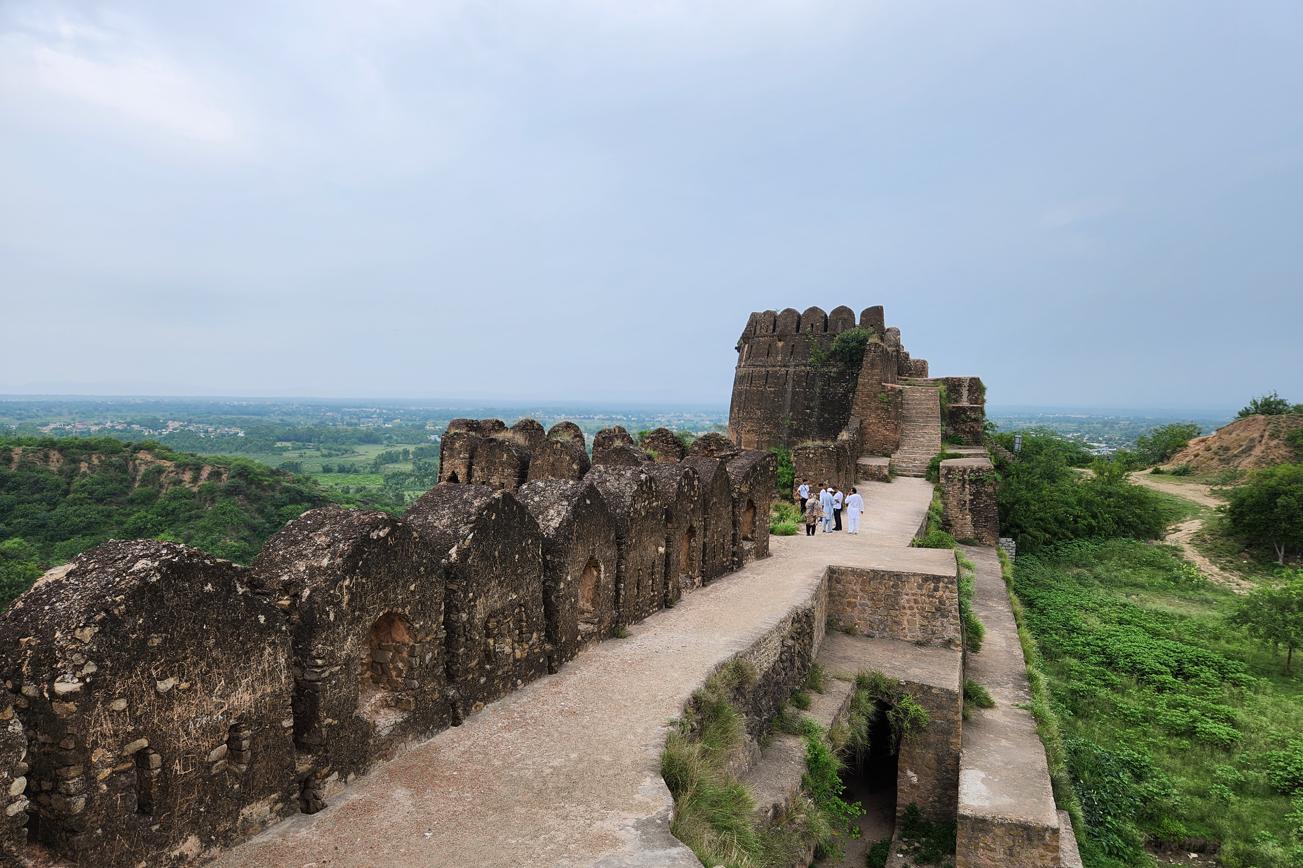
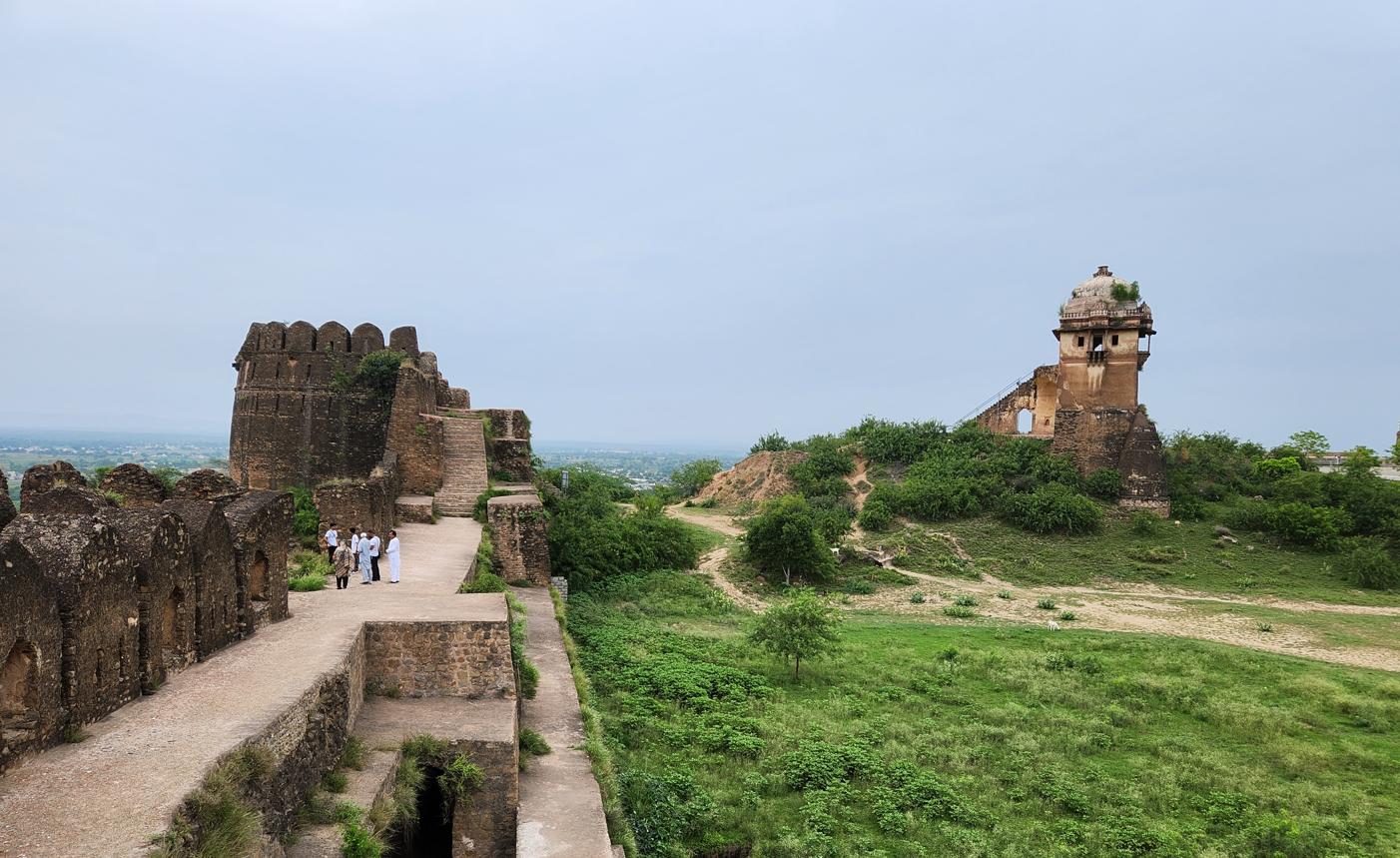
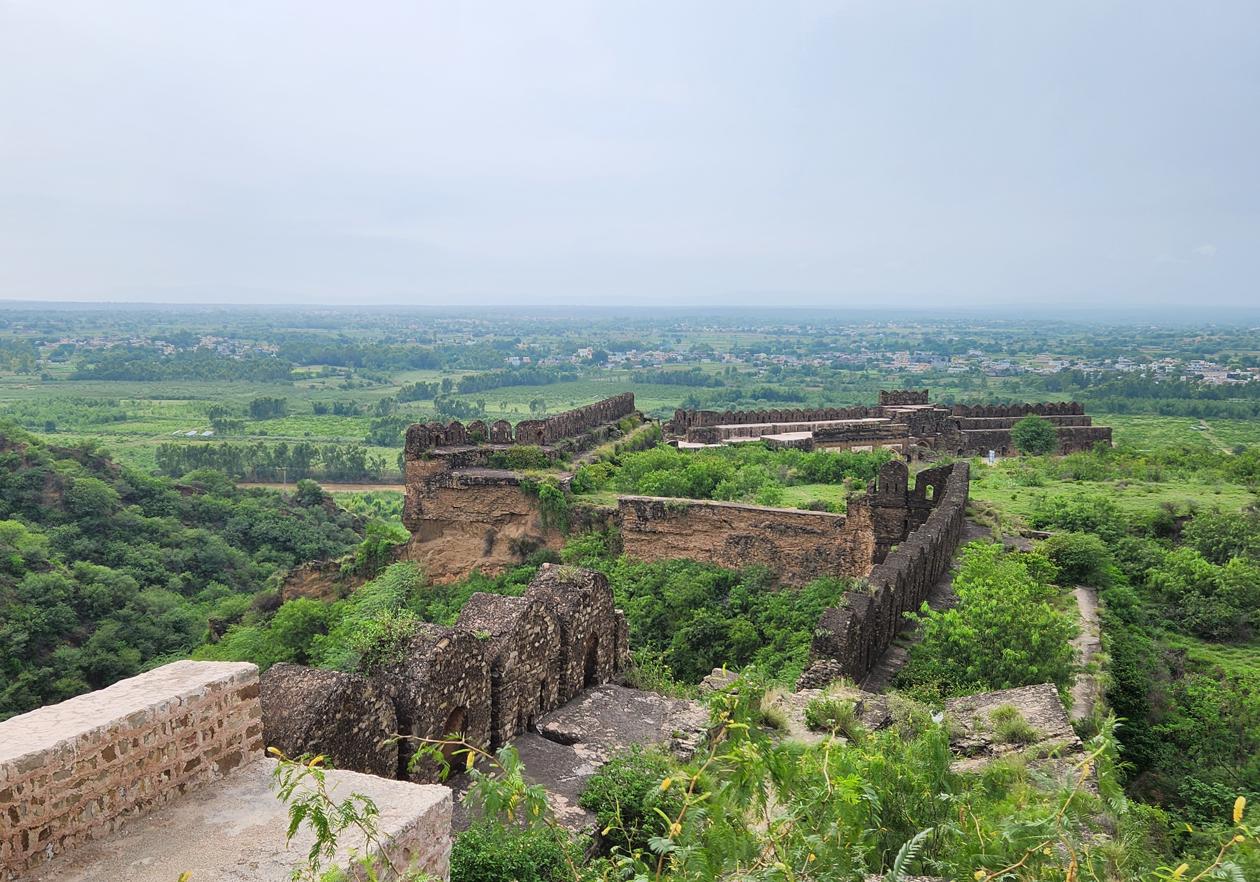
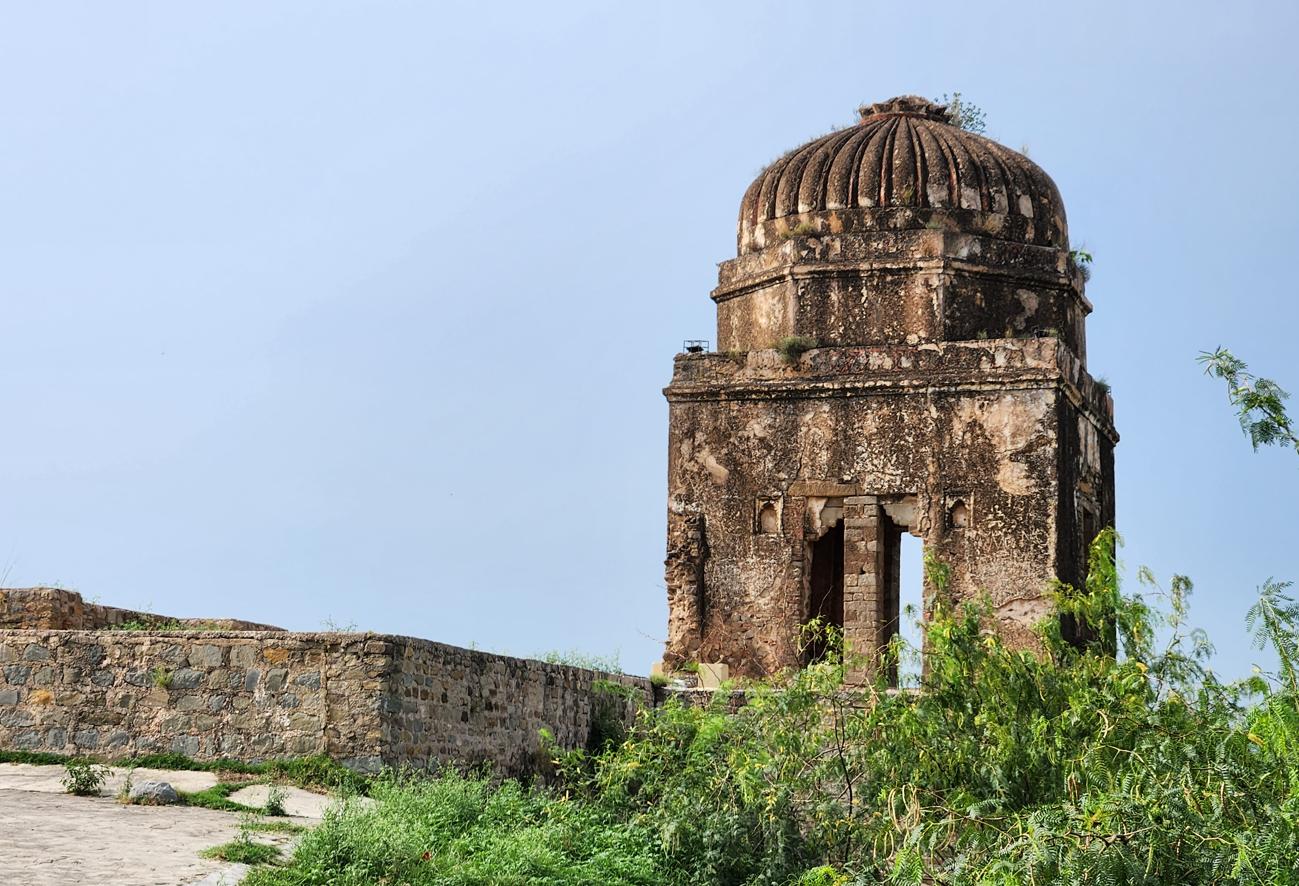

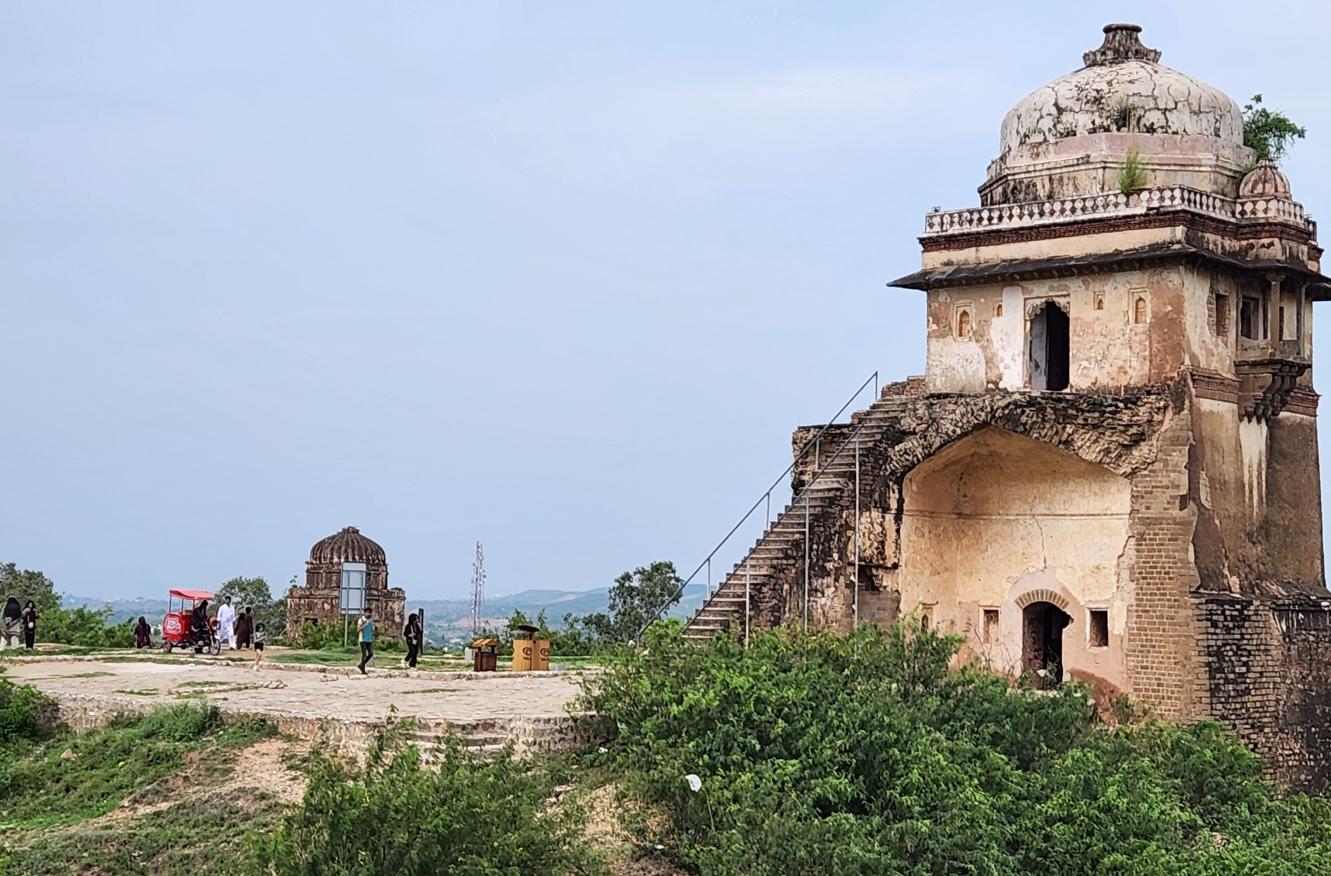
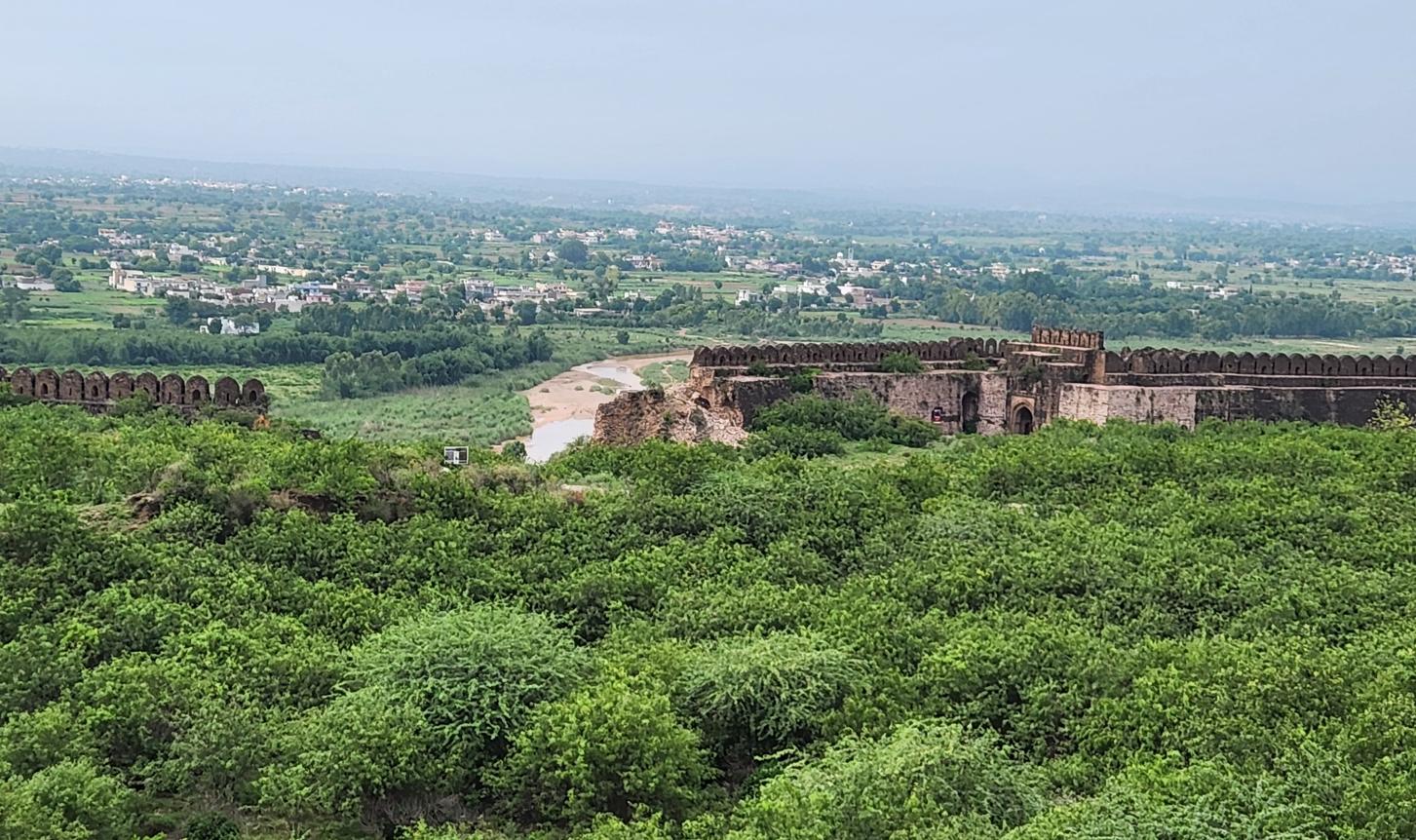
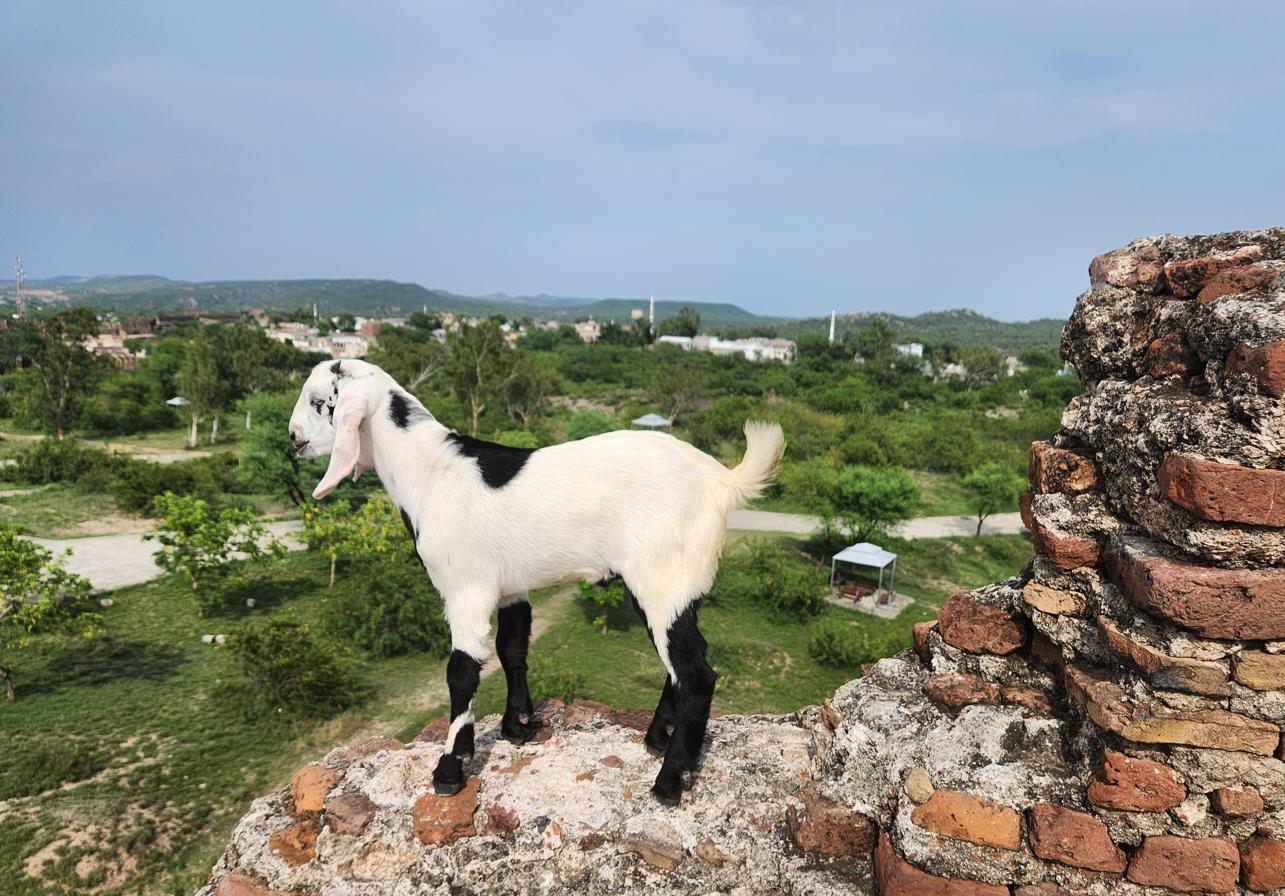
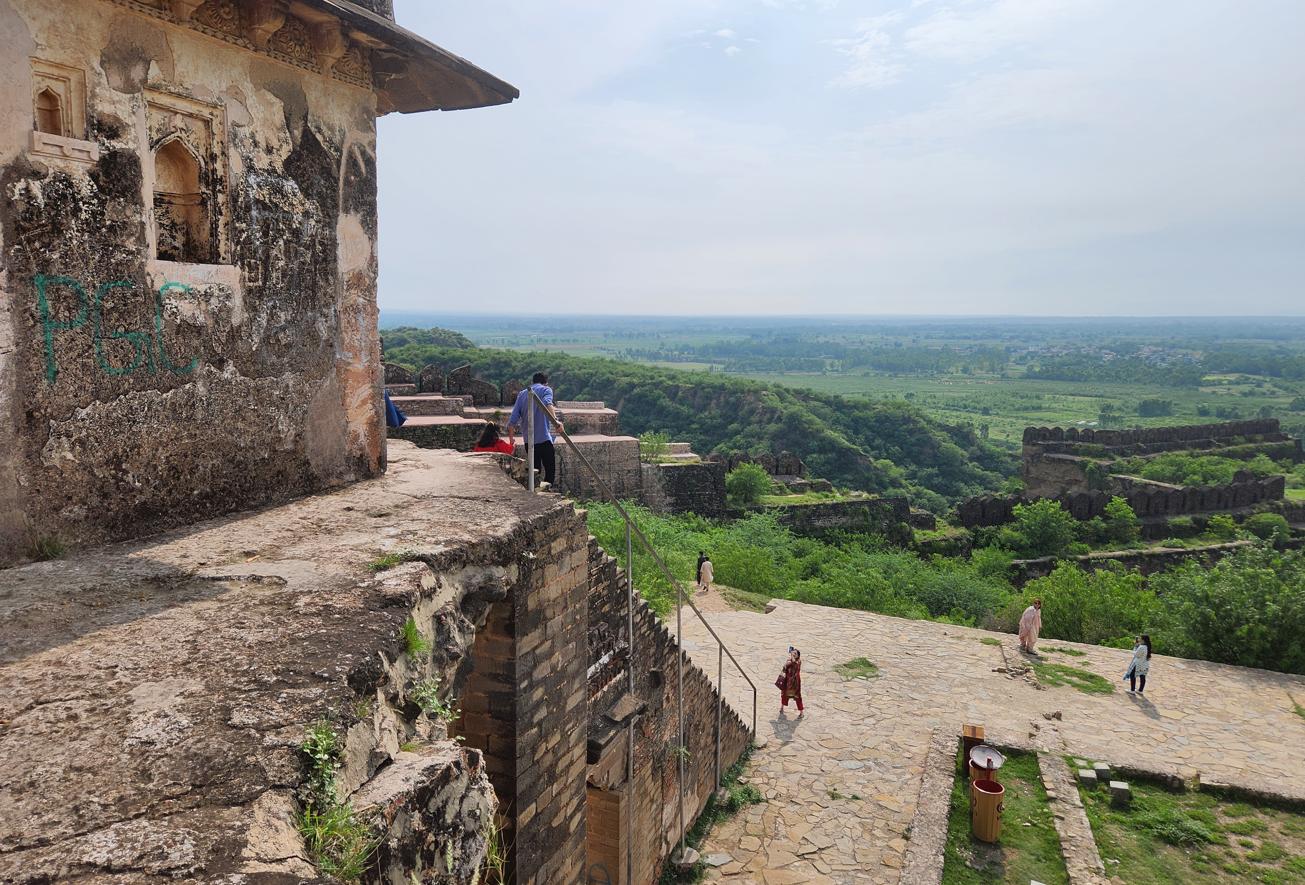
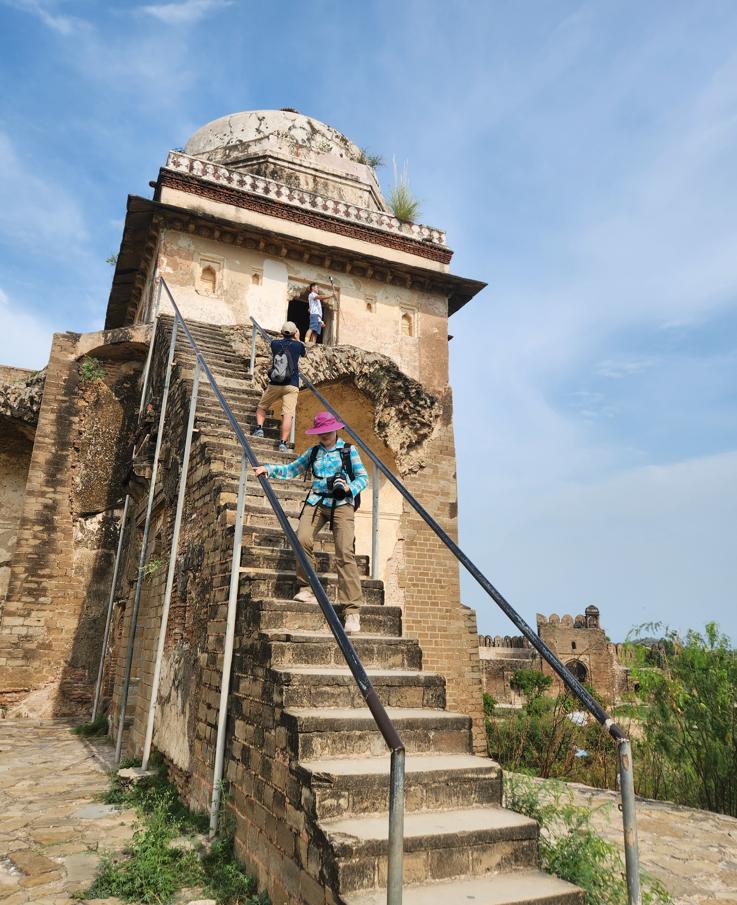
Rohtas Fort, a UNESCO World Heritage Site since 1997, sits on a hill above the Kahan River a few kilometres off the Grand Trunk Road near Dina, and it exists for the same reason so much else along this road exists: to control who comes through from the northwest. It was commissioned by Sher Shah Suri, the Afghan founder of the Sur Empire, specifically to bar the return of the Mughal emperor Humayun, whom Sher Shah had driven into exile in Persia. The fort's position, wedged between the mountains of Afghanistan and the plains of Punjab, meant that whoever held it controlled the traditional invasion route into India — the same route Alexander had used nineteen centuries earlier, and that every army moving between Central Asia and the Gangetic plain has used since. Humayun did eventually return and retake his throne, but not through Rohtas; the fort had done its job long enough to matter, which along the Grand Trunk Road has generally been the most any fortification could ask for.
Mankiala Stupa: Volleyball on a Buddhist Shrine
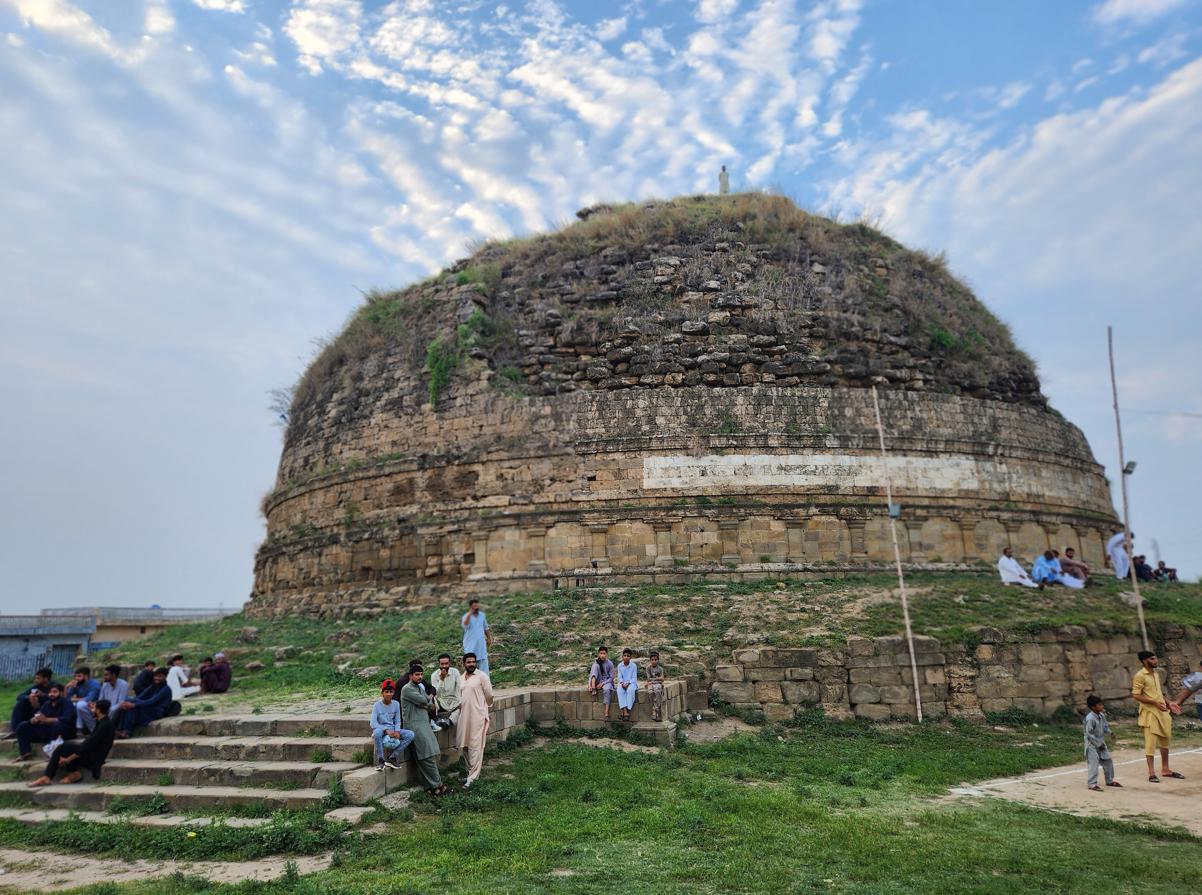
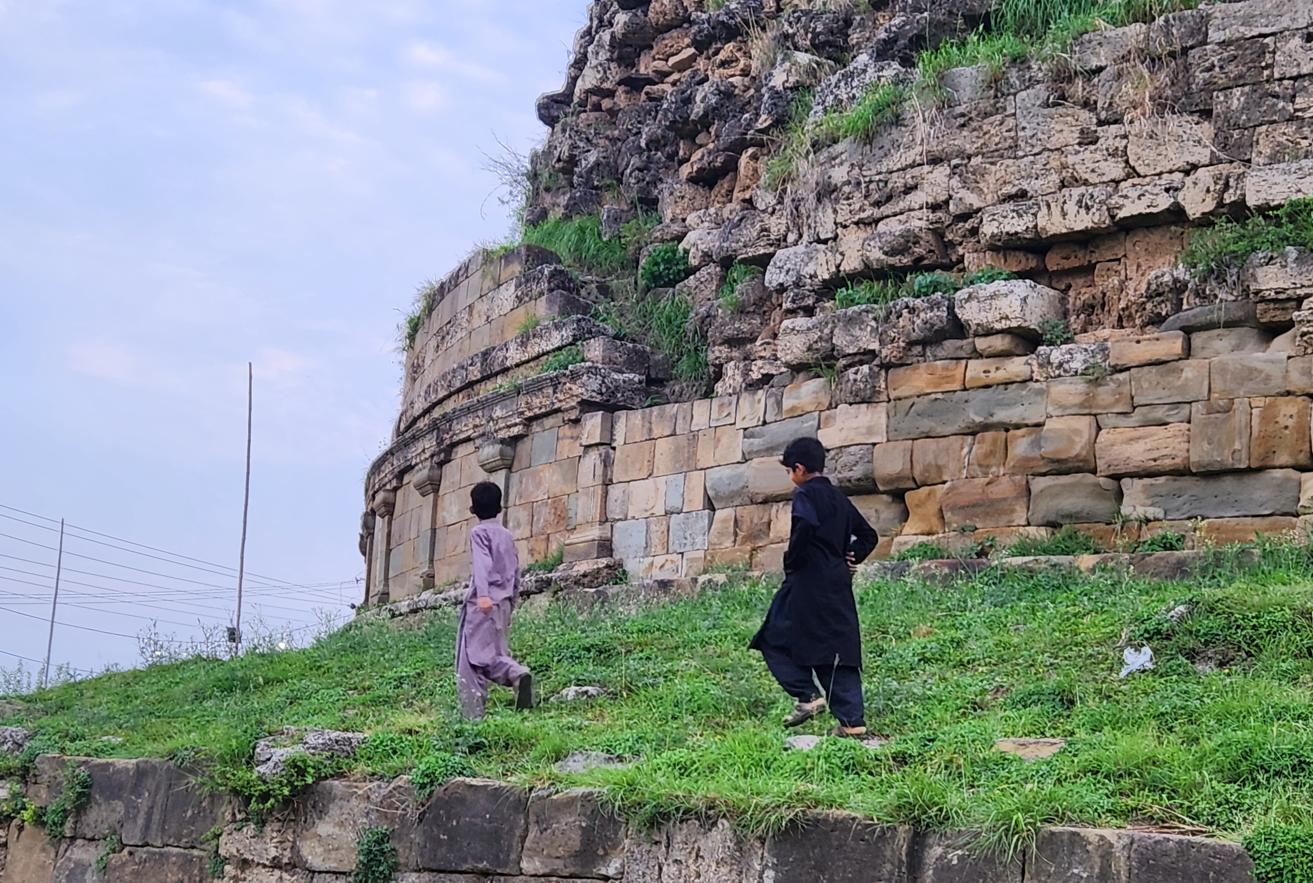
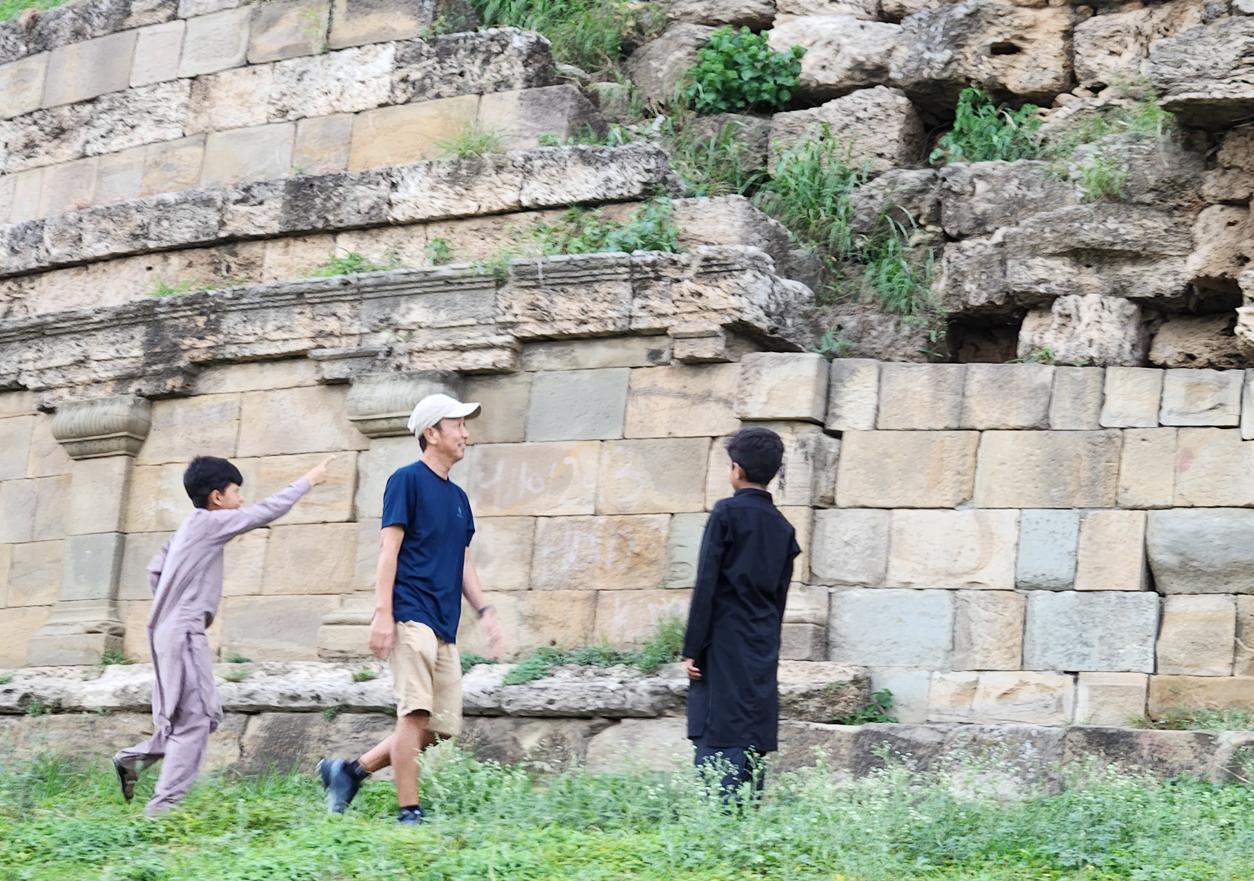
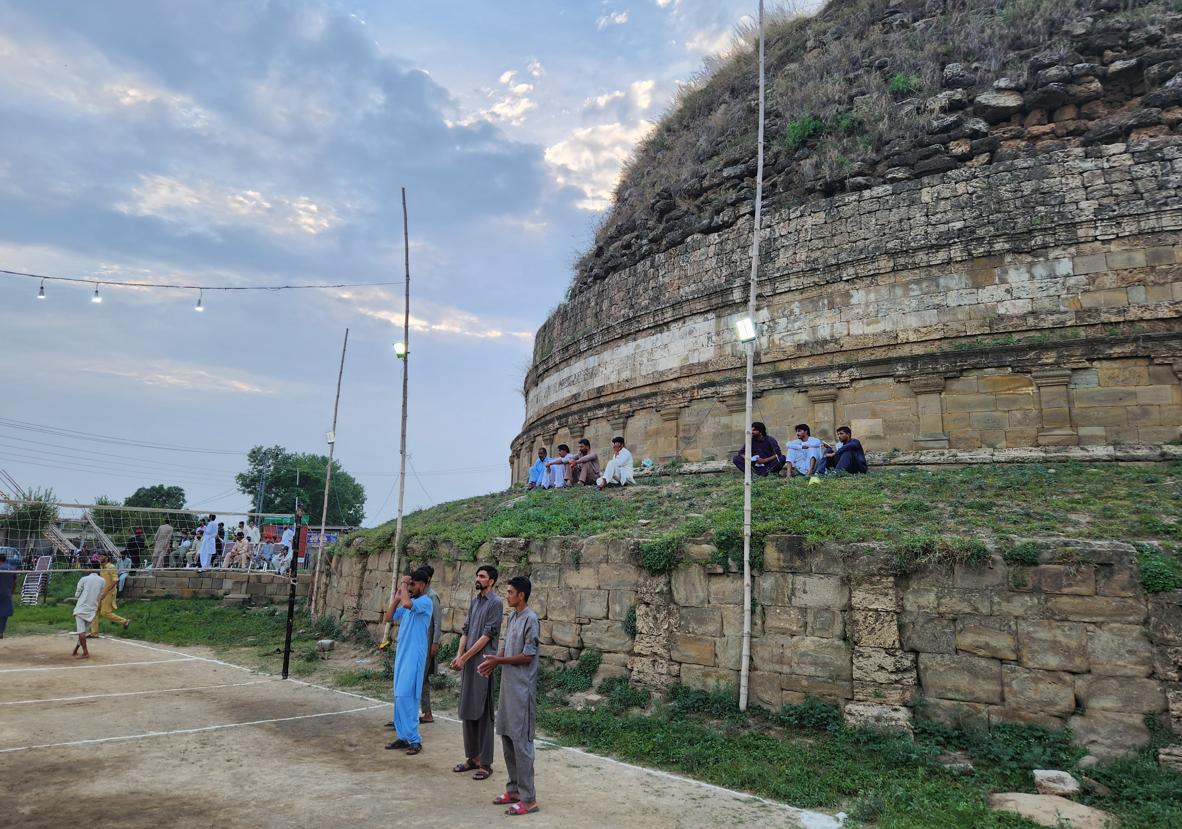
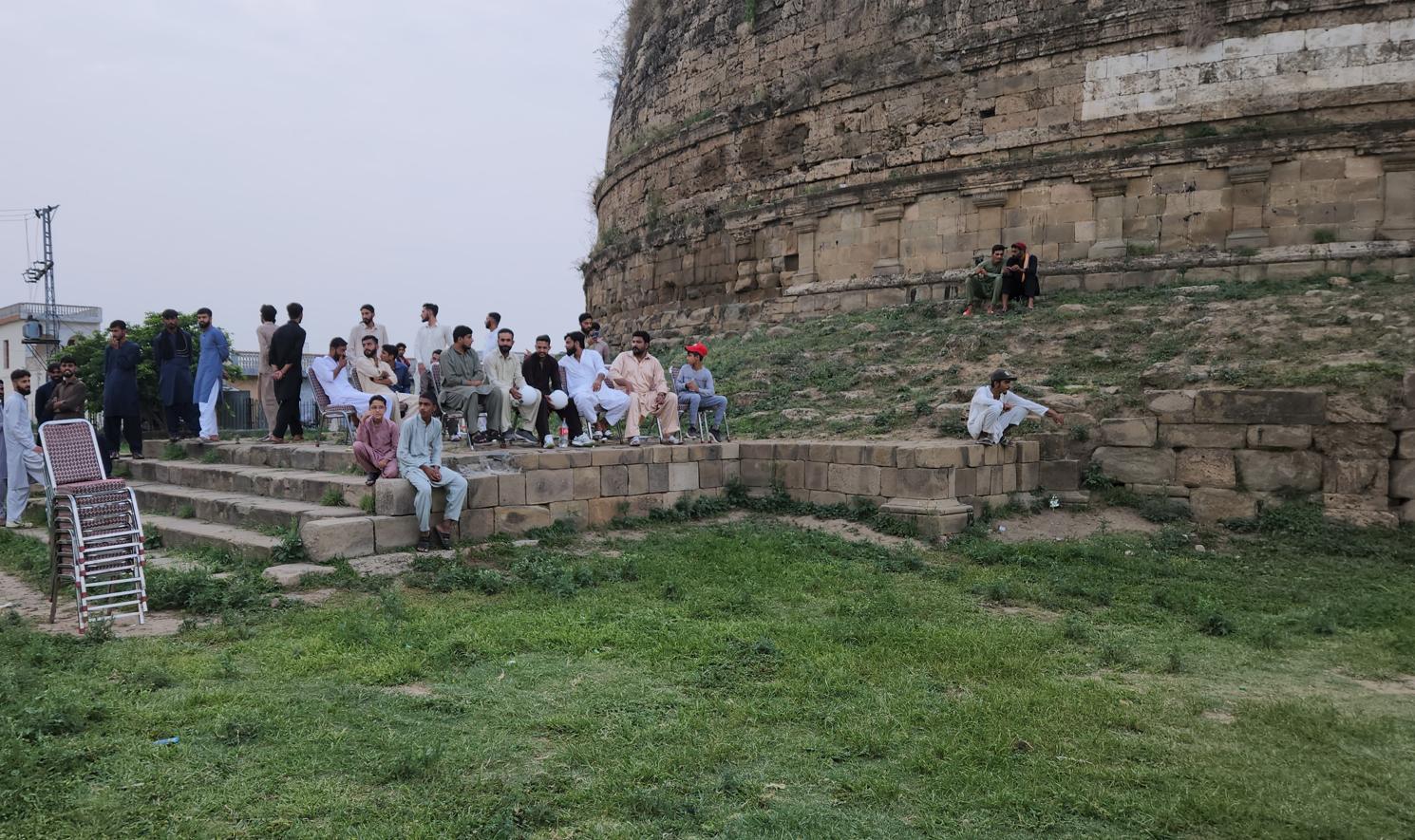
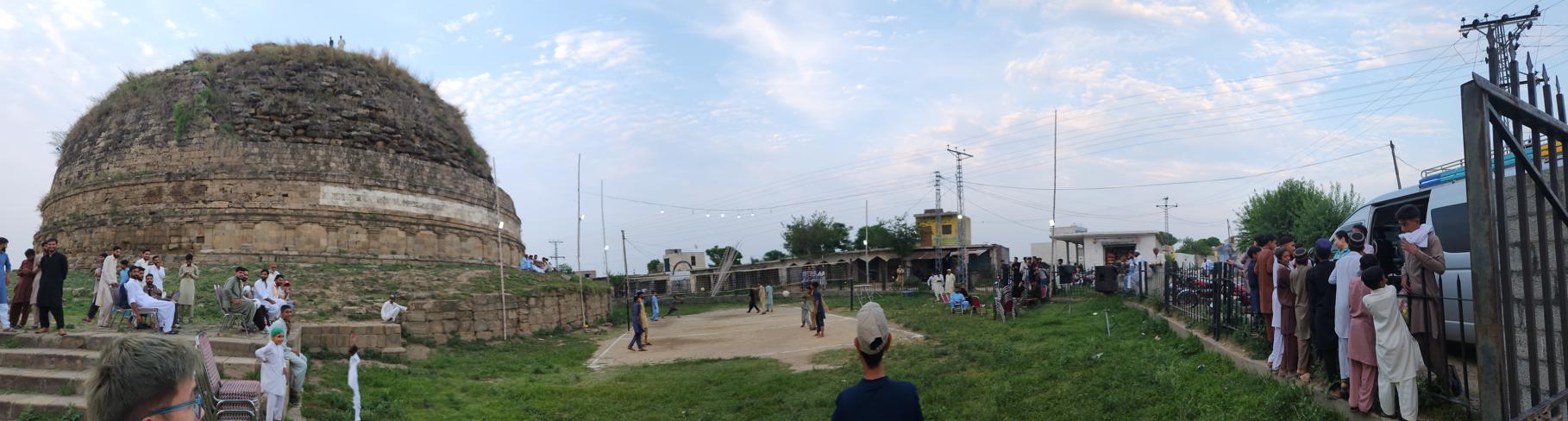
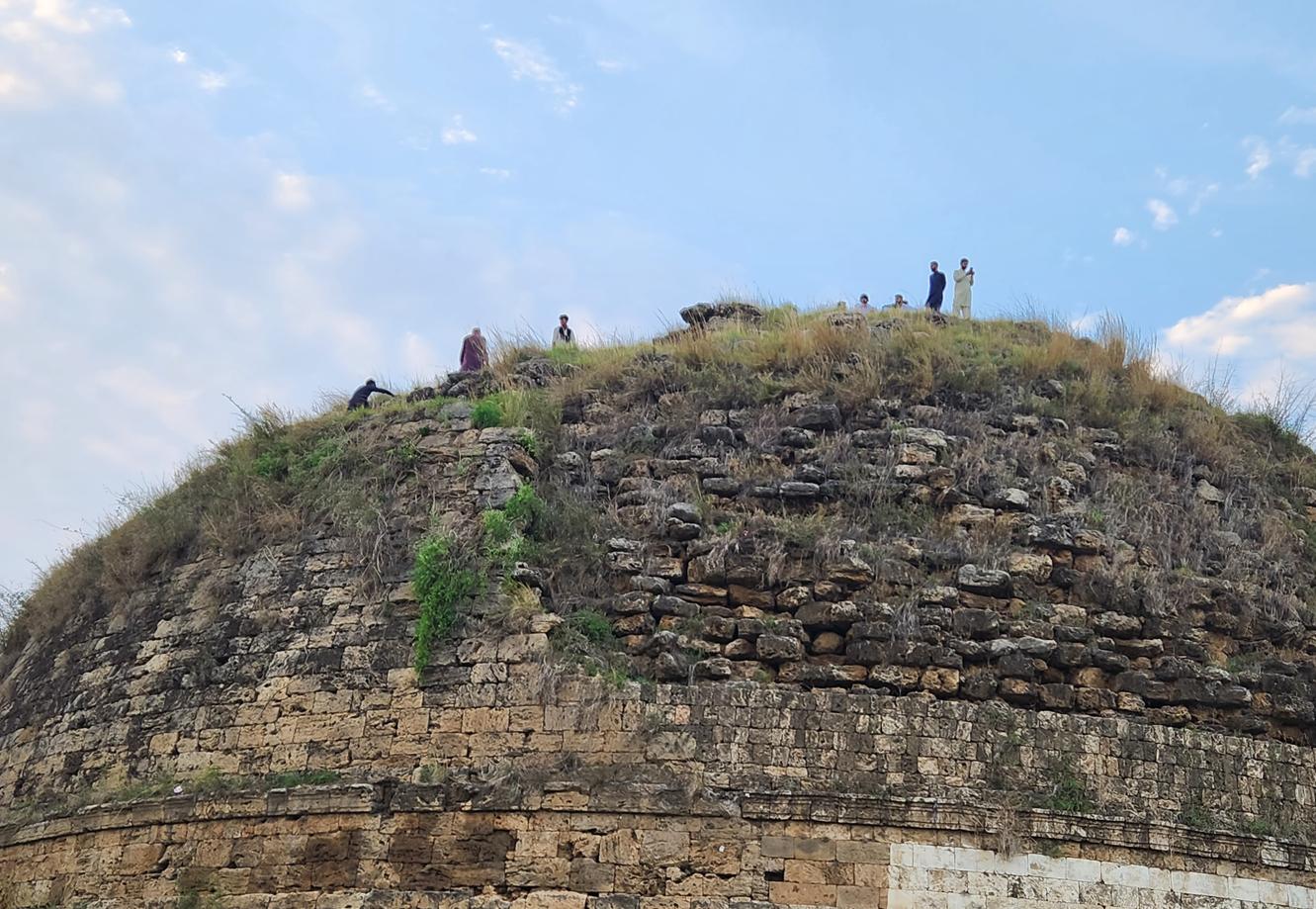
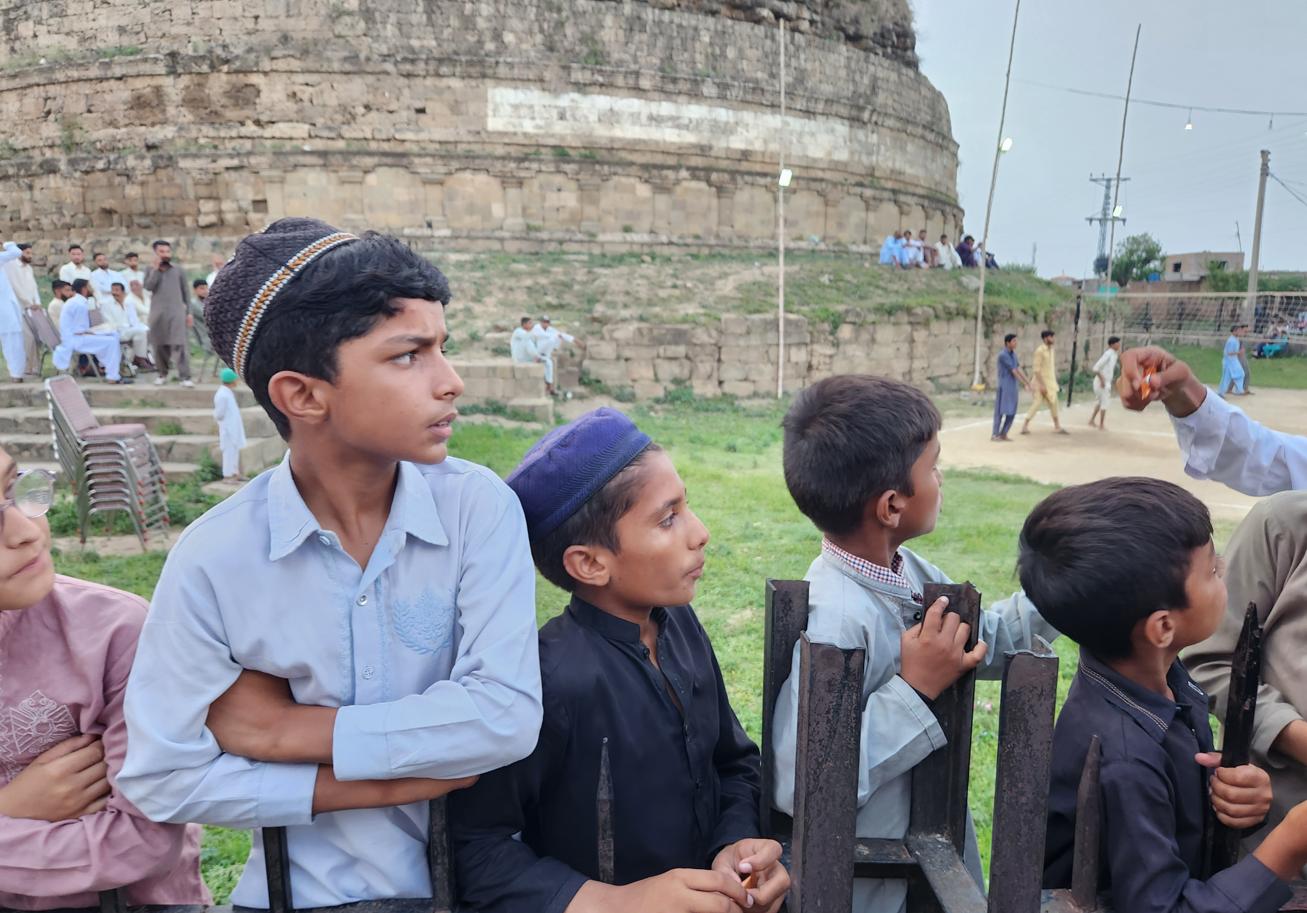
We made an impromptu stop at the Mankiala Stupa, thirty-six kilometres southeast of Islamabad, built according to tradition to mark the spot where a former incarnation of the Buddha sacrificed himself to feed seven starving tiger cubs. The stupa is attributed by most accounts to the reign of Kanishka, in the second century CE, though an older tradition credits it to Ashoka three centuries earlier as one of eighty-four stupas raised to house relics of the Buddha; either way, it was already an object of scholarly curiosity by 1808, when Mountstuart Elphinstone, Britain's first emissary to Afghanistan, recorded his visit in the memoir that would become one of the earliest Western accounts of the region.
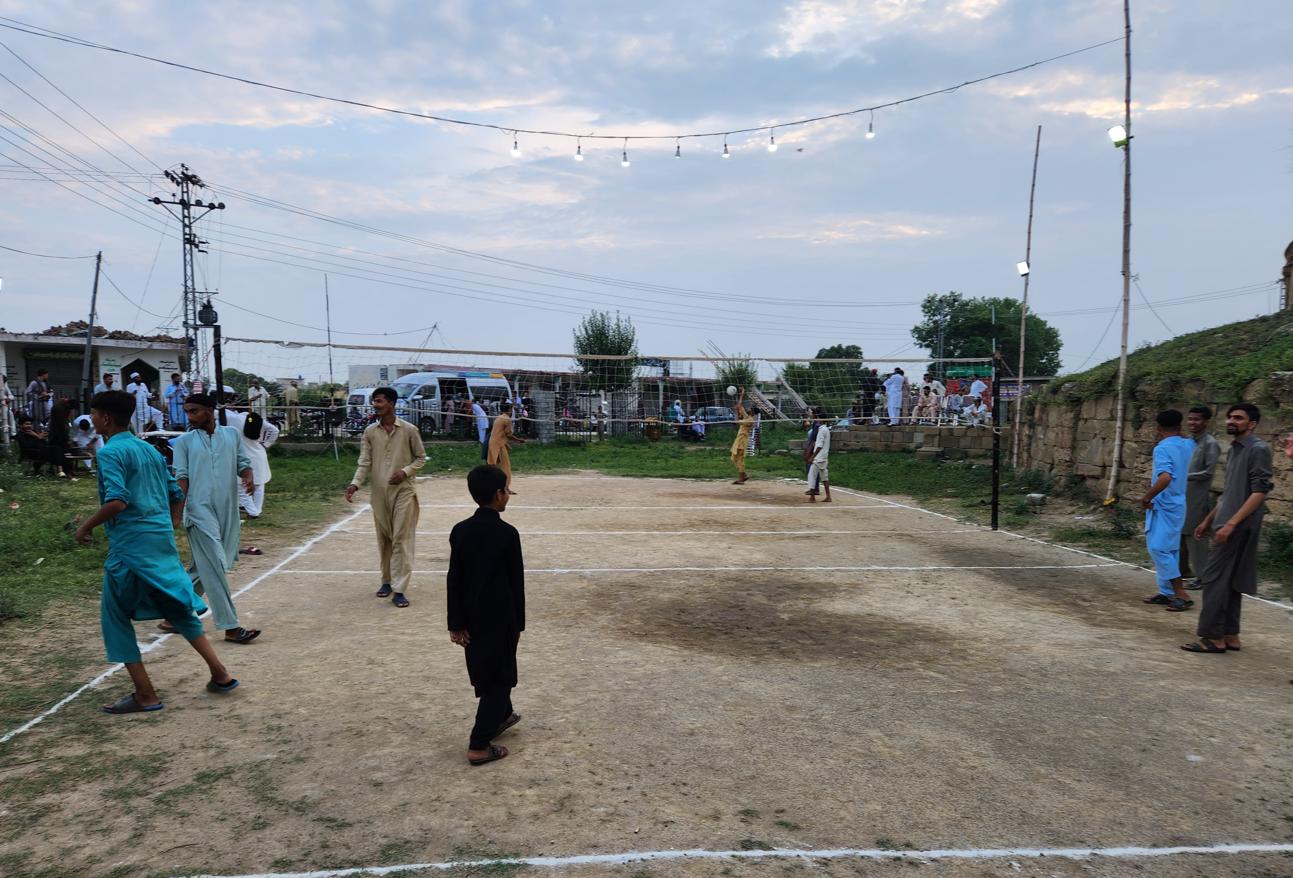
What we found on arrival was not scholarly at all. The flat ground around the two-thousand-year-old mound had been colonised by a village volleyball match, loud Lollywood music pouring from a speaker balanced on someone's motorbike, snack sellers doing brisk business, children abandoning the game entirely to inspect the two foreigners who had wandered into their afternoon. It was, on reflection, a fitting counterpoint to what awaited us at Taxila and Takht-i-Bahi in the chapter ahead — sites where the Buddhist past sits sealed behind museum glass or scattered across an empty mountainside. At Mankiala, by contrast, the Buddhist past had simply been absorbed back into the rhythm of an ordinary Punjabi evening, no less alive for having a two-thousand-year-old stupa as its unremarked backdrop.
Next Chapter
Chapter Nine: Gandhara — Where Greece Met the BuddhaA Note on Process
The travelogue on this site are based on my own journeys, photographs, Facebook posts, and field notes. I work with Claude (Anthropic's AI assistant) as a drafting and editorial partner — giving it my raw material and working iteratively to shape it into finished prose. The AI helps me draft quickly, maintain a consistent voice across long narratives, and edit at the document level. The website's HTML and coding are built with the assistance of Gemini (Google). Audio versions of the essays are produced using NotebookLM (Google). Every observation, opinion, and conclusion in the written work is mine. The AI tools are the instruments; I am the author.