Gandhara
Where Greece Met the Buddha
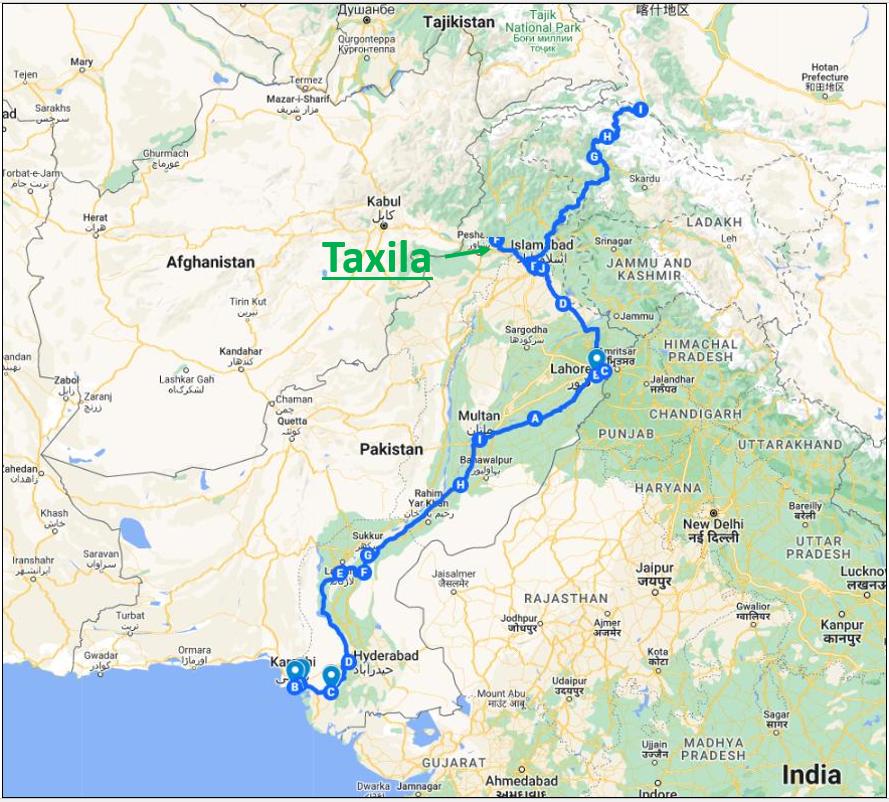
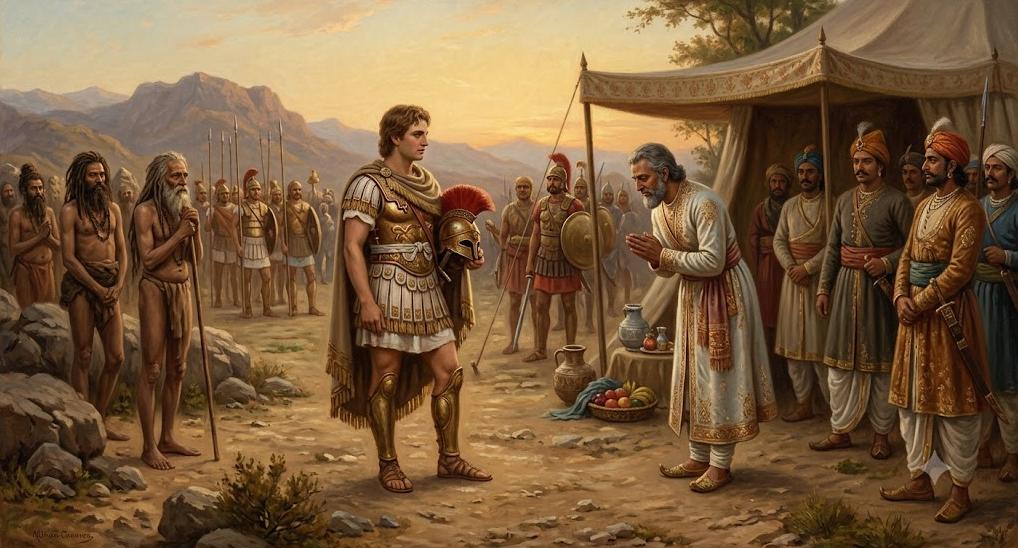
Then starting from the Indus, he arrived at Taxila, a large and prosperous city, in fact the largest of those situated between the rivers Indus and Hydaspes.
— Arrian of Nicomedia, Anabasis of AlexanderTaxila: The World's First University
The city of Taxila was, in the fourth century BCE, the intellectual capital of the known world. Students came here from across the subcontinent and from the Greek cities of the west to study in what the historian Mortimer Wheeler called one of the earliest universities on earth. Here, in the centuries after Alexander's conquest, Greek sculptors and Indian craftsmen developed Gandharan art — a hybrid style that gave the Buddha a face: the first representations of the Enlightened One in human form, previously depicted only by symbols, now rendered with a face of Mediterranean proportion and an expression of Indian serenity. Sir John Marshall, who directed the excavations here for over two decades, put the city's standing more grandly still: Taxila, he wrote, was “the Oxford of early India,” a place where, “like ancient Athens,” the art, science, and philosophy of East and West “met and mingled.”
Before the sculptors came the army, and before the army came, if the Greek sources can be trusted, an oddly civil exchange between two kings who had every reason to distrust each other. Alexander arrived in 326 BCE to find the city Arrian described above the entrance to this chapter — the largest, by his account, between the Indus and the Hydaspes. Its ruler, whom the Greeks called Taxiles, surrendered without a fight and, according to Plutarch, greeted the invader with a question that has aged rather better than most of Alexander’s own pronouncements: “Why must we war and fight with one another, Alexander, if thou art not come to rob us of water or of necessary sustenance, the only things for which men of sense are obliged to fight obstinately?” Alexander seems not to have had a good answer. He was more rattled still by Taxila’s resident philosophers — the gymnosophists, the “naked wise men” whom Greek writers regarded with a mixture of contempt and awe. When he sent a messenger to summon them to his court under threat of death, the sage Dandamis sent back a reply Alexander apparently never forgot: “If you, my lord, are the son of God, why — so am I. I want nothing from you, for what I have suffices… India, with the fruits of her soil in due season, is enough for me while I live; and when I die, I shall be rid of my poor body.” Another Taxilan ascetic, Kalanus, who did eventually join Alexander’s camp, offered a warning about empire itself: he threw a dry, shrivelled hide on the ground and stepped on its edge, watching it rise elsewhere each time; only by standing in the centre could he hold it flat. The lesson, Plutarch says, was that a king should govern from the heart of his dominion rather than wander its edges — advice Alexander would go on to ignore all the way to the river his own soldiers finally refused to cross. Twenty-two centuries later, standing in the museum built to hold what came after all of this, the sequence still seems worth noting: first the sages talked past the general, and then the artists — the ones who actually stayed — went to work.
Taxila Museum
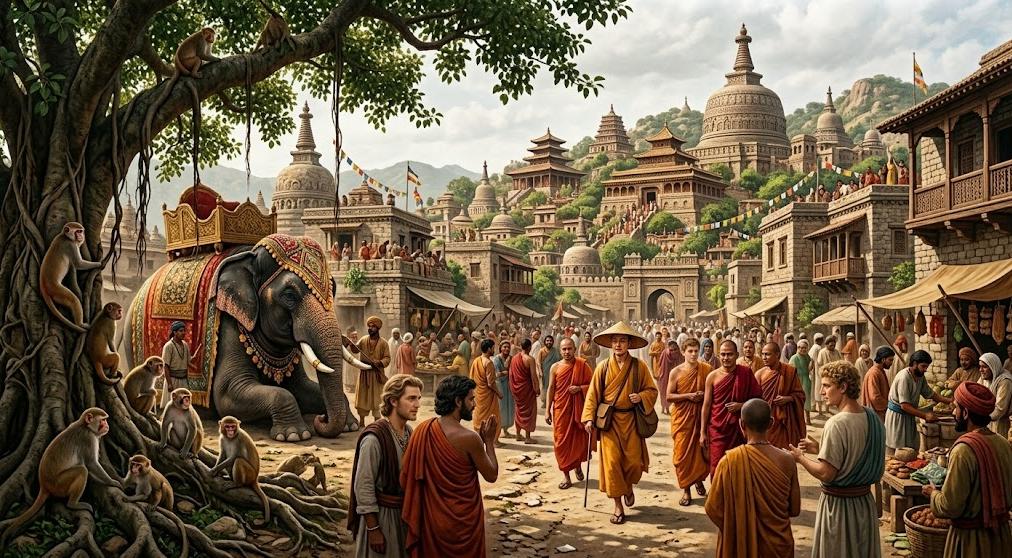
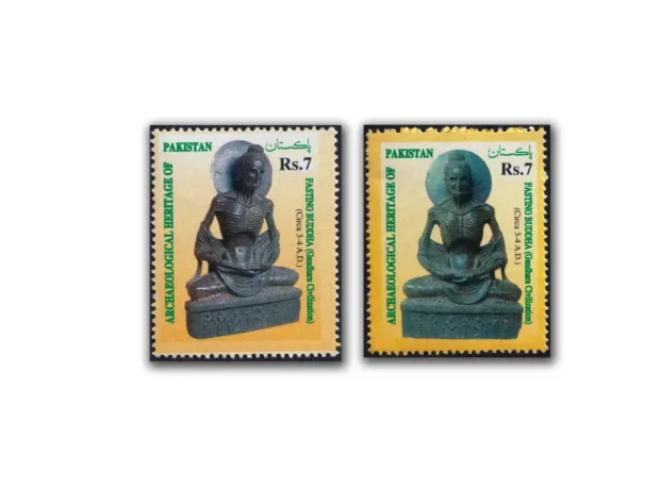
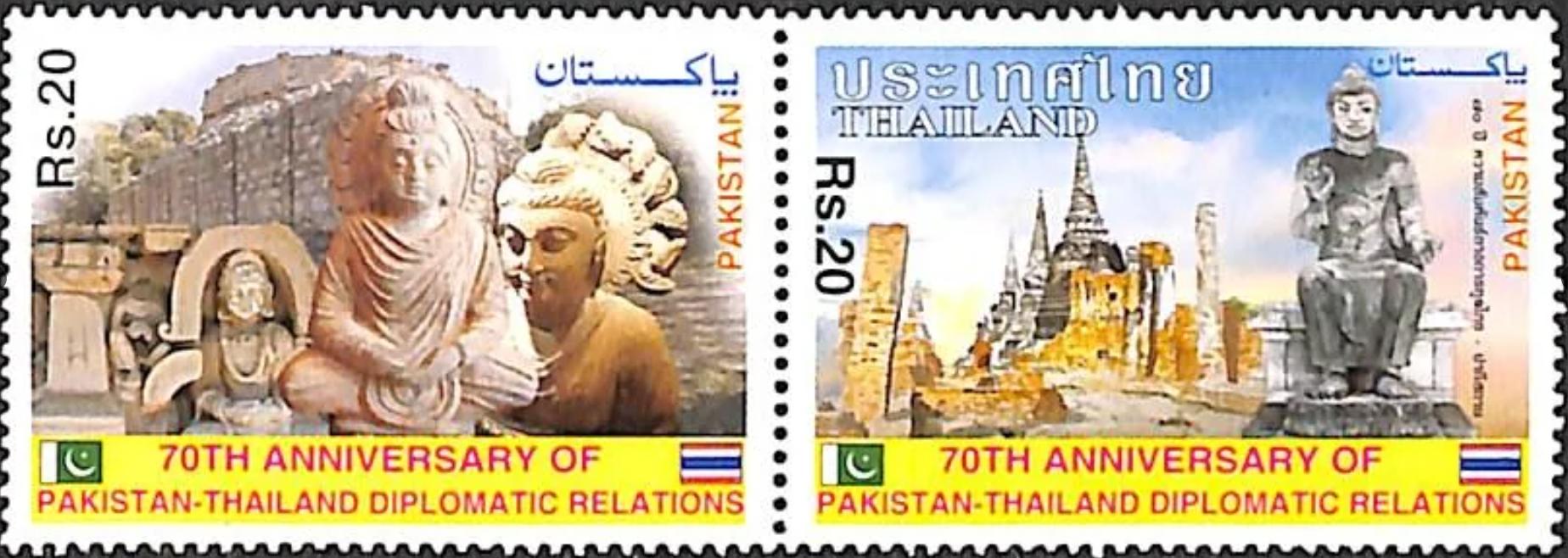
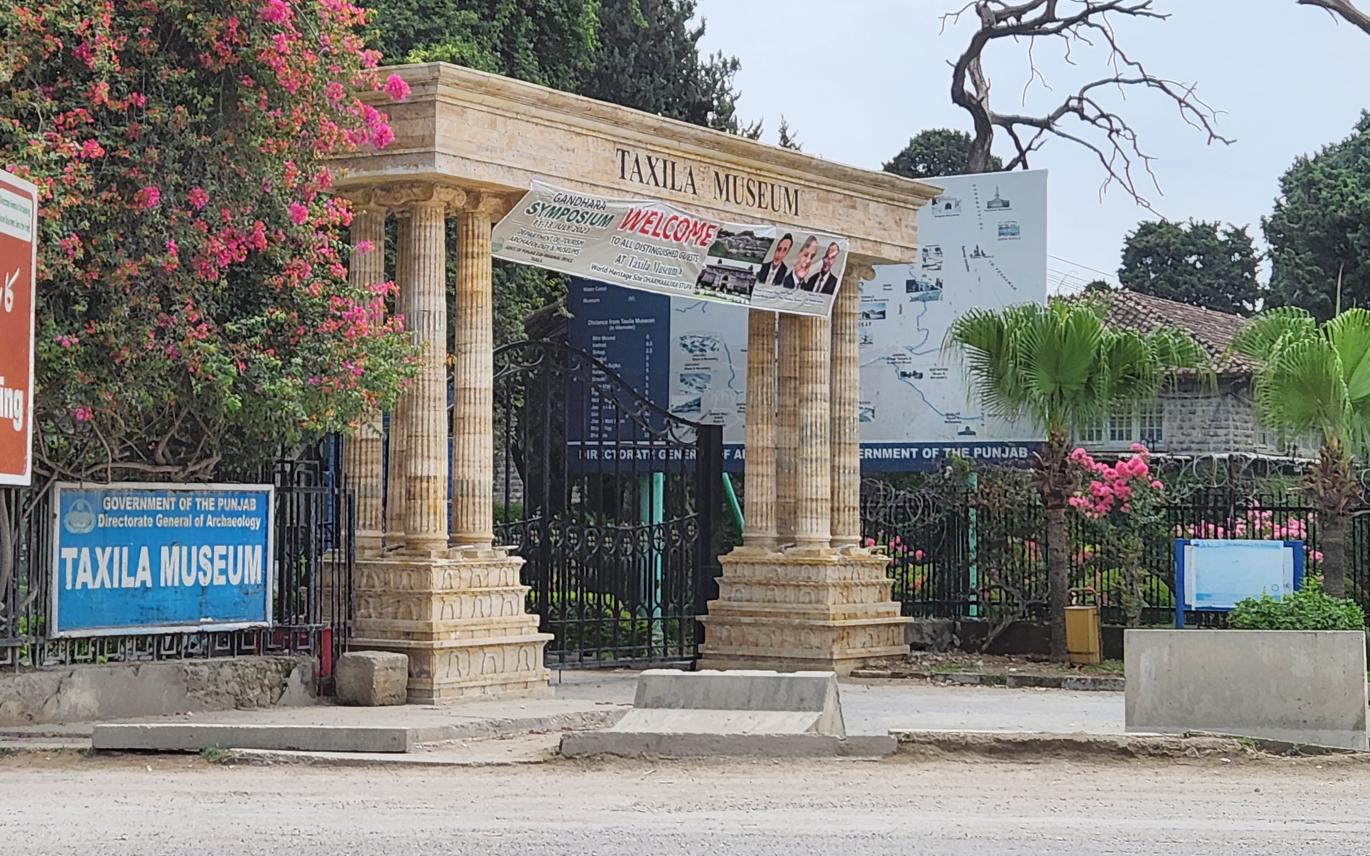
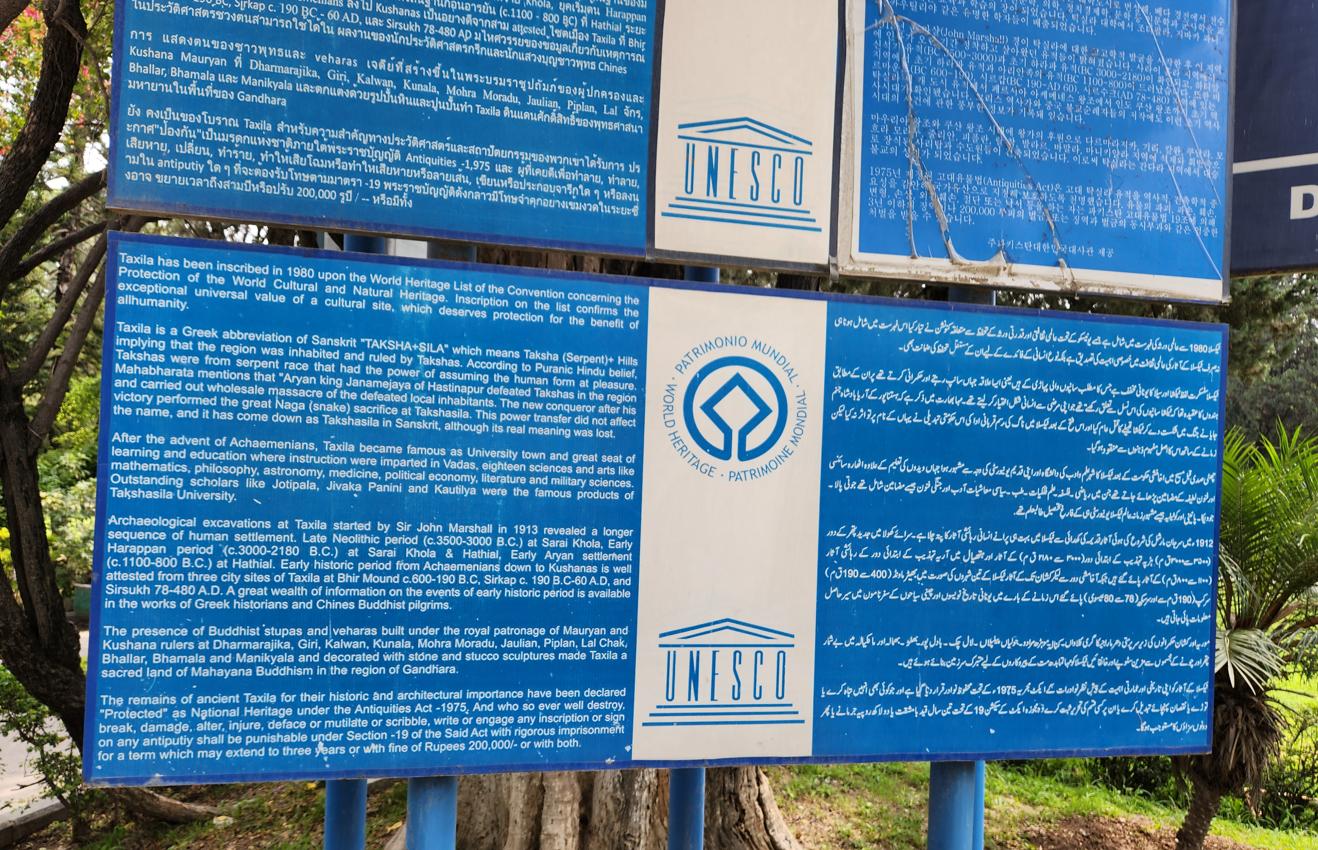
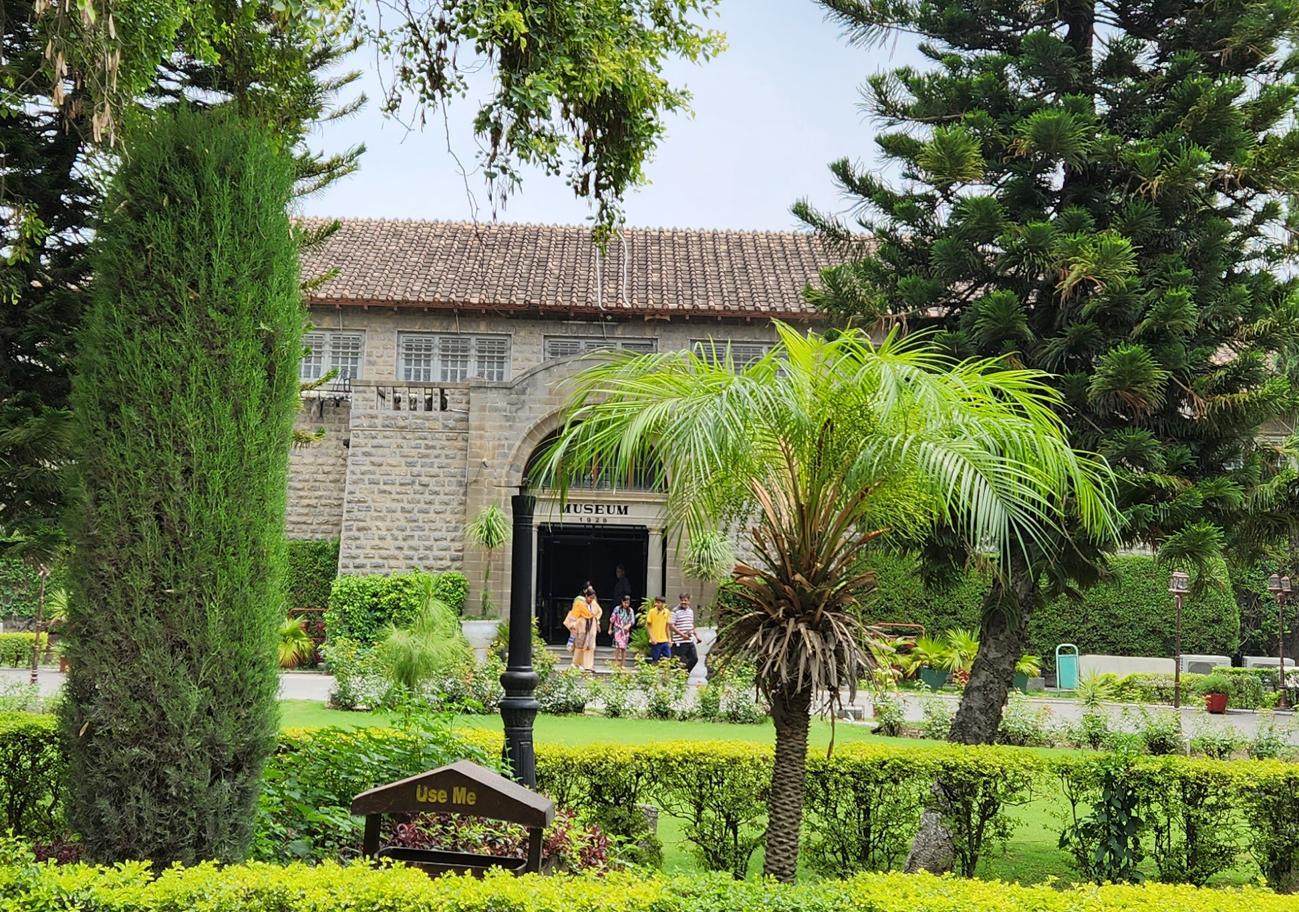
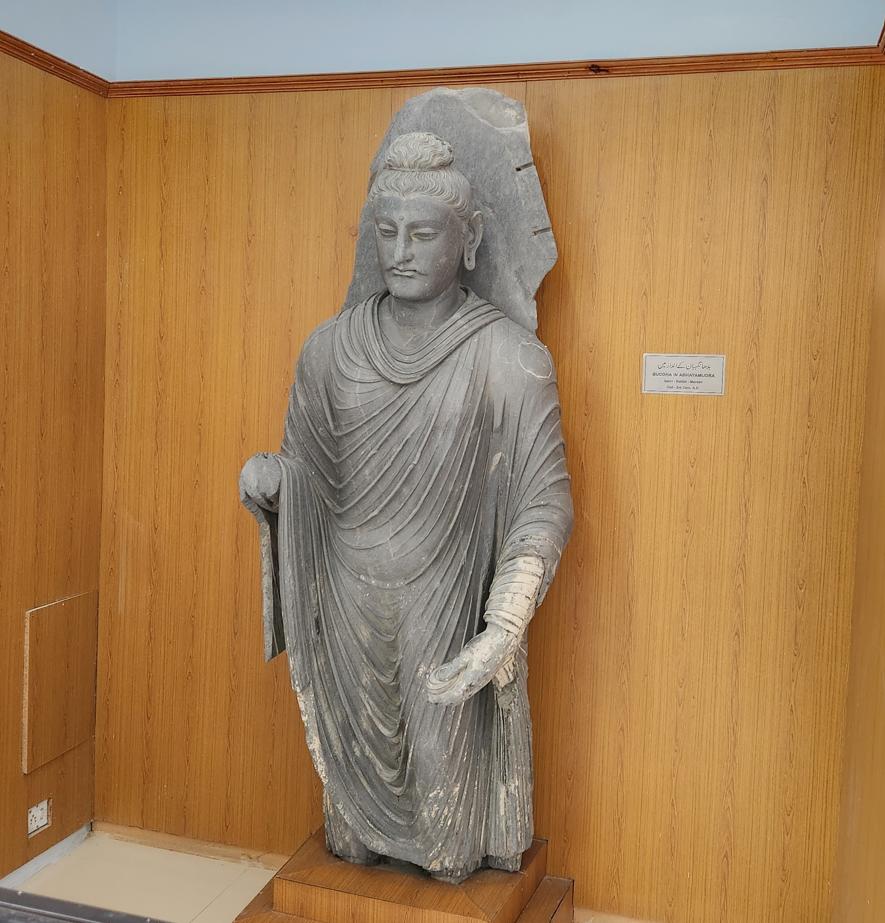
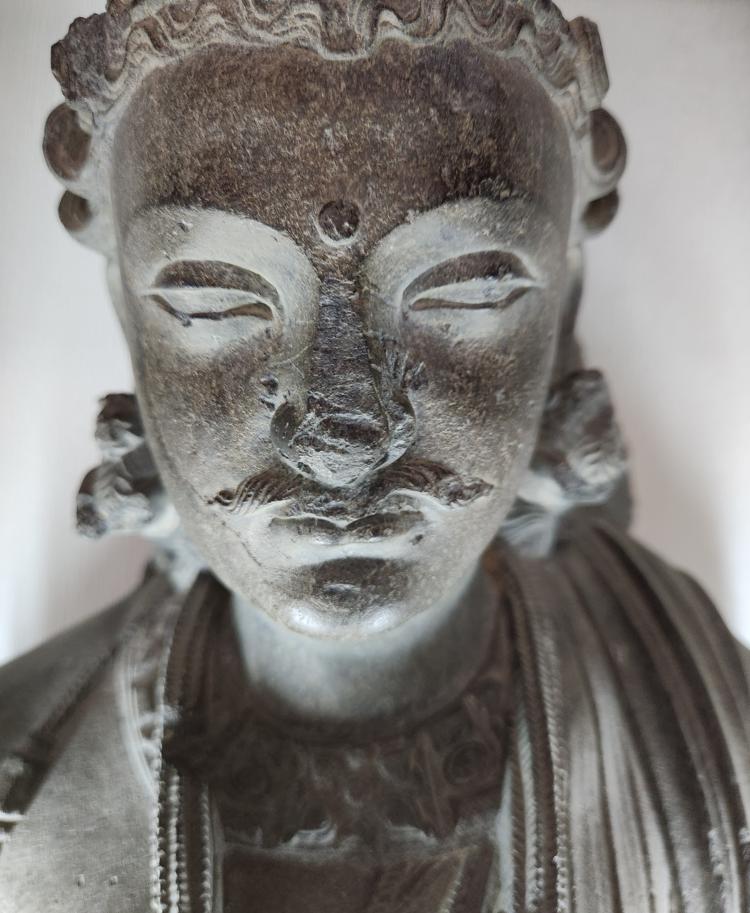
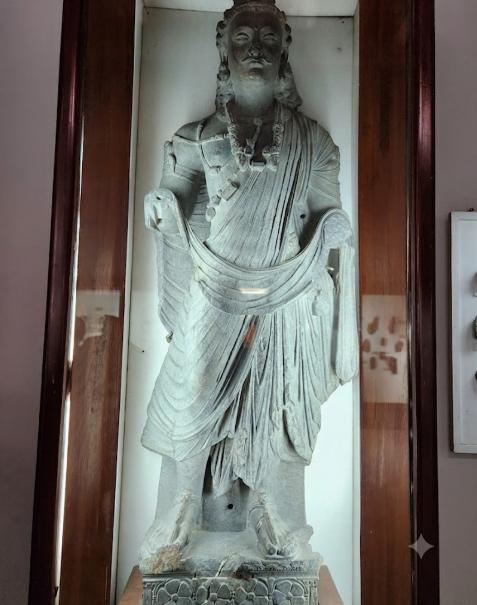
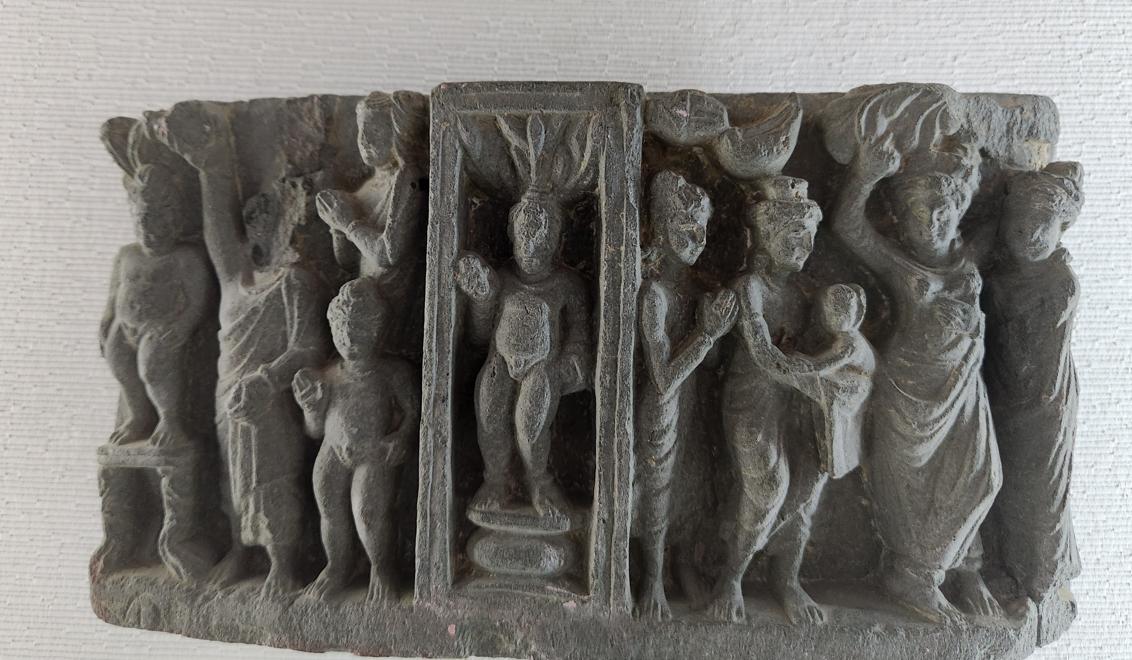
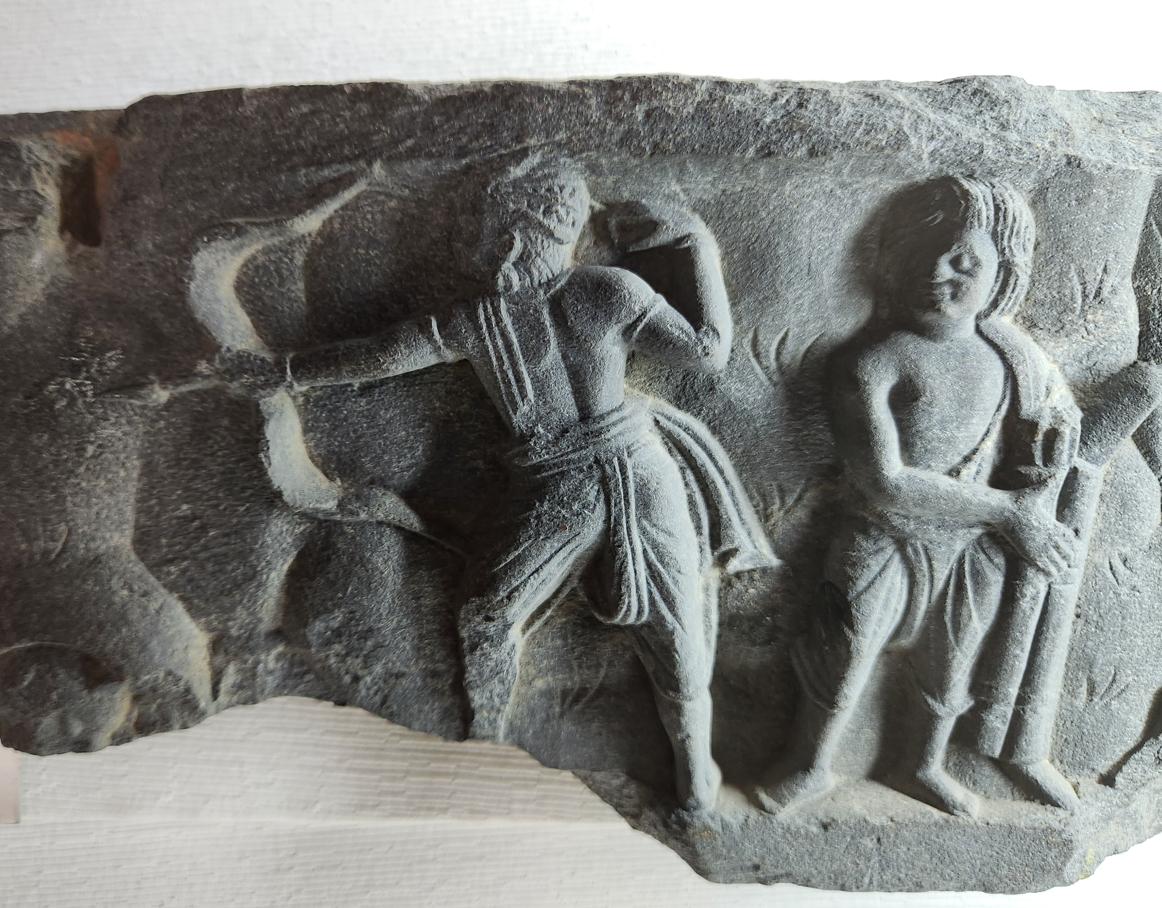
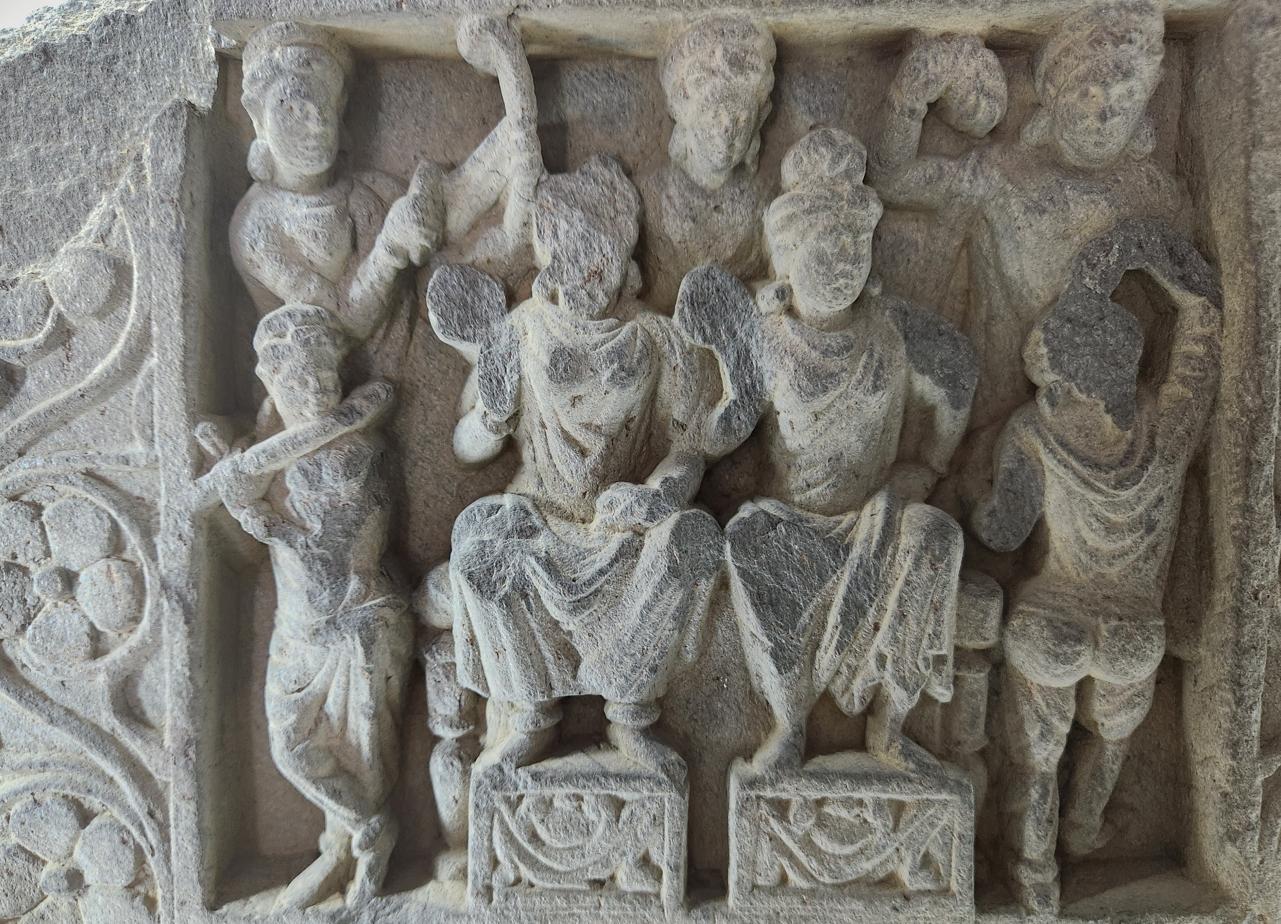
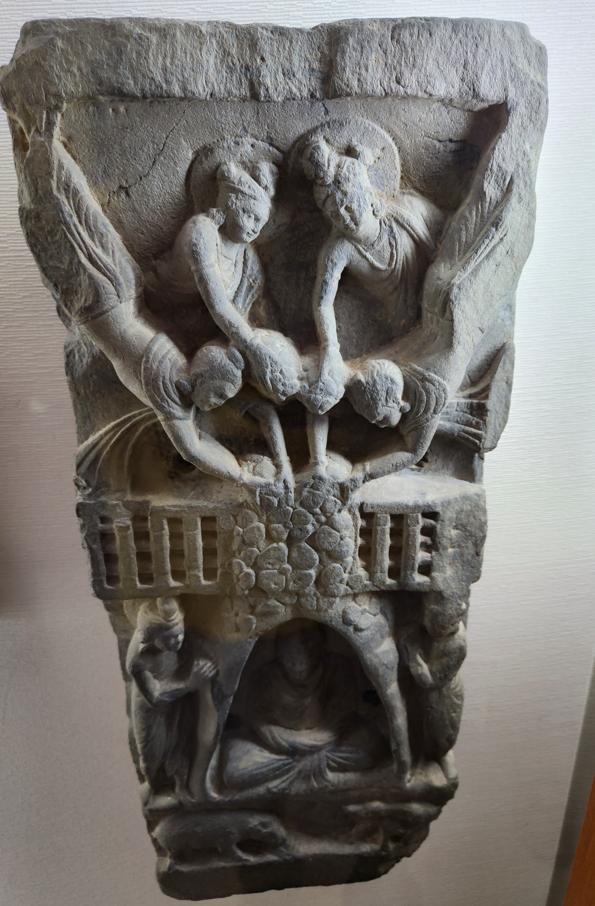
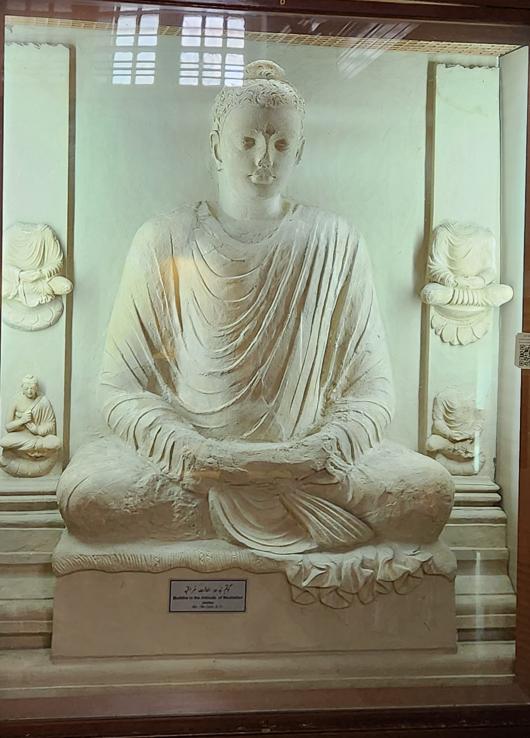
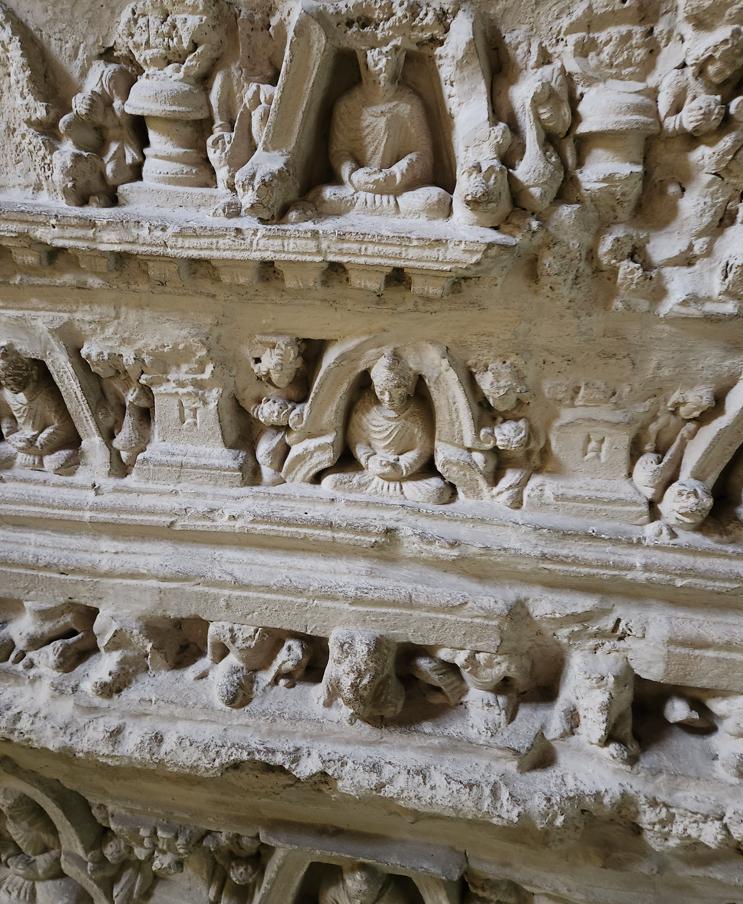
The Taxila Museum, founded in 1928, holds the results of a century of excavation: case after case of Gandharan stucco heads, many of them bodiless now, their expressions ranging from the beatific to the startled. The Buddha appears repeatedly, in every scale, his curled hair a direct import from the Apollo iconography of Hellenistic art. Beside him, donors and devotees are depicted with a realism that seems almost contemporary: a woman adjusting her earring, a man scratching his head, a child reaching upward.
Gandharan art is often described as a fusion, but the word undersells how deliberate the borrowing was. The drapery falls in the heavy, naturalistic folds of a Roman toga; the wavy hair and idealised, faintly Apolline features are lifted wholesale from Hellenistic sculpture that had been arriving in this region since Alexander's campaigns and the Greek kingdoms that followed him; and onto that imported physical vocabulary, Gandharan sculptors grafted an entirely Indian religious content — the downcast, meditative eyes, the lotus, the wheel, the specific hand gestures that Buddhist iconography further south had already standardised. The result was not merely a regional curiosity. Because Gandhara sat squarely on the trade routes running north into Central Asia and east toward China, it became the workshop from which this new visual language of the Buddha — a Buddha with a face, where earlier tradition had represented him only through symbols such as the empty throne or the footprint — spread outward along the Silk Road, reaching the cave temples of Bamiyan, Kizil, and Dunhuang, and eventually the Buddhist art of Korea and Japan. Pilgrim monks travelling in the opposite direction, toward Gandhara rather than away from it, carried the exchange further still: Faxian and, three centuries later, Xuanzang both came here specifically to collect sutras and study at the source, and both wrote detailed travelogues of their journeys that remain, to this day, among the most valuable eyewitness accounts of Buddhist Central and South Asia in existence — the reason, in fact, that so much about Gandhara's ruined monasteries can still be dated and identified at all.
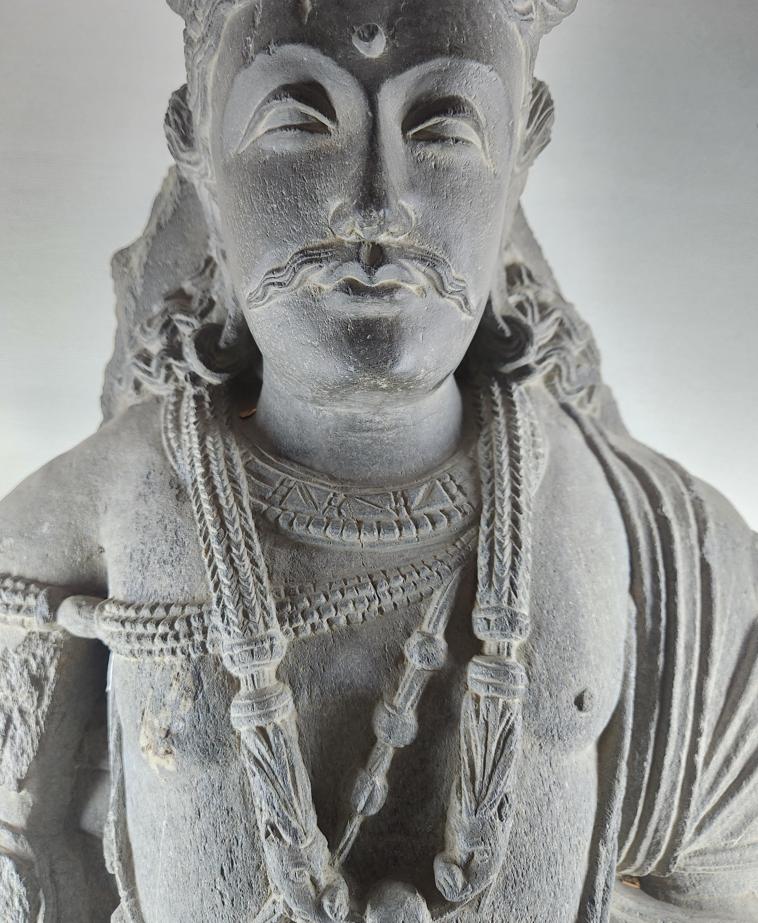
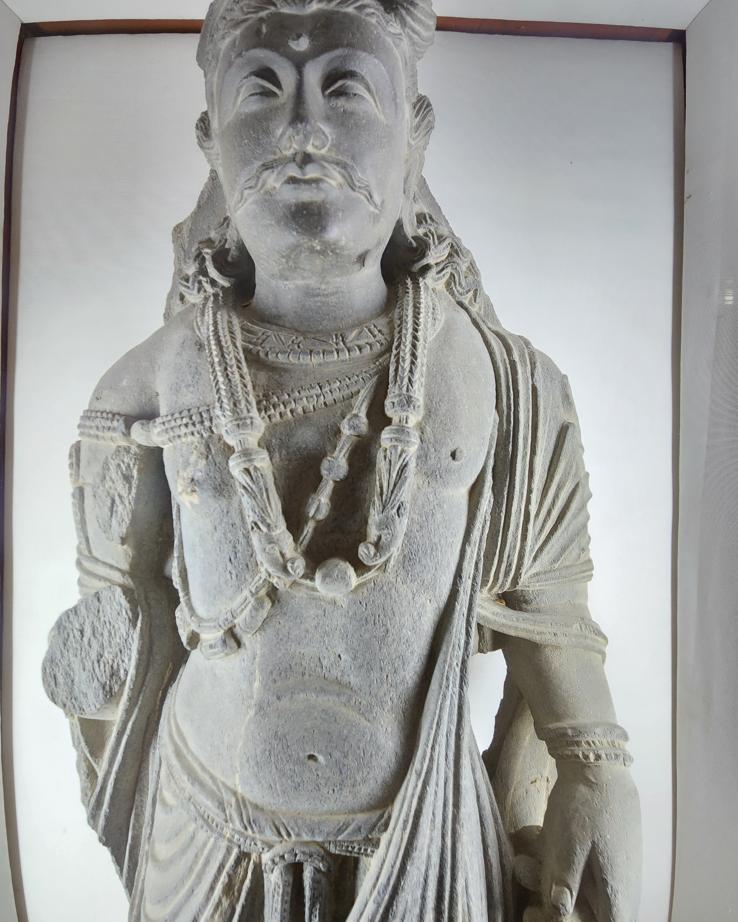
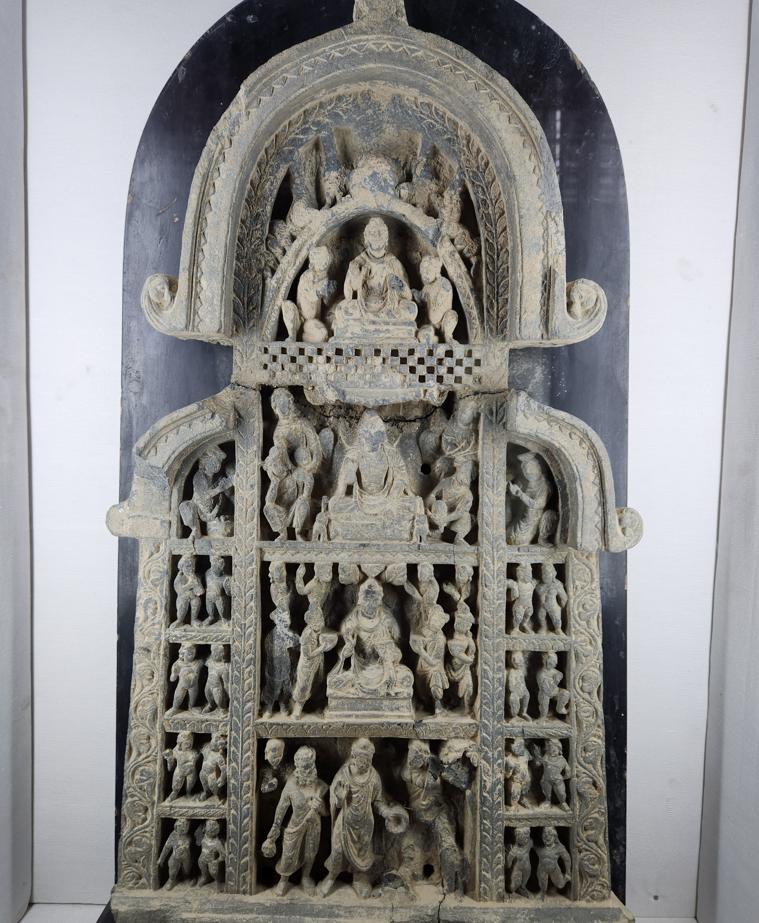
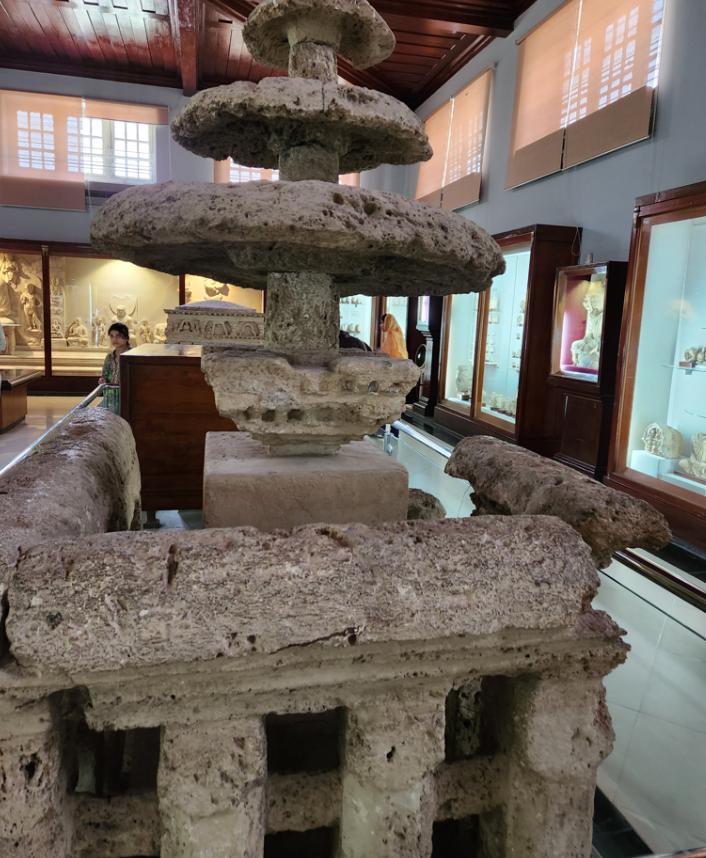
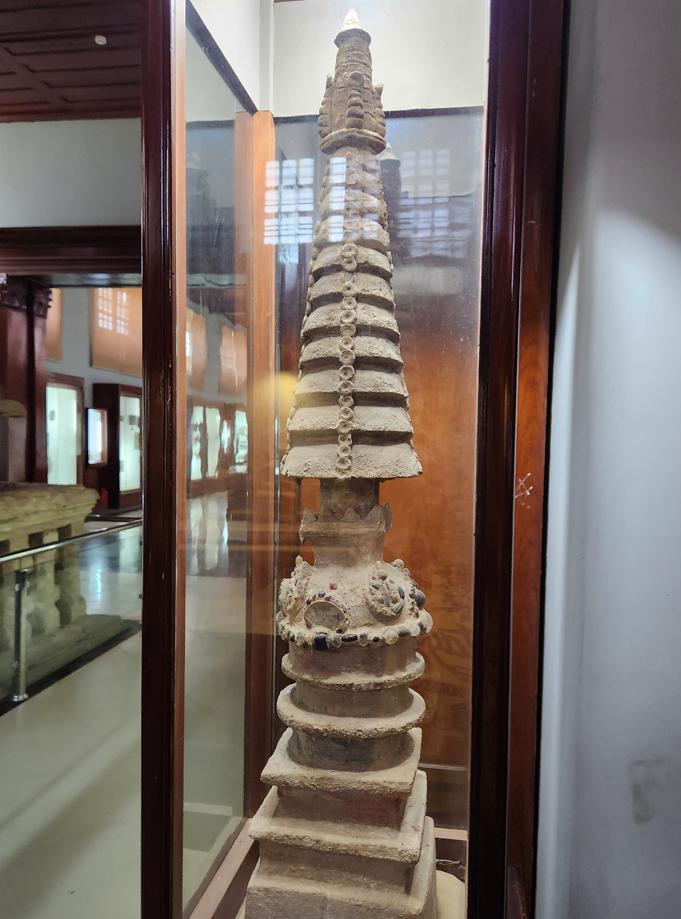
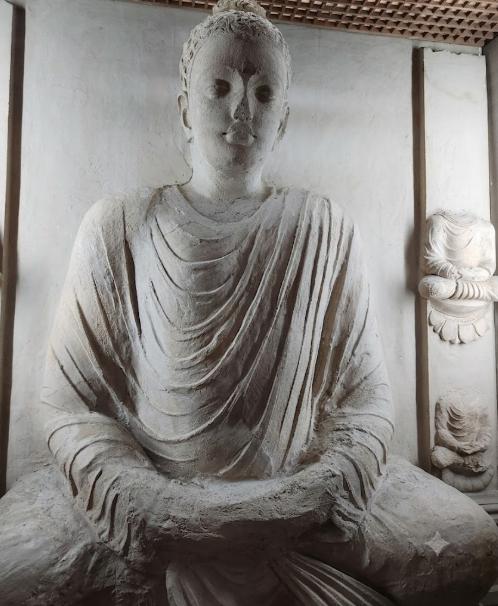
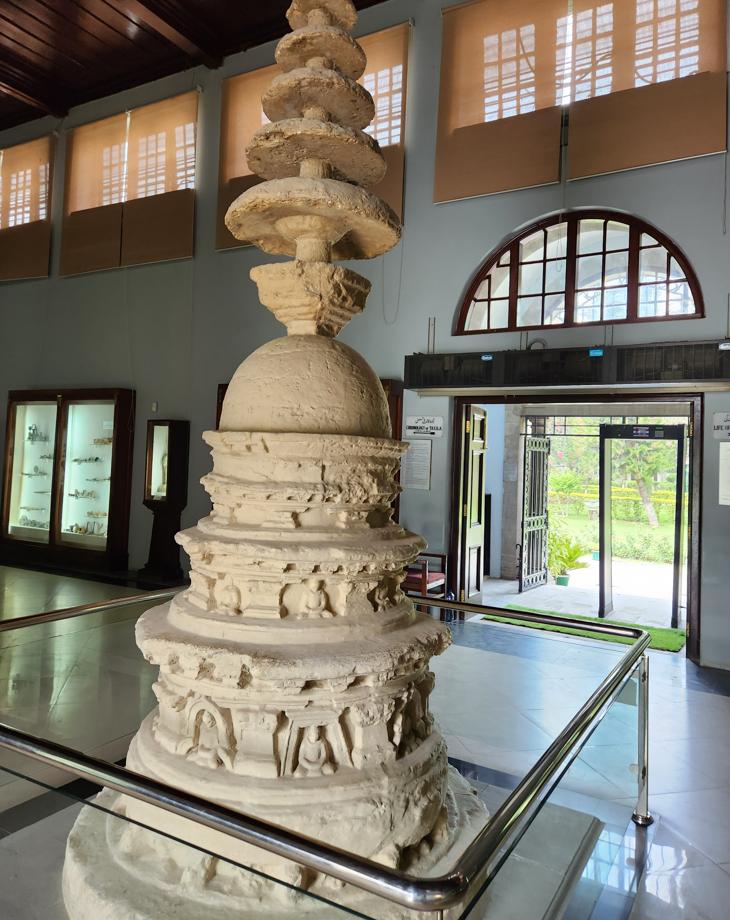
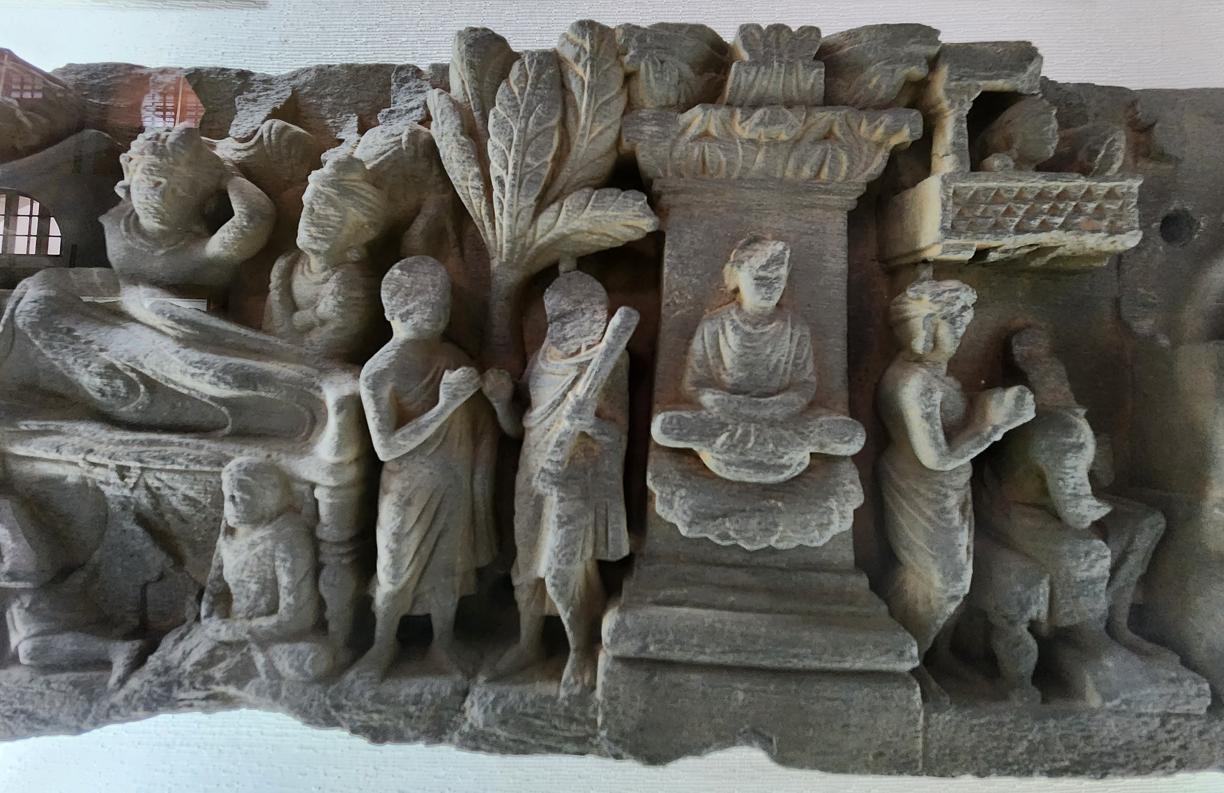
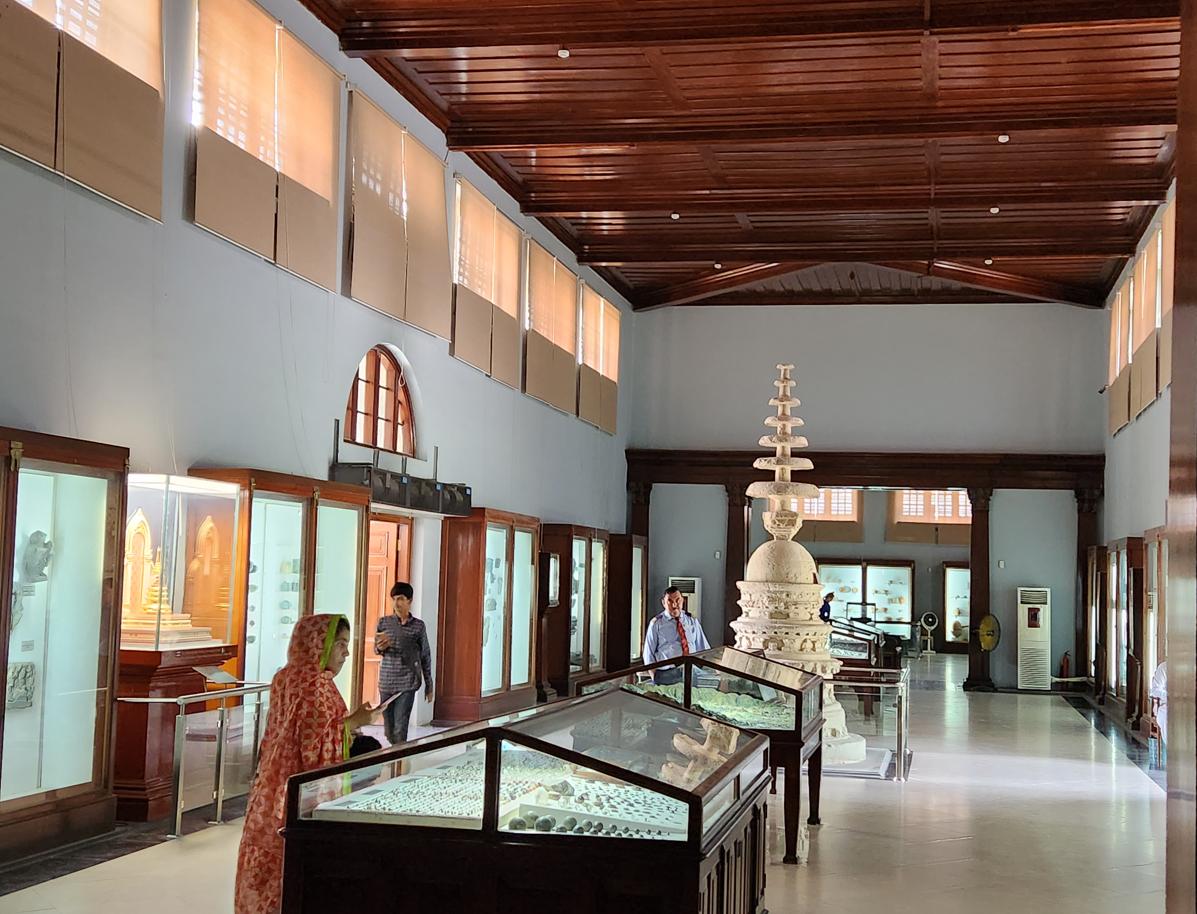
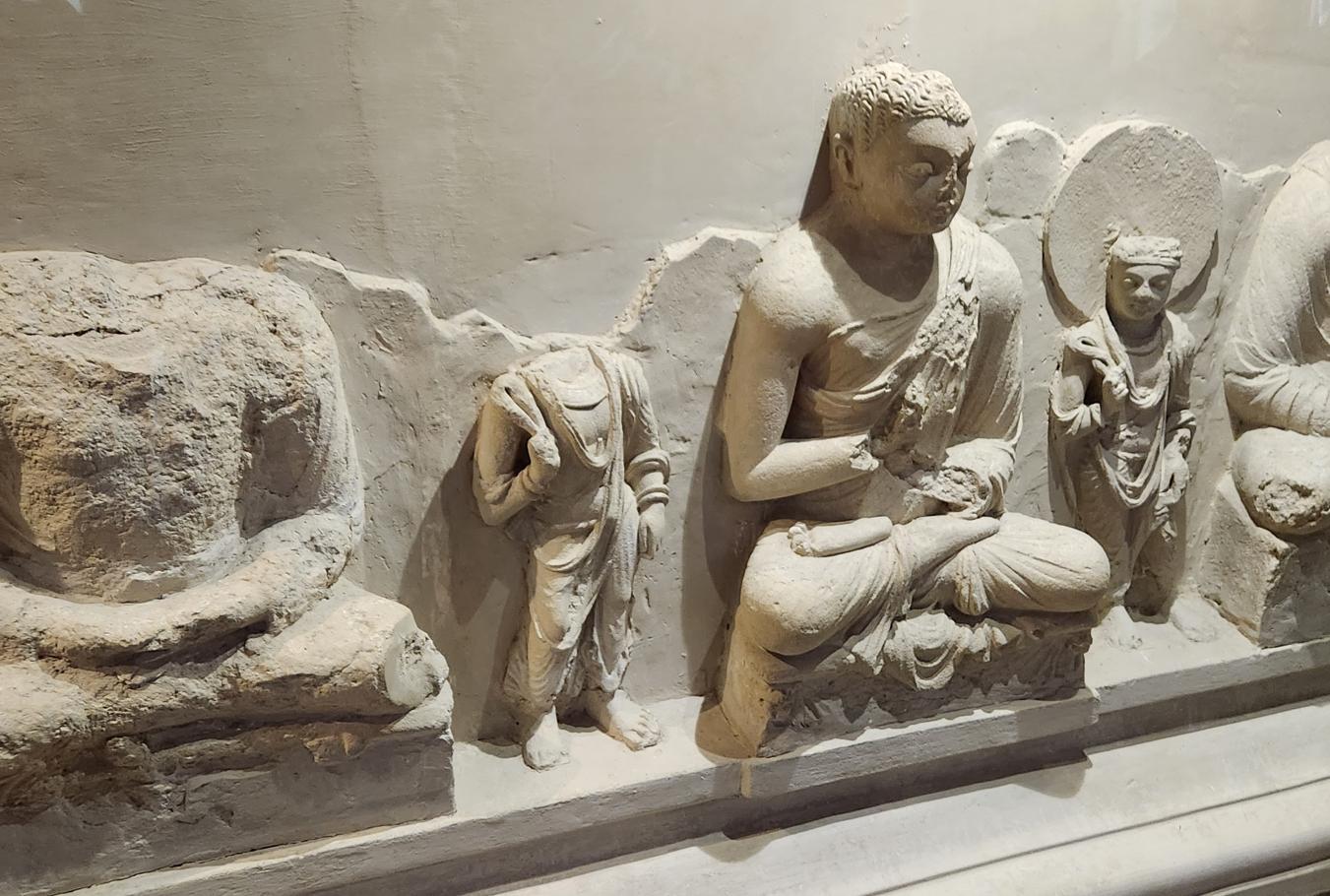
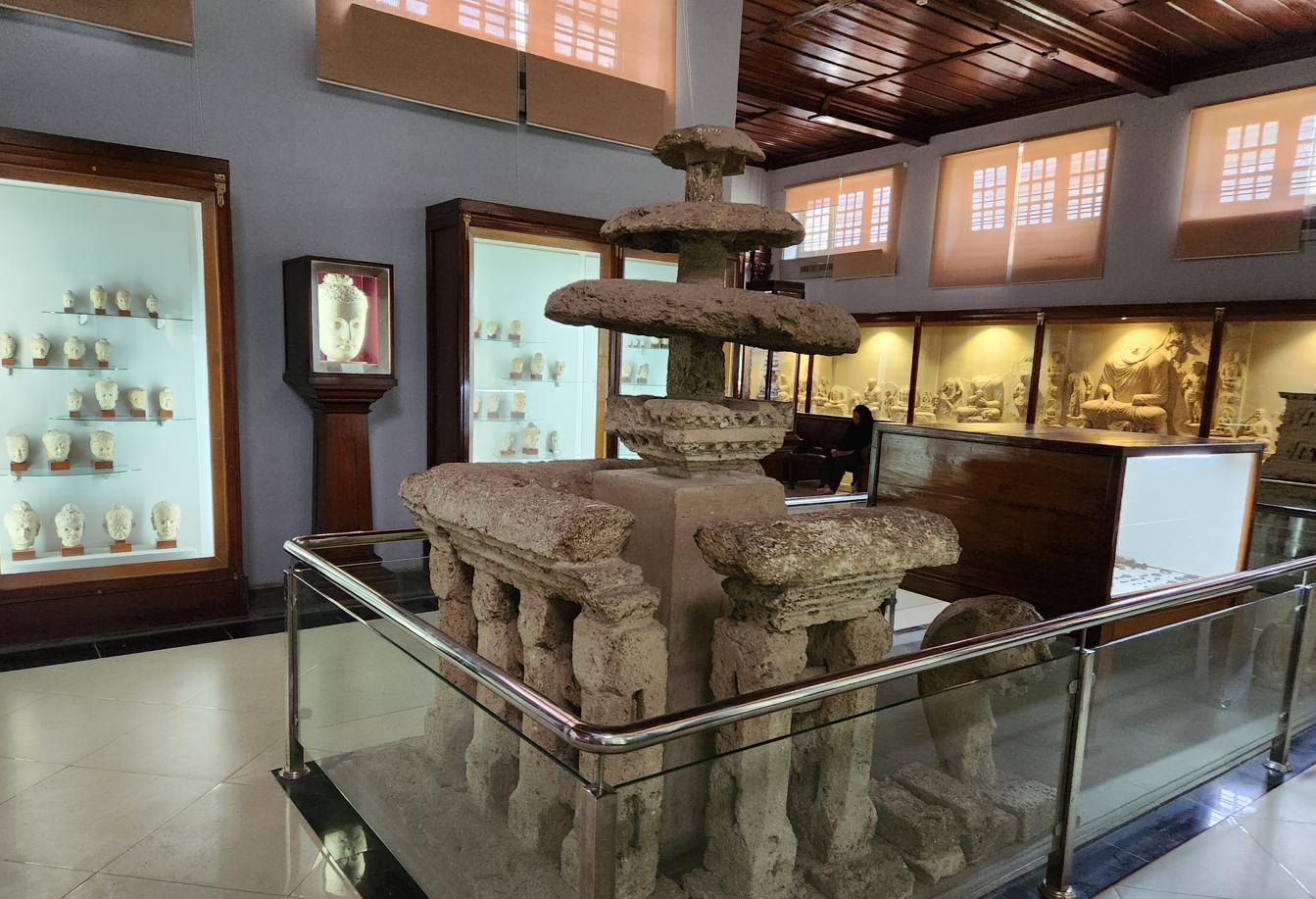
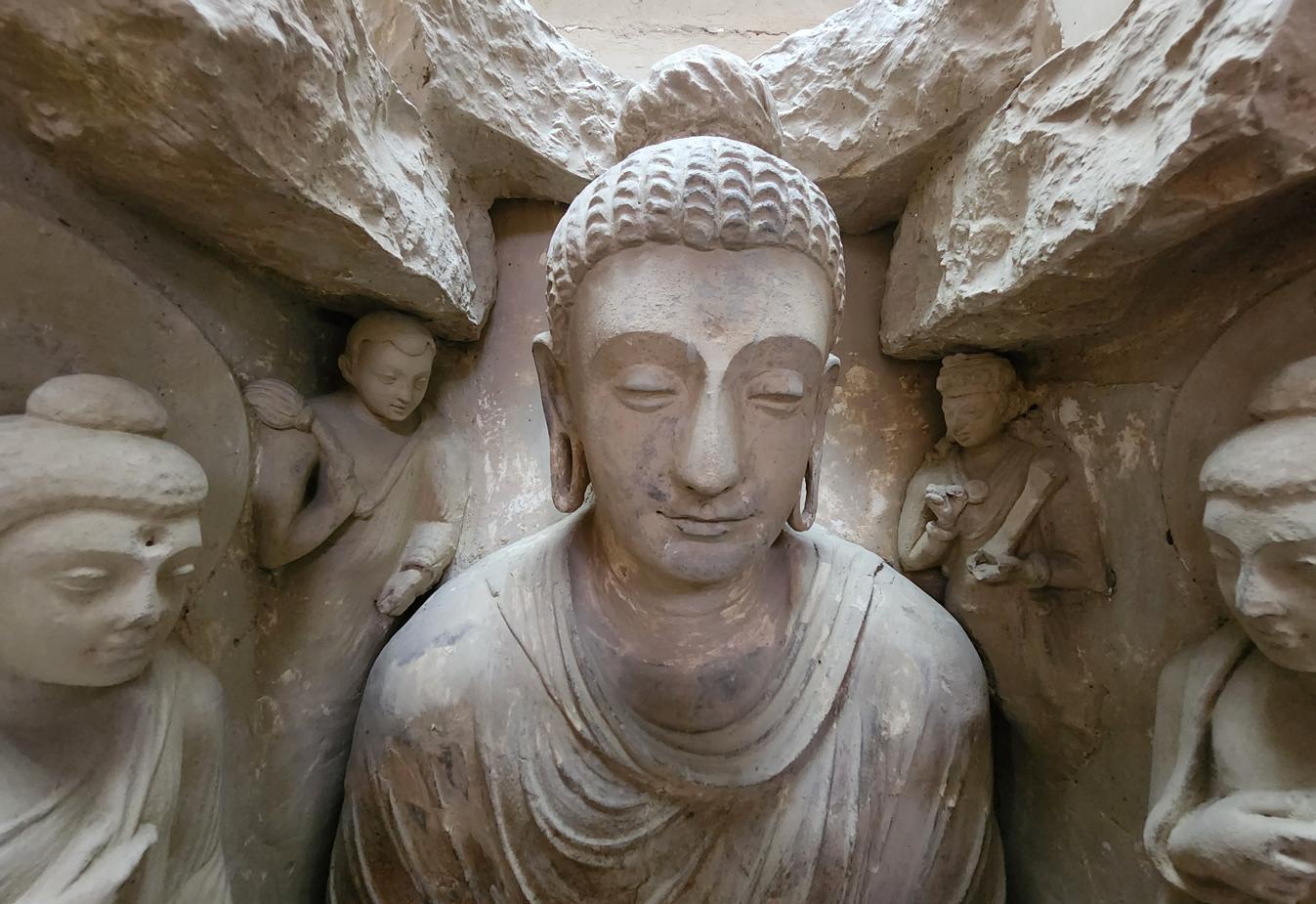
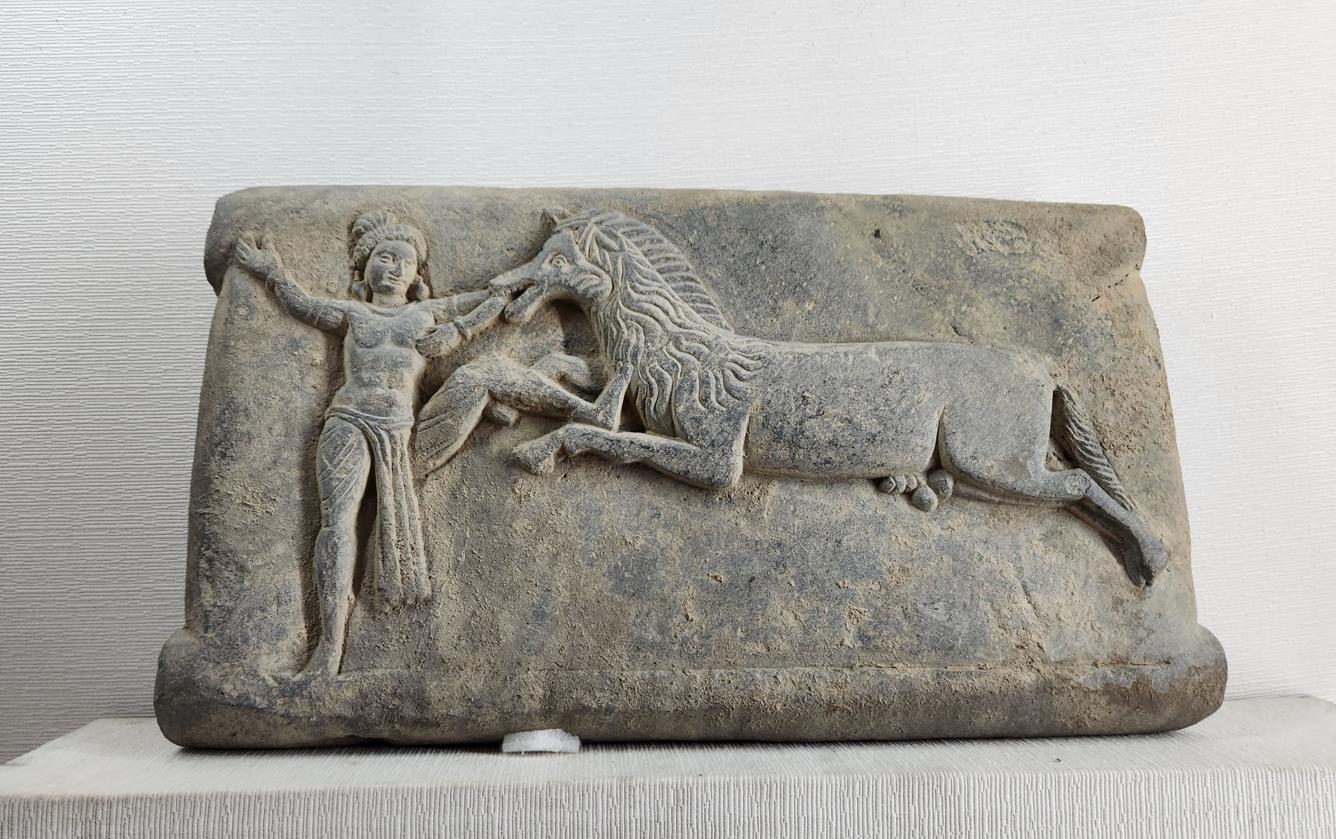
Our guide at the museum — the director himself, who knew Jamal from previous visits and had invited us to his office for tea — was a scholarly man in late middle age who wore a three-piece suit despite the heat and spoke of the Gandharan objects with the barely suppressed excitement of a man discussing something he believes the world has not yet properly understood.
'You see this face?' he said, holding up a small Buddha head of perhaps six inches, its nose worn smooth by centuries of handling. 'This is not Indian. The bone structure, the proportions — this is Greek. But the expression' — he turned it toward the light — 'this is completely Indian. This is the moment when two worlds looked at each other and made something new.' He set it down with the care of a man who has made the same gesture many times but never carelessly.
Gandharan sculpture captures “a heterogeneous social picture of the time — a medley of foreign immigrants: Greek, Scythian, Parthian, Kushan, Huns, and Turk, all intermixed with the local populace in the mundane affairs of the world.” But the sculptors themselves kept their priorities straight: “the primary aim of the art is not to extol the kings or their ministers, but to adore the Buddha.”
— Ananda CoomaraswamyThe museum itself was, it must be said, considerably less comfortable than its contents were interesting. Pakistani summer heat does not need much encouragement to become oppressive, and a nineteen-twenties museum building with minimal ventilation gives it every possible assistance: we moved from case to case at the unhurried pace the objects deserved, but also at the only pace the heat allowed, the air inside thick, still, and faintly close, so that admiring some of the finest Gandharan sculpture in South Asia came to feel, by the third or fourth room, less like connoisseurship and more like a slow walk through a sauna that happened to have excellent captions.
Sirkap
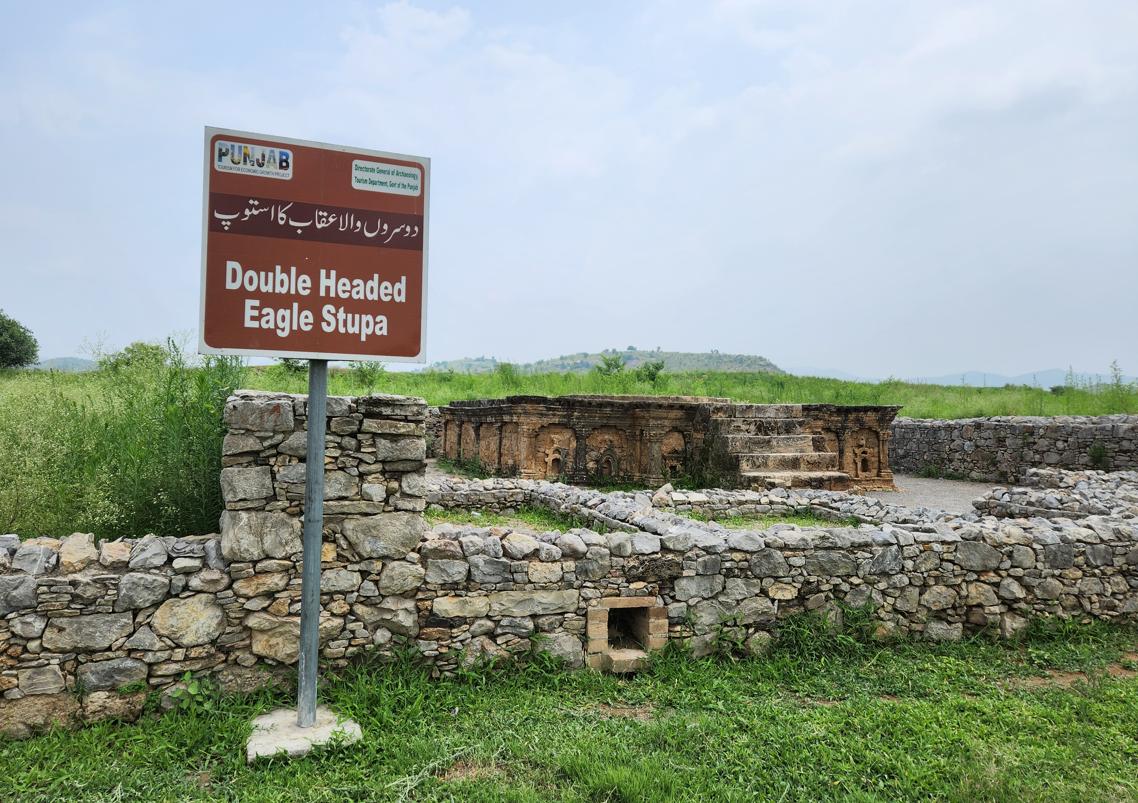
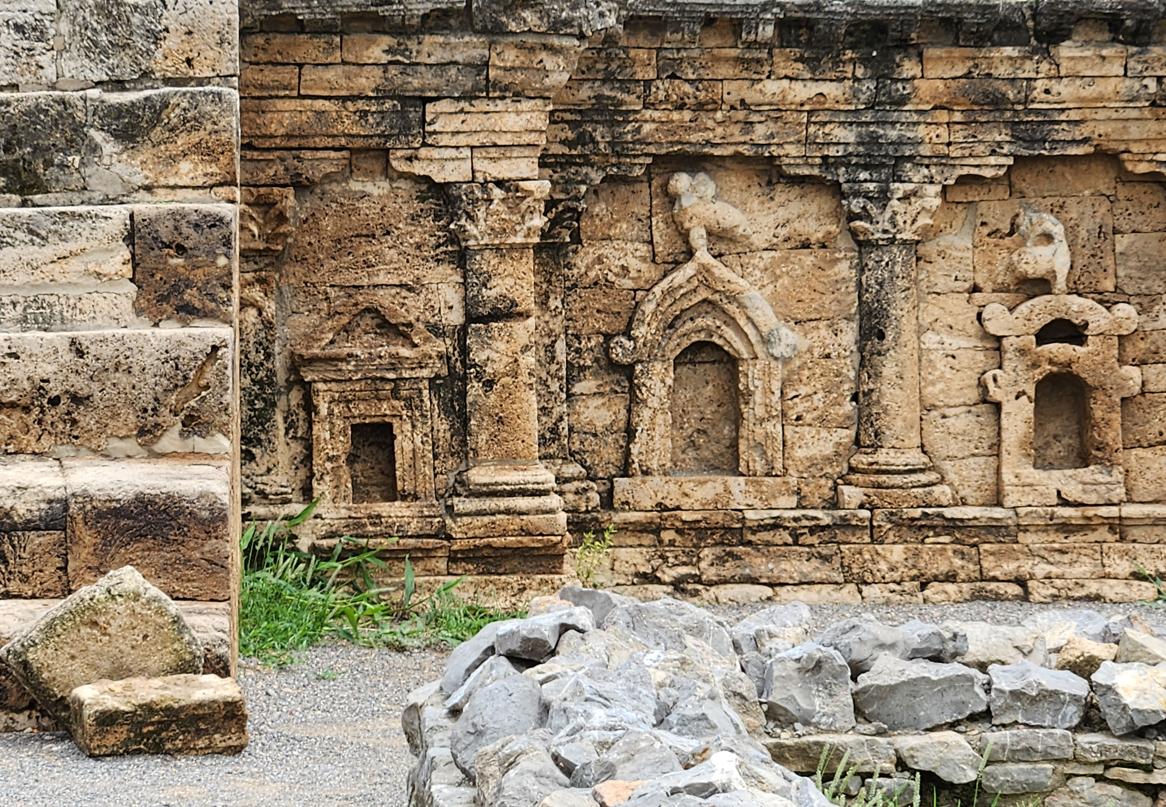
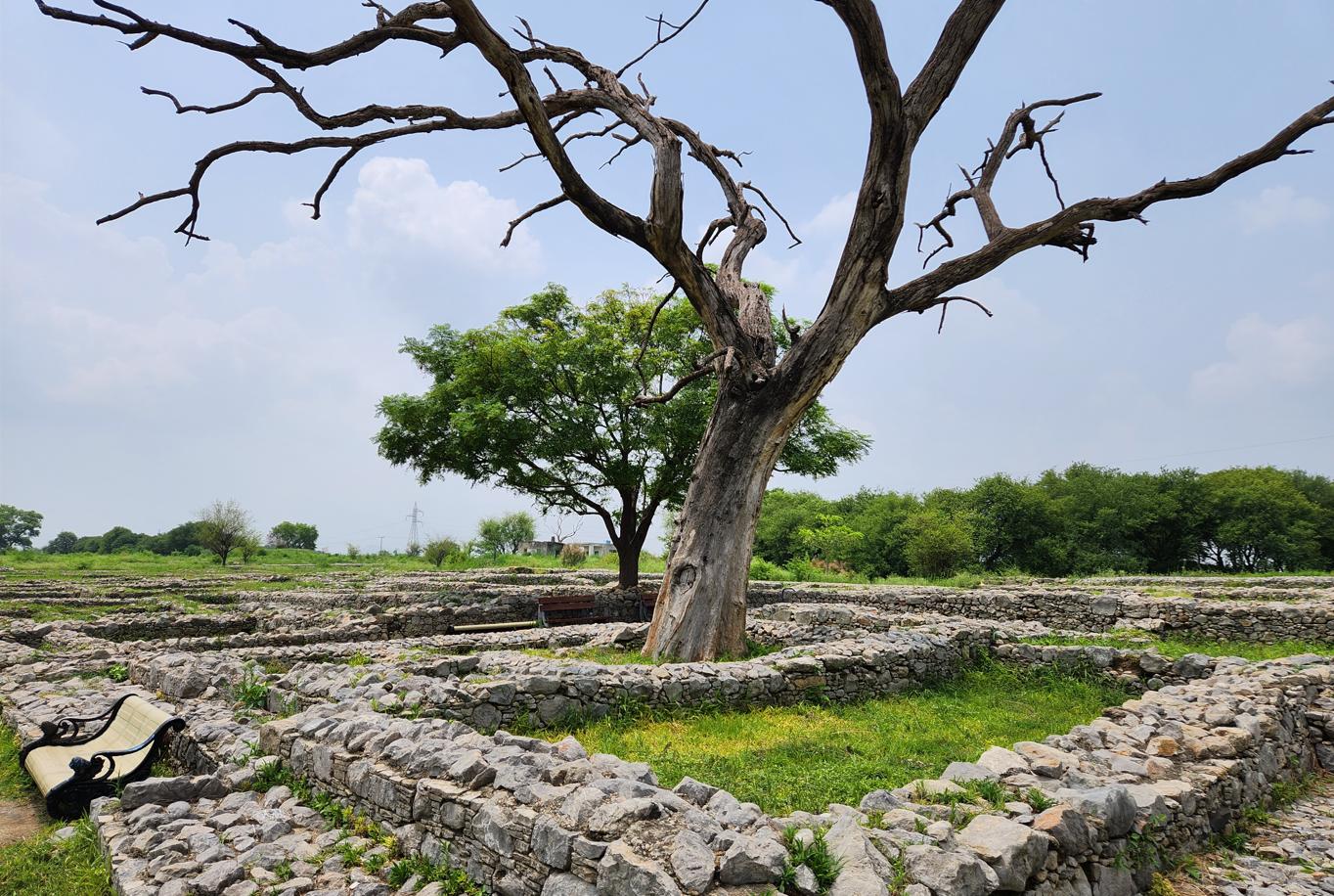
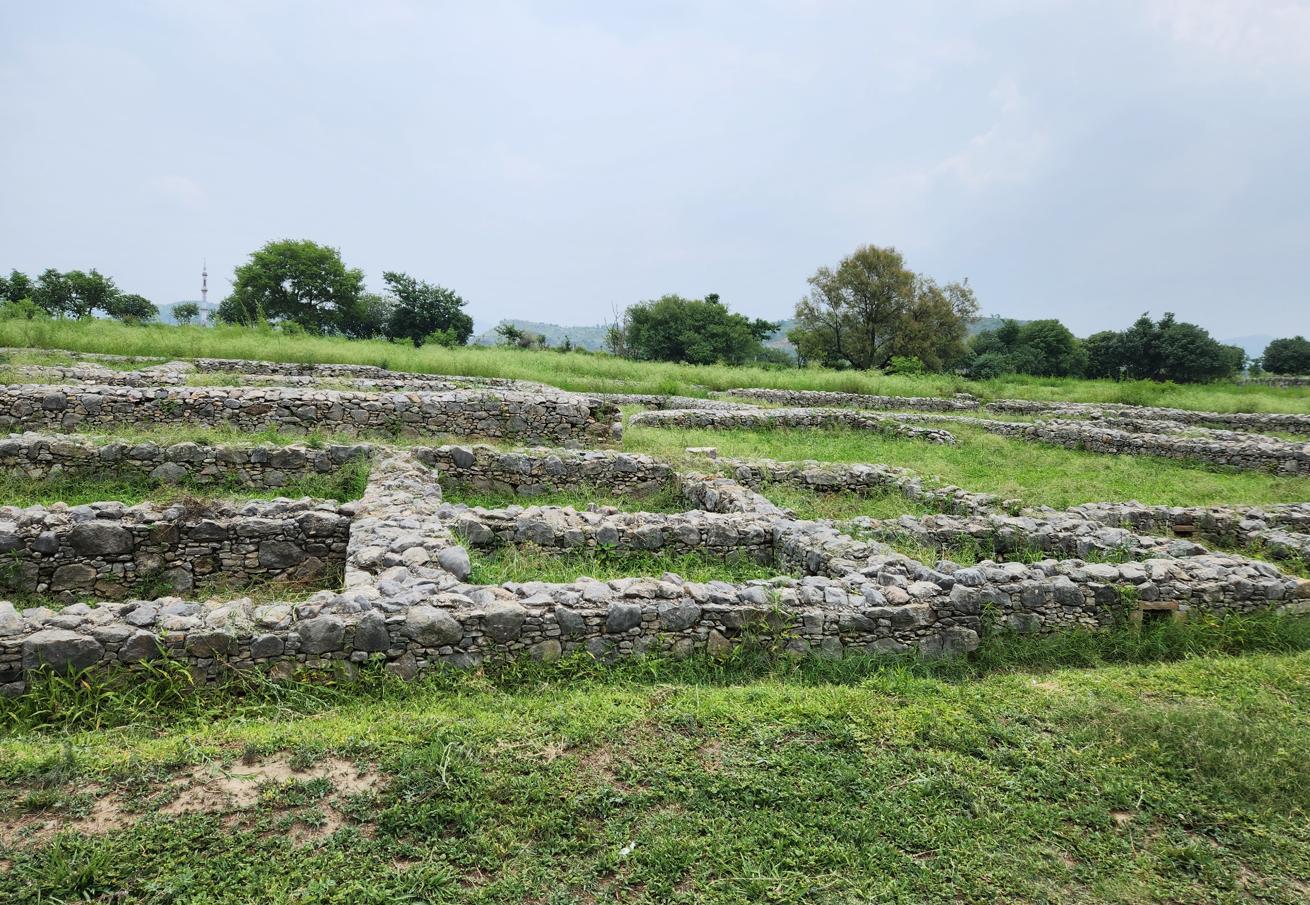
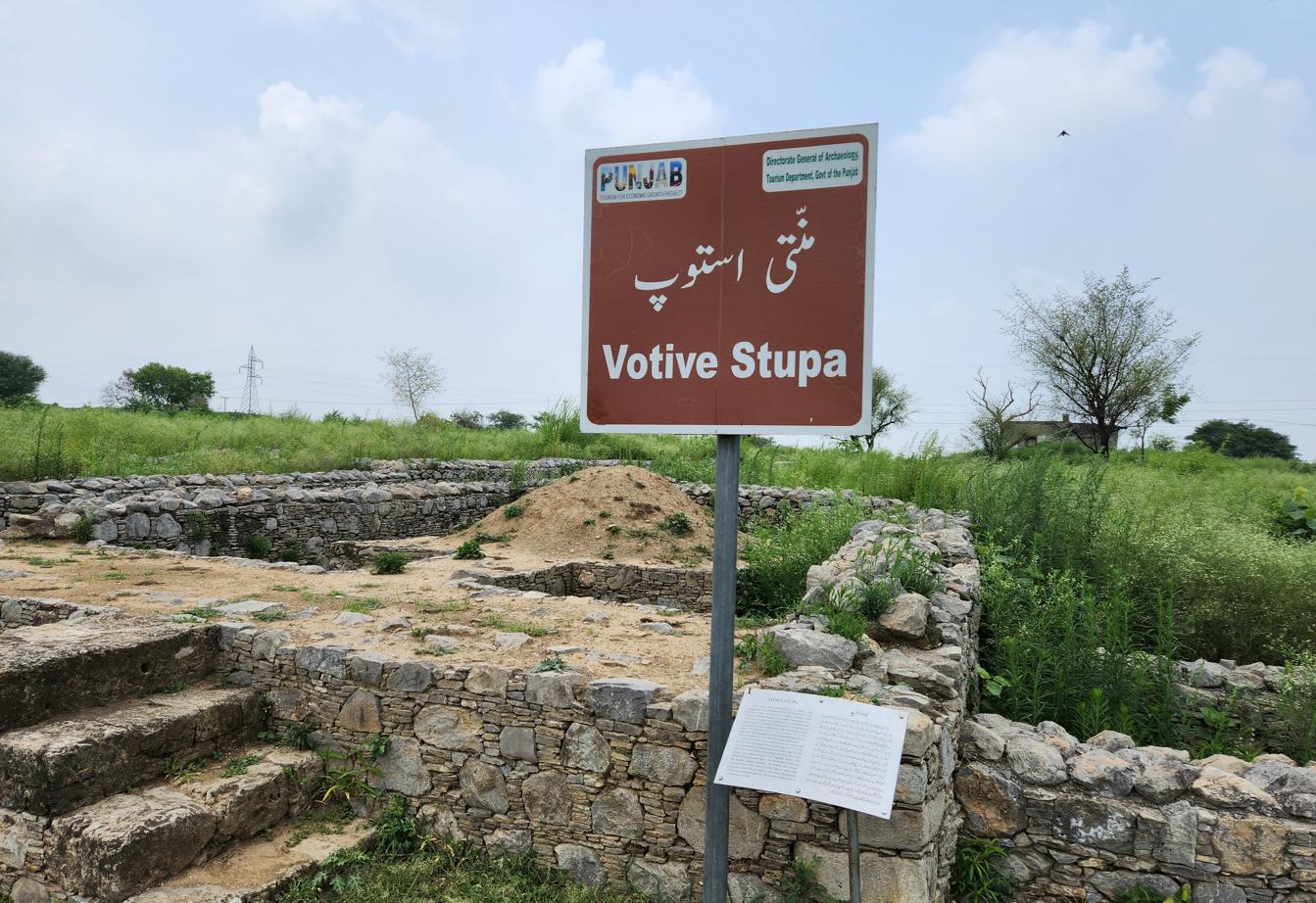
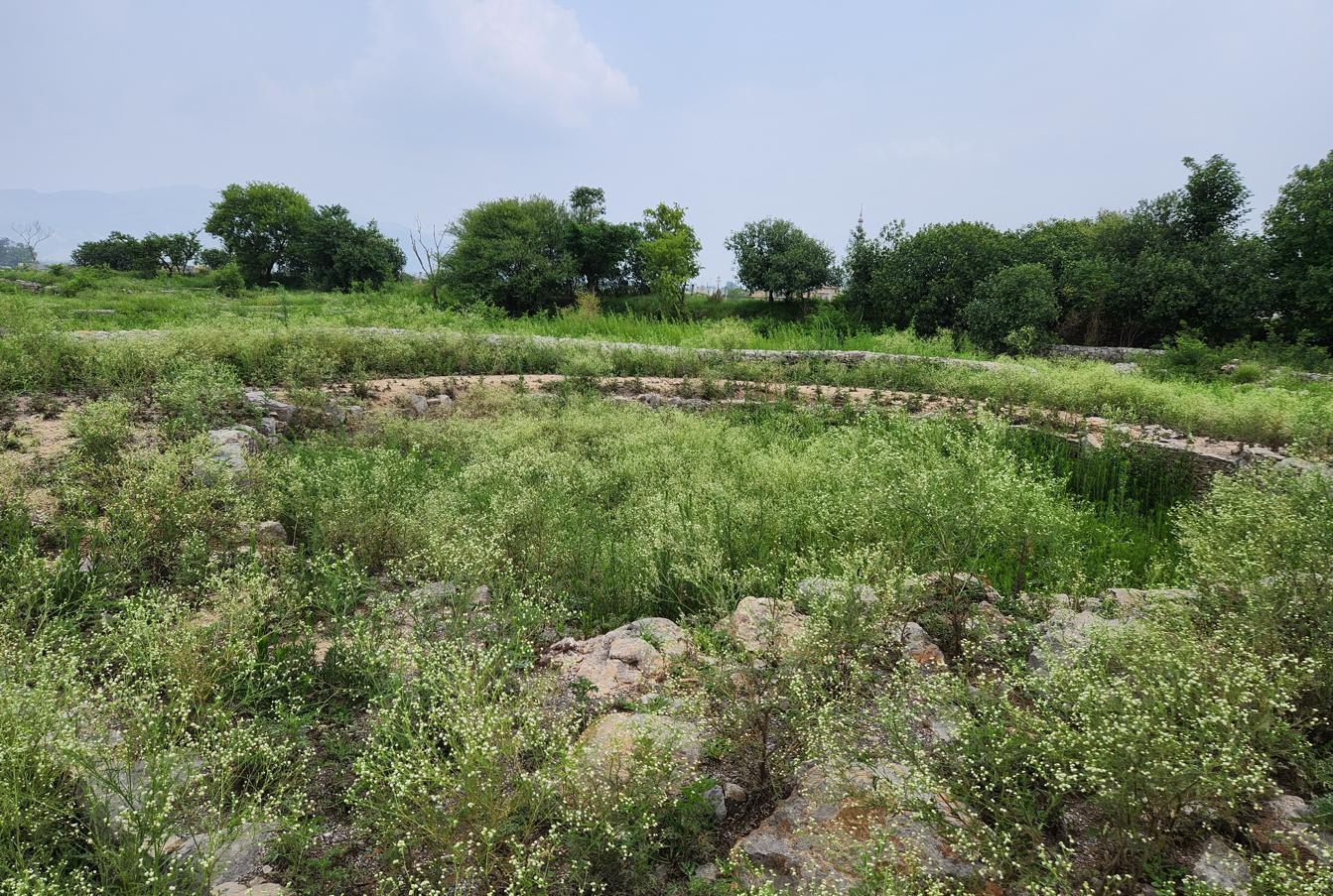
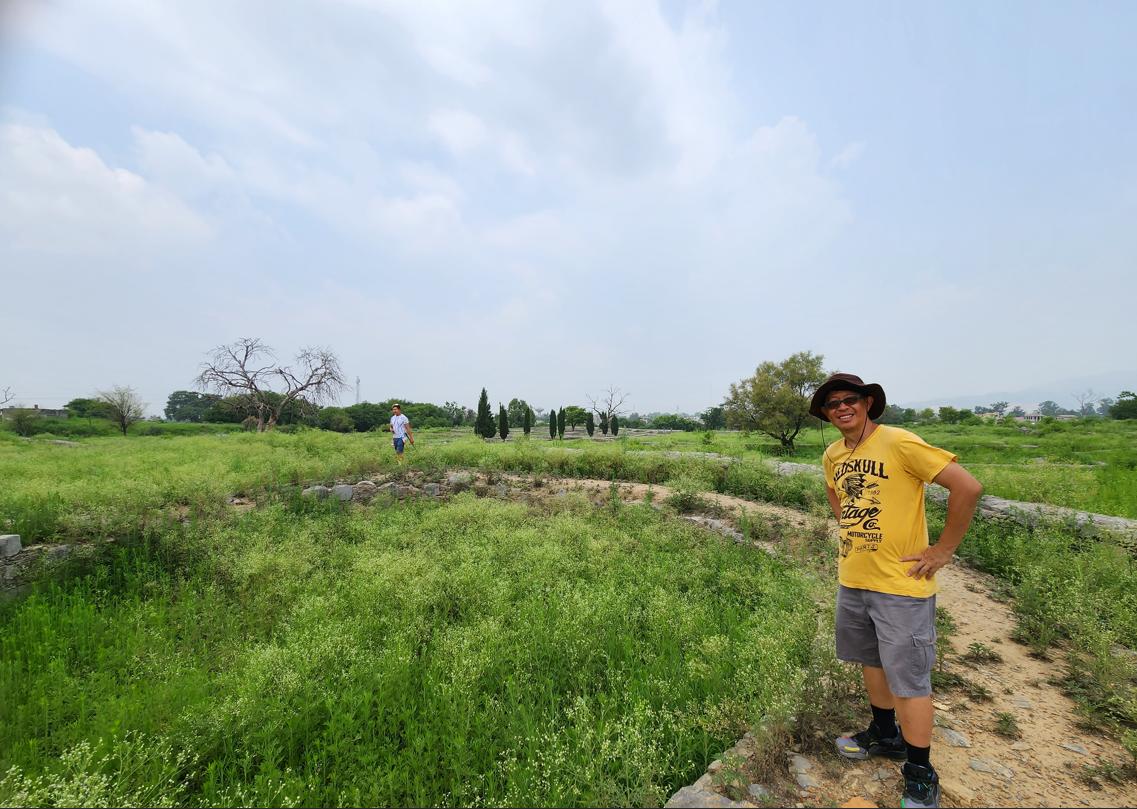
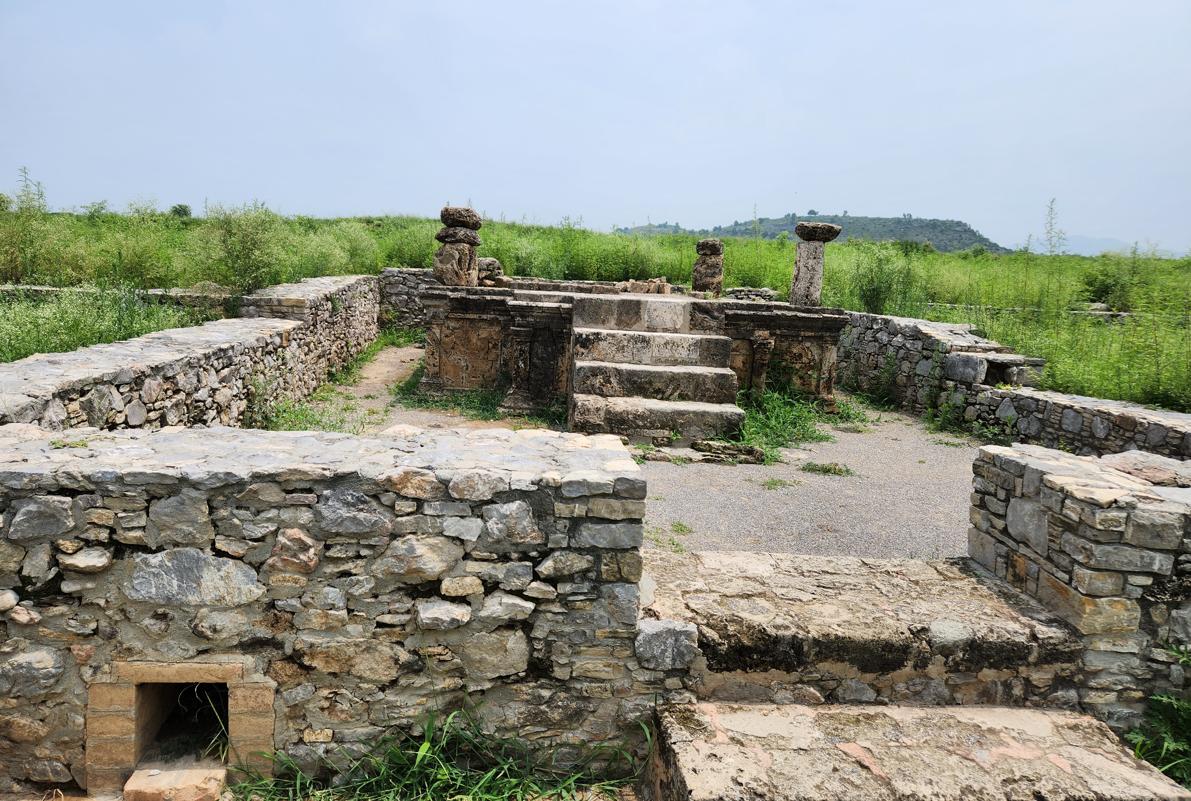
As an East Asian Buddhist — raised in Singapore with its Chinese Buddhist tradition, itself derived from the teachings brought back from India by the Tang Dynasty monk Xuanzang — I felt in Taxila the starting point of a religious lineage that had shaped my own childhood. Xuanzang visited Taxila in the seventh century CE, recording in his diary a scene of ruin: the White Huns had destroyed the monasteries two centuries earlier, and what he found were the remnants of a Buddhist civilisation already gone. He described it with the sadness of a man arriving too late for something important.
Faxian had been here three centuries before Xuanzang, in the early fifth century CE, and found the monasteries still functioning: thousands of monks, great libraries of Sanskrit texts, a tradition of scholarship that linked the teachings of the Buddha to the mathematical and astronomical knowledge of the Greeks. He stayed for years, learning Sanskrit, copying sutras, preparing the texts that he would carry back to China and that would transform Chinese Buddhism into the form it bears today. Faxian also recorded the local legend behind the city’s Sanskrit name: Takshasila, he was told, means “the severed head,” after a Jataka tale in which the Buddha, in an earlier life as a Bodhisattva, gave his own head as alms to a man who asked for it — a founding myth of self-sacrifice for a city that would spend the next millennium teaching precisely that virtue to the world’s most demanding students.
Dharmarajika Stupa
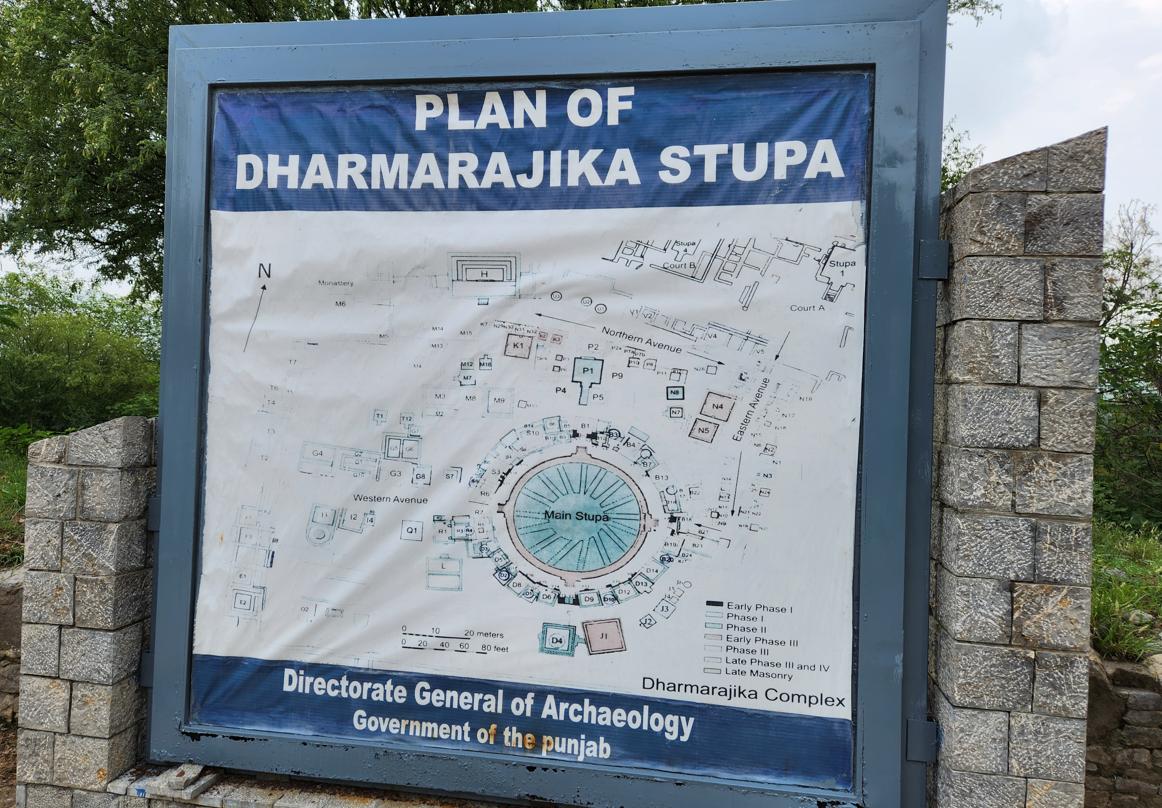
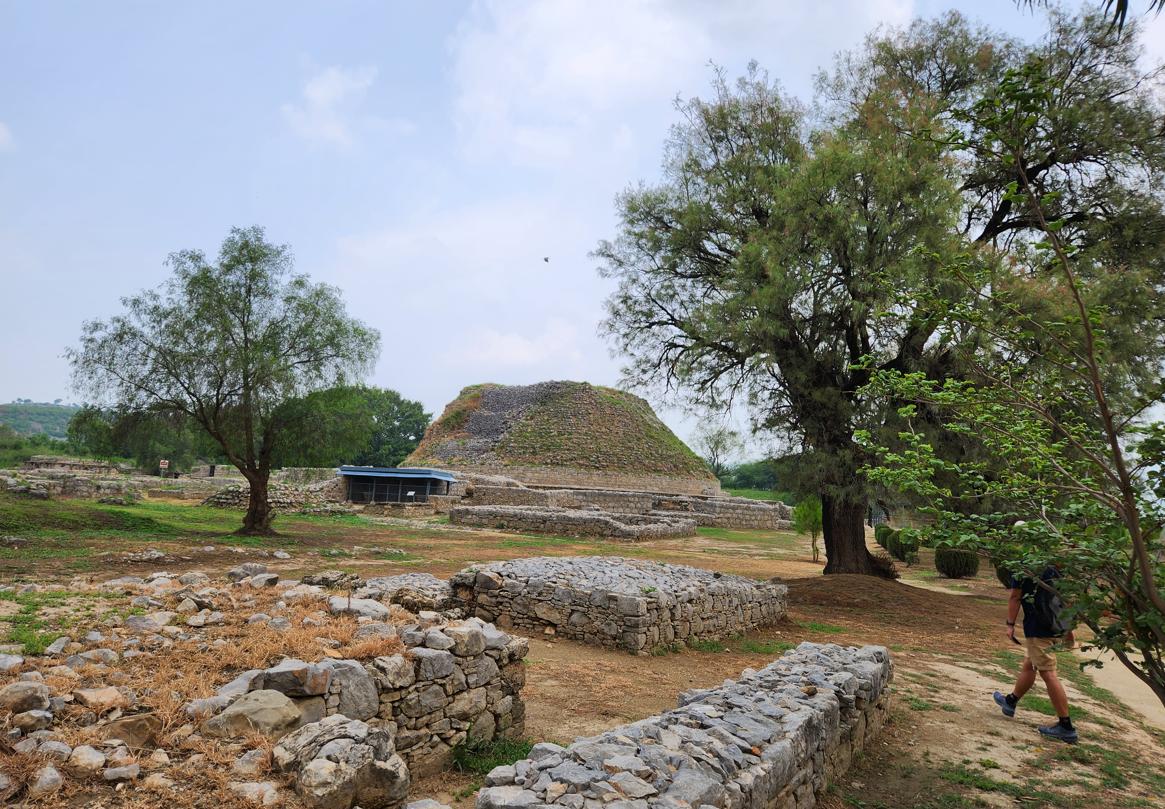
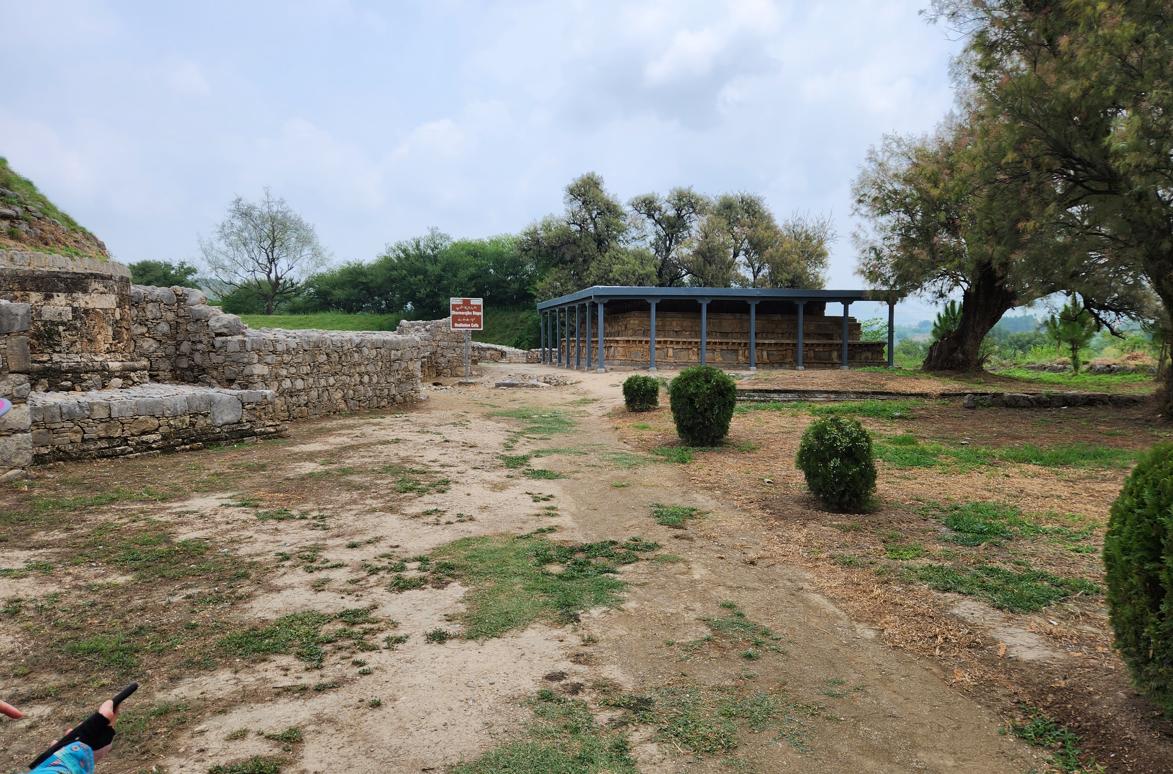
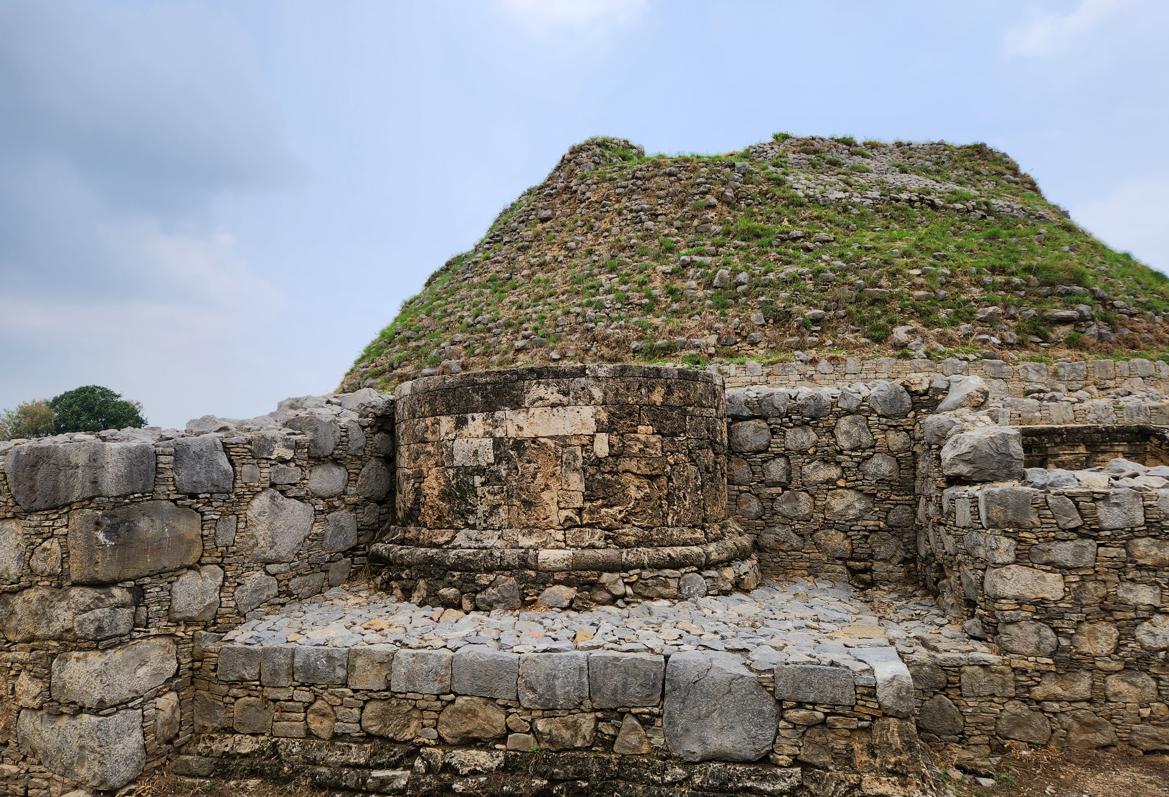
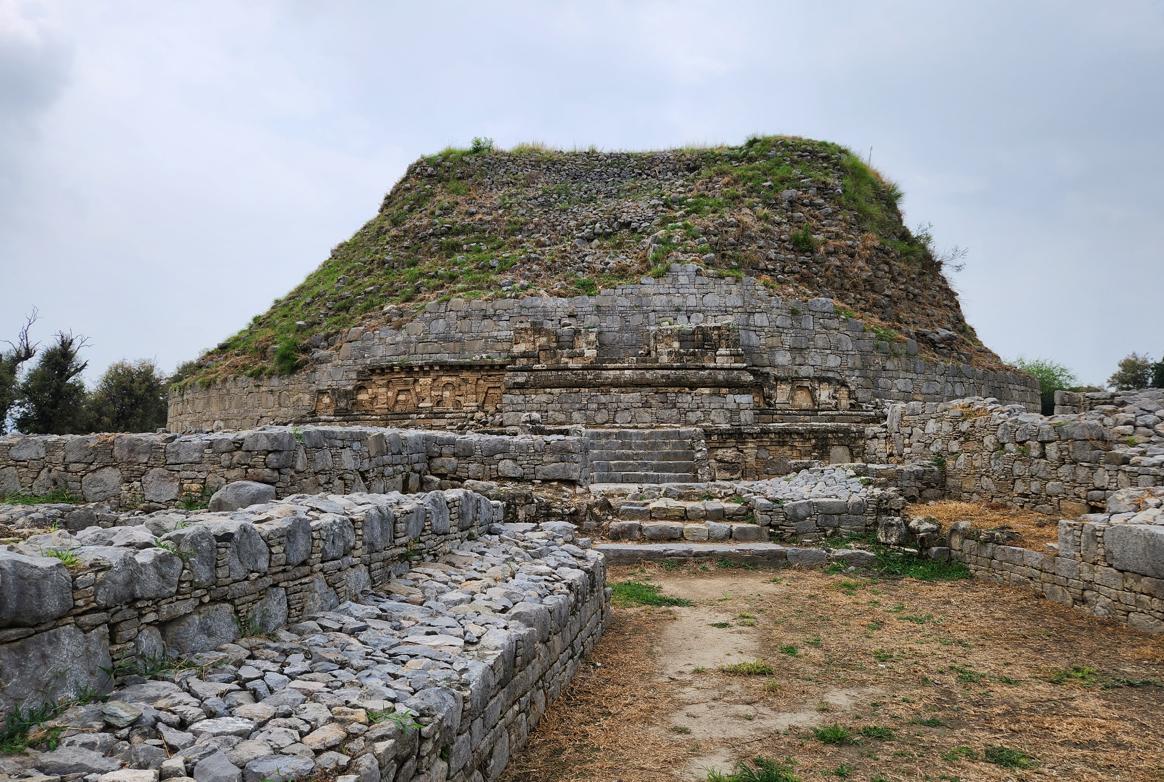
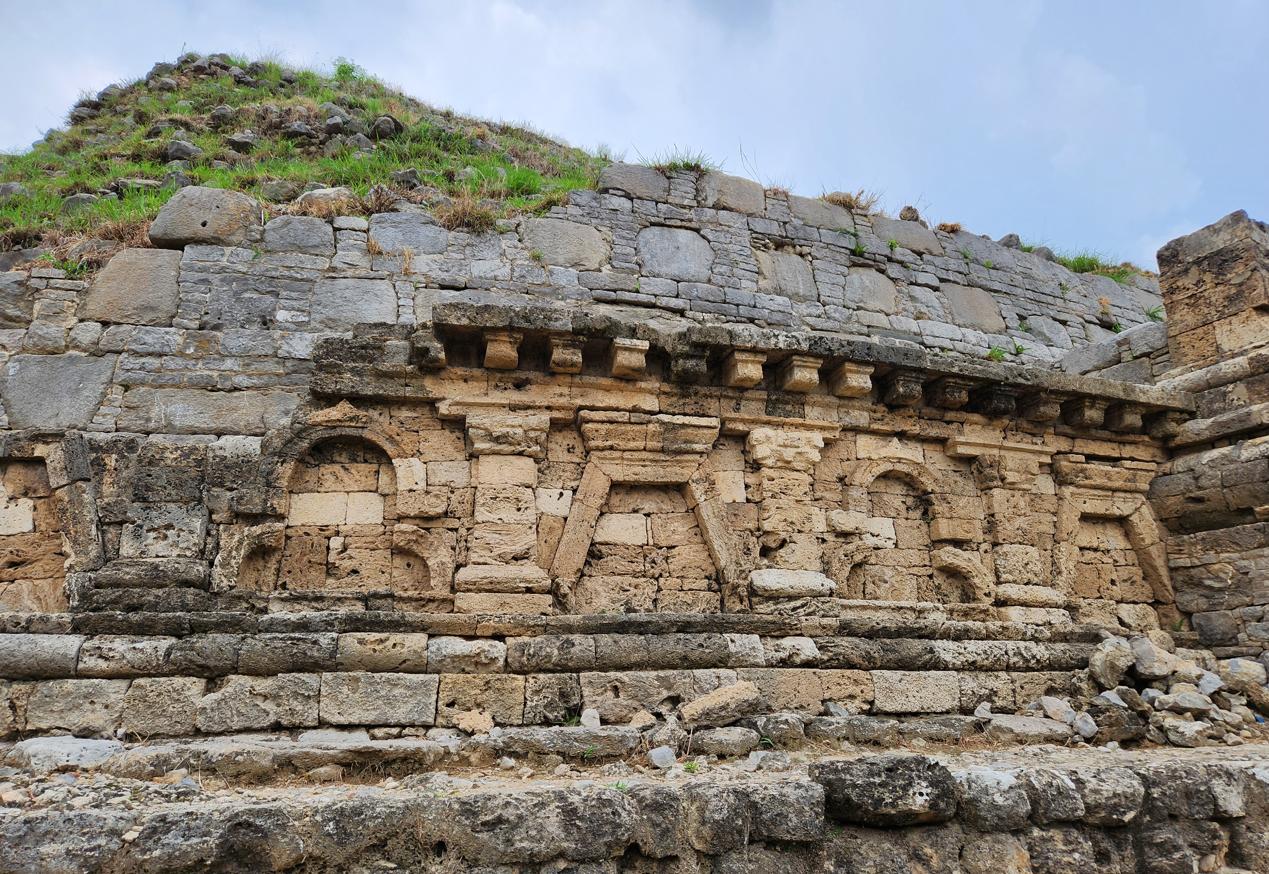
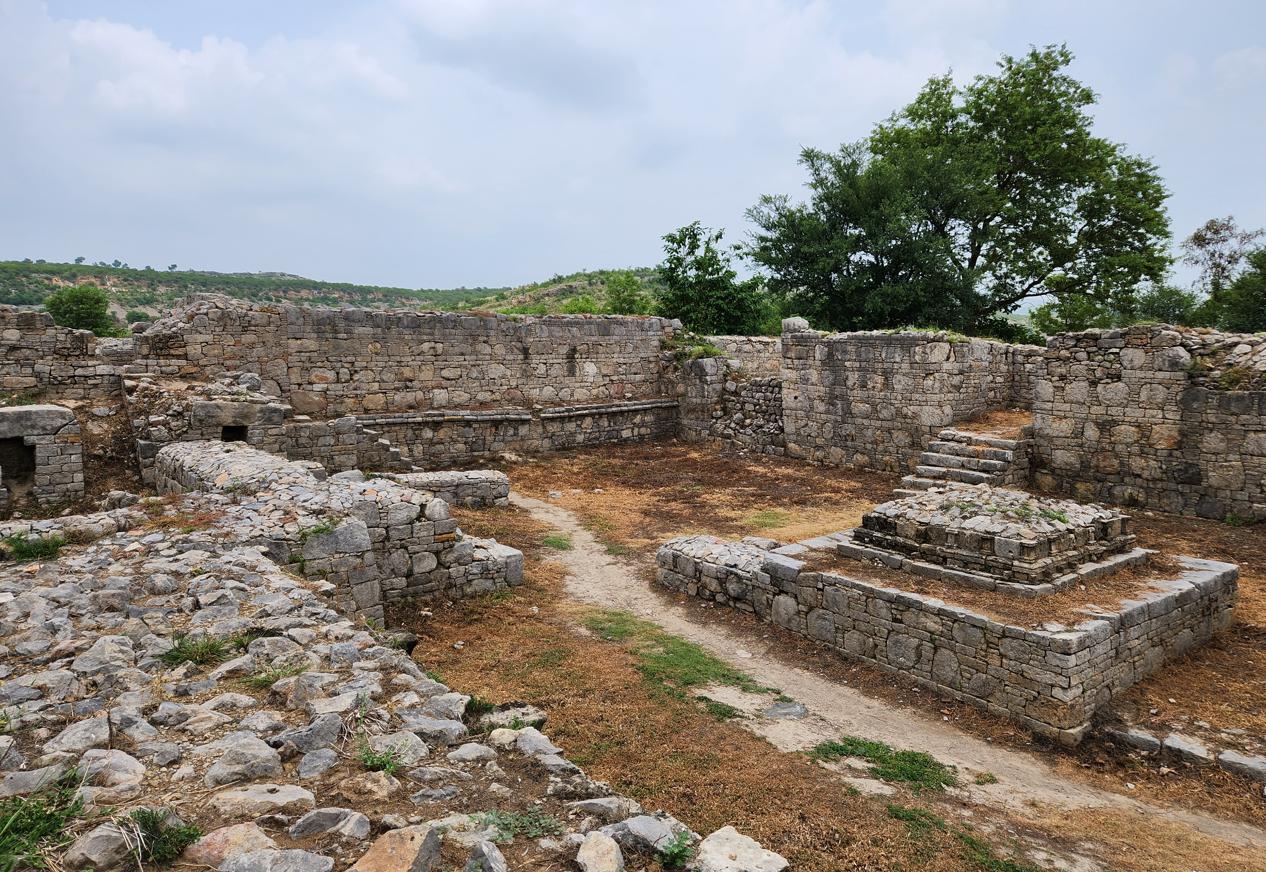
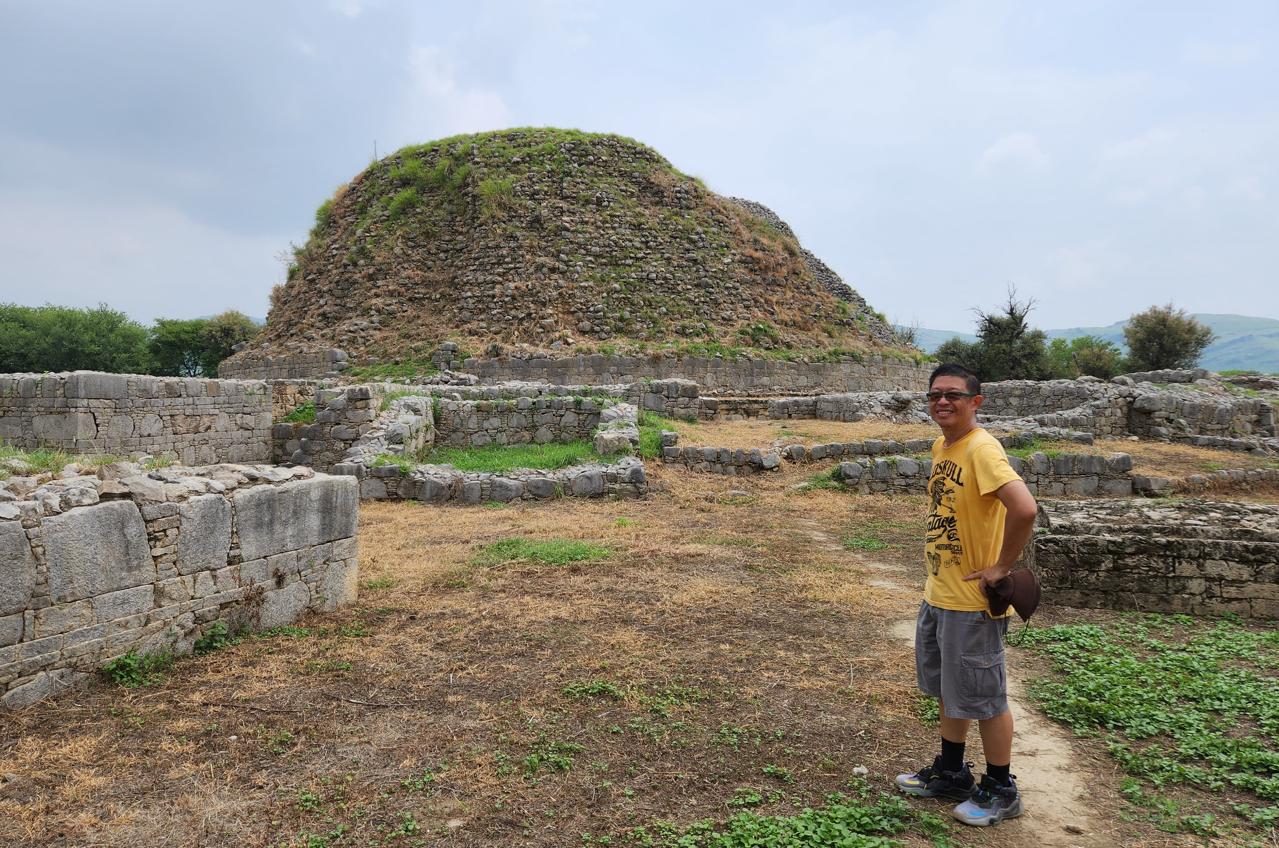
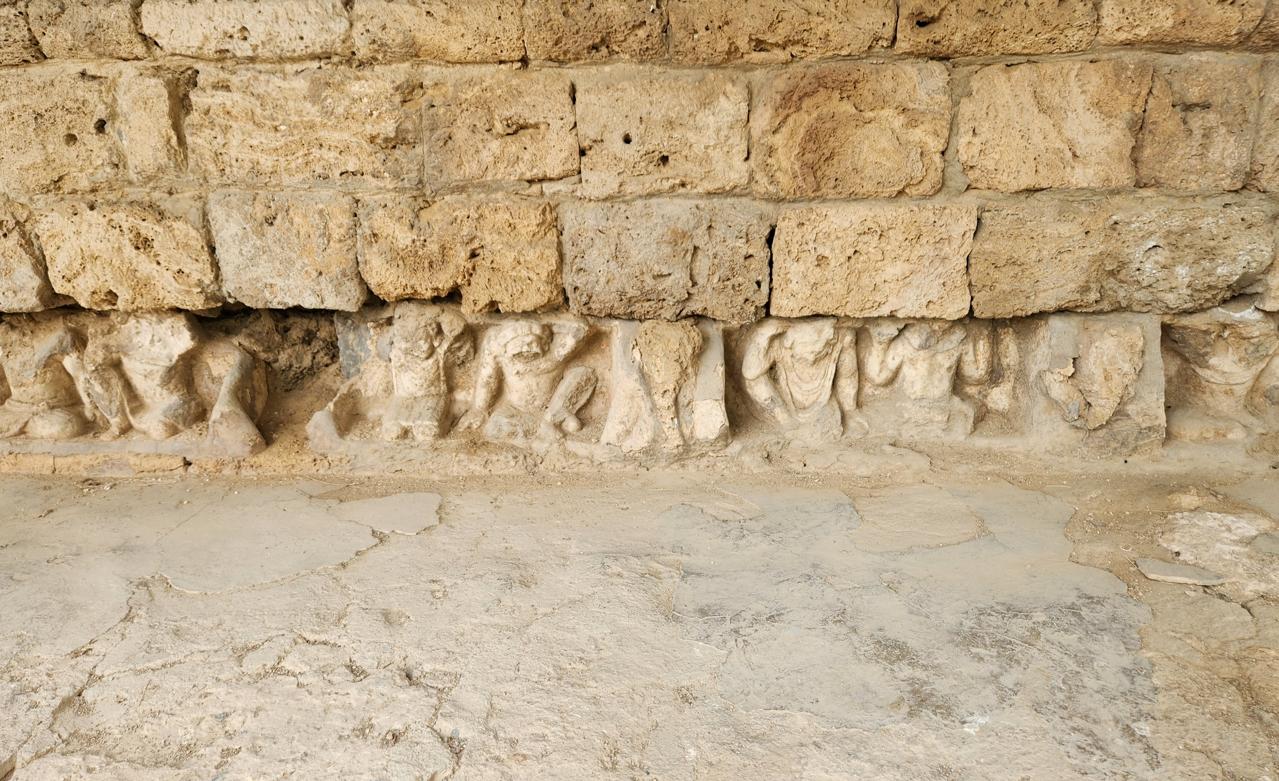
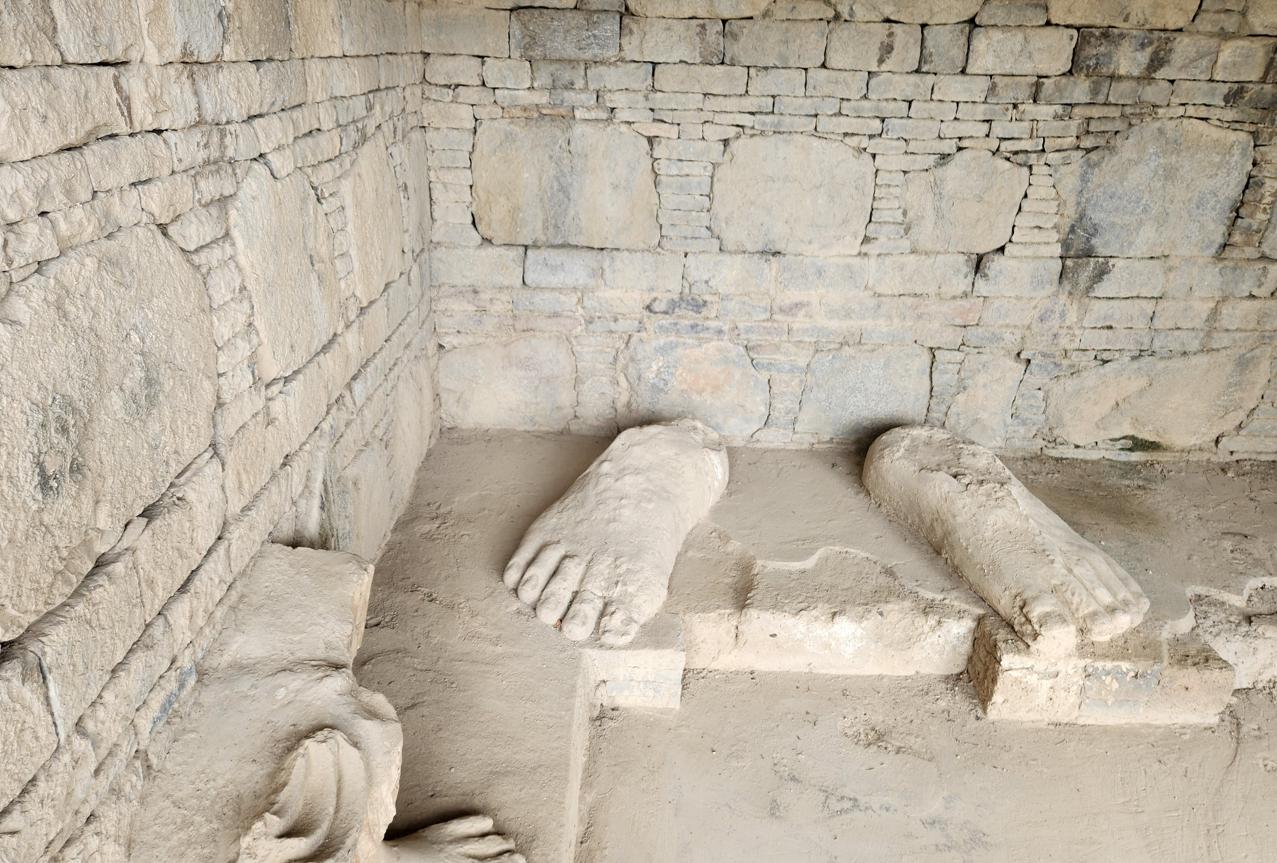
At the Dharmarajika Stupa — the Great Stupa of Taxila, built by Ashoka in the third century BCE over relics of the Buddha — I stood where both Faxian and Xuanzang had stood. The stupa itself is a low mound now, the topmost courses of its brickwork long since taken by later builders for later projects. But the monastic complex around it is more legible: the outlines of cells, refectories, assembly halls, the infrastructure of an institution that once housed hundreds of scholars and lasted six hundred years before the White Huns ended it.
I prayed, silently, in the way that I have prayed at Buddhist sites since childhood: a private inventory of gratitude and aspiration, addressed to no particular direction. Then I walked back to the car through the high grass of the excavation site, where wild flowers had grown up between the exposed brick courses, and the white butterflies that seemed to be everywhere in July in Pakistan moved through the air with the purposeful randomness of thought.
Takht-i-Bahi: Pakistan's Machu Picchu
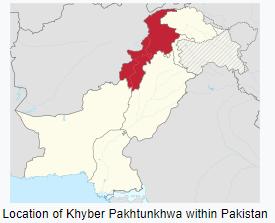

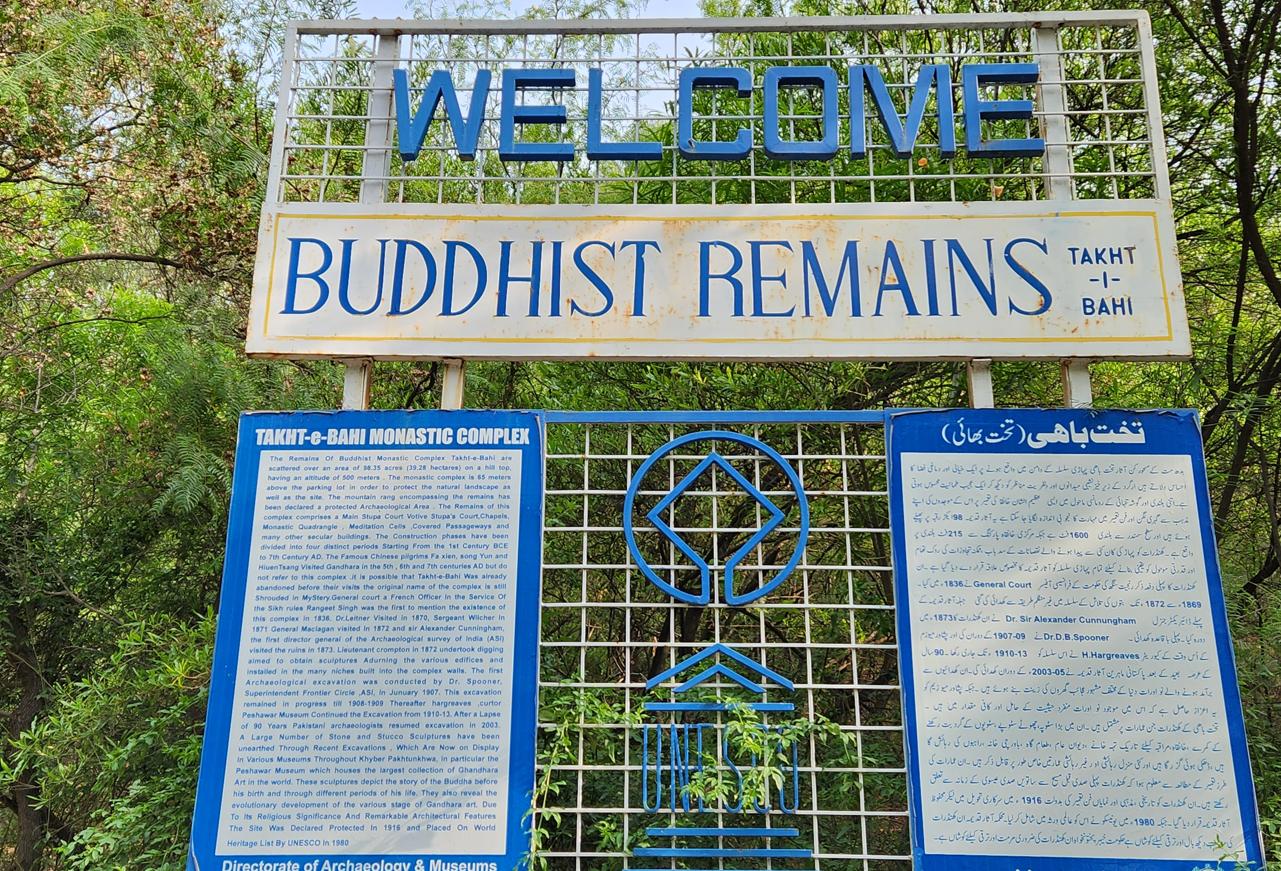
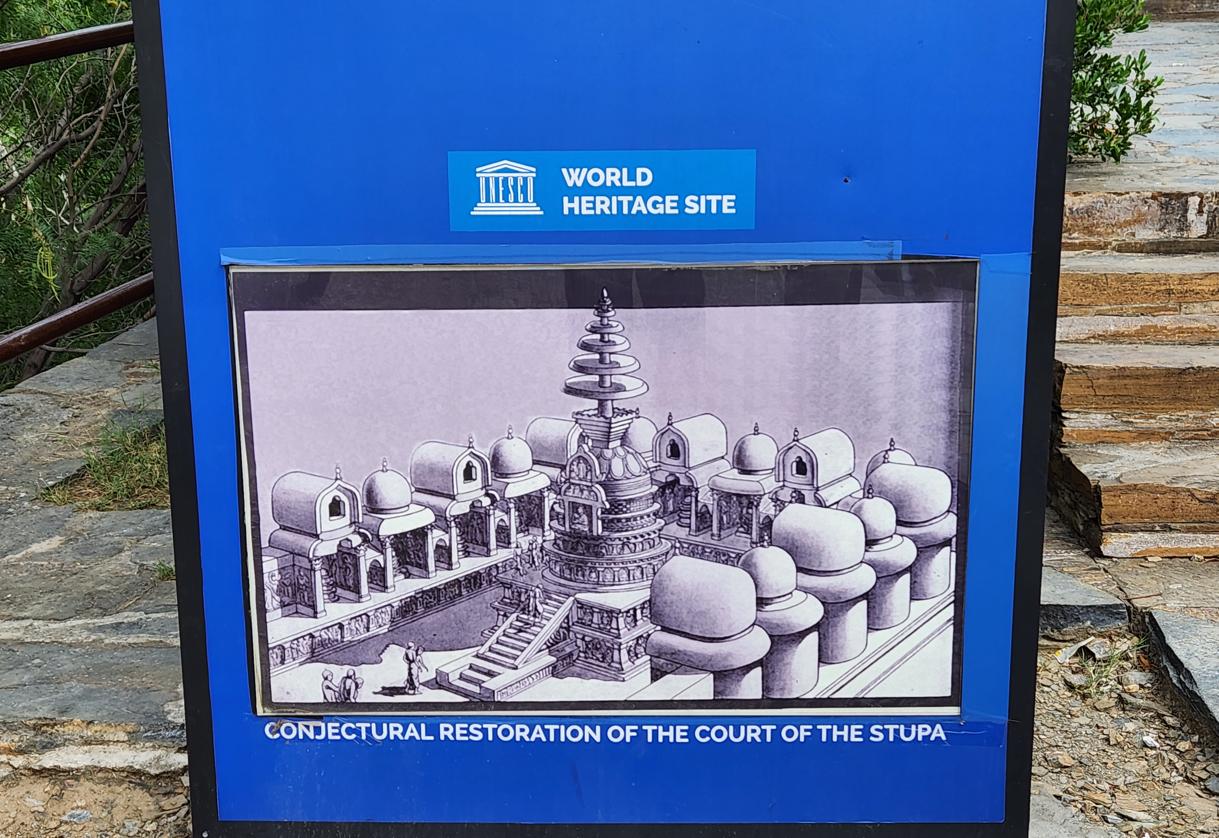
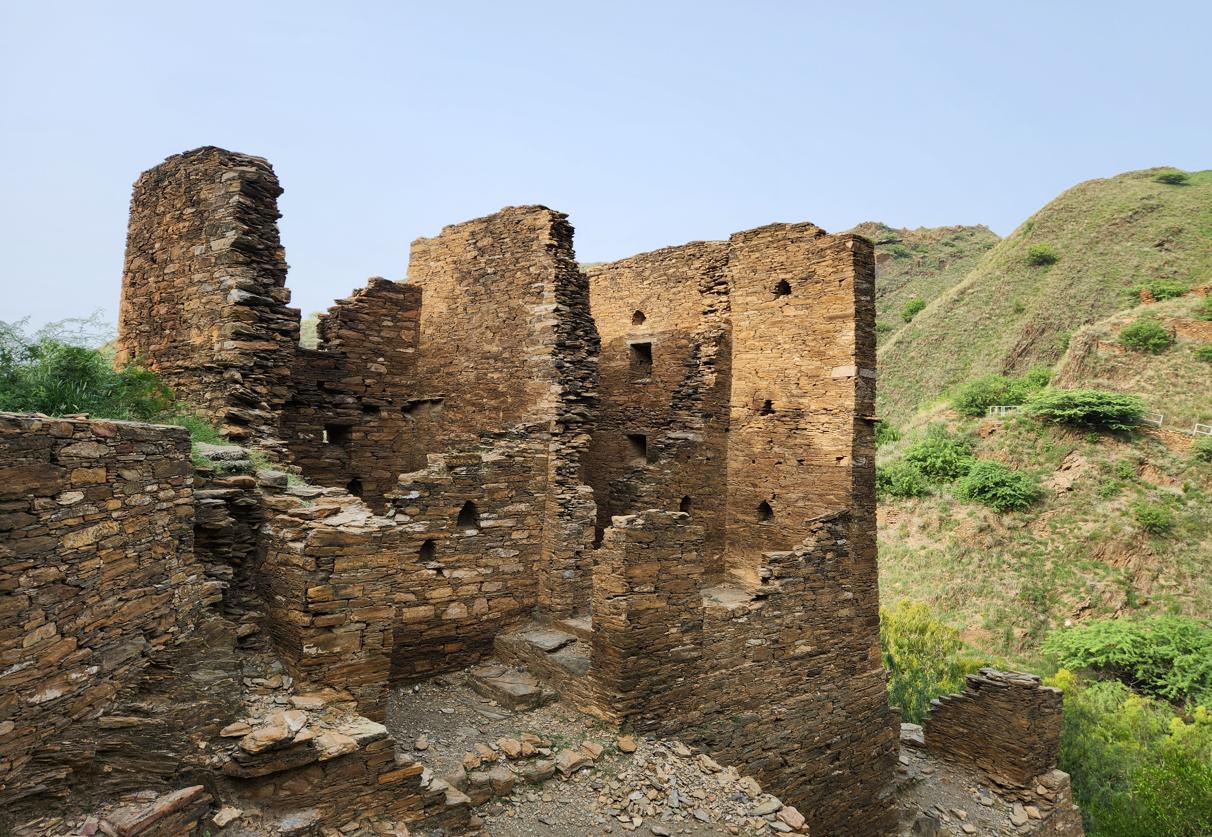
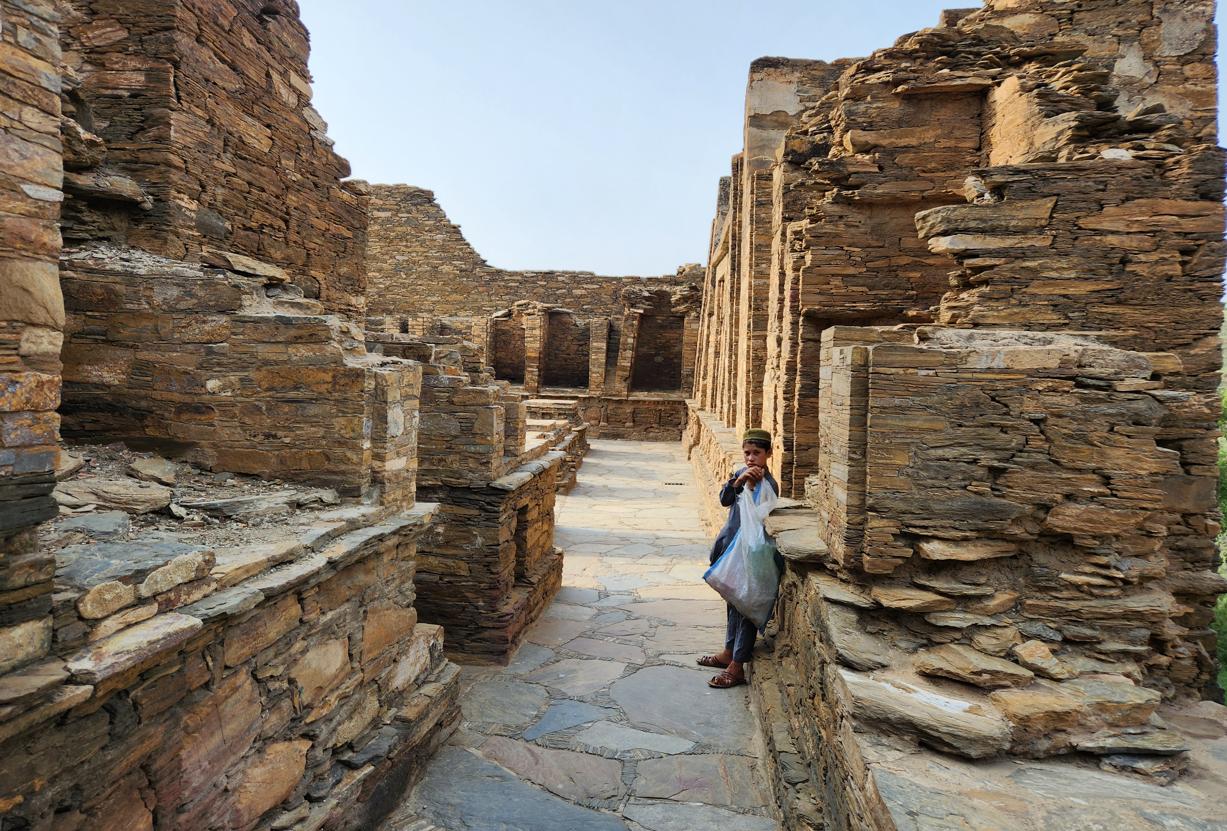
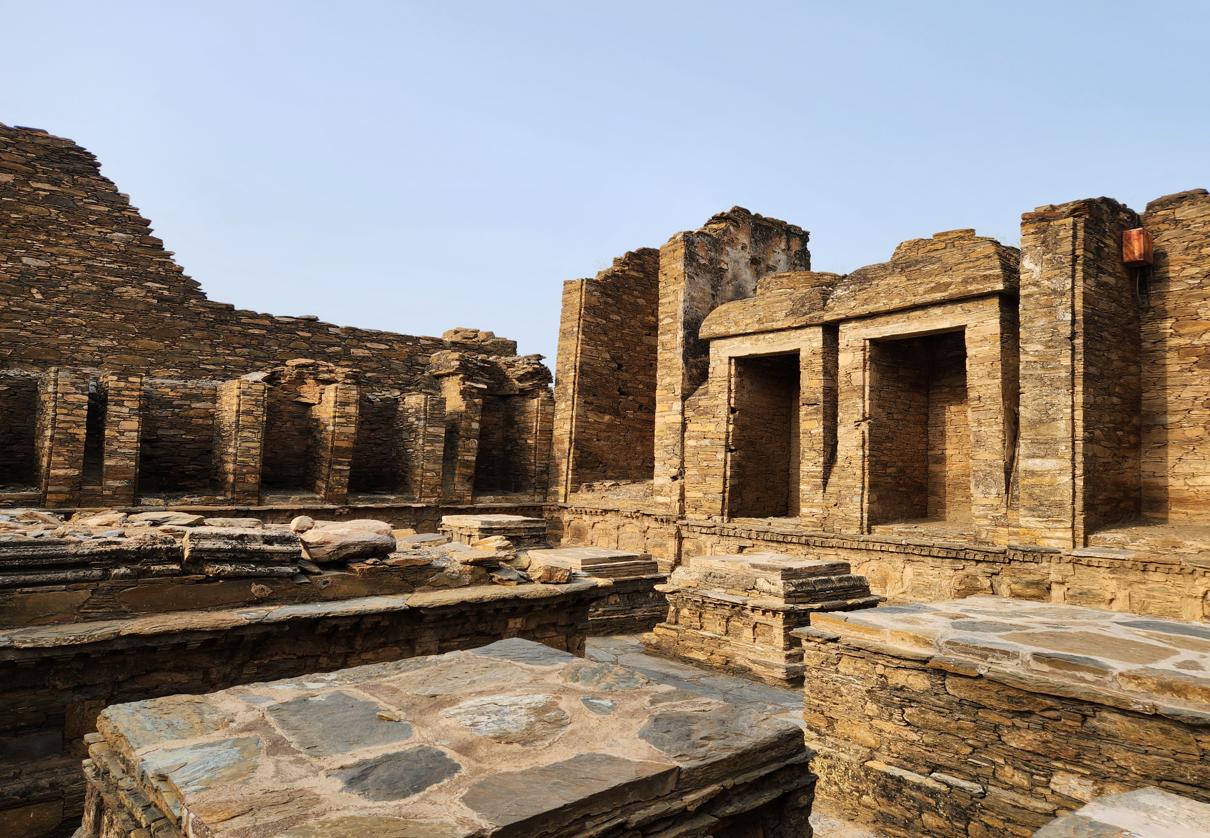
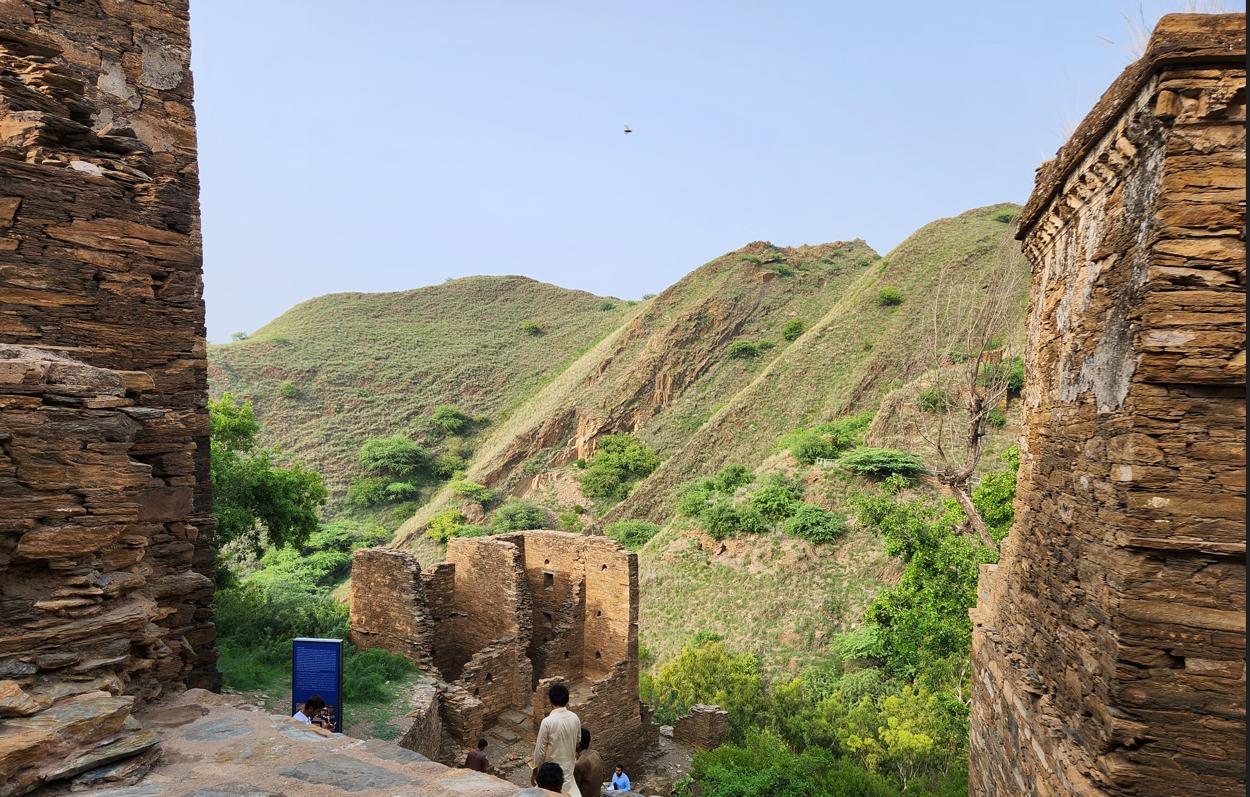
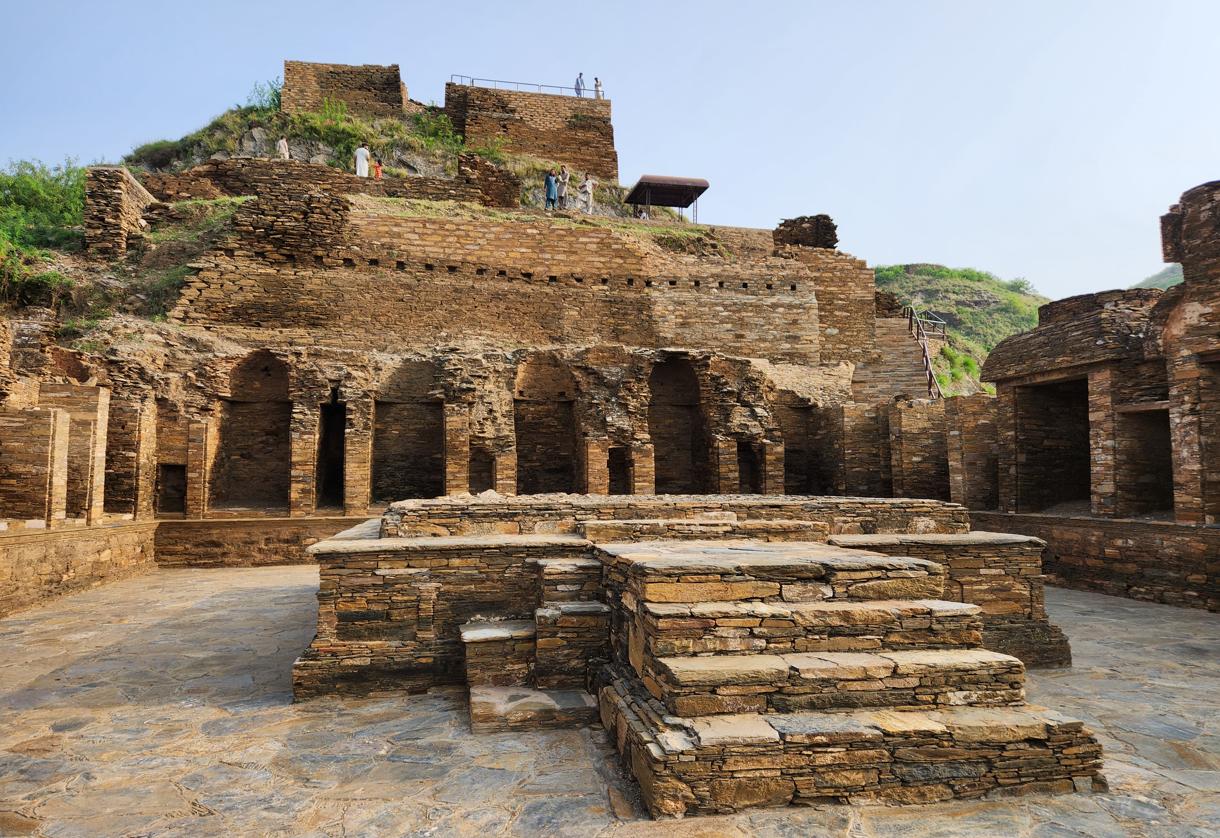
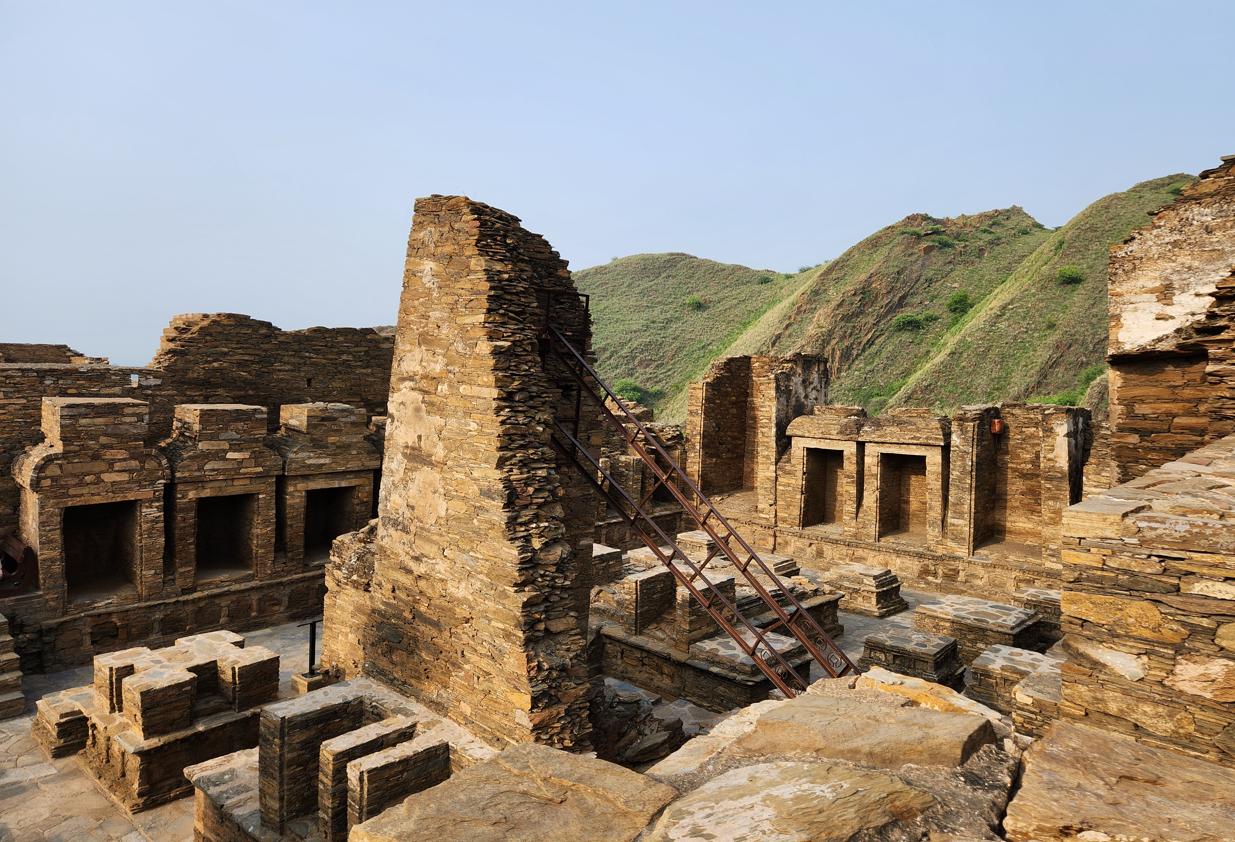
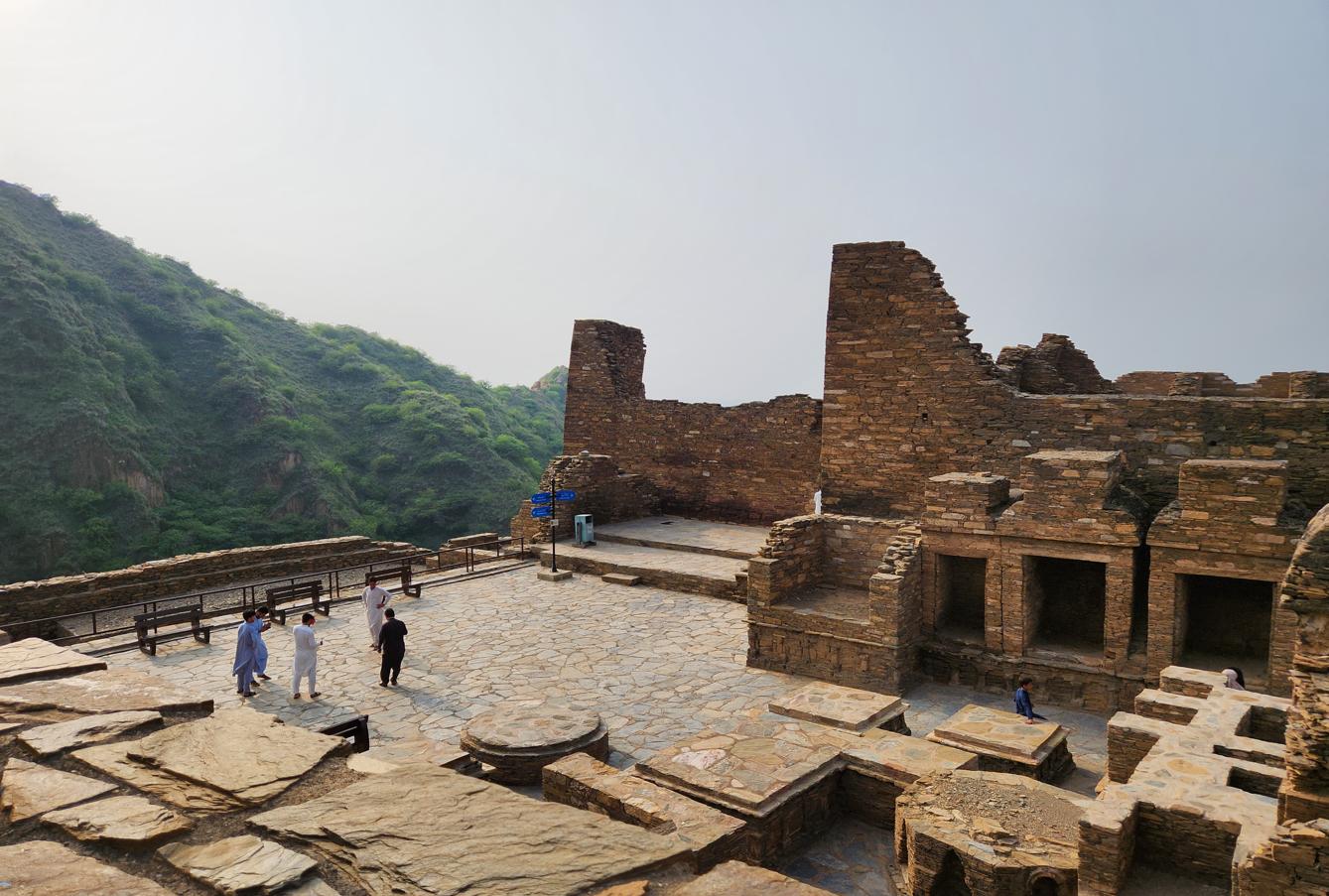
We drove north from Taxila through the Vale of Peshawar to Mardan — the second city of Khyber Pakhtunkhwa, fast-growing and unremarkable to look at, but sitting in the middle of ground that has been continuously significant for four thousand years. This was Gandharan homeland from around 1800 BCE; nearby at Shahbaz Garhi, Ashoka had his edicts carved into rock in the third century BCE in Kharoshthi script, right to left, among the earliest unambiguous writing anywhere in South Asia. In 1891, a farmer digging near Mardan turned up something later still and, in its own way, more consequential: the Bakhshali manuscript, a set of birch-bark leaves from perhaps the third or fourth century CE that contain the oldest surviving use of a symbol for zero anywhere in Indian mathematics — a single dot that would eventually travel, through Arabic translation and centuries of trade, into every numeral system now in use on earth. We did not stop for either site; Mardan was, for us, only a waypoint on the road into the foothills above it, to find Takht-i-Bahi — the Throne of the Water Spring, a name that manages to be both precise and mysteriously evocative. I had included it in the itinerary because it appeared on the UNESCO World Heritage list (inscribed 1980), and because the photographs suggested something impressive. What we found was something I was not remotely prepared for.
The monastery complex sits on top of a mountain. Not a hill, a mountain — a rocky eminence rising dramatically from the plain below, its flanks covered in terraced ruins that seem to grow from the rock itself. The main complex on the summit plateau, which dates to the first century CE and was occupied until the seventh, is the size of a small medieval town: courtyards, towers, meditation cells, refectories, stupa courts, residential wings. Below the summit, scattered down the mountainside, are subsidiary structures — more stupa courts, more monastic cells — that give the entire complex a vertical dimension entirely unlike the horizontal archaeology of Taxila or Mohenjo-daro.
I posted to social media from the summit: 'Is that the Pakistani Machu Picchu?' The analogy was not flippant. Both sites are mountain monasteries of extraordinary ambition; both command views of extraordinary beauty; both were abandoned and then rediscovered by outsiders who could not quite believe what they had found.
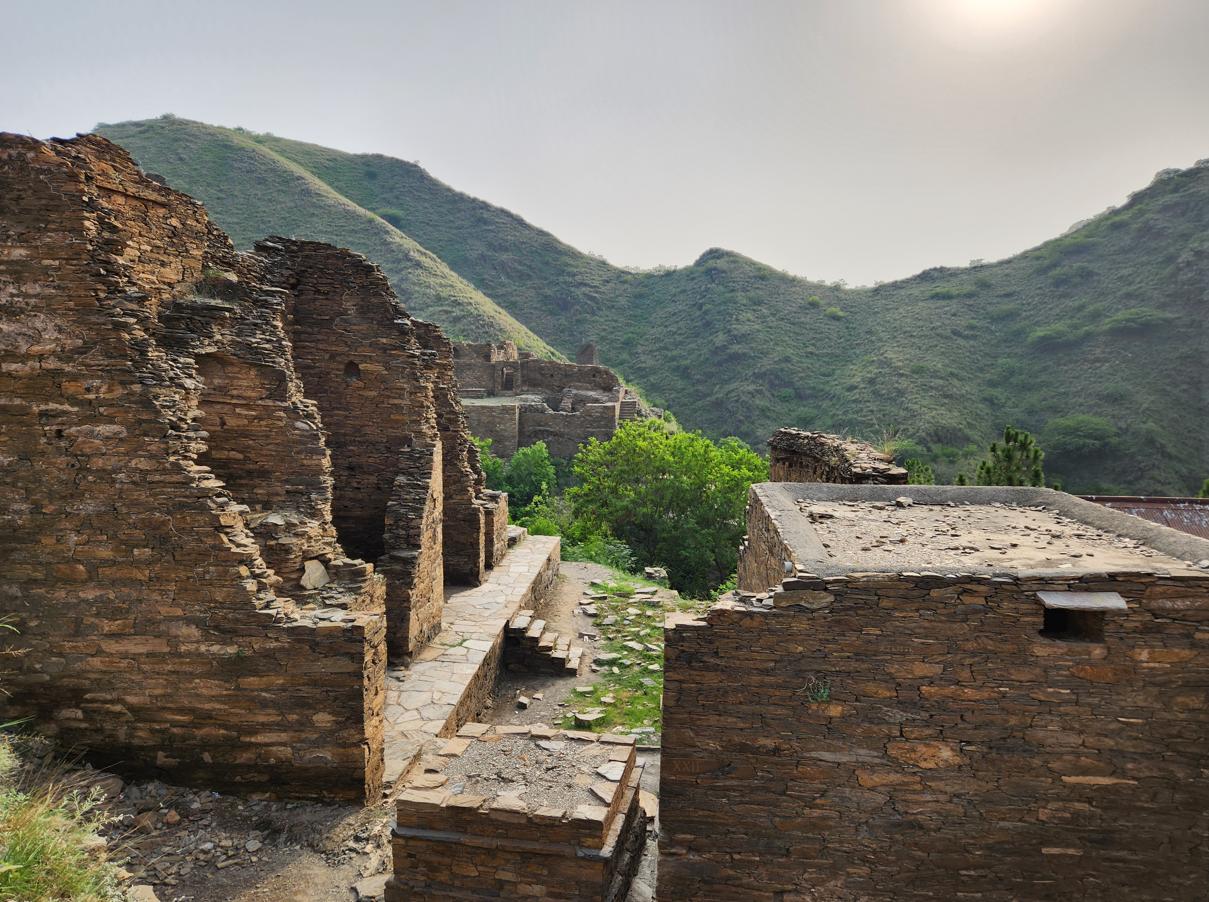
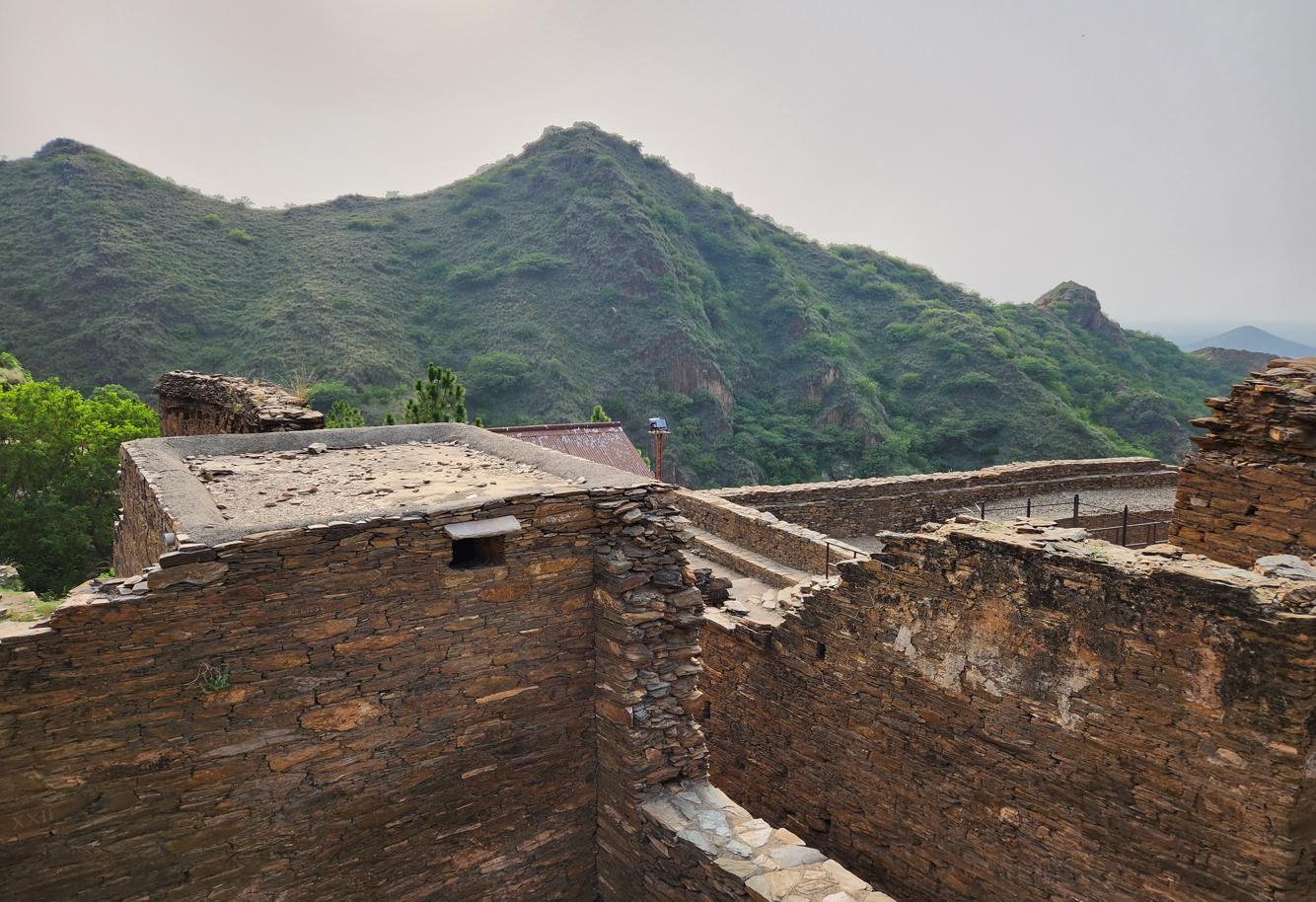
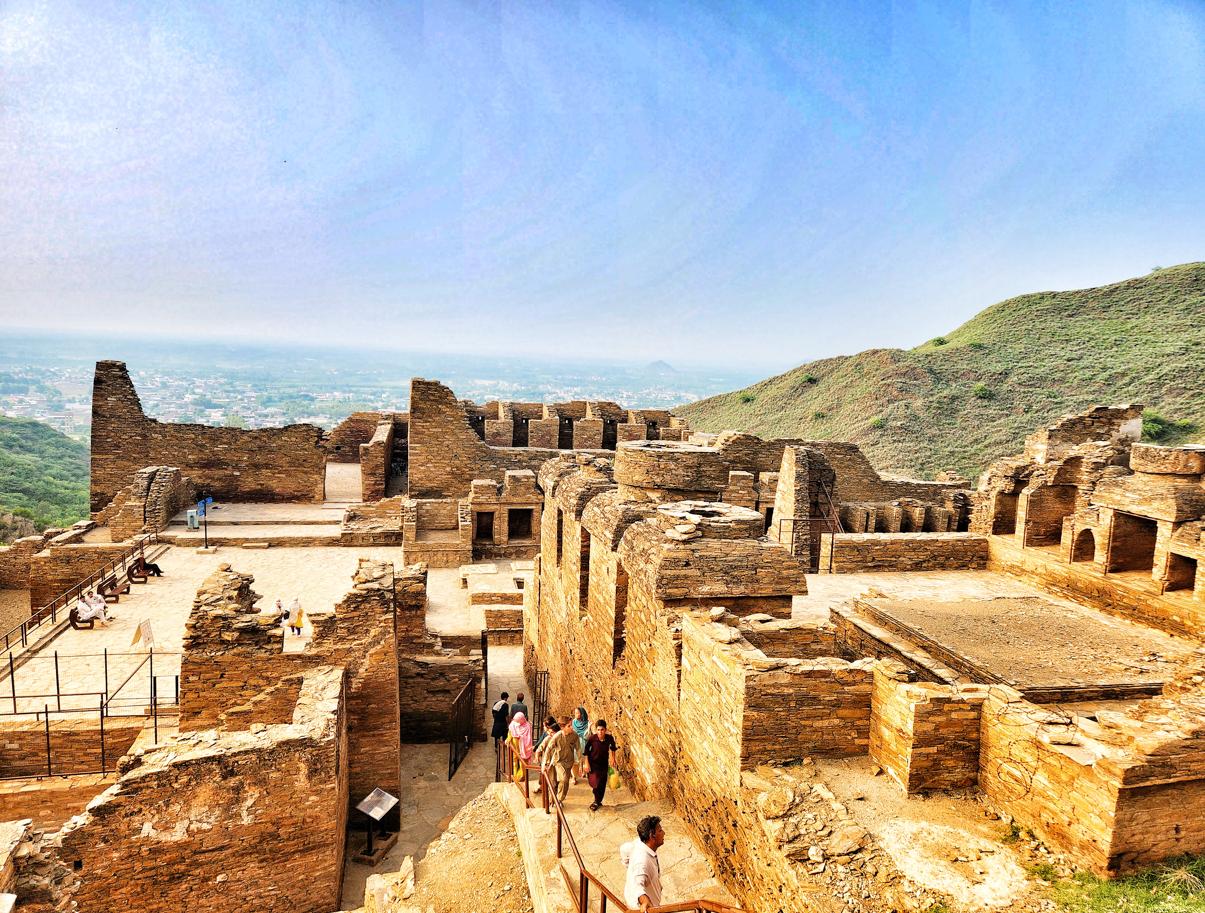
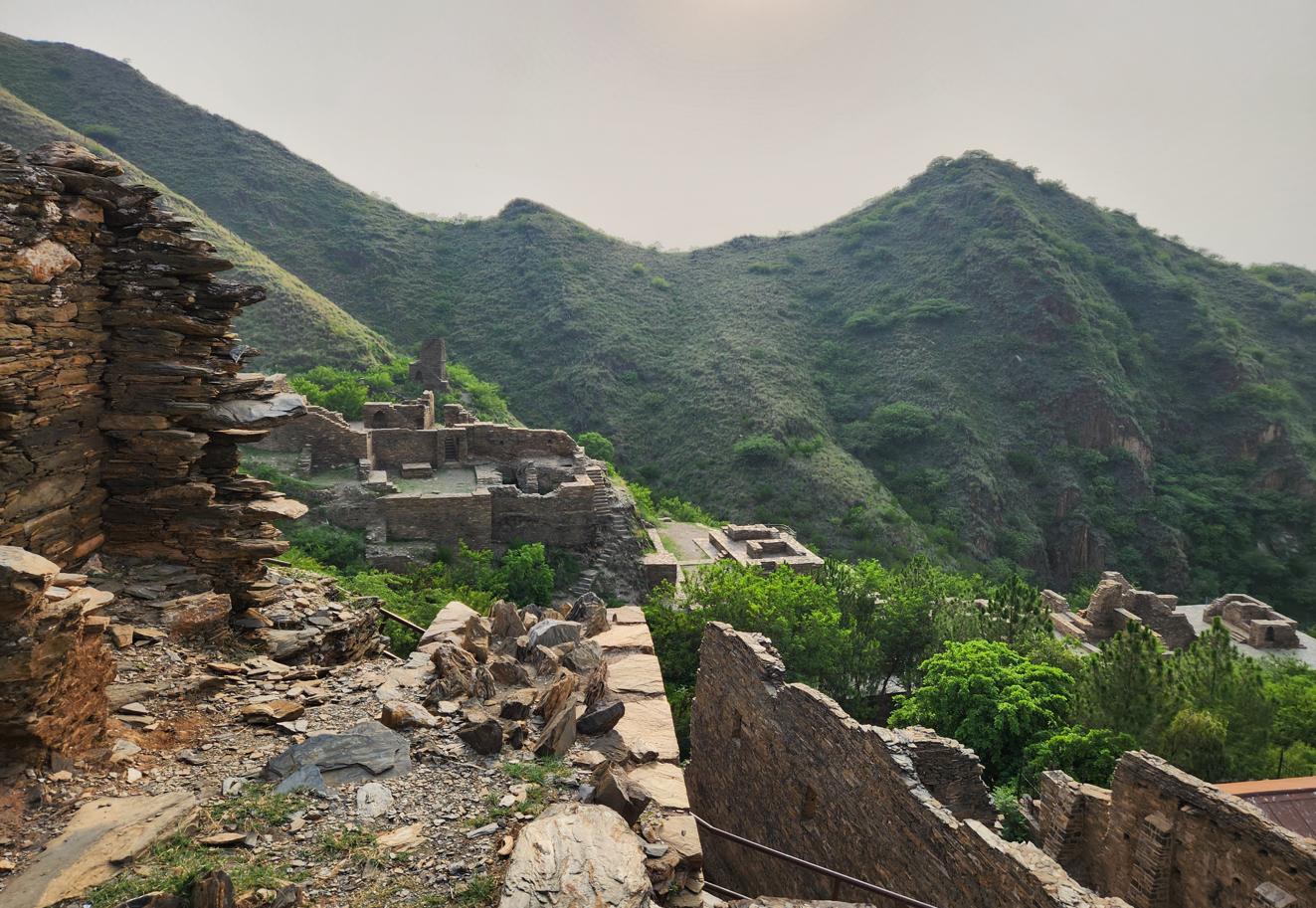
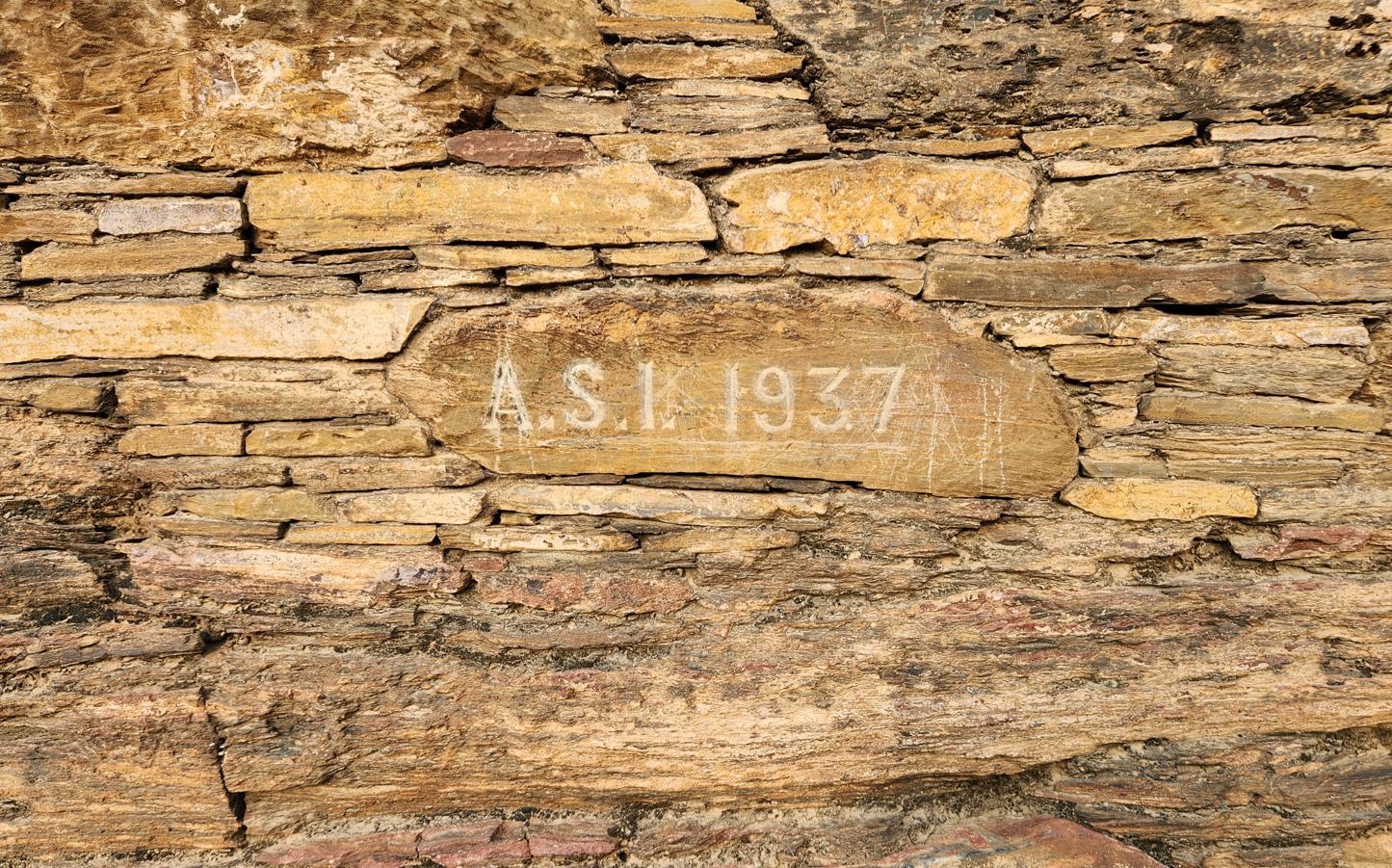
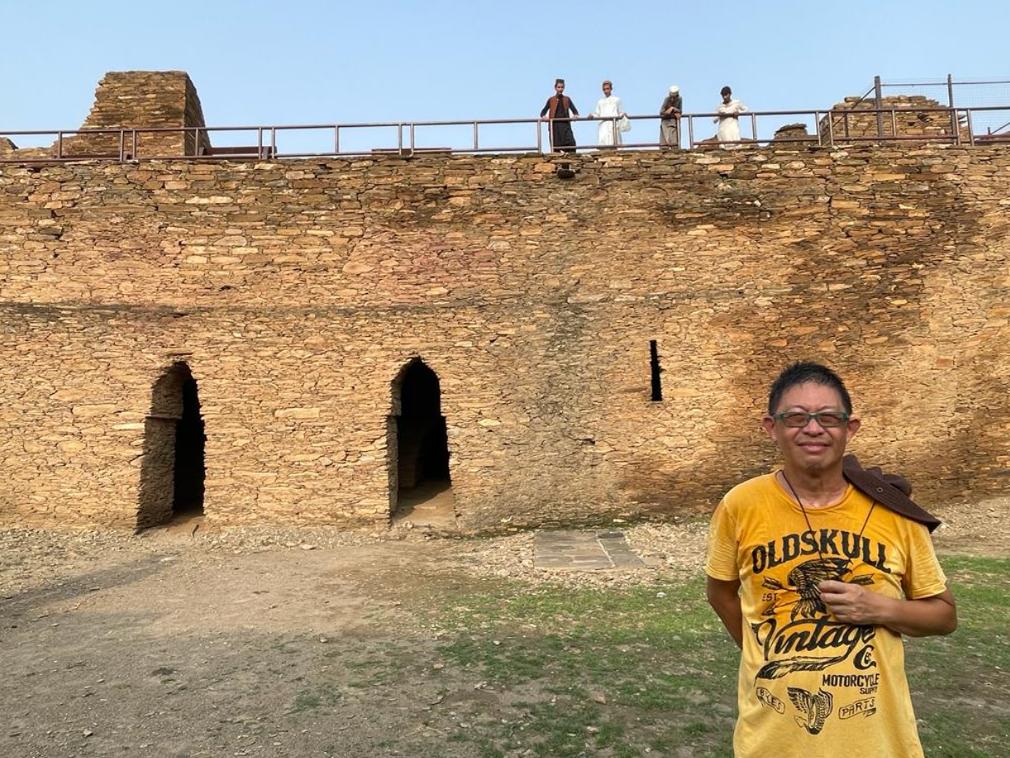
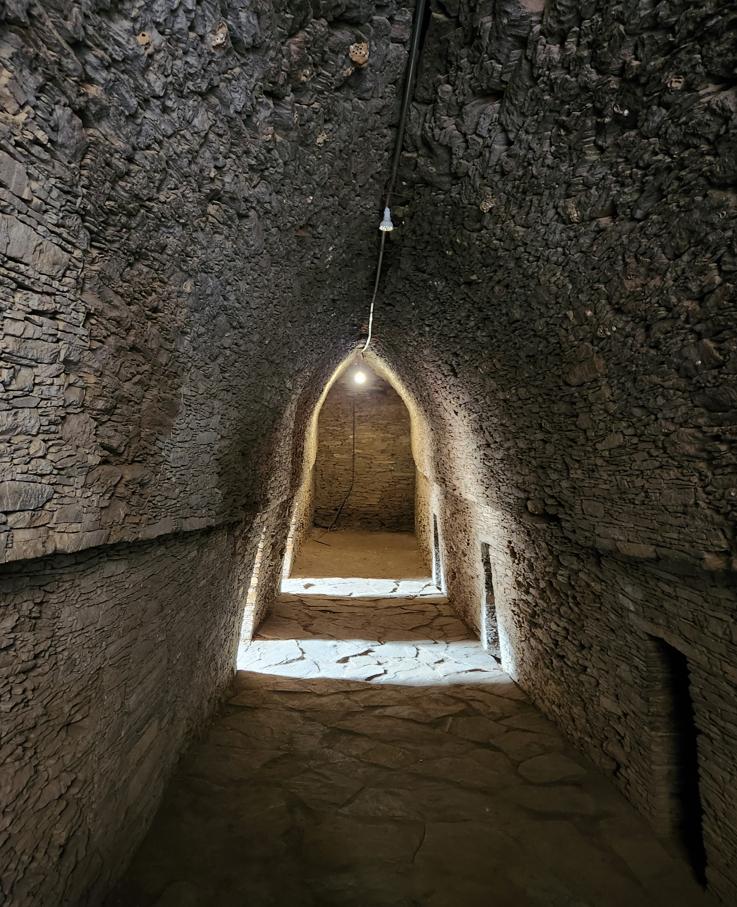
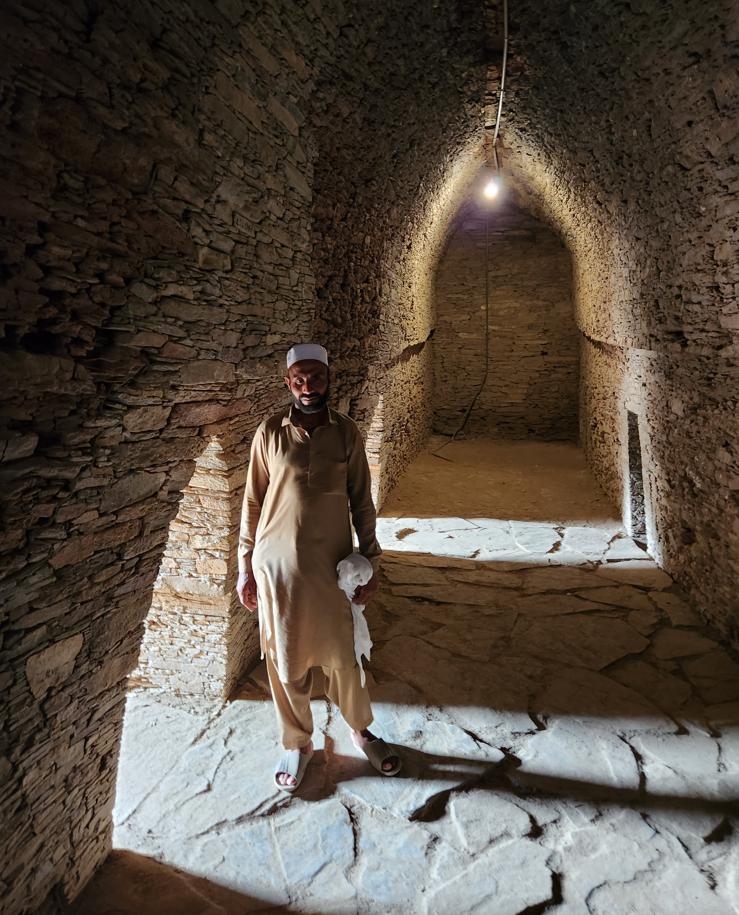
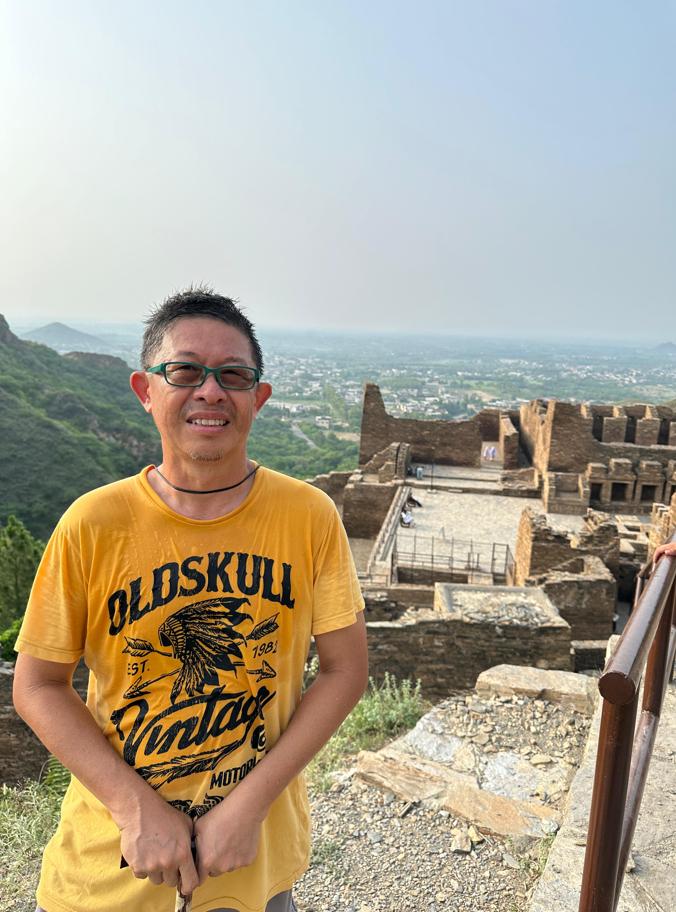
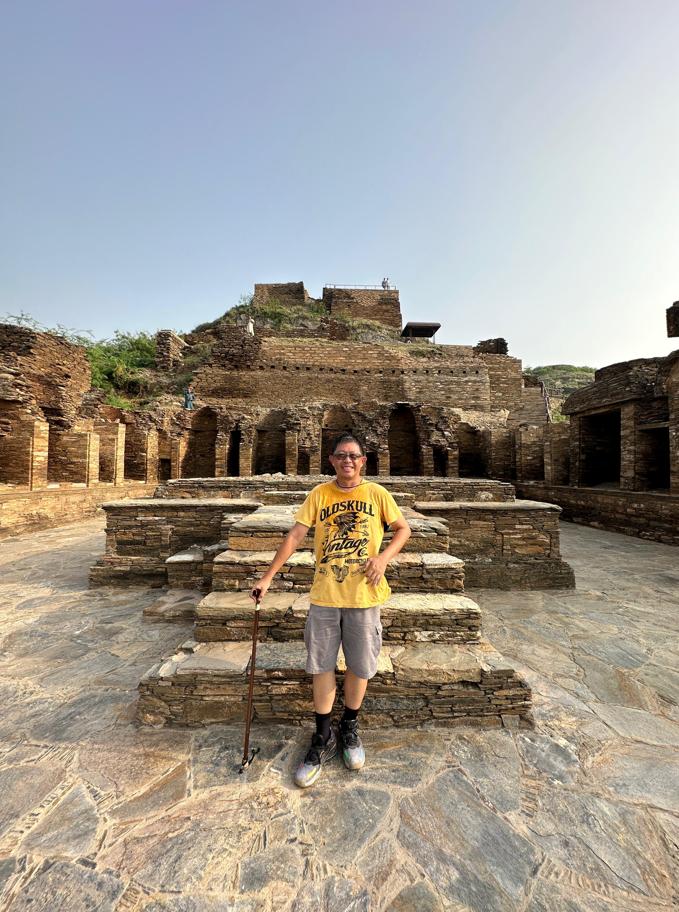
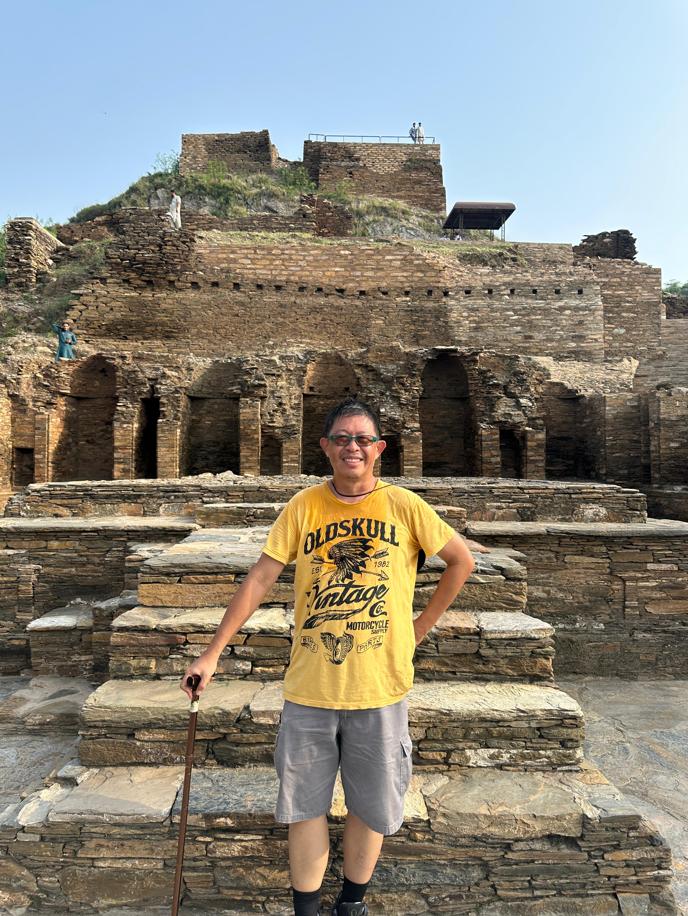
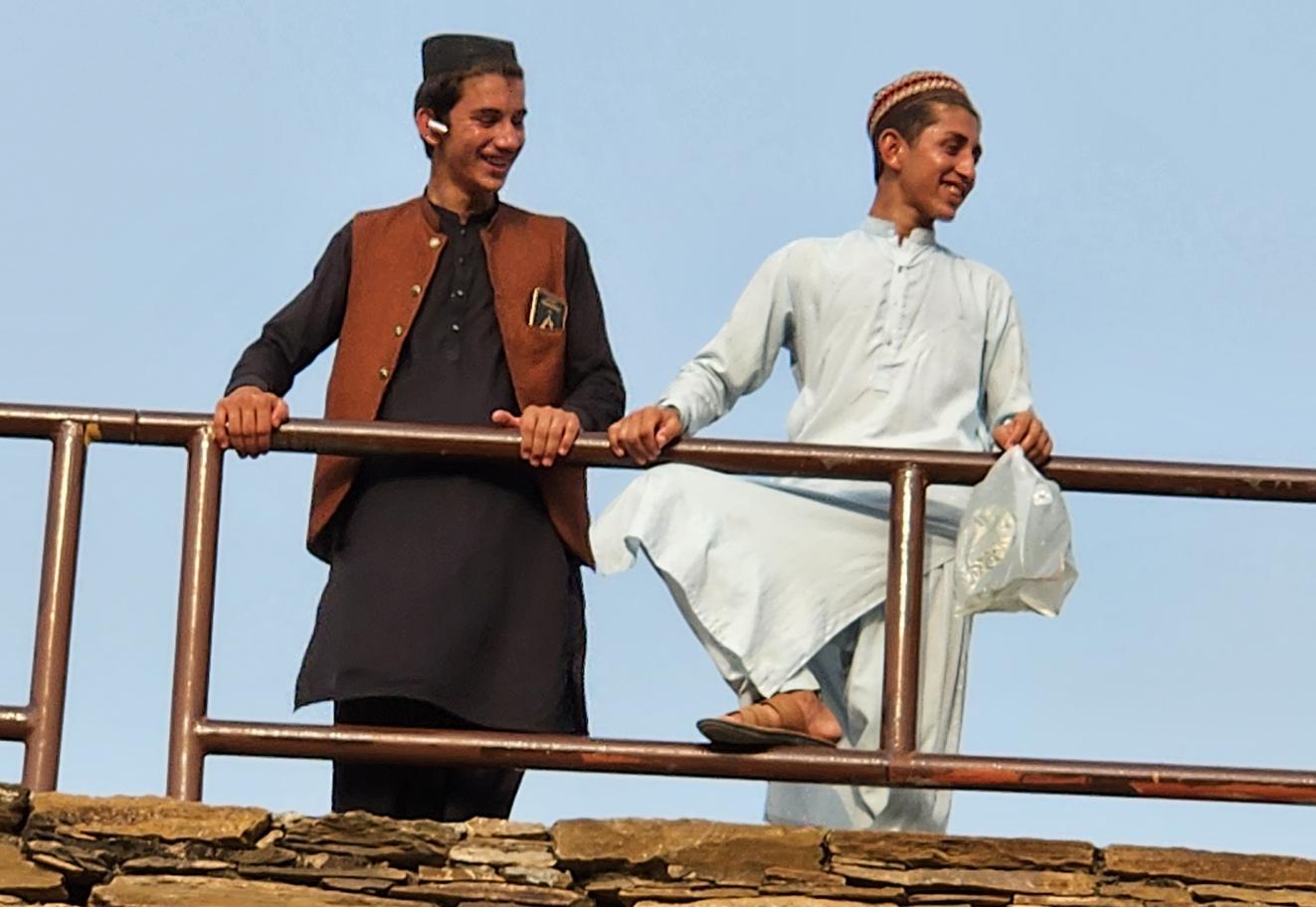
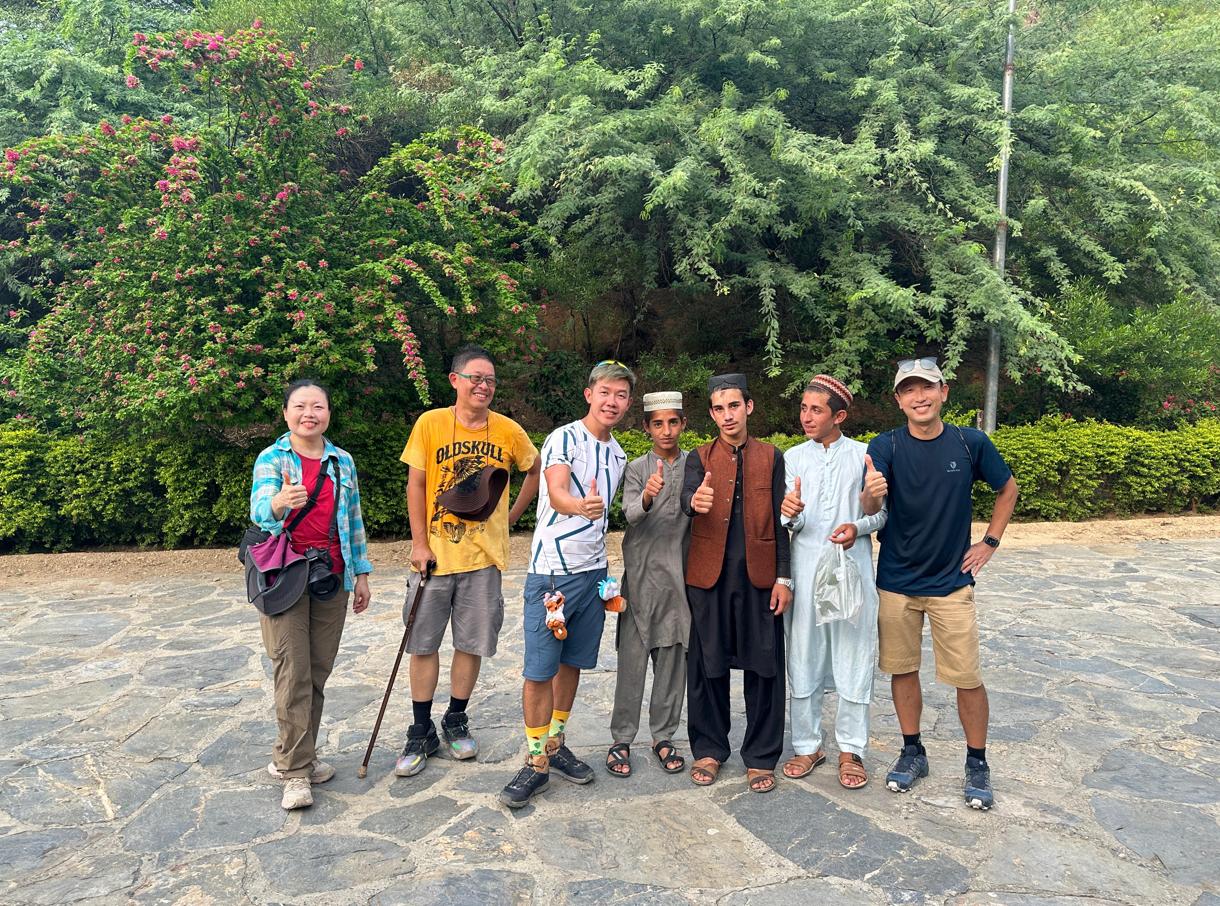
According to the ticket seller, we were the first foreign visitors in several weeks. The complex has no interpretation centre, no café, no souvenir shop — nothing, in fact, except the ruins themselves and the view, which on a clear day extends south across the Vale of Peshawar to the Indus and north toward the Afghan border. 'If this were in Europe,' I said to Jamal, 'or in China, there would be a cable car.' He nodded without evident regret. 'In Pakistan, we have the ruins without the cable car. Maybe this is better.'
Perhaps it was. The emptiness — the absolute absence of infrastructure, interpretation, or the performed enthusiasm of the heritage tourism industry — meant that the place could be experienced directly, without mediation. The monastery was simply there, as it had been for two thousand years, waiting for whoever was prepared to climb.

Looking back across the Vale of Peshawar, the transition from the Hellenized world to the heart of the East feels tangible here. First the philosophers discussed past the general, then the artists made something that would withstand centuries of change, and then the Silk Road pilgrims carried that message out into the world. The echoes of Taxila and Takht-i-Bahi are not relics of a dead civilization, but coordinates on an ongoing map of shared thought.
A Note on Process
A note on process: the travelogue on this site are based on my own journeys, photographs, Facebook posts, and field notes. I work with Claude (Anthropic's AI assistant) as a drafting and editorial partner — giving it my raw material and working iteratively to shape it into finished prose. The AI helps me draft quickly, maintain a consistent voice across long narratives, and edit at the document level. The website's HTML and coding are built with the assistance of Gemini (Google). Audio versions of the essays are produced using NotebookLM (Google). Every observation, opinion, and conclusion in the written work is mine. The AI tools are the instruments; I am the author.