Sumatra Travelogue • Chapter Two

CHAPTER TWO: INTO THE HIGHLANDS

By Tan Wee Cheng

Scroll to Explore
Lembah Anai Gorge
Sumatra Rice Terraces
Volcanic Plateau View

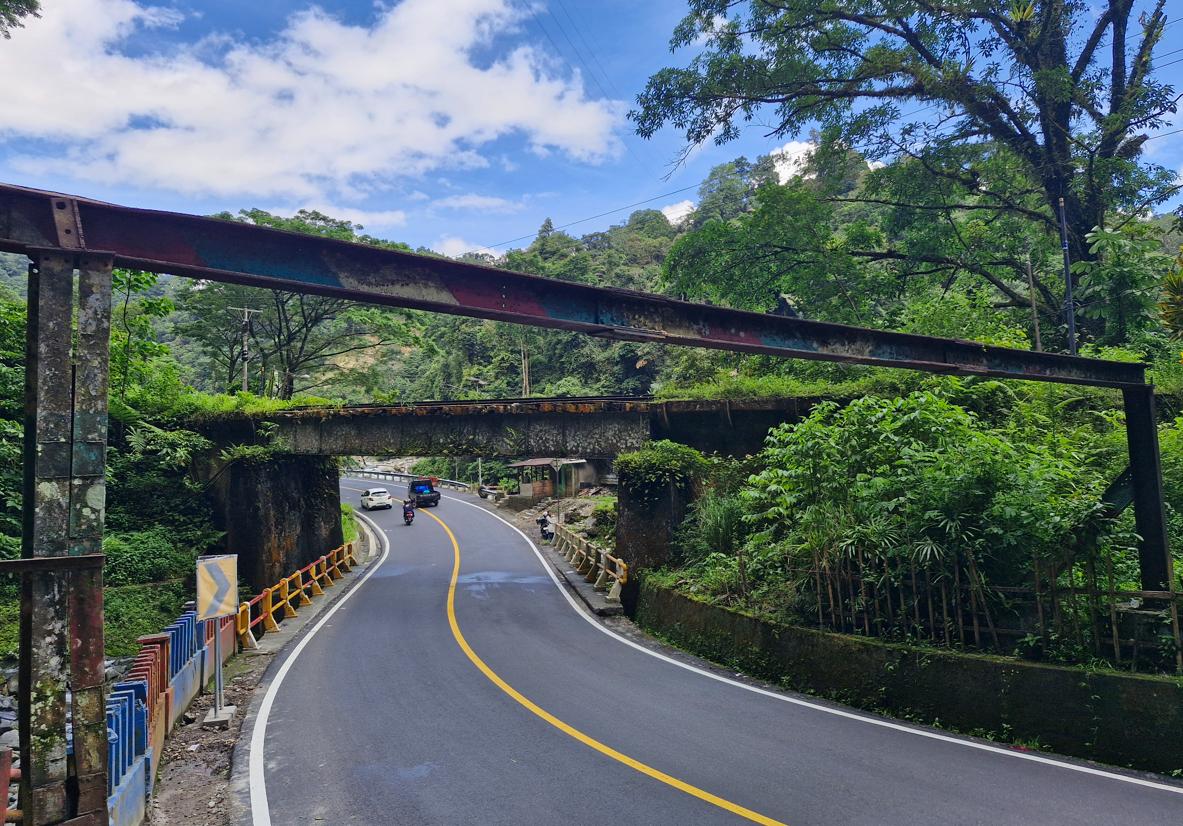
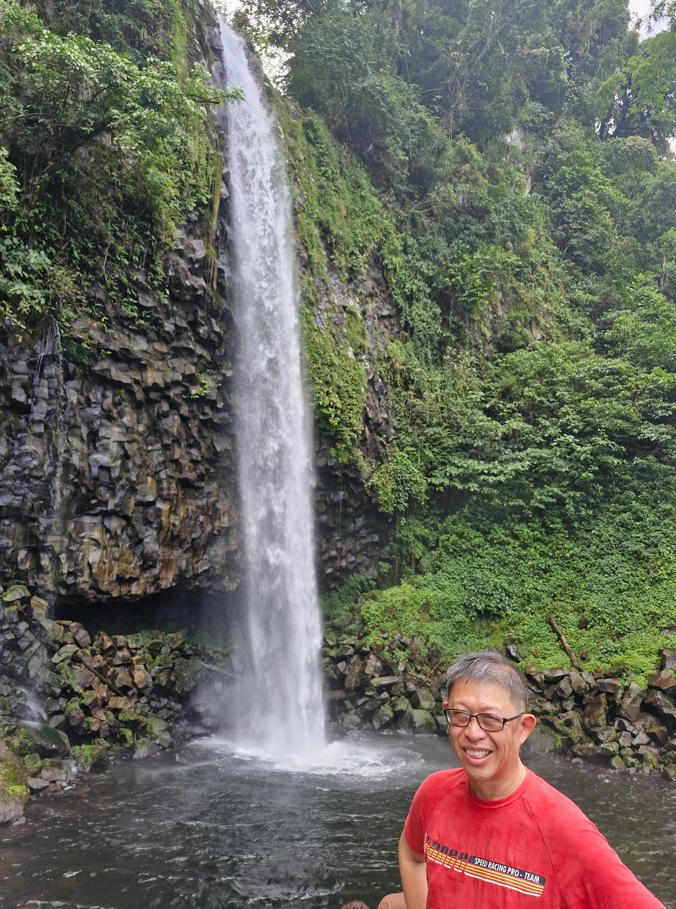
The road out of Padang climbs almost immediately, and within an hour the humid coastal air gives way to something cooler and cleaner, scented with wet ferns and clove-cigarette smoke drifting from roadside warungs. We passed through Lembah Anai, a narrow gorge cut by a river running white over black rock, where the Dutch once built a cog railway to conquer the vertical terrain between Padang and the highlands, its arched viaduct still standing, spanning the gorge like the skeleton of some vanished ambition, the rack-and-pinion trains that once climbed it long since gone to rust and memory. A waterfall drops directly beside the road, close enough that passing motorcyclists get a fine spray on their helmets; travellers stop here almost involuntarily, drawn by the abrupt cool and the green half-light beneath the jungle canopy, as though the valley itself were performing a small act of hospitality before releasing you into the highlands proper.

Franz Wilhelm Junghuhn, the German-Dutch naturalist who spent years cataloguing the volcanic landscapes of the archipelago in the mid-nineteenth century, might have been describing this very stretch of road when he wrote of the Minangkabau plateau: “The volcanic plateau of the Minangkabau region is a garden created by nature... Where else on Earth does one find such majestic mountain cones overlooking valleys of endless emerald rice terraces?” Nothing about the view had aged in a hundred and seventy years. The rice terraces still step down every fold of hillside in their improbable, mirror-bright green, and Marapi and Singgalang still stand sentinel over the whole plain, one of them still faintly, occasionally, breathing smoke.

Jam Gadang Bukittinggi
Bukittinggi Clock Tower Details
Highland Town Views
Fort de Kock Area
Roadside Warung Scene
Bukittinggi Market
Street Sign Panties Pizza

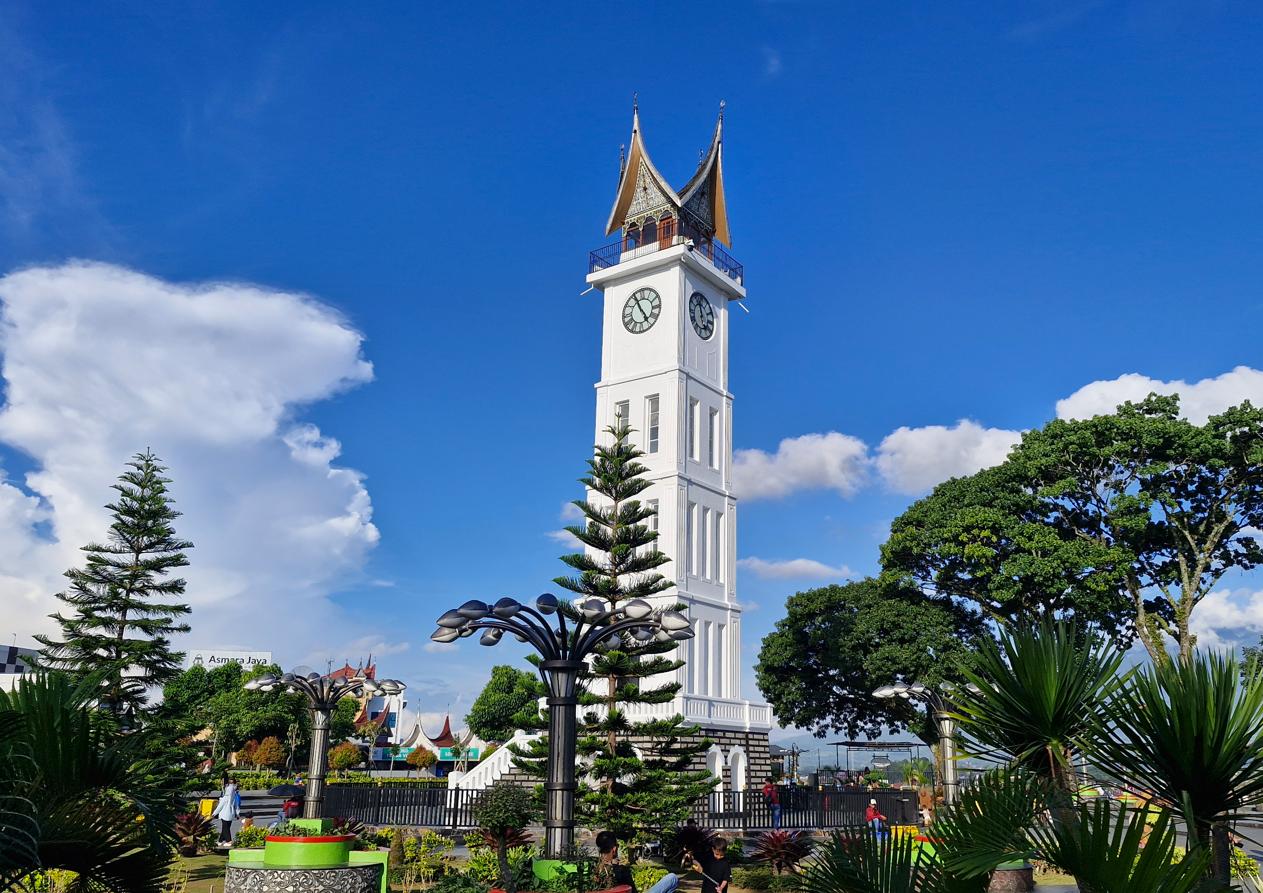
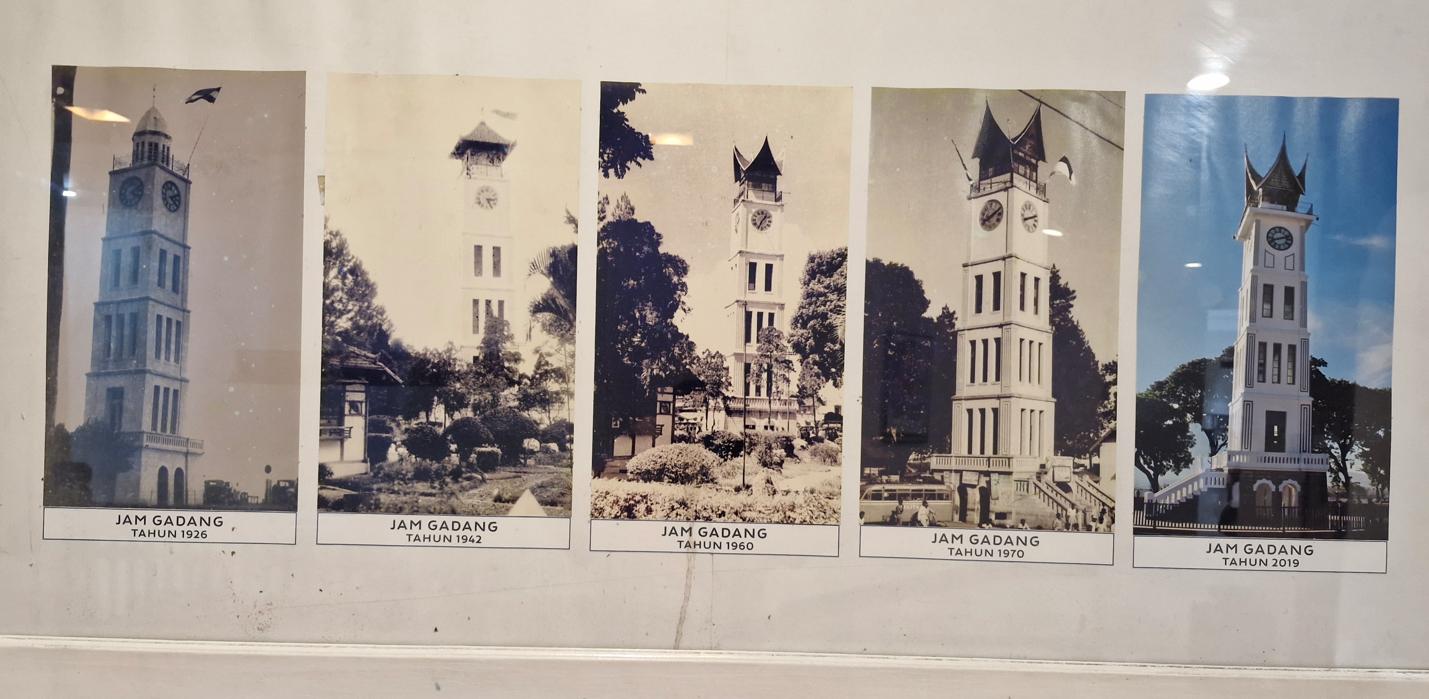
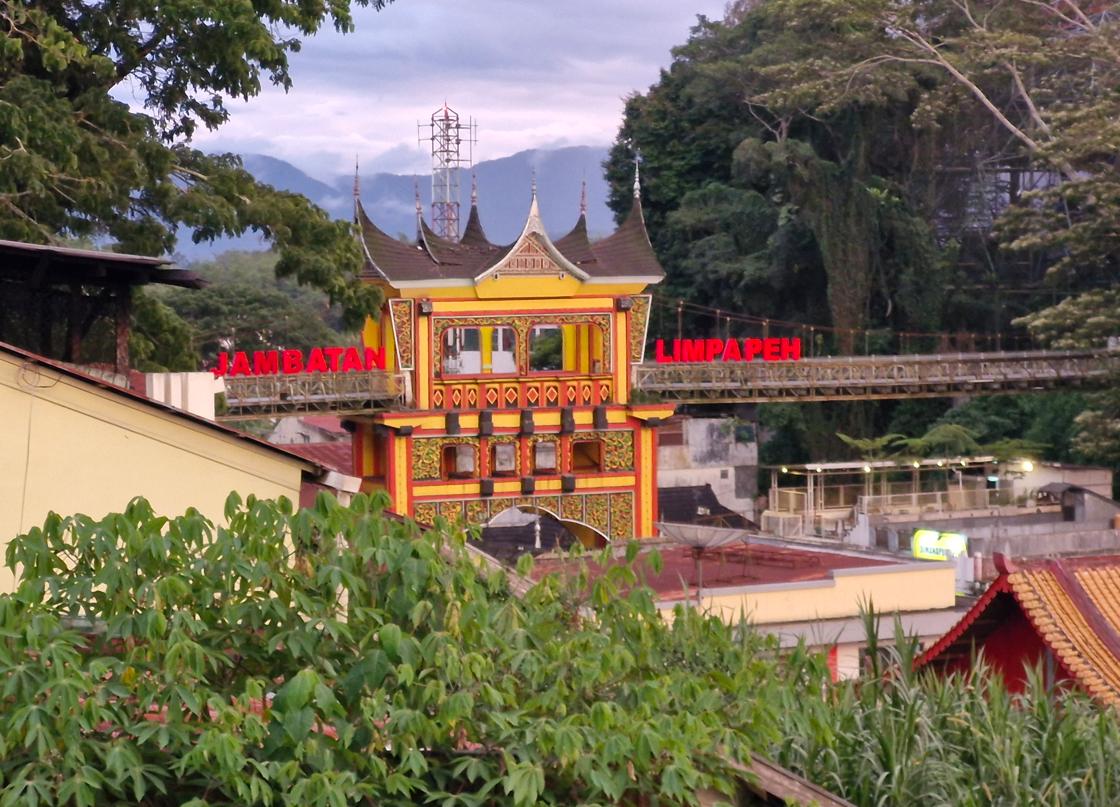
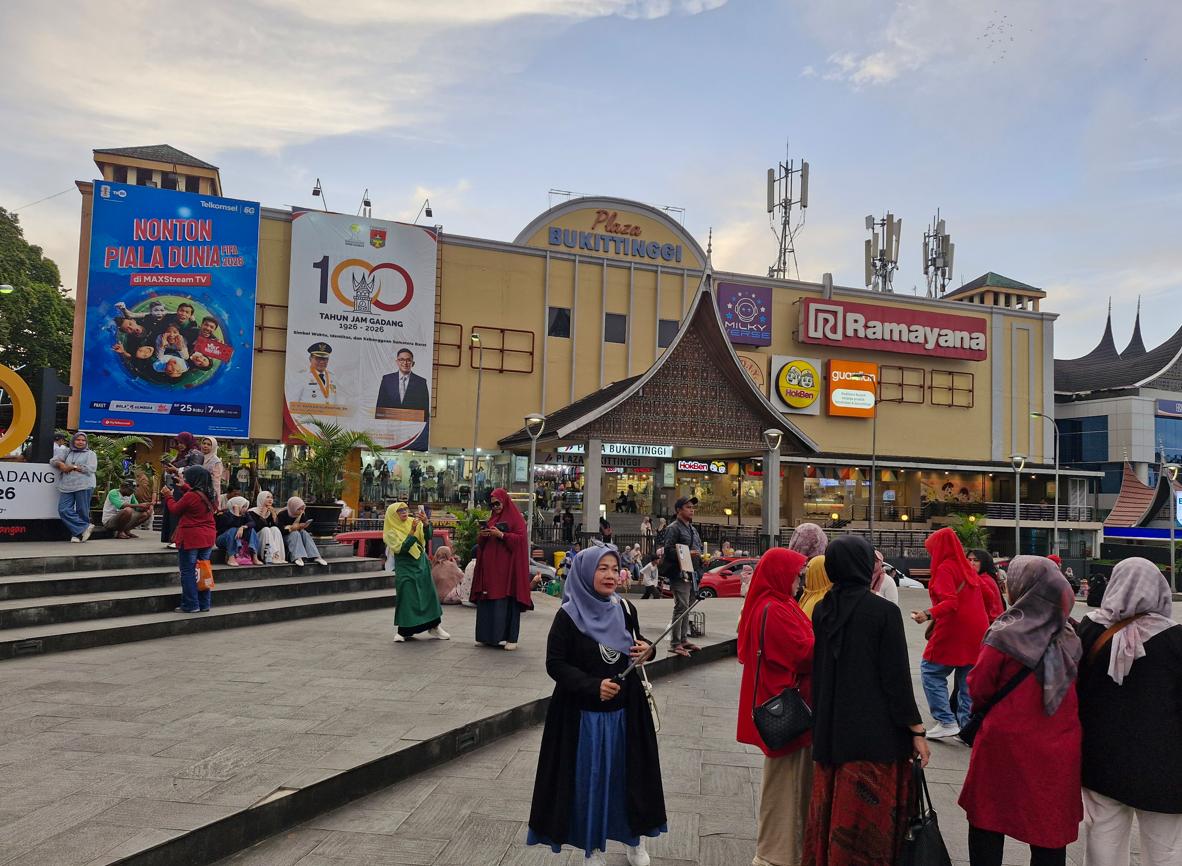
Bukittinggi arrives at nine hundred metres with the small shock of an actual jacket becoming necessary, one of the few places in Sumatra where the traveller might reasonably need one. At its centre stands the Jam Gadang, the “Great Clock,” a Dutch gift from 1926 whose life story reads like a potted history of the country beneath it: built with a rooster finial under colonial rule, its roof reshaped into a Shinto-style silhouette during the Japanese occupation, and finally, after independence, remade a third time into the sweeping horned gonjong of a Minangkabau roof: three regimes, three rooflines, one clock tower quietly outlasting all of them. Its mechanism is a rare twin of Big Ben's, built by the same German firm, Vortmann; and if you look closely at the face, the numeral four is rendered, as on so many European clock towers, as the archaic IIII rather than IV, a small quirk that has generated its own cottage industry of local legend involving miscounted castings and cursed clockmakers, none of it, so far as I could establish, true.

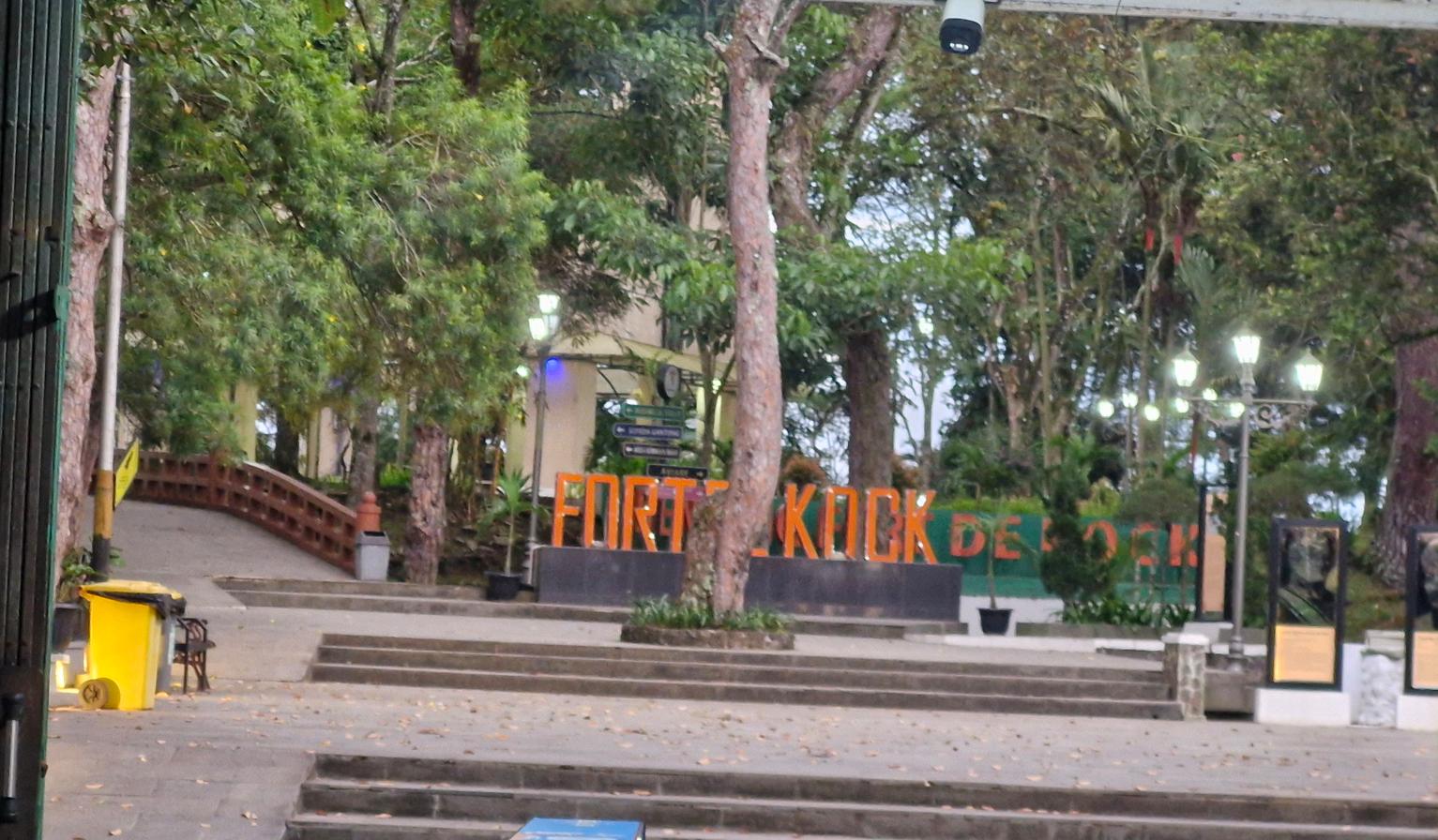
We drove out one afternoon along the road to Fort de Kock, past a roadside pizza stall whose signboard, in the unselfconscious way of small businesses everywhere reaching for a catchy name, read simply “Panties Pizza,” the kind of gloriously incongruous detail that no travel writer could invent and that Sumatra, generous as ever, supplies unprompted.

Museum Bung Hatta Exterior
Bung Hatta Birthplace Courtyard
Wooden Townhouse Structure
Bung Hatta Interior Rooms
Grandmother's Room
Traditional Rice Barns Compound
Bung Hatta Family Influences
Historical Photos Display
Museum Artifacts
Numismatics Room Currency
Historical Banknotes Framing
Meeting Table and Trophies
Sitting Room Brass Lamp
Family Tree Wall

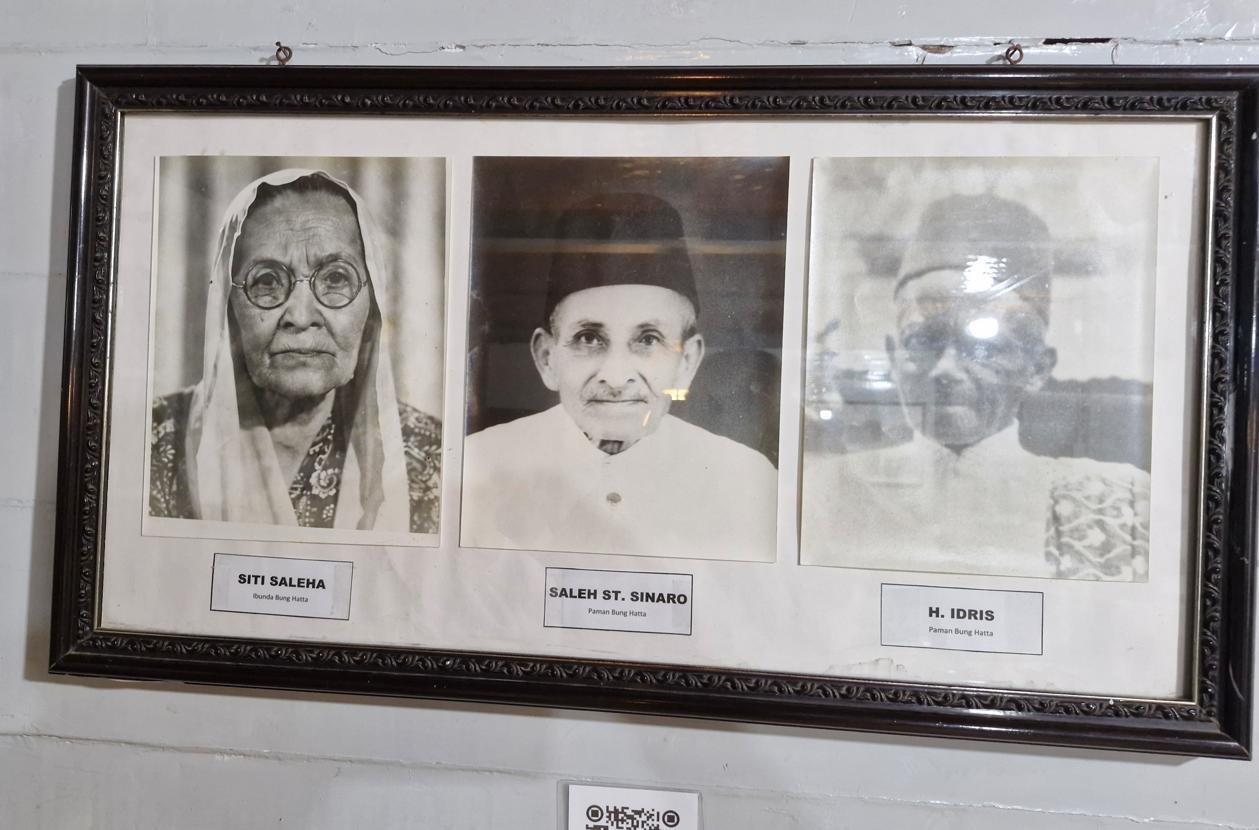
2b1l.jpg: Hatta grew up with his grandmother and two maternal uncles Saleh and Idris, who had an important influence over his life.

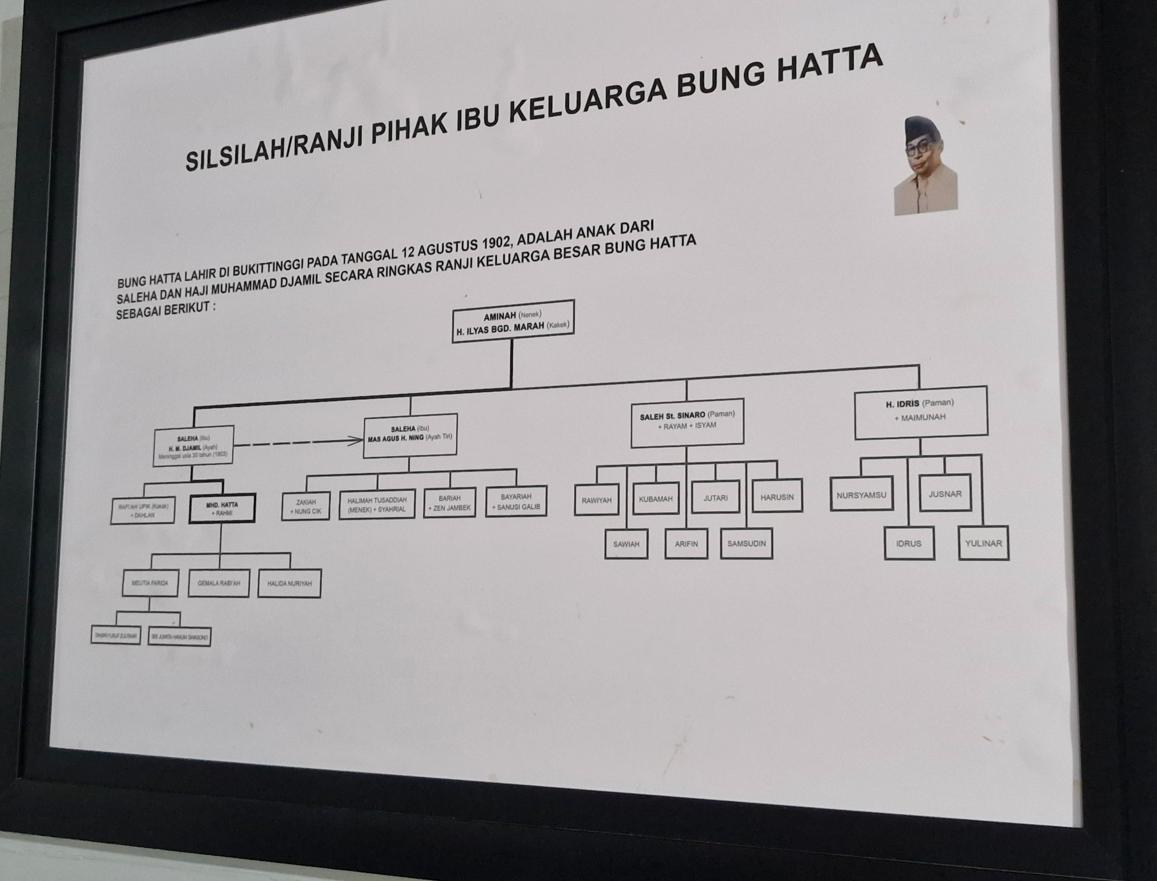
Genealogy Maternal Family

2b1m.jpg: Genealogy of Hatta's Maternal Family Organised in the fashion of Minangkabau's matrilineal traditions.

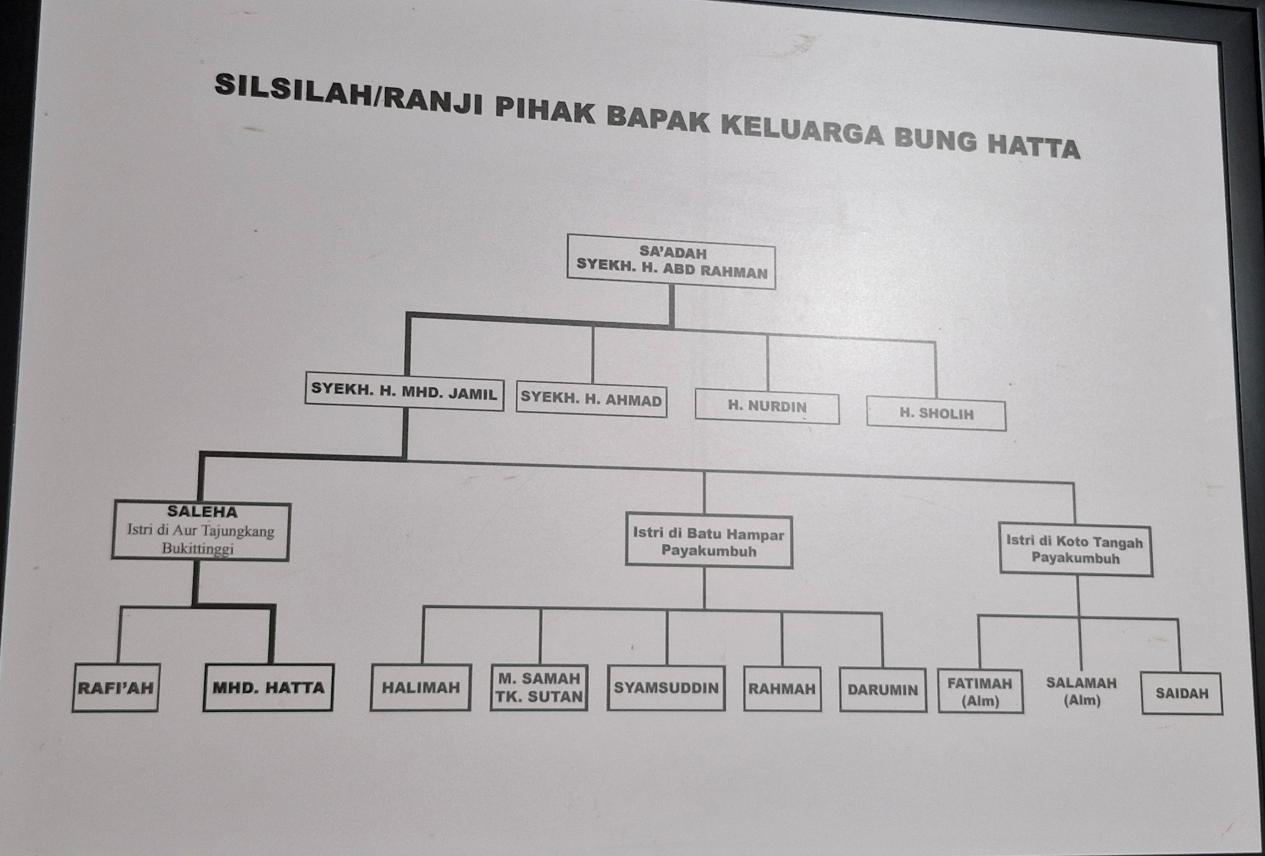
Genealogy Paternal Family

2b1n.jpg: Genealogy of Hatta's Paternal Family

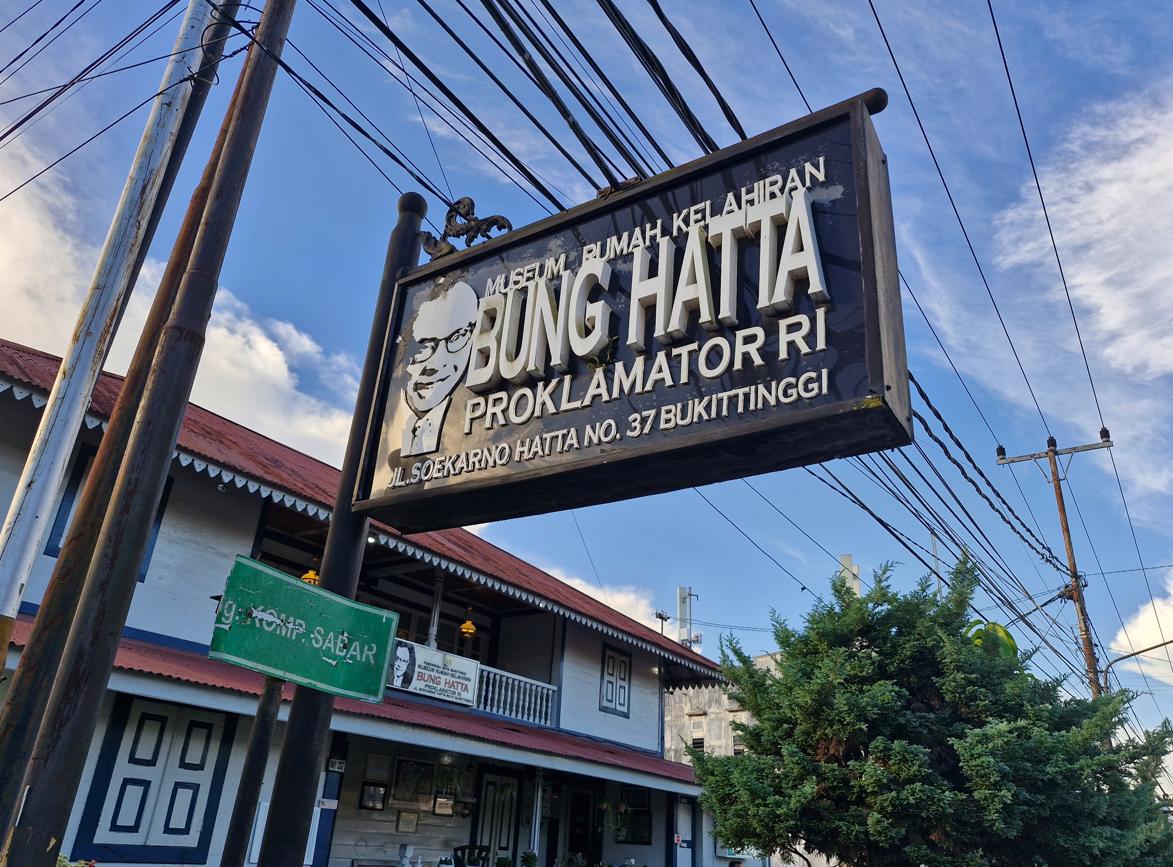
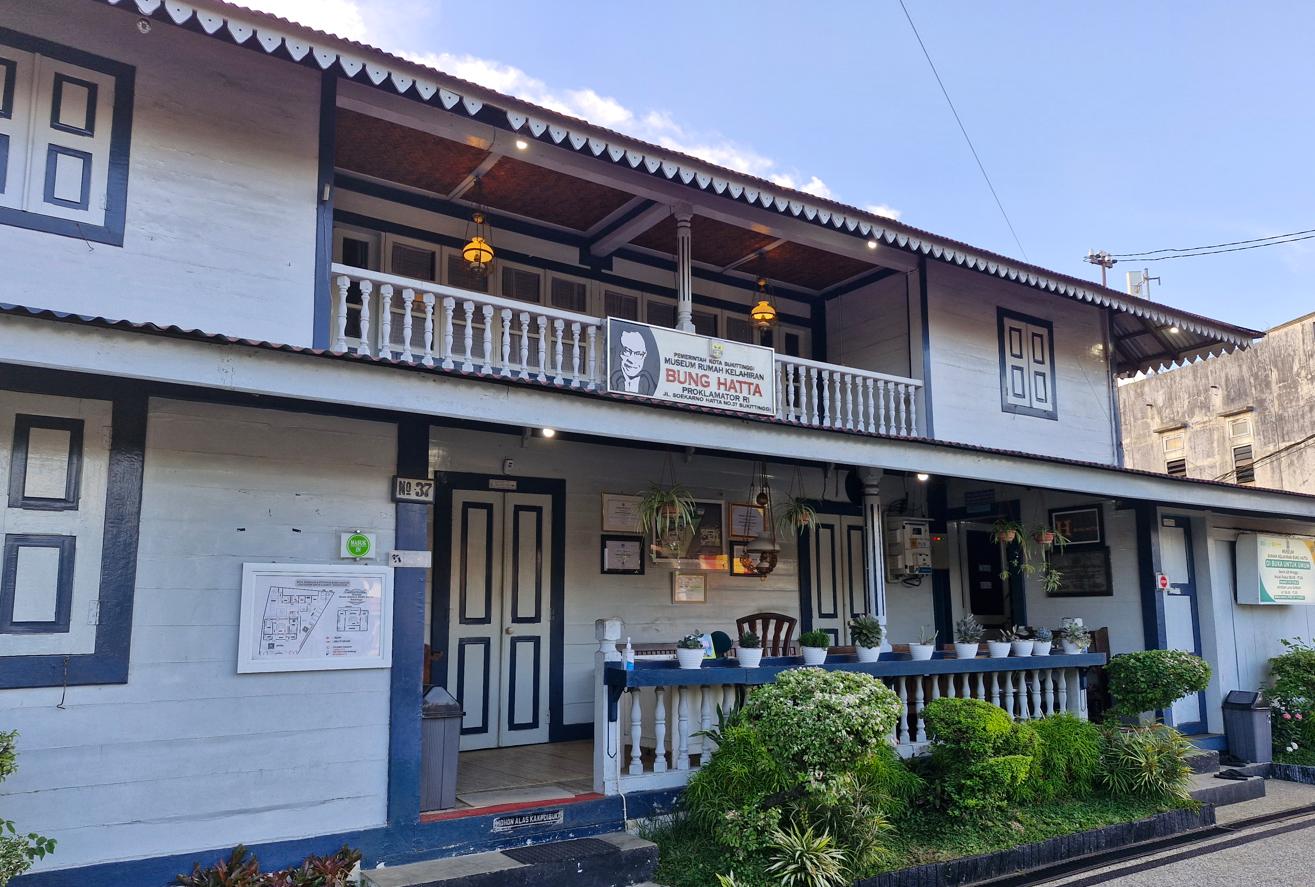
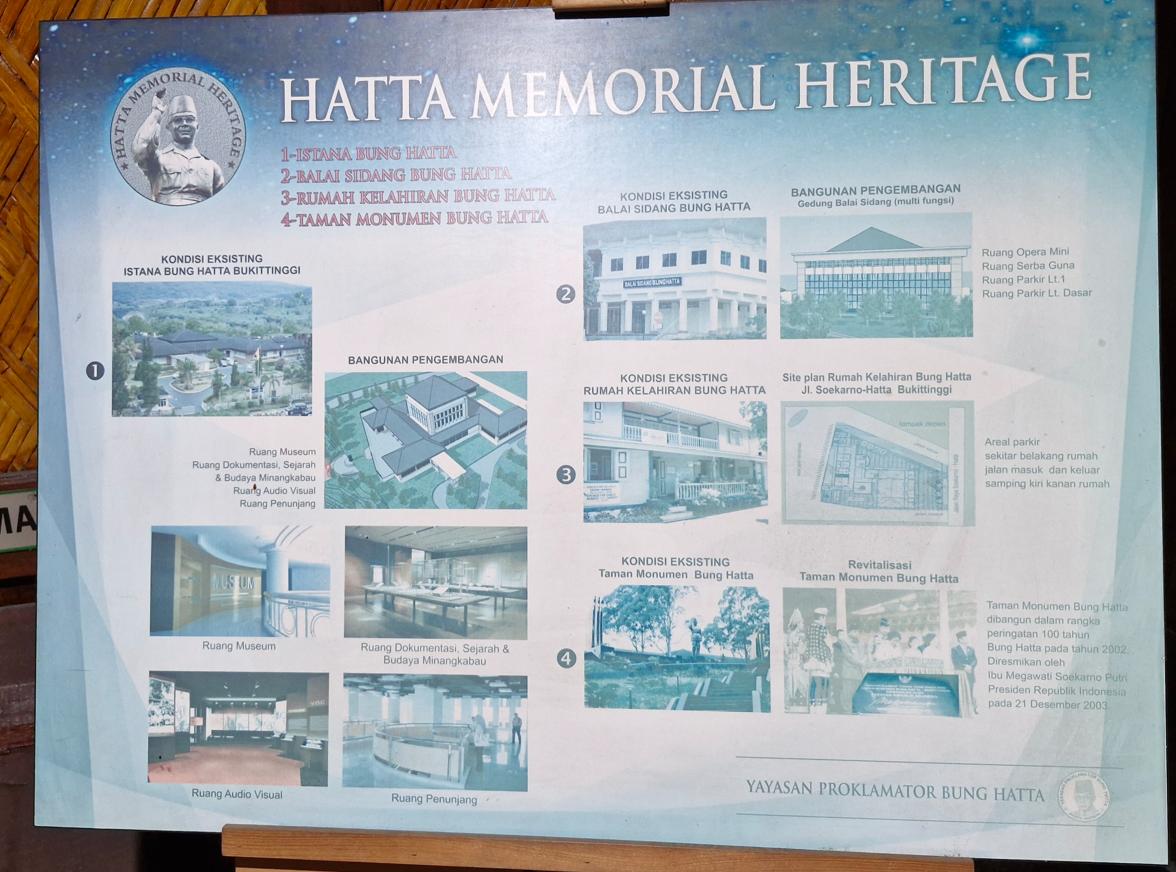
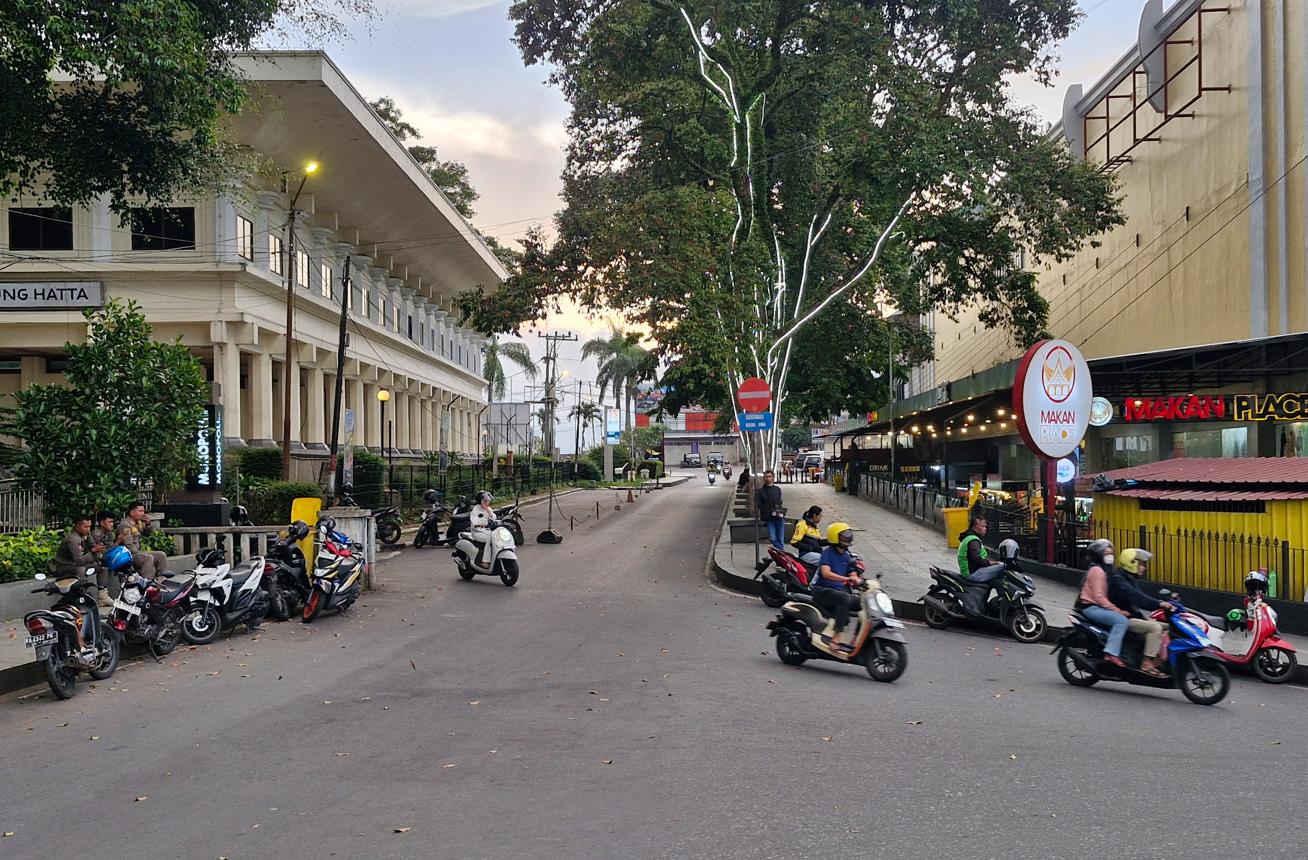
A few streets from the clock tower, on a road the town has thought it only fitting to rename Jalan Soekarno-Hatta, stands the house that gives the renaming its logic: the Museum Rumah Kelahiran Bung Hatta, the birthplace of Mohammad Hatta, Sukarno’s quieter co-proclaimer and Indonesia’s first Vice-President. The two-storey wooden townhouse open to visitors today is a careful stand-in for the original: the 1860s merchant house in which Hatta was actually born, on 12 August 1902, eventually collapsed, was sold off in 1960, and was rebuilt on the same footprint in 1995, wide-eaved and shuttered in the manner of a prosperous Bukittinggi urban dwelling rather than the horn-roofed rumah gadang most visitors half expect.

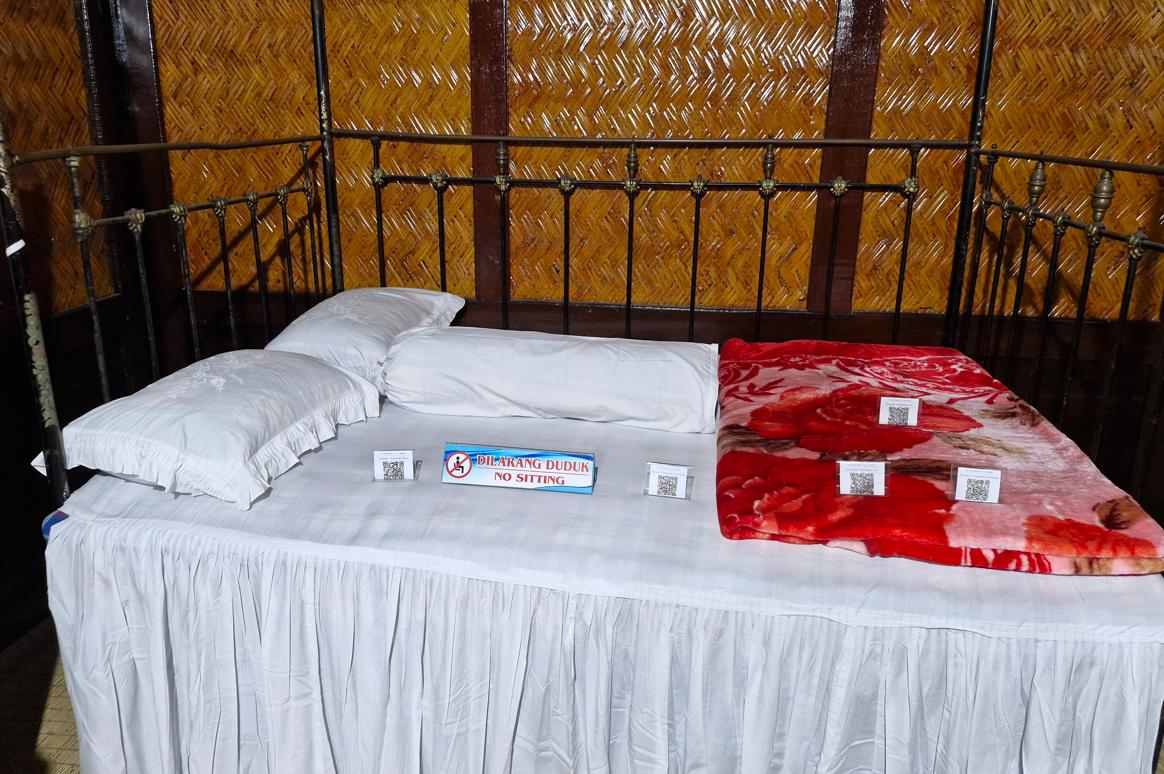
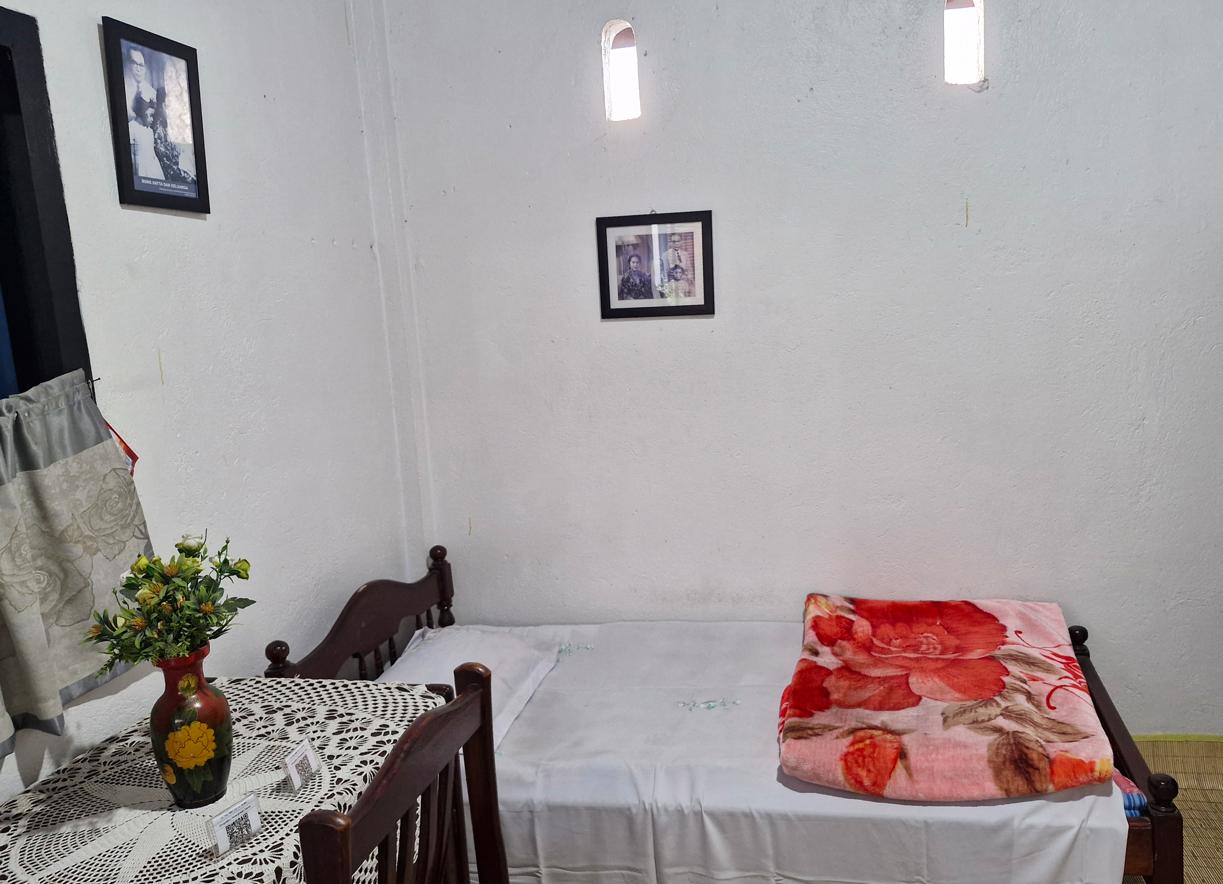
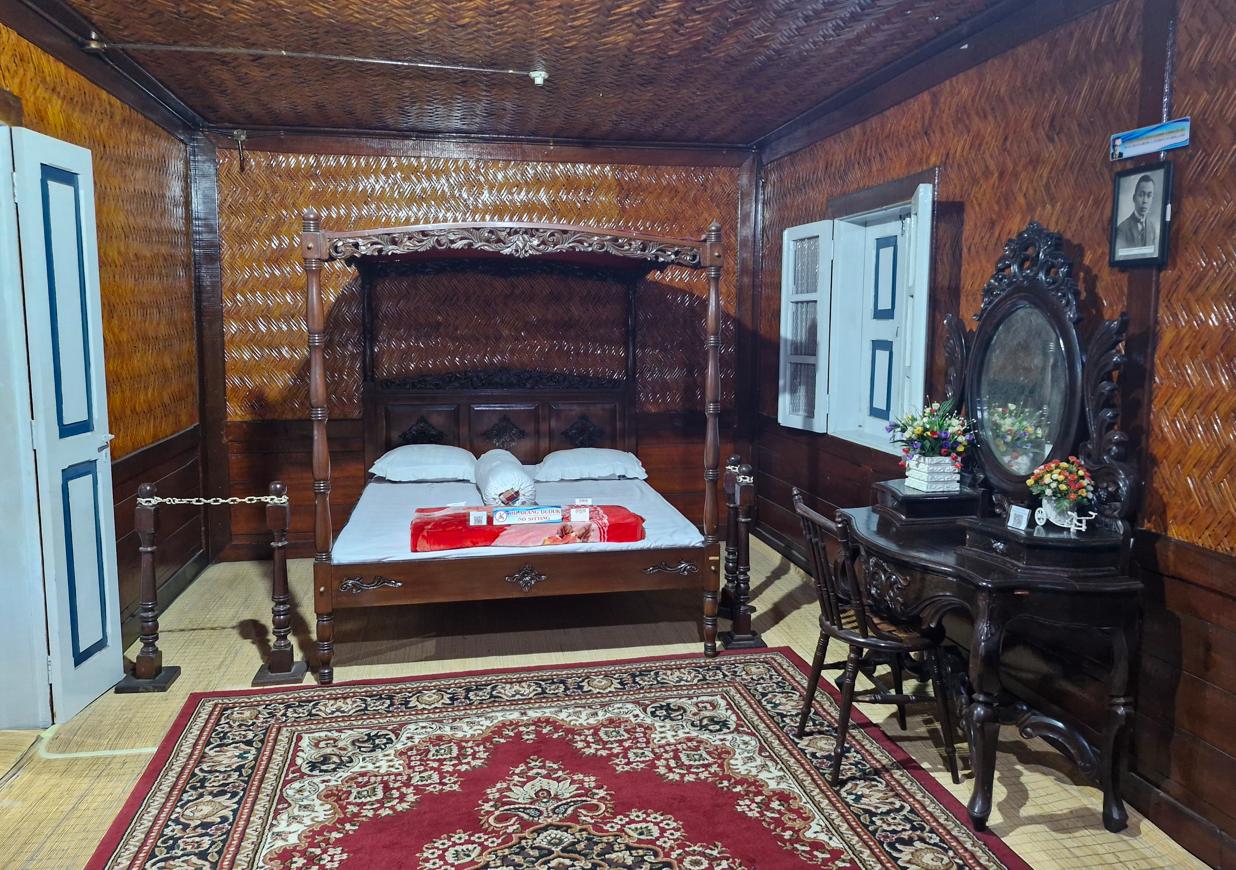
The household inside turns out to be a small case study in Minangkabau matrilineal custom. Hatta’s father died when the boy was seven months old; his mother later remarried a merchant from Palembang and moved away with her new husband, leaving young Hatta to be raised in this house not by a father but by his grandmother and two maternal uncles, an arrangement adat treats as entirely unremarkable and which, in Hatta’s case, appears to have supplied everything a father’s absence might otherwise have cost him. His grandmother’s room, set prominently at the top of the stairs, still anchors the house today much as she once anchored the household beneath its roof.

The wealth on display is not incidental to the story the museum wants to tell. Two traditional rice barns still stand in the compound, one for the grandmother’s household and one for his mother’s line, and our guide, warming to the subject, added that the family had also once kept a stable of sixteen horses, an improbable number for a highland merchant household and, whatever the precision of the figure, a fair index of how comfortably placed the family actually was. Comfortable enough, certainly, to send the boy first to a respected local school and then, in 1921, halfway around the world to the Handels Hogeschool in Rotterdam to study economics, an education that would return to Indonesia a quarter-century later behind round spectacles and a grey suit, and leave the country calling him Bapak Bangsa, Father of the Nation.

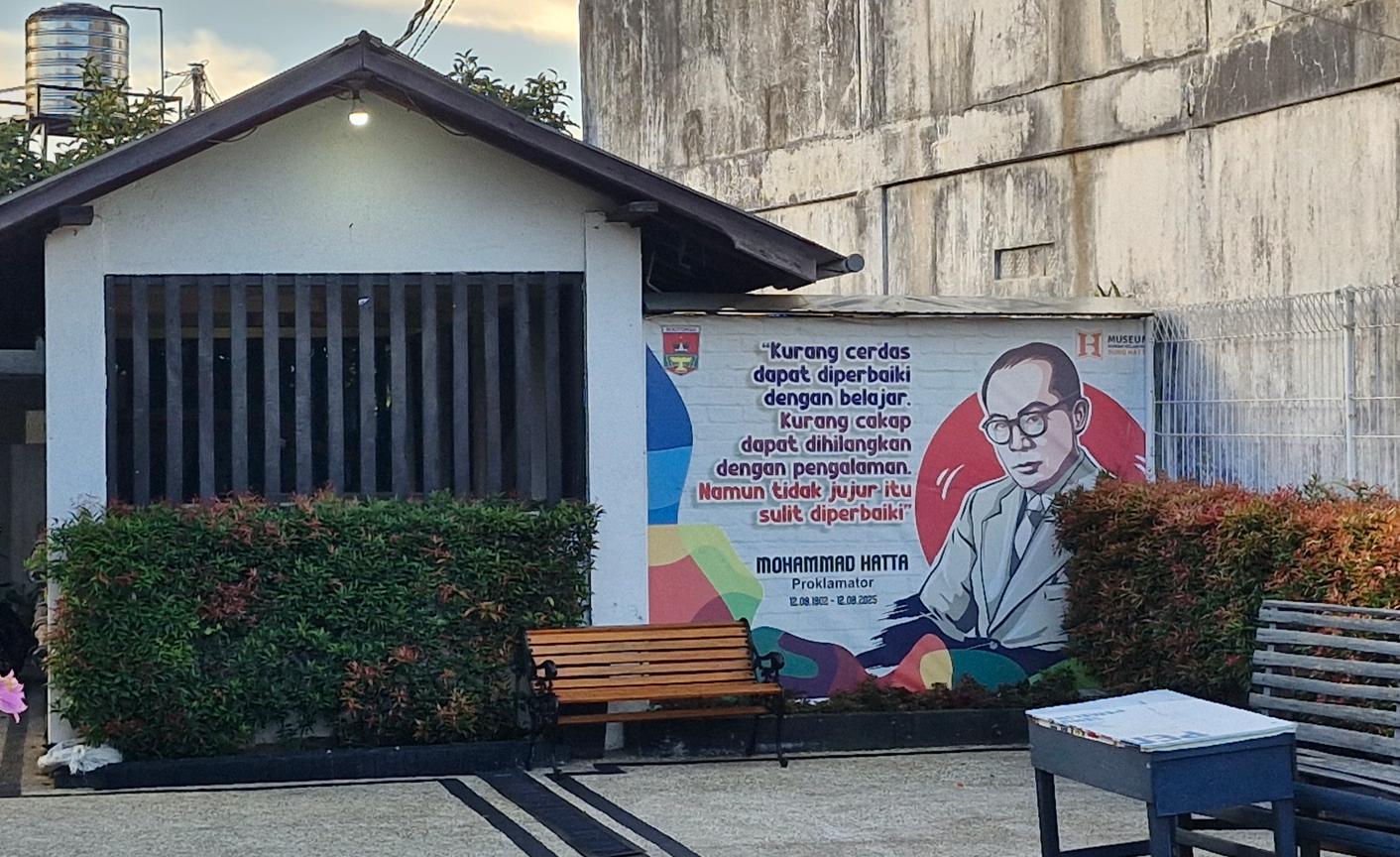
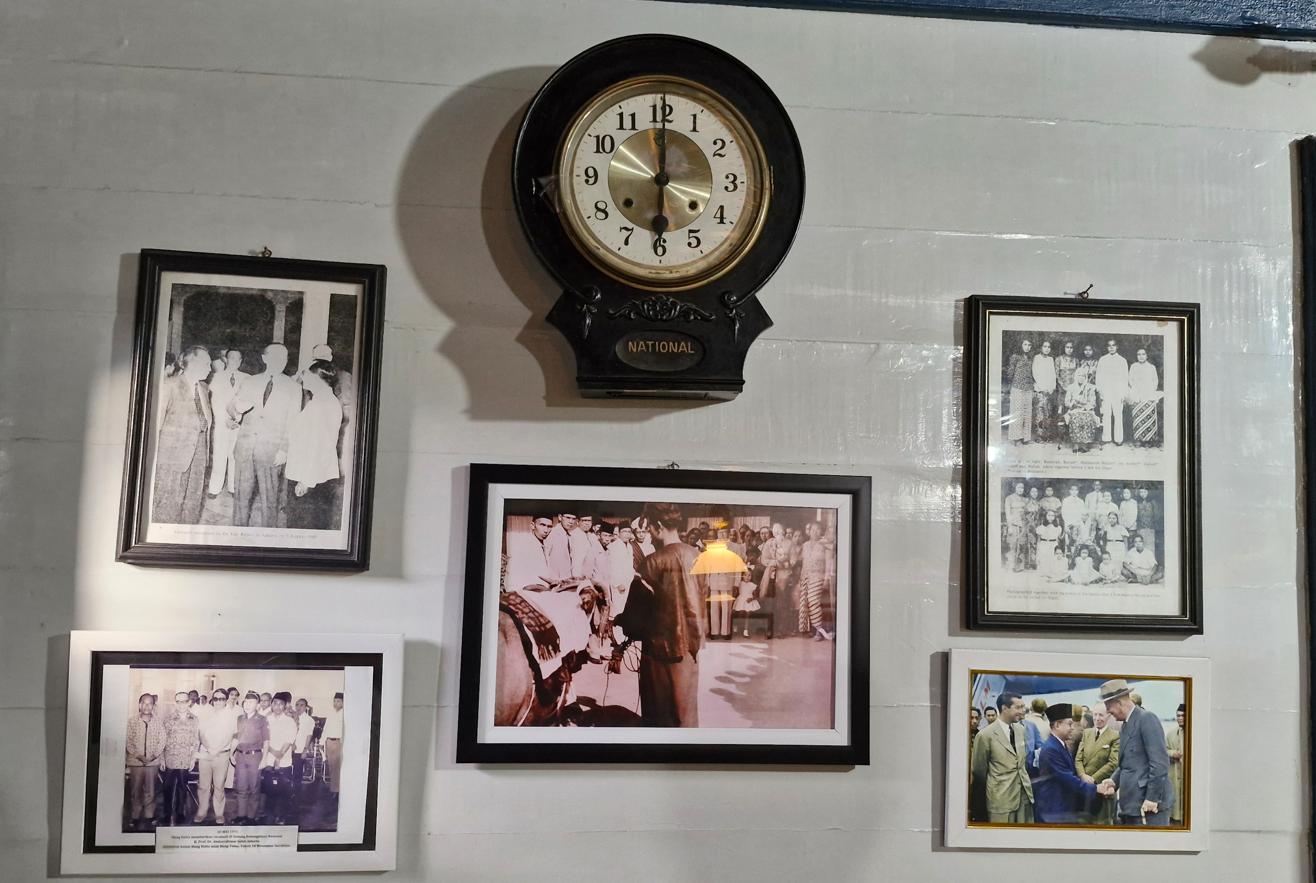
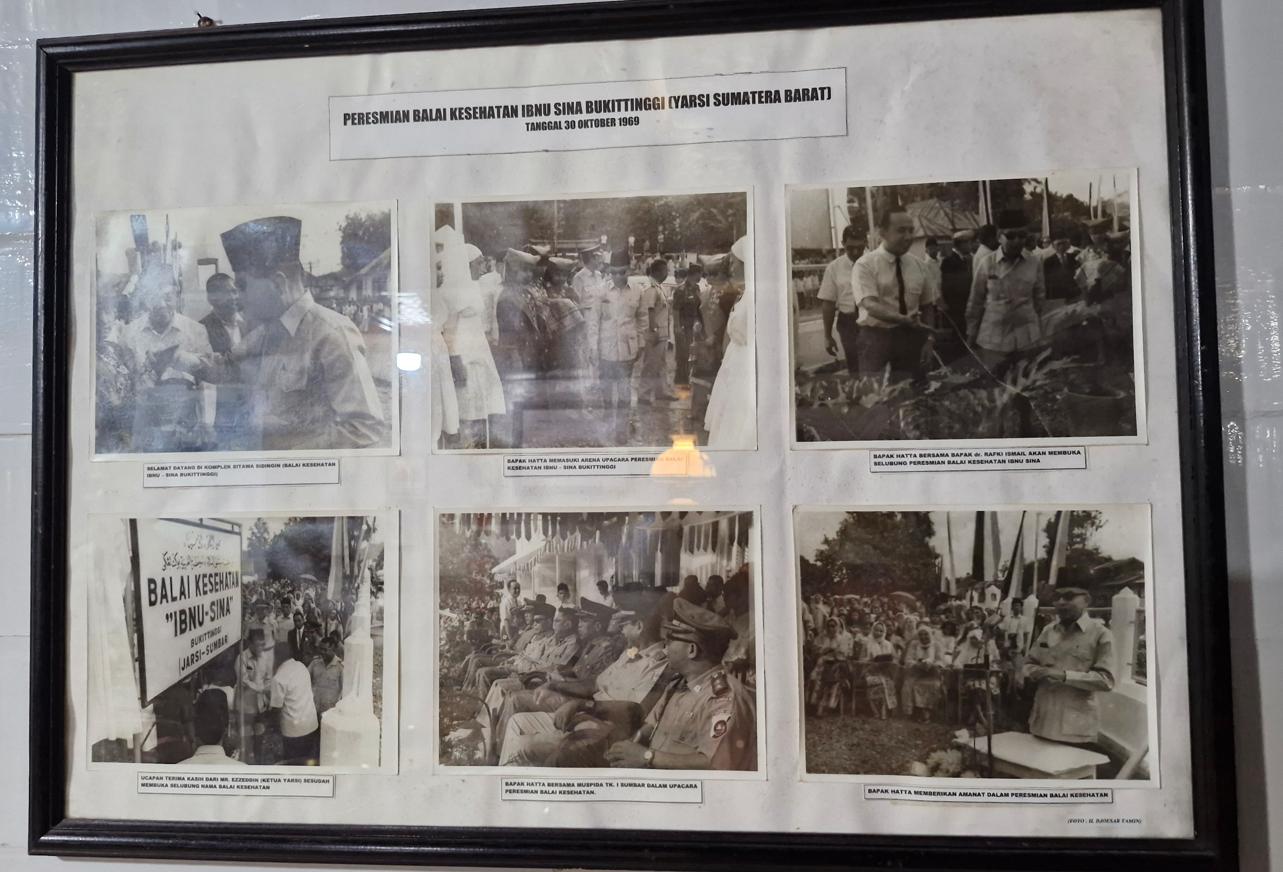
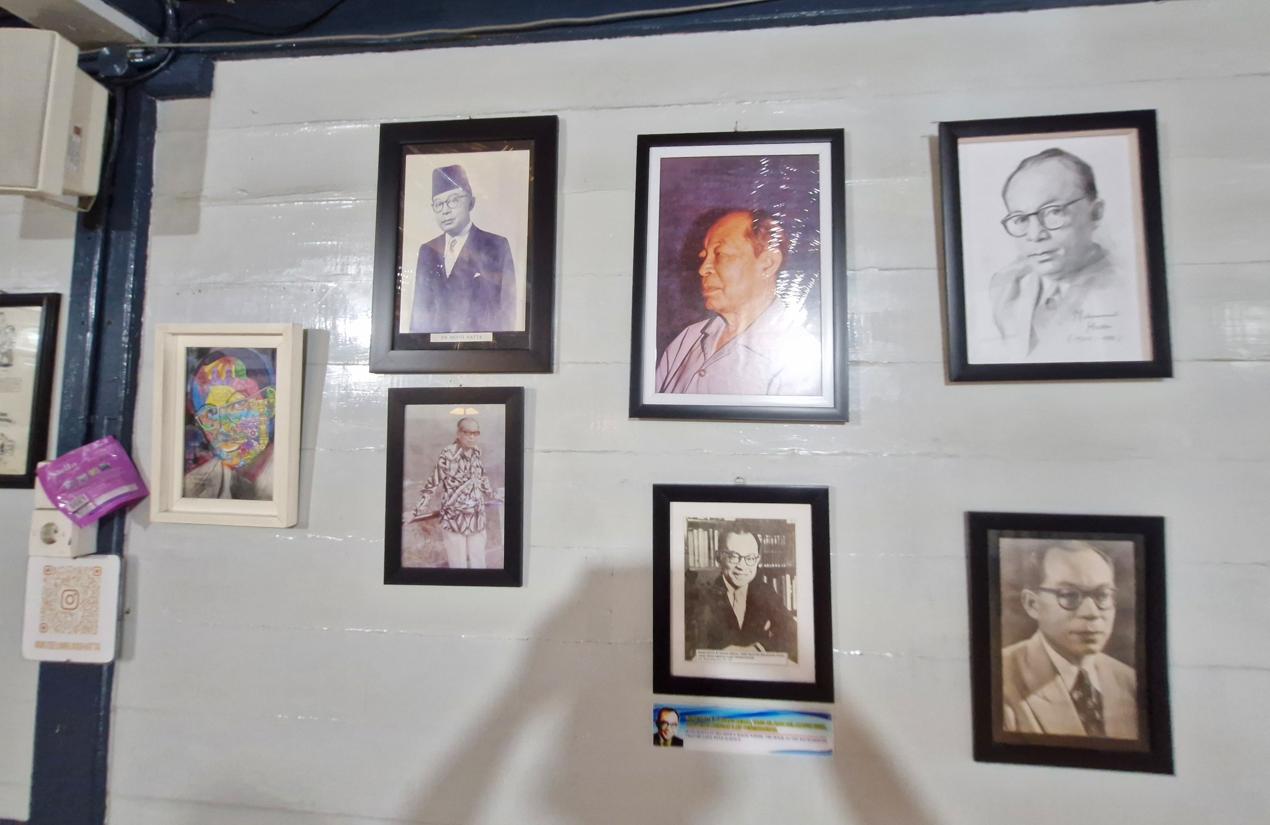
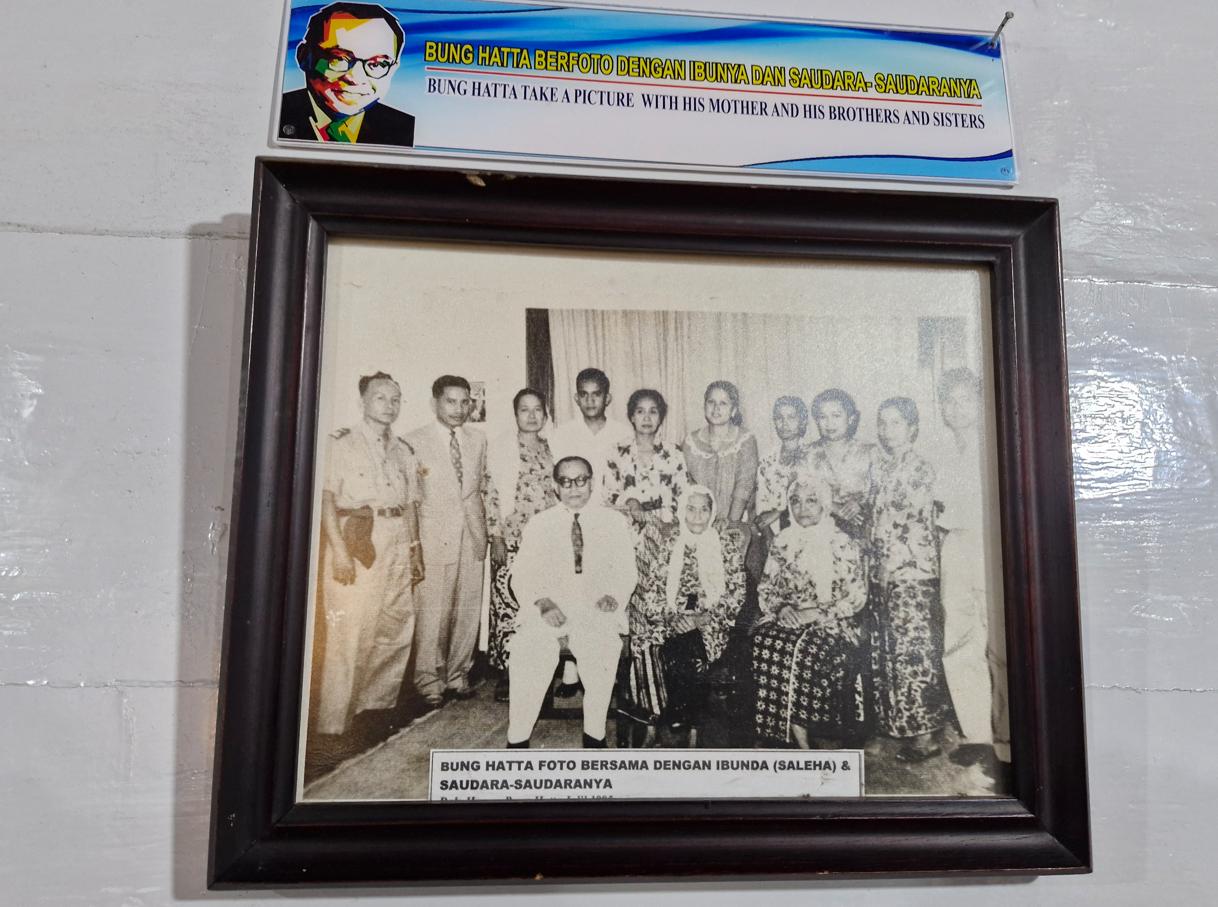
Upstairs, the quieter evidence accumulates: cabinets crowded with certificates and awards, walls of sepia photographs tracing Hatta’s life and his lasting ties to this stretch of highland, and, in the grandmother’s own room, an iron-framed bed made up in white linen and a folded red blanket, roped off with a small sign in the deadpan bilingual register museums everywhere seem to share, “DILARANG DUDUK / NO SITTING.” In another room, a banner propped against an old wardrobe carried a line of Hatta’s own: “Pahlawan yang setia itu berkorban, bukan buat dikenal namanya, tetapi semata-mata membela cita-cita” — the loyal hero sacrifices not to have his name known, but solely to defend an ideal. Outside on the compound wall, a newer mural rendered the same ethic in terms even a schoolchild could repeat back: lack of intelligence can be fixed by learning, lack of skill erased by experience, but dishonesty is hard to fix.

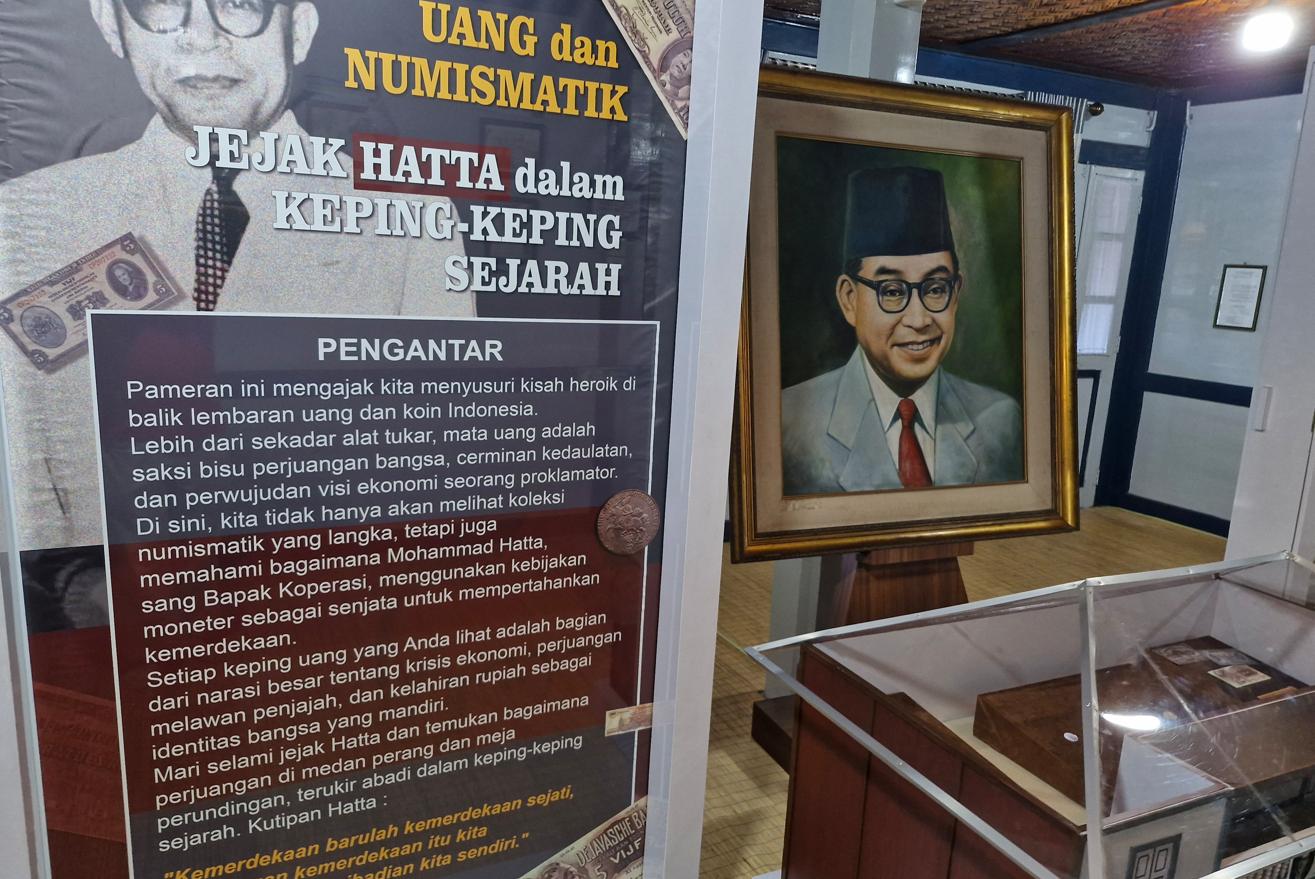
One room has been given over entirely to numismatics, “Jejak Hatta dalam Keping-Keping Sejarah,” Hatta’s trace in pieces of history: kingdom-era gold and cowrie money give way to Japanese-issued gulden, then to the Oeang Republik Indonesia first printed in October 1946, then finally to the rupiah of today, each note and coin framed as evidence for a single argument, that the Father of Cooperatives understood monetary policy itself as a weapon for holding on to sovereignty once the shooting stopped. A wall panel nearby carried Hatta’s own gloss on the point, which I copied down on the spot: “Kemerdekaan barulah kememerdekaan sejati, jika dengan kememerdekaan itu kita membangun kepribadian bangsa sendiri” — independence only becomes true independence once we use it to build our own nation’s character.

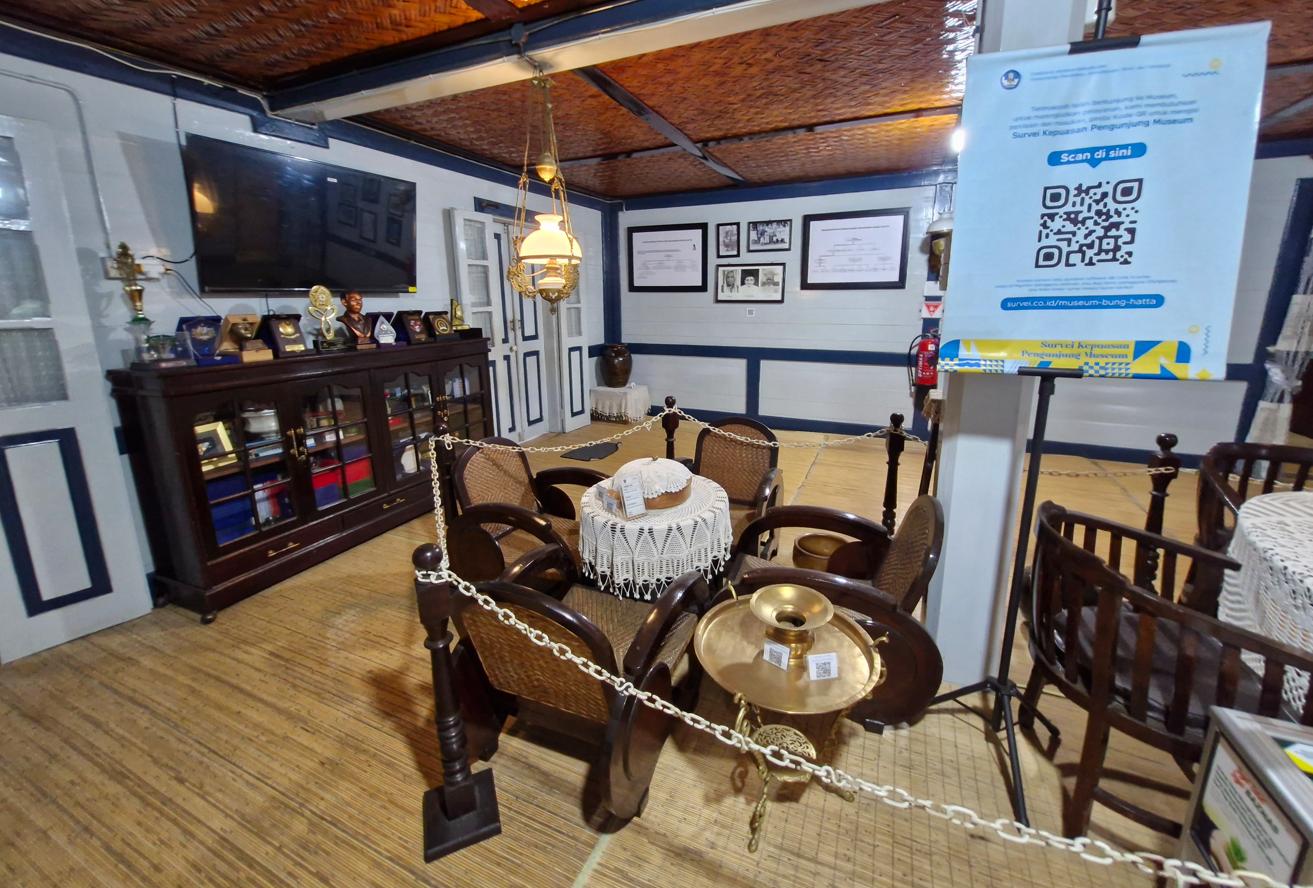
It is not, on the strength of any single object inside it, a spectacular museum: a family meeting table roped off behind a loop of chain, three carved chairs drawn up around a lace cloth and a brass bowl, as though the household had only just adjourned; a sitting room with a hanging brass lamp and a cabinet of trophies. What it offers instead is cumulative, room after room quietly insisting that the discipline and austerity Hatta became known for nationally were not invented in a Dutch prison cell but assembled here first, under a grandmother’s supervision, long before anyone had reason to call him anything at all.

Highland Archives
Colonial Fort de Kock Relics
Bukittinggi Panorama
Lobang Jepang Tunnel Entrance
Tunnel Complex Monument
Canyon View near Fort de Kock

Bukittinggi’s roll of nationally significant sons does not end with Hatta. It closes, conveniently for a Singaporean standing in his boyhood sitting room, back on my own side of the Strait: Zubir Said, who would go on to compose Majulah Singapura, Singapore’s national anthem, was born in this same town in 1907, under its old colonial name of Fort de Kock, a story of departure and eventual homecoming I will come back to properly once we reach Palembang. Yusof Ishak, Singapore’s first president, was born across the Strait in Perak rather than here, but carried Minangkabau blood on his father’s side back to this same highland world. A clock tower that has worn three regimes’ rooflines, a house that raised a Vice-President under his grandmother’s roof, and a bloodline that gave the republic across the water both its anthem and its first head of state: Bukittinggi’s real export, it turns out, was never quite coffee, gold, or songket cloth. It was people, sent out under the old rule of merantau to make their names, and other nations’ founding myths, elsewhere.

Beneath the town runs a darker inheritance: the Lobang Jepang, a network of tunnels some one and a half kilometres long, hand-dug by forced labourers under Japanese military direction during the Second World War, when Bukittinggi, known under its old colonial name of Fort de Kock, was transformed into the headquarters of the Japanese 25th Army, the command post for the occupation of both Sumatra and Malaya. General Hubert Joseph Jean Lambert de Stuers, the Dutch commander who had fought to pacify these same highlands a century earlier during the Padri War, described the town's strategic logic in terms the Japanese would have understood perfectly: “Positioned in the cool heights of Agam, Fort de Kock commands a view over an extraordinary canyon and mountains. It is the key to controlling the fierce and proud highlanders who will defend every inch of their native soil.” Two empires, a century apart, arrived at the same military conclusion about the same town, for the same reason.

We had meant to go down into the tunnels ourselves. It was pencilled into the itinerary for our second morning in Bukittinggi, and then, in the way travel in Sumatra periodically insists on humbling the traveller, it simply did not happen: a scheduling clash with the drive to Pandai Sikek, a closure we heard about only after we had already committed the morning elsewhere, the small accumulating friction of a trip with more destinations than days. I regret it still. What I know of Lobang Jepang, then, I know secondhand, from our guide's own account and from what I read afterwards, rather than from the particular mustiness of enclosed history that visitors who do make it inside describe standing at the tunnel mouth.

What our guide did want us to understand, even without the visit, was how differently this occupation is remembered here compared with how it survives, in fragments, in Singapore. In my own country's memory the Japanese Occupation is an unrelieved horror: the Sook Ching massacres, the years of hunger, banana money worth less each week it circulated. In West Sumatra the memory is scarcely gentler in substance, forced labour, requisitioned rice, the tunnels themselves dug at a mortal cost that was never properly counted, but it sits inside a larger, stranger frame, that of a coloniser's coloniser, an occupier who at least nominally promised liberation from a different, longer-standing yoke.

General Tomoyuki Yamashita's proclamation to the people of Sumatra, issued shortly after the invasion in 1942, promised exactly this: “Sumatra is a treasure house of Asia... We have come to break the chains of Dutch imperialism and build a new order where the Asian peoples shall govern their own soil under the guidance of the Emperor.” History would prove the promise cynical and the treasure house ruthlessly plundered. Yet an internal Japanese military directive from 1943, addressing how local leaders should be handled, reveals an occupier who at least understood, better than the Dutch often had, exactly what he was dealing with: “The Minangkabau people are proud, educated, and deeply religious. In utilizing their resources for the war effort, the Military Administration must show utmost respect toward local Islamic leaders (Ulama) and customary elders (Ninik Mamak), avoiding the mistakes of Dutch interference in native custom.” It is a chilling document precisely because it is so shrewd, an occupier's manual for extracting maximum compliance at minimum resistance, dressed in the language of respect.

Whatever the Japanese promised, and however cynically, they did break something that never fully reassembled itself: three and a half centuries of Dutch assumed permanence. When Japan surrendered in August 1945 and Sukarno and Hatta proclaimed independence within days, it was, our guide reminded us, a proclamation the Dutch had every intention of reversing, and Bukittinggi's own underground infrastructure, tunnels dug for one empire's war, is locally remembered as having sheltered pemuda fighters and republican officials during the revolution that followed, when Dutch forces returned to try to reclaim a colony they had never formally relinquished. The town's larger claim to that history is better documented than any single tunnel's role in it: when Dutch troops captured Yogyakarta and much of the Republic's leadership in December 1948, it was Bukittinggi that briefly became the seat of the Emergency Government of the Republic of Indonesia, keeping the proclamation of 1945 alive on paper and in practice until the leadership in Java could be freed. A dreaded and brutal colonial power, in other words, was ultimately outlasted from this same stretch of highland town, first through tunnels dug under one occupier's compulsion, then through a government that refused to disappear even when its capital fell. I would like to have stood in the tunnels myself and judged the atmosphere firsthand. The logistics of the day decided otherwise, and the story, for now, remains one I was told rather than one I walked through.
Pandai Sikek Weaving House
Songket Golden Threads
Intricate Songket Motifs
Master Weaver at Work
Traditional Loom Detail
Completed Songket Heirloom

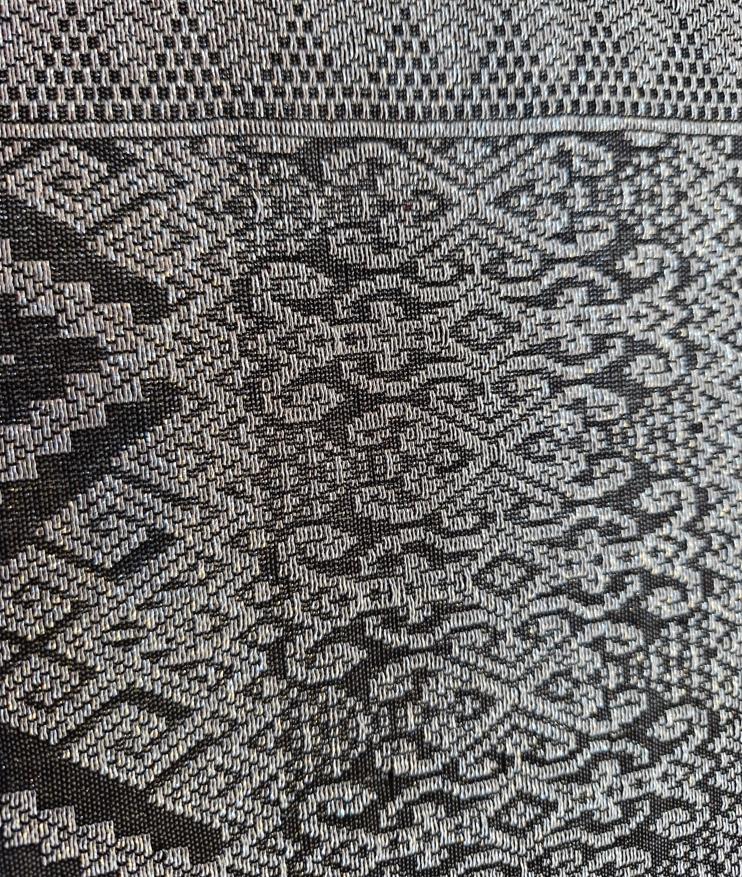
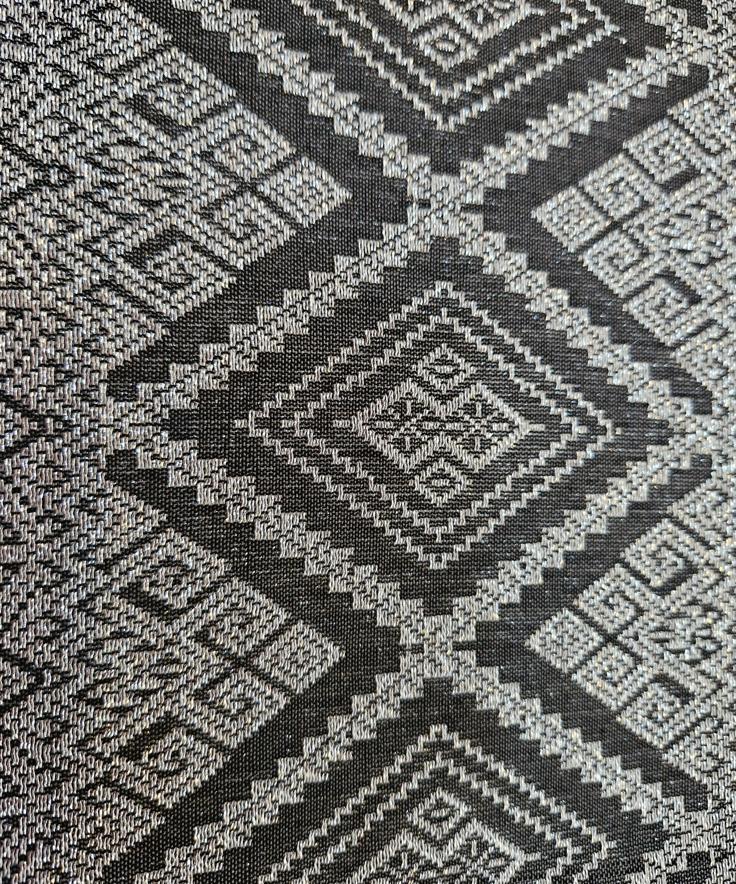
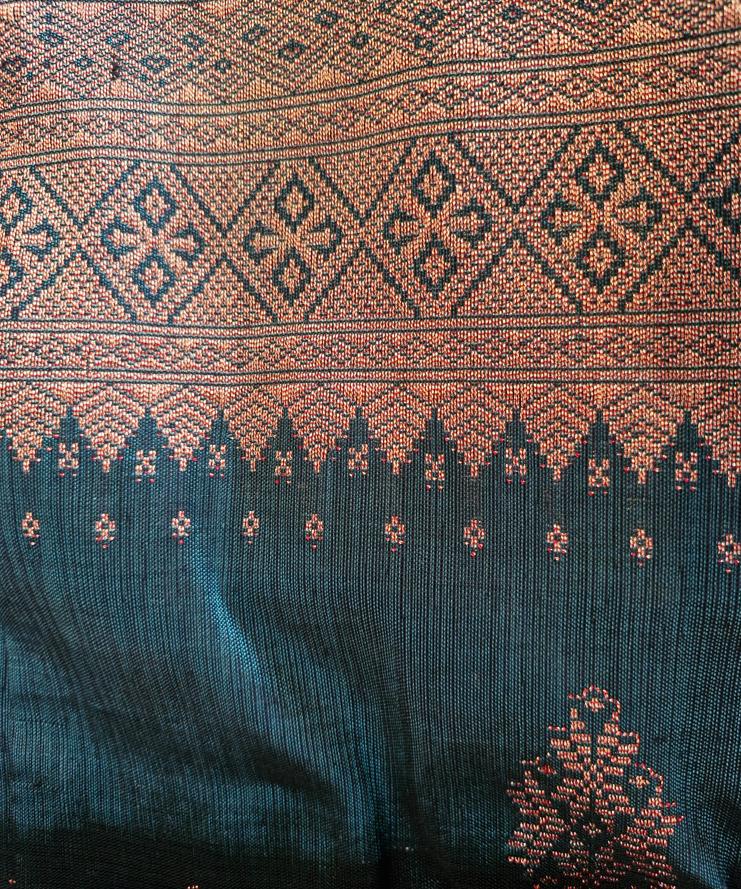
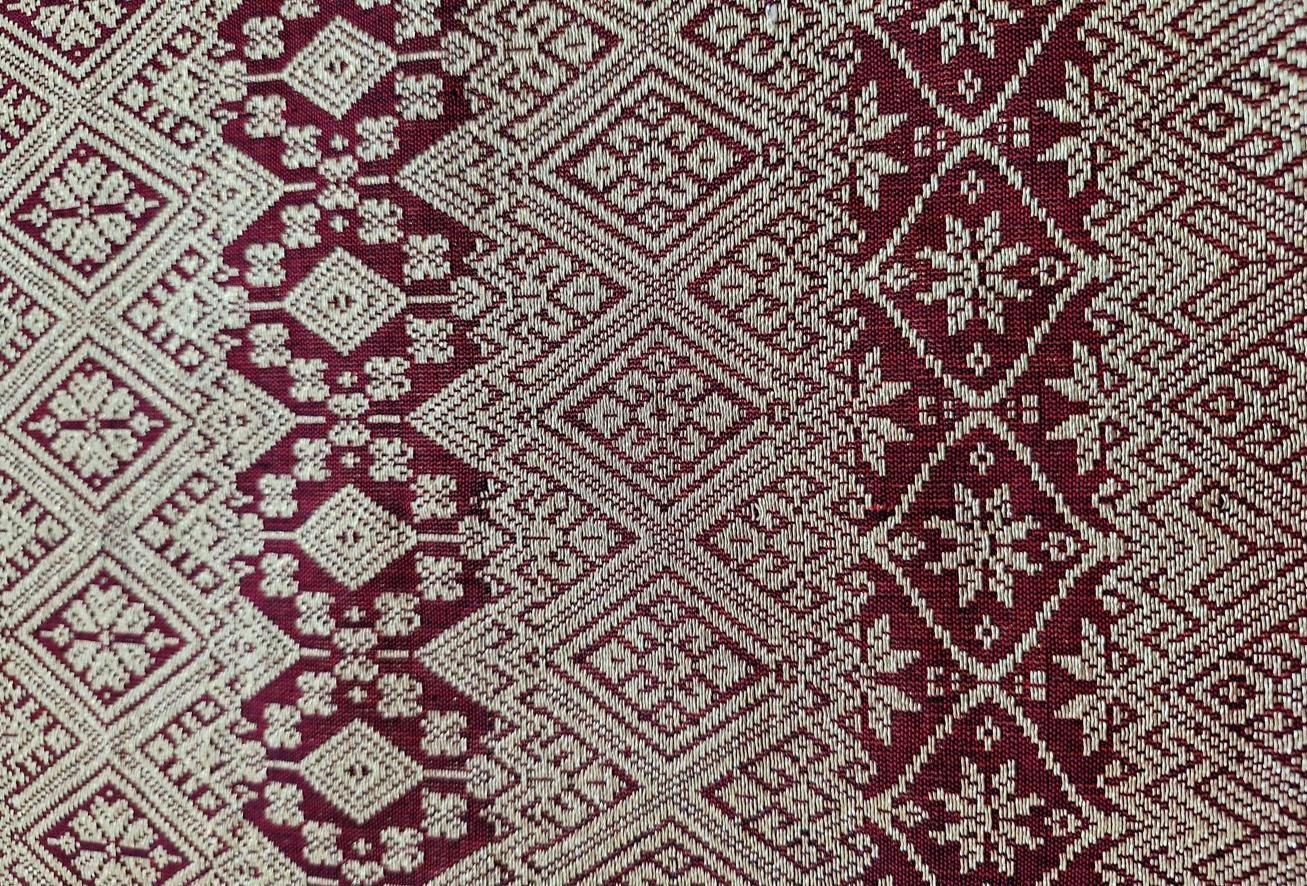
At Pandai Sikek, at the foot of Mount Singgalang, we stopped at a weaving house where three women sat cross-legged before looms strung with threads of real gold. Songket, the “Queen of Textiles,” its origins traced to the golden age of Srivijaya, takes between one and six months to complete a single length of cloth, each pattern hand-counted thread by thread, the motifs drawn entirely from the natural world around the weaver: pucuak rabuang, the bamboo shoot, symbolising a person useful at every stage of life; bungo antimun, the cucumber flower. A finished piece might sell for the equivalent of several thousand dollars and would be worn perhaps three or four times in a lifetime, at a wedding, at a tribal inauguration, before being folded away as an heirloom, more asset than garment. I asked an old weaver, through our local guide, whether her own daughter was learning the craft. She gave me a look I would come to recognise across the whole of this trip, from songket weavers to durian sellers to the last Kapitan's descendant in Palembang: a small, resigned smile that said the answer was complicated, and probably no.

Marawa Minangkabau Flag

2e.jpg: Marawa, the Minangkabau flag

Negeri Sembilan Flag

2e2.jpg: Flag of the Malaysian state of Negeri Sembilan

Roadside Marawa Banner West Sumatra

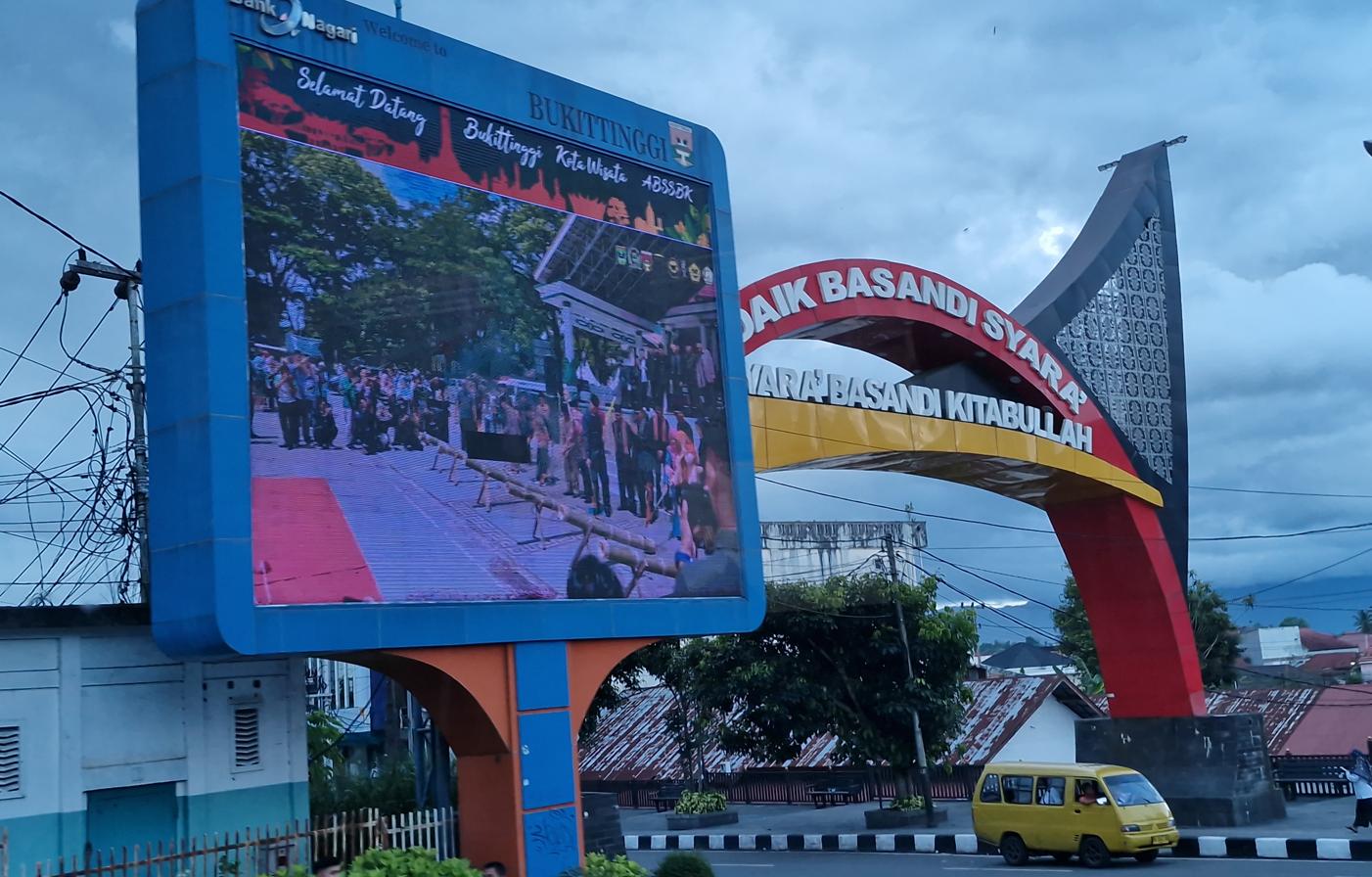
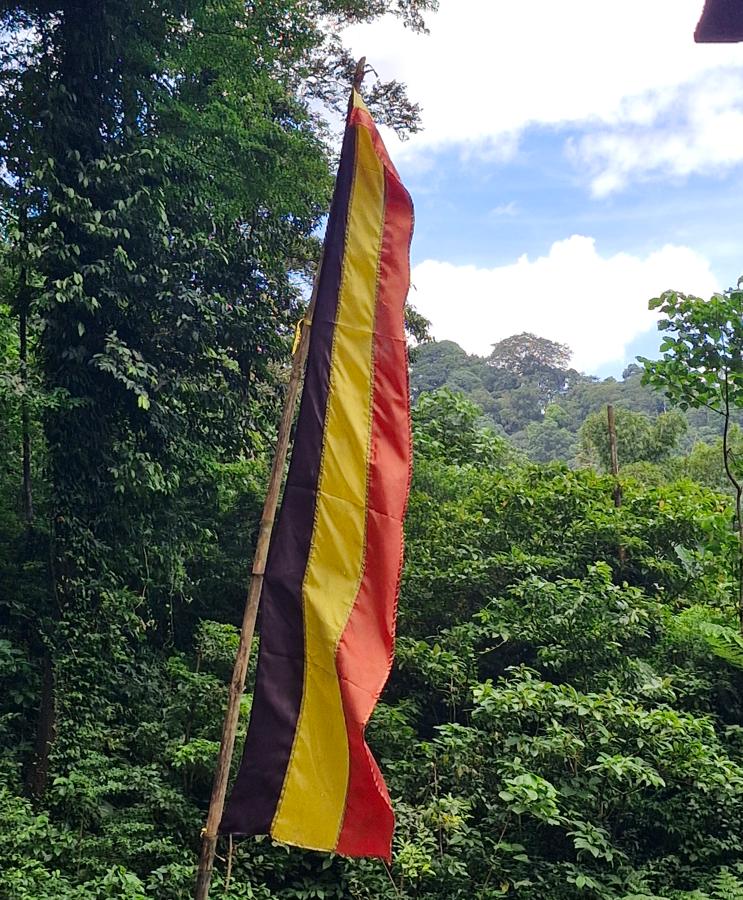
On a ceremonial gateway near Bukittinggi's old market I first properly noticed the marawa, the Minangkabau tricolour, horizontal bands of black, gold and red that, glimpsed quickly from a moving car, could almost be mistaken for the flag of Germany, until you learn that the colours here have nothing to do with any European nation and everything to do with the traditional three-tier order of Minangkabau society: aristocracy and religious leaders, customary chiefs, and commoners, sometimes glossed instead as the three founding luhak, the core territories from which the whole Minangkabau world is said to have spread down from Mount Marapi after the flood receded. It flies from rumah gadang roof peaks and adat ceremonial halls across the highlands, and, carried across the Strait by the same migrants who brought adat perpatih, it flies today in Negeri Sembilan too, a piece of highland Sumatran heraldry still recognised, and still occasionally raised, on Malaysian soil.

Pagaruyung, as Prof Farish asserted, is the centre of the universe for the Malay-Minang world in the same way that Yogyakarta is the centre for the Javanese, but layered, tiered, with lesser courts arranged at calibrated distances from the centre the way European royalty once arranged themselves around Vienna. “Indonesia has two hundred and fifty royal families,” he added, as though this were an entirely unremarkable fact to drop into a conversation about roadside durian prices, which, in this country, it rather is.

Kampung Durian Stall
Cracking Fresh Durian

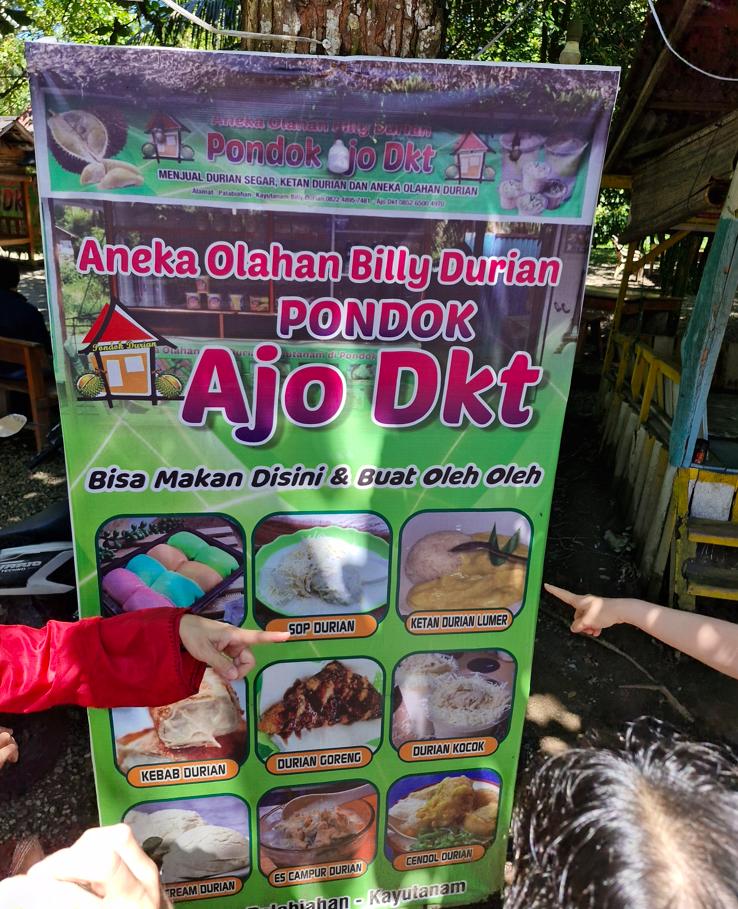
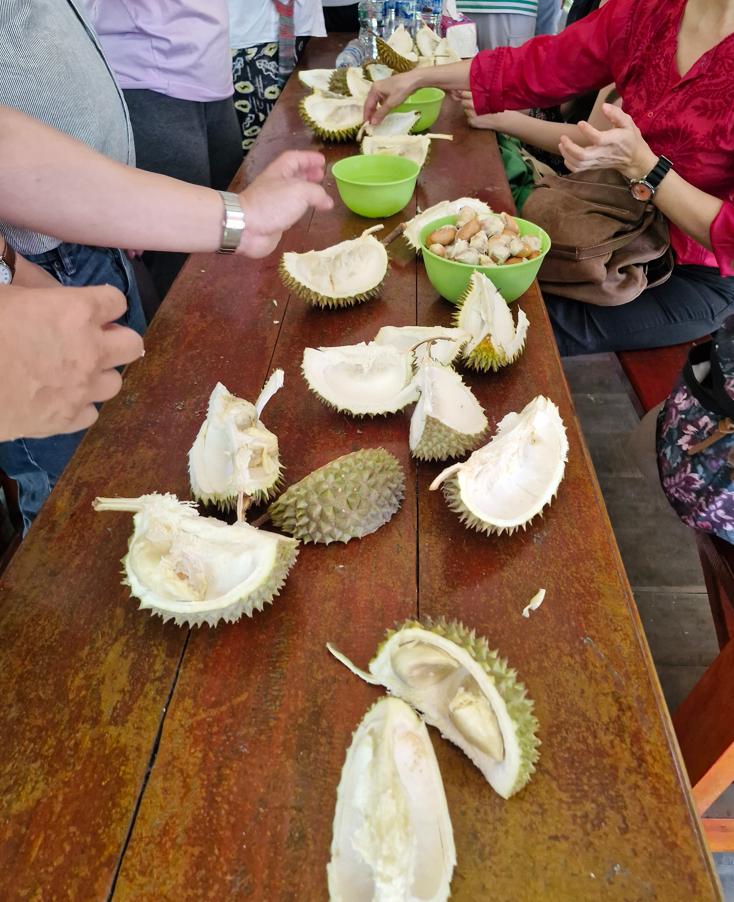
Between Bukittinggi and Batusangkar we passed roadside stalls stacked with durian: kampung durian, small and pale-fleshed, nothing like the monstrous, spiky Musang King varieties now commanding absurd prices in Singapore supermarkets. Three durians for one hundred thousand rupiah, about seven Singapore dollars, and the flesh, when cracked open on a folded banana leaf at the roadside, proved surprisingly, almost shockingly creamy for fruit that looked so understated. I ate standing at the tailgate of the car, sticky to the elbow, while the driver recounted, unprompted and with visible relish, the seasonal durian wars that erupt every year between Malaysian and Indonesian durian farmers over export quotas and the rightful claim to which side of the Strait grows the superior fruit, a small, edible echo of the larger, endlessly amicable rivalry between two nations who share a language, a cuisine, and, whatever the football commentators might insist, rather more in common than either likes to admit in public.

Mount Marapi Sunset Skyline

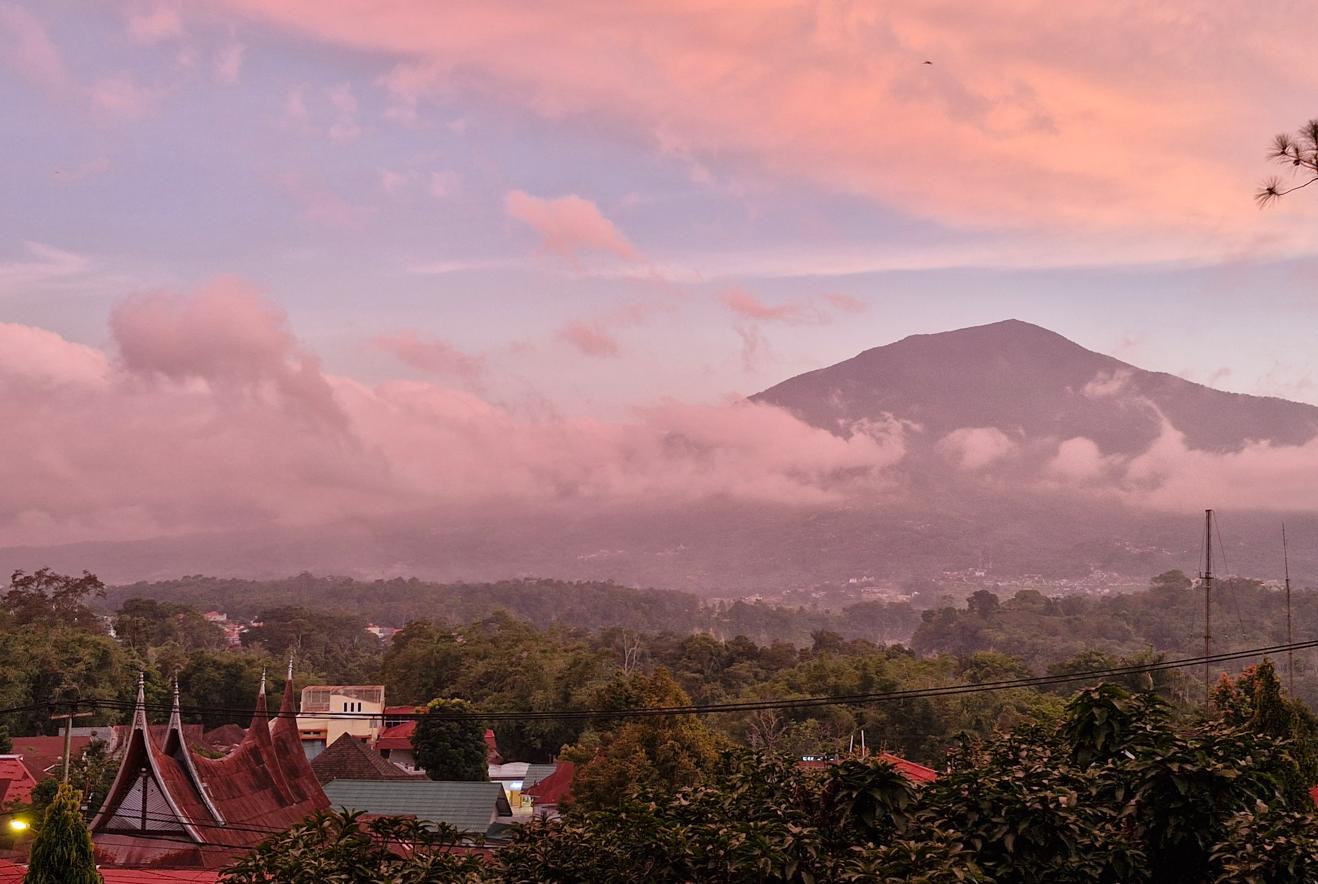
We had one evening left in Bukittinggi before the road pulled us onward toward Sawahlunto, and it produced, without any effort on our part, the finest sunset of the whole trip. Mount Marapi stood in near-silhouette against a sky gone the improbable pink of a fruit just cut open, banks of cloud lit from underneath and dragged sideways as though someone had run a brush loaded with two colours across the horizon and not quite blended them.

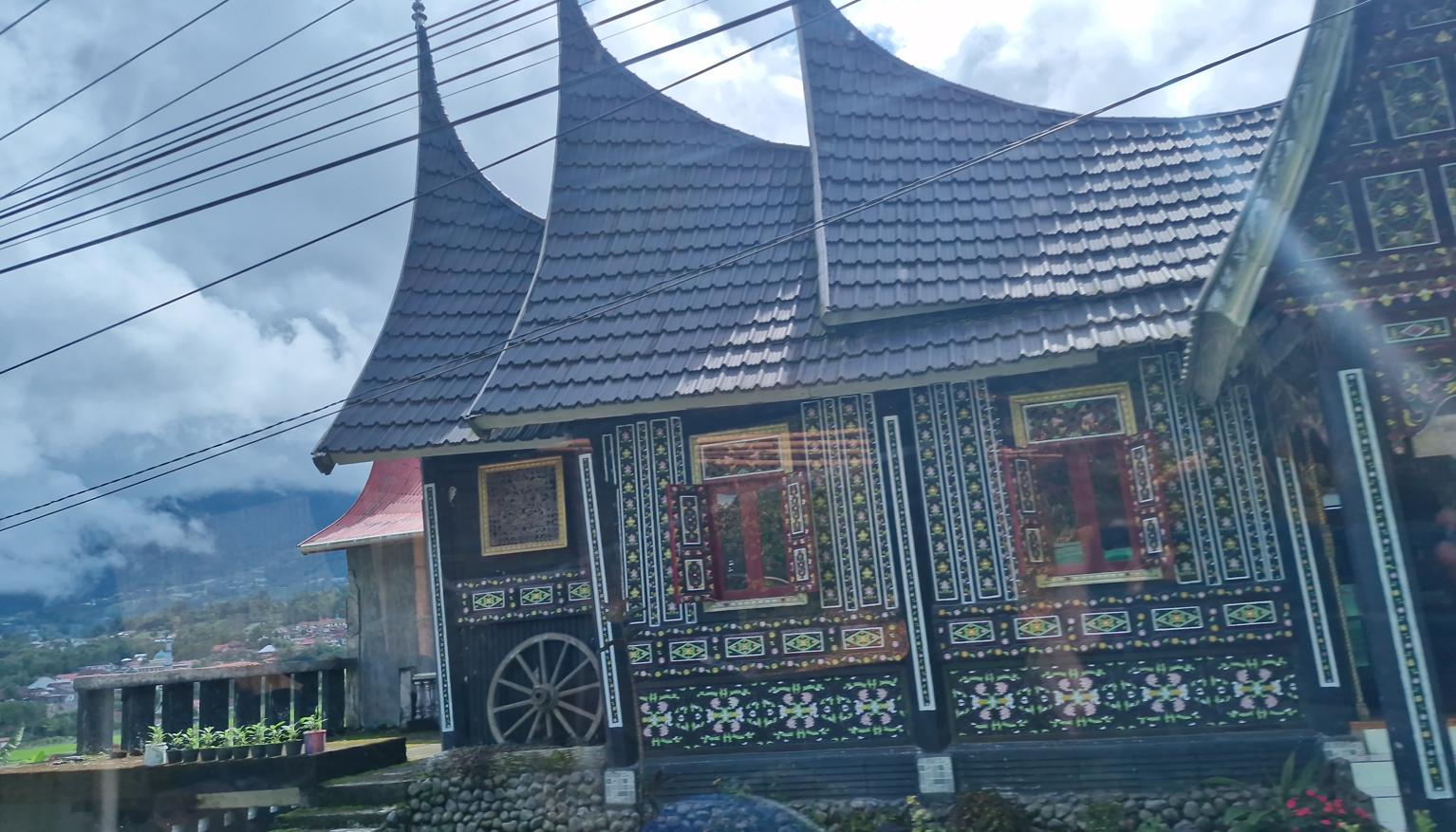
Below, the gonjong roofs of the town, the same buffalo-horn silhouette borrowed by the Grand Mosque back in Padang and reworked a third time onto Jam Gadang after independence, rose dark and toothed against the last of the light, a whole highland grammar of rooflines repeating itself all the way down to the rooftops at our feet. Marapi has been smoking, on and off, for as long as anyone here can remember; that evening it kept its own counsel, sitting beneath the colour with the patience peculiar to volcanoes, having already outlasted Dutch governors, a Japanese army, and an Emergency Government that once ran a country from these same hills, and apparently in no hurry to see what comes next.

03
Up Next

CHAPTER THREE: THE TIME CAPSULE OF SAWAHLUNTO

Travel into the Ombilin coal mining heartland and preserved Dutch heritage town.

If You Like This Website...