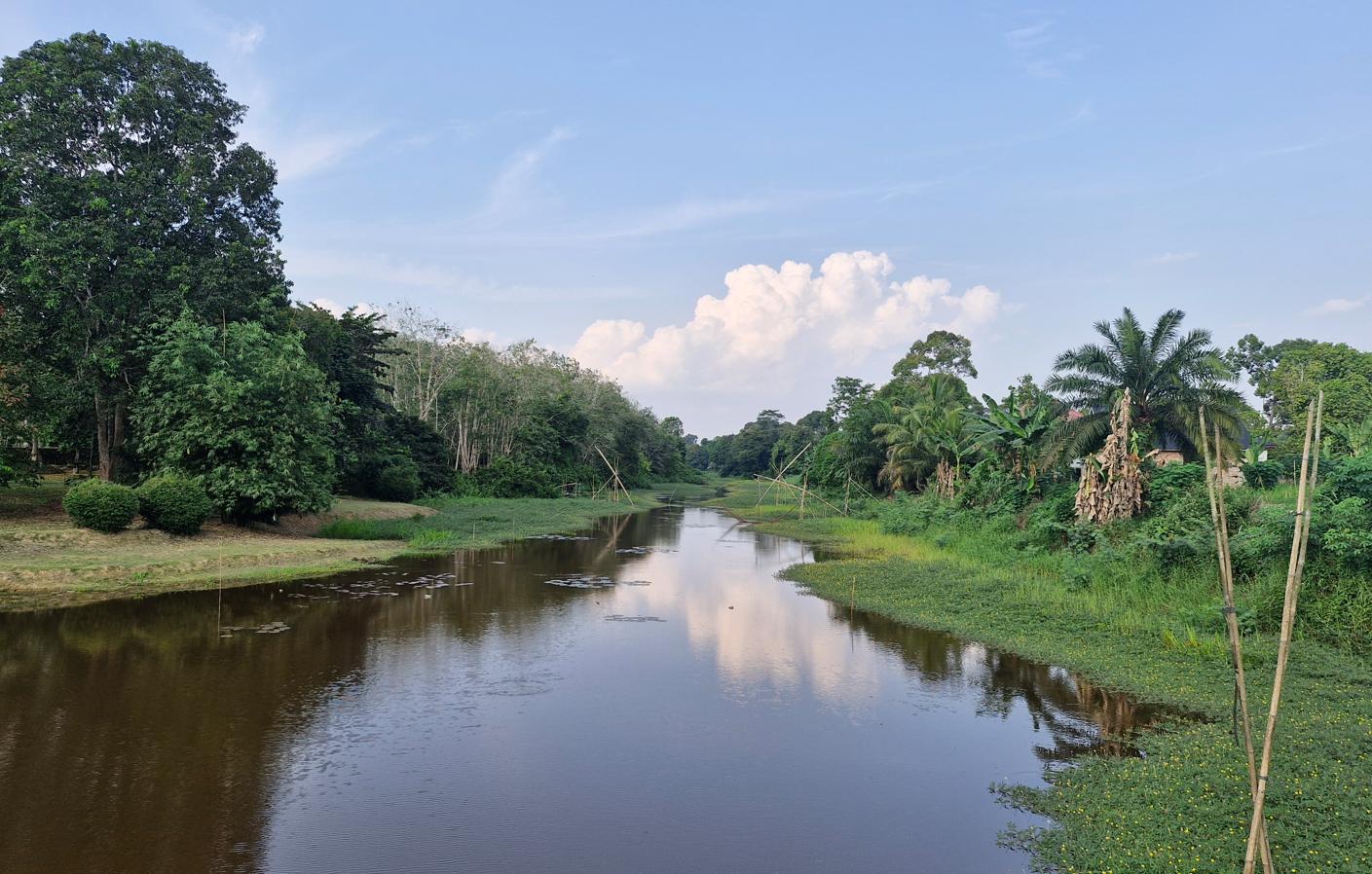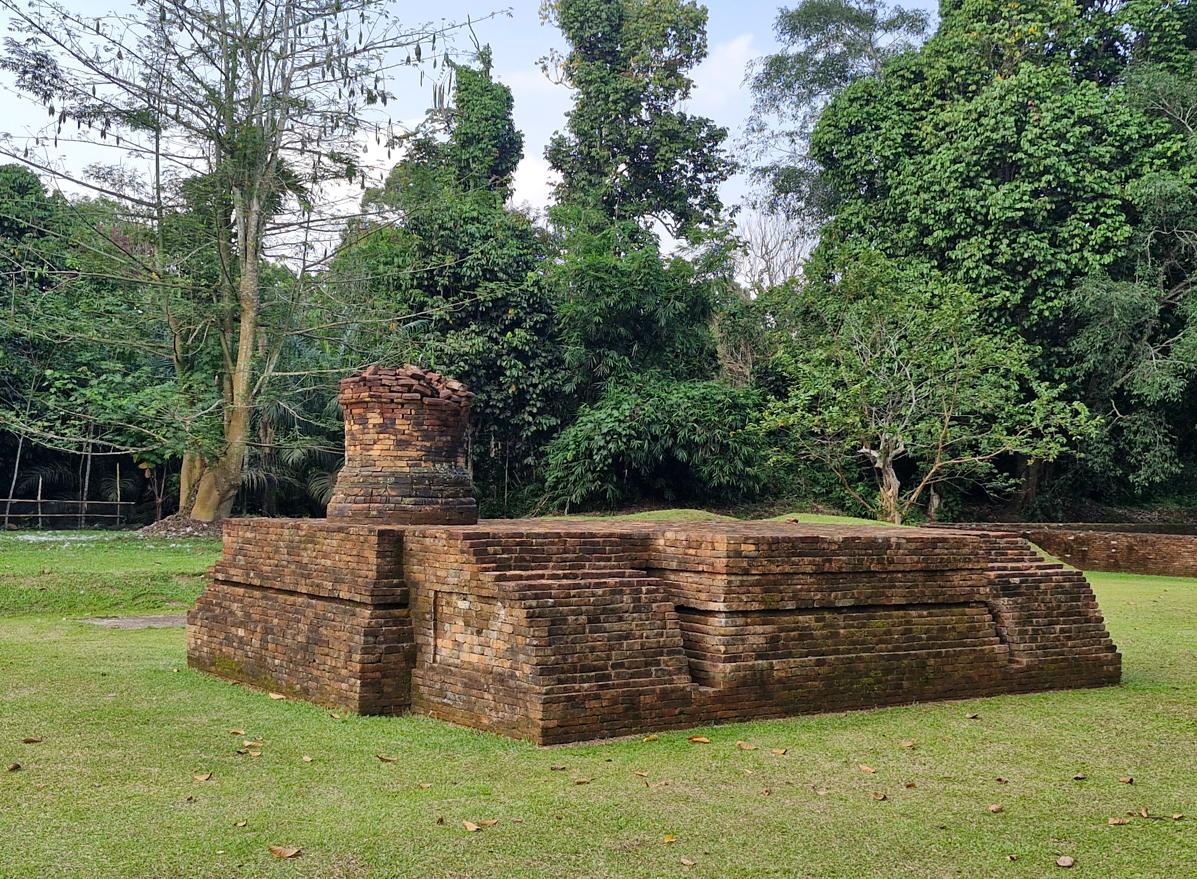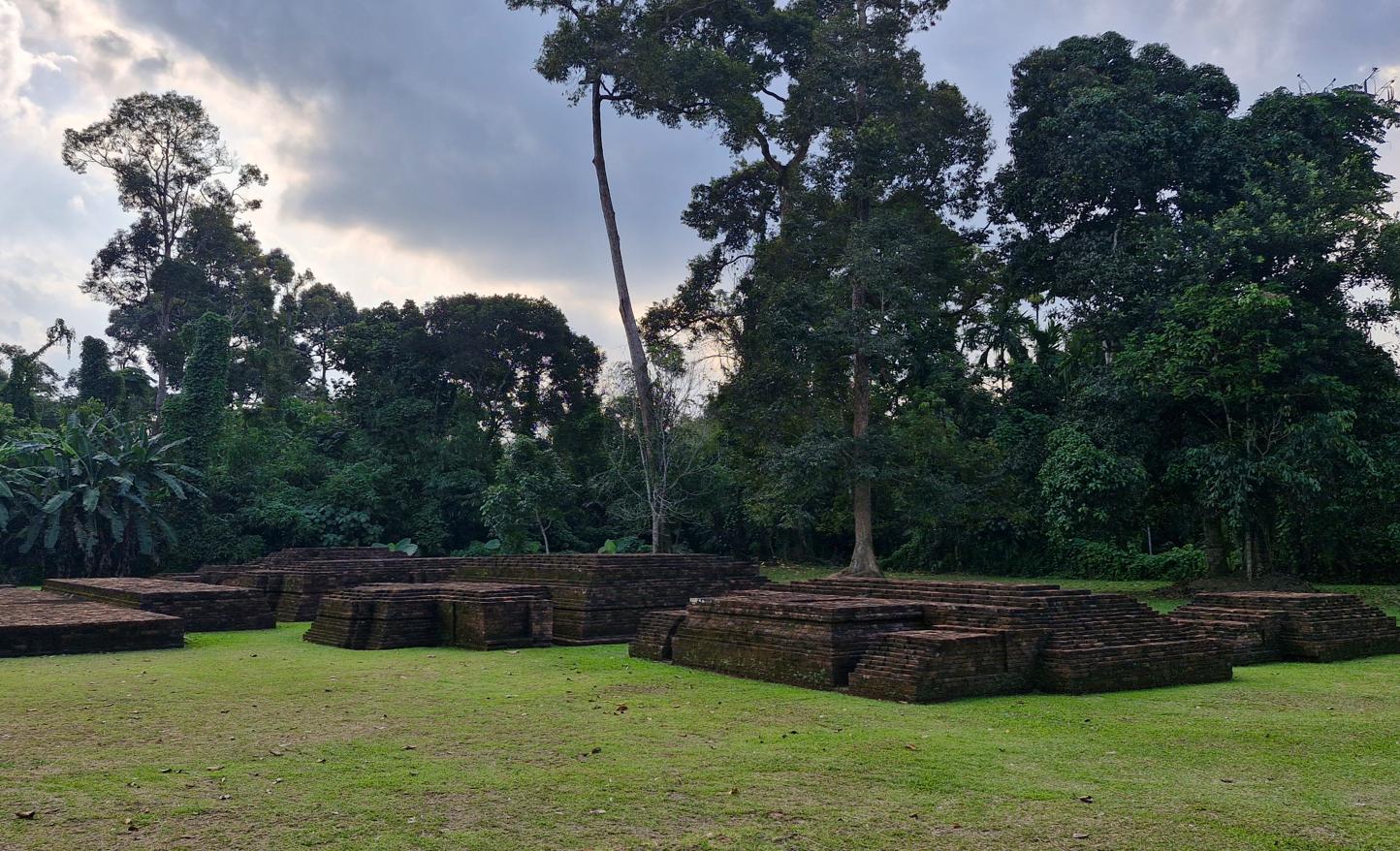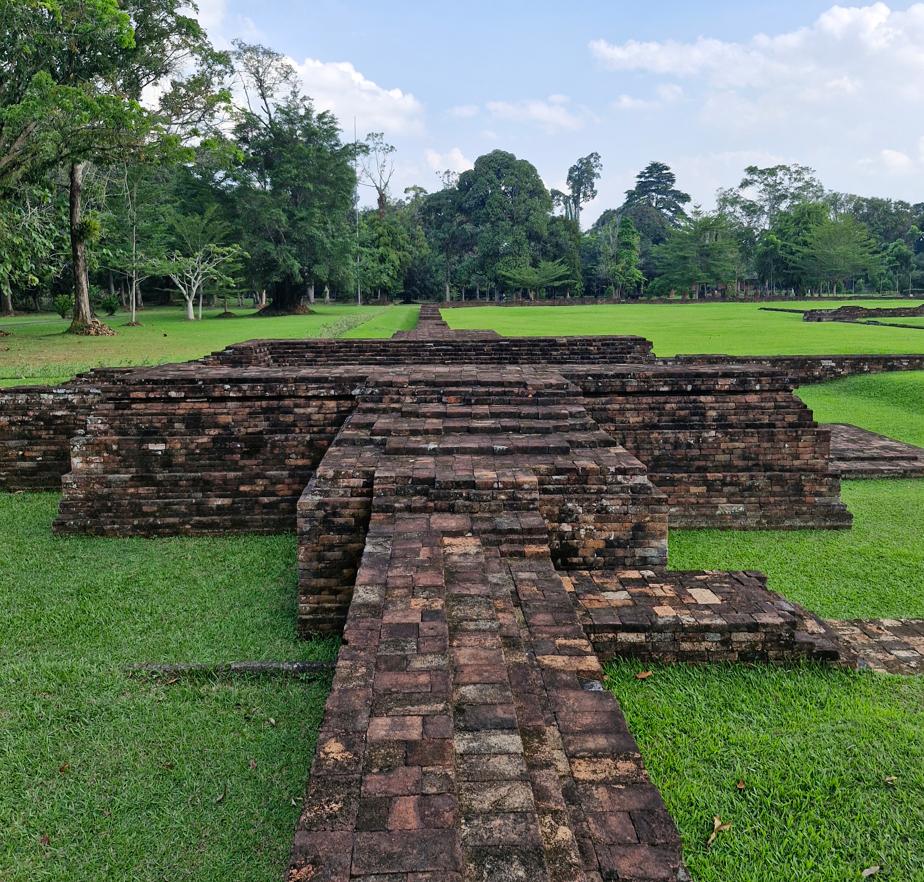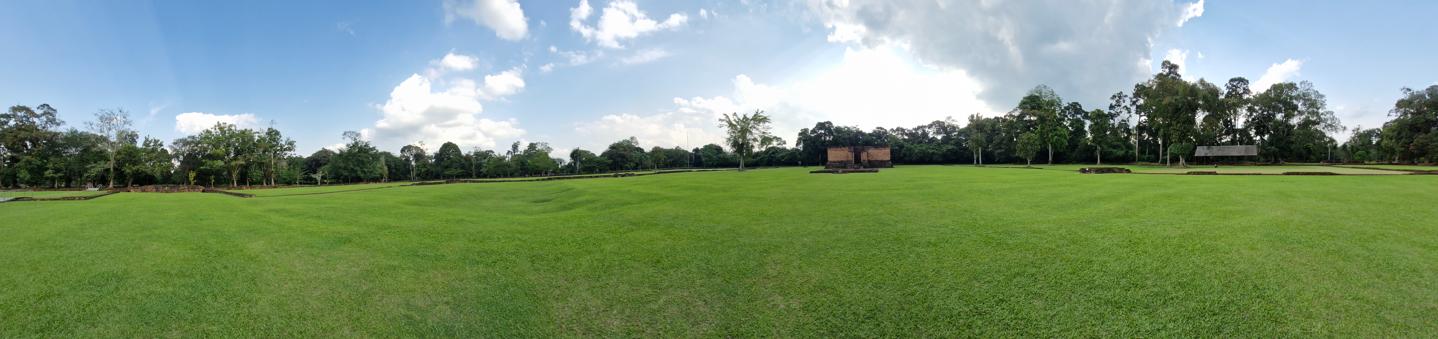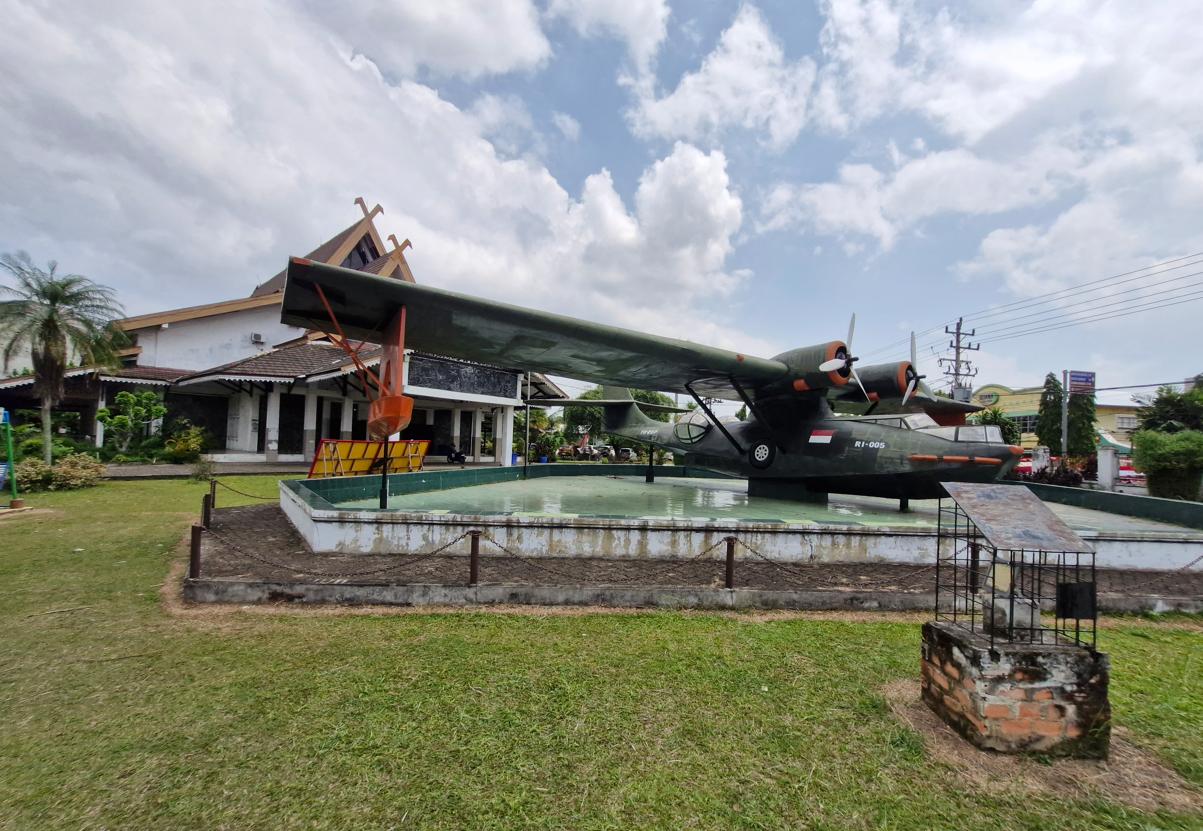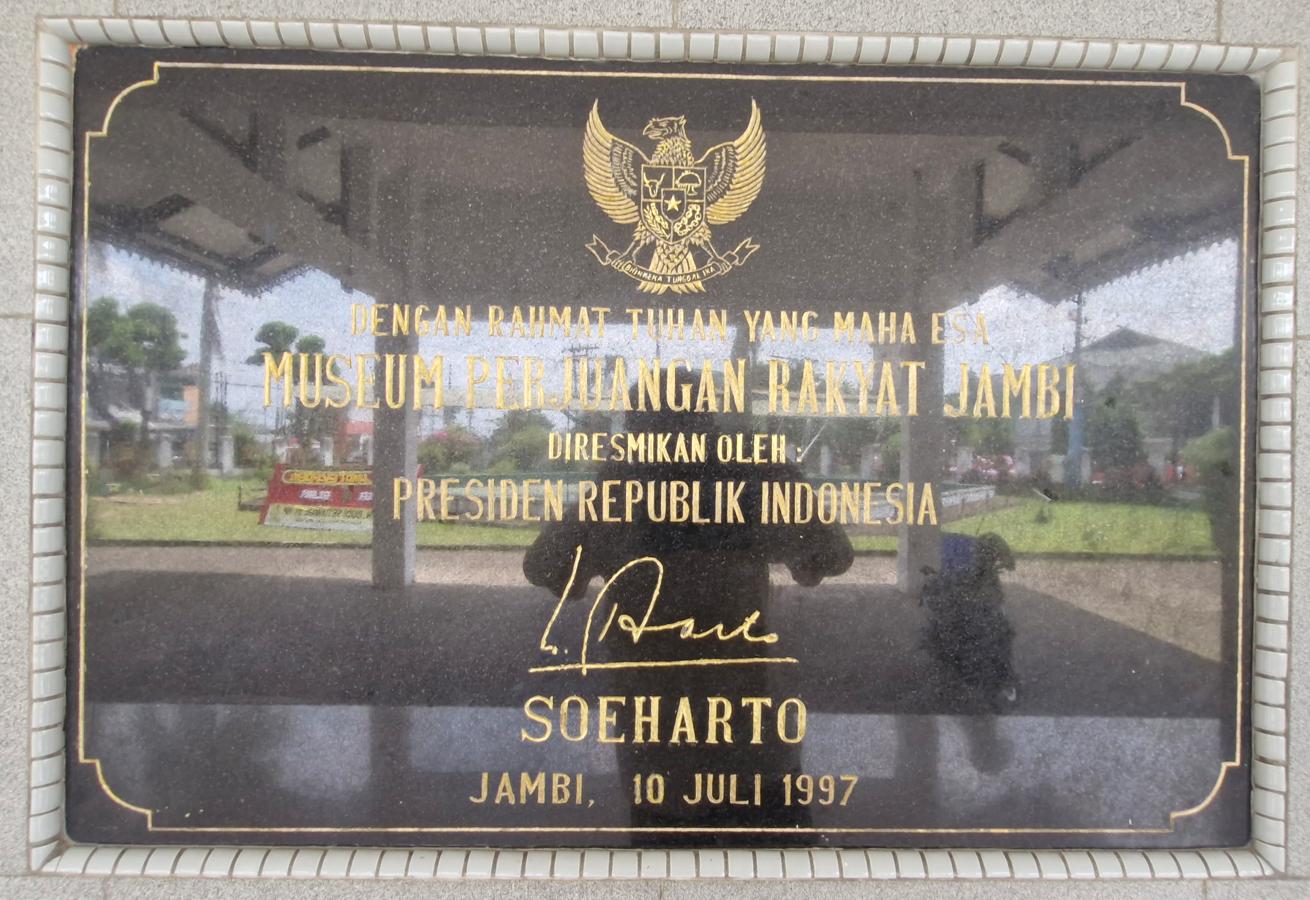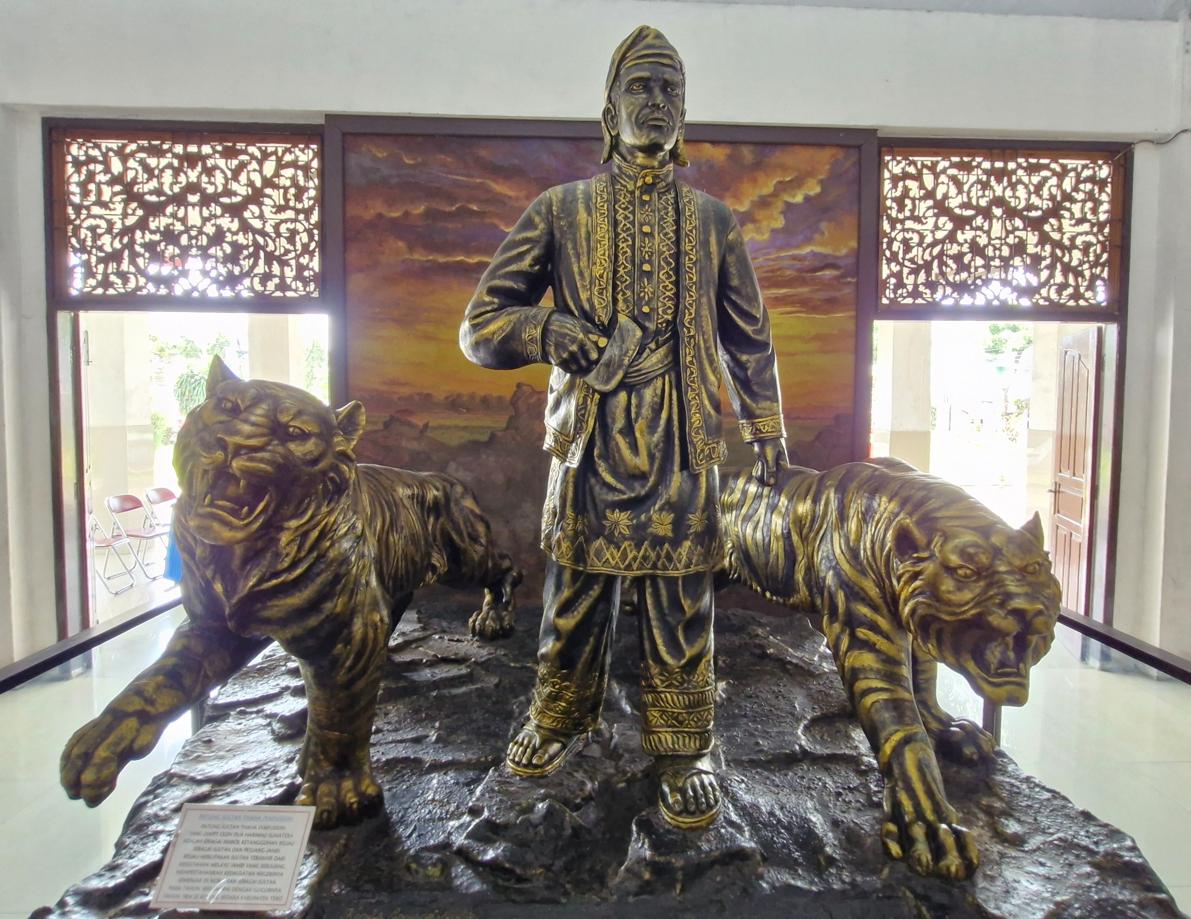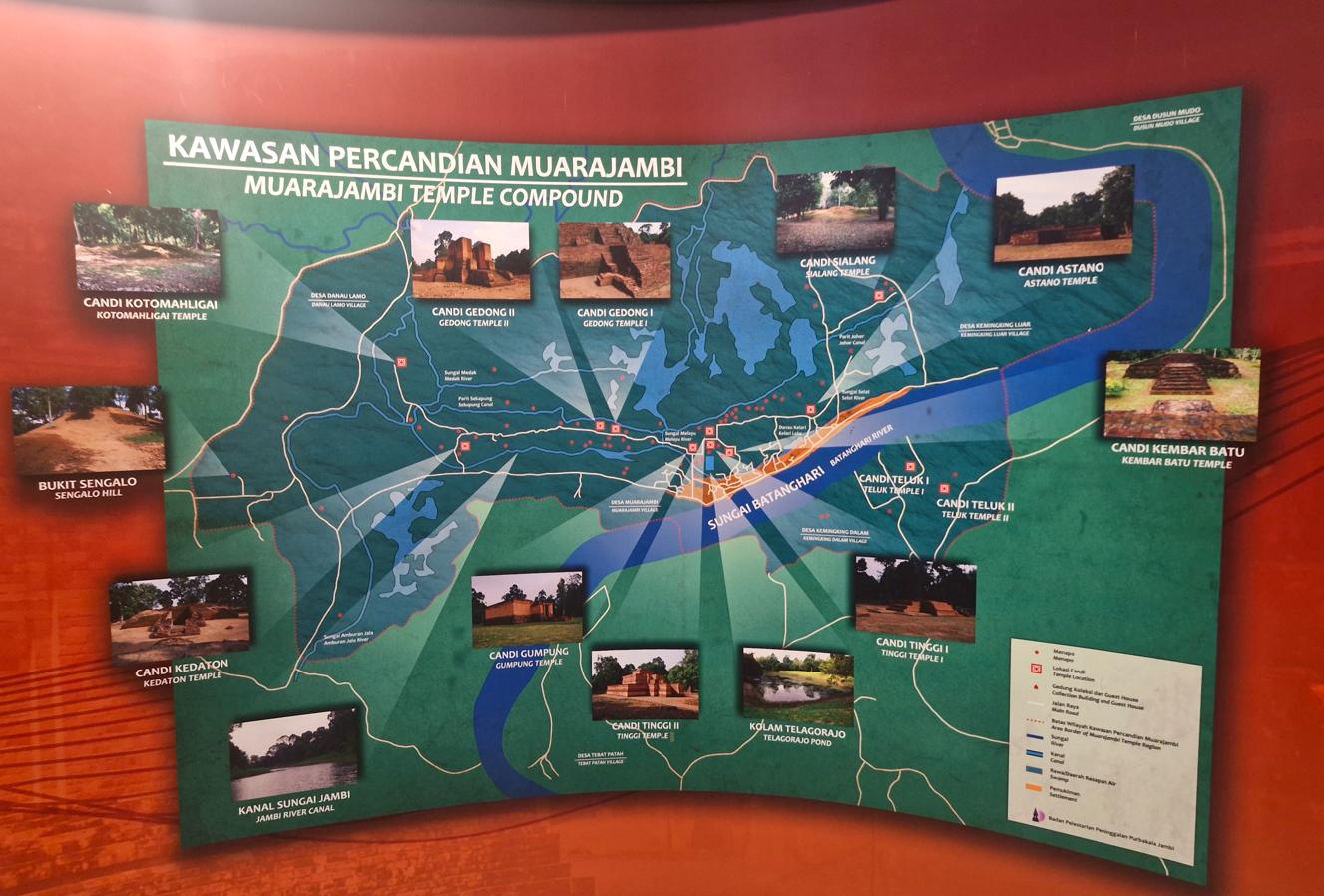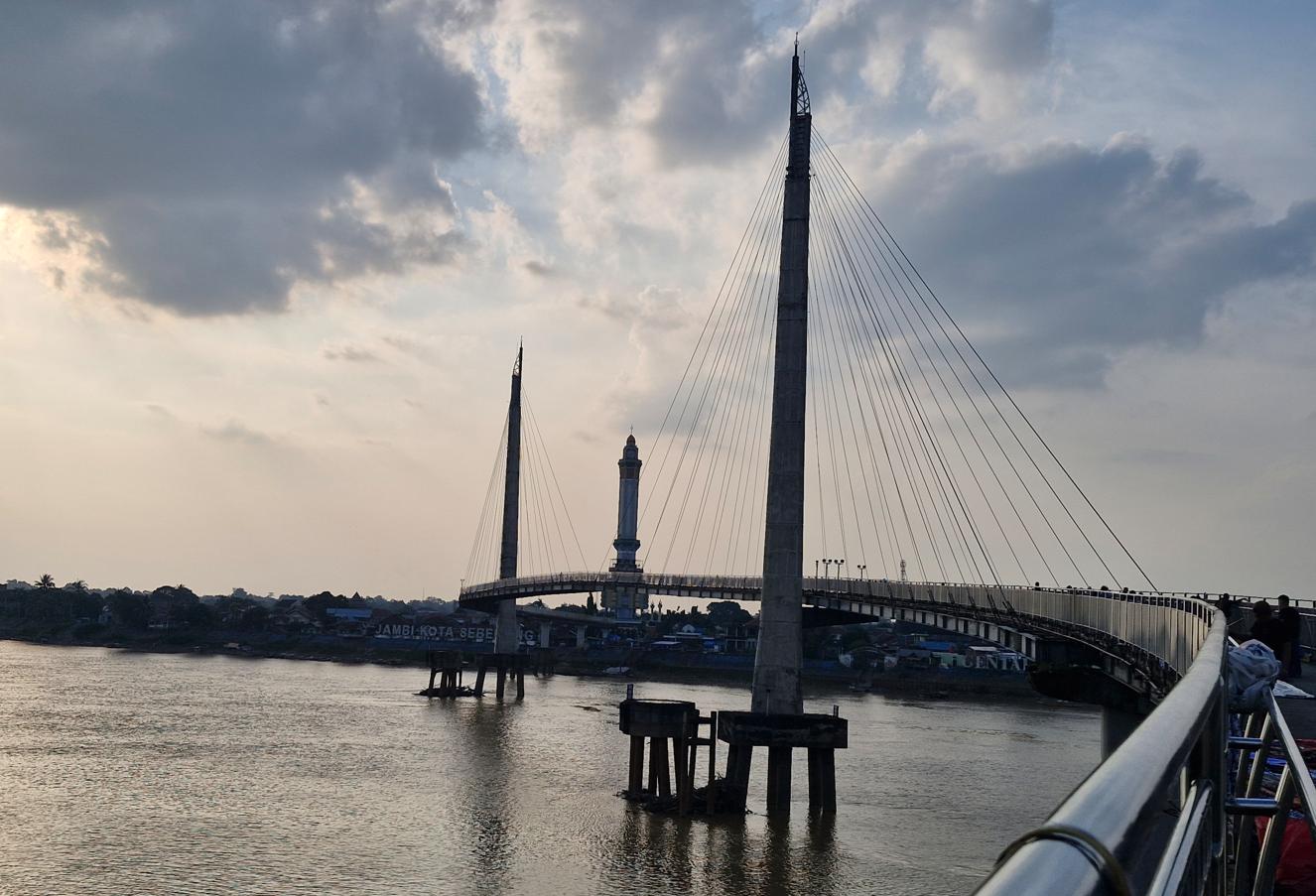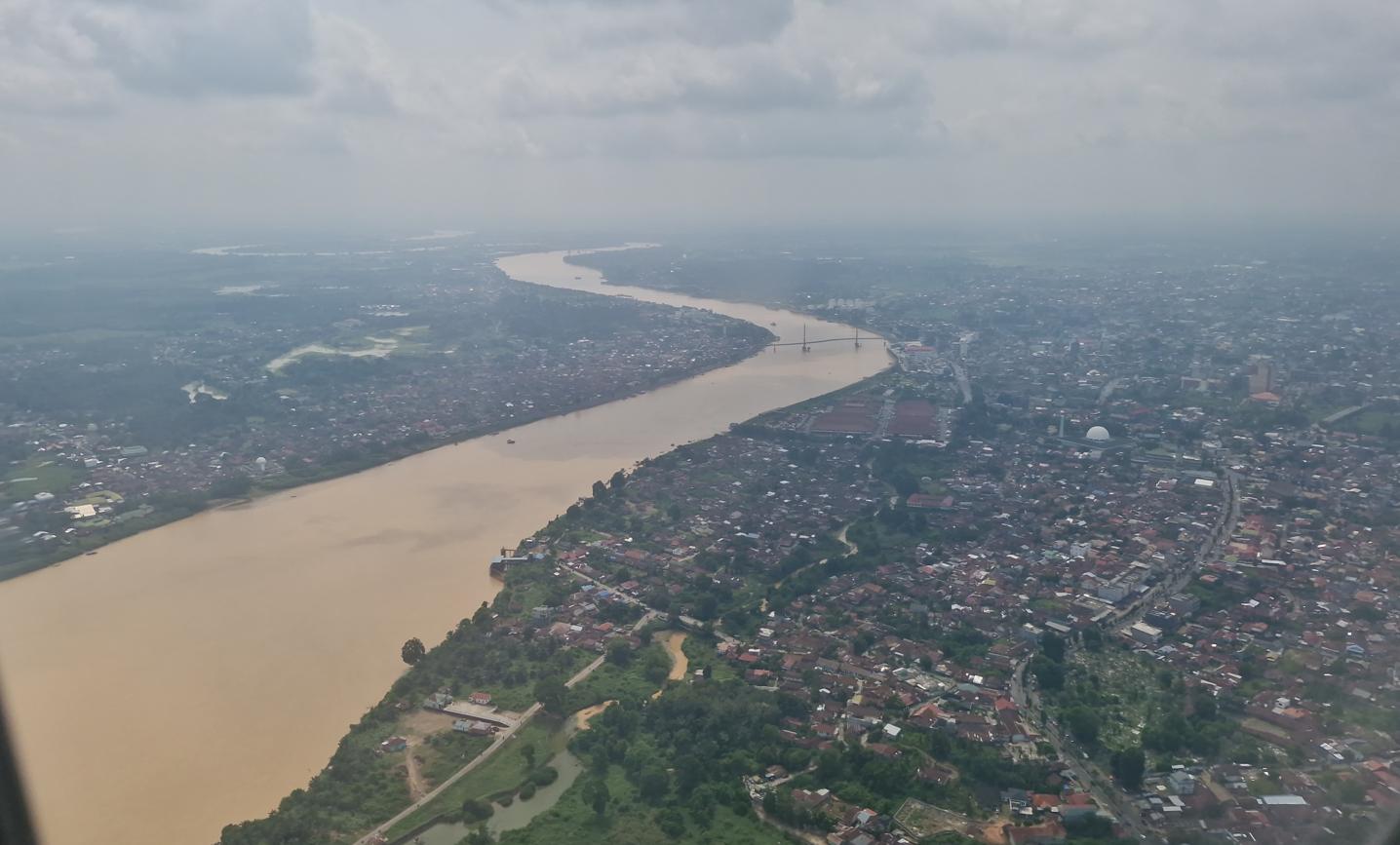
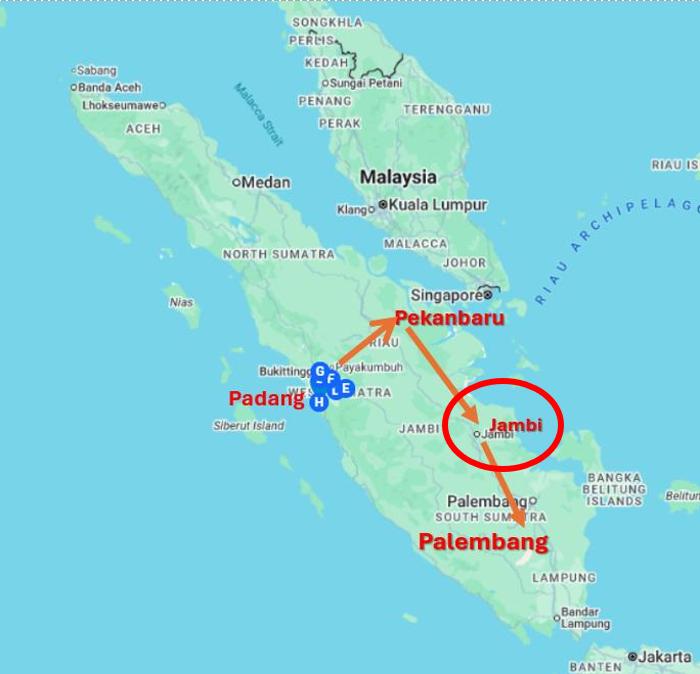

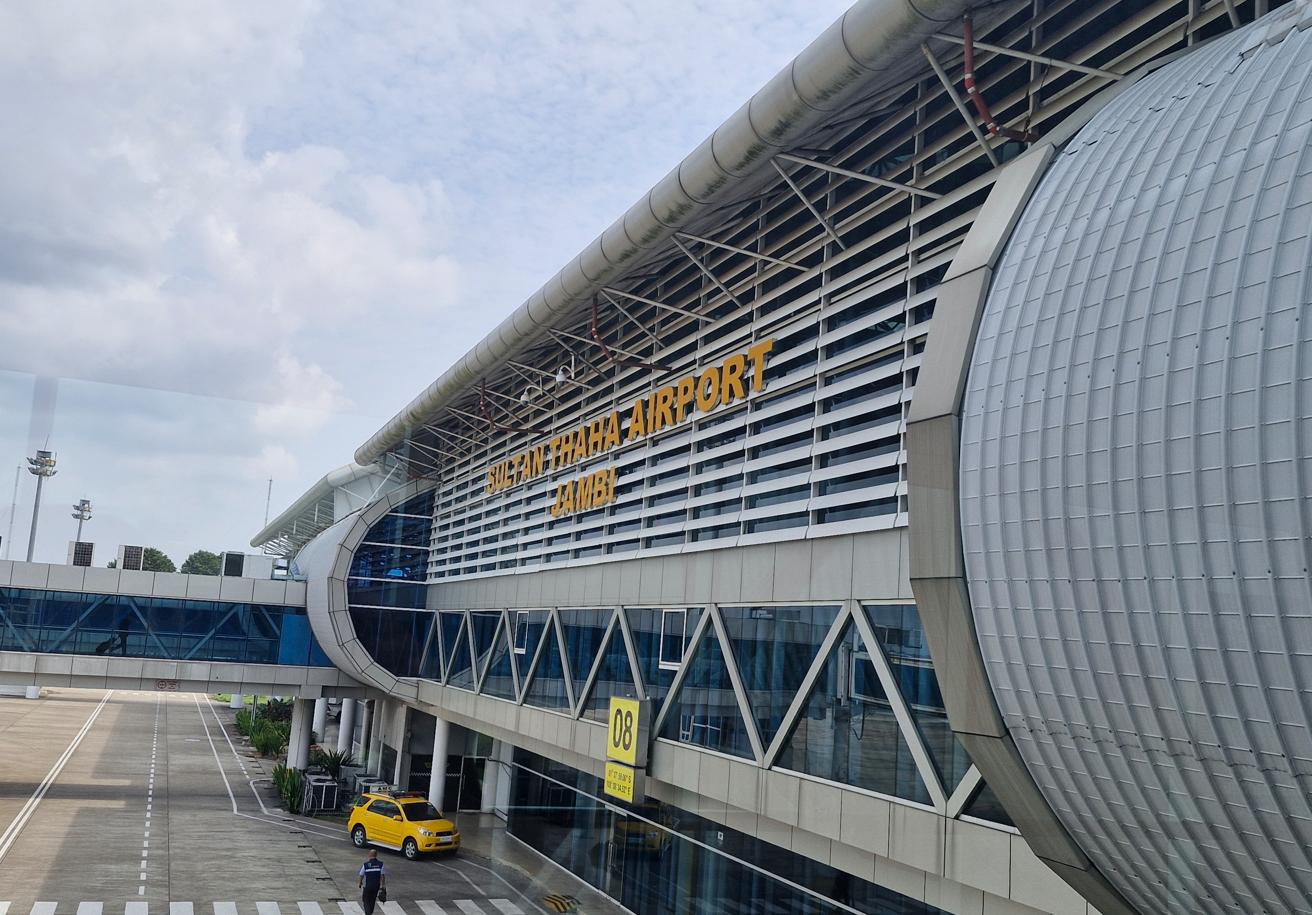
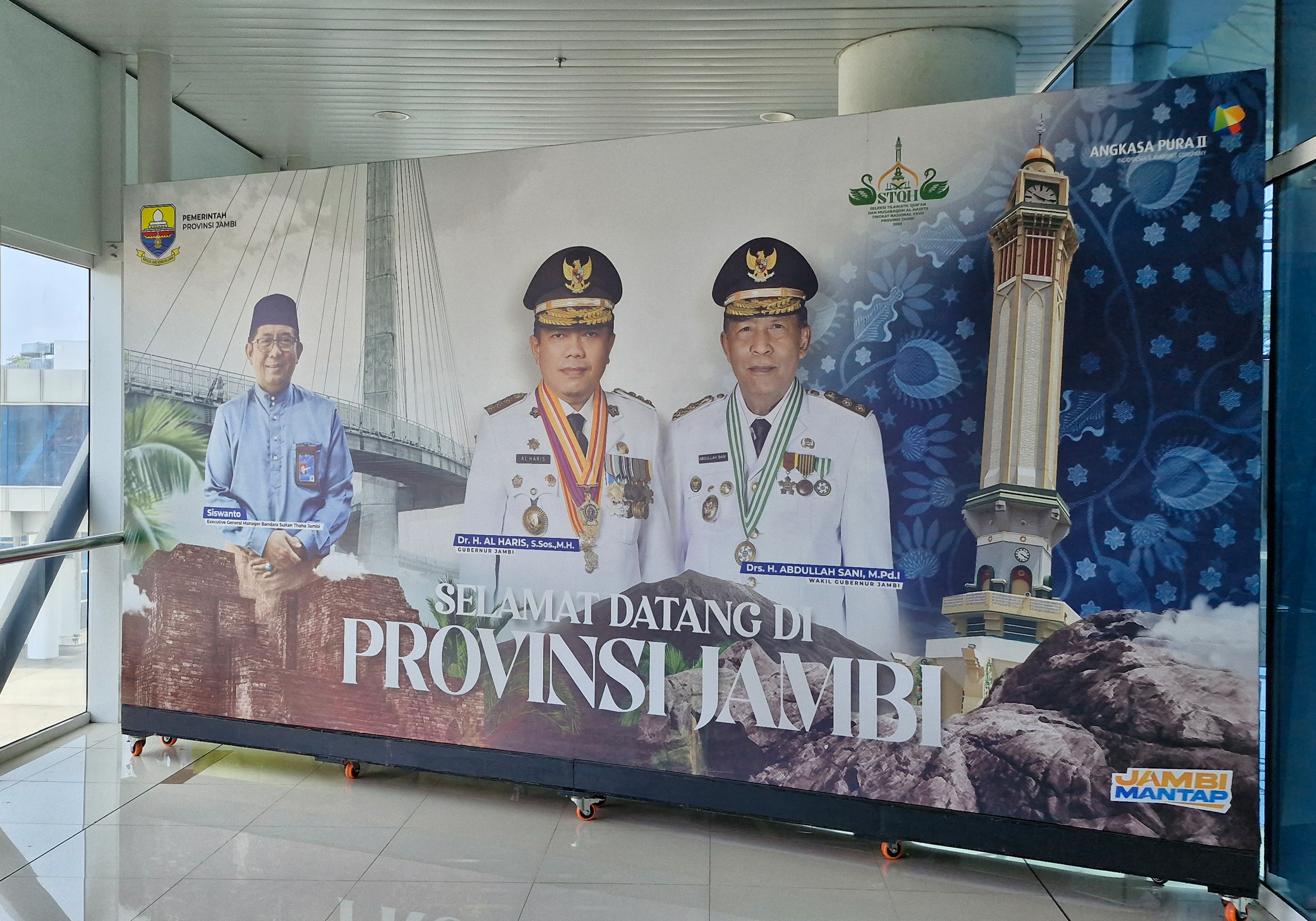
The British colonial scholar Richard Olaf Winstedt, surveying the whole sweep of Malay history from the vantage of Malayan philology, once located the true centre of gravity of the Malay world not on the Peninsula at all but here, on this side of the Strait: “The Malay heartland is not merely a geographic coast, but a cultural space born along the great river arteries of Eastern Sumatra — Palembang, Jambi, and Indragiri — before flowing out to shape the Malay Peninsula.” Jambi arrives first as a river. Sultan Thaha Airport sits close enough to the Batang Hari that the descent gives you the whole province in a single window-seat glance: a wide brown ribbon of water, Sumatra's greatest river, curling through jungle and rubber groves on its way to the Malacca Strait, exactly as it has curled for the fourteen centuries during which it has served, by turns, as trade route, pilgrimage road, battlefield, and, as I would learn on my first afternoon in the city, a grave.
Jambi's deep history is a story of eclipse and re-emergence played out along this single waterway. The Chinese Buddhist monk I-Tsing, passing through in 671 CE on his way to study at Nalanda in India, recorded the kingdom then centred here, Melayu, as a flourishing rival to Sriwijaya at Palembang, one of two major powers contesting control of the Strait's trade. The rivalry did not last; by around 692 CE Sriwijaya had absorbed Melayu outright, and I-Tsing himself, passing back through on a later journey, registered the change in his own writing. Melayu spent the following centuries as a subordinate territory of Palembang's empire. That arrangement held until Sriwijaya itself began to buckle.
The decisive blow landed in the eleventh century, when a Chola fleet, sent by the South Indian Tamil dynasty then at the height of its own naval and temple-building ambitions, sailed around Sumatra and struck Palembang directly, shattering the naval supremacy on which Sriwijaya's whole trading empire depended, a campaign I would find told in far greater detail, in stone rather than in summary, once I reached Palembang itself. Melayu re-emerged from the wreckage as its own independent power, the Dharmasraya kingdom, inheriting much of the cultural and commercial weight Sriwijaya could no longer hold alone. It became, in effect, less a rival than a successor: the vessel through which Malay-Buddhist statecraft and language passed forward into the centuries that followed, right down to the royal genealogies that Malay courts across the Strait, Melaka, Johor, Perak, would later trace back through Sang Sapurba to this same stretch of river.
Jambi drew Raffles' attention too, later and more briefly. Governing Bencoolen on Sumatra's west coast from 1818 to 1824, and increasingly boxed in by a resurgent Dutch presence on the Strait's eastern side, Raffles came to see Jambi, together with Palembang and Siak, as the last available route to an overland British foothold spanning the island, and pursued treaties with Jambi's own rulers aimed at securing an inland trade corridor and a share of its pepper and rattan. Almost none of it survived contact with London's own priorities: the Anglo-Dutch Treaty of 1824, carving the Malay world neatly along the Strait, nullified most of what Raffles had signed on Sumatra's eastern rivers and left Jambi, like Siak and Palembang before it, inside a Dutch sphere his own despatches had spent years arguing against.